


Mirror backing is the group of reflective and protective layers applied to the rear surface of mirror glass. These layers create the reflection and help protect it from moisture, scratches, chemicals, and damage during handling.
Although you look into the front of a household mirror, the reflective surface is usually located behind the glass.
What Layers Are on the Back of a Mirror?
The exact construction varies, but a typical glass mirror may contain:
- A sheet of clear or low-iron glass
- A thin reflective metallic layer
- One or more protective backing coatings
- An optional safety backing film
Silver is commonly used for the reflective layer, although other metals can be used in different mirror types. Protective paint covers the metal and usually forms the visible back surface.
How Does Mirror Backing Create a Reflection?
Light passes through the front of the glass and reaches the metallic layer on the back. That layer reflects the light toward your eyes, creating the image you see.
The backing coatings do not create the reflection. Their purpose is to shield the delicate metal from scratches, moisture, oxygen, cleaning chemicals, and unsuitable adhesives.
What Can Damage Mirror Backing?
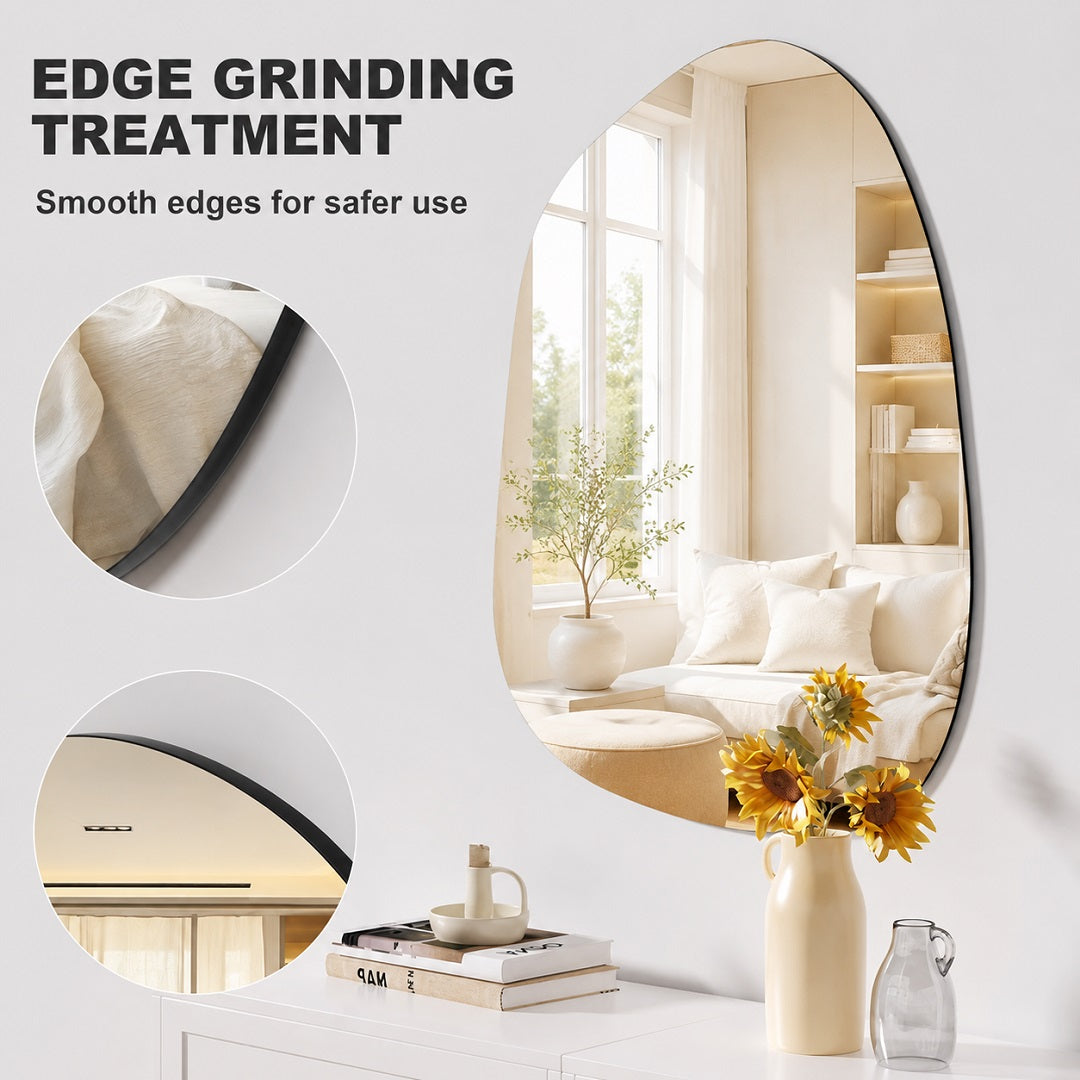
Backing damage can begin when the protective coating is scraped, cut, or exposed to moisture and harsh chemicals. Cleaner that collects around the edges and adhesive that is not formulated for mirrors can also affect the coating.
Once the reflective metal begins to corrode, dark spots, cloudy areas, or black edges may become visible from the front.
Explore Hasipu LED Mirrors