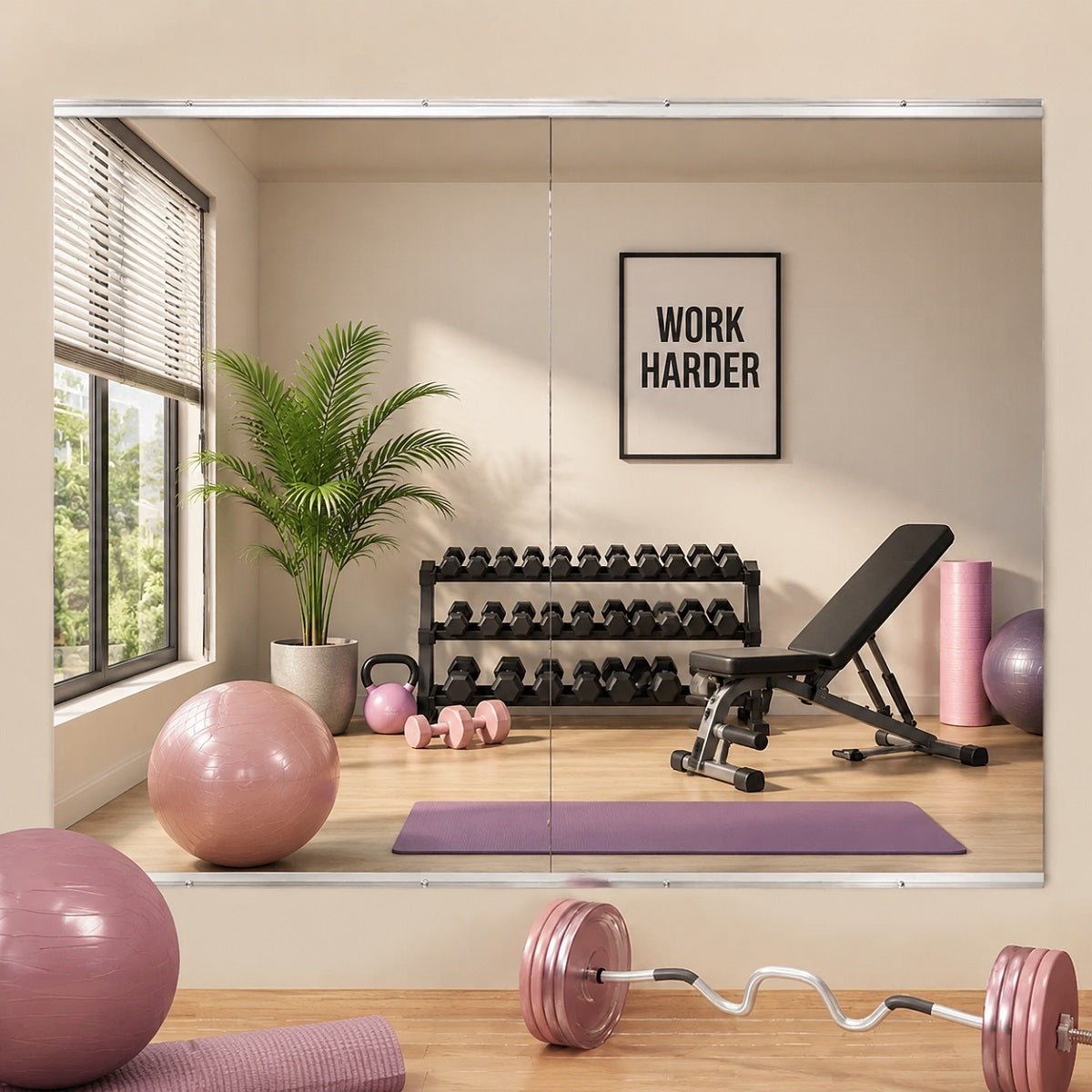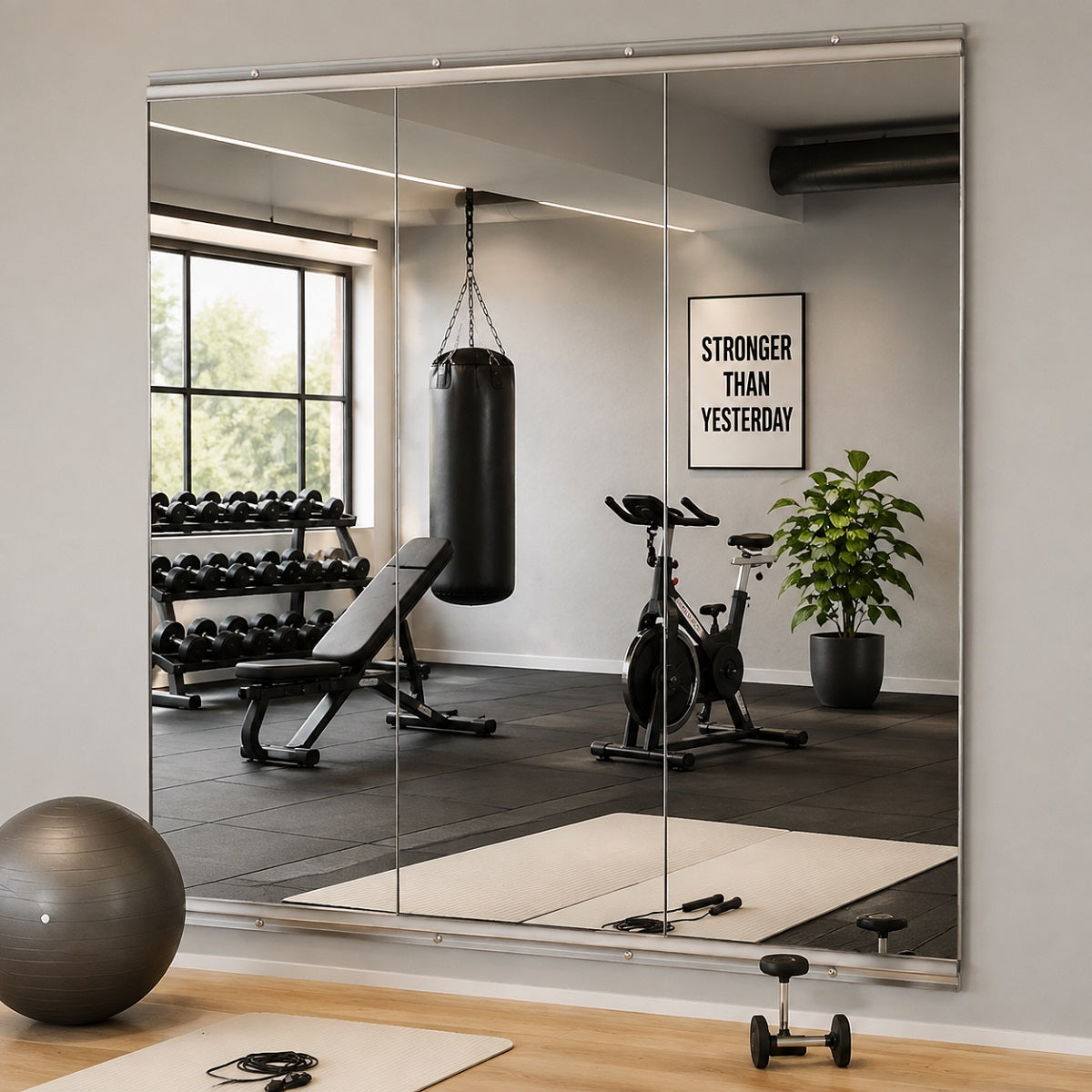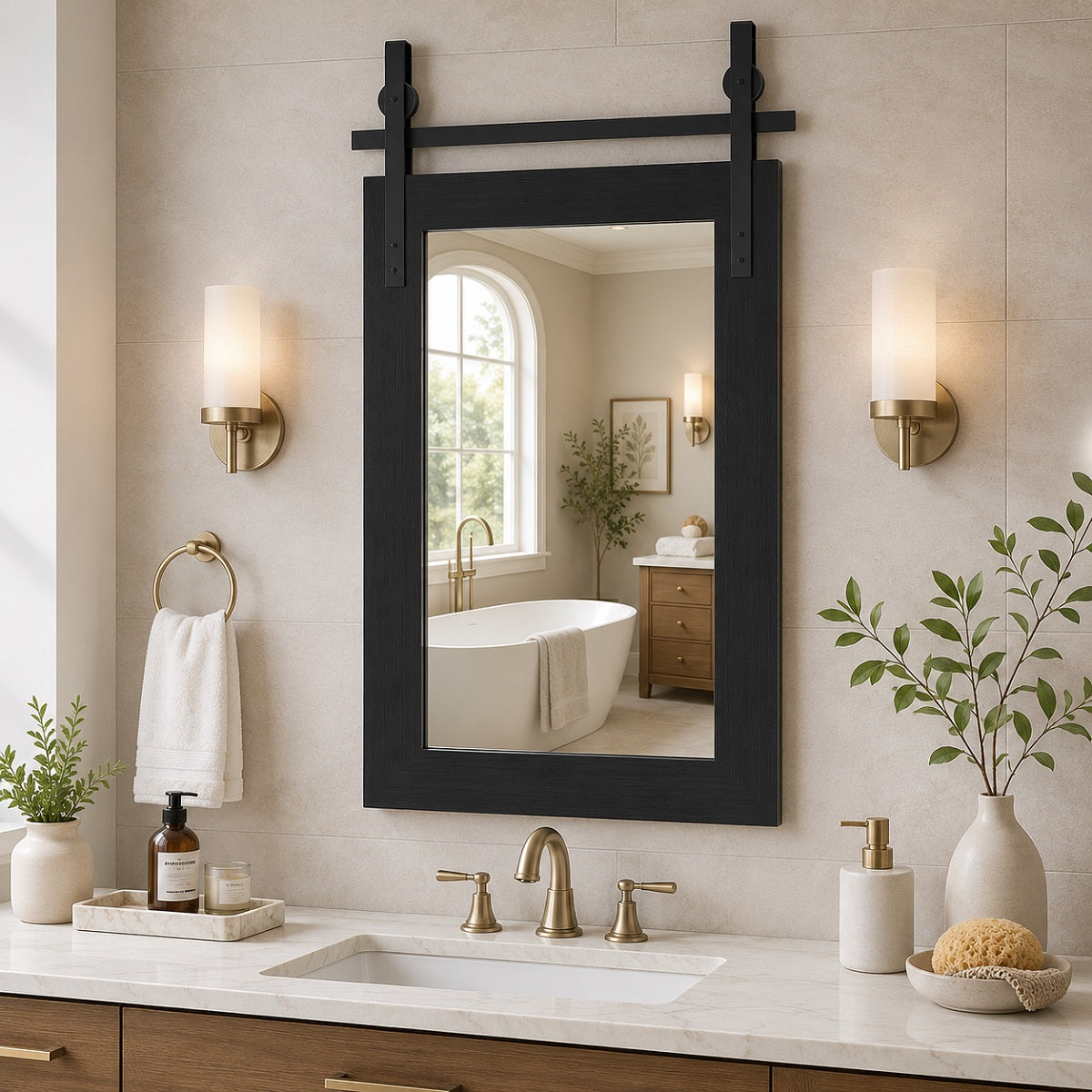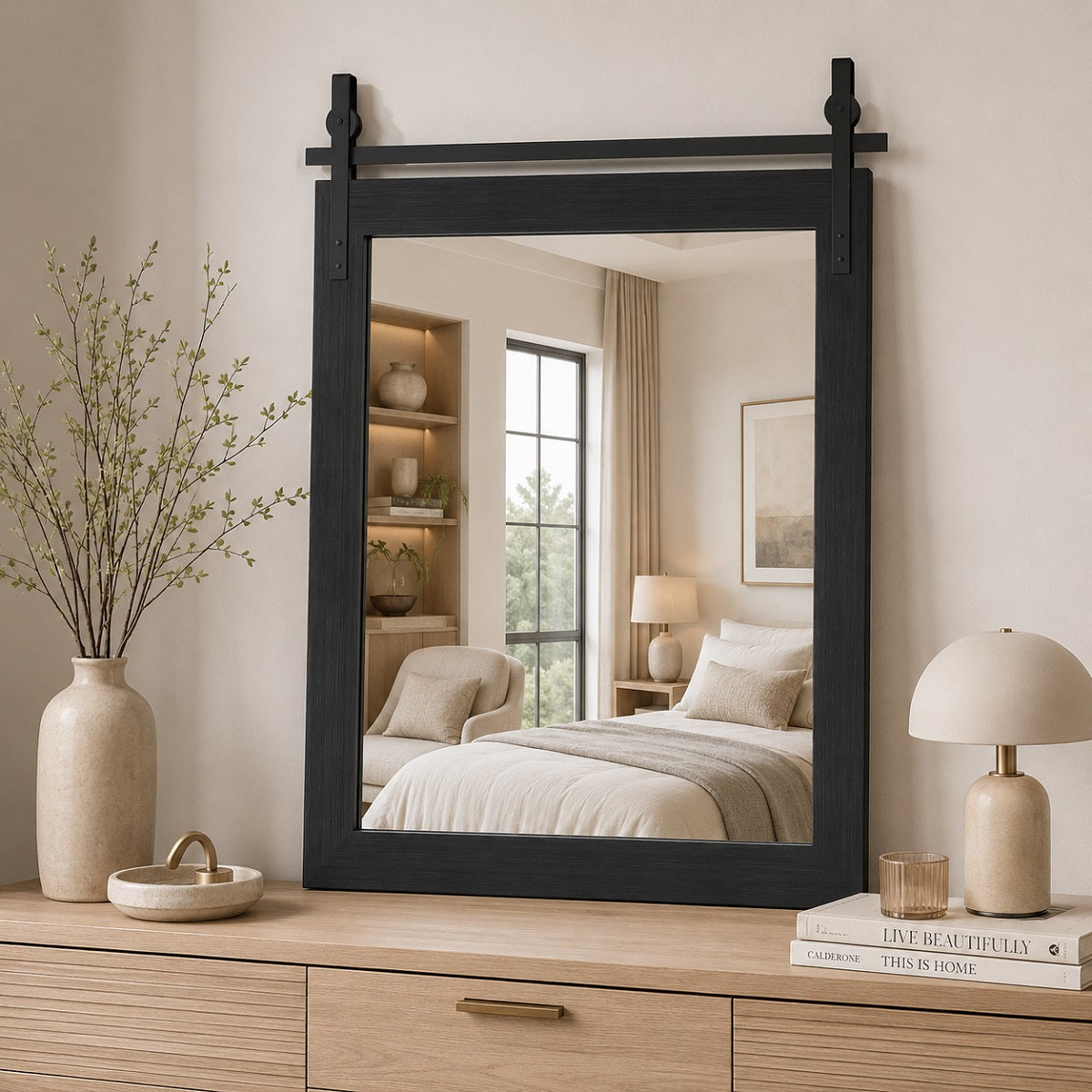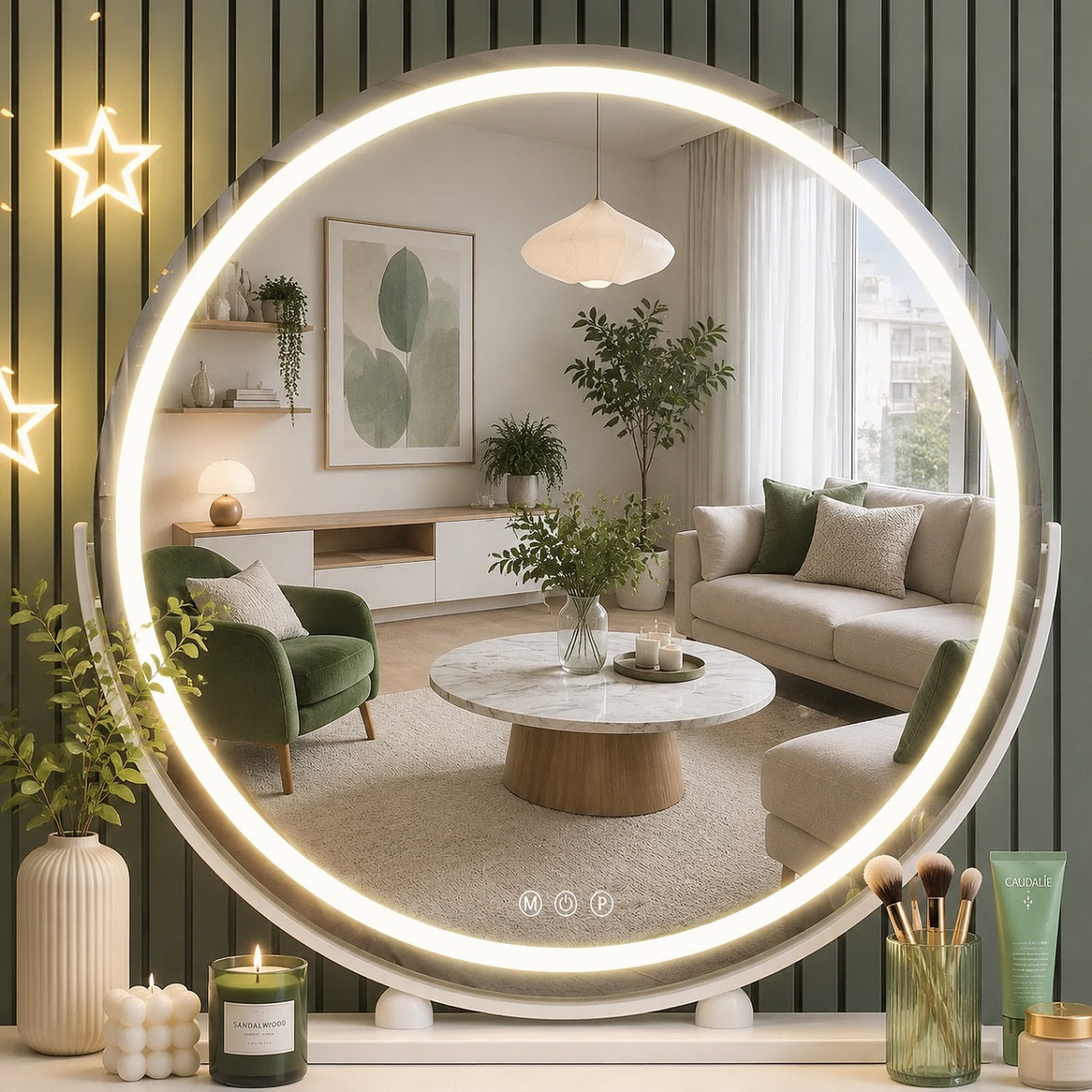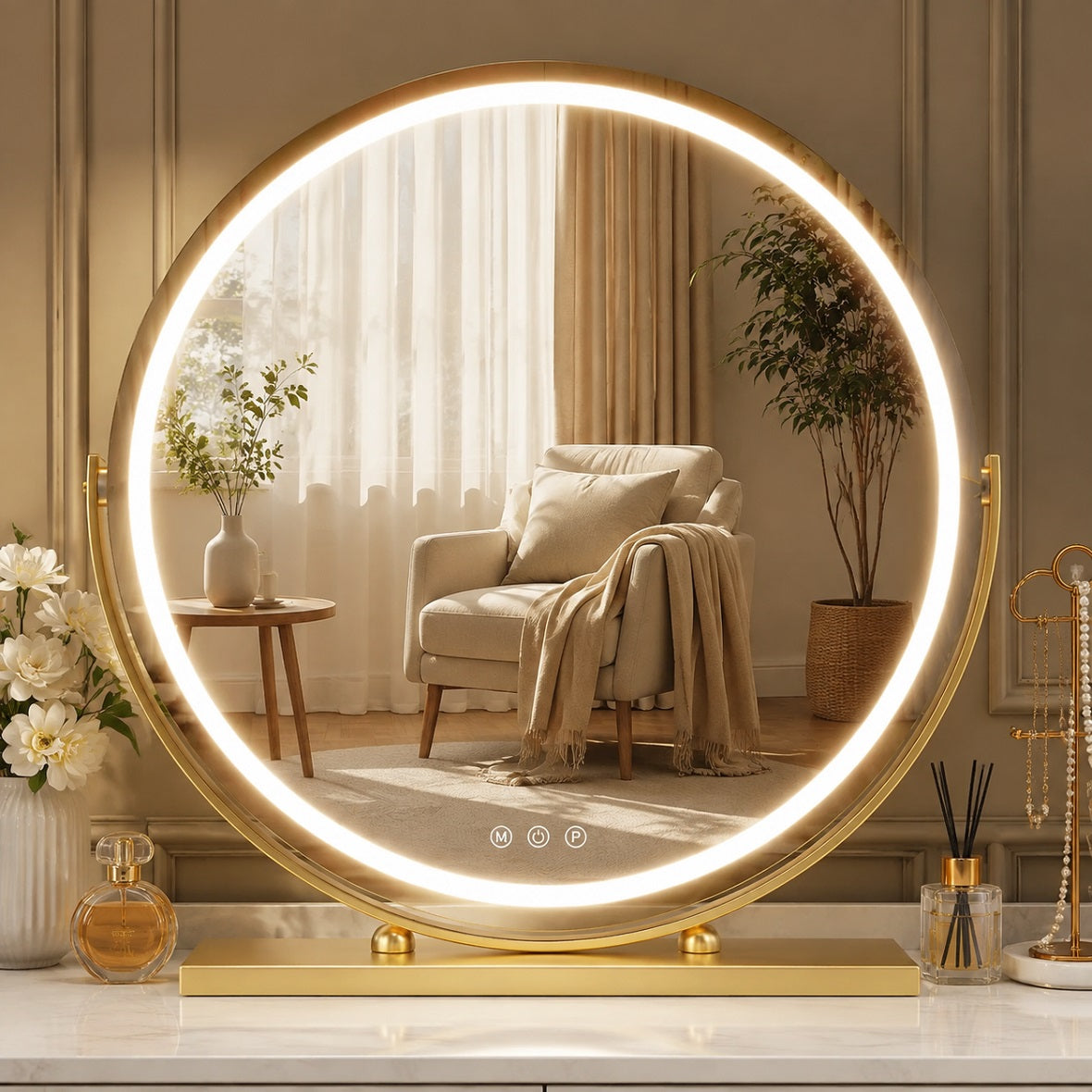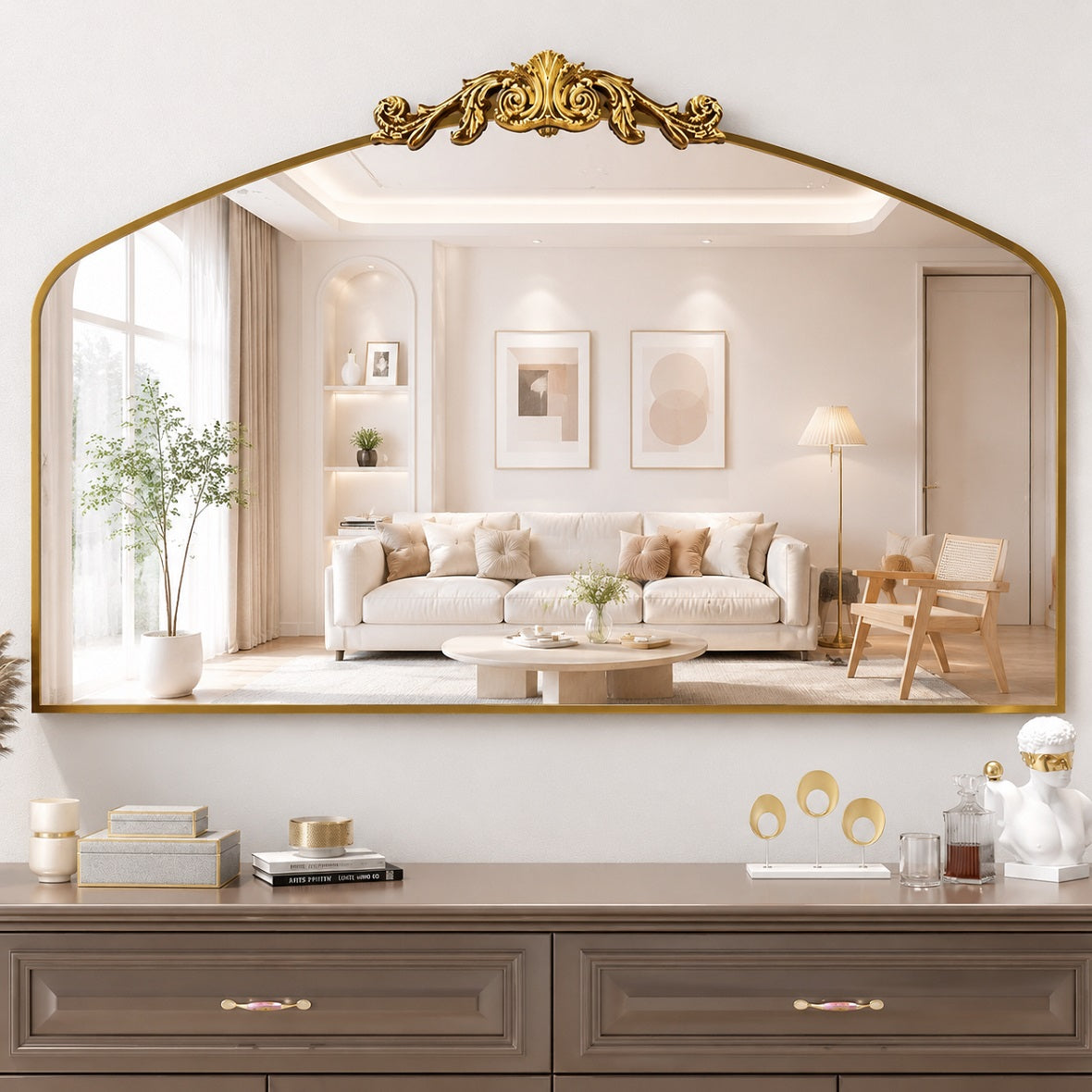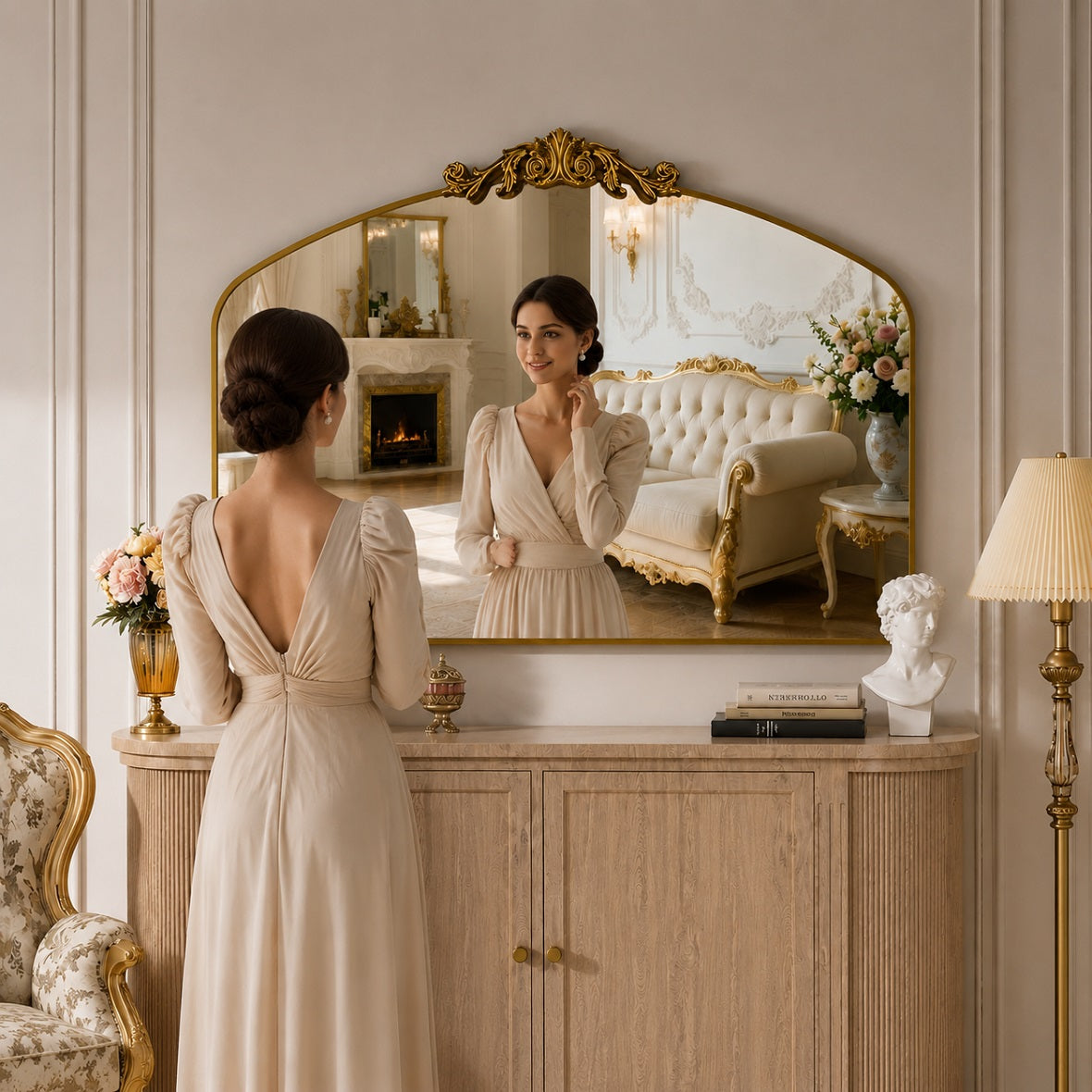


Low-iron glass is manufactured with less iron oxide than standard clear float glass. Reducing this naturally occurring content makes the glass appear more transparent and less green, especially when viewed through a thick section or along an exposed edge.
Why Does Standard Glass Look Green?
Iron in ordinary soda-lime glass absorbs parts of the visible spectrum and gives the material a green cast. The effect can be subtle when looking straight through a thin pane, but it becomes more noticeable at the edge, across thicker glass, or when several layers are viewed together.
Low-iron glass is produced with carefully selected raw materials to reduce that tint. It is sometimes called extra-clear or ultra-clear glass, although exact product specifications differ between manufacturers.
What Difference Does It Make in a Mirror?
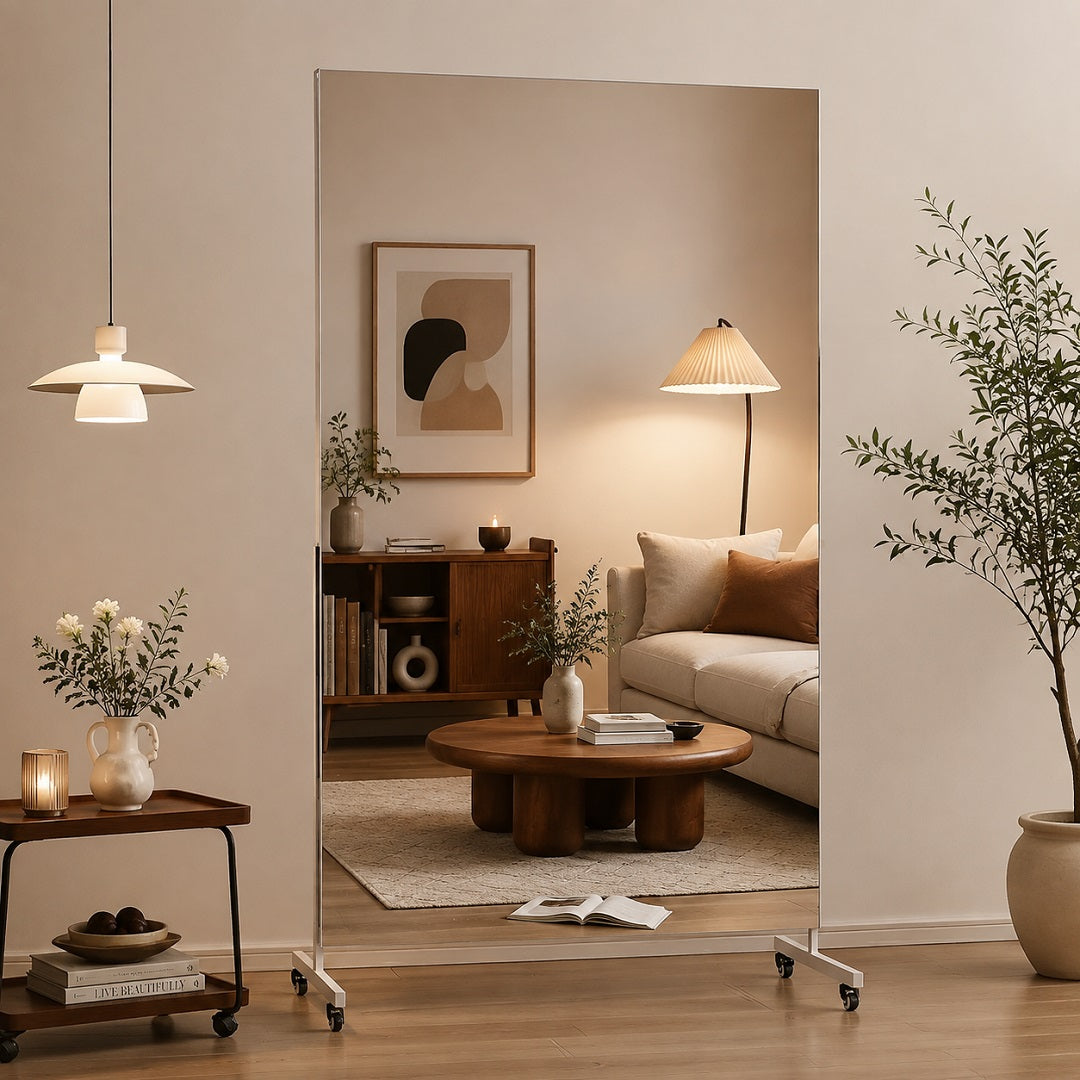
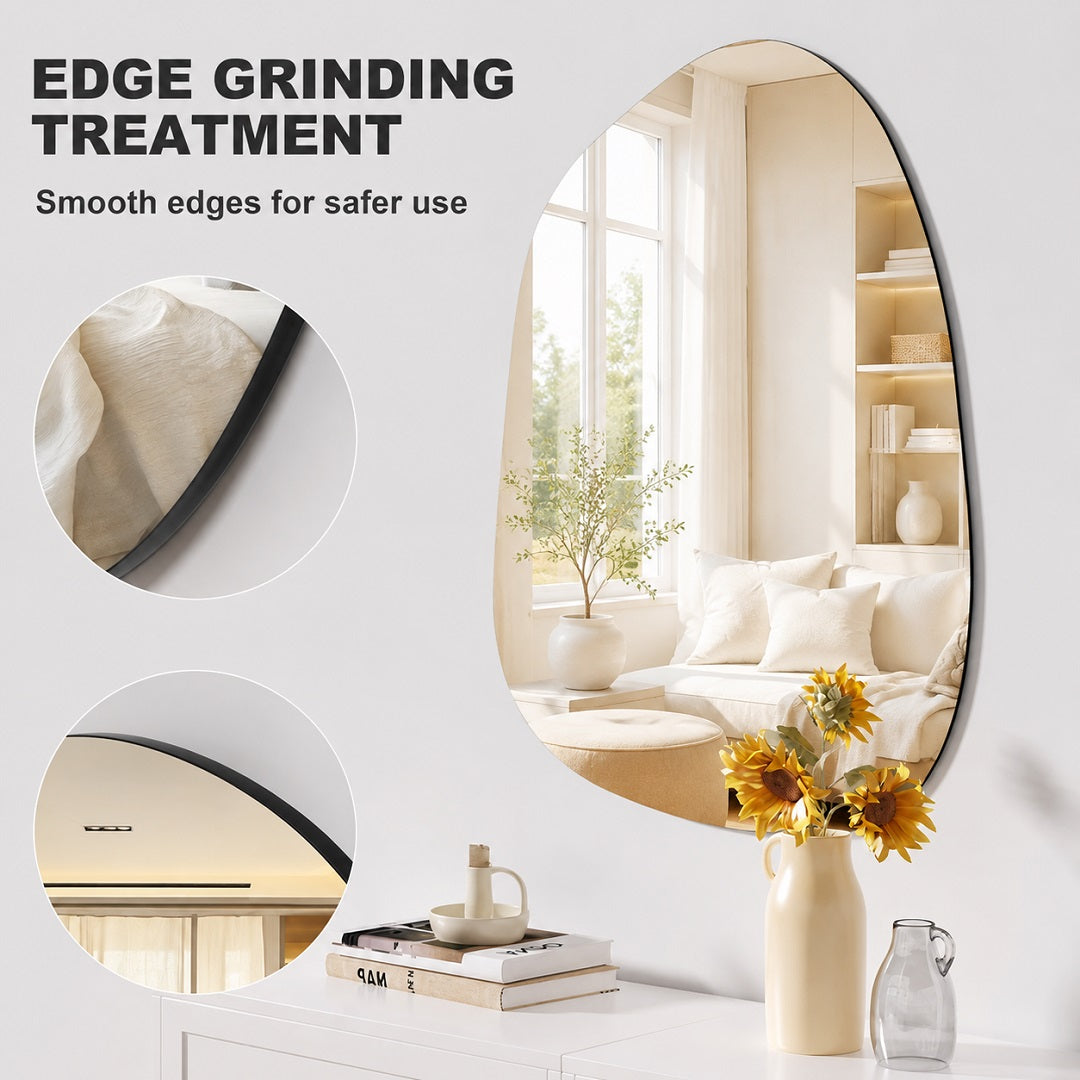
A reflective coating can be applied to low-iron glass to create a mirror with a brighter, more neutral appearance. The reduced green cast may be particularly visible around polished or beveled edges and in interiors that use bright white finishes.
Low-iron glass does not automatically eliminate reflection distortion. Flatness, thickness, heat treatment, coating quality, mounting pressure, and viewing distance remain separate factors. It also does not turn a household mirror into a specialized first-surface optical mirror.
When Is Low-Iron Glass Worth Considering?
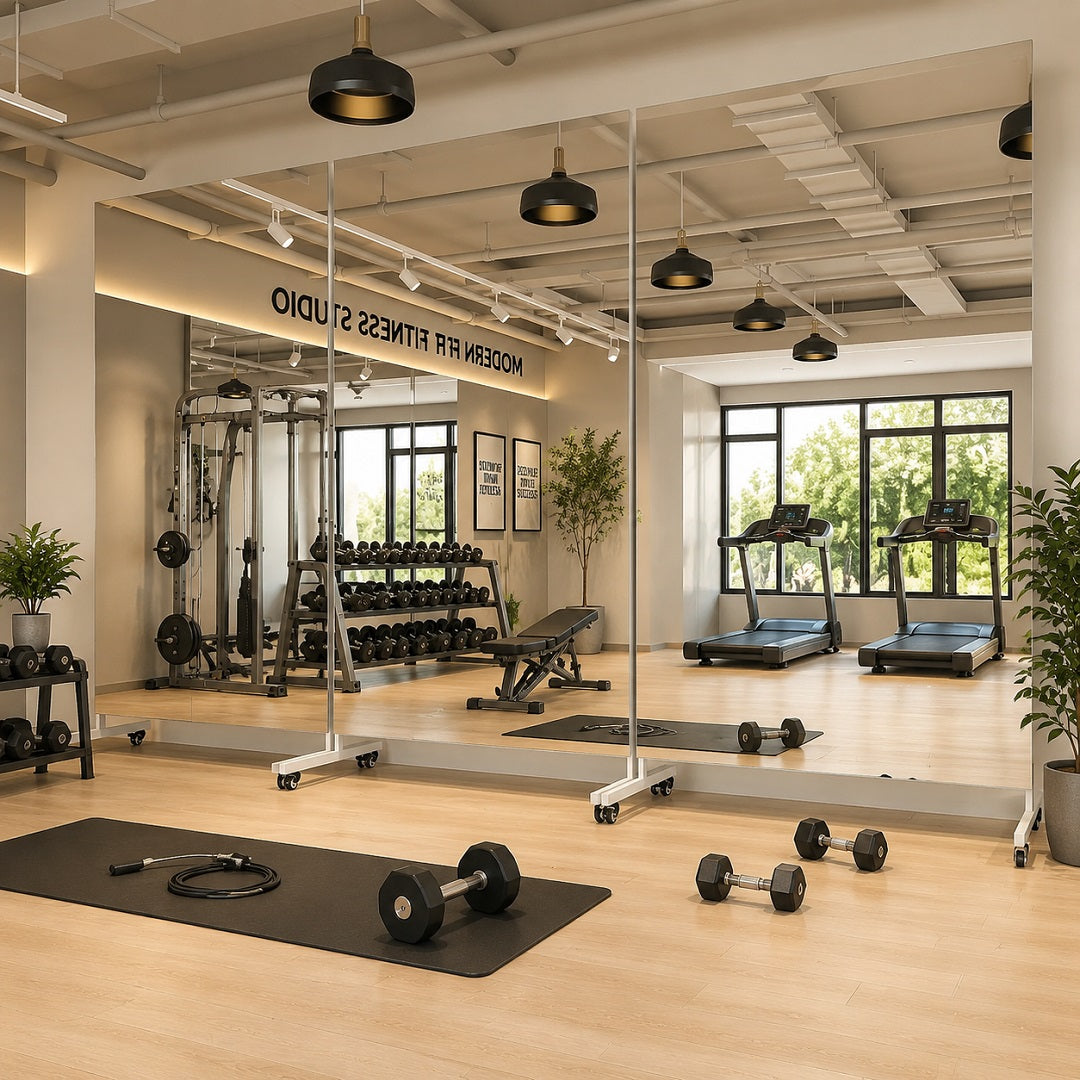
It can be useful when edge clarity is part of the design, when color neutrality is important, or when a large decorative installation aims for a particularly clear appearance. For many ordinary thin mirrors viewed from the front, the difference may be less dramatic than product photography suggests.
Compare actual samples where possible and verify that “low iron” refers to the glass substrate rather than being used as a general clarity claim.
Explore Hasipu LED Mirrors