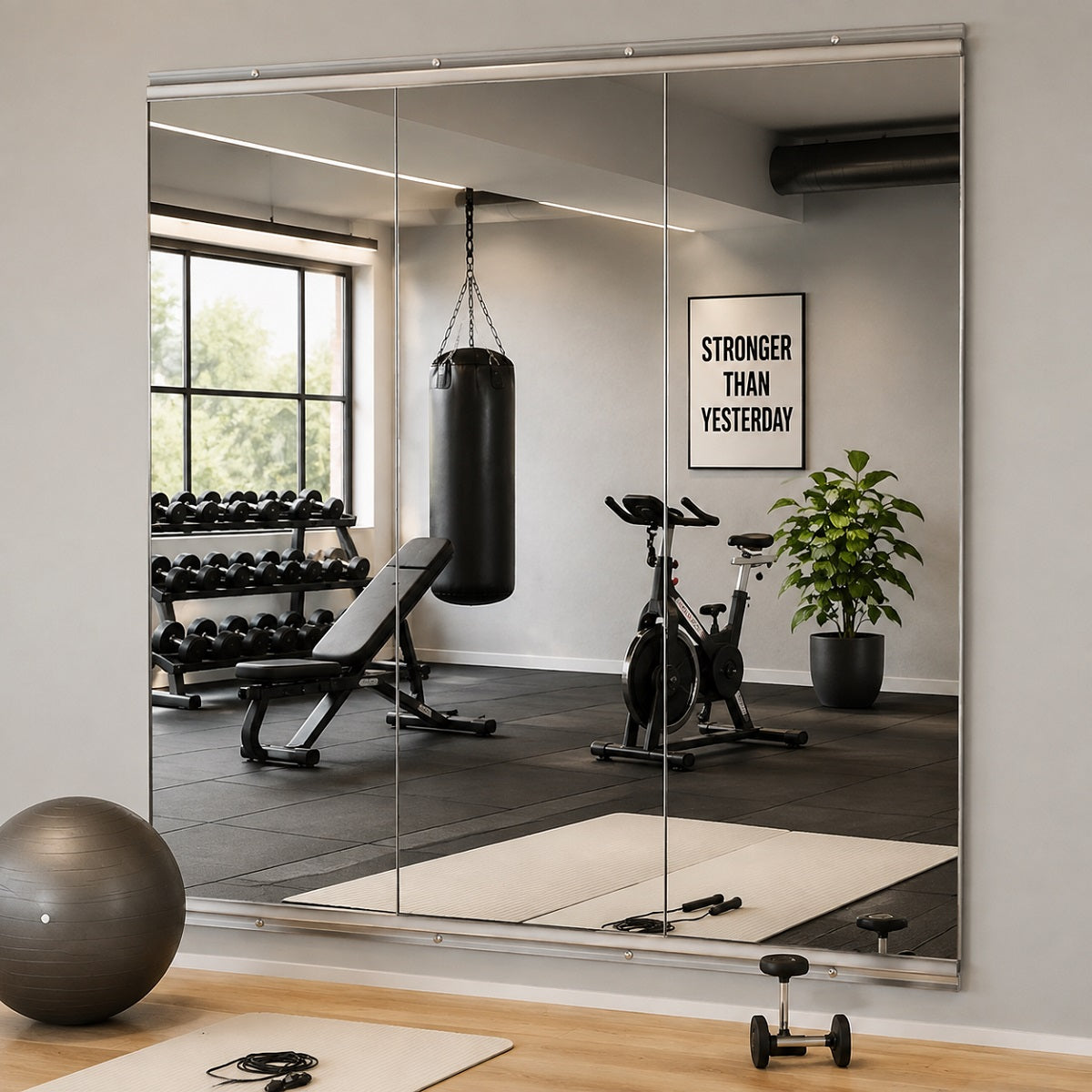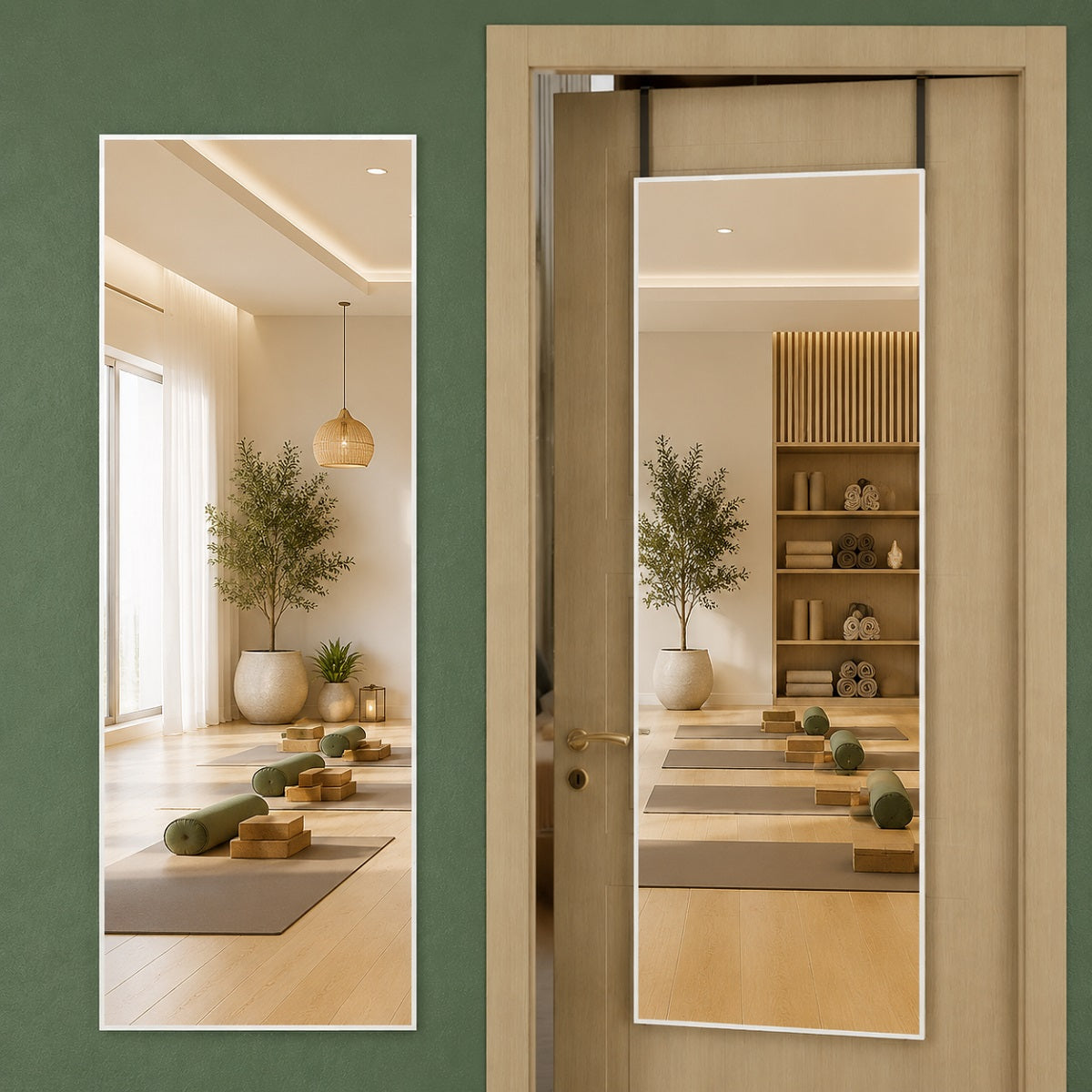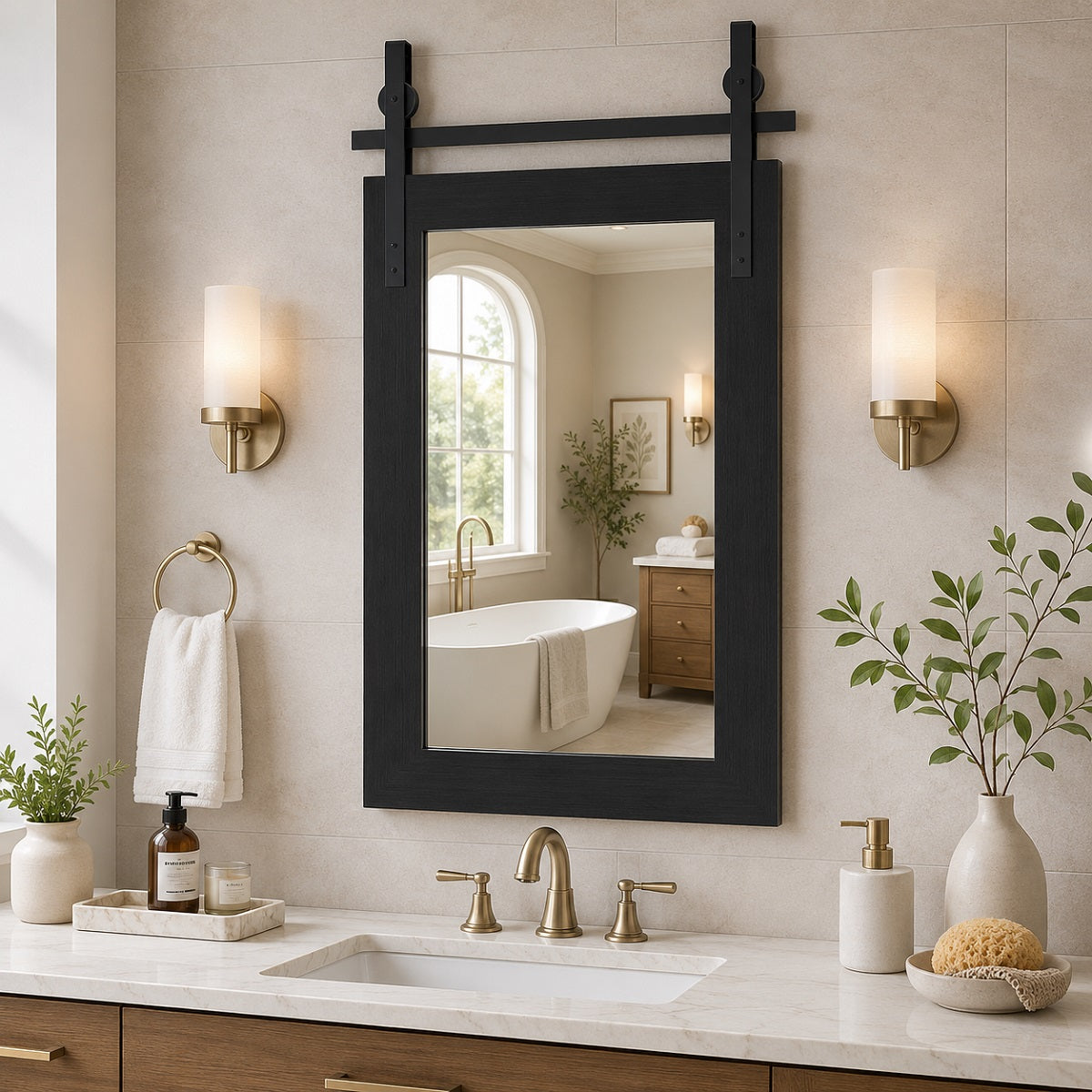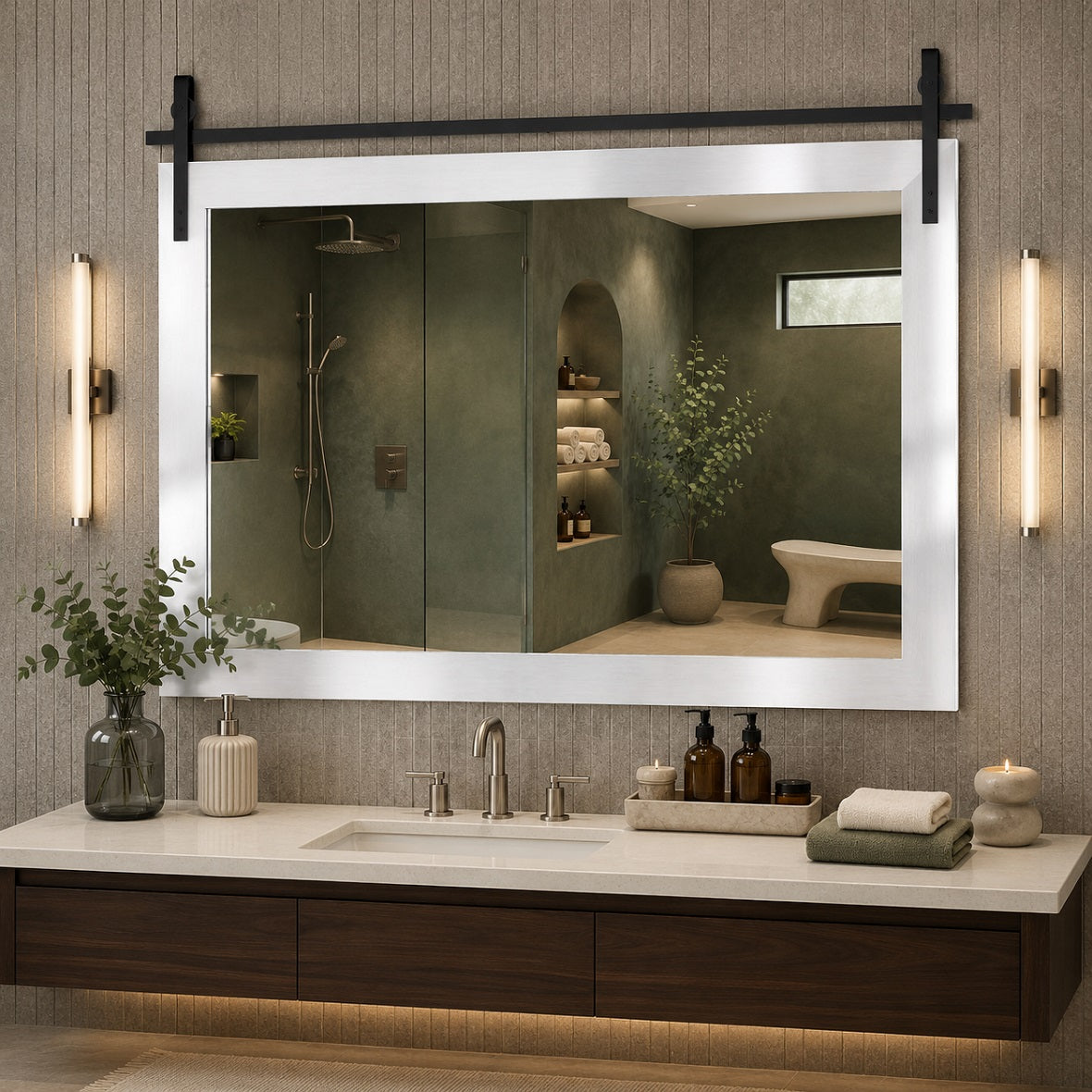



Tempered glass is heat-treated safety glass made stronger than ordinary annealed glass of comparable thickness. If it breaks, it is designed to fragment into many relatively small pieces rather than the larger, sharper shards commonly produced by standard glass.
How Is Glass Tempered?
The glass is first cut, drilled, edged, and otherwise fabricated to its final form. It is then heated and rapidly cooled in a controlled process. This creates compressive stress at the surfaces and balancing tensile stress inside the glass, increasing its resistance to mechanical and thermal stress.
Because cutting or drilling disturbs that stress pattern, tempered glass generally cannot be resized or have new holes added after heat treatment. Mirror dimensions, mounting holes, notches, and edge work therefore need to be completed beforehand.
Are All Mirrors Made From Tempered Glass?
No. Many household mirrors are made by applying a reflective coating to annealed float glass. Depending on the product and application, safety may instead be addressed through tempered glass, laminated construction, safety backing film, secure mounting, or another tested system.
A mirror should not be assumed to be tempered because it is thick, frameless, or described as durable. Tempered safety glazing is normally identified through product documentation or applicable permanent markings.
What Does Tempering Change in a Mirror?
Tempering improves impact and thermal resistance, but it does not make glass unbreakable. It can also introduce subtle optical effects associated with heat treatment, so reflection quality still depends on material selection, processing, size, and installation.
When safety glazing is required, the correct product depends on the location and applicable rules. Buyers and installers should follow the mirror documentation rather than using a generic material description as proof of compliance.
Explore HASIPU Mirrors