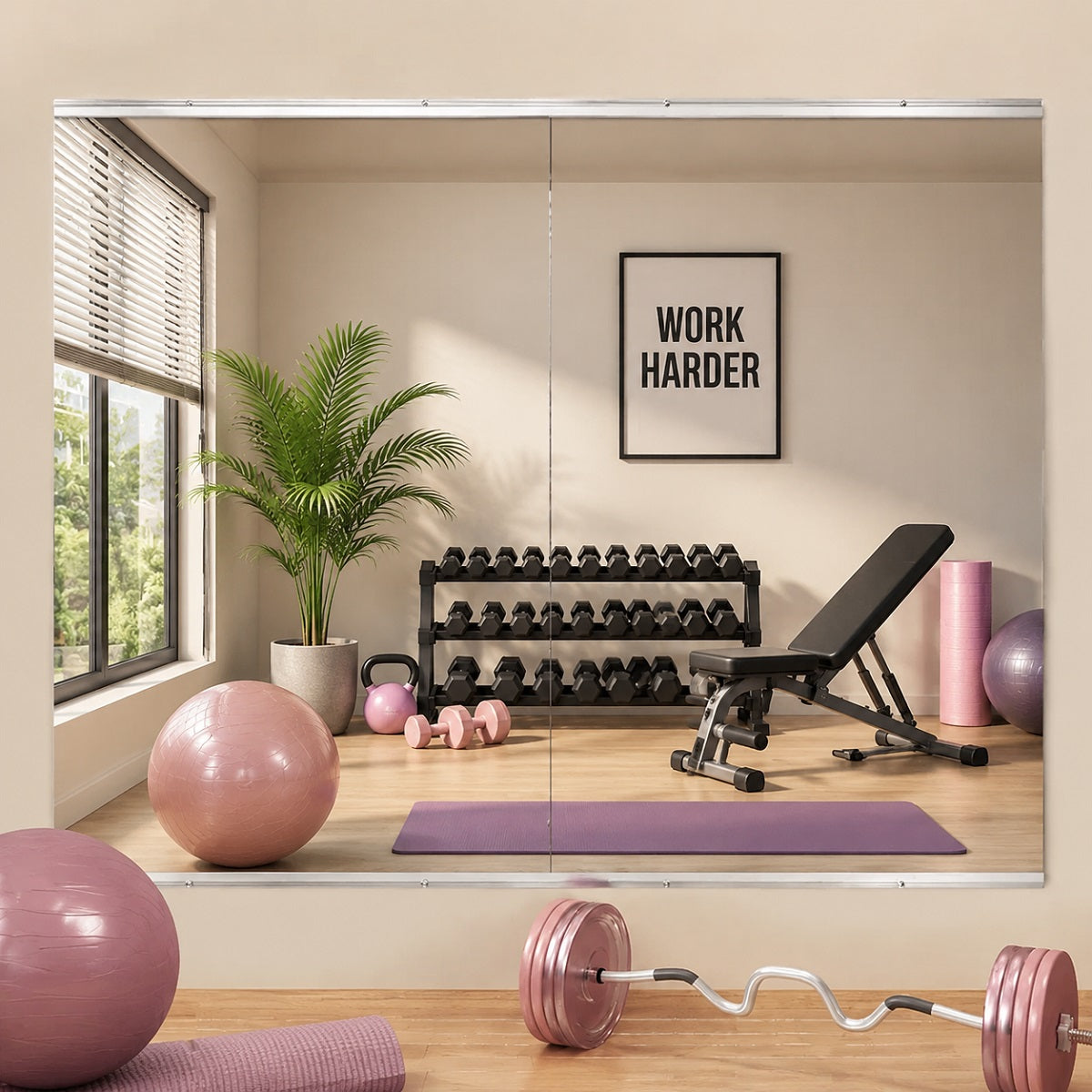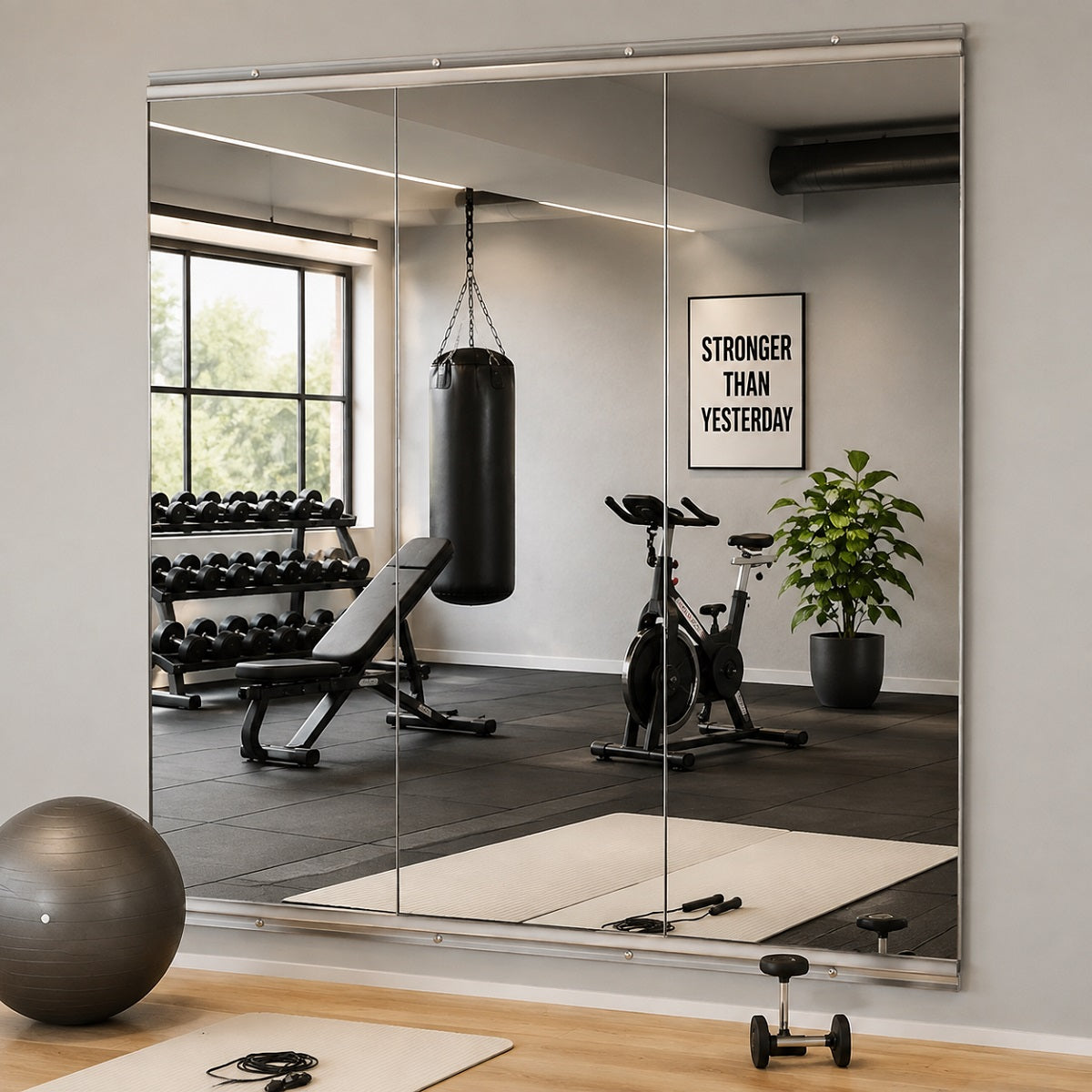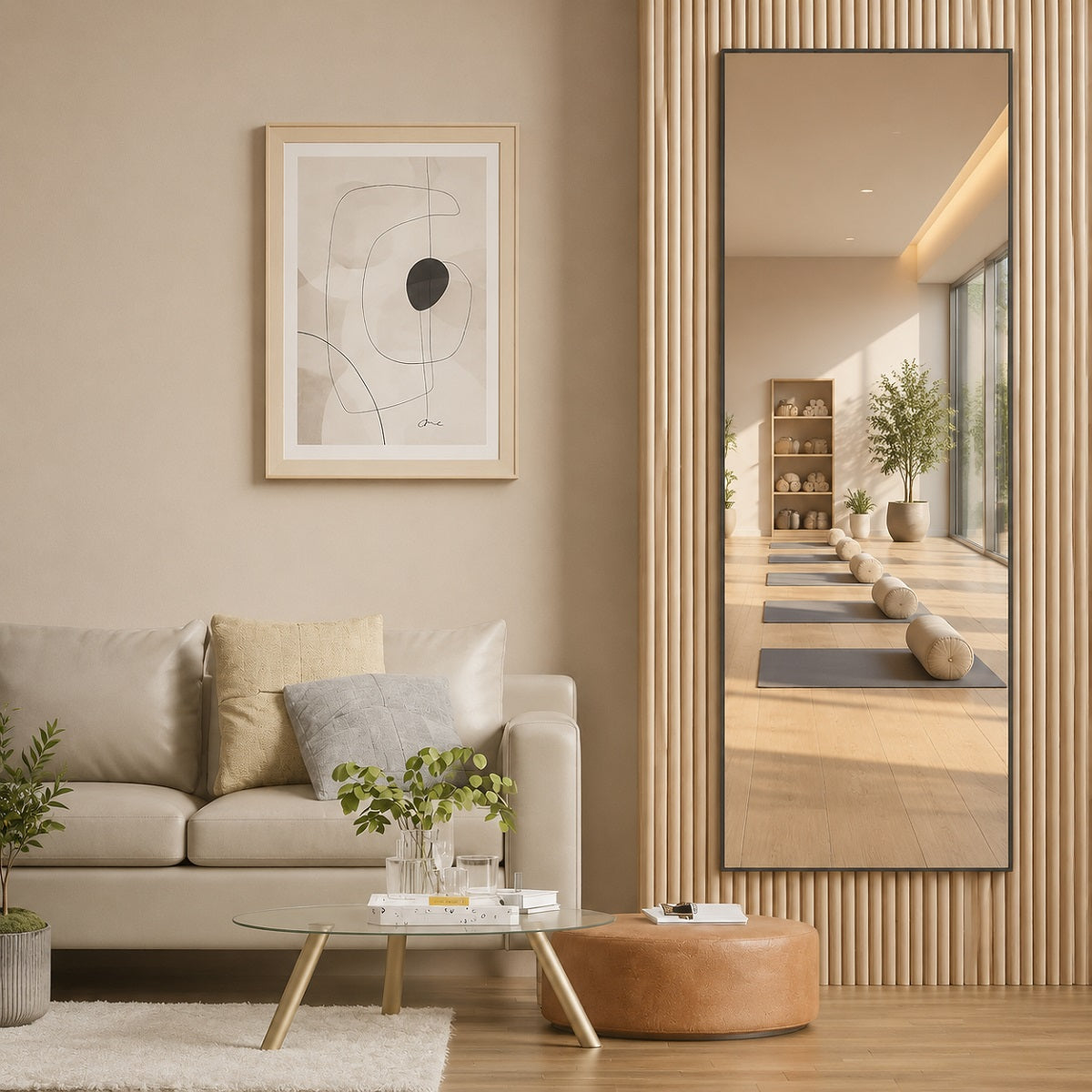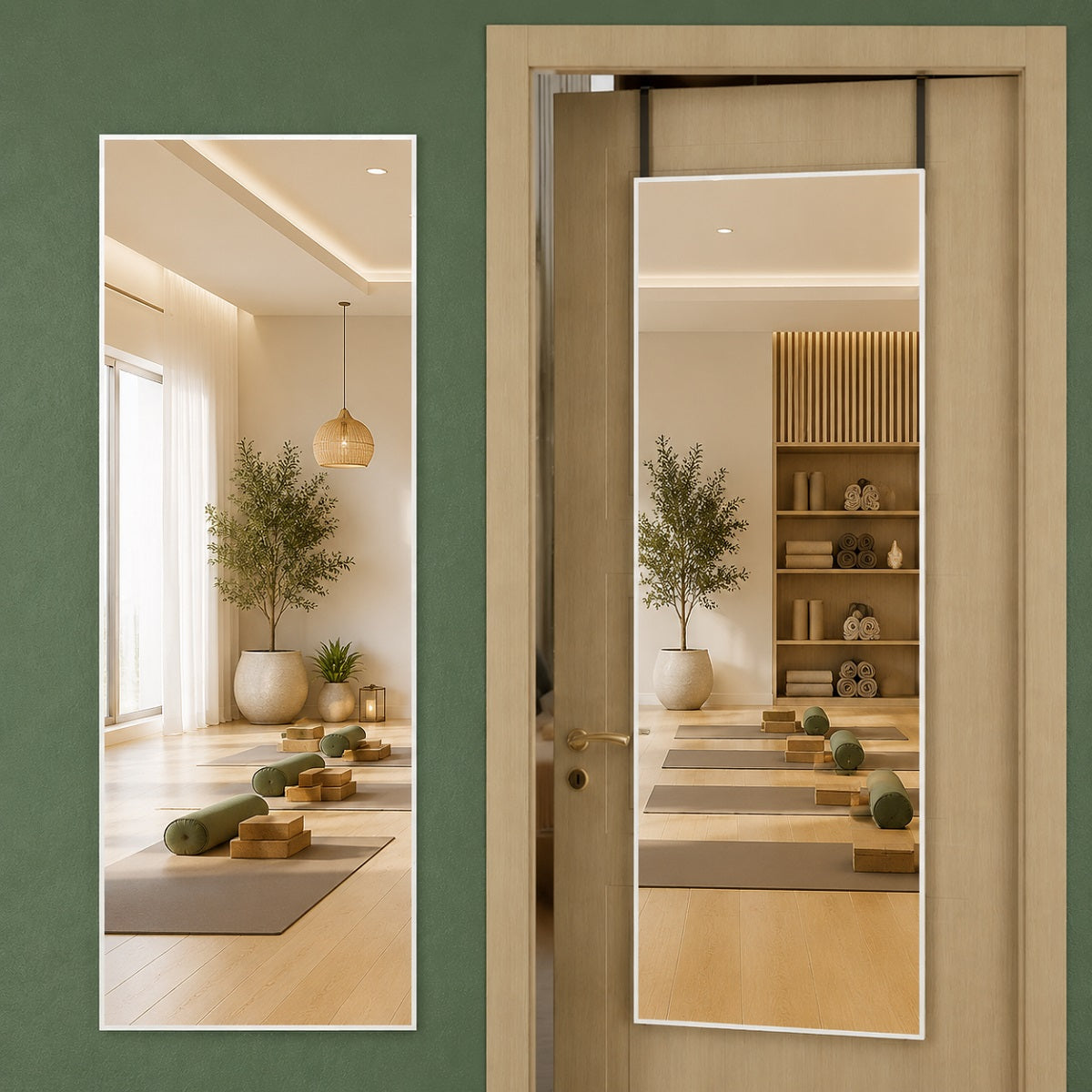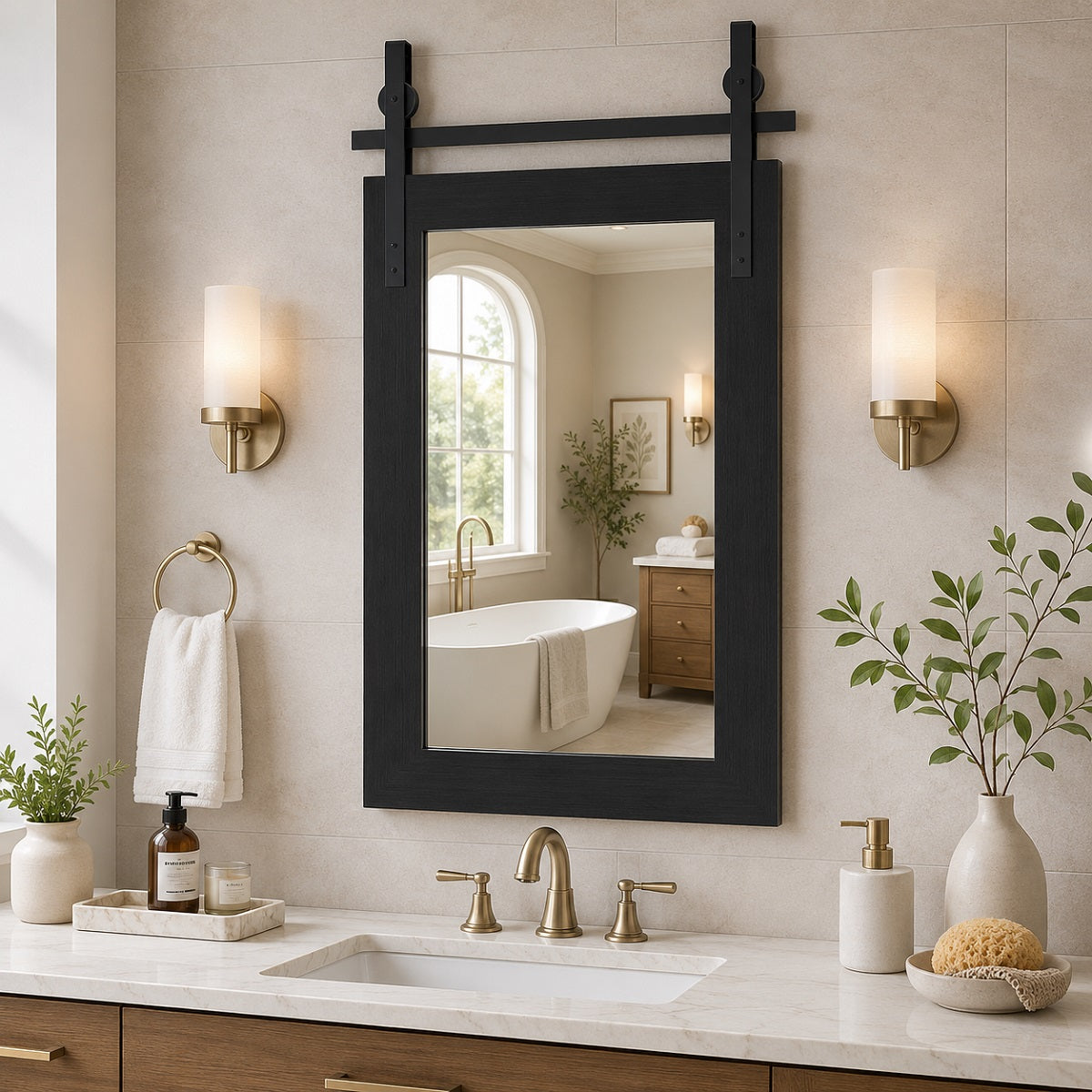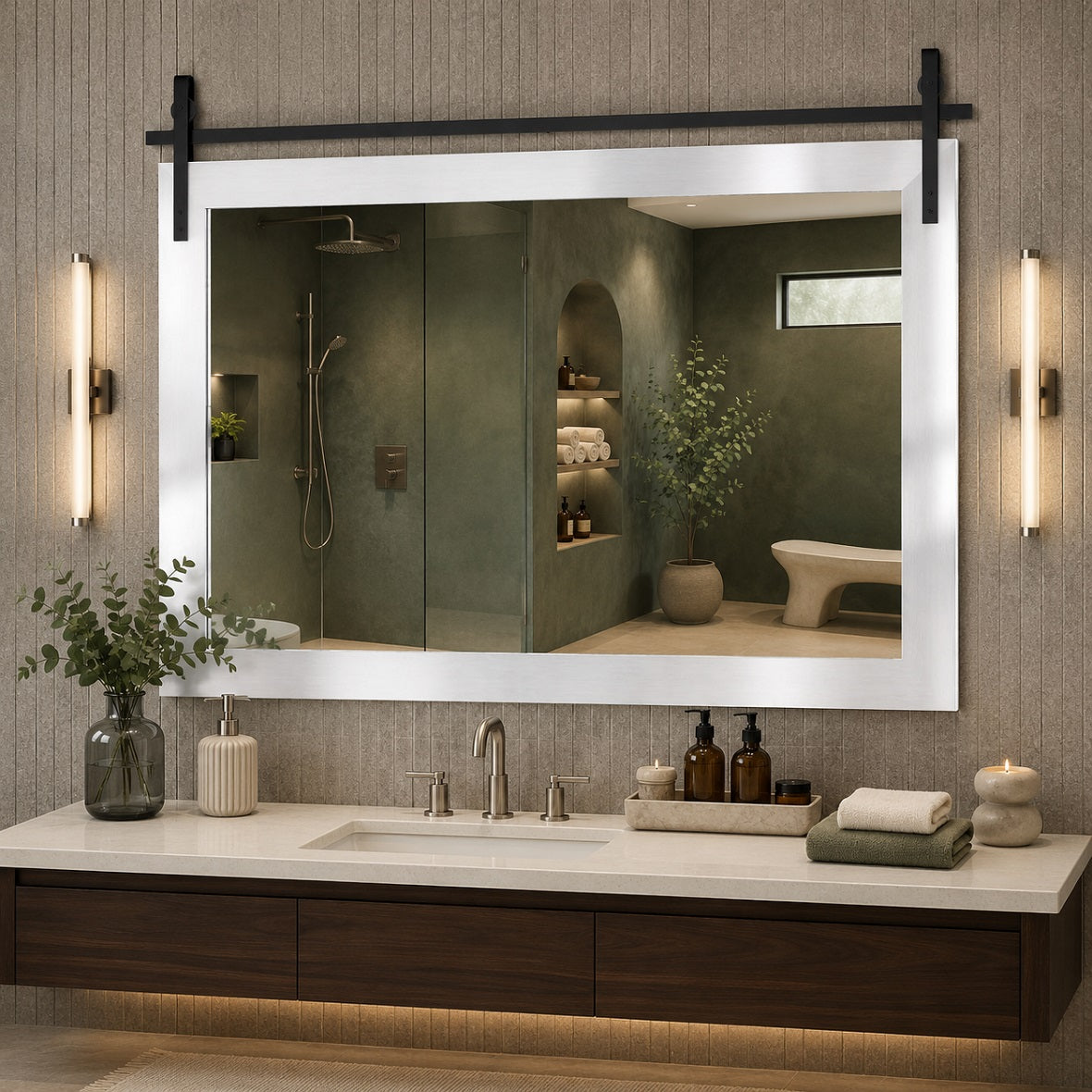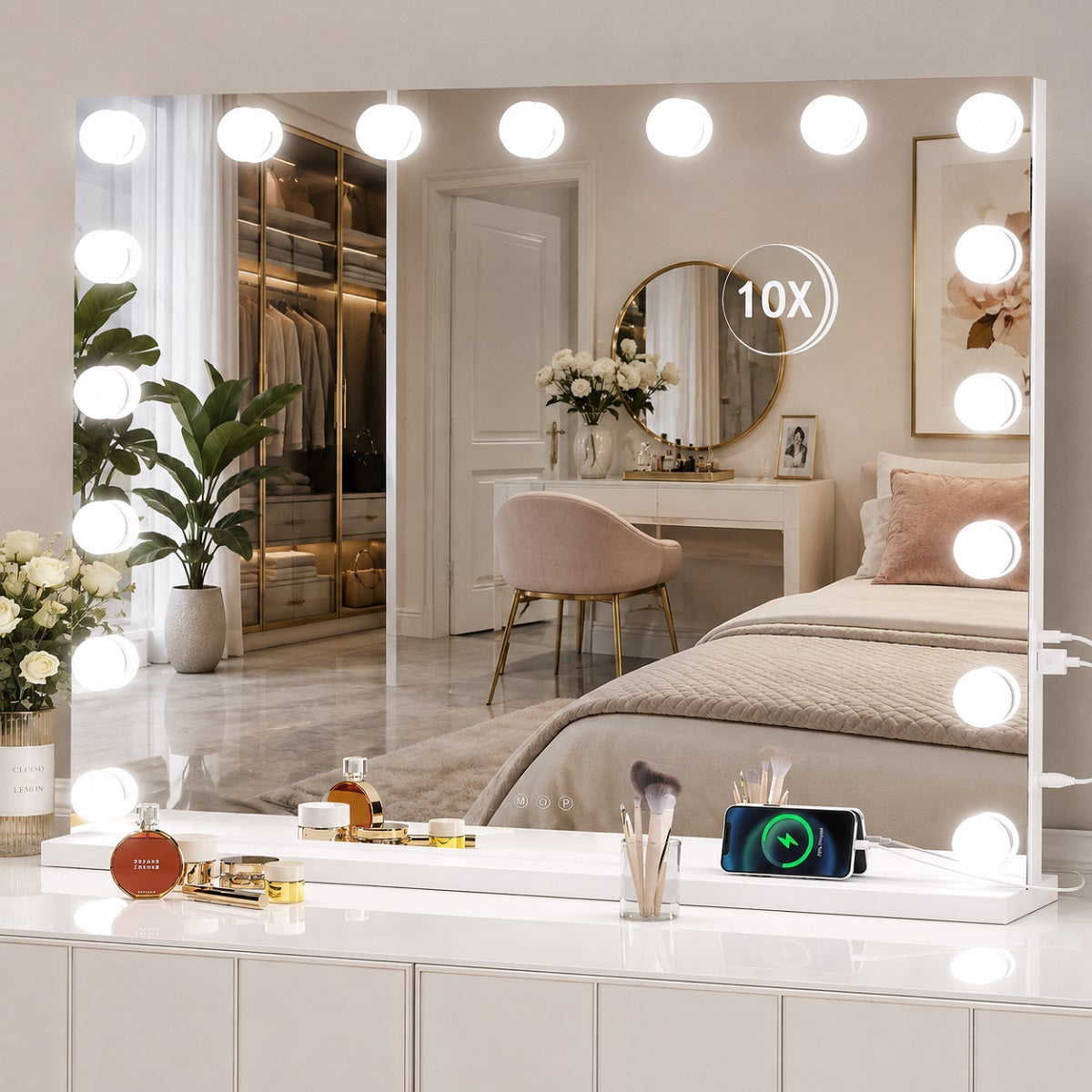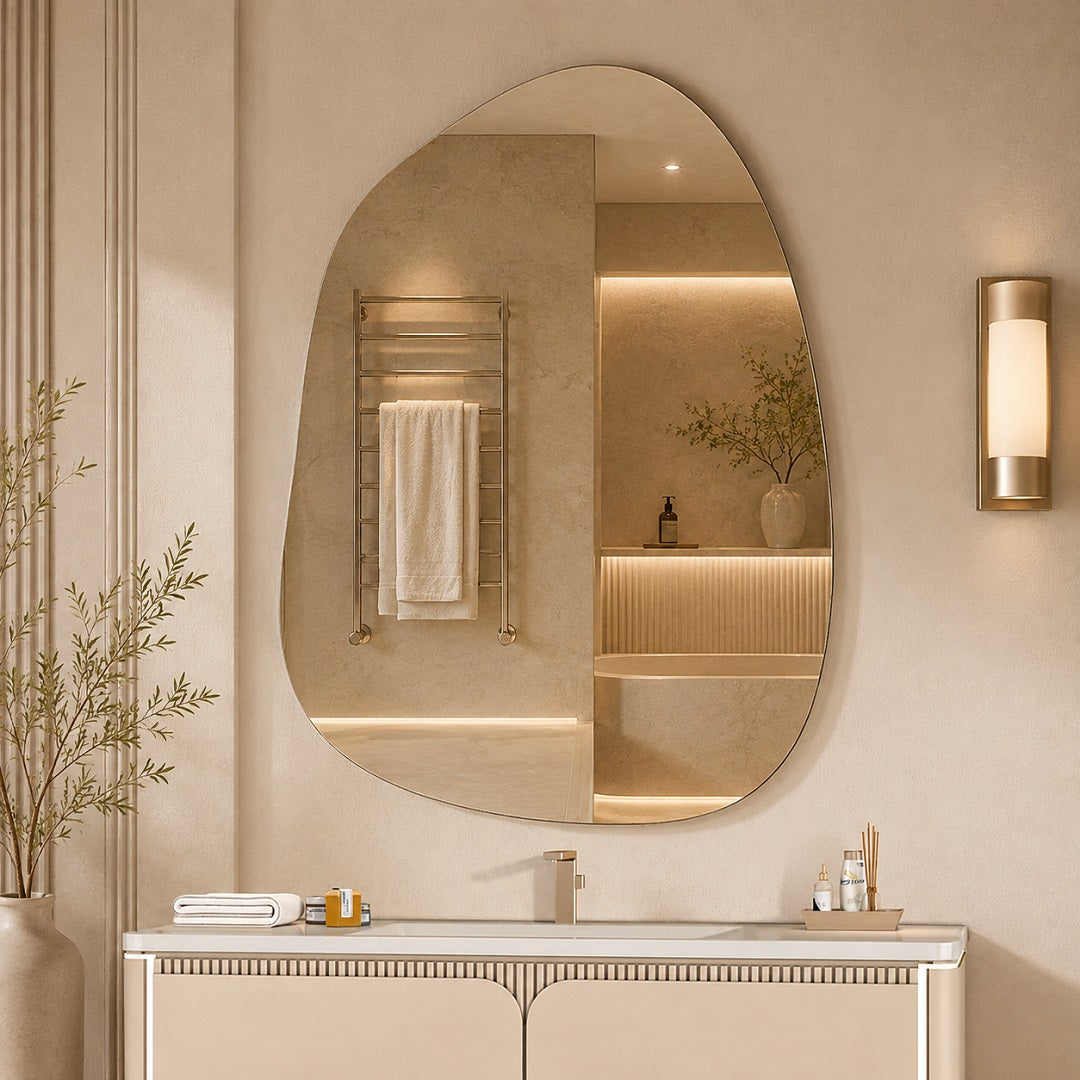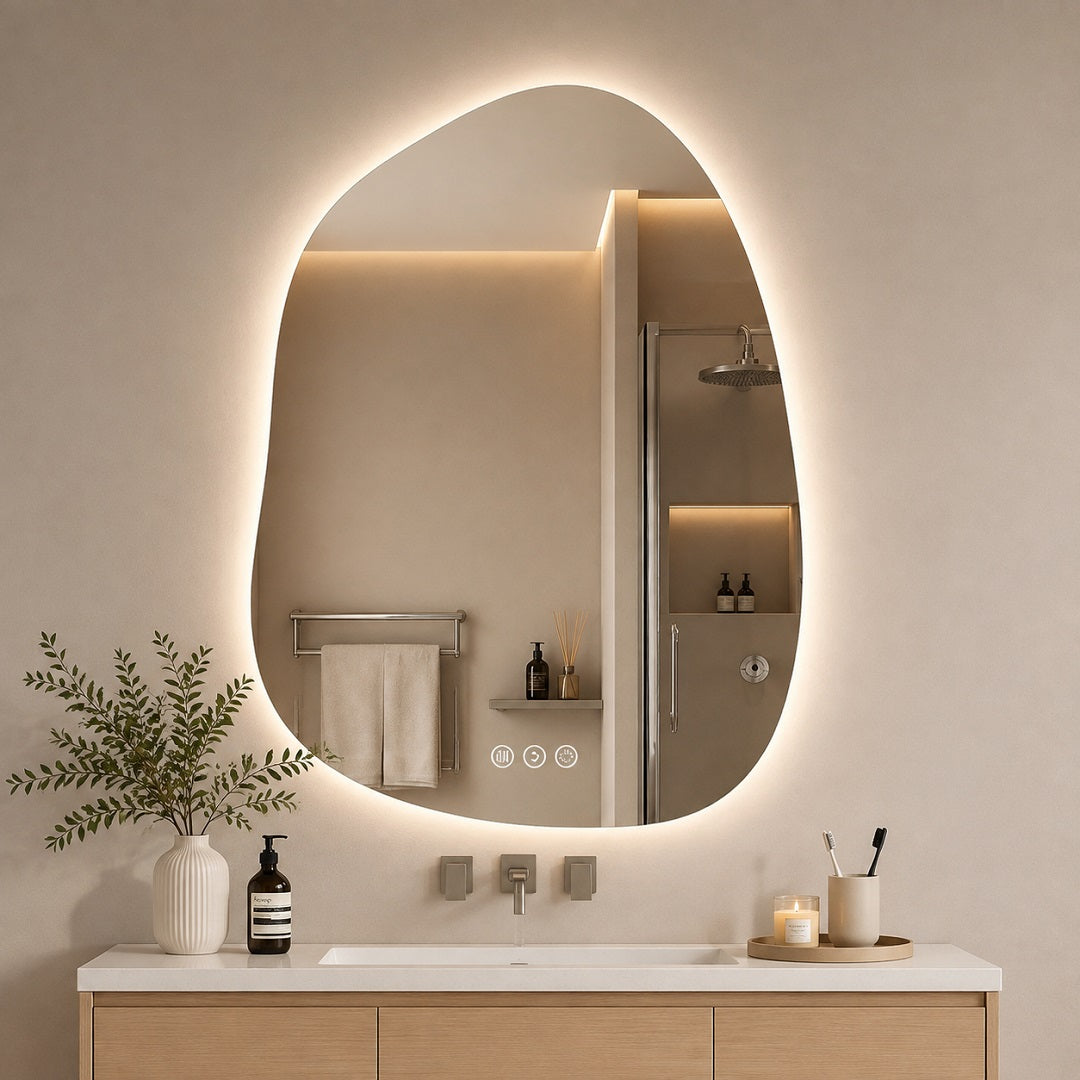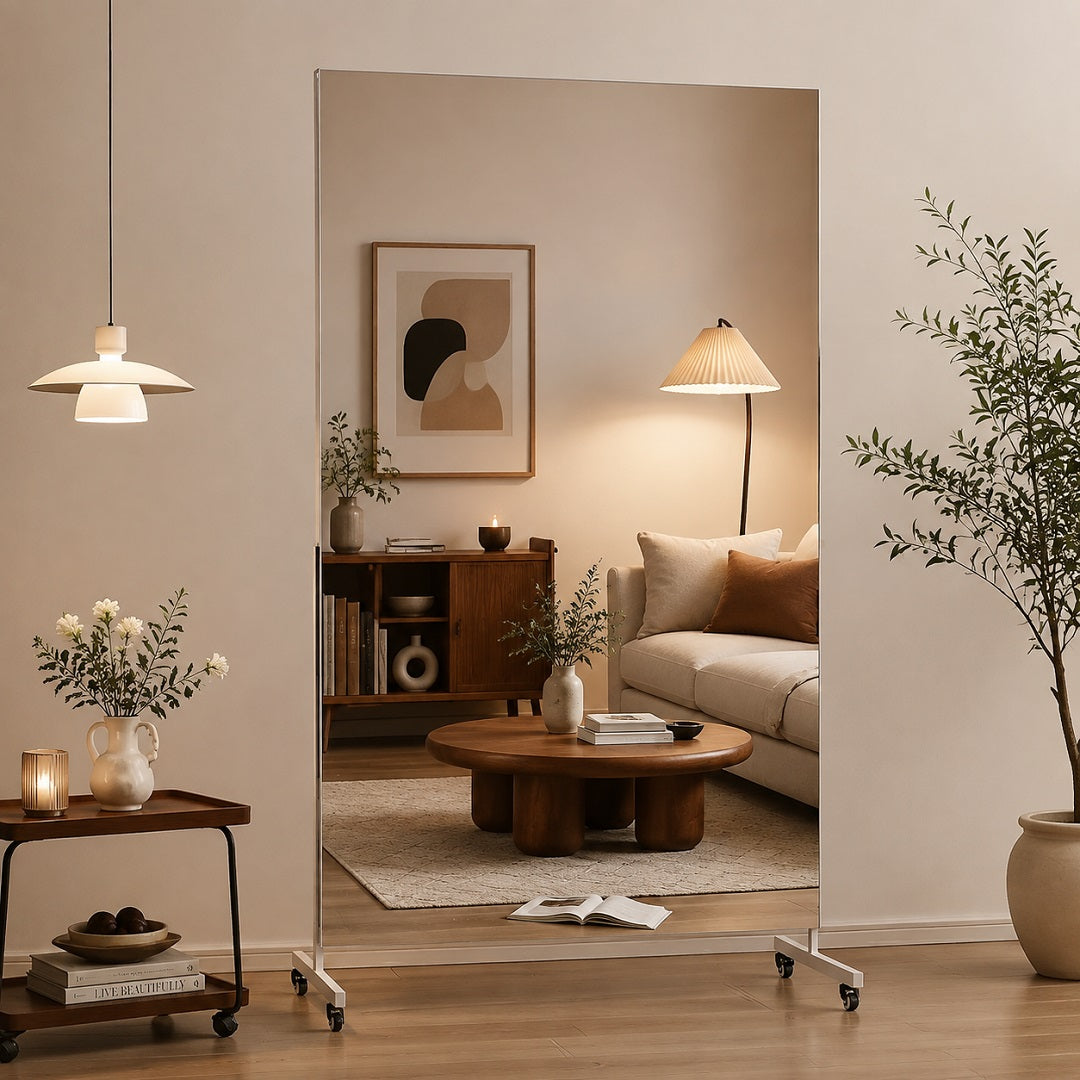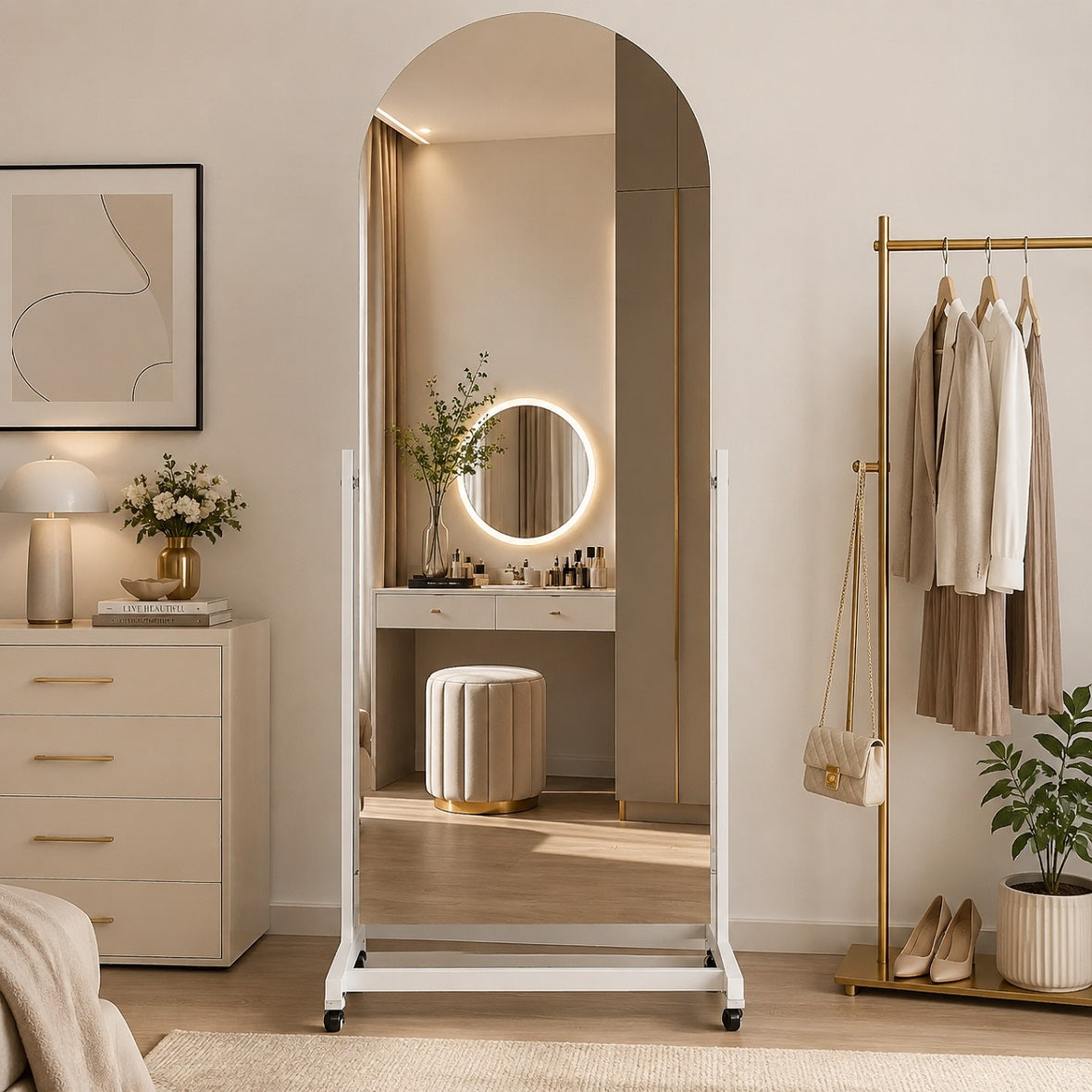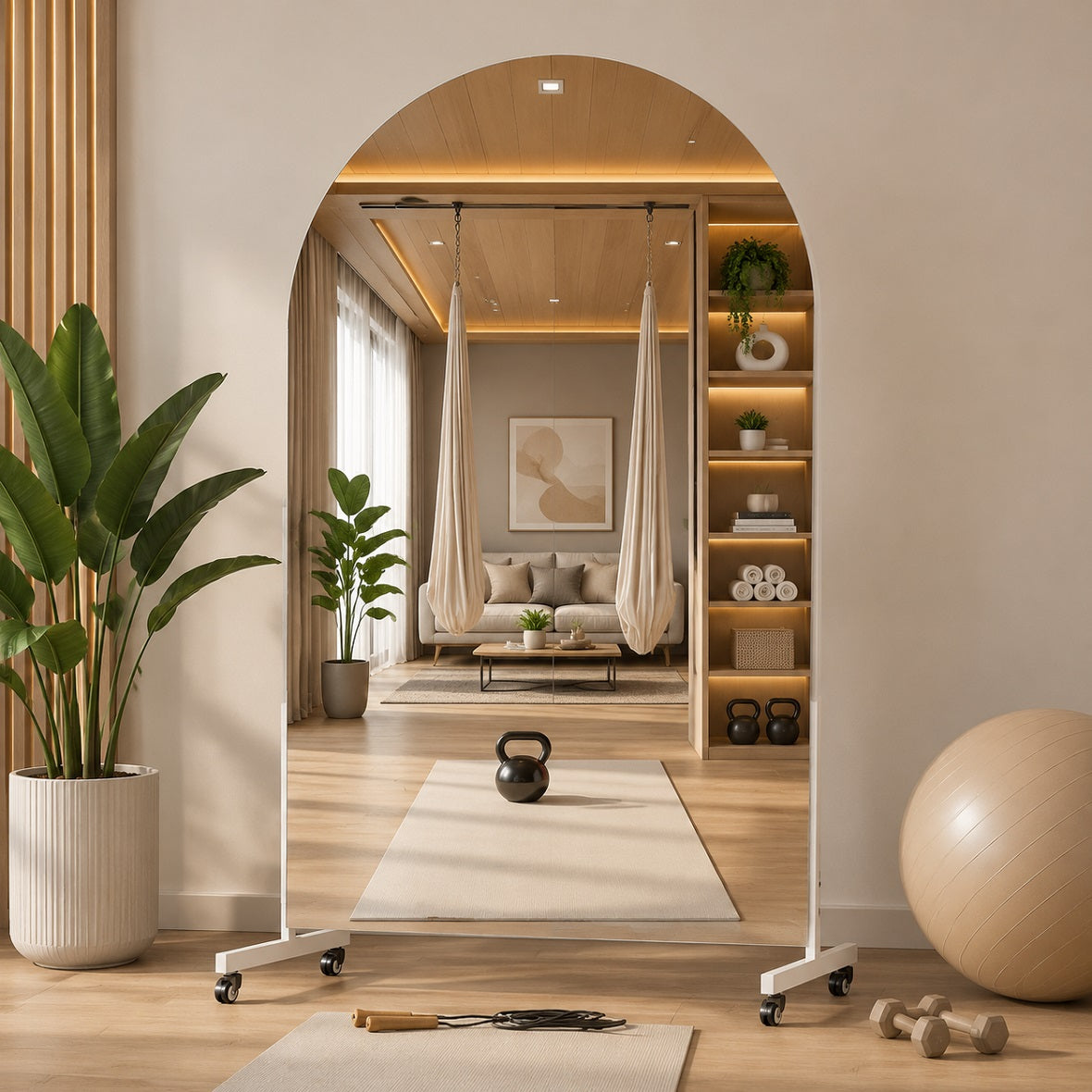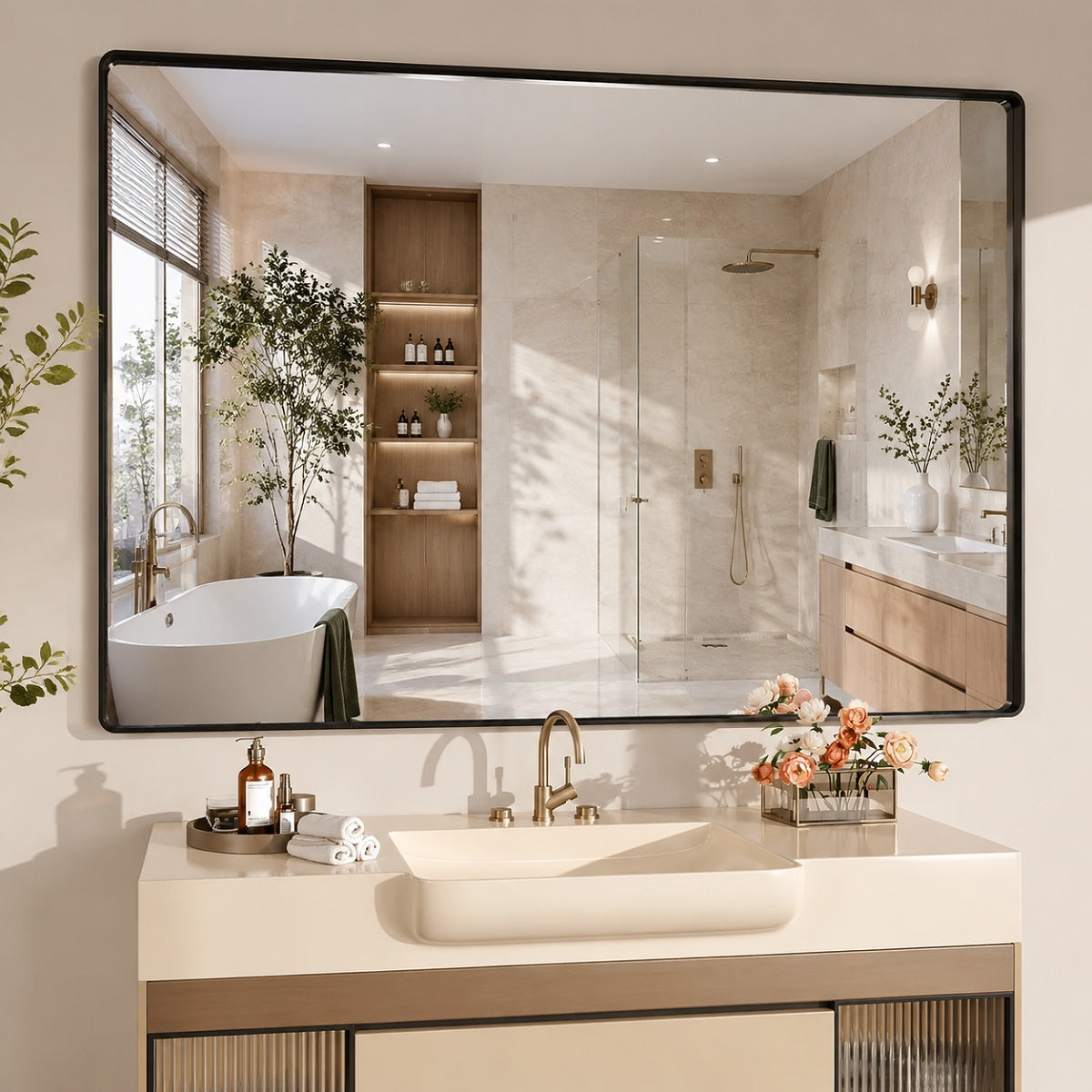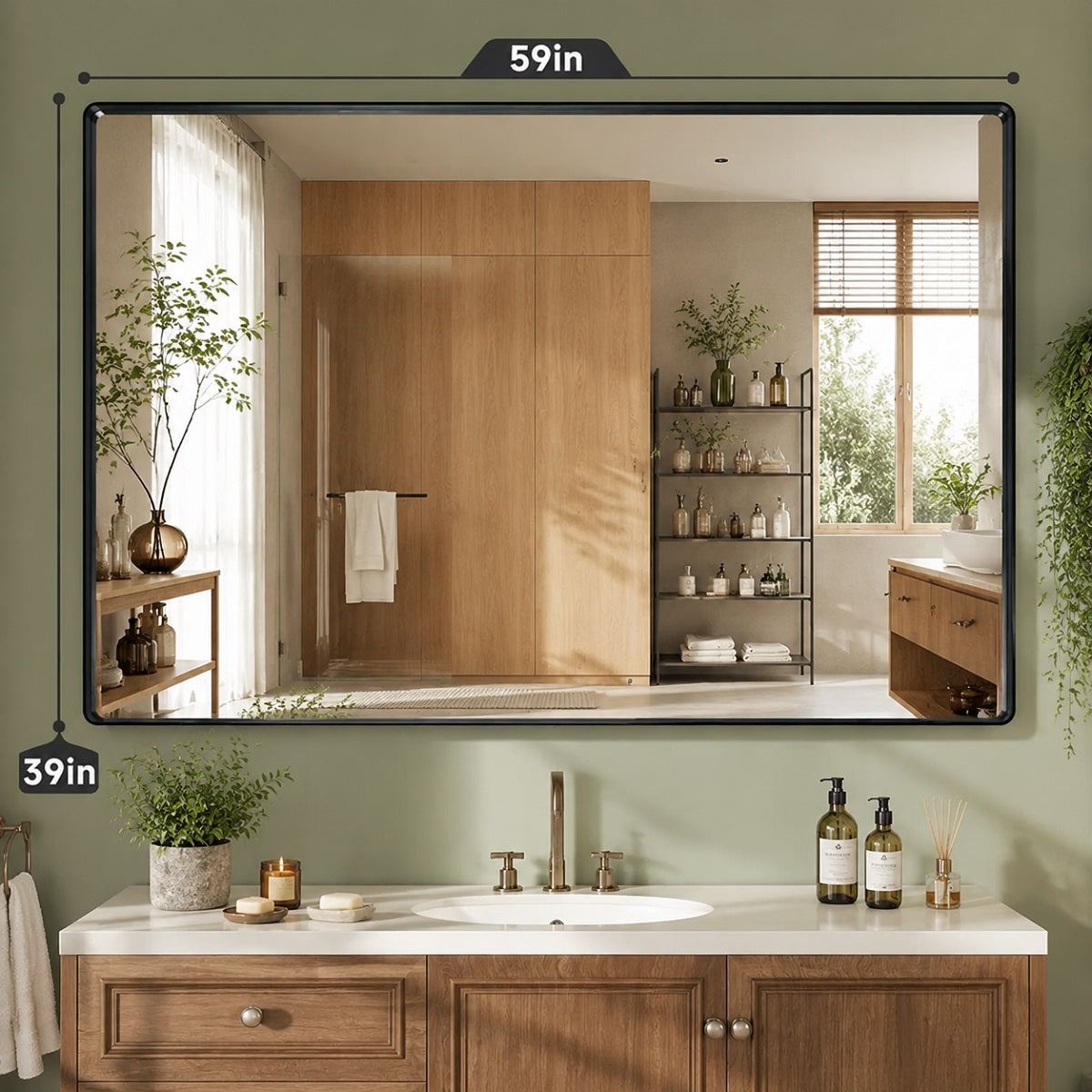
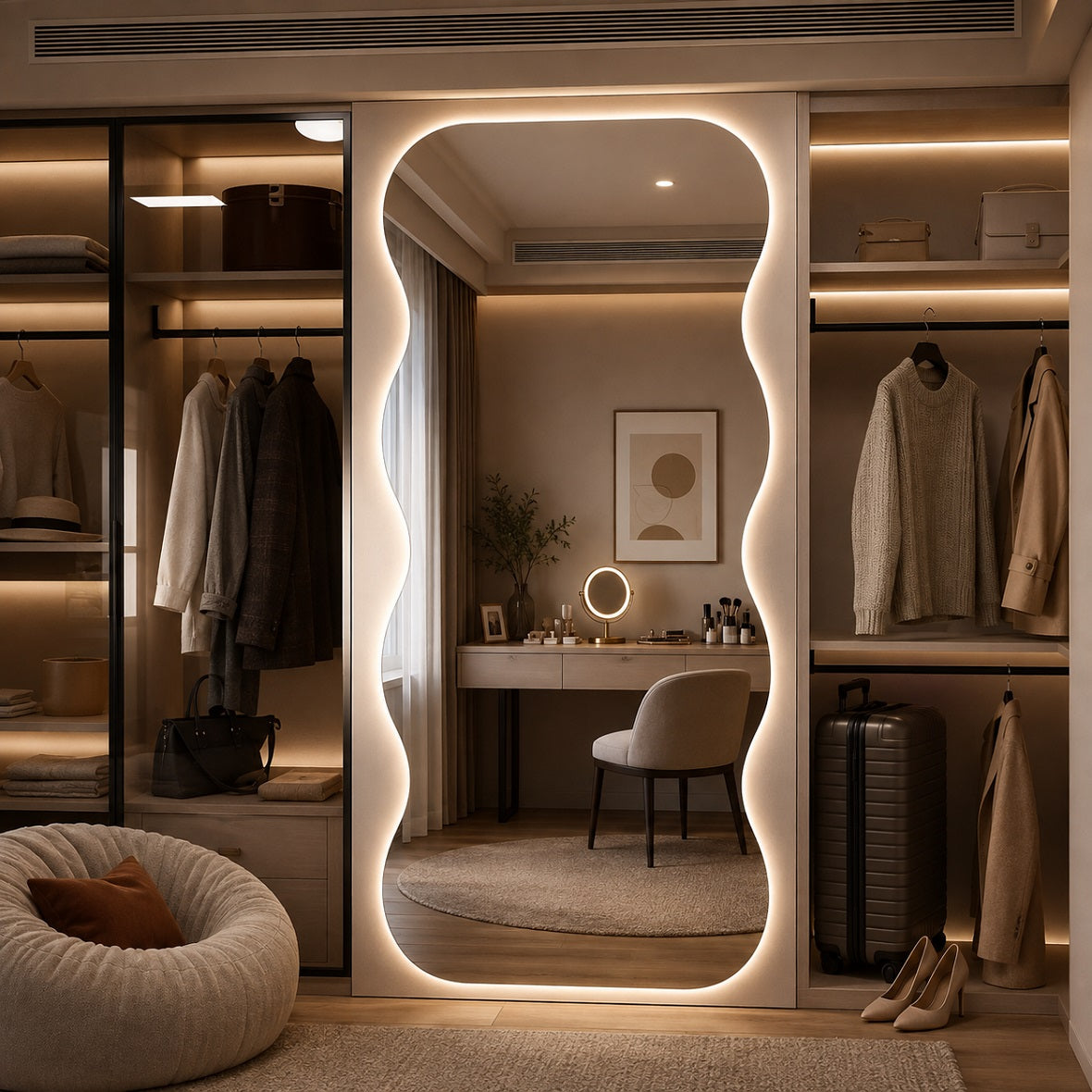


A frameless mirror is a mirror without a visible frame around its outside edge. The glass extends all the way to the perimeter, creating a simple appearance with nothing interrupting the reflective surface.
“Frameless” describes what you see from the front. The mirror may still have brackets, a support panel, an LED housing, or other components hidden behind the glass.
What Makes a Mirror Frameless?
On a framed mirror, the surrounding wood, metal, or plastic covers the edge of the glass and becomes part of the design. On a frameless mirror, the glass shape and edge finish define the design instead.
This makes frameless mirrors especially suitable for bathrooms and smaller rooms where a wide frame could make the mirror feel heavy or take up additional wall space. Rectangular, round, arched, capsule, and irregular mirrors can all be frameless.
What Happens to the Exposed Glass Edges?
Because there is no frame to hide them, the edges need to be finished during manufacturing.
A polished edge has a smooth, clear, glossy appearance. A ground edge is smoothed but looks more matte. A beveled edge is cut at an angle, producing a decorative border that reflects light differently from the center of the mirror.
The chosen edge treatment affects both the final appearance and how the glass feels when handled.
How Does a Frameless Mirror Stay on the Wall?
A frame is not required to support a wall mirror. Frameless designs can be secured with mirror clips, concealed brackets, French cleats, metal channels, or mirror-compatible adhesive.
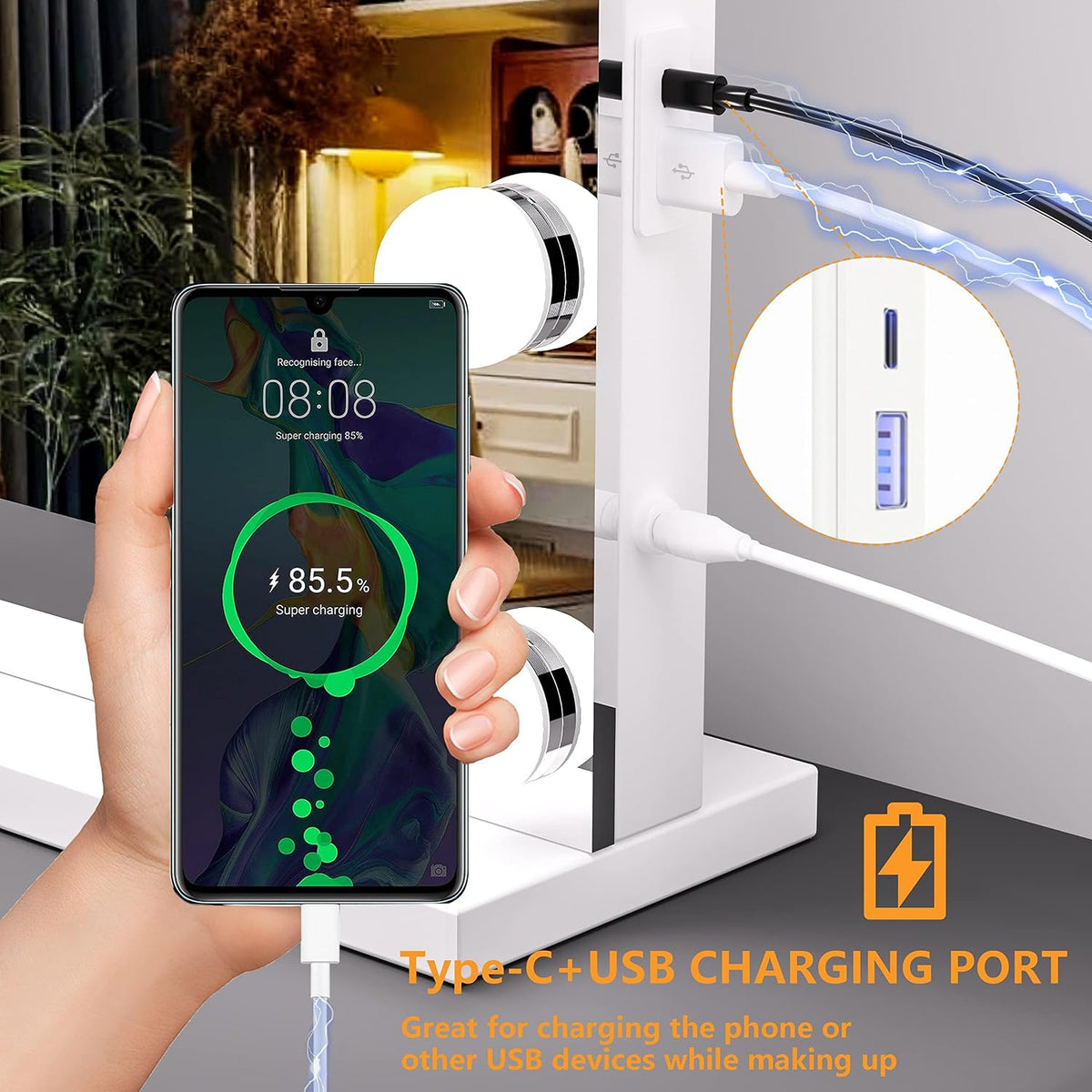
The mounting method depends on the mirror’s weight, backing, wall construction, and product design. An LED frameless mirror usually has a hidden rear housing that supports the glass while also holding the lights, wiring, and controls.
Explore HASIPU Mirrors