

Table of Contents
A mirror may look like a single sheet of reflective glass, but it is built from several thin layers. Clear glass forms the front surface, silver creates the reflection, and protective coatings cover the back.
The basic idea sounds simple. Factory production requires careful cleaning, accurate coating, controlled drying, precise cutting, and repeated inspection. A small scratch or uneven layer can affect how the finished mirror looks years later.
Here is how mirrors are made in a factory, from clear glass to the finished product.
Mirror Manufacturing Process at a Glance
| Step | Factory Process | Purpose |
|---|---|---|
| 1 | Select float glass | Create a flat, clear base |
| 2 | Wash and inspect the glass | Remove residue and visible defects |
| 3 | Prepare the surface | Help the silver bond evenly |
| 4 | Apply the silver coating | Create the reflection |
| 5 | Add protective coatings | Protect the silver from damage |
| 6 | Cut and finish the mirror | Produce the required size and shape |
| 7 | Add film, frames, or lights | Complete the product design |
| 8 | Inspect and pack | Check quality and prevent shipping damage |
The order can vary between factories. Some manufacturers coat large glass sheets before cutting them. Custom fabricators may purchase finished mirror sheets and handle only cutting, edge finishing, assembly, and packaging.
What Is a Modern Mirror Made Of?
A standard glass mirror usually contains:
- Float glass (clear or tinted)
- Tin-based surface treatment
- Thin reflective silver layer
- Copper or copper-free protective treatment
- Backing paint (one or more coats)
- Safety film (optional)
- Frame, mounting hardware, or lighting components
The silver layer sits on the back of the glass, not the front surface you touch. Light travels through the glass, strikes the reflective silver, and bounces back to the viewer.
Step 1: Selecting the Float Glass
Most mirrors begin with float glass, a type of flat glass used in windows, furniture, and interior products.
During float glass production, raw materials such as silica sand, soda ash, and limestone are melted in a furnace. The molten glass flows across a bath of molten tin, where it spreads into a smooth ribbon. The glass is then cooled gradually and cut into large sheets.
This method creates the flat surfaces needed for a clear reflection. Guardian Glass provides a detailed explanation of the float glass manufacturing process.
Many mirror factories do not make the base glass themselves. They purchase large glass sheets and begin production with inspection and coating.
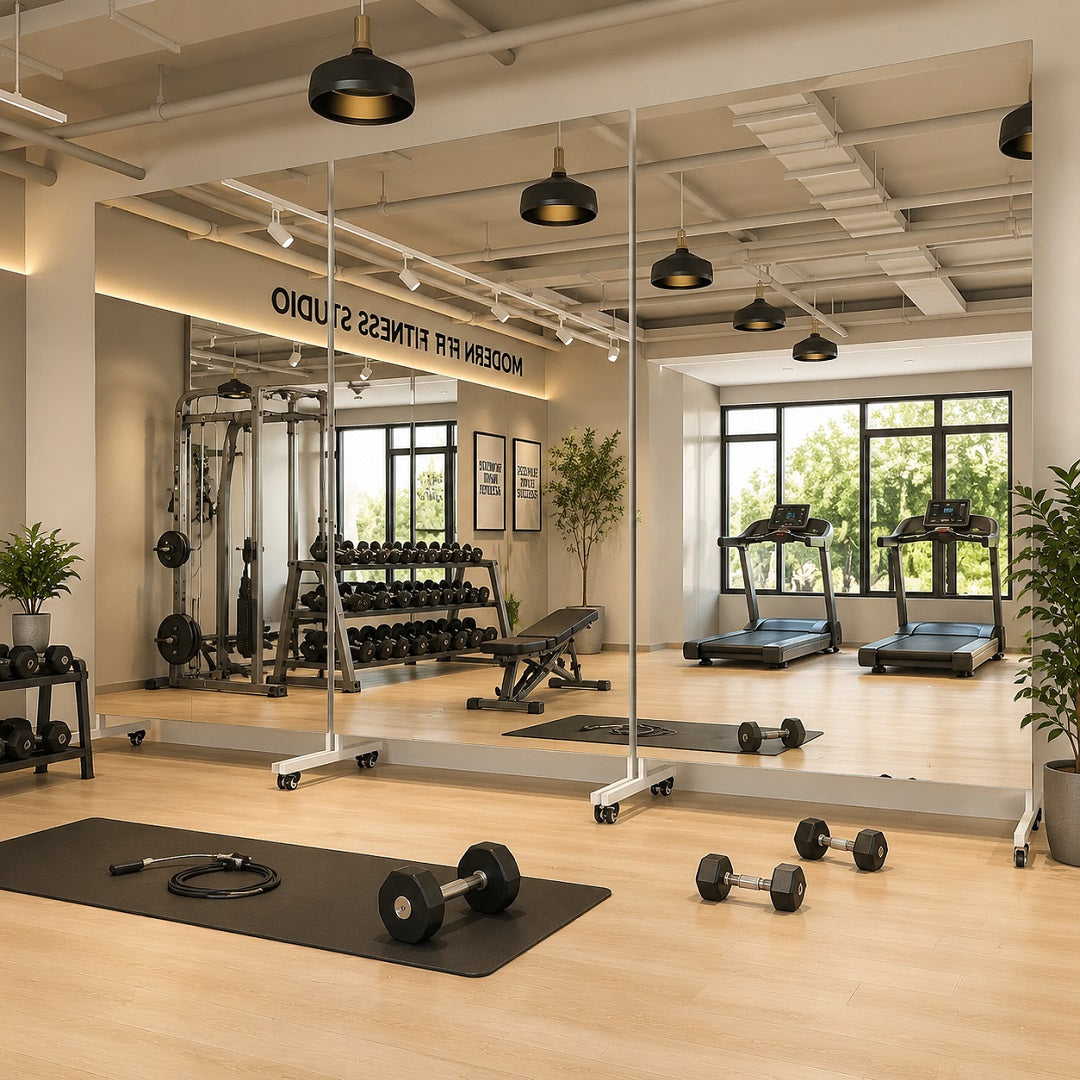
Glass thickness is selected according to the mirror’s size and use. A small framed vanity mirror may use thinner glass than a large wall or gym mirror.

Step 2: Washing and Inspecting the Glass
The glass must be clean before any reflective coating is applied.
Factory washing equipment removes dust, grease, fingerprints, and mineral residue. Brushes and water sprays clean the surface, followed by a final rinse and drying stage.
Inspection teams also look for:
- Scratches and chips
- Bubbles or embedded particles
- Stains
- Uneven thickness
- Optical distortion
- Surface waves
A defect that seems minor on clear glass may become obvious after silvering. Flatness is especially important because uneven glass can make faces and straight lines appear bent.
Step 3: Preparing the Surface
Silver does not attach evenly to untreated glass. A very thin tin-based sensitizing solution is applied after washing.
This treatment prepares the surface for the reflective metal. It does not create the reflection itself and should not be confused with the molten tin used during float glass production.
The concentration and coverage must remain consistent. Poor preparation can lead to spots, streaks, or weak silver adhesion.
Step 4: Applying the Silver Layer
The glass now enters the silvering process.
Silver-containing solutions are mixed and sprayed across the prepared surface. A chemical reaction leaves a thin film of metallic silver on the back of the glass. This is the layer that turns clear glass into a mirror.
The coating must be even from edge to edge. Gaps or changes in thickness may create dull areas and visible marks.
Pilkington describes silvering as a chemical process that deposits metal—usually silver—on clear glass. The silver provides the mirror’s reflective properties.
At this stage, the mirror can already produce a reflection, but the exposed silver is too delicate for everyday use.
Step 5: Protecting the Reflective Coating
The silver must be protected from air, moisture, scratches, and chemicals.
Traditional silver-backed mirrors often use a thin copper layer over the silver. Modern copper-free mirrors replace that copper with another protective treatment.
One or more coats of paint are then applied to the back. The paint covers the reflective layers and creates a durable, opaque surface. Each coat must dry or cure before the mirror continues down the production line.
Copper-free does not mean the silver is left exposed. It still receives protective coatings and paint. Some modern systems also use lead-free or water-based backing paints.
Damage to these rear layers can allow moisture to reach the silver. This may eventually appear as dark spots or black edges.
How Are Aluminum Mirrors Coated?
Silvering is common for household mirrors, but some mirrors use aluminum instead. In this process, the cleaned glass is placed inside a vacuum chamber. Aluminum is heated until it evaporates, then settles across the glass as a thin reflective film.
This method is known as vacuum deposition. It creates a consistent metal coating without using a liquid silvering bath. A protective backing is still needed because the aluminum layer can be scratched or damaged during handling.

Step 6: Cutting and Finishing the Mirror
Large coated sheets are cut into the required sizes and shapes. Cutting software may arrange several products on one sheet to reduce waste.
Factories can produce:
- Rectangular and square mirrors
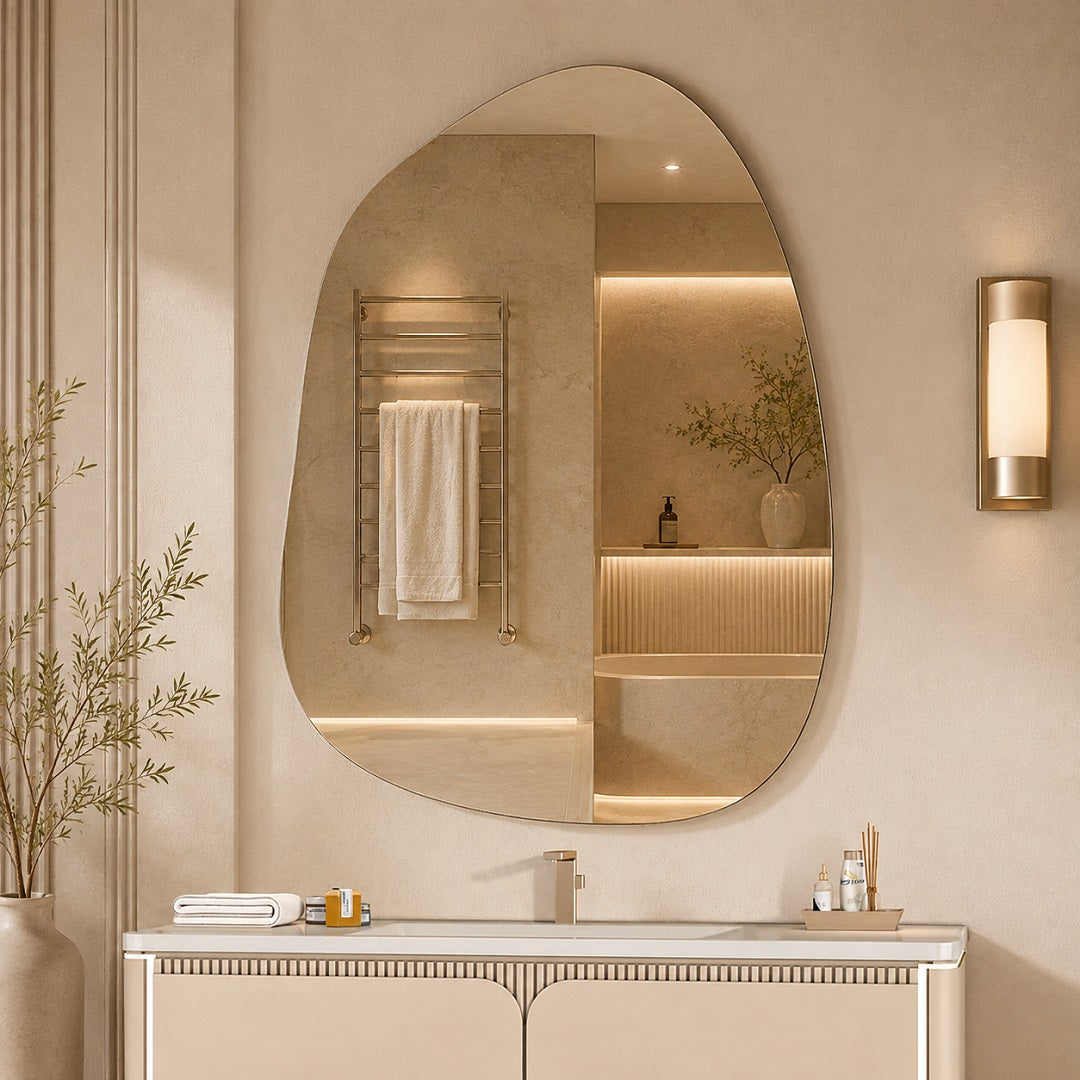
- Round or oval mirrors
- Arched mirrors
- Irregular decorative shapes
- Custom mirror panels
- Openings for lights, controls, or hardware
Freshly cut glass has sharp edges. Grinding removes the sharpness, while polishing creates a smooth, finished appearance. Decorative mirrors may receive a beveled edge.
Holes and notches can be added for mounting brackets, touch controls, wires, or frame hardware. The protective paint on the back must not be scratched during this work.
A standard coated mirror cannot always be tempered after silvering. A tempered glass mirror needs a production method designed around compatible glass and coating processes. Safety backing is another common way to improve protection.
Step 7: Adding Safety Backing, Frames, and Lights
Some mirrors receive a film on the painted rear surface. This safety backing film helps retain broken pieces if the glass is damaged. It can also protect the paint against scratches.
Safety-backed and tempered mirrors are not the same:
- Tempering changes the strength and breakage pattern of the glass.
- Safety film helps keep broken fragments together.
- Laminated mirrors use an interlayer between glass sheets.
AGC explains that its SAFE+ backing holds glass pieces against the film after breakage and protects the painted surface from scratching.
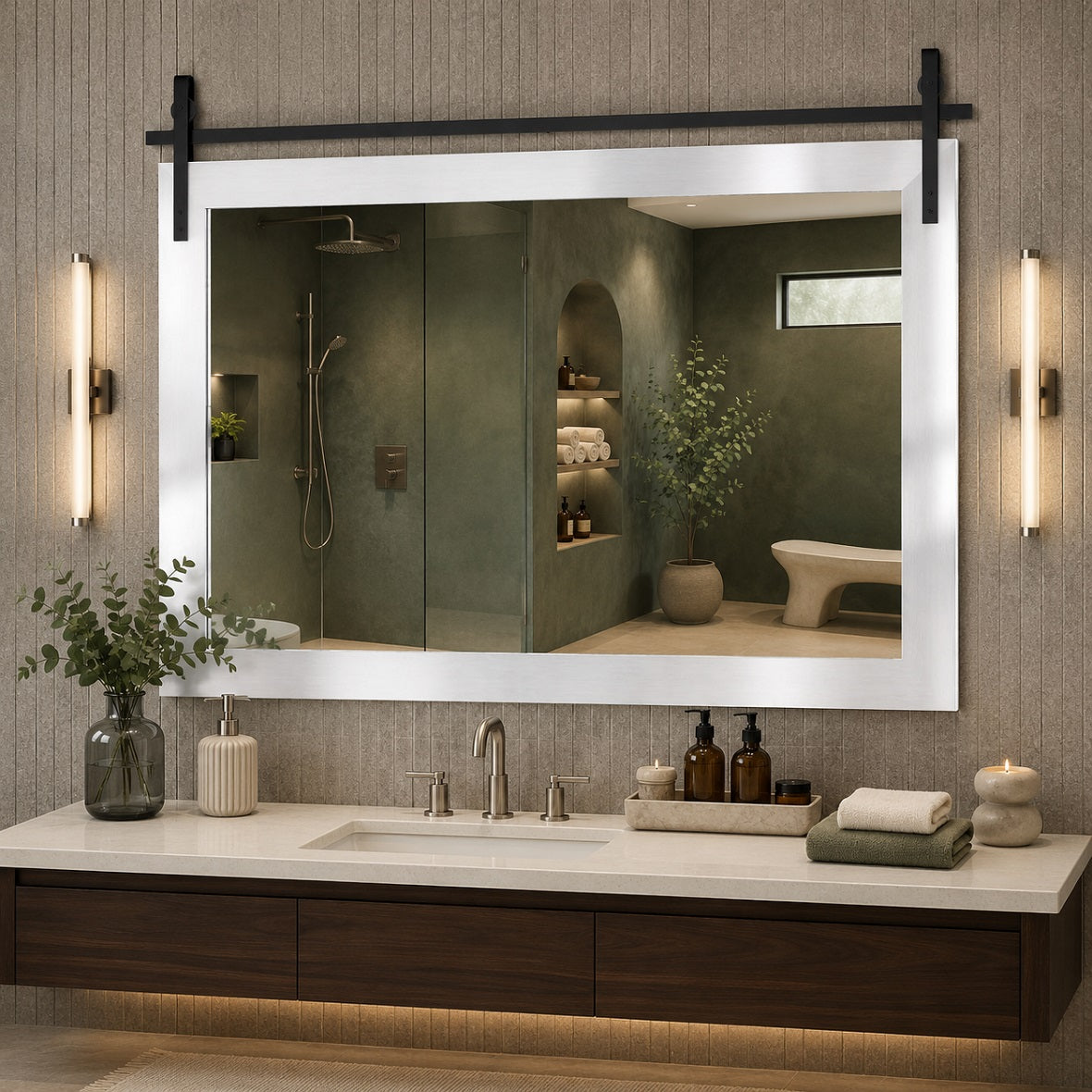
Framed mirrors are fitted into aluminum, steel, wood, or engineered-material frames. The frame should hold the glass securely without placing uneven pressure on it.
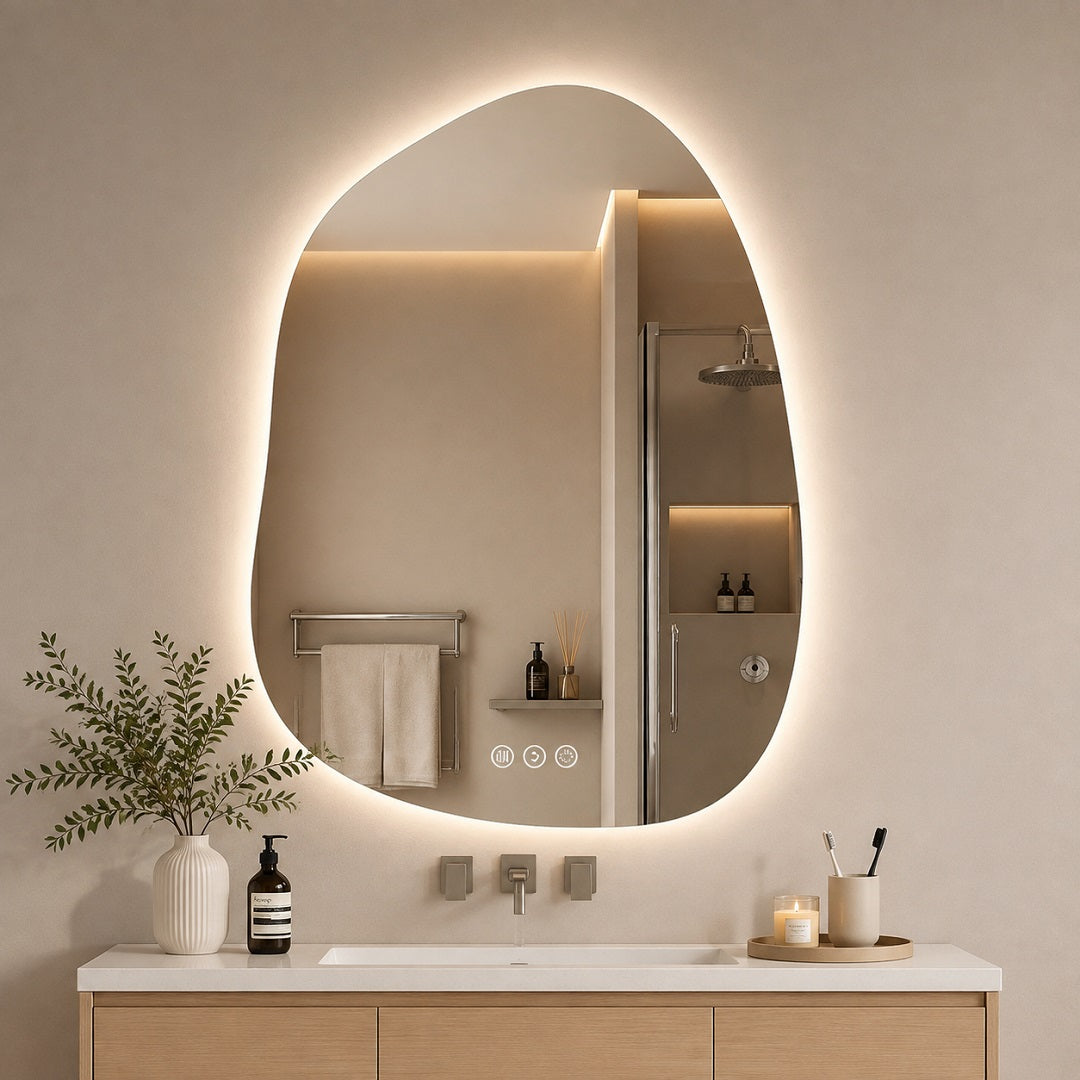
For an LED mirror, assembly may include light strips, bulbs, a power driver, touch controls, memory settings, charging ports, or an anti-fog pad. Every electrical connection must be secured before the rear cover is installed.
Tabletop vanity mirrors may also need a weighted base, swivel joint, or rotation mechanism.
How Is a Wooden Mirror Frame Made?
For a framed mirror, glass production is only part of the factory work. The wood must be dried before shaping so changes in moisture are less likely to bend or open the finished frame. Common frame materials include pine, paulownia, and engineered wood, depending on the design and price range.
The lumber is planed and cut into frame strips. Wider decorative frames may be assembled from several pieces. Some styles receive a gypsum-based coating that fills the surface and provides a base for molded or embossed patterns. The frame is dried and sanded between these stages to keep the surface smooth.
Each strip is cut to the required length, often with 45-degree ends for the corners. The pieces are glued, joined, and checked for gaps or misalignment. Decorative flowers, carved details, or resin ornaments may be attached before another round of filling and polishing.
Primer, color coats, metallic finishes, or foil can then be applied. Antique effects such as bronze, distressed white, or aged gold are added by hand on some designs, so slight variation is natural. Once the finish has dried, the mirror panel, backboard, hanging hardware, and corner reinforcement are installed.
Step 8: Final Inspection and Packaging
The completed mirror goes through a final quality check.
Inspectors examine the glass for scratches, dark spots, uneven coating, rough edges, frame gaps, and reflection distortion. Lighted mirrors are tested for brightness, color modes, dimming, touch controls, memory, and other electrical functions.
Large mirrors may be checked with straight lines or grid patterns. A curved or distorted line can reveal small waves in the glass that are difficult to see in a close-up reflection.
After inspection, the mirror is cleaned and packed with foam, corner guards, cardboard, or molded inserts. The packaging should keep pressure away from the edges and stop the product from moving inside the box.
Before shipping, framed mirrors are also checked for open corner joints, loose decorations, uneven color, dirty backboards, rusted hardware, and glass that sits incorrectly in the frame. Finished mirrors are normally stored upright on padded racks rather than laid flat on the floor. This helps protect the glass, frame, and backing from pressure and moisture.
At Hasipu, clear reflection is only part of the finished product. Glass quality, stable construction, practical lighting, safety protection, and secure packaging all affect how a mirror performs in the home.
How Are Bathroom Mirrors Made Differently?
A bathroom mirror follows the same basic silvering process, but protection against moisture becomes more important.
The reflective layer and painted backing must remain covered. Exposed or damaged edges can allow moisture to reach the silver and cause corrosion.
Lighted bathroom mirrors may also include:
- Moisture-resistant electrical components
- Anti-fog heating pads
- Sealed LED lighting
- Touch controls
- Plug-in or hardwired connections
- Vertical and horizontal mounting points
A moisture-resistant mirror is designed for humid indoor conditions. It should not be submerged or installed where water can collect behind the glass.

How Are LED Mirrors Made?
The LED mirror manufacturing process combines mirror fabrication with electrical assembly.
Part of the mirror may be frosted or treated to allow light to pass through. LED strips are installed behind these areas, followed by the power supply, control board, touch sensors, and rear cover.
Factories test the mirror for:
- Even lighting
- Brightness adjustment
- Color temperature changes
- Touch response
- Memory operation
- Anti-fog performance
- Electrical stability
The LED layout affects the final appearance. Poorly spaced lights may create bright spots, while even spacing produces more comfortable illumination.
From the Factory to Your Home
The materials and manufacturing steps behind a mirror matter most when they improve how it looks and works in your home. Hasipu mirrors are designed around clear reflection, durable construction, practical lighting, and comfortable everyday use.
Lighted Vanity Mirrors
Create a brighter, more practical makeup space with adjustable LED lighting, clear reflection, touch controls, and designs suited to different vanity sizes.
Bathroom Mirrors
Explore bathroom mirrors made for daily grooming, including framed, frameless, lighted, and anti-fog designs for different bathroom layouts.
Explore Hasipu Bathroom Mirrors
Full-Length Mirrors
See your complete look with full-length mirrors designed for bedrooms, dressing areas, entryways, home gyms, and other everyday spaces.
View Hasipu Full-Length Mirrors
Final Thoughts
The mirror manufacturing process turns clear float glass into a reflective product through cleaning, surface preparation, silvering, protective coating, cutting, and assembly.
Each stage affects the result. Flat glass supports a natural reflection. Even silver coverage prevents dull areas. Strong backing protects the reflective layer, while careful edge work, stable hardware, and secure packaging prepare the mirror for daily use.
Two mirrors may look similar in a photograph but perform differently over time. The difference often comes from the materials used and how carefully each factory step is controlled.
Frequently Asked Questions
1. Are mirrors made with silver or aluminum?
Most household glass mirrors use a thin silver coating. Aluminum is also used in some optical, decorative, and specialized mirrors.
2. Why is silver placed behind the glass?
The glass provides a smooth surface and protects the silver from direct contact. Light passes through the glass, reflects from the silver, and returns toward the viewer.
3. What is a copper-free mirror?
A copper-free mirror uses another protective treatment instead of the traditional copper layer. The silver is still covered with protective coatings and backing paint.
4. Why do mirror edges turn black?
Black edges usually appear when moisture or chemicals reach the reflective layer. Scratched backing, exposed edges, unsuitable adhesive, or long-term dampness can contribute to corrosion.
5. Can mirrors be made from tempered glass?
Yes, but the manufacturing process must be designed for it. A finished standard silver mirror cannot always be placed into a tempering furnace afterward. Other products use safety backing or laminated construction.
6. How are antique mirrors made?
Some antique-style mirrors are created by intentionally changing or oxidizing parts of the reflective coating. This produces spots, cloudy areas, and aged patterns without waiting for natural corrosion.