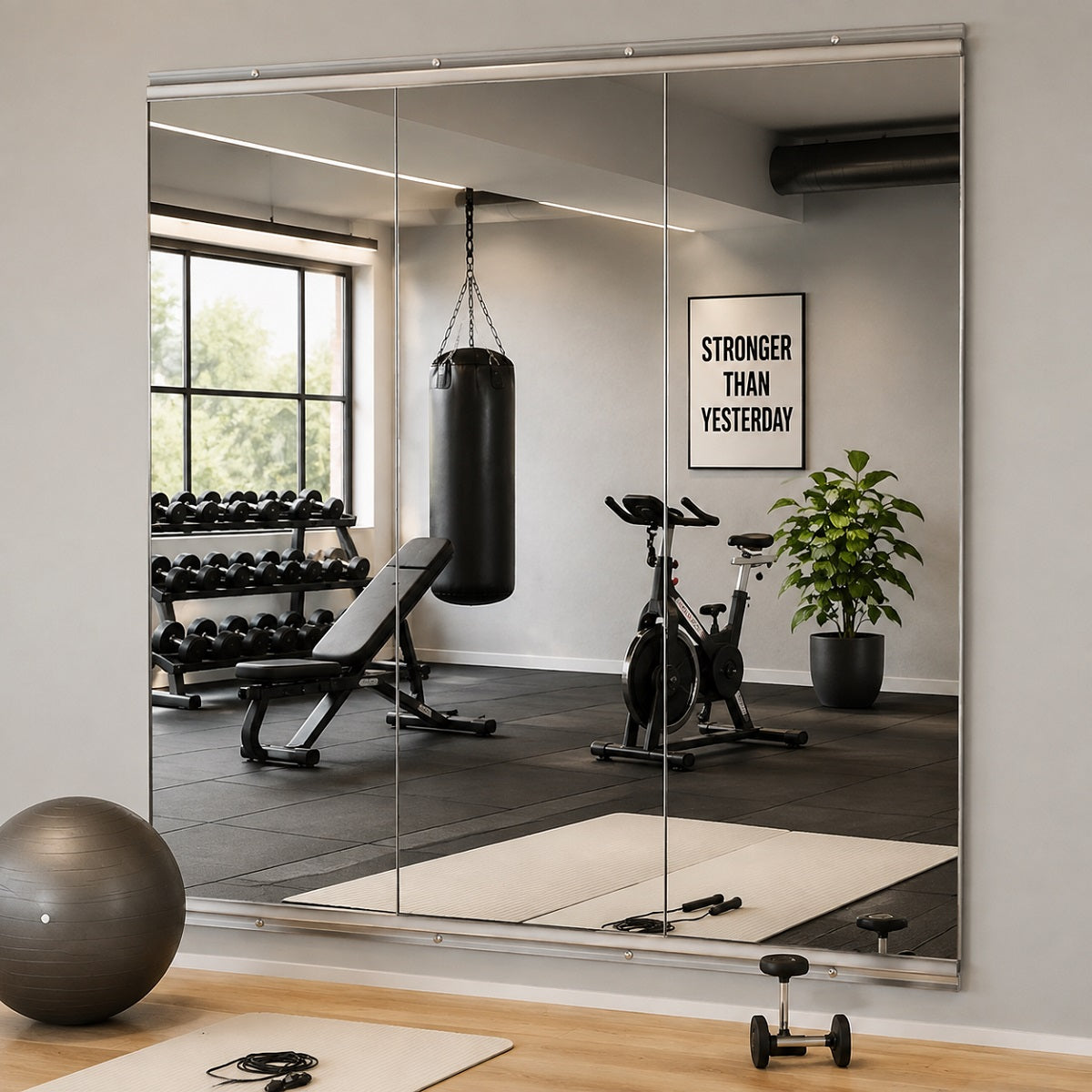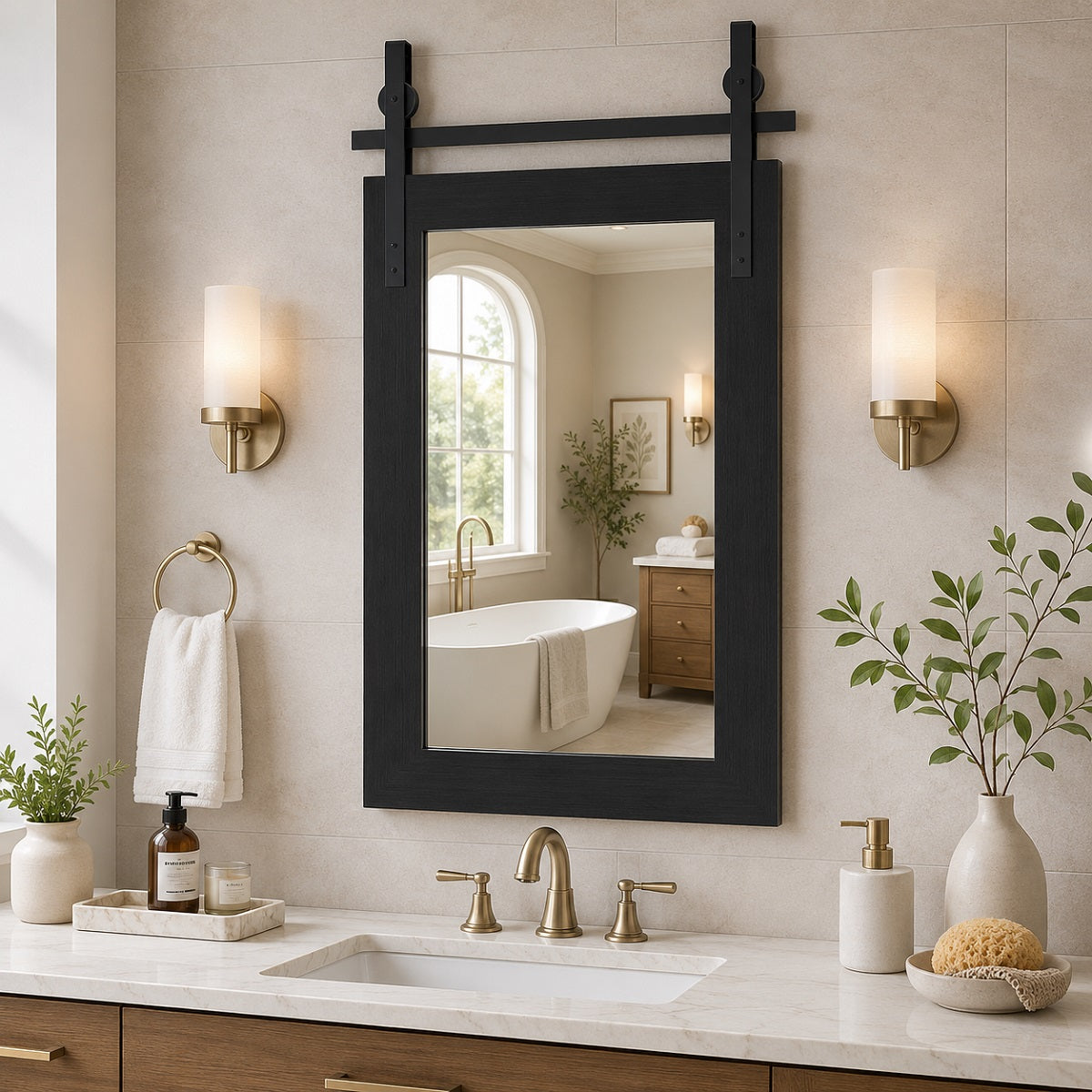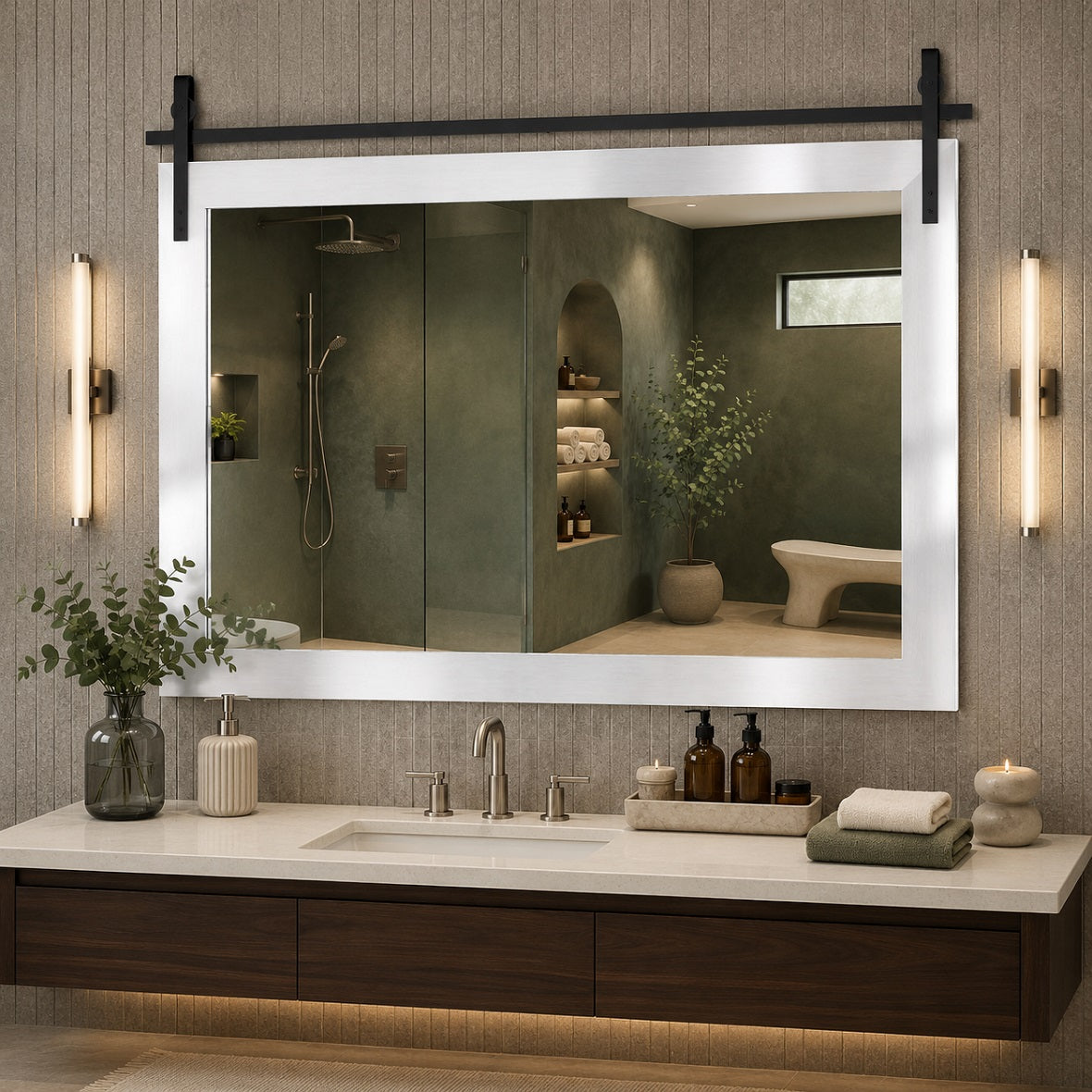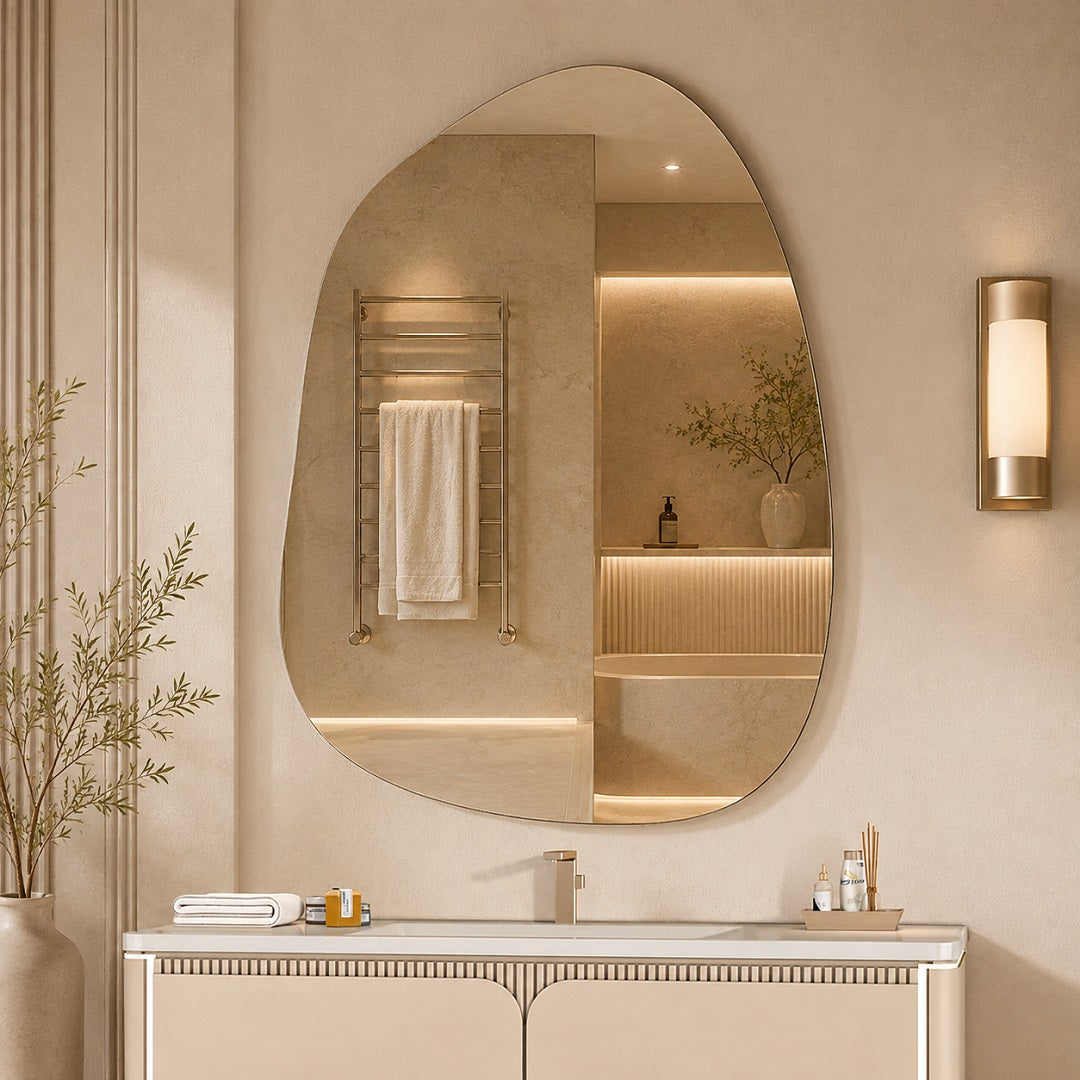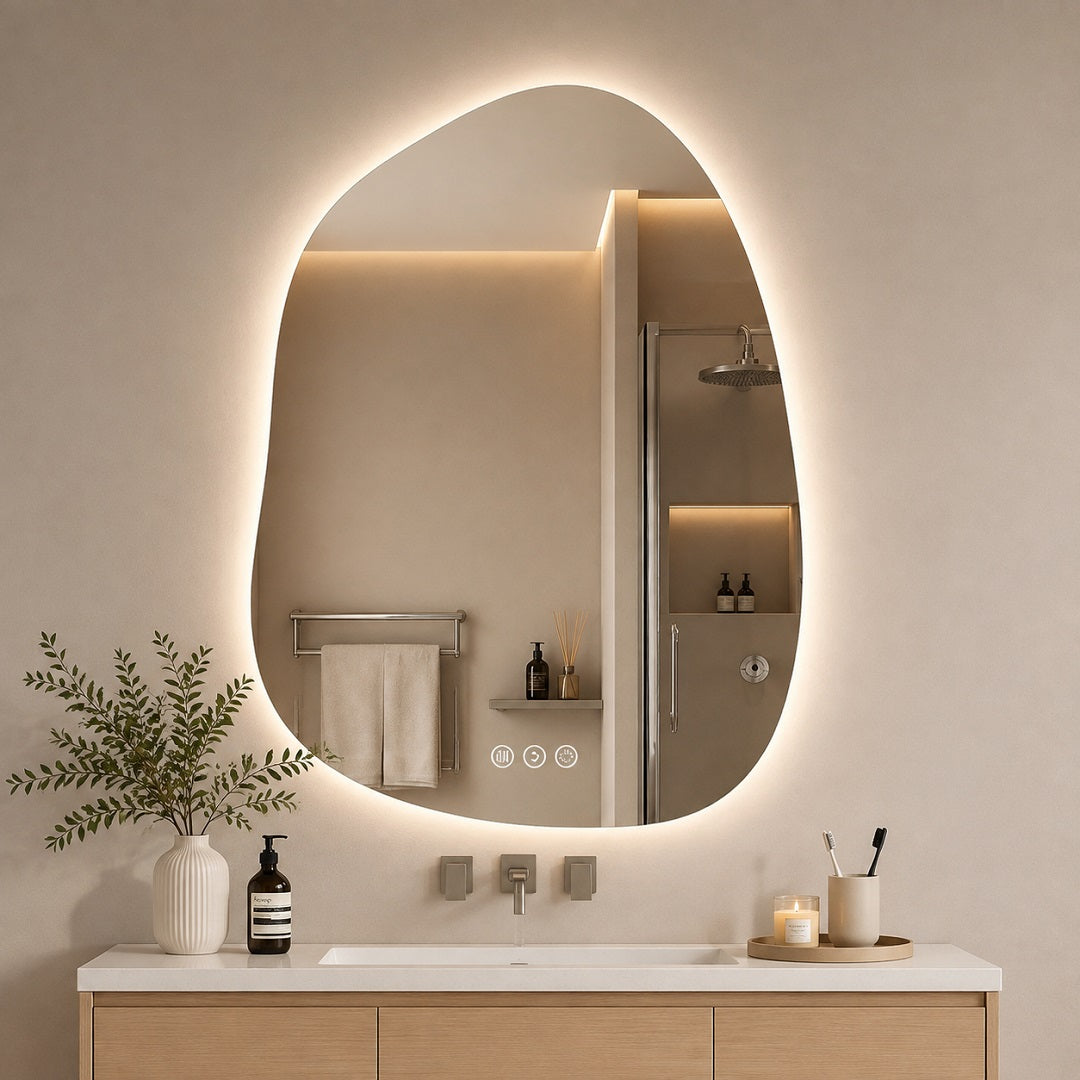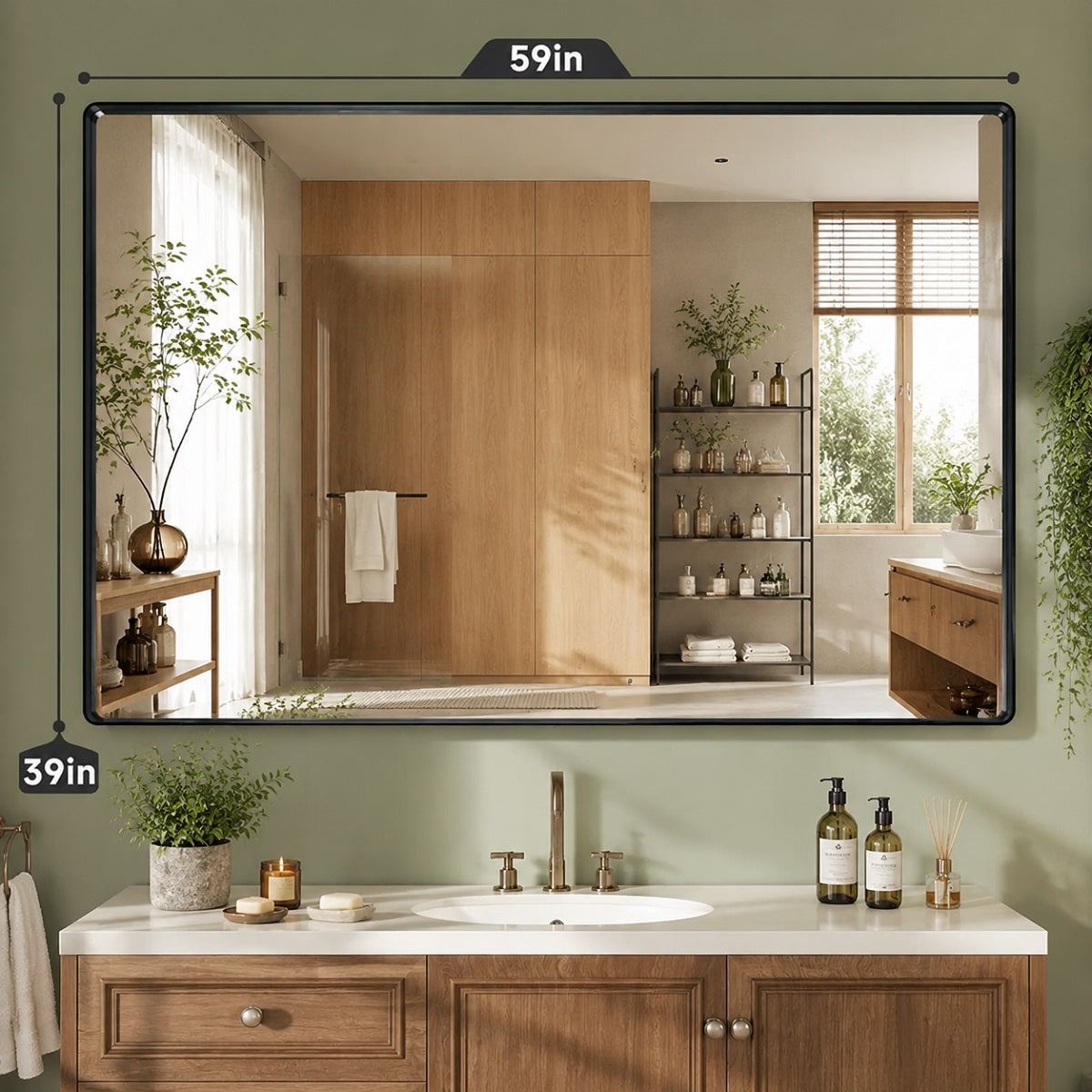



A beveled edge is an angled cut made around the perimeter of mirror glass. The sloped section catches and redirects light, creating a decorative reflective border without requiring a separate frame or applied trim.
How Is a Mirror Bevel Made?
Glass-processing equipment grinds the front edge at a controlled angle and polishes the newly exposed surface. This creates a wider decorative face than a simple eased or polished edge. The bevel can be narrow and subtle or wide enough to become a prominent part of the design.
Bevel width is measured across the angled section, not by the overall thickness of the glass. The proportions that are possible depend on glass thickness, mirror size, shape, corner design, and fabrication limits.
Beveled Edge vs. Polished Edge
A polished edge keeps the main front surface nearly full size and smooths the outer edge to a clear, glossy finish. A beveled edge removes more material from the face to form a sloping border. Both finishes can be used on frameless mirrors, but they create different visual effects.
The bevel may produce highlights, doubled lines, or prism-like reflections around the perimeter. These are expected optical effects of the angled glass, not necessarily signs of distortion in the main viewing area.
Where Are Beveled Mirrors Used?
Beveled edges appear on bathroom mirrors, vanity mirrors, decorative wall mirrors, mirrored furniture, and multi-panel arrangements. They can add detail to a frameless design or remain visible inside a surrounding frame.
When choosing one, review bevel width, corner finish, mounting clearance, and edge condition. Exposed glass edges should be handled carefully during transport and installation, even after grinding and polishing.
Explore HASIPU Mirrors