
Table of Contents
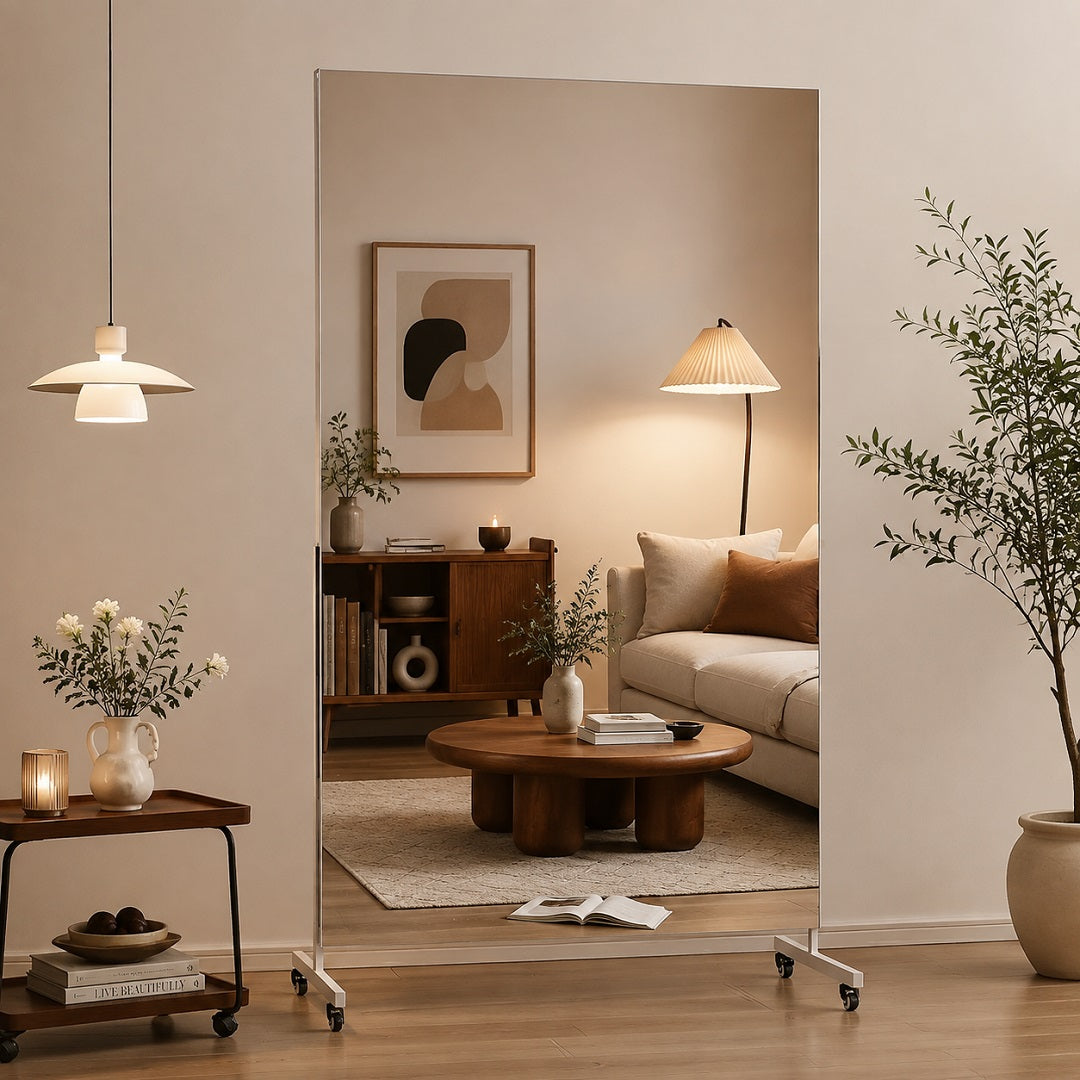
A free standing mirror is a great choice for bedrooms, dressing areas, and living spaces because it is easy to move and does not always require wall installation. However, because full-length mirrors are tall and narrow, they can become unstable if they are placed incorrectly.
So, how do you secure a free standing mirror?
The safest way is to place the mirror on a stable surface, keep it close to a wall, add anti-slip support, and use safety hardware such as mirror safety straps or an anti-tip kit for mirrors when needed.
In this guide, we’ll share practical ways to secure a full length mirror, prevent tipping, and make your mirror safer for everyday use.
Why Should You Secure a Free Standing Mirror?
A large mirror can weigh anywhere from a few pounds to over 100 pounds depending on the size, frame material, and design. Even a well-made mirror can tip over if it is bumped, placed on an uneven floor, or pulled by children or pets.
A properly secured mirror helps:
- Reduce the risk of tipping accidents
- Keep the mirror stable on different flooring types
- Protect children and pets
- Prevent damage to the mirror and your home
Many homeowners search for how to keep a standing mirror from falling because they want a simple solution without changing the look of their room.

12 Practical Ways to Prevent a Floor Mirror from Tipping
1. Place Your Mirror on a Flat and Stable Surface
The location of your mirror plays a big role in stability. Before adding any hardware, make sure your full length mirror sits on a flat, even surface. Uneven floors can create small movements that make the mirror lean or wobble over time.
Avoid placing your mirror:
- On sloped floors
- On thick rugs that shift easily
- In busy walkways where it can be bumped
Hard flooring such as wood, tile, or laminate usually provides a more stable base.
2. Position the Mirror Against a Wall
One of the easiest ways to improve stability is placing your mirror close to a wall. A wall provides extra support and reduces the chance of the mirror falling forward. Many leaning mirrors and floor mirrors are designed to sit naturally against a wall.
For better stability:
- Leave enough space for comfortable use
- Keep the top of the mirror close to the wall
- Avoid placing it in open areas where it can be pushed from behind
This simple placement adjustment can make a noticeable difference.
3. Add Anti-Slip Pads Under the Mirror Base
Smooth floors can cause mirrors to slowly move or slide. Adding anti-slip pads for mirrors or rubber grips underneath the base can help keep the mirror in place. This option is especially useful for renters because it does not require drilling holes.
Anti-slip pads can:
- Improve grip on hardwood and tile floors
- Reduce small movements
- Protect your flooring from scratches
For lightweight mirrors, this may be enough. Heavier mirrors usually need additional support.

4. Use Mirror Safety Straps or an Anti-Tip Kit
A popular solution for preventing tipping accidents is using an anti-tip kit for mirrors. These kits usually include safety straps, anchors, and mounting hardware. They connect the mirror frame to the wall and help prevent the mirror from tipping forward.
To install a mirror safety strap:
Attach one end of the strap to a strong area of the mirror frame.
Secure the other end to the wall using the correct anchor.
Adjust the strap so the mirror stays stable without restricting normal use.
This method works well for:
- Large full length mirrors
- Heavy framed mirrors
- Homes with children or pets
5. Secure the Mirror with Wall Anchors
For a more permanent solution, you can anchor a mirror to the wall. Wall anchors help distribute the mirror’s weight and keep it from moving. The right anchor depends on your wall type, such as drywall, wood studs, or concrete.
When installing wall anchors:
- Choose hardware that supports the mirror’s weight
- Attach to a strong point whenever possible
- Make sure the mirror stays level
A secure wall connection provides extra confidence for larger mirrors.
6. Install L-Brackets or Corner Brackets
For oversized or heavier mirrors, mirror brackets can provide additional support. L-brackets connect the mirror frame to the wall and create a stronger attachment point. They are commonly used when homeowners want extra stability beyond basic straps.
This option is helpful for:
- Extra-large floor mirrors
- Heavy wooden frames
- Long-term installations
Make sure the brackets are properly installed and can support the mirror weight.

7. Use Wall Cleats for Heavy Mirrors
Wall cleats are another reliable way to stabilize a large mirror. A cleat system spreads the weight across a wider area instead of placing all the pressure on one mounting point. This makes it a good option for heavier decorative mirrors.
Wall cleats are often used for:
- Large statement mirrors
- Custom mirrors
- Premium home installations
8. Adjust Mirror Feet or Built-In Stabilizers
Some free standing mirrors come with adjustable feet, support bars, or stabilizing features.
If your mirror includes these parts:
- Make sure all feet touch the floor evenly
- Adjust the height if needed
- Tighten loose hardware regularly
A stable base helps maintain the mirror’s balance during daily use.
9. Choose a Mirror with a Stable Design
Mirror safety starts with choosing the right product. A well-designed full length mirror should have:
- A strong frame
- Balanced weight distribution
- A stable base
- Quality construction
At Hasipu, our mirrors are designed with both appearance and everyday usability in mind. A beautiful mirror should also feel secure and dependable in your home.
10. Keep the Mirror Away from High-Traffic Areas
Even a stable mirror can become unsafe if placed in the wrong location.
Avoid placing a standing mirror:
- Behind frequently opened doors
- In narrow hallways
- Where people regularly walk close by
A bedroom corner, dressing area, or open wall space is usually a better choice.
11. Check Your Mirror Regularly for Movement
A mirror that was stable months ago may become loose over time.
Every few months, check:
- Safety straps
- Wall anchors
- Brackets
- Mirror feet
- Base position
If you notice wobbling, fix the issue before continuing regular use.
12. Teach Children and Pets to Stay Away from Mirrors
Families with young children or pets should take extra precautions.
Avoid allowing children to:
- Pull on the mirror
- Climb near the frame
- Play around the base
A properly secured mirror combined with safe placement creates a much safer home environment.

About Hasipu Free-Standing Mirrors
Hasipu designs modern LED vanity mirrors and Hollywood-style mirrors with bright, adjustable lighting for bedrooms, dressing areas, and beauty spaces. Our mirrors are created for customers who want professional lighting combined with elegant home design.
Final Thoughts
A free standing mirror adds style and function to any room, but stability should always come first. Simple steps like choosing the right location, adding non-slip support, and using safety hardware can help prevent tipping accidents.
When shopping for a full length mirror, look for a design that balances size, style, and stability. At Hasipu, we create modern mirrors that are made to fit everyday homes, from bedrooms and dressing areas to living spaces.
Frequently Asked Questions
1. What is the single best way to secure a heavy free standing mirror?
The safest and most reliable way to secure a heavy free standing mirror is by installing an anti-tip kit or safety straps attached directly to a wall stud. While anti-slip pads prevent the base from sliding, anchor straps anchor the mirror’s upper weight, completely eliminating the risk of the mirror falling forward if bumped by children or pets.
2. How do you prevent a standing mirror from sliding on hardwood or tile floors?
You can stop a standing mirror from sliding on smooth floors by placing heavy-duty anti-slip rubber pads or silicone grips under its base. These non-drill pads increase traction against hardwood, laminate, or tile, keeping the bottom firmly in place while simultaneously protecting your floor surfaces from scratches.
3. Can I secure a full length mirror without drilling holes in the wall?
Yes, you can secure lightweight full length mirrors without drilling by combining anti-slip base grips with no-drill adhesive furniture safety straps. However, for heavy framed mirrors or large statement pieces, mechanical wall anchors or screws are strongly recommended to ensure complete stability and safety.
4. At what angle should a leaning floor mirror be positioned against a wall?
A leaning floor mirror should typically be positioned at a 5 to 10-degree tilt angle (with the base about 3 to 6 inches away from the wall). This slight tilt maintains visual accuracy without distorting reflections, keeps the center of gravity low, and ensures the top rests firmly against the wall surface.
5. Are Hasipu full length mirrors easy to secure and child-safe?
Yes, Hasipu full length mirrors are designed with both stability and safety in mind, featuring sturdy aluminum frames, balanced weight distribution, and pre-installed bracket hardware. Additionally, Hasipu mirrors use high-definition shatterproof tempered glass, which prevents dangerous glass shards from scattering even in the unlikely event of an impact