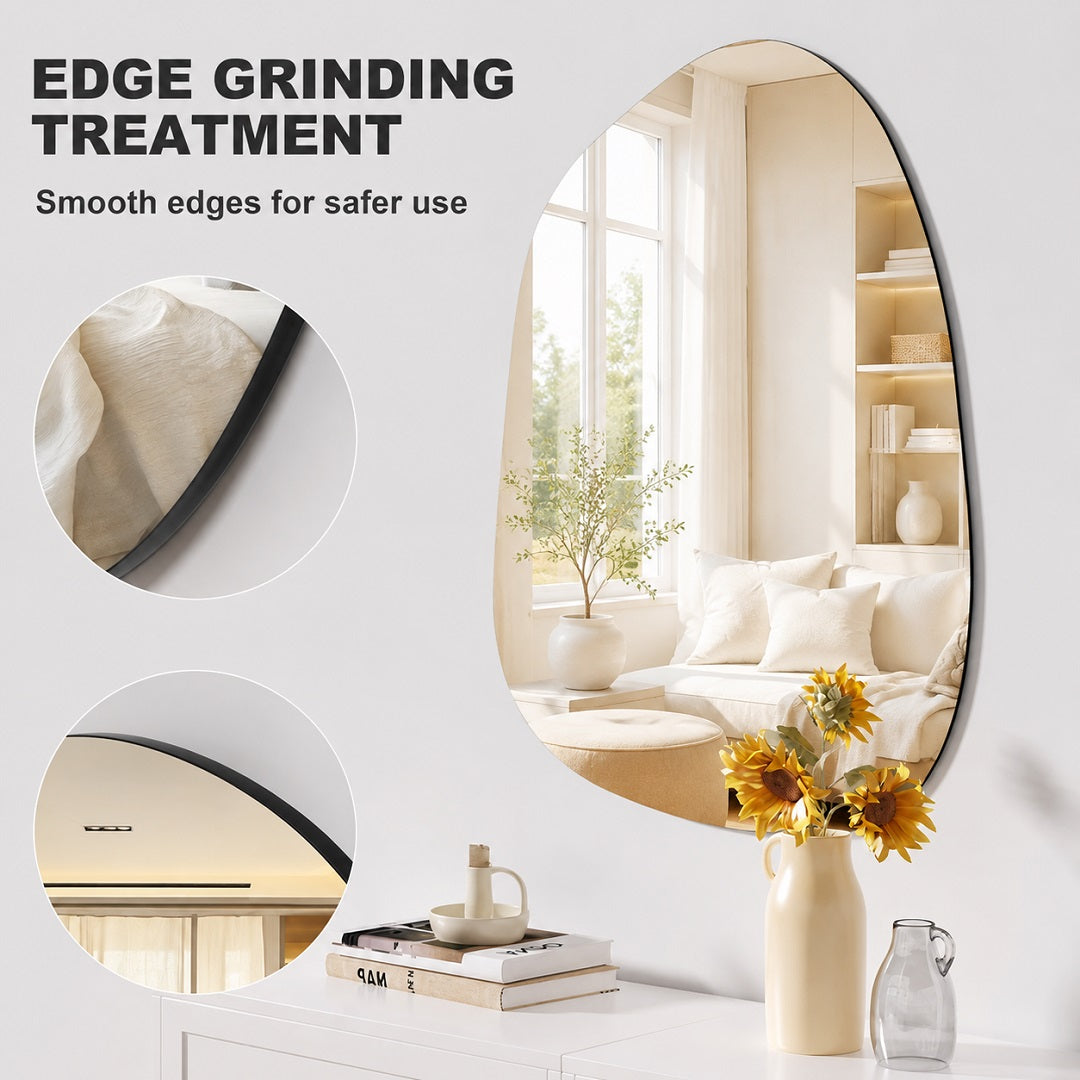



A silver mirror is glass with a thin reflective layer of silver applied to its back surface. Protective backing coats cover the metal layer, while the viewer looks through the glass toward the reflection. This is a common form of second-surface mirror construction.
How Is a Silver Mirror Made?
The glass is thoroughly cleaned before a reflective silver layer is deposited on one side. Additional protective layers are then applied over the silver to reduce damage from handling, moisture, chemicals, and normal environmental exposure.
Traditional processes may include a copper layer between the silver and backing paint. Copper-free processes use a different protective system. The exact coating stack varies by manufacturer, so “silver mirror” identifies the main reflective metal but does not describe every backing layer.
Why Is the Coating on the Back?
Placing the silver behind the glass protects the reflective surface from direct contact during everyday cleaning and use. The glass provides a hard, smooth viewing surface, although light passes through it before and after reaching the reflective layer.
This differs from a specialized first-surface mirror, where the reflective coating is exposed on the front. First-surface designs avoid the secondary reflection created by glass but require more careful handling and are uncommon in ordinary home mirrors.
What Can Damage a Silver Mirror?
The vulnerable areas are usually the back and edges. If moisture, unsuitable adhesive, or aggressive cleaner reaches the coating system, the silver can deteriorate and produce dark spots or black edges. Scratching the backing during installation can also create a path for damage.
Use mirror-compatible mounting products, keep liquids from collecting around exposed edges, and avoid spraying cleaner directly where it can run behind the glass. A silver mirror is not maintenance-free, even when its protective coating is well made.
Explore Hasipu LED Mirrors