
Table of Contents
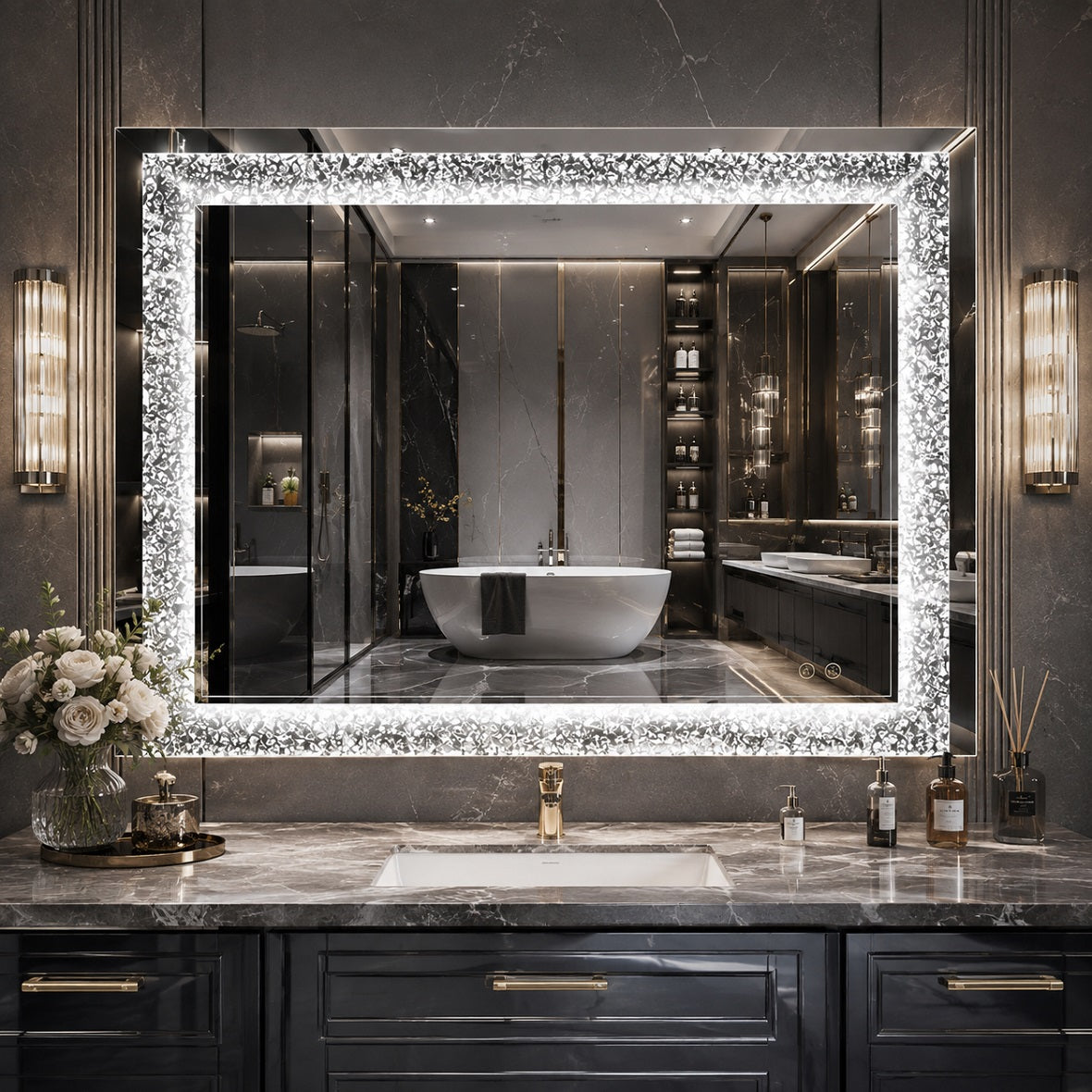
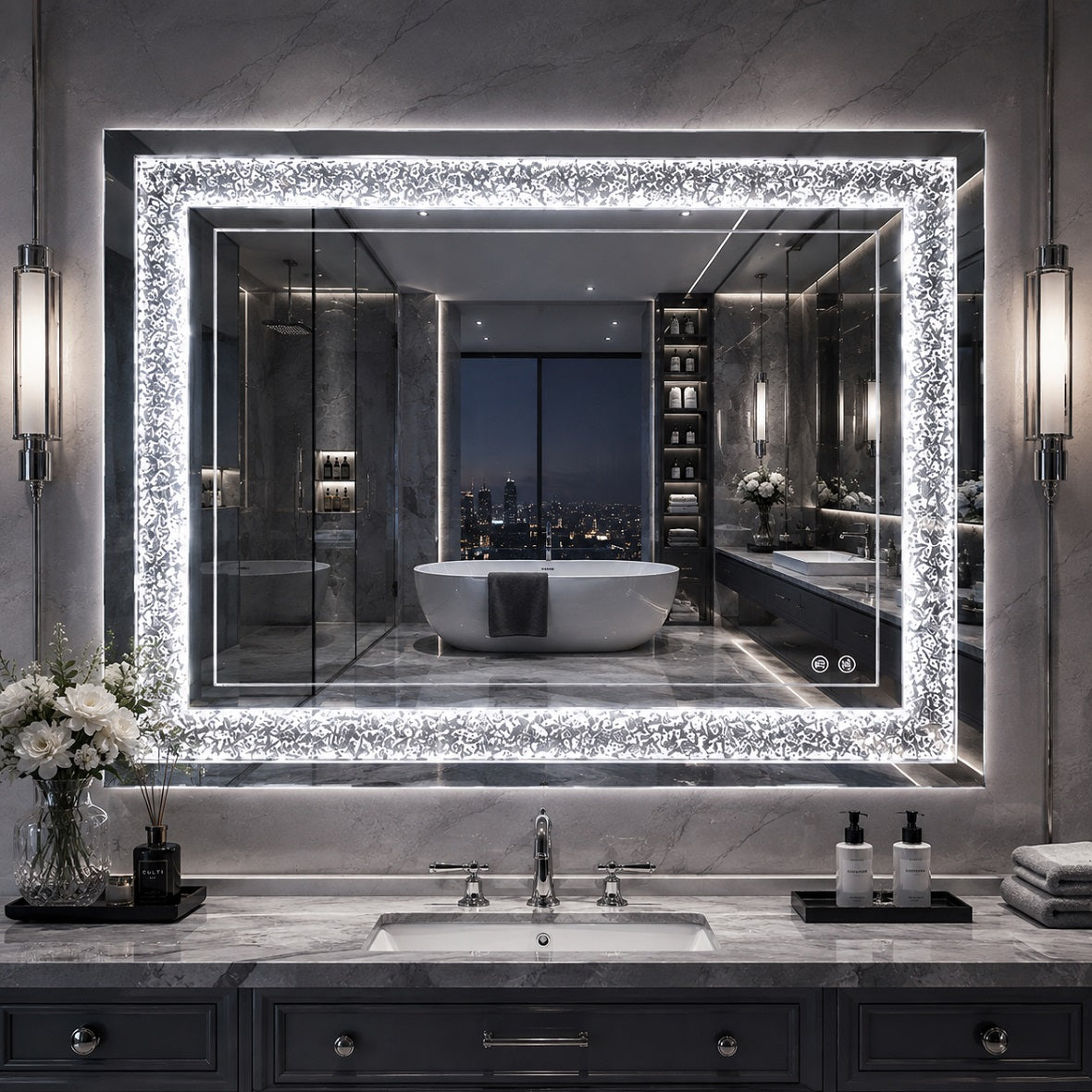
For an everyday bathroom mirror, 3000K–4000K is a practical color temperature starting range. Try 3000K for a warmer atmosphere or 4000K for a less yellow light while getting ready. Compare the setting with your bathroom’s tile, vanity, and other lights before deciding. This is a starting recommendation, not a requirement for every bathroom.
You finish updating the bathroom, switch on the mirror, and something feels off. The cream tile looks yellower than expected. Or the mirror has a cool white glow while the ceiling lights cast a warm pool of light over the sink.
The mirror may be the right size and shape. Its light just needs to work with the rest of the room.
At Hasipu, we recommend choosing bathroom mirror lighting around how you use the space. A small powder room, a shared morning vanity, and a bathroom used for a quiet evening soak can call for different settings.
Start With What the Kelvin Number Tells You
Color temperature, measured in kelvins (K), describes the warm-to-cool appearance of white light. Lower numbers look warmer and more yellow; higher numbers look cooler. It does not describe the physical temperature of the mirror.
It also does not tell you how much light a fixture produces. The FTC’s guide to light bulbs lists brightness in lumens separately from warm or cool light appearance. A 6000K mirror is not necessarily brighter than a 3000K mirror.
For a quick explanation of the terminology, see our guide to color temperature in LED lighting. When choosing for a bathroom, use the numbers to narrow your options, then compare how those options look in the room.
| Mirror setting | What to expect | Where we’d start trying it |
|---|---|---|
| 2700K | A warm, yellow-toned appearance | A powder room or evening setting where a cozy atmosphere is the priority |
| 3000K | Warm white | A bathroom with warm finishes, or a vanity already lit by 3000K fixtures |
| 3500K–4000K | Less yellow than the warmer settings | A shared bathroom used for shaving, skincare, and getting ready |
| 5000K | A cooler white appearance | A vanity where you prefer cooler light; compare it with the room lighting |
| 6000K–6500K | A very cool appearance that can seem bluish | A setting to try in person before choosing it as your only everyday light |
Names such as “natural white” and “daylight” vary between products. Look for the actual Kelvin values rather than choosing by the mode name alone.

3000K vs. 4000K: Which Fits Your Bathroom?
For many bathrooms, 3000K vs. 4000K bathroom lighting is the most useful comparison. The choice is partly about what you want to see at the sink and partly about how the light looks on the finishes around it.
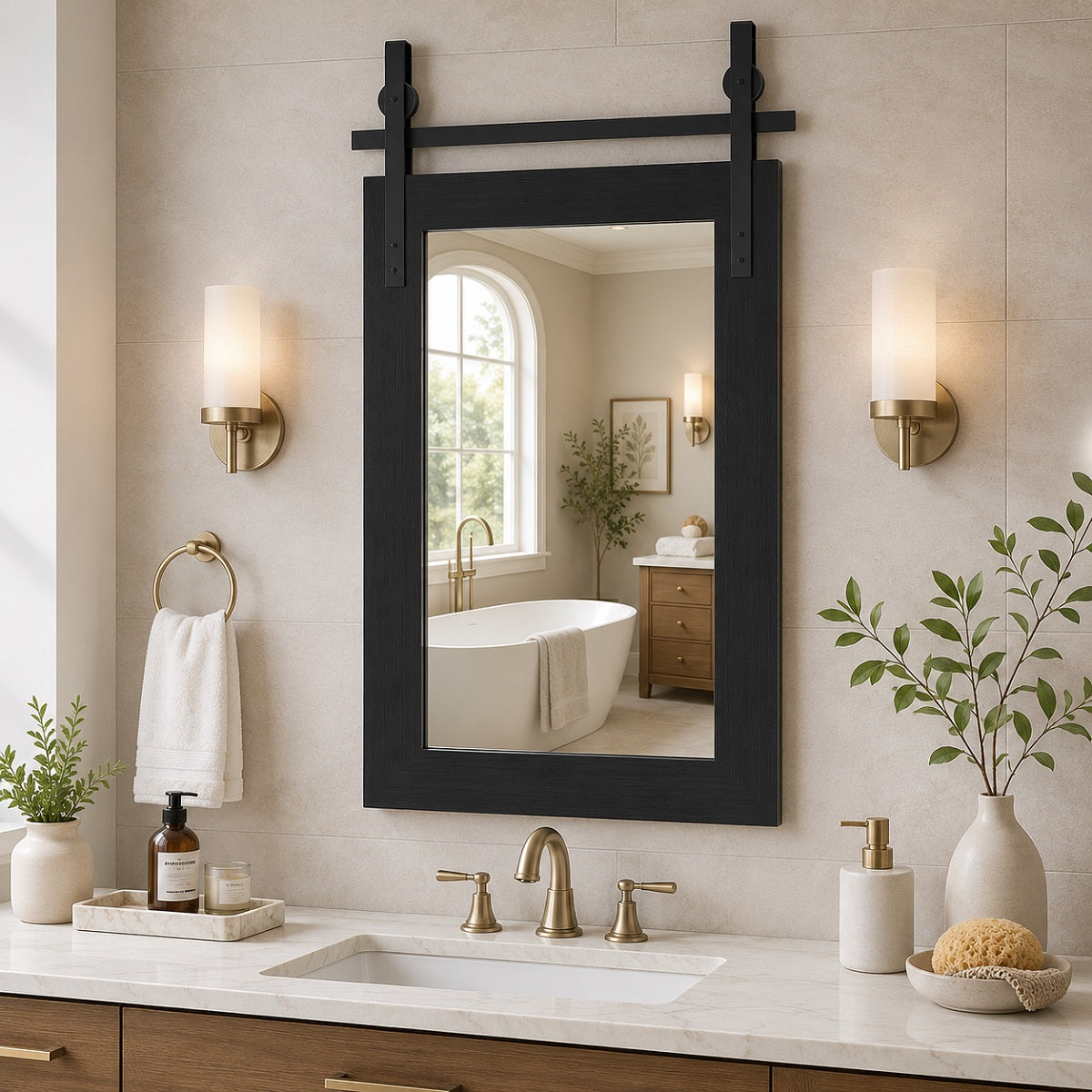
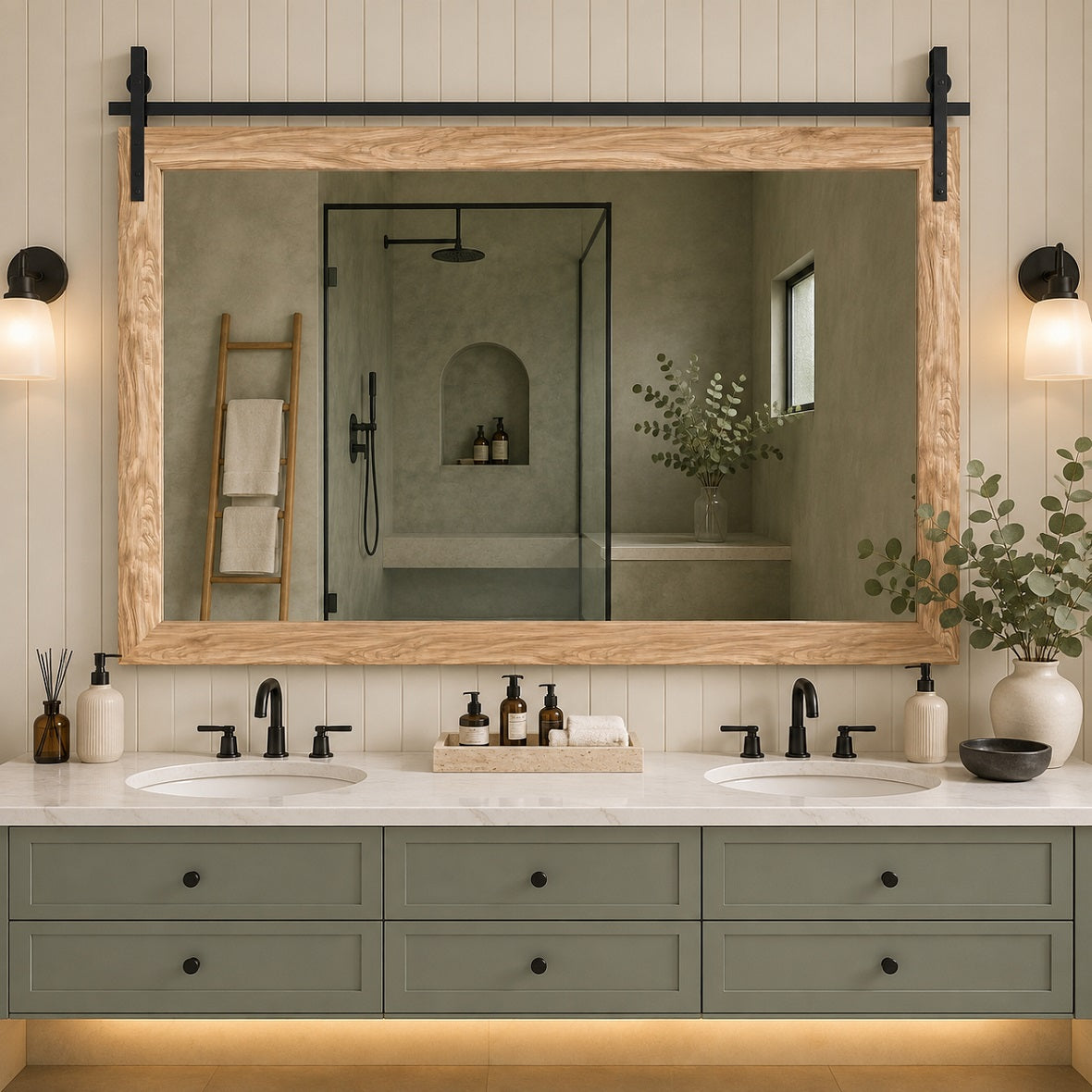
Try 3000K beside warm wood, cream tile, and brass
A 3000K setting is a reasonable place to begin with an oak vanity, ivory walls, or beige stone. You may prefer the warmth, especially in a guest bathroom where the mirror is mostly used for handwashing and quick appearance checks.
But warm finishes do not automatically need warm light. Cream tile can look too yellow under a setting you otherwise like. Compare 3000K and 4000K color temperature against the actual tile instead of relying on the paint color name or a showroom photo.
In a bathroom with brass hardware and a walnut cabinet, for example, try 3000K with the ceiling lights on. Then try the cooler option. Look at the countertop and walls as well as your reflection. Choose the version of the bathroom lighting you want to use every day.
Start with 4000K when you want less yellow light
4000K bathroom mirror lighting is a useful option when warm white feels too yellow while you shave, apply makeup, or get ready. It sits right in the neutral sweet spot between 3000K and the much cooler, crisp 6000K settings found on some adjustable mirrors.
It can also be worth trying with white tile, gray stone, or a vanity with cooler undertones. That does not mean a gray bathroom needs 4000K; some people deliberately choose warmer lighting to soften its appearance and create a cozy, spa-like feel.
A cooler-looking light will not automatically show more detail or render colors more faithfully. Ensuring adequate lumens reach your face, having comfortable diffusion to minimize harsh shadows, and maintaining a high Color Rendering Index (CRI) still matter far more than color temperature alone.
Should Your Mirror Light Match the Ceiling Lights?
Coordinating the color temperature of lights used together is a sensible starting point. A warm ceiling fixture paired with a very cool mirror can make the sink area look disconnected from the rest of the bathroom.
Before buying a mirror, check the Kelvin rating of the bulbs or fixtures you plan to keep. A mirror with a 3000K mode gives you a straightforward option when the surrounding lights are already 3000K.
Matching the printed numbers does not guarantee a perfect visual match. Fixtures can differ in tint, color rendering, and how they distribute light. Still, it is a more useful starting point than pairing lights labeled only “soft” and “natural.”
Try this check with an adjustable mirror:
- Turn on the ceiling lights and sconces you normally use at the sink.
- Set the mirror to the closest available color temperature.
- Look for an obvious difference across the wall, countertop, and your face.
- Try the next setting before changing the room’s other lighting fixtures.
Separate warm accent lighting can still work well. You might use it on its own during a bath, then switch to the coordinated vanity lights when getting ready. Decide which lights need to look good together because they will actually be on together.

Let the Room’s Finishes Help You Decide
Small samples are useful here. Hold your paint card or tile sample near the vanity under the lighting you expect to use. View it vertically if it will go on the wall and horizontally if it will become a countertop.
Pay attention to the surfaces that occupy the most space. A tiny chrome handle should not dictate the lighting for a room full of cream tile.
| What you notice | What to try |
|---|---|
| Cream walls look more yellow than you want | Compare 4000K with your warmer setting before changing the paint |
| White tile and gray cabinetry feel too cool | Try 3000K and see whether you prefer the warmer appearance |
| The mirror glows blue beside the sconces | Bring the settings closer together, using the listed Kelvin values |
| The light feels harsh on glossy tile | Check reflected glare, diffusion, and brightness as well as color temperature |
| The room looks good, but your face is shadowed | Evaluate light direction; switching Kelvin settings will not move the light source |
Avoid making the final decision from a phone photo. Camera white balance can change the apparent warmth of a room. Look with your own eyes, from the doorway and from your usual position at the sink.
A Windowless Bathroom Doesn’t Automatically Need Cool White Light
A bathroom without a window can feel dim, but choosing 6500K does not replace the missing daylight. A cooler appearance and adequate illumination are separate things.
For a windowless bathroom mirror, we’d start by comparing 3000K and 4000K with the room’s other lights switched on. Then check where the darkness remains.
Is the vanity clear while the shower area feels gloomy? Is the room bright, but your face stays in shadow? Is a dark wall absorbing much of the glow behind a backlit mirror?
Those are reasons to evaluate the lighting layout and output. Turning the mirror to a cooler setting may change the mood without fixing visibility.
Check where the mirror’s LEDs send their light. A glow onto the wall behind the glass may provide atmosphere while contributing too little light to your face. For grooming, assess the illumination at your normal standing distance, not just how bright the border looks across the room.
Use Brightness Controls for Early Mornings and Late Nights
The setting you like while shaving may feel too intense when you step into the bathroom late at night.
An adjustable mirror can give you a warmer appearance for evening use, but check dimming separately. A 3000K setting at full output can still feel glaring. Reducing brightness may make a bigger difference to comfort than changing the color alone.
Keep enough light to see the sink, floor, and anything in your path. Choose the level that suits the task rather than assuming the lowest setting will always be useful.
Before buying, check whether the mirror remembers its last brightness and color setting. A memory function may save repeated adjustments, but its behavior can vary when the mirror is switched off at the wall. Read the instructions for the exact model.
Dimming also does not necessarily make the light warmer. Some products keep approximately the same color temperature as brightness changes; others offer a specific dim-to-warm function. Do not assume one control provides both behaviors.
What About Applying Makeup at the Bathroom Sink?
Start by trying a neutral setting around 4000K, with comfortable light reaching both sides of your face. For color-sensitive tasks, look for a documented CRI of 90 or higher as a shopping target. The U.S. Department of Energy describes that range as excellent color fidelity, while noting that CRI has limitations.
Keep color temperature and color rendering separate: a 4000K label alone does not establish how accurately the lighting shows makeup shades.
Our guide to CRI for makeup mirrors explains the rating in more detail. For a makeup-focused comparison of warm, neutral, and cool settings, see 3000K vs. 4000K vs. 6000K lighting for makeup.

What to Check When Buying an Adjustable Color Temperature Bathroom Mirror
An adjustable color temperature bathroom mirror gives you flexibility, especially when two people share a vanity. The available settings still need to suit your room.
“Three color modes” usually refers to presets. A model with 3000K, 4500K, and 6000K settings should not be assumed to offer 4000K. Likewise, a listed range does not necessarily mean you can select every value within it. Check how the controls work.
When comparing Hasipu bathroom mirrors, read the specifications for the individual model and check:
- The actual Kelvin settings or adjustable range.
- Whether brightness adjusts separately from color.
- Where the light is directed: toward your face, onto the wall, or both.
- Any published color-rendering rating.
- What happens to saved settings after switching the power off (memory function).
- The return terms, so you understand your options if the light looks different at home.
Ask for missing specifications before ordering. Product photos can help you judge the design, but they cannot confirm the light’s color in your bathroom.
For a straightforward choice, start with the lights and finishes you are keeping. Try 3000K when you prefer warmth, or 4000K when you want less yellow light at the sink. Then check the setting with the rest of the bathroom lit as you normally use it.
Frequently Asked Questions
1. Is 3000K too yellow for a bathroom mirror?
It has a warm appearance, but whether it looks too yellow depends on your preference, finishes, and surrounding lights. Compare it with 4000K against your wall and countertop. Cream or ivory surfaces are especially useful to check before committing.
2. Is 4000K too cool for a small bathroom?
Room size alone does not make 4000K unsuitable. It may suit someone who prefers less yellow light, while someone else may prefer 3000K. Assess glare and brightness separately if the space feels uncomfortable.
3. Can I use a 3000K mirror with 4000K ceiling lights?
Yes, but compare them together before deciding. The difference may be acceptable to you, or it may make the vanity look warmer than the rest of the room. An adjustable mirror gives you a way to try a closer match.
4. Is 5000K too bright for a bathroom?
5000K describes color appearance, not brightness. It can look cooler than you prefer without producing too much light. Check output, dimming, and reflected glare to work out what is bothering you.
5. Does a bathroom mirror need a daylight setting?
No. Choose settings that suit your room and routine. A daylight-labeled mode offers a cooler option, but the name does not guarantee an exact match to outdoor light. An adjustable mirror with a comfortable everyday setting may be all you need.