


Table of Contents
A beautiful wall mirror may look perfect in a bedroom or entryway but fail surprisingly quickly above a bathroom sink. The difference comes down to moisture, heat, cleaning habits, frame materials, and installation.
Bathrooms expose mirrors to steam, condensation, water splashes, and frequent temperature changes. Over time, those conditions can damage a mirror that was made mainly for dry rooms.
So, which mirrors are unsuitable for bathrooms? The main ones are mirrors with unprotected backing, exposed edges, absorbent frames, rust-prone metal, unsafe glass, or electrical parts that are not designed for damp locations.
Some mirrors are not necessarily dangerous, but they may warp, corrode, develop black edges, or become difficult to maintain. Here is how to recognize them before they end up on your bathroom wall.
1. Mirrors Without Moisture-Resistant Backing
A mirror is more than a sheet of glass. The reflection comes from a thin metallic layer applied to the back, usually covered by protective coatings.
On a basic decorative mirror, that backing may not be designed for repeated exposure to bathroom humidity. Moisture can work its way behind the glass and begin to damage the reflective layer.
Common signs include:
- Dark spots around the edges
- Brown or gray discoloration
- Cloudy patches that do not wipe away
- Peeling or deterioration behind the glass
This damage is often called mirror desilvering, mirror rot, or black-edge corrosion. Once the reflective coating has deteriorated, cleaning the front surface will not restore it.
A mirror described only as a bedroom, hallway, or decorative wall mirror may still work in a well-ventilated powder room. For a full bathroom with a shower or tub, look for a product that specifically mentions moisture-resistant backing, bathroom use, sealed construction, or protection against corrosion.

2. Mirrors With Raw or Unsealed Edges
The edges are among the most vulnerable parts of a mirror. Water from the sink, condensation, and liquid cleaner can reach the reflective backing through an unprotected edge.
This is especially common with inexpensive frameless mirrors and custom-cut glass that has not been properly finished. A polished edge may feel smooth, but polishing alone does not always mean the reflective coating has been protected against moisture.
Unsealed edges can lead to:
- Black marks creeping inward from the perimeter
- Uneven discoloration near the bottom
- Damage around mounting clips
- Premature failure of the reflective coating
A bathroom vanity mirror should have finished, protected edges or a backing system intended for humid rooms. Proper installation also matters. Water should not be allowed to collect along the bottom edge or behind the mirror.
Spraying cleaner directly onto the glass can make the problem worse. Cleaner may run down the surface and pool around the frame or lower edge. Spray a small amount onto a microfiber cloth instead, then wipe the mirror.
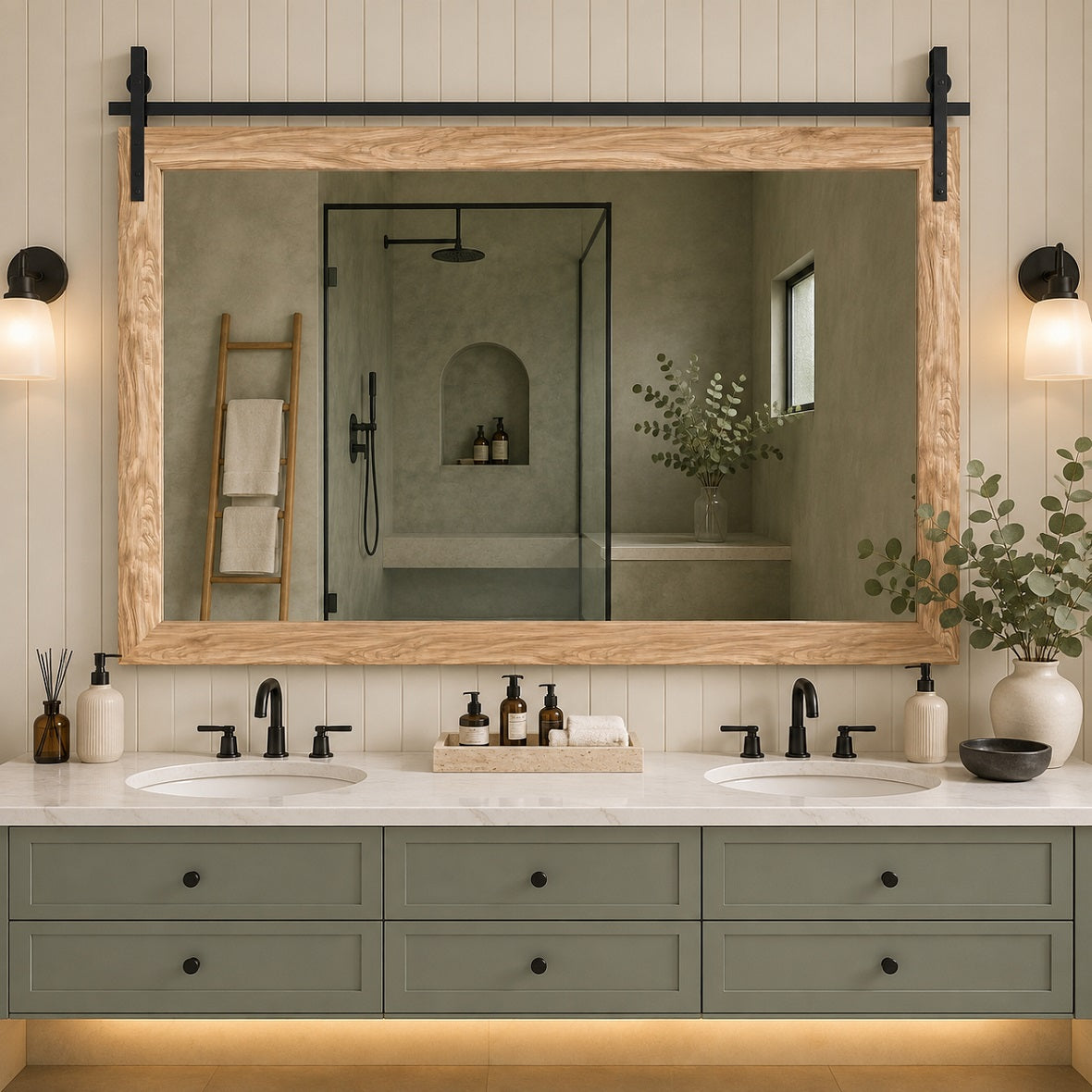
3. Mirrors With Untreated Wood, Rattan, or MDF Frames
Wood can bring warmth to a bathroom, but not every wood-framed mirror belongs there.
Untreated wood absorbs moisture from the air. Repeated swelling and drying can cause the frame to warp, split, stain, or pull away from the glass. Natural rattan and wicker can hold moisture in their woven surfaces, while standard MDF may swell when water reaches an unfinished seam.
These materials are especially risky in:
- Windowless bathrooms
- Small bathrooms with weak ventilation
- Bathrooms used for long, hot showers
- Areas where the mirror sits close to the faucet
- Shared family bathrooms with frequent use
This does not mean all wood-framed bathroom mirrors should be avoided. A sealed wood frame with a moisture-resistant finish can perform well when the manufacturer approves it for bathroom use.
Check the back, corners, hanging holes, and joints. A frame that is sealed only on the visible front may still absorb moisture through its unfinished surfaces.
For the look of wood with less maintenance, resin, coated engineered materials, aluminum with a wood-grain finish, or properly sealed solid wood may be more practical.
4. Metal-Framed Mirrors That Can Rust or Corrode
A gold, brass, or black metal frame may appear bathroom-ready, but the finish alone does not reveal how well the material handles humidity.
Ordinary steel can rust when its protective coating becomes scratched. Low-quality plating may bubble, flake, or discolor. Moisture can also collect inside seams and around fasteners, creating corrosion that is difficult to see at first.
Be cautious with mirrors that have:
- Exposed steel hardware
- Thin decorative plating
- Visible scratches in the finish
- Uncoated welds or frame joints
- No information about corrosion resistance
Bathroom-friendly metal frames often use aluminum, stainless steel, or metal protected by a durable powder-coated finish. Even these materials need basic care. Wipe away water droplets and avoid leaving harsh cleaner on the frame.
A vintage metal mirror can still be used in a powder room where there is no shower. Placing the same piece in a steamy primary bathroom carries a much greater risk.
5. Antique and Heirloom Mirrors
An antique mirror may be the most interesting piece in the room, but daily bathroom humidity can be hard on old glass, backing, wood, adhesives, and decorative finishes.
Older mirrors may already have small areas of silver loss. Moisture entering through worn edges can speed up that deterioration. Antique frames may also contain fragile gesso, old paint, veneer, or metal leaf that does not respond well to steam and repeated cleaning.
There is also the question of value. Replacing a modern mirror is inconvenient; damaging a family heirloom may be permanent.
A guest powder room is usually a gentler setting for a vintage mirror because it does not experience the same level of steam as a room with a shower. For a full bathroom, a reproduction mirror made with modern moisture-resistant materials can provide a similar look with less risk.

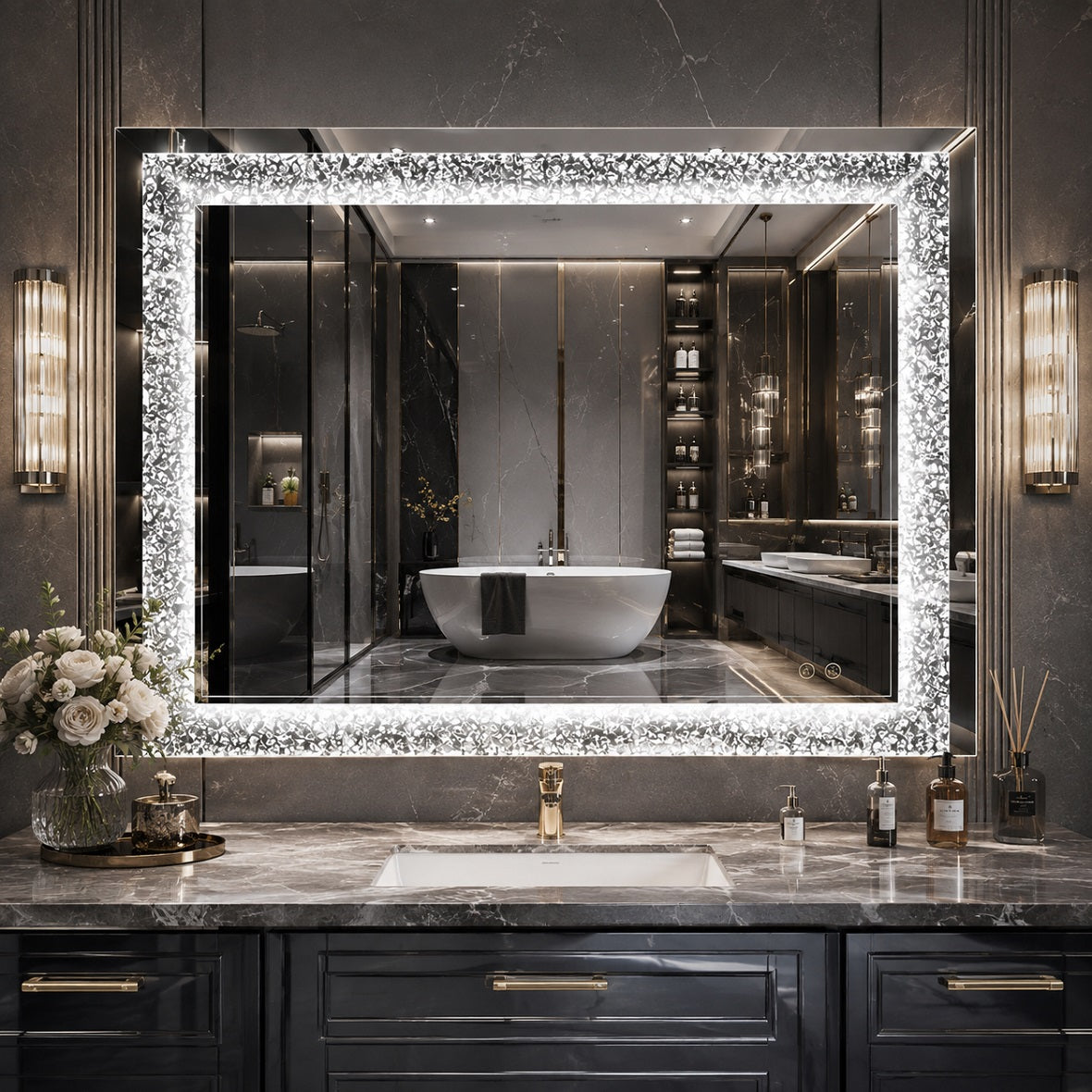
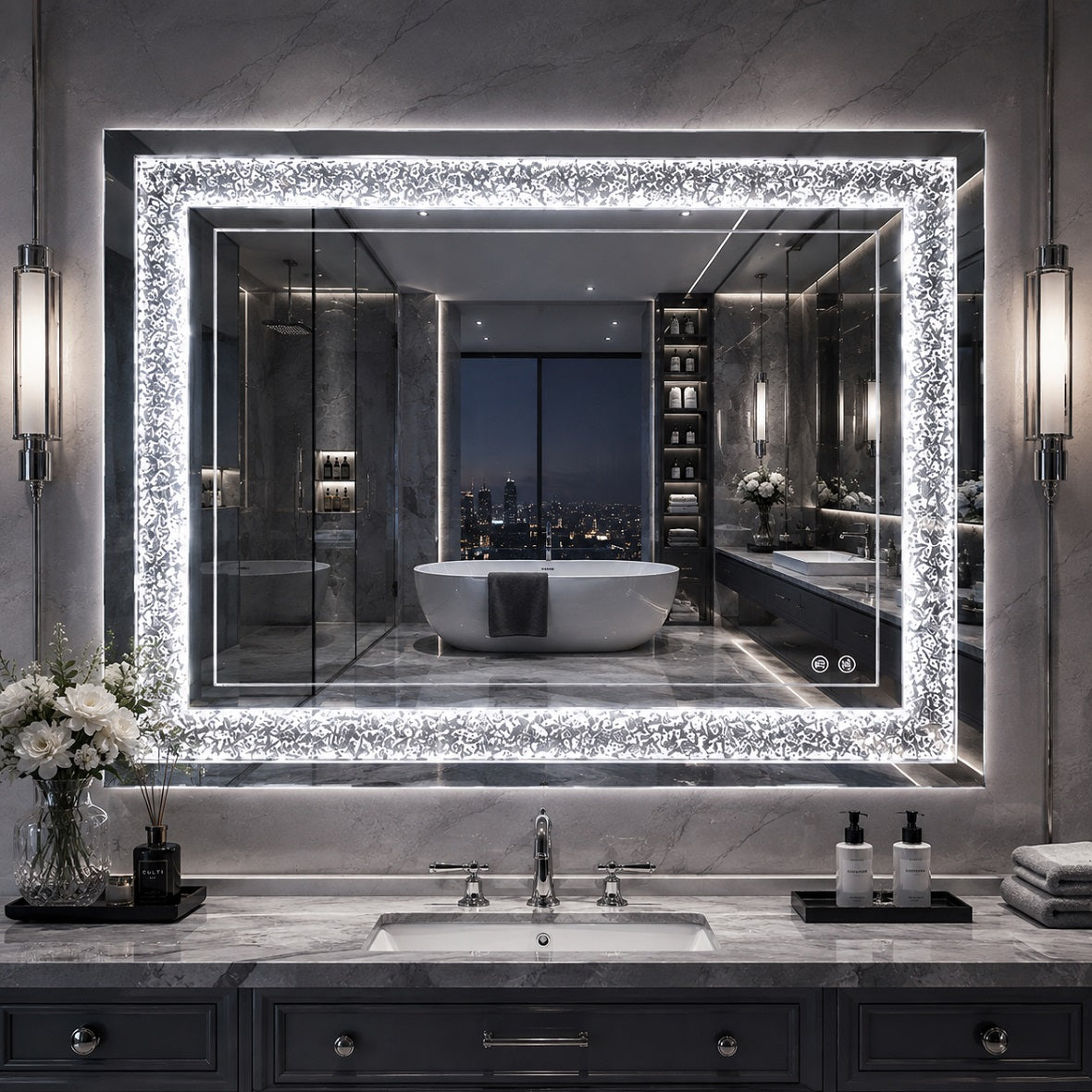
6. Lighted Mirrors Not Approved for Bathroom Use
Lighted mirrors require more care than standard mirrors because they combine glass with electrical components.
A plug-in dressing-table mirror or bedroom vanity mirror should not automatically be moved into a bathroom. Its wiring, switches, power supply, USB ports, or light housing may not be designed for damp conditions.
Before installing a lighted bathroom mirror, check:
- Whether the manufacturer specifically lists bathroom use
- The product’s damp-location or water-resistance information
- Installation and clearance requirements
- The power source and wiring method
- Relevant safety certification
- Local electrical code requirements
An IP rating may appear on some products, but it should be read together with the manufacturer’s installation instructions. One protected component does not necessarily make the entire mirror suitable for every location in a bathroom.
Hardwired installation should be handled by a qualified electrician when required. Do not place extension cords, exposed adapters, or ordinary plug-in lighting where they can come into contact with water.
7. Thin Glass Mirrors Without Suitable Safety Features
Bathrooms contain hard floors, countertops, metal faucets, and narrow walking areas. A poorly secured glass mirror can cause serious injury when it falls or breaks.
Thin decorative mirrors, damaged mirrors, and products with weak mounting systems deserve extra caution. The risk increases with large or heavy mirrors and in homes with children.
Useful safety features may include:
- Tempered glass
- Safety backing film
- Shatter-resistant construction
- Secure mounting brackets
- Hardware rated for the mirror’s weight
Tempered glass and safety film are not the same thing. Tempered glass is heat-treated so it breaks differently from ordinary glass. A safety backing film helps hold broken pieces together. Product descriptions should make clear which feature is included.
The mounting system is just as important as the glass. U.S. Consumer Product Safety Commission recalls have shown that mirrors can create impact and laceration hazards when the glass or mounting assembly detaches from the wall. Use the supplied hardware only when it is appropriate for the wall type and mirror weight.
Mirrors with cracks, chipped corners, loose frames, or damaged mounting points should not be installed in a bathroom.
8. Peel-and-Stick and Acrylic Mirrors of Uncertain Quality
Lightweight mirror tiles and acrylic sheets are popular in rentals, dorms, and inexpensive makeovers. They are easy to install, but they do not always provide the performance expected from a bathroom mirror.
Low-quality acrylic mirrors may create a wavy or distorted reflection, especially when mounted on an uneven wall. Adhesive pads can also weaken when exposed to humidity, heat, or repeated condensation.
These products may be unsuitable above a vanity when:
- The adhesive is not rated for humid areas
- The wall surface is textured or damp
- The mirror is placed close to a shower
- A clear, accurate reflection is needed for grooming
- The product has no secure secondary mounting method
Acrylic can be useful where reducing glass weight is the main concern. Choose a product intended for bathroom use and follow its surface preparation instructions closely. A loose adhesive mirror over a ceramic sink is not worth the risk.
9. Oversized Mirrors That Cannot Be Mounted Securely
A large mirror can brighten the room and make a small bathroom feel more open. Size itself does not make a mirror unsuitable. Problems begin when the wall, mounting hardware, or installation method cannot support it.
A mirror may be a poor fit when it:
- Extends into the faucet or backsplash area
- Blocks an outlet, light, medicine cabinet, or vent
- Cannot be anchored into studs or suitable wall supports
- Places too much weight on tile or drywall
- Crowds nearby sconces
- Sits where a door can strike it
Before ordering, measure the vanity, faucet height, lighting, outlets, and available wall space. Many homeowners choose a mirror slightly narrower than the vanity, although the right proportion depends on the room and mirror shape.
Use a full-size painter’s-tape outline on the wall before drilling. This simple test shows whether the mirror feels too wide, too high, or awkwardly placed.

Is a Mirror Without an Anti-Fog Feature Unsuitable?
No. A standard mirror without an anti-fog coating can still be a perfectly good bathroom mirror.
It will probably collect condensation after a hot shower, but fogging alone does not mean the mirror is being damaged. A working exhaust fan, an open bathroom door after showering, and better airflow can reduce the problem.
An anti-fog bathroom mirror adds convenience for shaving, skincare, makeup, and grooming. It is useful in busy or poorly ventilated bathrooms, but it is not a basic requirement.
The U.S. Environmental Protection Agency recommends controlling bathroom moisture through ventilation and exhaust fans that vent outdoors. Good ventilation protects more than the mirror; it also helps limit condensation on walls, ceilings, cabinetry, and other surfaces.
Does the Mirror’s Style Make It Unsuitable?
Style is separate from durability.
A mirror does not become unsuitable simply because its shape or color clashes with the bathroom. Round, rectangular, arched, oval, and irregular mirrors can all work well when their materials and construction are appropriate for the room.
A decorative mirror may still be impractical when its deep frame traps water, its small reflective area makes grooming difficult, or its detailed surface is hard to clean. Those are functional concerns rather than strict bathroom-safety rules.
Choose the shape after confirming that the backing, frame, electrical parts, and mounting system can handle the space.
How to Tell Whether a Mirror Is Bathroom-Safe
Product listings do not always use the same terminology. Check the full description and installation manual instead of relying on the product photo.
Look for language such as:
- Suitable for bathroom or vanity use
- Moisture-resistant construction
- Sealed or protected mirror backing
- Corrosion-resistant frame
- Rust-resistant hardware
- Tempered glass or safety backing film
- Damp-location suitability for lighted models
- Secure wall-mounting system
Also consider the room itself. A powder room without a tub or shower is less demanding than a small, windowless bathroom used several times each day.
Ventilation can improve a mirror’s lifespan, but it cannot turn an indoor decorative mirror into a bathroom-rated electrical product.
What Is the Best Type of Mirror for a Bathroom?
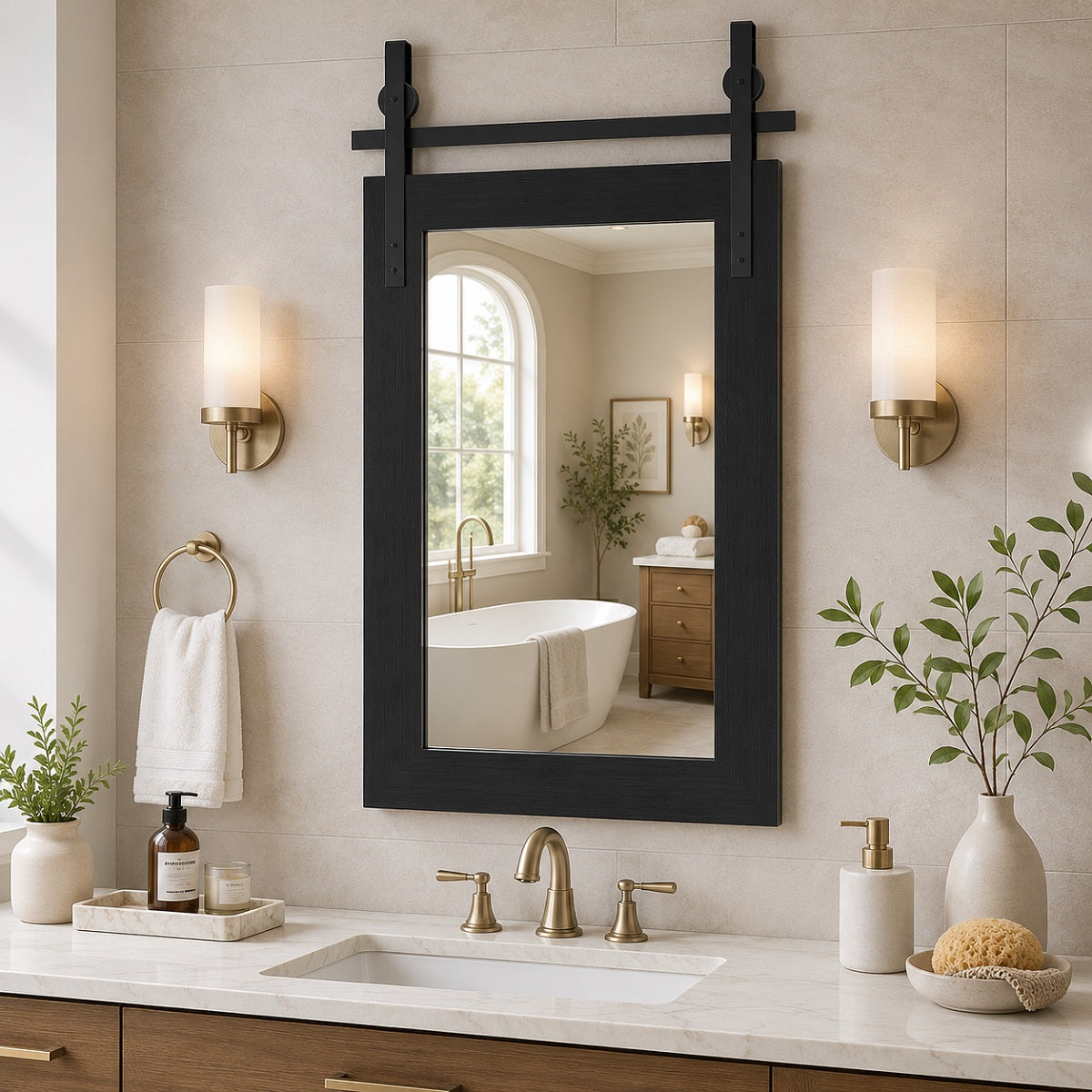
The best mirror for a bathroom combines moisture resistance, a clear reflection, durable materials, and secure installation.
A practical bathroom mirror will usually have:
- Protected reflective backing and finished edges
- A frameless design or moisture-resistant frame
- Glass suitable for its size and installation area
- Reliable brackets and compatible wall hardware
- Easy-to-clean surfaces
- Bathroom-appropriate electrical construction when lighting is included
Useful extras include adjustable LED lighting, touch controls, memory settings, and anti-fog functions. They can improve the daily experience, but sound materials and safe installation should come before smart features.
Hasipu bathroom mirrors are designed around everyday grooming, clear reflections, practical lighting, and modern home interiors. Always review the specifications for the individual model and make sure its size, mounting style, and features suit the planned location.
Can You Make a Regular Mirror Suitable for a Bathroom?
Sometimes, but there are limits.
A well-built decorative mirror may work in a lightly used powder room after exposed wood and vulnerable edges are properly sealed. Better ventilation can also reduce the amount of time moisture remains on the mirror.
These changes cannot correct every problem. They will not make unrated electrical parts safe for a damp location, repair a weak hanging system, or fully protect a badly deteriorated antique mirror.
For a full bathroom, buying a mirror designed for the environment is usually more reliable than trying to adapt one made for a dry living space.
How to Protect a Bathroom Mirror From Moisture
Even a moisture-resistant mirror will last longer with reasonable care.
Run the exhaust fan during showers and leave it on long enough to remove lingering steam. ENERGY STAR notes that adequate ventilation helps control household moisture, while the EPA recommends bathroom exhaust fans that vent outdoors.
Wipe standing water from the countertop and lower mirror edge. Apply cleaner to a microfiber cloth rather than spraying it directly onto the glass. Avoid abrasive pads and do not allow liquid to collect behind the frame.
Inspect the edges and mounting hardware from time to time. Early black spots, lifting coatings, corrosion, or a loose frame are easier to address before the damage spreads.

Final Thoughts
Mirrors most likely to fail in bathrooms are those with unsealed edges, unprotected backing, untreated frames, corrosion-prone hardware, weak mounting systems, or electrical parts made for dry rooms.
Anti-fog technology and decorative style are secondary. Start with moisture resistance, safe glass, reliable hardware, and the correct installation method. A mirror built for bathroom conditions will be easier to maintain and far less likely to develop warping, rust, or black edges after a few years.
Frequently Asked Questions
1. Can any wall mirror be used in a bathroom?
Not every wall mirror is made for bathroom conditions. A mirror intended for a bedroom or hallway may lack moisture-resistant backing, sealed edges, corrosion-resistant framing, or bathroom-safe electrical parts. Check the manufacturer’s intended use before installation.
2. Are wood-framed mirrors bad for bathrooms?
Not automatically. Sealed wood and bathroom-rated wood frames can work well. Untreated wood, exposed MDF, rattan, and frames with unfinished joints are more likely to absorb moisture, swell, or warp.
3. Why do bathroom mirrors develop black edges?
Black edges usually point to deterioration of the reflective backing. Moisture or cleaning liquid can enter around exposed edges and damage the metallic layer behind the glass. This process is commonly called desilvering.
4. Are frameless mirrors suitable for bathrooms?
Yes, provided the backing and edges are properly protected. Frameless construction removes the risk of a frame swelling or rusting, but exposed mirror edges still need suitable finishing and careful cleaning.
5. Is tempered glass required for every bathroom mirror?
Requirements vary by product, placement, and local building rules. Tempered glass or safety backing can reduce injury risk, particularly for large mirrors or mirrors installed in impact-prone areas. Follow local requirements and the manufacturer’s instructions.
6. Can a bedroom LED mirror be installed in a bathroom?
Only when the manufacturer confirms that the model is suitable for bathroom or damp-location use. An ordinary plug-in vanity mirror may not have protected wiring or electrical components.