Table of Contents
A mirror can look perfect above a console and still feel wrong from the couch. Maybe it catches the television at an awkward angle. Maybe the frame is beautiful, but the glass sits too high for anyone to use. Those are placement problems, and choosing a different frame rarely solves them.
To use mirrors in interior design, decide what each mirror should do, check the reflected view, and choose a size that works with the furniture and people around it. Shape, finish, and lighting can then support that plan.
At Hasipu, we see a mirror as part of everyday life: somewhere to get ready, check an outfit, or enjoy a different view of a familiar room. Here is how to make those practical needs work with your decorating ideas.
What Should a Mirror Reflect?
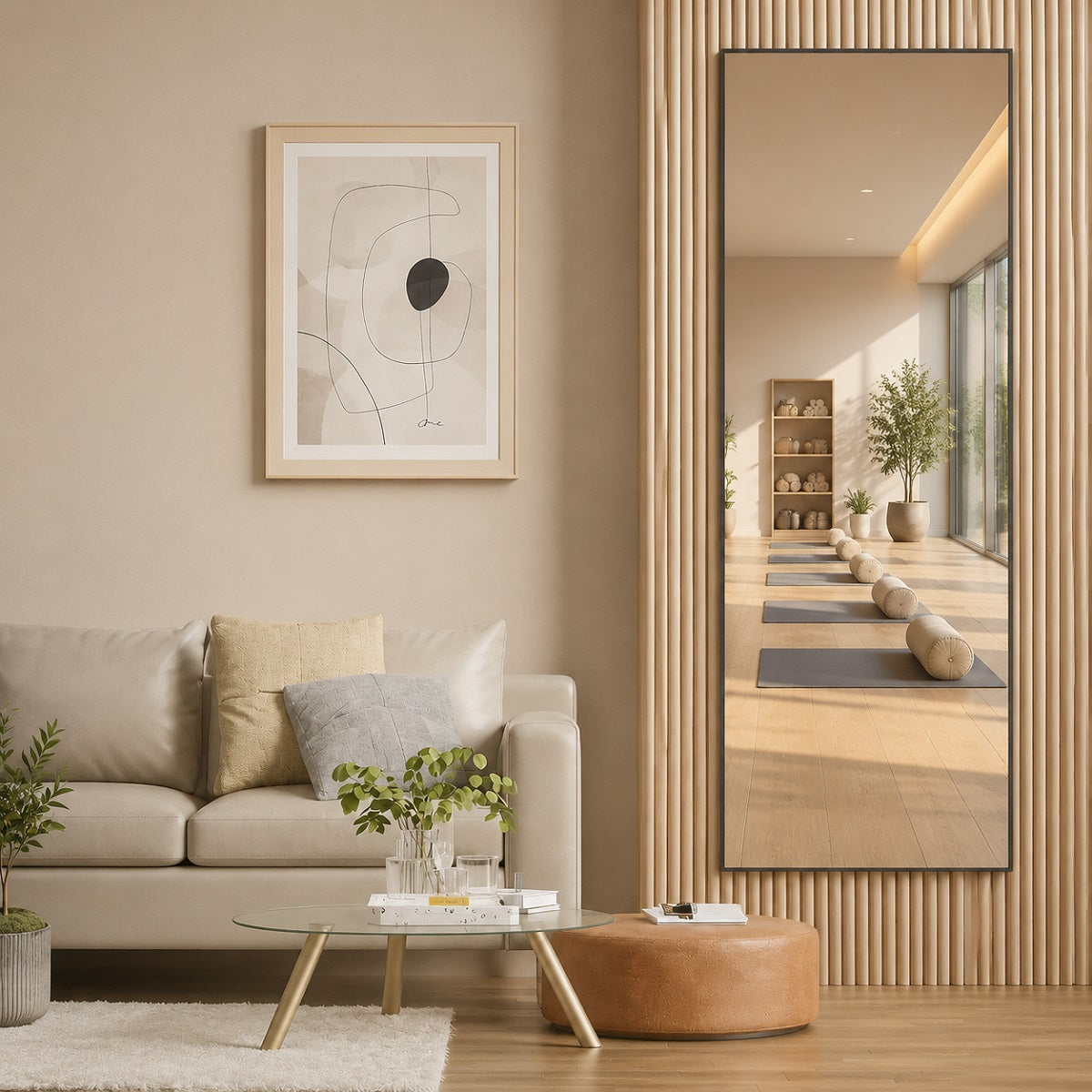
Think about the image inside the glass before deciding how to decorate around the frame. A reflection becomes part of the room’s appearance, even when the objects it shows are across the room.
Check the view from where you sit
For living room mirror placement, look from the couch and nearby chairs. In a dining room, sit at both ends of the table. A mirror that looks attractive from the doorway may reflect a distracting screen from your usual seat.
Give particular attention to objects that move or light up. A television, busy hallway, or flashing appliance display can keep pulling your attention toward the glass.
Checking the reflected view and the mirror’s proportions also addresses common decorating problems discussed in Hasipu’s mirror placement guide.
Pick a view you enjoy in everyday conditions
A reading corner, a piece of artwork, or a plant beside a window gives you something pleasant to see. Choose a view that still works on an ordinary weekday, when the room has not been tidied for guests.
Try this before installation: list what sits opposite each possible mirror location. Then consider what changes there during the day. The dining table might be lovely at dinner and covered with work supplies until five. Decide which view matters more to you.

Balancing Mirror Size with Room Scale
Measure the wall, then measure the furniture and fixtures around it. The usable space may be much smaller than the wall itself once a lamp, outlet, door casing, or sconce enters the picture.
Compare actual outlines above furniture
Cut paper to the outside dimensions of your shortlisted mirrors, including the frames. Attach the templates with a method suitable for your wall finish.
Above a 60-inch console, for example, compare a 36-inch-wide outline with a 42-inch-wide outline. These are sample sizes to test, not a prescribed ratio. Add the lamp and bowl you plan to keep on the console before judging the arrangement.
Check the furniture from across the room as well as up close. A mirror should feel connected to the arrangement beneath it without making the wall look crowded.
Look at the glass area, too
Two mirrors with the same outside measurements can offer vastly different amounts of usable reflection. A broad frame takes up more of those total dimensions, effectively shrinking the functional glass area. Similarly, an arched top and a rectangular top provide different viewing areas—especially near the upper corners where head clearance matters most.
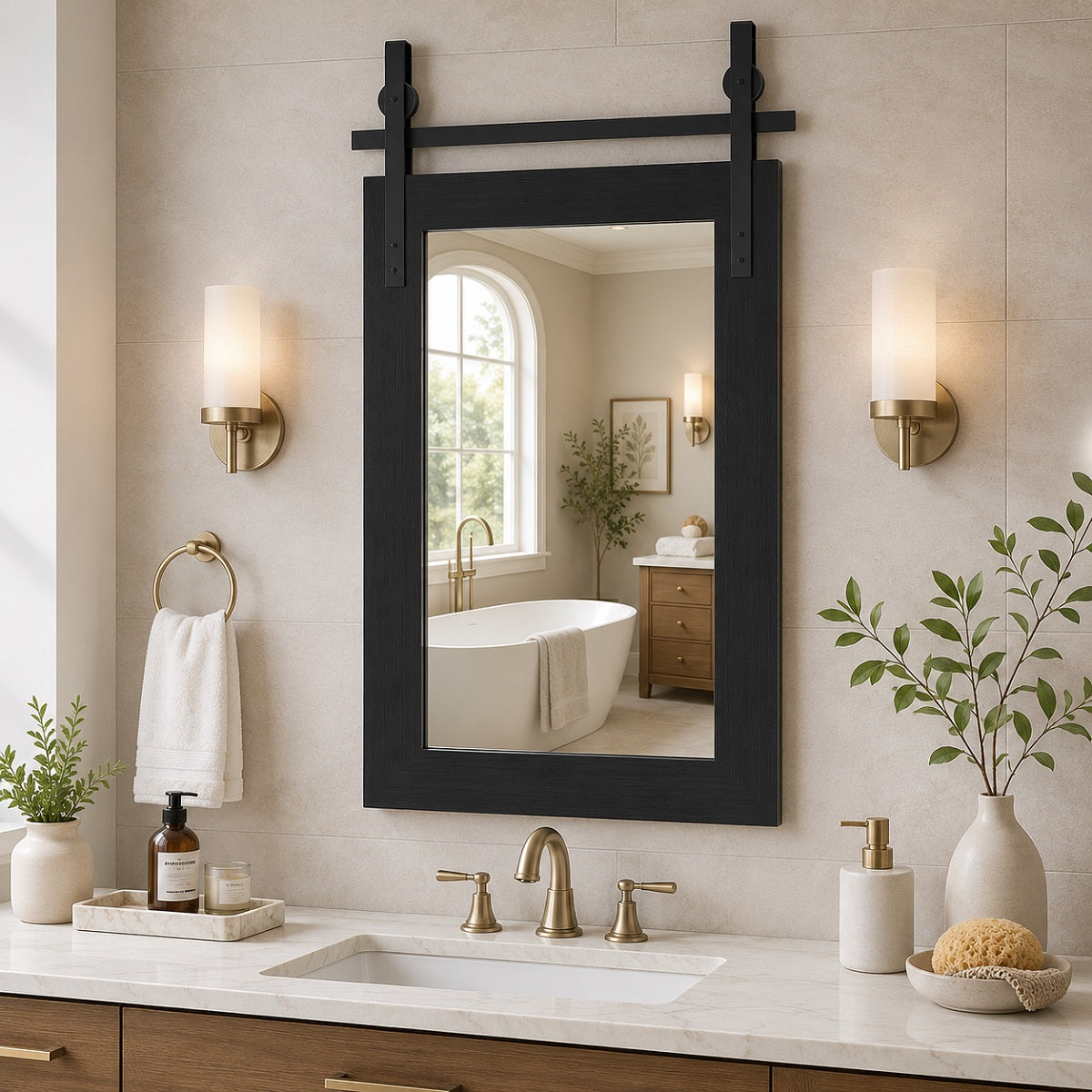
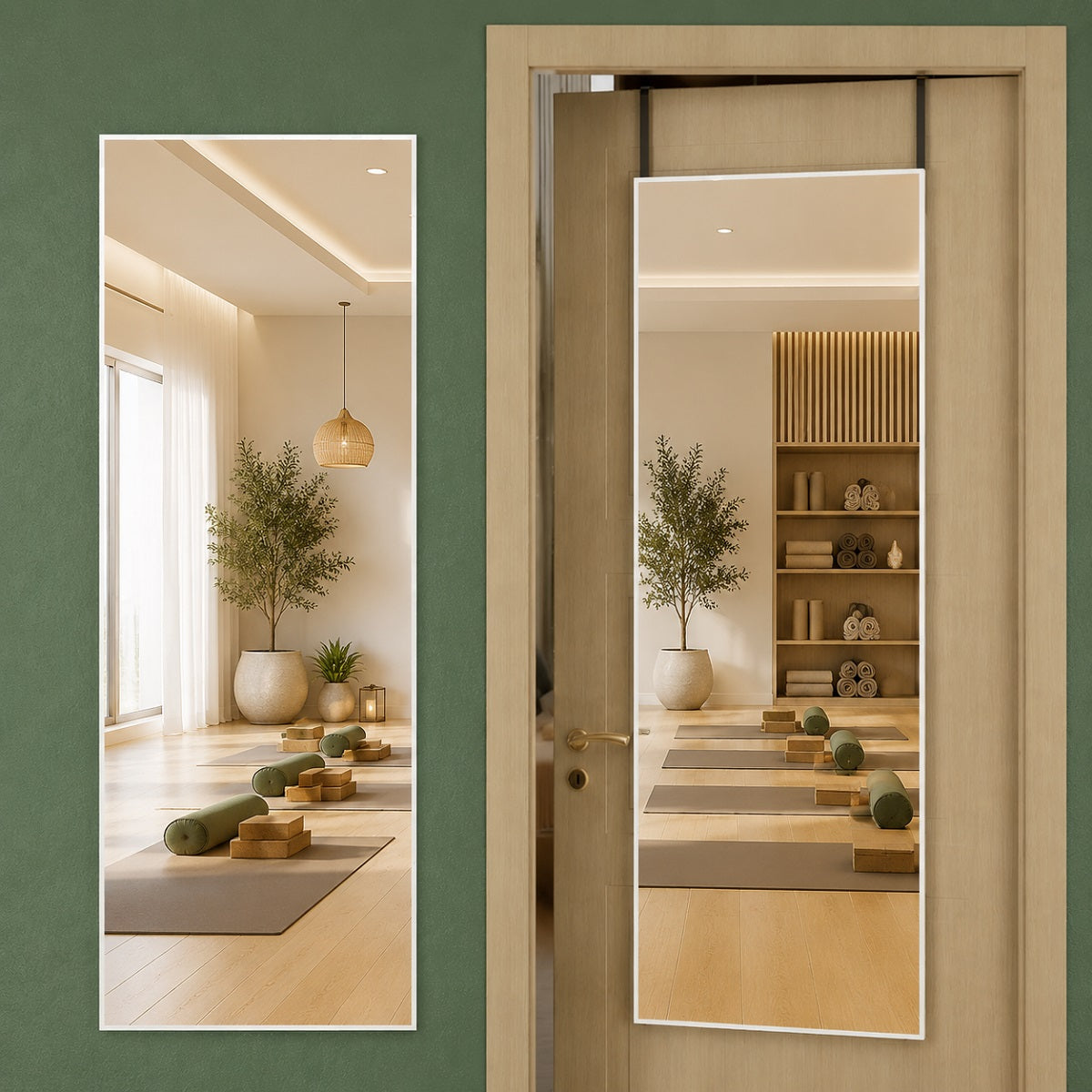
For a dressing mirror or bathroom mirror, always verify that the glass itself covers the view you need. Decorative scale and useful reflective size are related, but they are not interchangeable.
How High Should You Hang a Mirror?
The right mirror height depends on its purpose, the furniture below it, and the people using it. Treat any general hanging measurement as a starting point to test in your own room.
On an open wall
Mark a proposed center around the eye level of the main users, then outline the whole mirror. Check that shorter and taller household members can see themselves comfortably.
For a mirror used mainly as decoration, step back and judge its relationship to nearby artwork, trim, and furniture. You may prefer a different height from the one you would choose for grooming.
Above a console, dresser, or sofa
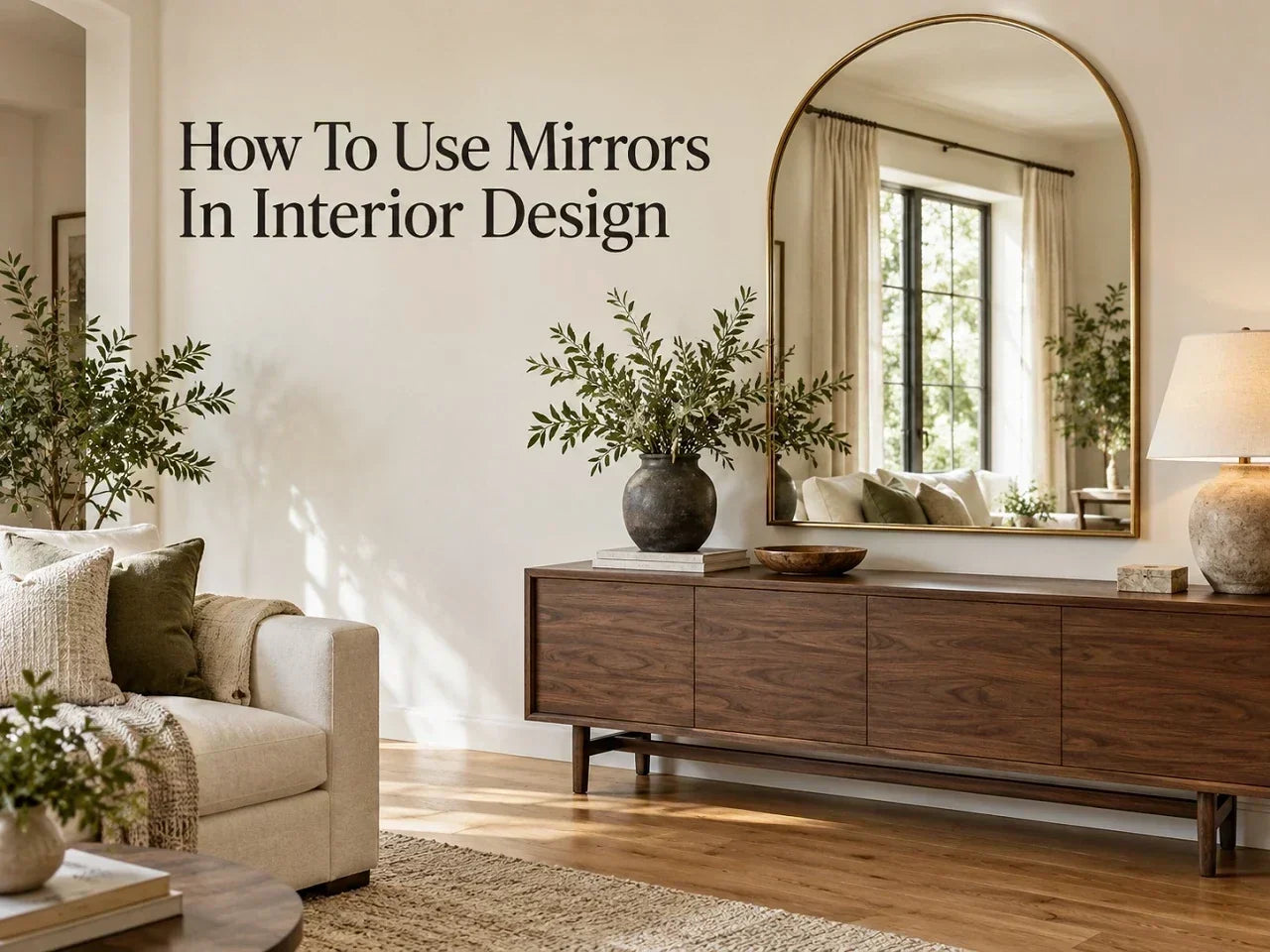
Begin by testing a modest gap between the furniture and the frame. For a console, a six-inch gap is one possible mockup; move the paper outline up or down until the arrangement feels connected and the reflection is useful. That trial measurement is a visual guide, not a fixed installation clearance.
Open drawers and place your usual objects on the surface. A tall jewelry box or lamp may block more of the glass than expected.
Above a sofa, account for people sitting, standing, and leaning back. Always follow the mirror’s mounting instructions and choose hardware appropriate to its weight and wall construction.
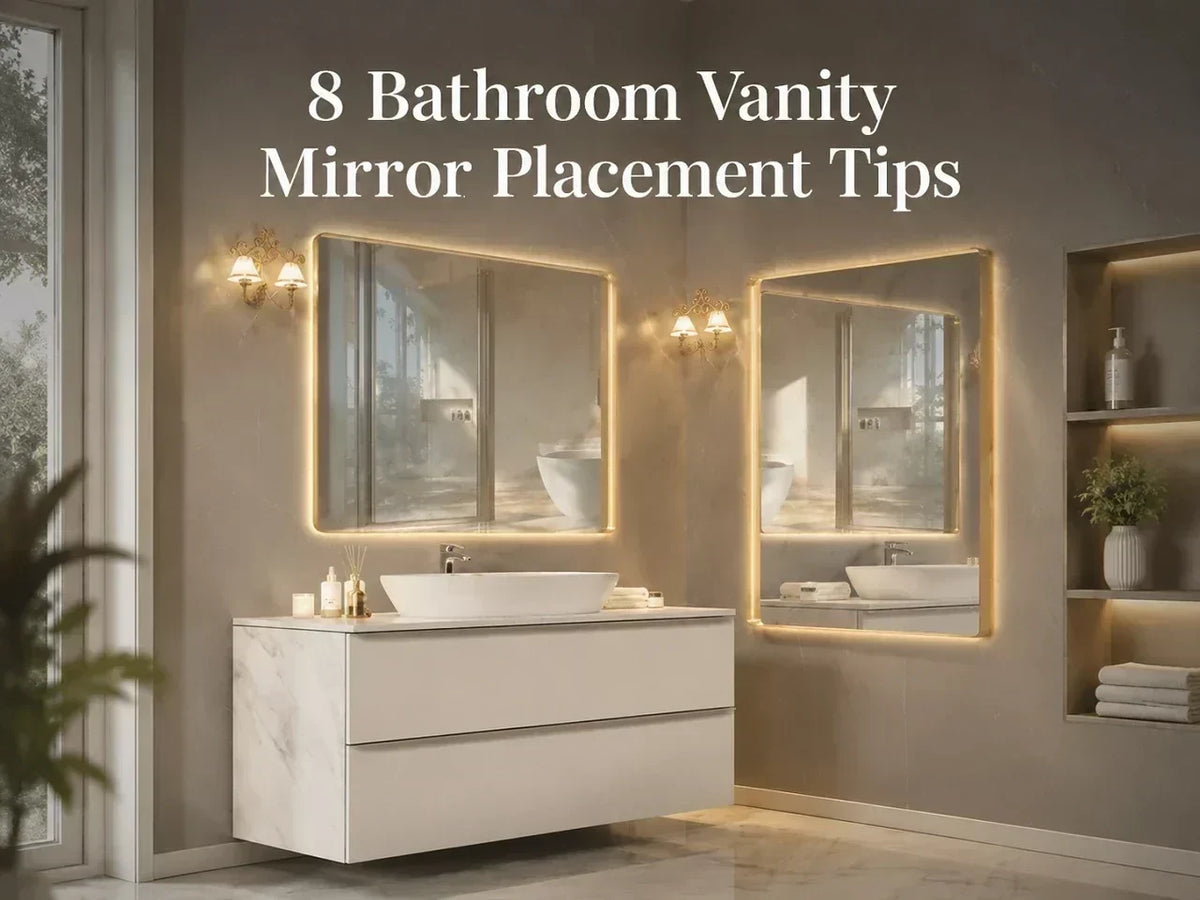
At a bathroom vanity
Use the actual sink position and the heights of household members as your reference point. Check the faucet, backsplash, frame, and lights together as an integrated assembly rather than separate elements.
Before drilling, have each person stand where they normally brush their teeth or get ready. A mirror that looks perfectly centered on the wall space can still cut off a taller person's forehead or a shorter person's chin if aligned strictly by architectural symmetry rather than user sightlines.
Making the Most of Light and Reflection
An ordinary mirror redirects existing light; it does not create illumination. Placement determines which view and light source it catches.
Compare the wall opposite the window with the wall beside it
A mirror opposite a window may capture an outdoor view. A mirror on an adjacent wall can offer another angle. Neither position works automatically in every room: the result depends on the window, sunlight, and viewing position. Hasipu’s guide to mirror placement mistakes also explores daylight placement and glare.
Check the room at the hours you use it. For a breakfast nook, morning conditions matter most. For a sitting room, inspect the late-afternoon light and the view after the curtains close.
Check reflected brightness at night
Turn on the lamps you normally use. Sit down and look for exposed bulbs or bright reflections at eye level.
Try moving a table lamp along its surface before changing the mirror location. A small adjustment may keep the arrangement you like while making the evening view more comfortable.

Mirrors and Lighting Should Be Designed Together
Planning a new vanity or dressing area gives you a chance to choose the mirror and light fixtures as a set. Make room for both before buying either.
Draw the whole wall before ordering
Sketch the mirror, sconces, electrical connections, countertop, and cabinet doors with their measurements. Include the width of the light fixtures, not just their center points.
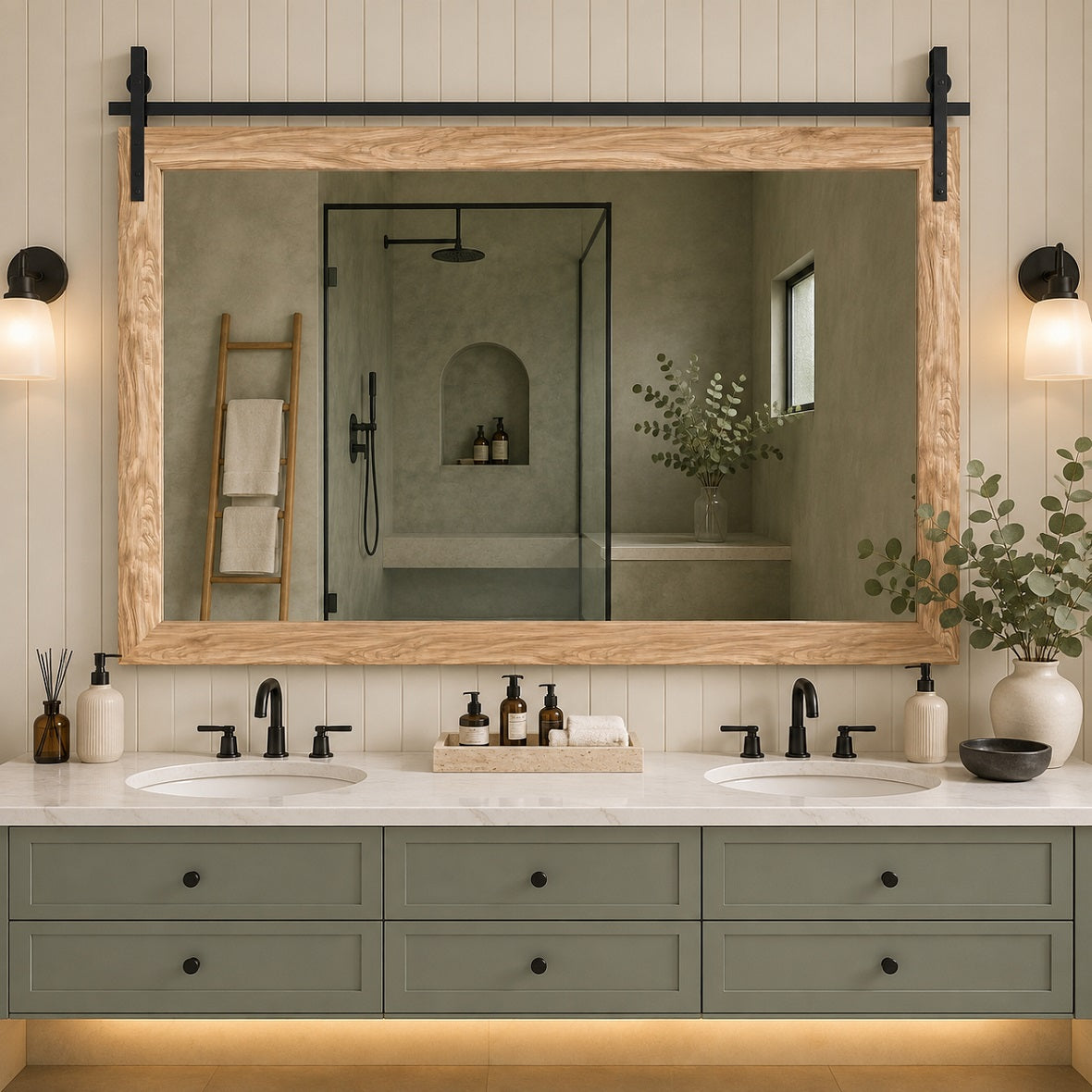
This is especially useful with a wide mirror. A model that fits between two existing electrical boxes might leave too little space for the fixtures you want to install on them.
For a tabletop setup, plan where the cord will run and how you will reach the switch. Keep cords clear of drawers and walking routes.
Separate decorative light from grooming light
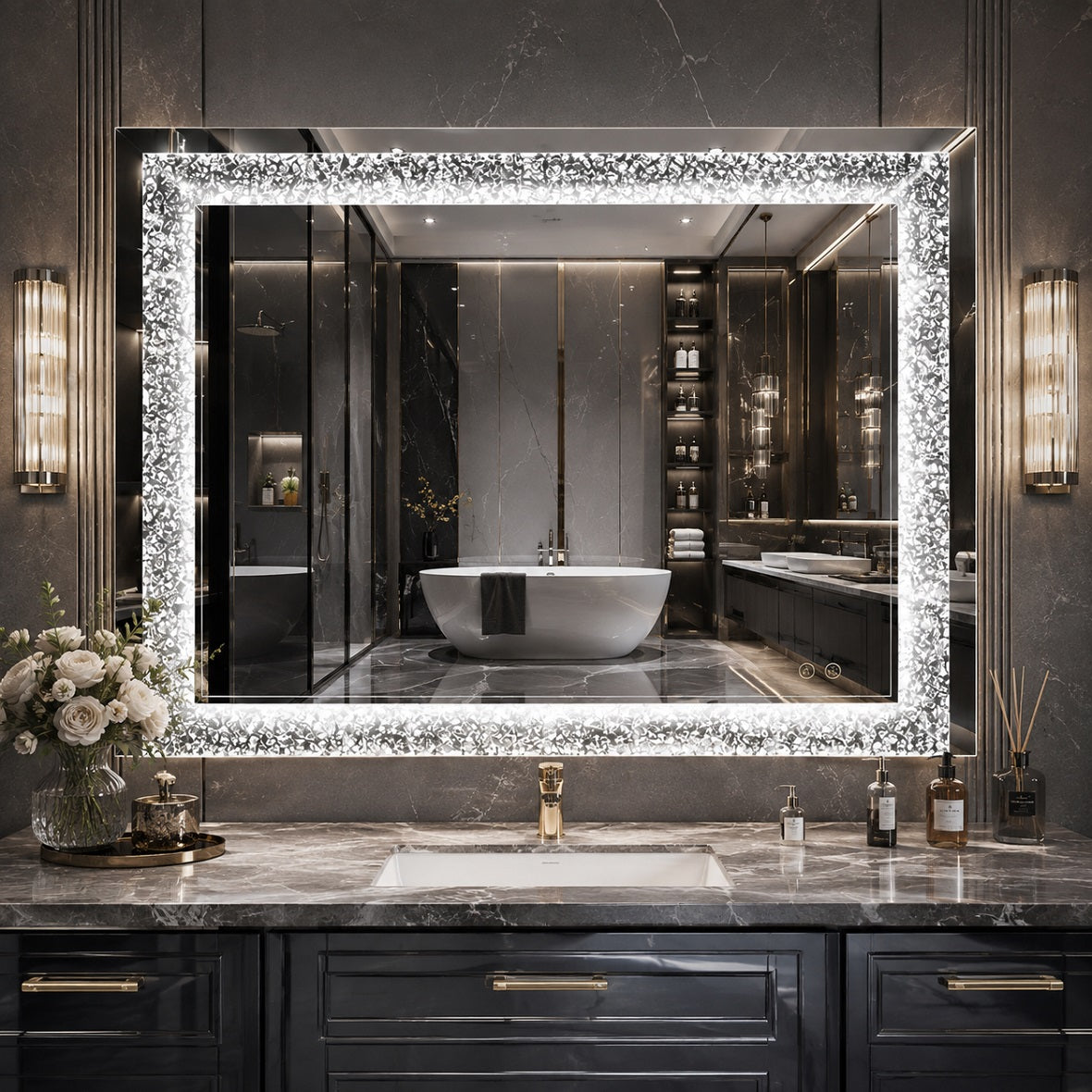
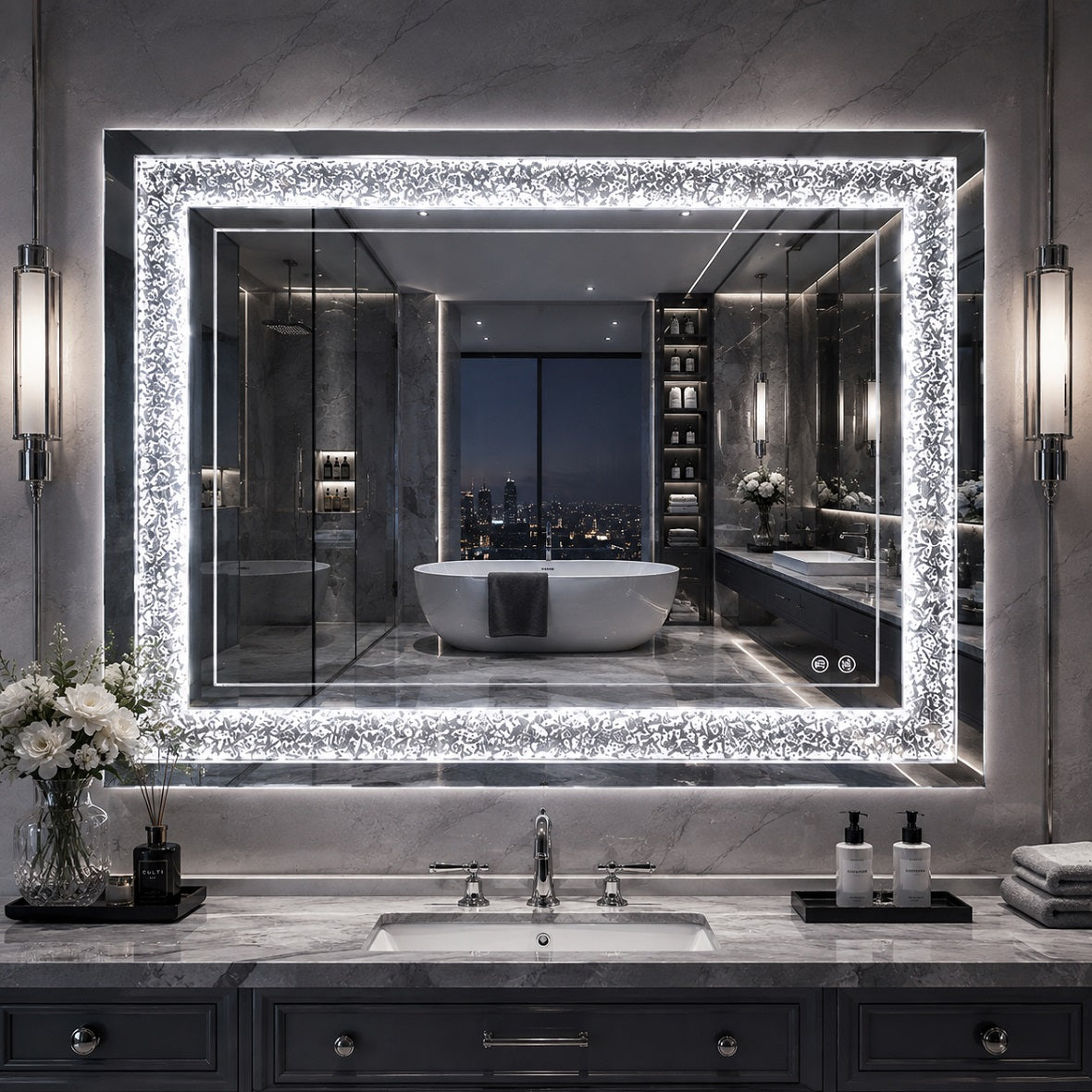
A glow behind the glass can look attractive without providing all the light you want on your face. Judge a lighted vanity mirror by its intended use, actual lighting features, and position in the room.
Sit or stand where you will get ready and check for shadows. Evaluate the mirror with the other room lights on, too; that is how many people will use it.
For a Hasipu model, check the individual product specifications for brightness adjustment, lighting modes, power requirements, and installation options. Choose bathroom equipment according to its listed suitability for the intended location.
Exploring Shapes and Styles
Shape affects the space a mirror occupies and how you use it. Compare silhouettes at their actual dimensions before committing to a look.
| Mirror shape | A design idea to try | A practical check |
|---|---|---|
| Round | Place above a simple console with a low arrangement | Does the curved lower edge provide enough viewing area? |
| Rectangular | Align with a dresser or use vertically for dressing | Is the model approved for your intended orientation? |
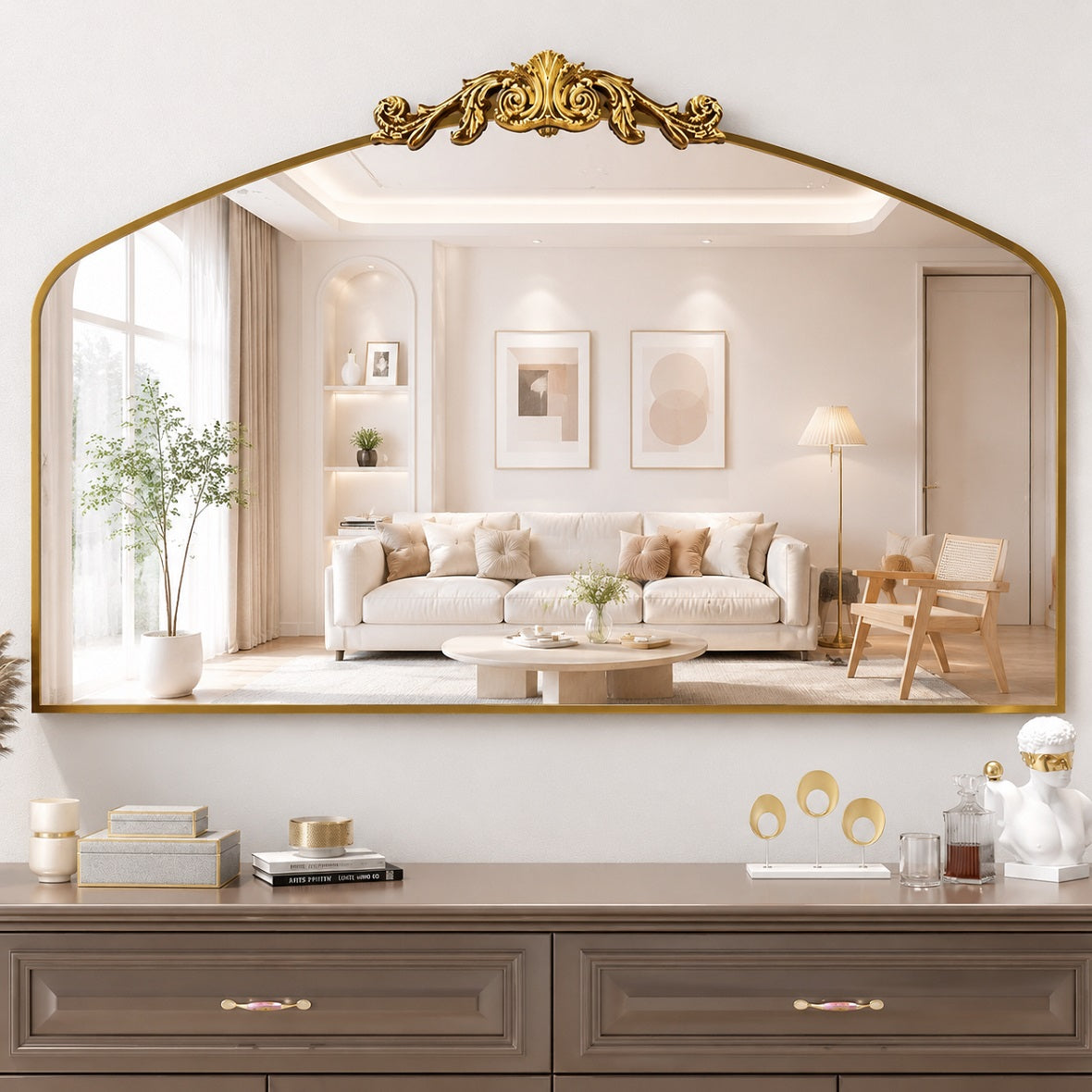
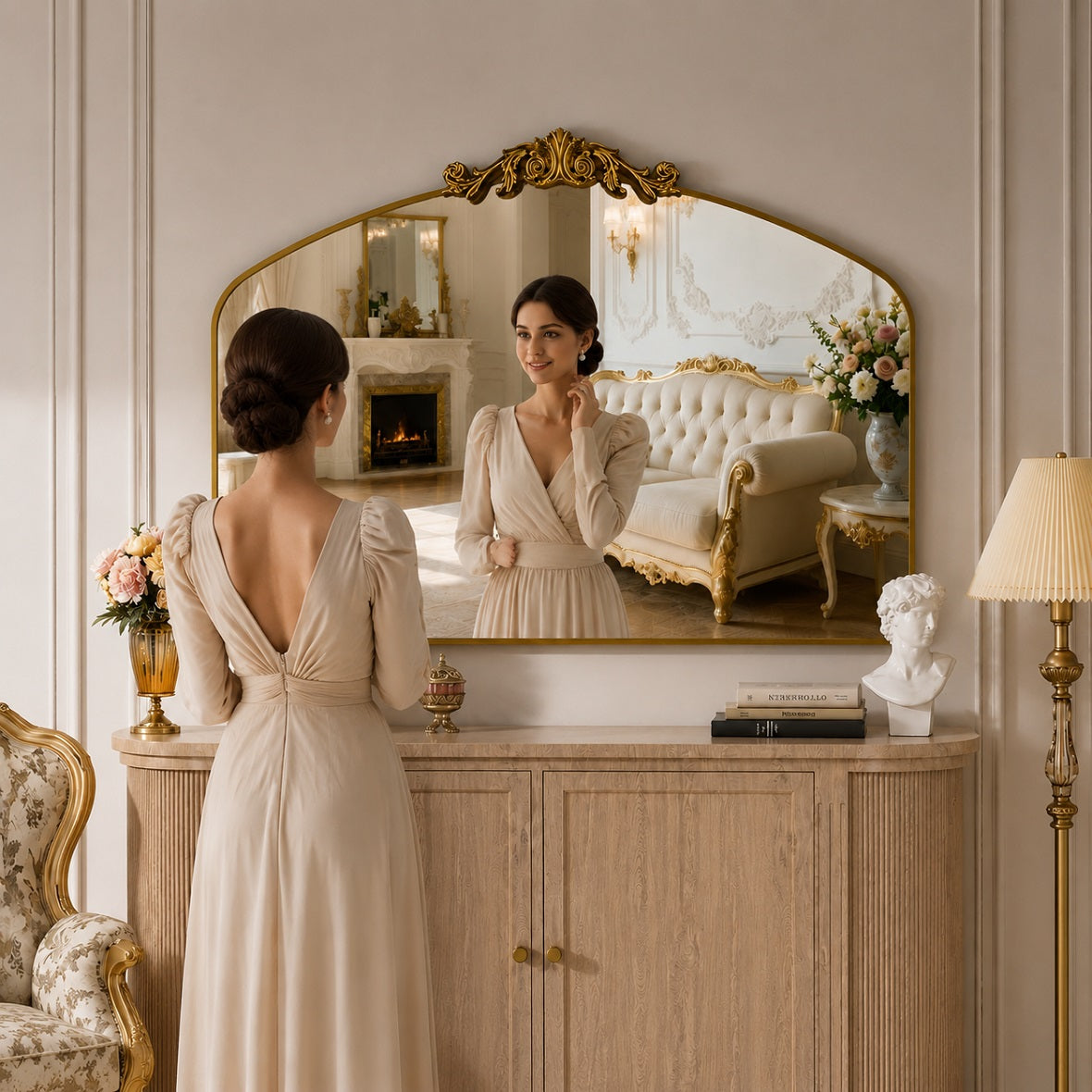
| Arched | Use on a wall with room above the furniture | Does the straight-sided portion give you the view you need? |
| Oval | Try between closely spaced wall features | Is the narrower viewing area comfortable for daily use? |
| Irregular | Let the outline be the main decorative feature | Where are the actual mounting points and widest edges? |
Test shape and frame thickness separately
A thin-framed circle and a heavily framed circle can feel very different on the same wall. Compare frame samples or close-up product images against your paint, tile, and furniture finishes.
For an irregular mirror, trace the real outline as closely as possible. A rectangular placeholder may miss the part that crowds a lamp or reaches toward a door casing.

Match Your Mirror to Your Interior Style
Start with the room you already have. Look at the repeated finishes, the furniture profiles, and how much decoration is on display. You do not need to give the whole home a style label to choose a suitable mirror.
Modern and minimal rooms
Try a simple frame with a finish that relates to an existing detail, such as a lamp stem or cabinet pull. Keep nearby accessories restrained so the outline remains easy to read.
Before buying an oversized mirror, look at what it will show. A minimal wall can still appear busy when its reflection captures shelves packed with objects.
Traditional and vintage-inspired interiors
A frame with texture, carving, or a warm metallic finish can work with older furniture and collected pieces. Give it room by keeping the surface beneath it relatively quiet.
For an antique or vintage mirror used for dressing, inspect the glass condition and clarity. Aged glass may be appealing as decoration while offering a less useful everyday reflection.
Relaxed, coastal, and mixed rooms
Try a wood finish alongside fabrics and furniture already in the space. Compare undertones in daylight; two finishes described as “natural wood” may look quite different together.
A mixed room can also accommodate contrast. A plain mirror above a detailed dresser gives both pieces room to be seen. Carrying one finish elsewhere in the room can help the pairing feel deliberate without matching every object.
Creating Illusions of Space and Depth
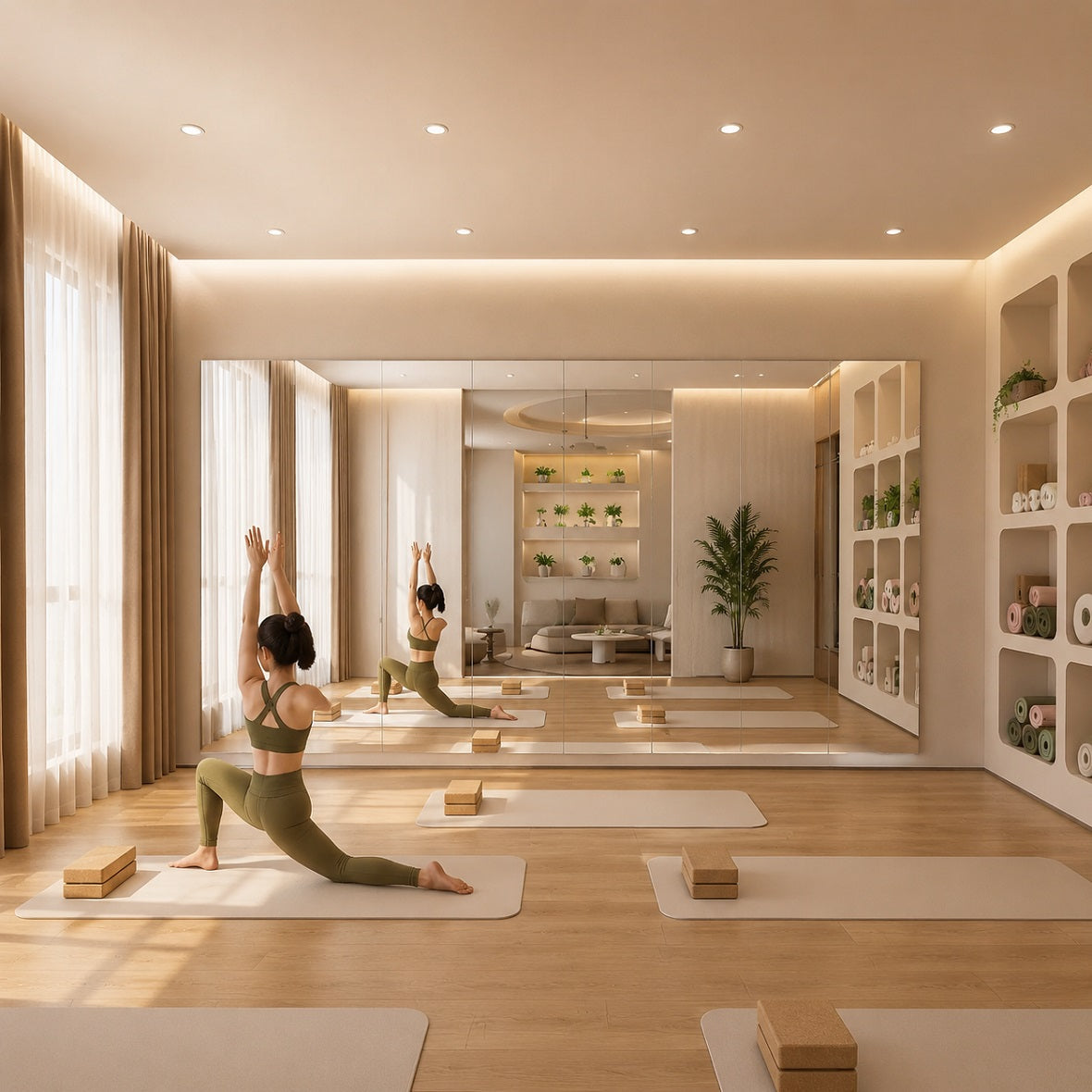
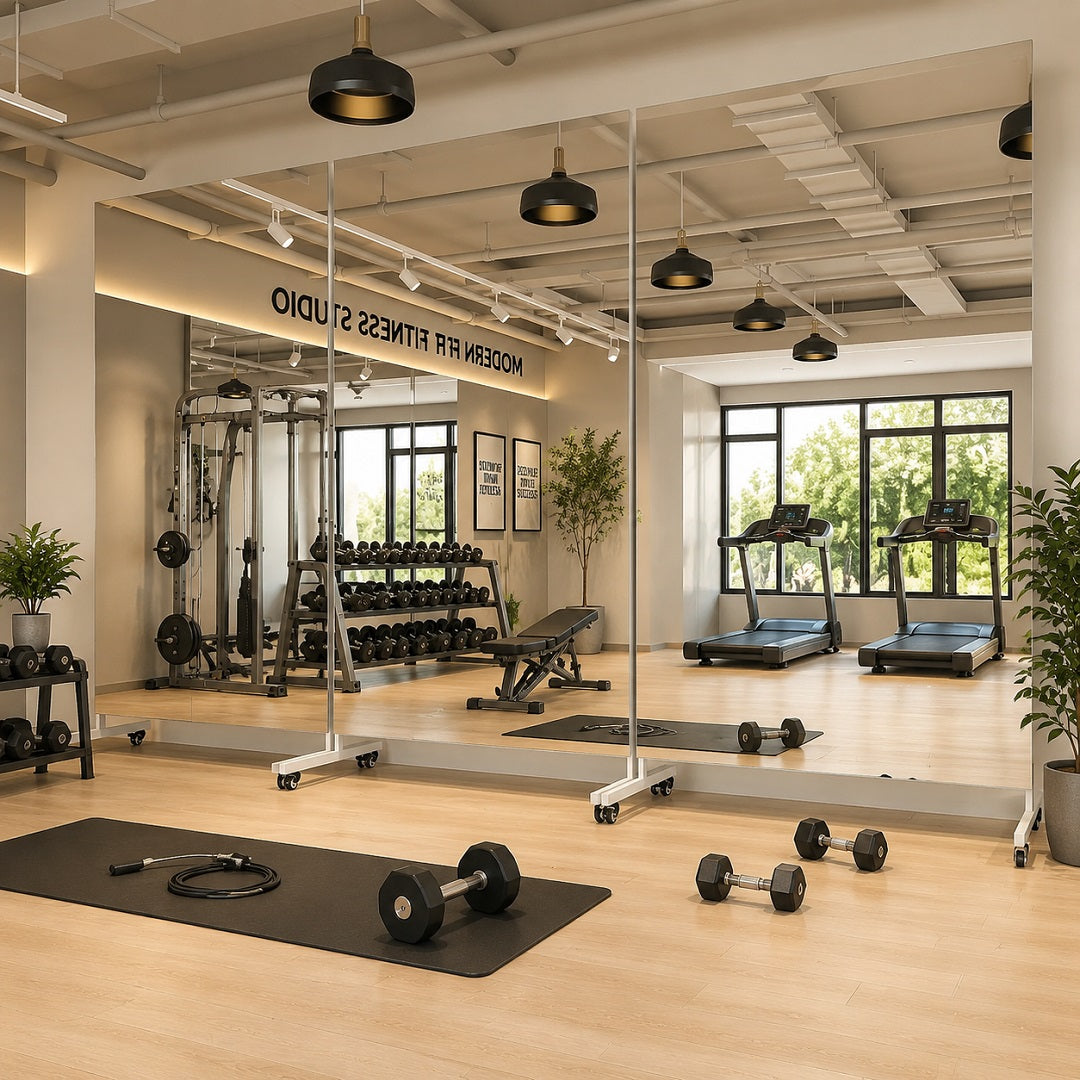
Mirrors can make a room appear more open by showing a reflected view beyond the wall surface. The effect is visual; furniture still needs the same floor space, and walkways still need to remain clear.
Give a small room a view with depth
For a compact sitting area, test a location that shows some distance into the room. Then compare it with one that mostly reflects a nearby cabinet. Notice which view feels less confined from your chair.
Keep the area immediately in front of the mirror usable. A floor mirror that forces you to squeeze around a stand may be a poor fit, even when you like its appearance. A suitable wall-mounted model may work better there.
Use a hallway mirror without crowding the route
Mark the depth of the frame as well as its width. Add door handles, coat hooks, and anything people carry through the hall to your placement check.
A mirror at the far end of a hallway and one along the side offer different views. Test the side wall when the end position mostly repeats a long, narrow passage. Avoid arrangements that could be mistaken for an open doorway.

Using Mirrors as Design Highlights
A mirror can be the piece you notice when entering a room. Choose its surroundings with that role in mind.
Build a console arrangement around it
Start with the mirror and the furniture alone. Add the items you actually need, such as a key dish or lamp, then see whether anything else improves the arrangement.
Leave enough glass visible for the reflection to remain part of the design. Tall objects spread across the entire surface can hide the reason you chose a mirror there.
Check a mantel from the couch
A mirror over a fireplace often sits well above standing eye level. Inspect the reflected view from your usual seat before choosing this location.
Account for the mantel objects and nearby artwork. Check the fireplace clearances and mirror manufacturer’s guidance for placement near heat, and use the approved mounting method.
Make a decorative grouping feel considered
Lay a proposed mirror group on the floor and try paper templates on the wall. Keep a shared detail, such as similar frame finishes, while allowing the sizes to vary.
Photograph the arrangement from the doorway. Pay attention to the overall outline and the spaces between pieces, rather than adjusting each mirror in isolation.
How Many Mirrors Should You Use in One Room?
There is no fixed number that suits every room. Start with one mirror that meets the main need, then give each additional mirror a distinct purpose.
A bedroom might use a full-length mirror for clothing and a tabletop mirror for grooming. A shared bathroom might need two mirrors so each person has a comfortable station. Both arrangements have a practical reason for the second mirror.
Check what happens when mirrors face each other
Opposing mirrors can create repeated reflections. Some people enjoy that effect; others find the movement and repetition distracting.
Check the view from the bed, sofa, and doorway. Moving one mirror to another wall may keep both useful without creating a repeated corridor of reflections.
For several mirrors in a small room, ask what you would lose by removing each one. Keep the ones that improve daily use or add a view you want. Empty wall space can be part of the finished arrangement.
Practical Ways to Use Mirrors at Home
Room-by-room planning comes down to ordinary actions: opening the door, getting dressed, washing your face, or sitting down for dinner.
Entryways: leave room for the morning rush
Place an entryway mirror where you can use it without standing in the door’s swing. Check nearby closet doors, too.
Keep coats and bags from covering the glass. In a narrow entrance, a mirror without a console underneath may leave more room to move.
Bedrooms and dressing areas
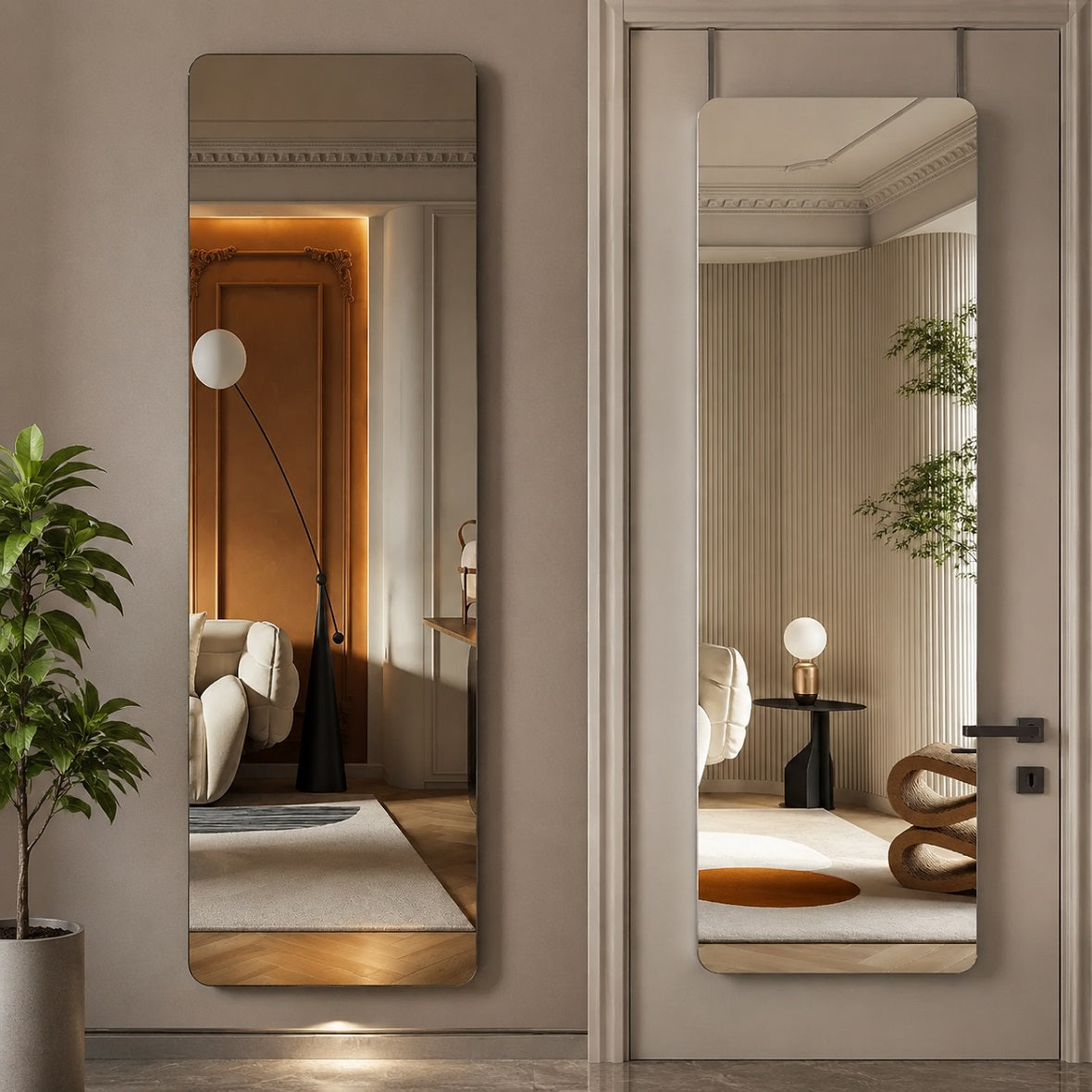
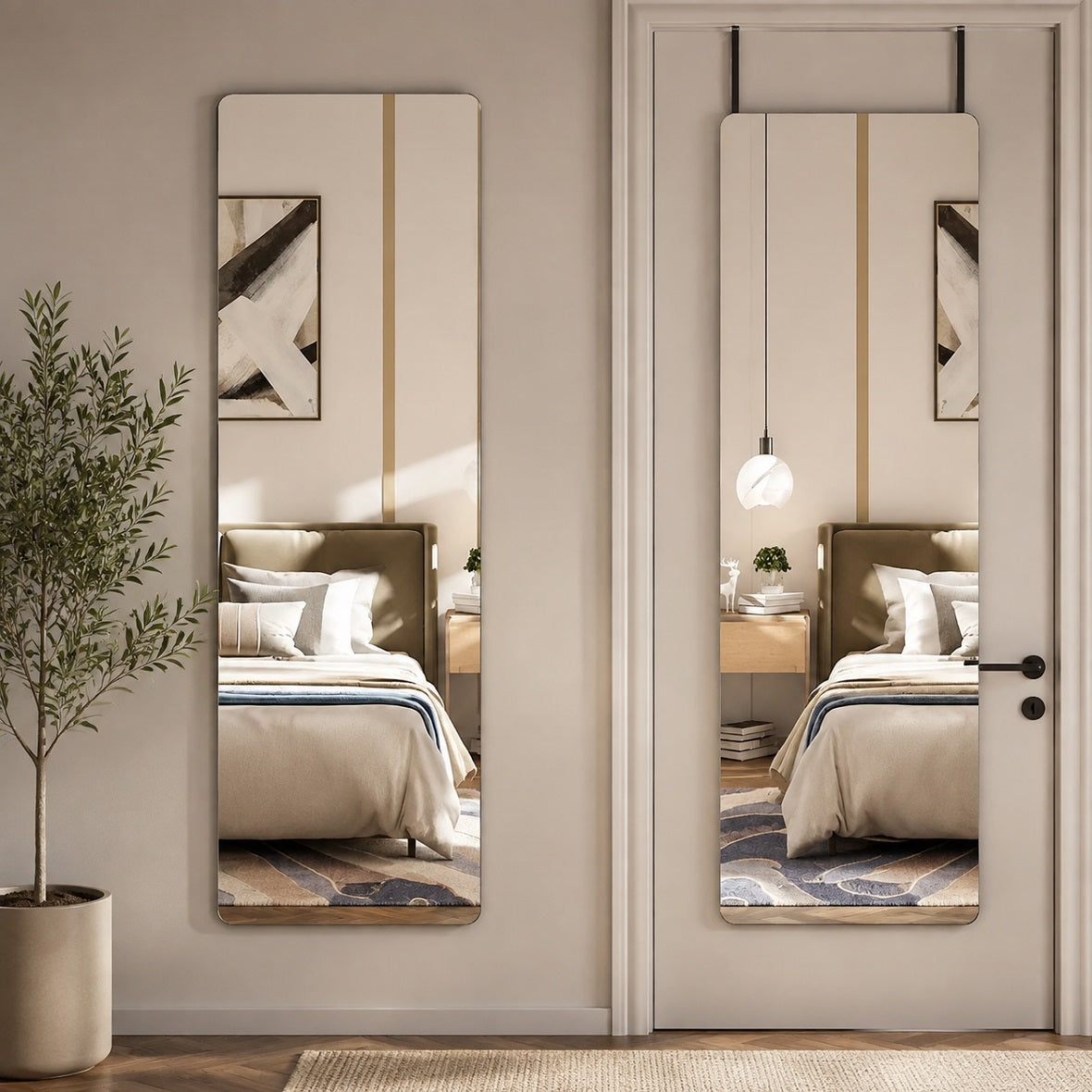
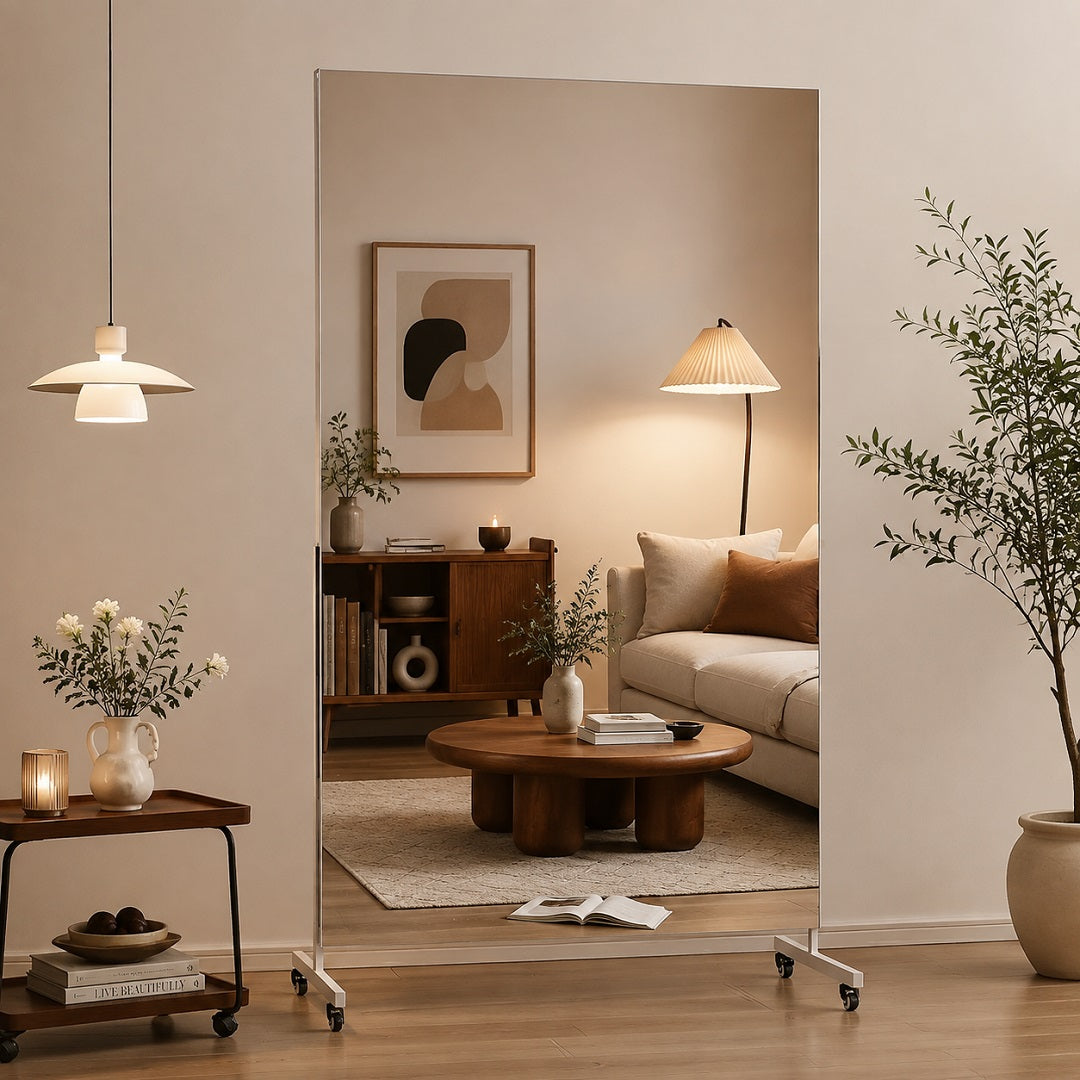
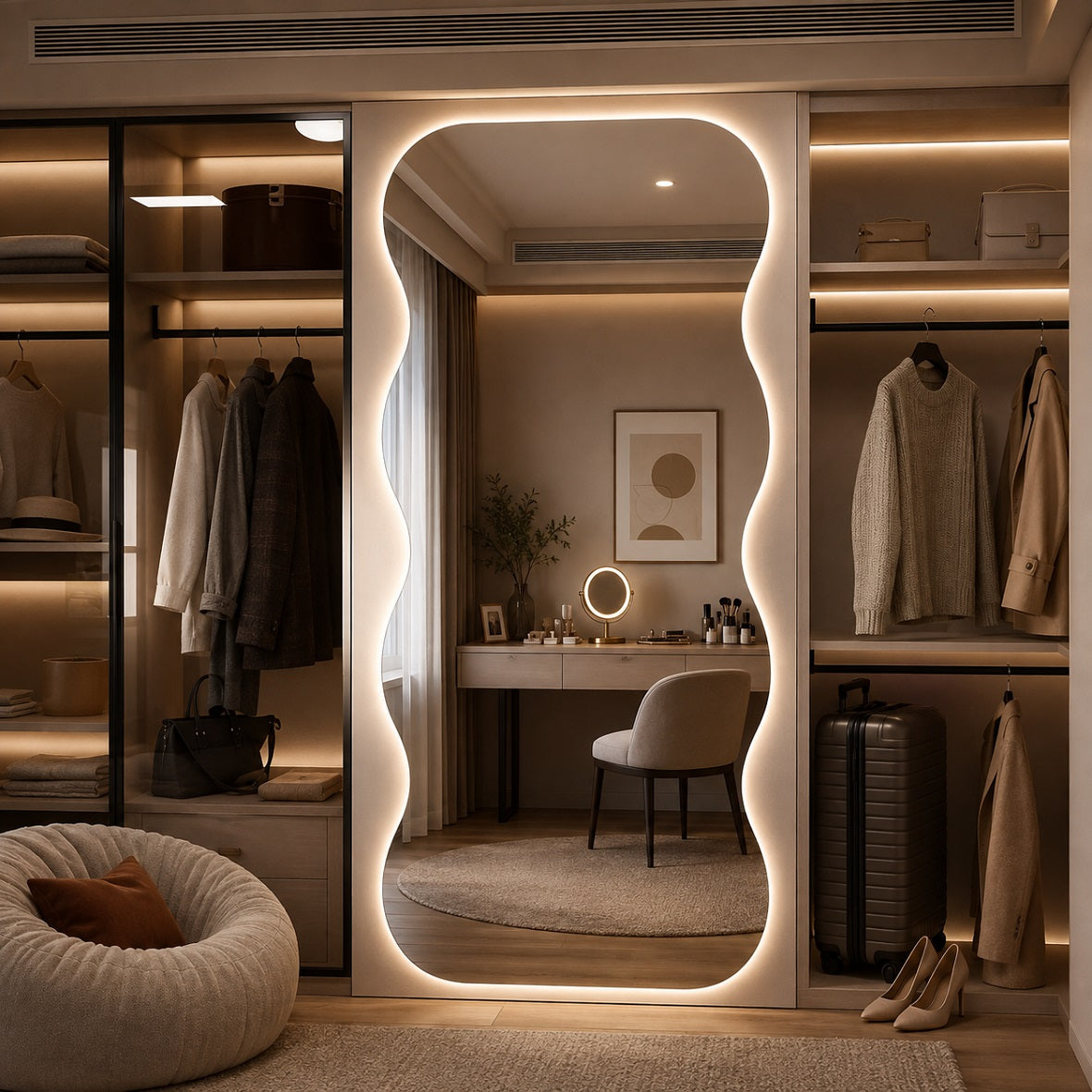
Place a full-length bedroom mirror near the clothes you wear most. Keep the space in front clear enough to check your whole outfit, including shoes.
At a makeup table, test the mirror while sitting in your chosen chair. Reach for the controls, open the drawers, and check that the tabletop height feels comfortable.
Living and dining rooms
In a living room, inspect the mirror while the television is on and people are seated. This can reveal distracting reflections or glare before installation.
Above a dining sideboard, check the view from the table with the evening lights on. Put your usual serving pieces on the sideboard to see how much glass they cover. An arrangement should remain useful when dinner is actually being served.
Bathrooms: plan around the whole household
Choose a bathroom vanity mirror with the sink layout, users’ heights, lighting, and storage needs in mind. Compare a wide mirror with separate mirrors over individual sinks by sketching both complete arrangements.
Check the mirror’s intended environment and installation requirements. Keep cleaning access in mind as well; a tightly packed arrangement can make the frame edges awkward to reach.
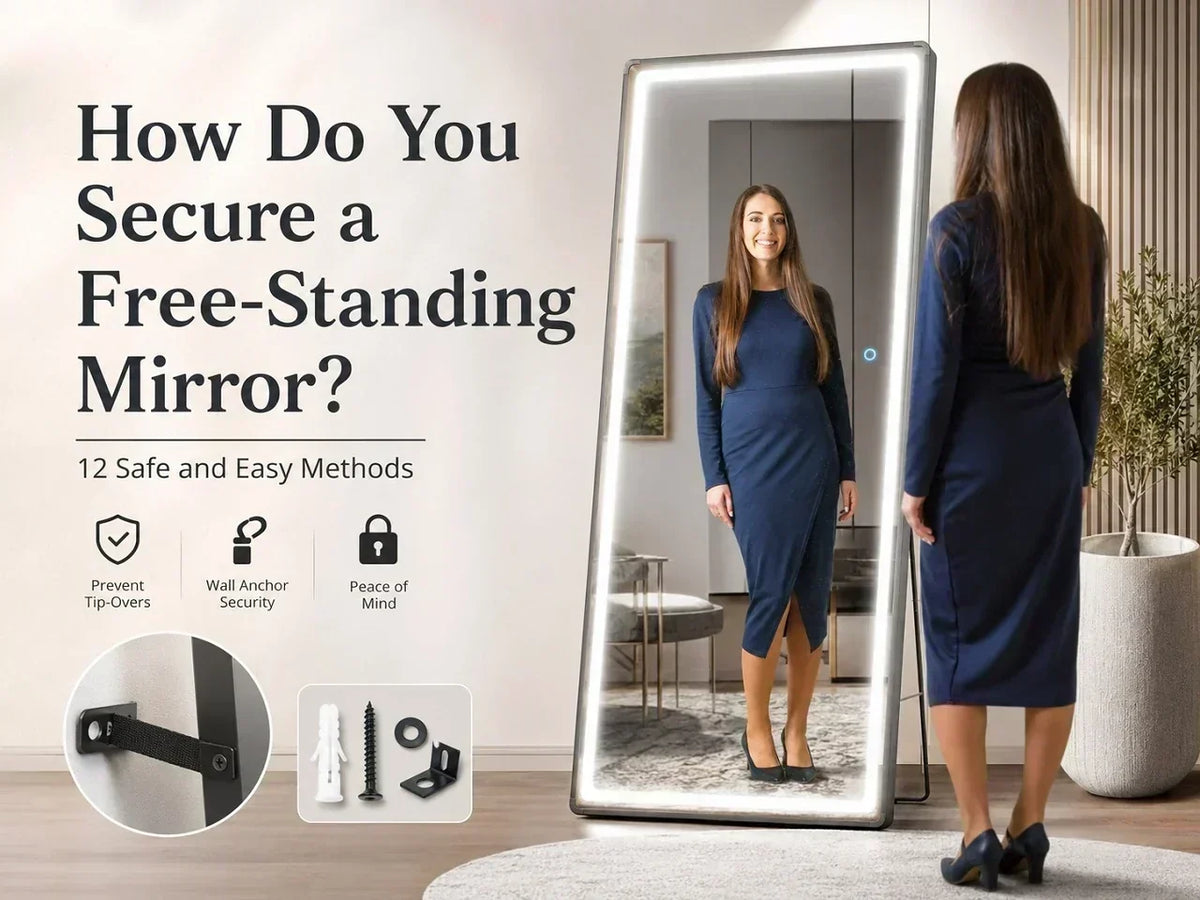
Before making any placement permanent, open nearby doors, pull out chairs, and turn on the lights you normally use. Follow the mounting and anchoring instructions, including those for leaning or freestanding models.

Make Your Mirror Part of Everyday Life
Before buying, picture an ordinary day in the room. Where will you stand to check your outfit? What will the mirror show while you sit down for dinner? Will the evening lamp shine back into your eyes?
Use those answers to narrow down the location, then test the size with a paper outline. Spend time with the proposed arrangement before choosing the frame. A few adjustments at this stage can make the finished space much more comfortable to use.
At Hasipu, we believe a mirror should feel at home in your routine. Choose a full-length mirror for the spot where you get dressed, a vanity mirror for the way you get ready, or a decorative mirror for a view you enjoy. Let its daily purpose guide the choice, and give its design room to show your taste.
Frequently Asked Questions
1. Where should you place a mirror to make a room look bigger?
Try a wall where the mirror reflects an open part of the room or a view through a window. Check it from your usual seat. A reflection of a nearby cabinet or crowded shelf may add visual clutter, so compare a few locations before mounting the mirror.
2. Should a mirror be centered on the wall or above the furniture?
For a mirror above a console or dresser, start by centering it over the furniture. On an open wall, consider the available space between doors, corners, and trim. An off-center arrangement can also work with a lamp or artwork beside it; use paper templates to check the whole composition.
3. Can you put two mirrors in the same room?
Yes. A full-length mirror near the closet and a smaller mirror at a makeup table serve different needs. Check what both mirrors reflect from the doorway and your usual seating position. Facing mirrors may create repeated reflections that feel distracting, so test their relationship before installing them.
4. Is it okay to put a mirror opposite a window?
Yes, provided the reflected light is comfortable and you enjoy the view. Check the location at different times of day, especially when direct sunlight enters the room. A wall beside the window may offer a better angle when the opposite wall creates glare near a sofa or desk.
5. How do you choose a mirror for a dark room?
Look at the available lighting before choosing the mirror. An ordinary mirror needs an existing light source to reflect. Turn on your usual lamps and test potential positions from where you sit. For a dressing area, consider a lighted vanity mirror suited to the task and its intended location.
6. Do mirror frames need to match every metal finish in the room?
No. A frame can relate to a lamp, drawer pull, or furniture detail without matching every finish. Compare samples or product close-ups with the materials already in the room. Pay attention to undertones and sheen: brushed and polished versions of a similar color can look quite different.