Table of Contents
Choosing a bathroom mirror often starts with style, but appearance is only part of the decision. The mirror also needs to fit the vanity, provide a comfortable reflection, work with the lighting, and withstand regular humidity.
A mirror that looks suitable online may feel too small above the sink, leave no room for wall lights, or sit at an awkward height. Extra features such as LED lighting, anti-fogging, storage, and magnification are helpful only when they match the way the bathroom is used.
This guide explains how to choose the right bathroom mirror, starting with the decisions that matter most: size, placement, and daily use. Shape, materials, lighting, installation, and budget can then help narrow the final choice.
1. Begin With the Mirror Size
The vanity is the most reliable reference point for choosing a bathroom mirror size. Measure its full width rather than measuring only the sink. Then measure the open wall from the countertop to the nearest light fixture, shelf, cabinet, or ceiling trim.
A mirror that is slightly narrower than the vanity usually looks balanced and leaves some wall visible on both sides.
| Vanity width | Suggested mirror width |
| 24 inches | 18–22 inches |
| 30 inches | 22–28 inches |
| 36 inches | 28–34 inches |
| 42 inches | 32–38 inches |
| 48 inches | 36–44 inches |
| 60 inches | 44–54 inches |
| 72 inches | 54–66 inches |
These measurements are useful starting points rather than fixed rules. A wide frameless mirror can reflect more light in a small bathroom. A narrower mirror may be needed when sconces are installed on both sides.
Check the reflective glass dimensions as well. A wide decorative frame can make the overall mirror look large while leaving a much smaller viewing area.
Can a Bathroom Mirror Be Wider Than the Vanity?
A standard framed mirror usually looks better when it is equal to or narrower than the vanity. Extending the frame beyond the cabinet can make the sink area feel top-heavy.
A full-width or wall-to-wall mirror is different. It can work well in a compact bathroom where the larger reflective surface helps spread light and makes the room feel more open.

2. Place It at a Comfortable Height
Mirror height should be based on the people using the bathroom, not a single standard measurement.
The reflective area needs to cover the eye levels of shorter and taller household members. Leave enough room above the faucet and backsplash, but do not raise the mirror so far that shorter users lose a comfortable view.
High-arc faucets and vessel sinks may reduce the available wall space. Check their height before deciding where the bottom of the mirror will sit.
Painter’s tape makes this easier. Mark the planned width and height on the wall, then stand at the vanity and view the outline from several positions. This gives a more realistic sense of scale than reading measurements from a product page.
For accessible public or commercial bathrooms, the 2010 ADA Standards state that a mirror installed above a lavatory or countertop must have the bottom edge of its reflective surface no more than 40 inches above the finished floor. Residential accessibility needs may also affect the height.
3. Match the Mirror to the Bathroom’s Use
A primary bathroom, family bathroom, and powder room do not need the same type of mirror.
A family bathroom benefits from a wide reflection that several people can use comfortably. Durable materials and easy-to-clean edges matter more in a space used throughout the day.
A primary bathroom may need better lighting for shaving, skincare, hairstyling, or makeup. Adjustable LEDs and anti-fogging can be useful here.
A powder room gives you more freedom to choose a decorative frame or unusual shape. Since the mirror is used mainly for quick checks, style can carry more weight.
One Mirror or Two Over a Double Vanity?
One large mirror for a double vanity provides a continuous reflection and can make the wall appear wider. It also covers the central area between the sinks.
Two separate mirrors create a defined space for each person and leave room for a central sconce or cabinet. This arrangement works best when the sinks are spaced far apart.
Measure from the center of each sink before positioning two mirrors. Do not assume the sinks are placed at equal distances from the vanity edges.
4. Choose the Shape and Style
Shape affects both the appearance of the bathroom and the amount of usable reflection.
Rectangular Mirrors
A rectangular bathroom mirror provides a generous viewing area and works with most vanity styles. A horizontal rectangle emphasizes width, while a vertical mirror adds height to a narrow wall.
It is also easier to position around tile lines, lights, cabinets, and backsplashes.
Round, Oval, and Arched Mirrors
A round mirror softens the straight lines created by cabinets and tile. It suits powder rooms and smaller vanities, though the curved sides provide less reflective space than a rectangle of the same width.
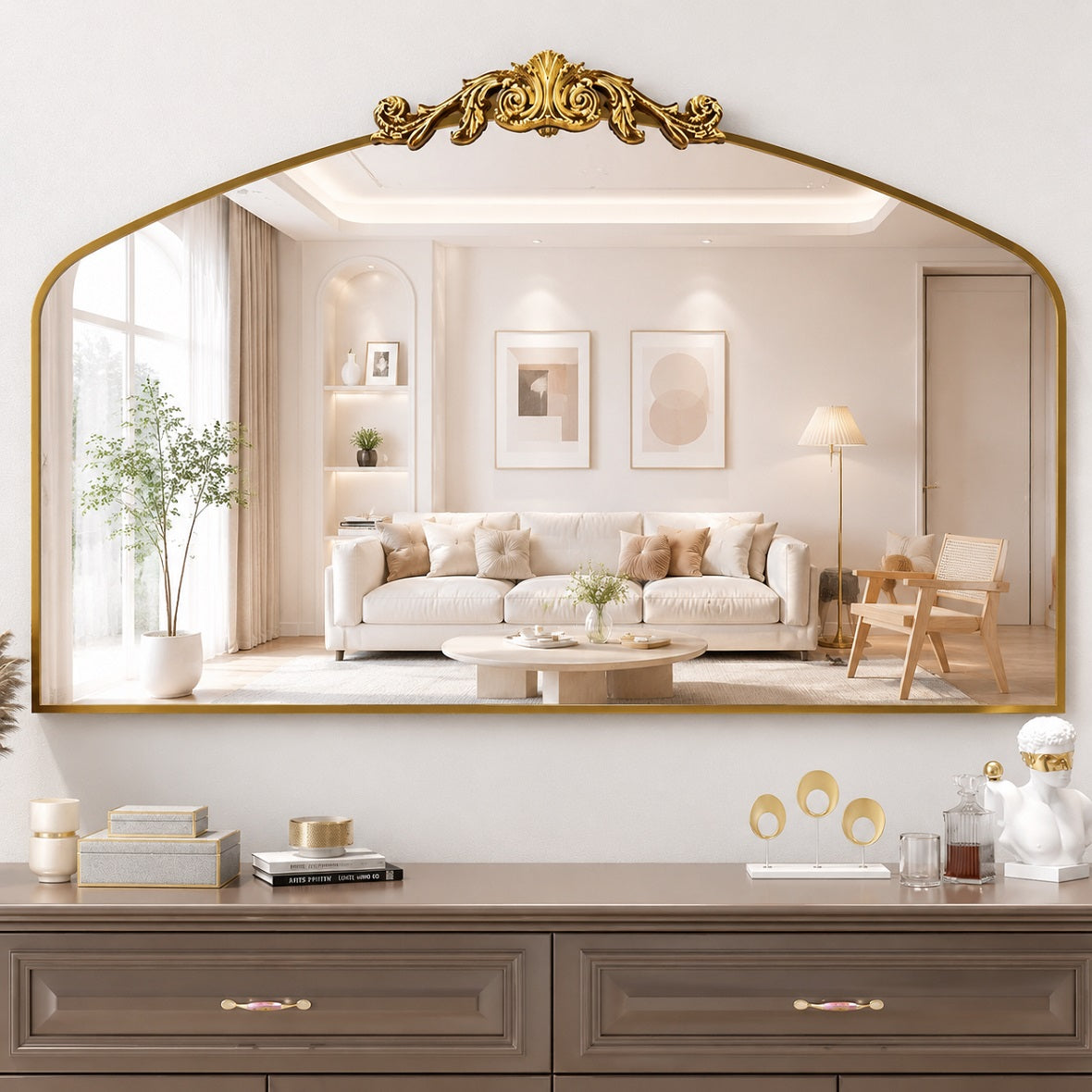
Oval and pill-shaped mirrors offer soft lines with more vertical viewing area. Arched mirrors draw the eye upward and can make a simple vanity feel more finished.
Irregular Mirrors
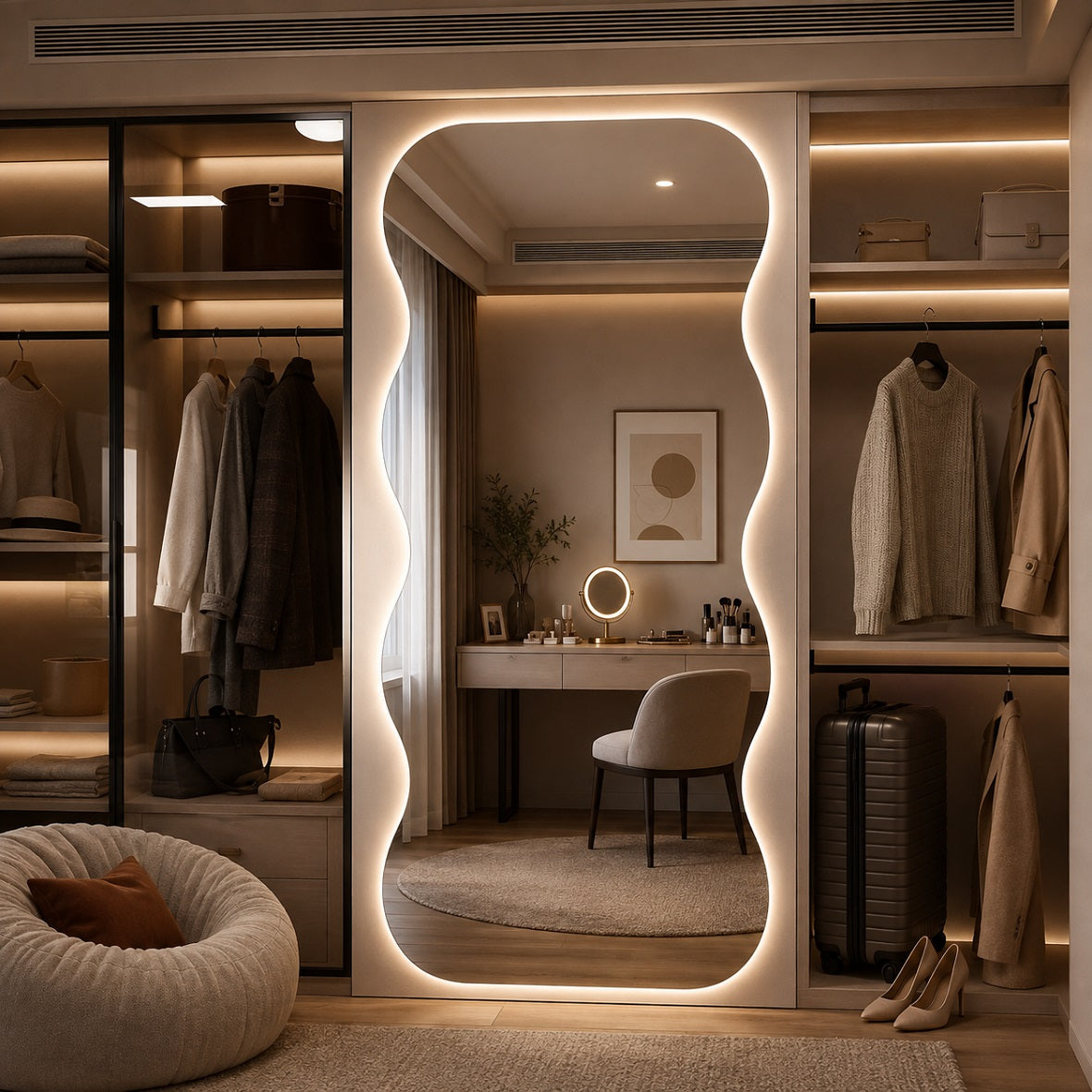
An asymmetrical mirror can add personality to a plain bathroom. Check where the narrowest sections sit before buying. A sculptural outline may look attractive but provide limited reflection around the face and shoulders.
The mirror shape does not need to copy the sink or vanity. A curved mirror can balance a rectangular cabinet, while a simple rectangle can calm a room with patterned tile.

5. Compare Frames, Glass, and Moisture Resistance
A frameless bathroom mirror has a clean appearance and makes efficient use of limited wall space. It also avoids the need to match a frame with the faucet, cabinet handles, or other hardware.
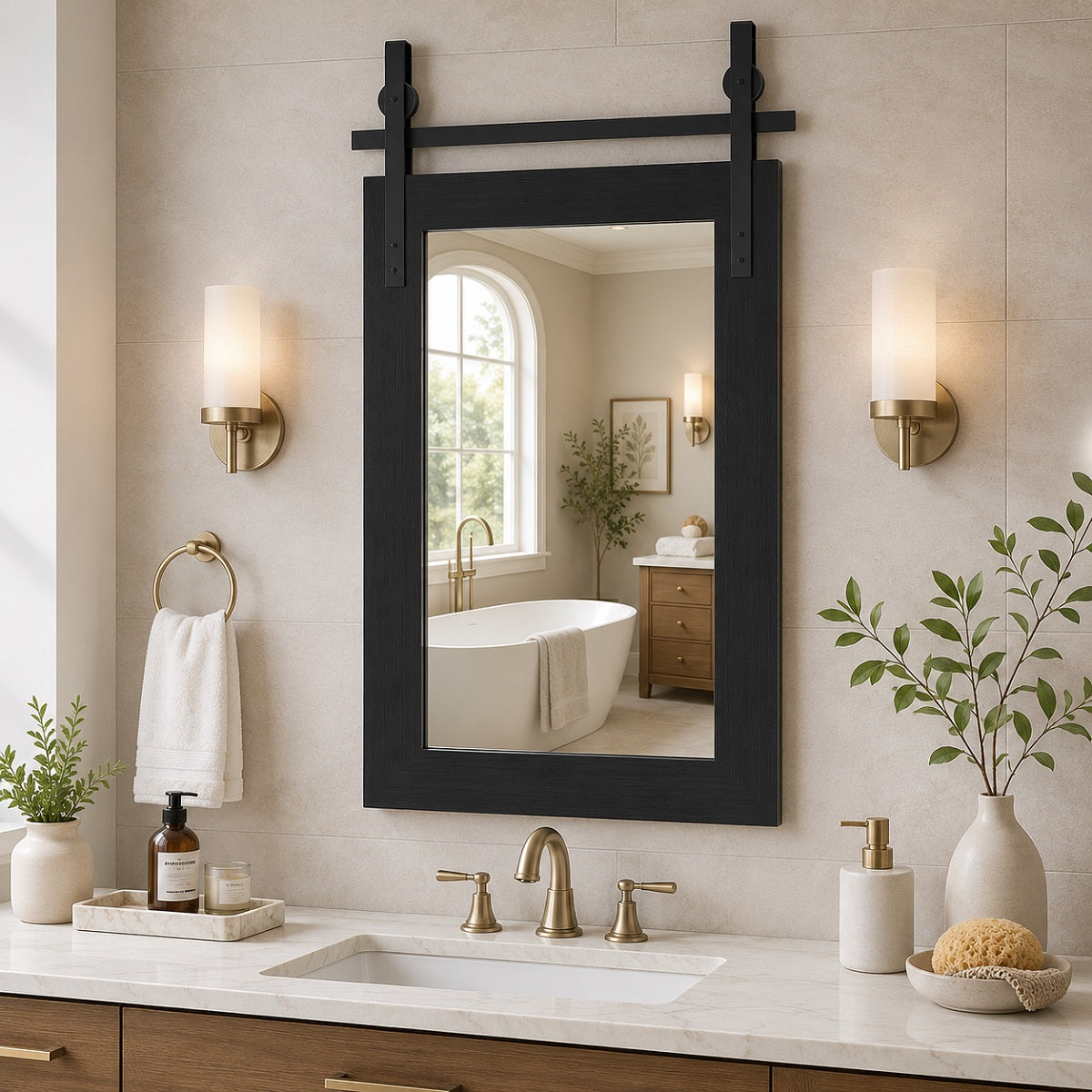
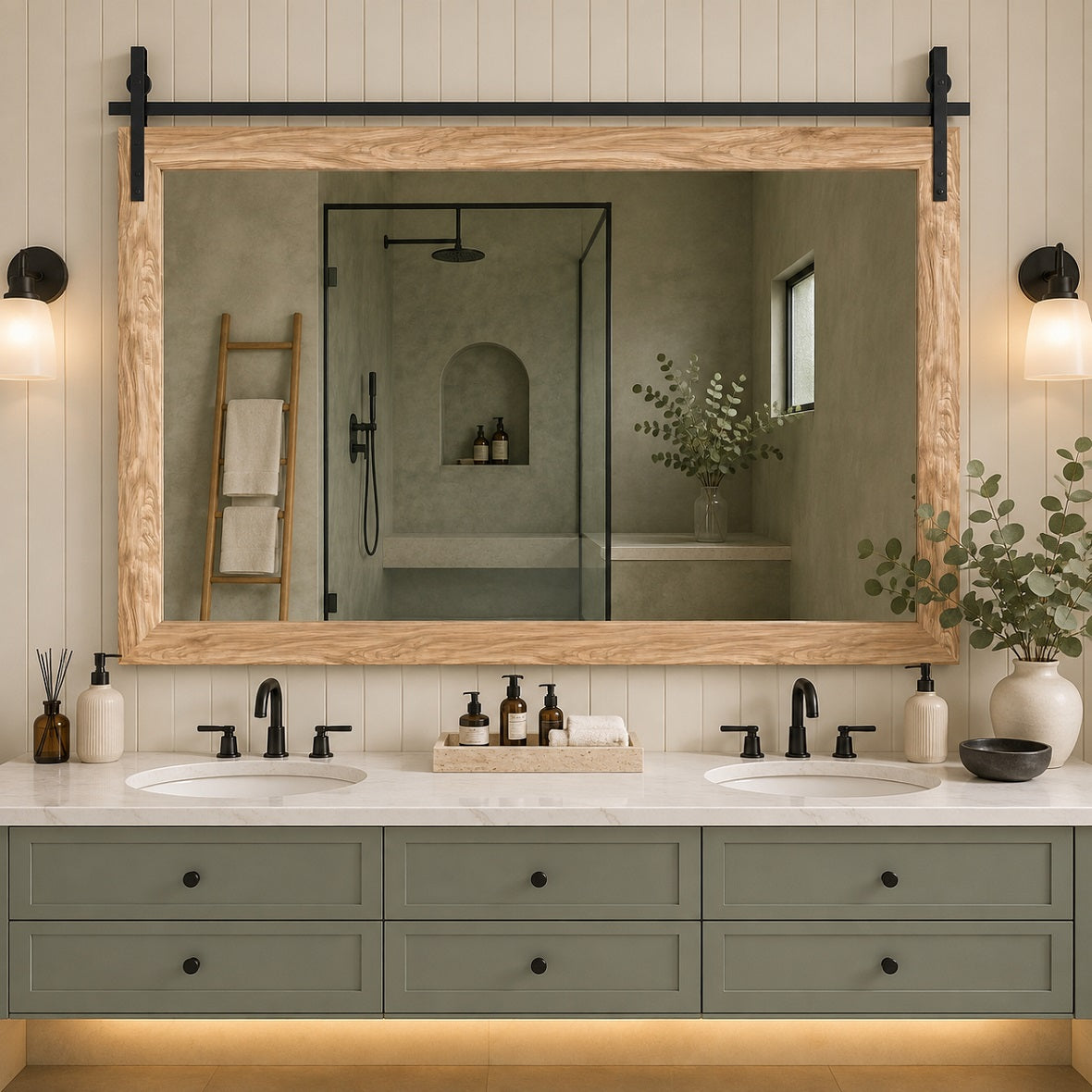
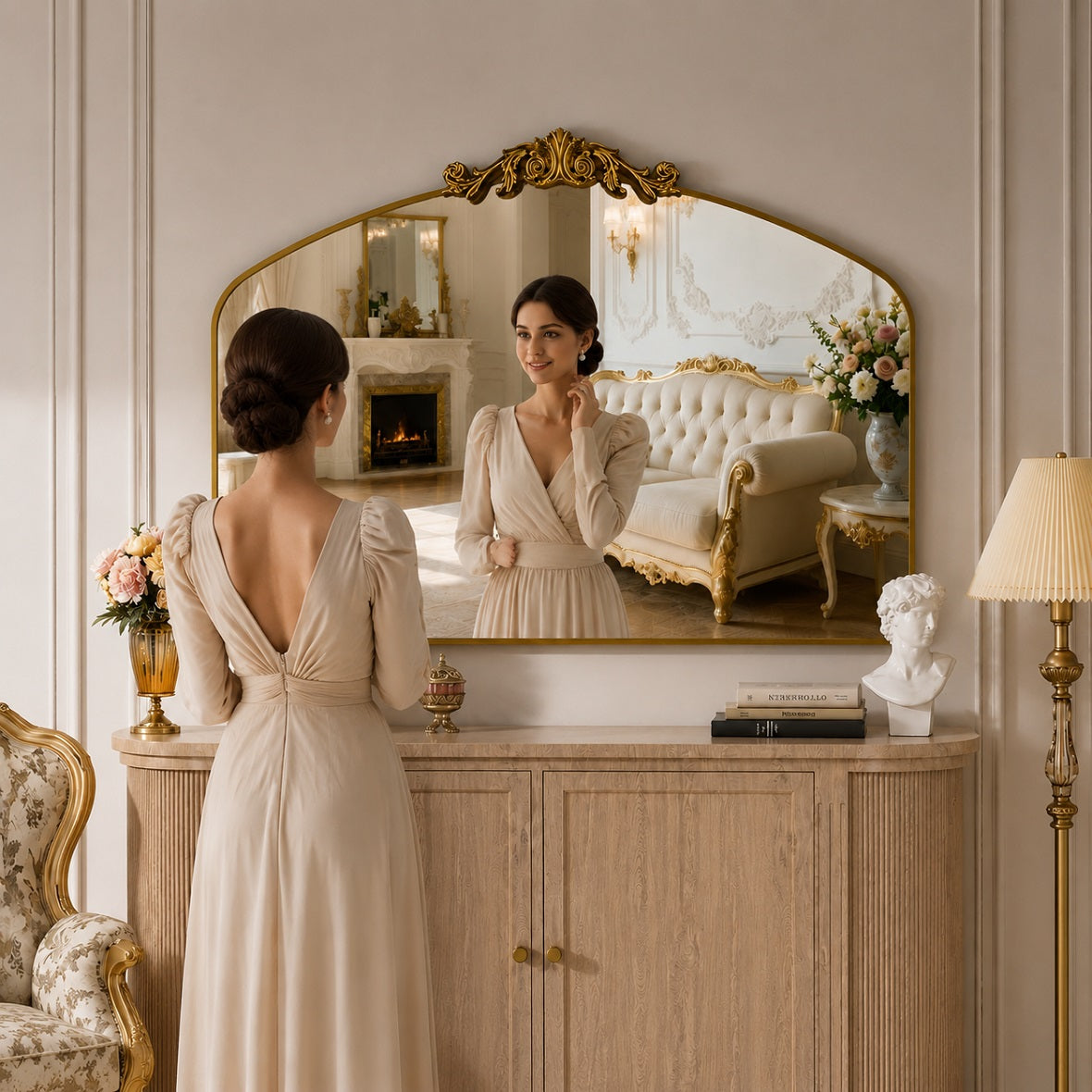
Framed mirrors add color, texture, and contrast. Black metal works well in modern bathrooms, brushed metal coordinates with many fixtures, and wood-look finishes bring warmth to white or neutral rooms.
The frame must be suitable for humidity. Practical materials include powder-coated metal, aluminum, stainless steel, moisture-resistant composite, and properly sealed wood. Untreated wood and low-quality plated finishes may swell, peel, or corrode.
The back and edges deserve attention too. Protected backing and sealed edges help reduce moisture damage and the dark spots that sometimes develop around older mirrors.
Look for a Clear, Natural Reflection
Product photos that show tile lines, door frames, or cabinet edges can reveal reflection quality. Those lines should remain straight rather than appearing curved or wavy near the edges.
A flat wall also matters. Large mirrors can appear distorted when they are pulled tightly against an uneven mounting surface.
Tempered glass or safety backing may reduce the risk of large pieces scattering after damage. Check the manufacturer’s description carefully because terms such as “tempered,” “shatterproof,” and “explosion-proof” do not always refer to the same construction.
6. Decide Which Features You Will Actually Use
Extra features can make the mirror more useful, but they also affect the price, installation, and maintenance.
LED Lighting
An LED bathroom mirror can improve visibility in a dark or windowless bathroom.
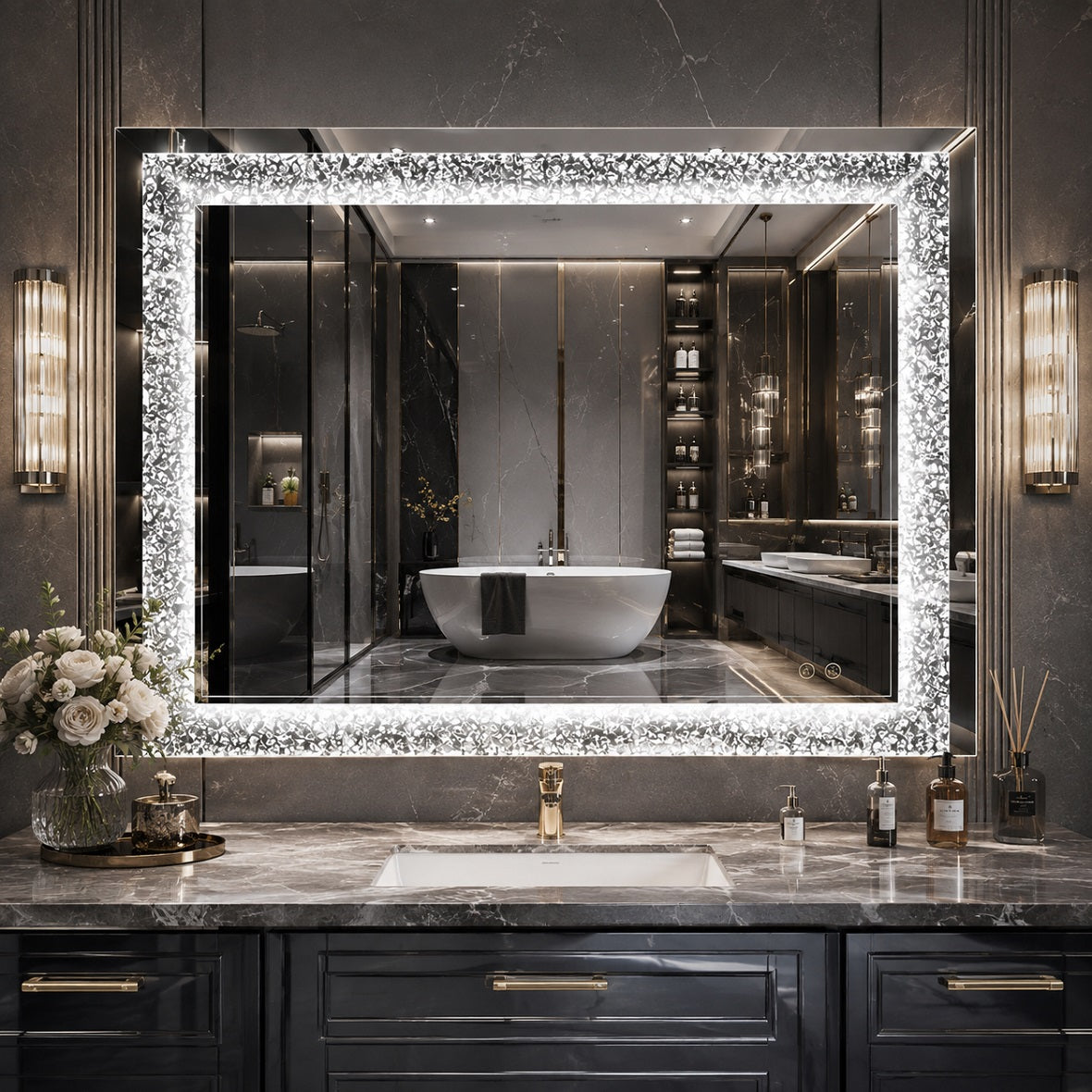
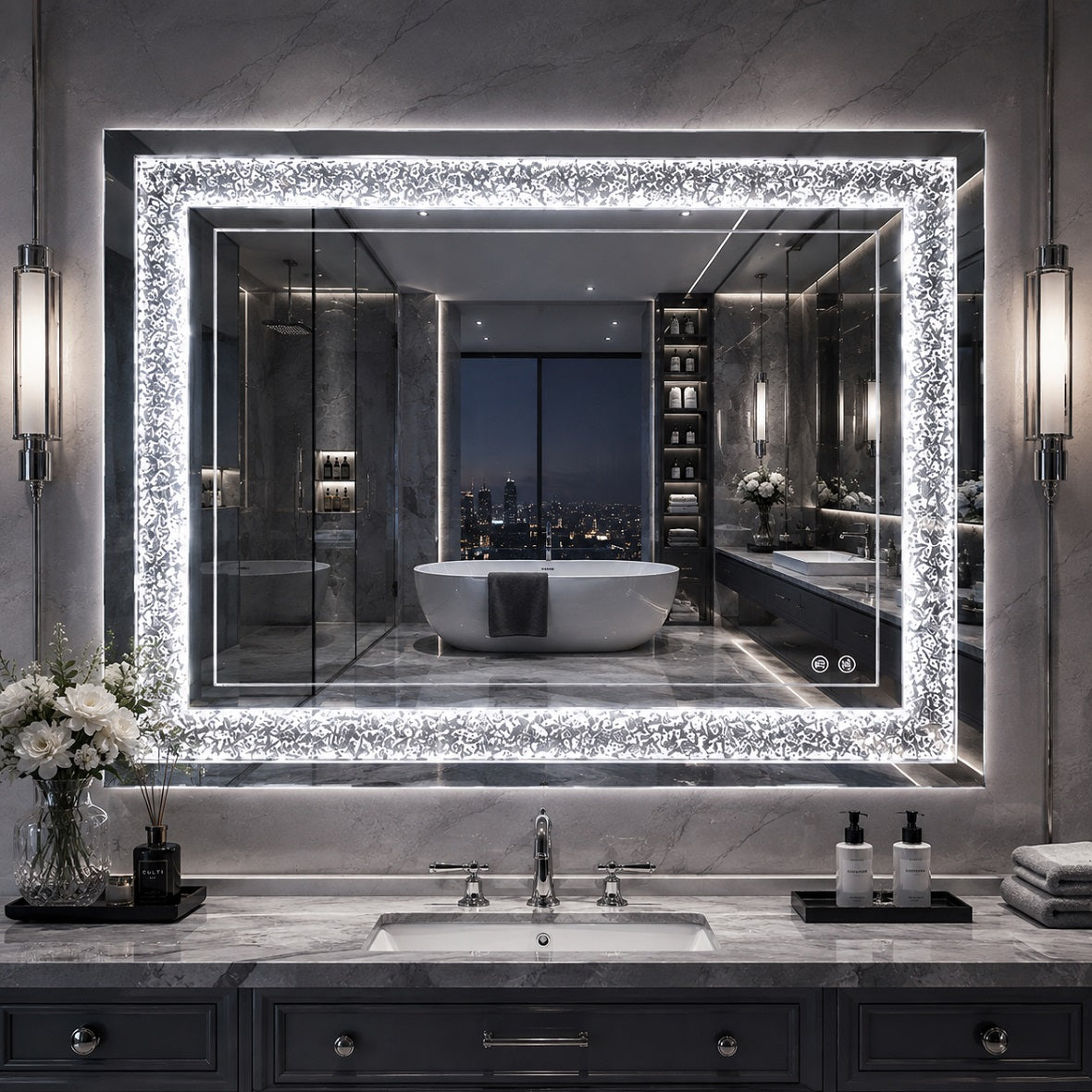
Front lighting directs more light toward the face and is useful for shaving, makeup, and skincare. Backlighting creates a soft glow on the wall but may not provide enough task lighting by itself. Mirrors with both front and back lighting offer a mix of practical and ambient illumination.
Adjustable brightness gives you more control throughout the day. Warm light creates a softer atmosphere, neutral light works well for daily grooming, and cooler light makes small details easier to see.
Check the location of the touch controls, the electrical connection, and the warranty. A bright LED border does not always mean the light will fall evenly across the face.
Anti-Fog Function
An anti-fog bathroom mirror uses a heating pad behind the glass to reduce condensation on part of the surface.
The heated area may cover only the center, so check its dimensions before buying. Separate controls for the light and defogger help avoid unnecessary energy use. An automatic shutoff is also practical.
A defogger keeps the mirror clearer after a shower, but it does not remove moisture from the bathroom. Regular ventilation is still needed to protect the walls, cabinets, frame, and mirror backing.
Storage and Magnification
A mirrored medicine cabinet can clear bottles and grooming products from the countertop. Recessed models sit partly inside the wall, while surface-mounted cabinets are easier to install but project farther over the sink.
Magnification is useful for detailed makeup, shaving, or skincare. A small adjustable section or separate magnifying mirror is often more comfortable than magnification across the entire surface.
Bluetooth speakers, clocks, charging ports, and other smart features may suit some routines. They also add wiring and controls, so choose them for regular use rather than novelty.
7. Check Installation, Cleaning, and Cost
Mirror weight and wall construction determine the type of mounting hardware needed. Drywall, plaster, tile, concrete, and masonry require different anchors and tools.
Heavy mirrors may need to connect to wall studs or reinforced blocking. Large models are safer to lift and position with two people.
For an illuminated mirror, confirm whether it is plug-in or hardwired. A plug-in model needs a nearby outlet that does not leave an obvious cord. Hardwired installation creates a cleaner look but may require a qualified electrician.
Avoid general-purpose adhesive unless the mirror manufacturer approves it. Some adhesives can damage the backing and create dark marks that become visible through the glass.
Keep Maintenance Simple
Bathroom mirrors collect fingerprints, water spots, toothpaste, and hairspray. Frameless designs and narrow metal frames are usually easier to wipe down because they have fewer edges where dust can gather.
Spray a suitable glass cleaner onto a microfiber cloth instead of soaking the mirror. Too much liquid can run behind the edges and affect the backing over time.
Deep frames and detailed borders need more frequent cleaning. Wood frames should be dried soon after water splashes.
Set a Practical Budget
Price is affected by mirror size, glass quality, frame material, lighting, anti-fogging, storage, and installation.
A basic frameless mirror may be enough for a bright guest bathroom. A primary bathroom used every day may justify better lighting, durable materials, or a defogger.
Include mounting hardware and electrical work in the total budget. A lower-priced hardwired mirror may cost more after wiring changes are added.

Common Bathroom Mirror Mistakes
- Buying a mirror that is too small can make a wide vanity feel unfinished.
- Hanging it too high creates a practical problem for shorter users.
- Choosing a decorative frame that is not made for humid rooms can cause the finish to peel, swell, or corrode after repeated exposure to steam.
- Overlooking lighting and installation requirements—a new mirror may block an electrical box, leave no room for sconces, or require an unplanned power connection.
Measure the vanity, faucet, lighting, outlets, and available wall area together. Those details should be settled before comparing colors and decorative finishes.
Final Thoughts
Choosing the right bathroom mirror begins with size and placement. Measure the vanity and available wall space, then make sure the reflective area works for everyone who uses the bathroom. The faucet, lighting, cabinets, outlets, and installation method should all be checked before the shape or finish is selected.
Once those practical details are settled, compare the design and features. Rectangular mirrors provide more viewing space, curved shapes soften the room, and moisture-resistant frames hold up better in humid conditions. LED lighting, anti-fogging, magnification, and storage are most valuable when they support an existing daily need.
The right mirror should feel balanced above the vanity, provide a clear and comfortable reflection, and remain easy to use and clean. At Hasipu, we believe those practical qualities are what allow a bathroom mirror to look good and work well in the home for years.
Frequently Asked Questions
1. What Size Mirror Should I Use Over a Bathroom Vanity?
A mirror measuring about 70% to 90% of the vanity width works well in many bathrooms. The available space for lighting, cabinets, outlets, and wall trim may require a narrower size.
2. What Size Mirror Works With a 36-Inch Vanity?
A mirror around 28 to 34 inches wide usually creates balanced proportions above a 36-inch vanity.
3. Which Mirror Shape Is Best for a Small Bathroom?
A wide frameless rectangular mirror provides a large reflective area without adding the visual weight of a thick frame. It can also reflect more light around the room.
4. Are LED Bathroom Mirrors Good for Makeup?
Front-lit LED mirrors with adjustable brightness are useful for makeup and skincare. Backlighting is more decorative and may need support from side sconces or ceiling lighting.
5. What Frame Material Is Best for a Humid Bathroom?
Powder-coated metal, aluminum, stainless steel, moisture-resistant composite, and properly sealed wood are suitable bathroom materials.
6. Can a Regular Wall Mirror Be Used in a Bathroom?
A regular mirror may work in a dry, well-ventilated powder room. A bathroom with a shower is better suited to a mirror with protected backing, sealed edges, and moisture-resistant materials.