
Table of Contents
The Three Things That Can Change How Your Clothes Look
Last Saturday, I tried on a dusty blue blazer at the mall.
Under the fitting room lights, it looked almost made for me. The shoulders appeared neat, the waist looked defined, and just enough wrist showed below the sleeves. I turned to the side, looked again, and made the decision in less than a minute.
I bought it.
Two hours later, I put the same blazer on at home and stood in front of my bedroom mirror. The shoulders looked a little wider. The waist was not nearly as fitted as I remembered, and the sleeves covered more of my wrists.
It did not look terrible. It just did not look like the blazer I thought I had purchased.
Same person. Same clothes. Different mirror, different lighting—and a surprisingly different impression.
That experience sent me back to a question many shoppers have asked after an impulsive fitting room purchase:
Do fitting room mirrors make you look better?
Sometimes they can. The reason is usually more complicated than a store secretly installing a “skinny mirror.” Mirror position, lighting direction, room size, wall color, viewing distance, and even the way you stand can all change what you notice.
The mirror may not technically be lying. Still, it may not be showing your clothes under conditions that resemble real life.

1. The Mirror Angle Changes Your Point of View
My first suspicion was the angle of the mirror.
When I returned to the store, I noticed that its full-length mirror was not mounted completely upright. The top sat slightly away from the wall. I had seen the same arrangement in bedrooms, clothing stores, and showroom displays, so it did not look unusual.
A common claim says a tilted mirror physically stretches the legs and narrows the waist. That is not quite how a flat mirror works. A true plane mirror creates an image with the same basic size and proportions as the object it reflects. The Physics Classroom’s explanation of plane mirrors confirms that a plane-mirror image is upright and the same size as the object.
What changes is the view.
A tilted mirror can make you look at yourself from a slightly different height or angle. You may see more of the lower body, less of the ceiling, or a perspective that feels similar to a camera held above or below eye level. In a narrow fitting room, you also tend to stand closer to the glass, which can affect how you scan your reflection.
Posture enters the picture too. When I liked what I saw, I naturally stood taller. I pulled my shoulders back, shifted my weight onto one foot, and turned slightly at the waist.
At home, I stood squarely in front of the mirror and relaxed.
That difference alone changed the blazer more than I expected.
How to check the mirror
Look at the vertical edges of the doorframe, wall panels, floor tiles, and mirror frame in the reflection. Straight lines should remain straight.
If the lines bow inward, wave, or bend around your shoulders and hips, the glass or backing may not be perfectly flat. Move sideways while watching the reflected lines. If they appear to ripple as you move, the mirror may have some surface distortion.
A mild tilt and a warped mirror are not the same thing. The tilt changes your viewpoint; warped glass can change the reflected shape.
2. Fitting Room Lighting Softens More Than Your Face
The lighting was the larger surprise.
The fitting room had vertical lights on both sides of the mirror. They threw soft, even light across my face and the front of the blazer. There was very little shadow under my eyes, beneath the sleeves, or along the waist.
At home, the main light came from the ceiling.
That overhead light created shadows beneath the shoulder seams and under my arms. It also made every wrinkle in the sleeves more visible. The blazer had not changed, but its construction suddenly looked less smooth.
This is why fitting room lighting matters so much. Front-facing or side-mounted lights fill in the shadows that reveal texture, folds, and uneven fit. Overhead lighting does the opposite. It can deepen shadows under the face and emphasize every raised or recessed part of a garment.
Soft frontal light can make:
- Skin appear more even
- Fabric look smoother
- Wrinkles and puckered seams appear less noticeable
- The waistline look cleaner
- Dark areas under the arms and chin look lighter
None of this requires a deceptive mirror. Light can do plenty on its own.
Warm light can also change clothing colors
The blazer looked like a soft gray-blue in the store. At home, it appeared cooler and slightly brighter.
The color temperature of a lamp describes whether its light appears warmer and more yellow or cooler and more bluish. The U.S. Department of Energy explains that correlated color temperature, measured in kelvins, describes this warm-to-cool appearance. A lower CCT generally looks warmer, while a higher CCT looks cooler. U.S. Department of Energy
Color temperature is only part of the story. Two lamps with a similar white appearance may render the same fabric differently because their light spectra are different. CRI and newer color-fidelity measurements help describe how closely colors appear under a light source compared with a reference, although no single number captures everything a shopper perceives. NIST’s overview of lighting and color perception
That explains why a navy jacket can look nearly black in one room, a greenish blue in another, and clearly navy beside a window.
It is also why matching a blouse, lipstick, handbag, or pair of shoes under retail lighting can be risky.

3. The Mirror Surface and the Room Affect What You Notice
After noticing the angle and lighting, I examined the mirror itself.
I had heard of the fingernail test: touch a fingernail or business card to the mirror and look for a gap between the object and its reflection. Some people claim that a gap proves the mirror is normal, while no gap proves that it is curved or deceptive.
That claim is inaccurate.
The test mainly gives you a clue about where the reflective coating sits. Most household mirrors are second-surface mirrors. Light passes through a layer of glass before reaching the reflective backing, so a small visible gap is normal. In a first-surface mirror, the reflective layer is on the front, so the object and reflection appear to meet.
Neither result tells you whether the mirror is flat, concave, or designed to make you look thinner.
Straight reflected lines are a much better clue.
The room around the mirror matters as well. Fitting rooms are usually small, and the mirror may cover much of one wall. With little visual space around your body, you tend to focus on the complete silhouette rather than individual fit problems.
A large mirror also lets you step back mentally, even when you cannot step back physically. At home, surrounding furniture, doorframes, and other reference points make your proportions feel different.
Background color plays a role too. A dark outfit against a light wall has a strong outline. The same outfit against a dark fitting room wall may lose some of its edges, making the silhouette look narrower or less sharply defined.
I Went Back to Look at the Blazer Again
A few days later, I took the blazer back to the store—not to return it, but to understand what I had missed.
Inside the fitting room, it still looked good.
Then I walked into the main sales area. Under the brighter ceiling lights, I could see that the sleeves were slightly long. The shoulder seam sat just beyond my natural shoulder, and the waist only looked sharply fitted when I stood with one leg forward and turned a little.
Near the entrance, daylight revealed even more. The weave of the fabric was clearer, the blue looked cooler, and one side of the jacket seemed to pull slightly when I buttoned it.
Nothing about the blazer was defective. It simply fit half a size more loosely than I had understood in the fitting room.
I kept it.
Instead of wearing it buttoned, I left it open over a fitted white knit top and rolled the sleeves to my forearms. The slightly wider shoulder started to look relaxed rather than oversized.
I still liked the jacket. I just would have tried the smaller size if I had seen the fit more clearly before paying.
That distinction matters. A flattering fitting room does not always cause a bad purchase, but it can prevent you from making a fully informed one.
How to See What Clothes Really Look Like in a Fitting Room
You do not need measuring tools or a lesson in optics. A few quick checks will give you a more honest picture.
Walk out of the fitting room
Look at the outfit in the main shopping area, especially if the store has another full-length mirror. The lighting will probably come from a different direction, and you may be able to stand farther back.
When possible, walk near a window or the store entrance. Indirect daylight is useful for judging color, texture, and visible sheerness.
Direct sunlight can be harsh, so do not treat it as the only correct view. The goal is to compare the garment under more than one light source.
Take a photo with the rear camera
A phone photo is not automatically more accurate than a mirror. Camera height, lens choice, distance, and tilt can all alter apparent proportions.
For a useful comparison:
- Hold the phone around the middle of your torso.
- Keep it level rather than tilting it up or down.
- Stand several feet away if space allows.
- Use the standard rear camera instead of an ultra-wide lens.
- Keep your entire body near the center of the frame.
Ultra-wide lenses can stretch objects near the edges. A low camera can exaggerate the legs, while a high camera may make the upper body seem larger.
Ask someone else to take the picture when possible. It is easier to stand naturally when you are not twisting to hold the phone.
Check the garment from the side and back
The front view is often the most forgiving.
Turn sideways and look at the shoulder seam, waist, hem, and sleeve length. Then check the back. A jacket may look smooth from the front while pulling between the shoulders. Pants can appear fitted at the waist but bunch below the seat.
If the room has only one mirror, use your phone to take a short video as you turn.
Move like you would outside the store
Raise your arms. Sit down. Bend slightly. Take several steps. Button and unbutton the garment.
A dress that hangs beautifully while you stand still may ride up as soon as you walk. A blazer can look fitted until you reach forward. Pants that feel comfortable for 30 seconds may pinch at the waist when you sit.
A mirror shows a pose. Movement shows the fit.
Look at the details, not only the silhouette
Once the initial “I love this” feeling settles down, check:
- Where the shoulder seams sit
- Whether buttons pull or create horizontal lines
- Where sleeves end when your arms are relaxed
- Whether side seams hang straight
- How the fabric falls over the hips
- Whether a hem rises in the front or back
- Whether pockets flare open
- How visible the fabric is under brighter light
These details tend to remain noticeable after the excitement of shopping wears off.

What Makes a More Honest Full-Length Mirror at Home?
A reliable full-length mirror should have a flat, stable surface and enough height to show your complete outfit without forcing you to stand too close.
Place it where you can step back several feet. If possible, position it near soft daylight or combine it with balanced lighting from the front and sides. A high-CRI light source can help colors look more natural, but it is still smart to view clothing under daylight and evening light.
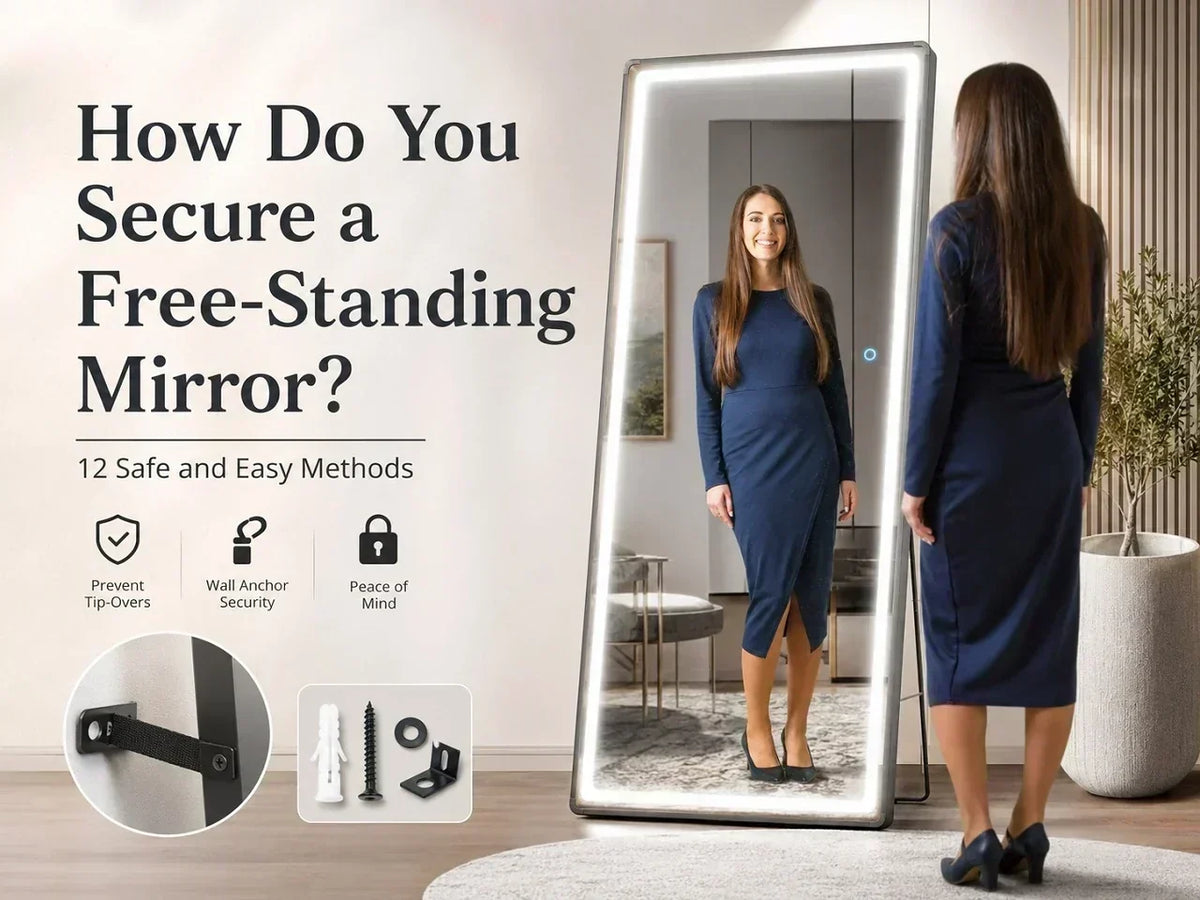
Check that the mirror is mounted evenly. A leaning installation can offer an attractive casual look, but it changes the viewing angle. If you use a leaning mirror, secure it properly and keep the angle modest.
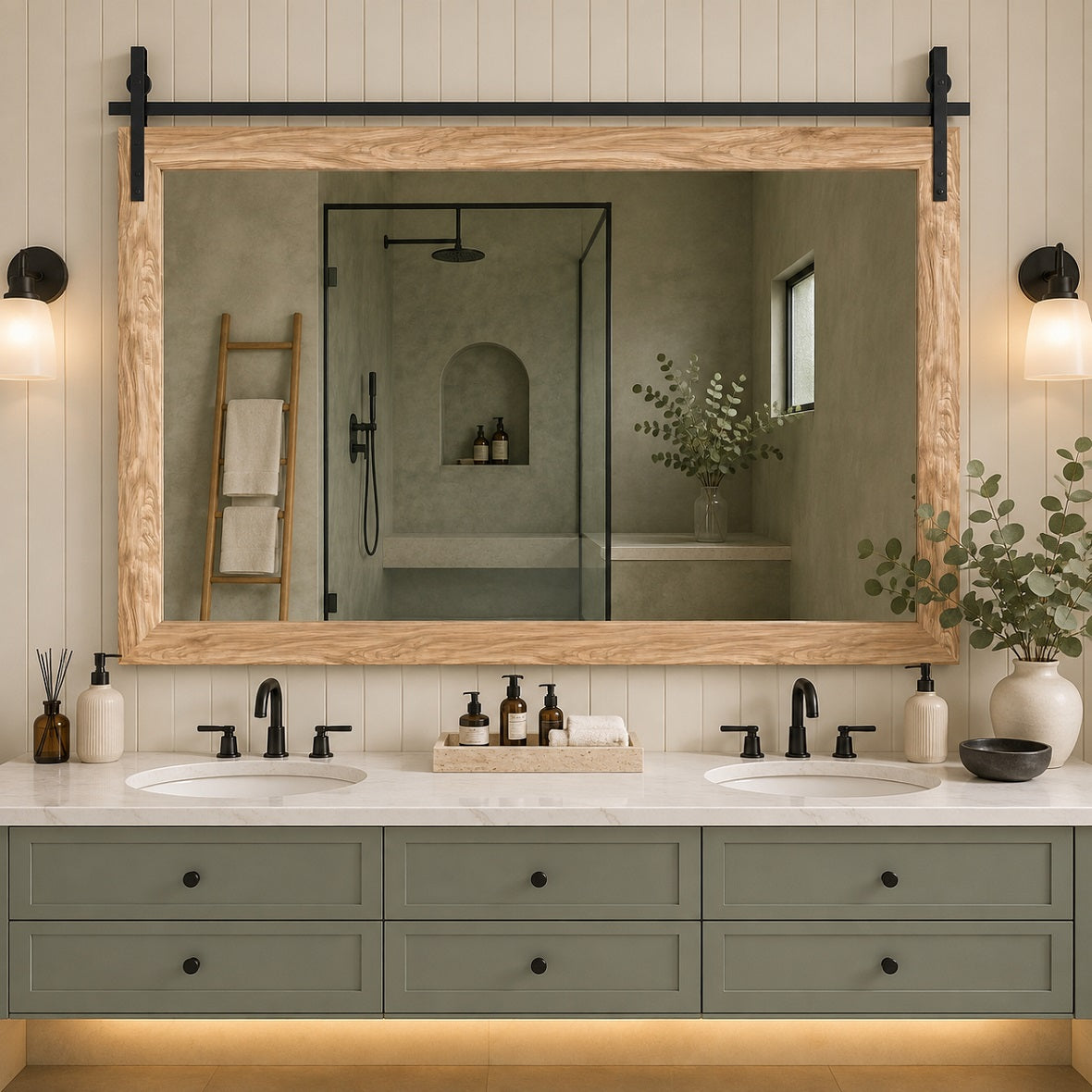
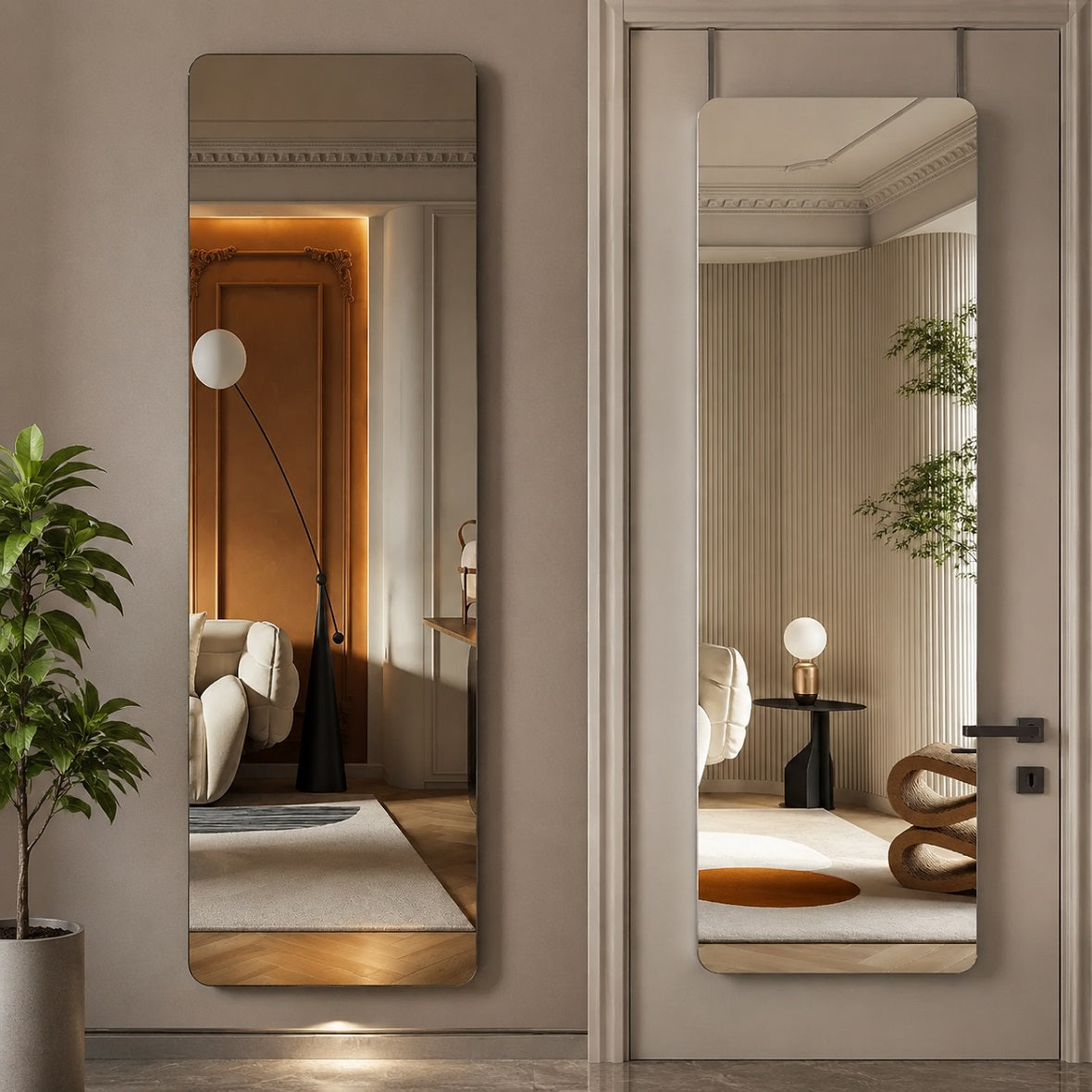
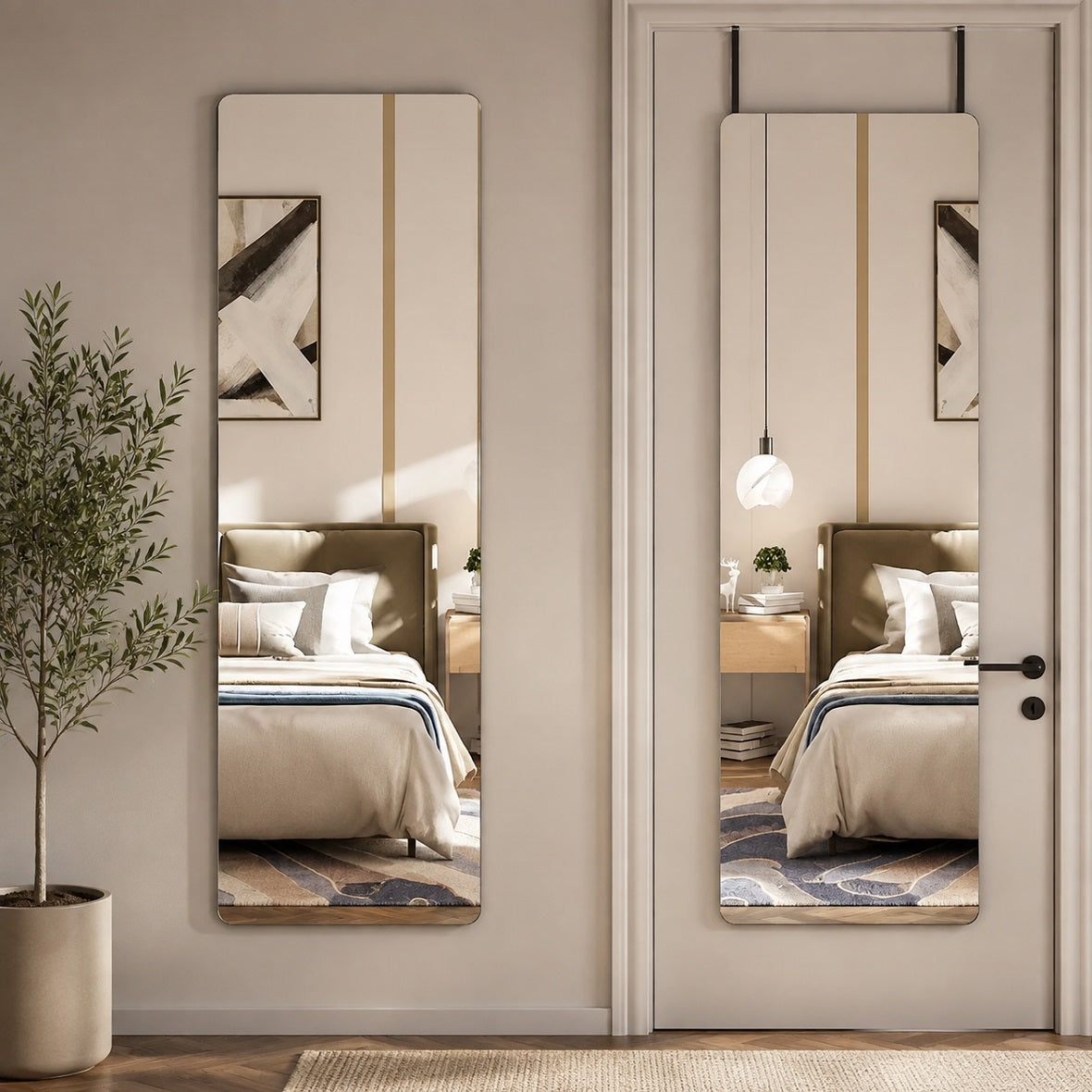
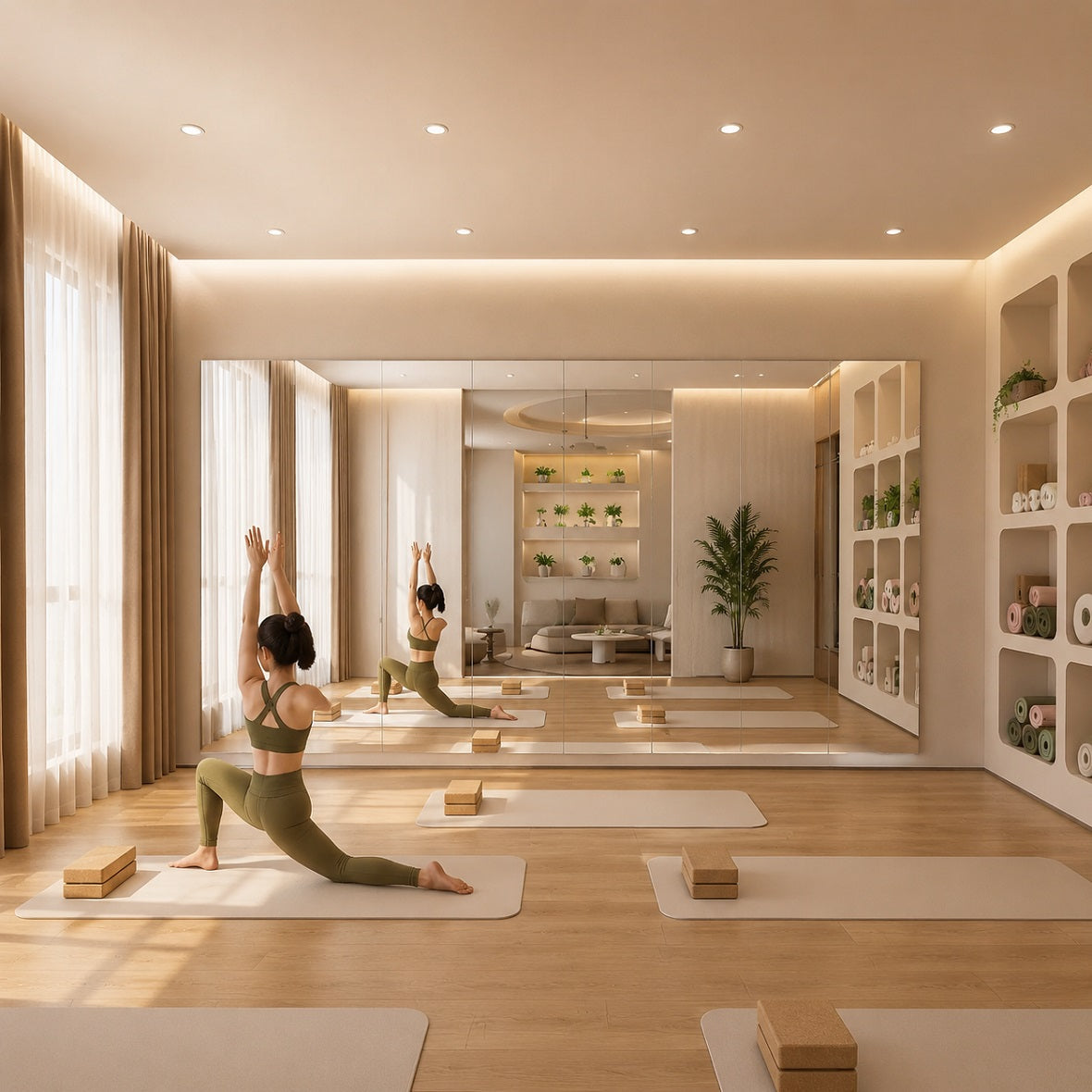
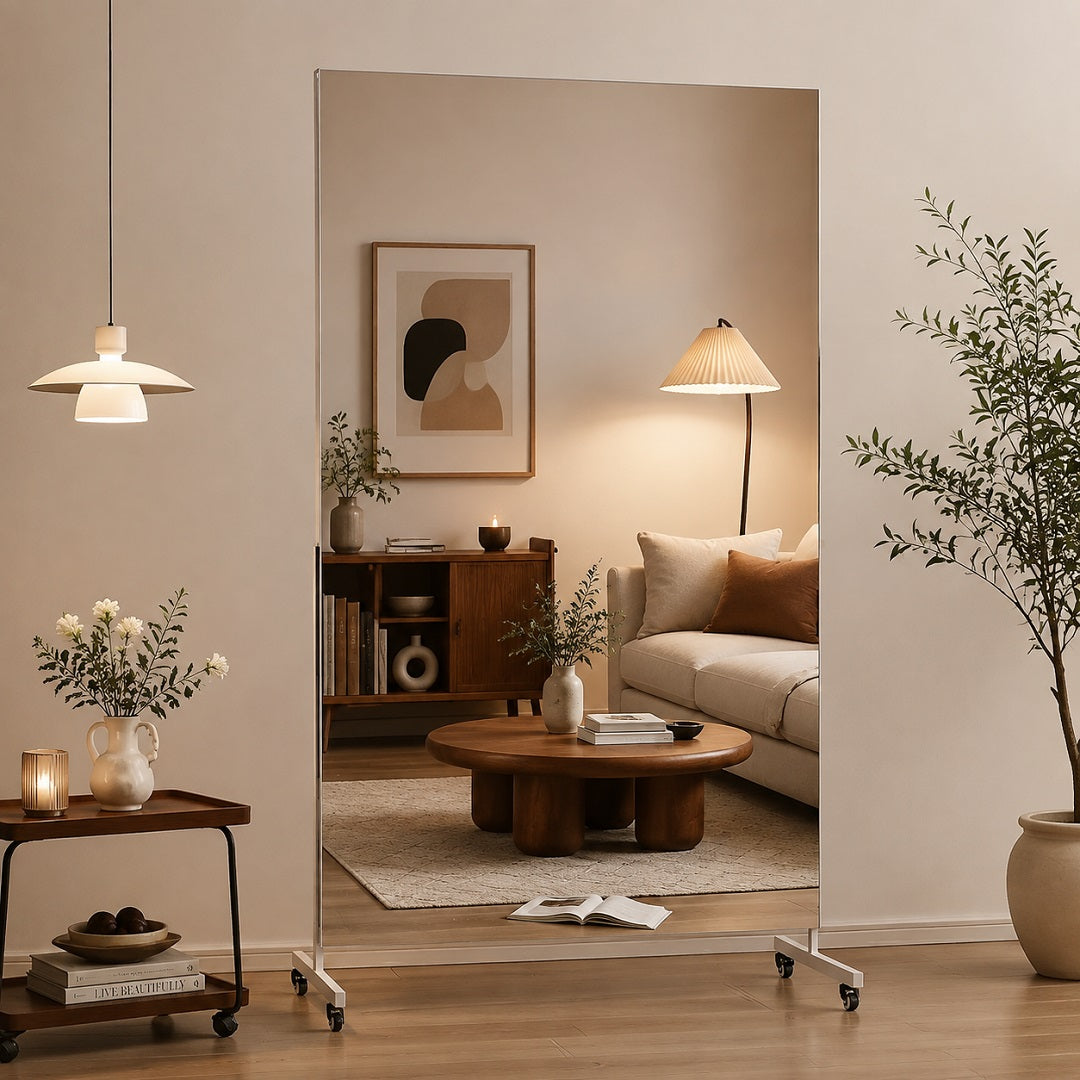
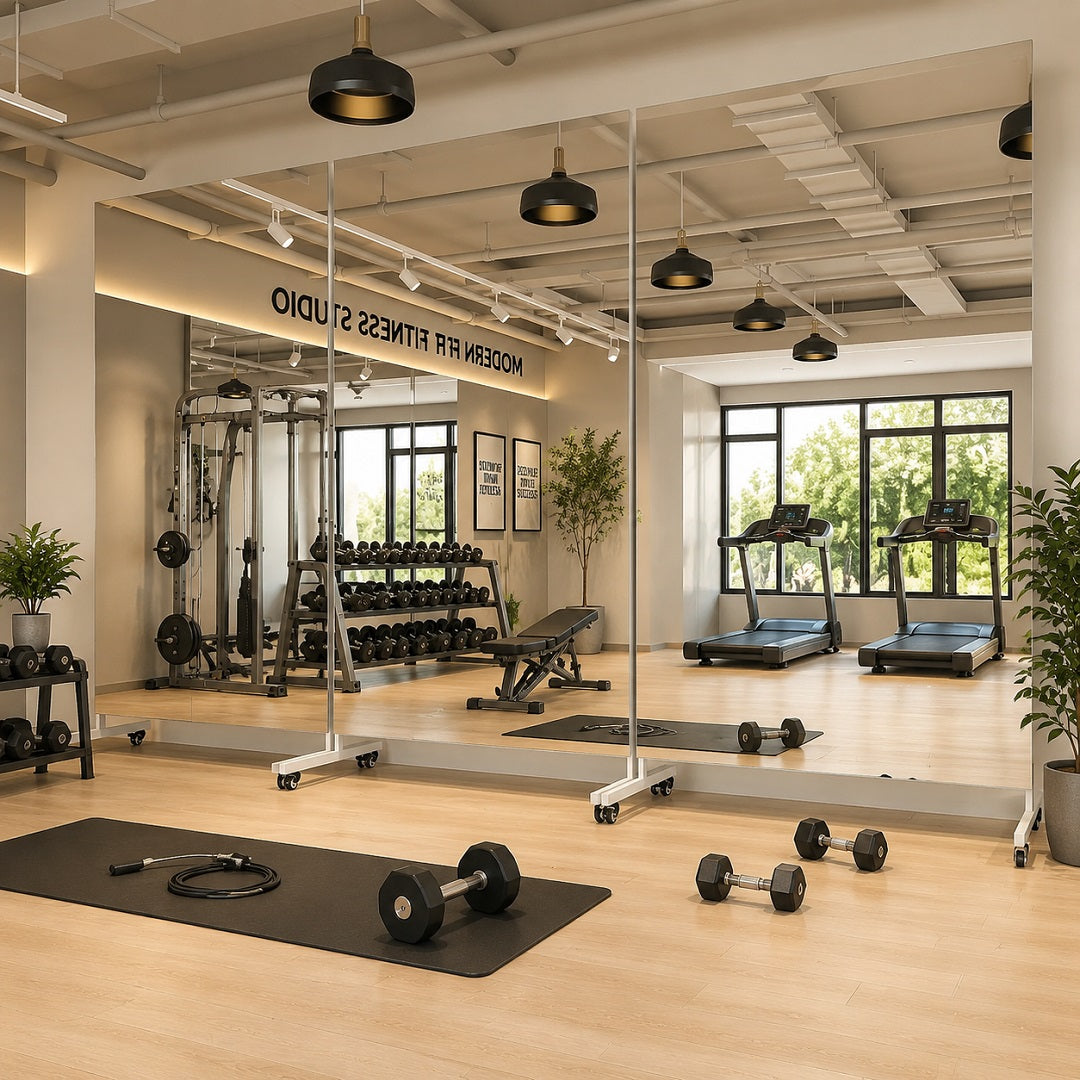
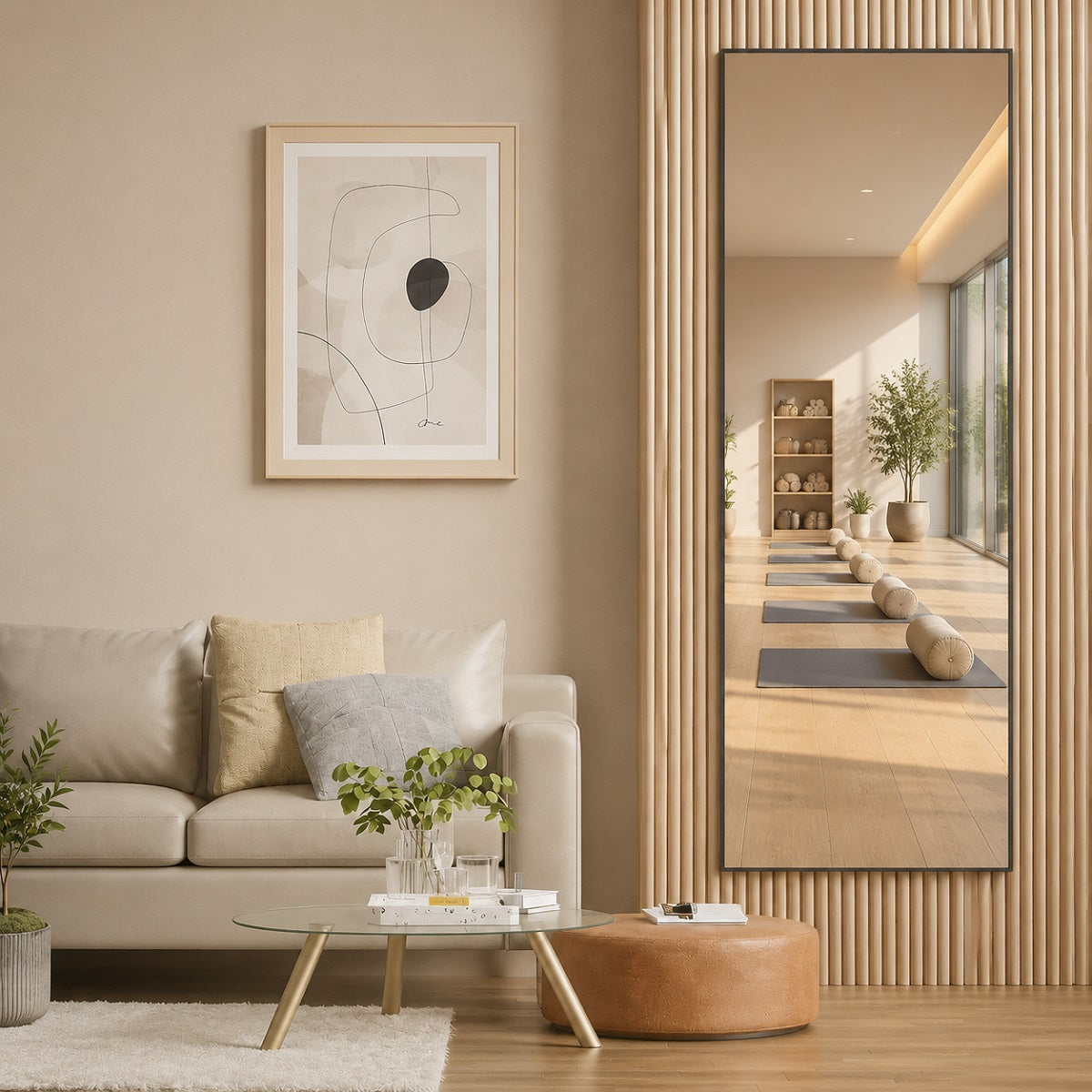
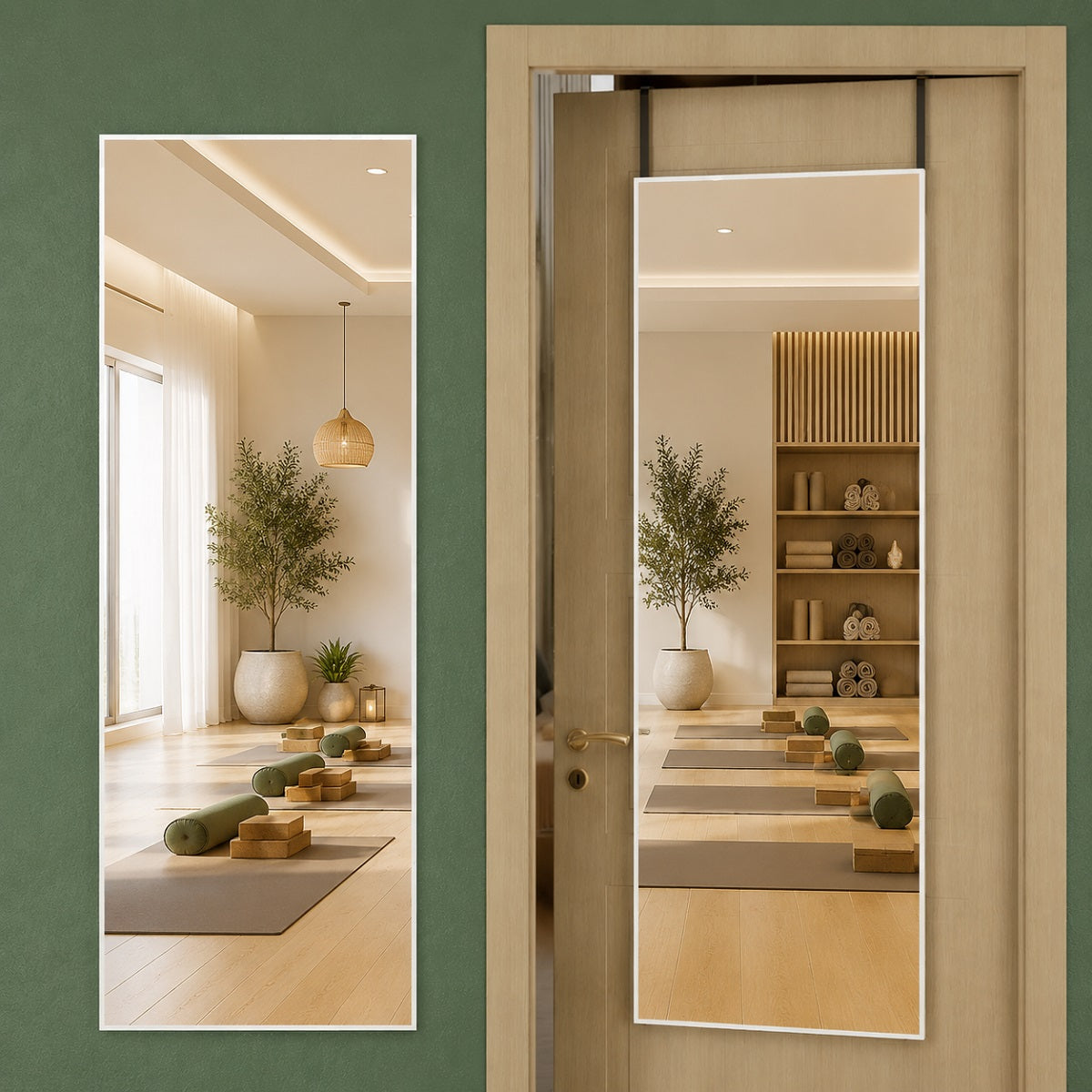
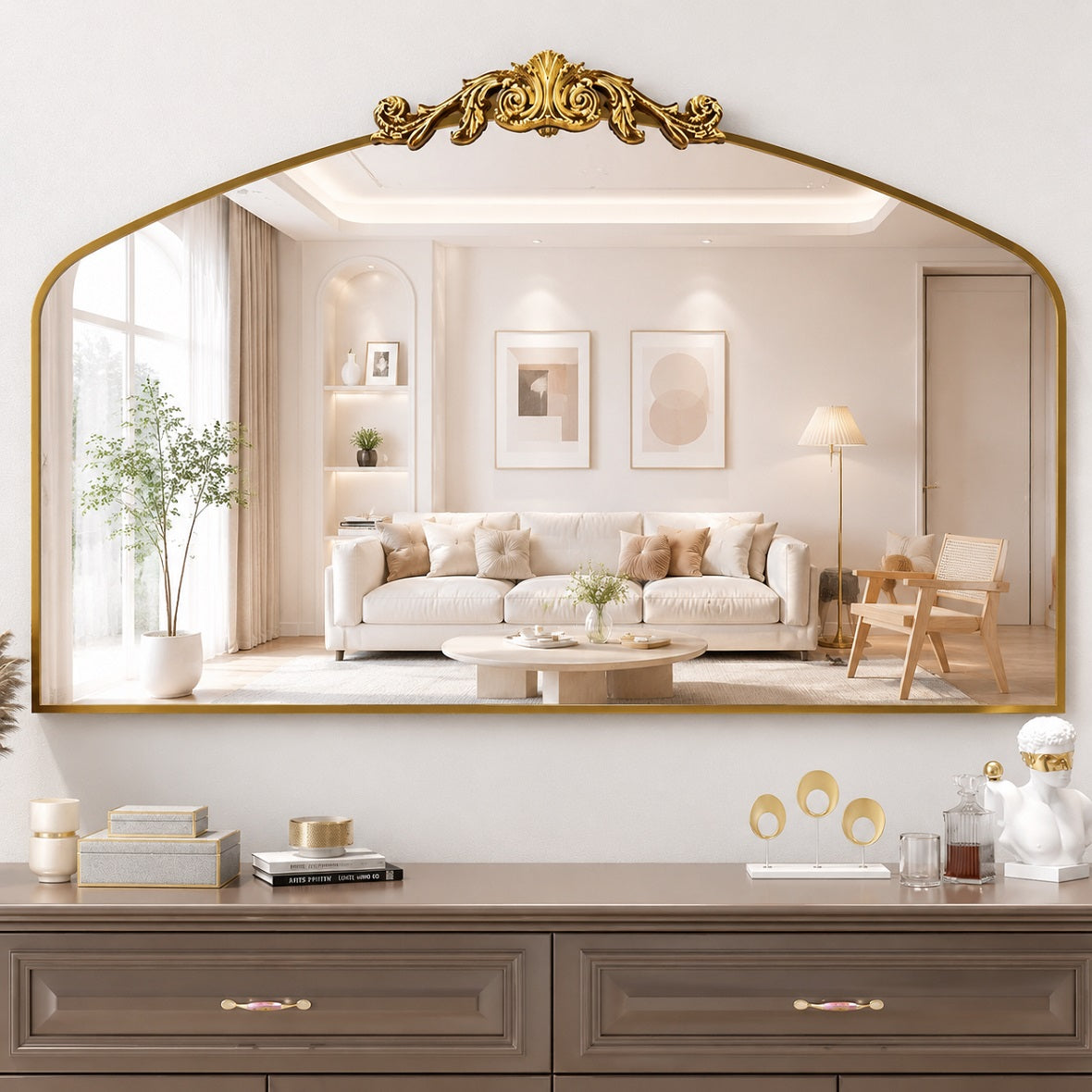
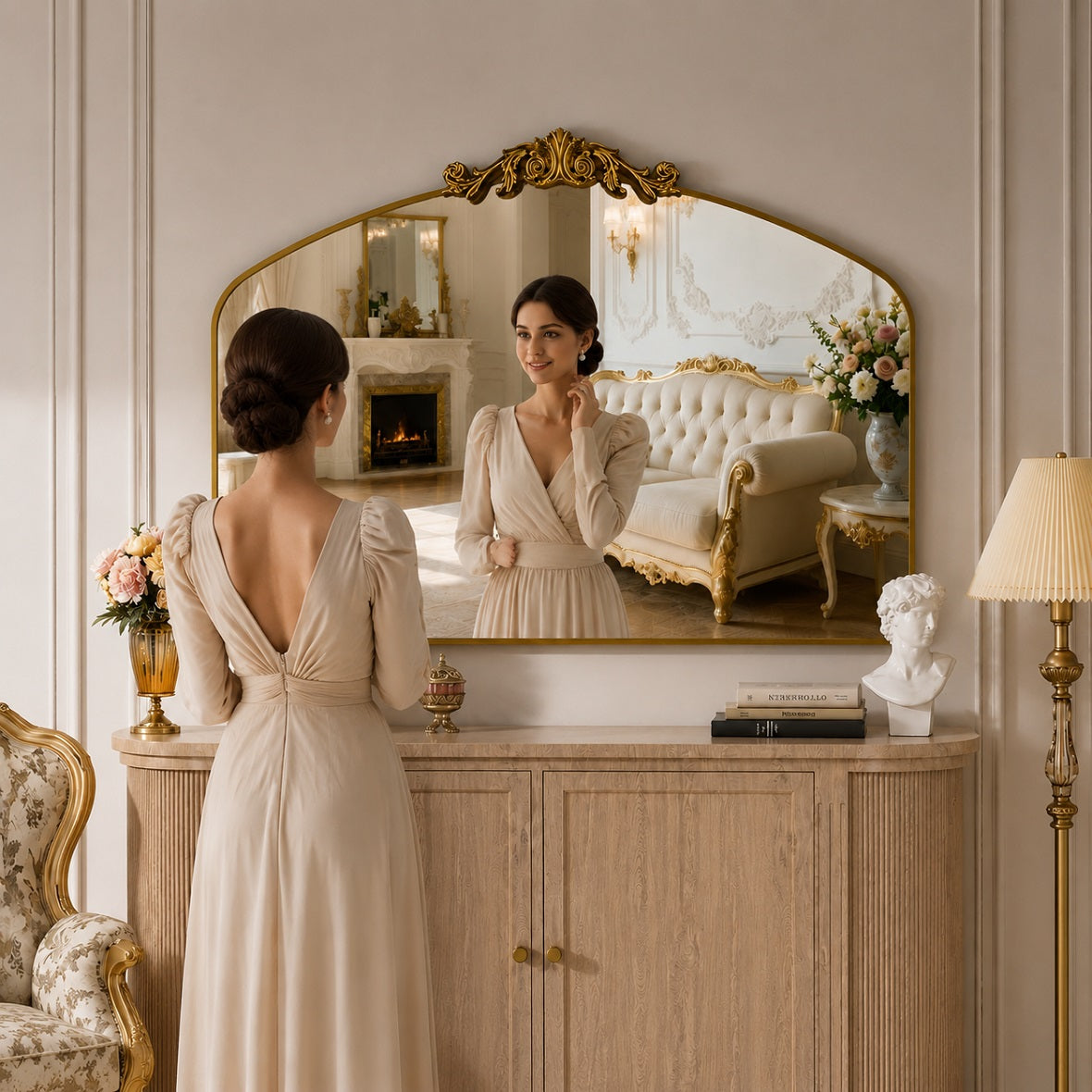
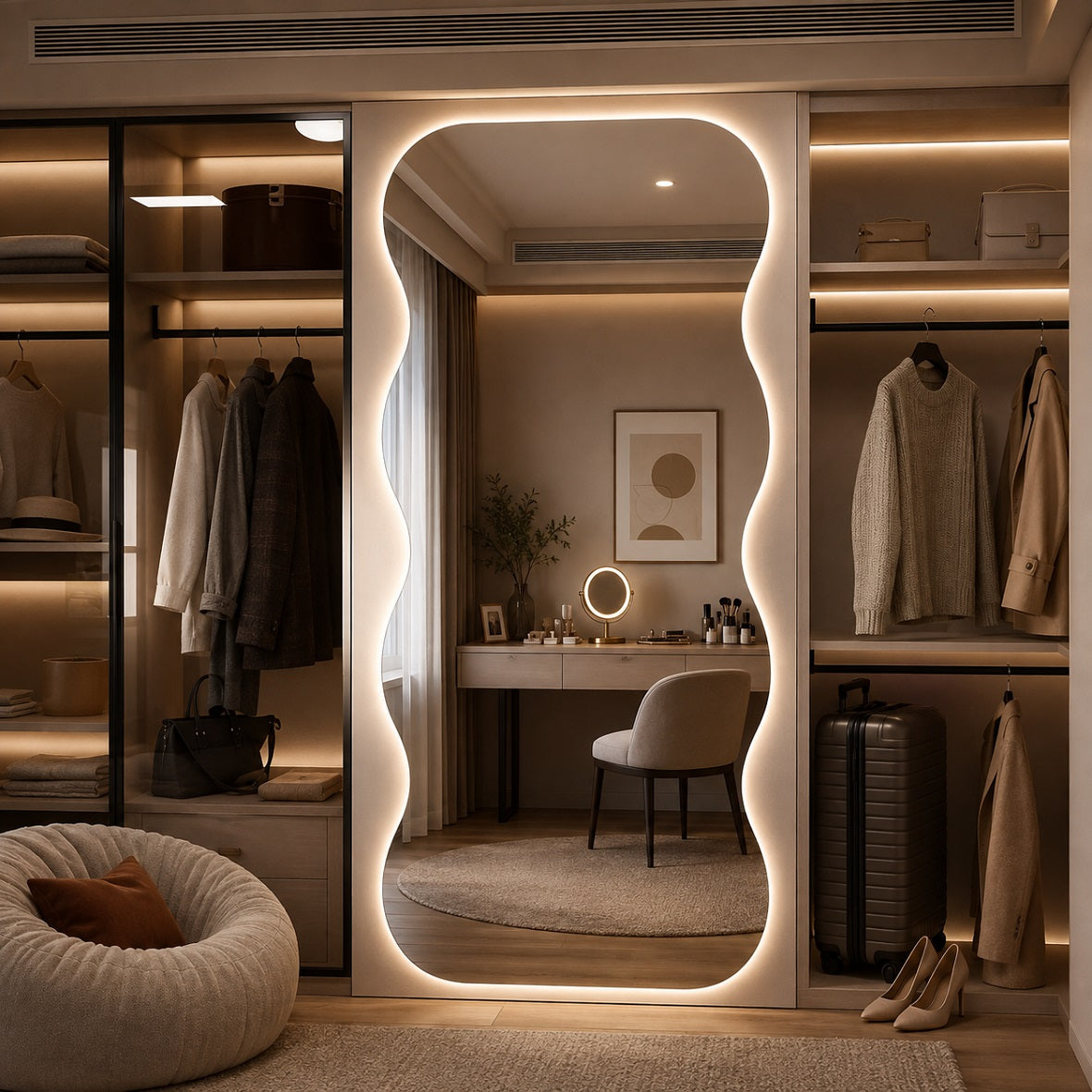
Hasipu full-length mirrors can be used for everyday outfit checks, bedrooms, dressing areas, and walk-in closets. When choosing a full-length mirror for a small bedroom, think beyond the mirror’s size. Viewing distance, installation angle, surrounding light, and reflected background all affect what you see.
My New Rule for Trying On Clothes
Now I use a simple routine before buying anything fitted or color-sensitive.
I look in the fitting room mirror, walk into the main store, take one level photo, and move around in the garment. If the color matters, I check it near natural light.
It takes about two extra minutes.
That dusty blue blazer taught me that the fitting room reflection was not entirely false. It was simply the most flattering version of the outfit: upright posture, soft light, carefully framed view, no movement, and almost no visible shadows.
At home, I saw the everyday version.
I want to see both before I buy.
Frequently Asked Questions
1. Why do I look thinner in fitting room mirrors?
The effect may come from mirror placement, viewing angle, lighting, posture, and the room’s visual background. A properly made flat mirror should not physically narrow your reflection. A warped or curved mirror can cause genuine distortion.
2. Does tilting a mirror make you look taller?
Tilting a flat mirror changes your viewing angle and may encourage a different posture, which can create the impression of greater height. It does not optically stretch a correctly made plane-mirror image in the same way a curved mirror would.
3. What lighting is most flattering in a fitting room?
Soft light placed near the front or sides of the face is usually more flattering than a single overhead light. It reduces shadows beneath the eyes, chin, arms, and fabric folds.
4. Why does clothing change color when I get home?
Stores and homes may use lamps with different color temperatures and spectral characteristics. Surrounding wall colors and daylight also influence color perception. Compare important colors under natural light and the lighting you normally use at home.
5. Can the fingernail test detect a distorted mirror?
No. The visible gap mainly relates to the position of the reflective coating. It does not reliably reveal whether a mirror is flat, curved, deceptive, or high quality.
6. Is a phone camera more accurate than a mirror?
Not automatically. Camera height, lens distortion, distance, and phone angle can change body proportions. Use the standard rear camera, keep it level, stand back, and stay near the center of the frame.