
Table of Contents
You find a mirror you love, check the measurements, and picture it beside your dresser. Then it arrives, and the stand takes up the space where your closet door needs to open.
Small bedrooms make those details hard to ignore. A mirror has to earn its place by helping you get dressed without making the room awkward to use.
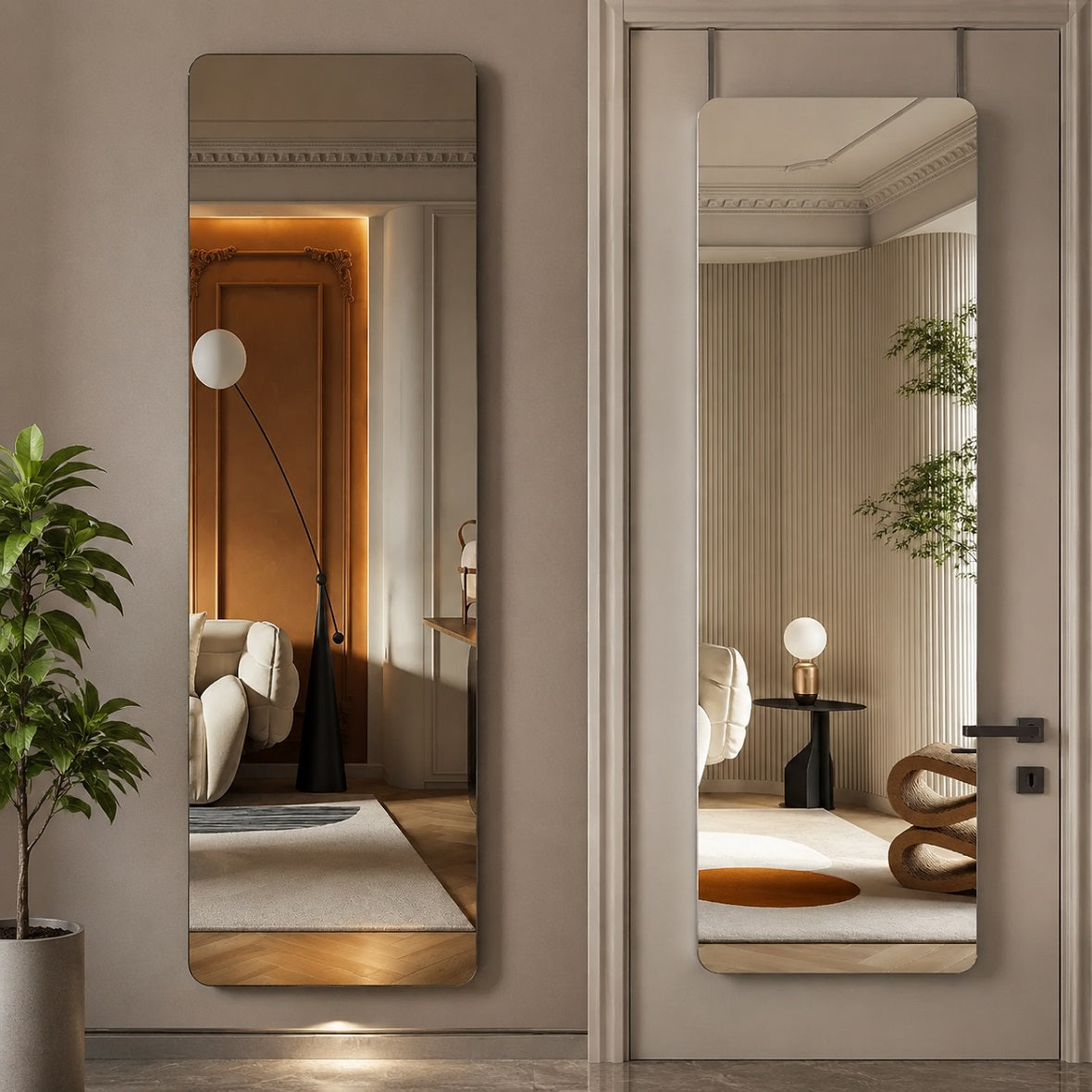
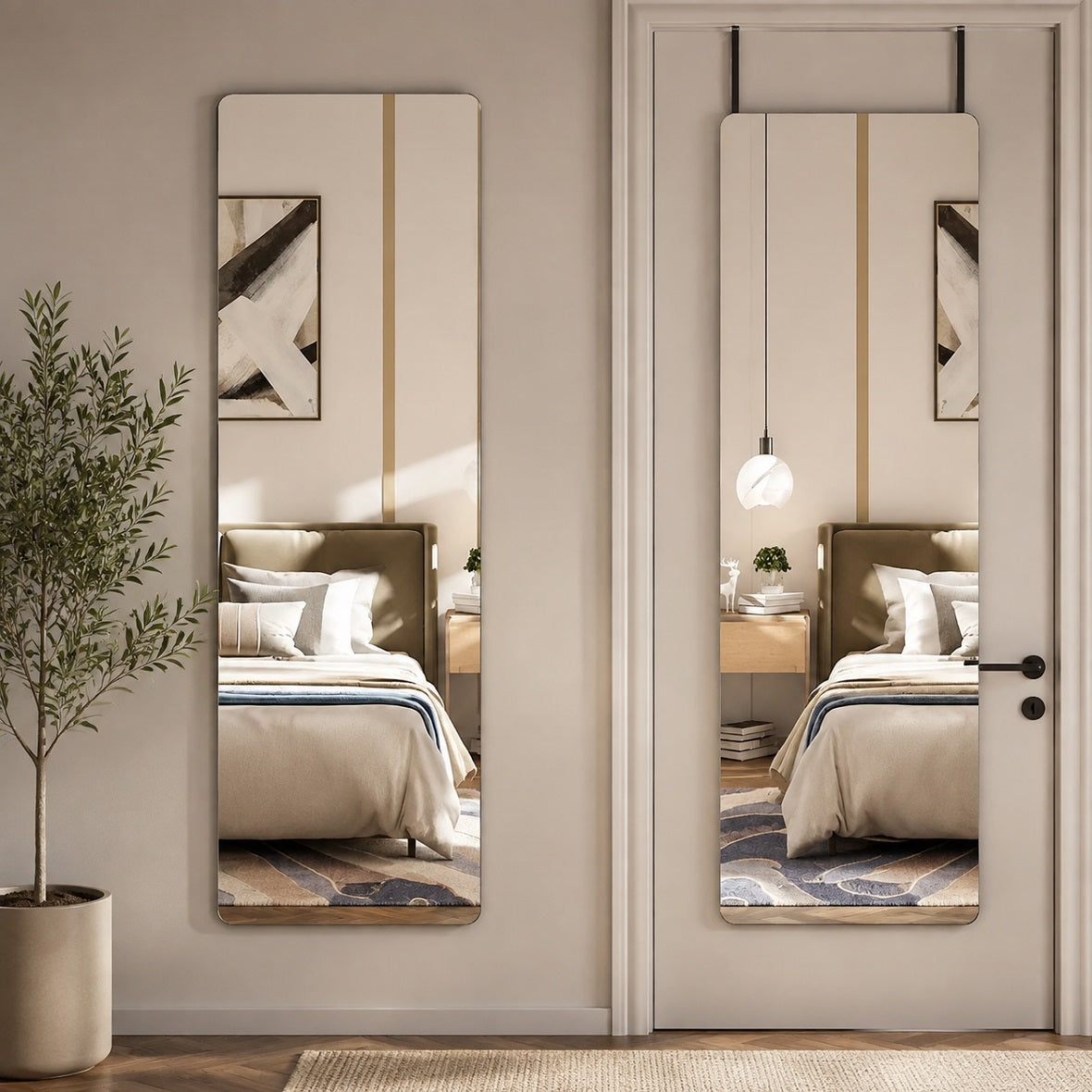
For most small bedrooms with suitable wall space, a slim, wall-mounted full-length mirror is the best starting point. It keeps the floor clear and creates a dressing spot without adding another piece of furniture. An over-the-door mirror suits rooms with crowded walls, while a freestanding design can work in an unused corner.
At Hasipu, we suggest choosing the location before the frame. Explore our full-length mirrors, then compare each model’s dimensions and installation options with the space beside your closet or dresser.
Which Full-Length Mirror Makes Sense for Your Room?
Start with the part of your bedroom that limits your options.
| Your bedroom layout | Mirror type to consider | Check before buying |
|---|---|---|
| A narrow walkway beside the bed | Slim wall-mounted mirror | Wall suitability, mounting requirements, and frame depth |
| Furniture occupies most walls | Over-the-door mirror | Door thickness, bracket fit, and clearance above the door |
| An empty corner away from foot traffic | Compact freestanding mirror | Floor space with the stand fully extended |
| A dressing area with limited light | LED full-length mirror | Lighting function, outlet location, and cord route |
| A narrow wall beside the closet | Tall rectangular mirror | Outside dimensions and a clear view from your dressing spot |
Choose the format that works with the room you already have. A larger mirror offers little benefit when you have to squeeze past it to reach your clothes.

Measure More Than the Empty Wall
The wall may have room for a mirror. The bedroom still needs room for you to use it.
Before shopping, stand where you normally get dressed. Look toward the proposed mirror location and check whether the bed, a chair, or the dresser would block your reflection.
Open nearby doors. Pull out the drawers you use each morning. Check the baseboard, light switches, outlets, and any trim around the closet.
Then use painter’s tape to mark the mirror’s outside dimensions, including the frame.
For a freestanding mirror, mark the floor area occupied by the open stand. Product photos often make the support look less noticeable than it feels in a narrow bedroom.
Leave the outline in place while you go through your usual routine. You may discover that shifting the mirror a few inches makes the closet access much easier—or that a different wall makes more sense.
Picture this common layout
There is a narrow strip of wall between your closet and a corner. A freestanding mirror appears to fit, but its rear support overlaps the closet’s opening path.
A wall-mounted mirror of a similar width may solve the problem. The useful measurement was the mirror’s installed depth, not just its height and width.
What Size Full-Length Mirror Works in a Small Bedroom?
A mirror around 60–65 inches tall and 16–22 inches wide is a useful shopping starting point for many compact bedrooms. Treat that range as a suggestion to test against your room, not a universal requirement.
Your view depends on the reflective area, hanging height, mirror angle, your height, and nearby furniture. The mirror does not necessarily need to be as tall as you are to show your whole outfit.
Width deserves attention too. A narrow full-length mirror may fit neatly beside a closet, but you should still feel comfortable checking a jacket, dress, or wider outfit without repeatedly shifting sideways.
Compare the dimensions of the glass with the overall frame size. A broad decorative frame can take up valuable wall space without giving you a wider reflection.
For example, a mirror with an outside width of 20 inches leaves about 2 inches on each side when centered on a 24-inch wall section. A 24-inch-wide model leaves no margin for trim or installation requirements.
That small difference can make the narrower mirror look better suited to the space.
Buy for a comfortable view and a workable layout. Filling every available inch rarely needs to be the goal.
Wall-Mounted Mirrors Keep the Floor Clear
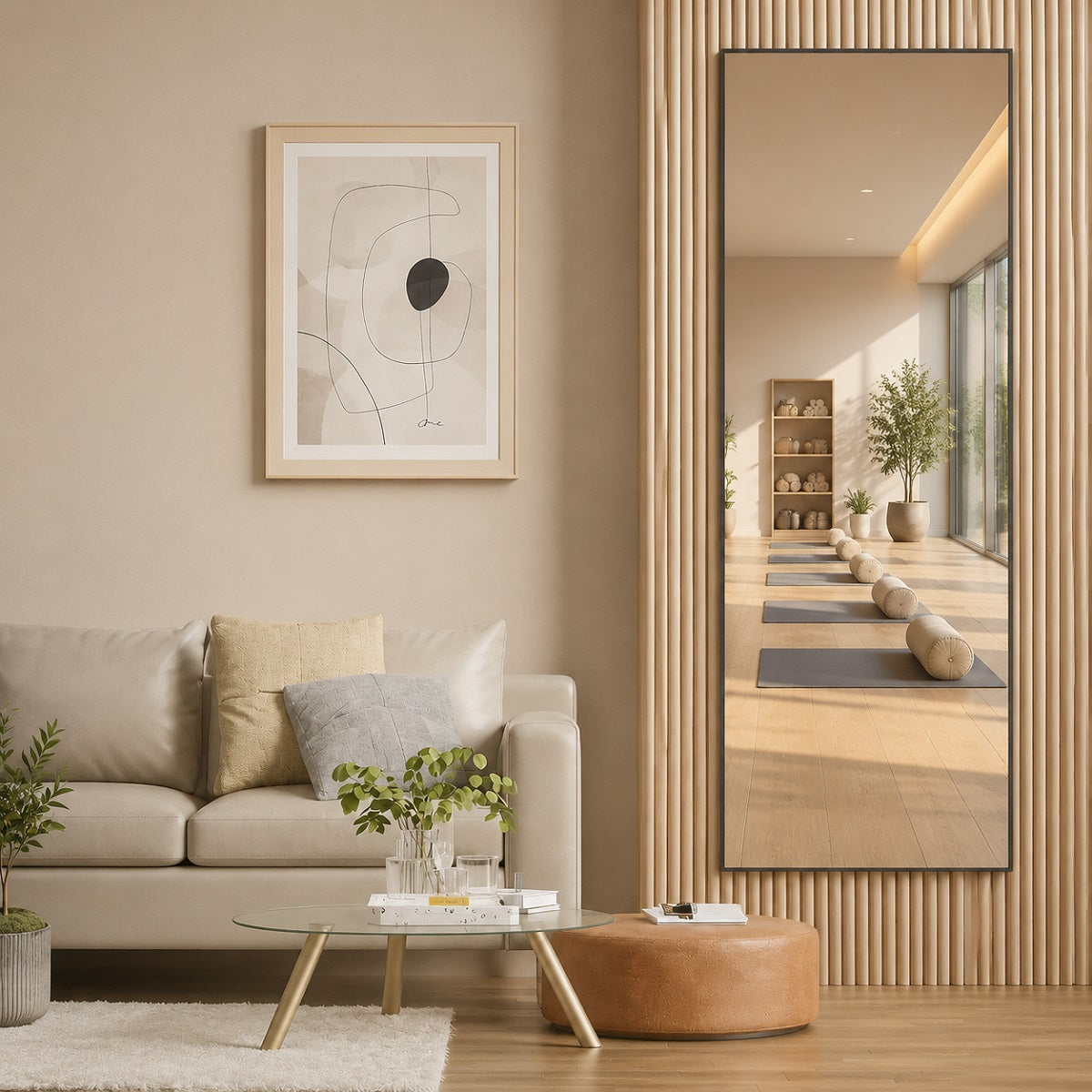
A wall-mounted full-length mirror is our first choice when floor space is tight and the wall can support the installation.
It removes the stand from the walkway and gives the room a permanent dressing spot. Beside a closet is often convenient because you can take out clothes and check an outfit in the same area.
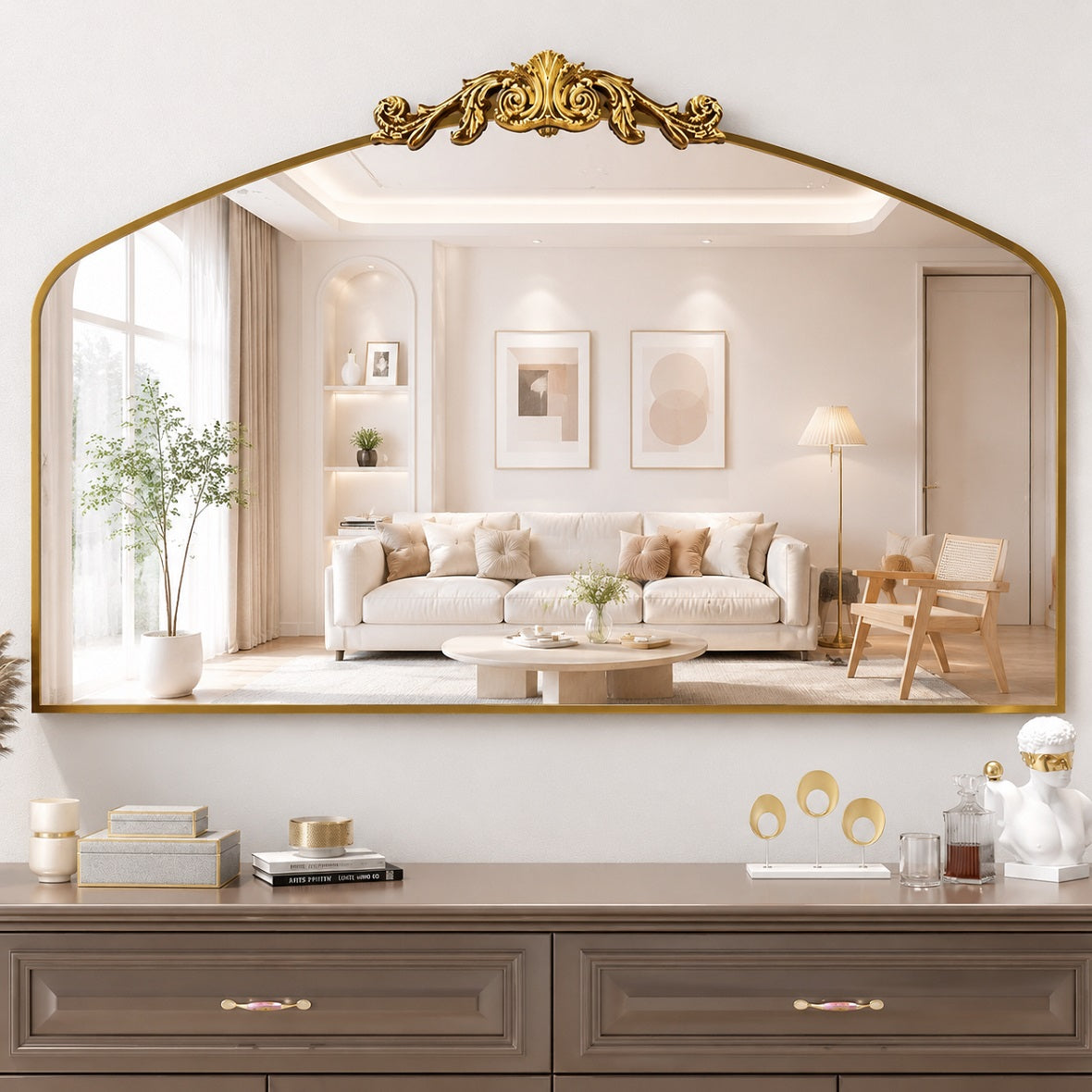
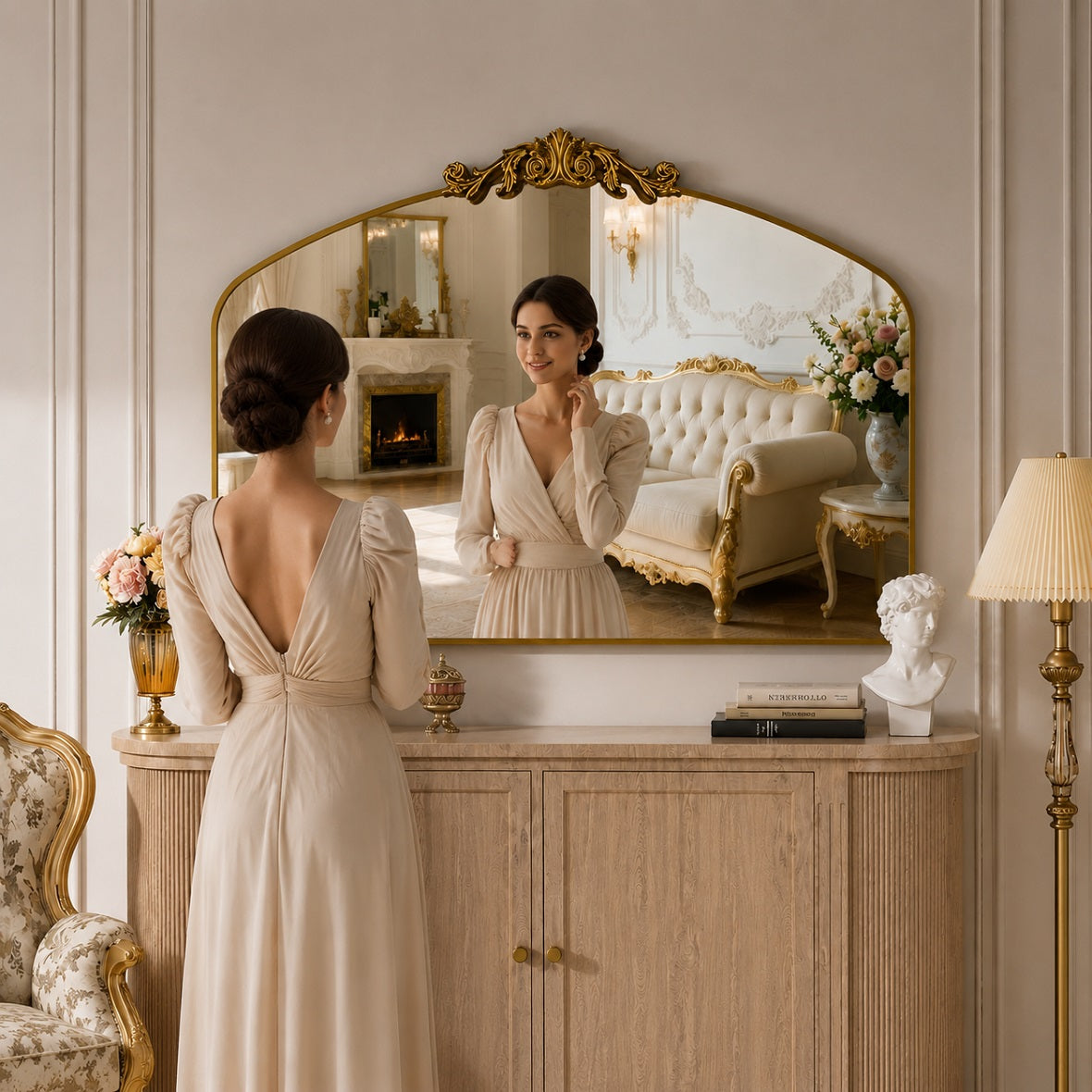
A slim rectangular frame fits naturally between doors and furniture. An arched-top mirror adds a softer shape to a room filled with straight lines.
Check that the specific mirror is designed for wall mounting. A model sold with a floor stand is not automatically approved for hanging, and mounting hardware must suit both the mirror and the wall.
Before drilling, confirm the installation height and the view you need using the manufacturer’s instructions and a safely supported setup.

When an Over-the-Door Mirror Is the Better Fit
Some small bedrooms barely have an exposed wall. The bed takes one side, the dresser occupies another, and the closet uses most of the remaining space.
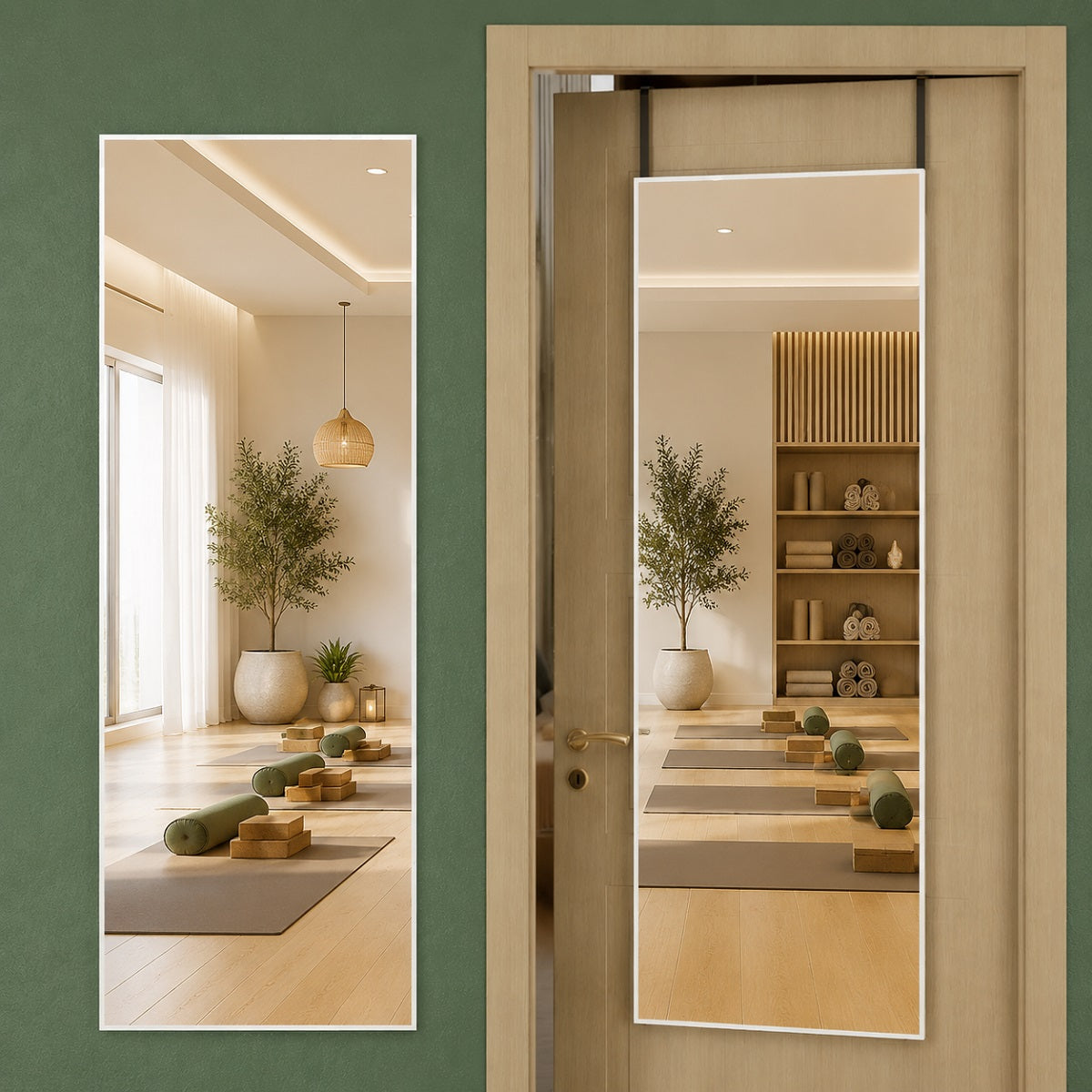
An over-the-door mirror can make the back of a door useful without adding a floor footprint.
Look closely at the door brackets before buying. They need to fit the door’s thickness and allow enough clearance at the top for the door to close properly. The mirror should remain secure as the door moves.
Also consider how you normally leave that door. A mirror on the back of a bedroom door may be hidden against the wall for most of the day. That is fine when closing it is convenient, but less helpful when furniture prevents it from closing fully.
For a rental, review the mounting method and your lease. A design that requires no-drill installation can still rub against paint or leave marks where the brackets sit.
Can a Freestanding Mirror Work Without Crowding the Bedroom?
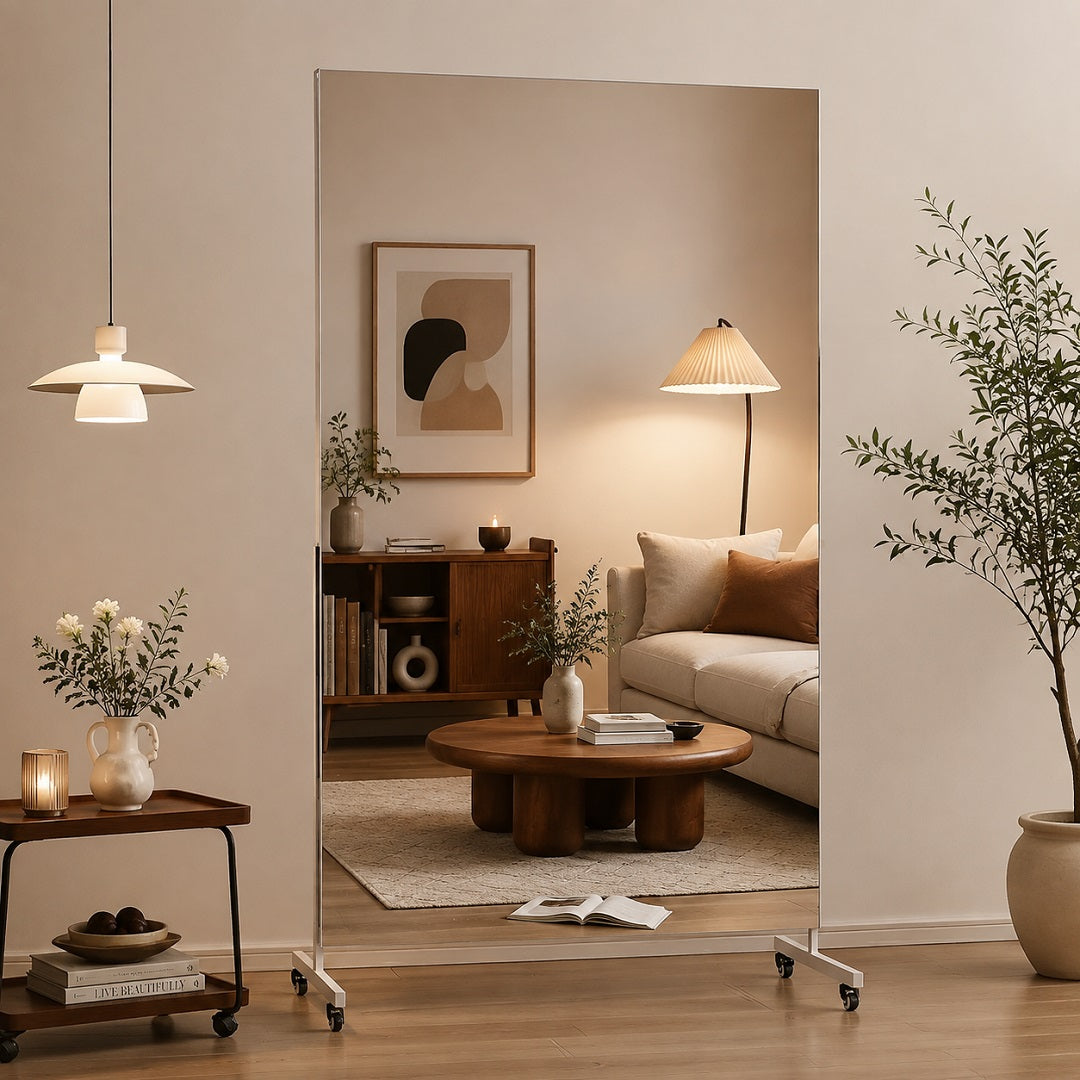
A freestanding bedroom mirror can work well in a corner that sits outside your walking route.
The attraction is flexibility. You can adjust its position when you rearrange furniture or want a different dressing spot.
The trade-off is floor depth.
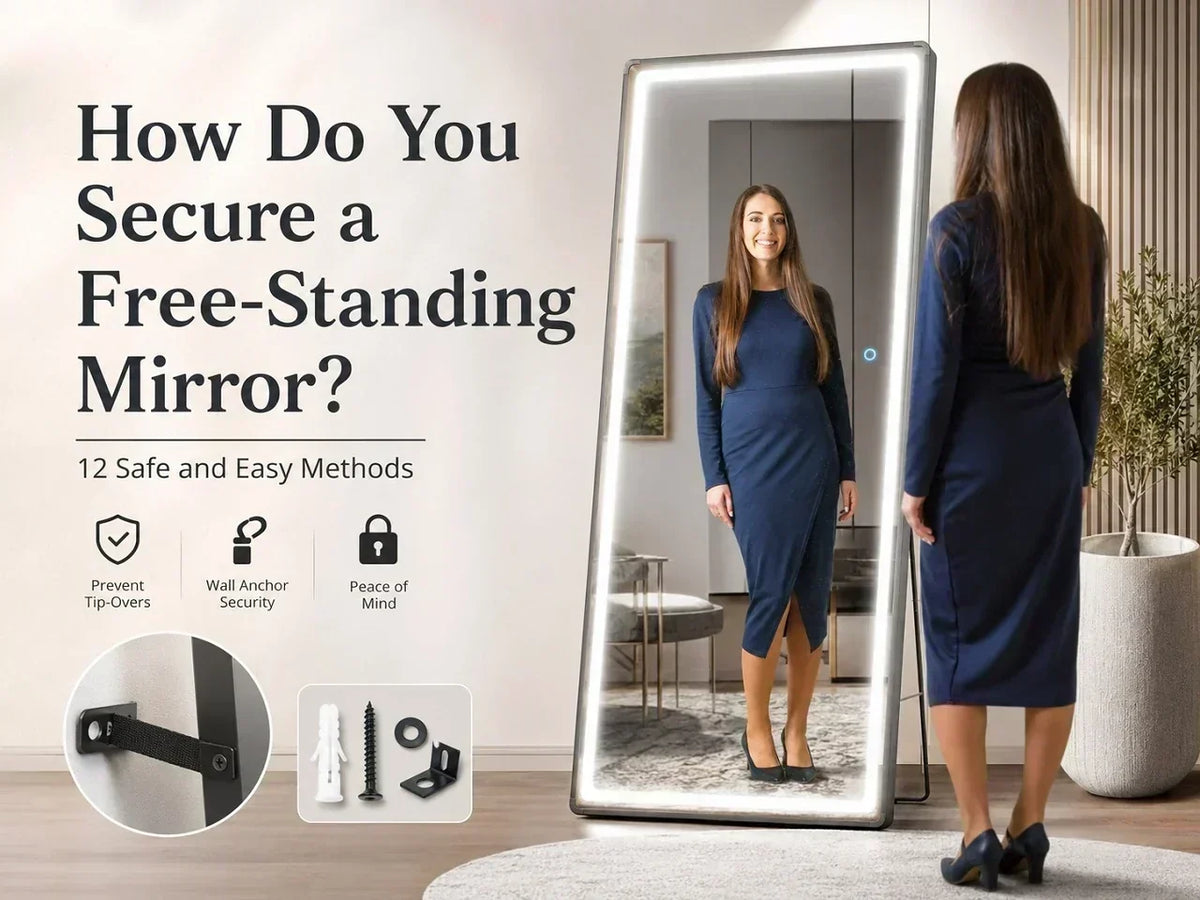
Measure the mirror with its stand fully open, following the product instructions. Do not partially close the stand to squeeze it into a tighter space. Check any securing or anchoring requirements before deciding that the installation suits your room.
A corner beside a dresser may work beautifully. A narrow gap between the bed and the door is usually less forgiving.
A leaning mirror also needs the securing method specified by its manufacturer. Resting it against a wall does not, by itself, establish that it is safely installed.
Put the Mirror Where You Get Dressed
The most useful small bedroom mirror placement is often close to clothing storage.
You can reach for a shirt, try it on, and check the fit without stepping around the bed. There is less reason to leave clothes on a chair across the room.
A location near a window may offer useful natural daylight, but try the position at the time you normally get ready. Strong light behind you can create backlighting, and direct sunlight glare may turn an attractive spot into an inconvenient one.
Look at the reflected view as well.
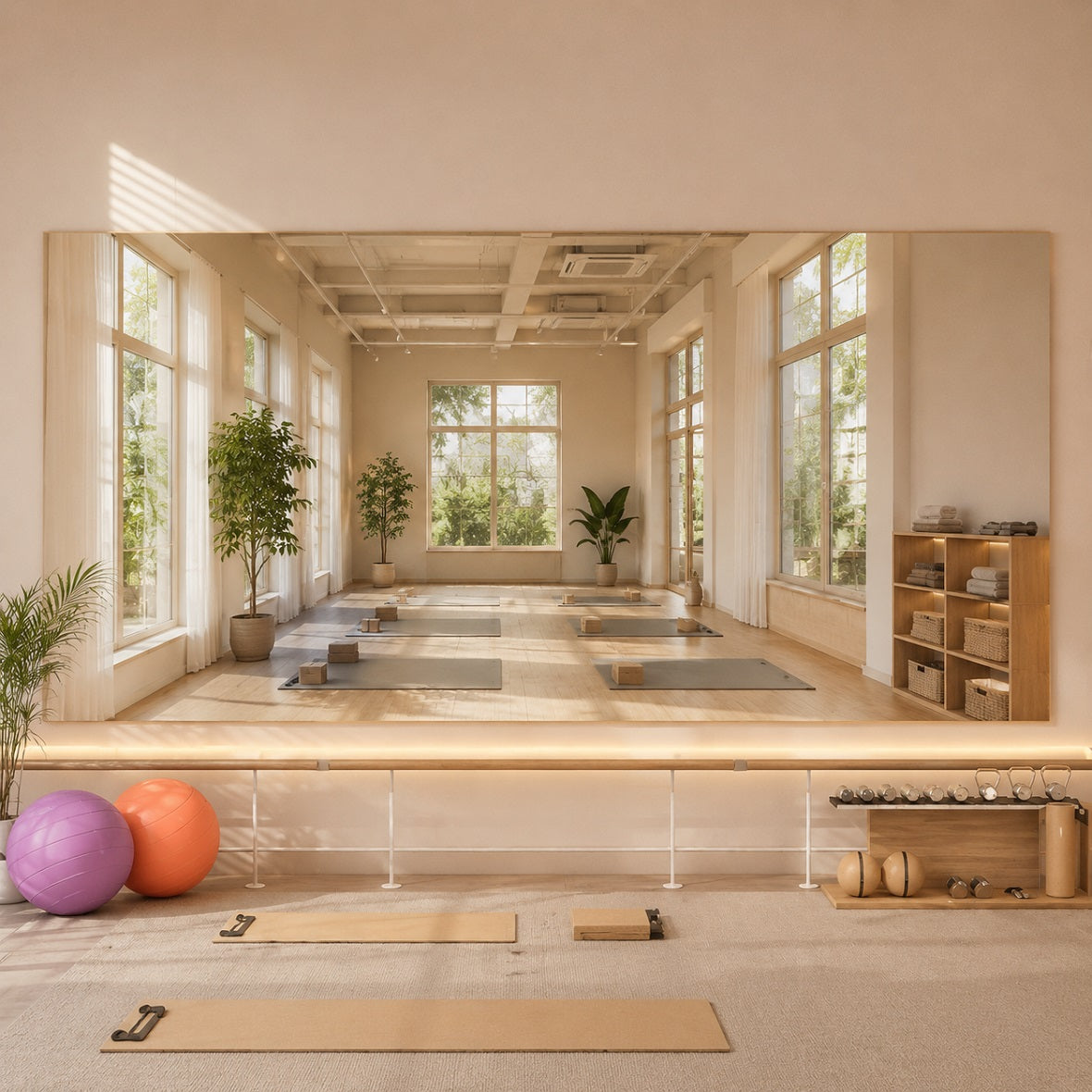
A mirror facing a relatively clear area may help the bedroom feel more open. Facing a crowded dresser means seeing that clutter twice. When using mirrors in interior design, a small change in position can improve the reflected view without moving any furniture.
A mirror can make a room feel more spacious, but it cannot create walking space. Keep the route between the bed, closet, and door comfortable before choosing a larger model.
Should it face the bed?
That comes down to your personal preferences and the overall layout.
Some people like the view; others find reflected movement or light distracting at night. Try the position before making it permanent. There is no need to force a mirror placement that makes the bedroom less restful.
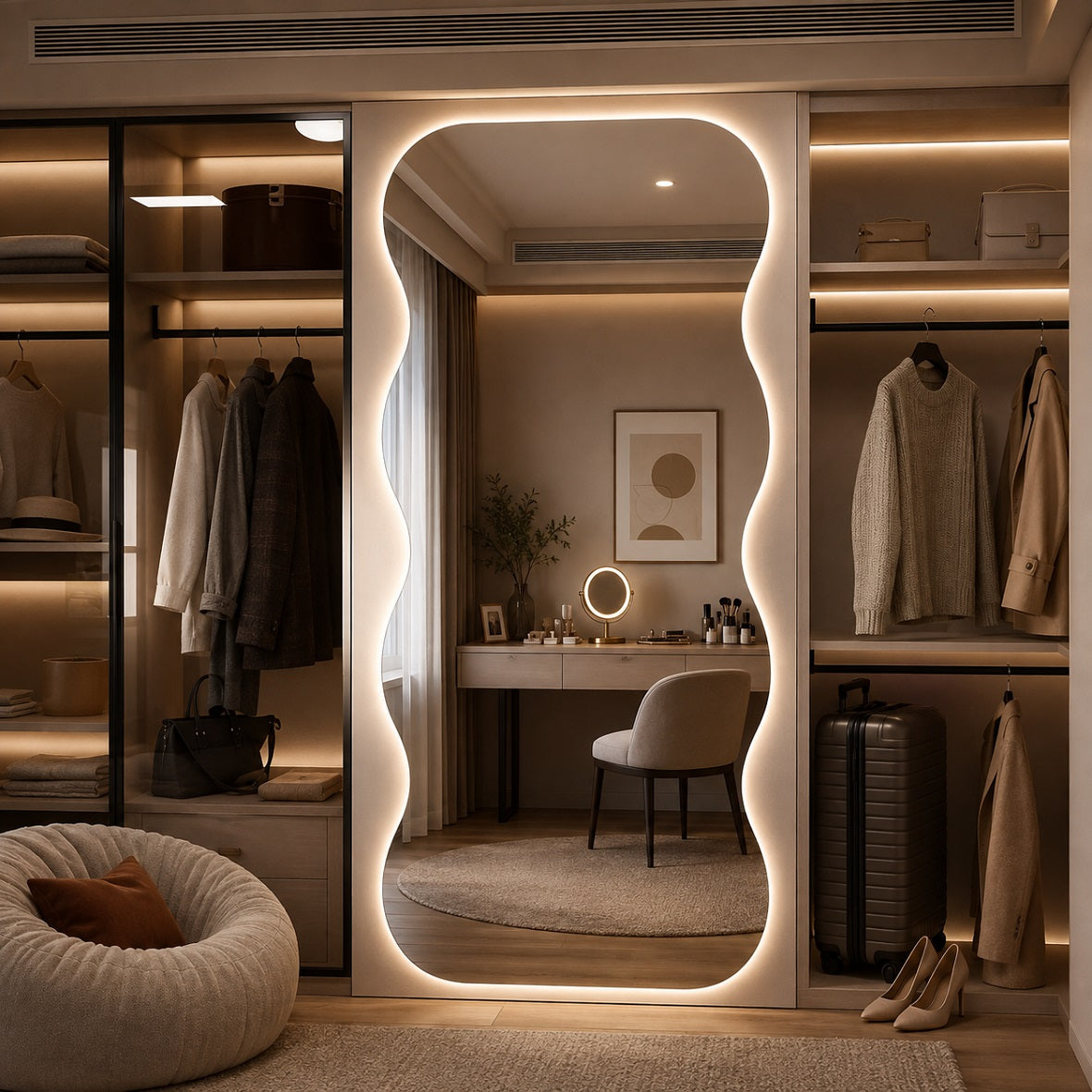
Is an LED Full-Length Mirror Worth the Space?
An LED full-length mirror is worth considering when your dressing area needs extra illumination and a nearby outlet makes the setup practical.
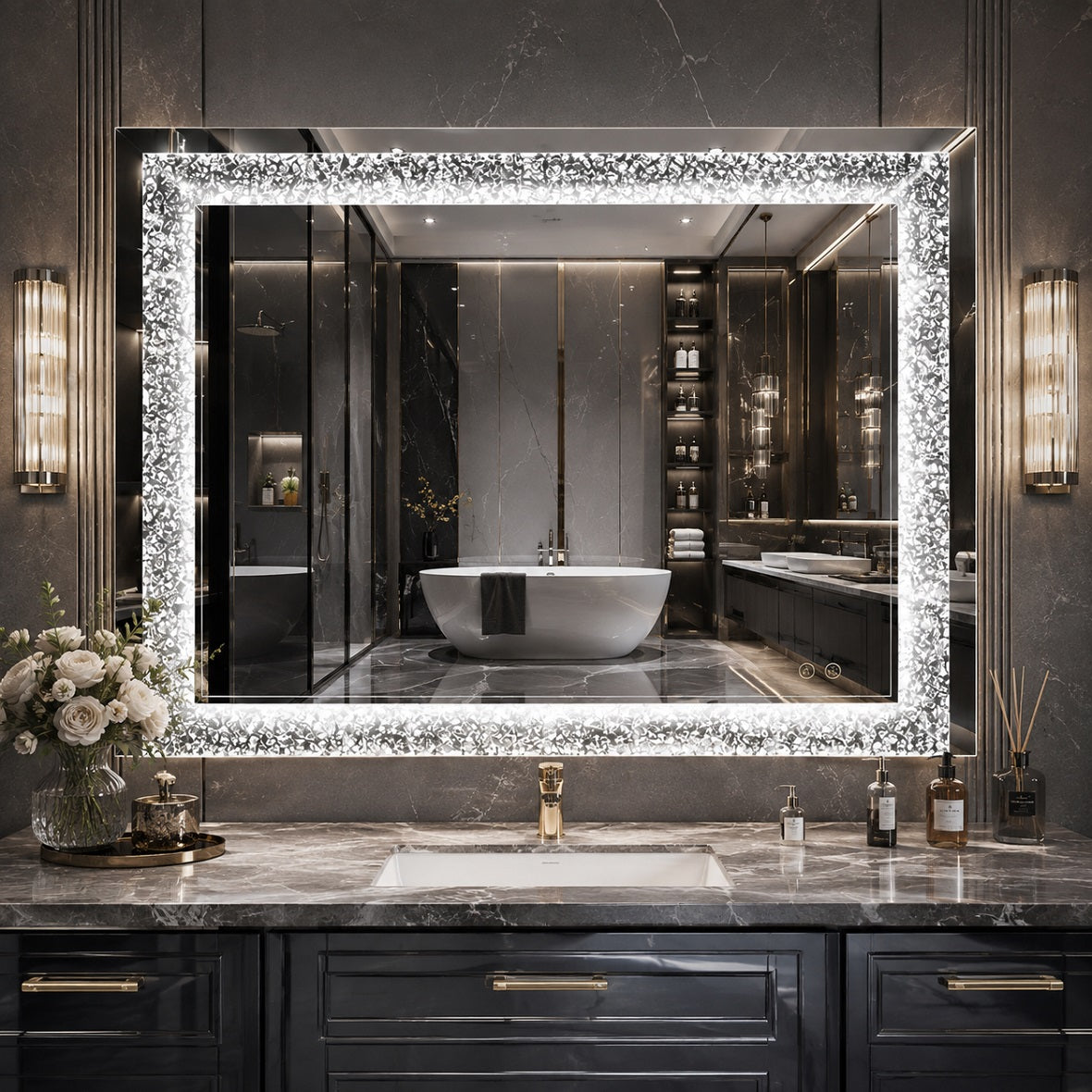
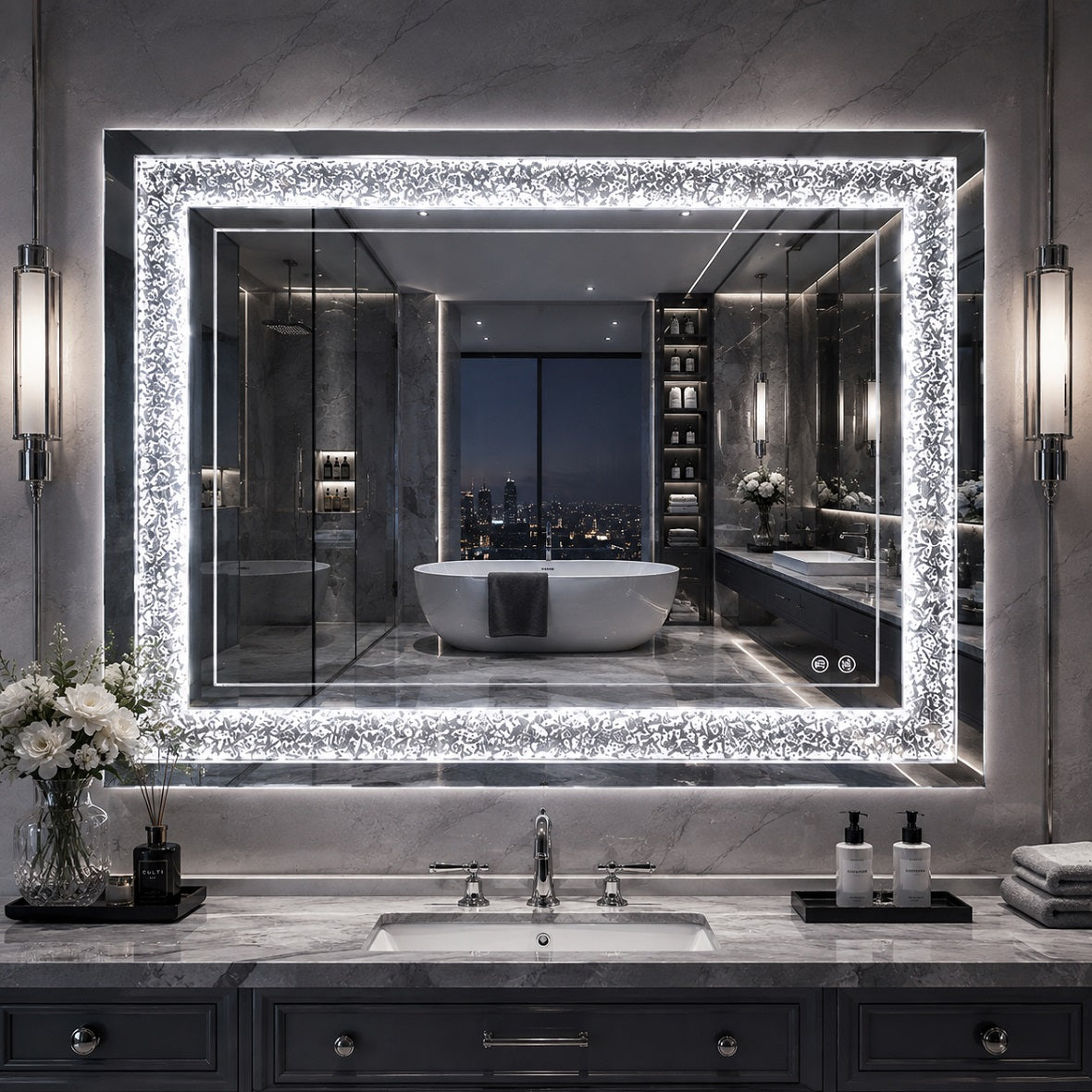
Check what the lighting is designed to do. Some mirrors provide light toward the person standing in front of them; others mainly create an ambient backlighting effect around the edge. A bright border in a product photo does not tell you how well the mirror will illuminate an outfit.
Review the specific model’s brightness settings, available color temperature options, and control placement. Think about where the power cord will run before choosing the spot.
A cord stretched across a walkway can create a tripping hazard and make an otherwise suitable location impractical.
A standard mirror may be all you need when the bedroom already has task lighting you enjoy. Fit, reflection quality, and safe installation still deserve the most attention.
Pick a Frame That Fits the Rest of the Room
A slim frame is an easy starting point for a full-length mirror in a small space. It keeps the outline simple and leaves more of the overall width available for glass.
The finish can connect the mirror to details already in the bedroom. A black metal frame works with dark drawer pulls or a iron bed frame. A pale finish can sit quietly against light walls. Wood tone frames can relate to a dresser without matching every piece of furniture exactly.
Shape changes the mood more than the footprint.
Arched mirrors add a curve above straight-edged furniture. A rectangle follows the lines of wardrobes and doors. Compare the actual measurements, since an arched mirror is not automatically smaller or less bulky.
A decorative mirror frame can work too. Give it enough clear wall space to be seen rather than squeezing it between several competing objects.

What to Check Before Choosing a Hasipu Mirror
Once you know the location and approximate size, compare the details of the Hasipu mirror model you are considering with your measurements.
Review:
- Outside dimensions and reflective area, especially for a narrow wall.
- Approved installation options, including hanging, standing, or leaning.
- Mirror weight and wall hardware requirements for the chosen location.
- Full support depth or door-bracket dimensions, where applicable.
- Lighting features and power cord routing for an illuminated model.
- Delivery policies and return terms before placing the order.
Features vary by model, so rely on the individual product listing and installation instructions rather than assuming that every mirror offers the same options.
After delivery, inspect the glass surface and frame before installation. Check the reflection from your normal dressing position, paying attention to straight edges such as a nearby doorframe. Contact customer support about shipping damage or noticeable optical distortion.
The right bedroom mirror should become an easy part of your daily routine: close to your clothes, comfortable to use, and completely clear of your walking paths.
Frequently Asked Questions
1. Is a bigger mirror better for a small bedroom?
A larger reflective area can help the room feel more open, but size alone does not make a mirror better. Choose a model that gives you a useful view without interfering with doors, drawers, or walking routes.
2. Can I put a full-length mirror behind my bedroom door?
Yes, when the location and approved mounting method allow it. Check clearance through the door’s full movement and make sure the mirror cannot strike nearby furniture or the wall.
3. How high should I hang a full-length mirror?
Hang it where the people using it can see their heads and feet from the intended dressing position. Mirror dimensions and surrounding furniture affect the result, so check the view before drilling and follow the installation instructions.
4. What is the best full-length mirror for a small bedroom without drilling?
A compatible over-the-door mirror may suit the room. A freestanding model can also work when you have enough floor space and can meet its securing requirements. Check those requirements before assuming the setup needs no wall attachment.
5. Is an arched or rectangular mirror better for a small bedroom?
A rectangular mirror often fits neatly into a narrow wall section. An arched mirror adds a softer outline. Choose based on usable glass area, outside dimensions, and installation depth; the shape alone does not determine how much room it needs.