Table of Contents
The space above the sofa is an obvious spot for a mirror. So is the wall over the mantel. But an empty wall alone doesn’t tell you where a mirror will look best. The furniture, the daylight, and the view in the glass all have a say.
A living room mirror usually works well above a sofa or console table, over a suitable fireplace mantel, or across from a window with a pleasant view. Choose a position that fits the surrounding furniture and reflects something you enjoy seeing, without directing glare toward the seating area.
A mirror above a console might become the place you check your hair before leaving. Across from a window, it might bring a glimpse of the garden into your favorite reading spot. Start with what you want it to do, and the choice of wall becomes easier.
Near a Window, Follow the View and the Light
A window overlooking trees, a porch, or a garden gives you something worth bringing into the room. Placing a living room mirror opposite a window can make that view visible from another angle, including from seating areas that face away from the outdoors.
The effect can be especially pleasant in a living room with a plain wall across from its main window. Instead of adding another picture or shelf, the mirror introduces a natural view that changes with the weather and daylight.
It can reflect available daylight, too, although the result depends on the direction of the light. Strong afternoon sun may create an uncomfortable reflection across the couch. The relationship between daylight and glare is also discussed in our guide to where not to place mirrors.
An adjacent wall is worth considering when the opposite wall gets too much direct sun. From certain seats, a living room mirror there may catch part of the window without putting its full reflection in front of you. Simply placing a mirror beside a window won’t guarantee an outdoor reflection; the viewing angle matters.
Look at the actual view before deciding. A leafy backyard, a neighboring brick wall, and a busy driveway will each bring a different feeling into the room.

Above the Sofa, Work With the Furniture’s Proportions
A mirror above the sofa can finish a long wall without introducing another large block of color. This is useful in a room that already has patterned curtains, a colorful rug, or artwork elsewhere.
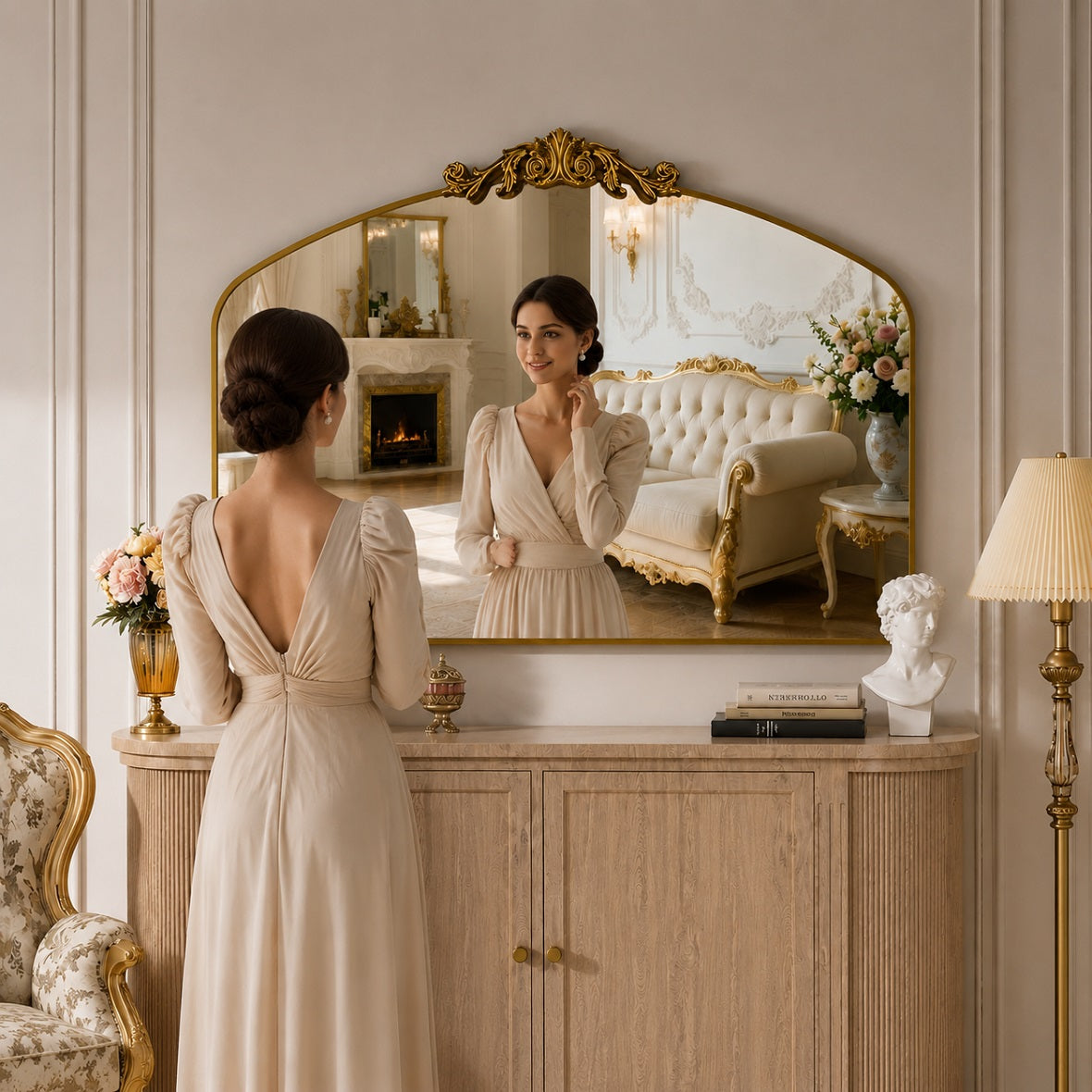
A wide rectangular mirror often sits comfortably above a long couch. A round mirror can look lovely over a loveseat, particularly when the furniture has square arms and straight lines. The curve gives the arrangement some variety without needing extra accessories.
Picture a cream sofa, a wood coffee table, and a mirror with a slim black frame. The dark outline can pick up smaller details elsewhere in the room, such as curtain rods or a lamp base. A warm wood frame would give the same arrangement a softer feel.
Center the mirror over the sofa rather than automatically centering it on the entire wall. A doorway or side table may leave the sofa slightly off-center, and aligning the mirror with the furniture usually makes the grouping easier to read.
For a sectional, use the main section against the wall as your reference. There’s no need to stretch a mirror across the full footprint of an L-shaped couch.
Leave comfortable clearance above the sofa back, including room for someone to lean back. Follow the mirror’s mounting instructions and use hardware suited to its weight and the wall construction.
A Console Table Gives a Mirror an Everyday Purpose
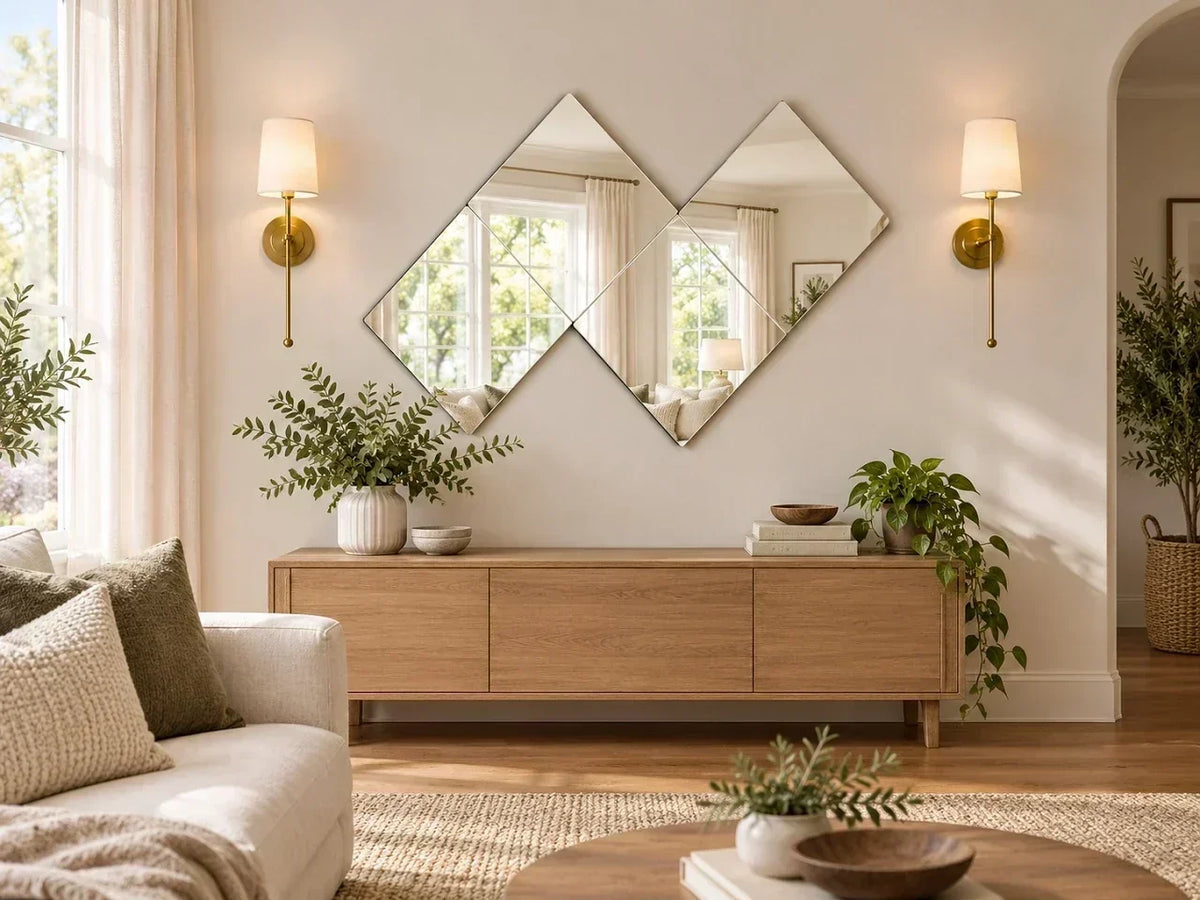
A mirror above a console table works particularly well near the living room entrance. In a home without a separate foyer, the combination creates a practical spot for keys, mail, and a quick check before heading out.
The table also makes the wall mirror easier to style. A shaded lamp at one end, a shallow dish, and a few books may be all the arrangement needs. Keep enough glass visible so the mirror still feels functional and light.
Start with a mirror narrower than the console, leaving some tabletop visible on either side. This gives you room for tabletop accessories without making the setup feel squeezed beneath the frame.
The finishes can relate without matching exactly. A medium-toned wood mirror can sit above a darker wood console. A simple metal frame may work well with a table that already features an interesting grain or carved detail.
Height is partly practical here. Position it at a comfortable eye level so you can see yourself easily, while ensuring the mirror remains visually connected to the furniture below. Hanging it too far above the table can leave an awkward gap of empty wall between the two piece.
Over the Fireplace, Give the Frame Some Breathing Room
A fireplace already draws attention, so the mirror above it doesn’t always need an elaborate frame.
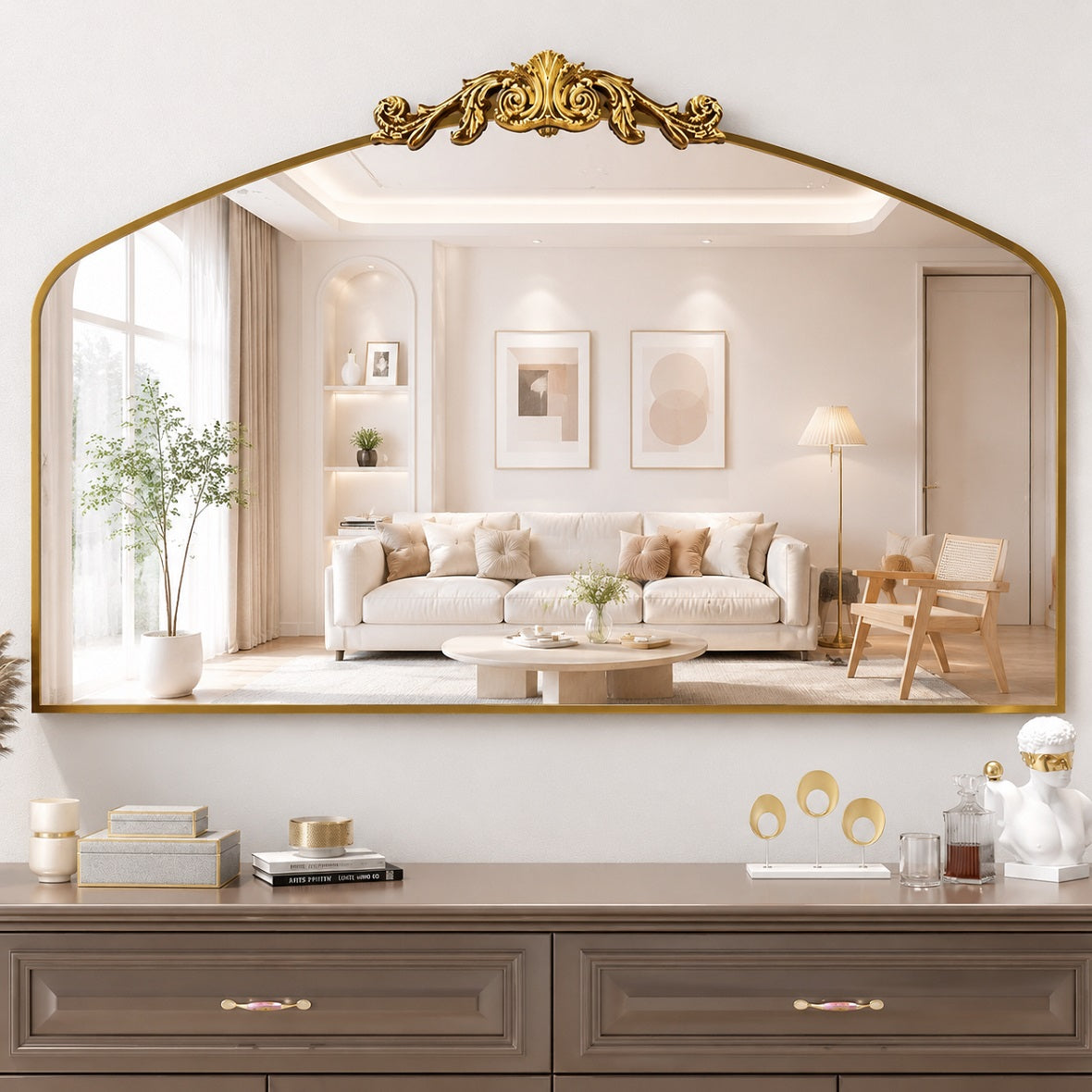
Against textured brick or veined stone, a simple outline allows the surround to remain visible. A more detailed frame can bring character to a plain painted mantel. An arched mirror introduces a curve above a rectangular firebox, while a rectangular mirror continues the room’s straighter lines.
Leave visible wall around the frame, especially between its top edge and the ceiling. Filling every inch above the mantel can make that part of the room feel crowded.
Before settling on a mantel mirror, look toward the proposed position from the couch. At that height, the reflection may show ceiling beams, a light fixture, or a ceiling fan. A feature you barely notice elsewhere can become prominent once it appears in the glass.
A working fireplace also needs a suitable installation. Follow the fireplace and mirror manufacturers’ requirements for heat exposure, clearances, and safe mounting. Decorative spacing alone doesn’t establish a safe distance.

Put a Full-Length Mirror Somewhere You Can Use It
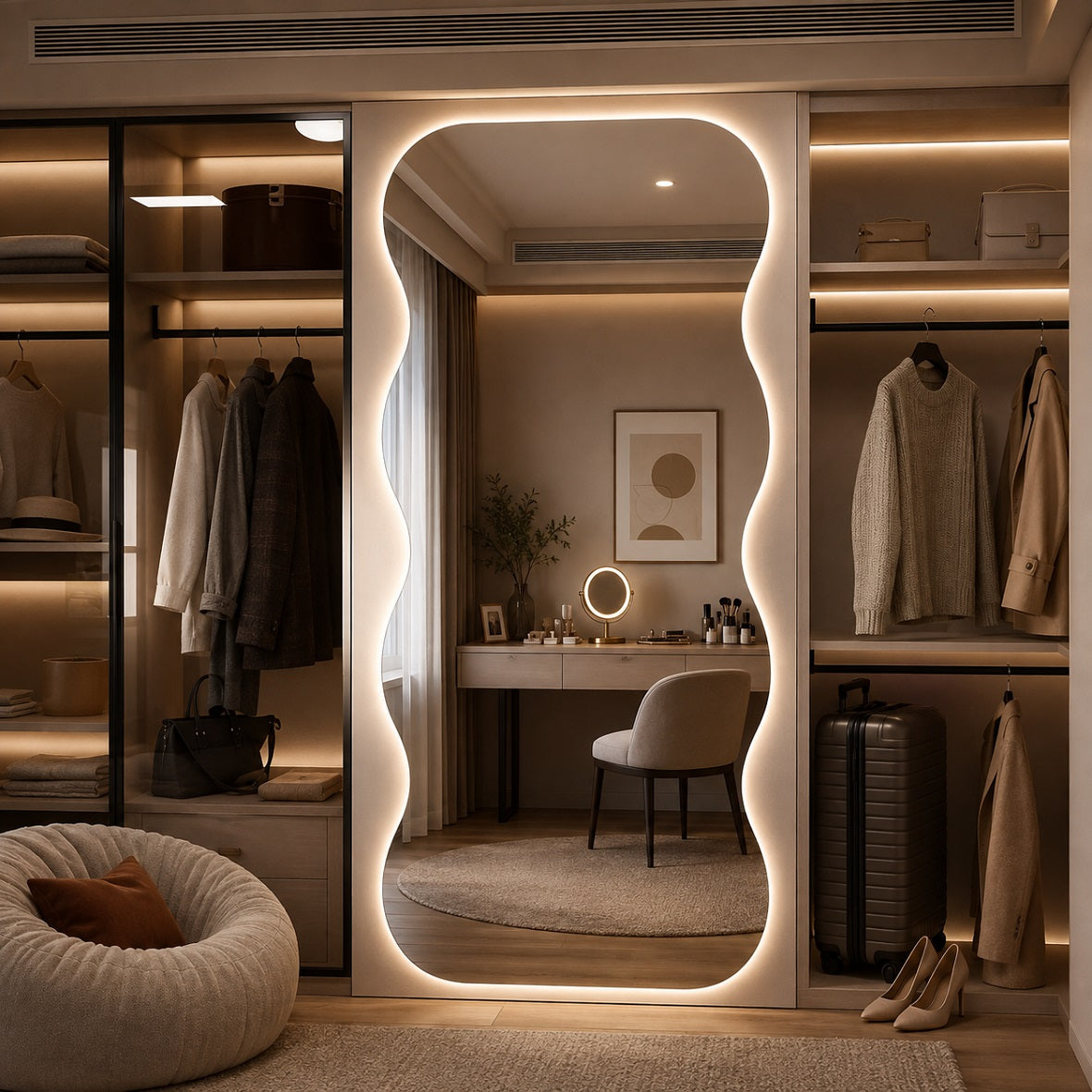
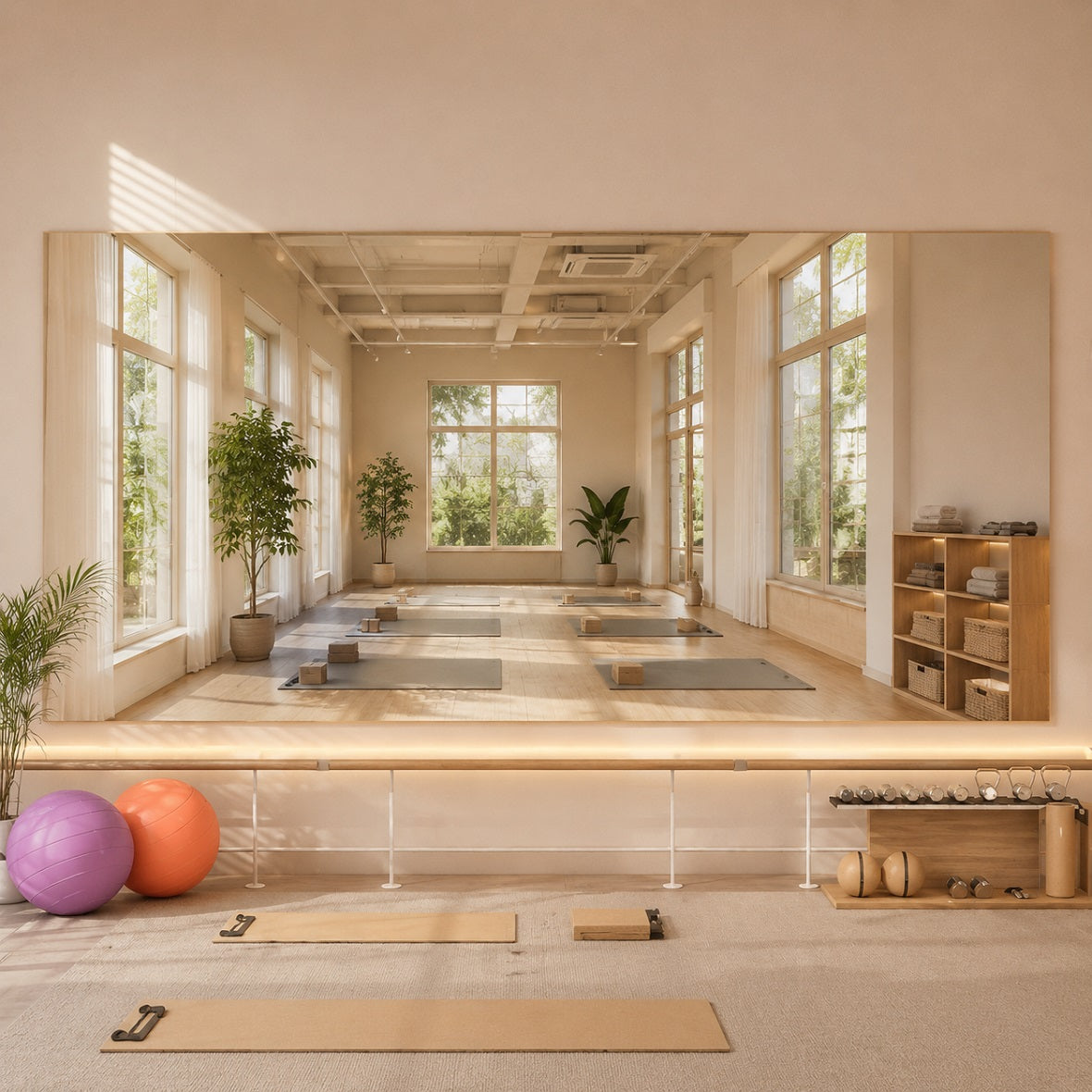
A bedroom isn’t the only place for a tall mirror. In an apartment, the living room may offer more room to step back and see an outfit.
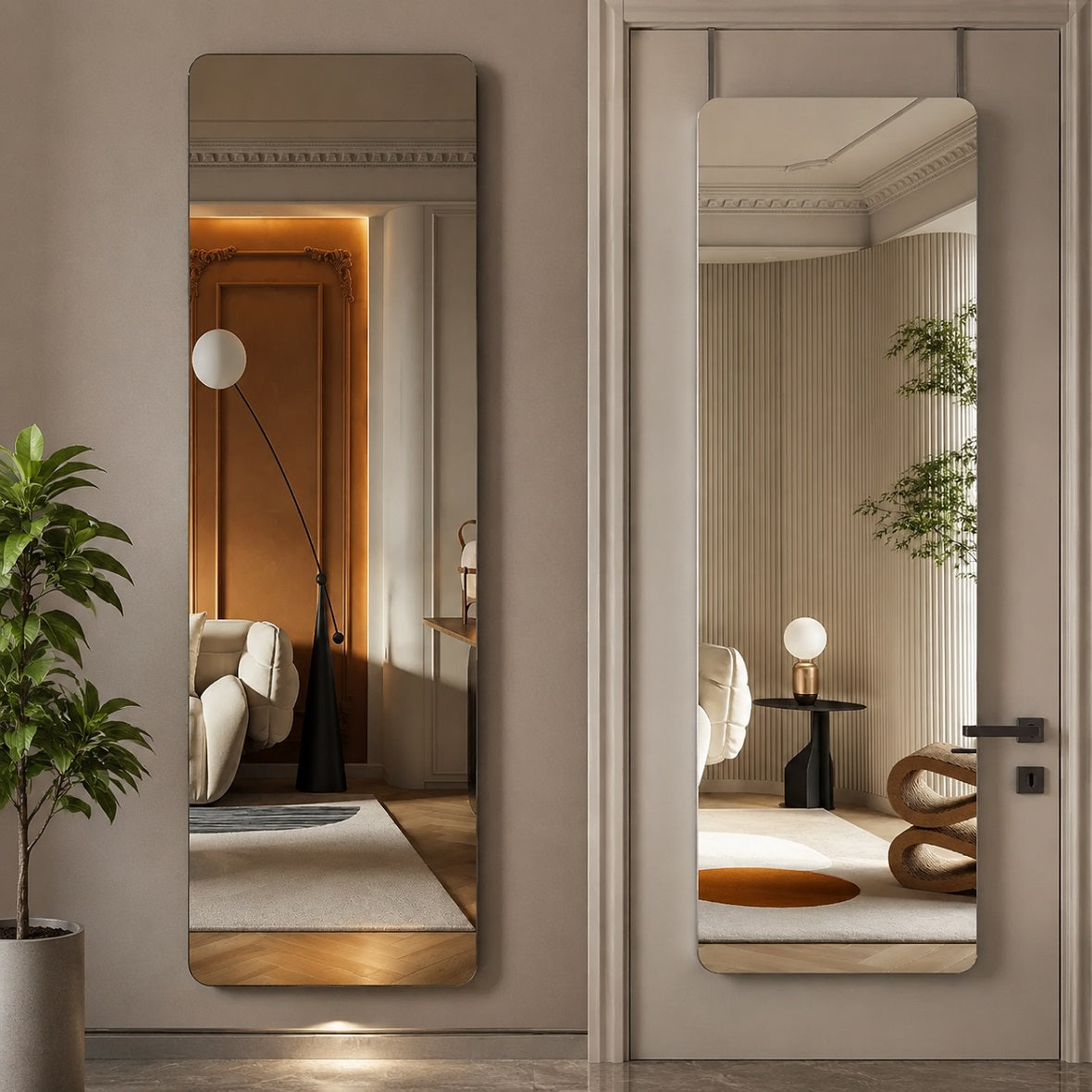
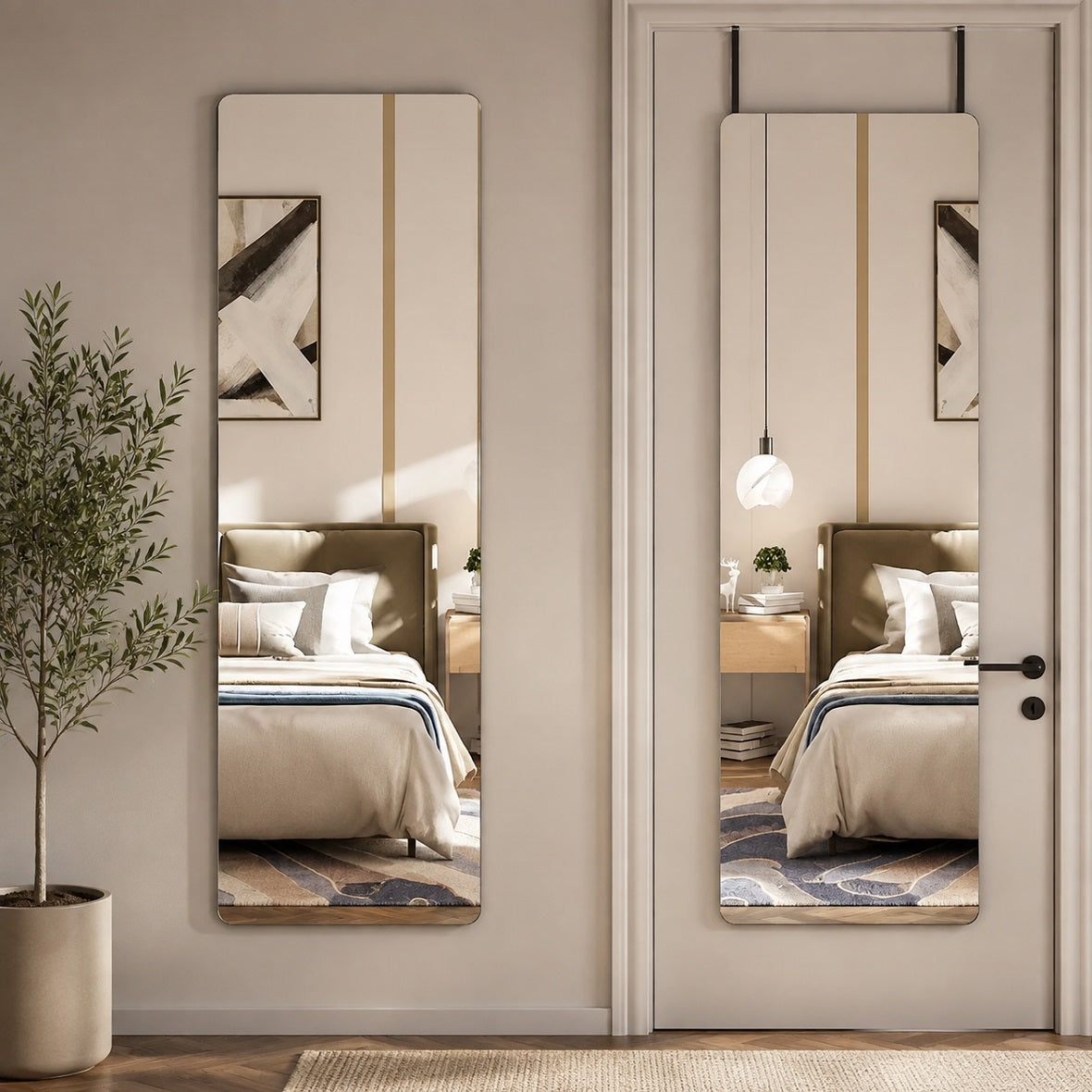
A full-length mirror in the living room is most useful along an accessible wall, with clear floor space in front. Near the entrance can be convenient. Behind an armchair is less practical when the chair has to move every time you want a full view.
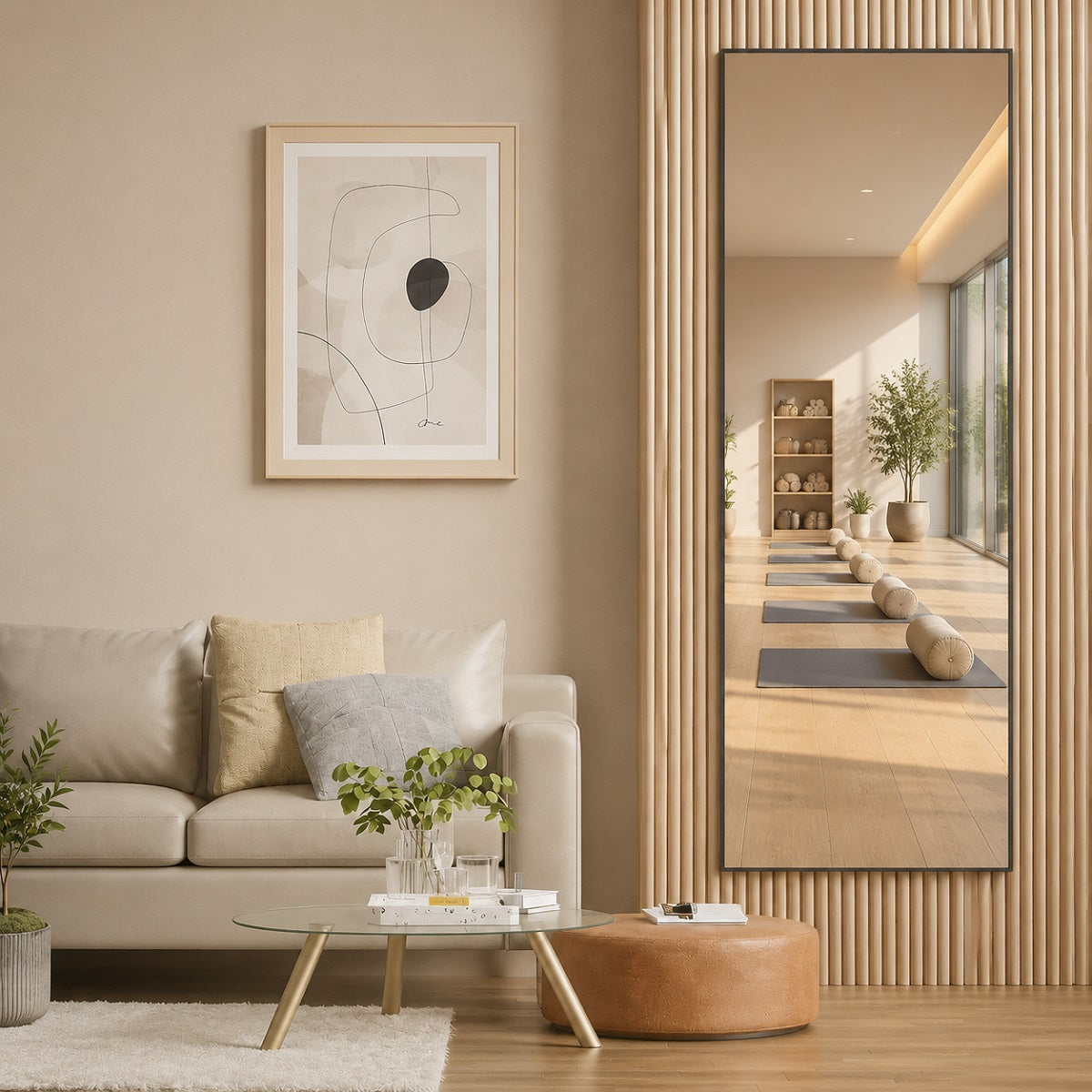
A tall mirror can also sit comfortably beside low furniture. Next to a short cabinet, it gives the arrangement a change in height. Near a reading chair, it can help furnish a corner without requiring another bulky piece.
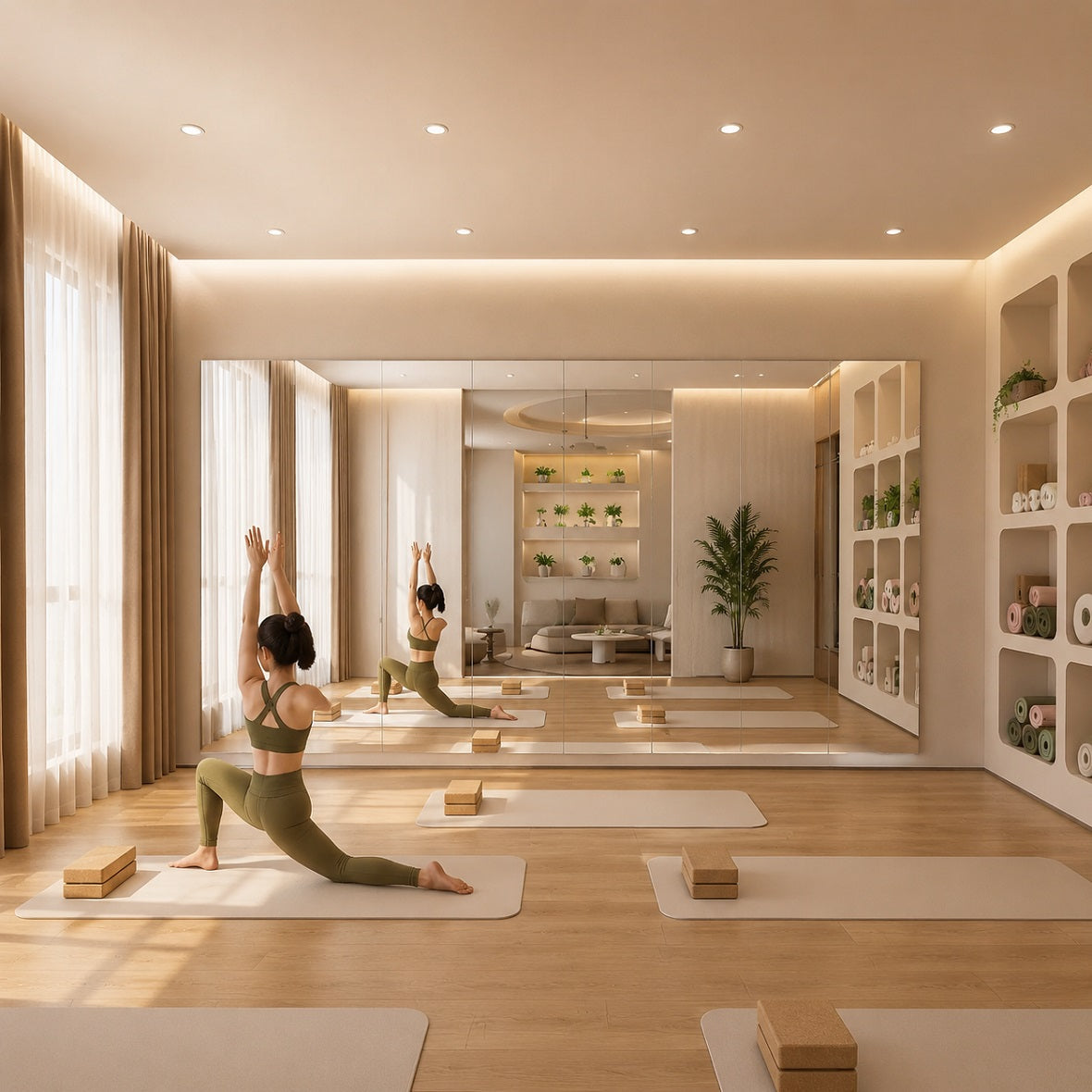
Large mirrors can create a sense of visual depth, as explained in our guide to how mirrors work. The reflection and available floor space still determine whether that approach suits your room.
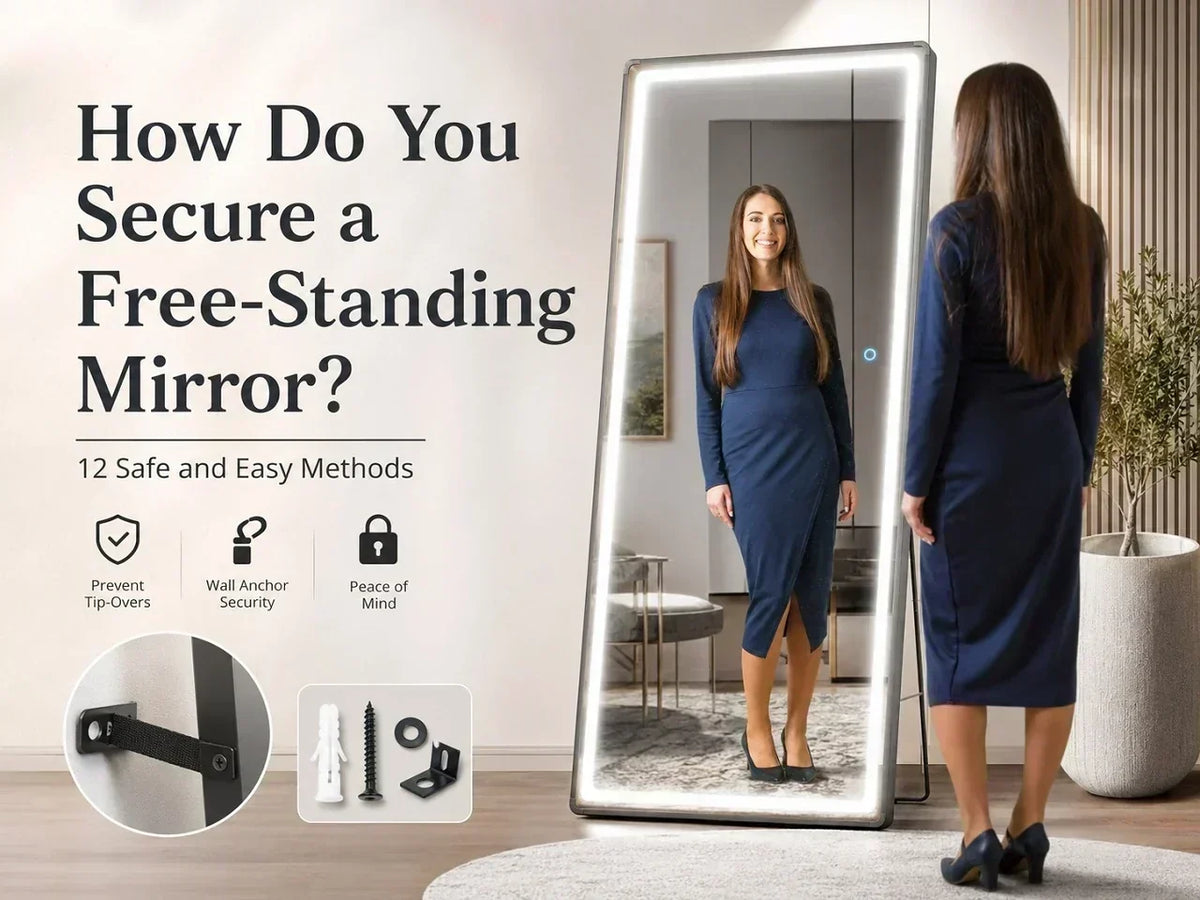
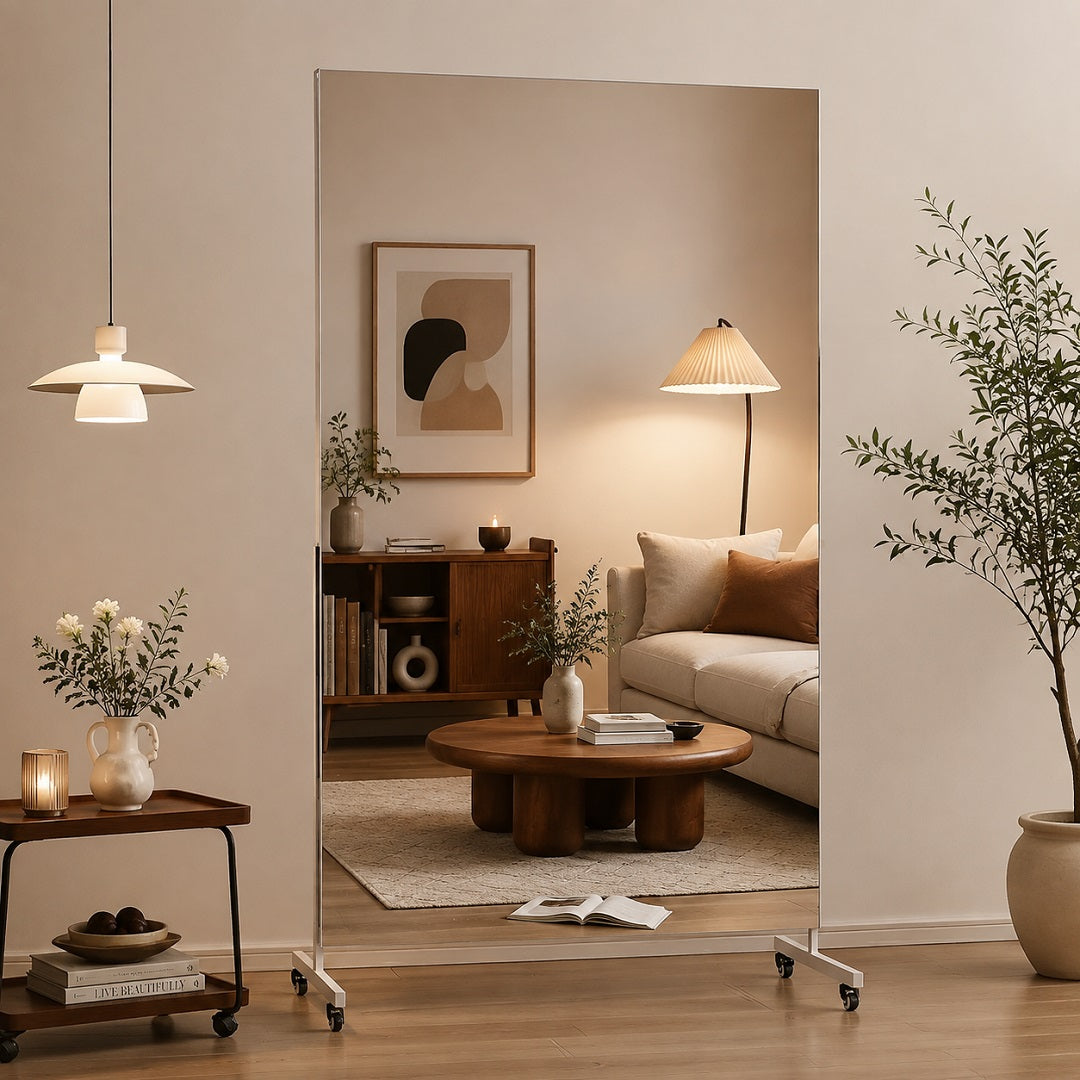
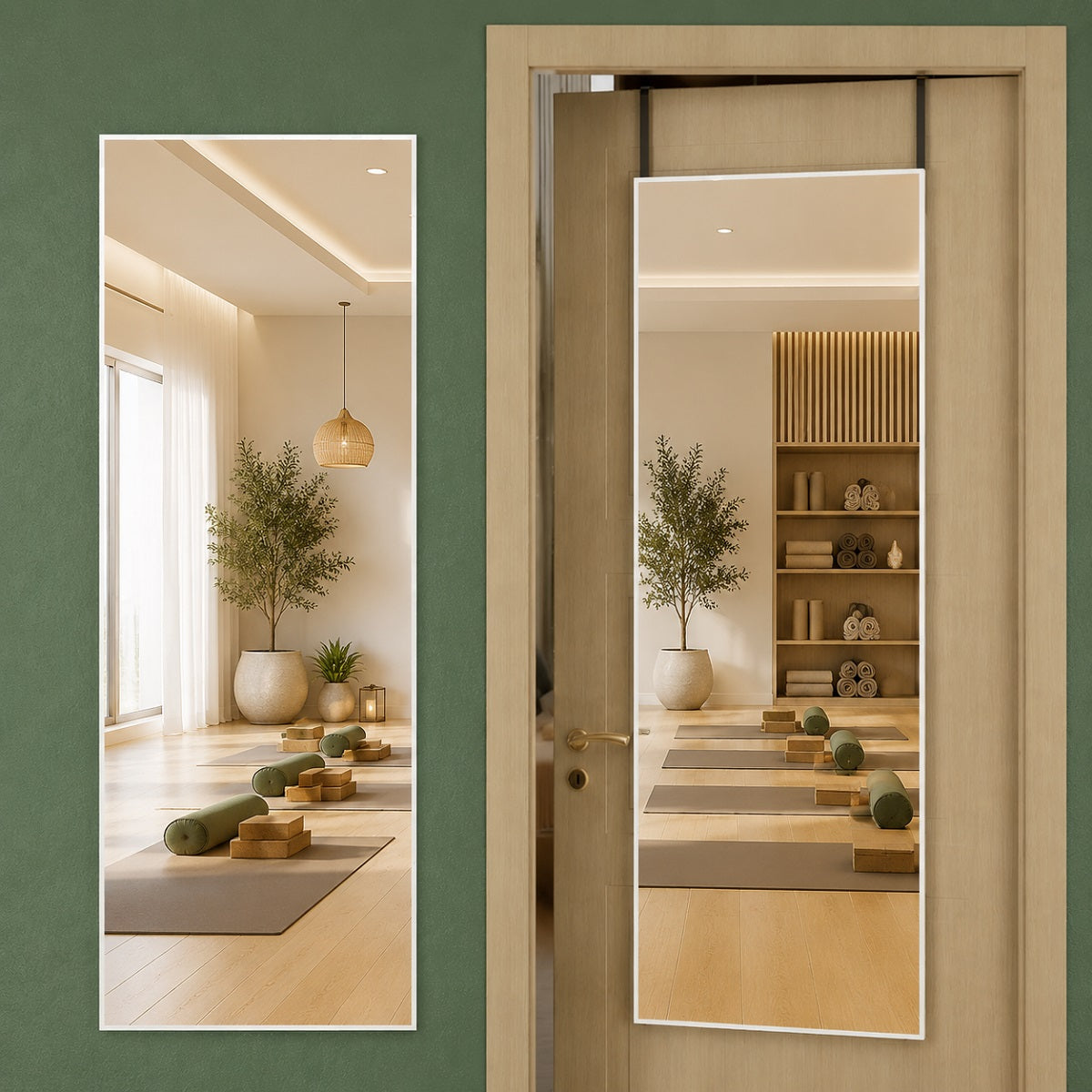
Check how the model is intended to be displayed. Hanging, standing, and leaning are different installation methods. Use the specified supports and anti-tip hardware, and keep the mirror out of door swings and walking routes.
How Big Should a Living Room Mirror Be?
The furniture underneath provides a more useful reference than the wall alone.
For a mirror above a sofa or console table, roughly two-thirds of the furniture’s width is a reasonable size to try in a mock-up. Treat that as a decorating starting point rather than a fixed rule.
Above a 60-inch console, for example, a mirror around 40 inches wide gives you an initial proportion to consider. The right choice may change once you account for a table lamp, a thick frame, or nearby shelving.
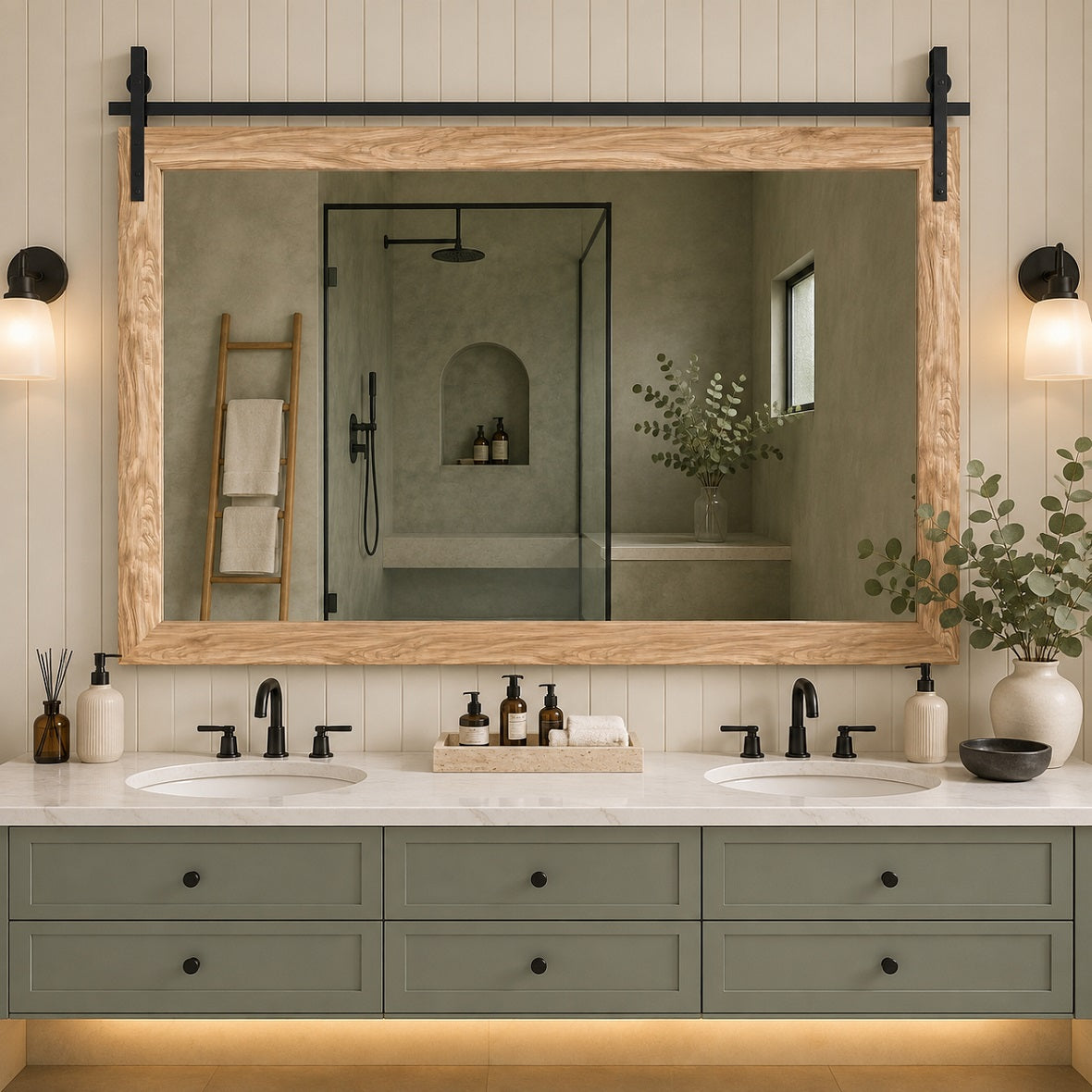
The frame has a noticeable effect. A broad carved border can make a mirror feel substantial, while a narrow metal edge leaves more attention on the glass. Compare outside dimensions, including the frame, when shopping.
Painter’s tape makes this easier to judge. Mark the outline on the wall and stand back far enough to see the surrounding furniture. A size that seemed generous on a product page may look surprisingly small over your couch.
Getting the Hanging Height Right
There isn’t a single living room mirror height that suits every location.
On a clear wall, begin around a comfortable eye level for the people who will use it. Above furniture, consider the space between the frame and the sofa, console table, or fireplace mantel as well as the view in the glass.
A small round mirror and a tall rectangular mirror won’t necessarily look right with their centers at the same height. Their shapes occupy the wall space differently.
Look at the proposed position while standing and sitting. Living rooms are mostly enjoyed from a seat, and a mirror that looks balanced from the doorway may feel too high from the couch.
A paper outline will help with scale and spacing. To judge the reflection, you’ll need a safely supported mirror and help as needed.
In a Small Living Room, Be Selective About the Reflection
A small living room doesn’t automatically need a small mirror. A generous mirror above a cabinet can give the wall enough interest without requiring several smaller decorations around it.
What appears in the glass matters more than filling the largest possible area. A window, a reading corner, or a favorite painting may be pleasant to see from another angle. Open storage packed with cables and paperwork may make the room feel busier.Choosing the reflected view carefully is also covered in our guide to mirror placement mistakes to avoid.
This is especially relevant in open-plan homes. A mirror in the living room may reveal the kitchen counter or dining table behind you. Look from your usual seat, not just from directly in front of the mirror.
There’s no need to keep the entire home picture-perfect. Choosing a different section of wall space may be enough to leave the busiest area out of view.
Floor space matters, too. A leaning mirror needs room at its base. In a narrow room, a wall-mounted design may be easier to accommodate.
A Few Positions to Think Twice About
Some walls look promising until the room is in use.
1. Opposite the television
A reflected TV screen can introduce moving light elsewhere in the room. Turn the television on and look from the main seating area before choosing that wall.
2. Facing a favorite chair
Seeing yourself while reading or talking can feel distracting. Spend a little time in the chair and decide whether the direct reflection feels comfortable.
3. Directly across from another mirror
Repeated reflections can be striking, but they also add visual activity. Check the infinite reflection effect from the doorway and couch to ensure it isn't overwhelming.
4. Where an exposed bulb appears in the glass
A lamp that feels fine beside you may create unpleasant glare when its bulb is reflected at eye level. Using a shaded lamp or adjusting the mirror’s position can help solve this.

Finding the Right Spot for Your Hasipu Mirror
When choosing a Hasipu mirror, begin with the space you have. The wall above a long sofa calls for a different proportion than a narrow area beside the entrance. A mirror for checking your outfit needs enough room to stand back; a mirror above a mantel needs a pleasing view from the couch.
Once the location and measurements are settled, choose a frame style that feels at home with your furniture. It might repeat a wood tone you already love or pick up a small metal detail elsewhere in the room.
Before making the placement permanent, see how it feels during an ordinary evening. Sit in your usual spot, turn on the lamps, and look around. That’s the room the mirror needs to belong in.
Frequently Asked Questions
1. Can you put two mirrors in a living room?
Yes. A mirror over an entry console and a full-length mirror on another wall can serve different purposes. Look at them together from the main seating area to see whether both feel useful and whether they create distracting reflections.
2. Should a mirror face the entrance?
It can, provided you like the view it creates as you walk in. A side wall may feel more comfortable when a mirror directly ahead catches every movement through the doorway.
3. Can a mirror brighten a living room without windows?
A mirror can reflect light from lamps and fixtures, but it won’t replace adequate lighting. Get the room’s lighting comfortable first, then position the mirror where the reflected light is pleasant to face.
4. Is a round or rectangular mirror better above a couch?
A rectangular mirror is often easier to relate to a long couch. A round mirror can suit a smaller sofa or add a curve to a room with angular furniture. Size and frame weight matter as much as shape.