
Table of Contents
You probably use a mirror before you are fully awake—checking your hair, getting ready at a vanity, or taking one last look before heading out. The glass stays still, yet the reflection changes with every step you take. So, how do mirrors work?
A mirror works by reflecting light back toward your eyes. Light from a window or lamp reaches your face and clothing, then travels to the mirror’s smooth reflective surface. Unlike a painted wall, which scatters light in many directions, a mirror keeps the reflected rays organized and forms a clear image.
The shape of the surface controls how that image appears:
- Flat bathroom mirror: Shows familiar proportions with a flat, accurate perspective.
- Concave makeup mirror: Enlarges close details for precise grooming.
- Convex security mirror: Provides a wider view across a broader space.
This same reflection can also brighten a dark corner and give a small room more visual depth.
What Is the Image Behind the Glass?
The person you see appears to stand behind the mirror, even though no light is actually traveling back there. Your brain follows the reflected rays in straight lines and places the apparent source behind the surface. This is called a virtual image.
With a flat mirror, the image appears the same distance behind the glass as you stand in front of it. Stand three feet away and your reflection appears about three feet behind the mirror. That makes the apparent distance between you and your reflection roughly six feet.
This bit of optics helps explain why a mirror can make a tight hallway feel deeper. The wall has not moved. Your eyes are simply receiving a convincing continuation of the sightline.
A flat mirror forms an upright virtual image that is the same size as the object. That predictable result is exactly what most household mirrors need to provide.

Does a Mirror Really Reverse Left and Right?
It feels that way, especially when printed words look backward. Strictly speaking, a mirror reverses front and back—not left and right.
Raise your right hand and the image raises the hand directly opposite it. The mirror has not swapped the sides of your body. It has flipped the direction perpendicular to the glass: the points closest to the mirror appear closest inside the reflected scene.
Text makes the effect easier to notice because we mentally rotate a page to imagine facing the same direction as the reflection. That imagined turn swaps left and right. The glass itself only reflects what faces it.
The Three Main Types of Mirrors
Surface shape changes the path of reflected light. Mirrors generally fall into three basic forms: flat, inward-curving, and outward-curving. Each creates a distinct type of image tailored to specific uses.
Plane Mirrors: Everyday Home Standard
- Surface & Image: Features a completely flat surface that provides an upright, life-size image with accurate proportions.
- Common Uses: Bathroom mirrors, wall mirrors, full-length dressing panels, gym setups, and everyday vanity mirrors.
- Key Benefit: Delivers a dependable scale that does not alter facial shape or distort physical proportions as you move closer.
- Design Flexibility: Works across round, arched, rectangular, or irregular frames, provided the reflective surface itself remains optically flat.
Concave Mirrors: Close-Up Magnification
- Surface & Image: Curves inward like the bowl of a spoon, gathering reflected rays toward a focal point.
- Close Distance: Positioned close to the surface, the reflection appears upright and enlarged—ideal for detail work like shaving, makeup application, and brow shaping.
- Far Distance: Moving past the focal point flips the image upside down as the reflected rays cross.
- Trade-off: Higher magnification narrows the usable field of view; a high-power mirror excels at targeted spots rather than full hairstyles or complete outfits.
Convex Mirrors: Wider Field of View
- Surface & Image: Bulges outward, spreading reflected rays to reveal a broader view of the surrounding area with upright, scaled-down images.
- Common Uses: Driveways, garages, blind corners, retail security, and accent gallery walls.
- Trade-off: Maximizes visibility across a room or outdoor path, but does not preserve normal scale, making it unsuitable for grooming or dressing.
| Mirror surface | What the reflection looks like | Common home use |
|---|---|---|
| Flat or plane | Upright, life-size, normal proportions | Bathroom, bedroom, entryway, home gym |
| Concave | Enlarged up close; may invert farther away | Makeup, shaving, close detail work |
| Convex | Upright, smaller, wider field of view | Garage, blind corner, decorative accent |
Real Image vs. Virtual Image, Without the Textbook Fog
The phrase real image vs. virtual image sounds more complicated than it is:
A real image forms where light rays actually meet. It can be projected onto a screen. Concave mirrors create a real (and inverted) image when an object sits beyond the focal point.
A virtual image appears to originate from a point where light rays do not physically meet, meaning it cannot be projected onto a sheet of paper behind the glass. The reflection in a standard flat wall mirror is always virtual.
Practical Takeaway for Home Decor
You do not need to calculate focal lengths or image distances to style a home. The useful principle is that flat mirrors create a believable continuation of a room, leading your eyes to perceive that virtual space as added visual depth.
Mirrors and Lenses Are Related, but They Do Different Jobs
Mirrors and lenses both control light, but the light takes a different route through each one.
A mirror sends light back through reflection. A lens allows light to pass through and changes its direction through refraction. Eyeglasses, cameras, and handheld magnifiers rely on lenses. Dressing mirrors and wall mirrors rely on a reflective coating.
The shapes have a useful parallel. A concave mirror and a convex lens can both bring rays together. A convex mirror and a concave lens spread rays apart. Their ray diagrams may look related, though light passes through a lens and bounces from a mirror.
Why Some Mirrors Make You Look Wider, Taller, or Wavy
A standard flat mirror should not noticeably reshape your reflection. When straight doorframes or tile lines look bowed, the problem is usually the surface, backing, or installation—not your body.
Large, thin mirrors can flex when the wall is uneven or mounting pressure is distributed poorly. Uneven adhesive can pull parts of a frameless panel closer to the wall than others. Low-quality glass or a distorted reflective layer may also create waves.
The effect becomes easier to spot from several feet away because you can see a larger area of the surface at once.
Before buying a full-length mirror, look for a clear reflection across the panel, sturdy backing or framing, and an installation method suited to the mirror’s weight. After hanging it, check the reflection of a straight line from several positions. A clean line should stay clean.

How Mirrors Make a Room Look Bigger
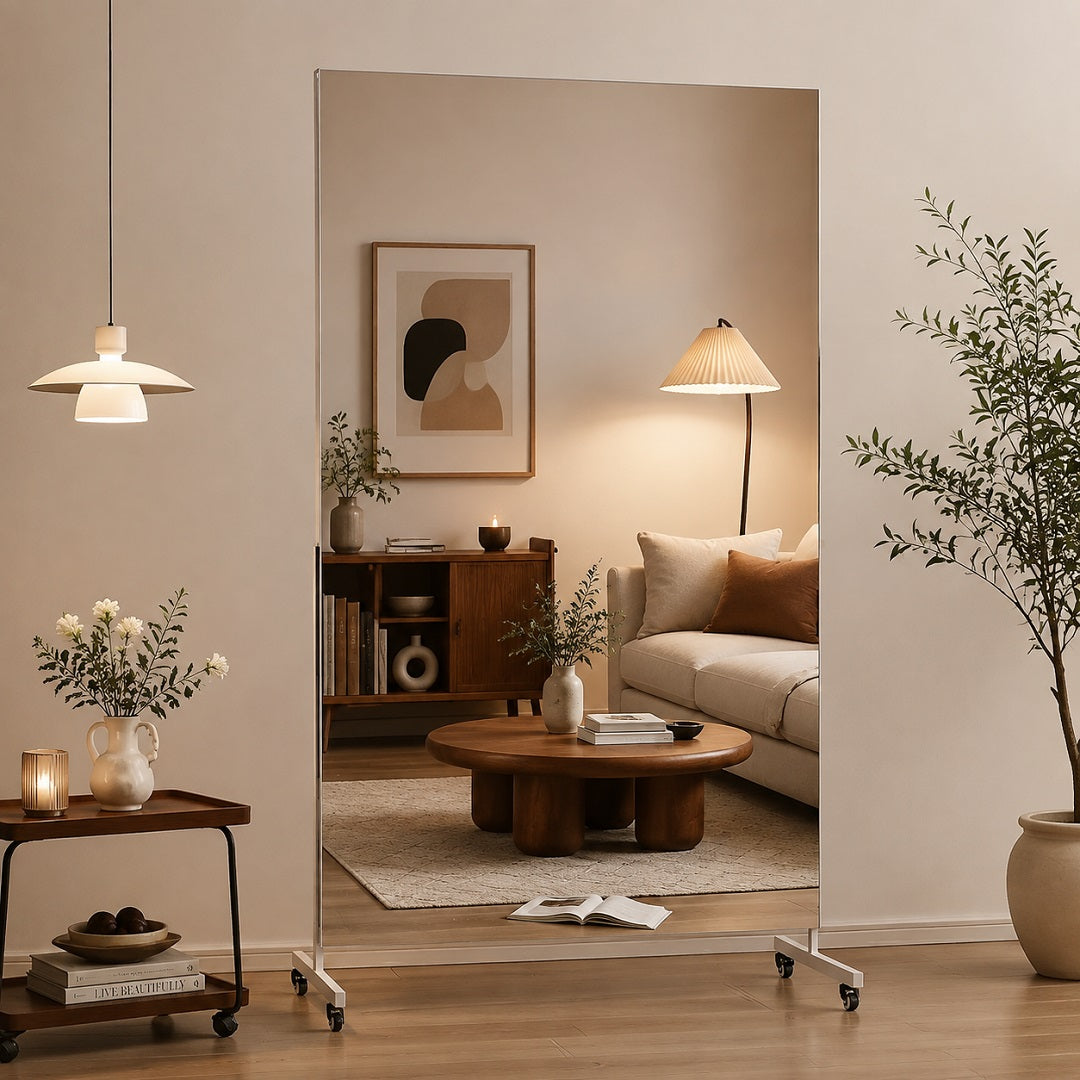
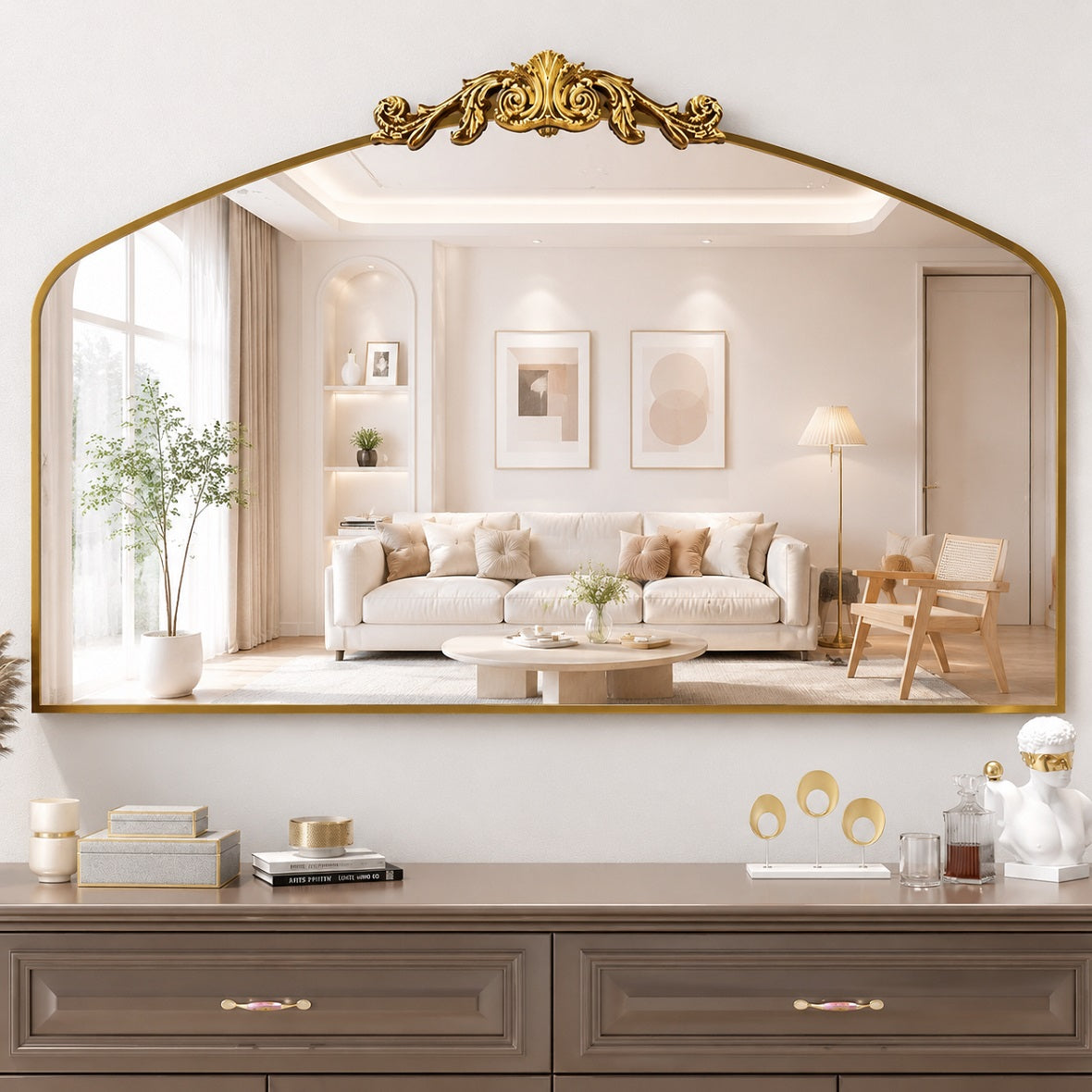
A mirror cannot add square footage, but it can add perceived distance and extend a sightline. It also returns light to the room, which can make the boundaries feel less heavy.
This works best when the reflected scene gives the eye somewhere to travel. A large mirror facing an open doorway, calm seating area, or outdoor view can feel like another opening. A mirror aimed at a crowded shelf simply repeats the crowd.
People searching for how to make a room look bigger with mirrors often hear that the mirror should be placed opposite a window. That can work, but direct alignment is not required. A mirror beside or at an angle to a window may spread daylight more comfortably and avoid harsh glare.
A few practical checks help:
- Stand where people usually enter or sit and look at what the mirror will reflect.
- Favor one useful, generous reflection over several small fragments in a tight room.
- Keep the glass near a lamp or window, but away from angles that throw glare into your eyes or onto a television.
- Reflect something pleasant, such as artwork, greenery, a tidy console, or open space.
Mirror Placement by Room
Good mirror placement starts with the job the mirror needs to do. The prettiest position is not always the most useful one.
Entryway
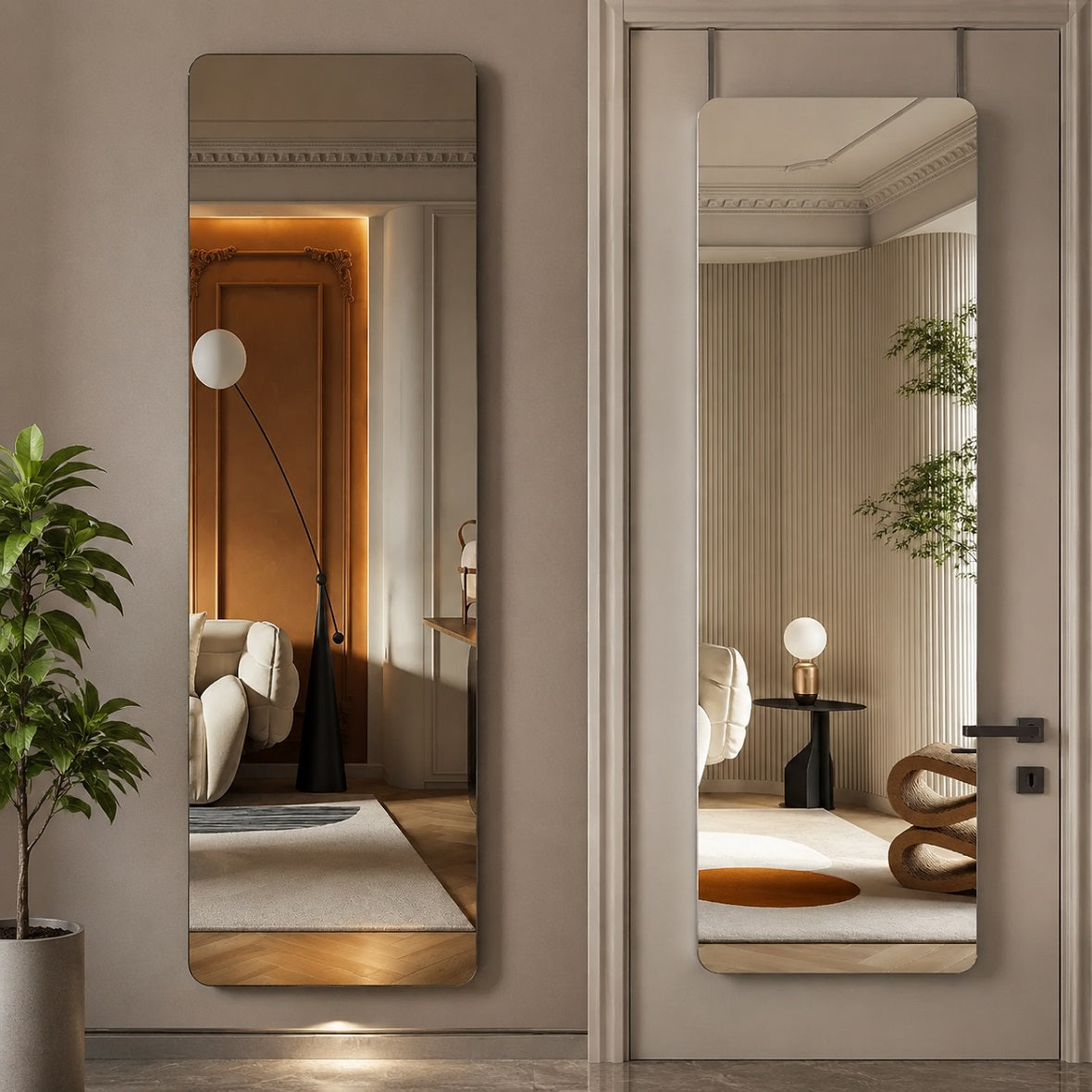
Place the center near average eye level and leave enough distance for a quick upper-body or head-to-toe check. A mirror above a console can also return light into a narrow entrance.
Check the reflected view from the front door. Shoes, coats, packages, and utility clutter can become twice as noticeable when they appear in the mirror.
Living Room
Use a large wall mirror to support the furniture below it rather than letting it float like a small island on a wide wall. Above a console or fireplace, the mirror should feel visually connected to the piece beneath it.
Aim it toward a window, artwork, greenery, or a composed section of the room. Avoid reflecting a blank ceiling, television screen, or cluttered storage area.
Bedroom and Dressing Area
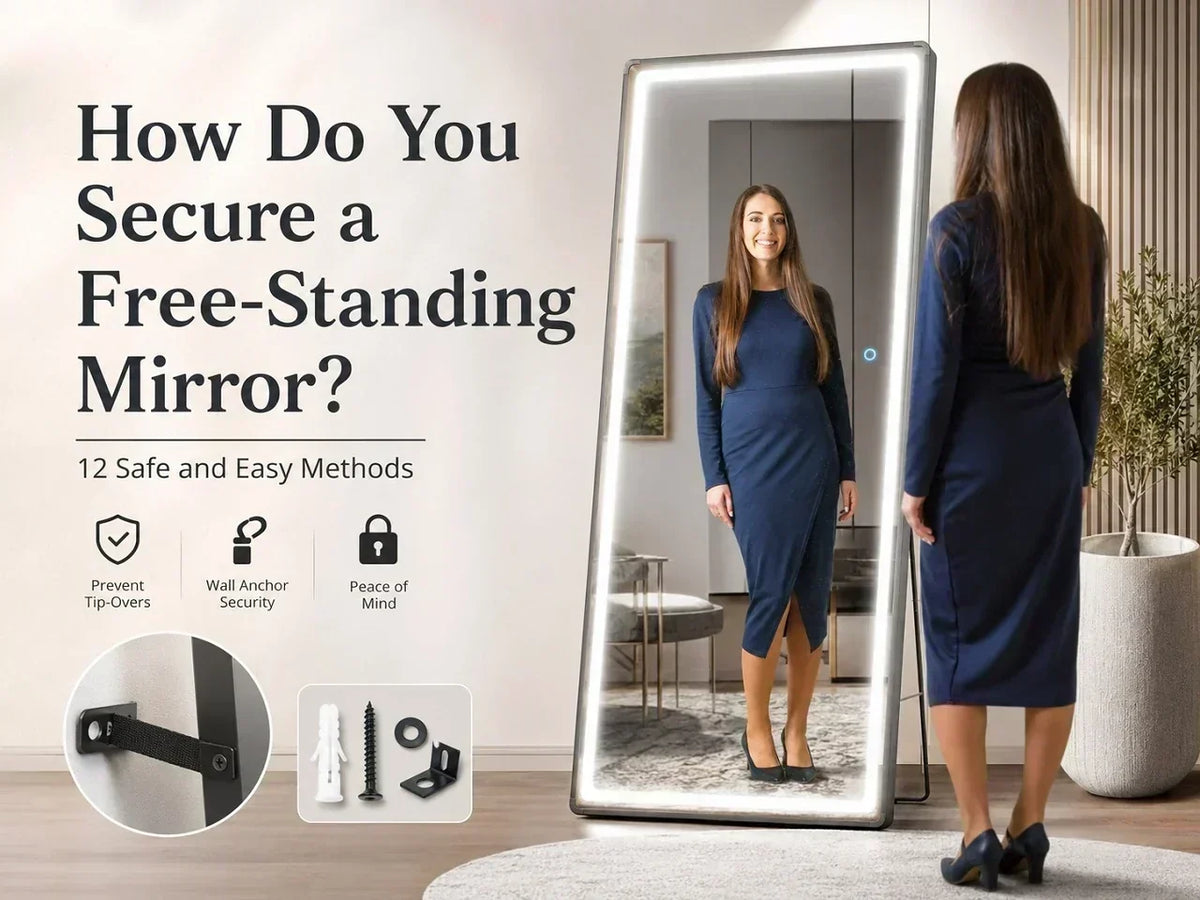
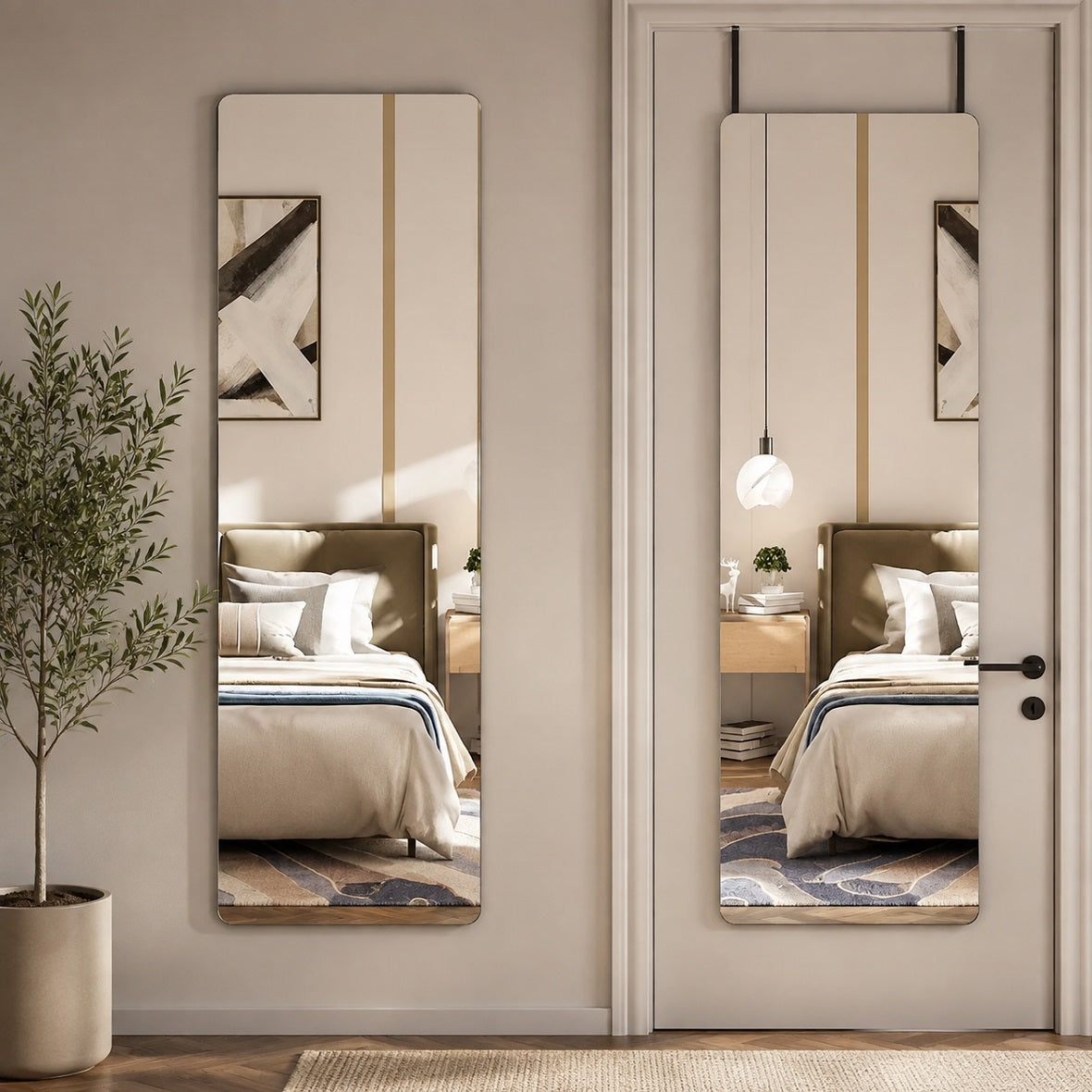
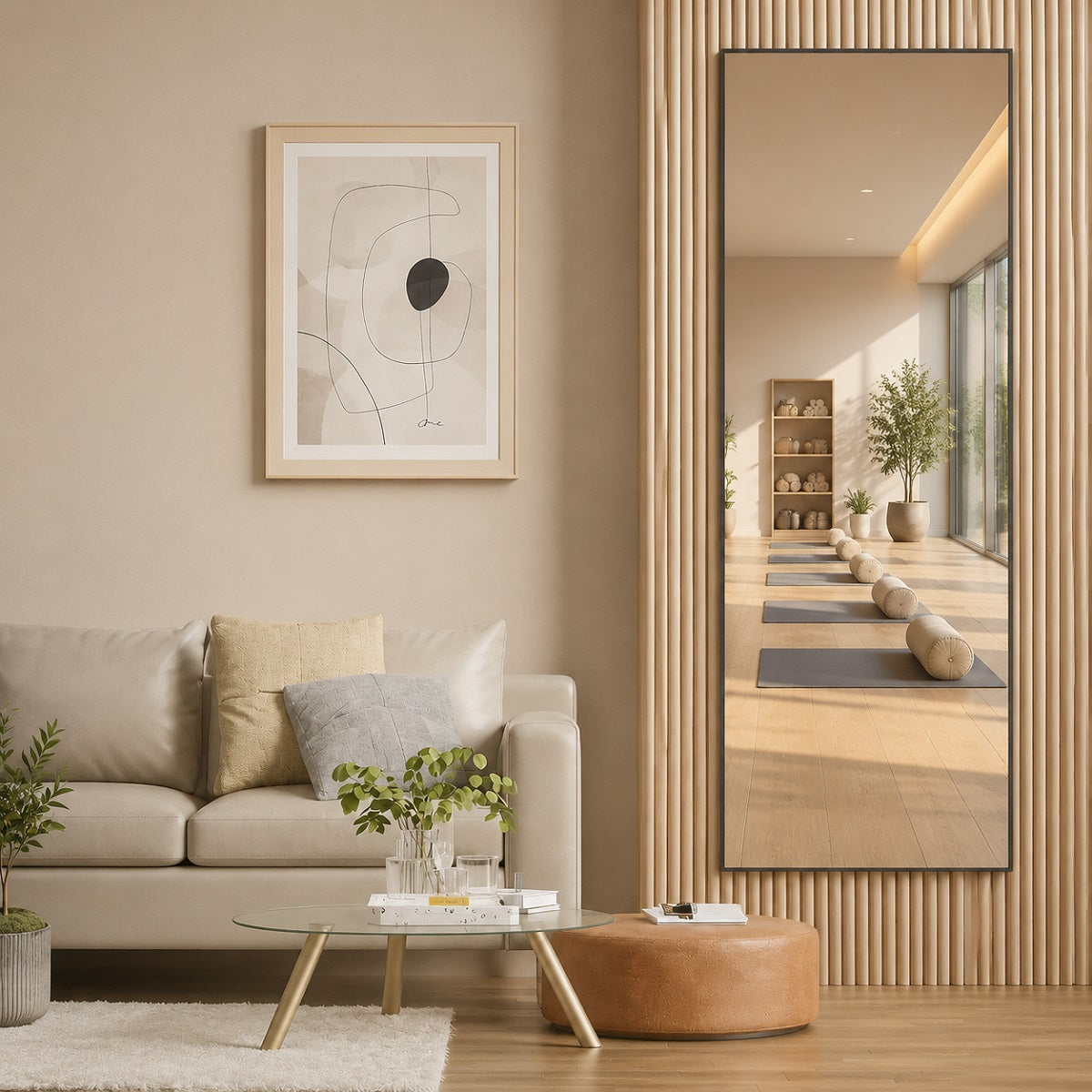
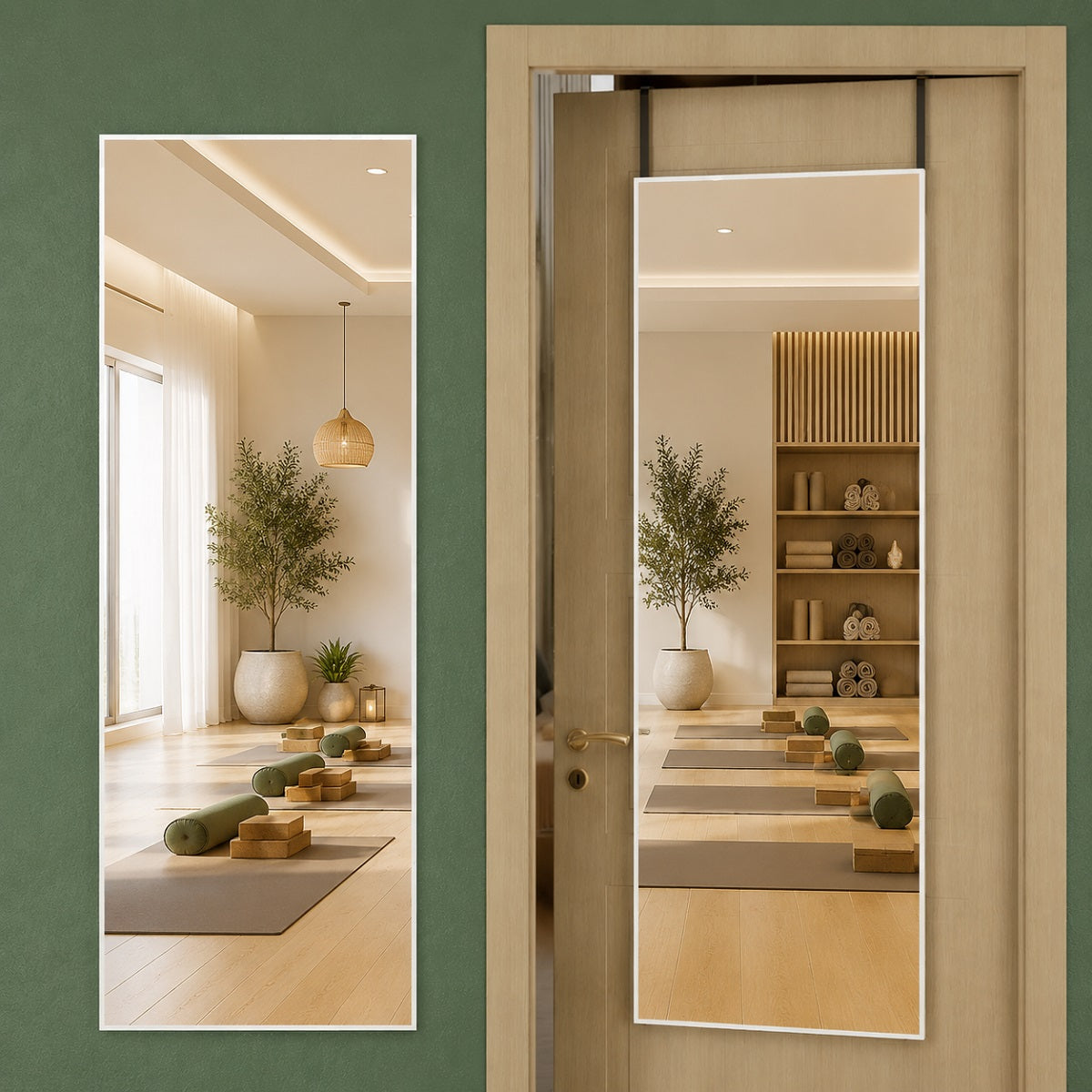
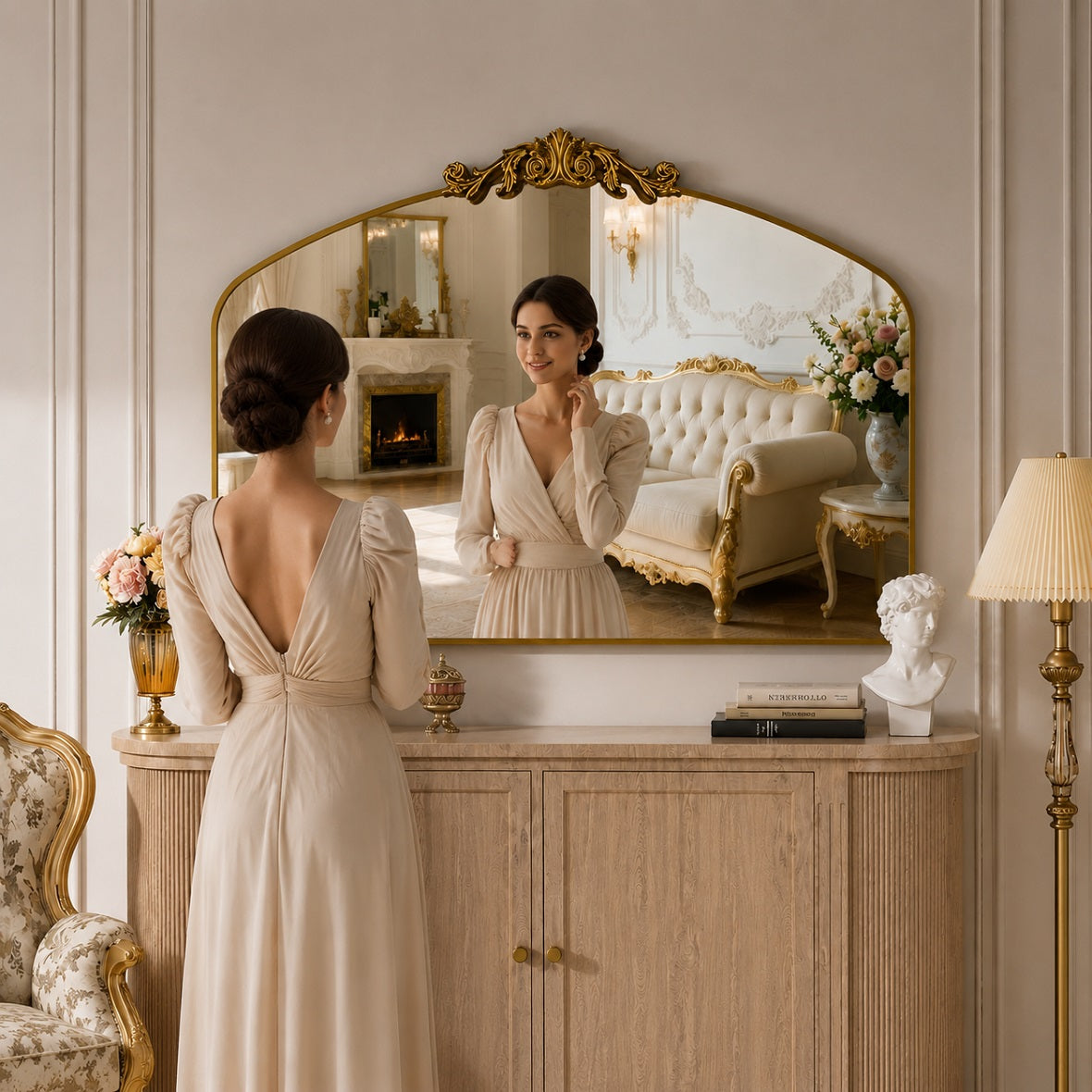
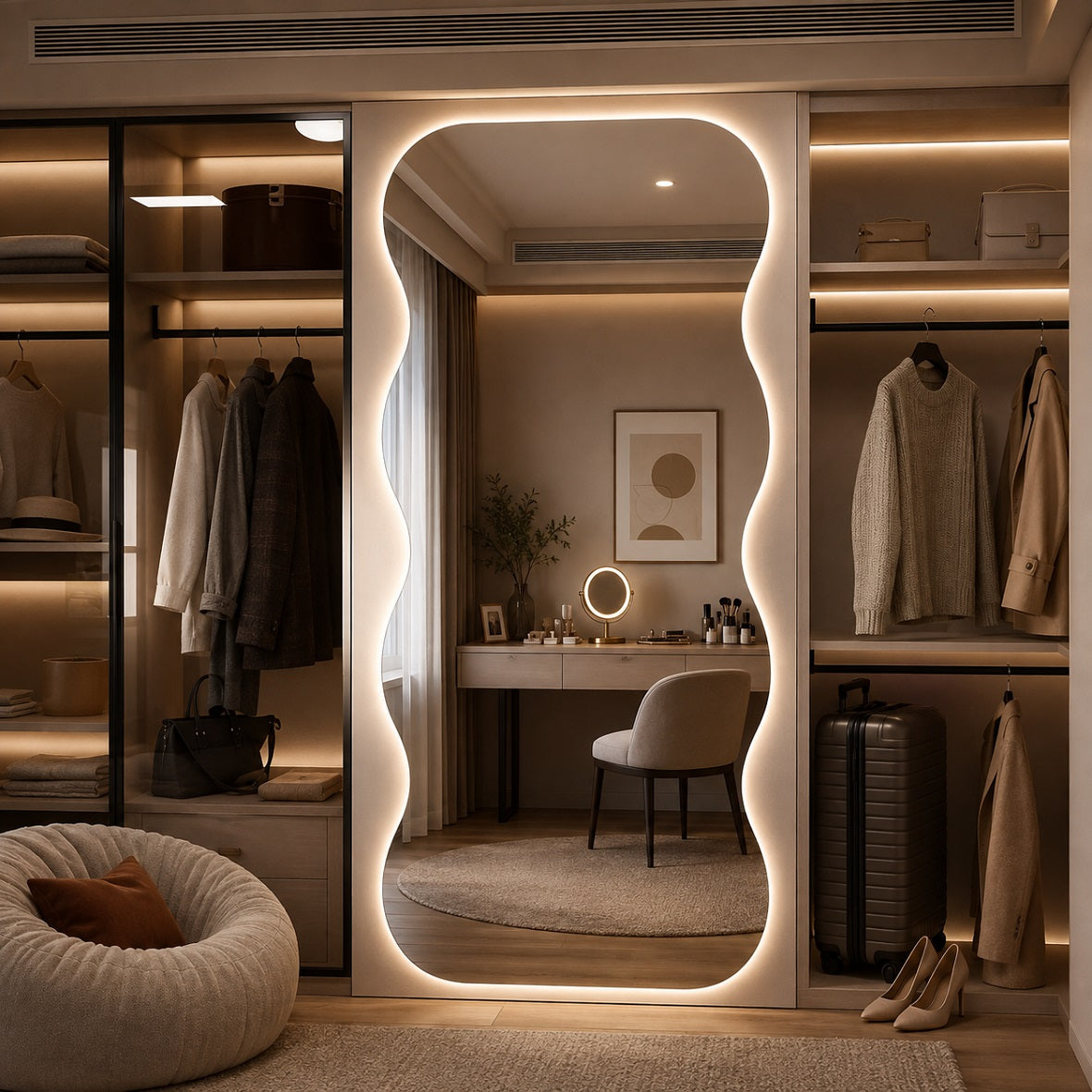
A full-length mirror needs both height and viewing distance. A wall-mounted, leaning, floor-standing, or over-the-door design can work depending on the available space.
Place it where you can step back without blocking a walkway. Avoid a position that catches the bed in a distracting reflection if that makes the room feel less restful.
Bathroom
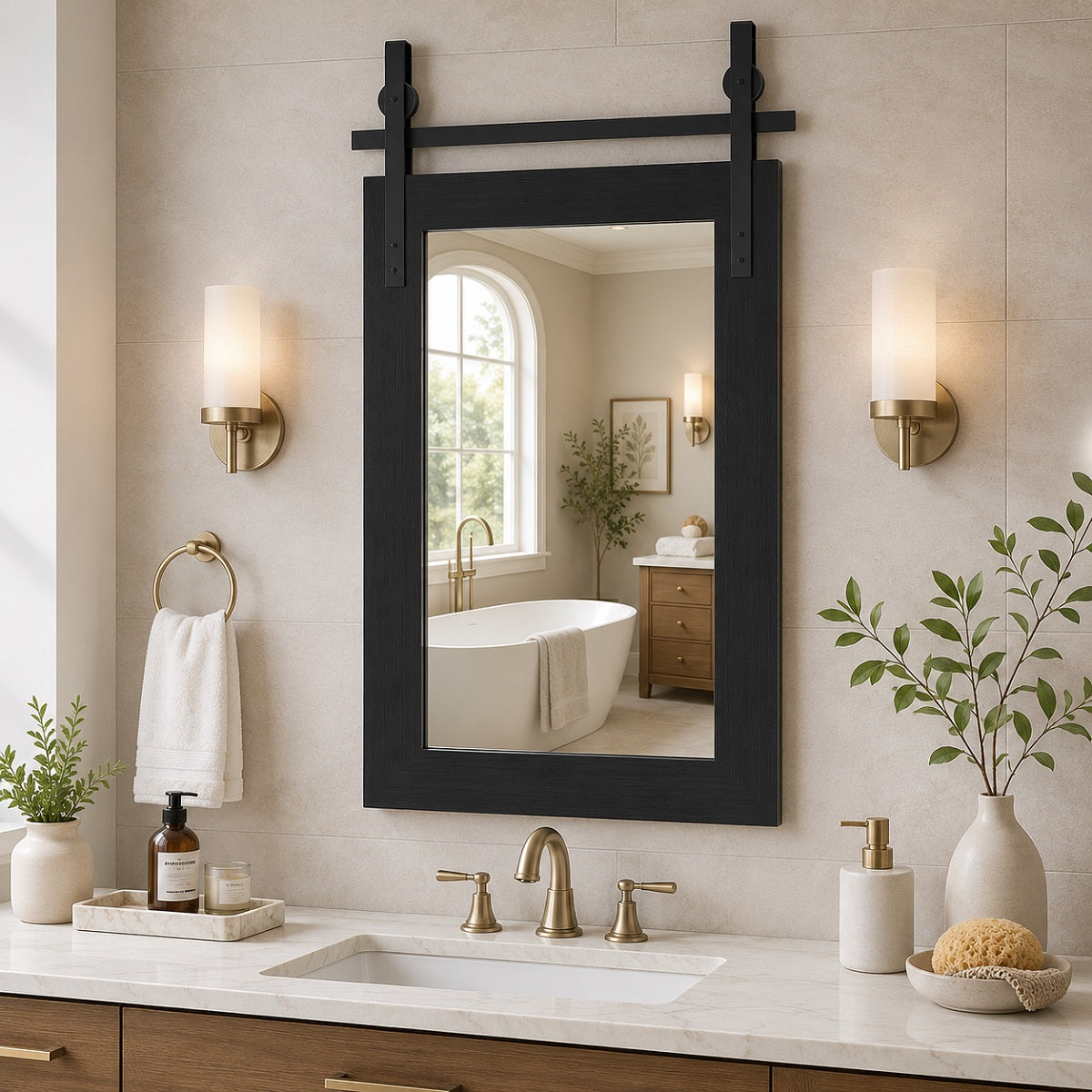
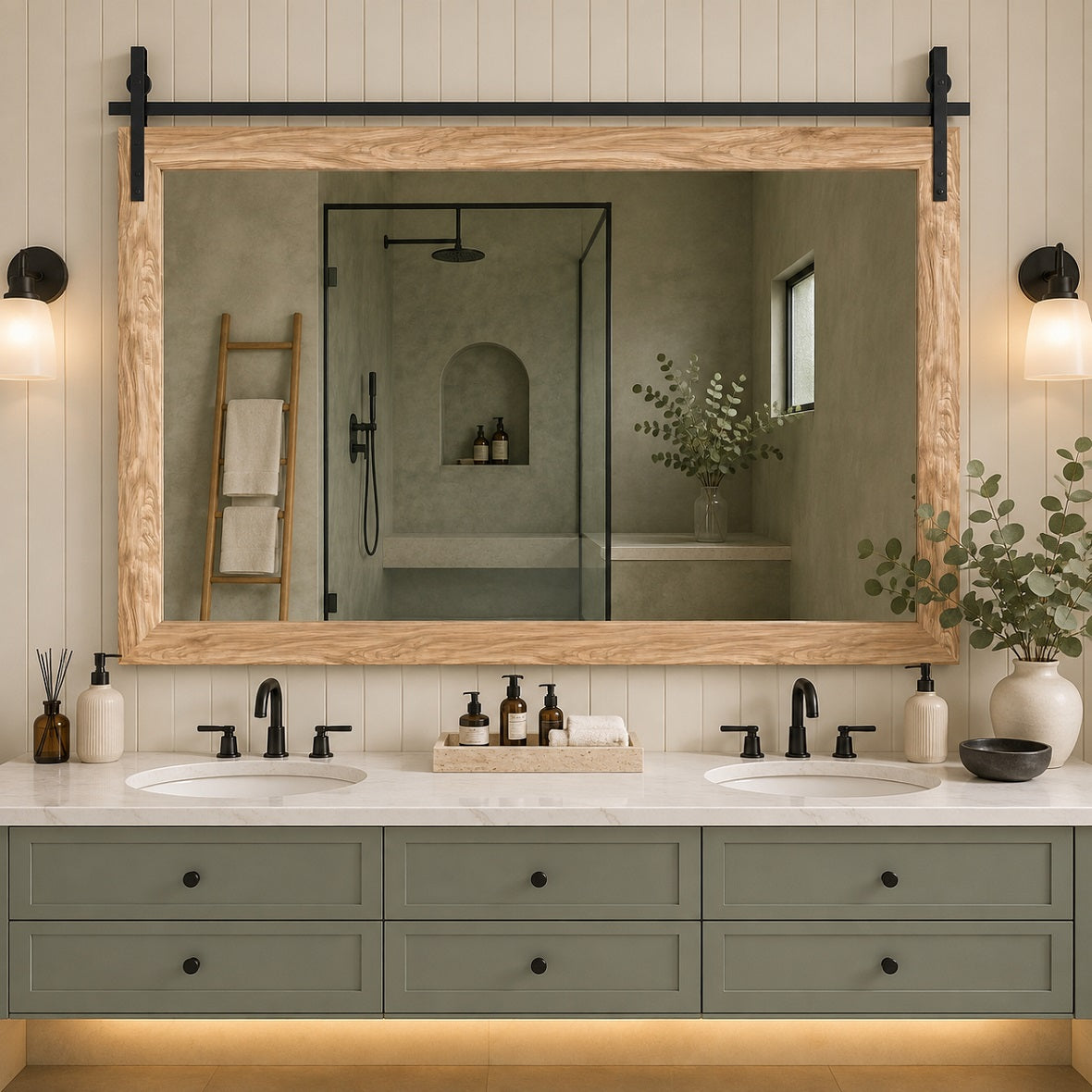
Center the mirror on the sink or vanity rather than the entire wall. Your face should sit comfortably within the reflective area during normal use.
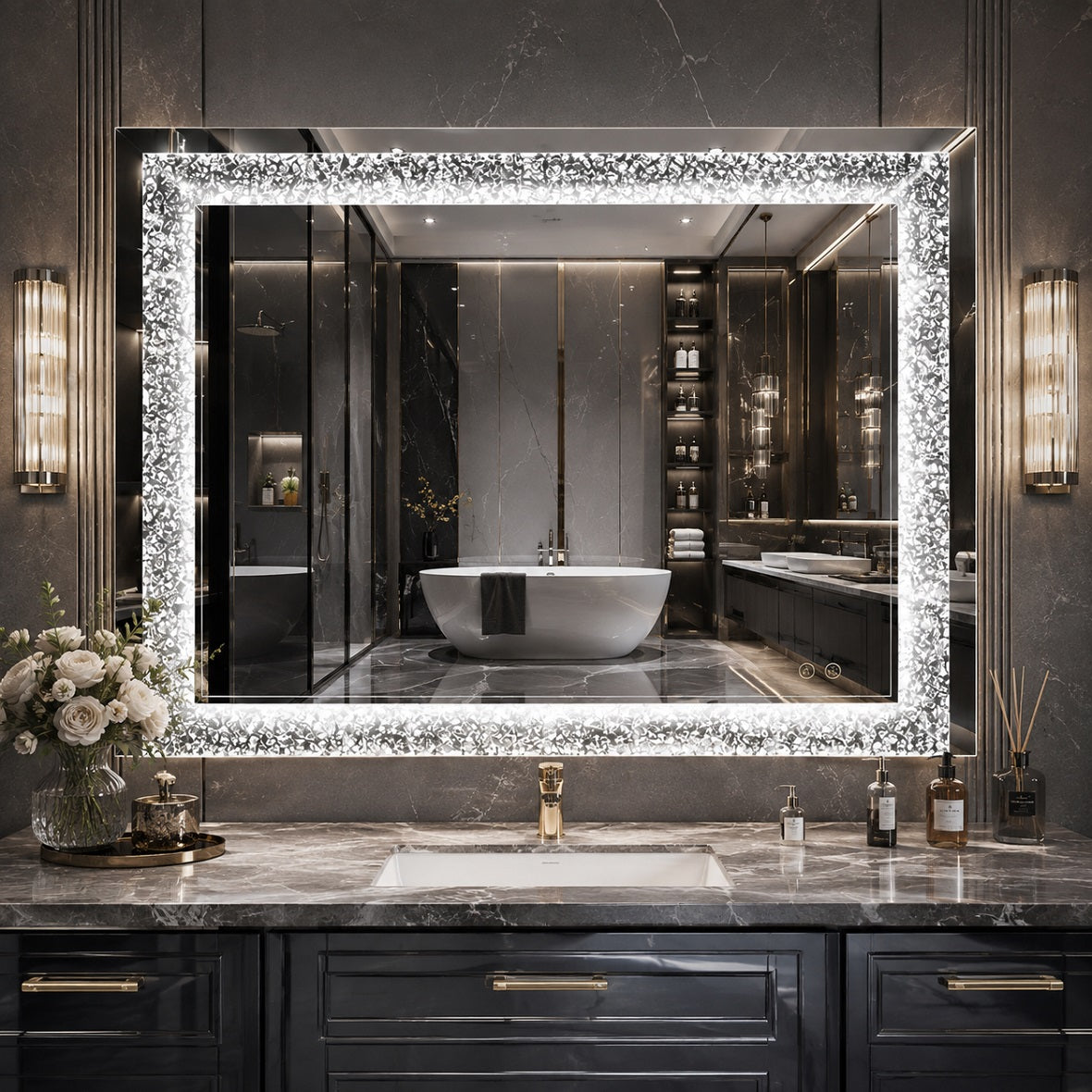
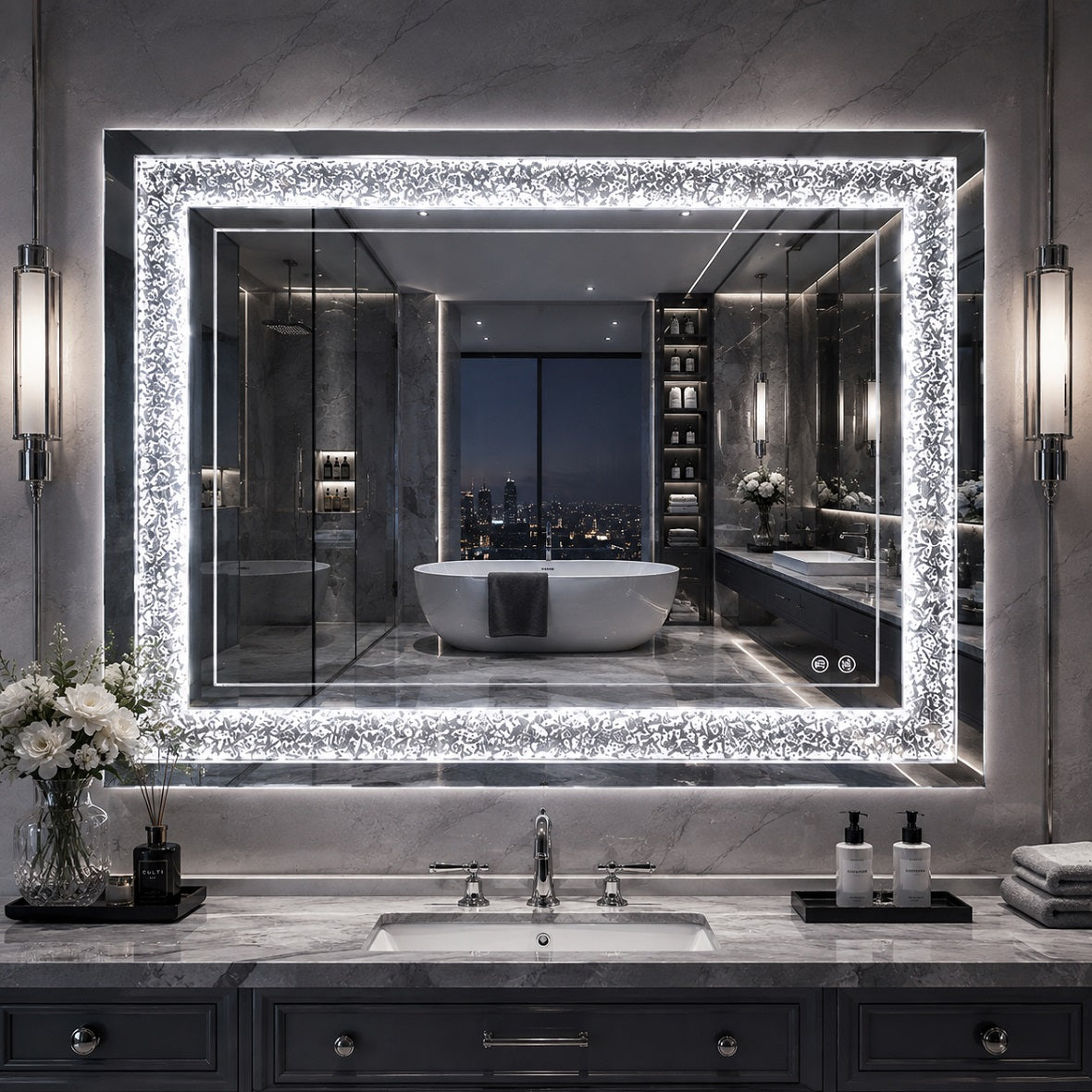
Even front lighting reduces facial shadows. Lighting placed on both sides of the mirror can also provide a balanced view. In damp rooms, choose mirror materials and electrical features designed for bathroom conditions.
Home Gym or Yoga Space
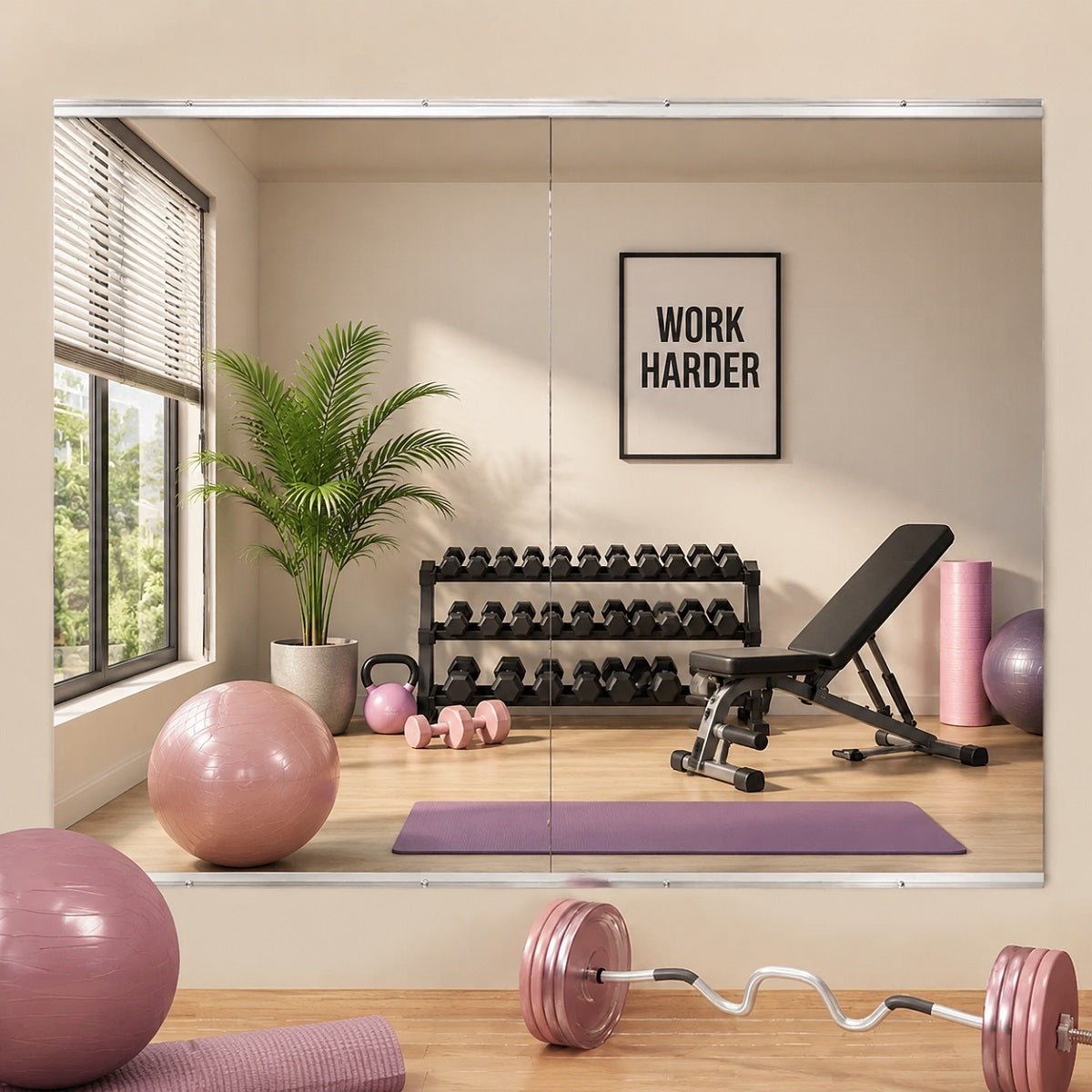
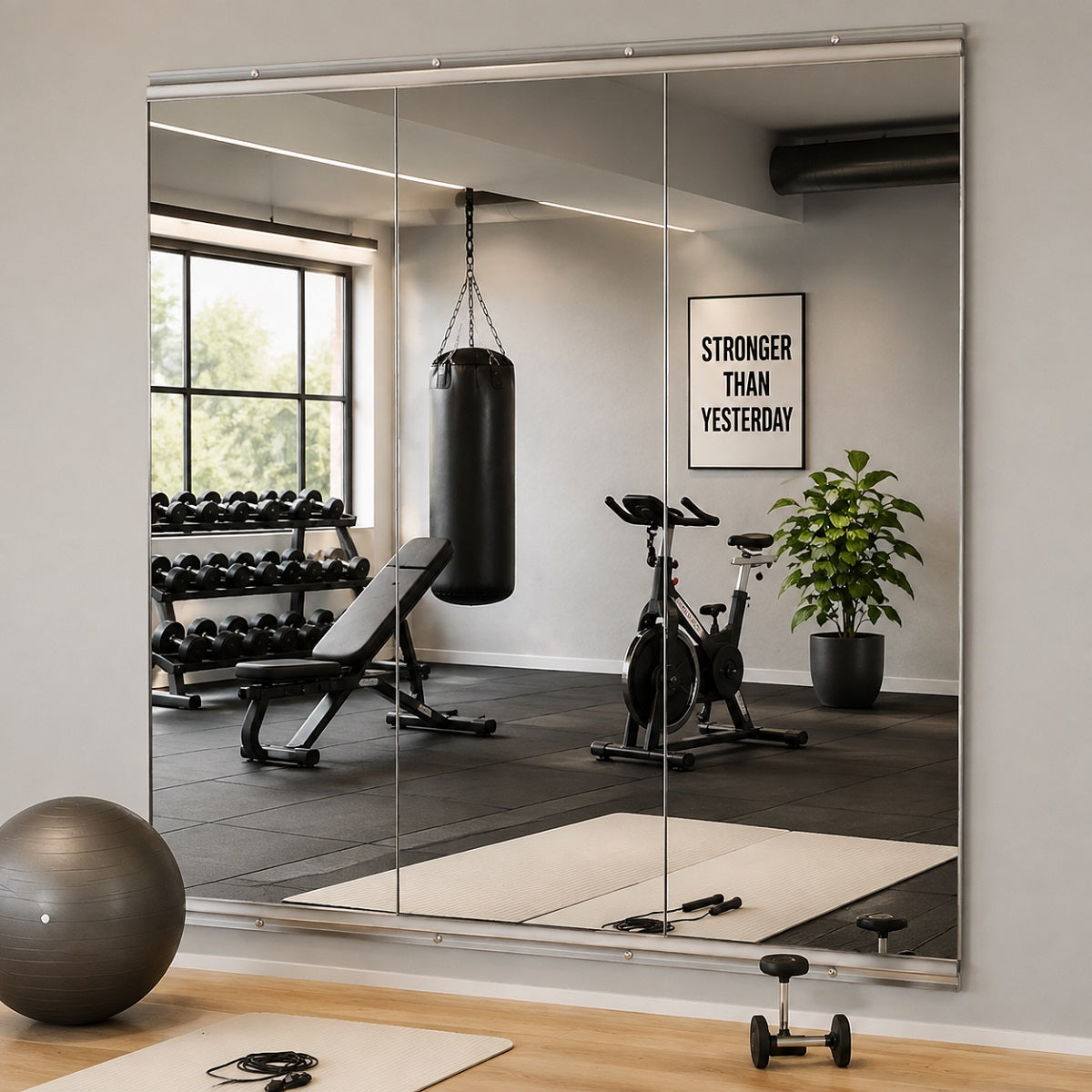
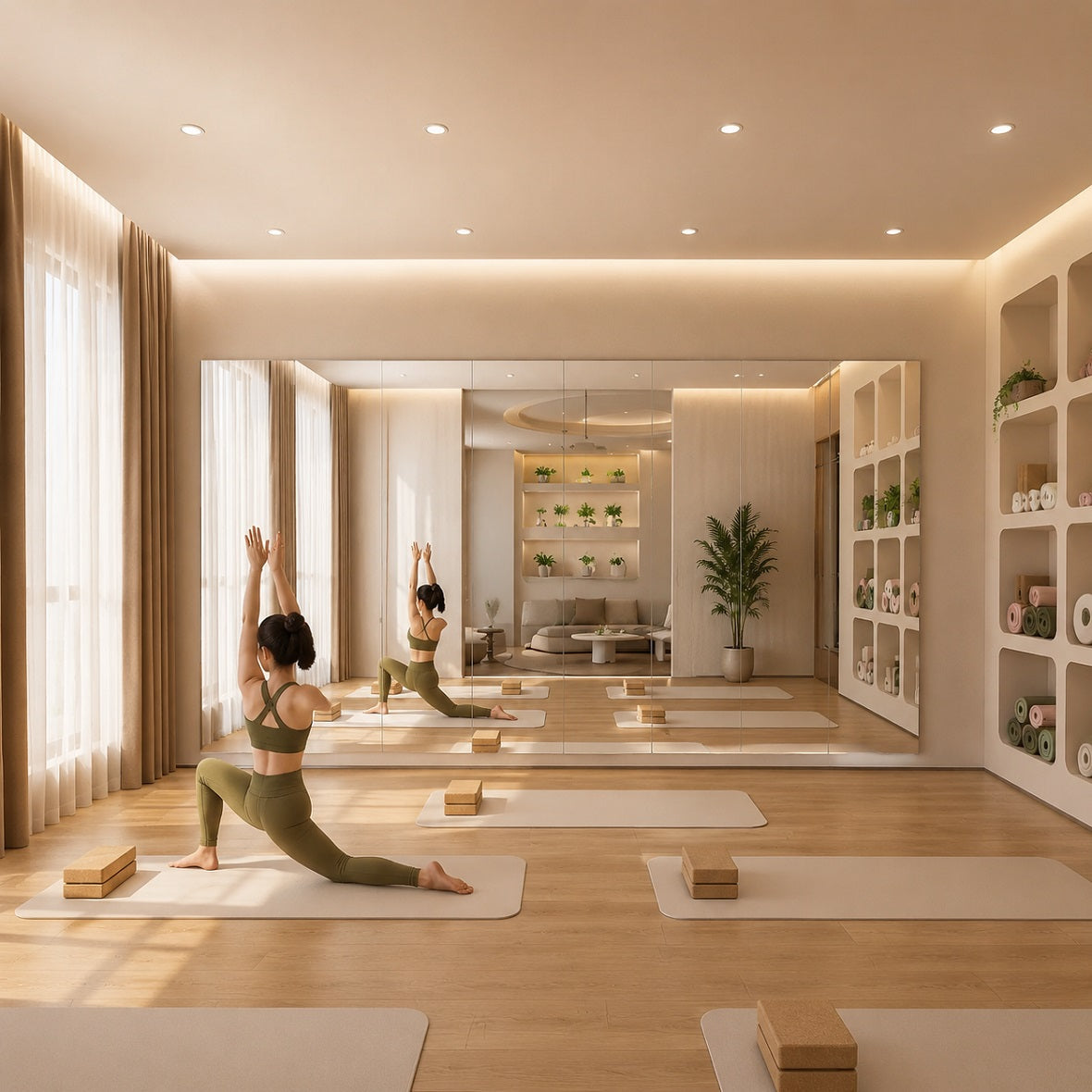
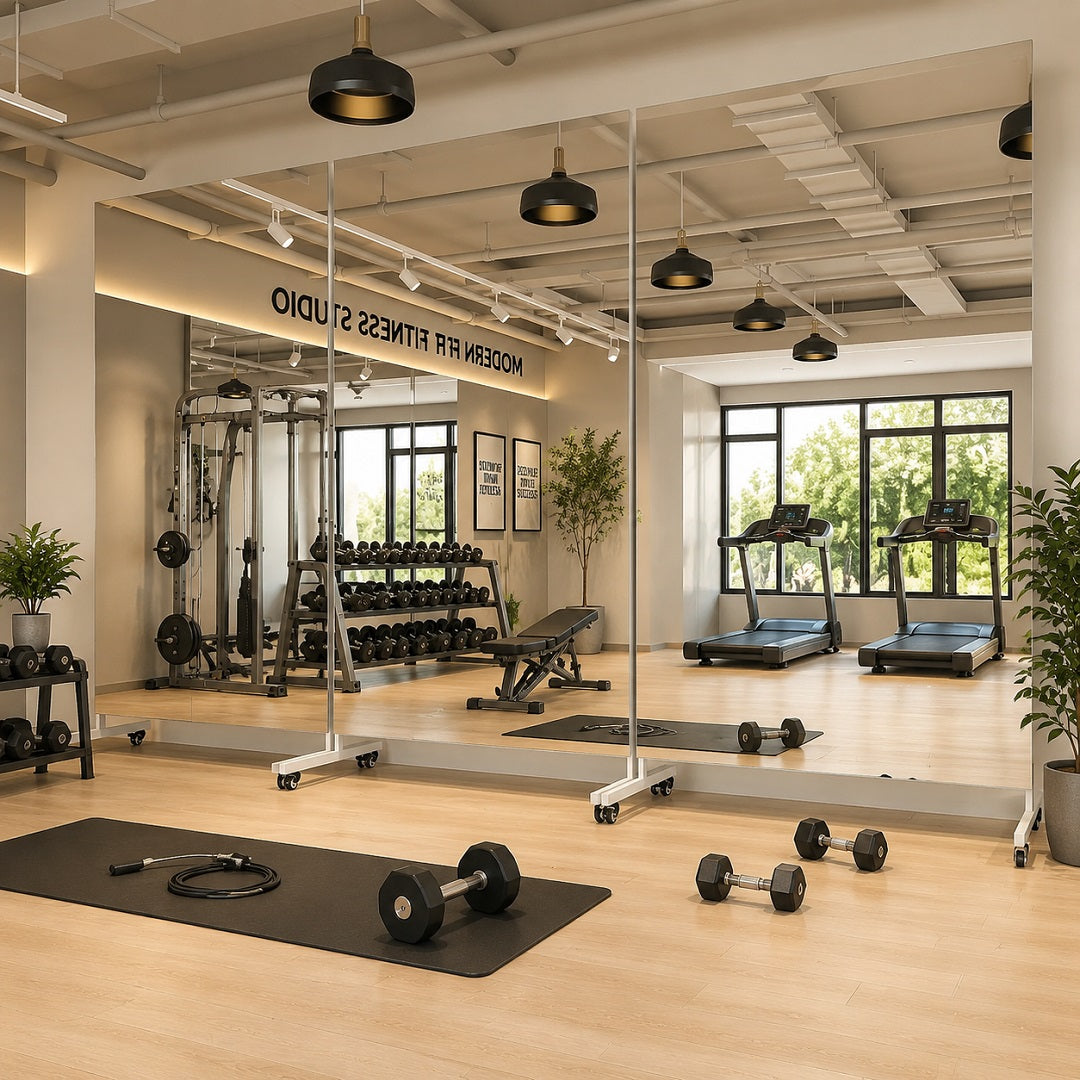
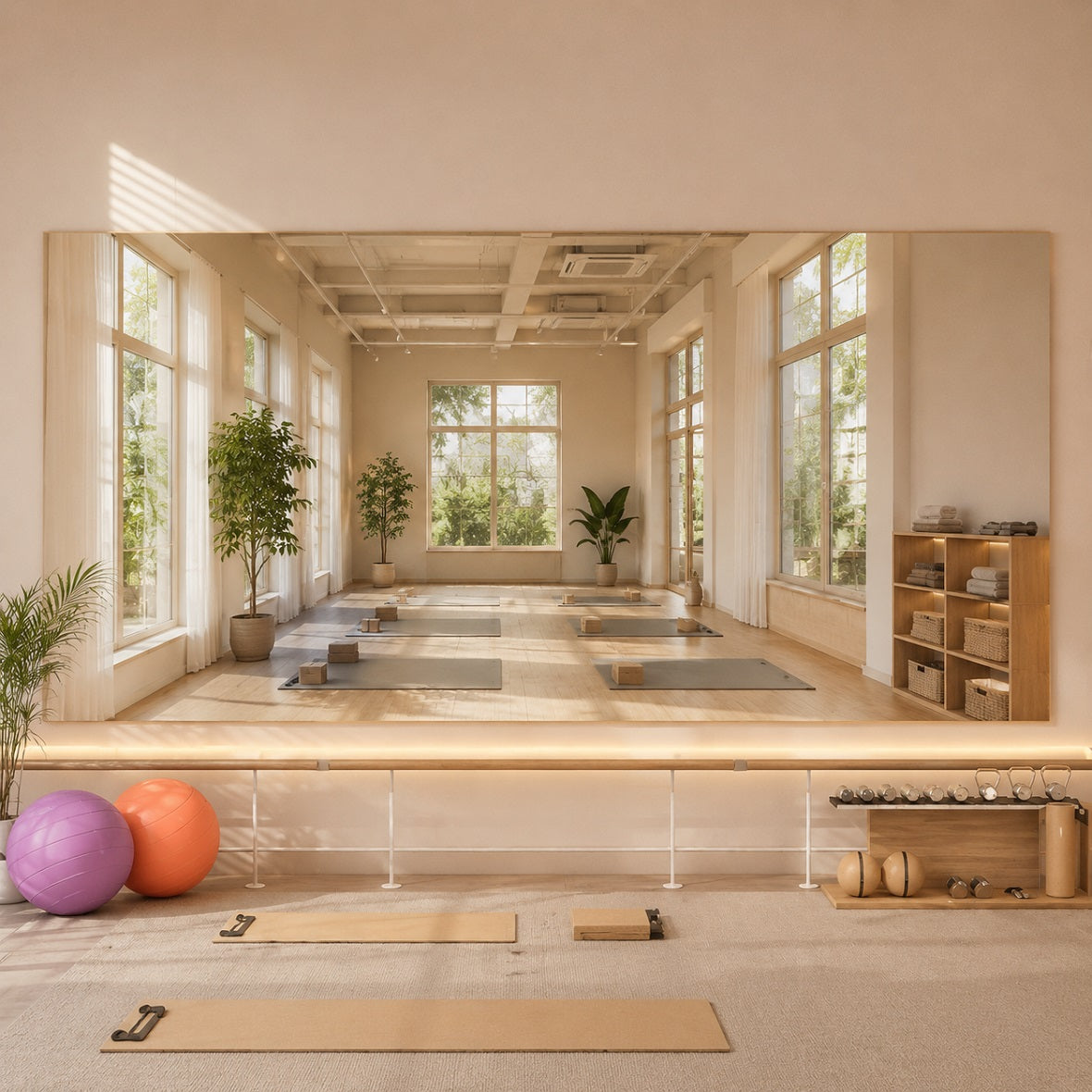
Here, accuracy comes before decoration. A broad gym mirror helps you see alignment through a full movement instead of catching only part of your body.
Use a flat surface, secure mounting, and safety-backed or tempered glass where available. When several panels form a larger mirror wall, place the seams away from the main viewing area.
How to Choose the Right Mirror for the Job
Start with the reflection, then choose the style around it.
For true everyday proportions, choose a plane mirror with a flat, clear surface. For close grooming, pair a regular mirror with a concave magnifying mirror. For a wide safety view, use convex glass.
The outside shape—round, arched, rectangular, square, or asymmetrical—can then be selected to complement the room.
Size affects usefulness as much as appearance. A small mirror works over a compact vanity, but it will not create the same sightline or light return as a larger panel. A large mirror can fill a blank wall with less visual clutter than a group of tiny pieces.
Also consider:
- Reflection quality: Check for ripples, color shifts, dark spots, or bent lines.
- Safety: Look for secure hardware and glass designed for the intended location.
- Mounting: Match anchors, brackets, and adhesive systems to the wall type and mirror weight.
- Lighting: Decide if the mirror should catch daylight, work with wall fixtures, or include LEDs.
- Cleaning access: Leave enough room around frames, outlets, and nearby furniture.
- Viewing distance: Make sure you can stand where the mirror gives you the view you need.
At Hasipu, mirrors are designed around real routines: getting ready, checking workout form, opening up a small room, and creating a finished focal point. Clear reflection matters, but so do scale, safety, placement, and the way the mirror fits into the room.

Final Thoughts
Understanding how mirrors work makes choosing one much easier. Flat mirrors provide a natural, life-size reflection, concave mirrors help with close-up details, and convex mirrors offer a wider view. The right placement can also reflect more light, add visual depth, and make a room feel more open.
Before buying, measure the wall, check the available viewing distance, and pay attention to what the mirror will reflect. These simple steps can help you find a mirror that looks right and works well in your daily routine.
Explore Hasipu to find bathroom mirrors, full-length mirrors, makeup mirrors, wall mirrors, and gym mirrors designed for clear reflection, practical use, and modern homes.
Frequently Asked Questions
1. Why can I see myself in a mirror but not clearly in a wall?
Both surfaces reflect light. A smooth mirror sends rays back in an orderly pattern, while a textured wall scatters them in many directions. The organized reflection forms a clear image.
2. Why does my reflection seem far away?
In a plane mirror, your virtual image appears as far behind the glass as you stand in front of it. That apparent extra distance creates visual depth.
3. What type of mirror gives the most accurate reflection?
A high-quality plane mirror gives a life-size, upright image with normal proportions. A curved, warped, or uneven surface can change the apparent size or shape of the reflection.
4. Why does a magnifying mirror flip upside down?
A magnifying mirror is concave. Up close, it forms an upright and enlarged image. Move beyond its focal point and the reflected rays can form an inverted image.
5. Do mirrors make a dark room brighter?
Mirrors can redirect daylight and lamp light, but they do not create light. Their position and angle decide how much brightness reaches the rest of the room.
6. Is a bigger mirror always better?
No. A larger surface can return more light and create a longer sightline, but it still needs to suit the wall, furniture scale, viewing distance, and installation limits.