
Table of Contents
Vanity mirrors commonly come in rectangular, oval, round, square, arched, multi-paneled, and irregular shapes. Rectangular vanity mirrors provide the widest practical viewing area, while round and oval models create a softer decorative effect. Square designs feel balanced and compact, whereas irregular mirrors work well as decorative focal points.
Rectangular options offer a broad reflection, while round and oval designs soften the straight lines of a desk or cabinet. Square mirrors create symmetry, and irregular shapes add a more artistic look. Lighting, magnification, rotation, and mounting options also play a crucial role in how useful the mirror feels during makeup application, skincare, shaving, and daily grooming.
This guide explains the most common vanity mirror shapes and features, making it easier to find a mirror that fits both your routine and your room.
Vanity Mirror Shapes at a Glance
| Vanity Mirror Shape | Main Characteristics | Best Uses and Interior Styles |
|---|---|---|
| Rectangular vanity mirror | Provides a wide reflection with little wasted viewing space; practical for face, hair, and upper-body grooming | Modern, minimalist, and vintage-inspired rooms; broad makeup and hairstyling routines |
| Oval vanity mirror | Softens straight furniture lines and provides more vertical viewing space for the face, neck, and upper chest | Traditional, French-inspired, and American-style rooms; dressing tables and softer interiors |
| Round vanity mirror | Creates a clear facial focal point and takes up less horizontal space | Scandinavian, Japanese-inspired, and minimalist rooms; facial makeup and detailed grooming |
| Square vanity mirror | Offers a balanced, symmetrical shape with generous usable width | Compact bedrooms, dorm rooms, apartments, and small beauty stations |
| Arched vanity mirror | Combines the useful reflection of a rectangle with a softer rounded top; visually adds height | Modern luxury, transitional, and French-inspired spaces; tabletop or wall-mounted use |
| Hollywood vanity mirror | Uses exposed bulbs or an illuminated border to distribute light around the face | Professional-style makeup, hairstyling, dressing rooms, bedrooms, and beauty studios |
| Tri-fold vanity mirror | Adjustable side panels provide multiple viewing angles and fold inward for storage | Side-profile grooming, hairstyling, makeup checks, and compact vanity tables |
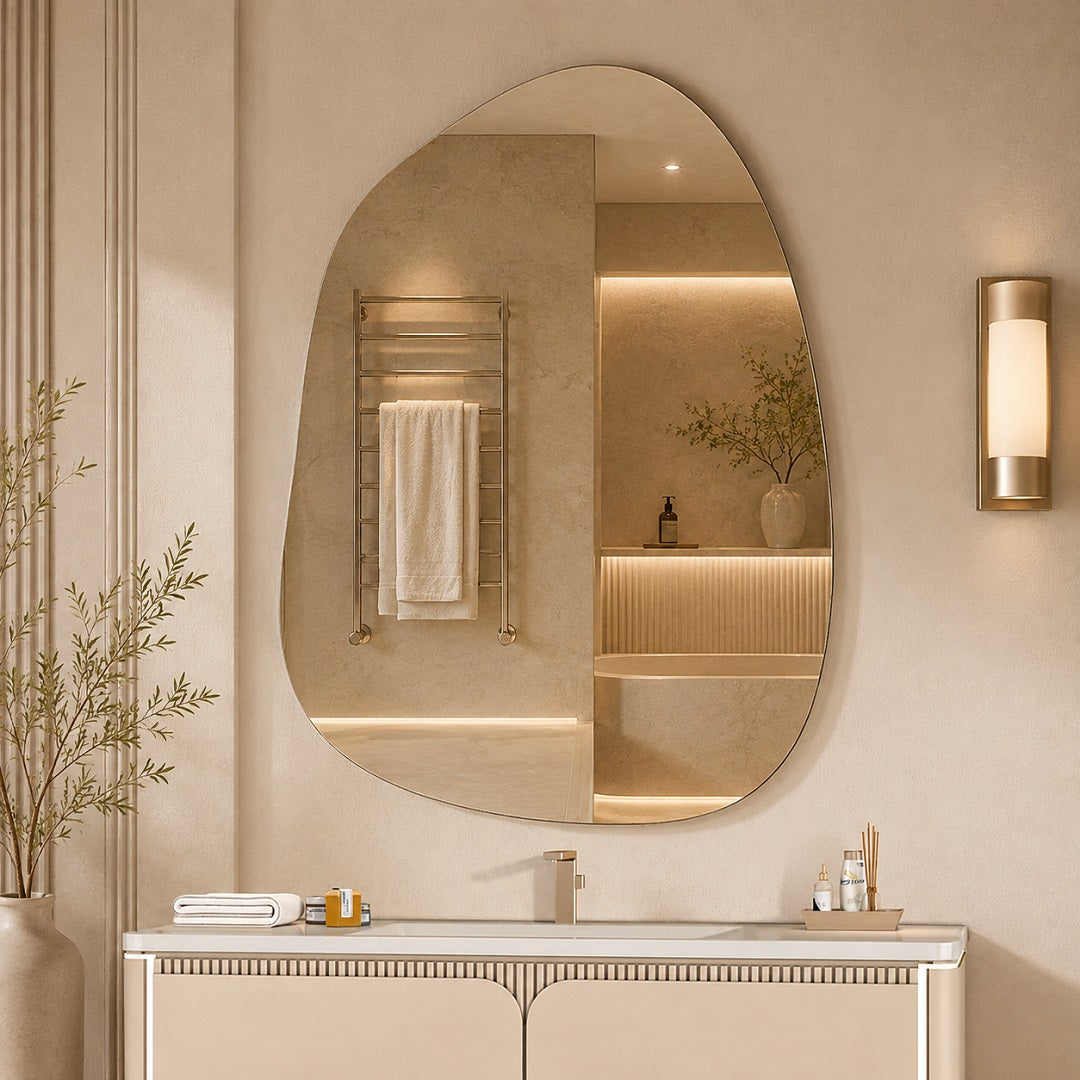
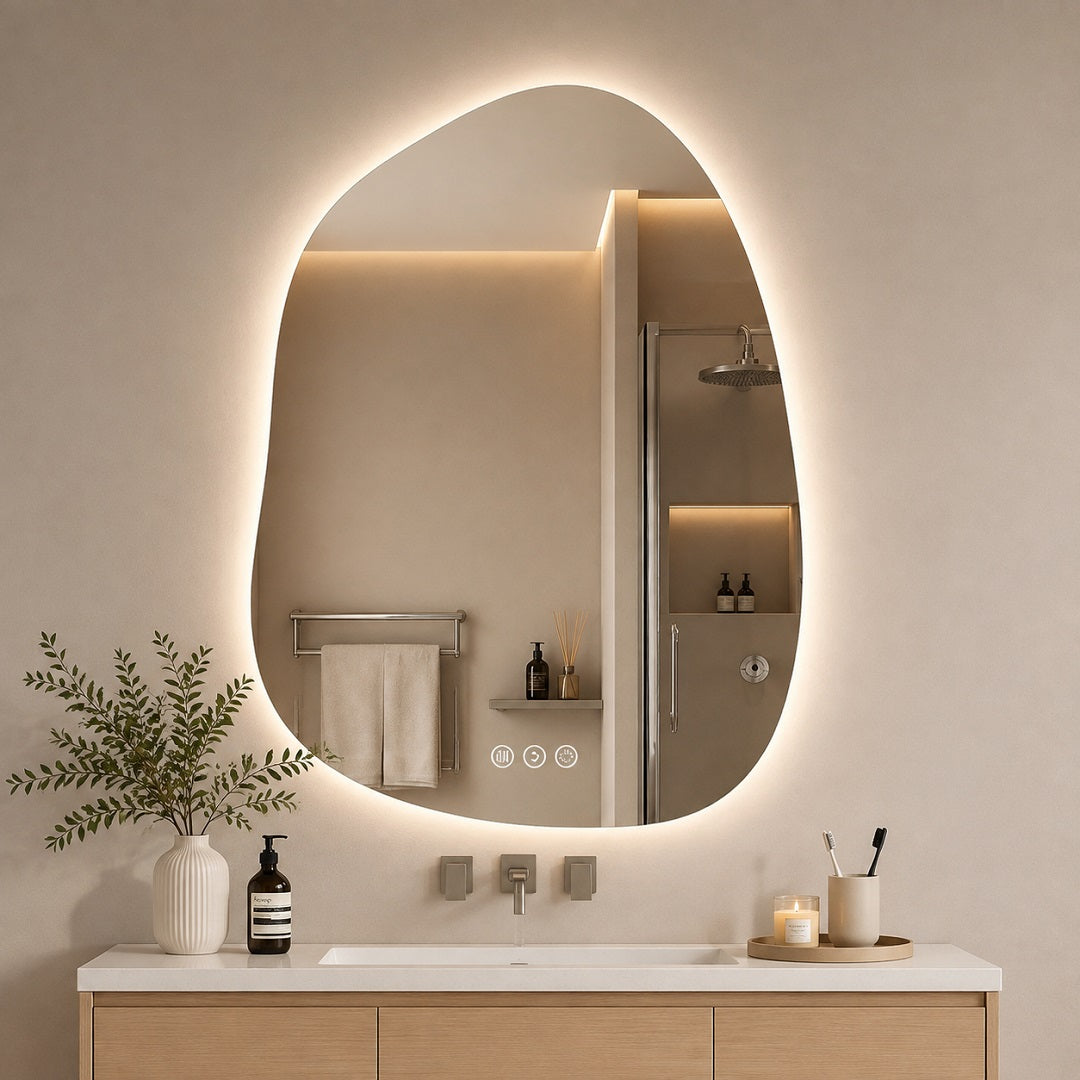
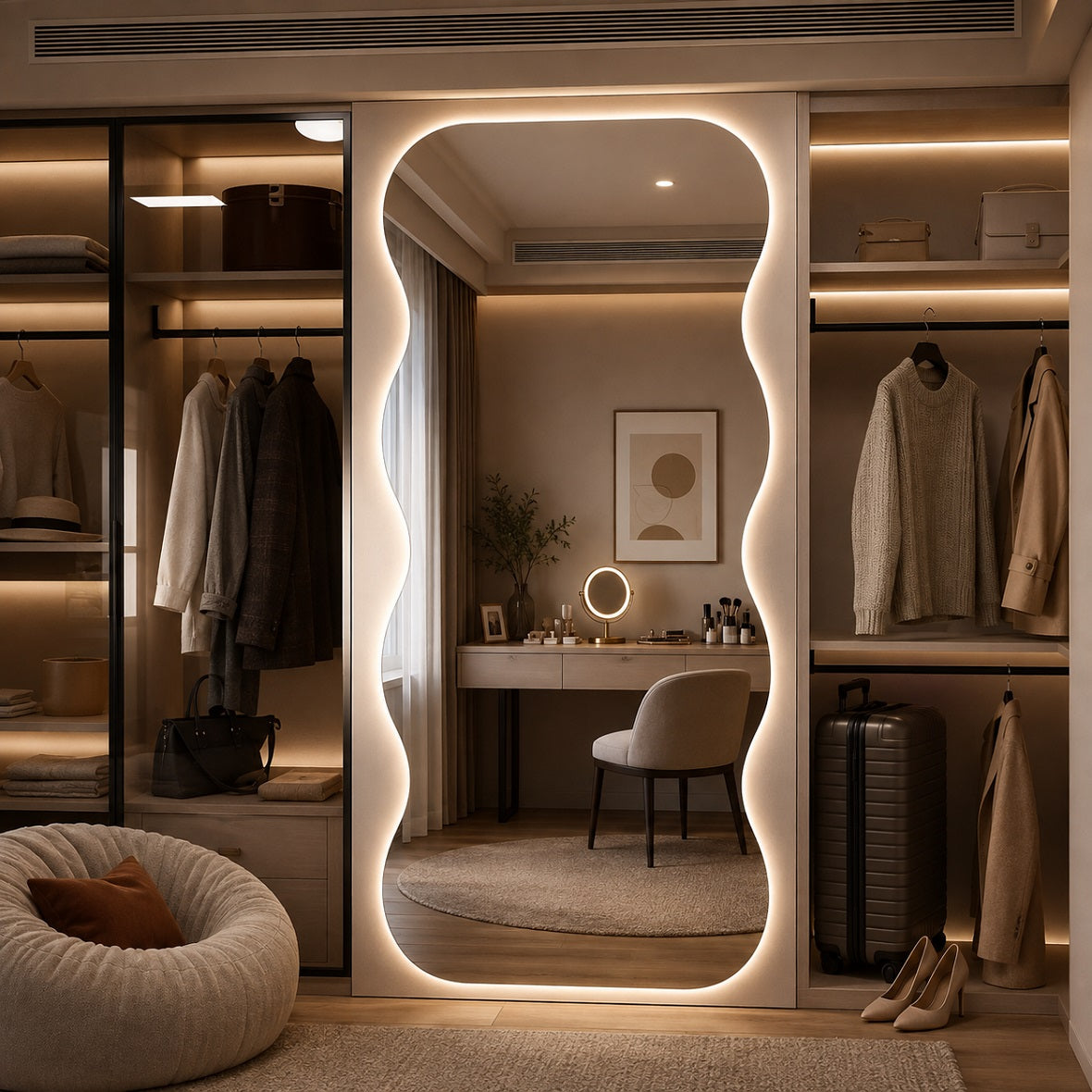
| Irregular vanity mirror | Features an asymmetrical, organic, cloud-shaped, or geometric outline with strong decorative appeal | Creative bedrooms, beauty studios, contemporary interiors, and decorative vanity areas |
1. Rectangular Vanity Mirrors
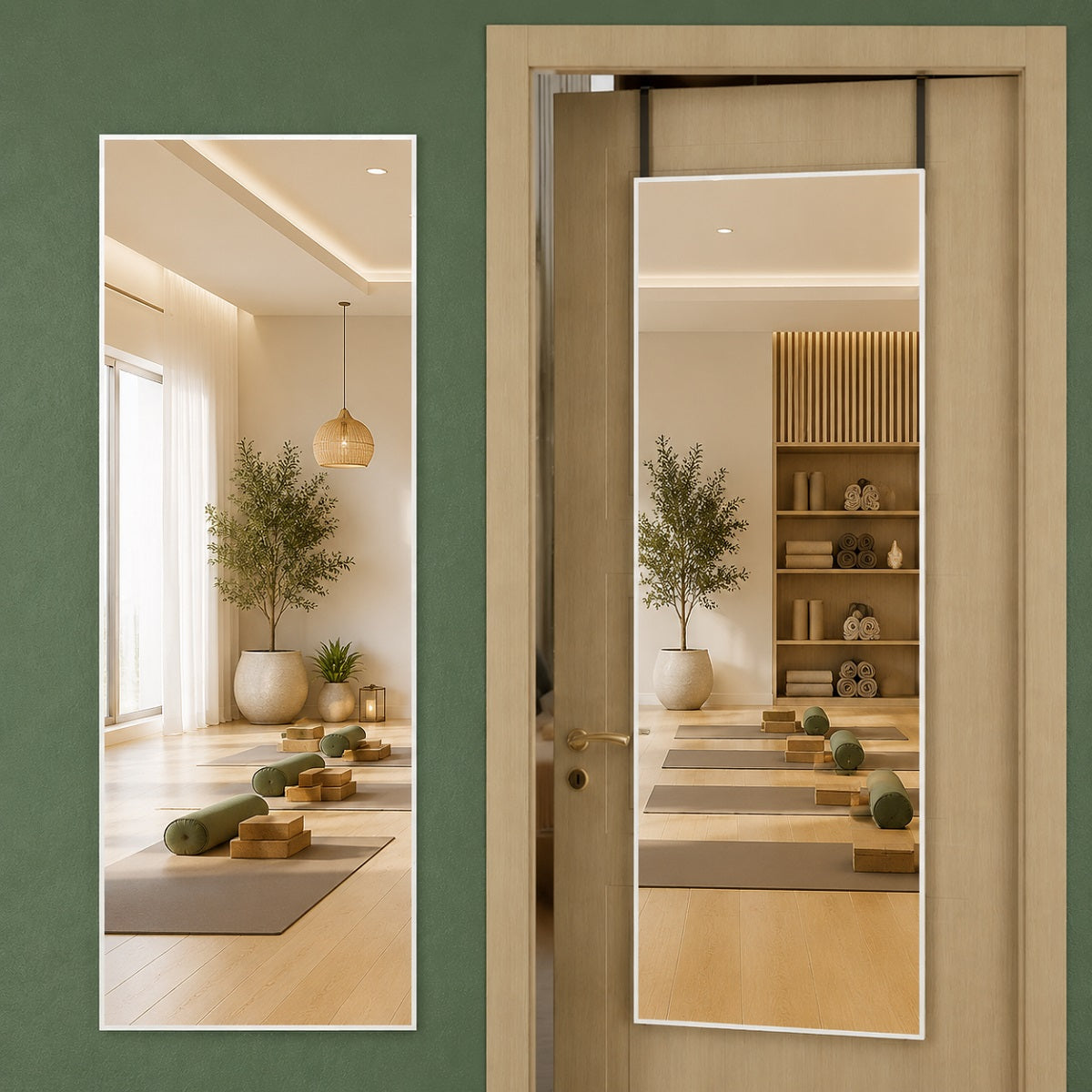
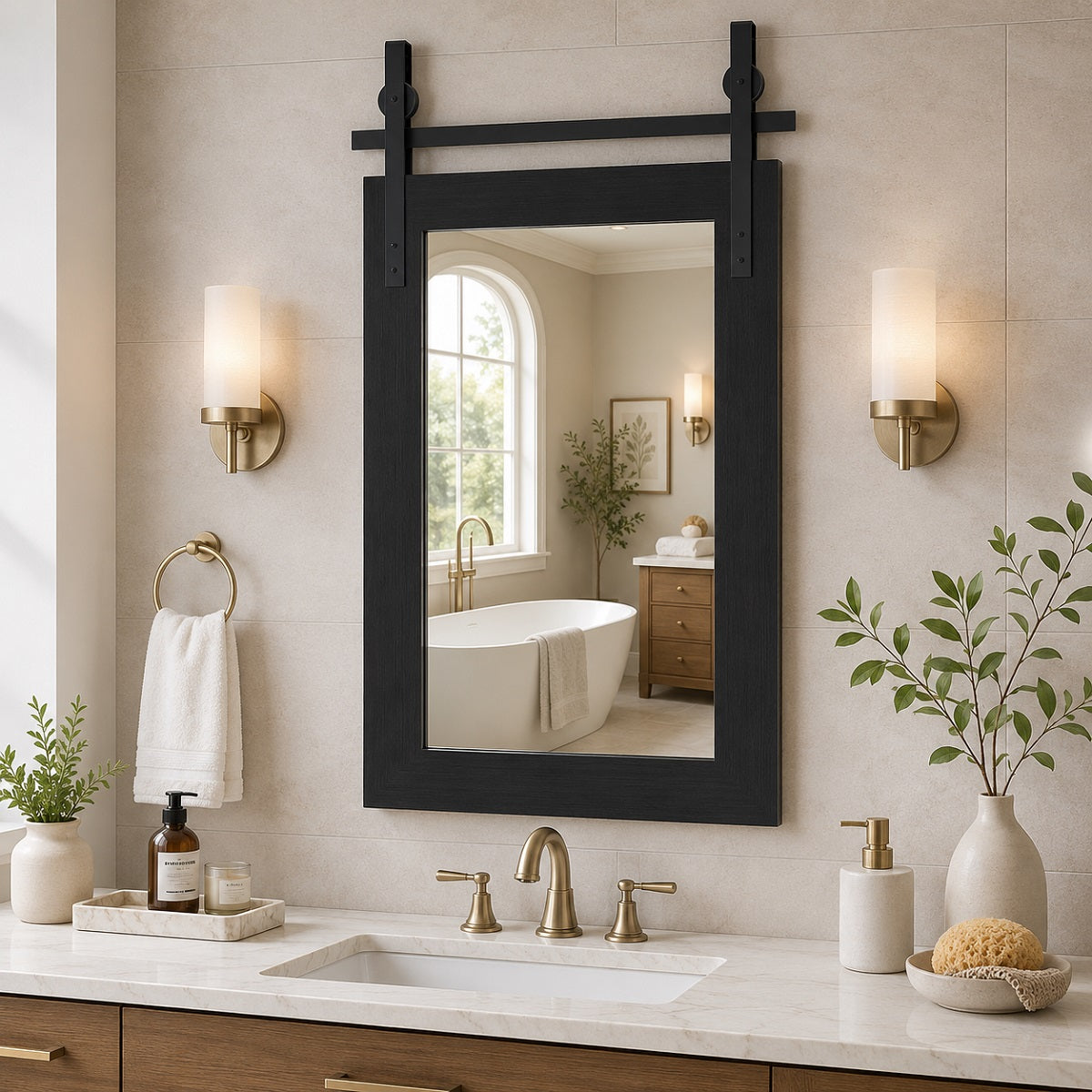
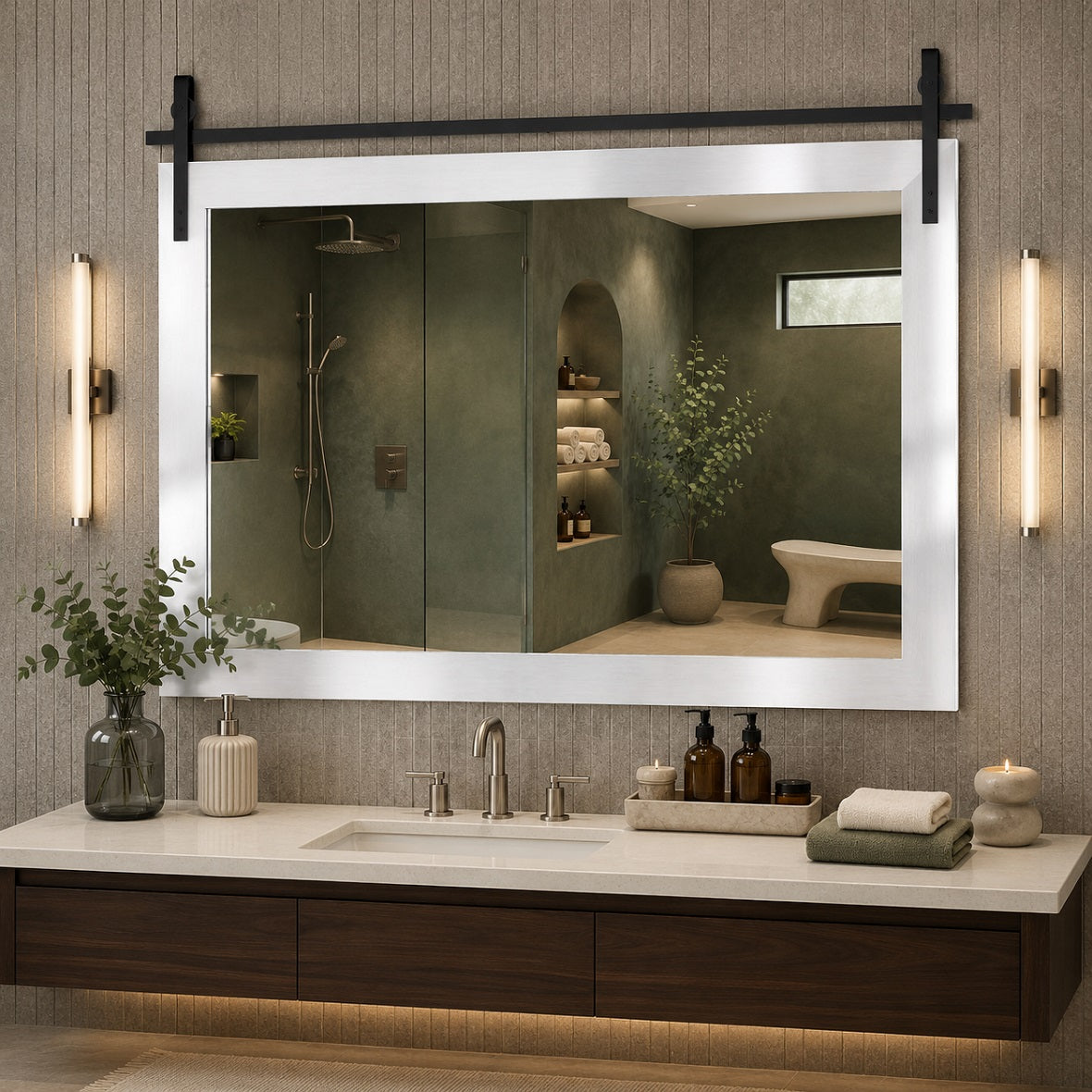
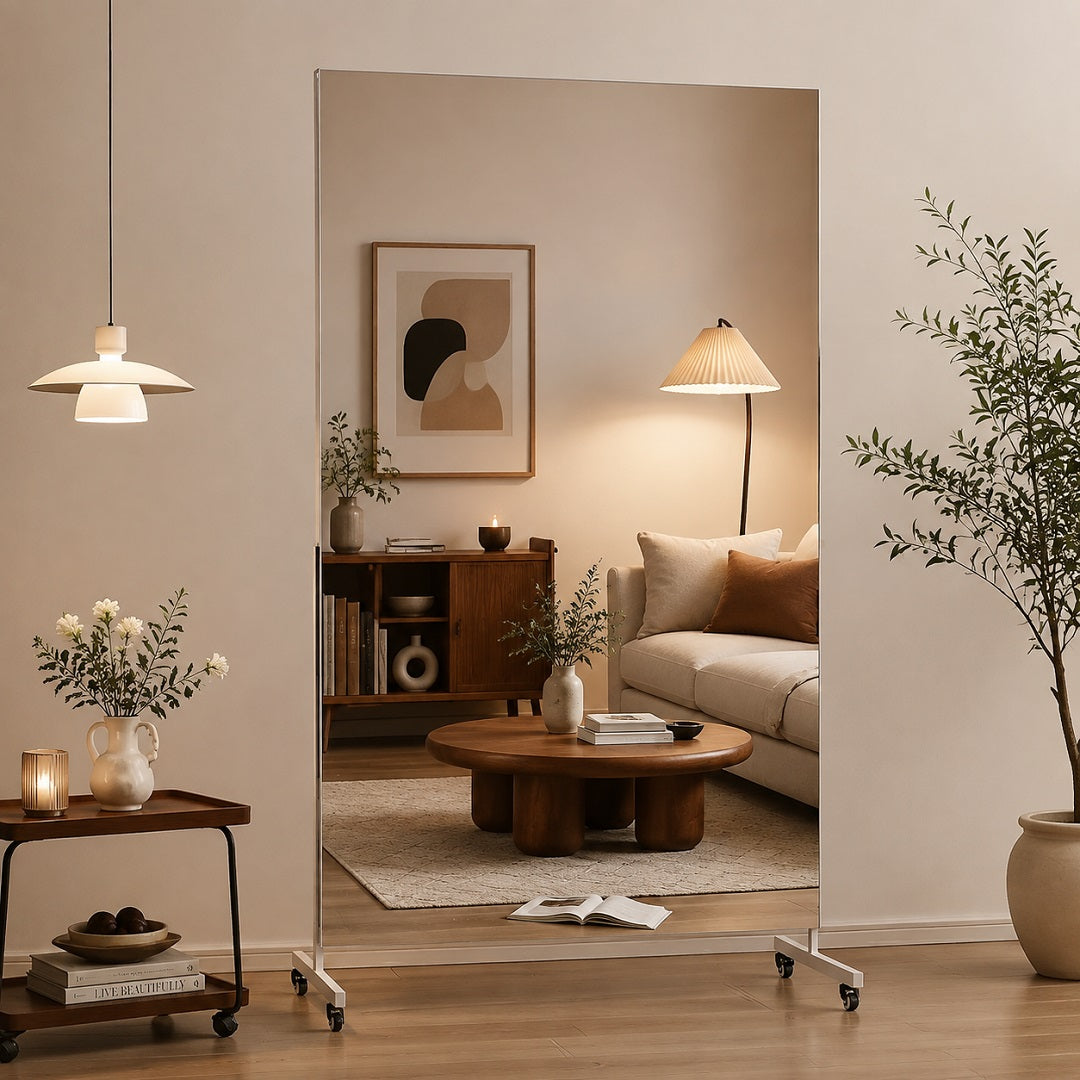
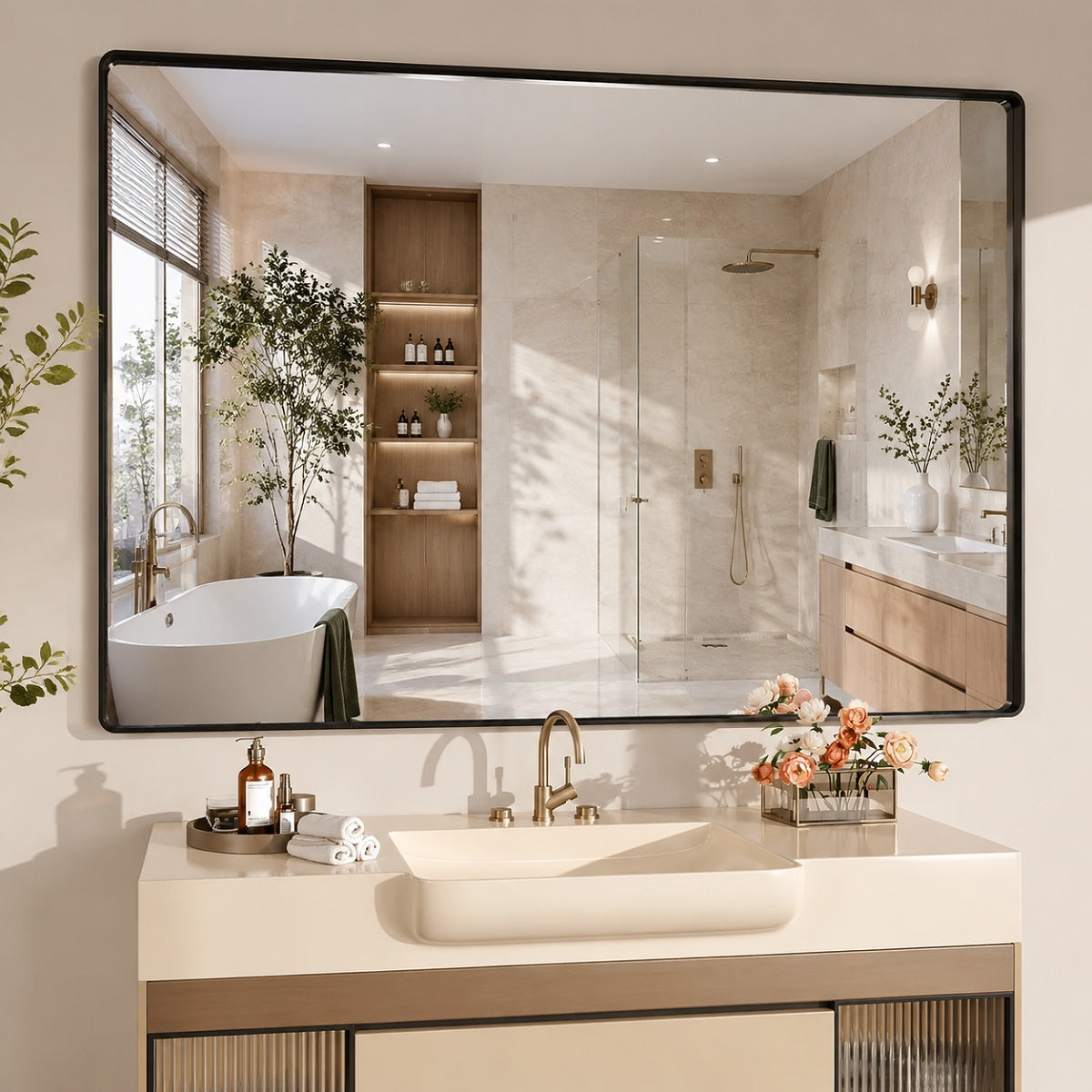
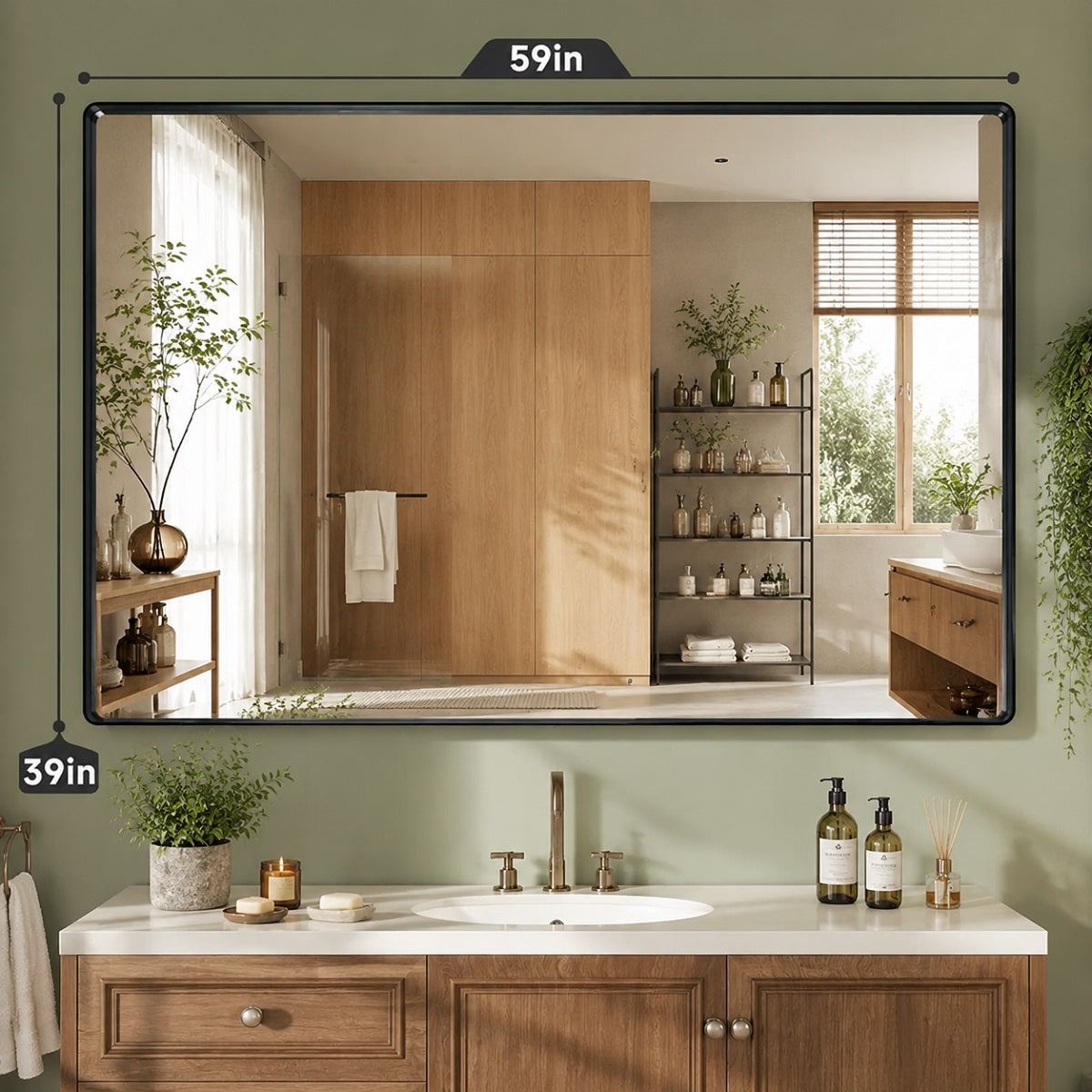
A rectangular vanity mirror is versatile and works seamlessly with traditional, contemporary, minimalist, and modern interiors. Its straight edges are easy to align with a dressing table, bathroom vanity, or wall cabinet.
The wide reflective surface makes this shape particularly useful for makeup application, hairstyling, skincare, and grooming. A horizontal rectangular mirror provides a broader face and shoulder view, while a vertical model saves tabletop or wall space.
Rectangular mirrors also make good use of their outer dimensions. There are no curved corners cutting into the reflection, so more of the mirror remains usable.
Common rectangular vanity mirror styles include:
- Frameless wall-mounted mirrors
- Metal-framed desktop mirrors
- Rounded-corner rectangular mirrors
- Hollywood mirrors with exposed bulbs
- LED vanity mirrors with an illuminated border
- Tri-fold and multi-paneled models
Design Tip: A large rectangular mirror can dominate a compact dressing table. Measure the vanity width before choosing a size. A mirror that is slightly narrower than the table usually creates a comfortable visual balance.

2. Oval Vanity Mirrors
An oval vanity mirror brings softer lines to a room. It can make a square dressing table, straight cabinet, or angular wall arrangement feel less rigid.
Oval mirrors are often associated with traditional dressing tables, but slim frames and built-in LED lighting give the shape a more contemporary look. Gold, brushed brass, black, white, and natural wood finishes can move the same basic shape in very different design directions.
The elongated outline offers more vertical viewing space than a round mirror. This is especially useful for seeing the face, neck, and upper chest while applying makeup or arranging hair.
Oval vanity mirrors generally work well in:
- Bedrooms with traditional or transitional décor
- Small dressing areas
- Vintage-inspired vanity setups
- Bathrooms with straight-edged cabinets
- Soft, neutral interiors
- Compact tabletop arrangements
A rotating oval mirror may be mounted between two side supports. This design allows the viewing angle to change without moving the entire mirror.
3. Round Vanity Mirrors
A round vanity mirror creates a clean focal point and breaks up the straight lines of a desk, dresser, or bathroom vanity. The shape is extremely popular in modern, minimalist, Scandinavian, and mid-century-inspired interiors.
Round mirrors naturally draw attention toward the center, which makes them suitable for facial grooming. Their compact outline also fits corners and narrow dressing areas where a wide rectangular mirror may feel too large.
The curved edge reduces some reflective space around the corners. A round mirror with the same maximum width as a rectangular model will usually provide a smaller total viewing area. This matters more for hairstyling and upper-body viewing than for close makeup work.
A small round mirror suits detailed routines, especially when it includes magnification. Larger round mirrors can serve as both functional dressing mirrors and decorative wall pieces.

4. Square Vanity Mirrors
Square vanity mirrors provide a sense of structure, balance, and symmetry. They pair naturally with simple vanity tables and cabinets that have clear horizontal and vertical lines.
A square vanity mirror with lights can offer a generous face and shoulder view without taking up the width of a long rectangular model. This makes the shape practical for compact bedrooms, apartments, dorm rooms, and smaller beauty stations.
Sharp square corners create a crisp, modern appearance. Rounded square corners feel softer and are often easier to blend with bedroom furniture. A frame with integrated LED lighting gives the shape an even cleaner outline.
Square mirrors are straightforward to center above a vanity. Their equal height and width also leave room on both sides for wall sconces, storage shelves, or decorative objects.
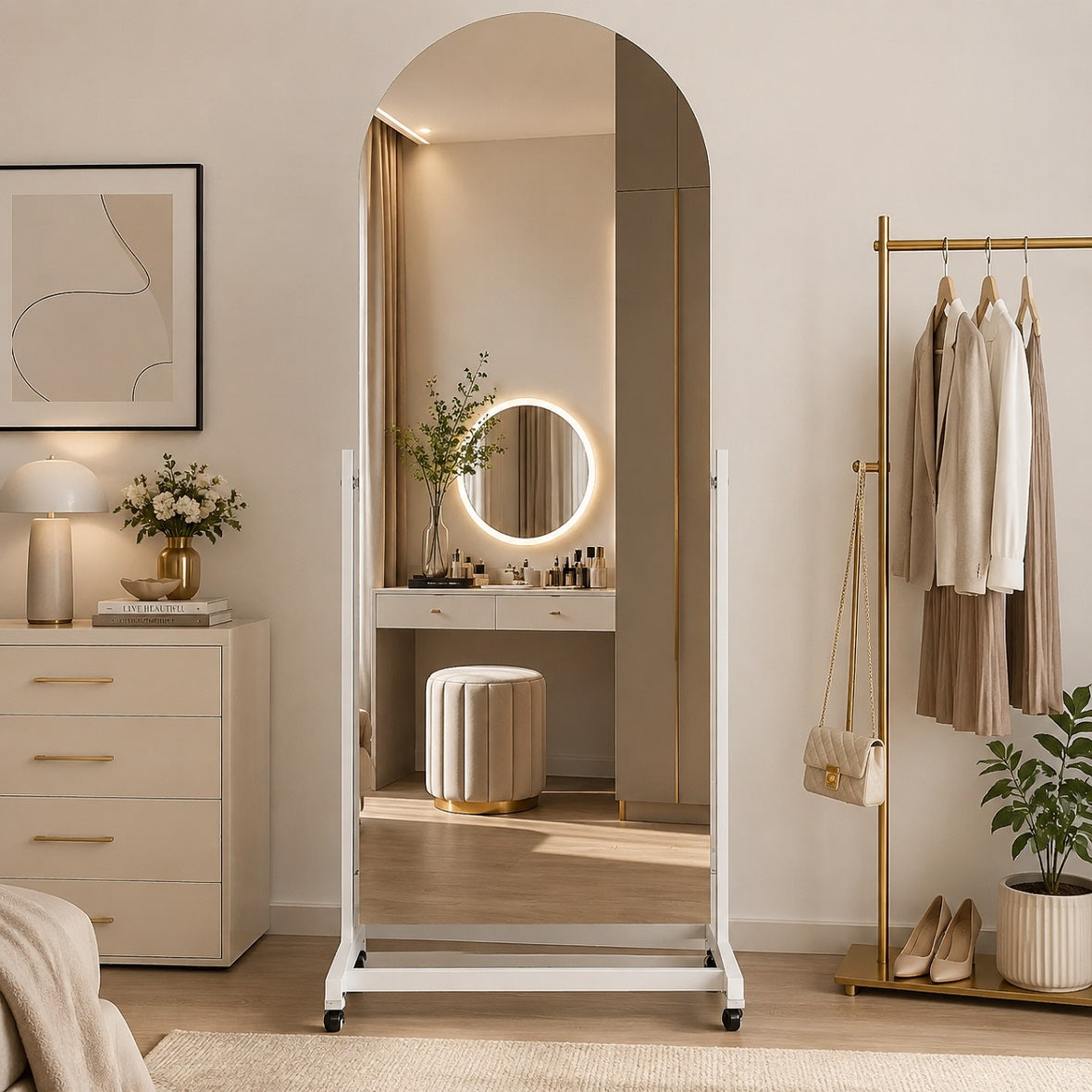
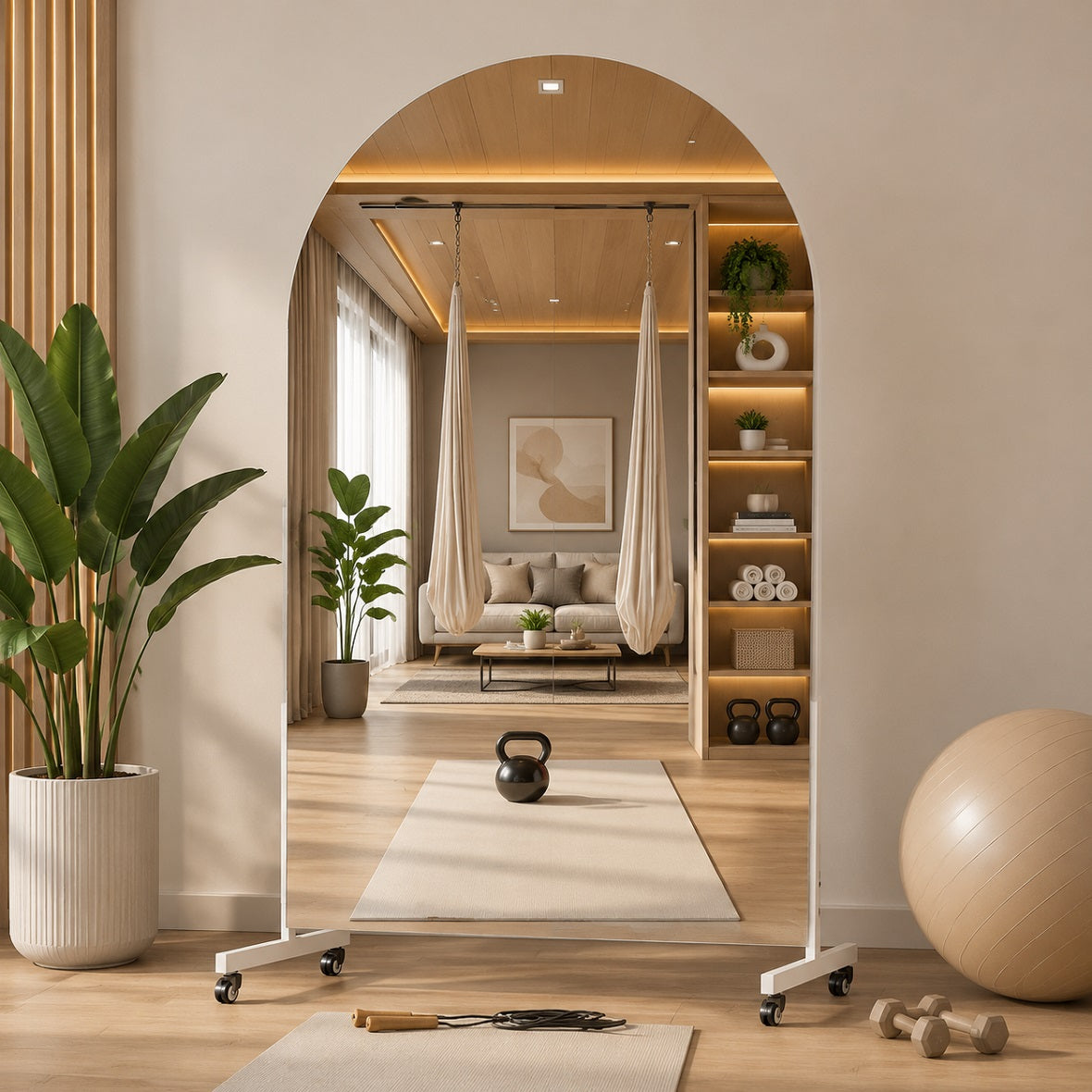
5. Arched Vanity Mirrors
An arched vanity mirror combines a flat or gently curved base with a rounded top. It provides much of the reflection area of a rectangle while adding a softer architectural detail.
The shape works exceptionally well in modern bedrooms, bathrooms, and dressing rooms. It can also make a low vanity area appear taller by drawing the eye upward.
A slim metal frame creates a contemporary look, while wood brings warmth. Brass or gold-tone finishes add a more polished character. Frameless arched mirrors feel lighter and place greater attention on the illuminated edge or reflective surface.
For tabletop vanity mirror use, check that the base is wide and stable enough to support the taller shape. Wall-mounted arched mirrors need hanging hardware rated for the full product weight.
6. Hollywood-Style Vanity Mirrors
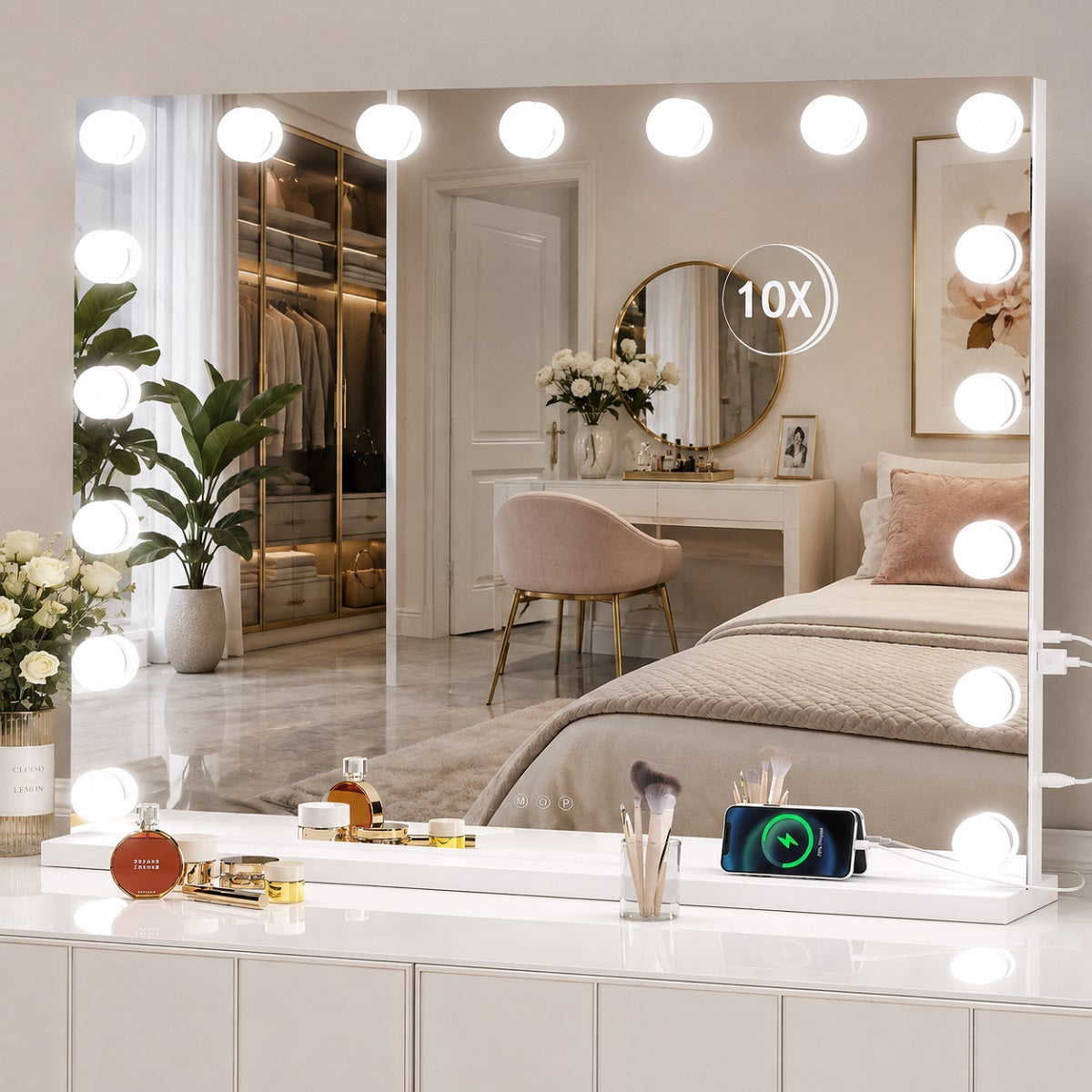
A Hollywood vanity mirror is identified more by its lighting than by a single shape. Most are rectangular or square, though round Hollywood mirrors are also available.
Bulbs positioned around the frame distribute light across the face. This arrangement reduces the strong shadows created by a single ceiling light, making it exceptionally useful for makeup application and hairstyling.
Traditional versions use visible round bulbs. Newer models may use replaceable bulbs, fixed LED bulbs, or a continuous LED strip designed to create a similar studio-style effect.
Key features commonly found on Hollywood-style vanity mirrors include:
- Adjustable bulb brightness
- Warm, natural, and cool light settings
- Touch-sensitive controls
- Memory settings
- Detachable magnifying mirrors
- USB or Type-C charging ports
- Tabletop and wall-mounted installation
A Hollywood mirror has a stronger visual presence than a plain framed mirror. Allow enough room around it so the bulbs do not crowd nearby shelves, lamps, or wall décor.

7. Multi-Paneled and Sectional Vanity Mirrors
A multi-paneled vanity mirror uses two or more reflective sections. Tri-fold vanity mirrors are the most familiar example, featuring a large center panel and smaller side mirrors that fold inward.
The adjustable side panels provide several viewing angles. They help with hairstyling, blending makeup along the jawline, or checking the sides of the face.
Foldable designs also protect the mirror surface when closed and take up less space in storage. Some compact models include different magnification levels across the side panels.
Decorative sectional mirrors may use several fixed pieces of glass to create a geometric wall feature. These are better suited to room decoration than precision makeup because seams interrupt the reflection.
8. Irregular and Geometric Vanity Mirrors
An irregular vanity mirror uses a free-form, asymmetrical, cloud-shaped, or geometric outline. It brings an artistic quality to a dressing area and serves as wall décor even when the vanity is not in use.
Organic curves soften modern furniture, while angular geometric designs add a bolder appearance. Frameless edges keep the design light, whereas wood or metal frames make the unusual outline more noticeable.
The outer measurements do not always show how much usable reflection an irregular mirror provides. Check the width at its narrowest points, especially for hairstyling and upper-body viewing.
These mirrors are a natural fit for:
- Creative bedroom interiors
- Contemporary dressing areas
- Beauty studios
- Minimalist rooms needing a focal point
- Vanity tables with simple straight lines
- Decorative bathroom walls
Irregular shapes work best where appearance and everyday grooming carry similar importance. Detailed makeup may still benefit from a separate magnifying mirror.
Essential Features of a High-Quality Vanity Mirror
Shape determines how the mirror fits the room, while its features determine how well it supports a daily beauty or grooming routine.
1. Adjustable LED Lighting
A vanity mirror with lights provides more consistent illumination than a mirror relying only on room lighting. LED lights may appear around the frame, behind the glass, or as individual Hollywood-style bulbs.
Brightness control is essential because makeup that looks balanced under bright light may appear different in a dim room. A low setting can also provide softer ambient lighting in a bedroom.
2. Multiple Color Temperatures
Many LED vanity mirrors offer warm, natural, and cool lighting modes. Each setting creates a different appearance:
-
Warm light produces a softer, golden tone.
-
Natural light provides a balanced view for routine makeup.
-
Cool light creates a brighter, clearer appearance.
Switching between color modes helps show how makeup will look under different indoor and outdoor lighting conditions. Hasipu’s current LED vanity mirrors include adjustable illumination designed specifically for makeup, skincare, and everyday grooming.
3. Clear High-Definition Reflection
Good mirror glass should produce a clear image without visible waves or distortion. A larger mirror also needs consistent reflection quality from the center to the edges.
Product descriptions may use terms such as HD glass or high-definition reflection. Customer photos and reviews can help confirm how the glass performs outside staged product images.
4. Precision Magnification
Magnifying vanity mirrors help with eyeliner, eyebrow shaping, contact lenses, and other close-detail tasks. Common magnification levels include 2X, 3X, 5X, and 10X.
Stronger magnification requires the face to remain closer to the glass. A detachable magnifying mirror offers more flexibility than a fixed magnified section because it can be repositioned or removed when not needed.
5. Rotation and Adjustable Viewing Angles
A rotating vanity mirror can tilt upward or downward to suit different sitting positions. Some tabletop vanity models provide 360-degree rotation, while tri-fold mirrors use adjustable side panels.
Check how firmly the mirror holds its position. A loose hinge may cause the glass to tilt unexpectedly during use.
6. Touch Controls and Memory Settings
Touch controls keep the front of an LED mirror clean and easy to operate. Separate buttons may control power, light color, and brightness.
A memory function restores the previous light setting when the mirror is turned on again. This saves time when the same lighting mode is used every day.
7. Tabletop and Wall-Mounted Installation Options
A tabletop vanity mirror is easy to move and does not require drilling. However, it does take up surface space that could otherwise hold cosmetics or skincare products.
A wall-mounted vanity mirror keeps the table clear and creates a built-in appearance. Some larger mirrors offer both options through a removable base and rear hanging points.
Review the mounting instructions and product weight before installation. Hardware should match the wall type and the total weight of the mirror.
8. Charging Ports and Integrated Storage
Some lighted vanity mirrors include USB or Type-C charging ports for charging a phone or beauty device. Keep the port location in mind so charging cables do not hang across the mirror.
Built-in trays, small shelves, or storage bases can help organize frequently used items. These features are convenient in tight spaces but may make the mirror heavier or less portable.

How to Choose the Best Vanity Mirror Shape
The best shape depends on the vanity size, available wall space, room design, and the specific tasks completed in front of the mirror.
For a broad view, rectangular and square mirrors are practical. Round and oval designs suit routines focused mainly on the face while bringing softer lines into the room. Arched mirrors add height, and irregular shapes give a simple vanity area more personality.
Use these questions to narrow down the options:
- How much tabletop or wall space is available?
- Is the mirror mainly for makeup, skincare, hairstyling, or decoration?
- Will a seated or standing person use it?
- Does the room need a wide reflection or a compact facial view?
- Is built-in LED lighting necessary?
- Would magnification support detailed makeup tasks?
- Does the mirror need to move or remain permanently wall-mounted?
- Are charging ports, memory settings, or storage useful for the routine?
Pro Tip: Measure both the vanity and the proposed mirror location. Use painter’s tape to outline the dimensions on the wall or table before purchasing. This gives a much clearer sense of scale than viewing measurements on a screen.
Final Thoughts
Vanity mirrors come in far more shapes than the familiar rectangle. Oval and round mirrors soften a room, square designs create symmetry, arched mirrors add height, and irregular shapes turn the vanity area into a decorative feature. Hollywood mirrors and multi-paneled mirrors offer distinct practical advantages through integrated lighting and adjustable viewing angles.
The shape should fit the vanity without crowding it, while the features should match how the mirror will be used. Clear HD glass, balanced LED lighting, brightness control, magnification, stable positioning, and proper installation usually matter more than decorative extras.
Hasipu offers lighted vanity mirrors designed for everyday makeup, skincare, hairstyling, and grooming. Selecting a shape that suits the room—and features that support your daily routine—creates a vanity setup that looks great and remains comfortable to use every day.
Frequently Asked Questions
1. What is the best shape for a makeup vanity mirror?
Rectangular mirrors provide a wide, practical reflection for makeup and hairstyling. Round and oval mirrors work well for face-focused routines and bring softer lines to the vanity area. The available space and preferred viewing area should guide your choice.
2. Is a round or rectangular vanity mirror better?
A rectangular mirror offers more reflection across its full width. A round mirror takes up less visual space and creates a stronger decorative focal point. Both shapes work exceptionally well with built-in LED lighting.
3. What size should a vanity mirror be?
A wall-mounted mirror generally looks balanced when it is slightly narrower than the vanity table beneath it. Tabletop models should leave enough space for cosmetics and daily grooming items. Product dimensions should always include the frame, base, and bulbs rather than the glass alone.
4. Are Hollywood mirrors good for everyday makeup?
Yes. Bulbs arranged around the frame provide more even facial illumination than a single overhead light. Adjustable brightness and multiple color temperatures make Hollywood mirrors ideal for different makeup styles and room lighting conditions.
5. Is an LED vanity mirror worth buying?
An LED vanity mirror is highly beneficial in rooms with weak, uneven, or poorly positioned lighting. Dimming controls, color modes, memory settings, and touch controls offer complete precision over your grooming environment.
6. Which mirror shape makes a small vanity look larger?
Round, oval, arched, and frameless mirrors create a lighter, more open appearance around compact vanities. A slim vertical rectangular mirror can also work well when the goal is to maximize usable reflection without overwhelming the space.