Table of Contents

Start with the Lines of Your Vanity Table
Take a step back and look at the table before shopping for a mirror. Does it have straight edges, rounded corners, curved legs, or decorative carving?
A mirror can repeat those lines or gently contrast them.
Repeating the shape creates a calm, coordinated setup. A rectangular mirror above a straight-edged table is a familiar example. Contrasting shapes add softness and personality. A round mirror can break up the hard angles of a boxy vanity without making the arrangement feel disconnected.
The contrast still needs a shared detail. That connection might come from the frame color, hardware finish, material, or overall design period.
For example, a round mirror with a thin black frame can look natural above a modern black vanity. The shapes are different, but the color and minimal profile tie them together.
Rectangular Mirrors: Best for Modern, Wide, and Practical Vanities
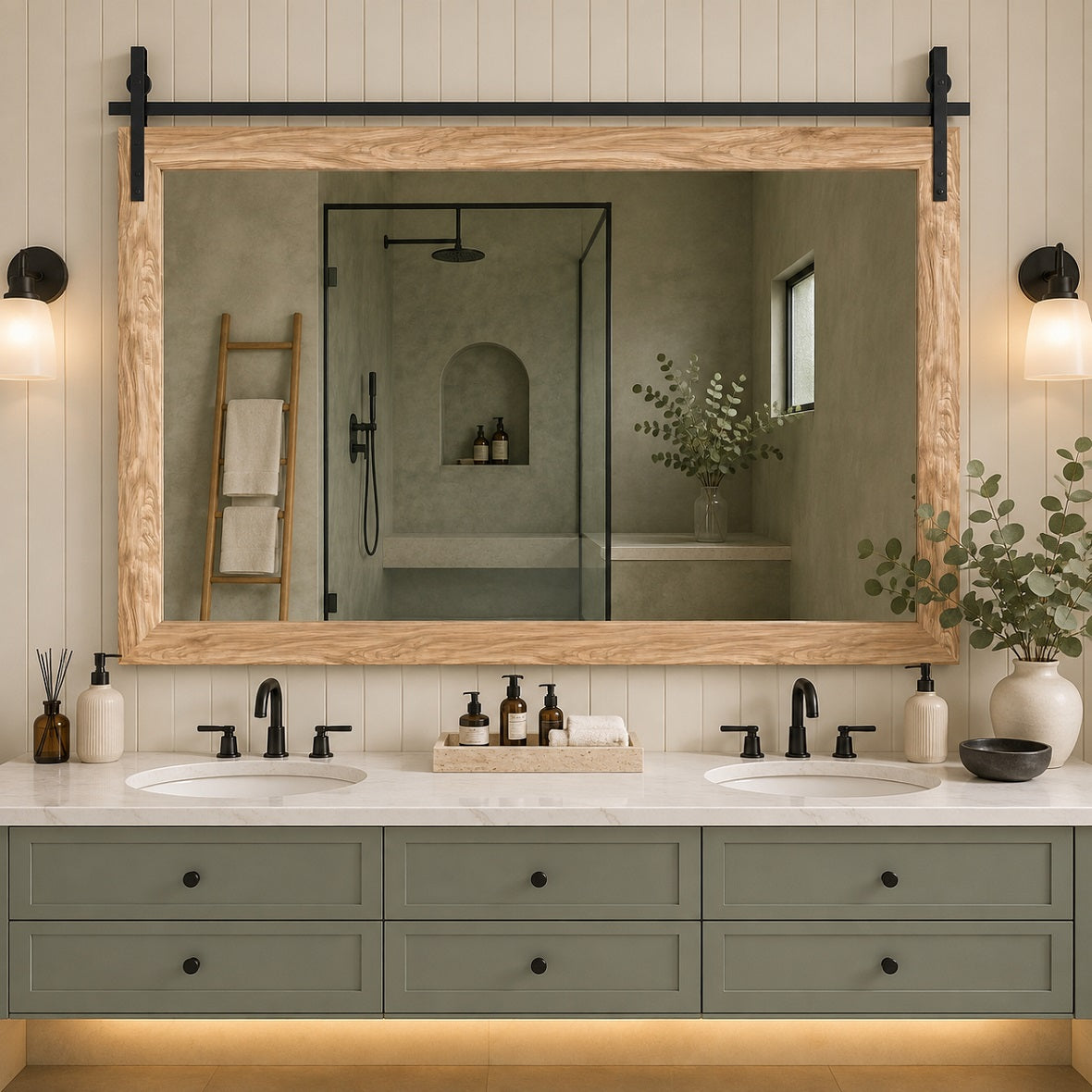
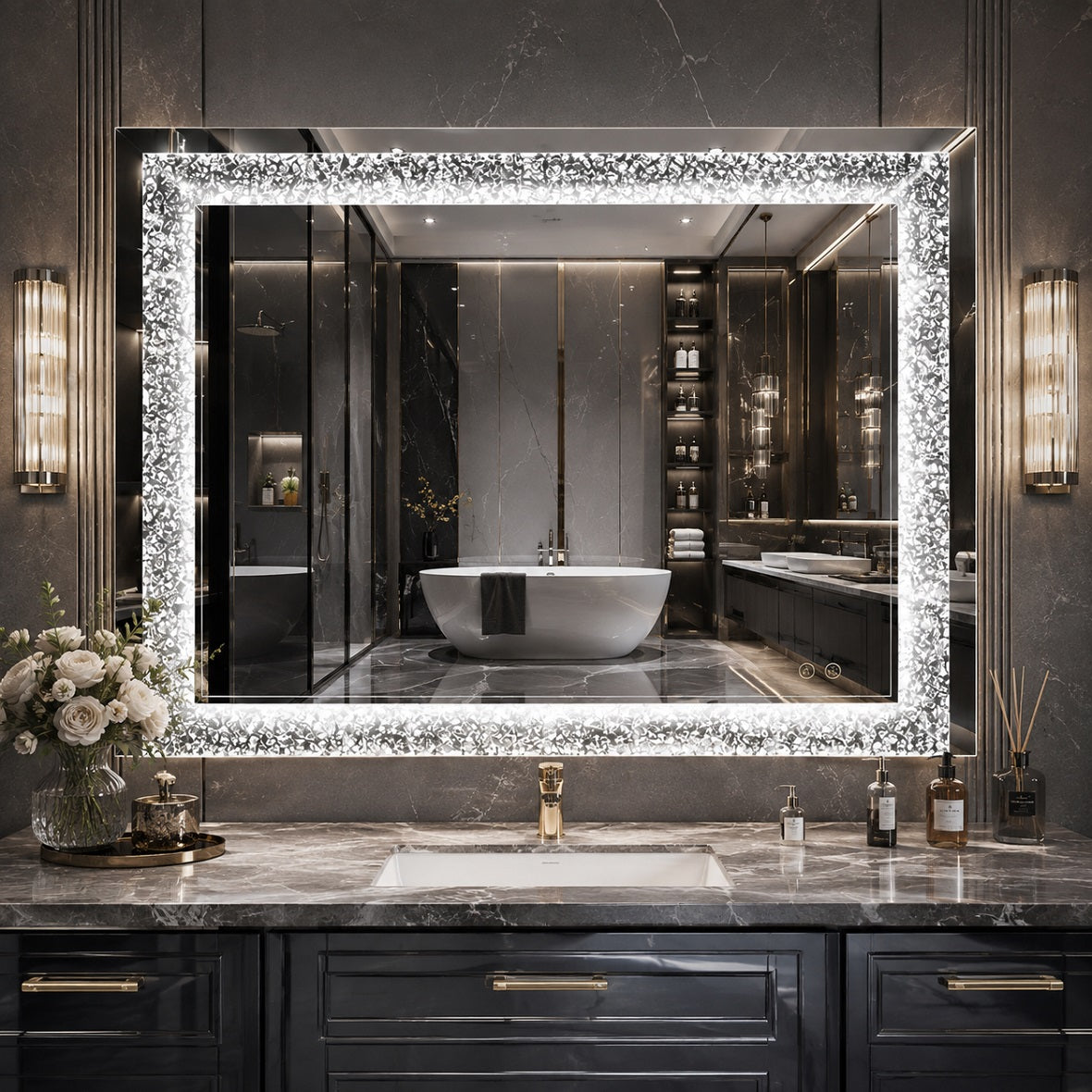
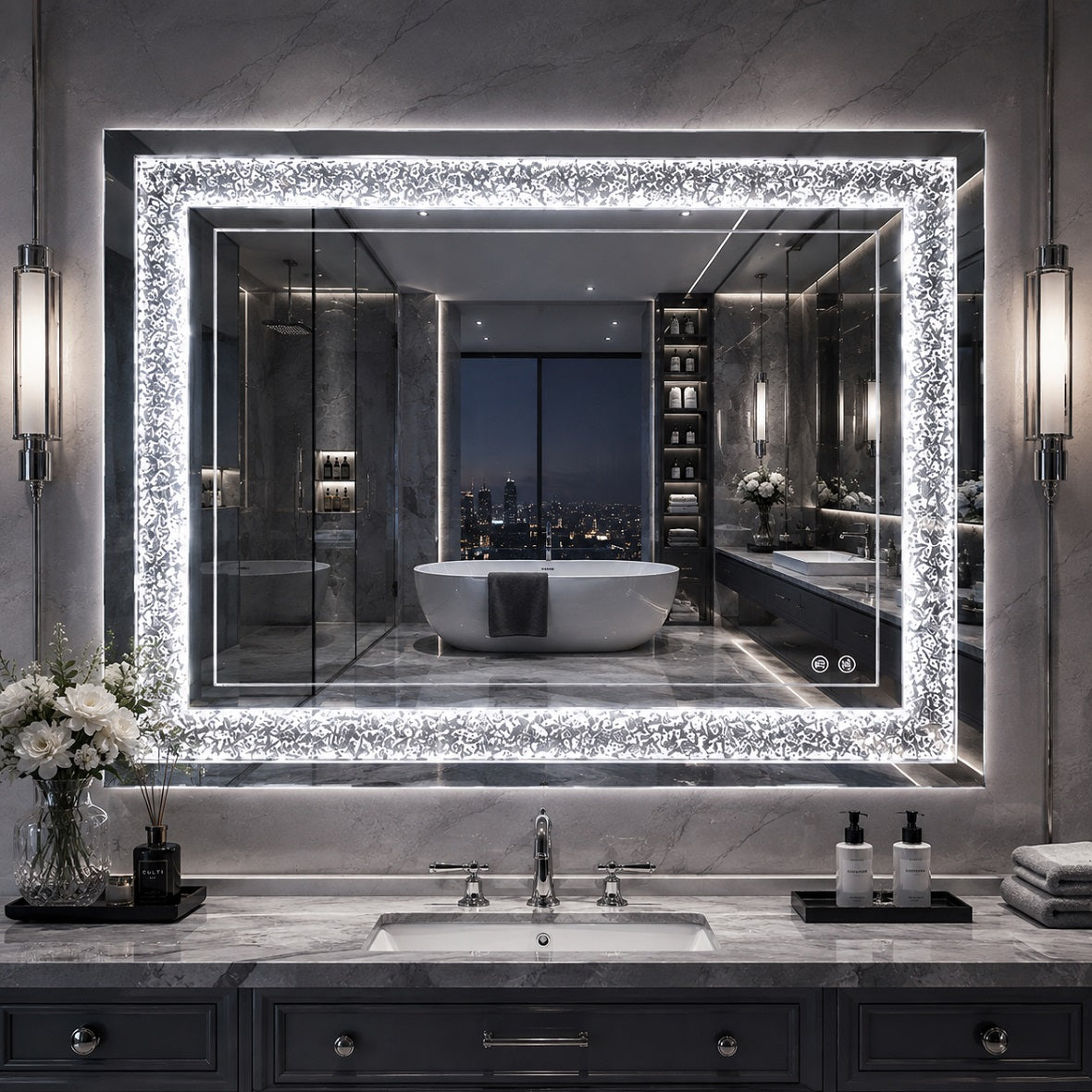
A rectangular vanity mirror provides more usable reflective area than most curved designs of the same overall dimensions. It works especially well with wide tables, makeup desks, and straight horizontal lines.
Choose a rectangular mirror for:
- Modern and minimalist vanity tables
- Hollywood-style makeup stations
- Wide tables with plenty of countertop space
- Vanities used for hair styling as well as makeup
- Shared dressing tables
A landscape mirror emphasizes the width of the table. This creates a grounded, furniture-like appearance and offers a broad view of your hair and shoulders.
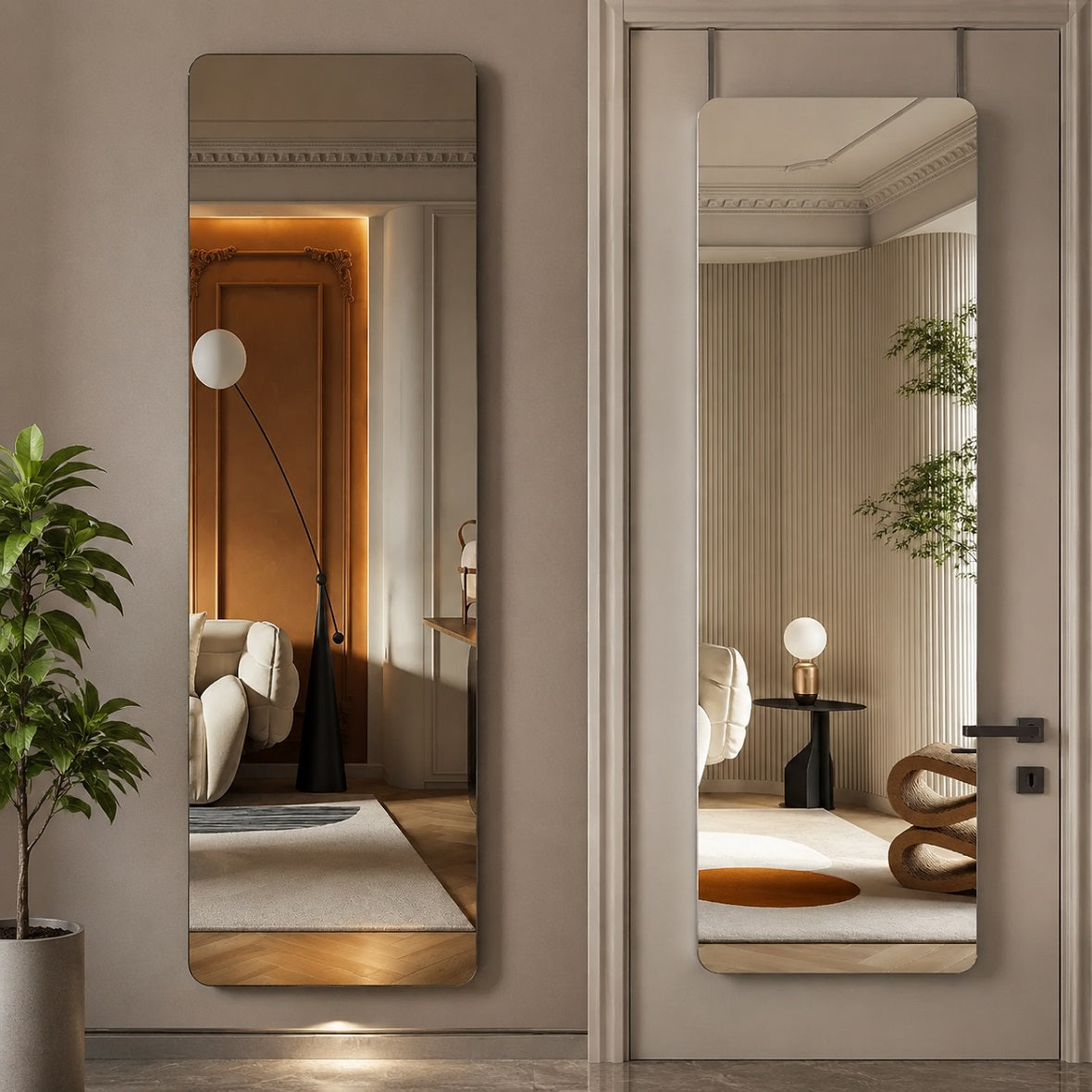
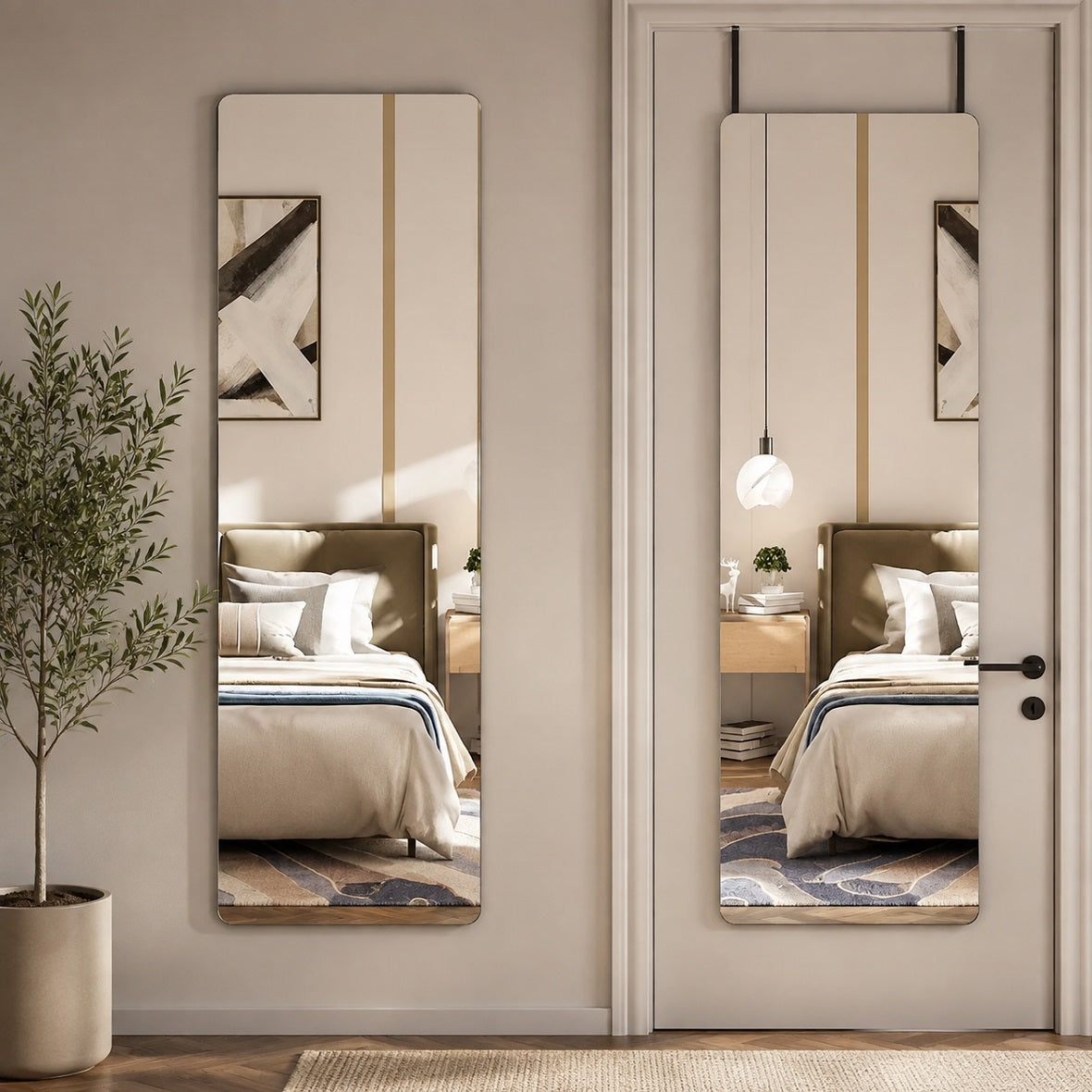
A vertical rectangle draws the eye upward. It can make a compact vanity area feel taller while providing more reflection without taking up extra wall width.
Rectangular mirrors can look too rigid when every other object in the room is also square. Rounded corners, a slim frame, or soft lighting can keep the setup from feeling severe.
A Hasipu lighted vanity mirror with a broad rectangular surface works naturally on a makeup table where clarity and even illumination matter as much as style. The defined shape also leaves room for organizers, perfume trays, and small lamps without making the tabletop look crowded.
Round Mirrors: Best for Small, Simple, and Mid-Century Tables
A round vanity mirror adds a relaxed curve to an area filled with drawers, shelves, and straight furniture edges. It is particularly effective above narrow tables because the open wall space around the circle keeps the arrangement from feeling heavy.
Round mirrors pair well with:
- Mid-century modern vanity tables
- Small writing desks used as makeup stations
- Floating vanities
- Scandinavian-style furniture
- Tables with tapered legs
- Simple tables without decorative details
The shape becomes a focal point without needing a thick or ornate frame. It also works well when the vanity sits between two windows, shelves, or wall sconces.
There is a practical tradeoff. A circle loses reflective space at its upper corners. This usually is not a problem for close-up makeup, but it may feel limiting when you want to see more of your hair or outfit.
Pay attention to scale. A small round mirror above a long table may look like it is floating without a clear relationship to the furniture. A larger diameter or a pair of nearby sconces can help fill the wall.
Oval Mirrors: Best for Traditional and Feminine Vanity Tables
Oval mirrors have the softness of a round mirror but provide more vertical viewing space. That makes them useful for tables with limited width and for people who want to see their hair, neckline, and face at the same time.
An oval makeup mirror is a natural match for:
- Traditional wooden vanities
- French-inspired dressing tables
- Vintage furniture
- Tables with curved fronts
- Vanities with cabriole or turned legs
- Romantic bedroom decor
An oval mirror can also soften a plain contemporary table. Choose a thin metal frame instead of carved detailing when you want a cleaner interpretation.
Vertical ovals usually suit narrow tables. Wider horizontal ovals work above tables with a low profile, though they provide less height for hairstyling. A swivel tabletop design adds flexibility because the glass can be tilted toward your seated eye level.
Arched Mirrors: Best for Farmhouse, Transitional, and Vintage Styles
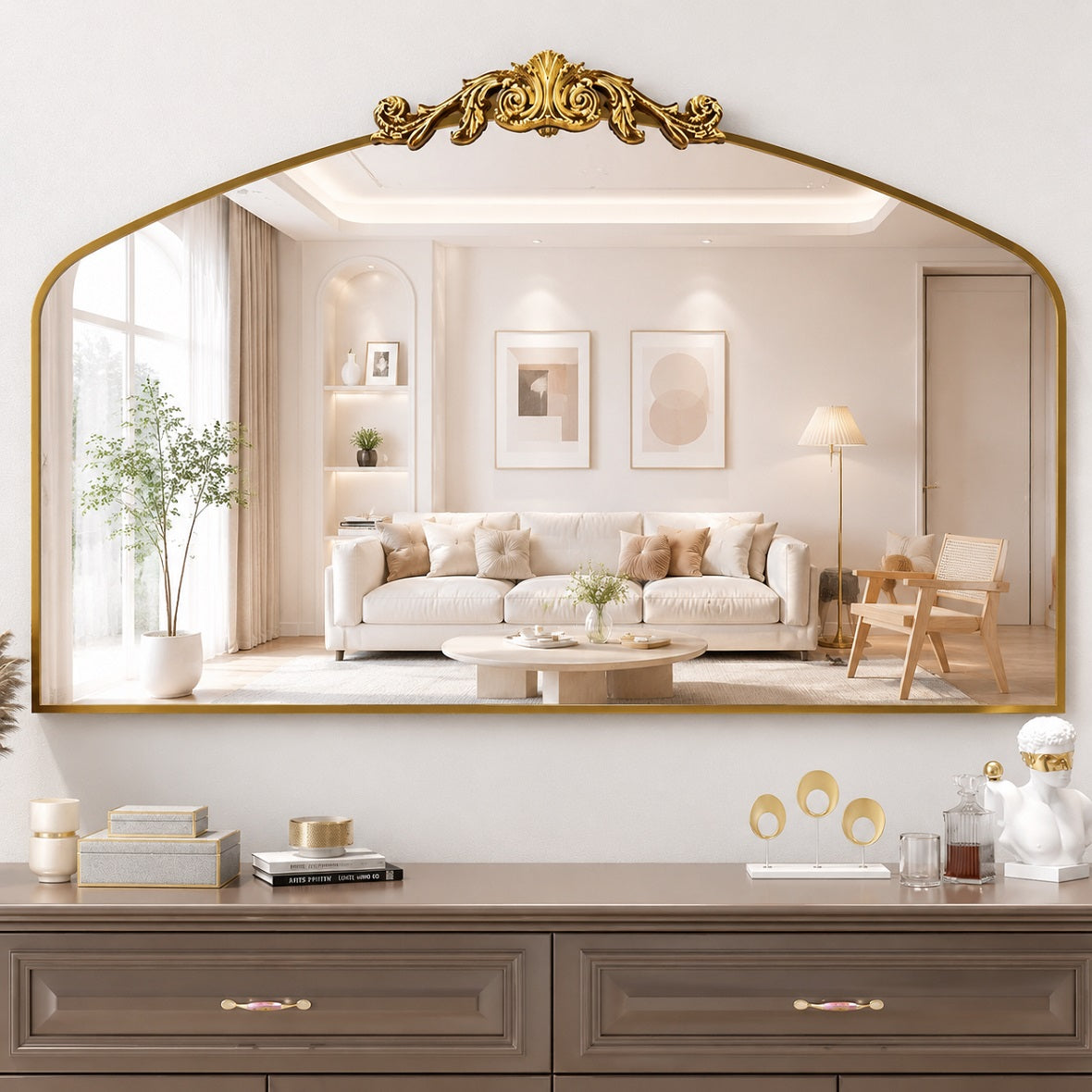
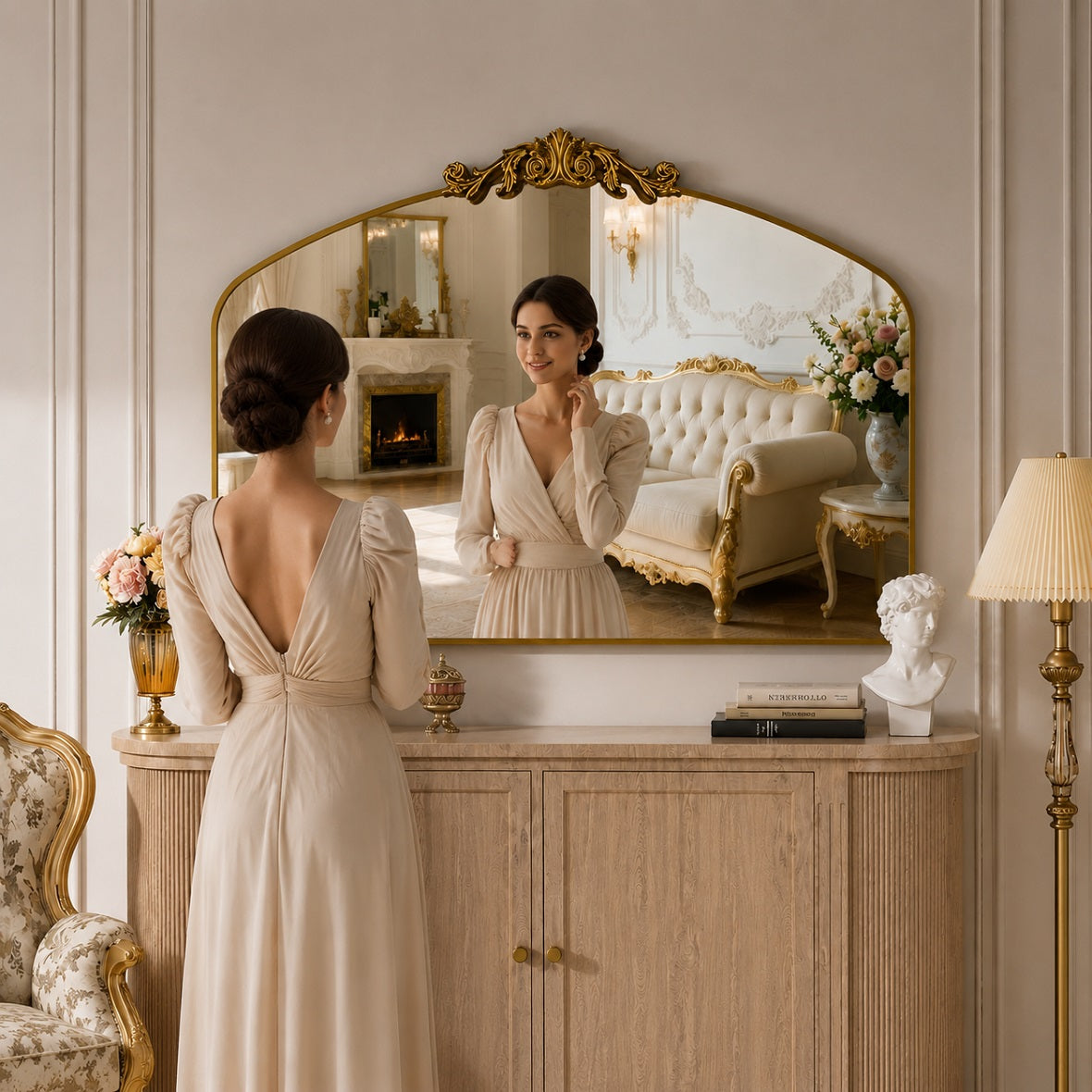
An arched vanity mirror combines the useful lower area of a rectangle with a softer curved top. It feels more architectural than a round mirror and less formal than a heavily decorated oval.
This shape works beautifully with:
- Farmhouse tables in natural or painted wood
- Transitional bedroom furniture
- Vintage-inspired vanities
- Simple contemporary tables that need character
- Tables placed inside an alcove or beneath a high ceiling
A narrow arch gives the wall a taller appearance. A wider arch feels more substantial and often works better on a large makeup vanity.
The lower edge should visually align with the tabletop or the main drawer section. This keeps the curve from looking detached from the furniture below.
For a practical dressing area, a Hasipu arched tabletop vanity mirror can bring in that softer silhouette while still offering a stable base and an adjustable viewing angle. Built-in LED lighting also reduces the need to fit separate lamps onto a crowded table.

Square Mirrors: Best for Compact Contemporary Vanities
Square mirrors have a clean, balanced appearance. They work best when the table has similar proportions or when the surrounding design is deliberately geometric.
Try a square mirror with:
- Compact contemporary vanities
- Cube-style storage drawers
- Floating tables
- Narrow makeup corners
- Symmetrical bedroom layouts
This shape can feel static when paired with a long horizontal table. It tends to look better over a compact vanity or as part of a larger arrangement that includes wall lights.
A square Hollywood mirror with visible bulbs creates a classic backstage makeup look. A frameless square mirror feels quieter and suits a pared-back room.
Irregular Mirrors: Best for Simple or Asymmetrical Tables
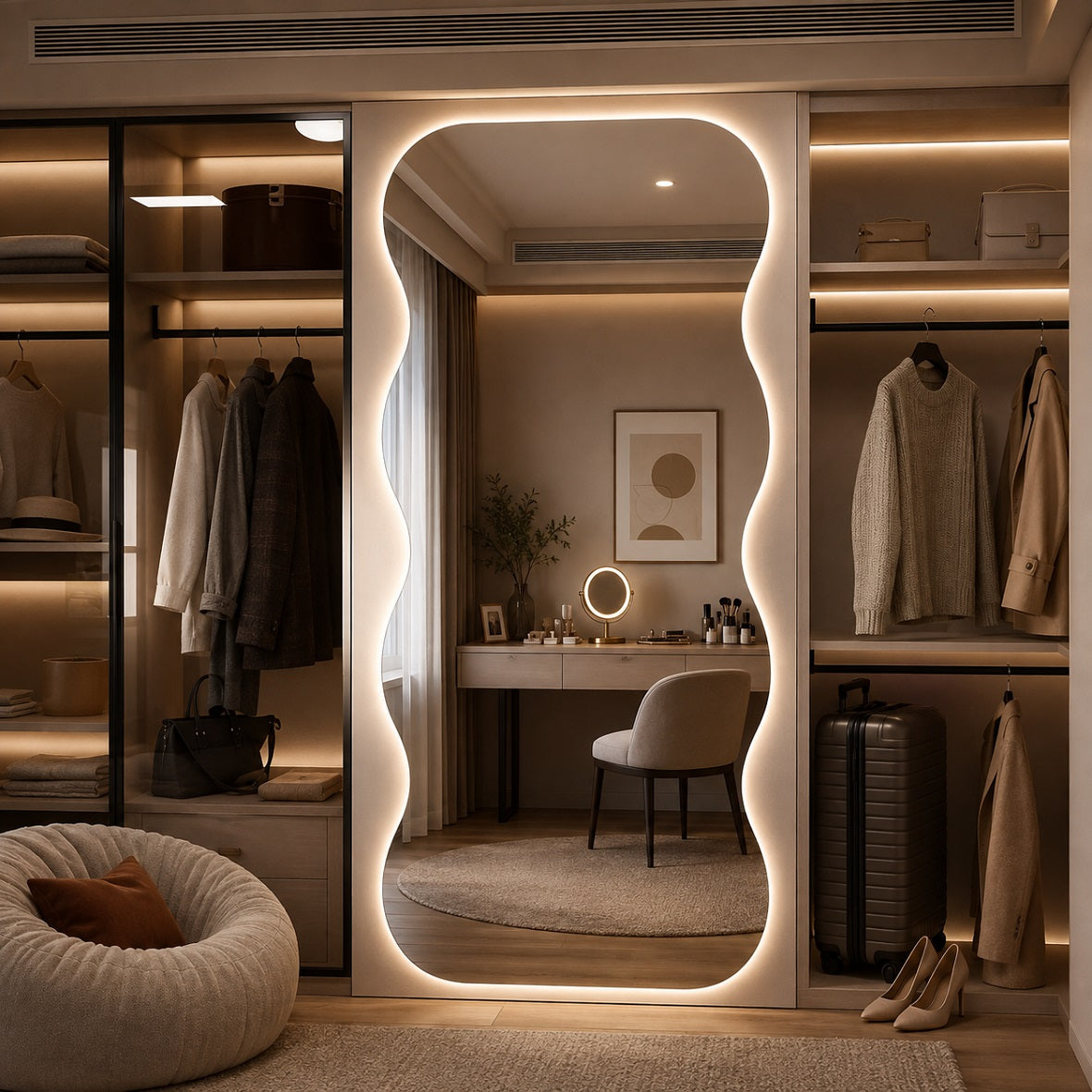
An irregular mirror can turn the vanity into a decorative feature. Organic curves, wavy edges, and asymmetrical silhouettes work best when the table itself is fairly simple.
Pairing an artistic mirror with a heavily carved vanity can create too many competing details. Give the unusual shape enough open wall space to be seen clearly.
An asymmetrical vanity mirror fits:
- Minimal tables with flat drawer fronts
- Creative bedrooms and dressing rooms
- Contemporary spaces with organic shapes
- Small vanities that need a strong focal point
- Neutral rooms that feel a little too predictable
Function still matters. Check that the narrowest areas of the mirror do not cut off the parts of your face or hair you need to see. A striking silhouette loses its appeal quickly when the reflection is awkward.
Hollywood Mirrors: Best for Dedicated Makeup Tables
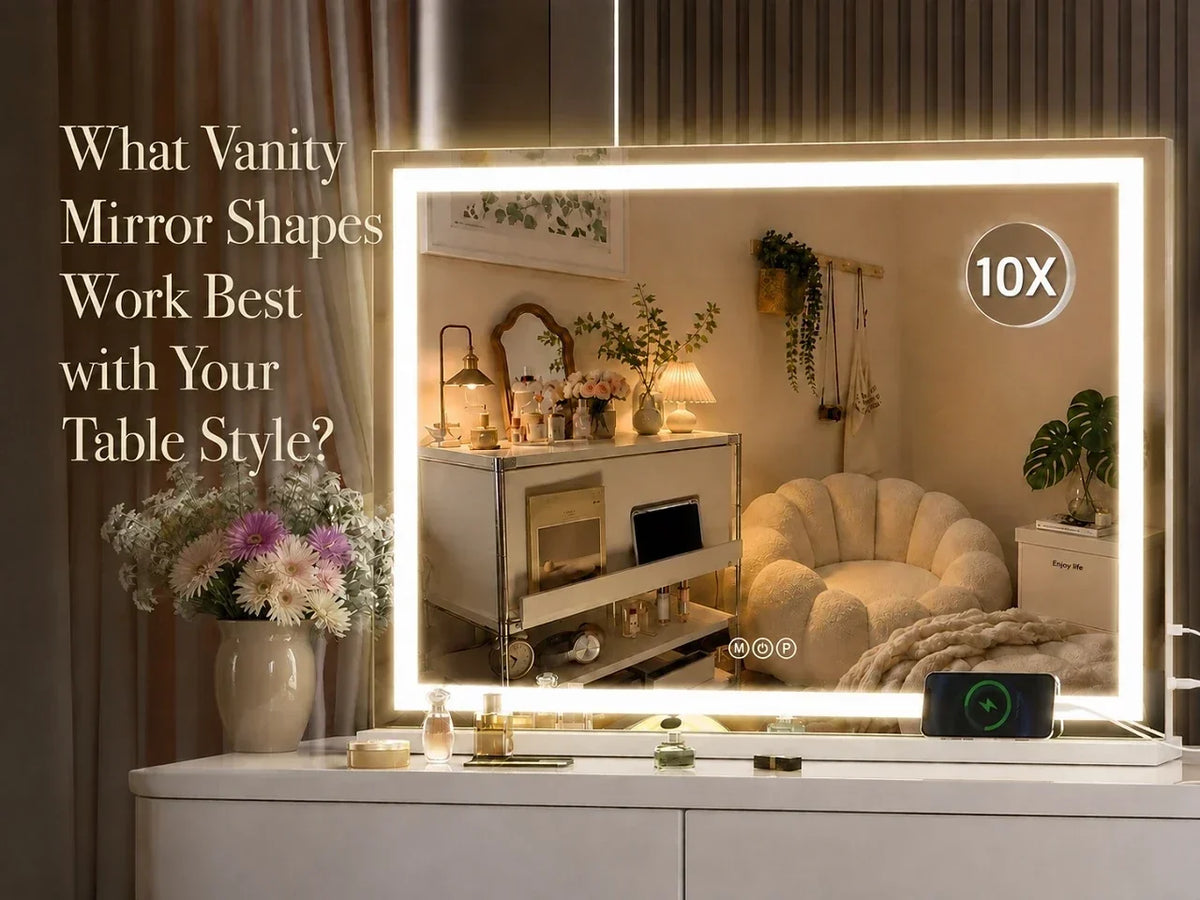
“Hollywood” describes a lighting style more than a glass shape, but most Hollywood vanity mirrors are rectangular or square. Those shapes create room for evenly spaced bulbs and offer a wide, uninterrupted view.
They suit:
- Dedicated makeup rooms
- Large dressing tables
- Glam bedrooms
- Beauty studios
- Vanities with drawers on both sides
A large lighted mirror can easily dominate a delicate table. Look at the depth and visual weight of the base as well as the width of the glass. A substantial mirror belongs on a table that can support it safely and still leave working space.
Hasipu vanity mirrors with adjustable brightness and multiple color temperatures allow the lighting to shift with the task. Warm light feels comfortable in the evening, neutral light suits everyday grooming, and cooler light can reveal details that softer lighting may hide.
Should the Mirror Match the Table Shape?
It does not need to match exactly.
Matching shapes usually create a more formal, orderly appearance. A rectangular mirror over a rectangular table is dependable and easy to style. Contrasting shapes make the area feel more collected and personal.
A useful approach is to repeat one feature rather than the whole design:
- Match a curved mirror to the table’s rounded drawer pulls.
- Repeat the metal frame color in the table hardware.
- Pair a wood-framed mirror with a table in a similar wood tone.
- Connect an arched mirror to curved chair backs or nearby doorways.
- Use a frameless mirror above a table with a simple, nearly invisible profile.
Designers often select a mirror shape that picks up lines already present elsewhere in the room. Architectural Digest gives the example of using curved mirrors to echo arched features in the home. The publication also notes that unusual mirror shapes can act as a focal point without requiring a full room renovation.
How Wide Should a Vanity Mirror Be?
Measure the table before choosing a shape. Guessing from a product photo rarely gives an accurate sense of scale.
For a wall-mounted mirror, a width around 70% to 80% of the vanity table often creates a balanced starting point. Houzz recommends this range when the mirror and vanity are not the same width. A mirror may also line up with the full table width for a more built-in appearance.
The rule is flexible for bedroom makeup tables because there is no sink or faucet controlling the placement. Still, the mirror usually should not extend far beyond both sides of the table. An oversized mirror can make a narrow table look unstable.
Use these measurements as a practical guide:
| Vanity table width | Suggested mirror width |
|---|---|
| 24 inches | 16–21 inches |
| 30 inches | 21–26 inches |
| 36 inches | 25–31 inches |
| 42 inches | 29–36 inches |
| 48 inches | 34–41 inches |
| 60 inches | 42–51 inches |
Round mirrors may look visually smaller than rectangular mirrors with the same maximum width because their corners are removed. Going slightly larger can restore balance.
Before ordering, mark the mirror’s outline on the wall with painter’s tape. Sit at the table, walk into the room, and check the shape from the doorway. This simple test catches scale problems that measurements alone may miss.
Wall-Mounted or Tabletop Vanity Mirror?
The table style is only part of the decision. The mounting method changes how the full setup looks and functions.
Wall-mounted mirrors
A wall-mounted vanity mirror keeps the tabletop clear and creates a cleaner arrangement. It works well with floating vanities, narrow desks, and tables used for both makeup and work.
The installation height needs to suit the person who will use it most often. Sit on the actual chair or stool and mark your eye level before drilling.
Tabletop mirrors
A tabletop mirror is easier to move and adjust. It is a practical match for rented homes, multipurpose desks, and vanities without a suitable wall behind them.
Check the base depth before buying. A deep stand may take away more working room than expected. A swiveling design helps users adjust the reflection without stacking books under the base or leaning forward.
Hasipu’s tabletop vanity mirror designs are suited to makeup stations that need flexible angles, a clear reflection, and controllable lighting without permanent wall installation.

Match the Mirror to the Rest of the Room
The table and mirror do not live in isolation. Look at the bed frame, nightstands, lighting, rugs, and architectural details nearby.
A room with many straight lines may benefit from a round, oval, or arched mirror. A room filled with curved furniture can use a rectangular mirror to add definition. Frame thickness matters too: a delicate vanity usually looks better with a slim frame, while a heavy dresser-style table can support something more substantial.
The reflection deserves attention as well. Mirrors can bounce light around a room and make a compact area feel more open, but they also repeat clutter. Architectural Digest recommends positioning mirrors to make better use of light and create a greater sense of space.
Place the mirror where it reflects a window, artwork, a tidy shelf, or an open section of the room. Avoid angles that show an unmade bed, exposed cords, or a crowded closet.
The Best Shape Is the One That Supports the Table
The most successful pairing looks good from across the room and works comfortably from the chair.
Choose a rectangle mirror when you want maximum reflection and a structured appearance. Pick a round mirror to soften a small modern table. Use an oval mirror with traditional or curved furniture, or an arched mirror when the room needs height and a little architectural character. Irregular mirrors belong in simpler setups where their shape has room to stand out.
Measure the vanity, test the outline on the wall, and think about how the mirror will be used each morning. Hasipu offers vanity mirrors with lighting, adjustable viewing options, and shapes suited to both modern makeup desks and more traditional dressing areas. The right design should feel like it belongs with the table—not like it was added later.
Frequently Asked Questions
1. What shape mirror makes a vanity area look bigger?
A tall rectangular, oval, or arched mirror can make the wall appear higher. A wide rectangular mirror increases the amount of reflected space and may make a small dressing area feel more open.
2. Can I put a round mirror over a rectangular vanity table?
Yes. The curved shape softens the table’s straight edges. Keep the mirror centered and choose a diameter that feels substantial enough for the table’s width.
3. Should a vanity mirror be wider than the table?
Usually, no. A mirror that is slightly narrower than the table tends to look more balanced. A full-width mirror can work in a built-in or Hollywood-style setup.
4. Which mirror shape provides the most reflection?
A rectangular mirror provides the largest usable reflective area for its overall width and height. It is well suited to hairstyling and shared vanity spaces.
5. What mirror works best for a small makeup table?
A round mirror, narrow oval, or vertical rectangular mirror keeps the arrangement compact. A tabletop mirror with an adjustable angle also works well when wall mounting is not possible.
6. Are arched vanity mirrors still in style?
Arched mirrors remain popular because the shape combines clean lines with a softer top. They fit modern, farmhouse, vintage, and transitional interiors without depending on a highly specific trend.