
Table of Contents
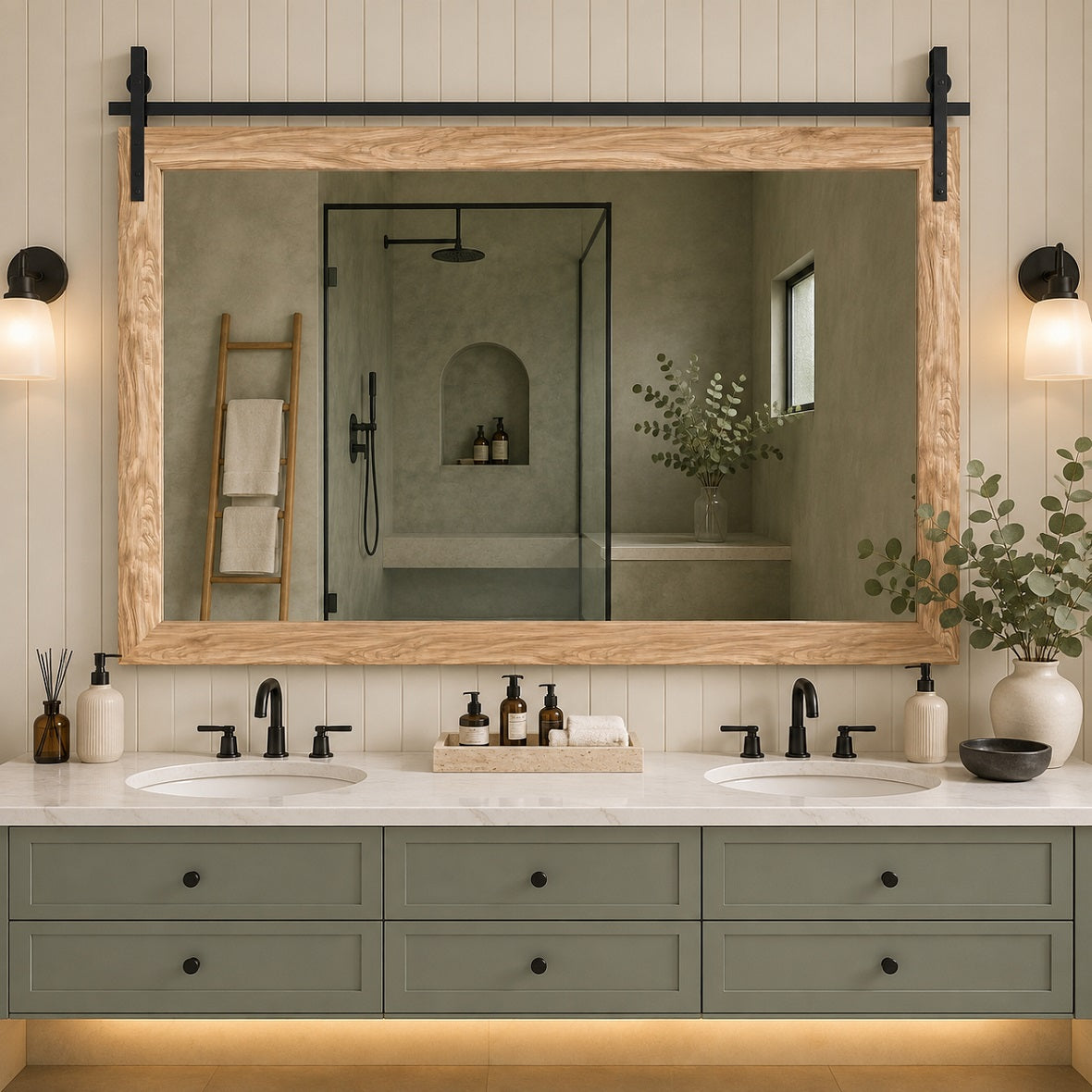
A double vanity solves one bathroom problem right away: two people no longer have to compete for the same sink. Choosing what goes on the wall above it is less obvious.
Should you hang one large mirror over a double vanity, or place two separate mirrors over the sinks?
Both layouts can look right. A single mirror gives you more reflective space, spreads light across the room, and creates one clean line above the countertop. Two mirrors define the two sink areas and bring more shape, symmetry, and personality to the wall.
The better choice depends on the width of the vanity, sink placement, bathroom lighting, available wall space, budget, and how the room is used every morning.
Single Mirror vs. Two Mirrors: Quick Comparison
| Feature One Large Mirror Two Separate Mirrors | ||
|---|---|---|
| Reflective area | Usually larger | More limited |
| Effect on the room | Feels open and continuous | Feels structured and balanced |
| Personal space | Shared viewing area | One mirror per sink |
| Best design fit | Modern, minimal, contemporary | Transitional, farmhouse, traditional |
| Lighting options | One long light or integrated LEDs | Separate lights or three sconces |
| Installation | Heavier and harder to handle | Smaller pieces are easier to lift |
| Cleaning | One continuous surface | More edges and gaps to clean |
| Sink alignment | More forgiving | Each mirror must align carefully |
| Replacement | Entire mirror must be replaced | One mirror can be replaced separately |
| Decorative impact | Clean architectural feature | More shape and frame detail |
| Typical cost | Depends heavily on size and customization | Depends on the cost of two mirrors and extra lighting |
Benefits of One Large Mirror and Two Mirrors
Both layouts have practical strengths. The difference is less about which one is “correct” and more about what you want the mirror to do for the room.
What One Large Mirror Does Well
A large mirror over a double sink vanity gives you one broad, uninterrupted reflection. That extra glass is useful because people rarely remain directly in front of a faucet while getting ready. You may step sideways while styling your hair, lean toward the center for better light, or move back to see more of yourself. A long mirror allows for all of that without a blank section of wall breaking up the view.
It can also help a narrow bathroom feel more open. By reflecting a wider part of the room, one mirror picks up more light from windows, ceiling fixtures, and nearby sconces. This is particularly helpful in bathrooms with little natural light.
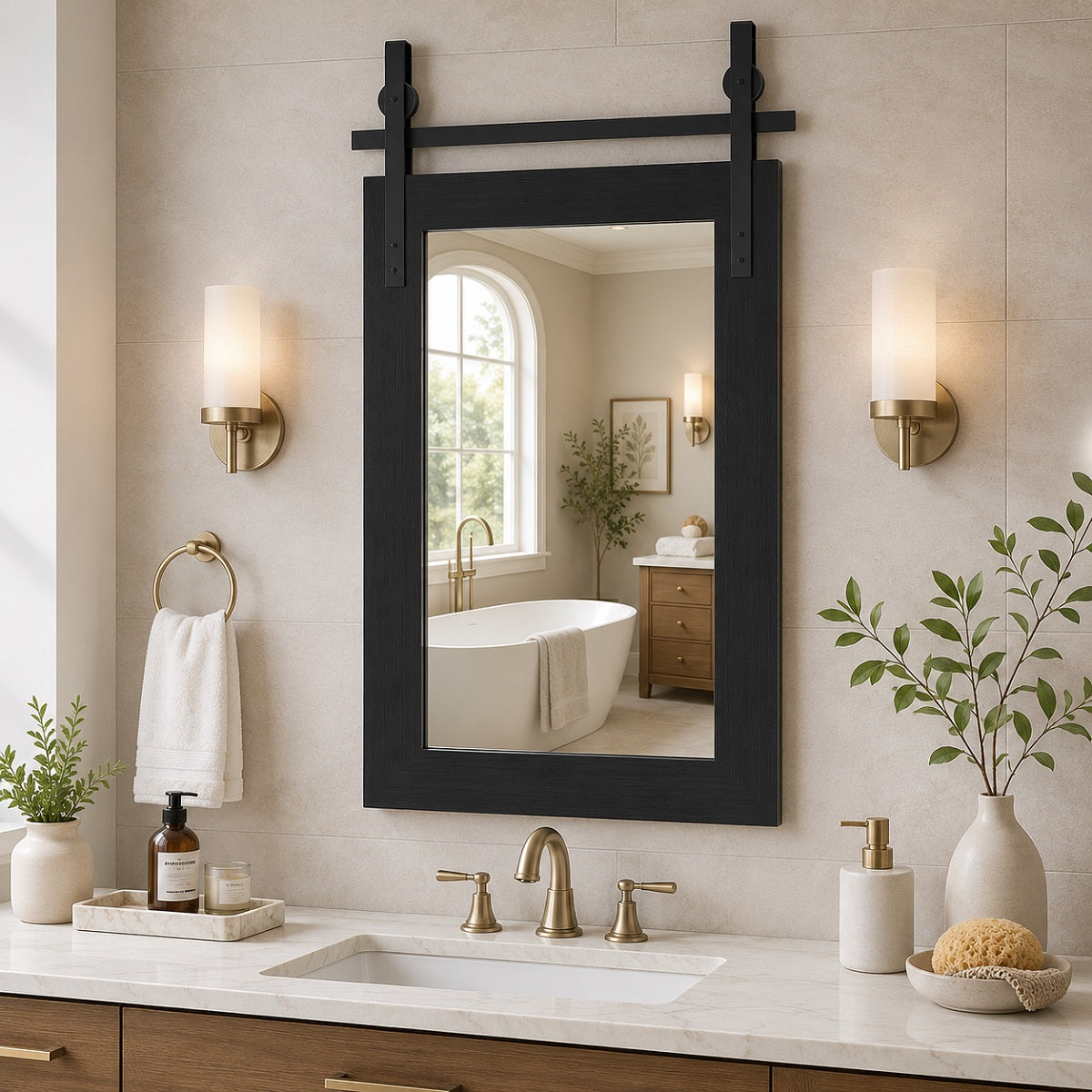
Visually, a single mirror can settle down a busy vanity wall. Tile, faucets, hardware, countertop products, and towels already create plenty of detail. One simple rectangle gives the eye a place to rest. A frameless bathroom mirror keeps the wall clean and minimal, while a slim black, gold, or silver frame adds just enough definition.
A large mirror can also serve as the main feature above the vanity. A carefully sized frame can pull together the cabinet color, countertop, and fixtures without requiring much additional wall decor.
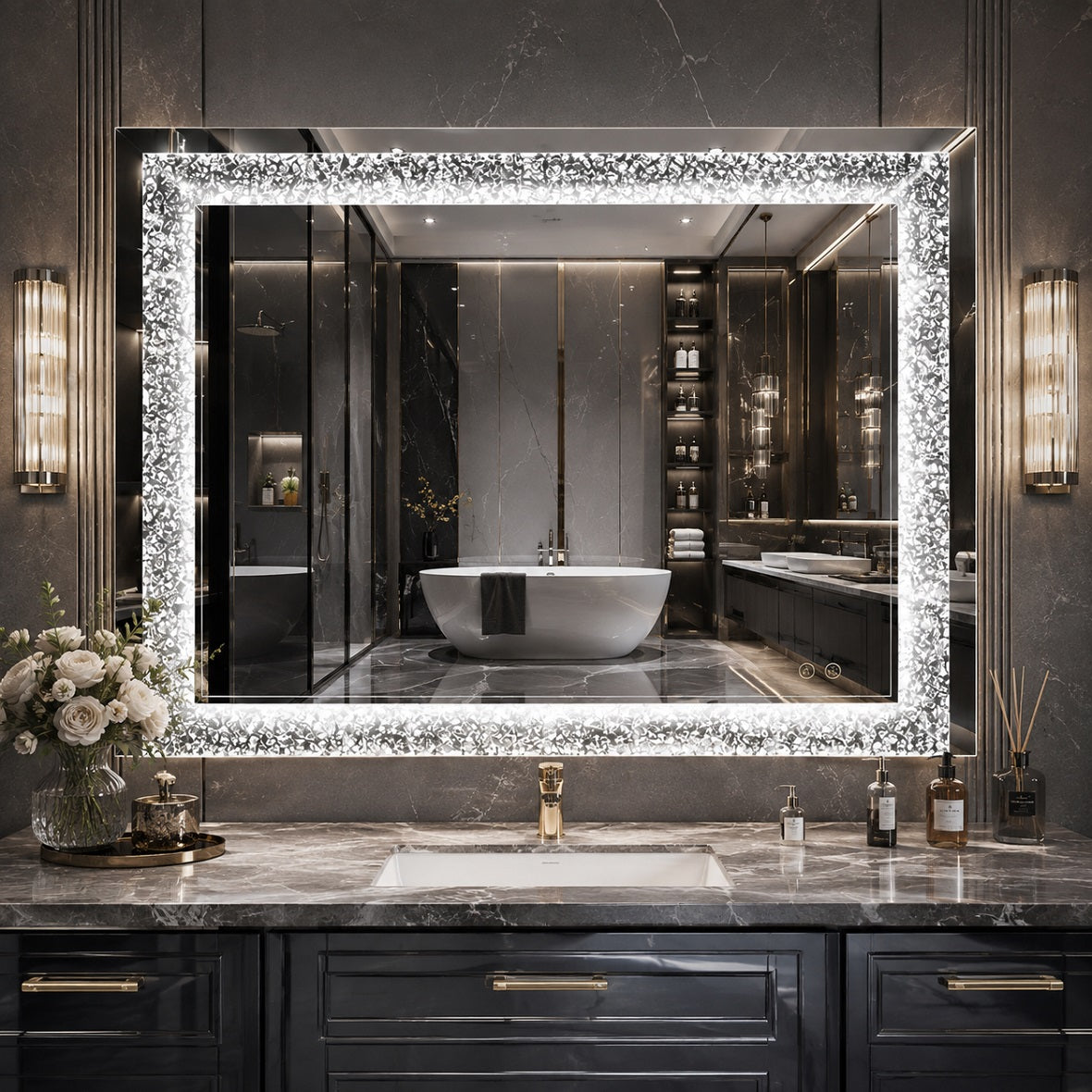
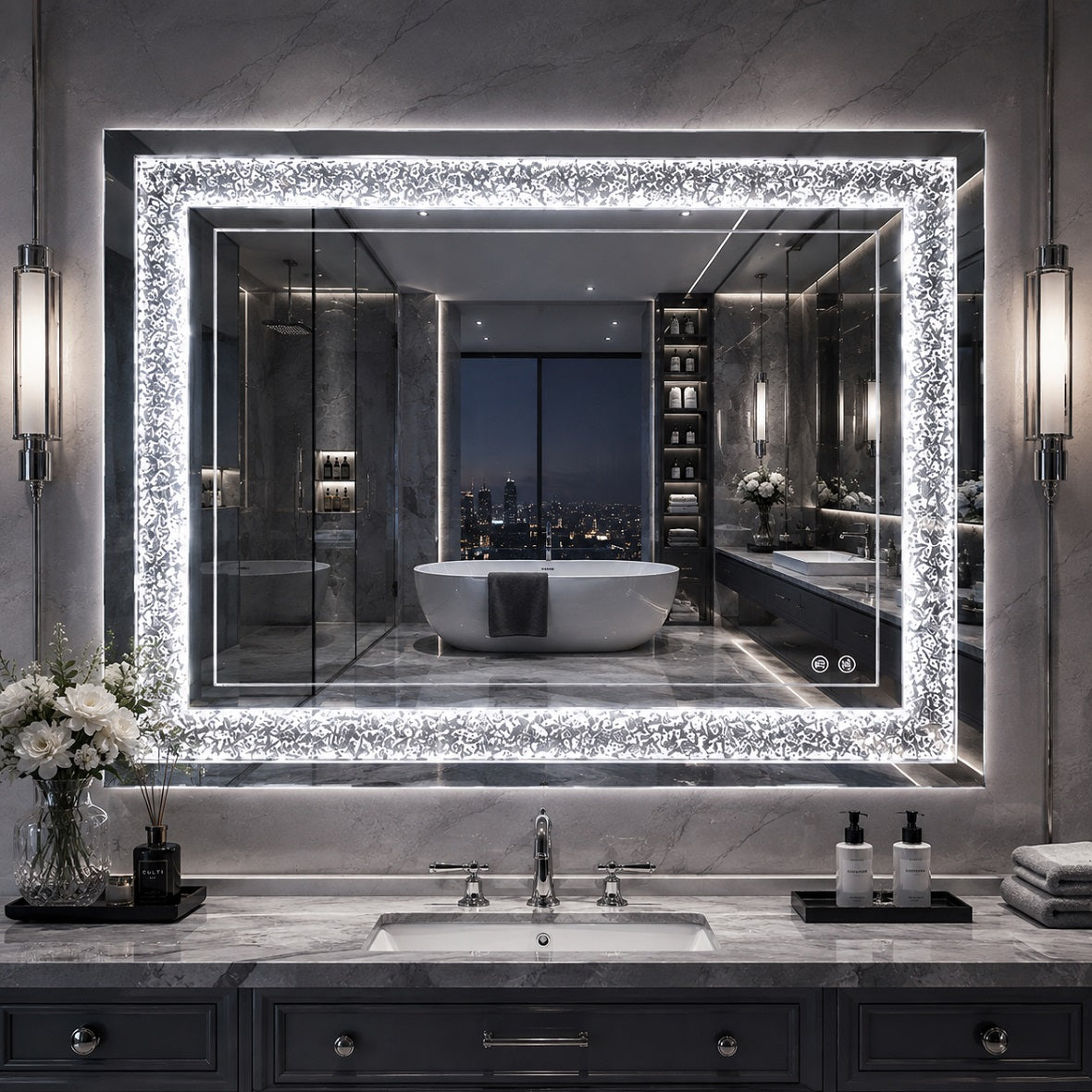
Integrated lighting is another advantage. A wide LED bathroom mirror can light both sink areas without leaving room for several separate fixtures. For a modern double vanity, a Hasipu LED mirror with adjustable brightness, selectable color temperatures, and anti-fog functionality can make a shared bathroom more comfortable to use. Features vary by model, so check the product specifications before planning the electrical work.
What Two Mirrors Do Well
Two mirrors follow the natural rhythm of a double vanity. Each sink gets its own vertical area, with the faucet, mirror, and light visually connected. On a wide vanity, this often looks more balanced than one very long piece of glass.
The layout is especially useful when two people get ready at the same time. Each person has a direct reflection and a clear section of the countertop. Personal products and storage can stay on their respective sides instead of drifting across the whole vanity.
Two mirrors also give you more freedom with shape. Arched mirrors soften square cabinets and rectangular tile. Round mirrors introduce curves, while rounded rectangles provide a softer look without losing too much reflective space. Frame finishes can repeat the faucets, cabinet pulls, shower trim, or light fixtures.
Lighting can be arranged more deliberately as well. You might place one fixture above each mirror or install sconces at the outer edges with another in the middle. If there is not enough wall space for several fixtures, two Hasipu LED mirrors can give each sink its own illuminated grooming area.
Smaller mirrors are usually less awkward to move and lift. This matters when the bathroom is reached through a narrow hallway or doorway. If one mirror is damaged later, you may also be able to replace that piece without removing the other one.
Drawbacks to Consider
Neither arrangement is perfect. Looking at the less convenient side of each option can make the decision much clearer.
Drawbacks of One Large Mirror
Size and weight are the main concerns. A large bathroom mirror can be difficult to carry through the house and position above a finished countertop. Depending on its dimensions and mounting system, installation may require two people or professional help.
Oversized mirrors can also cost more to ship. If a custom size is needed, fabrication, protective packaging, and delivery may add more to the project than expected.
Damage is harder to deal with, too. When a large mirror develops a crack or damaged edge, the whole piece generally has to be replaced. With two mirrors, damage to one side may involve a smaller replacement.
Lighting across a long mirror needs careful planning. A short fixture placed in the center may brighten the middle while leaving both sink areas dim. A longer vanity light, side sconces, or integrated LEDs will usually provide better coverage.
Scale can become an issue in a very large bathroom. One oversized mirror may take over the wall and leave the vanity feeling heavy. When the room has high ceilings and widely separated sinks, two mirrors can break up that width more naturally.
Cleaning one flat surface is simple, but the size can make the upper corners difficult to reach. Water spots and streaks are also more noticeable across a broad, uninterrupted sheet of glass.
Drawbacks of Two Mirrors
Two mirrors give you less total reflective area. The gap between them may look attractive, but it removes the part of the reflection that people often use when they step toward the center of the vanity.
They can also make a compact bathroom feel divided. Two frames, two fixtures, and the open wall between them create more visual stops than one continuous mirror. In a narrow bathroom, the result may feel crowded even when every item technically fits.
Sink placement has to be checked carefully. If the basins sit close together, two mirrors may become too narrow. If the sinks are near the outer ends of the vanity, each mirror can end up uncomfortably close to a side wall. Someone leaning toward the glass may have little room for their shoulders or elbows.
Alignment is less forgiving with a pair. A small difference in height, spacing, or distance from the faucets is easy to see. Both mirrors need to be measured from the same reference points rather than installed one at a time by eye.
There is also more to clean. Dust, hairspray, and water residue collect around two frames, between the mirrors, and near the extra light fixtures. Detailed frames add character, but they take longer to wipe down than a simple sheet of glass.
Replacing one mirror is not always as easy as it sounds. If the original model is discontinued or the frame finish has changed, finding an exact match several years later may be difficult. You could end up replacing the pair anyway.
How to Plan the Right Mirror Layout
Before comparing finishes and shapes, look closely at the bathroom you already have. The vanity, sinks, wall boundaries, lighting, and daily routine will usually point toward the better arrangement.
Start With the Available Wall
Measure the space between side walls, tall cabinets, windows, and door trim. Mark the center of each sink and note where the electrical boxes are located. Check the distance between the backsplash and the ceiling or existing vanity light.
A narrow wall often benefits from one continuous mirror. In a large primary bathroom, two mirrors have enough space to stand on their own without looking squeezed together.
The sink positions matter more than the cabinet doors. Two vanities of the same width may need different mirror layouts if their basins are arranged differently.
Consider Who Uses the Bathroom
For a couple with similar schedules, two mirrors can give each person a defined place to get ready. One person can shave while the other handles makeup or hair without competing for the same direct view.
A single wide mirror still works for two people, especially when both like having room to move. Make sure the light reaches both ends rather than concentrating only on the middle.
In a family bathroom, two mirrors may help children keep their sides organized. One wide mirror can be more forgiving when children are different heights or need to use step stools between the sinks.
When only one person regularly uses the bathroom, a double vanity does not automatically need two mirrors. A long mirror provides generous visibility, while the second sink area can remain useful for storage and counter space.
Use the Vanity Width as a Starting Point
A compact 48- to 60-inch double vanity often works better with one mirror. Once you leave room at the outer edges and between two frames, each mirror may become too narrow to use comfortably.
Two slim vertical mirrors can still fit when the sinks are small and evenly placed. Test the width around the head and shoulders before committing to that layout.
A 72-inch double vanity can usually handle either option. One long mirror creates a clean, continuous look. Two medium-size mirrors make the individual sink areas more distinct. At this size, lighting and style tend to make the final decision.
On an 84-inch or wider vanity, two mirrors have more breathing room. The middle space can hold a sconce, narrow cabinet, window, shelf, or decorative tile. One large mirror can still look impressive, though delivery and installation become more demanding as the size increases.
Work Out the Width From the Sink Centers
For one mirror, a width slightly narrower than the vanity usually looks balanced. A wall-to-wall mirror can work, but it should appear intentional rather than tightly fitted into the available space.
For two mirrors, do not divide the vanity width in half and order from that number. Find the center of each faucet and build the layout around those points.
Each mirror should provide enough glass for shaving, makeup, and hair styling. Leave some open wall between the pair and enough clearance beside tall cabinets or side walls.
Use painter’s tape to mark the proposed outlines. Stand at each sink, lean forward, move your arms, and look at the layout from the doorway. This simple test often reveals problems that are difficult to spot on a measurement sheet.
Decide Whether the Mirrors Should Match
A matching pair of mirrors is the most natural choice when the goal is symmetry. Use the same dimensions, shape, frame, and hanging height.
The frame does not have to match the faucet finish exactly. A black frame can work with brushed nickel fixtures when another black detail elsewhere in the room ties the finishes together.
Different mirrors need a clear connection. They might share a similar shape, frame color, size, or visual weight. Without that link, they can look like two unrelated purchases rather than a deliberate design.
Set a Comfortable Height
The tallest regular user should be able to see their entire head, while the shortest should not have to stretch or step too far back.
The bottom edge needs to clear the backsplash and faucet, but avoid leaving a wide, empty strip of wall without a reason. Check nearby cabinets and doors as well. The mirror should not interfere with anything that needs to open.
When installing two mirrors, aligning the top and bottom edges will usually produce the cleanest result. A staggered arrangement can work, but it needs to be clearly intentional.
Plan the Mirrors and Lighting Together
Do not wait until the mirrors arrive to decide where the lights will go. Tape the mirror and fixture outlines on the wall at the same time.
One large mirror can work with a long fixture above it, sconces at the outer edges, or integrated LEDs. For two mirrors, you can use one light above each mirror, three sconces across the wall, or two illuminated mirrors.
Measure the fixture backplates rather than judging only by the visible shades. Electrical boxes, wall studs, outlets, and switches may limit where everything can be positioned.
Think about how the light will be used, too. One person may prefer a warm glow early in the morning, while another needs brighter neutral light for shaving or makeup. A bathroom mirror with adjustable brightness and three color temperatures gives a shared vanity more flexibility without filling the wall with extra fixtures.
Plan the Mirror Layout Before You Buy
A mirror rarely looks wrong because it is an inch smaller than a design guide recommends. Problems usually start when its size, height, and lighting are planned separately. Before ordering anything, mark the full arrangement on the wall and look at it from several places in the bathroom.
Start With the Sinks, Not Just the Vanity
For one large mirror, a width slightly narrower than the vanity usually looks balanced. A wall-to-wall mirror can work, but it should feel like a deliberate part of the room rather than a mirror that barely fits.
With two mirrors, dividing the vanity width in half will not give you a reliable size. Find the center of each faucet and work outward from those points. The sinks may not be evenly spaced, even when the cabinet doors make the vanity appear symmetrical.
Each mirror needs enough width to show more than a face. Think about shaving, applying makeup, and lifting your arms to style your hair. There should also be some open wall between the mirrors and enough clearance beside cabinets or side walls.
Painter’s tape makes this much easier to judge. Mark the outlines, use both sinks as you normally would, and then step back to view the arrangement from the doorway. A layout that looks fine from six inches away can feel completely different from across the room.
Matching Mirrors Usually Look More Settled
A matching pair is the easiest way to create balance over a double vanity. Use the same dimensions and shape, and hang both mirrors at the same height.
The frame does not need to match the faucets exactly. A black frame can sit comfortably with brushed nickel fixtures when black appears somewhere else in the room, perhaps in a light fixture, cabinet handle, or shower frame.
Two different mirrors can work, but the connection between them needs to be clear. They might share a frame color, similar curves, or roughly the same visual weight. Without something tying them together, the vanity can look as though one mirror was replaced and the matching model was no longer available.
Set the Height for the People Using the Room
There is no mounting height that works for every family. The tallest regular user should be able to see their entire head, while the shortest should not have to stretch or stand too far back.
The lower edge needs to clear the backsplash and faucet, but avoid leaving a large empty band of wall without a reason. Check nearby medicine cabinets and doors as well. A mirror can fit neatly on paper and still block something that needs to open.
When hanging two mirrors, lining up their top and bottom edges usually gives the cleanest result. A staggered pair can look interesting in the right room, though it takes a more deliberate design to keep it from feeling accidental.
Leave Room for the Lighting
Decide where the lights will go while the mirror outlines are still taped to the wall. Waiting until after the mirrors arrive often leads to a fixture squeezed too close to the ceiling or sconces that do not line up properly.
One wide mirror can work with a long light above it, sconces at the outer edges, or built-in LED lighting. With two mirrors, you might place a fixture above each one or use three sconces—one at either end and another in the middle.
Measure the backplates of the fixtures, not only the visible shades. The electrical boxes need to fit into the available wall space, and their position may limit where the mirrors can hang.
Lighting preferences can differ in a shared bathroom. Someone getting ready early may want a soft, warm glow, while another person needs clearer neutral light for shaving or makeup. A bathroom mirror with adjustable brightness and three color temperatures lets the same vanity handle both routines without adding several separate fixtures.
Look Beyond the Initial Layout
Once both mirror arrangements fit the wall, the choice often comes down to how each one works with the rest of the bathroom—and how easy it will be to live with after the renovation is finished.
Let the Room Guide the Style
One mirror is not automatically modern, and a pair does not have to look traditional. The frame, shape, and lighting make a much bigger difference.
A wide rectangular mirror looks at home above a floating vanity, especially when the bathroom has large tile and simple hardware. In a farmhouse-style room, two rounded or black-framed mirrors can add definition without pushing the space too far into a rustic theme. Arched mirrors and classic sconces suit a traditional vanity, while a frameless or softly illuminated mirror works well in a quieter, spa-like bathroom.
Smaller rooms often benefit from a single stretch of glass because it reflects more of the room and leaves fewer breaks across the wall. In a larger bathroom, two mirrors have enough space to feel relaxed rather than crowded.
Instead of choosing by a style label, look for lines and finishes already in the room. A mirror can repeat the curve of a faucet, the straight edge of the vanity, or the metal finish used on the shower door. That small connection is usually enough to make the layout feel settled.
Price the Whole Installation
The shelf price does not tell you which option will cost less.
One standard mirror may be the more affordable route because it needs only one set of mounting hardware and a simpler lighting arrangement. Once the mirror becomes oversized or custom-made, delivery and installation can change that calculation. Large glass is heavy, difficult to carry, and may require professional handling.
Two standard-size mirrors can sometimes cost less than one custom piece, but the surrounding work may add up. A second light fixture, new electrical boxes, wall repairs, and the time needed to align both mirrors should all be included in the estimate.
Before deciding, compare the cost of the complete setup—not only the glass. Include delivery, hardware, lighting, electrical work, installation, and any tile or drywall repairs.
Think About Cleaning and Future Changes
A single frameless mirror is usually quicker to clean. There are fewer edges and narrow gaps for dust, water spots, and hairspray to collect.
Two framed mirrors take a little more effort, especially when a sconce sits in the middle. The upside is that smaller mirrors are easier to remove, move, or update during a later bathroom refresh.
If one mirror in a pair is damaged, you may be able to replace only that one. The catch is finding the same frame and finish several years later. Keeping the model information or buying a style that is likely to remain available can save trouble.
A custom wide mirror is more closely tied to one particular wall. Two smaller mirrors are easier to reuse elsewhere, but one large mirror provides the simpler everyday surface. The better option depends on whether you value low-maintenance cleaning now or more flexibility later.
When to Choose One Mirror or Two Mirrors
Choose one large mirror when the sinks are close together, the vanity is compact, or the bathroom has limited natural light. A continuous reflective surface can make the room feel wider and gives people more freedom to move while getting ready. It also works well when the wall already has bold tile or decorative details, when easy cleaning matters, or when you prefer a straightforward lighting layout. A single mirror can be especially practical when updating a builder-grade bathroom without moving the existing electrical boxes.
Choose two mirrors when the vanity is wide enough to leave comfortable space around each one and the sinks are positioned farther apart. This setup gives each person a defined grooming area and works well when two people use the bathroom at the same time. Two mirrors also make room for a center sconce, decorative frame shapes, and future design updates. Since each piece is smaller, the mirrors may be easier to carry, install, or replace individually.
Two mirrors look best when they clearly align with the sinks below. If they sit too close to the side walls or float awkwardly between the faucets, one larger mirror will usually feel more natural.
Common Mistakes to Avoid
A mirror can be the right style and still look wrong once it is on the wall. Most problems come from ordering too early. Before choosing a size, measure the vanity, mark the center of each sink, and check the height of the faucets and backsplash. Tall faucets need more clearance than product photos sometimes suggest.
With two mirrors, use the faucets or sinks as your starting points. Each mirror should feel connected to the basin below it. If you center the pair across the whole vanity without checking those individual centerlines, both mirrors can end up looking slightly off.
It also helps to think about what the glass will reflect. A large mirror may brighten the room, but it can also put an open toilet door, a cluttered shelf, or a bare wall on constant display. Stand where the mirror will go and take a picture facing the other way. You will get a fairly good preview of the finished view.
Plan the lighting at the same time. Once the mirrors are installed, there may not be enough room to center the sconces or place a fixture at a comfortable height. Mark the outlines of the mirrors and lights with painter’s tape before drilling anything.
And do not let a good-looking product photo make the decision for you. A slim arched mirror might suit the tile perfectly, but it will not be much fun to use if you have to lean sideways every morning. Leave enough glass around the face and shoulders for shaving, makeup, and hair styling—not just enough to fill the wall neatly.
Which Mirror Layout Is Right for Your Double Vanity?
For a compact or dim bathroom, one large mirror over a double vanity is usually the more practical choice. It gives you a wider reflection and helps the room feel less divided. Two mirrors tend to work better on a long vanity with well-separated sinks, particularly when two people use the bathroom at the same time.
If both arrangements seem possible, mark them on the wall with painter’s tape. Look at the outlines from the doorway and use the sinks as you normally would. This quickly shows whether two mirrors feel crowded or one large mirror feels too dominant.
Once the spacing, lighting, and daily use all make sense, you can choose a Hasipu bathroom mirror that fits the layout rather than forcing the room to fit the mirror.
Frequently Asked Questions
1. Should a double vanity have one mirror or two?
A double vanity can have either one large mirror or two separate mirrors. One mirror provides more reflective area and can make the bathroom feel open. Two mirrors define each sink and create a balanced, decorative layout.
2. Can one mirror cover both sinks?
Yes. A single mirror can span both sinks as long as it remains proportionate to the vanity and can be mounted safely. This layout is common in modern bathrooms and rooms where a wide reflection is useful.
3. Are two mirrors better for a 72-inch double vanity?
A 72-inch vanity is generally wide enough for two mirrors, but one large mirror can work just as well. Sink spacing, lighting, frame style, and the amount of reflection you want should guide the decision.
4. Should two vanity mirrors be centered over the sinks?
In most layouts, yes. Centering each mirror over its faucet or sink creates a clear visual connection between the upper and lower parts of the vanity.
5. How much space should be left between two bathroom mirrors?
There is no single measurement that works in every bathroom. Leave enough room for the mirrors to read as separate pieces and, when needed, fit a sconce between them. Test the gap with painter’s tape before ordering.
6. Do both bathroom mirrors need to be the same size?
Matching sizes usually create the most balanced appearance over a double vanity. Different sizes can work in an intentionally asymmetrical bathroom, but they need another shared feature, such as frame color or shape, to keep the wall connected.