Table of Contents
A salon mirror may seem like a straightforward piece of equipment, but stylists and clients rely on it throughout haircuts, color services, makeup sessions, beard trimming, and final consultations. It needs to show a clear, practical reflection while fitting around the chair, counter, lighting, outlets, and storage.
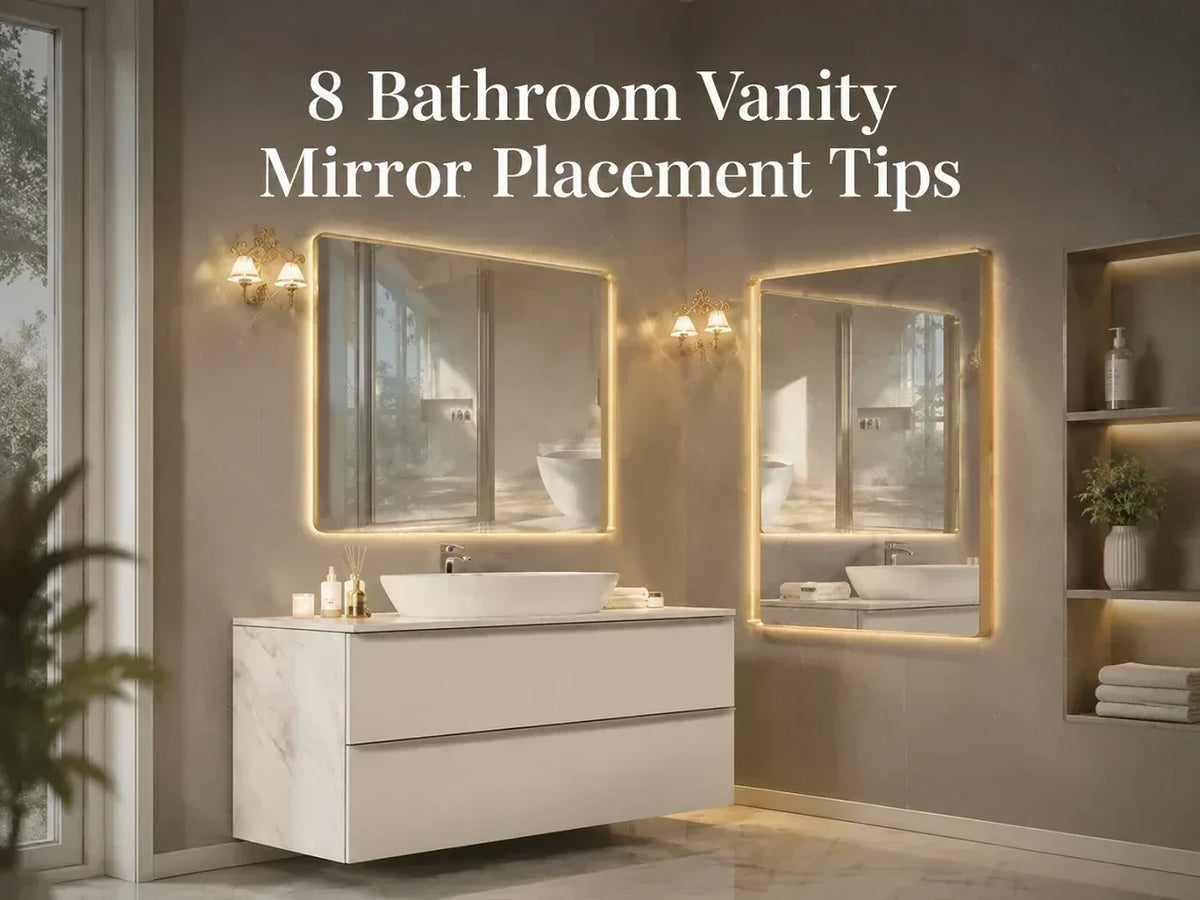
The mirror also changes the way a salon looks and feels. Large salon mirrors reflect light, add visual depth, and help define the style of a hair salon, barbershop, or beauty studio. Poor placement can create glare, restrict the viewing area, or put workplace clutter directly in the client’s line of sight.
This guide covers the main salon mirror types, suitable sizes and shapes, lighting, placement, installation, safety, and maintenance. It also explains what salon owners should examine before purchasing mirrors for a new business or renovation.
Salon Mirror Types at a Glance
| Salon Mirror Type | Best For | Main Advantage | What to Check |
|---|---|---|---|
| Wall-mounted salon mirror | Hair salons and barber stations | Saves floor space | Wall support and viewing height |
| Full-length salon mirror | Long hair, bridal styling, and final checks | Shows the complete appearance | Glass height and viewing distance |
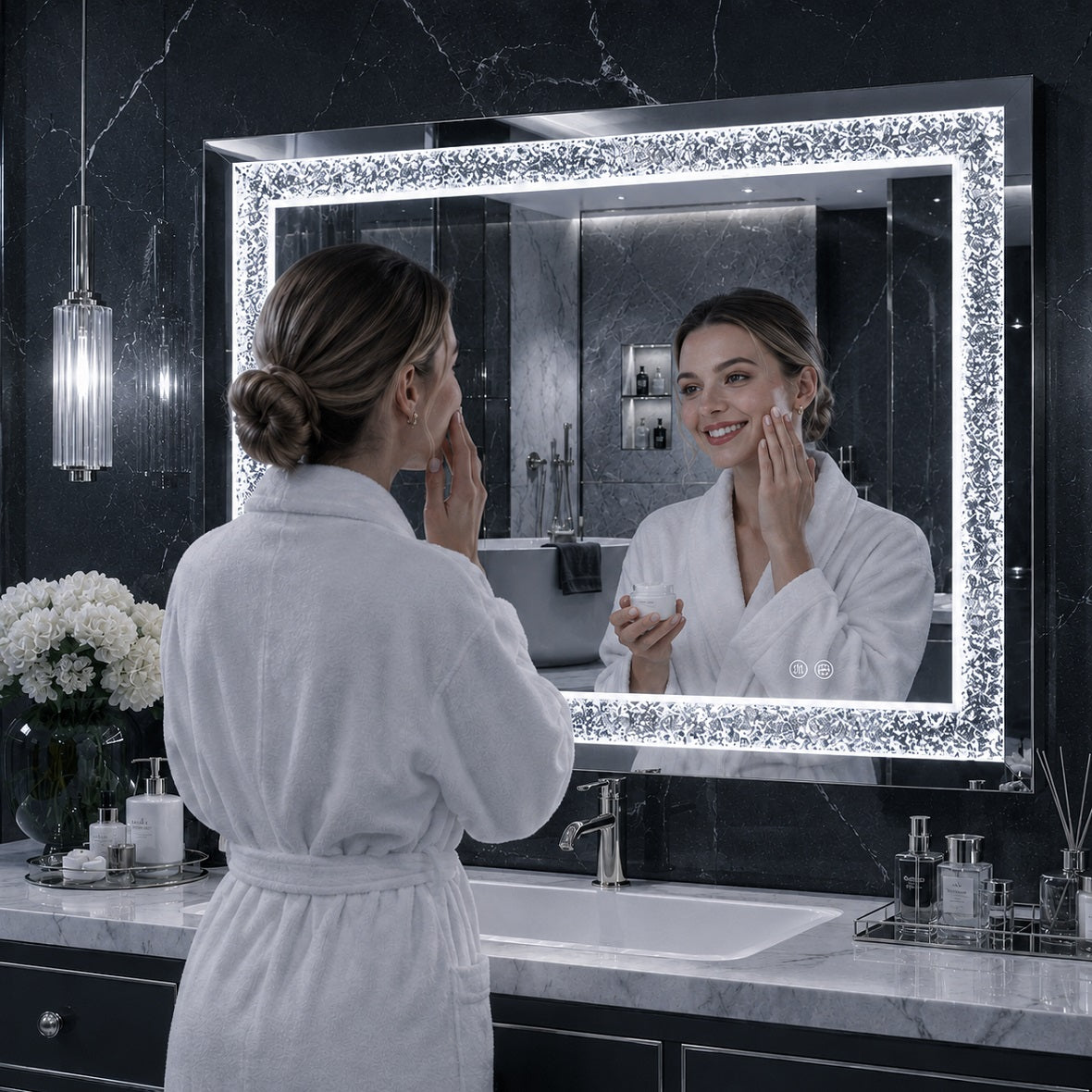
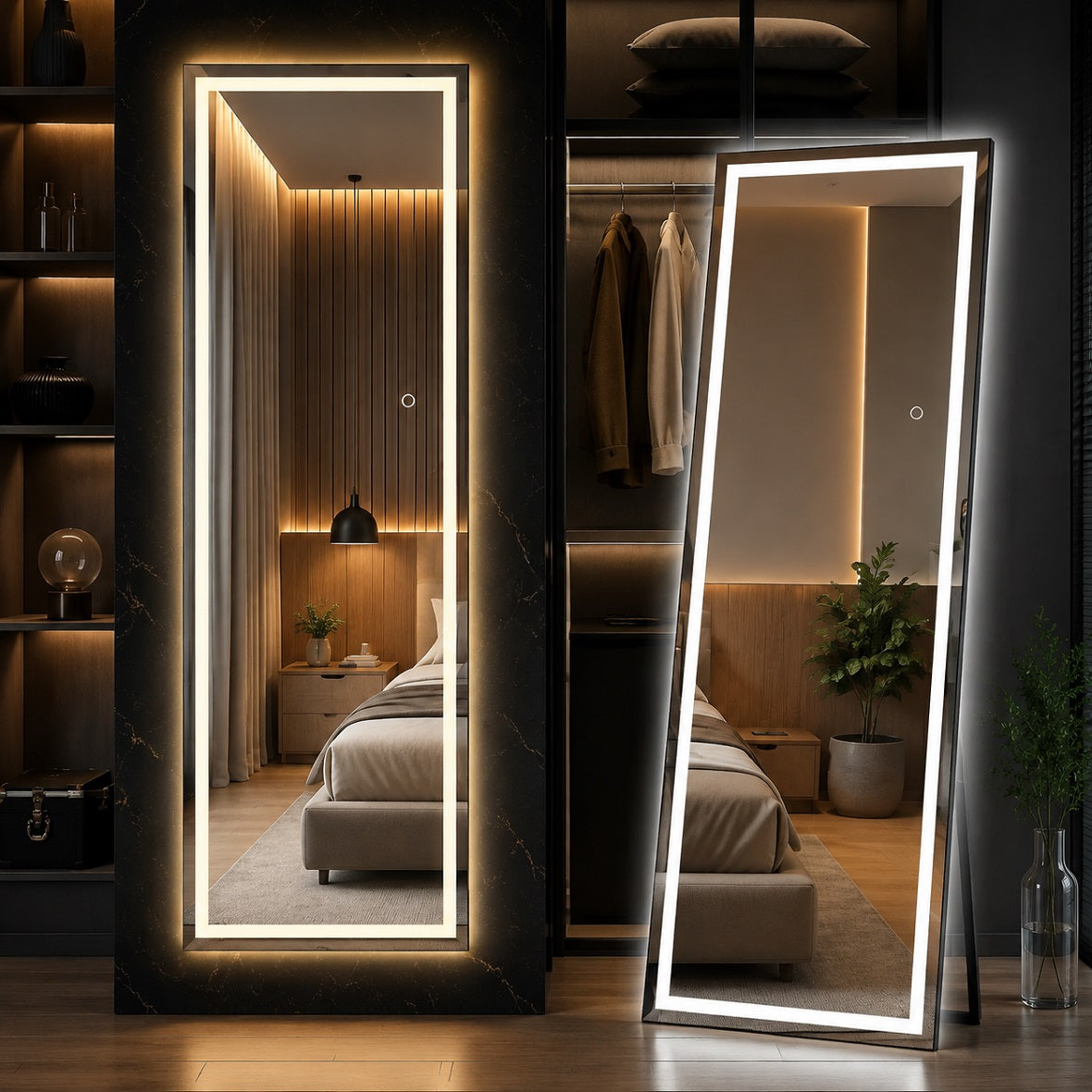
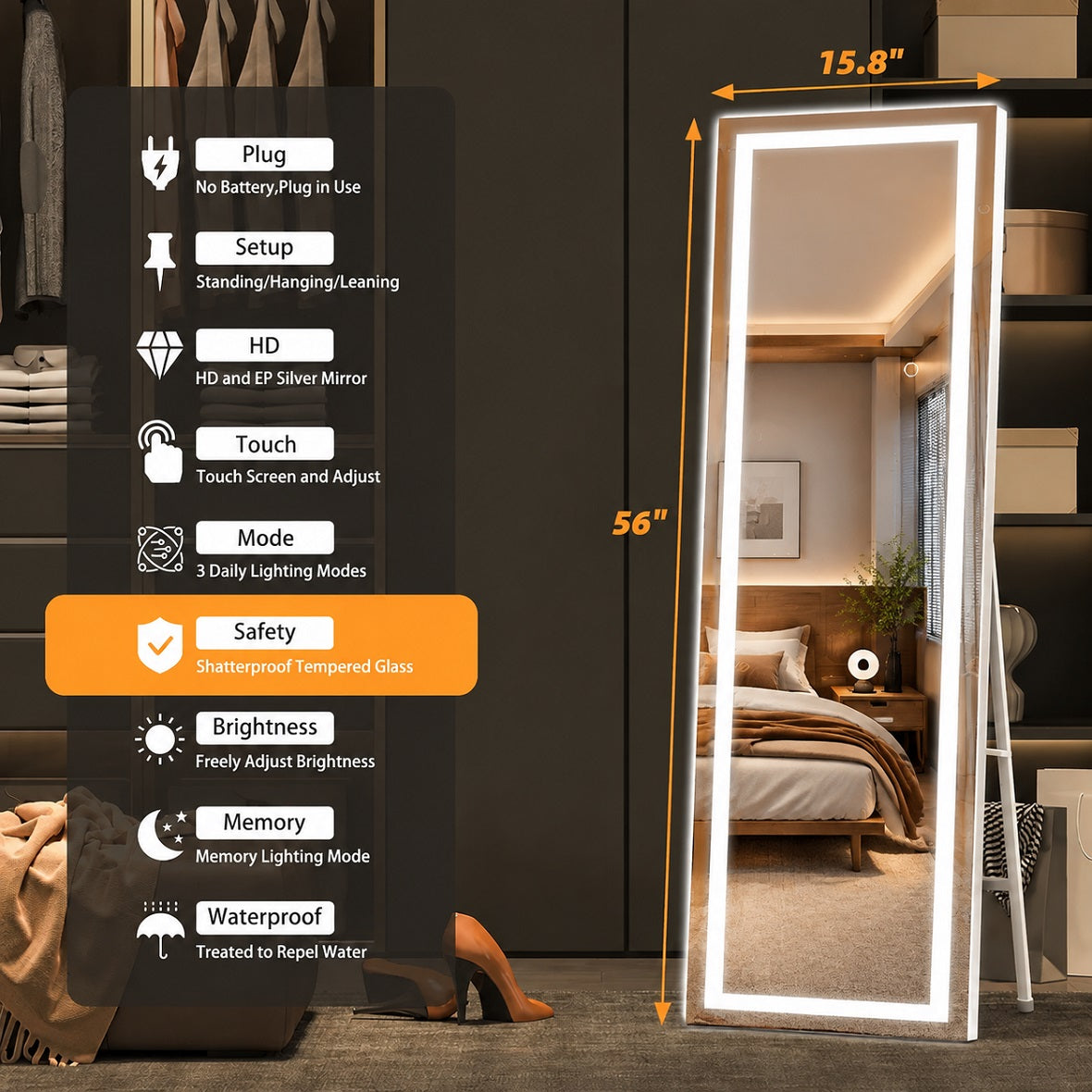
| LED salon mirror | Hair color, makeup, brows, and beauty services | Provides controllable station lighting | CRI, brightness, and color temperature |
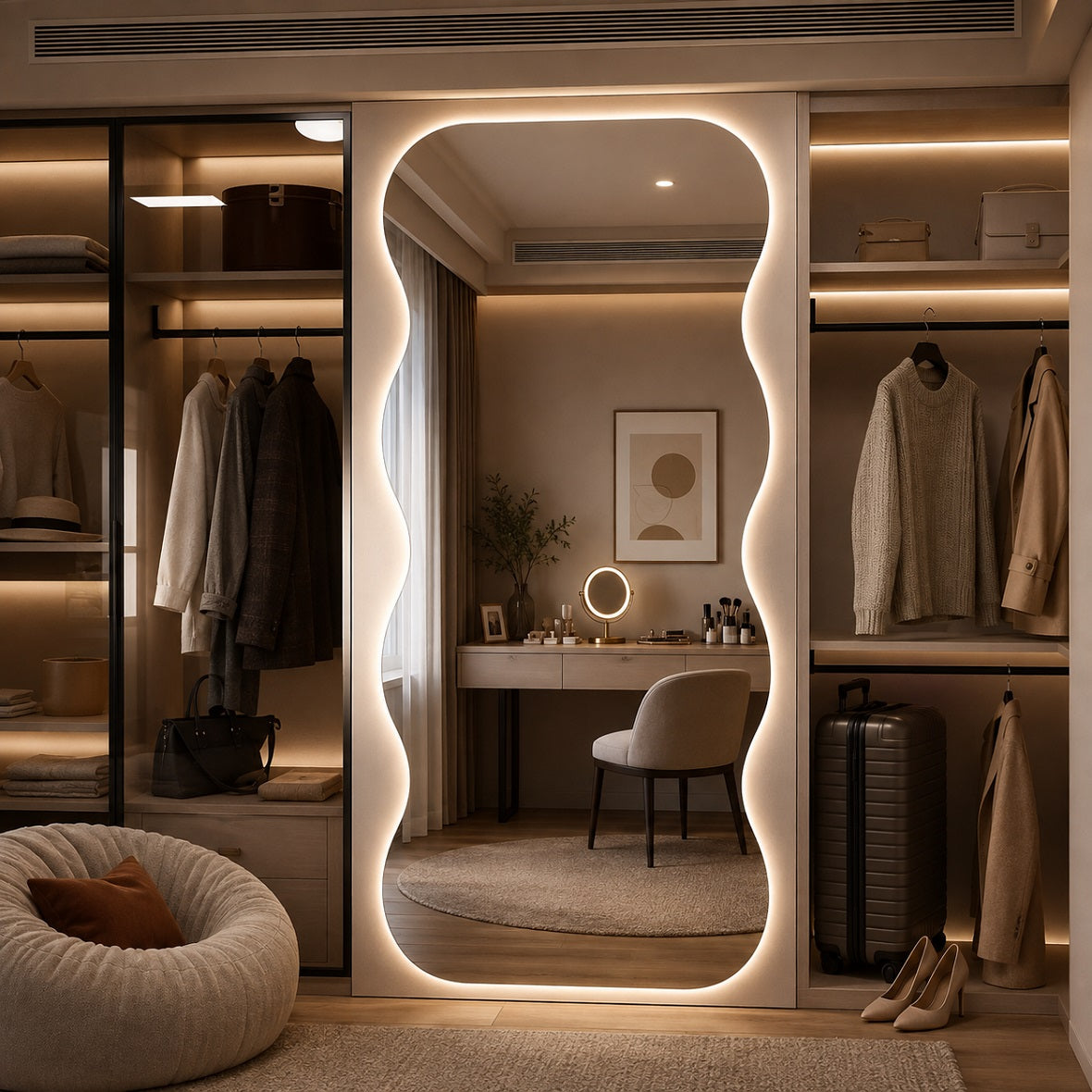
| Backlit salon mirror | Modern salons and spa-style interiors | Creates a soft wall glow | May need separate task lighting |
| Front-lit salon mirror | Makeup, barbering, and detail work | Directs light toward the face | Glare and light diffusion |
| Double-sided station mirror | Open salon layouts | Supports two workstations | Base stability and cable routing |
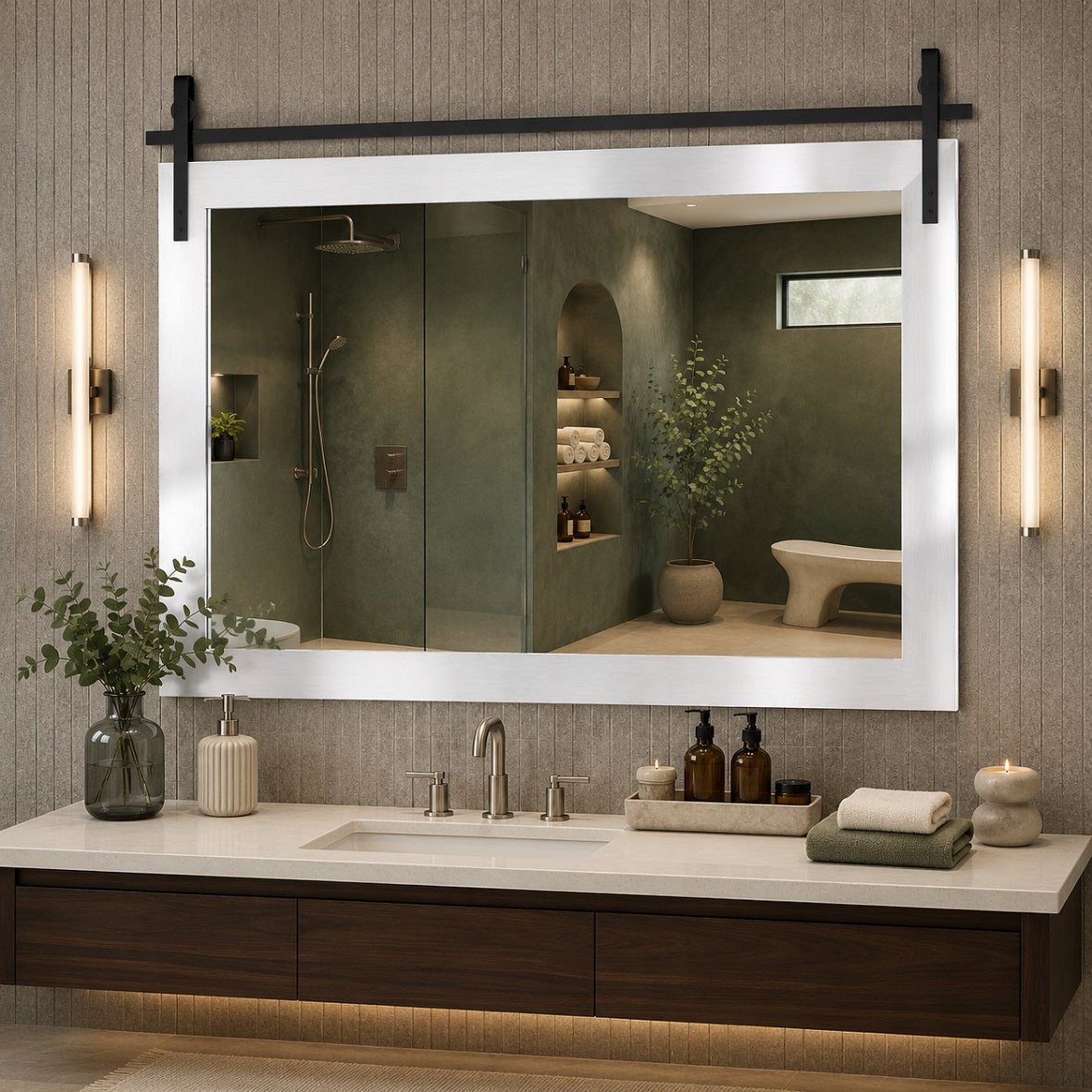
| Frameless salon mirror | Minimal and compact salons | Creates a clean, spacious appearance | Finished edges and secure mounting |
| Mobile salon mirror | Flexible studios and training rooms | Moves between work areas | Locking wheels and base stability |
What Is a Salon Mirror?
A salon mirror is designed for use at a hair styling, barber, makeup, or beauty station. It may be mounted on a wall, attached to a cabinet, built into a freestanding station, or installed on a movable base.
Salon mirrors tend to be larger than ordinary household vanity mirrors. The reflective area needs to show the client’s face, hairstyle, shoulders, and enough of the stylist’s working area to support accurate cutting, coloring, and styling.
Commercial use also places more demand on the materials. Hairspray, fingerprints, moisture, makeup, hair dye, cleaning products, and repeated contact are common around a busy workstation. Glass quality, frame finish, mirror backing, electrical components, and mounting hardware all affect long-term performance.
Professional salon suppliers currently group mirrors into wall-mounted, full-length, lighted, single-station, and double-sided formats. This reflects the different ways working salons organize chairs, storage, lighting, and floor space.


What Size Should a Salon Mirror Be?
There is no universal size for every salon. Chair width, service type, viewing distance, wall dimensions, counter height, and the desired field of view all affect the decision.
A station mirror should comfortably show the client’s head, hairstyle, shoulders, and the stylist’s main working area. A mirror that is visibly narrower than the salon chair may feel restrictive. Commercial styling stations with mirrors are often around 30 to 40 inches wide, according to Minerva Beauty’s salon station buying guide. Use this range as a starting point rather than a fixed rule. Long-hair services and wider stations may need a broader mirror, while a compact beauty studio can use a narrower design when the viewing area remains practical.
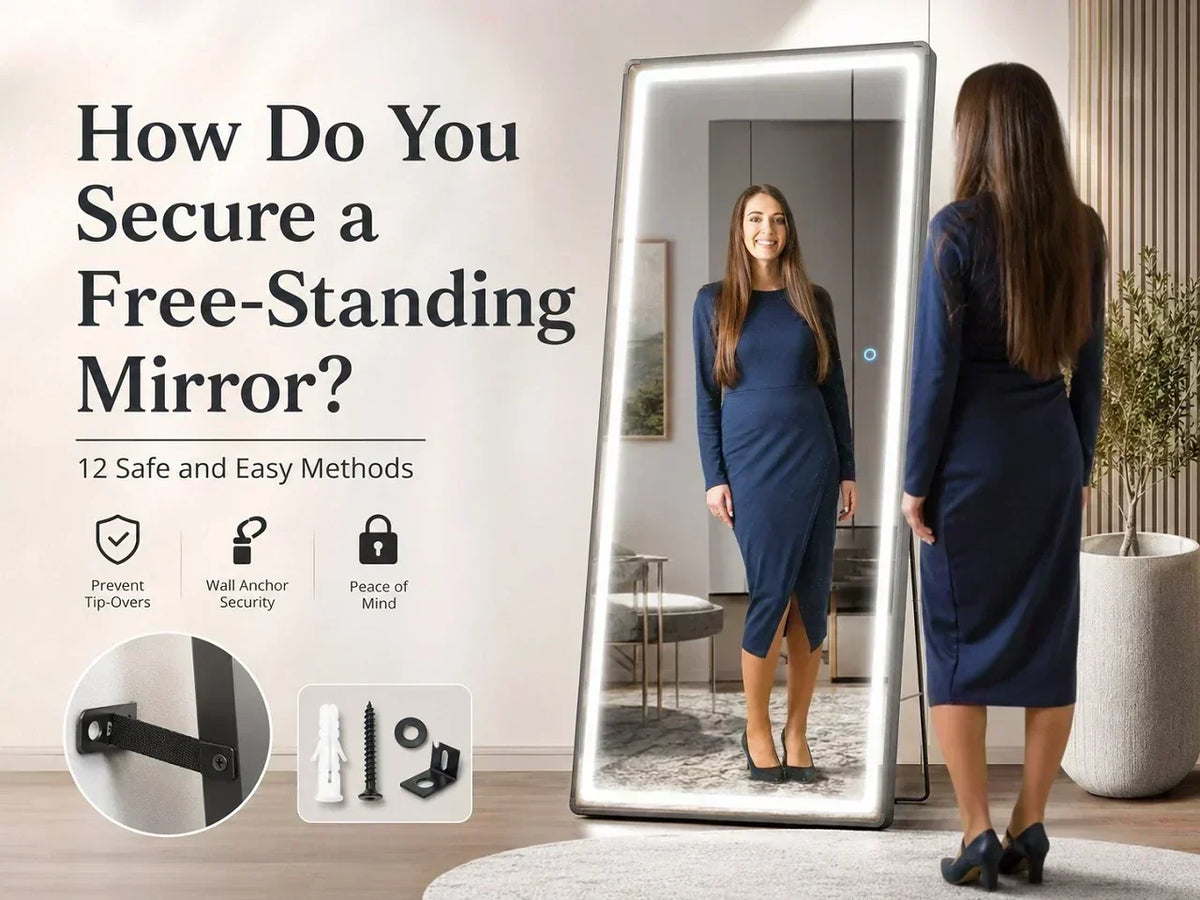
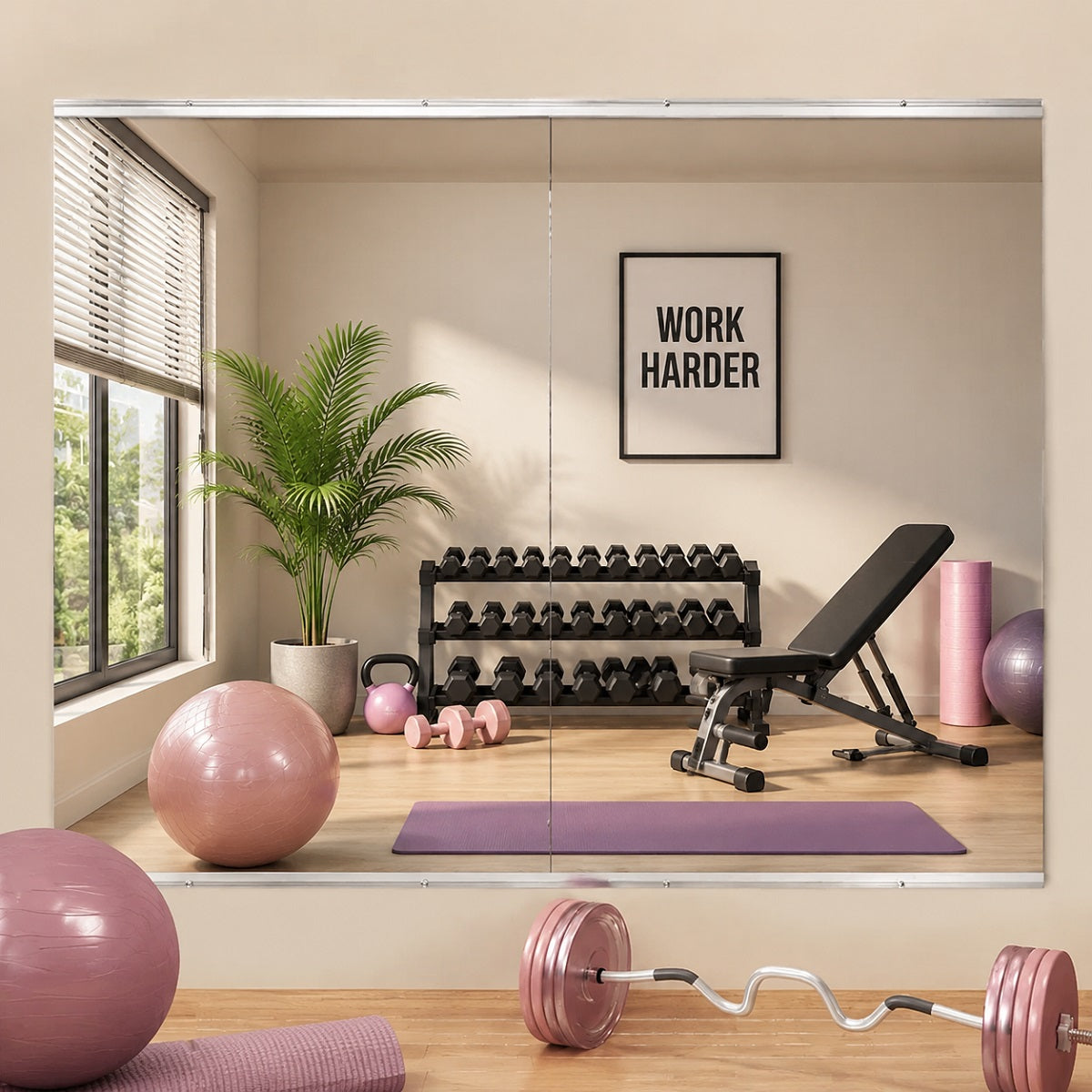
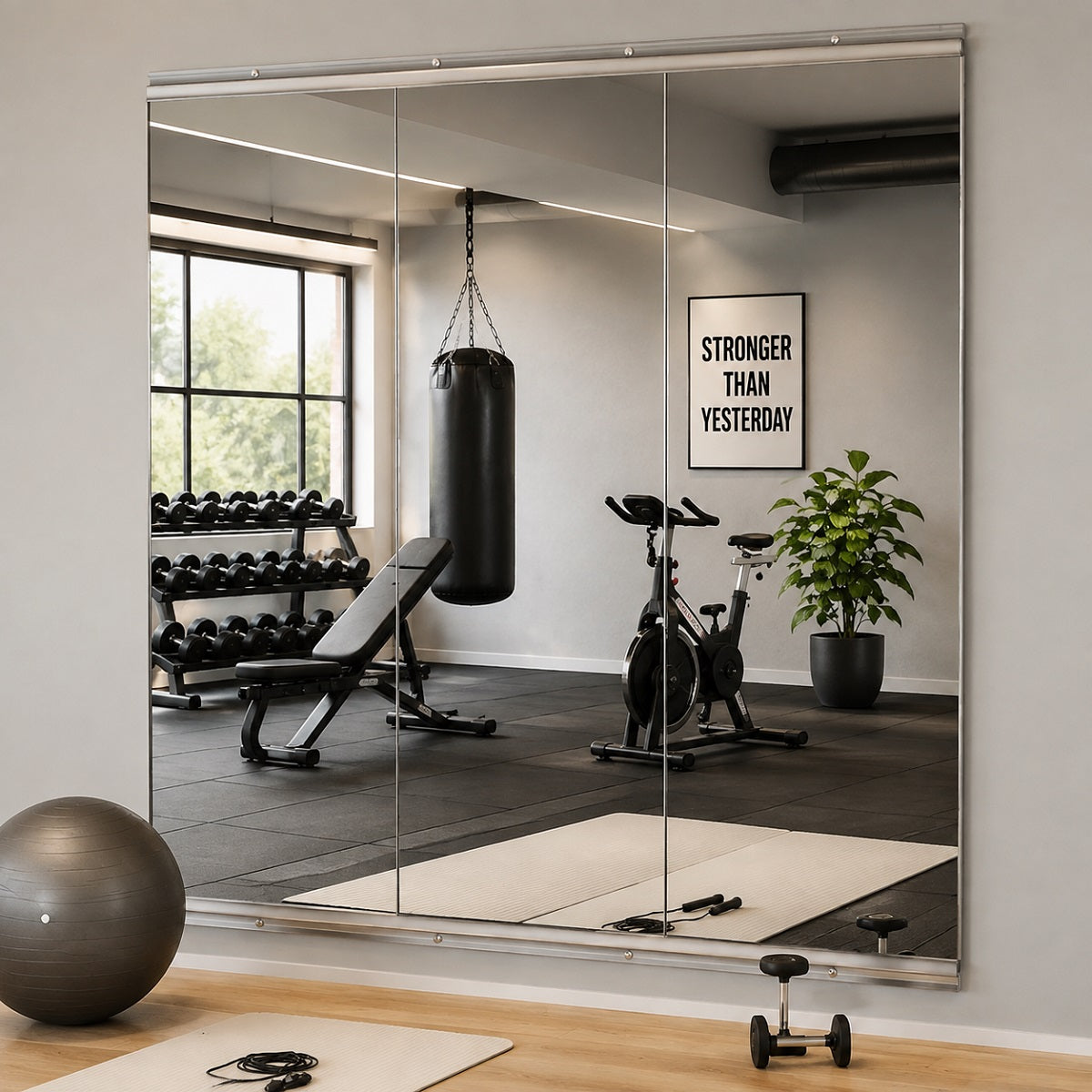
A hair salon mirror usually needs more vertical viewing space than a small bathroom or tabletop mirror. The lower edge should not cut off the client’s shoulders, and the upper section should accommodate taller hairstyles and the stylist’s working position. Full-length commercial mirrors are often 60 to 78 inches tall, though installation height and viewing distance matter just as much as the product dimensions.
A single station can use an individual wall mirror aligned with one chair and storage unit. Double stations need enough room for two clients, two professionals, tools, products, cables, and movement around both sides. Planning the mirror and station together helps prevent blocked drawers, awkward outlet locations, exposed cords, and limited working space.
Before ordering, use painter’s tape to mark the proposed salon mirror dimensions on the wall. Place the salon chair in its expected location, then check the outline from the client’s seat and the stylist’s standing position. This quick test can reveal scale and alignment problems that are difficult to notice from a product page.
Lighting for Salon Mirrors
A bright salon is not necessarily a well-lit salon. Light direction, color rendering, color temperature, and brightness determine how useful the reflection will be.
Natural Light
Daylight is useful for checking hair color, makeup, and skin tone. Its strength and direction change throughout the day, so it should not serve as the salon’s only light source.
A mirror placed near a window can benefit from daylight without facing direct glare. Strong sunlight reflected toward the chair can be uncomfortable for clients and difficult for stylists.
Color Temperature
Color temperature describes how warm or cool light appears.
| Light Setting | Approximate Range | Visual Effect | Suitable Use |
|---|---|---|---|
| Warm light | 2700K–3000K | Soft and golden | Reception areas and relaxed ambience |
| Neutral light | 3500K–4500K | Balanced and natural | Haircutting, styling, and general beauty work |
| Cool light | 5000K–6000K | Crisp and bright | Detail checks and comparison with daylight |
Adjustable color temperature allows hair and makeup to be viewed under several lighting conditions. This is more useful than assuming a single setting will match every home, office, restaurant, or outdoor environment.
Color Rendering Index
The Color Rendering Index, or CRI, describes how naturally colors appear under a light source. Good color rendering is particularly useful for hair coloring, makeup, and skin services.
A CRI around 90 or higher is a useful benchmark for color-sensitive salon work. Professional front-lit salon mirrors are currently available with 90+ CRI lighting, showing how this specification is used in commercial products. This 90+ CRI front-lit mirror provides one market example.
Light Direction and Shadows
Strong overhead lighting may leave shadows beneath the eyes, brow, nose, cheekbones, and chin. Light placed along both sides of a mirror or around its front edge produces a more even facial view.
Balanced front lighting can also make the client feel more comfortable in the chair. The reflection appears clearer without relying on excessive brightness.
Dimming
Haircutting, color work, makeup, photography, and ambient lighting do not need the same brightness. Dimming gives the stylist more control without changing the lighting across the entire salon.
Where Should Salon Mirrors Be Placed?
A salon mirror should align naturally with the styling chair. Filling an empty section of wall is not enough; the client and professional both need a comfortable sightline.
A practical placement plan should account for:
- The seated client’s face and hairstyle
- The stylist’s standing view
- Chair rotation and adjustment
- Tool and trolley movement
- Nearby windows and glare
- Outlets and cable routes
- Wall construction
- Reflected background
- Space between workstations
Look at the mirror from the client’s position before fixing the installation height. A reflection filled with open storage, cords, waste bins, dirty towels, or utility equipment can make the salon appear less organized.
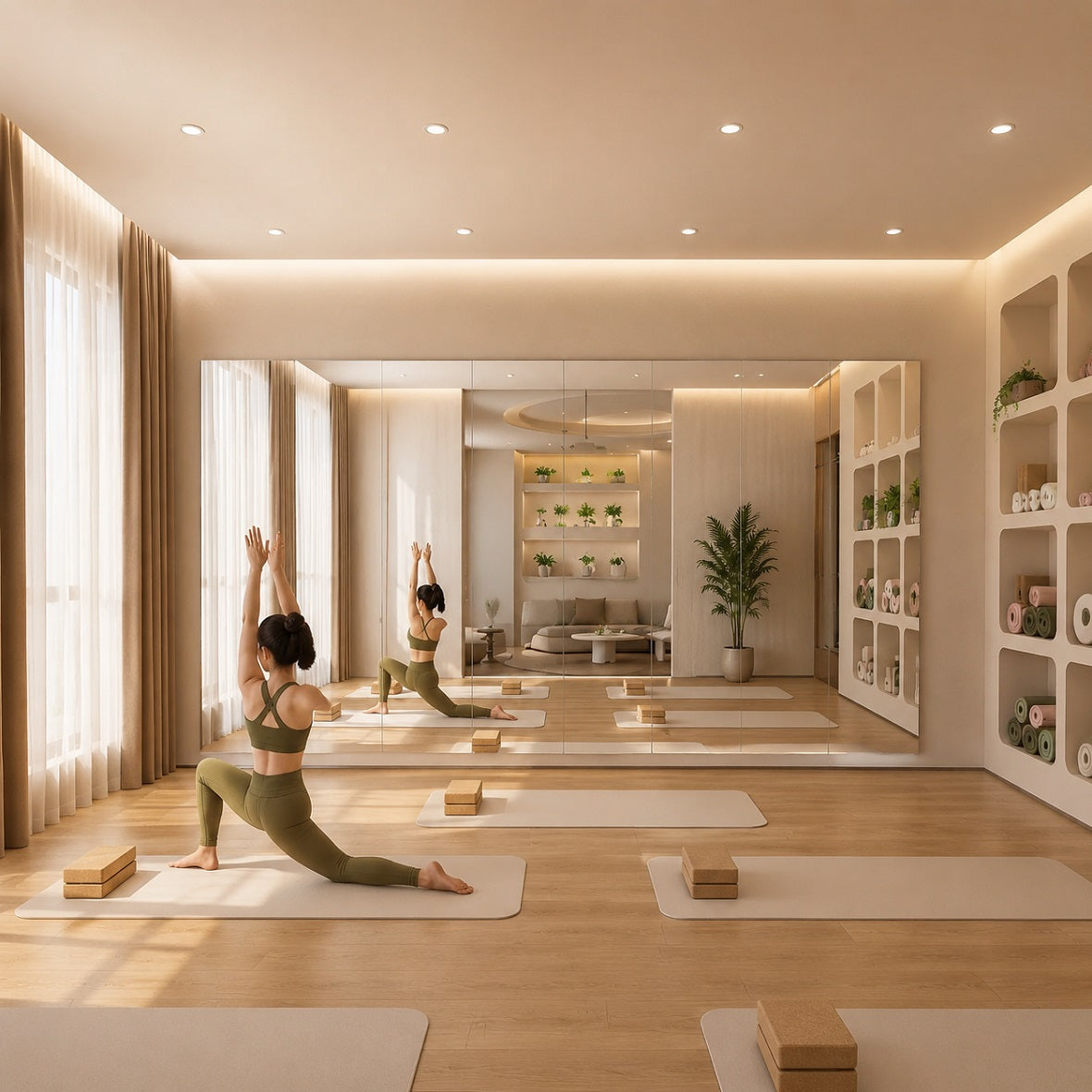
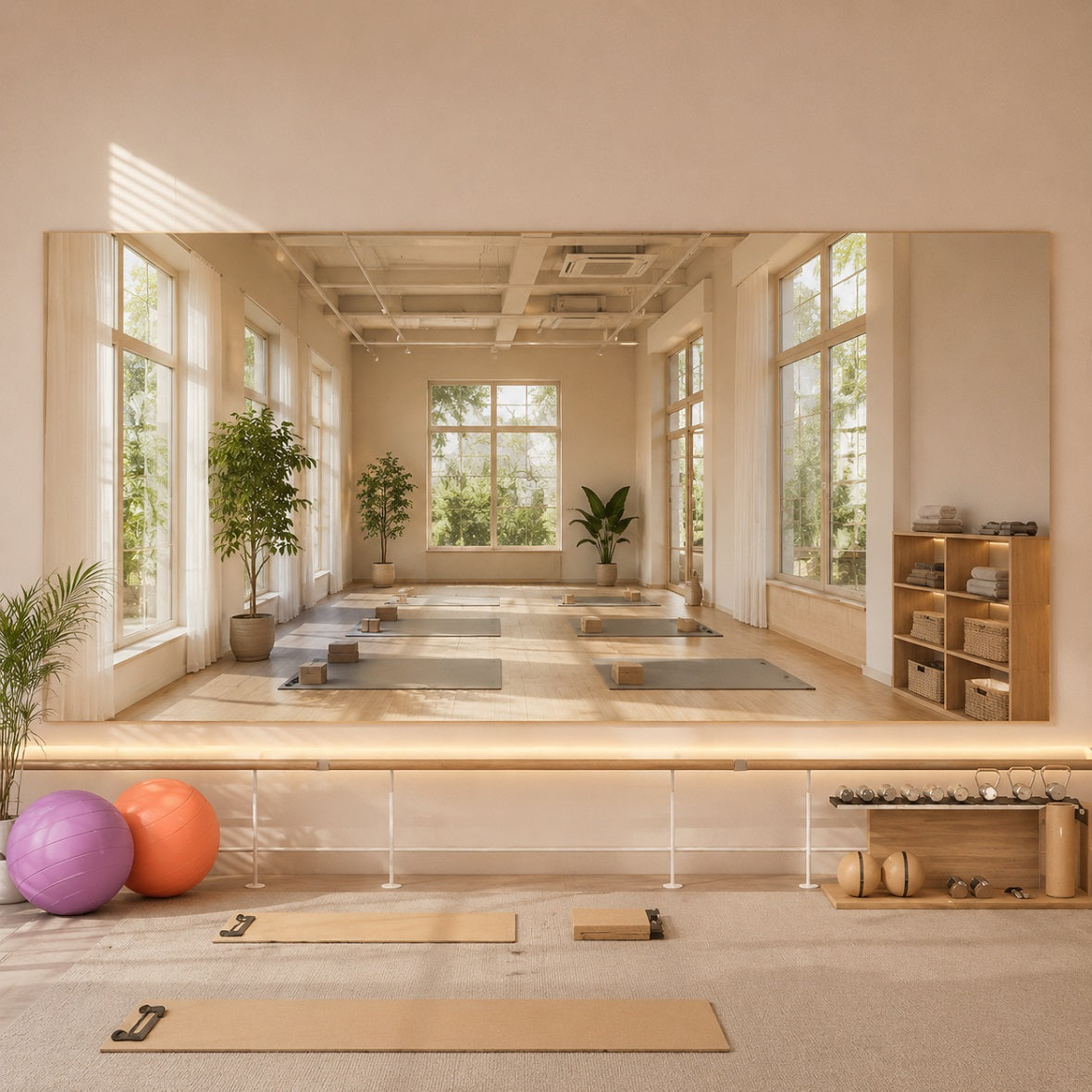
Small salons can use large or frameless salon mirrors to create visual depth. Covering every available wall with reflective glass may make the space feel busy, so a few carefully positioned mirrors often work better.
Choosing Mirrors for Different Businesses
Hair Salons
Hair salon mirrors need a broad view of the complete hairstyle. Clear glass, color accuracy, strong mounting, easy cleaning, and generous vertical space are practical priorities.
Barbershops
Barber shop mirrors should provide clear visibility around the face, hairline, beard, and sides of the head. Wide rectangular mirrors support detailed work and fit naturally above barber stations.
Black metal, stainless steel, dark wood, and vintage-inspired frames can reinforce a classic or industrial interior.
Makeup and Beauty Studios
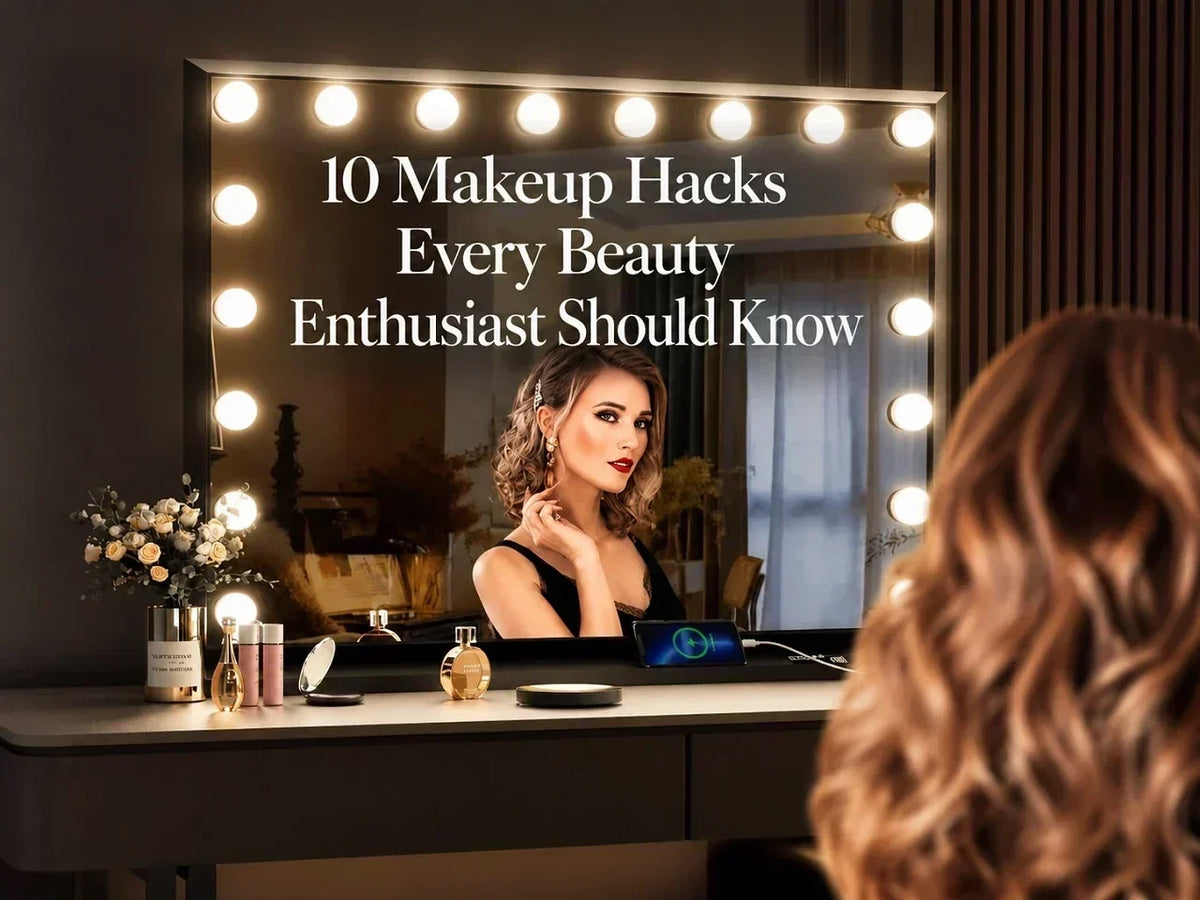
A beauty salon mirror with lights should provide even, front-facing illumination. High color rendering, dimming, and adjustable color temperature support makeup, brow, lash, and skincare services.
Magnification can help with close detail, but a fixed magnifying section should not block the main reflection.
Spas
Spa mirrors benefit from moisture-resistant materials, clean surfaces, and softer visual styling. Warm ambient lighting can create a calmer room, while treatment and makeup areas still need accurate task light.
Training Academies
Beauty and barber academies need salon mirrors that allow students, instructors, and models to see the work clearly. Large wall mirrors, repeated styling stations, double-sided stations, and mobile mirrors support demonstrations and changing classroom layouts.
Salon Mirrors With Lights vs. Regular Mirrors
| Feature | LED Salon Mirror | Regular Salon Mirror |
|---|---|---|
| Built-in lighting | Yes | No |
| Brightness control | Often included | Managed through room fixtures |
| Color temperature | May be adjustable | Depends on external lighting |
| Installation | Requires power | Usually simpler |
| Appearance | Clean and illuminated | More frame choices |
| Color work | Useful with good CRI and balanced light | Relies heavily on salon lighting |
| Purchase price | Usually higher | Often lower |
| Maintenance | Includes lighting and controls | Fewer electrical parts |
A salon with carefully planned professional lighting can use a high-quality regular mirror successfully. Salon mirrors with lights make more sense where individual stations need independent, adjustable illumination.
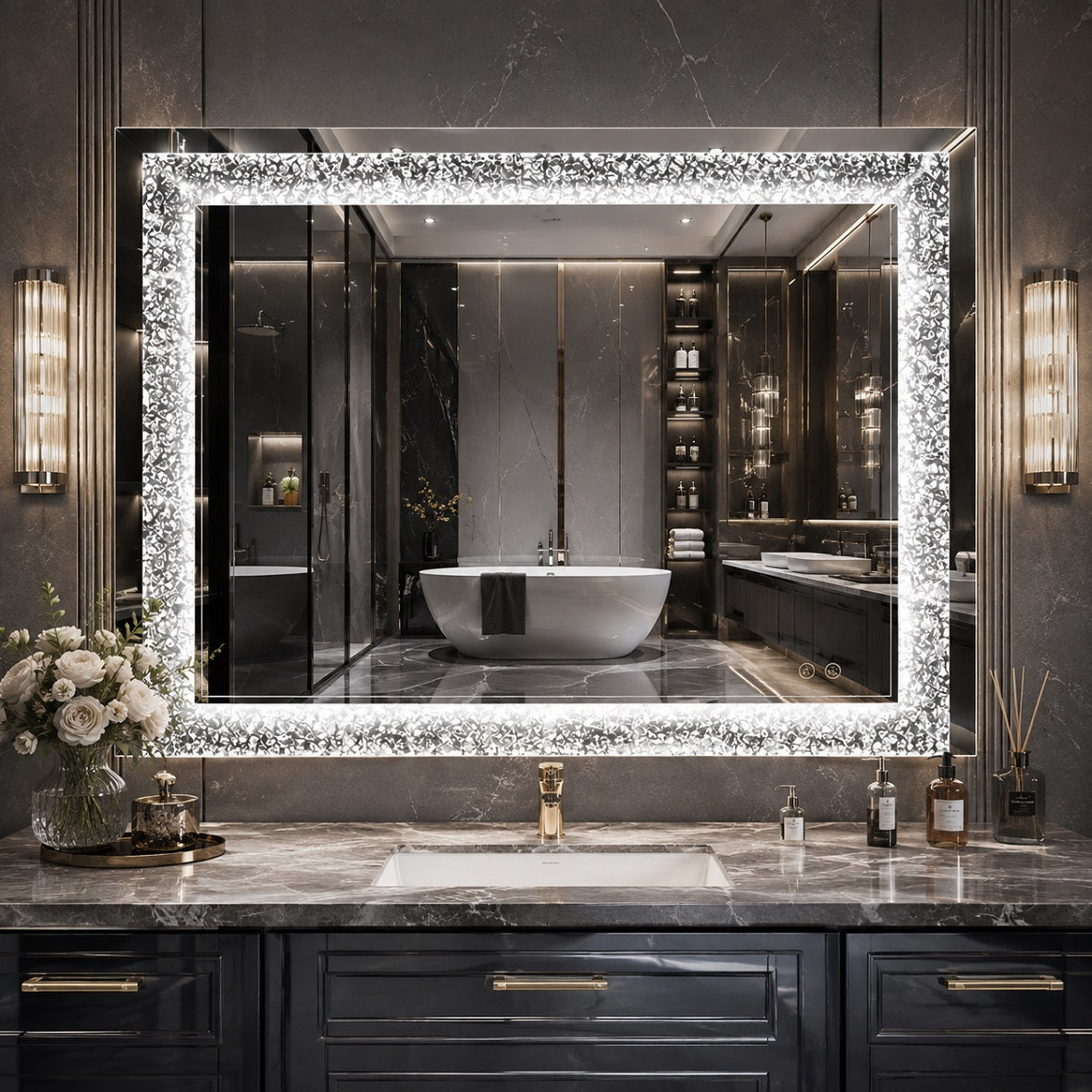
Backlit mirrors support ambience. Front-lit models usually provide more practical facial lighting. Some salons combine a decorative backlit glow with separate side or front task lights.

How Many Salon Mirrors Does a Salon Need?
The number of active workstations provides a better starting point than total square footage. Each station needs a clear reflection that works for the professional and client.
One mirror does not always serve only one chair. A double-sided island can support two stations, while a continuous mirror wall may serve several chairs. Another full-length salon mirror may be useful near a bridal area, fitting zone, reception space, or photo corner.
Calculate the number using:
Active workstations + shared mirror layouts + service requirements + full-length viewing areas
This avoids adding unnecessary mirrors while keeping every service area practical.
Final Thoughts
The right professional salon mirror supports accurate work, comfortable consultations, and a more organized interior. Its size controls what clients and professionals can see. Lighting influences hair color, makeup, photography, and the client’s experience. Placement affects glare, movement, electrical planning, and the background reflected across the room.
Clear glass, durable finishes, secure mounting, manageable cleaning, and reliable lighting matter long after the salon opens.
Hasipu offers LED, full-length, wall-mounted, and mobile mirrors for beauty and styling spaces. A compact makeup studio and a multi-station hair salon may need different setups, but both benefit from a mirror that supports the work taking place in front of it while fitting naturally into the surrounding space.
Frequently Asked Questions
1. What size should a salon mirror be?
The mirror should show the client’s head, hairstyle, shoulders, and the stylist’s working area from the normal chair position. Many station mirrors begin around 30 inches wide, while full-length models are commonly 60 inches tall or more. Chair placement, wall space, and service type should guide the final size.
2. Are LED mirrors good for hair salons?
Yes. An LED salon mirror can provide controllable light at an individual station. Check CRI, color temperature, dimming, light direction, brightness, and electrical requirements rather than judging the mirror by brightness alone.
3. What lighting works best around a salon mirror?
Even, front-facing light with strong color rendering works well for most styling and beauty services. Light placed on both sides or around the front of the glass helps reduce facial shadows.
4. What color temperature suits a salon?
Neutral light around 3500K–4500K suits many salon tasks. Adjustable lighting offers more flexibility because hair and makeup can be viewed under warm, neutral, and cooler conditions.
5. Should salon mirrors be full length?
Not every station needs a full-length mirror. Taller designs are useful for long hairstyles, bridal styling, fashion services, wig fitting, and complete appearance checks.
6. Are framed or frameless salon mirrors better?
Framed mirrors strengthen the salon’s decorative identity and coordinate with furniture or fixtures. Frameless mirrors provide a cleaner appearance and can make compact spaces feel less crowded.