
Table of Contents
Mid-century modern mirrors bring shape, warmth, and function to a room without relying on heavy decoration. Slim frames, warm wood tones, rounded edges, and sculptural forms give these mirrors a distinctive look that still feels easy to live with.
Some designs make a clear statement, such as a brass sunburst mirror above a console. Others are quieter. A walnut-framed round mirror or a simple full-length mirror can blend into a bedroom, bathroom, or entryway while adding a subtle mid-century character.
The right mirror depends on more than style. Size, frame material, reflection area, wall placement, and mounting hardware all affect how well it works in the room. This guide covers the most recognizable mid-century modern mirror styles and the practical details worth checking before buying.
1. What Makes a Mirror Mid-Century Modern?
Mid-century modern design grew from ideas that became prominent during the middle decades of the twentieth century. Designers favored useful objects, uncluttered silhouettes, natural materials, and shapes that felt comfortable rather than rigid.
The style combines straight geometry with softer curves. A mirror may have a plain rectangular frame, a stretched oval outline, or an irregular wooden border inspired by natural forms. The frame usually does not compete with the glass.
Warm wood and organic shapes also have roots in Scandinavian design. The Metropolitan Museum of Art describes a shift toward natural materials, flowing lines, and warmer organic design during the years leading into the mid-century period. These ideas later became closely associated with postwar interiors.The Met’s design history offers useful background on that transition.
A mirror generally reads as mid-century modern when it includes several of these details:
- A slim or neatly shaped frame
- Walnut, teak, oak, brass, or dark metal finishes
- Round, oval, capsule, geometric, or organic forms
- Minimal surface ornament
- Rounded corners or tapered details
- A balance between practical use and decorative impact
Not every mirror needs all these features. A simple mid-century wall mirror with a walnut frame and softly rounded corners can express the style without an unusual silhouette.

2. Popular Mid-Century Modern Mirror Styles
Sunburst Mirrors
The sunburst mirror is one of the most recognizable designs connected with mid-century décor. A round center mirror is surrounded by radiating wood or metal spokes, creating the look of a sun or star.
This style works best as an accent rather than a primary dressing mirror. Place it above a console, fireplace mantel, sideboard, or low cabinet where it can be viewed like wall art.
Gold and brass finishes give a sunburst mirror a warmer, more glamorous appearance. Wood spokes feel softer and work well in relaxed living rooms. Since the surrounding rays increase the total width, check the complete product dimensions before choosing a spot.
Round Wood Mirrors
A mid-century modern round mirror is easier to mix with existing furniture than a highly decorative design. The curve breaks up the straight lines created by cabinets, doors, tile, and dressers.
Walnut frames create a rich vintage-inspired look. Oak and lighter wood finishes feel more casual and often pair well with cream walls, natural textiles, and pale flooring.
Round mirrors are common above bathroom vanities, entryway tables, and bedroom dressers. A diameter between 24 and 36 inches suits many single-vanity and accent-wall arrangements, though the surrounding furniture should guide the final size.
Oval and Pill-Shaped Mirrors
Oval and pill-shaped mirrors offer more vertical reflection than a round mirror while keeping the edges soft. They can make a low ceiling feel taller and fit narrow wall sections that cannot hold a wide circle.
A mid-century modern vanity mirror in an oval shape works especially well above a compact sink. Capsule mirrors with slim brass or black frames give the room a period-inspired touch without making it look like a themed set.
Some oval mirrors can be mounted vertically or horizontally. Horizontal placement creates a broader view over a wide vanity, while vertical placement is better for narrow sinks and dressing areas.
Asymmetrical and Organic Mirrors
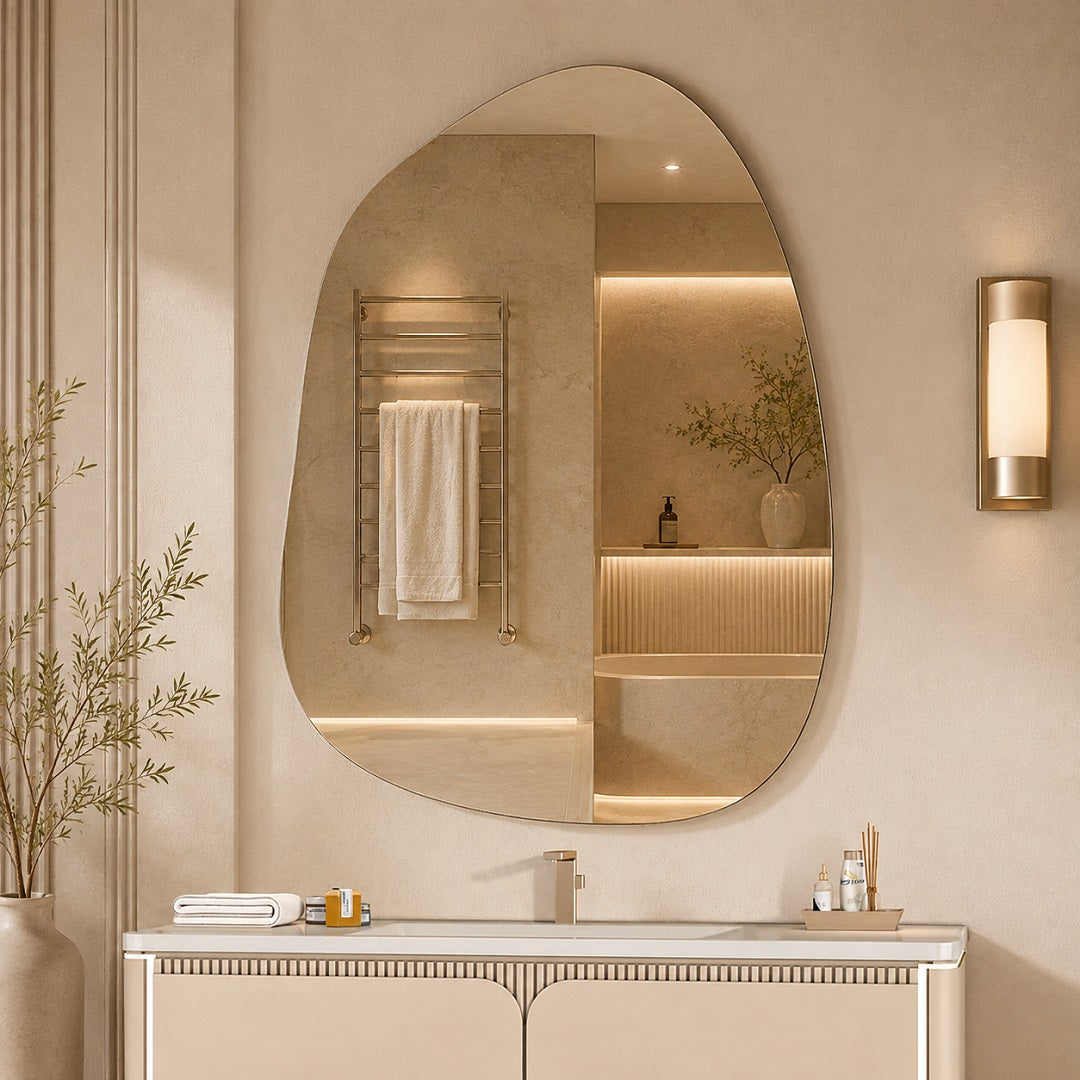
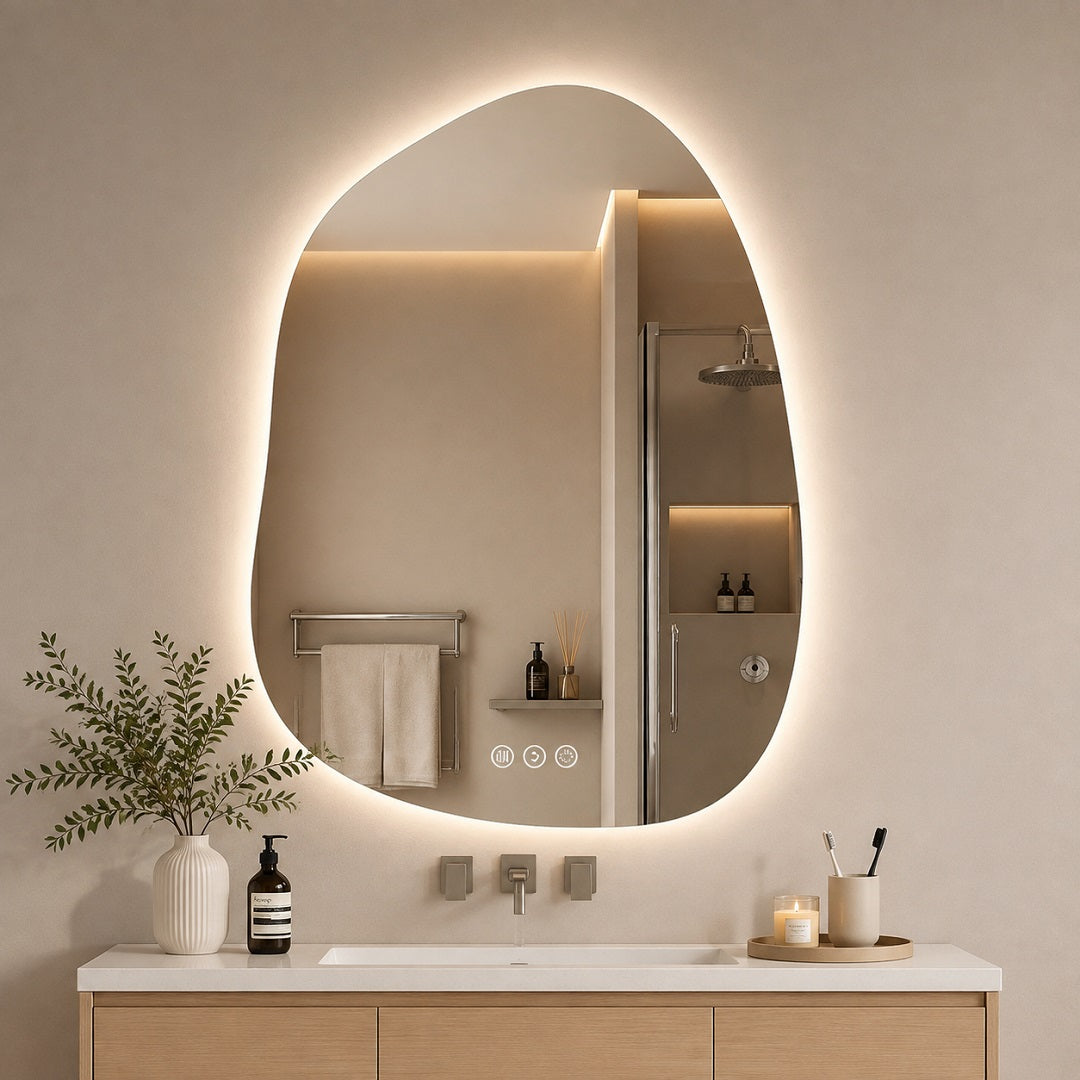
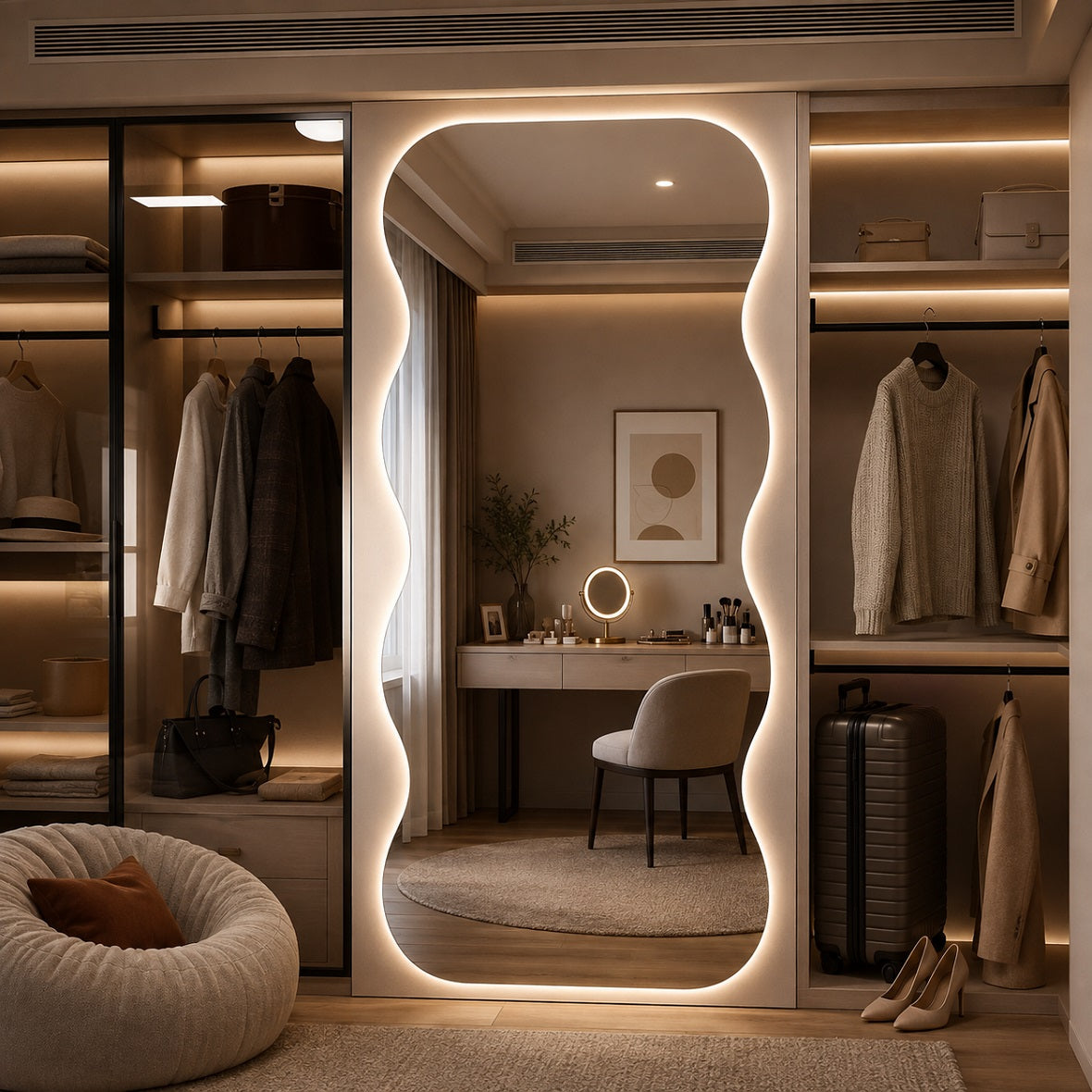
An asymmetrical wood mirror has an uneven outline rather than a perfect circle or rectangle. Common shapes include soft pebbles, stretched curves, teardrops, and free-form frames.
These mirrors reflect the playful side of mid-century design. They work particularly well in rooms filled with straight-edged furniture because the irregular shape creates contrast.
Organic mirrors are usually chosen for their decorative presence. The unusual outline can reduce the usable reflection area, so check the width at the narrowest points. A design that looks large in a product photo may offer less viewing space than a standard rectangle of the same overall dimensions.
Rounded Rectangle Mirrors
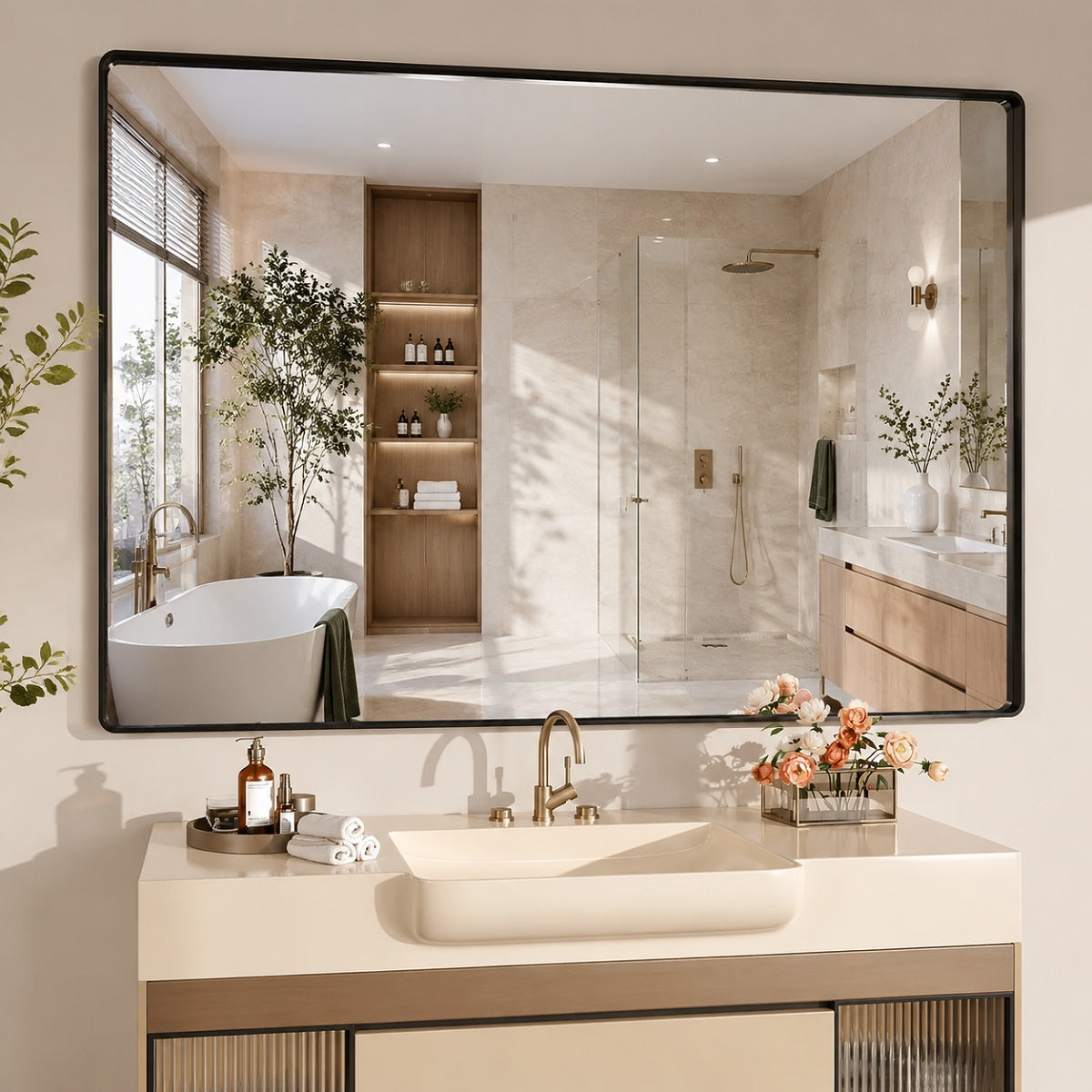
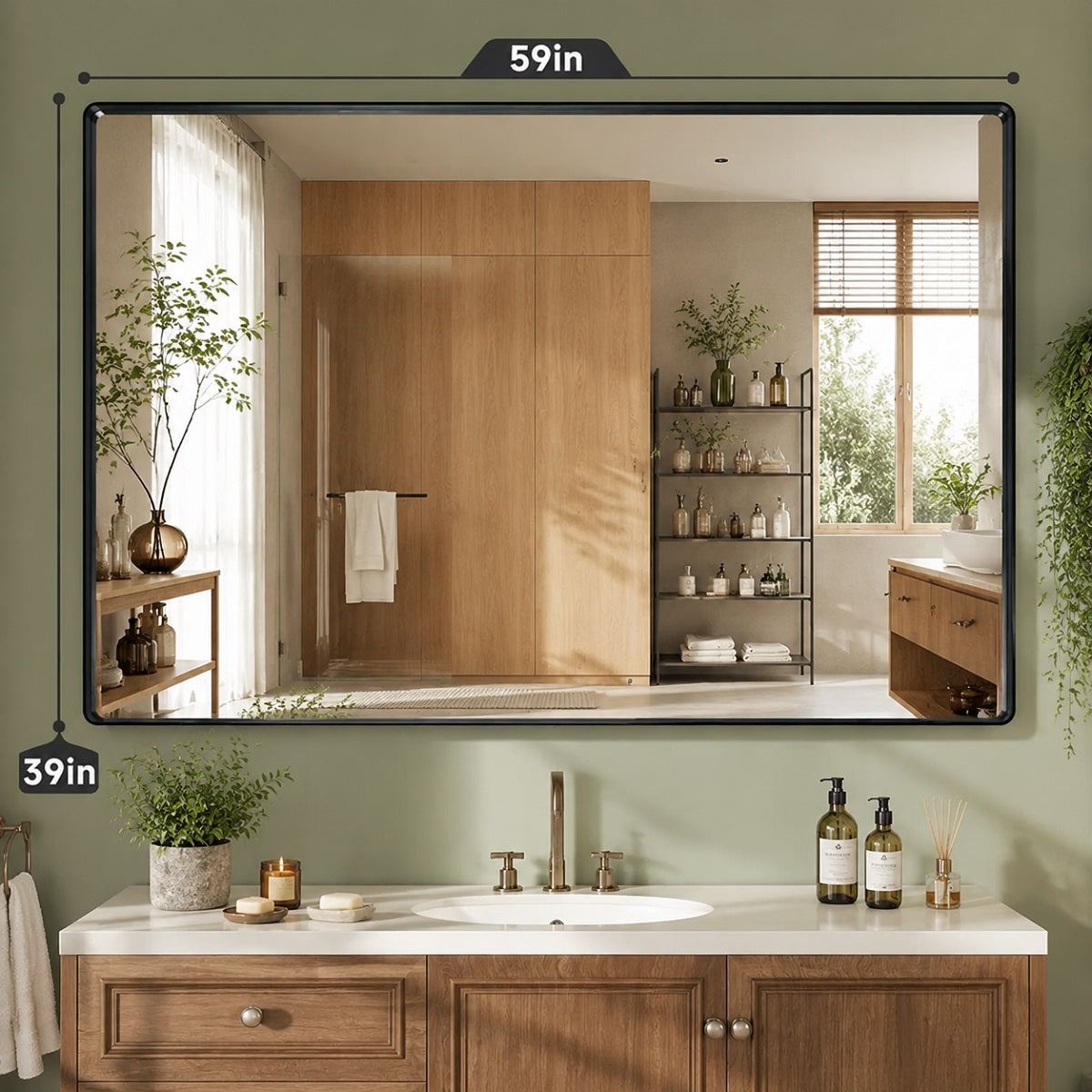
A rounded rectangular mirror is a practical middle ground. It has the usable reflection of a traditional rectangle but avoids sharp, formal-looking corners.
This shape suits bathrooms, bedrooms, and entryways. Wood frames bring warmth to white walls, while a slim brass frame introduces a quiet metallic detail. A black frame can connect the mirror with faucets, door hardware, or lighting fixtures.
The style is also less likely to feel dated than a heavily decorative frame. It fits mid-century interiors but can move comfortably into contemporary, Scandinavian, or transitional rooms.
Full-Length and Floor Mirrors
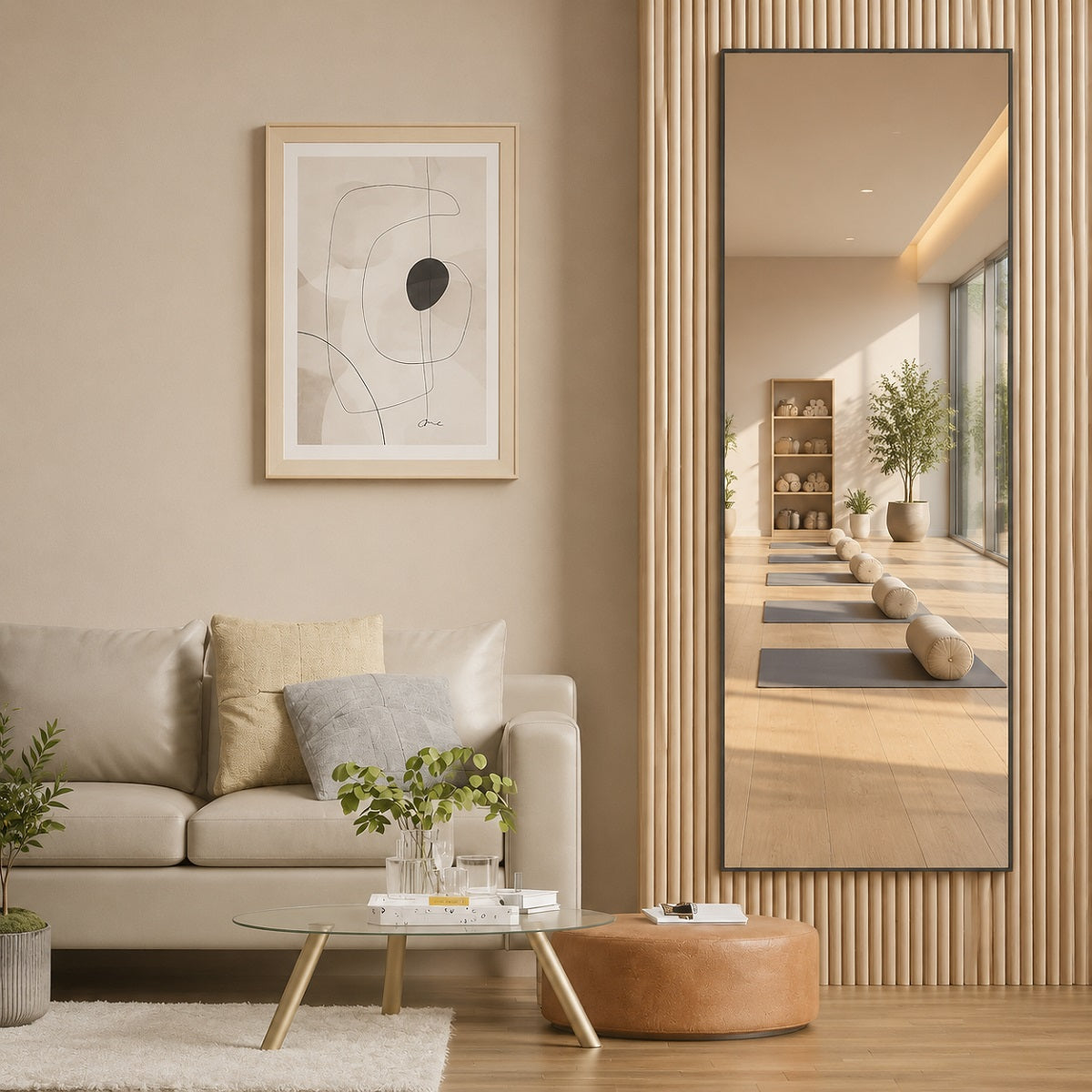
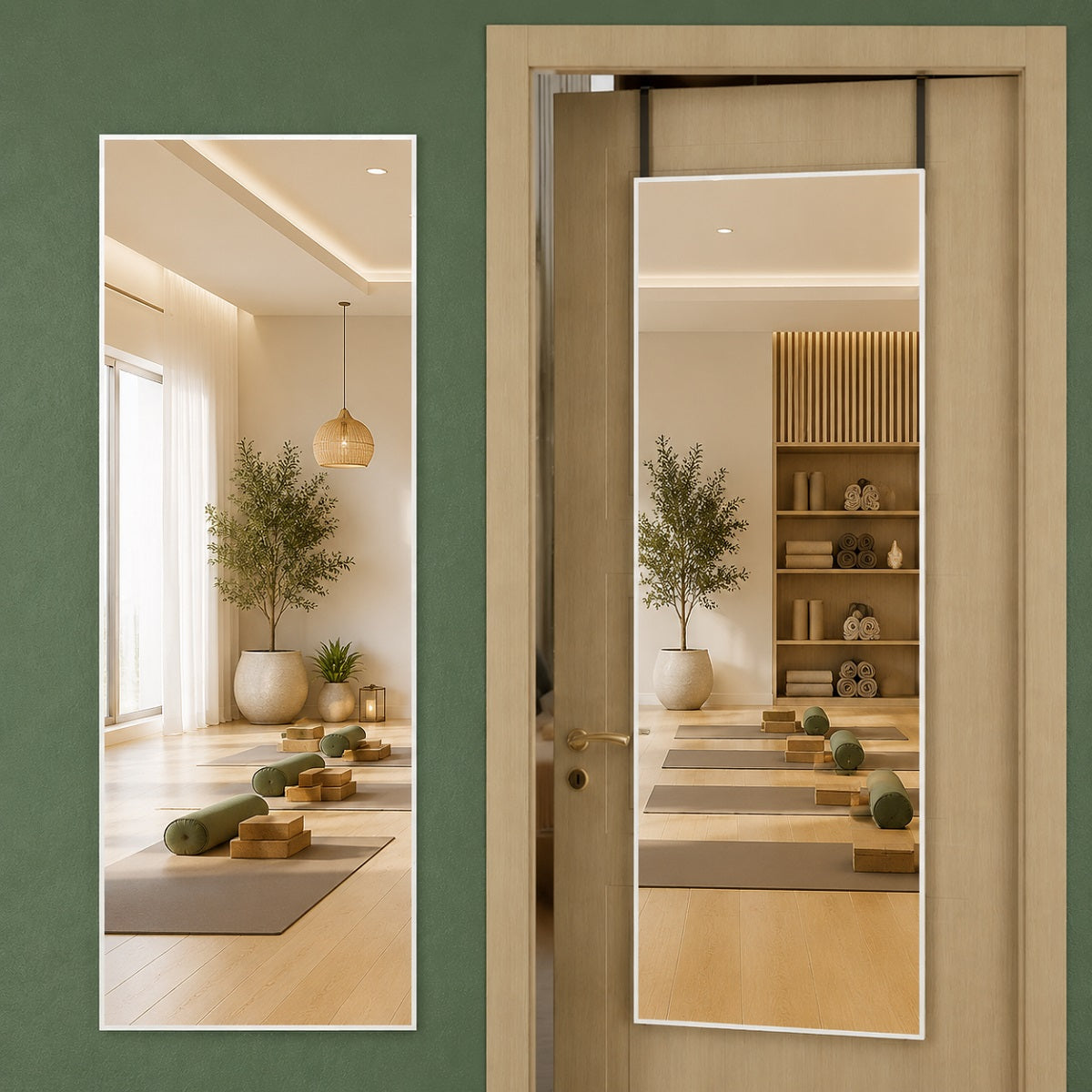
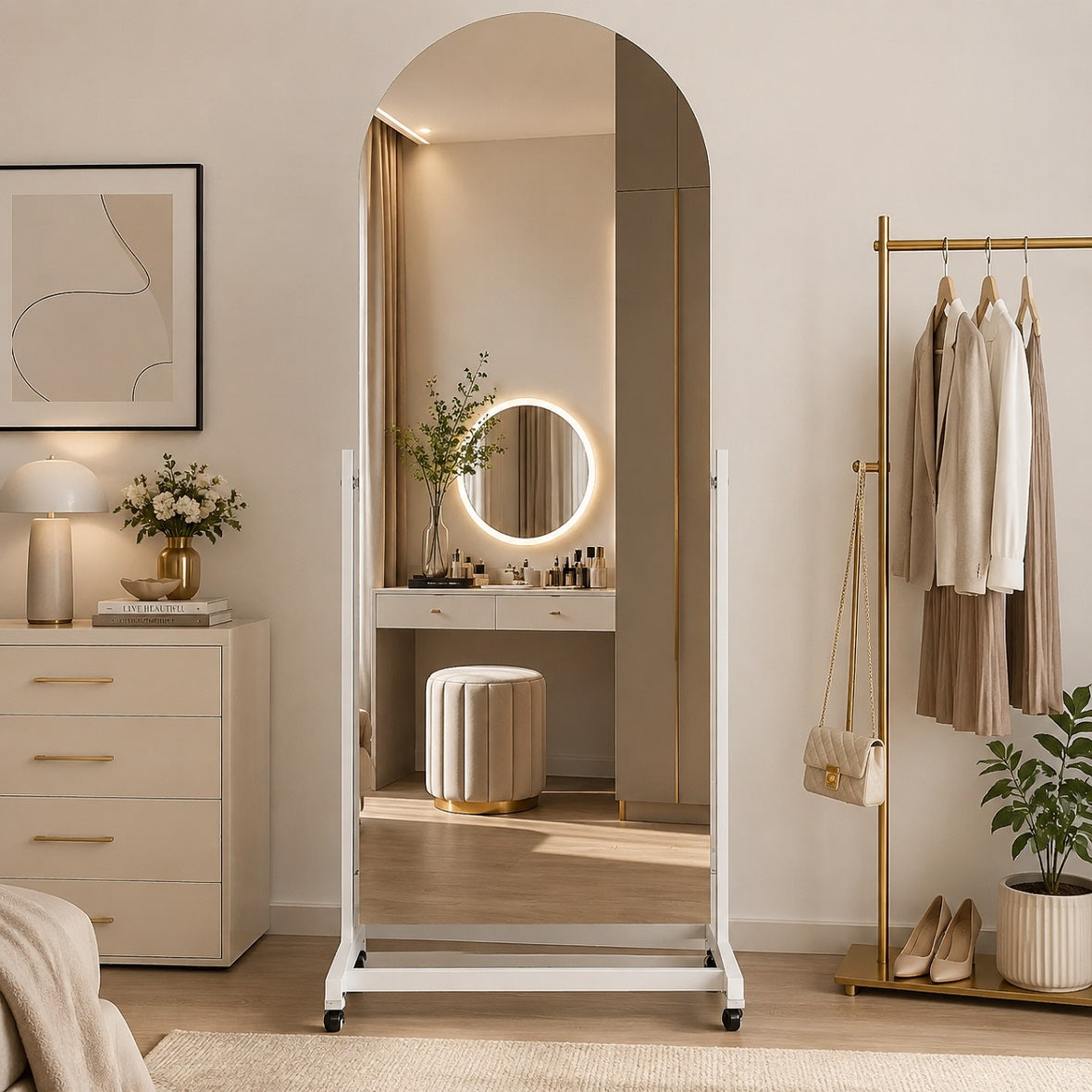
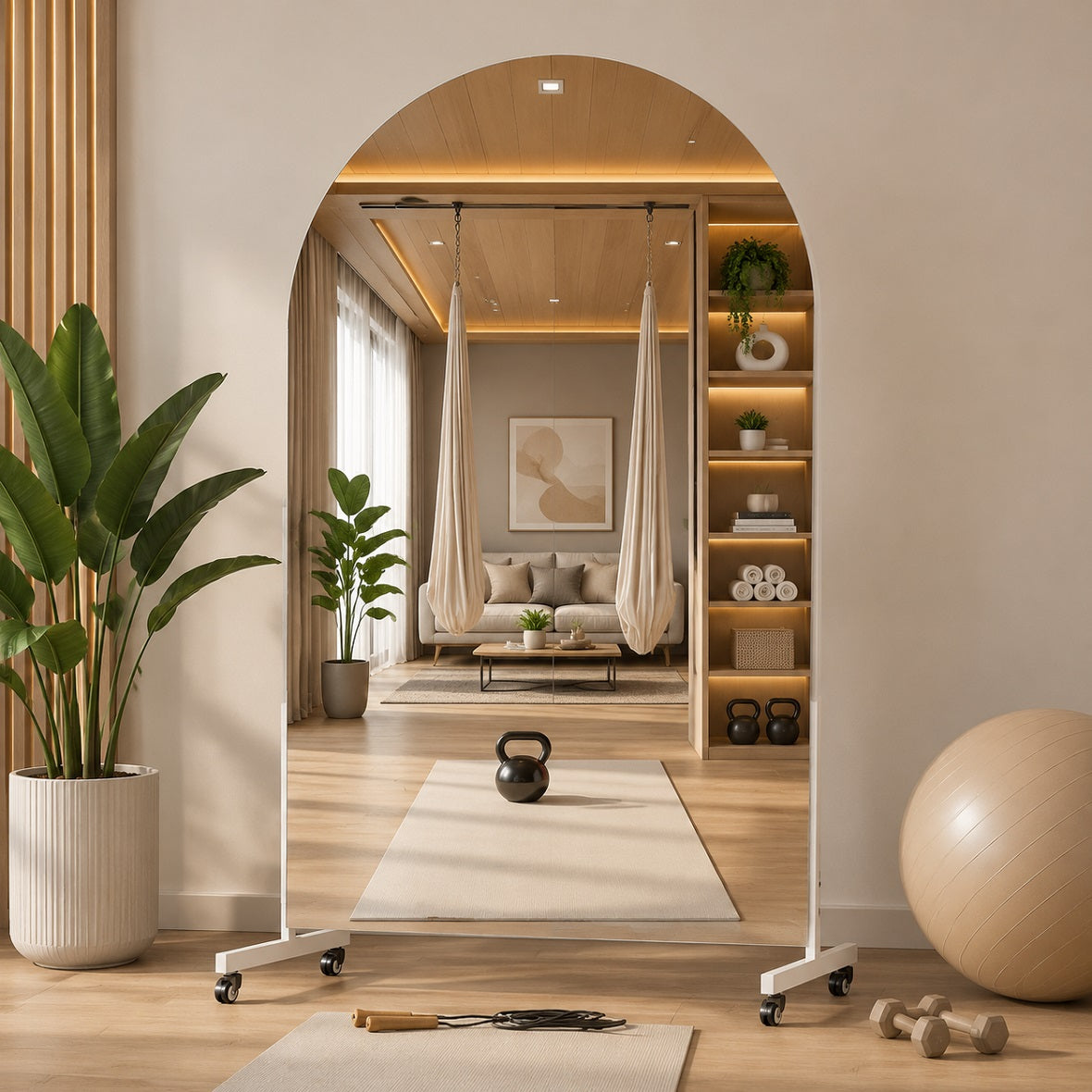
A mid-century modern full-length mirror is designed for dressing, though its large reflective surface can also make a room feel brighter and more open. Look for narrow wood borders, softly rounded corners, arched tops, or simple metal frames.
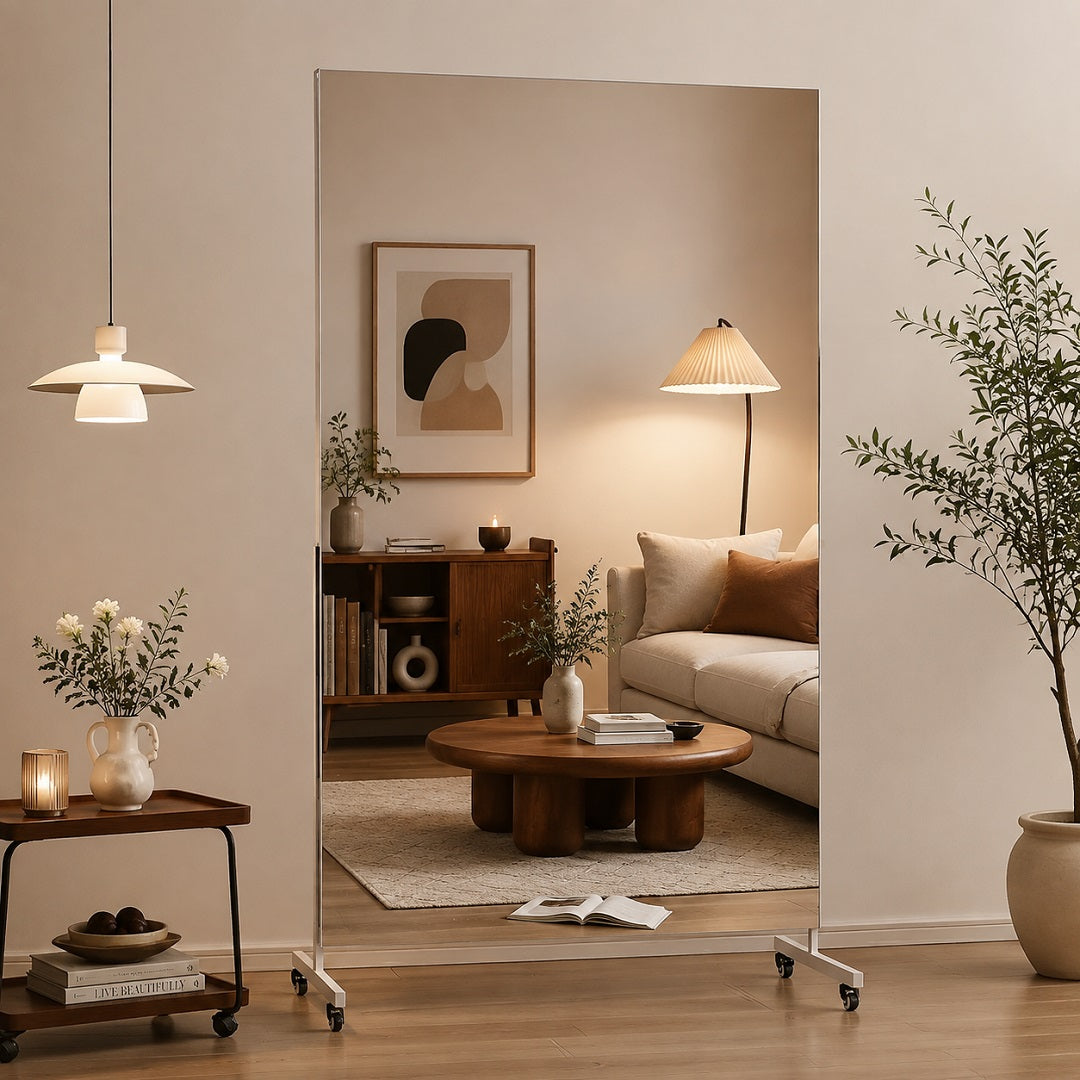
Wall-mounted models save floor space and stay in a fixed position. Leaning floor mirrors have a relaxed appearance but need proper anti-tip support. A large mid-century modern floor mirror should be secured according to the manufacturer’s instructions, especially in homes with children or pets.
For a useful head-to-toe view, pay attention to the glass height and mounting position. A tall decorative frame does not always mean the reflective area is equally large.
3. Frame Materials and Finishes
The frame has a strong effect on how the mirror relates to the rest of the room.
Walnut and Teak-Inspired Wood
Walnut is closely associated with mid-century furniture. Its brown color, visible grain, and warm undertones pair naturally with leather, cream upholstery, olive green, rust, and muted blue.
Authentic teak can be expensive, so many current mirrors use teak-colored finishes or veneers. Read the material description carefully: "teak finish" describes a color and appearance, not necessarily solid teak.
A mid-century modern wood mirror does not need to match the furniture exactly. Slight variation often looks more natural than a room filled with identical wood tones.
Oak and Light Wood
Oak, ash, and other pale wood finishes create a lighter interpretation of mid-century style. They suit small rooms and spaces influenced by Scandinavian design.
Look for a smooth profile and visible grain rather than distressed farmhouse-style finishes. Heavy whitewashing, rough reclaimed textures, and carved ornament tend to pull the mirror away from a mid-century aesthetic.
Brass and Gold-Tone Metal
A mid-century modern gold mirror adds warmth and a polished accent. Brass frames can range from soft brushed finishes to brighter reflective gold.
Brushed brass or aged brass is easier to combine with wood furniture because it does not look overly shiny. Thin frames feel cleaner and more modern. Sunburst designs can carry a stronger finish since much of the frame consists of narrow rays.
Black Metal
Black metal frames create a sharper outline and work well in rooms with black lighting fixtures, faucets, window frames, or cabinet pulls. It is not as warm as walnut or brass, but it keeps the design simple.
Check the frame depth on larger mirrors. An extremely thin edge may look elegant from the front yet feel less substantial in a large room.
Frameless Designs
Some frameless mirrors use curved or asymmetrical glass to create a mid-century-inspired silhouette. The shape becomes the main design feature.
This approach works exceptionally well in bathroom environments where moisture resistance and easy cleaning matter. It also feels lighter on patterned tile or colored walls. Examine the edge finishing and mounting system, since both will remain visible.
4. How to Choose the Right Size and Shape
Start with the furniture or architectural feature beneath the mirror. A mirror above a bathroom vanity, dresser, or entryway console usually looks balanced when it is slightly narrower than that surface.
Leave enough open wall around a decorative frame. Sunburst mirrors and irregular organic mirrors need more visual breathing room than plain rectangles.
Shape can solve common room layout problems:
- Use a round mirror to soften a room filled with square furniture and hard lines.
- Choose a vertical oval or capsule mirror for a narrow wall or compact vanity.
- Place a wide rounded rectangle over a double vanity or long console table.
- Use an organic mirror to add movement, contrast, and artistic interest to a plain wall.
- Select a full-length rectangle for dressing and a larger, uninterrupted usable reflection.
- Try a small sunburst mirror where traditional wall art would normally hang.
Mirror placement height also affects daily comfort. Bathroom mirrors should work practically for the people who use the sink rather than lining up mechanically with a tile joint or lighting fixture. In an entryway, the center of the mirror can sit near average eye level while leaving enough open space above the console.
Before ordering, mark the proposed mirror dimensions on the wall with painter’s tape. This shows the true scale, frame outline, and proportion far more clearly than measurements written on a product page.

5. Choosing a Mid-Century Mirror for Each Room
Bathroom
A mid-century modern bathroom mirror should balance style with daily use. Rounded rectangles, circles, and pill shapes work exceptionally well over vanities because they offer a generous reflection without looking bulky.
Check the frame material and care instructions for bathroom use. Regular exposure to humidity can affect unfinished wood and some metal coatings. Proper bathroom ventilation helps protect both the frame and the mirror reflective coating.
The mirror should also fit around lighting, faucets, backsplashes, electrical outlets, and medicine cabinets. For a double vanity, one wide mirror gives a continuous view, while two matching mirrors create more individual definition.
Bedroom and Dressing Area
Bedrooms can handle warmer materials and larger frames. A walnut full-length mirror connects easily with wood nightstands or a dresser.
For makeup and grooming, place the mirror where light reaches the face evenly. Strong light from behind can leave the reflection in shadow. A mirror near a window or balanced by lamps on both sides is often more useful for natural illumination.
A mid-century modern floor mirror can stand in a corner, mount beside a closet, or sit across from a window to reflect daylight. Avoid positioning it where direct glare becomes uncomfortable.
Living Room
Living-room mirrors are usually more decorative. Sunburst mirrors, asymmetrical designs, and sculptural wood frames work well above low furniture or on an accent wall that needs a focal point.
Reflect something worth seeing. A mirror facing a window, plant, artwork, or open part of the room tends to look better than one reflecting a television screen or cluttered storage.
Large mirrors can help distribute light, but scale still matters. A tiny round wood mirror over a long sideboard may appear disconnected. Grouping several small mirrors can work, though a single larger piece usually produces a calmer mid-century aesthetic.
Entryway
An entryway mirror needs enough functional reflection area for a quick check before leaving home. Round mirrors and rounded rectangular shapes are reliable choices for entry spaces.
A shelf or console table beneath the mirror can hold keys and small everyday items. Leave a practical gap between the tabletop and the lower edge of the frame so taller decorative objects do not cover the glass.
6. Vintage Mirror or Modern Reproduction?
Both can work in a mid-century interior, though the buying experience is different.
| Consideration | Vintage Mirror | Modern Reproduction |
|---|---|---|
| Character | Natural age, uncommon details, original period materials | Clean finish and predictable appearance |
| Condition | May have silvering loss, scratches, loose joints, or replaced glass | Usually arrives with new glass and hardware |
| Dimensions | Often limited to one available piece | More sizes and finishes may be offered |
| Installation | Hardware may need inspection or replacement | Mounting instructions are usually included |
| Price | Varies widely by maker, rarity, and condition | Easier to compare across sellers |
| Returns | Can be limited, especially from private sellers | Often covered by a standard store policy |
For a vintage mirror, inspect close-up photos of the glass, corners, frame joints, backing, and hanging hardware. Ask whether the glass is original and whether any repairs have been made.
A reproduction is often more practical for a bathroom or daily dressing area. Vintage pieces are appealing where patina and individuality matter more than a flawless reflection.
7. How to Mix Mid-Century Modern Mirrors with Other Interior Styles
A mid-century mirror does not require a fully retro room. Its simple shape and natural materials allow it to work with several decorating styles. The frame finish and surrounding furniture usually determine how strong the mid-century influence feels.
Contemporary Interiors
Choose a rounded rectangle, slim oval, or mid-century modern full-length mirror with a clean wood or metal frame. Contemporary rooms already use simple lines, so a walnut finish or curved outline can add warmth without changing the character of the space.
Avoid placing several bold retro pieces together. One distinctive mirror creates enough contrast against plain walls and modern furniture.
Scandinavian Rooms
Mid-century and Scandinavian interiors share an interest in functional design, natural materials, and uncluttered shapes. A round mirror with an oak, ash, or light walnut frame fits this setting naturally.
Pair the mirror with pale walls, woven textiles, simple lighting, and a few indoor plants. Brushed brass finishes can also work, though they usually feel more relaxed than highly polished gold.
Minimalist Spaces
A minimalist room benefits from a mirror with a thin frame and a generous reflective surface. Frameless organic shapes, black metal outlines, and narrow wood frames keep the wall visually light.
The mirror can introduce a gentle curve without adding unnecessary decoration. A pill-shaped bathroom mirror or an arched floor mirror works especially well where most furniture has straight edges.
Eclectic and Bohemian Décor
Organic wood mirrors and sunburst designs sit comfortably in eclectic rooms. They can be combined with vintage furniture, patterned rugs, ceramics, rattan, and collected artwork.
Leave some open space around a detailed sunburst mirror so its outline remains visible. An asymmetrical mirror is easier to place among artwork because its irregular shape breaks up a traditional gallery-wall arrangement.
Transitional Homes
Transitional interiors combine traditional comfort with cleaner modern details. A rounded rectangular mirror in walnut, aged brass, or matte black can connect both sides of the room.
Skip frames with extreme atomic shapes or very sharp decorative rays. Softer curves and restrained finishes blend more naturally with paneled cabinets, upholstered furniture, and classic lighting.
Industrial Rooms
Black metal frames and dark walnut mirrors suit industrial spaces with exposed brick, concrete, hardware, or metal shelving. A simple round or rectangular frame keeps the room from feeling overly decorative.
Warm wood is useful in an industrial room because it softens cool surfaces. Brass provides a similar effect and can tie the mirror to exposed-bulb lighting or aged metal fixtures.

Final Thoughts
The best mid-century modern mirror does not need to be the most unusual design in the store. It needs the right scale, a useful reflection, dependable construction, and a frame that feels at home with the surrounding furniture.
A walnut round mirror adds warmth without demanding attention. A brass sunburst mirror turns an empty wall into a focal point. An organic wood frame introduces softer movement, while a full-length floor mirror handles daily dressing and reflects more natural light.
Hasipu recommends measuring both the wall and the usable reflection area before settling on a style. Once those dimensions are clear, choosing between warm wood tones, slim metal frames, rounded geometry, and a more sculptural shape becomes much easier.
Frequently Asked Questions
1. What is the most recognizable mid-century mirror shape?
Sunburst mirrors have the strongest retro identity. Round wood, pill-shaped, rounded rectangular, and asymmetrical mirrors offer a quieter mid-century appearance that is easier to mix with current furniture.
2. Are round mirrors considered mid-century modern?
Yes. A mid-century modern round mirror commonly uses a slim walnut, teak-inspired, brass, or black metal frame. The material and frame profile help distinguish it from farmhouse, traditional, or ornate round mirrors.
3. Which wood finish works best for this style?
Walnut is the classic choice because of its warm brown tone and visible grain. Teak-inspired finishes, oak, and ash also work. Choose a tone that relates to the room without trying to match every wood surface exactly.
4. Can a mid-century modern mirror work in a small room?
A simple round, oval, or narrow full-length mirror can suit a small space. Slim frames preserve more reflective area and keep the wall from feeling heavy. A bulky sunburst design may need more open wall space.
5. What mirror style works best over a bathroom vanity?
Rounded rectangles, circles, pill shapes, and vertical ovals provide a useful reflection while supporting the mid-century look. The mirror should fit between nearby lighting and remain slightly narrower than the vanity in most installations.
6. Does the mirror need to match mid-century furniture?
No. One well-chosen mirror can introduce the style into a contemporary, Scandinavian, eclectic, or transitional room. Repeating a wood tone or metal finish once elsewhere is usually enough to make the placement feel connected.