Table of Contents
You found a spot for a new mirror. You’ve measured the wall, thought about the shape, and maybe even picked out a few favorites. Then comes a surprisingly tricky question: should it have a frame?
When you’re weighing framed vs. frameless mirrors, the answer changes more than the look of the mirror itself. A frame can bring warmth or contrast to a room, while a frameless design keeps the focus on the reflection and the space around it. The two can also differ in price, cleaning, and installation.
Choose a framed mirror when you want a decorative feature or a finish that ties in with your furniture and fixtures. Choose a frameless mirror when you prefer a cleaner edge, more visible glass within the same overall size, or a look that lets the rest of the room stand out.
Both can work in a bathroom, bedroom, living room, or entryway. Here’s how to find the right fit for yours.
Framed vs. Frameless Mirrors: Key Differences
| What to compare | Framed mirrors | Frameless mirrors |
|---|---|---|
| Look | A defined border adds color, texture, or contrast | An exposed glass edge creates a lighter, simpler look |
| Reflective area | Part of the overall width and height is taken up by the frame | More of the overall footprint is usually visible glass |
| Cost | Common ready-made styles range widely in price | Basic styles can be inexpensive; custom work may cost more |
| Installation | Often use attached hanging hardware; methods vary | May use clips, brackets, a mounting rail, or an approved adhesive system |
| Cleaning | Glass plus the frame and its inner edge | Mostly glass, with care needed around the exposed edge |
| Moisture | Choose a frame and finish suitable for the room | Protect the glass edges and backing from standing moisture |
| Best for | Adding a finishing touch or creating a focal point | Keeping a wall visually open or emphasizing a shape |
What Is a Framed Mirror?
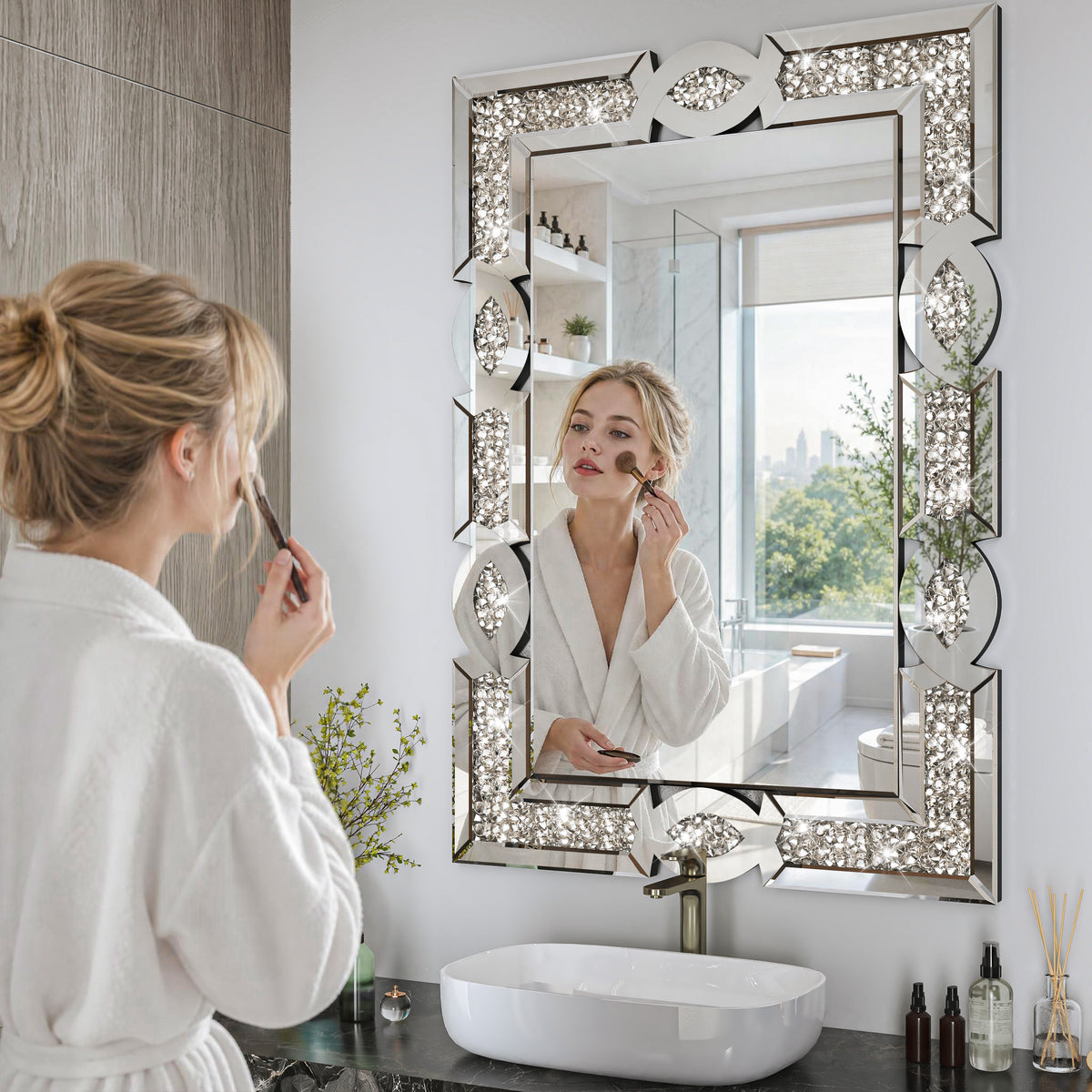
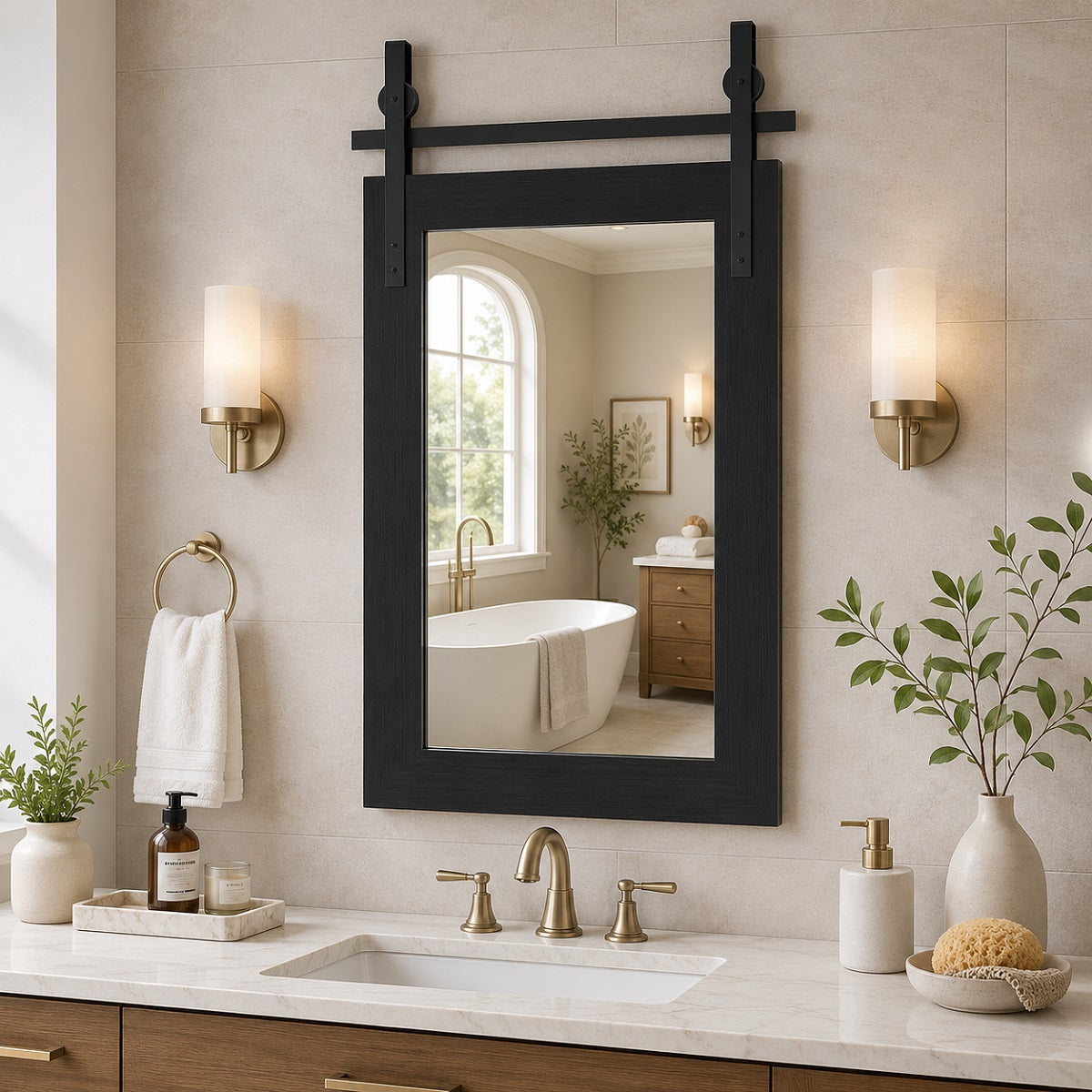
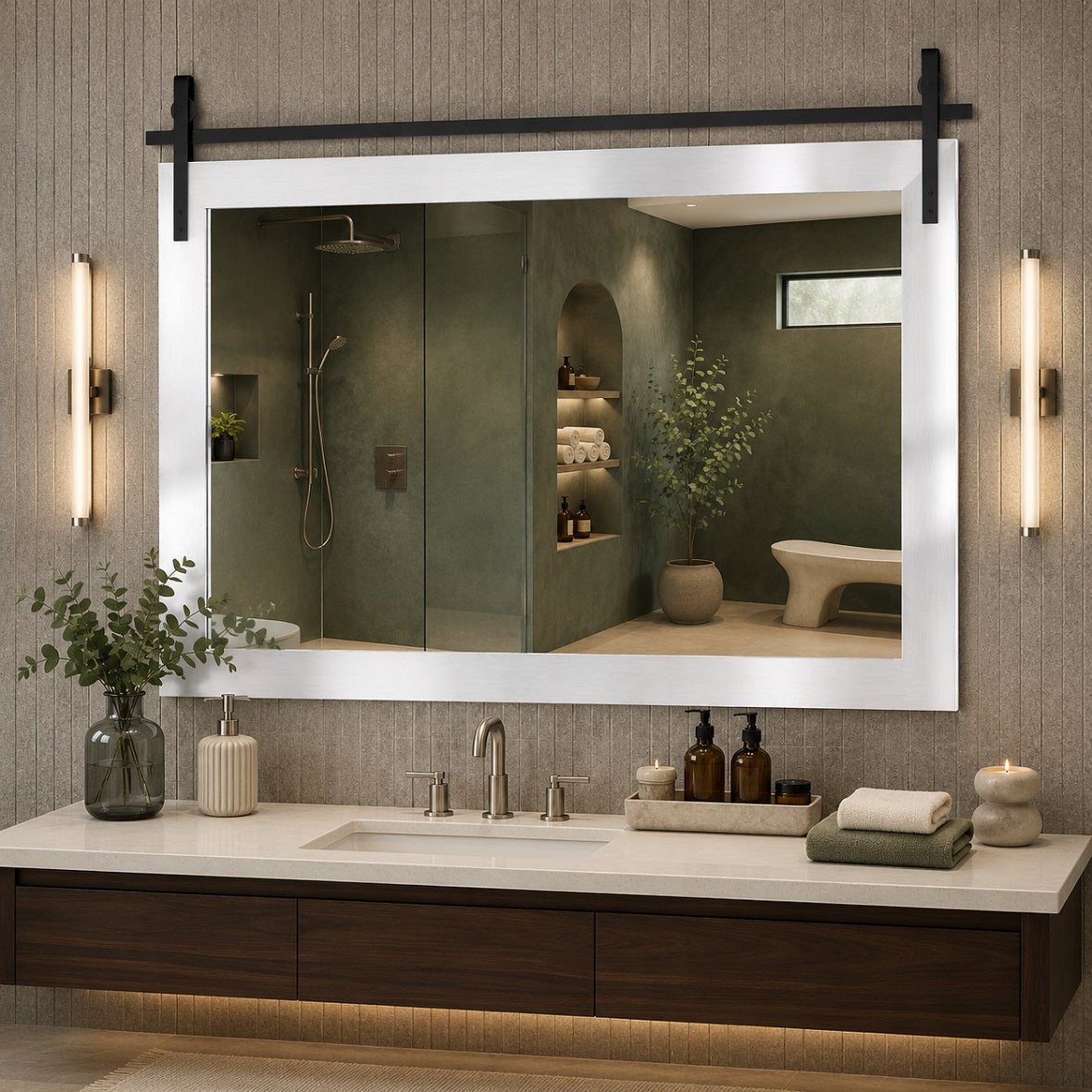
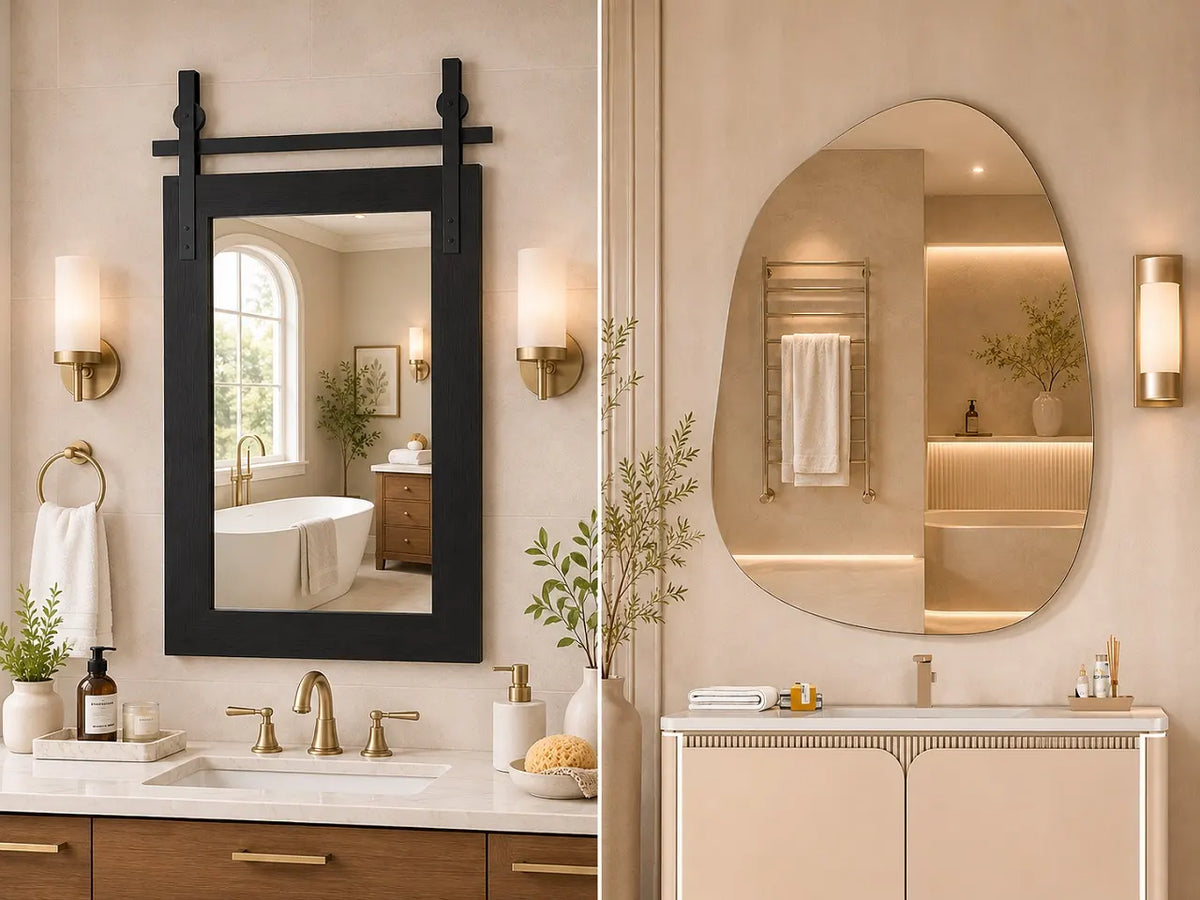
A framed mirror has a border around the glass. That border might be a slim strip of black metal, a wide wood-grain frame, or an ornate finish that makes the mirror feel more like a piece of furniture.
Frames are an easy way to bring a little color or texture to a room without changing the walls. A black frame can pick up the dark legs of an entryway console. A warm wood finish can soften a bathroom with white tile. An antiqued gold frame can give a plain living room wall a point of interest.
The frame doesn’t have to be elaborate. A narrow border can look right at home in a modern room, too.

Advantages of framed mirrors
- More decorating options. The border adds a finish you can connect to lighting, furniture, cabinet hardware, or other details.
- A defined shape. Arches, rectangles, and circles tend to stand out more when they have an outline.
- Some edge coverage. A frame covers part of the mirror’s perimeter, although it doesn’t make the glass unbreakable.
- Easy to refresh a plain wall. A distinctive frame can do the work of both a mirror and a decorative accent.
Potential drawbacks
- The frame takes up part of the mirror’s overall footprint, leaving less visible glass than a similarly sized frameless design.
- Dust and water can collect where the frame meets the glass, especially in a bathroom.
- An ornate or oversized frame may feel too busy beside patterned wallpaper, dramatic tile, or other strong design features.
- Some frame materials and finishes need more care in humid spaces. Check the product’s recommended use before buying.
What Is a Frameless Mirror?
A frameless mirror has no separate decorative border. Its glass edge may be polished for a smooth finish or beveled to create an angled edge that catches the light.
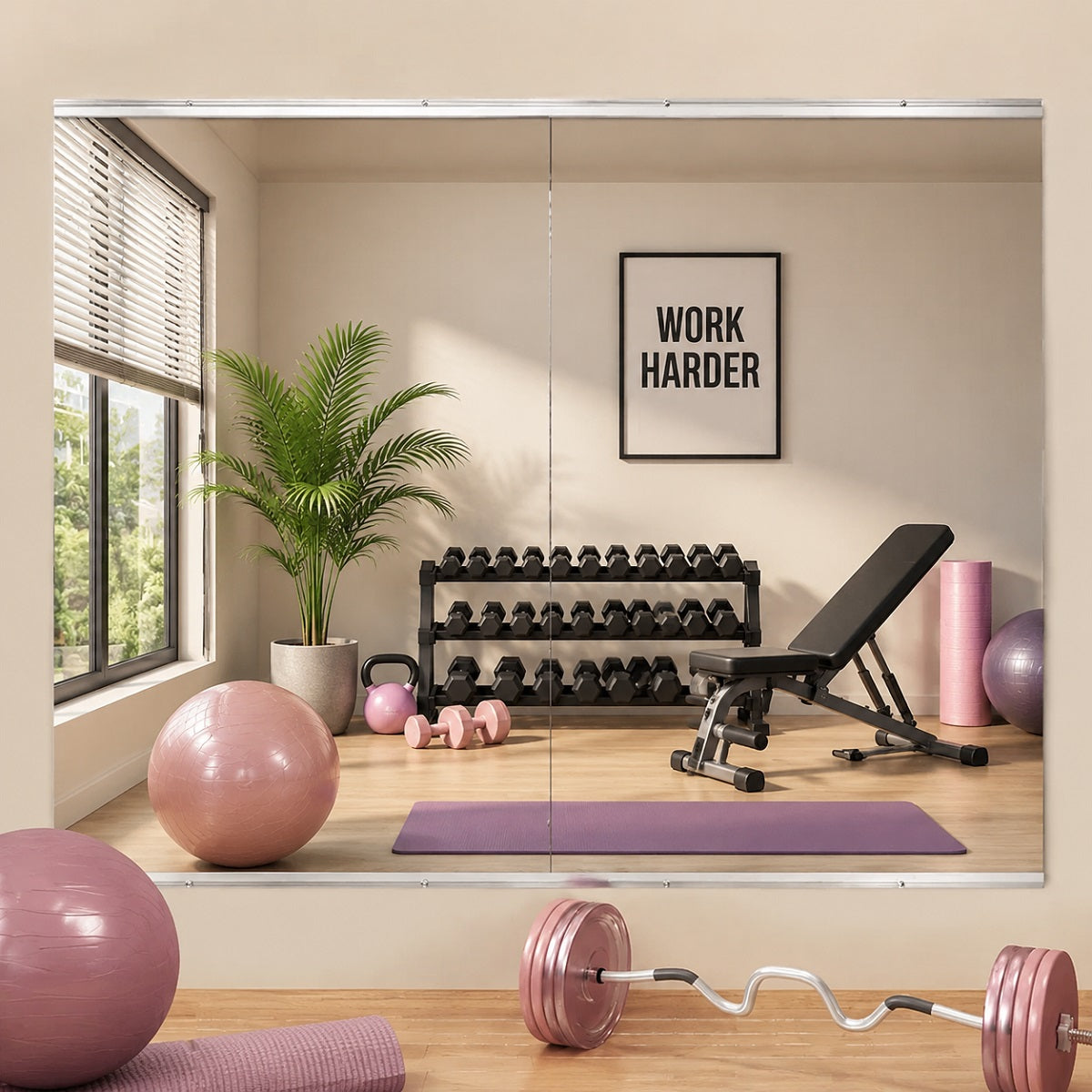
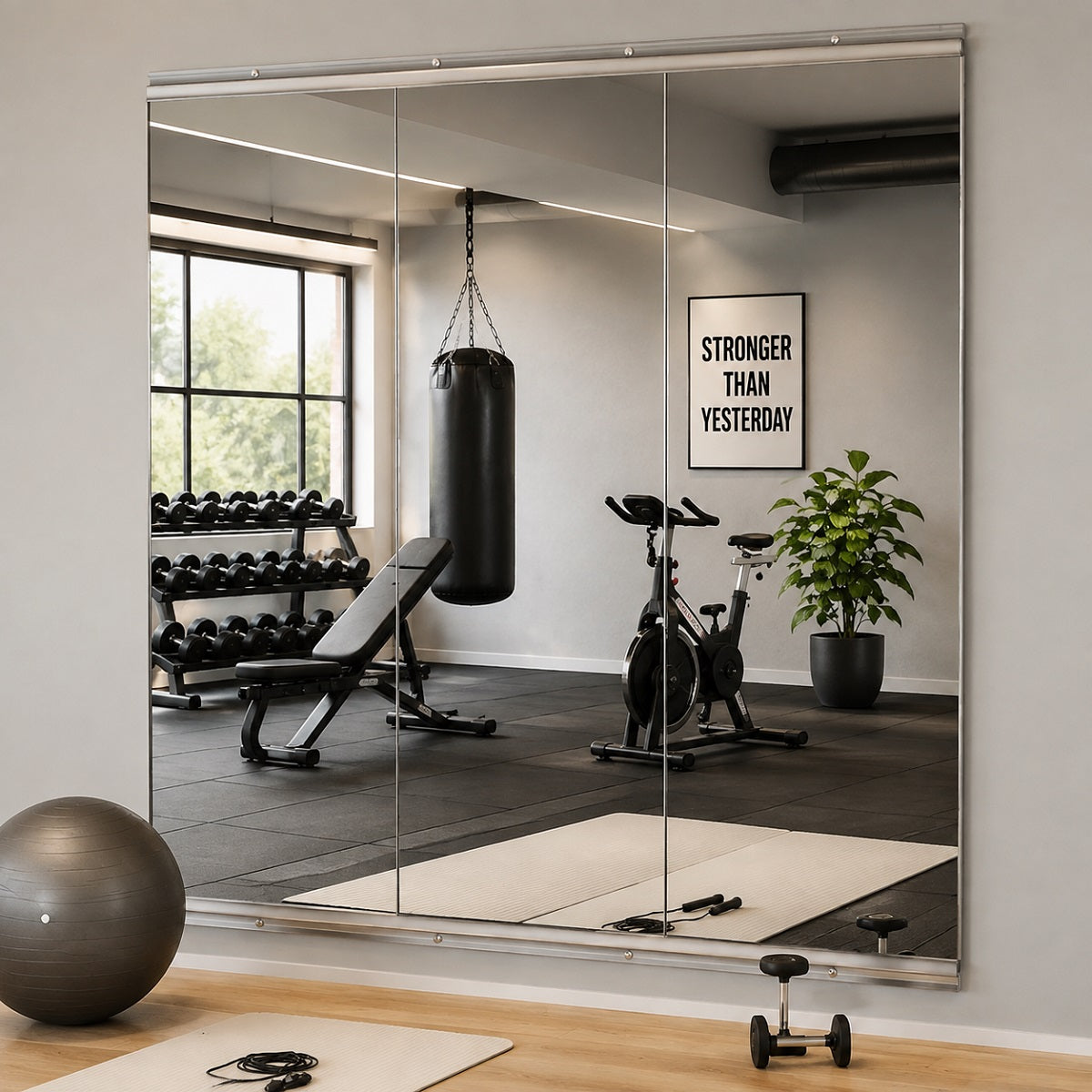
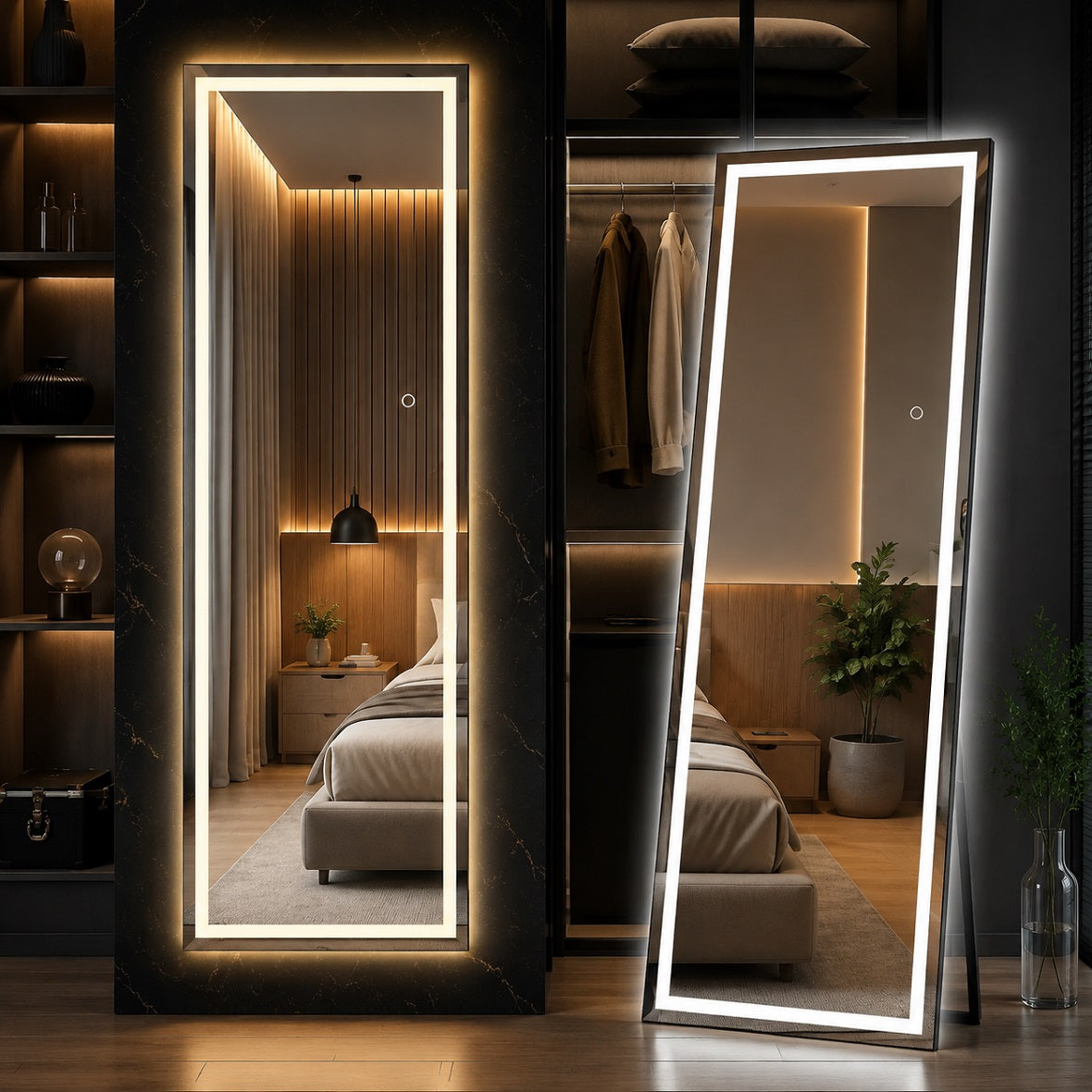
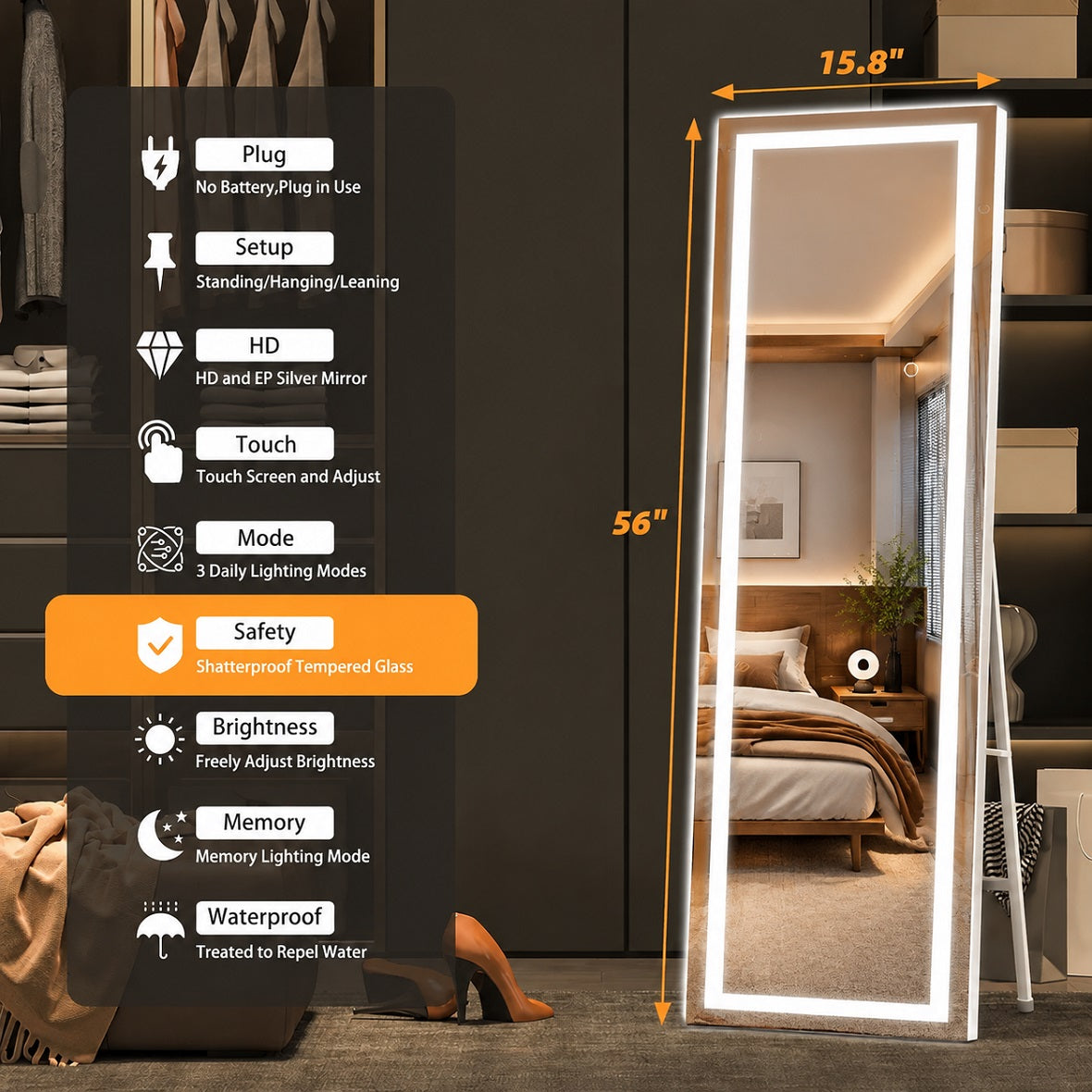
Frameless doesn’t have to mean plain. An irregular silhouette can be playful and sculptural; a large rectangular panel can give a home gym a clean, open look. Some models also include lighting or a mounting structure behind the glass, so a frameless appearance doesn’t always mean the mirror will sit completely flat against the wall.

Advantages of frameless mirrors
- A lighter visual footprint. Without a visible border, the mirror can blend into the room and allow tile, wallpaper, or furniture to take the lead.
- More visible glass for the overall size. That’s useful where wall space is limited or where you want a wider view.
- A simple surface to wipe down. There is no frame to dust, though the glass edge still needs attention.
- Versatility in shape. Frameless designs range from traditional rectangles to arches and asymmetrical statement pieces.
Potential drawbacks
- The exposed edges need careful handling during delivery and installation.
- Moisture left along the edge can affect the mirror backing over time, so good cleaning habits matter in bathrooms.
- A basic frameless mirror may look too understated if the room needs a decorative focal point.
- Custom cuts, large sizes, lighting, and specialized installation can add to the price.
Which Looks Better in Your Space?
Start by looking at what is already on the wall. A colorful backsplash or patterned wallpaper may need very little competition. A simple frameless mirror can sit alongside it without adding another finish.
On a plain wall, a frame can make the mirror feel more intentional. Imagine a slim brass frame above a white console, or a black-framed mirror against a pale bedroom wall. The color doesn’t need to match every other piece in the room; it just needs to look comfortable with the finishes nearby.
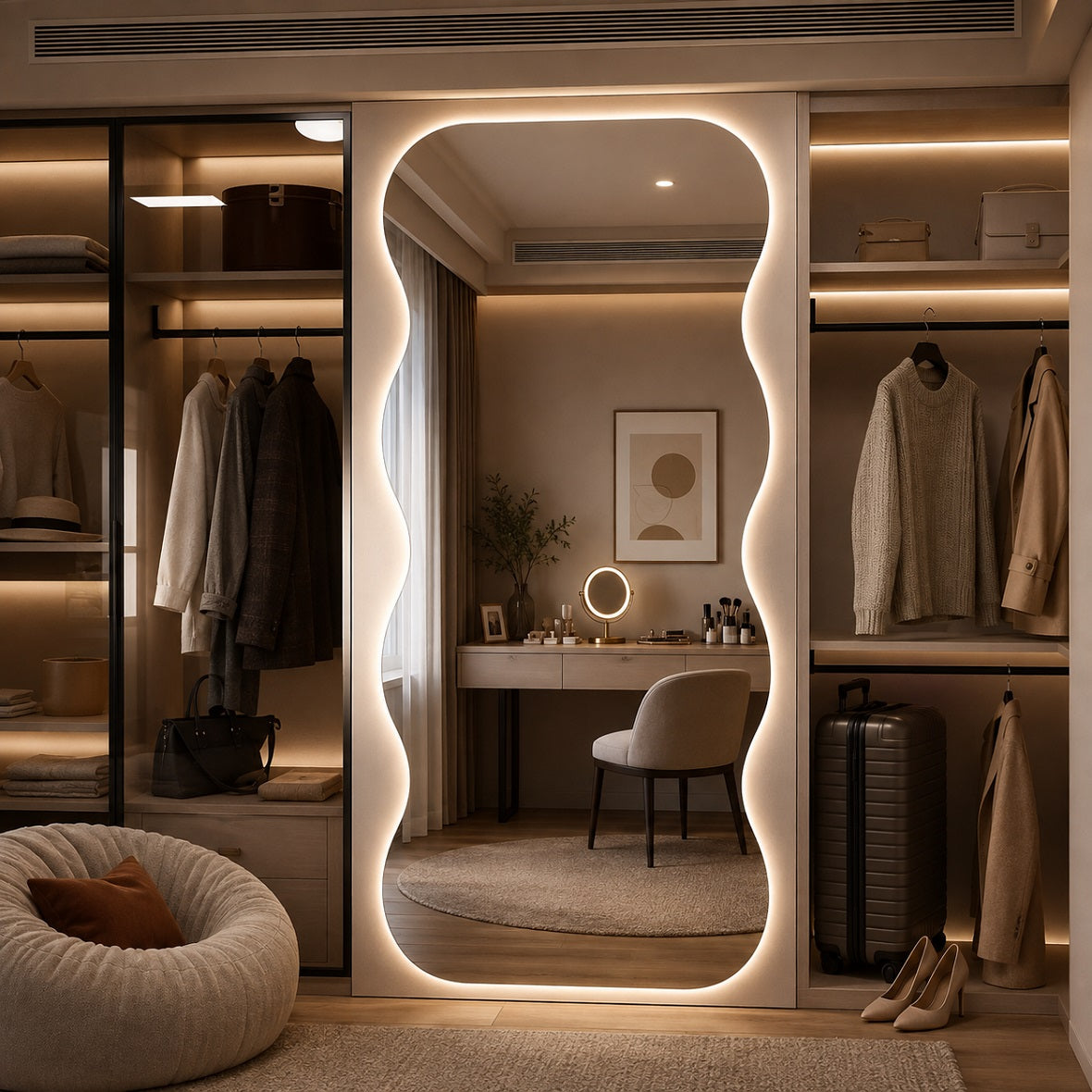
There are exceptions in both directions. A frameless wavy mirror can be the most eye-catching piece in an entryway, while a thin-framed rectangle can look quiet and contemporary. Pay attention to the shape and scale, not just the presence of a frame.
Framed vs. Frameless Mirror Cost
A basic frameless mirror can cost less upfront, but there is plenty of overlap between the two categories. A small, ready-made framed mirror may cost less than a large frameless mirror with custom edges or built-in lighting.
For a rough starting point, here are some general U.S. price estimates:
| Expense | Approximate price | What it covers |
|---|---|---|
| Basic frameless bathroom mirror | $10–$100 | Mirror only; plain styles |
| Common framed mirror | $50–$250 | Mirror only; material and design vary |
| Professional mirror installation | $50–$150 | Labor only for a typical installation |
These are general estimates, not quotes. Prices vary with size, glass, frame material, location, and the complexity of the job. Oversized mirrors, custom work, removal of an old mirror, wall repair, and electrical work can increase the total. Check current prices and get a local estimate before setting a budget.
When comparing two mirrors, look at the total installed cost: the mirror, suitable hardware, delivery, and any labor. A less expensive mirror isn’t necessarily the less expensive project.
Is a Framed or Frameless Mirror Easier to Install?
The most useful detail isn’t the frame—it’s the mounting system on the specific mirror you buy.
Many framed mirrors have hanging hardware on the back, such as D-rings or a rail. Some frameless mirrors use clips or brackets around the glass; others have hardware attached behind the mirror or use an adhesive system approved by the manufacturer. Check the instructions before assuming a mirror can be hung a particular way.
Before installation:
- Check the mirror’s weight and the mounting instructions. Use hardware and anchors appropriate for that weight and the wall material.
- Locate studs and check for hidden wiring or plumbing before drilling. Tile, plaster, masonry, and drywall may require different fasteners or tools.
- Ask for help lifting a large or heavy mirror. Hire a professional if the wall, weight, or mounting method is beyond your comfort level.
- For a hardwired lighted mirror, use a qualified electrician and follow the manufacturer’s instructions and local requirements.
For renters, check the lease before drilling or using adhesive. Adhesive can damage paint or drywall when removed, and it should only be used when the mirror manufacturer approves that mounting method for your wall. An over-the-door mirror may be a convenient alternative when the door and product instructions allow it.

How Much Mirror Space Does a Frame Take Up?
This detail is easy to miss when shopping online: the listed dimensions of a framed mirror usually describe its outside dimensions, not the visible glass. Check the product listing to be sure.
For example, imagine a rectangular mirror that measures 30 inches wide by 40 inches high overall. If the visible frame is 2 inches wide on every side, the reflective opening is roughly 26 by 36 inches. A frameless rectangle of the same outside size could provide close to 30 by 40 inches of visible glass, depending on its edge treatment.
That doesn’t make the framed option wrong. It simply helps you compare the view you’ll actually get. The difference matters above a narrow vanity or when you’re trying to fit a full-length mirror between a closet door and a corner.
Measure the available wall area, including room for sconces, outlets, switches, and doors. Then check the dimensions of both the full mirror and the visible glass where provided.
Choosing by Room
Bathroom: Balance Style and Moisture
A framed bathroom mirror can make a vanity feel finished, especially when the frame works with the cabinet or fixtures. In a small powder room, a distinctive border can add character without taking up counter space.
A frameless bathroom mirror works well when you want the reflection to feel open or the tile to stand out. It can also provide a broad view above a longer vanity.
For either style, check that the product is suitable for the intended bathroom environment. Use the exhaust fan, keep water from pooling at the lower edge, and follow the care instructions for the glass and frame. For a closer look at bathroom-specific options, read our guide to framed vs. frameless bathroom mirrors.
Bedroom: Think About Your Daily Routine
If getting dressed is the main reason for buying a mirror, check the viewing area and the place where you’ll stand. A full-length mirror with a narrow frame can offer a useful head-to-toe view while adding a finished edge beside a dresser.
A frameless option can feel less visually crowded in a compact bedroom. Watch what the mirror will reflect, too. A view of a window or a favorite part of the room may be more pleasant than a reflection of an open closet.
Living Room or Entryway: Give the Mirror a Job
Above a console or mantel, a framed mirror can help anchor the furniture and bring in a color already used elsewhere. Leave enough space around the piece so it doesn’t feel squeezed between other objects.
If the room already has plenty of pattern or artwork, a frameless mirror can offer a quieter pause. An irregular edge is another option when you want the mirror itself to feel more like wall art.
Home Gym: Prioritize the View and Secure Mounting
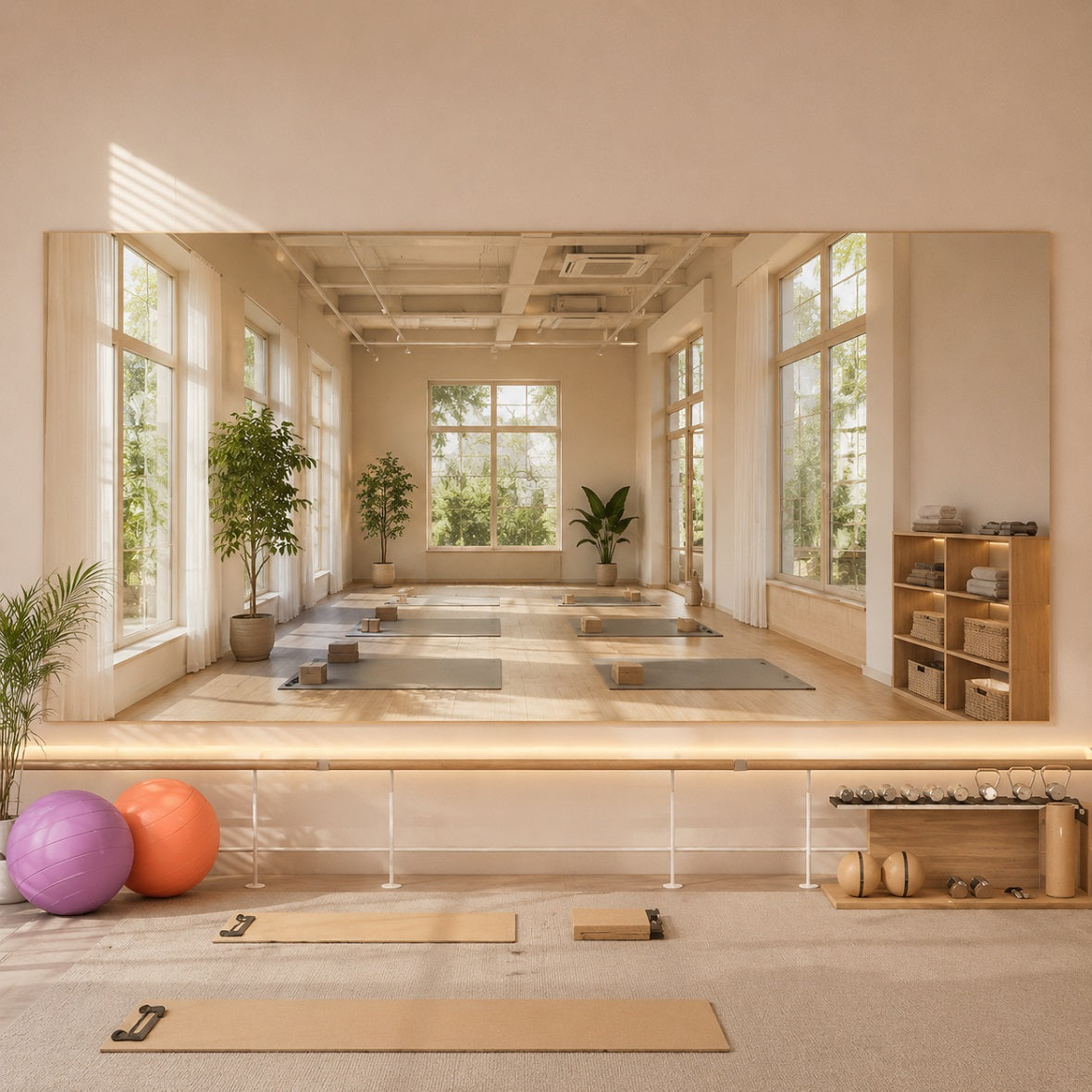
For stretching, dancing, or checking exercise form, a large frameless mirror can provide an uninterrupted view without a heavy-looking border. Pay close attention to the glass, the wall, and the mounting instructions, particularly when installing more than one panel.
The Hasipu Large Frameless Yoga Mirror is designed for home gyms, yoga, and dance spaces. It can be installed vertically or horizontally; check the available sizes and installation requirements for your wall.
Which Is Easier to Clean?
Frameless mirrors generally have fewer surfaces to dust. A framed mirror has the glass plus a border and an inner edge where residue can collect. How much extra work that takes depends on the frame: a smooth metal edge is simpler to wipe than detailed molding.
For both styles, use a soft, lint-free cloth and follow the manufacturer’s care instructions. Put a small amount of approved cleaner on the cloth instead of spraying the mirror directly, and dry the edges afterward. This helps keep liquid from running behind the glass.
For a framed mirror, use a cleaning method suitable for the frame material and avoid letting moisture sit in the seams. A dry microfiber cloth is often all you need for routine dusting.

How to Make Your Decision
Still deciding? Stand where the mirror will go and ask yourself a few practical questions:
- Does the room need a decorative accent? A framed design can add a finish and a clear focal point. An interesting frameless shape can do that, too.
- How much wall space is available? Measure the outside dimensions and check how much of that space will be visible glass.
- What will the mirror reflect? Consider the view from where you normally stand or sit, along with any glare from windows or lights.
- What is the full budget? Include hardware, delivery, wall repair, and installation where needed.
- Can the wall support it? Review the product’s mounting method before ordering, especially for oversized or hardwired mirrors.
If you like the definition of a frame but want a subtle look, try a narrow frame in a finish close to the wall color. If you prefer a frameless design but want more personality, explore a curved, arched, or irregular shape.
At Hasipu, you’ll find options for different rooms and routines, from framed and decorative wall mirrors to full-length mirrors and large frameless fitness mirrors. Start with the right size and placement; the style choice gets much easier from there.
Frequently Asked Questions
1. Are frameless mirrors cheaper than framed mirrors?
Sometimes. A basic frameless mirror can be an affordable choice, but a larger size, custom shape, beveled edge, lighting, or professional installation can raise the price. Compare similar sizes and the full installed cost before deciding.
2. Are frameless mirrors outdated?
No single mirror style works for every room. A plain wall-to-wall panel may feel too utilitarian in one space, while a shaped or carefully sized frameless mirror can look fresh in another. The mirror’s proportions and surroundings matter more than a label.
3. Do frameless mirrors make a room look bigger?
They can make a room feel more open by reflecting light and views without a prominent border. The effect depends on placement and what the mirror reflects. A framed mirror can also brighten a space when positioned well.
4. Are framed mirrors better for bathrooms?
Not automatically. Both types can work in bathrooms. Choose a product suited to the room’s moisture conditions, follow its installation instructions, and keep water from collecting along the frame or glass edge.
5. Can you add a frame to an existing frameless mirror?
Often, yes. A frame kit or custom trim may fit around an existing mirror, but check the mirror’s mounting, clips, edge condition, and available clearance first. If the glass is damaged, loose, or glued to the wall, ask a professional before attempting changes.
6. Which mirror is better for a small room?
Either can work. Frameless glass often has a lighter visual effect, while a slim frame can give a small room definition without overwhelming it. Choose the size based on the wall and the view you need rather than the room’s square footage alone.