

Table of Contents
For a large custom wall mirror, 6 mm glass is a useful starting point to discuss with your installer. For a ready-made home mirror, 4–6 mm is a practical range to compare, while 3 mm can suit smaller, well-supported designs. The right choice depends on the panel’s dimensions, how it is held, and the construction of the finished product.
That last part matters when you’re shopping. Two mirrors can look almost identical in a product photo, yet use different frames, backing materials, and mounting systems. Paying for thicker glass makes sense when the design benefits from it. A thickness number by itself won’t tell you how straight your reflection will look.
Check Which Thickness the Listing Means
Before comparing mirror glass thickness, make sure you’re reading the measurement of the glass itself.
A product listed as 1.2 inches deep might include a frame, LED housing, mounting bracket, or space behind the glass. A medicine cabinet’s depth describes its storage body. Neither measurement tells you the thickness of the reflective panel.
Look for a separate specification such as “4 mm glass.” When that detail is missing, ask the seller for the glass thickness and the total product weight. Those two answers are more useful than guessing from a side-view photo.

How to Verify Mirror Glass Thickness
Start with the specification for the exact size and model in your cart. A listing that offers several sizes should make clear which measurements belong to each option. Save that information with your order confirmation.
Here is an illustrative specification, not a particular Hasipu product: “24 × 36 inches; overall depth: 1.2 inches; mirror glass: 4 mm.” The first measurement describes the product’s face dimensions, the second its front-to-back depth, and the last the glass thickness. Those numbers answer different questions.
Ask for a labeled technical drawing or an edge photo with a measurement when the listing remains unclear. A useful request is: “Please confirm the thickness of the glass alone for this size, excluding the backing, frame, and lighting enclosure.”
For an existing mirror, the original specification is the easiest place to start. A glass professional can measure a safely accessible, unbeveled edge with suitable calipers. A beveled edge tapers and can give a misleading reading. Leave a mounted mirror in place; removing its frame or backing just to measure it can damage the assembly.
Comparing 3 mm, 4 mm, 5 mm, and 6 mm Mirrors
Use this table to narrow your questions when shopping or ordering custom glass. These are starting points for comparison, not maximum-size rules or installation specifications.
| Glass thickness | Approximate inches | Where to consider it | What deserves a closer look |
|---|---|---|---|
| 3 mm | 0.118 in | Small mirrors with suitable backing or a purpose-designed frame | How the thin panel is supported |
| 4 mm | 0.157 in | Ready-made wall, bathroom, and full-length mirrors designed around this thickness | The complete assembly and approved mounting method |
| 5 mm | 0.197 in | Projects needing more glass stiffness than a comparable 4 mm panel | Whether the extra thickness suits the frame and hardware |
| 6 mm | 0.236 in | Larger custom wall mirrors and broad frameless panels | Total weight, wall condition, and the installer’s support plan |
U.S. listings may use familiar fractions such as 1/8 inch, 3/16 inch, or 1/4 inch. Those labels do not always represent exact metric conversions. Exactly 1/4 inch equals 6.35 mm; exactly 3/16 inch equals about 4.76 mm. Confirm the supplied thickness when ordering clips, channels, or replacement glass.
There is no single standard mirror thickness that covers every bedroom, bathroom, and dressing room.
A Closer Look at a Hasipu Mirror
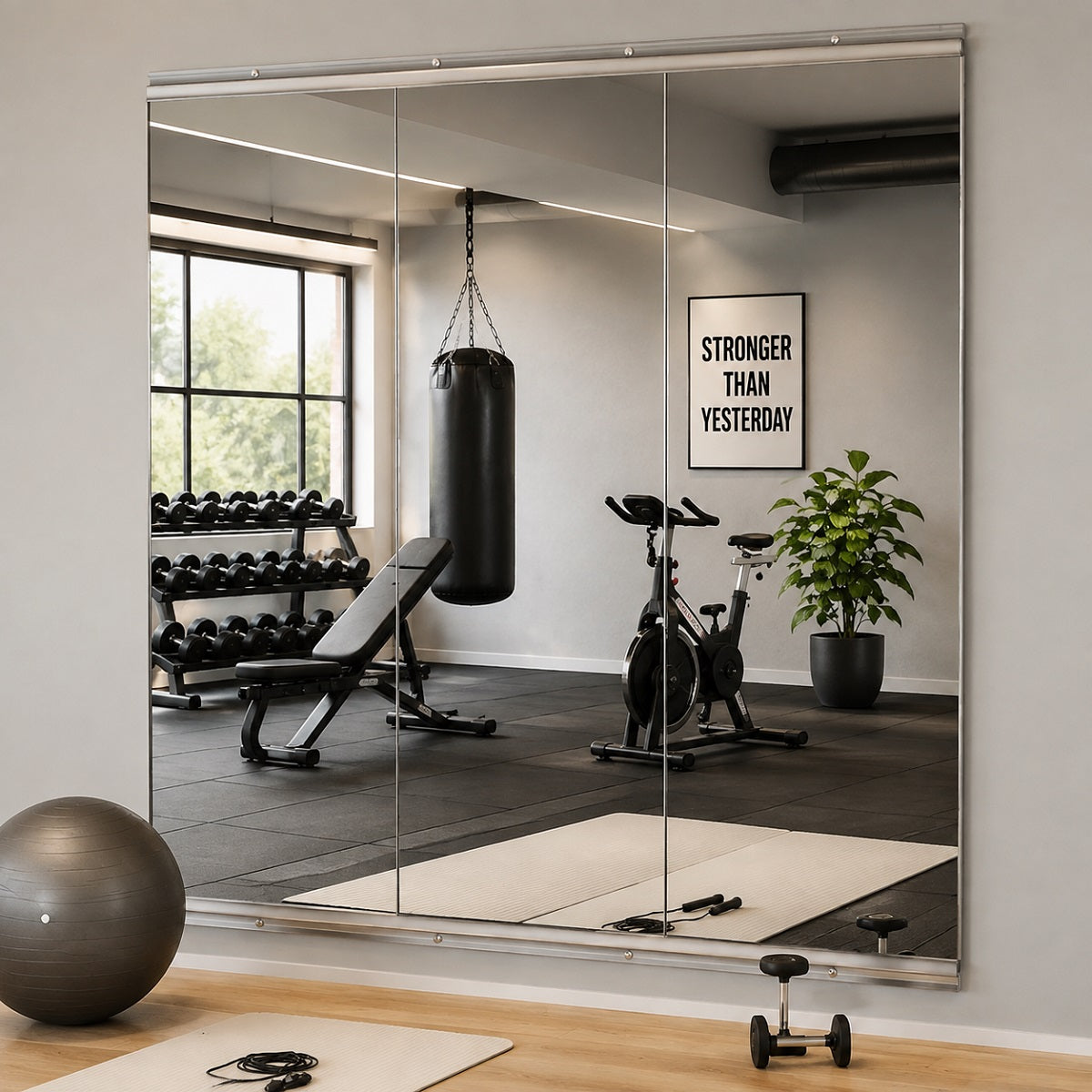
The Hasipu KM-MIR-R provides a concrete example of how to read a mirror specification. Consider its 71.3 × 35.8-inch, single-panel option. The product page lists 4 mm tempered glass and supports vertical or horizontal wall installation.
| Specification | Details for this example |
|---|---|
| Model | Hasipu KM-MIR-R |
| Selected size and quantity | 71.3 × 35.8 inches; one panel |
| Glass | 4 mm tempered glass |
| Design and orientation | Frameless; vertical or horizontal wall installation |
Here, 4 mm mirror glass describes the panel thickness. It does not tell you how far the installed mirror projects from the wall. That measurement also depends on the mounting arrangement. The one-panel designation matters too: a two-panel package should not be mistaken for a single sheet with twice the width.
Before planning the installation, confirm the finished weight of one panel and the installed depth for this exact option with Hasipu. Use the supplied instructions to check the mounting requirements for your wall. Keep those answers alongside the size and thickness so you can compare the complete product with another mirror on your shortlist.

A Bigger Mirror Changes the Decision
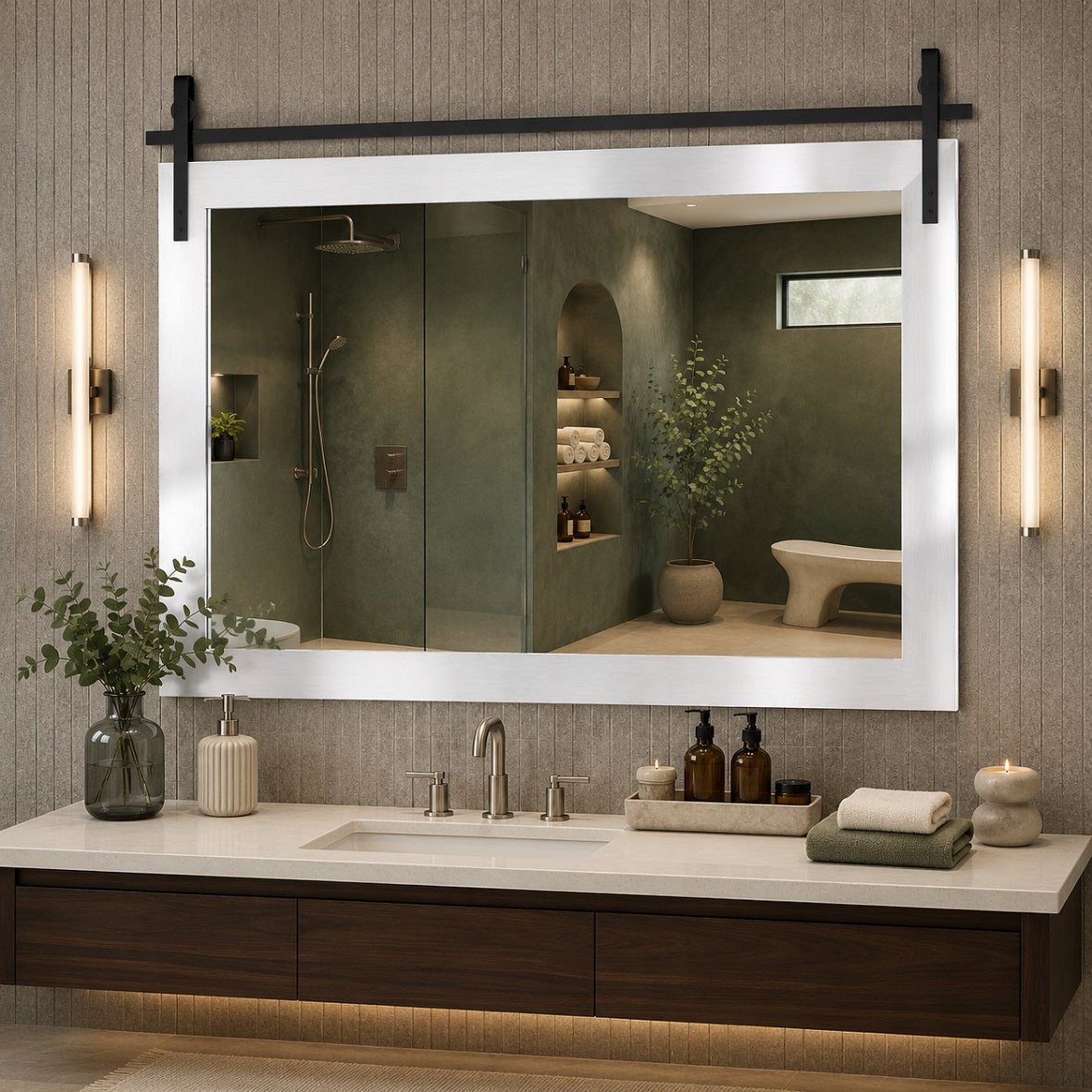
Picture a small mirror over an entryway shelf, then a wide panel stretching across a double vanity. Even with identical glass thickness, they present different support challenges.
As a panel gets larger, its ability to remain flat becomes more important. Thicker glass generally resists bending better than thinner glass of the same size and material. The distance between supports and the way the panel is held also affect the result.
Width deserves attention alongside height. Calling a mirror “full-length” tells you its intended use, but gives you little information about how broad the glass is or what supports it.
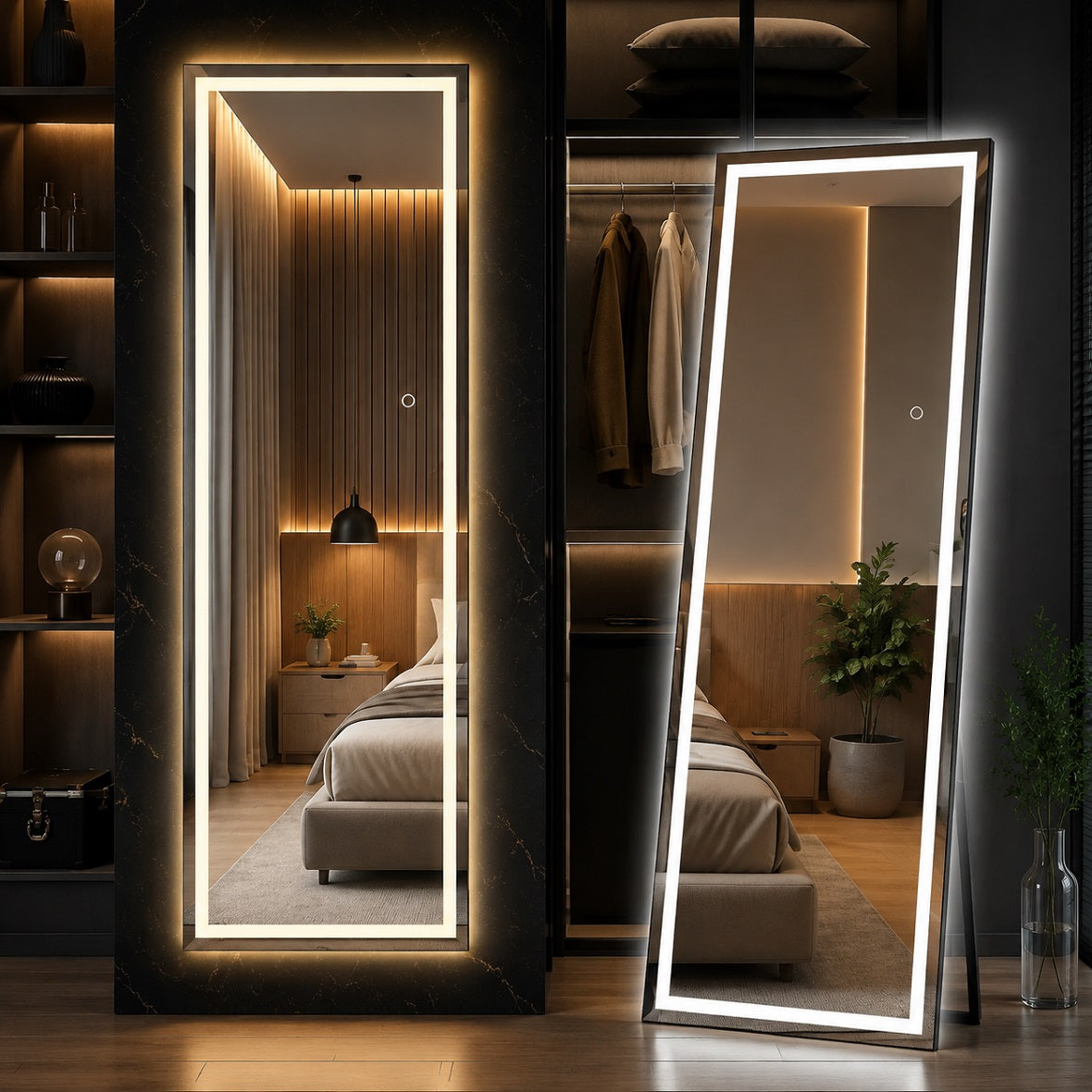
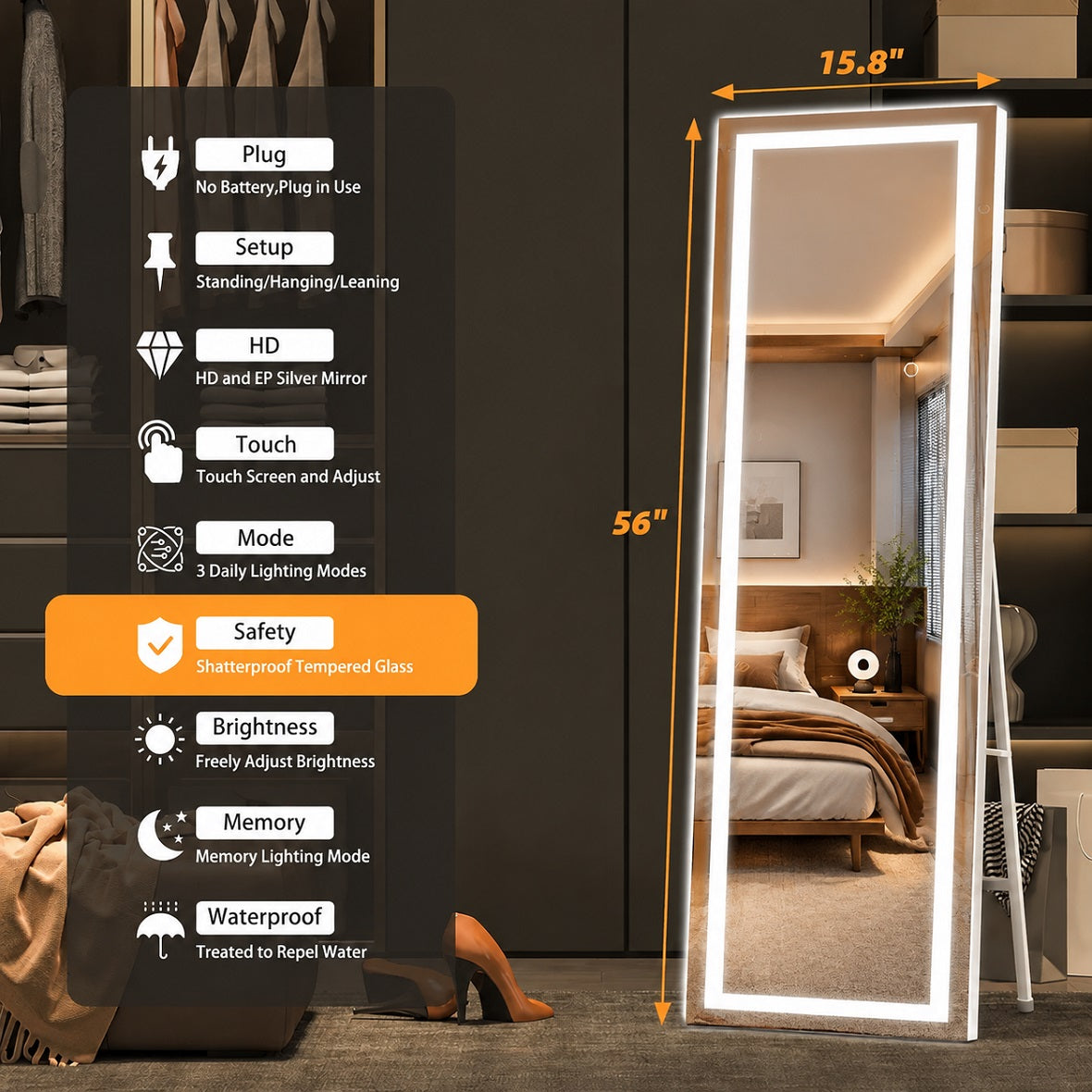
When comparing Hasipu full-length mirrors, note the exact width, height, standing or hanging options, and listed weight. A narrow dressing mirror and a wide floor mirror should not be treated as interchangeable simply because both show your outfit.
For custom glass, give the fabricator the full dimensions and installation plan before settling on thickness. An online rule such as “anything over this height needs 6 mm” leaves too much of the design out.
Choosing Thickness for Your Mirror Setup
The questions change with the purchase. These three situations show how to use thickness information without turning it into a rule for every mirror.
A ready-made bedroom dressing mirror
Suppose you are comparing two full-length mirrors for the same corner. Put their width, height, glass thickness, assembled weight, and approved standing or hanging arrangements side by side. Check the product weight rather than the shipping weight, which includes packaging. A thicker panel may add weight without giving you the stand design or wall-mounting option you need.
A custom mirror above a double vanity
Bring the fabricator the proposed glass dimensions and photos of the wall, lights, outlets, and faucet locations. Have the mounting surface assessed before approving the order. Ask the quote to identify the selected thickness, edge finish, support method, and installation work. That makes competing quotes easier to compare and keeps the thickness decision tied to the actual project.
Replacement glass for a mirrored cabinet door
Start with the cabinet model and original door specification. Confirm whether the replacement is a glass panel or a complete door assembly. The frame opening, hinges, and attachment method all need to match the replacement. Have the cabinet manufacturer approve any change in thickness or weight before ordering.
Support Matters Before the Mirror Reaches the Wall
A substantial frame needs the right construction
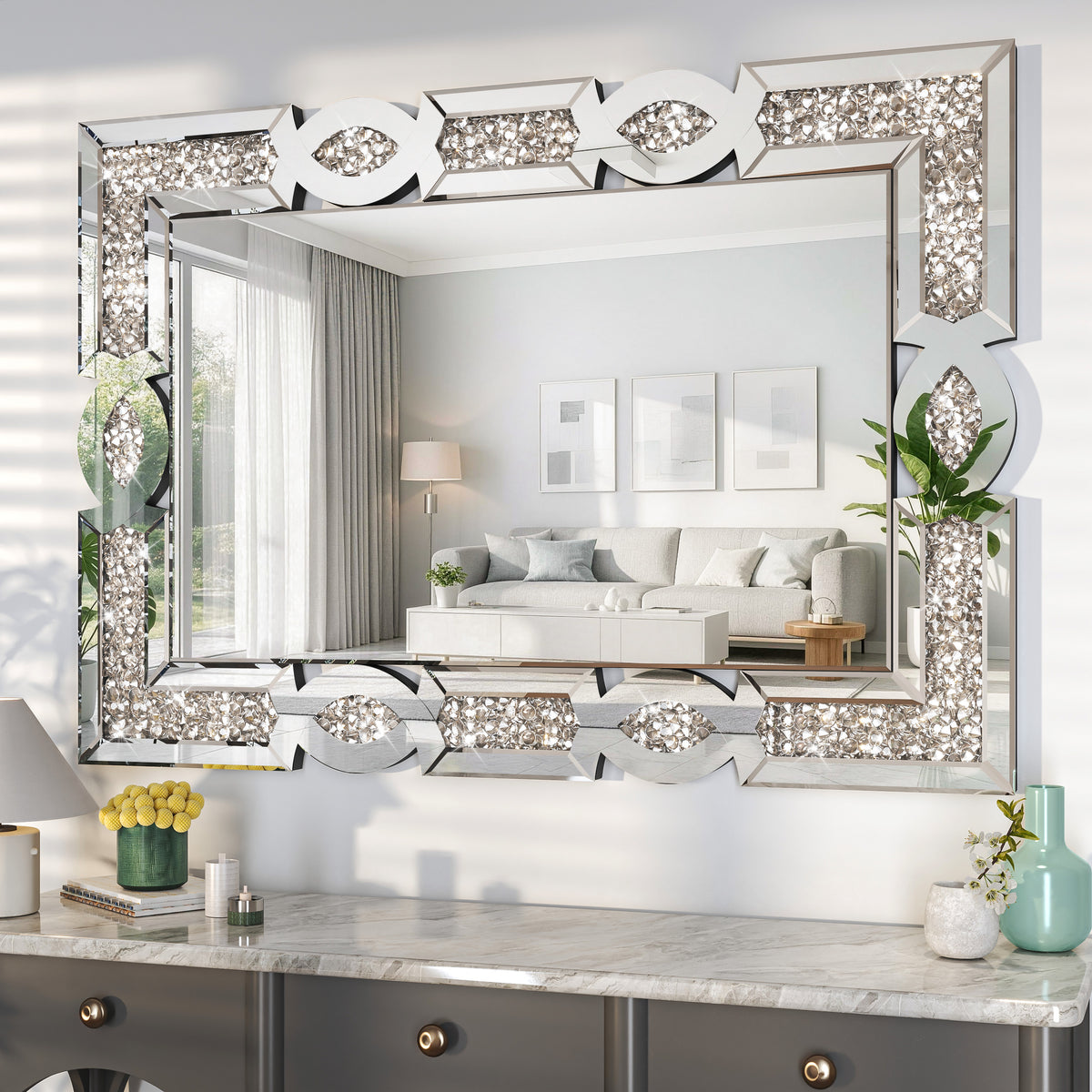
A wide decorative border can make a mirror look sturdy. The useful question is how that frame actually holds the glass.
Support should keep the panel stable without twisting it or squeezing isolated areas. Backing materials also need to suit the product and its environment. A frame that looks straight from the front can still hold the glass unevenly.
For a standing mirror, check the stand or base and any required anti-tip attachment. Increasing glass thickness adds weight; it does not replace a stable base or the manufacturer’s securing instructions.

Frameless mirrors still need a support plan
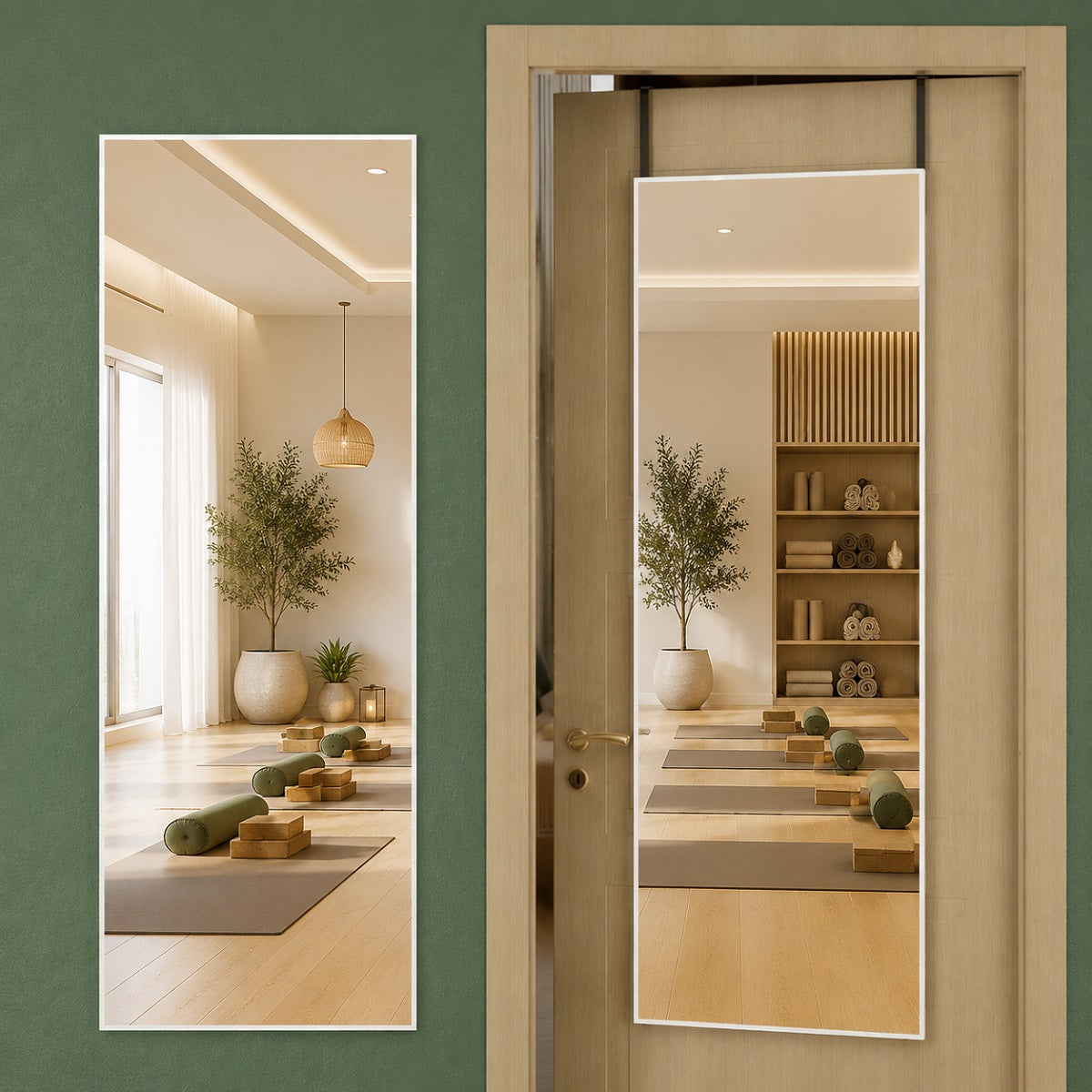
Frameless mirror thickness is only part of choosing a wall-mounted panel. Clips, channels, brackets, or an approved bonding system must suit the glass and installation.
For example, the Hasipu KM-MIR-R frameless mirror lists 4 mm tempered glass. That is a specification for this particular product. Its installation instructions and supplied mounting system remain part of the purchase decision, especially when comparing it with custom-cut glass.
A decorative frame is not a requirement for every mirror, and a frameless design does not automatically require 6 mm glass.
The wall can affect the reflection
A wall may look smooth while having a raised seam or a shallow dip. Forcing glass against that surface can put it under uneven pressure.
Have the installer assess the mounting surface and correct irregularities using a method appropriate to the mirror. Use adhesives only when the installation instructions allow them, with compatibility confirmed for the mirror backing and wall surface. Follow the specified application pattern, support requirements, and curing time.
Tightening a clip harder is not a dependable way to straighten a reflection.
Does Thicker Glass Prevent Mirror Distortion?
Thicker glass can reduce flexing, but it cannot guarantee a distortion-free reflection. The flatness of the glass, manufacturing quality, frame pressure, and installation all contribute to what you see.
A panel that curves slightly redirects reflected light. A straight cabinet edge may appear bowed, or part of your reflection may stretch. Increasing thickness will not fix a badly fitted frame or an uneven support surface.
“Tempered” also describes something different from optical flatness. Heat treatment can introduce small surface variations, including roller wave, depending on processing. That does not mean every tempered mirror will show an obvious ripple.
For an existing mirror with a noticeably uneven image, Hasipu’s guide to what makes a mirror reflection look wavy explains what to observe before contacting the seller or installer.
Extra Thickness Adds Real Weight
The weight difference becomes noticeable on a large panel.
For a mirror measuring 36 by 72 inches, approximate glass-only weights are:
- 4 mm glass: 37 pounds
- 6 mm glass: 55 pounds
These estimates use a typical glass weight of about 2.5 kilograms per square meter for each millimeter of thickness. They exclude the frame, backing, lights, and mounting components.
Moving from 4 mm to 6 mm adds roughly 18 pounds in this example—a 50% increase in glass weight. That affects handling and the load the installation must carry.
Use the manufacturer’s complete product weight when selecting mounting hardware. The wall construction, fastener arrangement, and hardware instructions matter too; a weight rating on an anchor package does not describe the entire installation.
Estimated Glass Weight by Mirror Size
Use the table below to compare mirror glass weight across several rectangular panel sizes. Dimensions refer to the glass itself, excluding any surrounding frame. Every value is an estimate in pounds, rounded to one decimal place.
| Glass panel size | 4 mm glass | 5 mm glass | 6 mm glass |
|---|---|---|---|
| 24 × 36 in | 12.3 lb | 15.4 lb | 18.4 lb |
| 30 × 48 in | 20.5 lb | 25.6 lb | 30.7 lb |
| 36 × 72 in | 36.9 lb | 46.1 lb | 55.3 lb |
| 48 × 72 in | 49.2 lb | 61.4 lb | 73.7 lb |
The calculation uses the same glass density assumption as the example above: width in meters × height in meters × thickness in millimeters × 2.5 gives kilograms; multiply by about 2.205 for pounds.
These are comparison figures, not recommended thicknesses or hardware load ratings. For a finished mirror, obtain the assembled weight for the exact model and size. A substantial frame or lighting enclosure can change the load considerably.

Choose a Mirror That Fits Your Space
For your next mirror, keep the panel dimensions, glass thickness, and support details together as you compare products. That gives you a much clearer basis for choosing a mirror that fits your room and works comfortably in everyday use.
For a ready-made Hasipu mirror, compare the exact size and construction you plan to buy. For a custom panel, settle the thickness and mounting plan with the fabricator together. You want a mirror that looks right in the room, gives you a comfortable everyday view, and has the support its design requires.
Frequently Asked Questions
1. Is a 4 mm mirror thick enough for a bathroom?
It can be, when the product is designed for its dimensions and mounting arrangement. A large custom panel needs a separate assessment. Bathroom suitability also depends on the frame, backing, protective coatings, and installation conditions; choosing thicker glass does not solve moisture-related problems.
2. Should every full-length mirror be 1/4 inch thick?
No. Around 1/4 inch is a common reference point for larger custom mirrors, but ready-made full-length mirrors can use thinner glass as part of a designed assembly. Compare the whole product and follow its installation instructions.
3. Will a thicker mirror look brighter?
Not automatically. The glass composition and reflective coating affect brightness and color. More glass thickness does not necessarily mean more reflected light. Compare the actual mirror specifications when reflection quality is a priority.
4. Can I replace thin mirror glass with a thicker sheet?
Only after confirming that the frame, clips, hinges, or mounting system can accommodate the added thickness and weight. This matters especially for mirrored cabinet doors. Have the manufacturer or a qualified glass professional assess the replacement before ordering it.
For your next mirror, keep the panel dimensions, glass thickness, and support details together as you compare products. That gives you a much clearer basis for choosing a mirror that fits your room and works comfortably in everyday use.