


Table of Contents
A doorframe looks straight until you see it in the mirror. Your reflection seems normal near the center, then stretches toward one side. From across the room, the image appears to ripple.
A wavy mirror reflection usually means the reflective surface is not perfectly flat. A slight curve in the glass, uneven mounting pressure, or a frame that holds the panel unevenly can change the image. Viewing distance and angle can make those variations more noticeable.
Finding the cause starts with a few observations: where the wave appears, when you first noticed it, and whether it changes as you move.
What Causes a Wavy Mirror Reflection?
A flat mirror reflects straight lines as straight lines. When part of its surface curves, that area redirects light differently. A doorway may look bent, a face may appear stretched, or a reflected floor may seem to slope.
Small variations in glass flatness
Glass can have slight variations in shape from manufacturing and processing. Certain heat treatments can introduce effects such as roller wave or overall bowing.
That does not mean every treated glass panel will show obvious distortion. It does mean that terms such as “tempered” describe something different from optical flatness.

Pressure from the frame or backing
A frame should support the mirror without twisting the panel. Uneven pressure around the edges or a backing that has changed shape can affect the reflection.
The outside of the frame may look straight while the glass inside it is slightly bowed. Checking the frame with a level will not tell you whether the reflective surface is flat.
Flex in the reflective material
Glass, acrylic, and reflective film behave differently. More flexible materials depend heavily on a flat, suitable backing.
Glass thickness also affects resistance to bending, but thickness alone does not determine reflection quality. Panel size, construction, support, and installation all play a role.
Why Does My Mirror Look Wavy After Installation?
A reflection that becomes wavy after mounting is a reason to review the installation. The timing is useful evidence, though it does not prove that installation is the only cause.
The wall has uneven areas
Drywall can look smooth while having raised seams, shallow dips, or small patches that sit proud of the surface.
A mirror hanging from its designated hardware may bridge those variations. A panel forced tightly against the wall may be put under uneven pressure.
Mounting hardware is stressing the panel
Clips, brackets, and fasteners need to hold the mirror according to its instructions. Tightening them harder is not a reliable way to straighten the image.
Without touching the hardware, look for uneven gaps around the frame or distortion concentrated near a fixing point. Give those details to the installer. Do not loosen supports while the mirror is hanging.
The adhesive setup needs checking
Bonded mirrors depend on compatible adhesive, suitable wall preparation, and the specified application method.
Adding more adhesive or pressing harder against the glass can make the problem worse. A bonded panel should be assessed before anyone attempts removal.
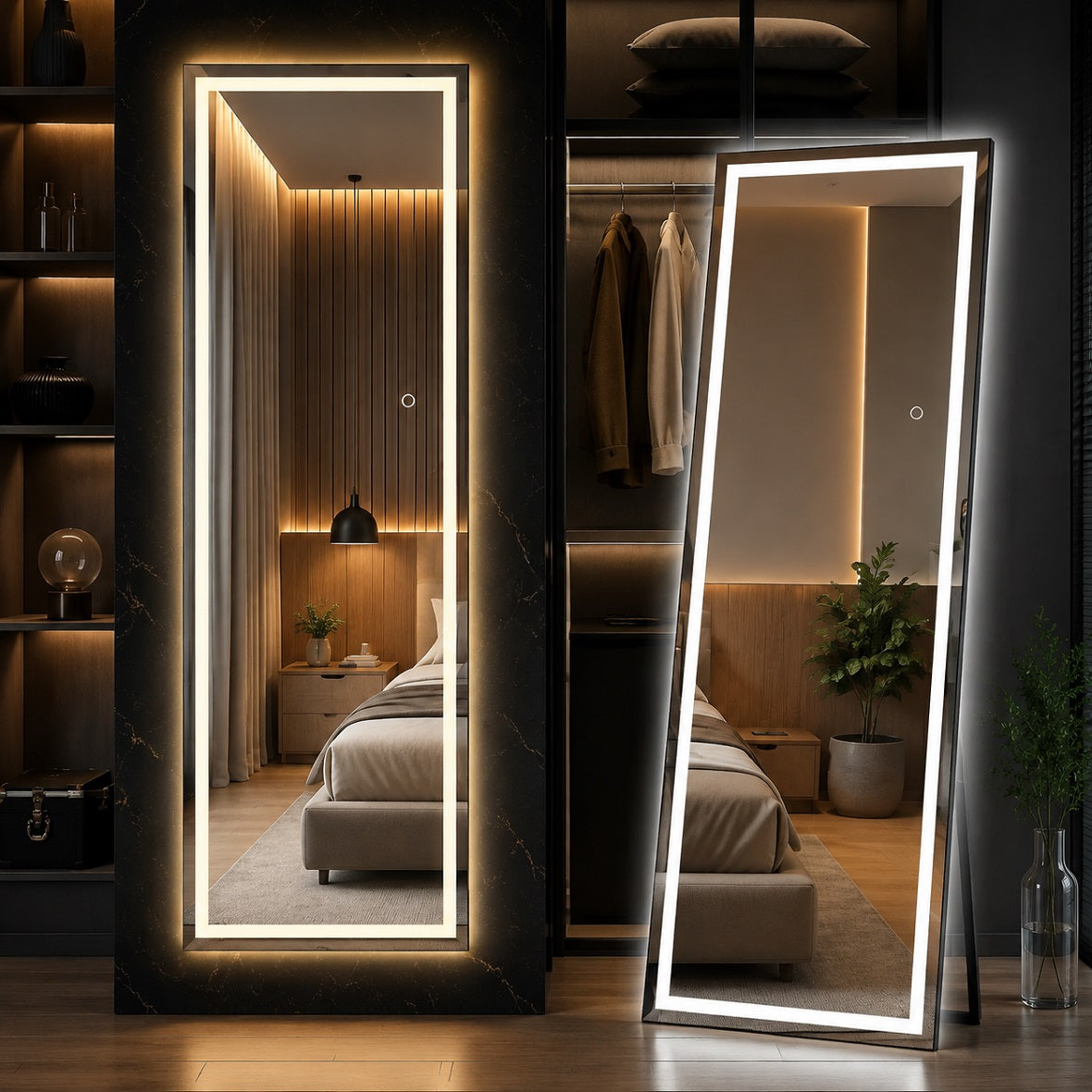
For a bedroom or dressing area, review the intended mounting method when comparing Hasipu full-length mirrors. The design needs to suit both your available space and the way it will be supported.

Why Does My Mirror Look Wavy From Far Away?
A mirror can look fine while you are standing close to it, then show an obvious ripple from the doorway.
Distance can make small changes in the reflective surface easier to see. Long background lines—window frames, ceiling edges, and tile joints—provide clear references. Viewing from an angle can also reveal variations that are less noticeable straight on.
At a bathroom sink, you may focus on your face and a small part of the background. Across a bedroom, you take in more of the mirror and longer architectural lines.
Check the reflection from your normal working position and from another place where you regularly see it. Moving farther away does not create a new defect; it may reveal an existing variation.
An unusual effect visible only at an extreme angle is different from distortion that interferes with everyday use.
Why Does Only One Part of My Mirror Look Wavy?
A wave near one corner or along a single edge can point to a localized issue. That section of glass may have a slight curve, or the frame, backing, or hardware may be applying uneven pressure.
The location helps narrow the inspection:
- A bend near a clip gives the installer a specific mounting point to review.
- Distortion along an edge may involve the frame or the panel itself.
- A ripple in the middle warrants a closer look at the glass and its support.
The location is a clue, not a diagnosis. A wave near a fastener does not automatically mean the fastener caused it.
Watch a straight doorframe as its reflection passes across the mirror while you move slowly sideways. Note whether the bend repeatedly appears in the same section. Avoid pressing that area to see whether the image changes.
Why Has My Mirror Reflection Changed Over Time?
A reflection that once looked straight but now appears uneven deserves a fresh check of the mirror and its support.
A frame or backing may have changed shape. Mounting components or the wall behind the mirror may have moved. Moisture can affect some frame and backing materials, which may change how the panel is held.
The room can also make an old variation newly visible. A striped wall, a new cabinet, or a different viewing position may give you a clearer reference line than you had before.
Try to separate a change in shape from a change in clarity. Straight lines that bend suggest distortion. Haze, darkened edges, or missing reflective patches suggest a different issue.
Older photos may help establish when the change appeared. Include the installation date and any recent changes to the room when contacting the seller.
Wavy, Blurry, or Double Reflections: What’s the Difference?
These effects can overlap, but they describe different problems.
| Reflection issue | What it looks like | What to check |
|---|---|---|
| Wavy reflection | Straight edges bend, ripple, or stretch | Panel flatness, frame pressure, and mounting support |
| Blurry reflection | Details look hazy or difficult to see clearly | Condensation, cleaning residue, surface condition, or coating damage |
| Double reflection | An object has a faint second outline | Viewing angle and reflections from different surfaces within the mirror |
In a typical glass mirror, a small amount of light reflects from the front surface while the main image comes from the reflective layer behind it. This can create a faint secondary outline, especially around bright objects viewed at an angle.
Start with a clean, dry mirror in ordinary room lighting. Compare what you see directly with what appears in a phone photo, since camera lenses and image processing can introduce their own effects.
Cleaning may remove residue that causes haze. It will not flatten a curved panel.
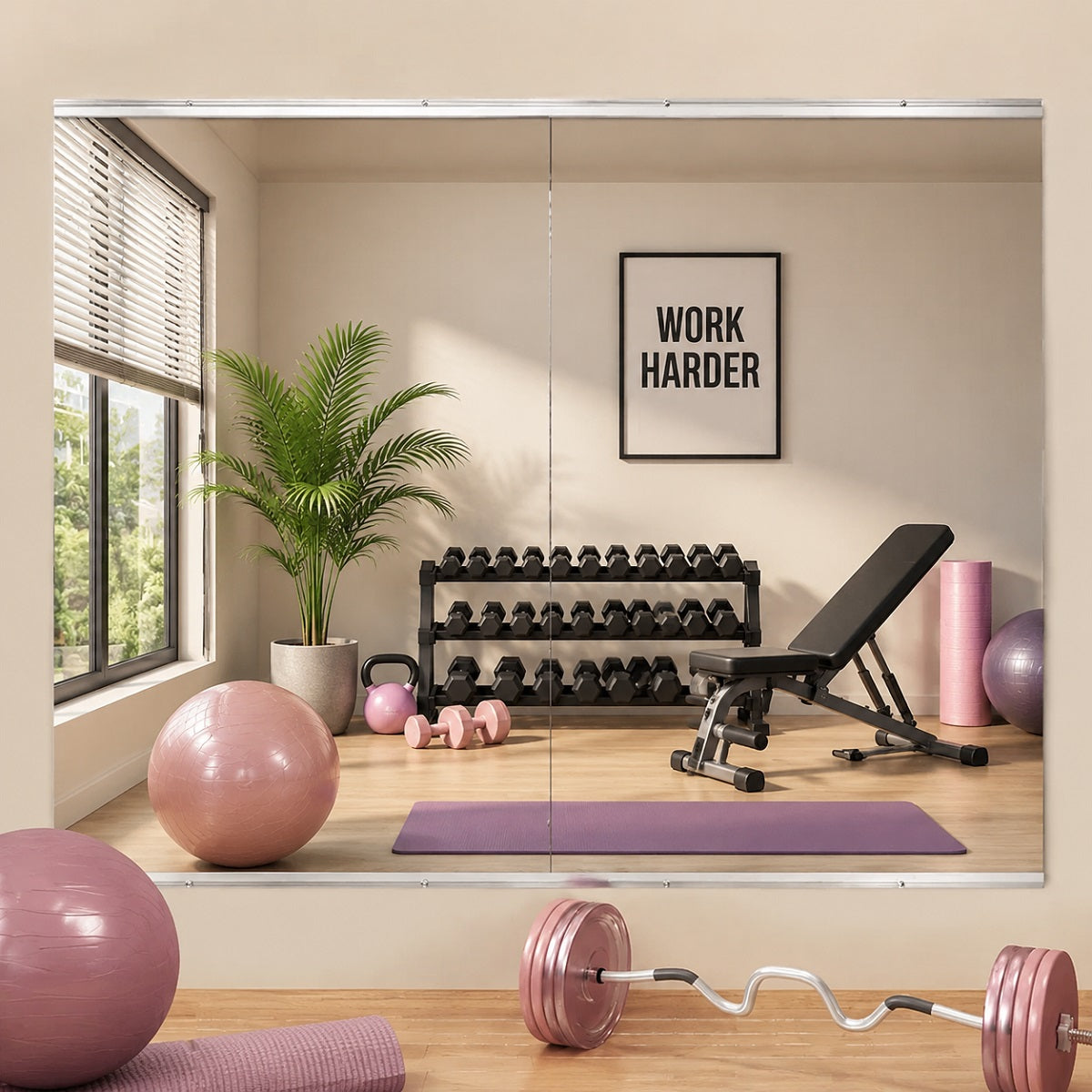
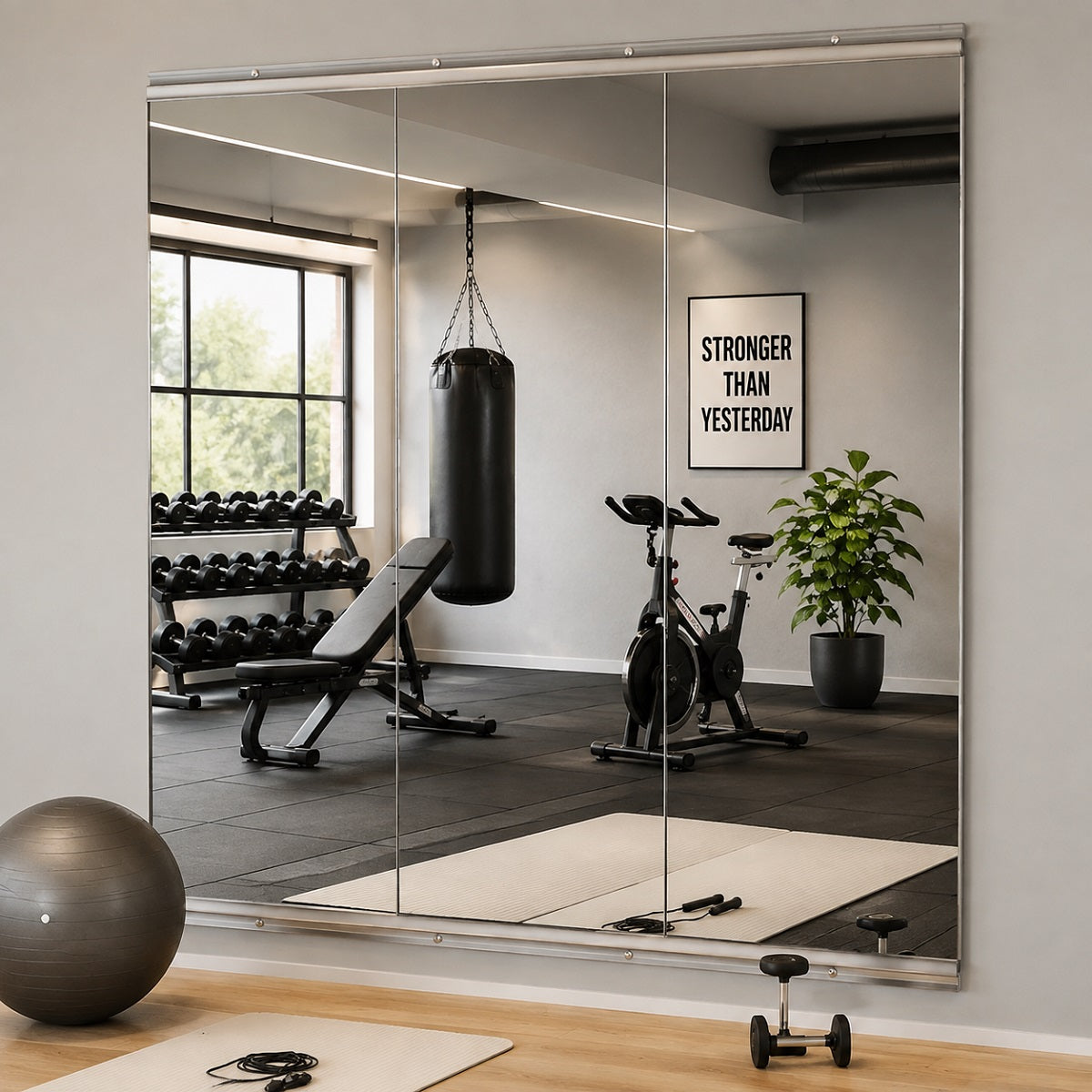
For a multi-panel installation, there is another distinction: an image that jumps at a seam may come from adjacent panels facing slightly different directions. When planning with Hasipu yoga and fitness mirrors, assess alignment across the whole wall as well as the reflection within each panel.

Why Is Mirror Distortion Noticeable in Bathrooms?
Bathrooms are full of straight reference lines. Tile joints, shower frames, cabinet edges, and vanity backsplashes make small bends easy to spot.
Bright lighting can make those lines more distinct. A wide mirror may also reflect several surfaces at once, giving your eye more opportunities to notice an uneven image.
Bathroom lighting can reveal distortion; it does not automatically cause it.
Steam creates a separate effect. Condensation scatters light and makes the reflection cloudy, which can be mistaken for a problem with the mirror. Let the surface clear and dry before checking whether reflected lines still bend.
When waviness remains, consider when it started. A problem visible immediately after mounting needs a different assessment from haze that appears only after a hot shower.
Can You Fix a Wavy Mirror Reflection?
Installation-related distortion may improve when mounting pressure or support is corrected. A curve built into the glass generally requires replacement rather than a home repair.
The next step depends on the pattern and its history.
| What you observe | Practical next step |
|---|---|
| Waviness appeared after mounting | Ask the installer to review wall flatness and hardware |
| The frame or backing looks twisted | Contact the seller before altering the assembly |
| The same section looked wavy before installation | Document it and request a product assessment |
| The image jumps only at panel joints | Have panel alignment checked |
| Distortion appears only in photos | Compare camera settings with your direct view |
Do not heat, bend, clamp, or press the glass to straighten it. Polishing will not remove a structural curve.
A large, bonded, or hardwired mirror may need professional help for inspection or removal. Keep the model number, order details, and installation instructions available.
For a Hasipu purchase, use the contact page to describe the concern and provide clear photos or video. Explain whether the effect was present before mounting or appeared afterward.
How to Check a Mirror for Distortion at Home
A straight reference line and a few minutes of observation can help you document the problem. This is a practical check, not a formal optical test.
Choose an edge you know is straight
Use a rigid doorframe, window mullion, or another edge you have checked directly.
Avoid relying on curtains, uneven tile joints, or a shelf that may already be bowed. The reference itself needs to be straight.
Begin where you normally use the mirror
Stand at your usual distance for dressing, shaving, or applying makeup.
Look at the reference near the center of the panel, then toward the sides. Notice whether it stays straight or develops a localized bend. Keep decorative beveled borders separate from the main viewing surface.
Move slowly from side to side
Watch the line as its reflection passes across different areas.
A bend that repeatedly appears in the same section is useful to document. Try both a vertical and a horizontal reference, since one line may not reveal every pattern.
Check from farther back
Move to another comfortable position in the room and repeat the observation.
Note whether the effect is visible during normal use or only from a particular angle. Avoid moving an unsecured mirror to improve the test.
Record a short video
Show the full mirror, the straight reference, and a slow change in viewing position.
Use a standard camera setting rather than an ultrawide lens or panorama mode. Add a written description of what you see with your eyes.
A report such as “the doorframe bends near the lower-right corner from my usual dressing position” gives the seller or installer a clear starting point.

When Should You Ask for a Replacement?
Request an assessment when the reflection affects the way you use the mirror, especially after the installation has been reviewed.
Examples include facial features that visibly stretch in the main viewing area, several straight lines bending in the same section, or a ripple that was present before mounting.
Include the model number, order information, photos, and a short video. Describe the viewing distance and how the mirror is installed. Those details help distinguish a panel issue from a support or alignment problem.
A cracked panel, damaged edge, or unstable mounting needs prompt attention regardless of reflection quality. Avoid handling it to investigate the waviness.
For an intact, securely mounted mirror, a repeatable straight-line check is the most useful place to start. It helps turn an uncertain impression into a specific problem the seller or installer can assess.
Final Thoughts
A mirror should make everyday routines easier, without leaving you wondering whether the reflection is accurate. When something looks wavy, check a few straight lines from your usual viewing position and note where the image bends. That simple check can help you explain the problem clearly. From there, the seller or installer can assess whether the mounting needs attention or the mirror needs replacing.