Table of Contents
A mirror with a glowing border and a mirror with a halo behind it can look surprisingly similar online. Put them in the same room, though, and you may notice that the light does very different things. One draws attention to your reflection. Another draws attention to the wall.
That difference matters at a makeup table, beside a bedroom dresser, and above an entryway console. Before you fall for the shape, decide what you need to see when you stand or sit in front of it.
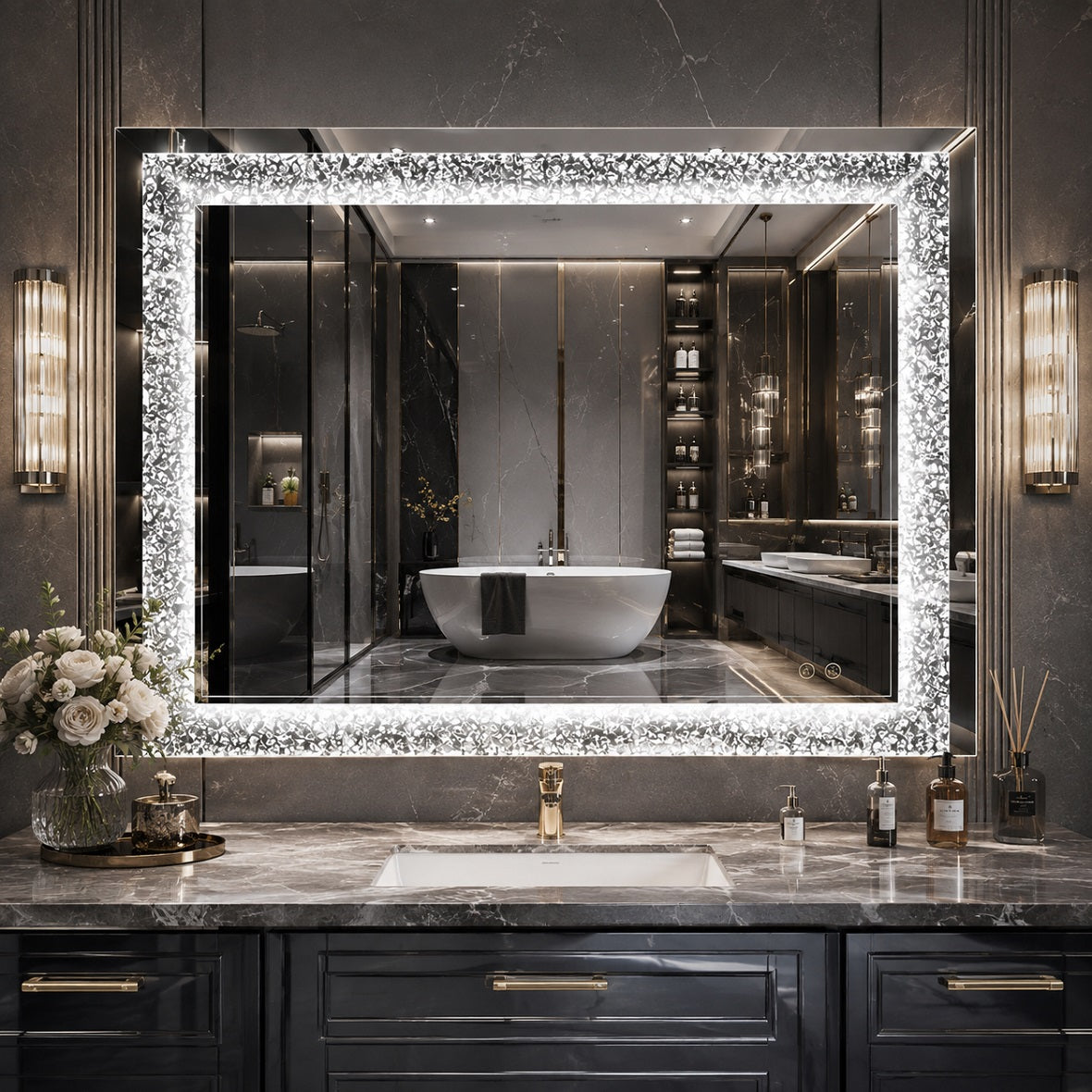
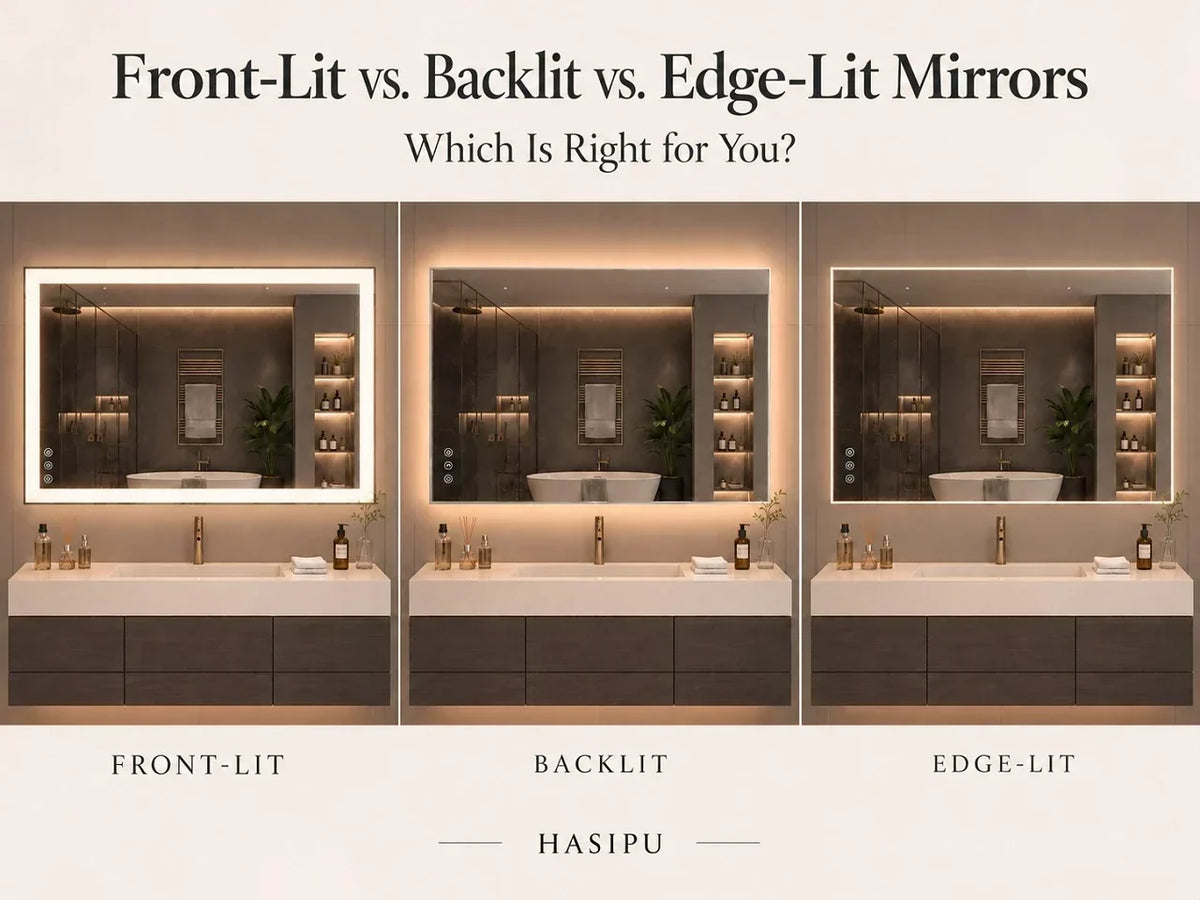
- Front-Lit Mirrors: Direct light forward toward the user, providing clean, even illumination on your face.
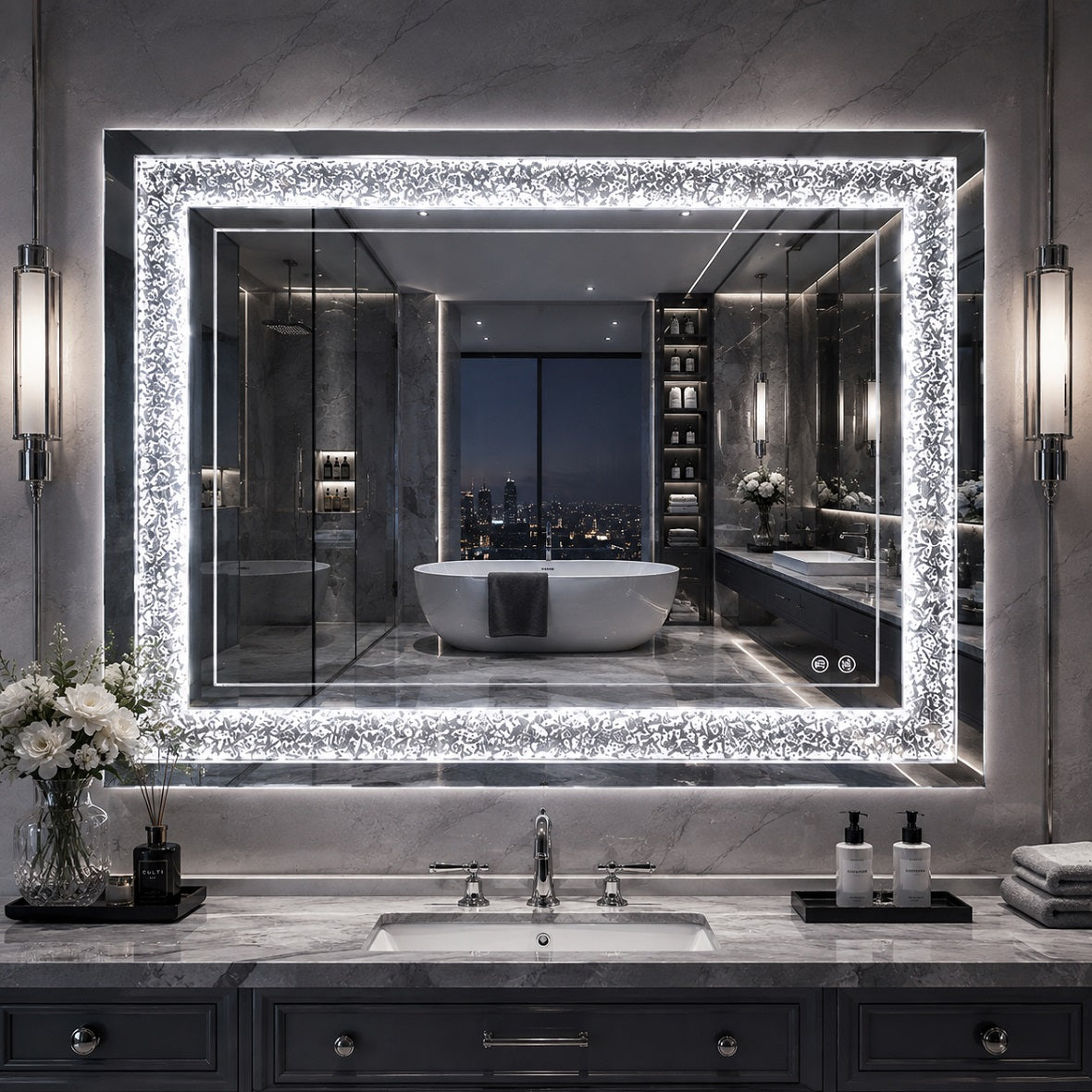
- Backlit Mirrors: Primarily cast light onto the wall behind the glass, creating an ambient halo effect.
- Edge-Lit Mirrors: Illuminate a perimeter or use an edge-lighting construction, so their function depends on where the light emerges.
For makeup and grooming, look for useful forward illumination. For a decorative wall glow, consider backlighting.
The names can overlap. A mirror may have a front-facing illuminated edge and backlighting in the same design. Checking the actual light direction will tell you more than the product name alone.
Front-Lit, Backlit, and Edge-Lit Mirrors Compared
This comparison describes common designs. Brightness, color settings, installation options, and lighting controls vary by model.
| Feature | Front-Lit Mirrors | Backlit Mirrors | Edge-Lit Mirrors |
|---|---|---|---|
| How they work | LEDs emit through front-facing light bands, openings, or frame diffusers. | Rear-mounted LEDs illuminate the wall behind the mirror. | LEDs illuminate a perimeter diffuser or feed a light-guiding component from its edge. |
| Lighting effect | Light reaches the user to support a detailed view of the face. | A wall halo emphasizes the outline and gives a floating appearance. | An illuminated border outlines the glass; facial illumination depends on the design. |
| Main use | Makeup, shaving, skincare, and other close grooming. | Decorative lighting and atmosphere around the mirror. | Grooming, decoration, or both, depending on light direction. |
| Typical settings | Makeup tables, dressing areas, and bathroom vanities. | Entryways, bedrooms, living areas, and bathrooms with separate task lighting. | Makeup areas, dressing spaces, and decorative wall installations. |
| What deserves a closer look | Facial coverage, glare, and comfortable viewing distance. | Wall clearance, surrounding surfaces, and existing room lighting. | Where the light exits and how much reaches the user. |
| Adjustable features | Dimming and color settings depend on the model. | Dimming and color settings depend on the model. | Dimming and color settings depend on the model. |
Use the table to narrow your search, then compare individual products. Our mirror buying guide also covers room choice, measurements, and placement.

How Front-Lit Mirrors Work
A front-lit mirror brings light out through areas facing the person using it. Those areas might be frosted strips within the glass, a continuous illuminated band, or diffusers built into the frame. The arrangement determines where the light comes from and how it spreads.
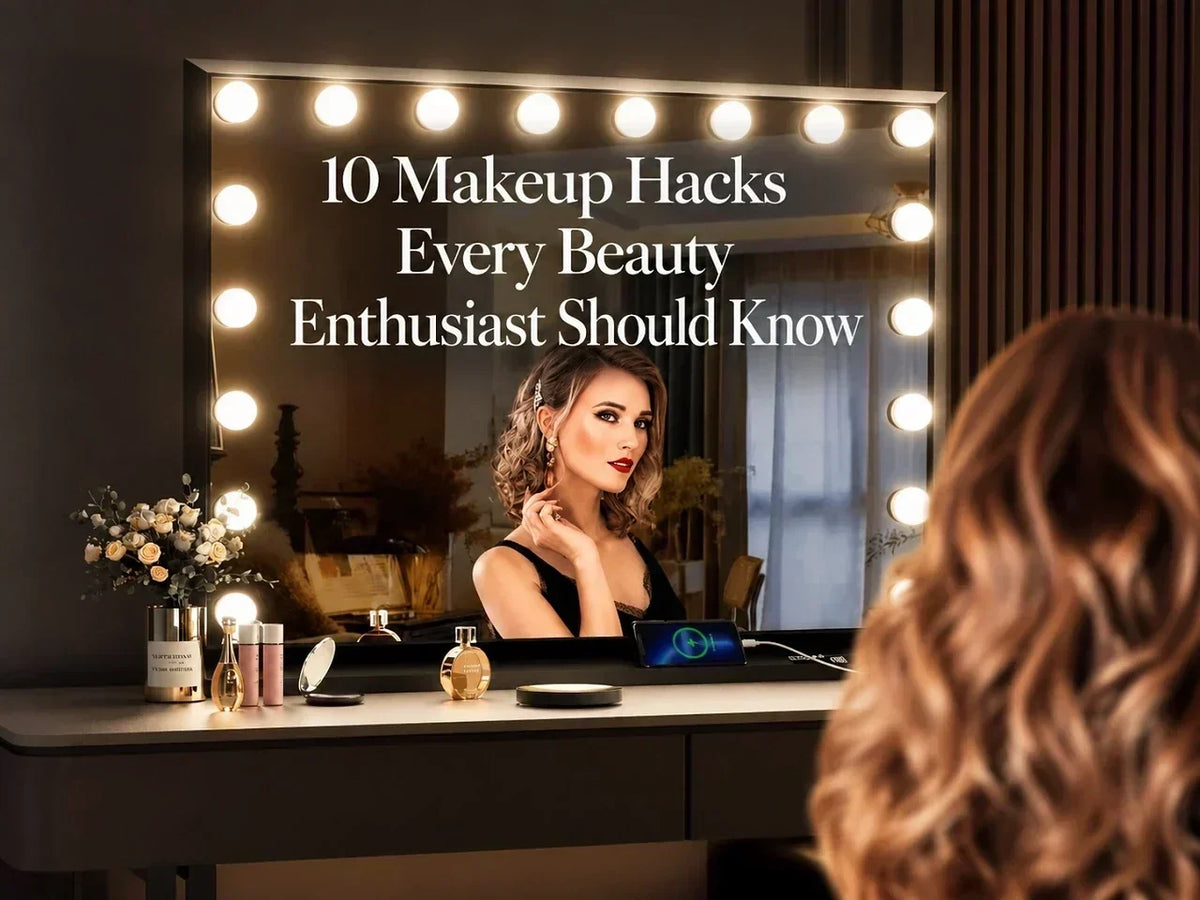
A familiar example is a makeup mirror with lights surrounding the reflection. The visible lighting may look different from a slim LED band, but both can serve the same basic purpose: directing light toward the face.
What the light looks like in use
For a close-up task, inspect the reflection instead of staring at the lights. Can you see concealer beneath both eyes? Is your jaw easy to check without tipping your head? Does the lighting feel comfortable at the distance you normally sit?
A bright front border does not guarantee even coverage. The lighting layout, diffusion, output, and your position all affect the result. During an in-person check, try the dimmer and move into your usual working position.
For a makeup desk, measure the usable tabletop as well as the mirror. A large mirror loses some of its usefulness when you have to lean over bottles and brushes to get close enough.
Backlit Mirrors Create Their Effect on the Wall
With a backlit mirror, LEDs sit behind the glass and send light toward the mounting surface. The wall reflects some of that light into the surrounding space, creating the visible halo.
This is why the wall surface belongs in the design decision. Look at the clearance specified for the mirror and compare installation images with your own surface. Painted drywall, wallpaper, and tile are different backdrops; a showroom photo cannot tell you exactly how the installation will look at home.
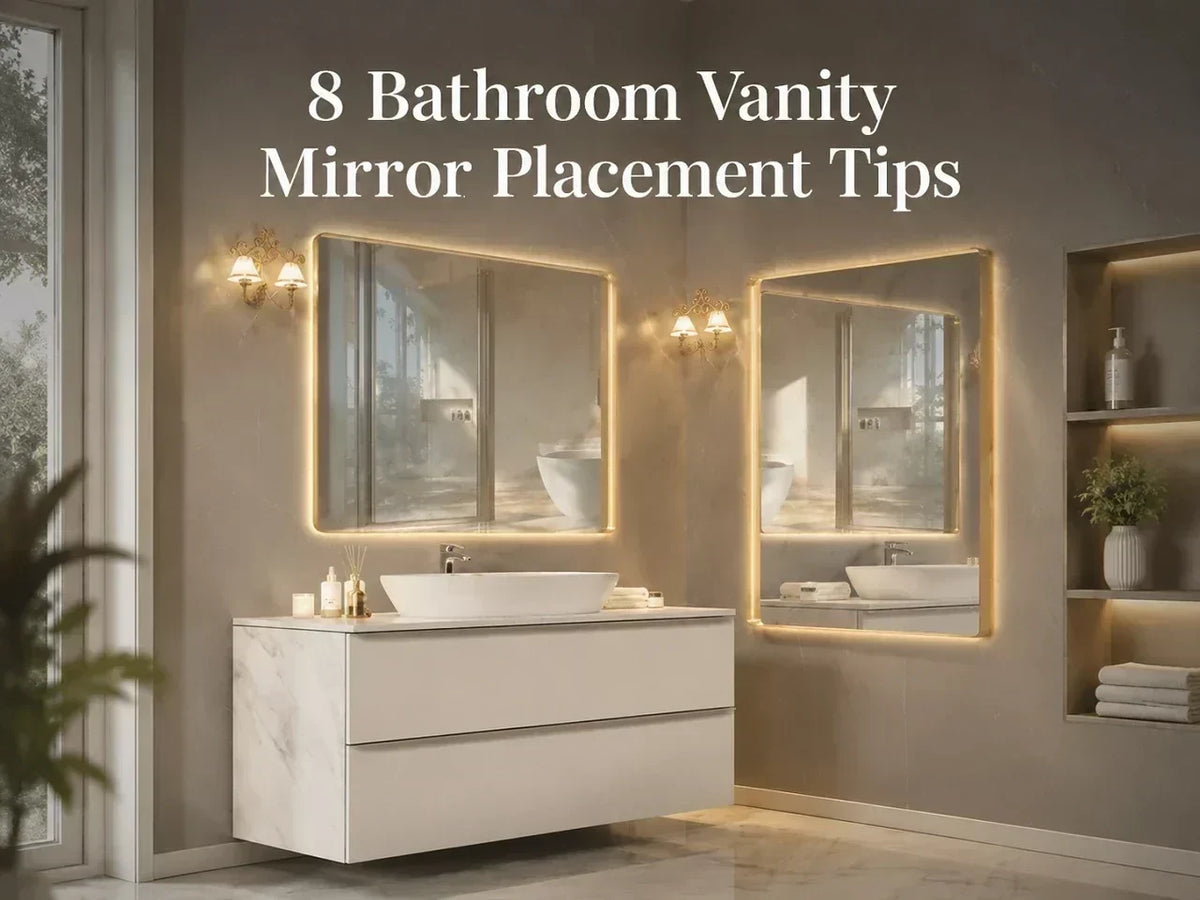
Backlighting suits a mirror you want to notice from across the room. An arched outline above a bedroom dresser or a round halo over a console can give that wall a focal point without adding another visible lamp.
For grooming, check what reaches your face. A glowing wall may look bright while leaving you wanting more light for eyeliner or shaving. Existing sconces or another suitable task light can handle that job. Some mirrors also include a separate front-lighting function, which is worth checking in the specifications.
Edge-Lit Mirrors Need a Closer Look at the Design
“Edge-lit” is the least straightforward label in this comparison. It may describe a visible illuminated perimeter. In other products, it describes LEDs feeding light into the edge of a light-guiding component that distributes the illumination.
That distinction affects what you should expect. A perimeter that emits forward may help you see your face. A design that mainly sends light outward or toward the wall may do more for the room’s appearance.
When comparing an edge-lit vs. backlit mirror, check the side view and lighting description. For a front-lit vs. edge-lit mirror comparison, find out whether both products already direct light toward the user. They may be more alike than their names suggest.
Ask the seller which areas illuminate and whether front and rear lighting are separate functions. A drawing or clear explanation is more useful here than a description such as “luxury glow.”

Where Each Lighting Style Makes Sense
Makeup tables and daily grooming
Start with forward-facing light for makeup mirror lighting. At your normal seated distance, you should be able to inspect the areas where you blend makeup without continually shifting to find a better angle.
Check the controls from that position, too. Reaching around the back of a large mirror may become annoying during a daily routine. Browse Hasipu vanity mirrors with lights with your table dimensions in mind, then compare the lighting and controls of the models that fit.
Bedrooms and dressing spaces
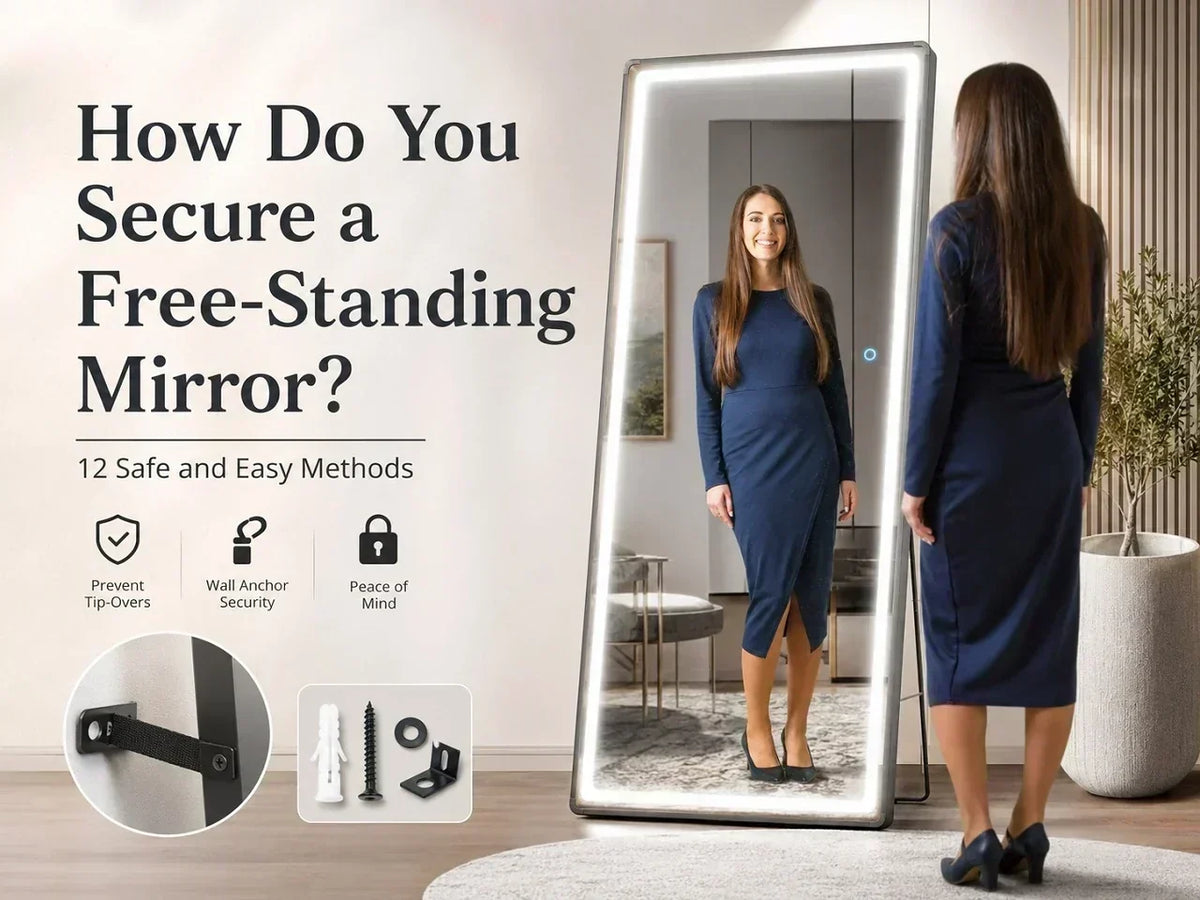
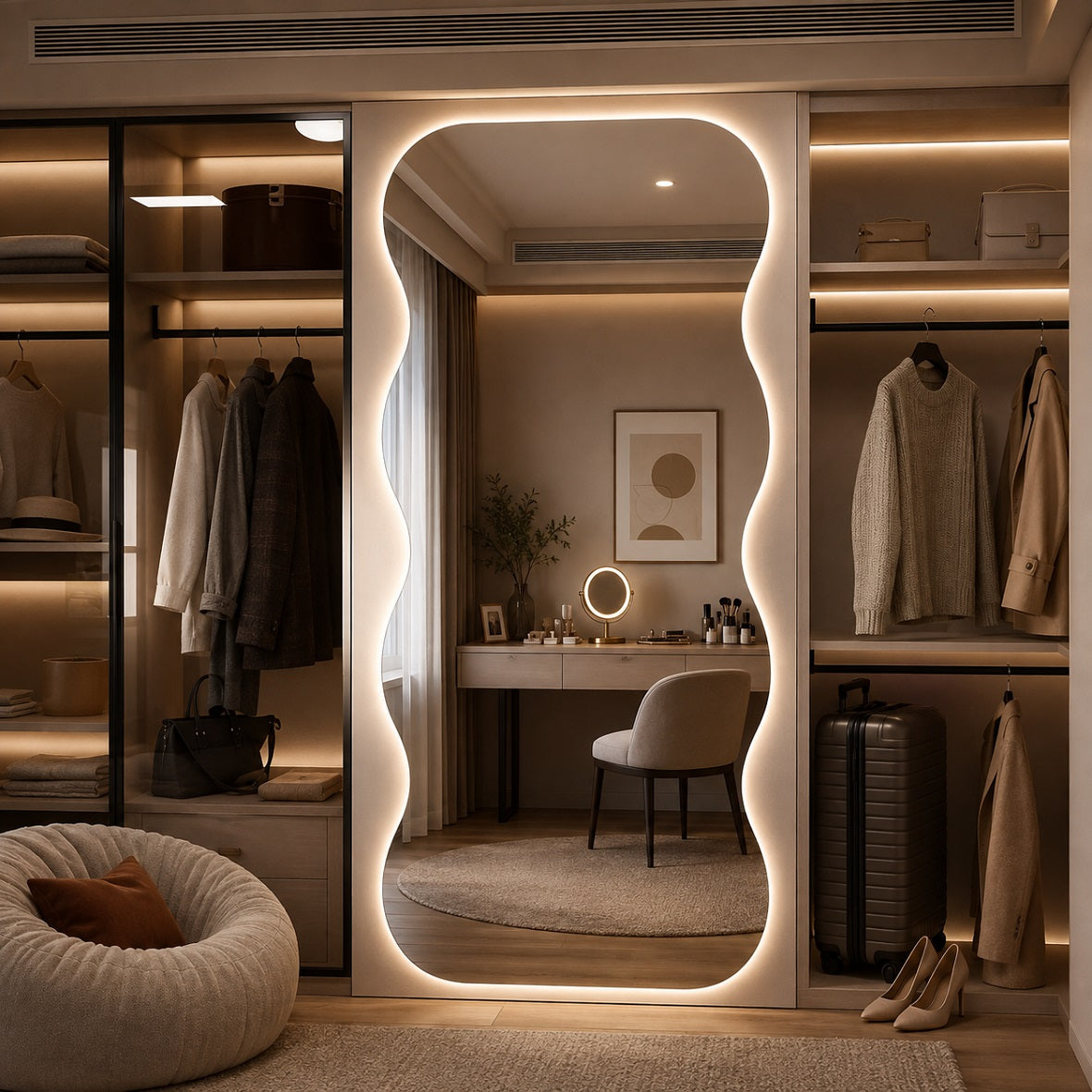
A lighted full-length mirror needs enough viewing room to show your outfit. Mark the proposed location and step back before deciding on the size. Make sure a bed, chair, or open closet door will not block your usual standing spot.
Choose the lighting after checking that view. An illuminated outline can contribute to the room’s appearance, but judge how clearly you can see your clothing as well. Keep the room lights available for a complete outfit check. Dimming may be useful when the same space also serves as a place to unwind.
Entryways and decorative walls
Above a console, backlighting can make the mirror’s outline part of the arrangement. Consider what will sit beside it: a lamp, artwork, coat hooks, or a tall vase. Leave enough space for the illuminated shape to remain visible.
For a closer appearance check before leaving home, inspect the face lighting as well. An entryway mirror can serve both purposes, but a wall halo alone does not establish that it will do both well. Plan the power connection before settling on the location.
Bathrooms and shared vanities
Here, facial illumination and installation requirements both deserve attention. Evaluate the mirror alongside your existing lights and from the positions each person uses. At a double vanity, check both sinks rather than judging the center of the room.
Confirm that the model is suitable for the intended environment. A tabletop bedroom mirror is not automatically appropriate for a humid bathroom simply because it uses LEDs. Check the mounting instructions and electrical requirements for that exact product.
Compare More Than the Lighting Label
Brightness, shadows, and glare
Check what a published lumen figure describes. It may refer to an assembled fixture, a lighting component, or combined front and rear output. Those figures are not necessarily comparable.
For close work, evaluate the light where your face will be. For a full-length view, use your normal outfit-checking distance. A demonstration filmed inches from the glass does not answer both questions.
Look for uneven patches and uncomfortable brightness during a demonstration. Increasing the output may not fix a lighting layout that leaves part of your face difficult to see.
Light color and everyday comfort
Color temperature describes the warm or cool appearance of white light. A warmer setting looks more yellow; a cooler setting can look slightly blue. Our LED mirror color temperature guide explains how those tones can change the appearance of your reflection.
Choose a setting you find comfortable, then try the available alternatives for comparison. Do not treat “daylight” in a product name as proof that the mirror reproduces outdoor light accurately. Color rendering and light color are separate characteristics, so review published specifications when color accuracy matters to your routine.
Controls and combined lighting
A front and backlit mirror can provide facial lighting and a wall halo in the same unit. Check whether those effects operate together or independently. Separate controls let you choose which effect to use, but that function must be confirmed for the model.
With a dimmable LED mirror, check how dimming works. Touch controls on the glass do not automatically mean the product is compatible with a wall dimmer.

Installation, upkeep, and cost
Before ordering, review the power connection, permitted mounting positions, and access to controls. For a freestanding design, follow the support and securing instructions. For a wall-mounted model, check the required hardware and wall conditions.
Our mirror manuals and installation guides are organized by model. Use the matching instructions, and contact support when the guide you need is not listed.
Compare the complete purchase, including any installation work and additional lighting you will keep or need. Lighting style alone does not establish which mirror is cheaper, more energy-efficient, or easier to maintain. For maintenance, ask how faults are handled and whether serviceable parts are available rather than assuming an LED component can be replaced at home.
Frequently Asked Questions
1. Are backlit mirrors bright enough for makeup?
Pure backlighting may not provide enough facial illumination for detailed makeup. Check whether the mirror also has forward-facing lighting and evaluate it with the lights you normally use. A bright halo is not a reliable measure of how clearly you will see your face.
2. Is an edge-lit mirror always front-lit?
No. Edge-lit can describe the illuminated perimeter or part of the lighting construction. Check where the light exits. A forward-emitting border can serve as front lighting, while other designs emphasize the surrounding wall or outline.
3. Can a lighted mirror replace other lights?
It may cover a particular task, depending on its output and placement. It should not be assumed to illuminate an entire room. Evaluate your reflection and the surrounding space separately before removing a lamp or fixture from the plan.
4. Which mirror lighting style uses less electricity?
Compare the wattage of the specific models and the functions you will use. Size, brightness settings, operating time, and additional features all matter. The terms front-lit, backlit, and edge-lit do not establish an energy-use ranking.
At Hasipu, we believe a mirror should fit the way you use your home. Start with the view you need: your face at a makeup table, an outfit in a dressing area, or a quick check near the door. Then choose the lighting effect you enjoy seeing in the room. Explore our mirror collection with those needs and your measurements in hand.