Table of Contents
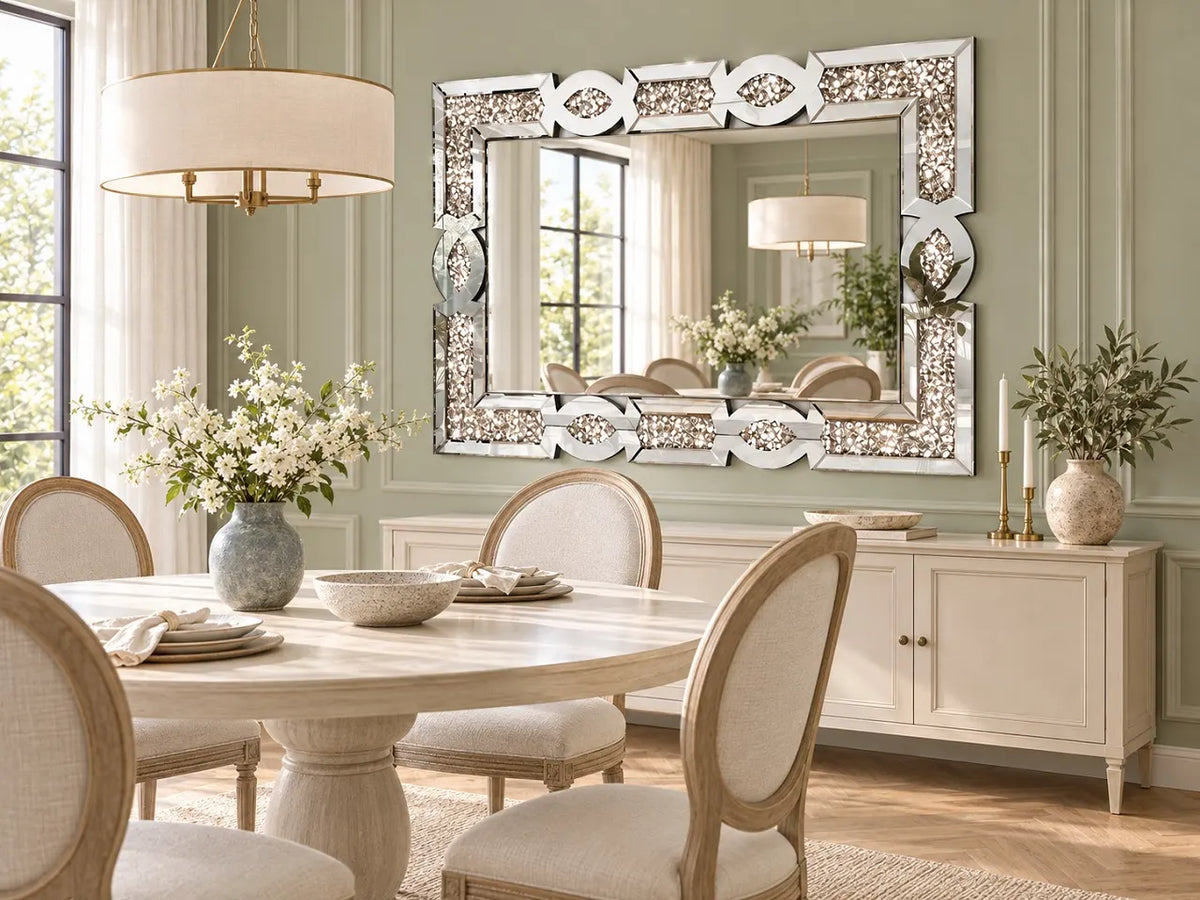
A mirror above the buffet can look beautiful while you’re setting the table. Then dinner starts, the chandelier comes on, and someone ends up facing a row of bright bulbs in the glass.
The wall looks finished. The seat feels uncomfortable.
Good dining room mirror placement starts with the view from the table. A mirror can bring a garden view, soft daylight, or a favorite piece of art into the room. Its position also determines which light sources appear in front of seated guests.
To reduce glare, test a wall beside the window, check the reflection from every dining chair, and soften any exposed bulbs visible in the glass. Repeat the check during daylight and after dark before settling on the placement.
Start With the Chair That Gets the Worst Reflection
Walk around the table and sit in each chair. Keep your head at a natural height, then look toward the person who would normally sit across from you.
Does a bright reflection sit beside their face? Does a window fill the background? Do you find yourself looking away from the mirror?
Pay particular attention to the end chairs. Their view can differ quite a bit from the seats along the sides.
For an existing mirror, a few simple changes can help identify the source:
- Turn off the chandelier and check the reflection again.
- Lower the window shade during the bright part of the day.
- Switch nearby lamps and kitchen pendants on individually.
- Look for bright patches on the tabletop as well as in the mirror.
That last check matters in rooms with glass tables, polished stone, or glossy finishes. Several reflective surfaces can make it harder to tell where an uncomfortable flash is coming from.
Make one adjustment at a time. You’ll have a much clearer idea of what actually helps.

Where to Put a Dining Room Mirror Near a Window
A wall beside the window is a useful place to begin your search. Depending on the layout, it may give the mirror a view of the dining area, greenery, or a softly lit wall while keeping the brightest part of the window outside the reflection.
Treat that location as a candidate to test. Sunlight, window size, and chair positions still affect the result.
Try the adjacent wall
Imagine a breakfast nook with a window behind one end of the table. A mirror on the opposite wall might place the bright window directly in front of someone eating breakfast.
Test the side wall instead. Check what appears in the glass from both ends of the table and from the chairs nearest the mirror.
A shift along that wall may help you frame a pleasant part of the room. Keep checking the other seats as you adjust the proposed position.
Check an opposite-window placement at mealtime
A mirror opposite a window can work well with a shaded outdoor view or gently filtered daylight. Problems arise when the reflection becomes too bright for the people sitting nearby.
Visit the room when you actually use it. A comfortable reflection at noon tells you little about a sunny breakfast or an early evening meal.
Window treatments give you another way to manage incoming light. Shades, blinds, and drapery can reduce glare, allowing you to adjust the daylight as conditions change.
Test the curtain or shade you plan to use during the troublesome hour. A fabric that looks softly translucent in a sample may still leave the window uncomfortably bright in your room.
Revisit the placement as the seasons change, especially when sunlight begins reaching a chair that was previously shaded.
Keep the Chandelier Comfortable in the Mirror
A chandelier can make a lovely reflection. The shape of the fixture, its finish, and the pool of light around the table all contribute to the room.
Exposed bulbs deserve a closer look. Their reflection can create glare in a dining room, even when the fixture itself looks attractive.
Turn the chandelier on at its usual dinner setting and sit down. Look for individual bulbs or bright LED elements in the mirror. Give yourself a moment to notice how comfortable the view feels.
Start with an available dimmer. Lower the output gradually while keeping enough light to see food and faces clearly. Add a shaded sideboard lamp at a modest setting when the surrounding room feels too dark, then check its reflection too.
Other options include a compatible frosted bulb or a fixture designed with shades or diffusers. Check the fixture’s specifications before changing bulbs or adding accessories.
Warm light still needs brightness control. A 2700K bulb gives a warm appearance, but its color alone does not establish a comfortable light level. Kelvin describes color appearance; lumens describe light output. Dimmable LEDs also need a compatible dimming system.
Keep the chandelier at a suitable height for the table and room. Adjusting its brightness or the proposed mirror position is a more focused place to start than changing the fixture height solely to alter its reflection.
Find the Right Height Above a Sideboard
A mirror above a sideboard gives you a clear starting point for the arrangement. The furniture anchors the wall, and the surface below provides room for a lamp, serving pieces, or a small vase.
Begin by marking the mirror’s outline with painter’s tape.
For example, above a 60-inch-wide sideboard, you might compare a mirror around 40 inches wide with a slightly larger option. A gap of roughly 6 to 8 inches above the furniture can serve as an initial layout to evaluate. These are decorating starting points; the reflection and the actual frame dimensions should guide the final position.
Check the arrangement from the table before deciding on the height. Raising the mirror can bring more ceiling lighting into view. Lowering it may reveal chair backs or leave a bright fixture visible in a different part of the glass.
A sideways adjustment is worth testing too. A mirror can form a balanced grouping with artwork or a lamp when a centered position produces an uncomfortable reflection.
Painter’s tape checks size; a mirror checks the view
The taped outline helps you judge scale and spacing. To preview reflected light, have a helper hold a small flat mirror at several points inside that outline, parallel to the intended mounting plane.
Sit in the dining chairs while your helper checks the center, sides, and upper portion of the proposed area. This gives you a preliminary look at possible reflections.
The full mirror still needs a final check. A small sample only shows part of the view.
For a large or heavy piece, arrange installation help and follow the mounting instructions for that specific model. Keep chairs clear of the frame when they’re pulled out.
Placement Ideas for Different Dining Room Layouts
Use the room’s daily routine to narrow down the walls worth testing.
| Dining room layout | A placement to explore | Reflection to check |
|---|---|---|
| Sunny breakfast nook | A side wall beside the window | Morning sunlight from the end chairs |
| Formal room with a chandelier | Above the buffet or on a nearby wall | Exposed bulbs at the usual dinner setting |
| Open dining and kitchen area | A wall that frames the dining space | Kitchen pendants and lights used during meals |
| Dining area with little daylight | A wall reflecting a softly lit part of the room | Lamps or ceiling lights visible from the table |
In an open floor plan, leave the kitchen lights at their normal settings during your test. Someone may still be cooking or clearing dishes while others are seated.
A windowless dining area needs a different approach. Begin with comfortable lighting, then choose a reflection that adds depth and interest. A softly illuminated wall, artwork, or a shaded lamp can give the glass something pleasant to show.

Choose the Mirror After Checking the Reflection
Once you have a promising location, compare shapes and frame finishes.
A horizontal mirror can sit comfortably above a long buffet. A round mirror introduces a curved shape among straight furniture lines. An arched or irregular design can make a plain wall feel more expressive.
Those shapes change the composition. Mirror shape alone does not prevent glare. A bright bulb can remain distracting inside a round, rectangular, or asymmetrical outline.
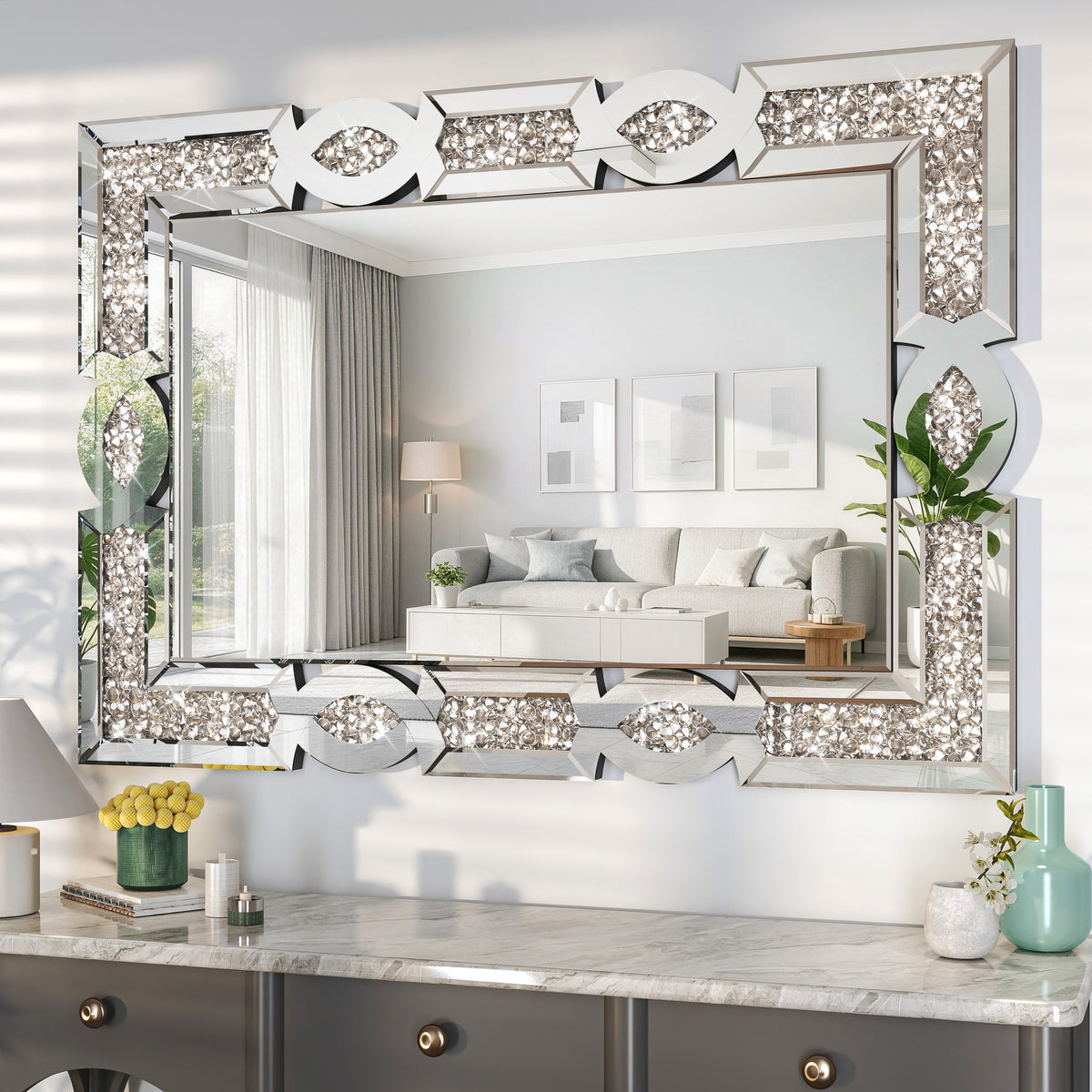
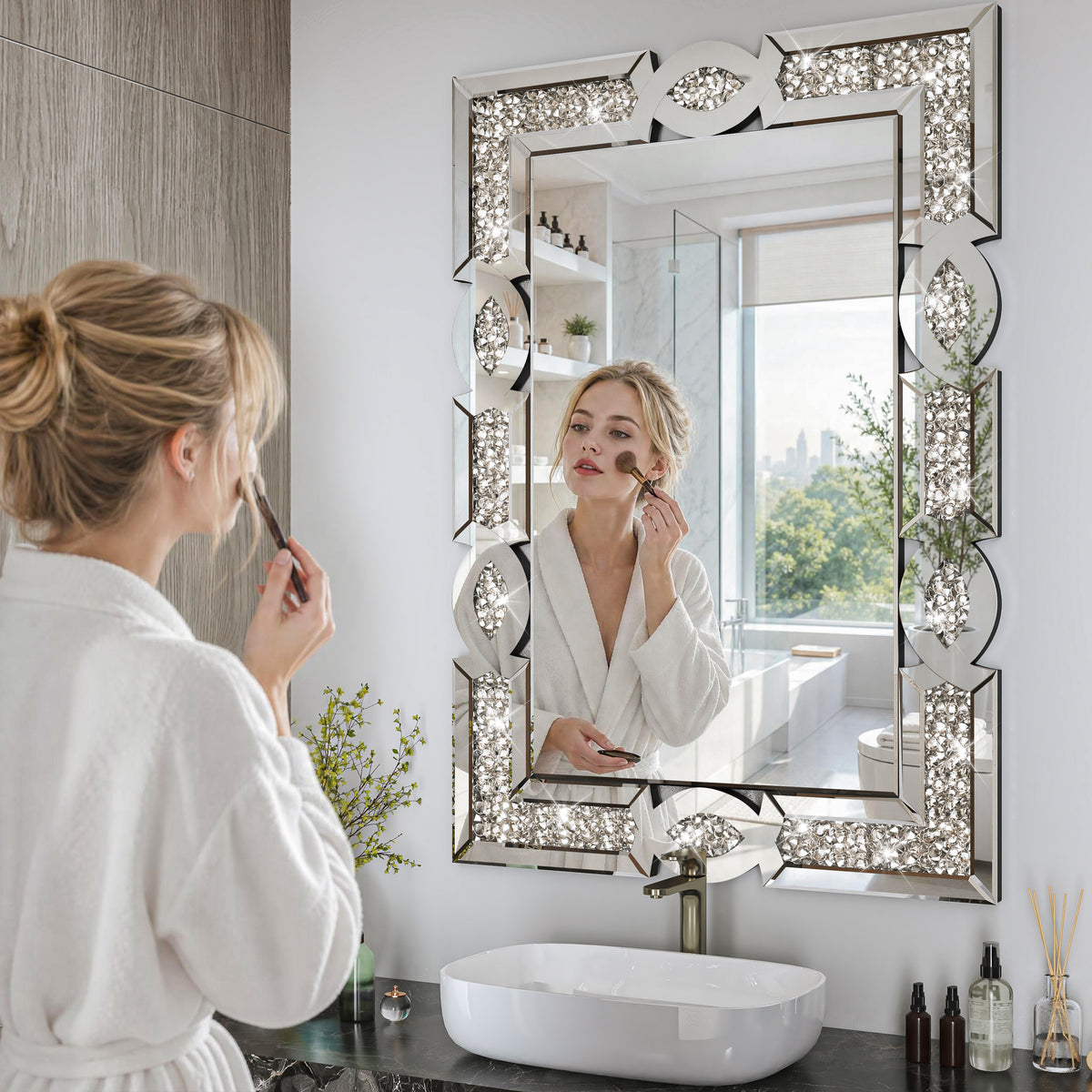
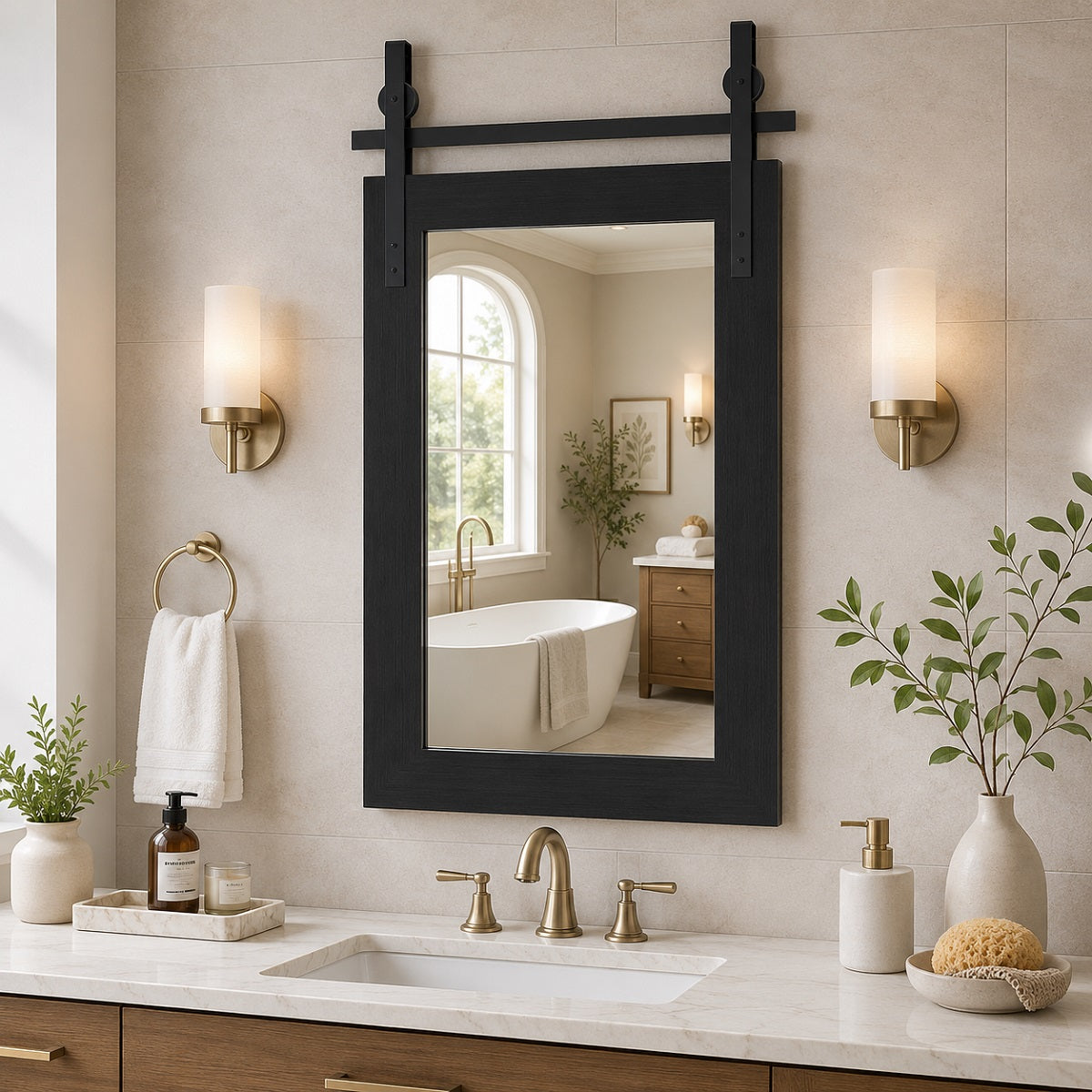
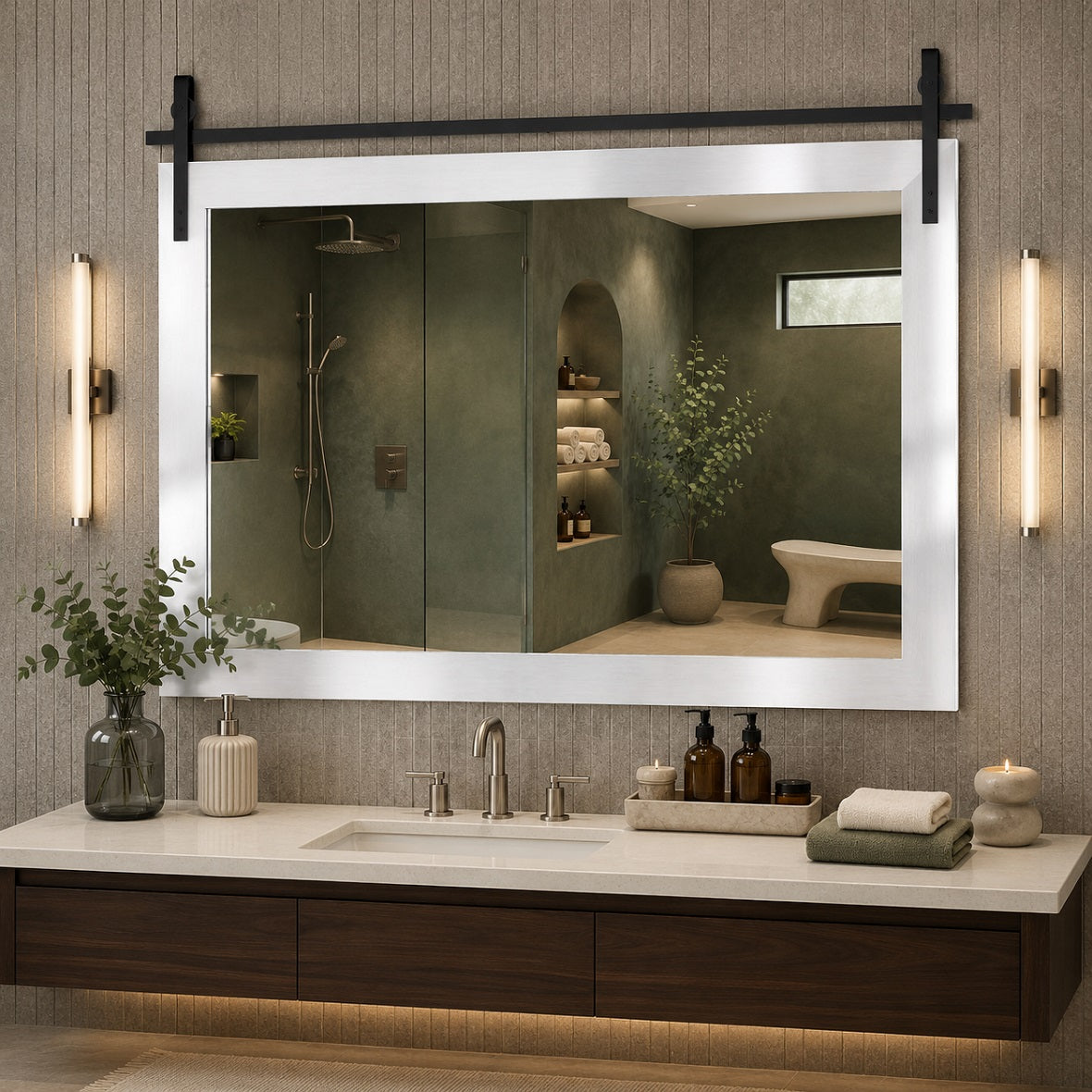
As you browse Hasipu wall mirrors, compare the dimensions with your taped outline and check the permitted mounting orientation. Look at the amount of reflective glass as well as the overall frame size.
For a dining room with simple furniture and an uncluttered wall, explore Hasipu irregular mirrors. Their flowing outlines can add interest while leaving room for a restrained sideboard arrangement.
Keep highly polished frames and nearby metallic accessories in mind during the lighting check. They may introduce small glints of their own.
Frequently Asked Questions
1. Can a dining room mirror reflect the table?
Yes. Part of the table, a centerpiece, and the surrounding room can make an appealing reflection. Check how the arrangement feels to seated guests, including anyone who would be looking at their own reflection throughout the meal.
For the traditional meaning behind this arrangement, read Hasipu’s guide to mirrors in the dining room and feng shui.
2. Will a smaller mirror solve the problem?
A smaller mirror may exclude a troublesome light source from the visible reflection. Its success depends on which part of the view remains in the glass.
Test the proposed smaller outline from every seat. Reducing the size while retaining the same bright bulb in view may leave the discomfort unresolved.
3. Can I reduce glare without moving an installed mirror?
Often, there are useful adjustments to try first: lower a shade, dim a compatible fixture, move a portable lamp, or use an approved bulb that softens the appearance of the light source.
Check the result under the conditions that caused the problem. A daytime improvement needs a separate evening check.
Before putting the tools away, set the table for an ordinary meal. Turn on the lights you usually use, pull out the chairs, and sit for a few minutes. Look across the table, pass a dish, and glance around the room. Those everyday movements will tell you how the placement feels during dinner.