Table of Contents
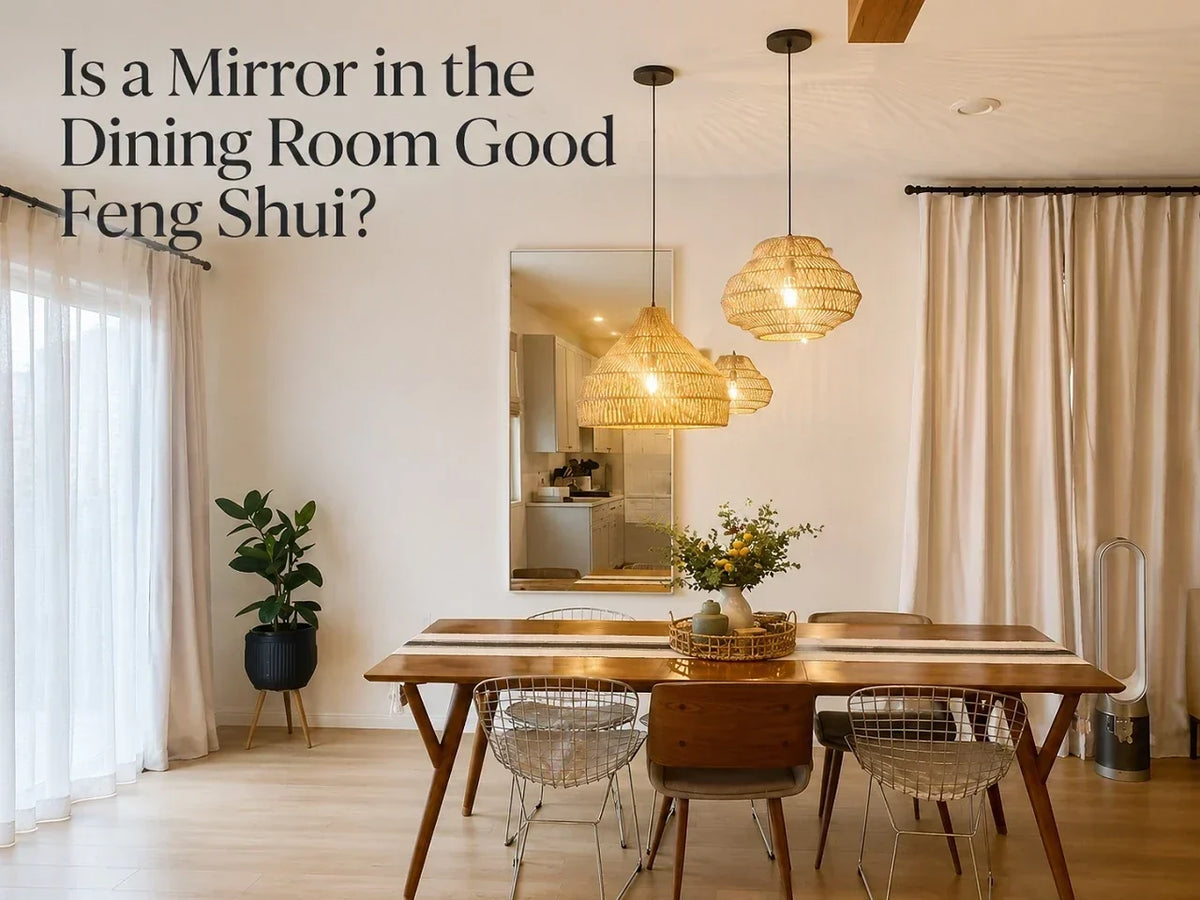
A mirror in the dining room is generally considered good feng shui—especially when it reflects the dining table, food, or a welcoming view.
In feng shui tradition, the dining room represents nourishment, family connection, and abundance. A mirror visually doubles whatever appears in it, so a well-placed mirror is thought to strengthen those qualities. It can also brighten a dim room and make a tight dining area feel more open.
Placement still matters. A mirror that reflects dirty dishes, an overflowing kitchen counter, a bathroom door, or a harsh ceiling light may add visual stress instead of creating a warm place to eat.
A simple way to judge the placement is to check what it reflects: if it shows something pleasant, the mirror is in the right spot.
Why Mirrors Work Well in a Dining Room
A dining room is more than a place to set down plates. It is where people slow down, share food, talk, and spend time together. Feng shui connects these everyday acts with the idea of being supported and having enough.
Mirrors are often treated as amplifiers. They do not create abundance by themselves, but they symbolically expand the scene in front of them. When a mirror reflects a set table, a bowl of fruit, fresh flowers, or people enjoying a meal, it creates an image of fullness and connection.
There is a practical benefit too. A dining room mirror can:
- Spread natural light farther into the room
- Add depth to a narrow dining area
- Make a blank wall feel finished
- Reflect candlelight or a chandelier in the evening
- Bring attention to a centerpiece or attractive view
These visual changes can make the room feel more pleasant, even for people who do not follow feng shui closely.

Should a Dining Room Mirror Face the Table?
A mirror facing the dining table is one of the most common feng shui arrangements. Since the mirror reflects the meal and the people gathered around it, the placement is traditionally associated with doubled food, prosperity, and stronger family relationships.
The reflection does not need to capture every inch of the table. It should show enough of the dining area to make the room look complete and inviting.
Sit in each dining chair before mounting the mirror. Check what appears at seated eye level. A mirror may look perfect while you are standing but feel distracting once everyone sits down. Avoid a height that cuts off heads, divides faces, or places diners in an awkward strip of reflection.
Some people feel self-conscious when they can watch themselves eat. If that happens, move the mirror slightly to one side or hang it higher so it reflects the tabletop, lighting, and room rather than each person directly.
Good feng shui should make a room feel comfortable. A technically “correct” position that bothers everyone during dinner is not a useful placement.
The Best Places for a Mirror in the Dining Room
On a wall beside the dining table
A side wall often provides the most balanced position. The mirror can reflect part of the table and spread light without sitting directly in front of anyone.
This placement works especially well in long or narrow dining rooms. A wide horizontal mirror can make the room appear broader, while a tall mirror can draw the eye upward in a room with limited wall space.
Above a buffet or sideboard
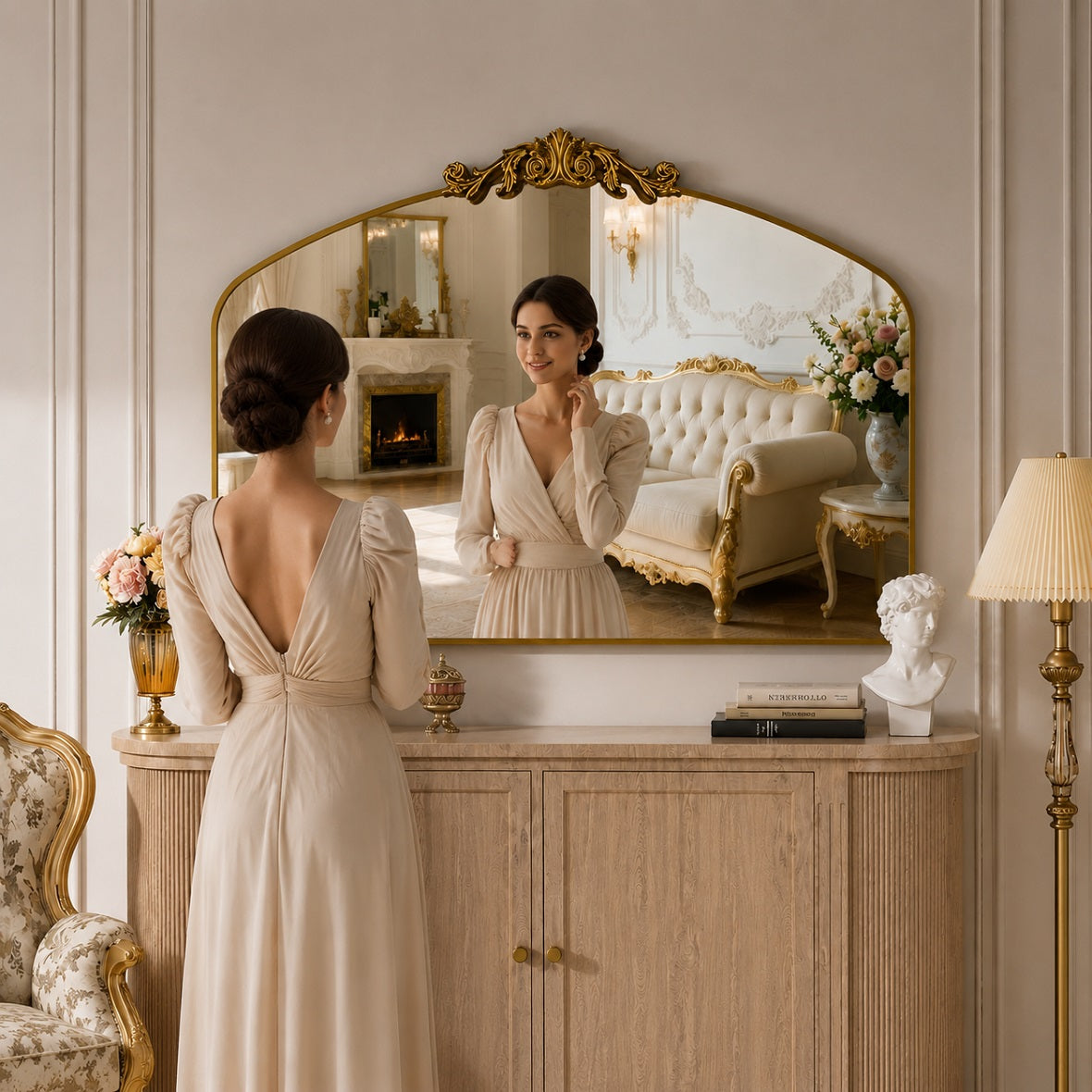
A mirror above a dining room buffet is a natural pairing. The furniture anchors the mirror, and the surface below gives you room for a simple arrangement of lamps, greenery, fruit, or serving pieces.
As a starting point, leave roughly four to eight inches between the top of the buffet and the bottom of the mirror. Adjust that gap for tall lamps or decorative objects. The mirror should look connected to the furniture rather than floating far above it.
For pleasing proportions, choose a mirror that is narrower than the buffet. A width around two-thirds to three-quarters of the furniture usually feels balanced, though the wall and frame shape may call for a different size.
Keep the buffet reasonably clear. A mirror doubles visual clutter just as easily as it doubles a beautiful display.
Across from a window
A mirror opposite or near a window can carry daylight deeper into the dining room. This is useful in small dining rooms and interior dining areas with limited natural light.
Look carefully at the outdoor view. Trees, a garden, open sky, or a quiet patio can become part of the room. Traffic, utility equipment, or a neighbor’s blank wall may not be worth emphasizing.
Direct sunlight can also cause glare at certain hours. Lean the mirror safely against the wall before installation, then observe it in the morning, afternoon, and evening.
Near a chandelier or soft light source
A mirror can pick up the glow from a chandelier, wall sconces, or candles and make dinner feel warmer. It should reflect the atmosphere rather than an exposed bulb shining directly into someone’s eyes.
If the reflection feels sharp or dazzling, change the mirror angle, use lower-lumen bulbs, or add shades to soften the light.
What Should a Dining Room Mirror Reflect?
The reflection has more influence on the room than the frame color or compass direction. Before choosing a wall, stand where the mirror will hang and look back at the space.
Helpful reflections include:
- The dining table
- A bowl of fresh fruit
- Flowers or healthy plants
- A favorite piece of artwork
- A chandelier with warm light
- A tidy buffet
- A garden or pleasant outdoor view
- Open space that makes the room feel larger
A fruit bowl is a simple choice because it gives the table color and creates a visual sense of plenty. It does not need to be an elaborate display. A few fresh lemons, apples, or oranges can look more natural than a crowded centerpiece.
Keep the reflection believable and relaxed. A dining room that looks lived in can still have good energy. The goal is not a room that appears untouched.
What Should a Dining Room Mirror Avoid Reflecting?
A mirror repeats everything in front of it, including the things you would rather ignore.
Try not to position it where it prominently reflects:
- Trash or recycling bins
- A cluttered kitchen counter
- A bathroom or bathroom door
- Damaged furniture
- Piles of unopened mail
- A dark hallway
- An exposed, glaring bulb
- Sharp furniture corners
- A television that stays on during meals
In an open-plan home, avoiding the kitchen may be impossible. That does not automatically make the mirror bad feng shui. Clear the busiest section of the counter and adjust the mirror so the dining table remains the main focus.
The same common-sense test applies to doors. Some feng shui schools discourage placing a mirror directly across from an entrance because it is believed to send incoming energy back out. Other traditions interpret mirrors differently. If you want the safer arrangement, hang the mirror beside or perpendicular to the doorway instead of directly opposite it.
Does the Shape of the Mirror Matter?
Mirror shape can change both the mood and the visual balance of a dining room.
A round dining room mirror softens straight furniture lines and can make conversation areas feel less formal. It looks especially good above a rectangular buffet or between two wall sconces.
Oval mirrors have a similar softness but fill more vertical space. They suit traditional rooms, transitional interiors, and narrow walls.
Square and rectangular mirrors feel steady and structured. Their clean lines work well with modern dining tables, paneled walls, and simple furniture. A horizontal rectangle can also reflect more of a long table.
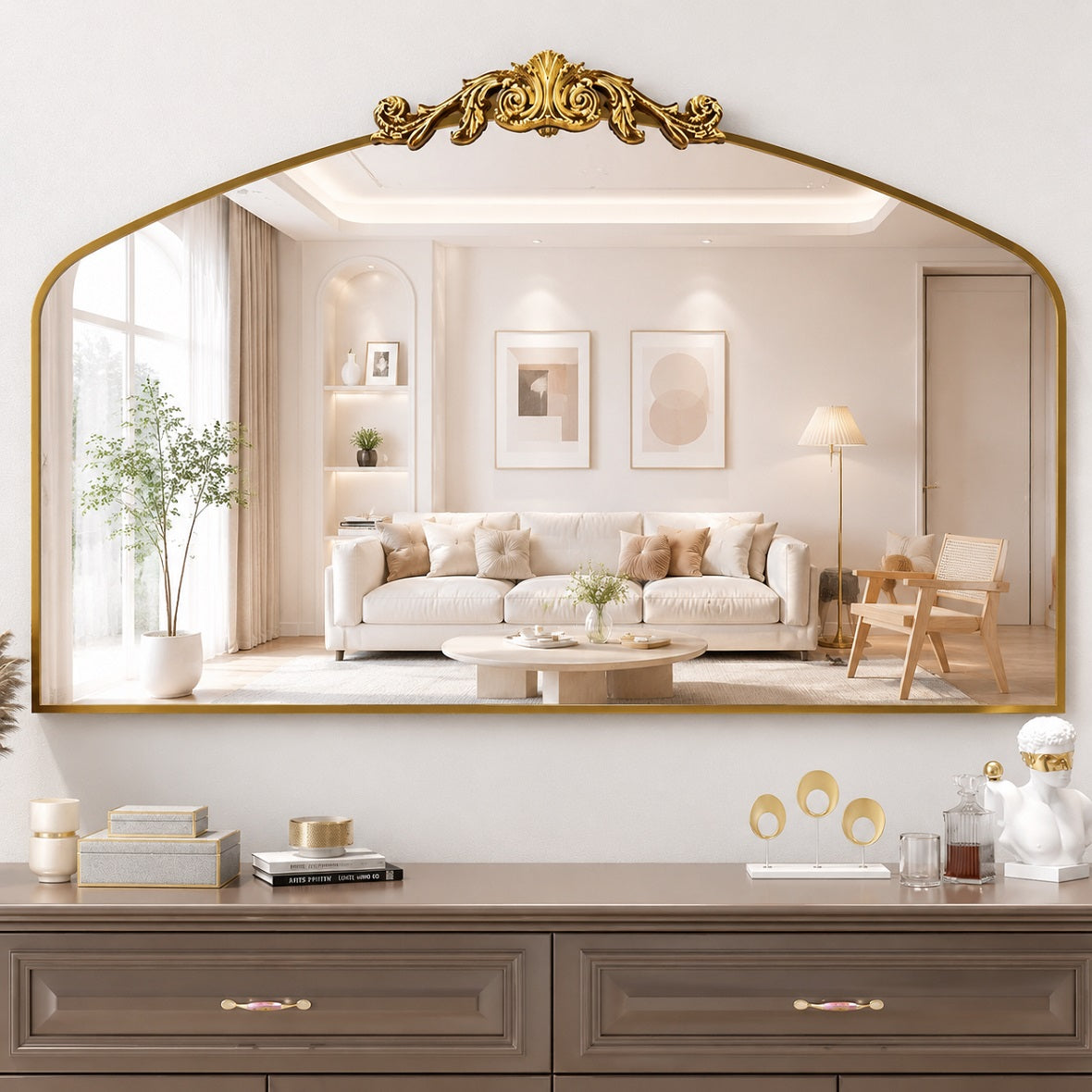
Arched mirrors add height and an architectural feeling without the formality of a large rectangle.
From a feng shui perspective, a clear, complete reflection matters more than finding a supposedly lucky shape. Choose one solid mirror when possible. Heavily distressed glass, broken sections, and small tiles that divide people’s reflections can make the room feel unsettled.
Choosing a Frame That Fits the Room
The frame should support the dining room rather than compete with it.
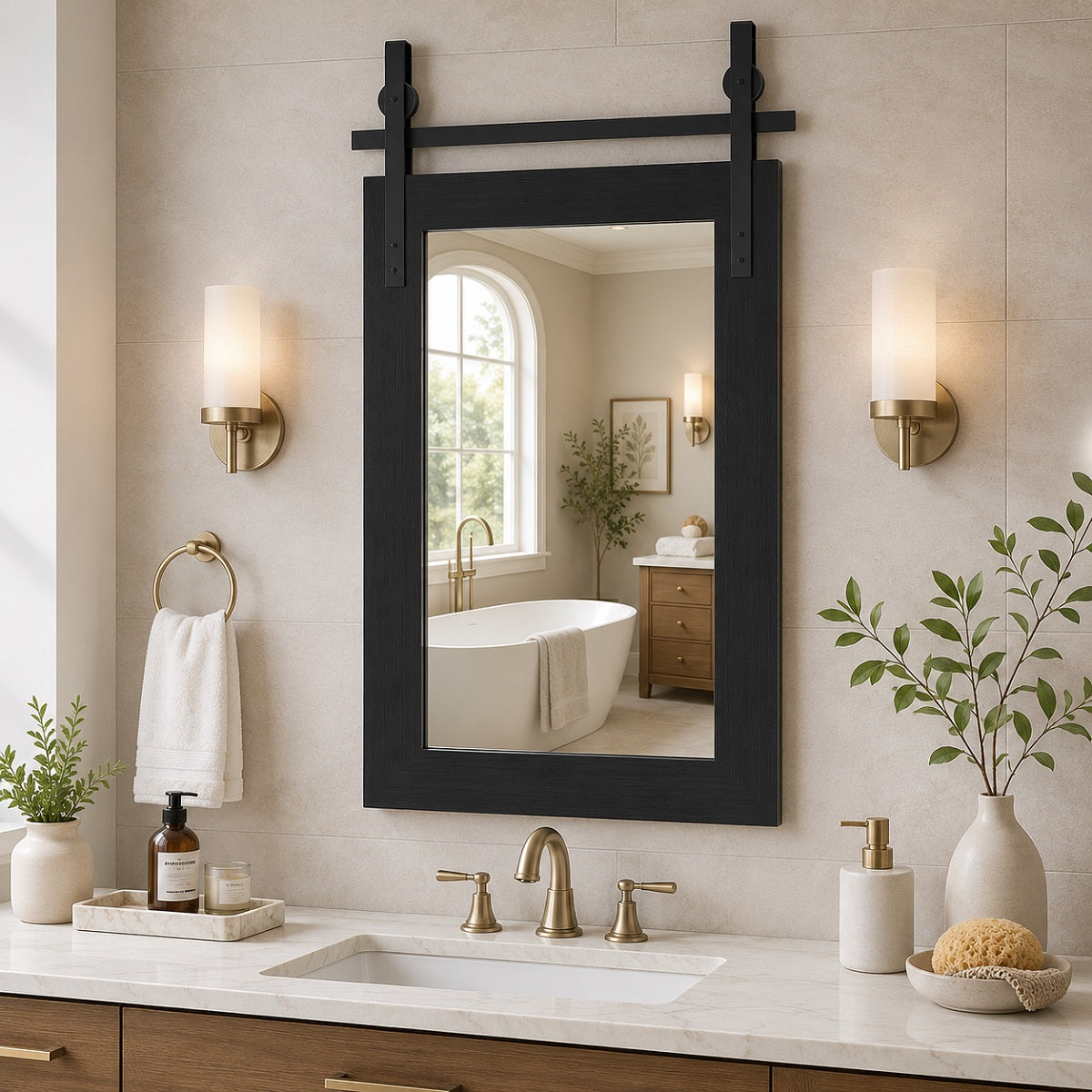
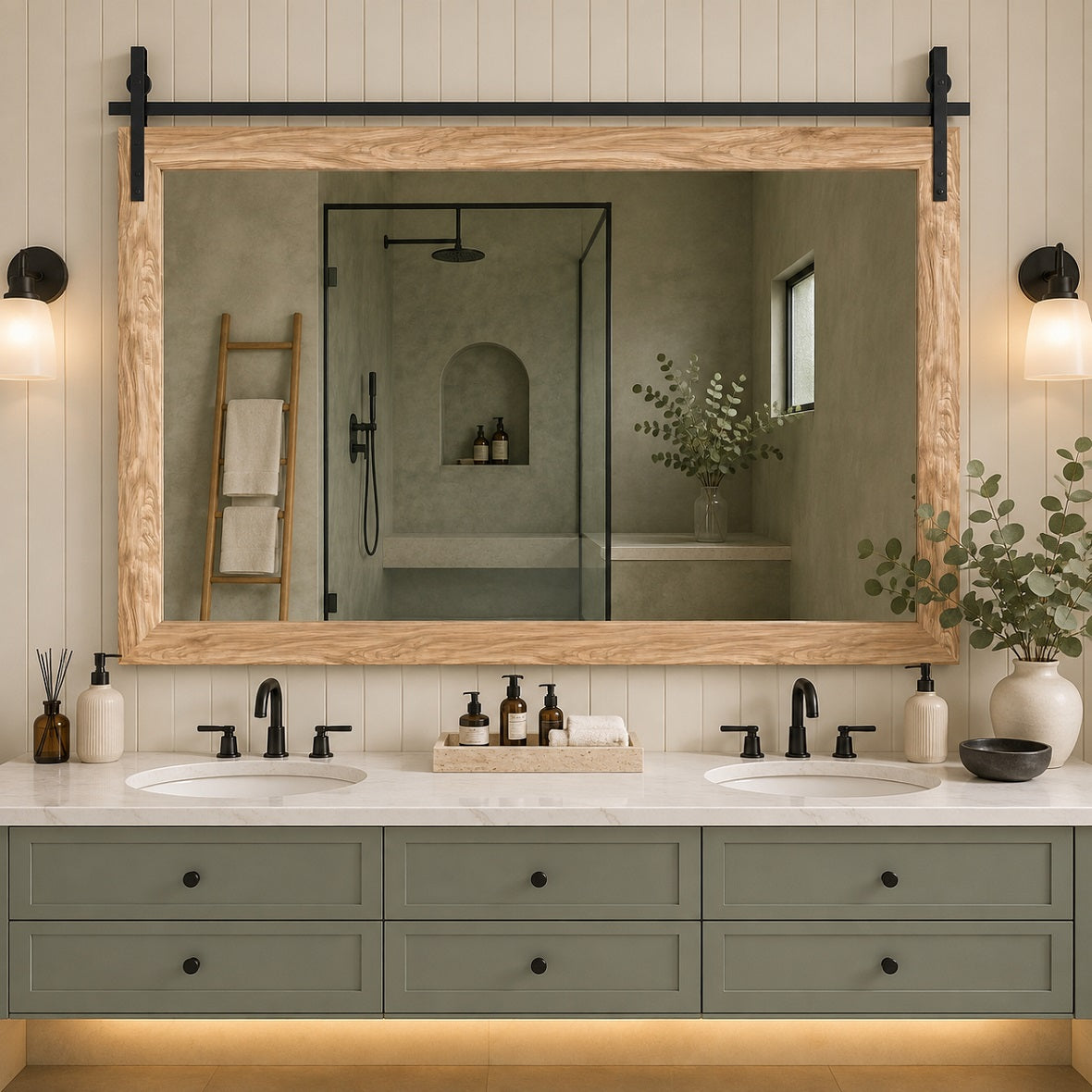
Warm wood works naturally with farmhouse, rustic, and casual dining spaces. Black frames create definition and pair well with modern lighting or dark hardware. Gold and brass-toned frames catch warm light and can give the room a richer, more formal look.
You do not have to match every metal finish. Repeating the mirror frame color once or twice—in a light fixture, curtain rod, cabinet pull, or centerpiece—is usually enough to make the room feel connected.
A frameless mirror has a quieter presence. It can be useful in a small dining room where a heavy frame would make the wall feel crowded.
When browsing Hasipu mirrors, look at the room as a whole: table width, ceiling height, nearby lighting, wall color, and the scene that will appear in the glass. Those details matter more than following a single decorative rule.
How Large Should a Dining Room Mirror Be?
There is no universal feng shui measurement for a dining room mirror. The right size depends on the wall, furniture, and reflection.
A large mirror can visually expand a small dining room, but it should have enough open wall around it to breathe. Covering nearly the entire wall can feel dramatic and airy in one room, then busy in another.
Above a buffet, keep the mirror narrower than the furniture in most cases. On an empty wall, use painter’s tape to mark the proposed outline. Live with that outline for a day before ordering or drilling.
Check these details:
- Does the mirror reflect the table rather than mostly the ceiling?
- Does it look balanced with the nearby furniture?
- Can seated guests see a comfortable reflection?
- Will chairs hit the mirror or frame when pulled out?
- Is the mounting hardware rated for the mirror’s full weight?
A large wall mirror requires secure installation. Use hardware suited to the wall material, locate studs when the mounting system requires them, and follow the manufacturer’s instructions.

Common Dining Room Mirror Feng Shui Mistakes
Hanging the mirror without checking the view
People often choose a wall because it is empty, then discover that the mirror faces the kitchen sink or a crowded storage area. Test the reflection before installation.
Mounting it too low
A very low mirror may reflect chair backs, people’s torsos, or the underside of a light fixture. It can also feel uncomfortable for guests seated close to it.
Using damaged or cloudy glass
Cracks, dark edges, warped reflections, and persistent haze make a dining room look neglected. Traditional feng shui also favors clear mirrors that return a complete image.
Creating too many reflections
Mirrored furniture, glass cabinets, glossy finishes, and a large wall mirror can compete with one another. Leave some quiet surfaces in the room.
Two mirrors directly facing each other may produce a long tunnel of repeated images. This can feel restless in a space meant for relaxed meals.
Treating clutter as a feng shui problem only
Sometimes the mirror is not the real issue. It is simply showing a crowded table, tangled cords, or stacks of items more clearly. Clean up the reflected area before moving the mirror.
Final Thoughts
Stand where you plan to hang the mirror and take a photo facing the opposite direction. That photo is close to what the mirror will repeat every day.
If you see the dining table, warm lighting, greenery, or a view you enjoy, the location is probably a good one. If the image is mostly clutter, glare, doorways, or people reflected at an uncomfortable angle, try another wall.
So, is a mirror in the dining room good feng shui? In most homes, yes. Let it reflect the table or another positive feature, keep the glass clean, and hang it at a height that feels comfortable during meals. The result should support the room you actually use—not a perfect room that exists only on paper.
Frequently Asked Questions
1. Is it lucky to have a mirror facing the dining table?
Feng shui tradition generally considers it auspicious because the mirror symbolically doubles the food and abundance shown on the table. The reflection should be clear, attractive, and comfortable for diners.
2. Can a mirror face the dining room door?
It can, but some feng shui schools discourage placing a mirror directly across from a doorway. A side wall is a less controversial position and usually creates a gentler reflection.
3. Is a round mirror good for a dining room?
Yes. A round mirror softens the straight edges of tables, buffets, and doorways. It can bring a relaxed, balanced look to the room without taking up as much visual space as a wide rectangular mirror.
4. Can I hang a mirror above the dining room buffet?
Yes. This is one of the easiest and most attractive placements. Center it over the buffet, leave a modest gap between the two pieces, and check that it reflects something pleasant.
5. Will a mirror make a small dining room look bigger?
A mirror cannot change the room’s actual dimensions, but it can create a strong sense of depth. Placing it where it reflects open space or daylight usually gives the best result.
Is a broken or segmented mirror bad feng shui?
Traditional feng shui favors a clear, complete reflection. A mirror made from many small sections can visually divide faces and objects. If feng shui is your goal, one solid piece of mirror glass is the simpler choice.