Table of Contents
A rolling mirror can work well in a multipurpose home gym. It gives you a reflection where you exercise, then moves aside when the room needs to serve another purpose. The best fit is a room with a level floor, a clear route for moving the mirror, and a dedicated place to park it.
That last detail is easy to overlook.
A spare bedroom might hold a desk, a workout mat, and a sleeper sofa. There’s room to exercise once the chair is tucked away, but a permanent mirror wall may not suit the space. A full-length mirror on wheels gives you more freedom to arrange the room around whatever you’re doing that day.
The question is whether moving it will actually make your routine easier. Here’s how to work that out before buying.
Start With Where the Mirror Will Go After Your Workout
Product photos usually show a rolling mirror in a wide-open room. At home, it may need to squeeze past a desk chair or share a wall with a closet.
Choose its parking spot before its workout position.
That might be beside a dresser, along an unused section of wall, or in a dressing corner where it remains useful between workouts. The entire base needs to fit, with nearby doors and drawers still able to open.
Then trace the route between that spot and your exercise area. A short move across one room is a very different task from navigating a hallway, a tight doorway, and a rug.
A useful rule for planning: give the mirror two workable positions and one clear route between them.
A rolling mirror can free up the middle of the room, but it still occupies space somewhere. Finding that space early keeps “easy to put away” from becoming “always in the way.”
What Makes a Rolling Mirror Useful in a Shared Room?
The advantage becomes clear when the furniture layout changes throughout the week.
In an office that doubles as a workout room, the mirror can face the open floor during exercise and sit beside a cabinet during work hours. In a guest bedroom, it can serve as a dressing mirror between visits. In a living room, it can move into position after a coffee table is shifted aside.
You can also adjust what the mirror reflects. A fixed mirror may face the perfect workout spot but catch a bright window at the time you usually exercise. A mobile design gives you some freedom to change its position.
That flexibility is most useful for one person working within a defined area. Dance practice with broad sideways movement, two people exercising together, or a long training area may call for more reflective width than a single rolling mirror provides.
Think about the activity you want to see, not just the standing figure shown in a product photo.
Measure the Base, the Reflection, and Your Movement
The mirror’s listed height and width are only part of the fit.
The base takes up real floor space
Check the assembled width and depth, including feet, supports, and wheels. A tall, slim frame can have a base that extends farther into the room than expected.
Ask for assembled measurements when the listing only gives the mirror panel size.
Use floor-safe painter’s tape to mark the proposed footprint. Then use the room normally: pull out the desk chair, open the closet, and unfold the guest bed. The taped area should still make sense with those things in use.
Your reflection needs room, too
A mirror that works for checking an outfit may feel narrow during exercise. Raised arms, a wider stance, and movement toward either side can leave the visible area.
Stand where you expect to exercise and consider what you need to see. Is it your full standing position? Your arms overhead? Your feet during a short movement sequence?
Mirror height, width, mounting angle, and your position all affect the view. Stepping farther away won’t automatically solve a mirror that is too narrow for the movement you want to watch.
For a home gym mirror, usable reflective area matters more than the outer frame dimensions alone.
Leave space beyond the mat
An exercise mat marks where you start. It doesn’t necessarily show where your hands, feet, or equipment will end up.
Before placing the mirror, walk through your planned movements without weights. Account for reaching, stepping back, and getting down to the floor. Keep the mirror and its base beyond that activity area, including anywhere equipment could be set down or dropped.
There isn’t a single clearance measurement that suits every workout. Plan around the movements and equipment you actually use.
Rolling Mirror or Wall-Mounted Mirror?
Both can suit a small home gym. They solve different layout problems.
| Your room or routine | A practical starting point | What to consider |
|---|---|---|
| The workout area changes position | Rolling mirror | It needs a clear route and parking spot. |
| Every inch of floor space is occupied | Wall-mounted mirror | It keeps a support base off the floor. |
| The room also serves as a dressing area | Rolling mirror | One mirror can serve both activities. |
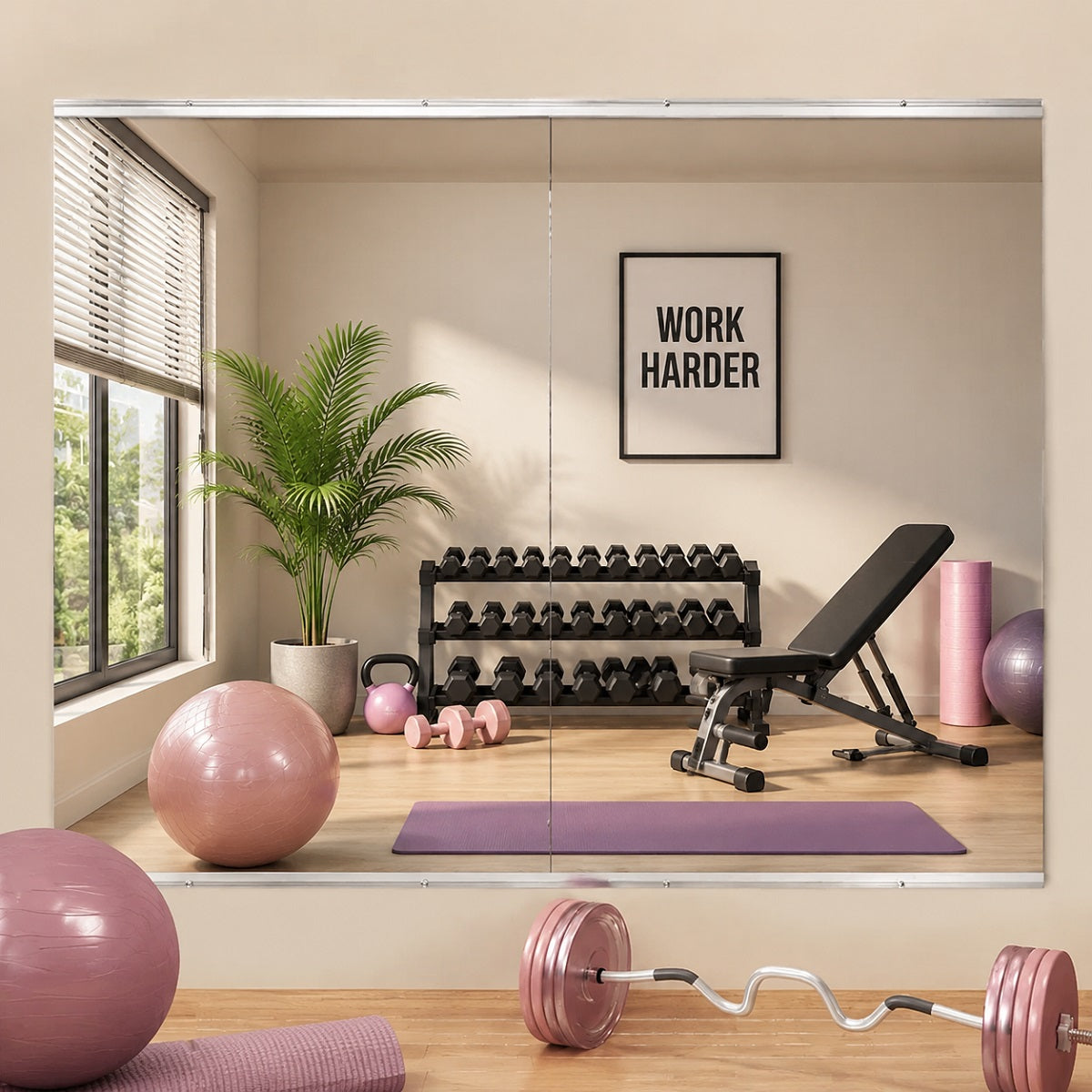
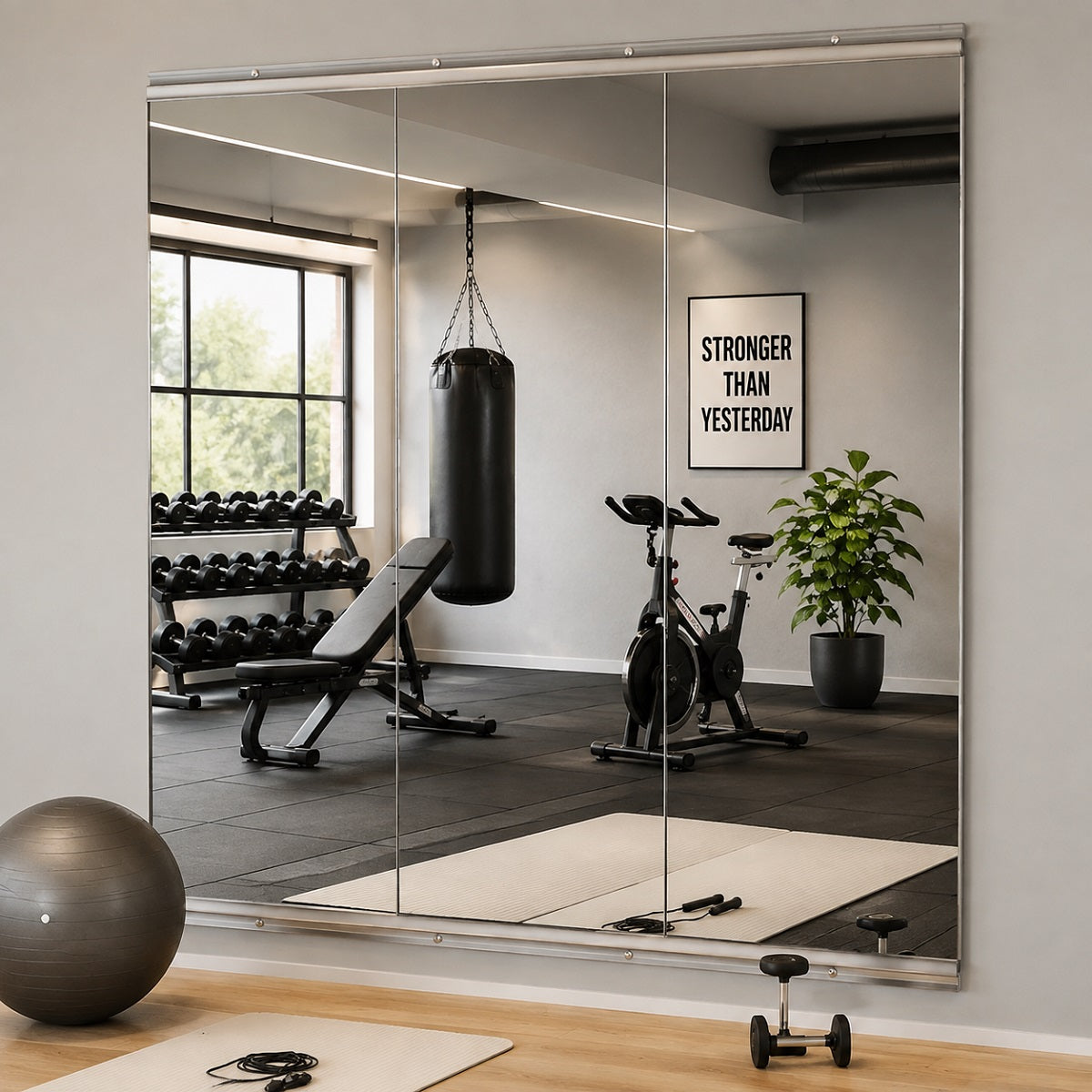
| You want a broad, continuous reflection | A properly installed mirror wall | Installation and wall suitability need planning. |
| Moving furniture already feels inconvenient | A fixed mirror position | Another item to relocate may add work. |
| You’re renting | A model approved for your permitted setup | Check assembly and restraint requirements before assuming no drilling is needed. |
For a closer look at the different support systems, Hasipu’s guide to leaning, freestanding, and wall-mounted mirrors explains how each arrangement uses space.
A portable gym mirror makes the most sense when changing its position solves a problem you encounter regularly. A fixed mirror is often simpler when your workout area stays in the same place.
Pay Attention to the Floor and Wheel Locks
Wheels are useful only when they suit the route you expect them to travel.
A smooth, level floor is a better starting point than thick carpet, loose rugs, or uneven transitions. Small casters may catch at a rug edge, and a soft surface can make a large mirror harder to move or position securely.
Check the manufacturer’s guidance for your flooring. Don’t assume “rolling” means the mirror can travel comfortably across every surface in the house.
For daily use:
-
Clear cords, loose equipment, and other obstacles from the route.
-
Move the mirror using the handling points and method specified in its instructions.
-
Engage all provided wheel brakes before exercising.
-
Check that the assembled base sits evenly and that its fasteners remain secure.
Wheel brakes help prevent rolling. They do not make a tall mirror tip-proof. Avoid leaning equipment against the frame or using it for balance, and follow any restraint requirements.
For rooms shared with children or pets, the parked position deserves as much thought as the workout position. Keep it away from active play areas and places where it is likely to be bumped.
Make the Reflection Work With the Room
A mirror can fit perfectly on the floor and still provide an awkward view.
Check the proposed position at the time you normally exercise. Morning sunlight and evening lamps can create very different reflections. A bright window directly behind you may appear in the glass and make the view uncomfortable.
Try a position where light falls across the exercise area without a bright source reflecting toward your eyes. Make adjustments before starting, then lock the wheels again.
The reflected background matters in a shared room, too. A mirror facing a crowded desk doubles the view of the clutter. Facing a quieter part of the room can make the arrangement feel more settled.
Keep the styling simple. A frame that relates to the room’s furniture is usually enough; you don’t need to decorate around the base. Leaving that area open makes moving and cleaning around the mirror easier.
Choosing a Hasipu Rolling Mirror
Start with shape and usable size, then compare the details that affect movement.
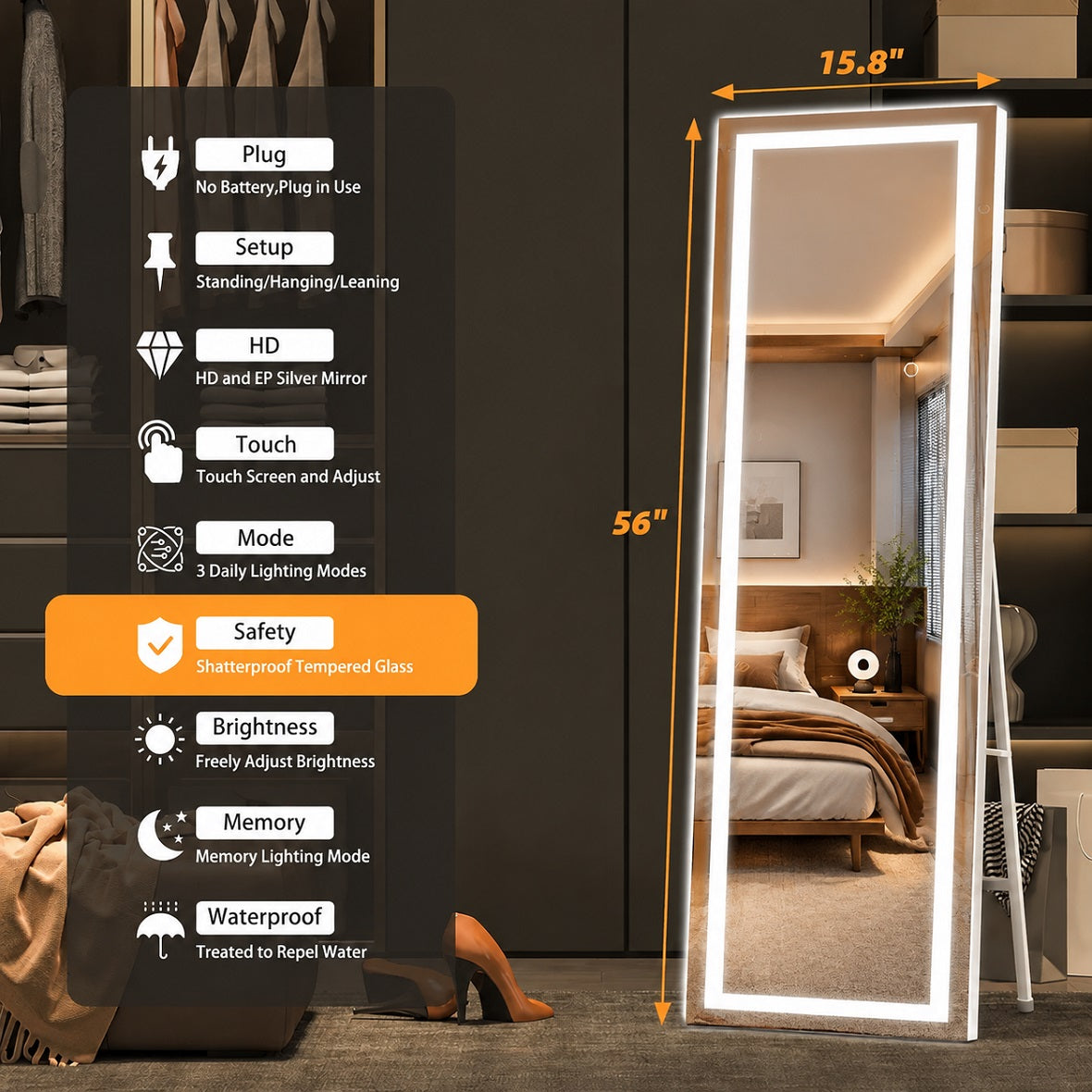
The Hasipu rectangular full-length mirror on wheels, KM-MOVE-R, has an aluminum alloy frame, 4mm tempered glass, and swivel casters with locking brakes. Its rectangular outline is worth considering when you want reflective width that continues through the upper corners.
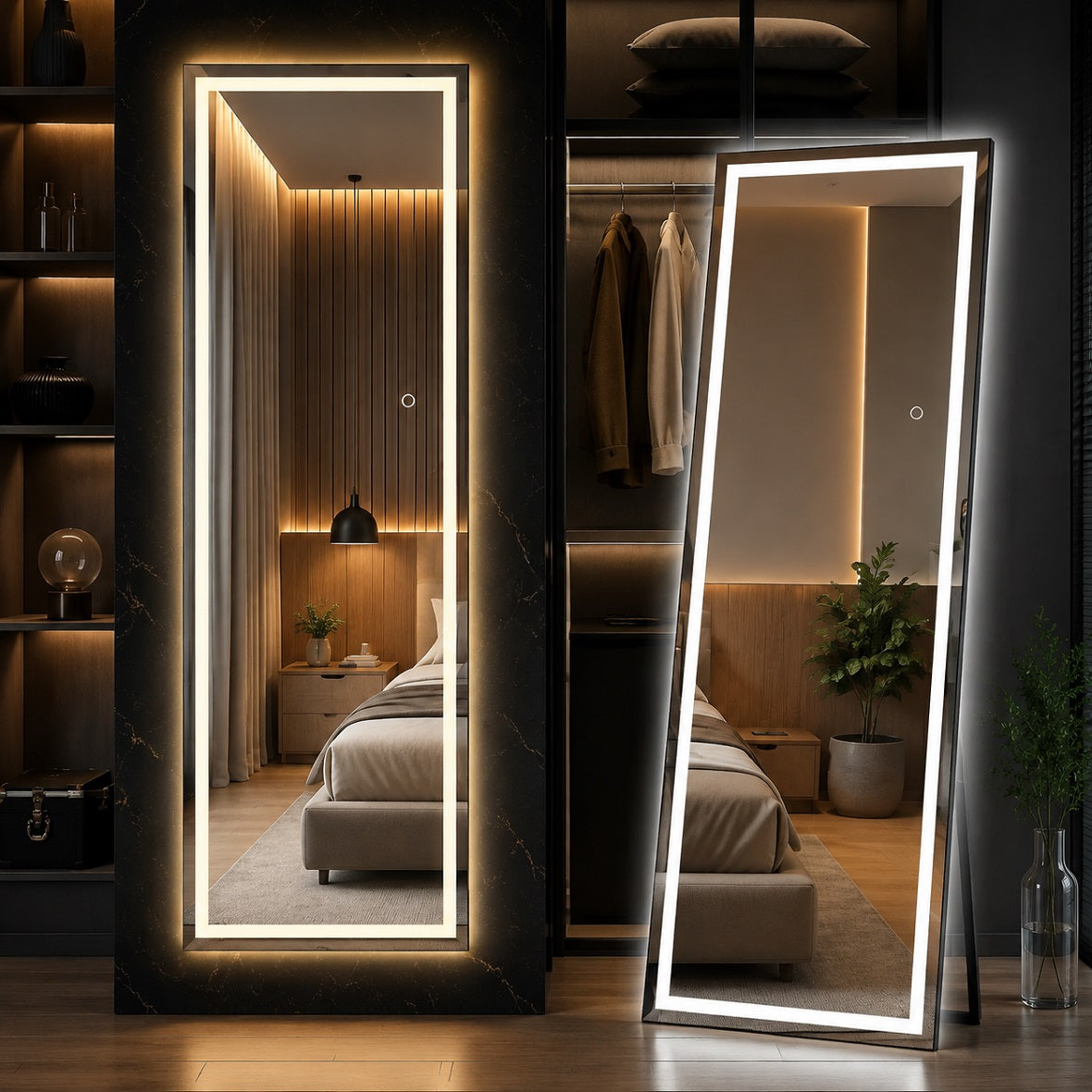
For a bedroom or living area where you prefer a curved top, the Hasipu arched full-length mirror on wheels, KM-MOVE-A, offers an arched profile, an aluminum alloy frame, tempered glass, and locking wheels.
Choose between them by comparing the selected size with your room and the movements you want to see. An arched shape may suit the decor, while a rectangular shape may better match the viewing area you’ve planned.
Before ordering either model, confirm:
-
The dimensions of the selected variant.
-
The complete assembled footprint.
-
Product weight and handling requirements.
-
Flooring guidance and assembly instructions.
Tempered glass can still break. Keep either mirror away from potential equipment impacts and handle it according to its instructions.
Try the Room Change Before You Buy
You can test much of the idea without owning the mirror.
Mark its intended base footprint and leave that area clear for a day. Set up your workout space, then return the room to its usual arrangement. Open the sleeper sofa, sit at the desk, or put away laundry—whatever normally happens there.
Pay attention to the little interruptions.
Does the mirror’s parking spot block a drawer? Would you need to move a basket every time it comes out? Is the route clear only when the desk chair is pushed in perfectly?
Those details determine whether a rolling mirror for a home gym will be convenient after the novelty wears off.
A good setup should let you finish exercising, put your equipment away, and return the mirror to a useful spot without rearranging half the room.
Common Questions About Rolling Gym Mirrors
Can a rolling mirror work on carpet?
That depends on the caster design, carpet, and manufacturer’s instructions. Thick or soft carpet can make movement harder and affect how the base sits. Confirm compatibility before buying, especially when carpet covers both the workout area and the parking spot.
How large should a rolling gym mirror be?
Choose a size that shows the body positions and movements you want to observe from your available workout area. Check usable glass width as well as height, then confirm that the complete base fits. The largest mirror you can purchase isn’t necessarily the easiest mirror to live with.
Can a mirror help me check exercise form?
A mirror lets you observe visible aspects of your position and movement from its viewing angle. It cannot show every angle or confirm that an exercise is being performed correctly. Avoid turning your head mid-movement just to see your reflection; arrange the mirror before starting.
Does a rolling mirror save space?
It makes space more flexible. You can move it out of the workout area or use it for another purpose, but its base still needs a place to stand. In a room with no spare floor area, a properly installed wall mirror may be more practical.
For a multipurpose room, the strongest reason to choose a rolling mirror is simple: it can be useful during your workout and still have a sensible place in the room afterward.