Table of Contents
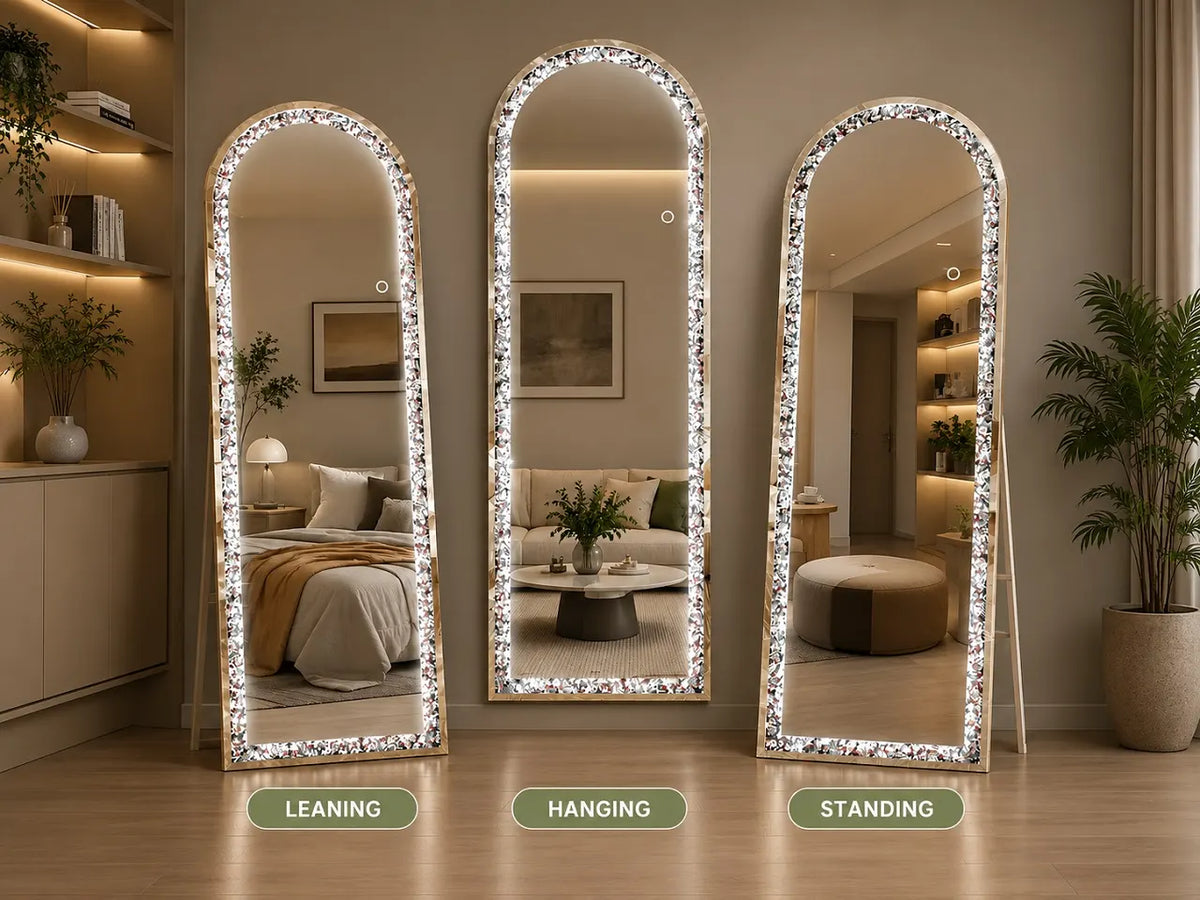
A leaning mirror gives a bedroom a relaxed look. A freestanding mirror lets you choose a spot without relying on a wall for support. A wall-mounted mirror keeps the floor clear.
All three can work well for getting dressed or decorating a room. The differences become more obvious when you’re opening drawers, vacuuming around a stand, or deciding where to drill.
Here’s a practical look at the pros and cons of leaning, freestanding, and wall-mounted mirrors, with advice on choosing a mirror setup that fits your home.
How Do the Three Mirror Types Compare?
A leaning mirror rests on the floor and tilts against a wall. A freestanding mirror has its own stand or base. A wall-mounted mirror hangs from hardware attached to the wall.
Retailers sometimes use “standing mirror” or “floor mirror” for both leaning and freestanding designs. Look at the support system, not just the product name.
| Mirror type | Main advantages | Main disadvantages | Best suited to |
|---|---|---|---|
| Leaning | Relaxed appearance; creates a decorative focal point; no need to suspend its full weight from wall hangers | Takes up floor space; needs a suitable wall and secure restraint; angle affects the reflected view | Spacious bedrooms, living rooms, quiet corners |
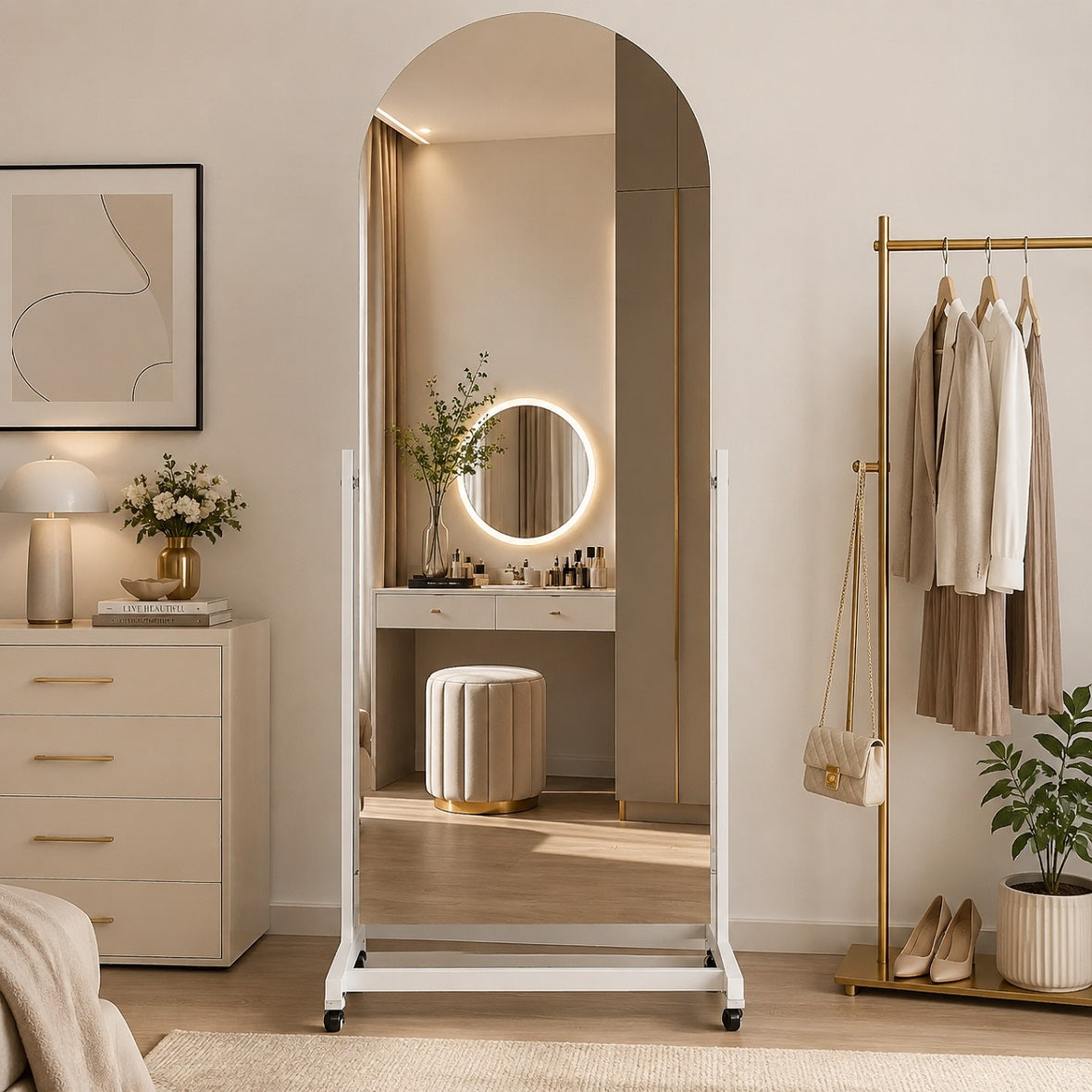
| Freestanding | Supports itself; flexible positioning; some designs offer adjustable tilt | Stand adds depth; can obstruct drawers or walkways; large models are awkward to move | Dressing areas and bedrooms with spare floor space |
| Wall-mounted | Keeps the floor clear; adjustable installation height; tidy appearance | Requires installation; depends on suitable wall fixings; harder to relocate | Small bedrooms, narrow entryways, permanent layouts |
Leaning Mirrors: Decorative Impact With Some Floor-Space Trade-Offs
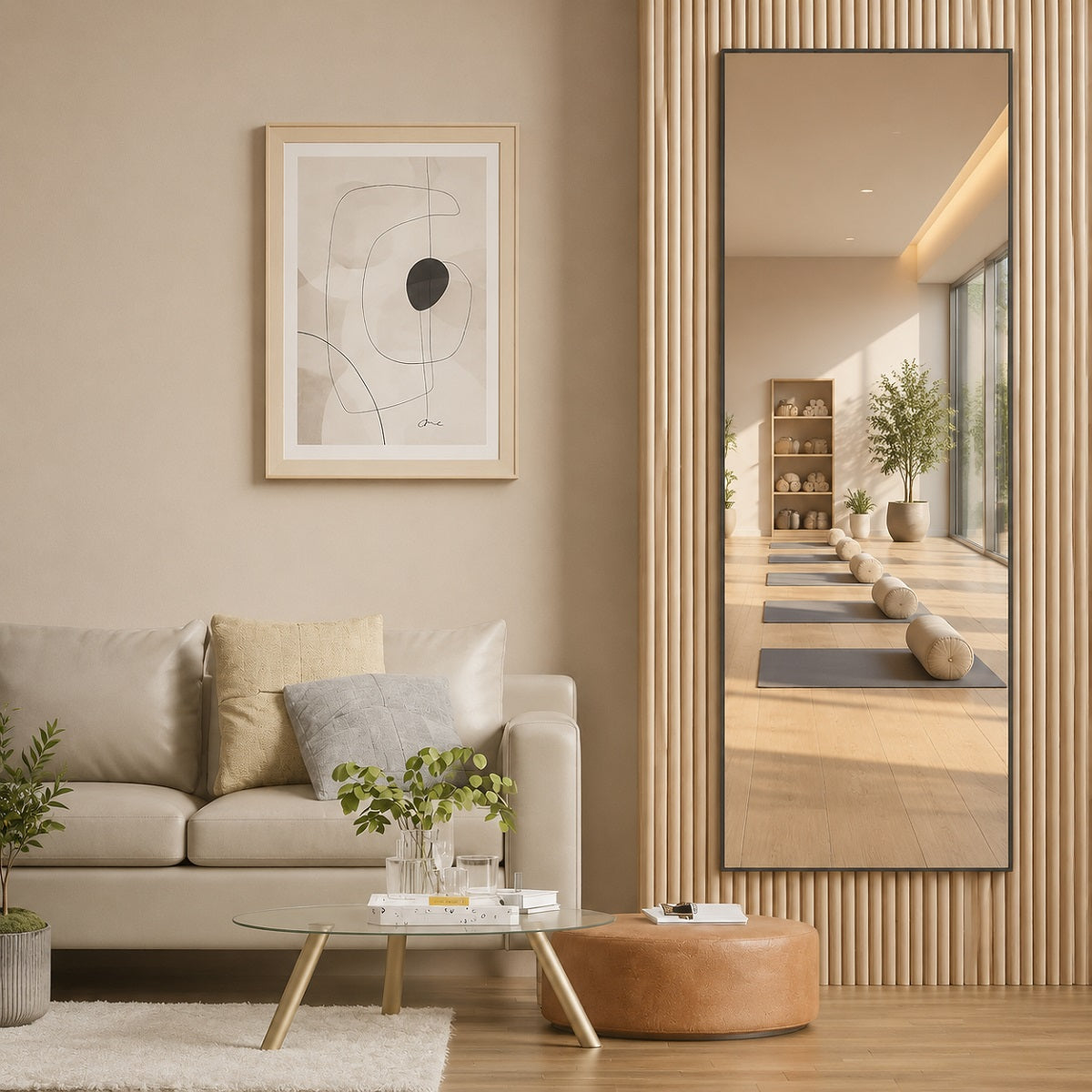
A leaning floor mirror often feels like a piece of furniture. Its frame rests at floor level, helping it sit naturally beside a dresser, armchair, or low cabinet.
It’s a good fit for a room that needs a substantial decorative feature, provided there’s enough space to secure it properly.

Pros of leaning mirrors
They make an empty wall feel more finished.
A tall mirror can give an unused stretch of wall a clear purpose. An arched frame adds a curved shape beside straight-lined furniture, while a rectangular design creates a more structured look.
They suit a relaxed decorating style.
The slight tilt feels less formal than a mirror hung flat. That works well in bedrooms and living rooms where you want the arrangement to feel comfortable rather than rigid.
The floor carries the mirror’s weight.
You don’t need to hang the entire mirror from wall brackets. That changes the installation task, though it does not eliminate the need for appropriate wall restraint.
They can combine everyday use with decoration.
A large reflective area can serve as an outfit-checking mirror while bringing a view of another part of the room into an otherwise blank corner.
Cons of leaning mirrors
They are not automatically a no-drill option.
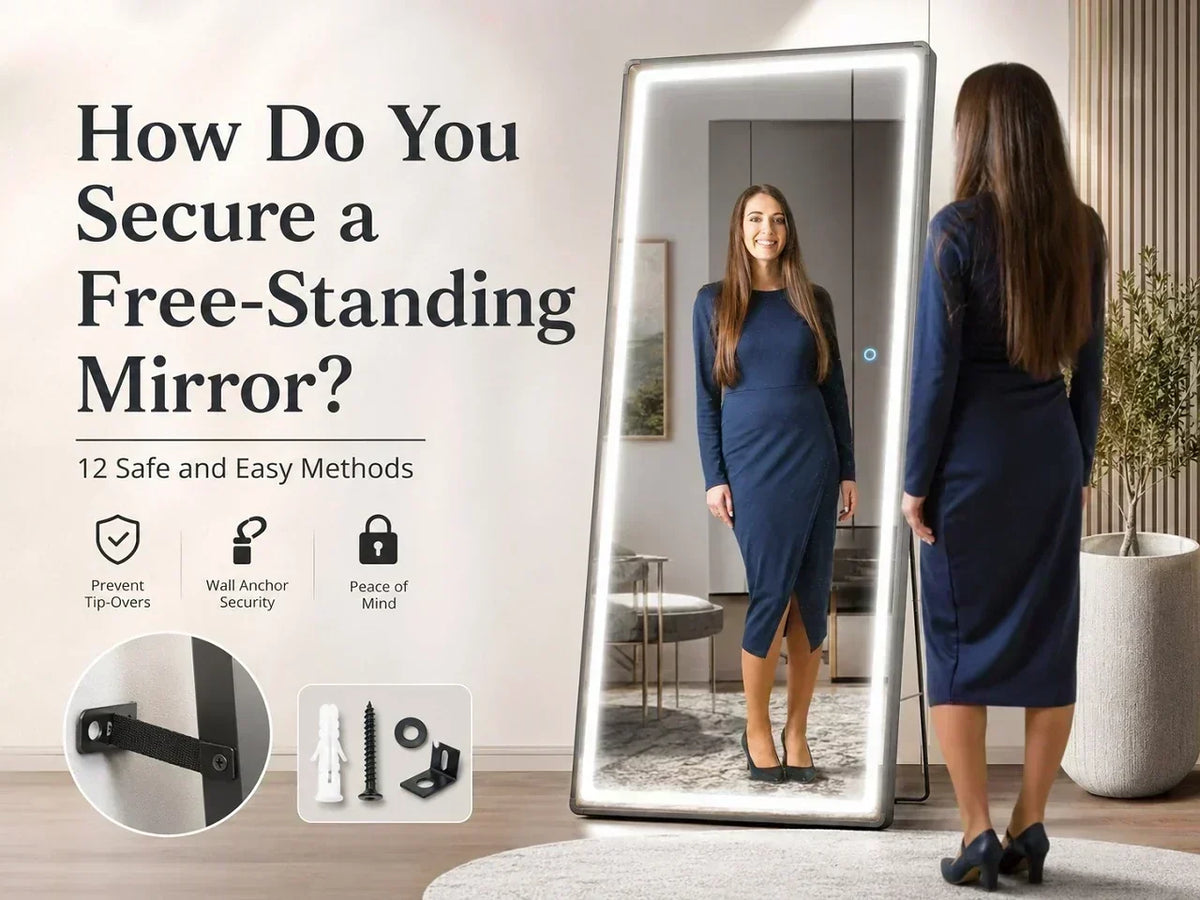
A mirror resting against a wall can slide or tip. Use a design approved for leaning and follow its restraint instructions. Some manufacturers explicitly require wall anchoring for floor placement.
They project into the room.
The bottom edge sits away from the wall. In a tight bedroom, that can interfere with the path beside the bed or the space needed to open a dresser.
The angle affects what you see.
A tilted mirror reflects a different view than a vertical one. You may see more ceiling than expected, and the viewing angle can affect how your proportions appear.
Baseboards can complicate placement.
A thick baseboard may keep the frame from resting as intended. Don’t solve that by improvising an unsupported angle or wedging objects underneath.
Best fit: A room with an open wall, enough floor clearance, and a location where the mirror can be secured away from everyday traffic.
Freestanding Mirrors: Flexible Placement, but a Bigger Footprint
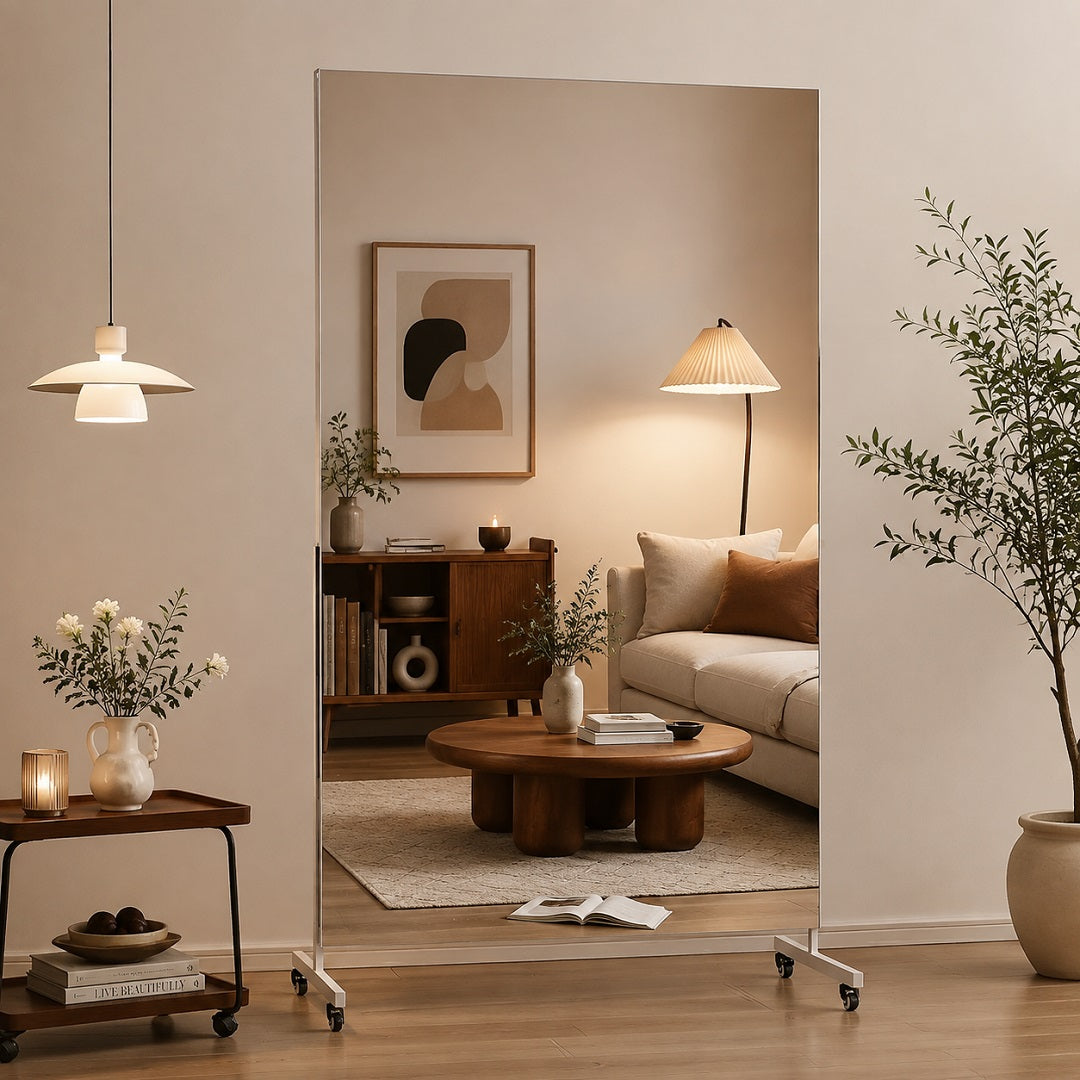
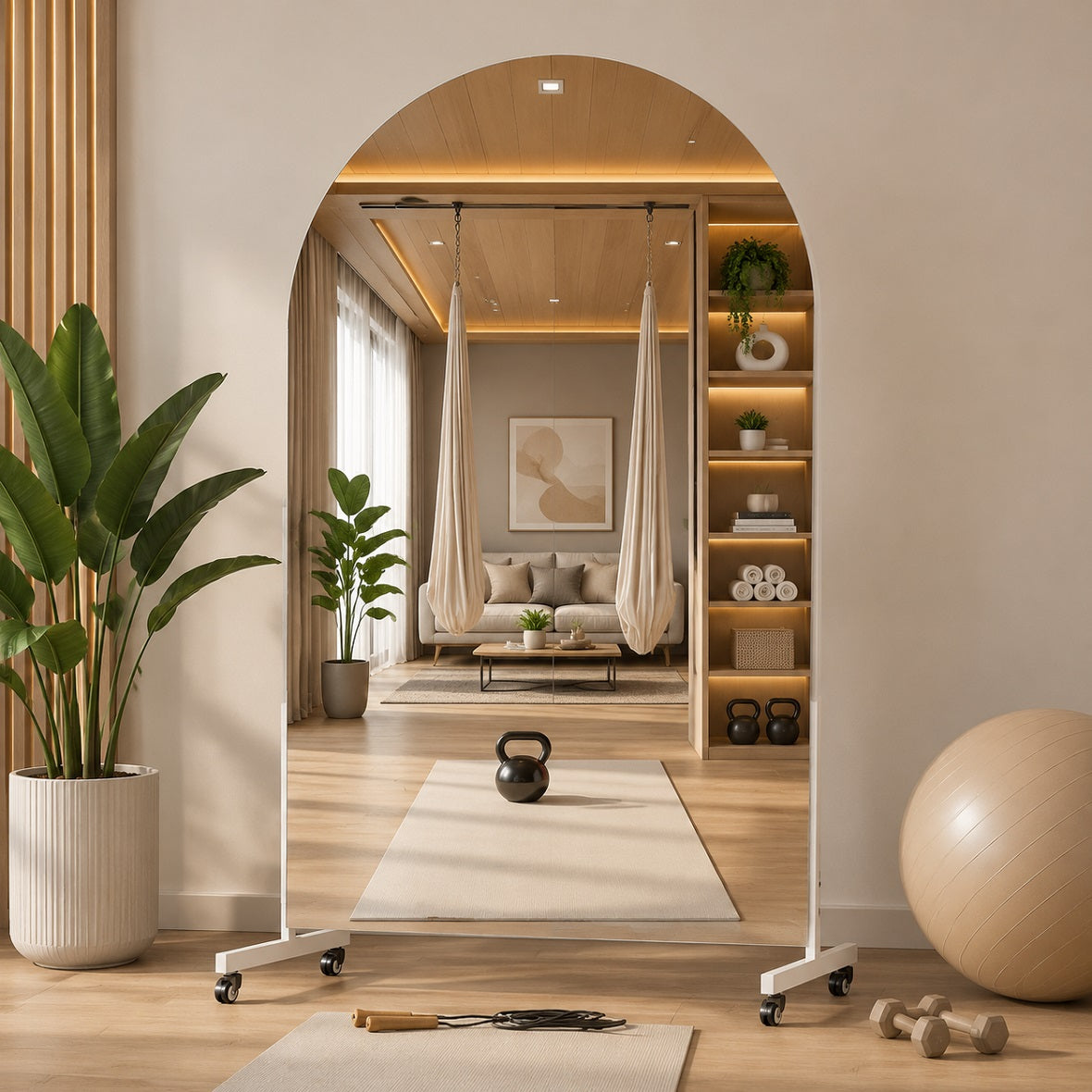
A freestanding full-length mirror uses a rear stand, legs, or a base to support itself. Some designs pivot within a frame; others stay at a fixed angle.
The main appeal is placement flexibility. You can position the mirror where it’s useful, even when that spot doesn’t offer a wall to lean against. Any required restraint still needs to be accommodated.

What works well
You have more freedom to choose the viewing position.
A freestanding mirror can work near a closet or in a dressing area where the available walls are occupied by storage.
Some models let you adjust the tilt.
That can help different users find a comfortable view. Check the exact design: a rear support stand does not necessarily mean the mirror has an adjustable viewing angle.
Relocating it may be simpler.
Compared with removing a wall-mounted mirror and reinstalling brackets, moving a freestanding model can involve less work. Large mirrors may still require two people, and any restraint must be reinstalled.
It can fit a changing room layout.
A bedroom that doubles as a dressing space or guest room may benefit from a mirror that has more than one suitable position.
Where it falls short
The stand takes up space you may overlook.
The listed frame width and height don’t tell the whole story. A rear support can extend well behind the glass, so check the fully assembled depth before buying.
It can make cleaning less convenient.
You’ll need to vacuum or mop around the feet and support. Moving a large mirror every time you clean gets old quickly.
Stability depends on the setup.
An uneven floor, a partly opened stand, or supports resting on different surfaces can create problems. Follow the assembly instructions and use all required safety hardware.
“Portable” can be misleading.
A tall glass mirror can be heavy and difficult to carry, even when it isn’t attached to a wall. Frequent repositioning may be less practical than the product photos suggest.
Best fit: A dressing area with enough room for the complete base or stand, plus clear access to closets and drawers.
Wall-Mounted Mirrors: Space-Saving, With More Installation Work
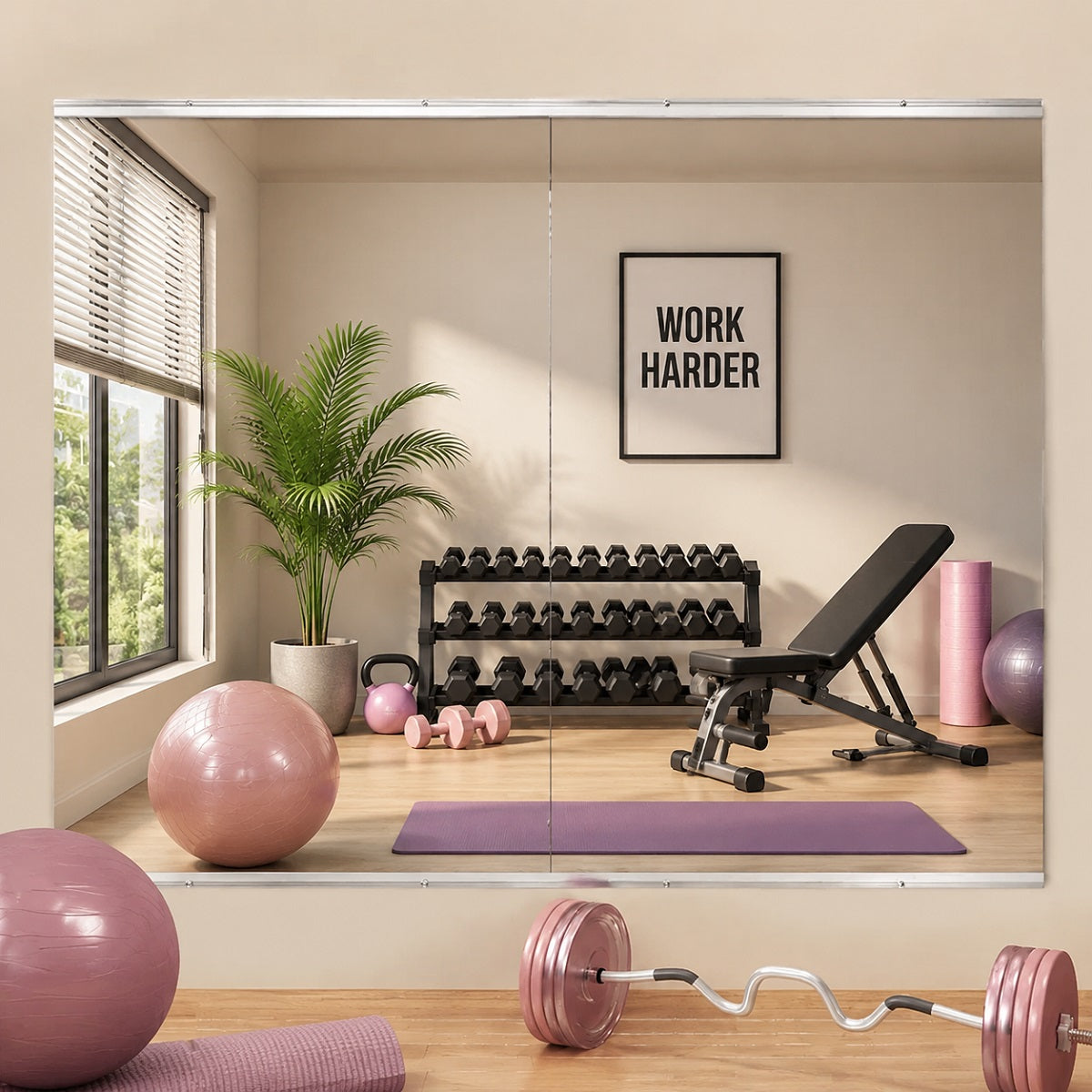
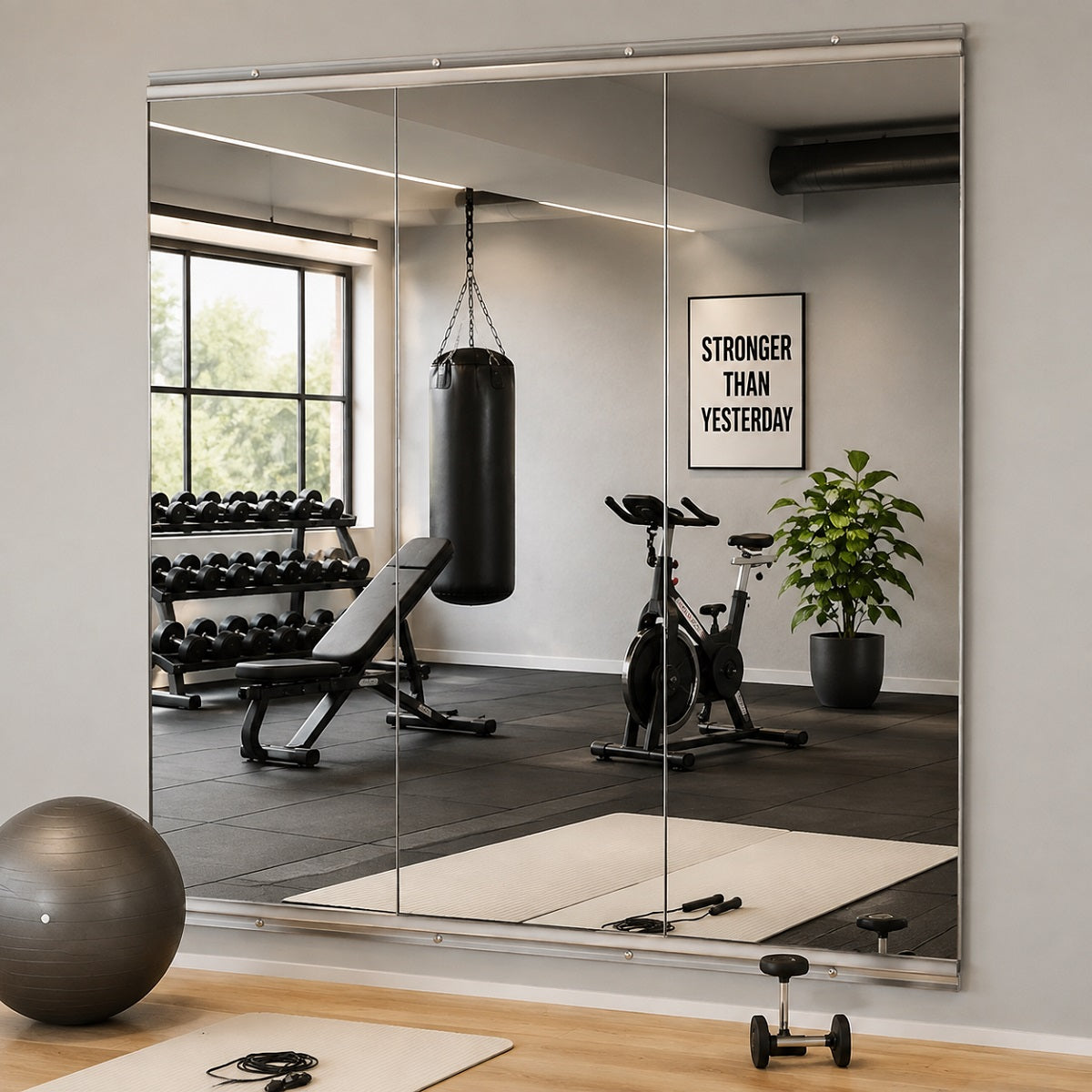
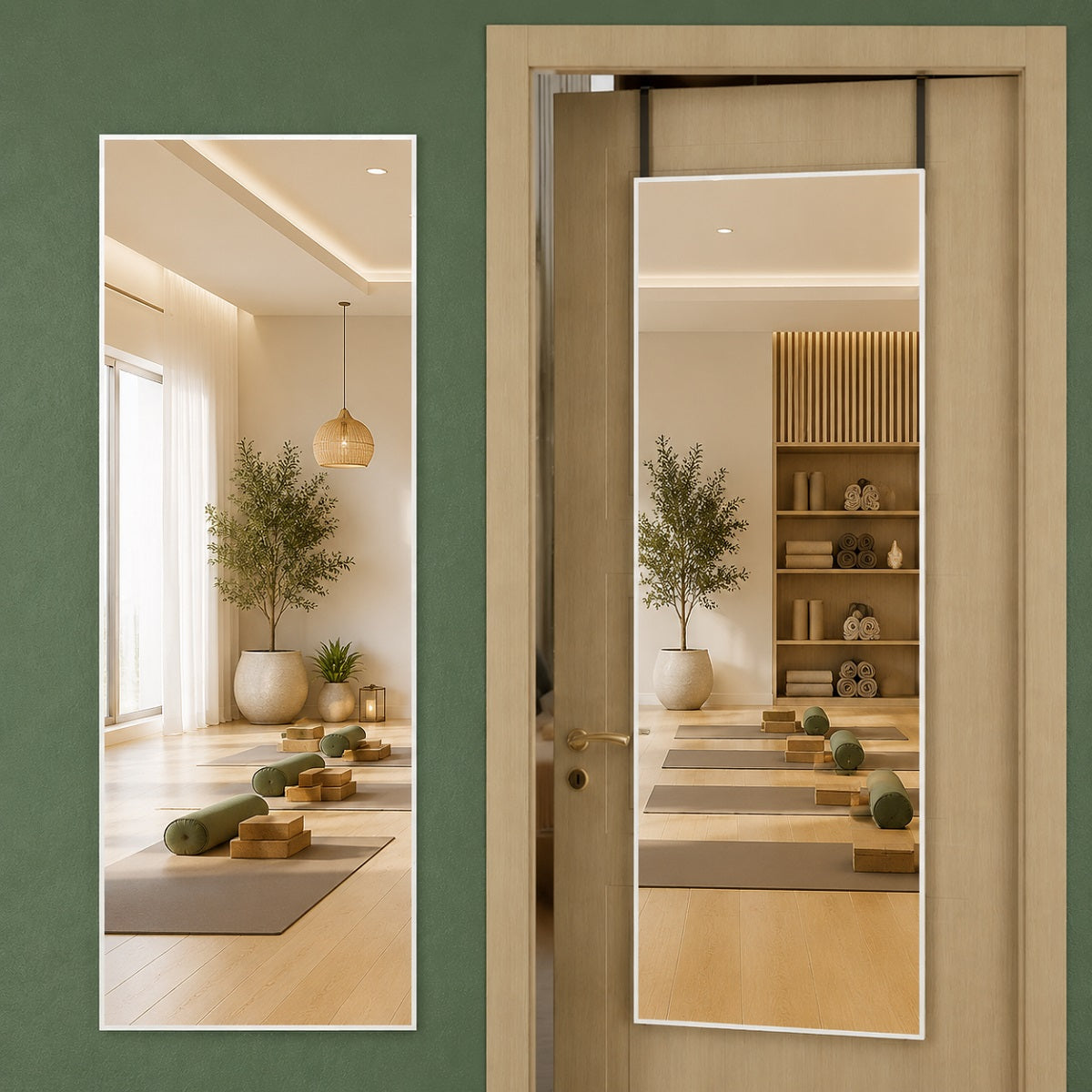
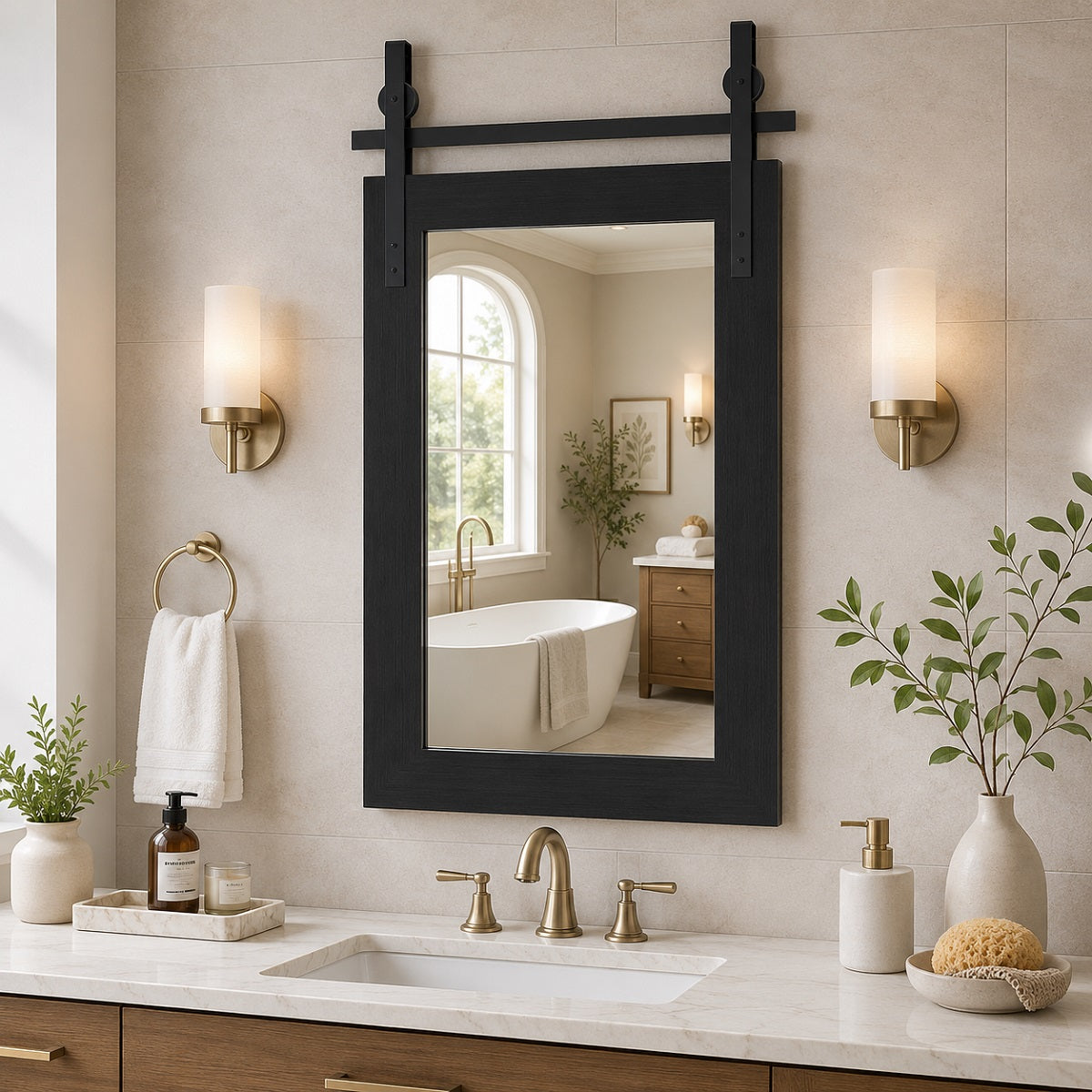
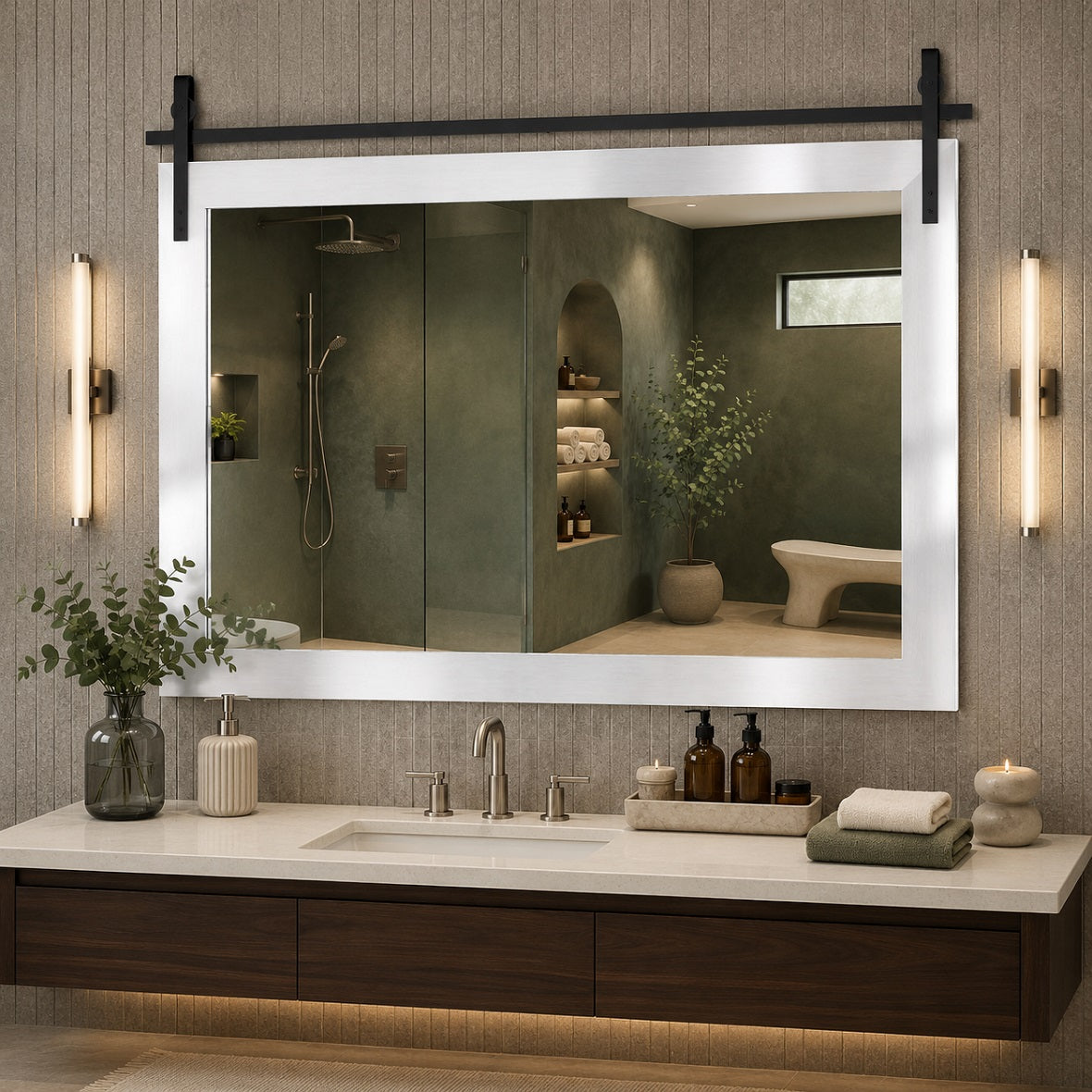
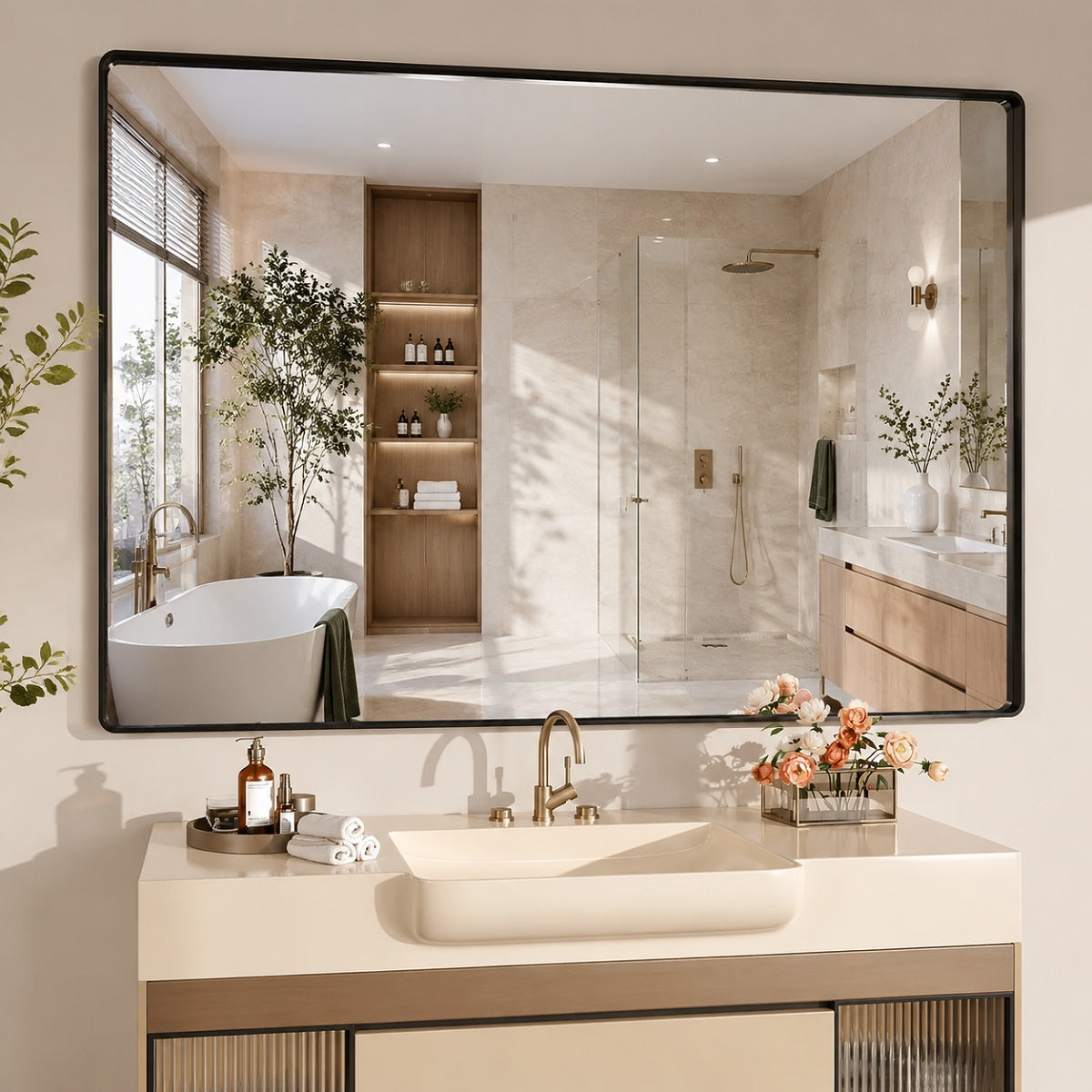
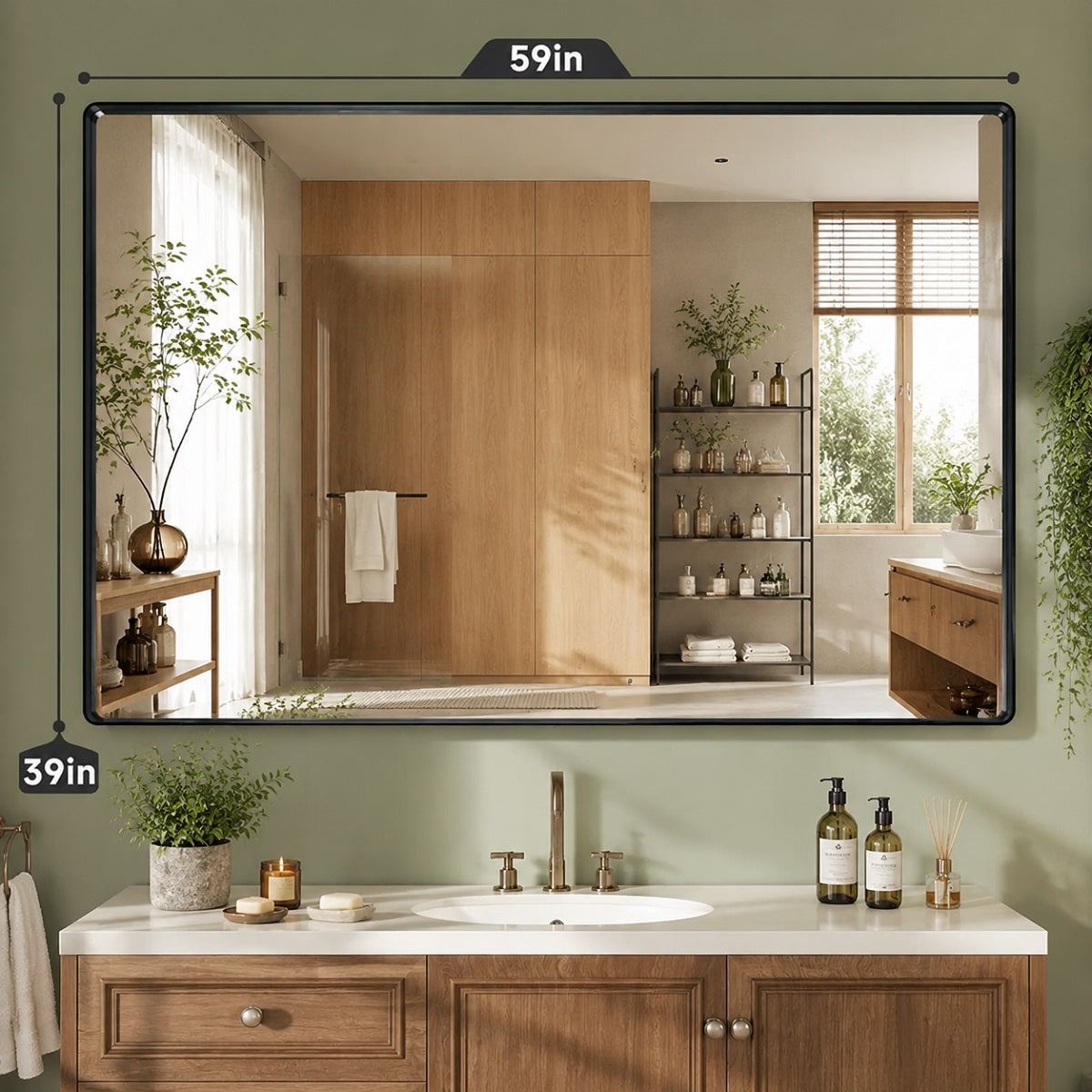
A wall-mounted full-length mirror keeps its support system off the floor. Once installed, it has a defined place in the room and leaves the area beneath it open.
That makes it especially useful when floor space is limited.

The advantages
It keeps walkways clear.
There’s no rear stand or tilted bottom edge beside the bed. In a narrow entryway, that can make the space easier to move through while carrying bags or coats.
You can choose the mounting height.
Position the reflective area for the people who use it. This is helpful in a shared bedroom where a floor-standing model’s fixed height may not suit everyone.
Cleaning underneath is straightforward.
Without feet or a base on the floor, there are fewer obstacles for a mop, vacuum, or robot cleaner.
It creates a tidy, integrated appearance.
A mounted mirror can line up with nearby furniture or architectural details. This suits rooms where you want the mirror to feel like a settled part of the layout.
The disadvantages
The wall and hardware need to be suitable.
The mirror’s weight, mounting system, and wall construction all matter. Included fixings may not suit every wall. Follow the product instructions and get qualified installation help when needed.
Installation may add to the cost.
A large or heavy mirror may call for additional hardware or professional labor. Consider that expense when comparing purchase prices.
Changing your mind takes more work.
Moving the mirror usually means removing hardware, repairing holes, and measuring again in the new location.
Poor positioning is harder to correct.
Hang it too high, place it behind a swinging door, or overlook a nearby switch, and the mistake becomes inconvenient to fix.
Best fit: A small room, a busy passage, or a layout you expect to keep for a while.
Which Mirror Type Is Best for Your Situation?
The most useful comparison starts with the problem you need the mirror to solve.
| Your priority | A good starting choice | The trade-off to check |
|---|---|---|
| Keep a small bedroom easy to walk through | Wall-mounted | Installation requirements |
| Add a large decorative feature | Leaning | Floor clearance and secure anchoring |
| Place a mirror away from an available wall | Freestanding | Base depth and any required restraint |
| Make floor cleaning easier | Wall-mounted | Less convenient to relocate |
| Accommodate occasional furniture rearranging | Freestanding | Weight and safe handling |
| Avoid drilling in a rental | A model explicitly approved for your permitted setup | Neither leaning nor freestanding automatically means no drilling |
For a small bedroom
A wall-mounted mirror usually offers the clearest practical advantage: it doesn’t use floor space.
Check the proposed position with closet doors and dresser drawers open. You still need a comfortable place to stand in front of it.
For a decorative living room corner
A leaning mirror can work well when you have space around it. Before choosing the spot, look at what will appear in the reflection from the sofa and doorway.
Keep nearby decor clear of the mirror’s support and restraint.
For a dressing area
A freestanding mirror gives you more freedom to align the glass with your usual getting-ready spot.
Mark the full footprint on the floor before ordering. Walk around it, reach into the closet, and open the nearest drawer. That small check can prevent an awkward purchase.
What to Check When Shopping for a Hasipu Mirror
When comparing Hasipu mirrors, start with the exact model’s approved installation methods. Don’t assume a mirror can lean, stand, and hang unless the product information confirms all three.
Then check the details that affect daily use:
- Overall dimensions and usable glass area: A wide frame or curved outline can reduce the space available for your reflection.
- Depth in use: For a freestanding design, measure with the stand fully open.
- Weight and handling instructions: Consider both installation and any future move.
- Included hardware: Confirm what’s supplied and whether the fixings suit your wall.
Our Pick for Flexible Placement
The Hasipu LED Diamond Full-Length Mirror KM-DIAC-FLB is a good fit for a bedroom or dressing area where you want more than one placement option. It supports leaning, freestanding, and wall-mounted use, allowing you to choose the setup that works with your layout.
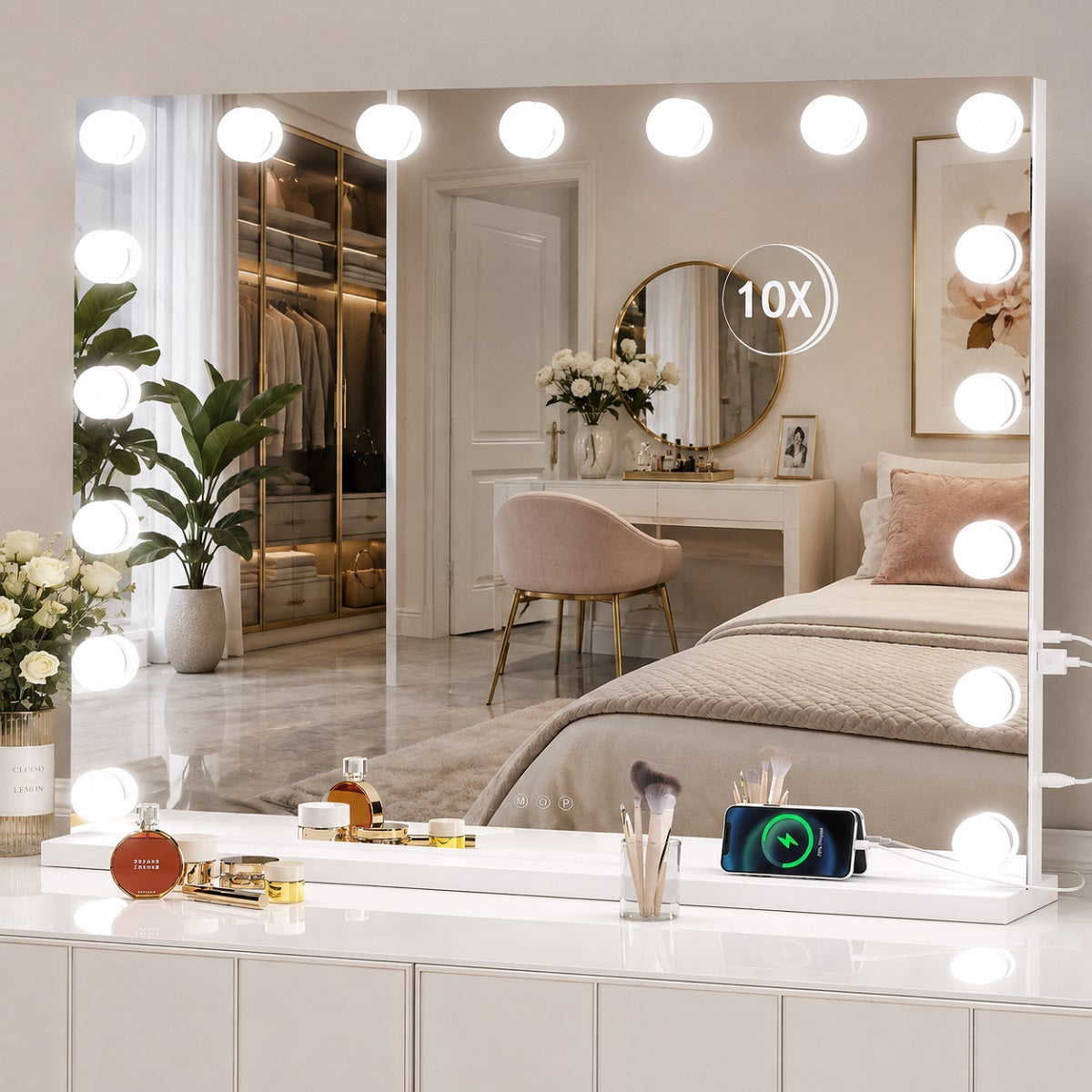
Its arched shape and crushed-crystal frame give it a more decorative presence, while dimmable LED lighting and touch control let you adjust the brightness. It suits a room where you want the mirror to draw attention; the sparkling border may feel too prominent in a very understated space.
Before choosing a size, measure the intended spot with nearby doors and drawers open. Allow room for the stand when using it freestanding, check access to power for the lighting, and follow the installation instructions for your chosen position.

Which Mirror Fits Your Home?
The best mirror for your home depends on the space you can spare and how you’ll use it. A leaning mirror adds a relaxed, decorative touch but needs floor clearance and secure anchoring. A freestanding mirror offers flexible placement, though its stand can crowd a small room. A wall-mounted mirror keeps the floor open but takes more work to install and relocate.
Before choosing your Hasipu mirror, measure the spot with nearby doors and drawers open. Leave yourself room to get dressed and walk past comfortably, then choose the frame that suits your style.
Frequently Asked Questions
1. Is a leaning mirror better than a freestanding mirror?
A leaning mirror is a good choice for a decorative arrangement along a suitable wall. A freestanding mirror offers more flexibility because its stand supports it. The better option depends on your available floor space and the product’s installation requirements.
2. Which type takes up the least space?
A wall-mounted mirror has no floor footprint. It’s usually the most practical choice when a stand or leaning frame would crowd a walkway.
3. Can I hang a freestanding mirror on the wall?
Only when the manufacturer approves wall mounting and provides suitable mounting points. A folding or removable stand does not make a mirror safe to hang by itself.
4. Are leaning mirrors safe around children and pets?
They require careful placement and the specified restraint system. Keep them out of play areas and paths where they may be bumped. A mirror’s weight alone does not protect it from tipping.
5. Which mirror is easiest to move?
A manageable freestanding model may be easier to relocate than a mounted mirror. Size, weight, base design, and restraints determine how practical that really is.