Table of Contents
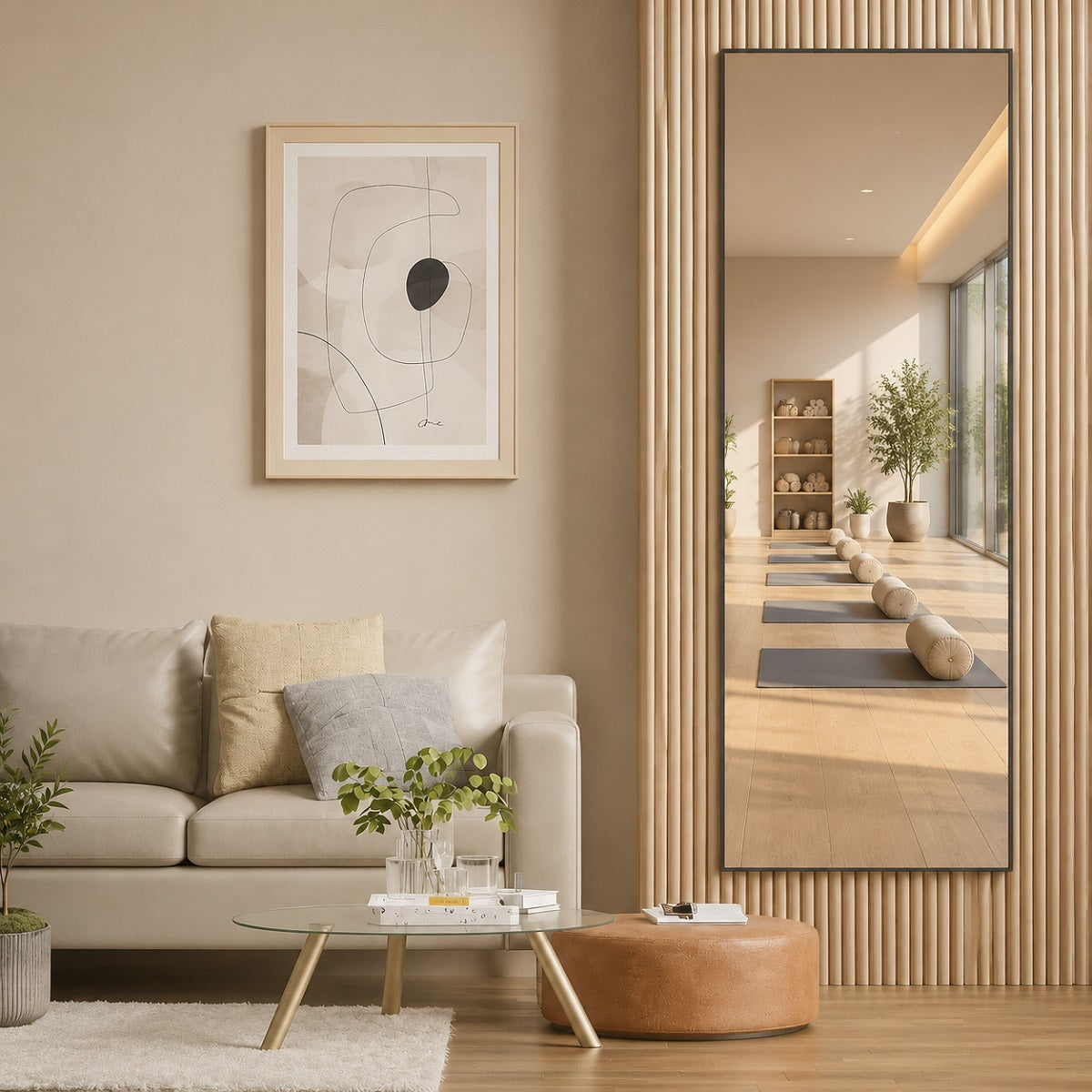
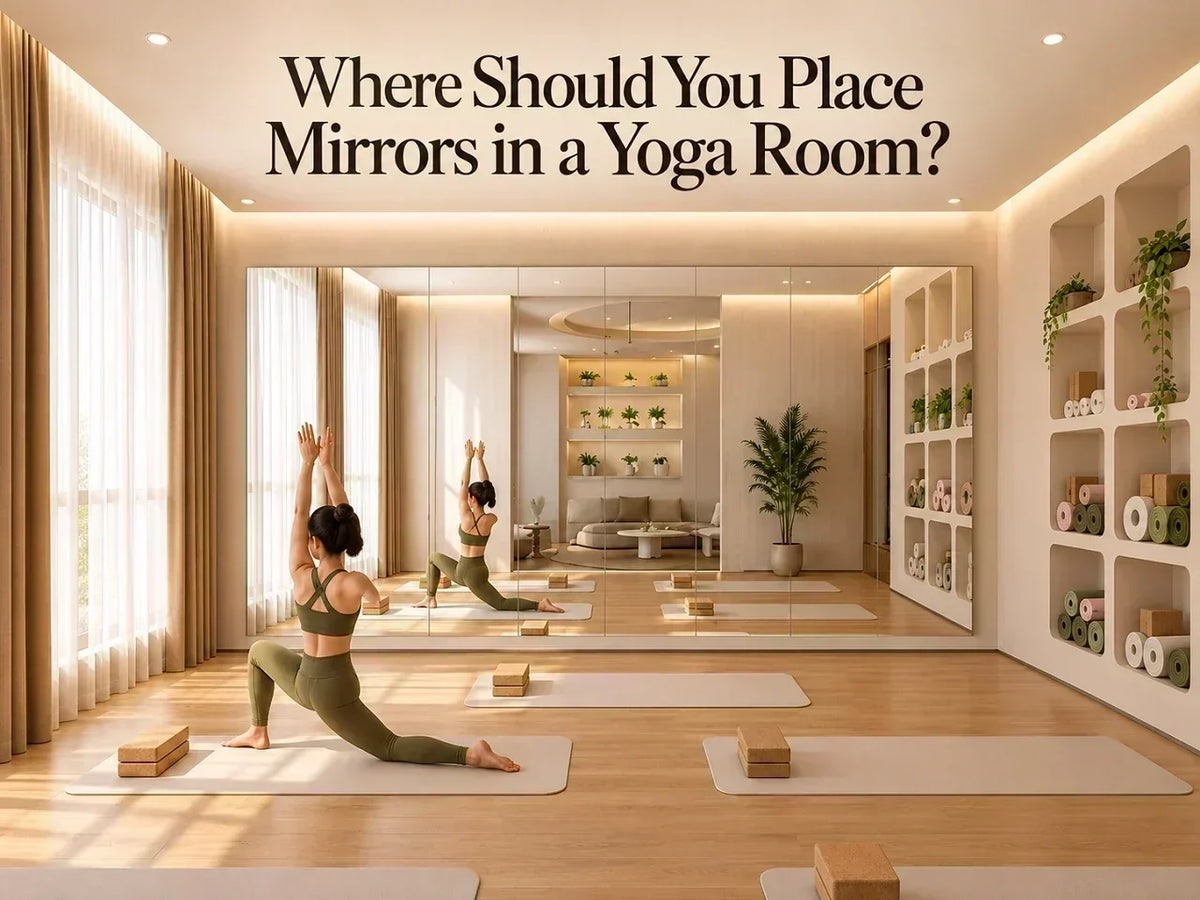
Place a yoga room mirror on a wall in front of your mat for a straight-on view, or along a side wall if that better suits your layout. The right spot gives you a useful reflection without glare, awkward viewing angles, or obstacles around your practice area.
The largest empty wall isn’t always the best choice. A mirror may look beautiful above a console but show very little when you sit on your mat. Another might catch bright afternoon sunlight just when you usually practice.
Start with where your mat goes and how you use the room. Then choose the mirror’s position, size, and mounting height around that setup.
Ideal Placement Options for Yoga Room Mirrors
Different rooms call for different arrangements. These placement options give you a starting point, whether you have a dedicated yoga room or a small space beside your bed.
On the Wall in Front of Your Mat
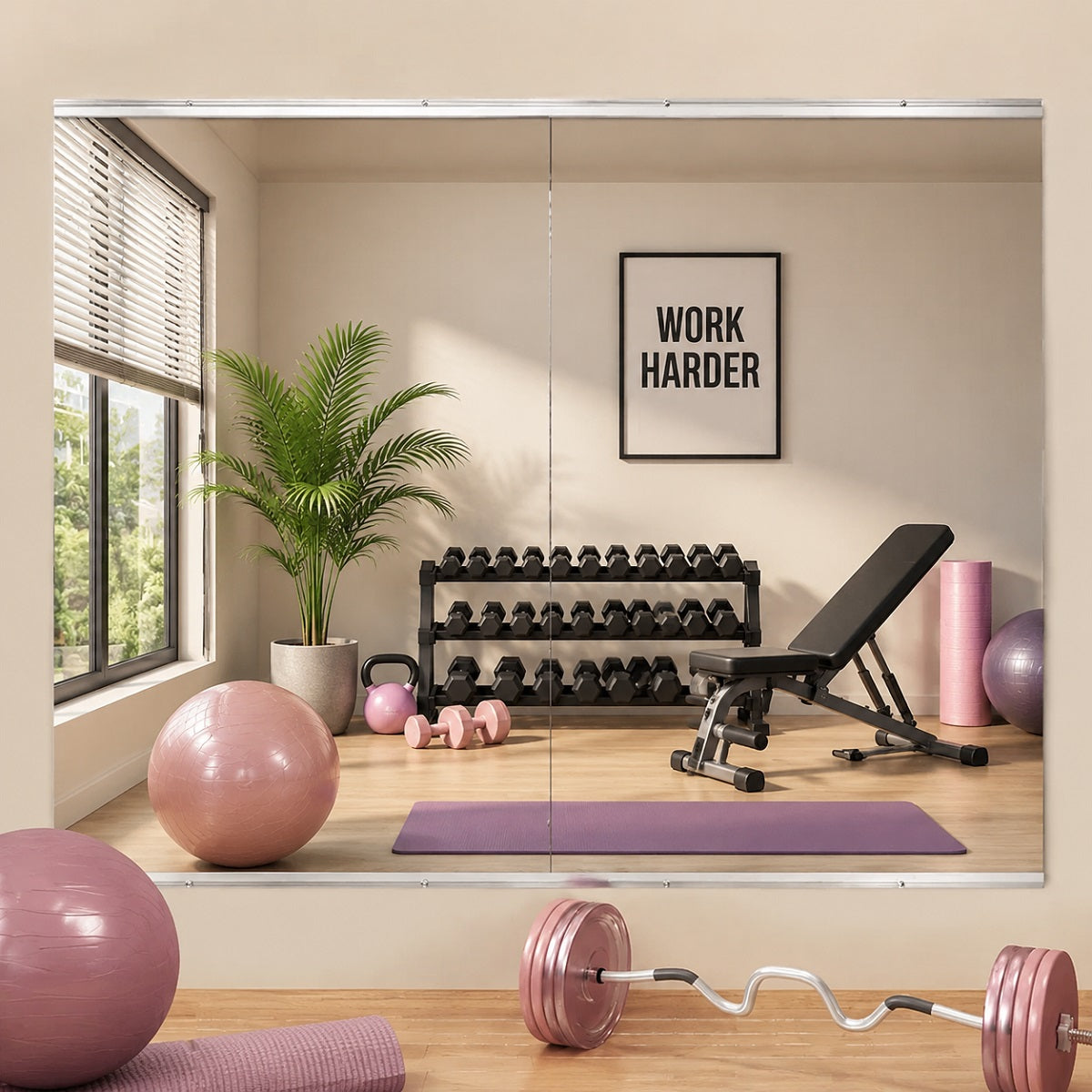
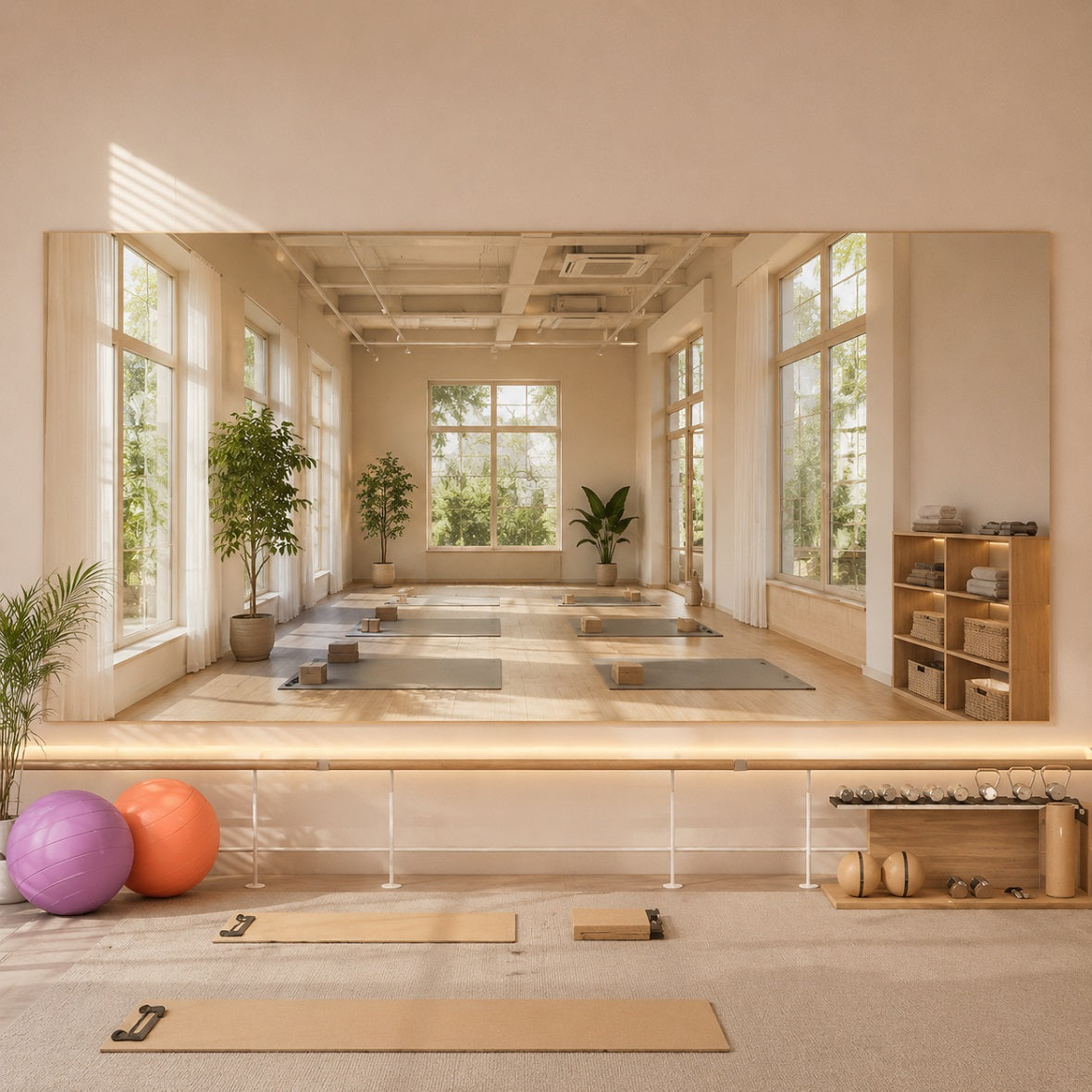
A mirror in front of the mat works well when you want an occasional straight-on view while standing and facing forward.
This arrangement is easy to plan in a dedicated yoga room or spare bedroom. The mat faces the mirror, and storage can sit along another wall, outside your movement area.
The limitation is the viewing angle. A front mirror won’t show every part of every position, especially when you turn or move toward the floor.
Use it for a quick visual check when the reflection is comfortably in view. If you need to change your position to see yourself, pause before checking rather than trying to follow the mirror through a movement.

Along a Side Wall
A side-wall mirror can work when you prefer to face a plain wall, artwork, or a window while practicing. It also leaves the front wall available for a screen if you follow online classes.
You can turn toward the mirror between movements or rotate your mat when you want to use it directly. Before changing the mat’s direction, check that you still have enough room on either side.
Avoid choosing this position on the assumption that you’ll watch yourself sideways throughout a session. A useful mirror position shouldn’t require you to keep turning your head.
Near a Window
A mirror near a window can reflect daylight and an outdoor view, giving the room a brighter, more open appearance.
It doesn’t have to sit directly opposite the window. An adjoining wall may provide a pleasant reflection without placing a bright patch of light behind your reflected outline.
Check the proposed position at your usual practice time. Morning light and late-afternoon light can produce very different reflections.
If the window looks uncomfortably bright in the mirror, try another position or adjust the blinds. Choose the spot based on the light you actually get, rather than assuming that facing a window is always best.
On a Clear Wall in a Shared Room
In a bedroom or home office, choose a wall beside an open area where you can regularly lay out your mat.
A full-length mirror for yoga can double as a dressing mirror, making this arrangement practical for everyday use. Check its width as well as its height, though. A narrow mirror might show your standing outline but leave your hands out of view when you extend your arms.
Keep furniture corners, lamps, and storage baskets outside the practice area. The layout should work with the room in its normal state, without requiring a major rearrangement each time.
| Mirror position When it can work well What to check | ||
|---|---|---|
| In front of the mat | You want a straight-on view | Mirror width and visibility from the mat |
| Along a side wall | You want to keep the forward view clear | Whether checking the reflection requires awkward turning |
| Near a window | You want to reflect daylight or an outdoor view | Glare at your usual practice time |
| On a clear wall in a shared room | The room also serves as a bedroom or office | Furniture clearance and access to the practice area |
Placement Tips for Yoga Room Mirrors
Once you’ve chosen a likely wall, work out the details before installing the mirror. The goal is to make the reflection useful from your mat, not simply center the mirror on the wall.
Put the Mat Down First
Lay your mat where you normally plan to practice. Leave the furniture in its everyday position, open nearby doors, and pull out the desk chair if it shares the space.
Check whether you can comfortably reach outward and move through your usual practice without hitting anything. Consider the floor beside the mat, too, since some movements extend beyond its edges.
If someone needs to walk through the room, make sure the route doesn’t pass directly across your practice area.
Resolve the mat’s position before finalizing the mirror placement.

Check Standing and Seated Views
A mirror hung for getting dressed may not provide the view you want during seated practice.
From your intended mat position, check what you can see while standing and sitting. Include other viewing positions that matter to you, without expecting one mirror to show every angle.
There is no single mounting height that fits every yoga room. The mirror’s dimensions, your distance from it, and the reflection you want all affect where it should sit.
Choose the height based on those checks rather than a standard decorative hanging rule.
Choose Width as Carefully as Height
A tall mirror may show you from head to toe but cut off your arms in a wider position.
Think about what you want to see: a narrow standing outline, a wider stance, or extended arms. Check the usable glass area, since a substantial frame reduces the reflective surface within the overall dimensions.
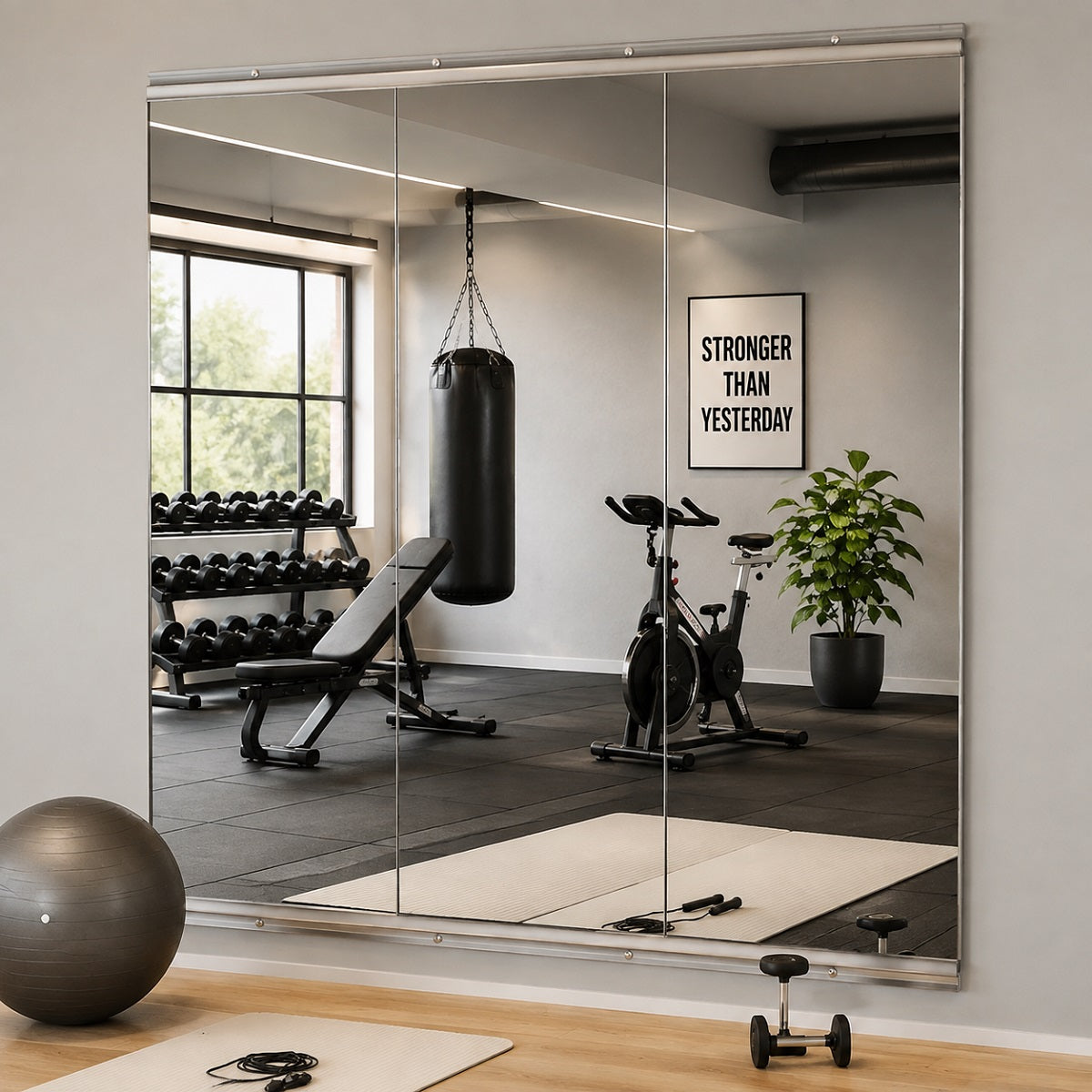
A larger mirror may help, but only if it fits the wall and the room. You don’t need to cover an entire wall when a smaller mirror provides the view you want.
Watch for Glare
Check reflections from windows, ceiling fixtures, and exposed bulbs from the mat itself.
A light that looks fine from the doorway may reflect directly toward you when you sit down. Visit the room at your normal practice time rather than relying on a quick check at another hour.
If the reflection is distracting, adjust the mirror’s planned position, the room lighting, or the window covering before installation.
Keep the Surrounding Floor Clear
Leave enough space for your usual movements without coming close to the mirror or its supports.
A freestanding mirror’s base can extend farther into the room than expected. Plants and baskets placed in front of it take up additional space, even when they look neatly arranged.
Store blocks, straps, and other accessories within reach but outside your movement path. If the mirror forces you to shorten your movements, reconsider the layout.
Test the Placement Before Drilling
Use painter’s tape to mark the proposed mirror outline on the wall. This helps you check how it fits around outlets, baseboards, and nearby furniture.
The tape shows the mirror’s footprint, not its reflection. Confirm the actual view through a safe trial setup permitted by the manufacturer, or ask your installer to help.
Use this final check to bring the earlier decisions together: viewing height, width, movement space, and light. Keep clear of any unsecured mirror while assessing the area.
Once those details work, finalize the mounting position.
Match the Installation to the Mirror and Wall
Follow the instructions for the specific mirror, including its permitted orientation and mounting method.
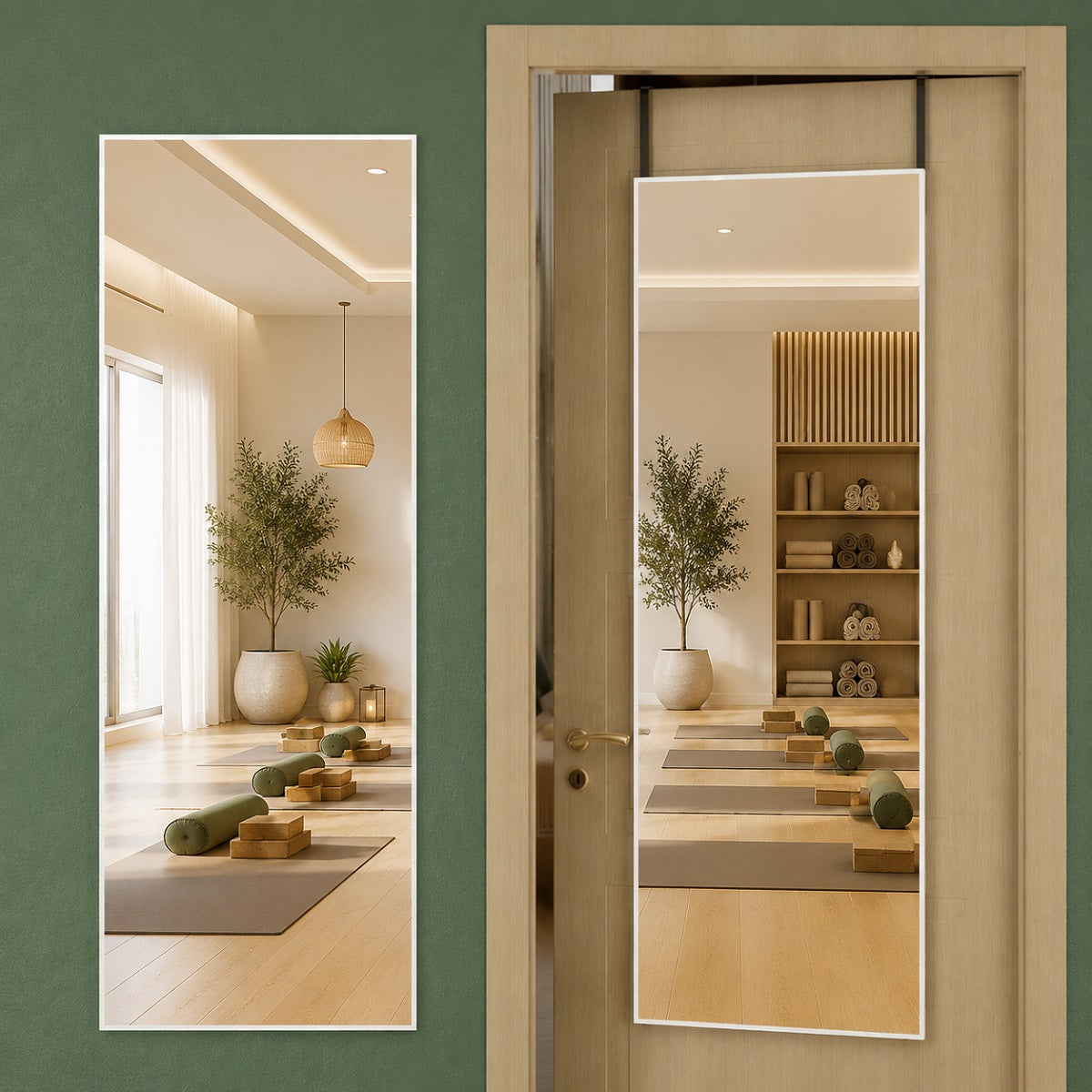
The fixing method must suit both the mirror’s weight and the wall construction. Don’t assume that hardware suitable for one surface will work on every wall, or that a mirror designed to stand can also be hung.
For a heavy or oversized mirror, have a qualified installer assess the setup.
If you’re considering a Hasipu mirror, check the individual model’s dimensions and installation instructions before planning the room around it.

Mirror Placement Ideas for Small Yoga Rooms
A small room needs a usable layout more than it needs a large mirror. Work with the floor space you have, then choose a reflection that supports it.
A Bedroom Practice Corner
Position the mirror toward an open section of floor where your mat fits comfortably.
Avoid squeezing the mat between the bed and mirror simply because the arrangement looks balanced. If reaching to either side brings you close to furniture, change the mat’s direction or use another area.
A wall-mounted mirror can preserve floor space when the model is designed for mounting and the wall supports the installation.
A Spare Room That Hosts Guests
Plan for the room with the guest bed in use, not just when everything is folded away.
Choose a mirror position that remains practical in both layouts. Keep movable items, such as a chair or luggage rack, easy to relocate without blocking a doorway.
A permanently installed mirror on a clear wall is easier to manage than a setup that requires moving a large mirror whenever guests arrive.
A Long, Narrow Room
Compare the end wall with the longer side wall.
The end wall may suit the mat’s natural direction but offer limited space for a wide mirror. The side wall may provide more room for the mirror while requiring you to turn the mat to face it.
Test both arrangements using your usual movements. Choose the one with comfortable clearance rather than forcing the mat and mirror to line up symmetrically.
A Room With Open Shelves or a Desk
Look at what appears behind you in the reflection.
An open closet, crowded desk, or pile of laundry can become more noticeable when reflected. A small change in the mirror’s location may give you a less cluttered view.
If storage is the problem, move loose items into existing drawers or cabinets before adding more furniture. Keep the open floor area available for practice.
Final Thoughts
Choose the mirror’s location from where you’ll practice, rather than from the doorway. A useful view, comfortable light, and clear floor space matter more than perfect symmetry.
When selecting a Hasipu mirror for your yoga room, check the usable glass dimensions and mounting requirements before choosing the frame and finish. The right mirror should fit naturally into the space you already need to move.
Frequently Asked Questions
1. Do You Need a Mirror in a Home Yoga Room?
No. A mirror is optional. It can provide occasional visual feedback and serve a decorative purpose, but you can arrange a comfortable practice space without one.
2. Is One Full-Length Mirror Enough for Yoga?
It can be, depending on the mirror’s width, your distance from it, and what you want to see. Check the reflection from the actual mat position. Seeing your full height doesn’t necessarily mean your extended arms will fit within the view.
3. Should a Yoga Room Mirror Face a Window?
It can if the reflected light is comfortable. Check at your usual practice time and from both standing and seated positions. If the reflection is too bright, consider an adjoining wall or adjust the window covering.
4. Can You Use a Leaning Mirror in a Yoga Room?
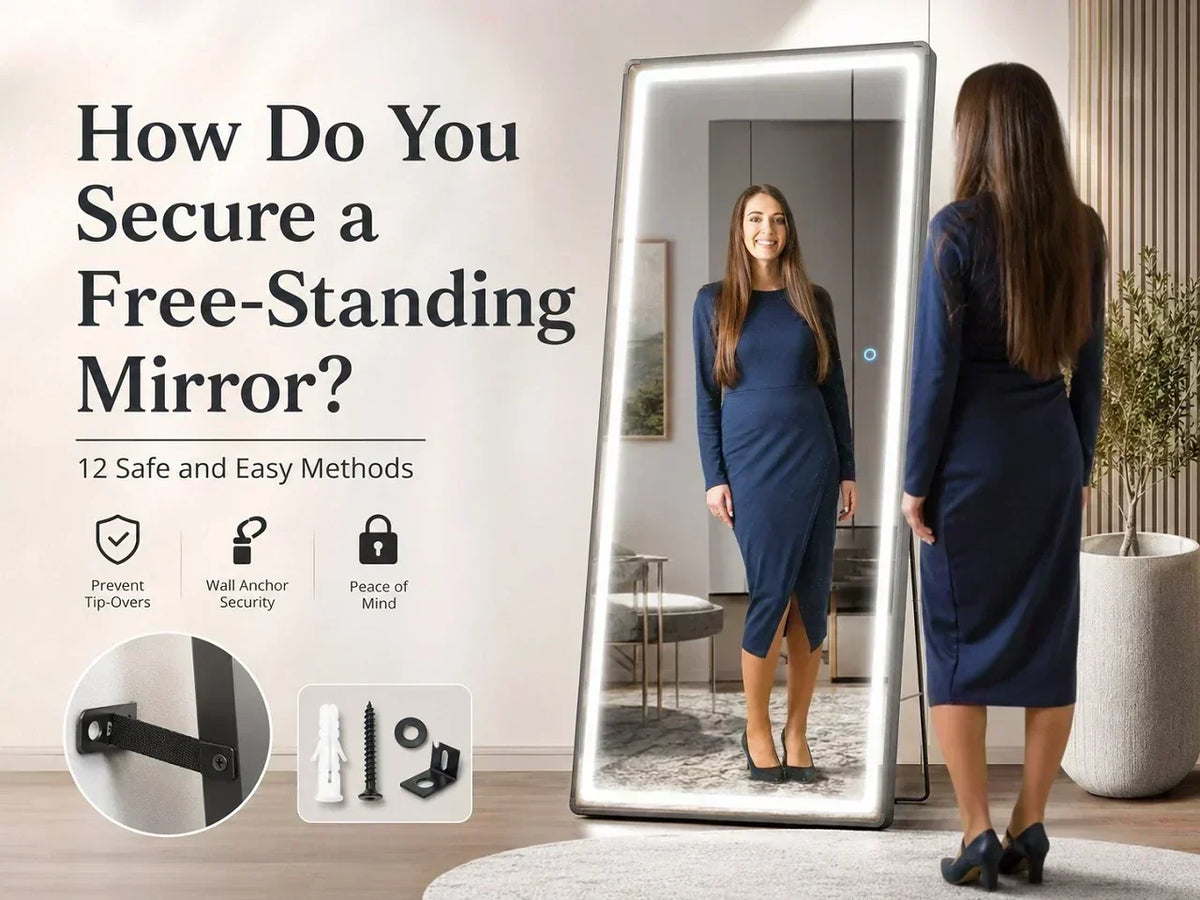
Use it only in a configuration permitted by the manufacturer, with any required restraints installed. Keep the mirror and its supports outside your movement area. If the setup leaves too little space, choose a different position or mirror type.
5. Do You Need a Floor-to-Ceiling Mirror?
Not necessarily. A smaller mirror may provide the reflection you need when positioned correctly. Confirm the view from your mat before committing to a larger installation.