Table of Contents
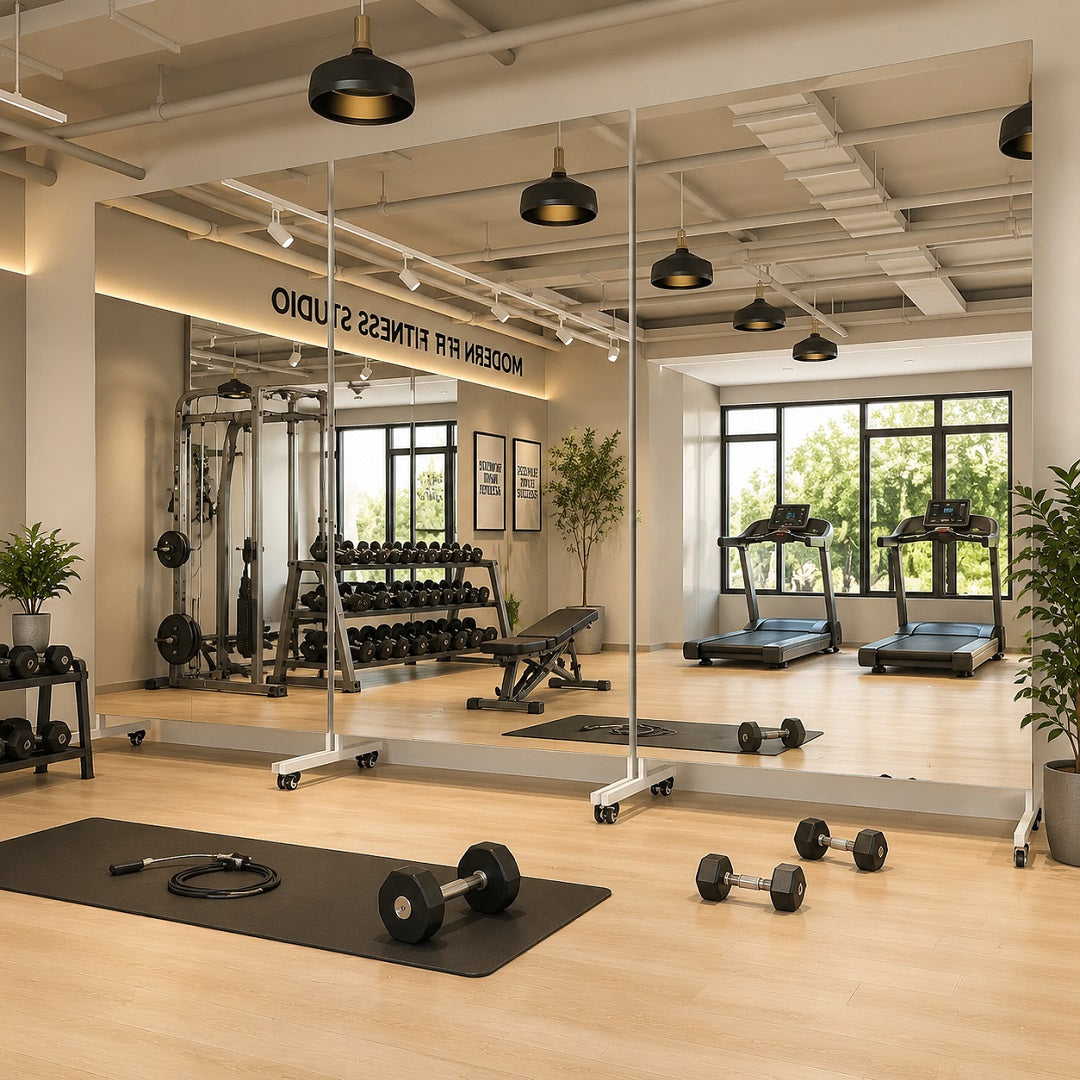
The best place to put a large mirror is where it gives you a useful view, reflects available light, and leaves room to move comfortably. Good starting points include above an entryway console, across from a living room window, over a dining room sideboard, along a hallway wall, above a bathroom vanity, or near a bedroom closet.
The right wall depends on what you need the mirror to do. A full outfit check calls for a different setup than a decorative mirror above a fireplace. And that empty wall may look perfect until you realize the mirror will reflect a pile of shoes.
Before choosing a spot, look across the room. Whatever is there will become part of the reflected view.
Where to Place a Large Mirror in Each Room
| Room | A good place to start | What to check |
|---|---|---|
| Entryway | Above a console or on a wall beside the door | Door swing, walking space, and a usable reflection |
| Living room | Across from or beside a window; above a sofa or mantel | Reflected daylight, glare, and furniture proportions |
| Dining room | Above a sideboard or on a wall beside the table | The reflection from a seated position |
| Hallway | On a long side wall | Frame depth, door clearance, and the view from both ends |
| Bathroom | Above the vanity, aligned with the sink or sinks | User height, lighting, faucet clearance, and bathroom suitability |
| Bedroom | Near the closet or beside a dresser | Standing room, drawer clearance, and the view from bed |
Entryway: Put a Large Mirror Where You Can Actually Use It
An entryway mirror earns its space when you can check your hair, straighten a jacket, and grab your keys without stepping around furniture.
Above a console table is a practical starting point. The table gives keys and mail a home, while the mirror makes use of the wall above it. Center the mirror over the console so the two pieces feel connected, especially when the furniture sits off-center on a larger wall.
For a balanced arrangement, try a mirror around two-thirds to three-quarters of the console's width. A 48-inch console, for example, could pair with a mirror about 32 to 36 inches wide. Treat that as a styling starting point and adjust for the frame and surrounding space.
Leaving roughly 6 to 8 inches between the tabletop and the mirror's lower edge can also work well. Check your reflection before committing to that gap; a tall console or a shorter household member may call for a different height.

When a Full-Length Entryway Mirror Makes More Sense
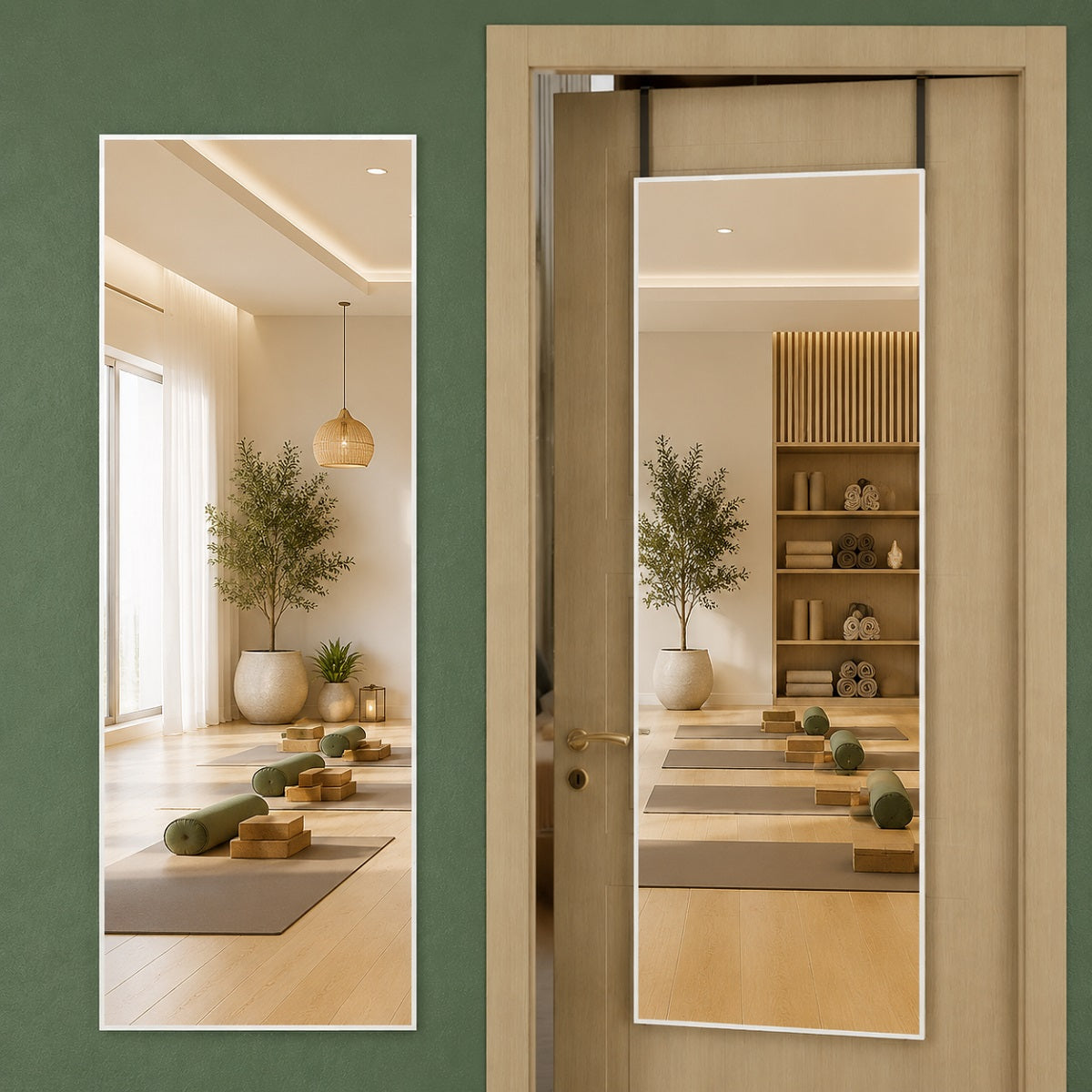
A tall mirror beside the door is more useful for checking an entire outfit. Choose a wall where the open door cannot hit the frame and bags will not brush against the glass.
In a tight entrance, a mounted mirror keeps the floor clear. When browsing Hasipu wall mirrors, compare the outside dimensions and approved mounting orientation with the space beside your door.
Living Room: Let the Reflection Help You Choose the Wall
A large mirror in the living room can bring a window view into another part of the room. Across from a window is worth considering when the view includes trees, a porch, or something else you enjoy seeing.
It is not automatically the best wall, though. Direct sun may create an uncomfortable bright reflection at certain times of day. A wall perpendicular to the window may offer a gentler view of the light and surrounding room.
Look from the sofa and your favorite chair. Those are the views you will live with.
Above the Sofa or Fireplace
Above a sofa, a wide mirror can suit the furniture's horizontal shape. A round or arched mirror can work too, particularly in a room with lots of straight edges.
Give the frame enough clearance that someone sitting back will not touch it. The mirror should also be mounted with hardware suited to its weight and your wall.
A mirror above a fireplace can draw attention to the mantel, but high placement often captures more ceiling than expected. Check the reflection from across the room, and follow the fireplace and mirror manufacturers' guidance on heat exposure and clearance.
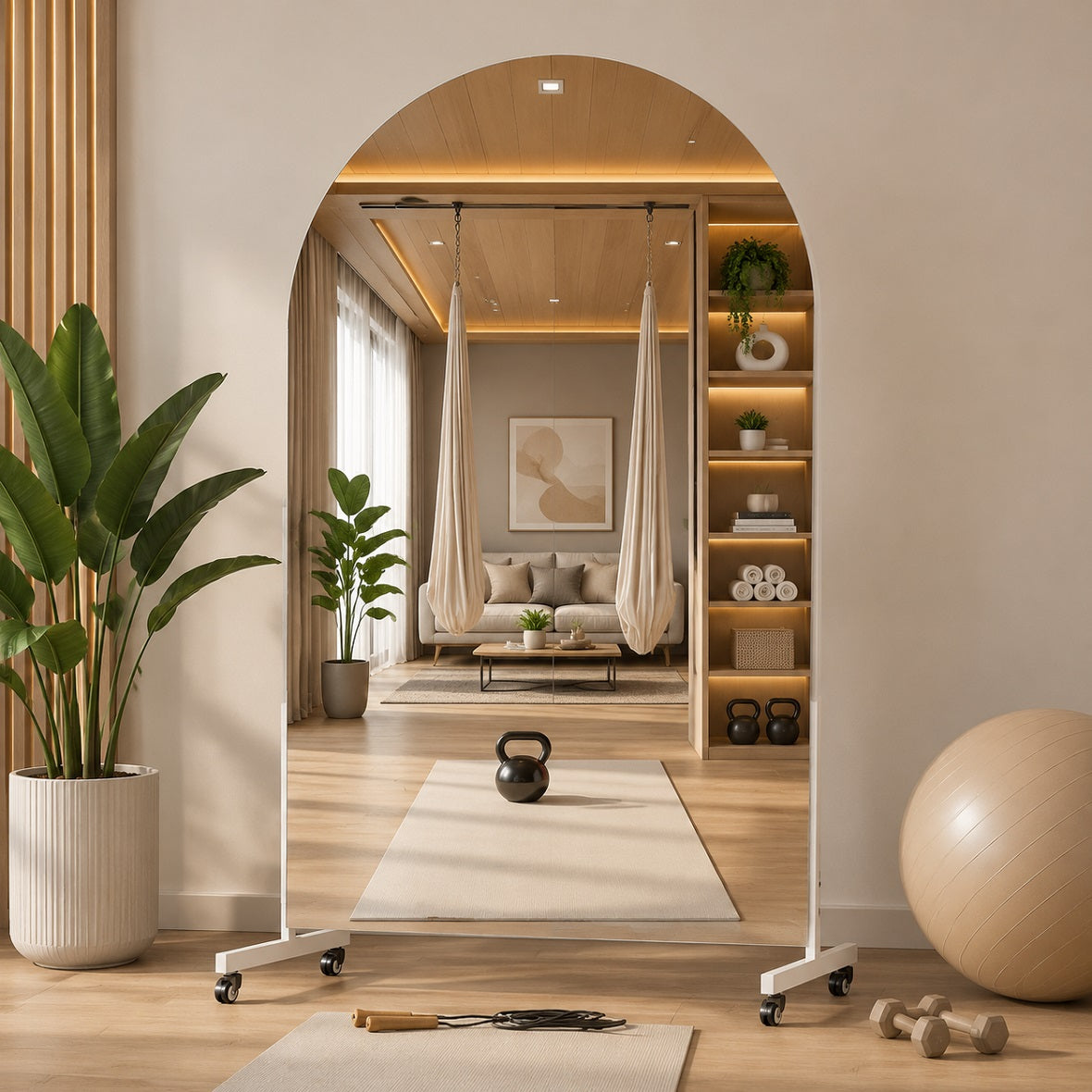
A Floor Mirror in an Open Corner
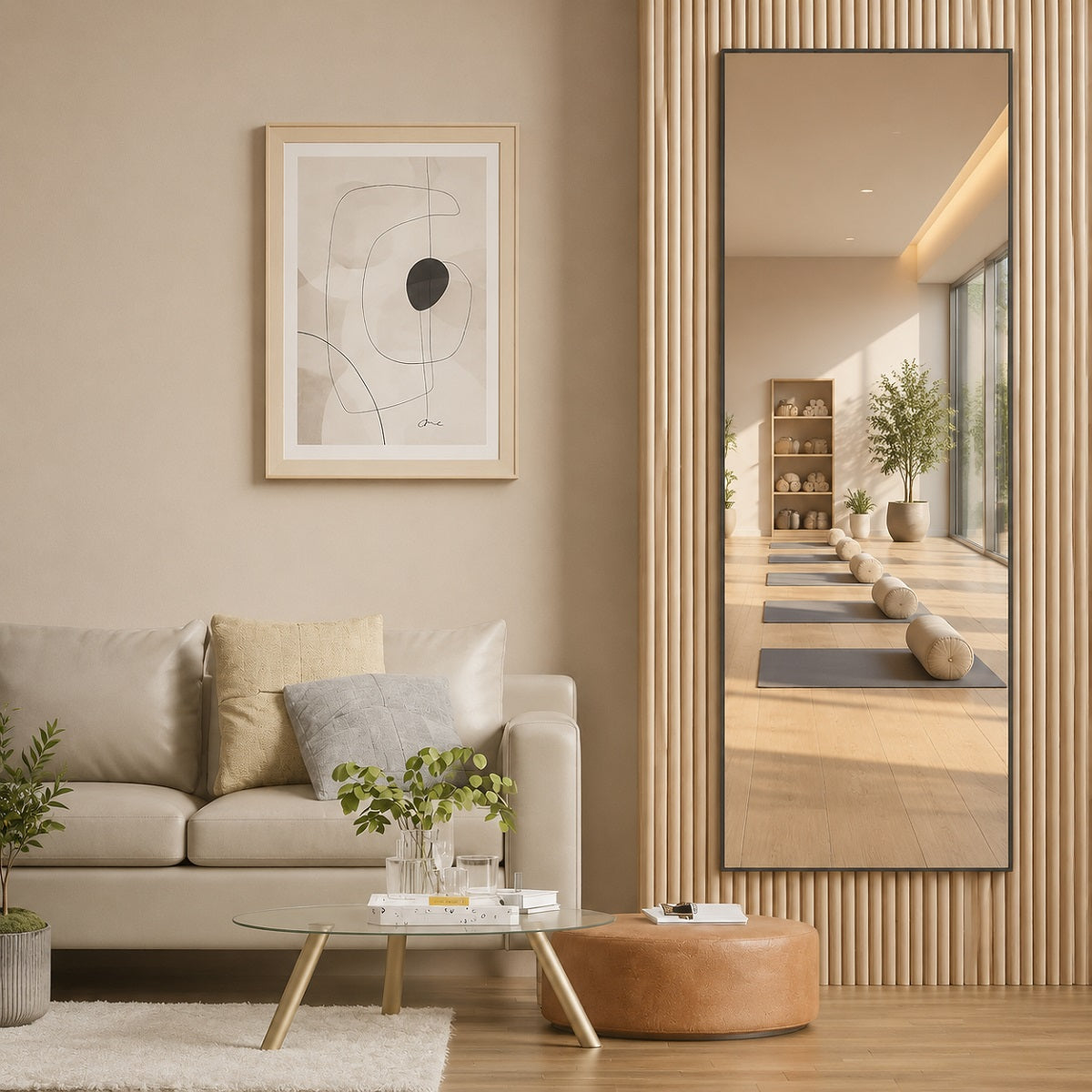
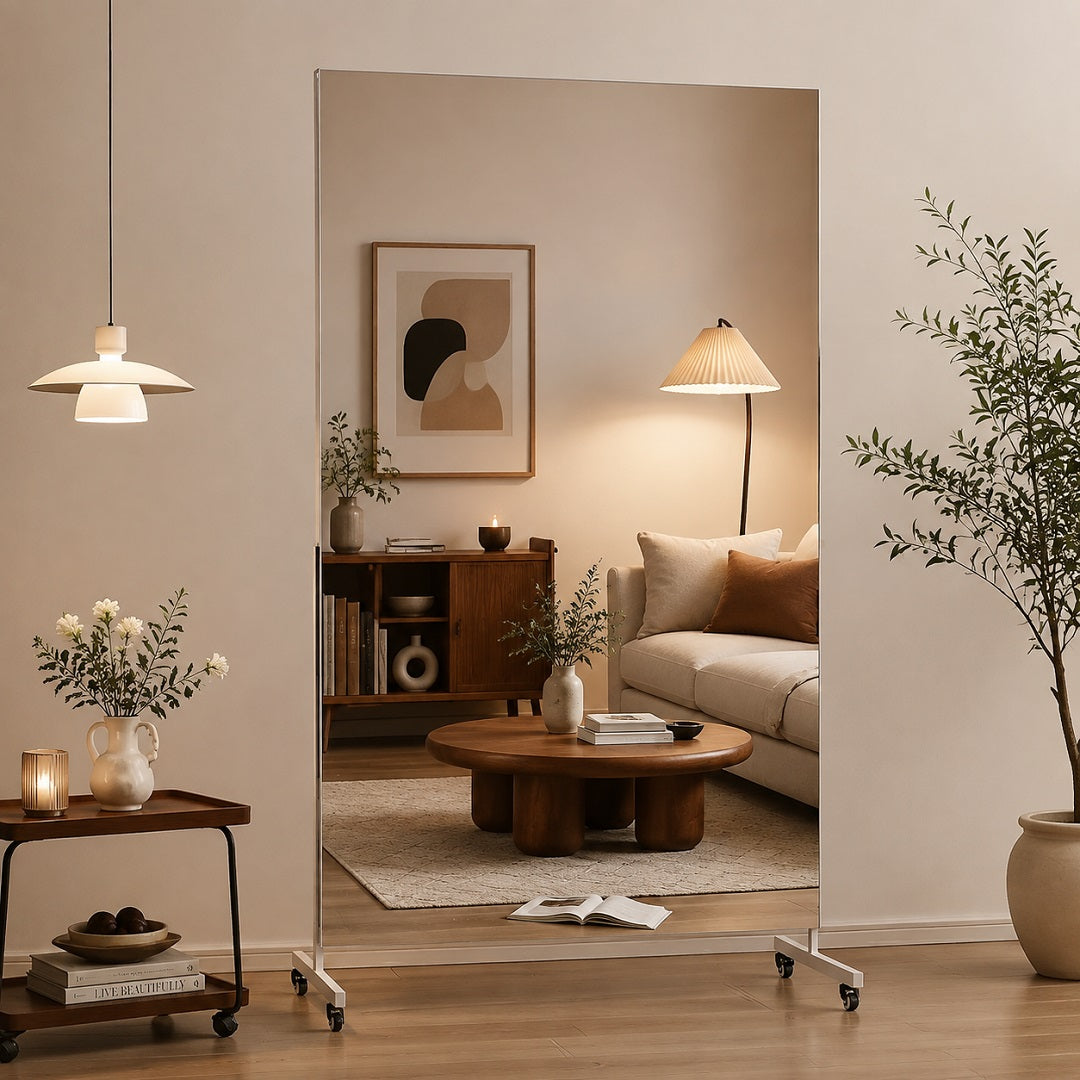
A tall floor mirror can fill an unused corner beside a seating area. Leave space for curtains, a reading chair, and the mirror's base or stand.
A slight change in position may replace a reflection of the television with a view of the room. Use only the installation position approved for the mirror, including its required supports or restraints.
Dining Room: Consider the View From the Table
Above a sideboard or buffet is often a convenient place for a large dining room mirror. It creates a focal point away from the table and leaves space below for serving dishes.
A horizontal mirror usually sits comfortably over a long sideboard. An arched mirror introduces a taller shape, which can be useful when the room feels dominated by low furniture.
The important view is the one from your chair. A mirror that looks lovely while you are standing may reflect an exposed bulb or a busy kitchen counter once you sit down.
Check the likely reflection from several seats. A window, artwork, or a softly lit part of the room can give diners a pleasant view. A chandelier's reflection can be attractive too, provided it does not place a bright bulb directly in someone's sight line.
For a dining nook without a sideboard, use the wall beside the table. Make sure chair backs cannot strike the frame when people push away from the table.
Keep the surrounding decor simple. A broad mirror, a low bowl, and a little space on the buffet may be all the arrangement needs.
Hallway: Use the Side Wall to Create a Sense of Width
In a narrow hallway, start with a large mirror on a side wall. It can create a sense of space beyond the wall without taking up the floor area that a console or cabinet would need.
A shallow frame is useful here. A leaning mirror or a deep decorative frame may project into the route between rooms.
The wall opposite an open doorway can be a promising location, especially when that doorway leads to a brighter room. Look at the reflection with the door open and closed. The result may change quite a bit.
Is the End of the Hallway a Good Place for a Mirror?
Sometimes. A mirror at the far end can give a short hall more visual depth or create a focal point.
In an already long, narrow hallway, that extra depth may emphasize the tunnel effect. A side-wall placement may suit the proportions better.
Also consider what you see while walking toward it. Some people enjoy a full-length reflection at the end of the hall; others would rather see art. Walk through the space from both directions before deciding.
A mirror reflects the light available to it. A dim hallway may still need a ceiling light or wall fixture to feel comfortable after dark.

Bathroom: Position the Mirror Around the Vanity and Its Users
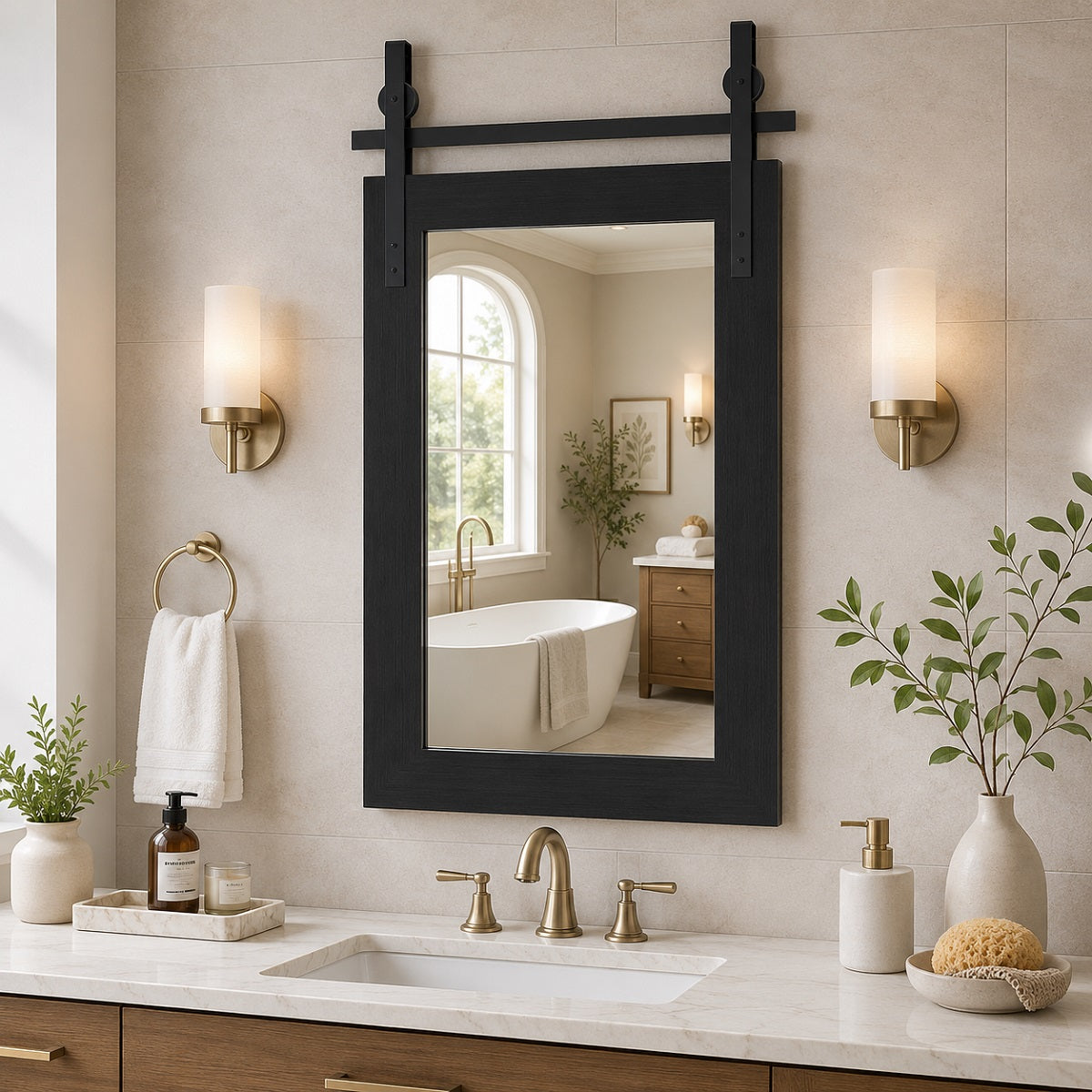
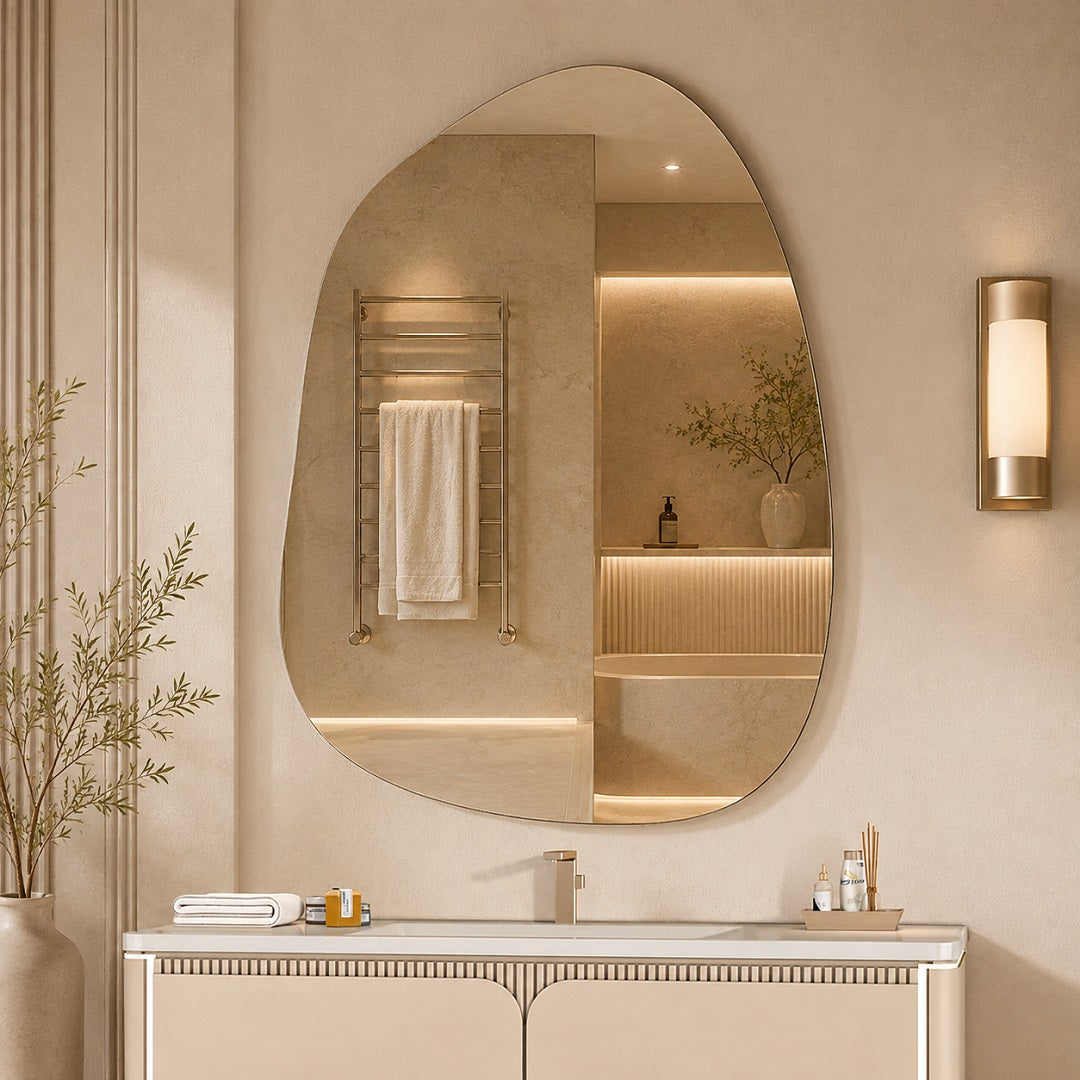
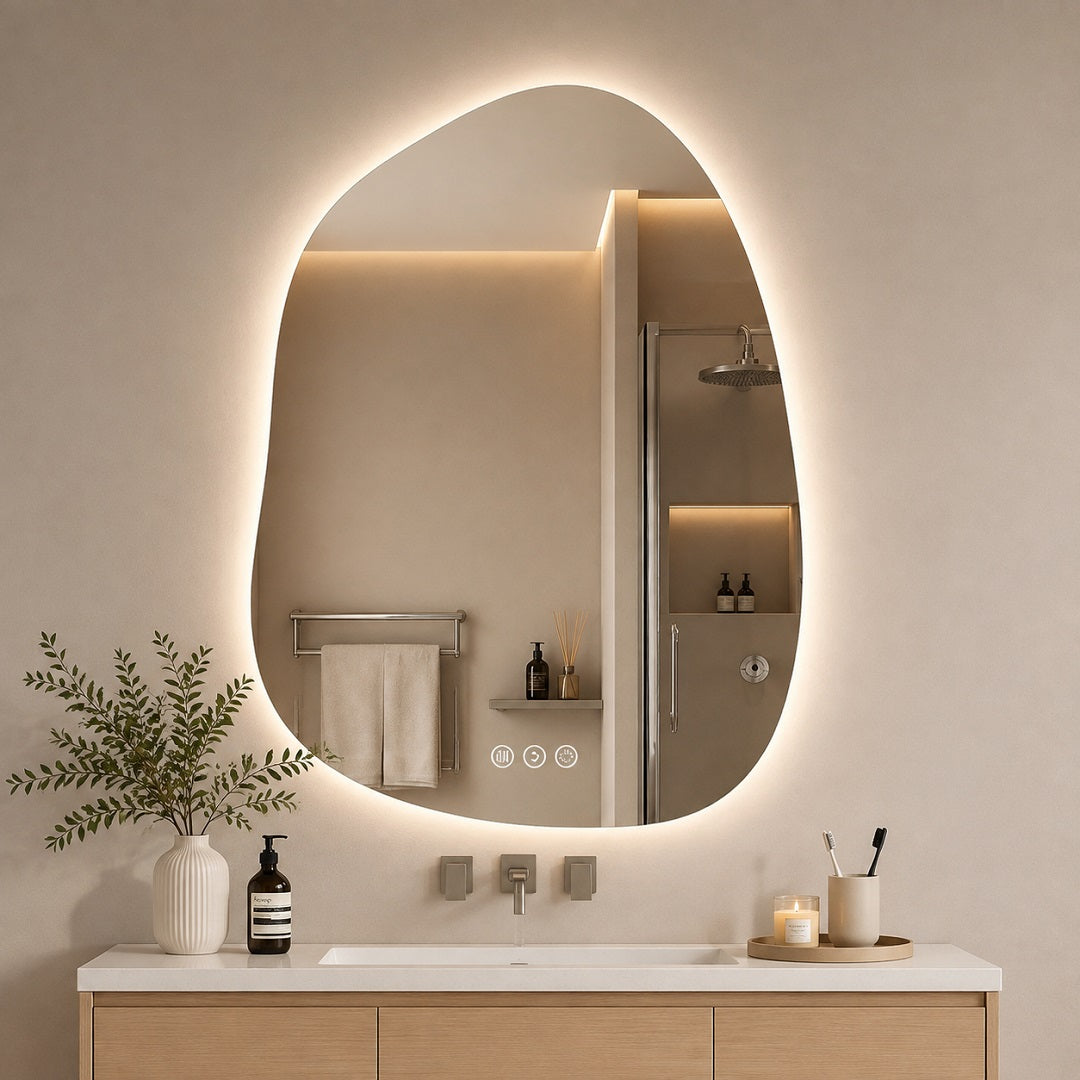
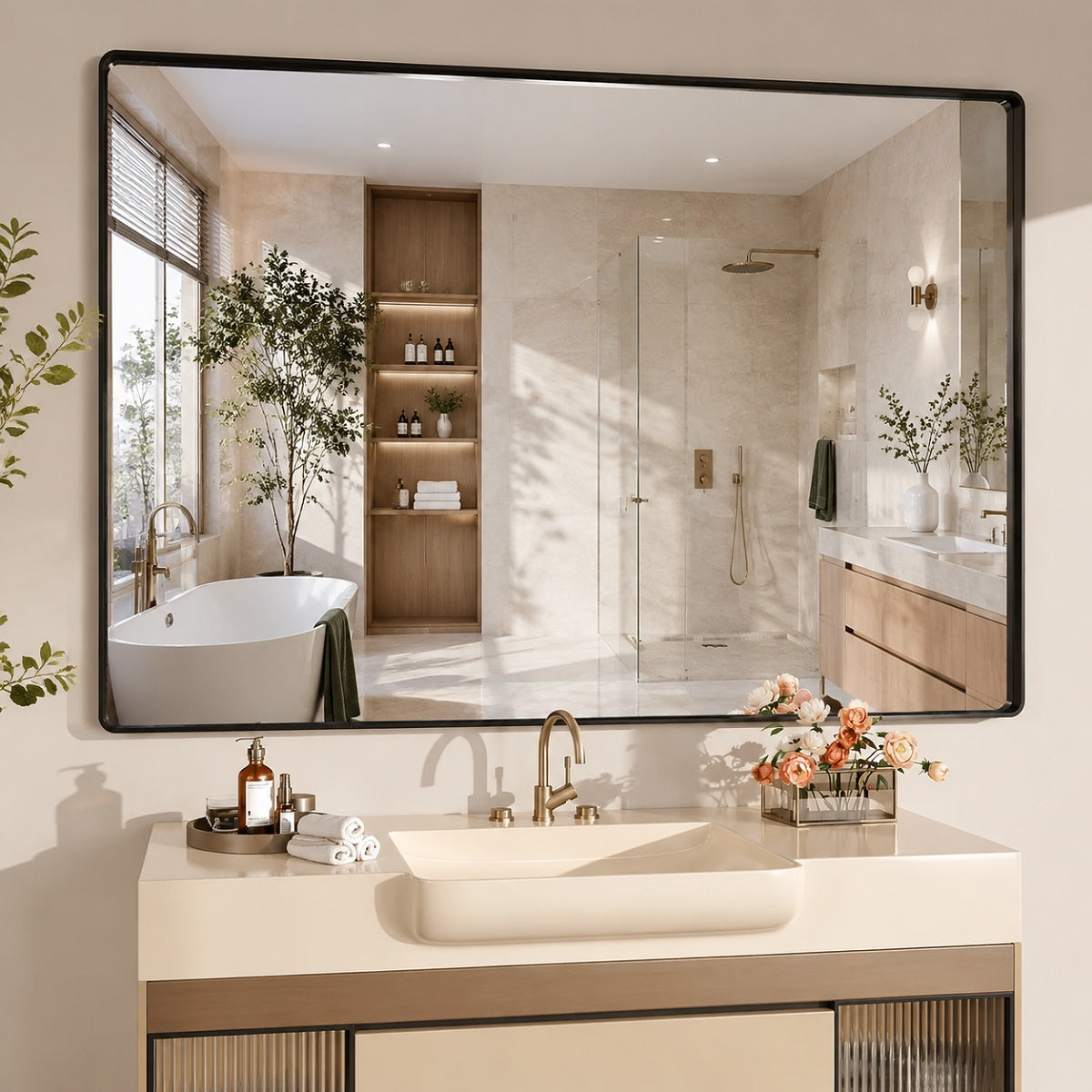
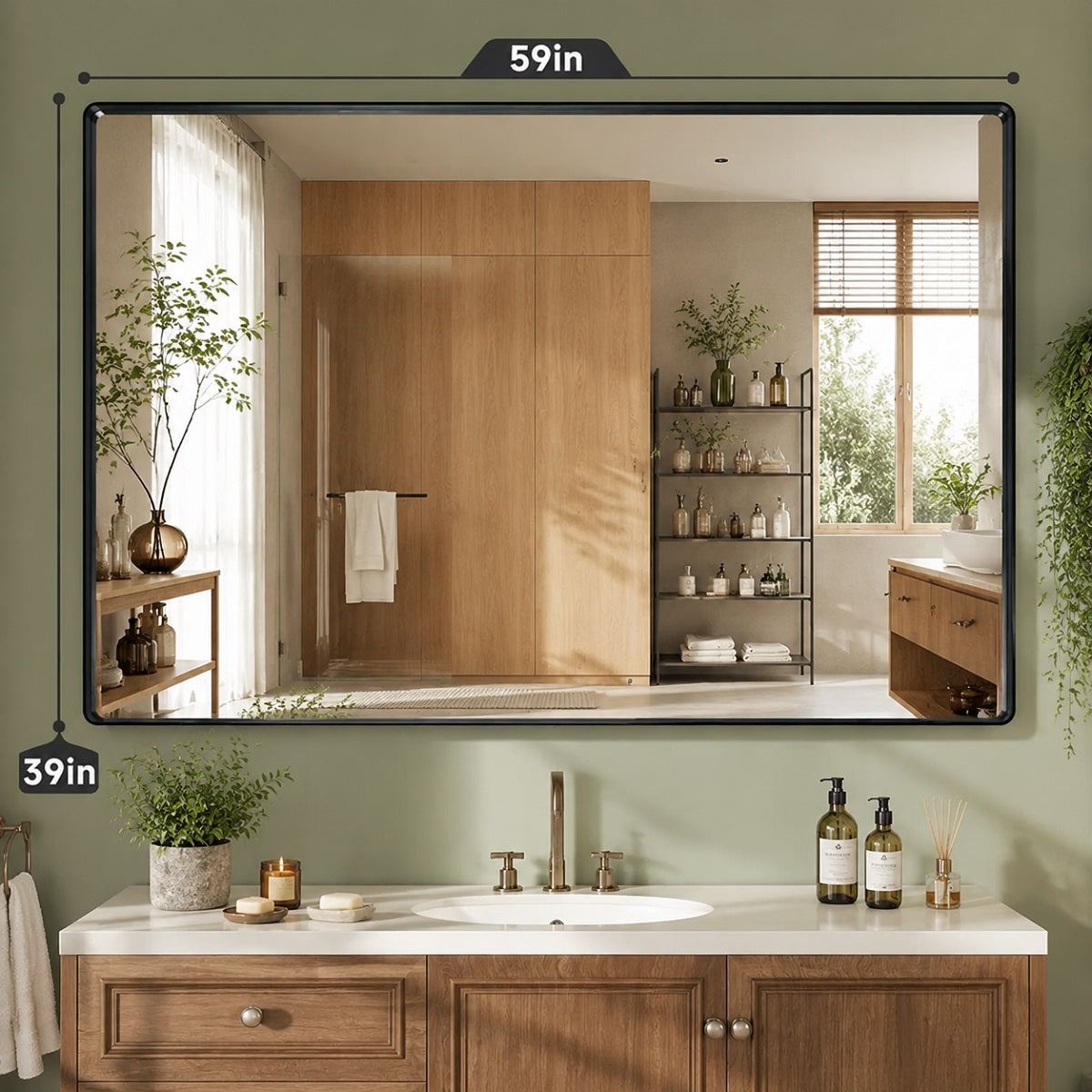
The most useful place for a large bathroom mirror is above the vanity, where it supports brushing, shaving, skin care, and getting ready.
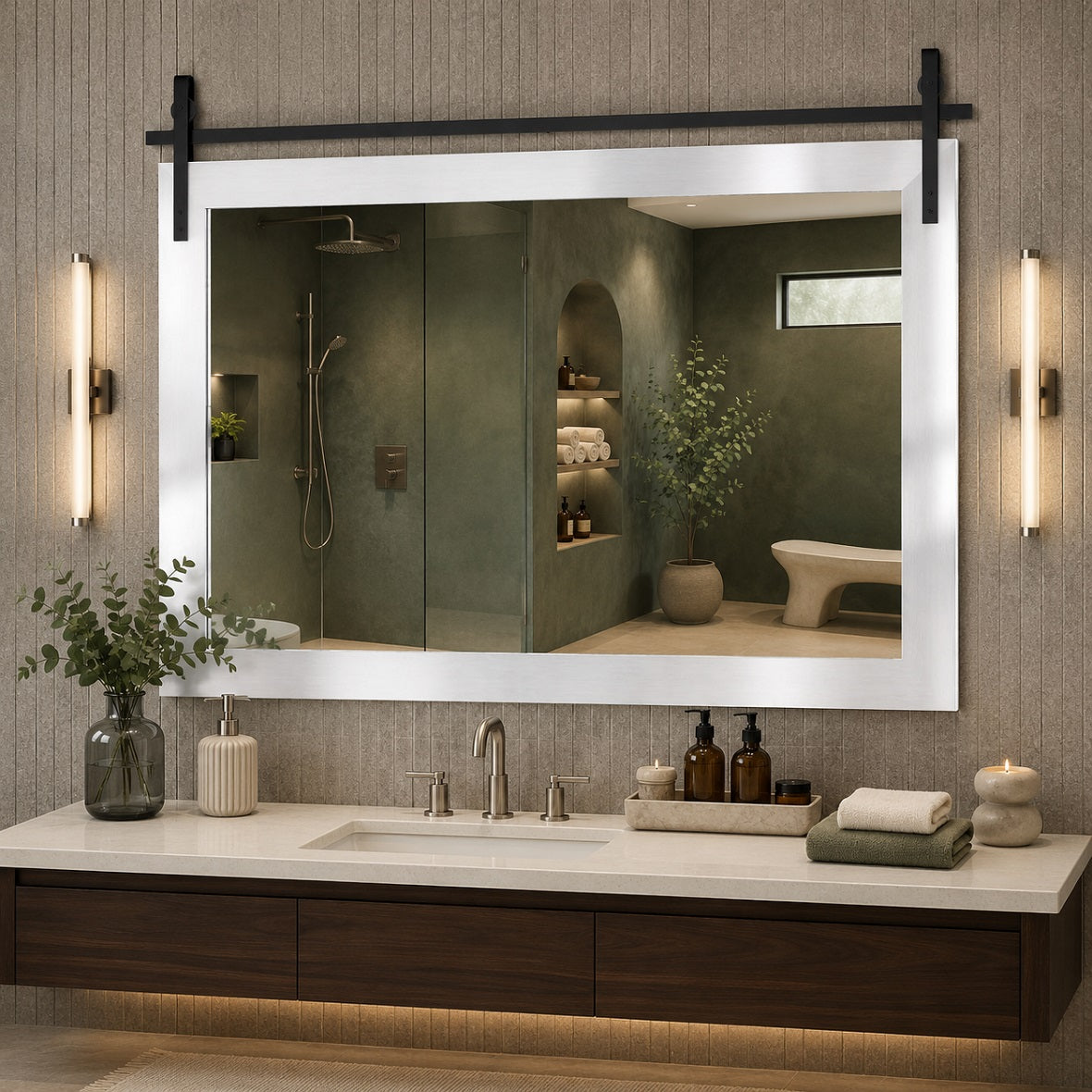
Start with the sink layout. Over a single sink, center the mirror on the sink unless an intentional, asymmetrical vanity arrangement calls for something different. For a double vanity, one wide mirror can serve both sinks; two separate mirrors create distinct grooming areas.
A framed mirror slightly narrower than the vanity often leaves a comfortable border on each side. A wider installation can work too, but it needs to account for adjacent walls, outlets, lighting, and the mounting system.
Set the Height for the People Using It
Check that the mirror gives the household's users a clear view of their faces. Leave room above the faucet and backsplash, then consider the light fixture or sconces around it.
The exact position depends on the faucet height, mirror dimensions, and users. A fixed distance from the floor will not suit every bathroom.
Lighting deserves equal attention. Look for a setup that illuminates your face comfortably without a harsh reflection in your eyes. A decorative glow behind the mirror may need additional task lighting for grooming.
When comparing Hasipu bathroom mirrors, check the specific model's dimensions, bathroom suitability, mounting directions, and electrical requirements. Lighting and defogging features vary by model.
A large mirror also needs room around any nearby cabinet doors. Open them fully while planning the layout so handles and corners stay clear of the glass.
Bedroom: Keep a Full-Length Mirror Near Your Clothes
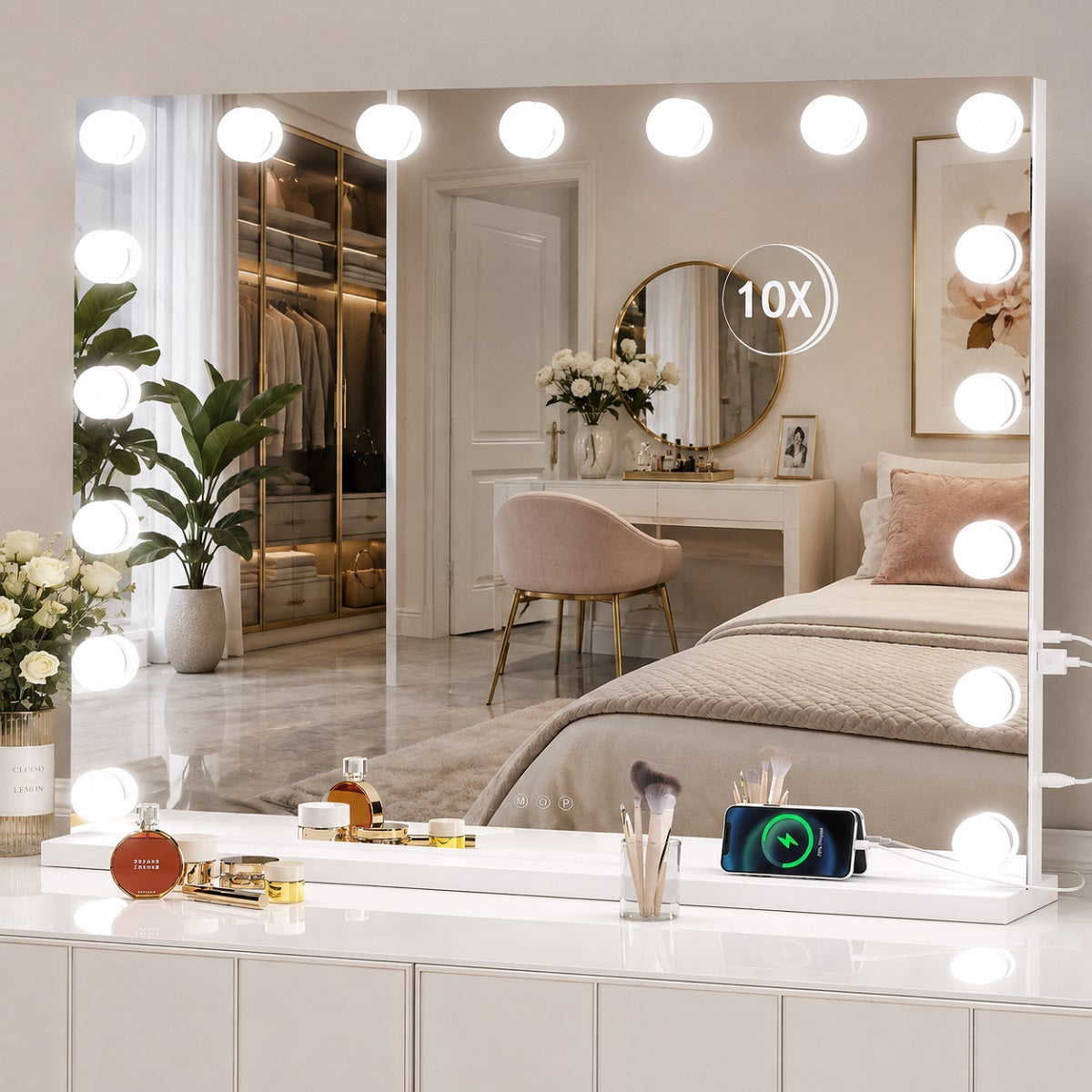
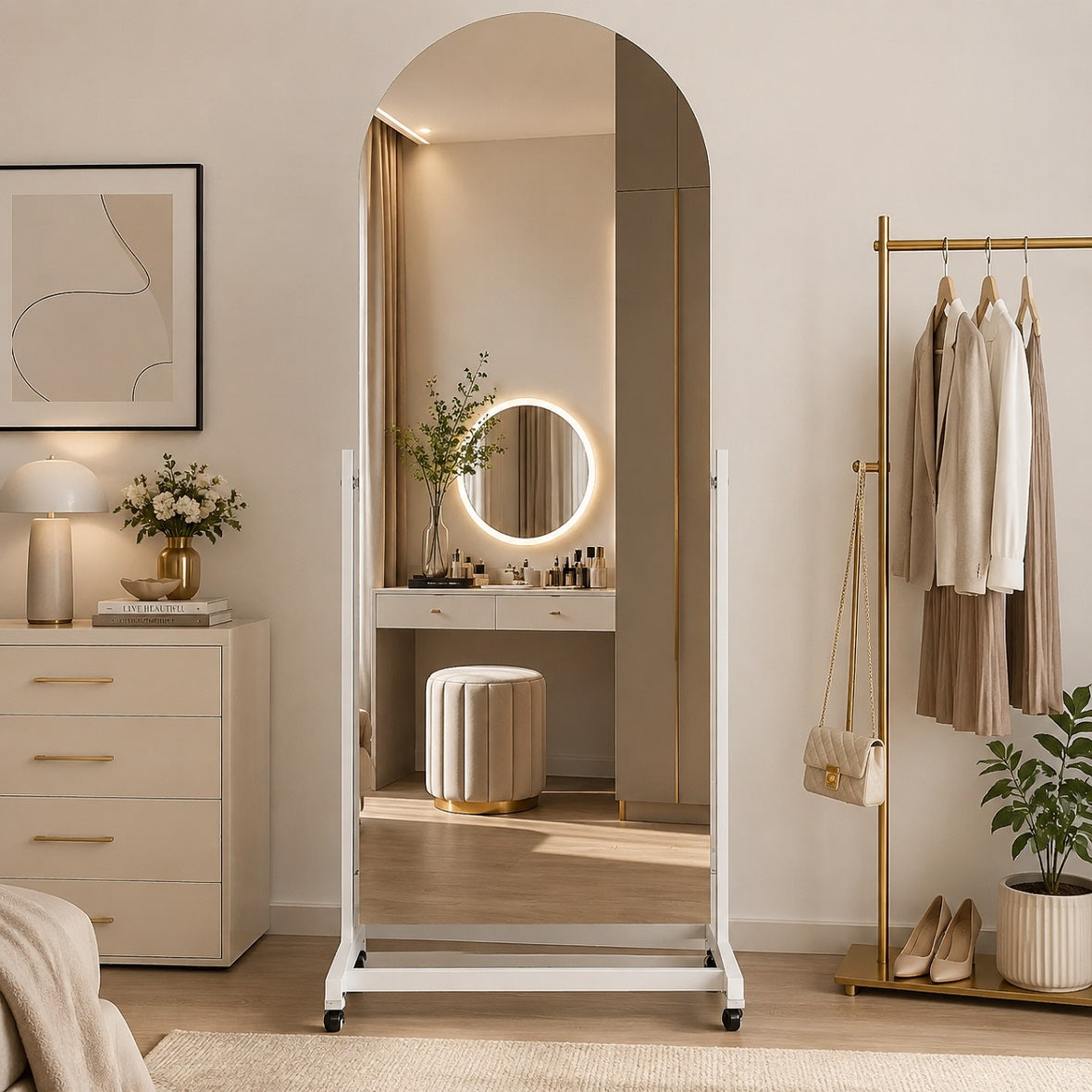
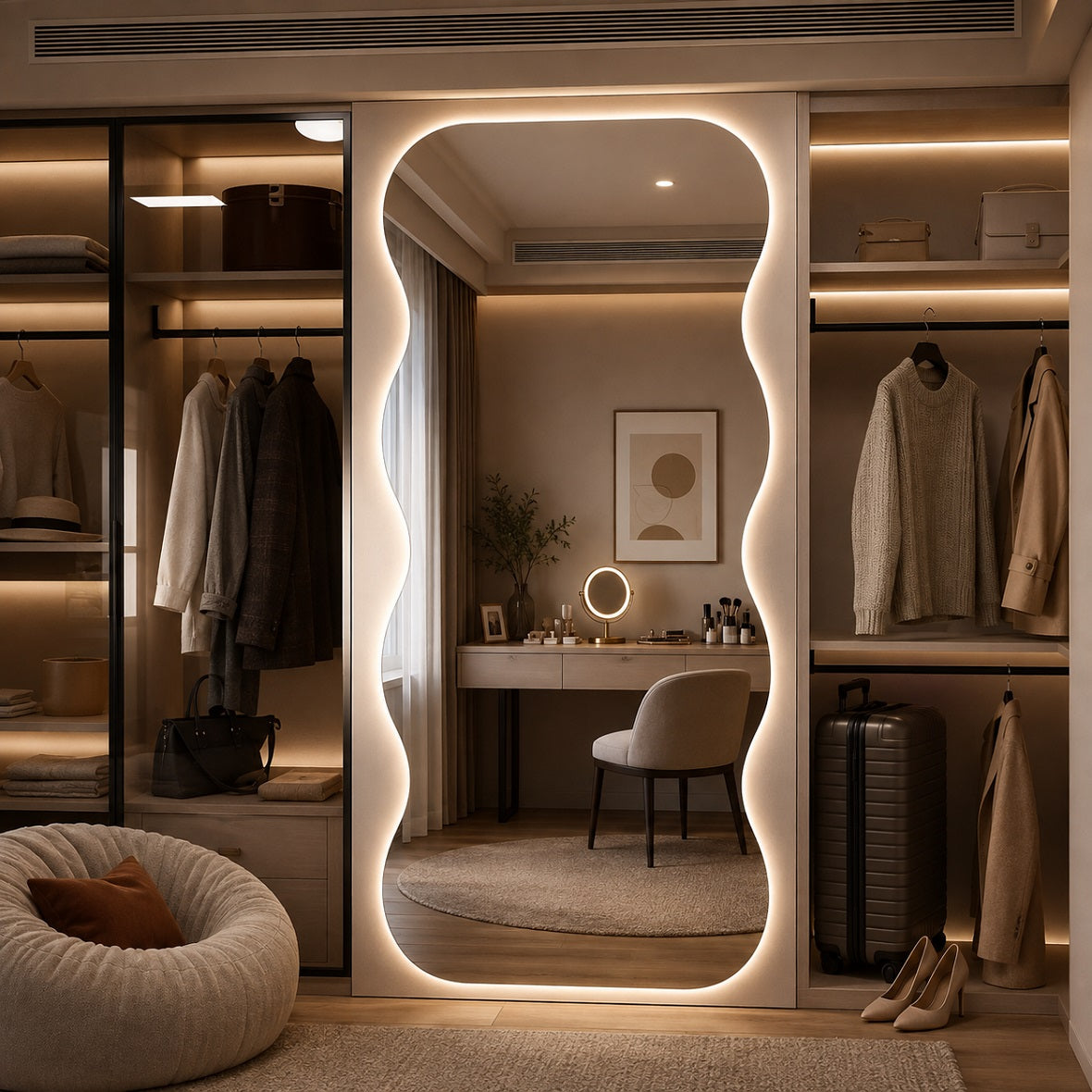
For everyday use, the best place for a large mirror in a bedroom is often near the closet or dressing area. You can choose an outfit, check it, and make changes without crossing the room.
A wall beside the dresser works well when there is space to stand back. Keep the area in front of the mirror clear of the bed frame, a bench, or a laundry hamper. Open dresser drawers and closet doors as part of the layout check.
There is no single standing distance that suits every mirror. The usable view depends on its dimensions, mounting height, angle, and your height.
Hasipu full-length mirrors provide a starting point for comparing sizes. Measure the intended wall and floor space, including room for a stand when the model uses one.
Should a Large Mirror Face the Bed?
This is largely a comfort preference. A reflection of the bed may look balanced during the day, but reflected hallway light or movement might bother you at night.
Check the view while lying down with your usual evening lights on. A wall beside the bed or closer to the closet may feel calmer.
For getting dressed, look for light that falls across your face and clothes. Standing directly in front of a bright window with your back to it can leave your reflection looking shadowy.
Should You Hang a Large Mirror or Lean It?
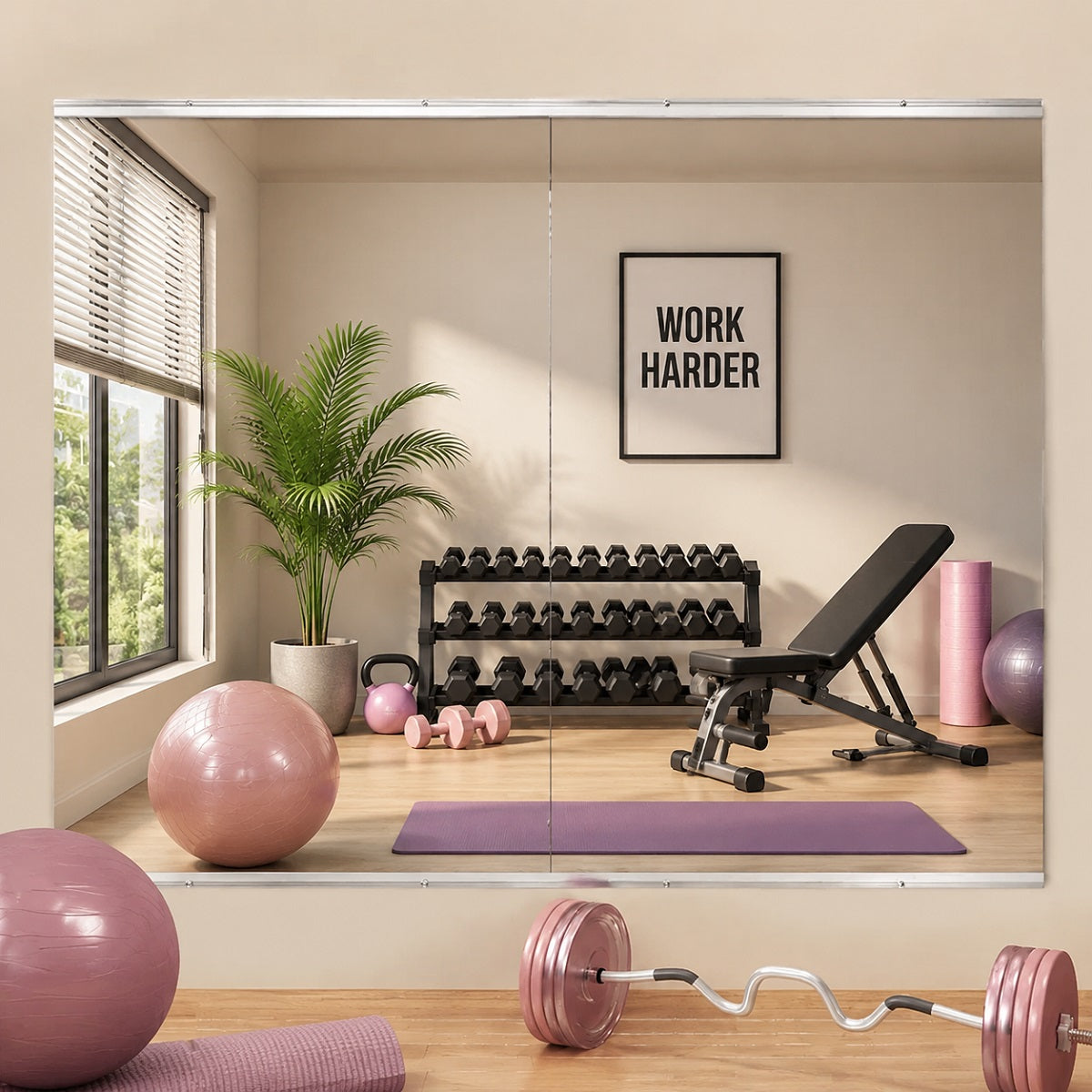
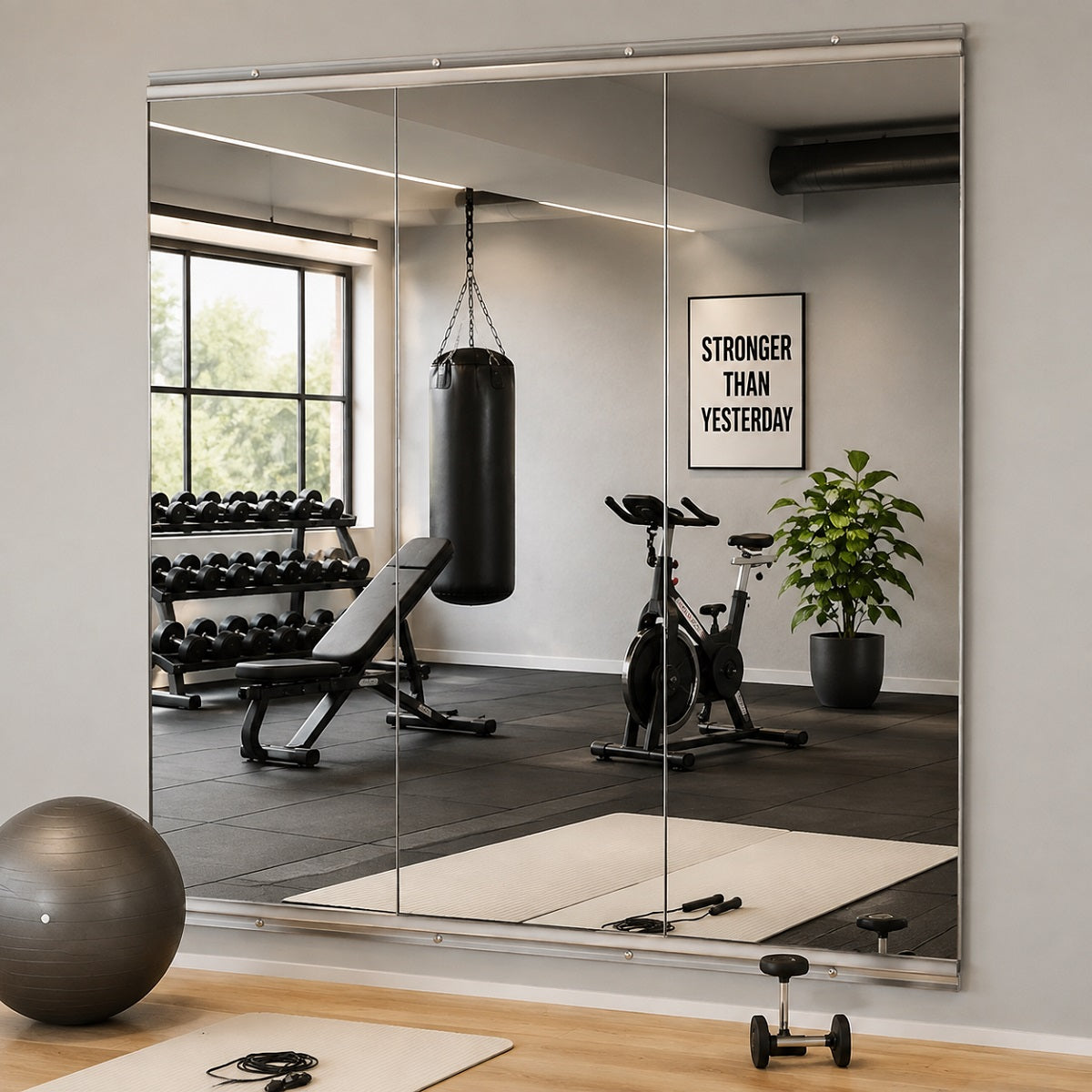
Wall mounting often suits busy entrances, hallways, and bathrooms because it preserves floor space and keeps the mirror in a fixed position.
A floor mirror can suit a bedroom or a spacious living room corner when its intended installation method allows it.
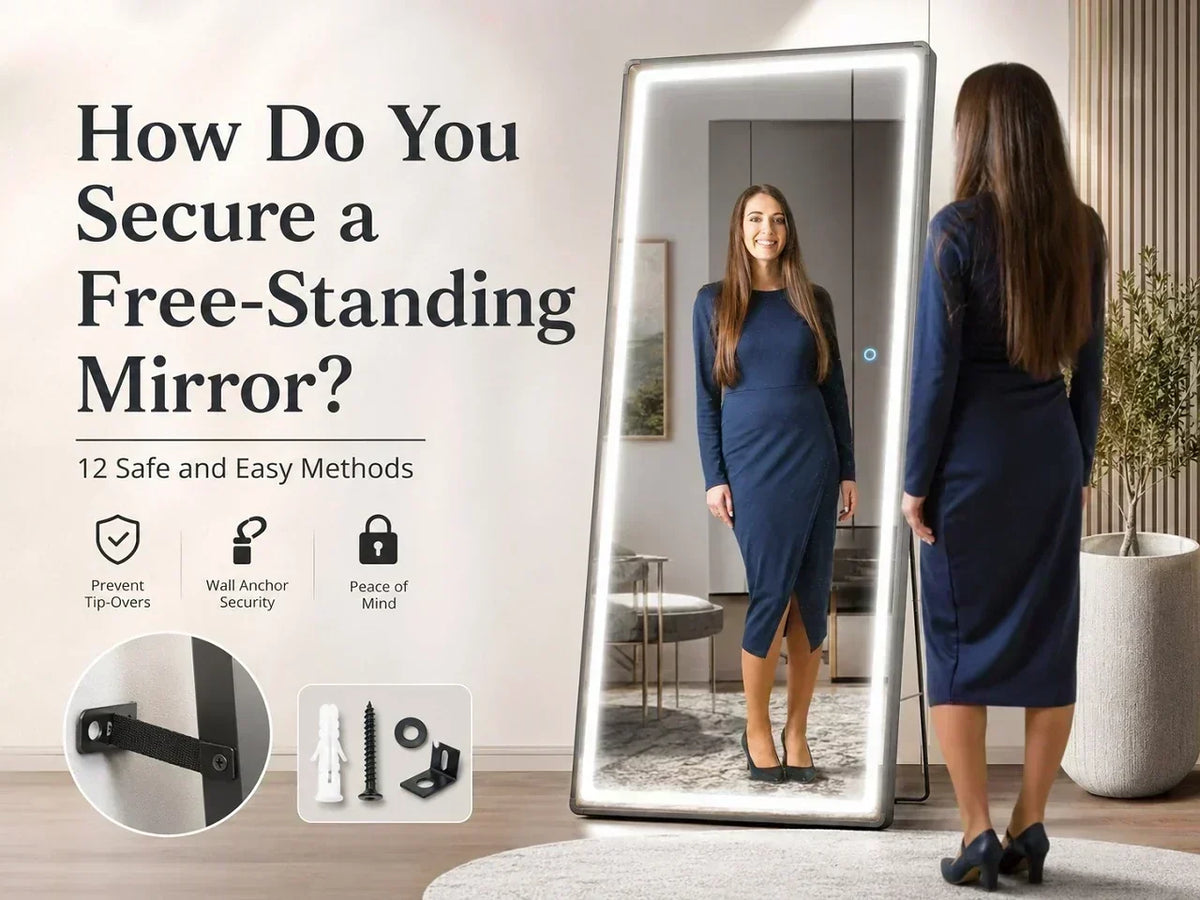
Check the manufacturer's instructions before choosing. A mirror designed only for wall mounting should not be assumed suitable for leaning. Follow the specified mounting or restraint method, use hardware appropriate for the wall and mirror's weight, and get installation help when needed.
The same room can accommodate either style. Traffic, available space, and the product's installation requirements should guide the decision.

Choose the Spot That Fits Your Daily Routine
A large mirror works best when its placement fits the way you use the room. Near an entryway door or bedroom closet, it makes getting ready easier. In a living room, dining room, or hallway, it can add a sense of space and reflect a view you enjoy. Above a bathroom vanity, a useful viewing height and comfortable lighting come first.
Before choosing a mirror, check what it will reflect, how its size relates to nearby furniture, and whether doors, drawers, and walkways stay clear. These details help you narrow down the right dimensions and installation style.
Once you have a spot in mind, choose a Hasipu mirror with a shape and finish that feel at home alongside your furniture. The result should look natural in the room and be useful every day.
Frequently Asked Questions
1. Should a large mirror go opposite a window?
It can be a good position for reflecting daylight and an outdoor view. Check for glare from the places where people sit or stand. A neighboring wall may give you a more comfortable reflection.
2. Can you put a large mirror in a small room?
Yes. Match it to the wall, furniture, and available clearance. A broad, simple mirror can work in a compact room, especially when it reflects a relatively open part of the space.
3. Is it okay to put a mirror opposite the front door?
Yes, from a practical decorating standpoint. Consider privacy, the view into the home, and whether the reflection feels welcoming. A side wall may be more convenient for a quick appearance check before leaving.
4. Can a large mirror be too high?
Yes. It may reflect mostly ceiling or cut off the view you need. Check the height from the position in which you will use it: standing at the vanity, getting dressed, or sitting across the room.