
Table of Contents
A mirror above a dresser usually looks best when it is 60% to 75% as wide as the dresser. For a 60-inch dresser, that means choosing a mirror width between 36 and 45 inches.
When you want one easy number, use two-thirds of the dresser width. This creates enough presence on the wall without making the mirror look wider or heavier than the furniture supporting it.
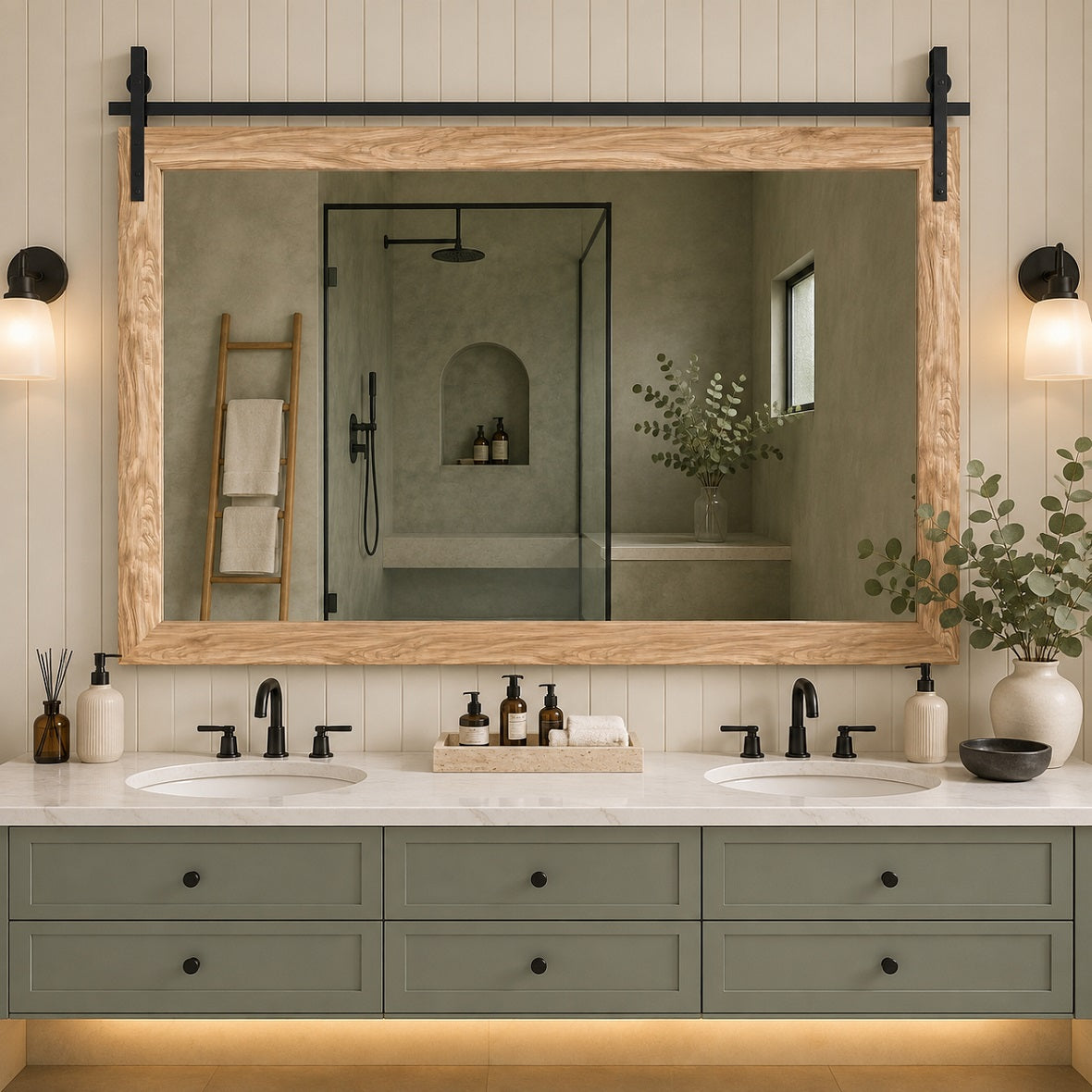
The shape and frame still matter. A slim, frameless mirror may look right at the larger end of the range. A mirror with a thick wood frame can feel substantial even when its dimensions are smaller.
Use This Simple Mirror-Size Formula
Measure the dresser from one outside edge to the other. Do not measure only the drawers or usable surface.
Multiply that width by 0.6 and 0.75:
Dresser width × 0.6 = minimum suggested mirror width
Dresser width × 0.75 = maximum suggested mirror width
For a 54-inch dresser:
- 54 × 0.6 = 32.4 inches
- 54 × 0.75 = 40.5 inches
A mirror about 32 to 40 inches wide should fit comfortably. You do not need to match the calculation exactly. Common sizes such as 34, 36, or 40 inches could all work.
Mirror Size Chart for Common Dressers
| Dresser width | Recommended mirror width | Good starting size |
|---|---|---|
| 30 inches | 18–22 inches | 20 inches |
| 36 inches | 22–27 inches | 24 inches |
| 42 inches | 25–31 inches | 28 inches |
| 48 inches | 29–36 inches | 32 inches |
| 54 inches | 32–40 inches | 36 inches |
| 60 inches | 36–45 inches | 40 inches |
| 66 inches | 40–49 inches | 44 inches |
| 72 inches | 43–54 inches | 48 inches |
Use the mirror’s complete outside width, including the frame. For a round mirror, use its diameter.

Why a Mirror Should Usually Be Narrower Than the Dresser
The dresser acts as the visual base of the arrangement. When the mirror is slightly narrower, some open space remains on each side. That space makes the two pieces feel balanced rather than crowded.
A mirror that extends beyond the dresser can look top-heavy. One that matches the dresser’s full width may work in a modern room, especially when it is frameless, but it creates a stronger and more built-in appearance.
Going too small causes a different problem. A 20-inch mirror over a 72-inch dresser may look like a small accessory floating on a large blank wall.
Try to keep the mirror at least half as wide as the dresser unless you plan to balance it with a lamp, artwork, or tall decorative object.
How High Should a Mirror Hang Above a Dresser?
Start with 6 to 8 inches between the dresser top and the bottom of the mirror. This gap keeps the mirror close enough to feel connected to the furniture while leaving space for a tray, perfume bottles, or a jewelry box. Place your usual accessories on the dresser before settling on the height. A lamp can sit beside the mirror without forcing the whole piece higher.
Check the available wall space, especially when choosing a tall rectangular or arched mirror. Measure from the dresser top to the ceiling or the nearest obstruction, such as crown molding or a shelf. Subtract the gap below the mirror and leave a few inches above its frame so it does not look squeezed into place.
For example, if you have 48 inches of open wall, allowing 7 inches below and 4 inches above leaves room for a mirror up to 37 inches tall. Treat that as a maximum for this layout, not a size you have to fill.
Before drilling, mark the outside dimensions with painter’s tape. Look at the outline from the doorway and the bed, then stand where you normally get ready. The position should look balanced from across the room and let you see your face comfortably without bending or stretching.
What Size Round Mirror Goes Above a Dresser?
A round mirror can follow the same 60% to 75% guideline, using the diameter as its width.
These pairings are practical places to begin:
| Dresser width | Suggested round-mirror diameter |
|---|---|
| 36–42 inches | 24 inches |
| 42–50 inches | 28–30 inches |
| 48–60 inches | 32–36 inches |
| 60–72 inches | 36–44 inches |
A round mirror above a dresser has less visual mass in its upper corners than a rectangular mirror. That softer outline means you can sometimes choose a slightly larger diameter without making the arrangement feel crowded.
Frame thickness changes the effect. A 36-inch mirror with a slim brass edge appears lighter than a 36-inch mirror surrounded by a wide, dark wood frame.
Should You Choose a Vertical or Horizontal Mirror?
A horizontal mirror follows the shape of a long dresser. It can make the wall look wider and provides a broad reflection, which is useful when two people share the dresser.
Keep a horizontal mirror within the recommended width range. Avoid choosing one so short that it functions more like a narrow strip of reflective glass than a useful bedroom mirror.
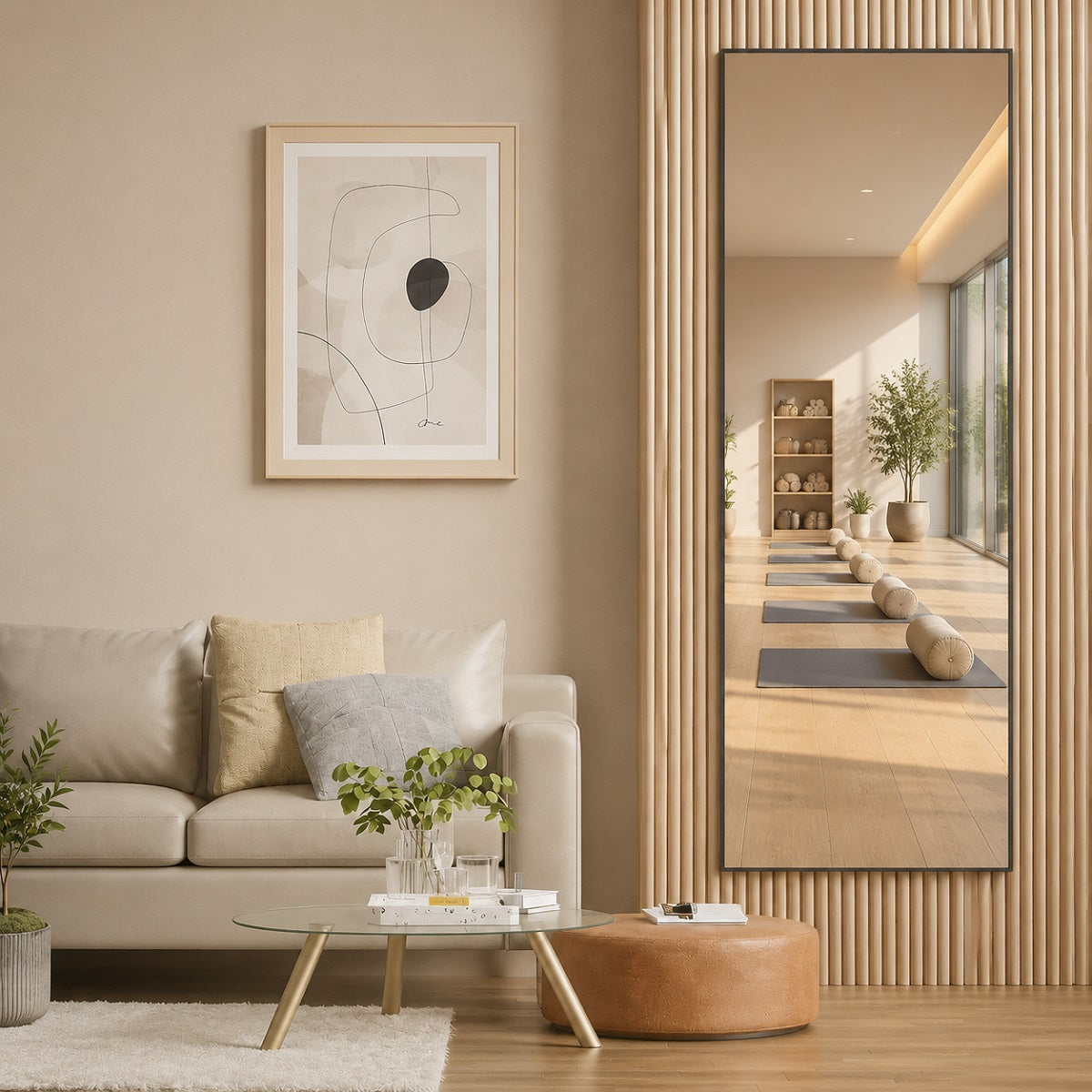
A vertical mirror draws the eye upward. It works well above a low dresser or in a room where you want to create a little more height.
Because a vertical mirror has a taller profile, it does not always need to be two-thirds as wide as the dresser. A 28- to 32-inch-wide vertical mirror can sit comfortably above a 54-inch dresser when a lamp or tall vase fills some of the open space beside it.
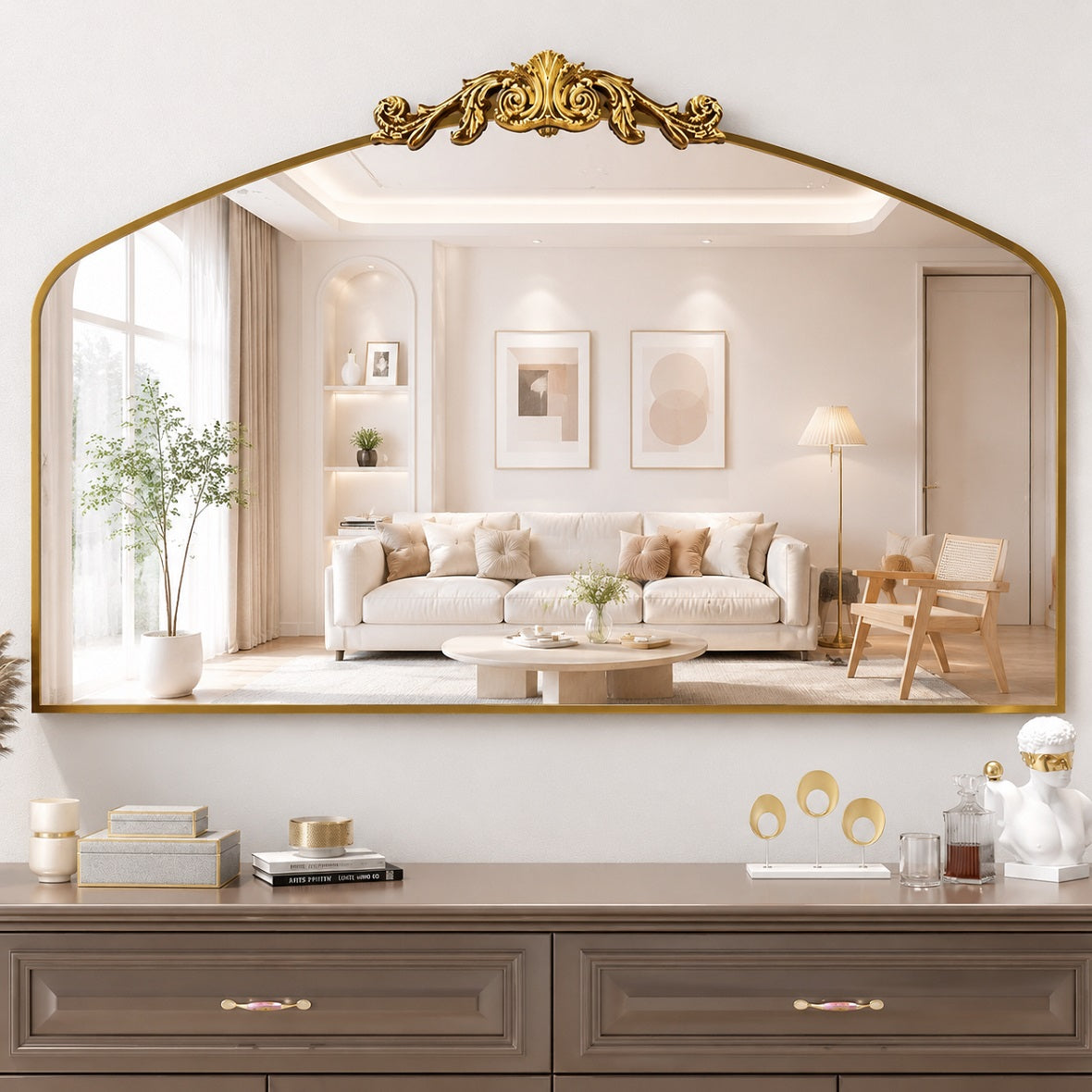
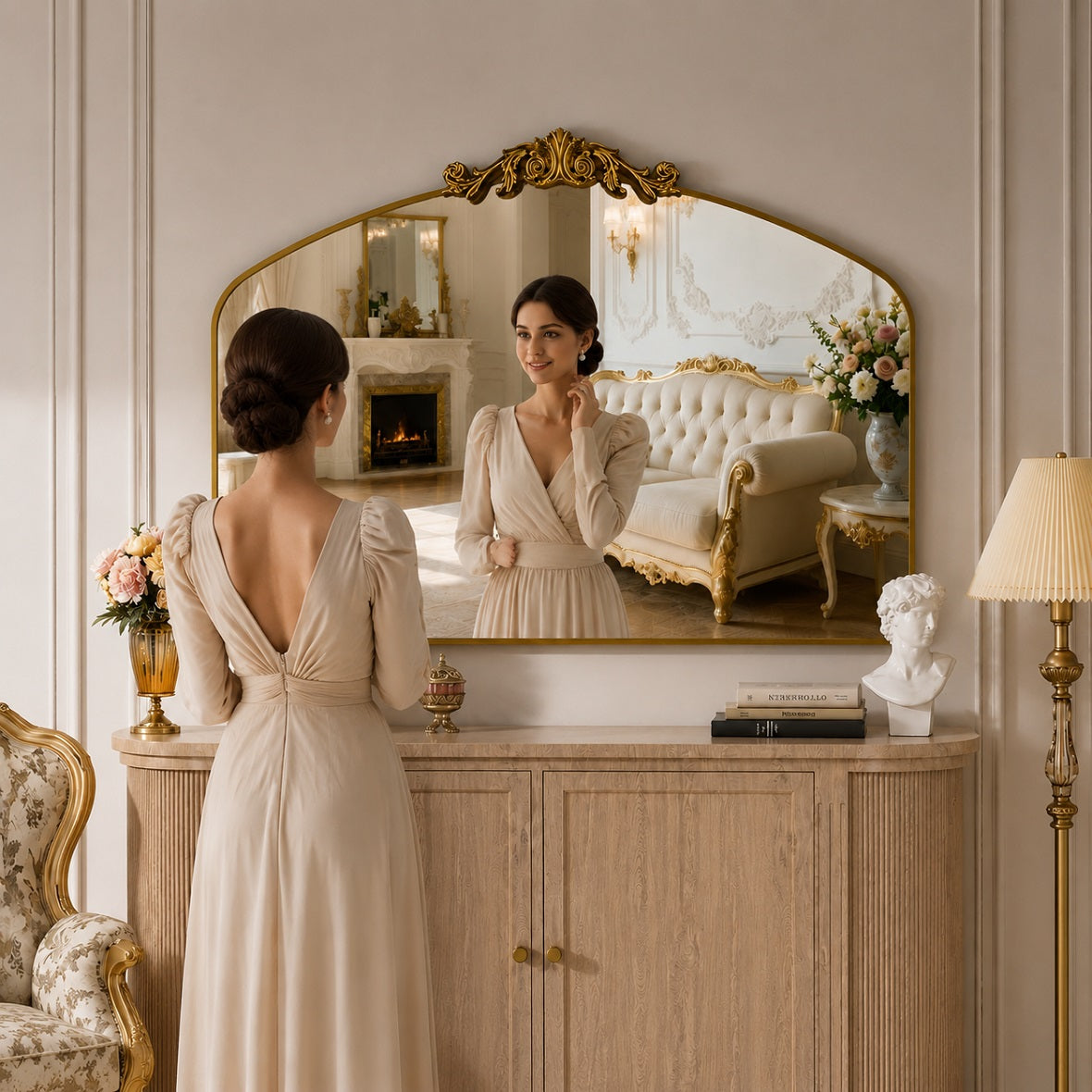
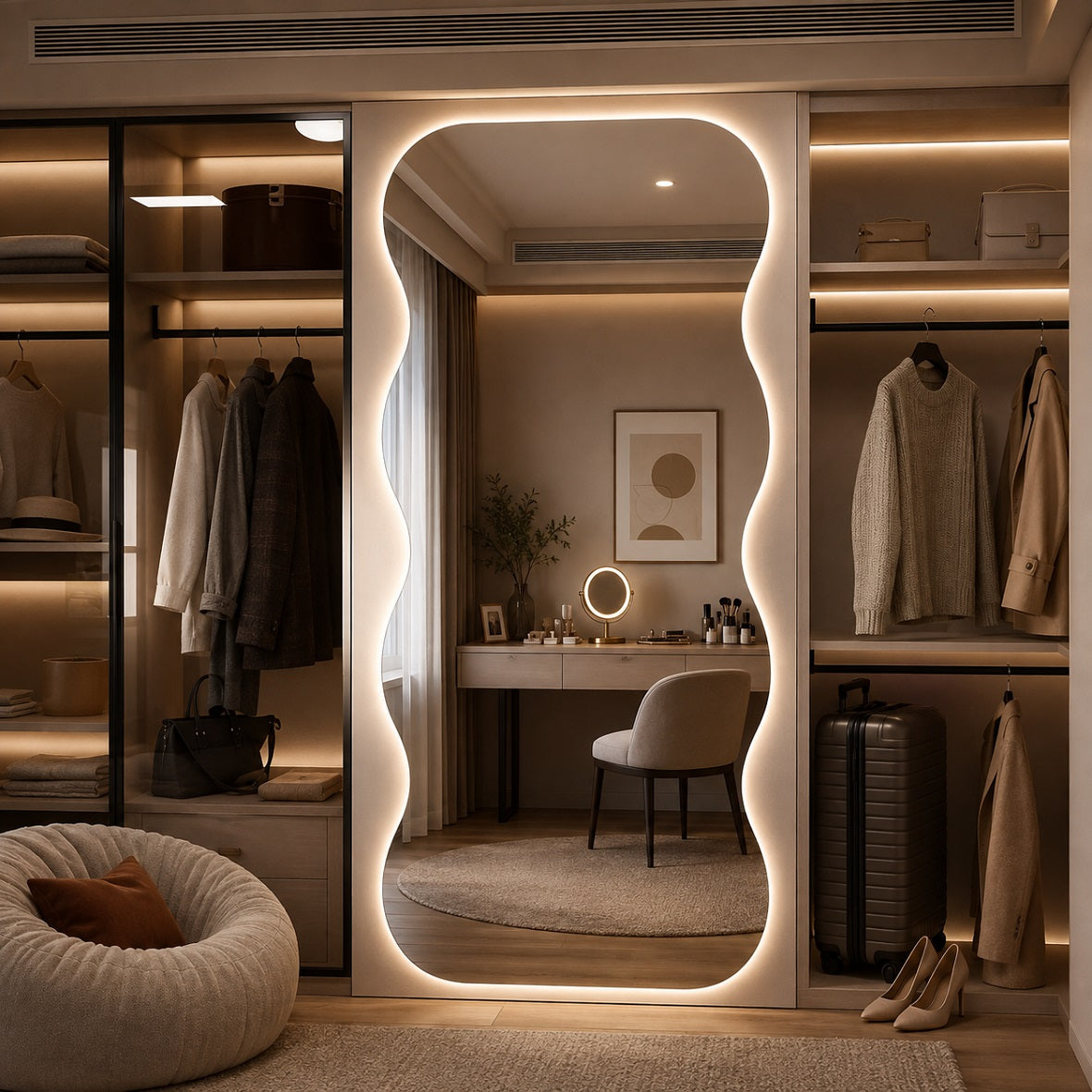
An arched mirror offers much of the height of a rectangle but with a softer top. It is a useful way to break up a bedroom filled with square furniture, straight headboards, and rectangular windows.
Position the Mirror Around How You Use the Dresser
A single mirror should usually be centered over the dresser rather than the entire wall. If you prefer an off-center look, balance a narrow vertical mirror with a lamp, framed photo, or vase on the other side.
Leave enough space for the objects you use every day. Lamps should not overlap the reflective surface, while trays, books, and jewelry boxes can fill smaller gaps without making the dresser feel crowded.
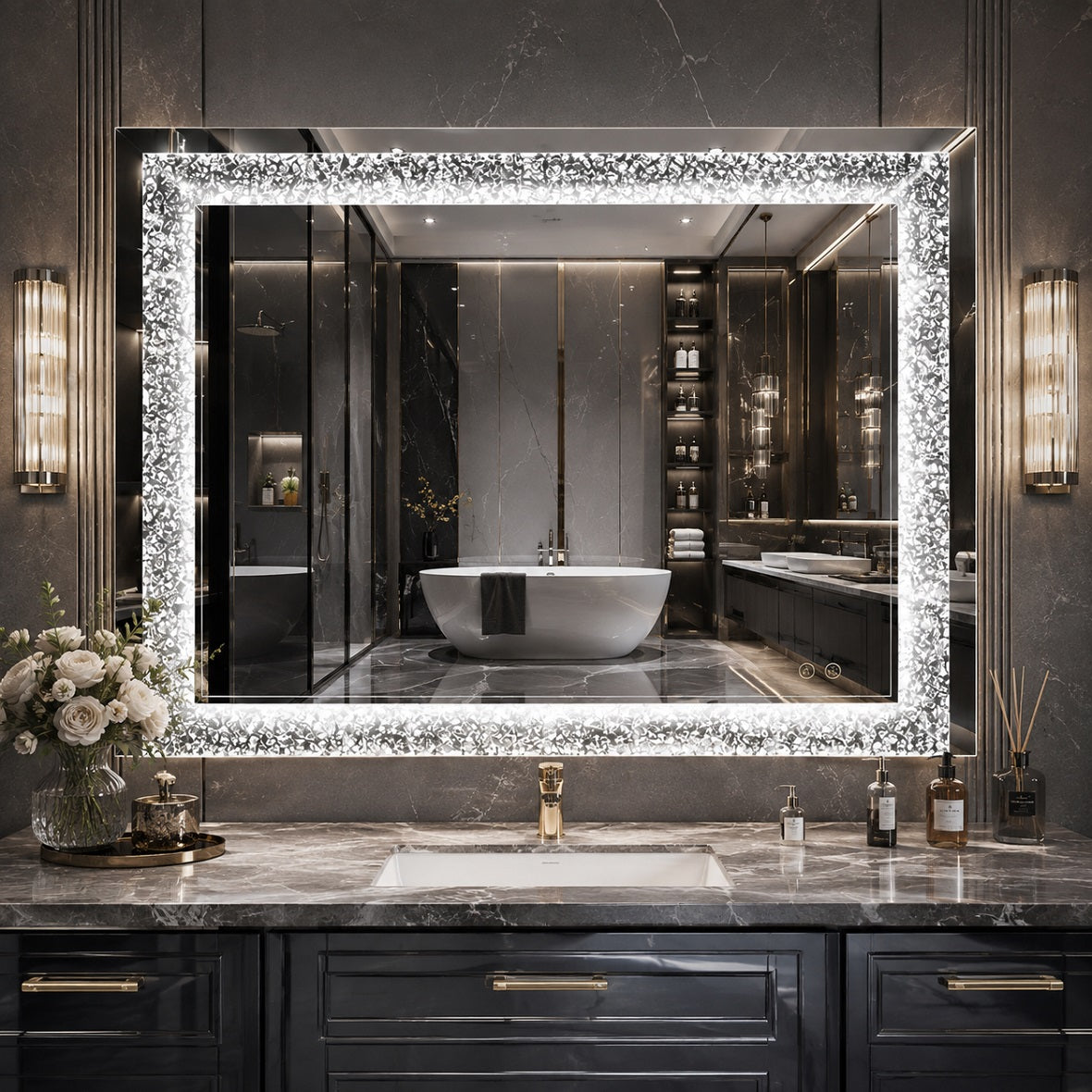
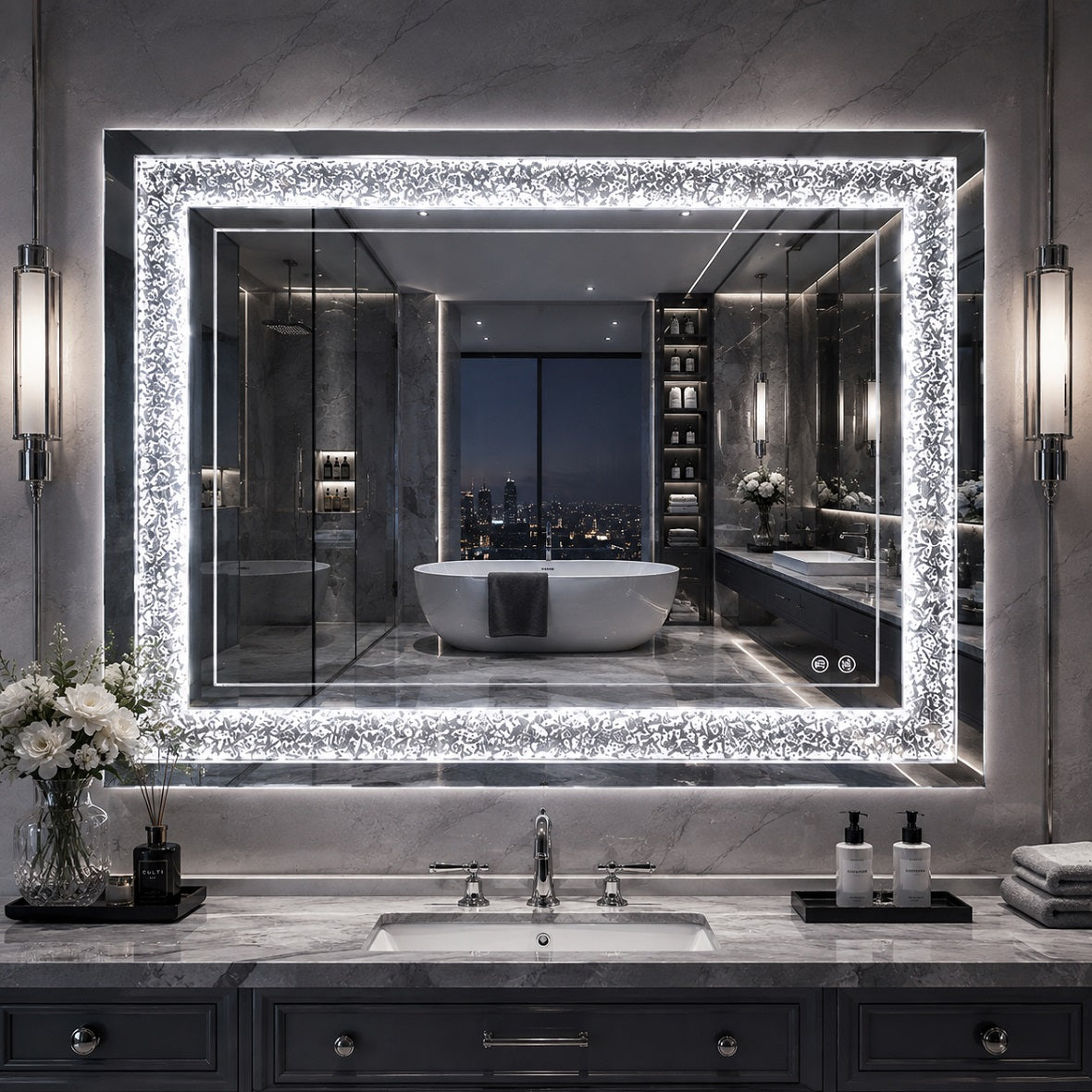
For an LED mirror above a dresser, check where your face appears when standing or sitting. The lighting should reach your face evenly, and the outlet or wiring should be planned before installation.
Consider the Frame Before Choosing a Size
A thick wood or dark metal frame makes a mirror look larger and heavier, so it may work better near the lower end of the recommended size range. Frameless mirrors and slim frames can comfortably reach about 75% of the dresser’s width.
Measure decorative mirrors at their widest outside points, including arches, scalloped edges, and ornamental details. When comparing Hasipu mirrors, use the full product dimensions rather than the size of the reflective glass alone.
Before ordering, mark the mirror’s outline with painter’s tape. View it from the doorway and place your usual dresser accessories underneath it. This quick test will show whether the mirror needs to be wider, lower, or slightly smaller.