
Table of Contents
Most mirrors used at home are flat mirrors, even if the product page never uses that name. The mirror above a bathroom sink, the long mirror beside a closet, and the framed mirror over an entryway console usually share the same basic feature: a level reflective surface with no inward or outward curve.
A flat mirror produces an upright reflection that appears the same size as the person or object in front of it. That familiar view makes flat mirrors useful for applying makeup, shaving, dressing, decorating, and reflecting more light around a room.
“Flat” may describe the reflective surface, the edge, or even a low-profile frame. These terms sound similar but refer to different parts of the mirror.
What Is a Flat Mirror?
A flat mirror is a mirror with a flat reflective surface. In physics, it is called a plane mirror. Unlike a concave mirror, which curves inward, or a convex mirror, which bows outward, a plane mirror does not intentionally magnify, shrink, or widen the view.
When light reaches the mirror, it reflects at the same angle at which it arrived. Your eyes trace those reflected rays backward, making the image appear to sit behind the glass. This is known as a virtual image because the light does not physically meet behind the mirror.
A plane mirror produces an image with several familiar qualities:
- It appears upright
- It appears the same size as the object
- It appears as far behind the mirror as the object is in front of it
- It shows lateral reversal, which makes writing look backward
In home décor and retail listings, flat mirror may also refer to a mirror with a simple flat-polished edge rather than a decorative beveled border. A mirror can have a flat face and still be framed, frameless, round, rectangular, arched, or irregularly shaped.

How Does a Flat Mirror Work?
A household mirror usually begins with a sheet of clear, flat glass. A reflective coating is applied to the back, followed by protective layers that shield the coating. The glass creates a smooth surface and protects the reflective material as light passes through it and returns toward the viewer.
The law of reflection explains this behavior: the angle at which a ray of light reaches the surface equals the angle at which it leaves. The reflected light entering your eyes creates the image you see.
Common Uses of Flat Mirrors
- Daily Life: Used in bathroom mirrors, dressing mirrors, makeup mirrors, and full-length mirrors to provide a clear, same-size reflection.
- Home Décor: Placed in bedrooms, entryways, living rooms, and dining rooms to reflect light and make a space feel brighter and more open.
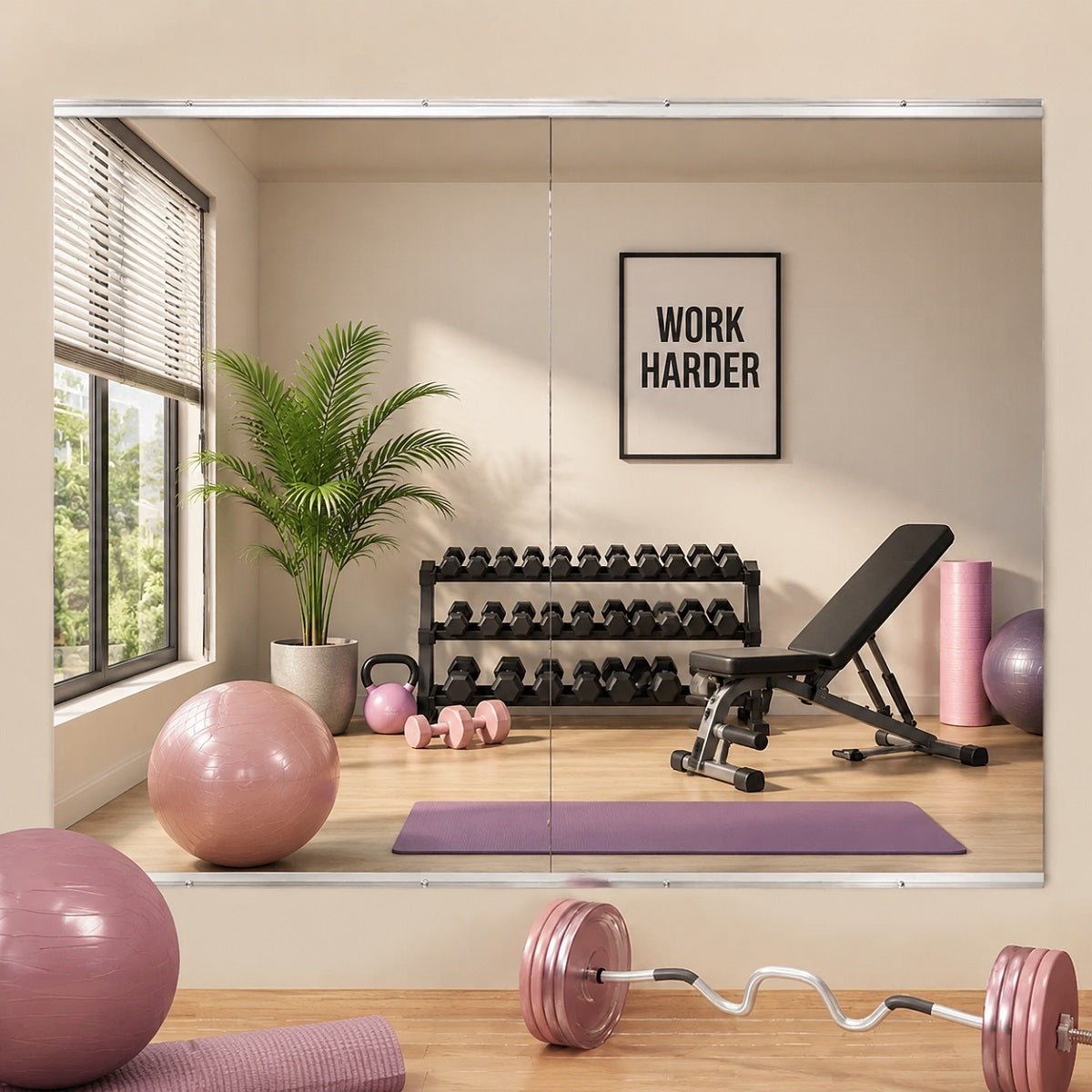
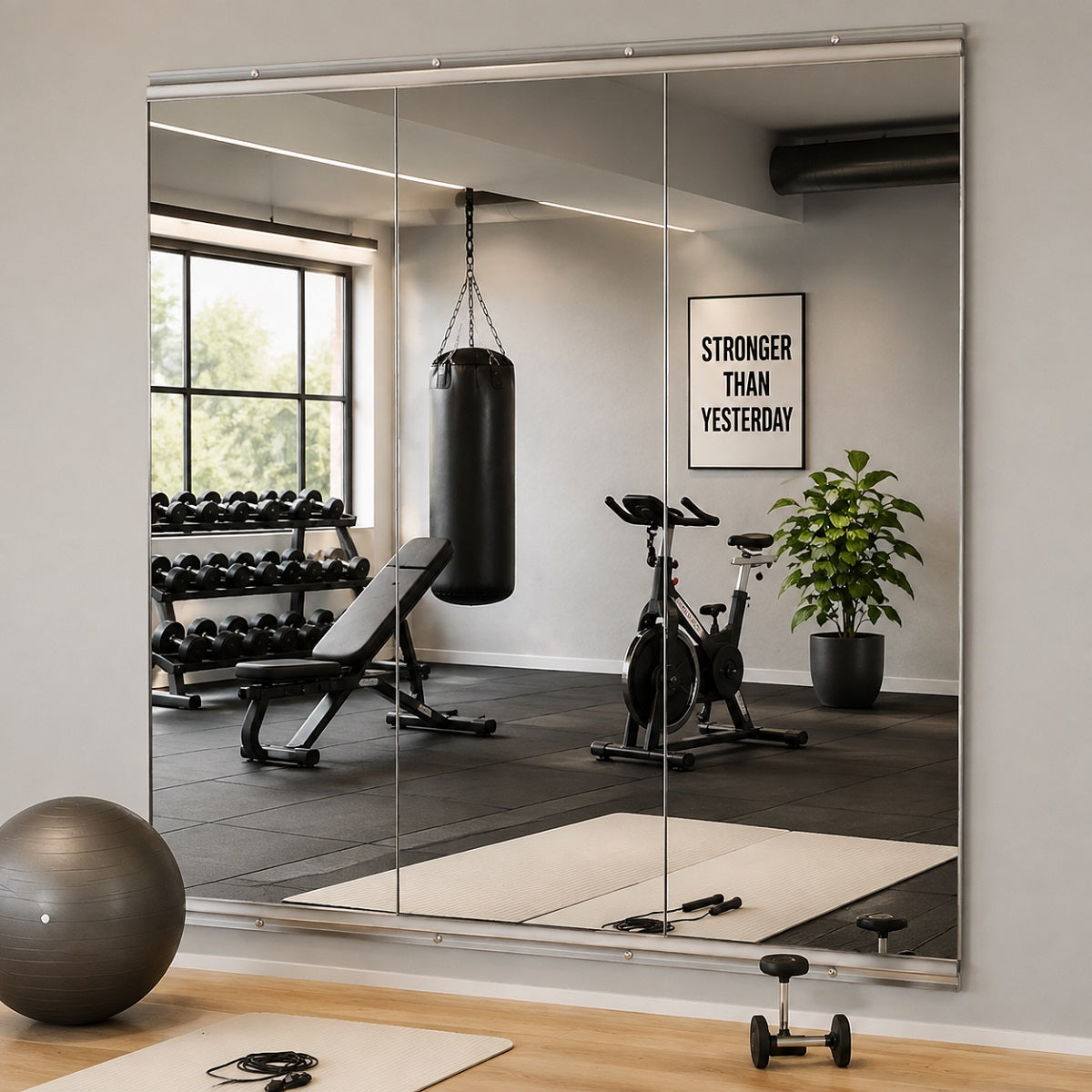
- Fitness and Movement: Installed in home gyms, dance studios, and exercise rooms so people can observe their posture and movement.
- Optics and Science: Used in periscopes, telescopes, cameras, lasers, and scientific instruments to redirect light along a controlled path.
Why Does a Flat Mirror Reverse Left and Right?
A mirror does not literally swap left and right. It reverses the direction perpendicular to its surface—front and back. It feels like a left-to-right reversal because we often imagine turning ourselves around to face in the same direction as the reflected person.
Text makes the effect easy to see. Hold a printed word in front of a mirror, and it appears backward even though the top of each letter remains at the top. This effect is called lateral inversion.
Does a Flat Mirror Show Your True Size?
A plane mirror creates an image that is the same size as the object. It does not provide the optical magnification of a concave makeup mirror or the wider field of view produced by a convex security mirror.
Not every product provides a perfectly accurate-looking reflection. Thin or uneven glass, an unstable backing, pressure from mounting clips, unsuitable adhesive, or an uneven wall can create a wavy appearance. Lighting, viewing distance, and mirror angle may also change how you perceive yourself, even when the mirror is correctly made.
Flat Mirror vs. Beveled Mirror: What Is the Difference?
This comparison usually concerns the edge because both designs have a flat central reflective surface.
A frameless flat mirror typically ends with a straight, polished edge. The reflective face remains level almost to the perimeter. A beveled mirror has a sloping strip cut and polished around the edge. That strip catches light and creates a subtle frame-like effect.
| Feature | Flat-edge mirror | Beveled mirror |
|---|---|---|
| Main surface | Flat | Flat |
| Edge treatment | Straight and polished | Angled and polished |
| Appearance | Clean, simple, and understated | More decorative and dimensional |
| Reflection near the edge | Remains consistent almost to the perimeter | Beveled strip creates expected distortion |
| Flat viewing area | Uses nearly the full surface | Slightly reduced by the bevel |
| Light effect | Even and subtle | Edge produces highlights and possible prism-like reflections |
| Typical cost | Often lower | Often higher because of the added edgework |
| Common style fit | Modern, minimalist, industrial, and transitional | Traditional, transitional, decorative, and some modern spaces |
Choose a flat-polished mirror when you want maximum usable surface and a subtle outline. Choose a beveled edge when you want the glass itself to add decoration.
A frame changes the comparison. Once either mirror sits inside wood, metal, or resin, the frame may become more noticeable than the glass edge.

How Is a Flat Mirror Made?
Mirror production starts with flat glass. The glass is cleaned carefully because small particles can interfere with the reflective coating. A metal-based reflective layer is deposited on one side, and protective coatings are added behind it. The large sheet is then cut into the required shape and size.
The exposed perimeter must be finished for the intended design. Common options include:
- Seamed edge: The sharpness is removed, but the edge is not intended to remain visible.
- Flat-polished edge: The edge is ground straight and polished to create an exposed, finished appearance.
- Pencil-polished edge: The perimeter is finished with a rounded profile.
- Beveled edge: The face slopes toward a thinner, polished perimeter.
A frameless flat-edge mirror usually has a flat-polished finish. A framed mirror may have a simpler concealed edge because the frame covers it.
Final quality depends on the glass, coating, edgework, backing, and handling. Check the mirror for scratches, black spots, chipped corners, cloudy areas, and a wavy central reflection when it arrives.
What Are the Advantages and Disadvantages of Flat Mirrors?
Flat mirrors provide a familiar reflection and work in almost any room. Their simple appearance can be useful in a busy interior, although it may feel too plain in a room that needs a stronger focal point.
Advantages of Flat Mirrors
They provide a natural, unmagnified view. The reflection remains upright and the same size as the subject, making a flat mirror practical for everyday grooming and dressing.
They use the surface efficiently. With no sloped beveled band, nearly the entire face provides usable viewing space. This helps when the wall or mirror is small.
They suit many décor styles. A frameless rectangle can look architectural and modern. A thin black frame feels crisp and industrial. Wood adds warmth, while gold can make the same glass appear more decorative.
They come in many sizes and shapes. Flat glass can be used for compact vanity mirrors, wide bathroom installations, full-length mirrors, medicine cabinet doors, and decorative wall designs.
They often cost less than specialty glass. Standard shapes with simple polished edges generally require less edge processing than wide beveled designs. The final price still depends on the size, thickness, backing, frame, lighting, and installation.
They reflect light without a busy edge effect. This makes them easy to place near patterned tile, detailed wallpaper, or statement lighting.
Disadvantages of Flat Mirrors
A frameless version may look plain. On a large empty wall, a simple polished edge may not provide enough visual weight. A frame, interesting shape, or thoughtful arrangement can give it more presence.
The exposed edge provides little decoration. A bevel or decorative frame may work better when you want a sparkling border, carved detail, or strong focal point.
Large panels can reveal installation problems. A long mirror mounted against a bowed wall may show distortion or uneven gaps. Accurate measurements and suitable mounting hardware matter.
It does not magnify. A standard flat makeup mirror may not show small details as clearly as a magnifying mirror. Many people use a flat mirror for viewing the full face and a smaller concave mirror for close-up work.
A flat mirror can still break. “Flat” describes the surface, not its safety properties. Tempered construction, safety backing, and breakage protection must be checked separately in the product specifications.
Flat Mirrors vs. Concave and Convex Mirrors
The shape of the surface determines how a mirror handles light and what kind of image it creates.
| Mirror type | Surface | Typical visual effect | Common household use |
|---|---|---|---|
| Flat or plane mirror | Level | Same-size, upright virtual image | Bathrooms, bedrooms, entryways, and dressing areas |
| Concave mirror | Curves inward | Can magnify a nearby subject | Makeup and shaving mirrors |
| Convex mirror | Curves outward | Makes objects appear smaller while showing a wider area | Security mirrors and some vehicle mirrors |
A flat wall mirror works well when accurate proportions and everyday viewing matter. A concave mirror is useful for applying eyeliner, tweezing, or shaving up close, but its reflection changes noticeably with distance. A convex mirror is designed to provide broader coverage rather than a detailed personal reflection.
Some products combine different surfaces. A double-sided vanity mirror may have a flat mirror on one side and a magnifying concave mirror on the other.
Can a Flat Mirror Make a Room Look Bigger or Brighter?
A flat mirror cannot add physical square footage, but it can make a room feel more open. It reflects light and the view in front of it, visually extending the space beyond the wall.
Placement has more influence than the mirror’s shape. A mirror positioned across from or beside a window can redirect daylight into a darker part of the room. One facing an open doorway may lengthen the sightline. A mirror facing a cluttered area simply repeats the clutter.
Size also changes the effect. A large flat mirror reflects more of the room and usually creates a stronger visual impact. Several smaller mirrors form a decorative arrangement but divide the reflection into separate views.
For a brighter, more balanced result:
- Position the mirror where it reflects a window, light fixture, artwork, greenery, or an open area
- Avoid direct glare from exposed bulbs
- Check the reflection from normal sitting and standing positions
- Choose a size that relates to the furniture or vanity below it
- Leave enough open wall around a decorative mirror to prevent a crowded appearance
Where Can You Use a Flat Mirror?
A flat mirror works in practical and decorative spaces. Its size, frame, and mounting position determine the role it plays in the room.
Above a Bathroom Vanity
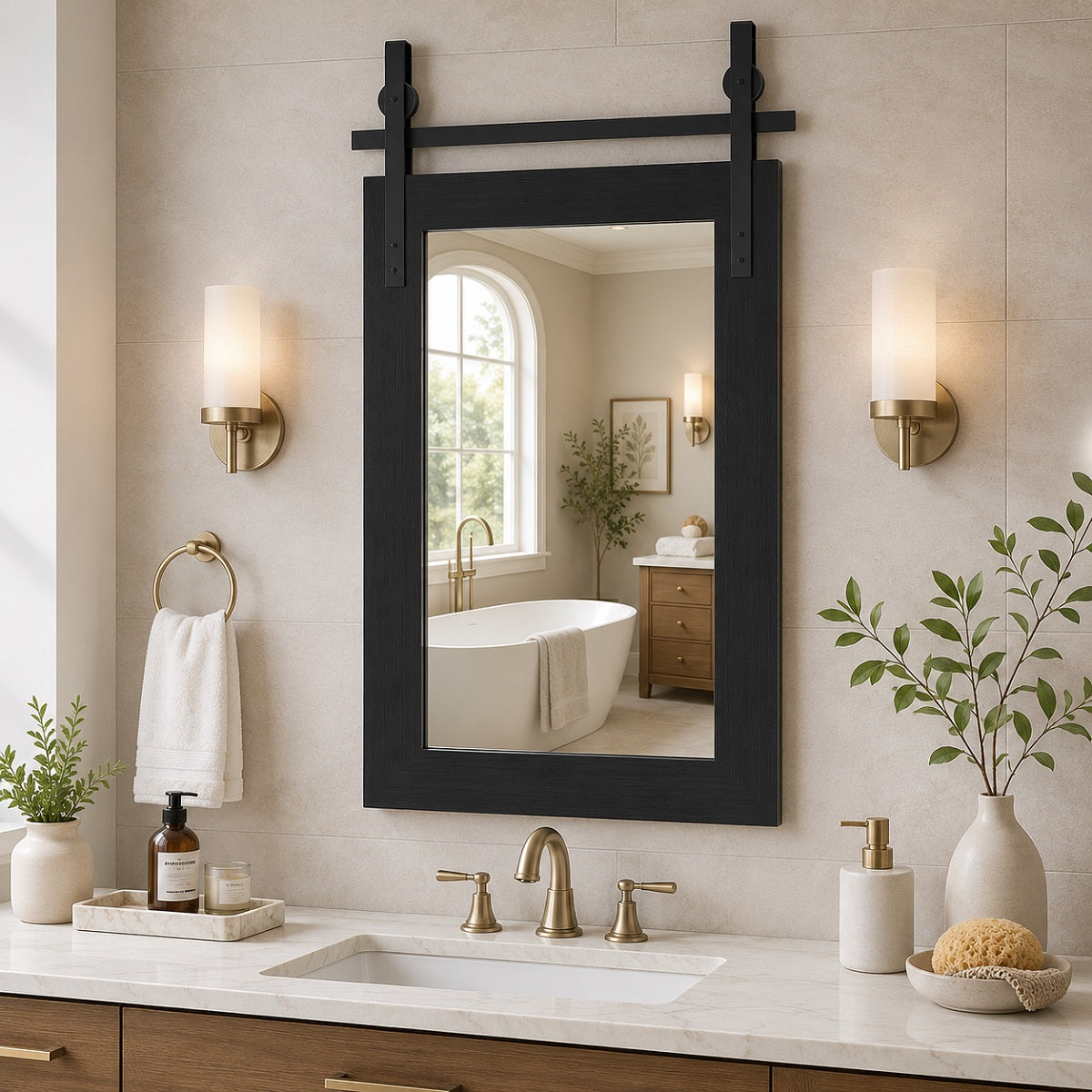
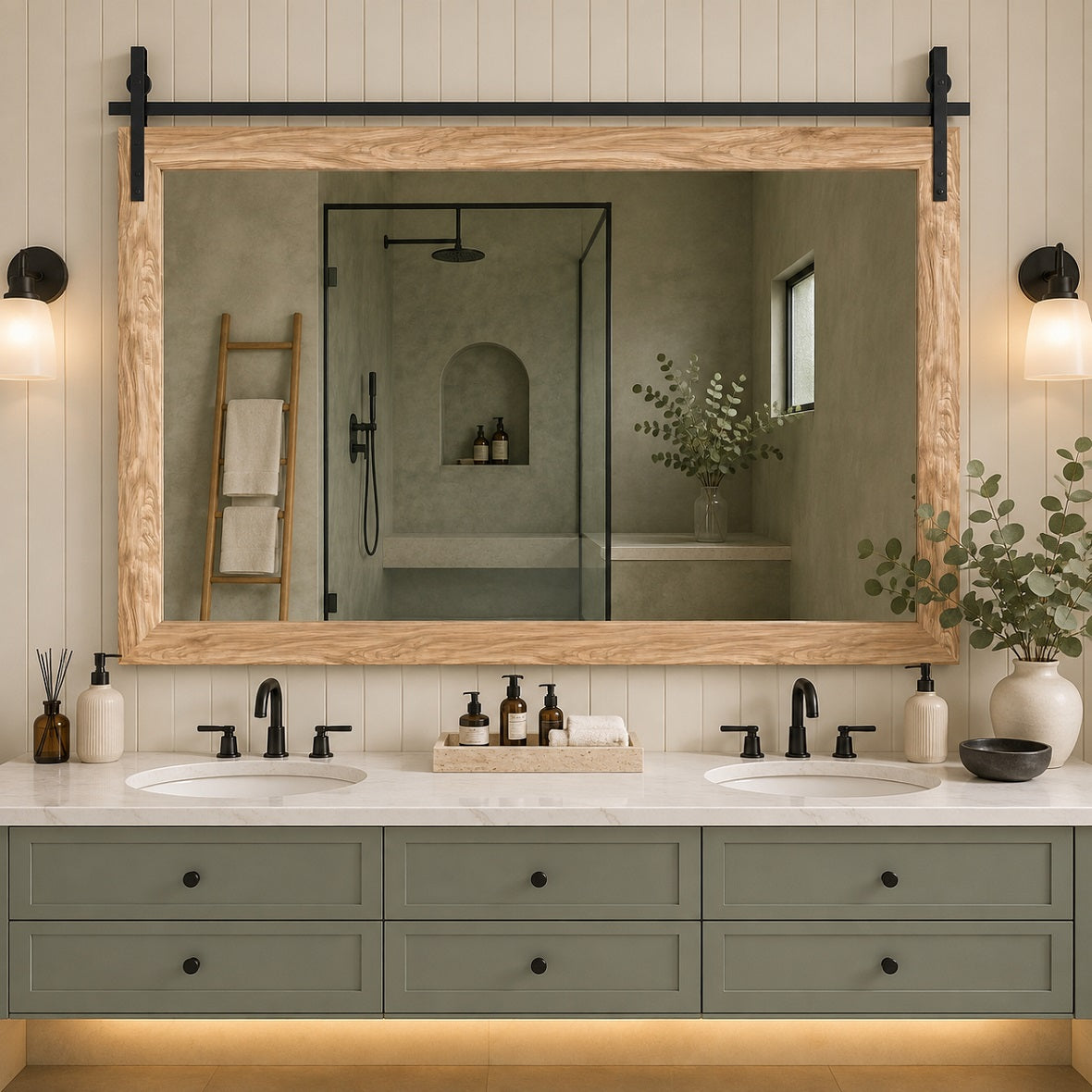
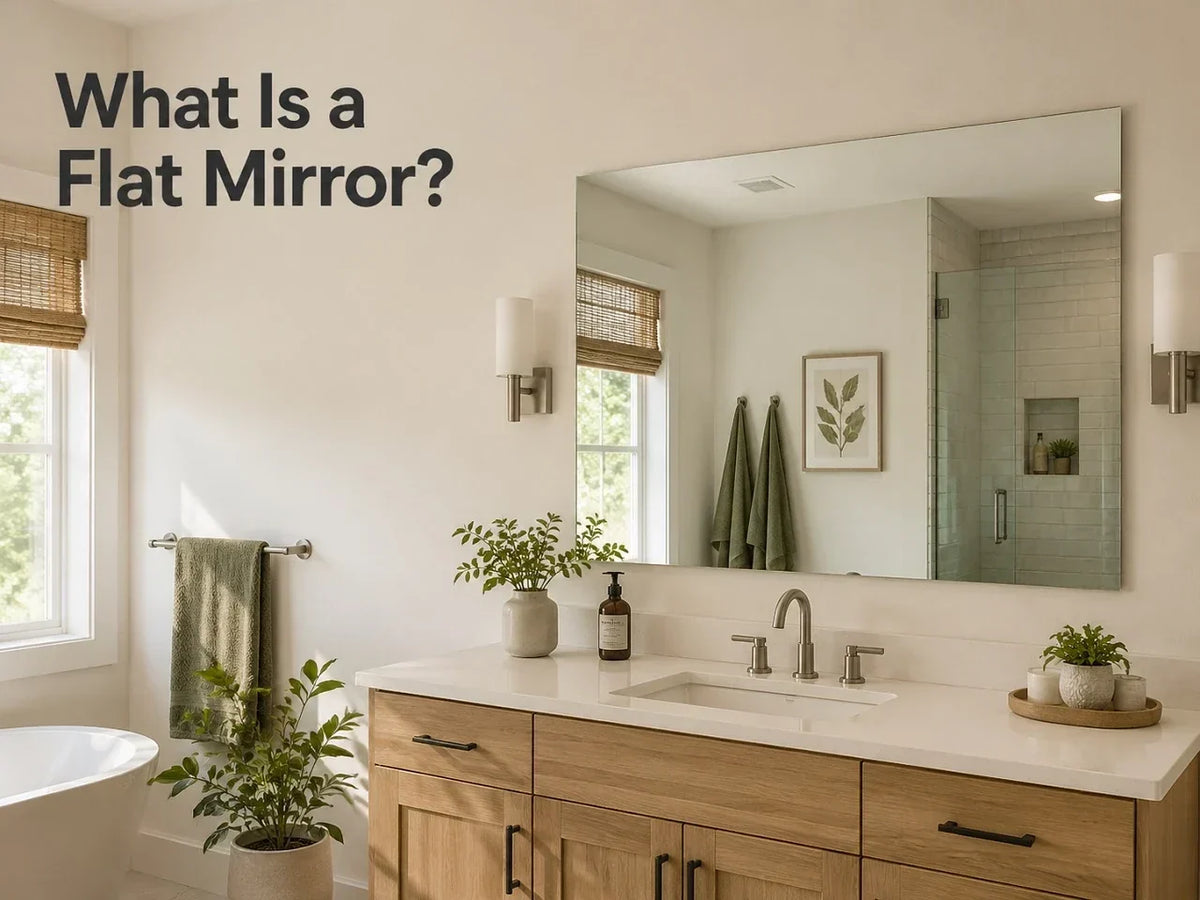
A flat bathroom mirror provides an undistorted, same-size reflection for shaving, skincare, hairstyling, and makeup. Frameless versions can make a small bathroom feel less crowded, while framed designs connect the mirror with the faucets, cabinet hardware, or lighting.
Choose a width that provides comfortable coverage without interfering with sconces, shelving, or side walls. A single wide mirror can span a double vanity, while two mirrors create separate visual areas above the sinks.
For bathrooms, check the moisture guidance, backing, electrical ratings for lighted models, and recommended mounting method. A flat surface does not automatically make the complete product suitable for damp conditions.
In a Bedroom or Dressing Area
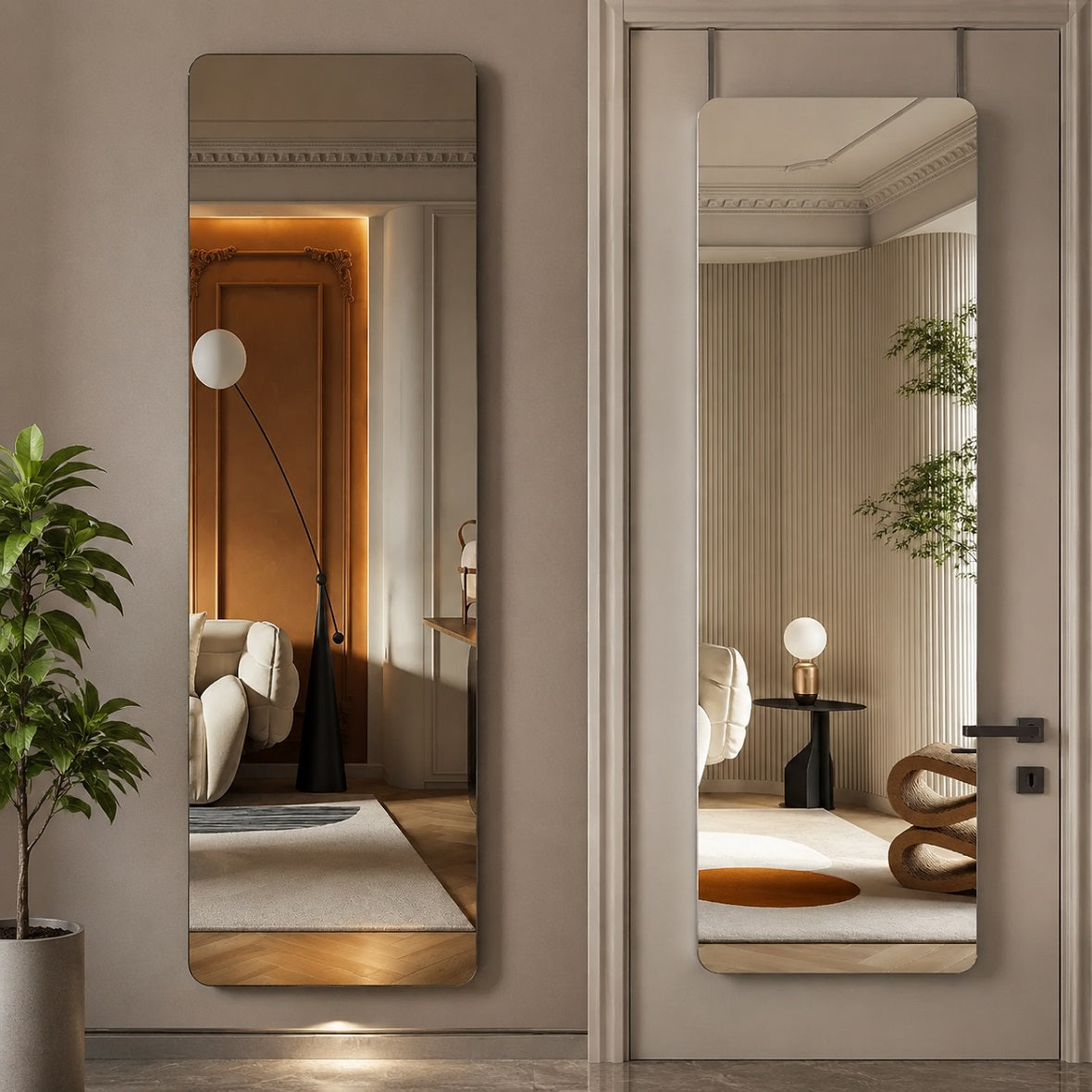
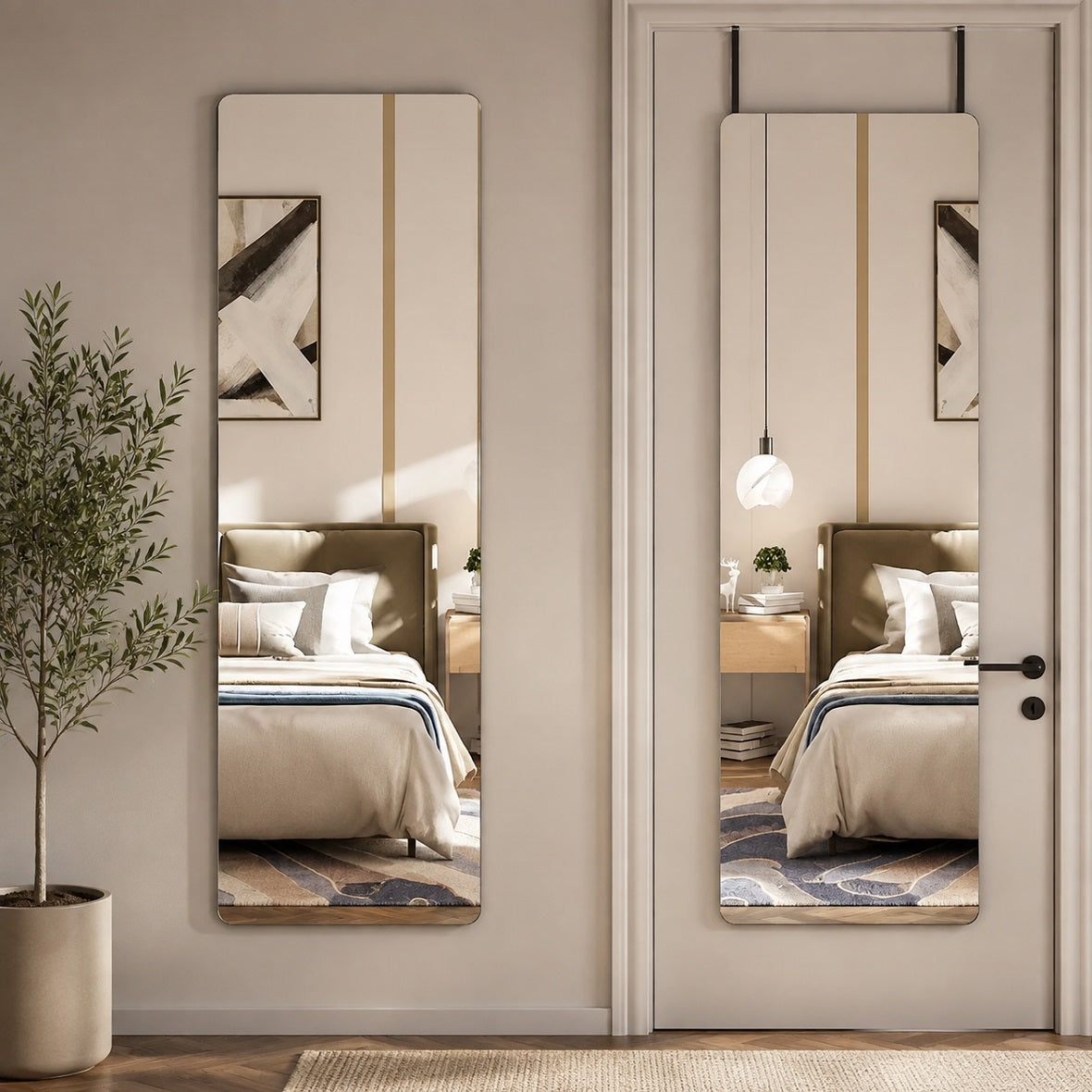
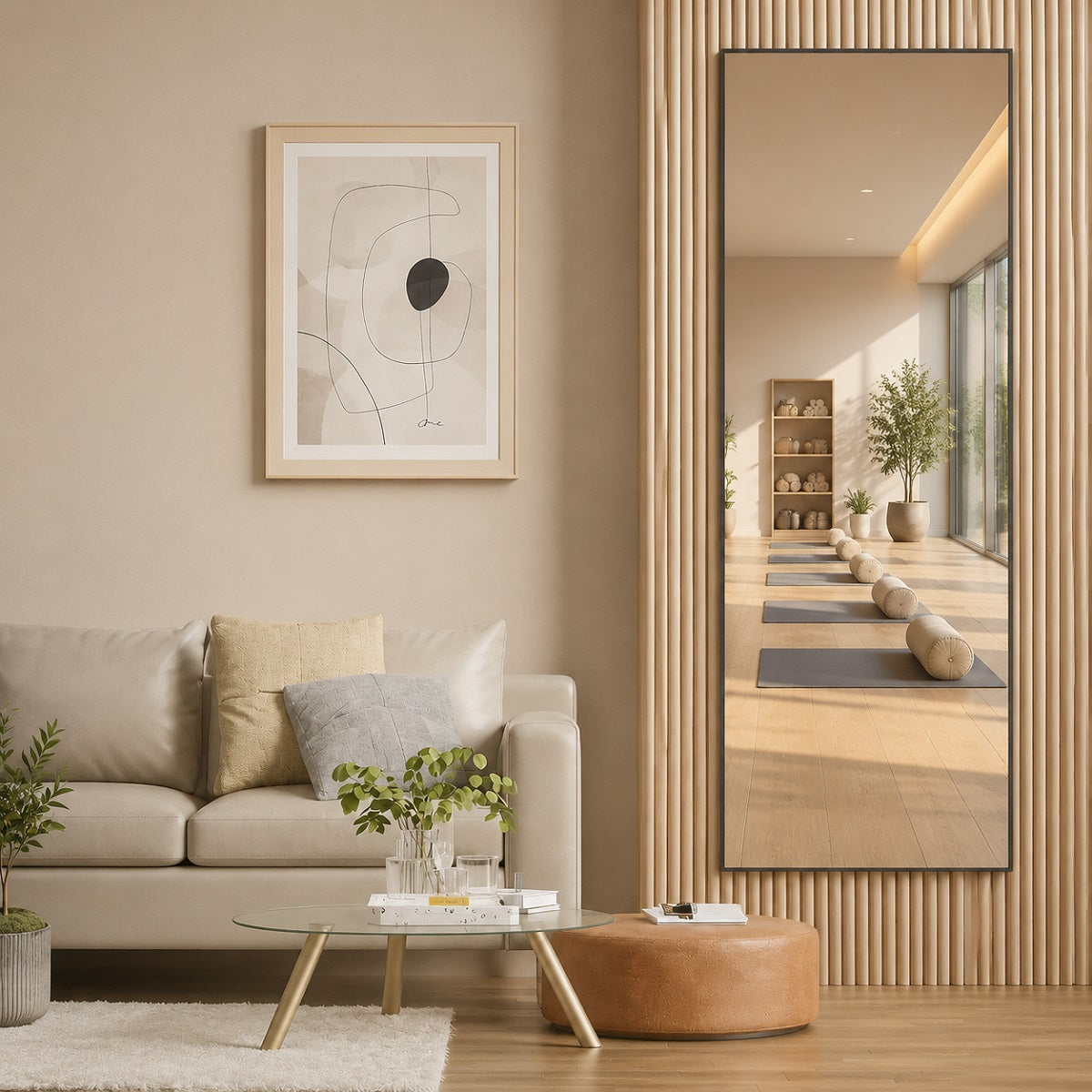
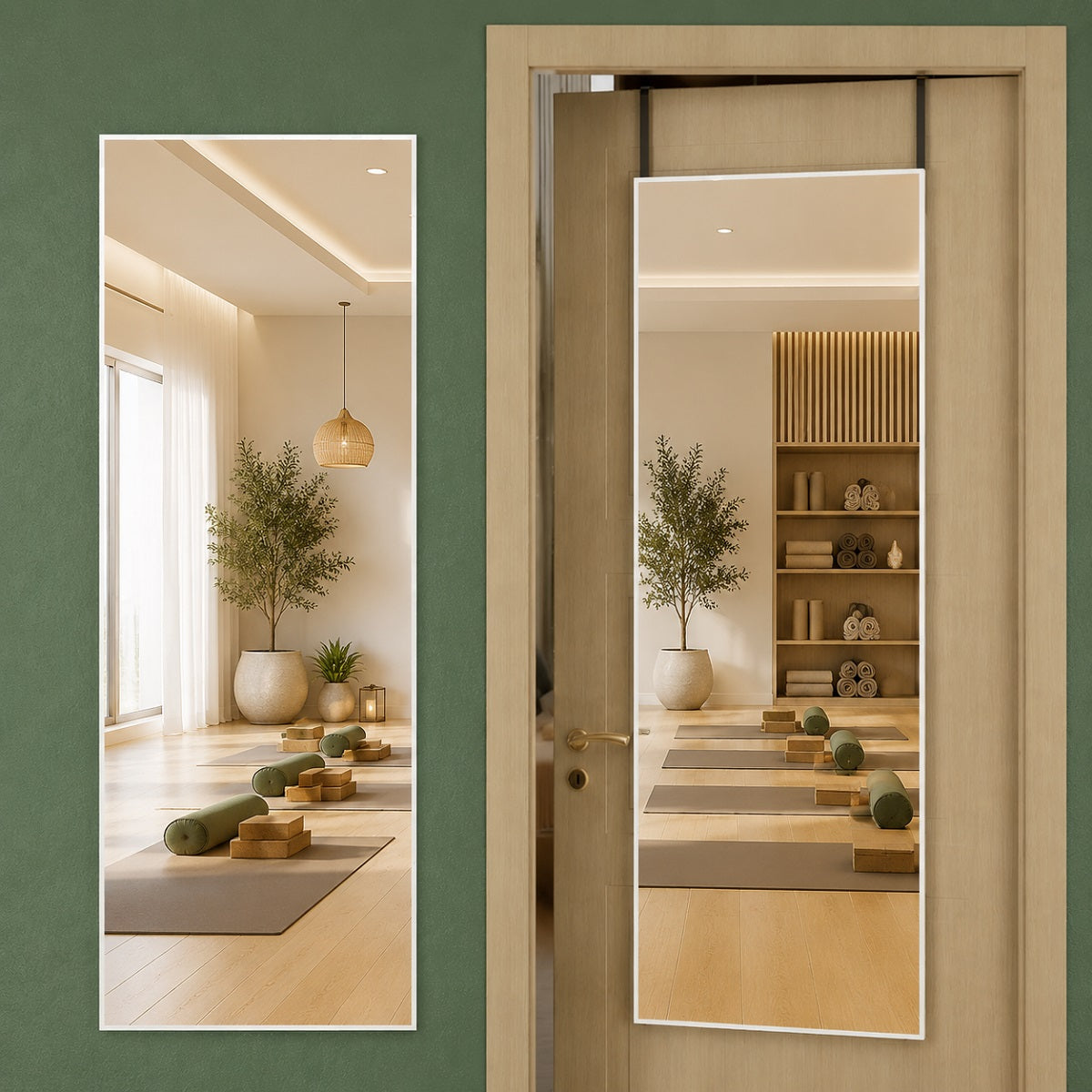
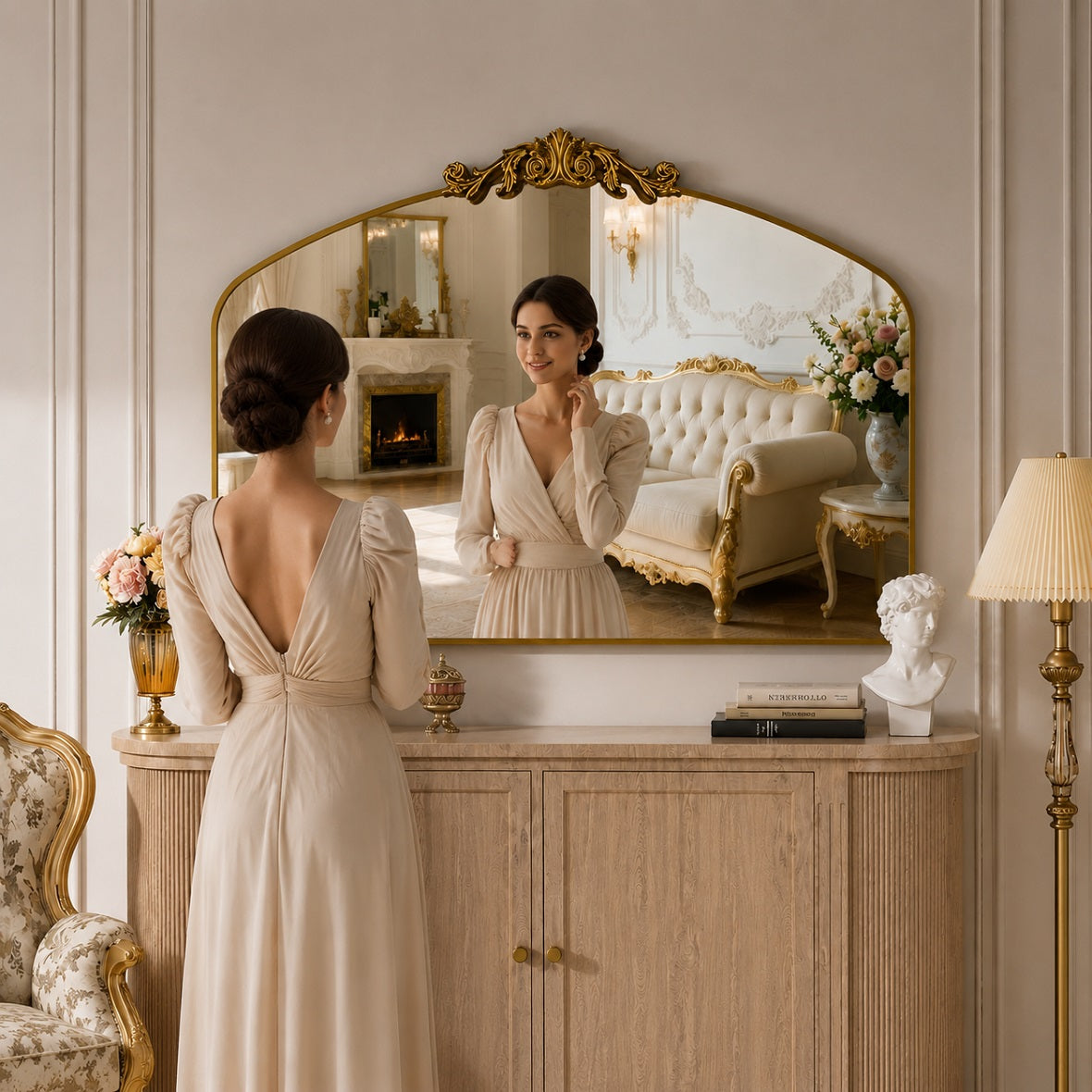
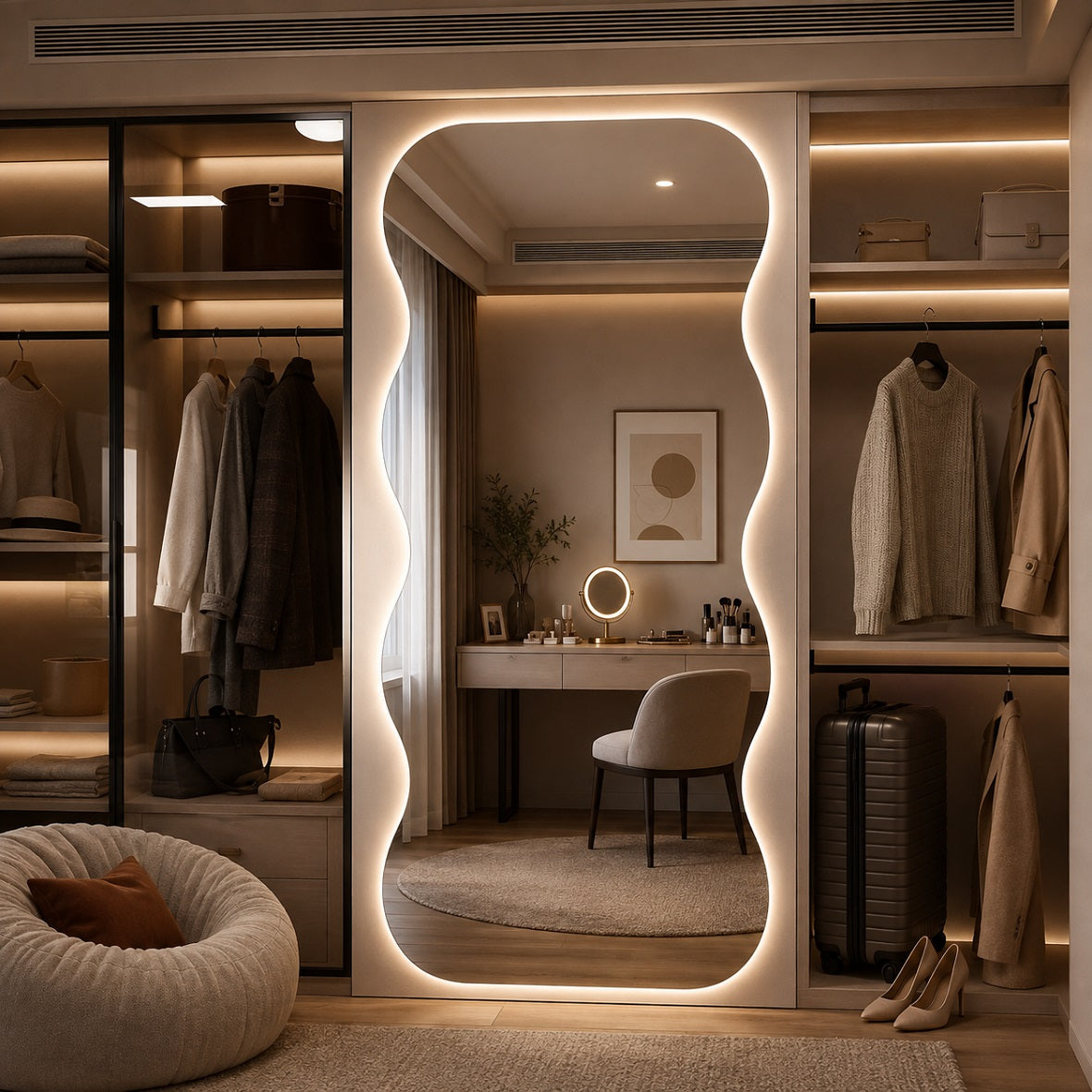
A full-length flat mirror shows an outfit without intentional magnification or shrinking. Leave enough space to step back and see from head to toe. Position the mirror where available light falls toward you rather than directly behind you.
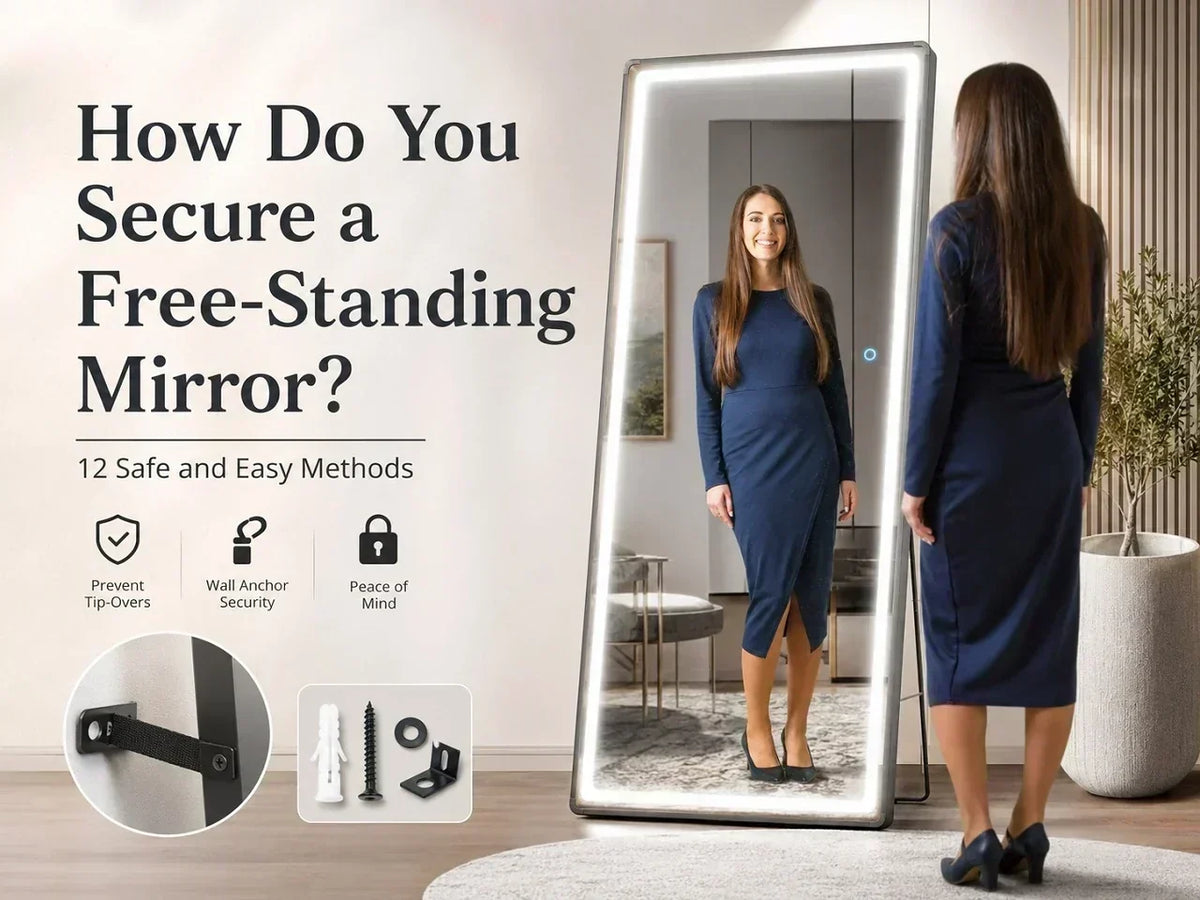
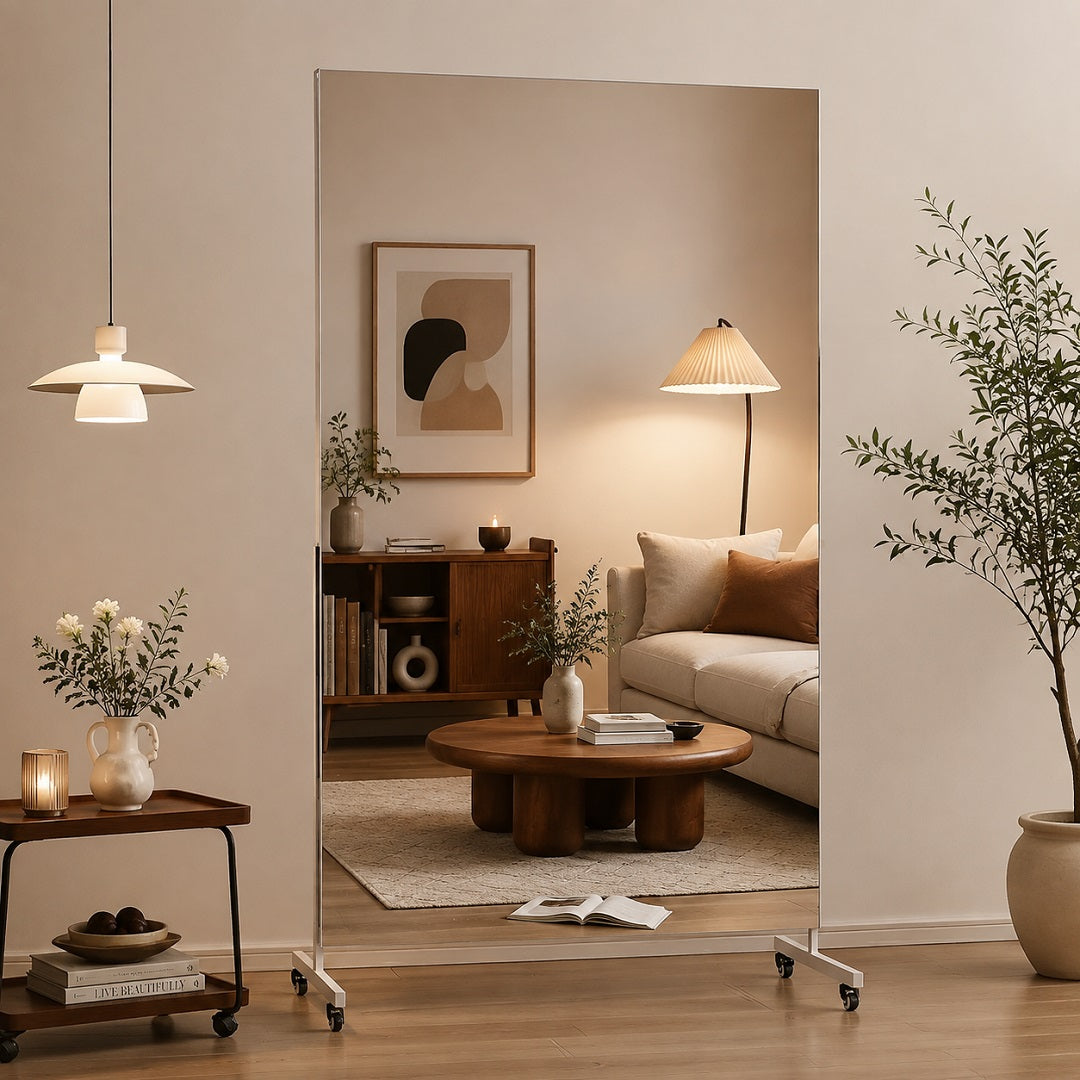
Wall-mounted designs save floor space. Leaning mirrors have a more relaxed appearance and can make a stronger decorative statement, but they should be secured according to the manufacturer’s instructions, especially in homes with children or pets.
In an Entryway
A flat mirror over a console provides a useful final check before you leave home. It can also brighten a narrow hallway that receives little natural light.
Pay attention to what guests see in the reflection when the door opens. A lamp, plant, artwork, or open room creates a calmer first impression than a pile of shoes or coats.
In a Living Room
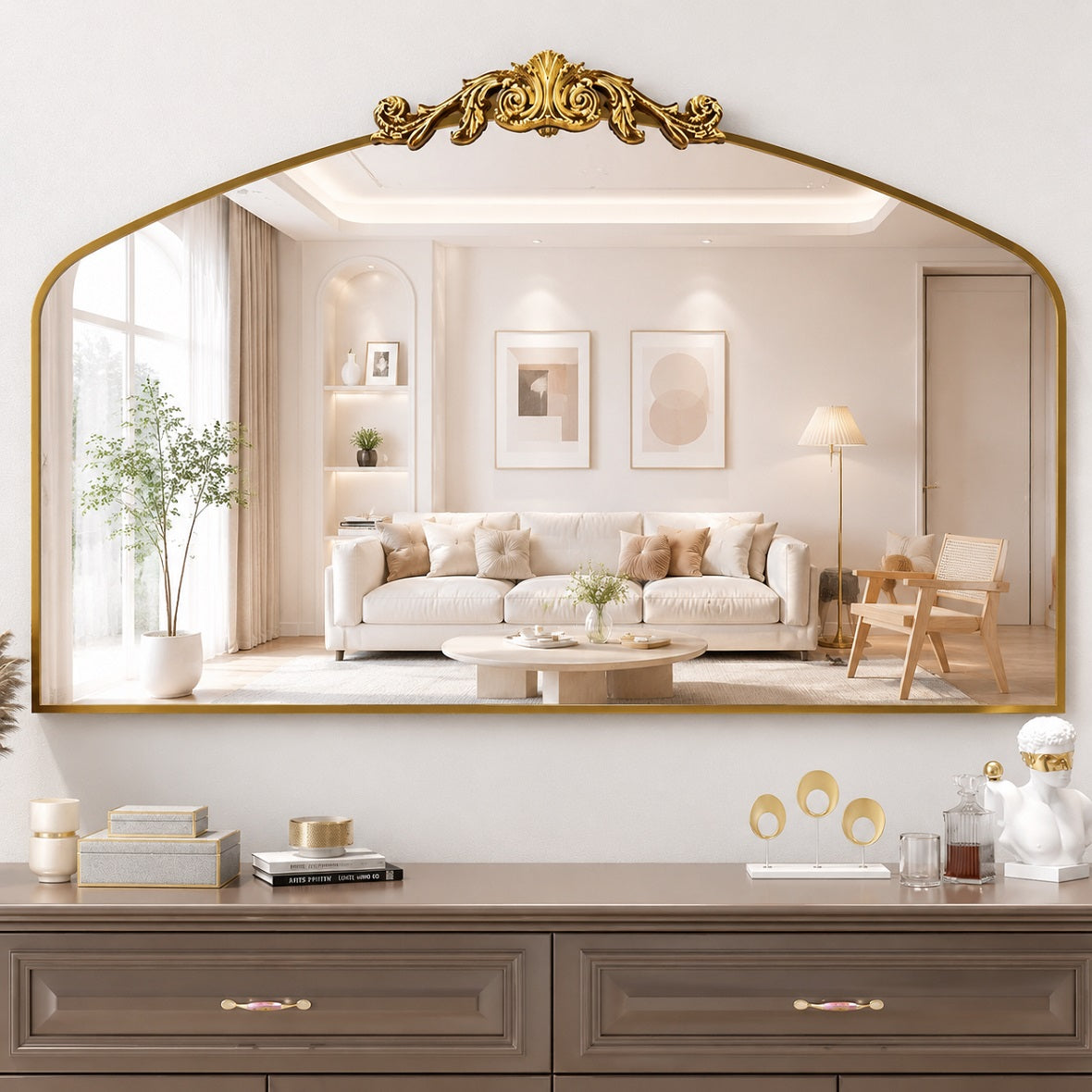
A large flat wall mirror can replace artwork where another color or pattern would overwhelm the room. A frameless mirror keeps the look quiet, while a black, wood, or gold frame adds contrast and helps anchor the glass.
A mirror opposite a window can create a brighter view, but test the position at different times of the day. Strong, direct sunlight may cause uncomfortable glare.
In a Dining Room
A mirror can reflect the glow of pendants, sconces, and candles. Positioned above a sideboard, it also gives the furniture arrangement more height.
Check the reflection from seated eye level. A view of the room or a light fixture feels intentional, while a direct view into a busy kitchen may be distracting.
In a Home Gym or Studio
Wide flat mirrors help users see their posture and movement. Seams, uneven walls, and distorted glass are easier to notice across a large installation, so accurate measurement and professional mounting may be worthwhile.
Keep home gym mirrors away from swinging equipment and busy traffic paths. Check the safety backing and installation requirements rather than judging the product only by its thickness or appearance.
What Should You Check Before Buying a Flat Mirror?
Start with the mirror’s daily purpose, then choose the size and style that fit the space.
Dimensions: Measure the wall’s width and height along with nearby fixtures, doors, outlets, and furniture. Painter’s tape can help you outline the proposed size before ordering.
Viewing area: A frame occupies part of the listed overall dimensions. Confirm whether the measurements refer to the complete product or only the exposed glass.
Glass quality: Look for a clear central reflection without visible waves. Check the face and edges for scratches, chips, dark spots, or coating defects.
Edge finish: A visible frameless perimeter should have finished edgework. “Flat mirror” does not always mean “flat-polished edge,” so check the specifications closely.
Frame material: For bathrooms, consider how wood, engineered wood, metal, and painted finishes respond to moisture. The frame should coordinate with the room, but it does not need to match every piece of hardware.
Mounting orientation: Some rectangular mirrors can hang vertically or horizontally. Others have hardware fixed in one direction.
Weight and hardware: Match the anchors and fasteners to the mirror’s weight and the wall material. Large mirrors may require wall studs, masonry hardware, a mounting cleat, or professional installation.
Safety features: For a large mirror, full-length mirror, or home gym installation, look for safety backing or other suitable safety features. Do not assume that ordinary mirror glass is tempered.
Lighting features: For an LED flat mirror, check the brightness controls, color temperatures, electrical connection, bathroom rating, defogging function, and installation instructions.
How Do You Clean a Flat Mirror?
A flat mirror is easy to maintain when cleaner is used sparingly. Begin with a clean, dry microfiber cloth to remove dust and loose particles.
Apply a small amount of mirror-safe cleaner or clean water to the cloth rather than spraying it directly onto the glass. Wipe from side to side or in an S-shaped pattern, then buff the surface dry with a second lint-free cloth. Look at the mirror from an angle to find any remaining streaks.
Keep liquid away from the perimeter and bottom edge. Excess cleaner can run behind the glass and reach the reflective backing, where repeated moisture exposure may damage the edges. A frame may also trap liquid where it is difficult to dry.
Avoid abrasive sponges, gritty cleaners, and sharp blades. Soften dried toothpaste or hairspray with a damp cloth, then lift the spot gently instead of scraping it.

Is a Flat Mirror Right for Your Home?
A flat mirror is a practical choice when you want a clear, same-size reflection, plenty of usable viewing space, and a design that works naturally in different rooms. It is particularly suitable for bathrooms, closets, bedrooms, entryways, dressing areas, and home gyms.
A flat mirror may suit your space when:
- You want an everyday reflection without intentional magnification
- You prefer a clean, versatile design
- You want to use nearly the entire reflective surface
- The room already contains bold patterns or decorative finishes
- You want a broad selection of shapes, sizes, frames, or lighting features
A magnifying mirror is more useful for detailed makeup application or close shaving. A convex mirror works better when you need a wider field of view for visibility or security. A beveled edge or decorative frame may be a better fit when a plain polished edge feels too simple.
A bathroom mirror should provide comfortable face-level coverage. A full-length mirror needs enough height and viewing distance to show your complete outfit. A decorative mirror should reflect an attractive part of the room rather than clutter.
Final Thoughts
A flat mirror provides an upright, same-size reflection for grooming, dressing, decorating, and reflecting more light around a room.
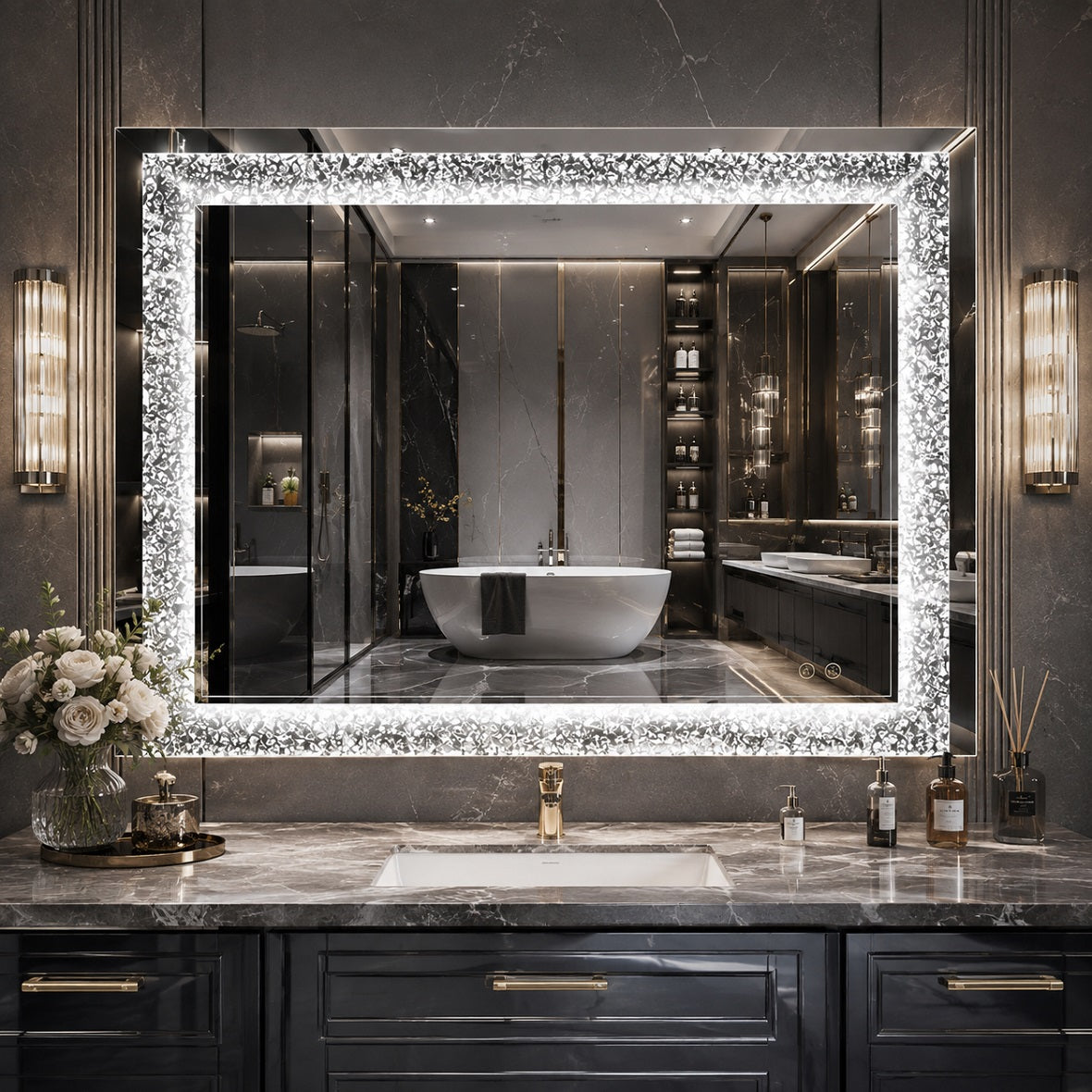
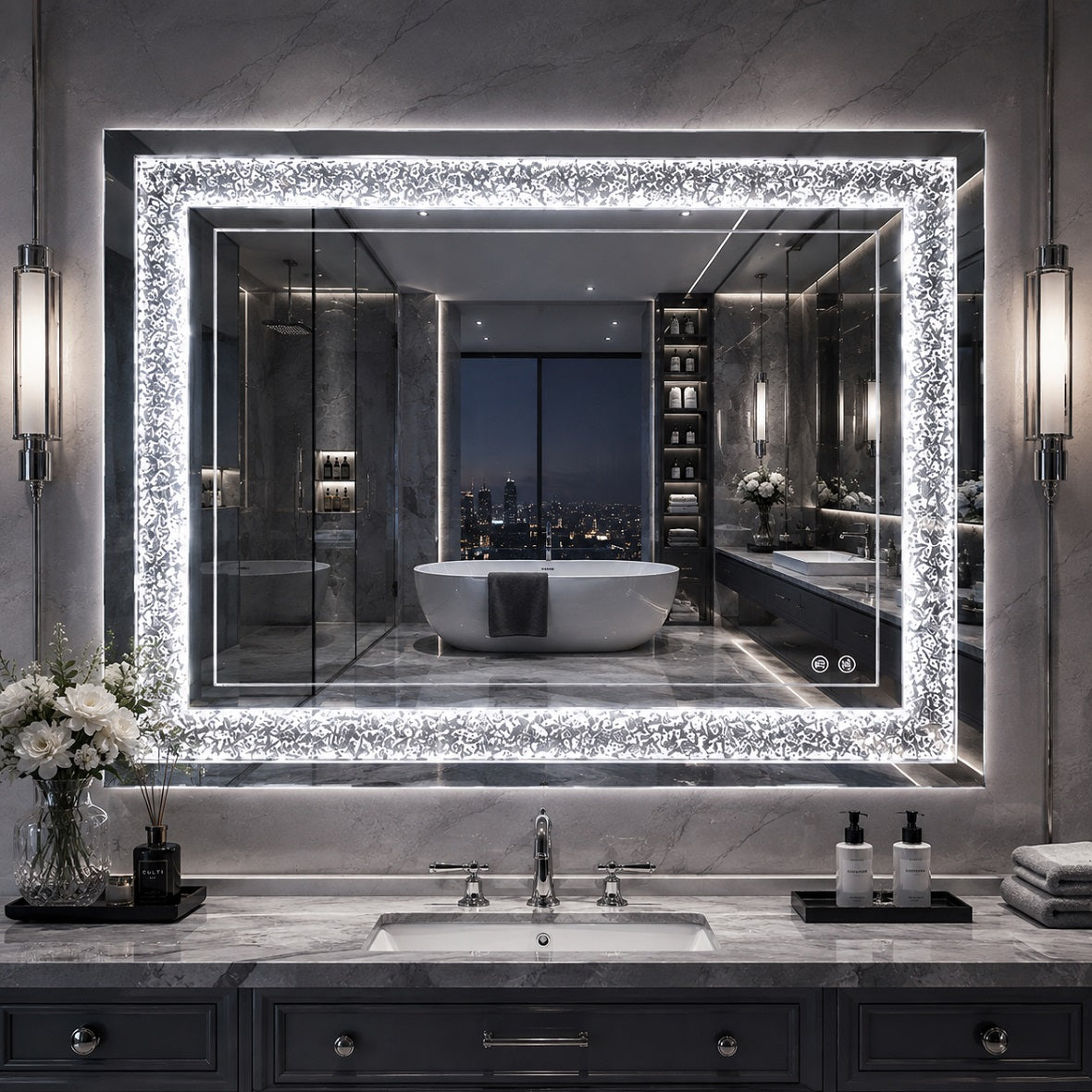
Its appearance can change dramatically with the details around the glass. A frameless edge can blend into a modern bathroom, while an arched shape, warm wood frame, LED border, or oversized format can make the mirror a focal point. Glass quality, usable viewing space, secure mounting, and the reflected view will have the greatest effect on daily use.
Frequently Asked Questions
1. What is a flat mirror?
A flat mirror is a mirror with a level reflective surface. It creates an upright virtual image that appears the same size as the person or object in front of it. Most bathroom mirrors, dressing mirrors, wall mirrors, and full-length mirrors are flat mirrors.
2. Is a flat mirror the same as a plane mirror?
Yes. Plane mirror is the technical term for a mirror with a flat reflective surface. In home décor and product descriptions, “flat mirror” may also refer to a mirror with a straight, flat-polished edge instead of a beveled edge.
3. Does a flat mirror show your true size?
A properly made flat mirror produces a same-size reflection without intentional magnification or shrinking. Poor-quality glass, mounting pressure, an uneven wall, lighting, viewing distance, or an angled installation can still make your reflection appear slightly different.
4. What is the difference between a flat mirror and a beveled mirror?
Both mirrors normally have a flat central surface. A flat-edge mirror has a straight, polished perimeter that preserves more usable viewing space. A beveled mirror has an angled border that catches light and creates a more decorative appearance.
5. Are flat mirrors suitable for bathrooms?
Yes. Flat bathroom mirrors provide a clear reflection for shaving, skincare, hairstyling, and makeup. They are available in framed, frameless, cabinet, and LED designs. Check that the backing, frame, electrical components, and mounting method are suitable for bathroom moisture.
6. Can a flat mirror make a small room look bigger?
A flat mirror can make a small room feel larger by reflecting light and extending the visible space. For the strongest effect, use a larger mirror and position it across from or beside a window, doorway, light fixture, or open area.