
Table of Contents
You have probably seen a mirror with a narrow, light-catching border around its edges. It may have looked framed at first, even though there was no wood or metal surrounding the glass. That detail is called a bevel.
A beveled mirror has edges that are cut and polished at an angle. The sloped glass reflects light differently from the flat center, giving the mirror a subtle frame-like finish. It is a small design detail, but it can make a plain mirror look more polished.
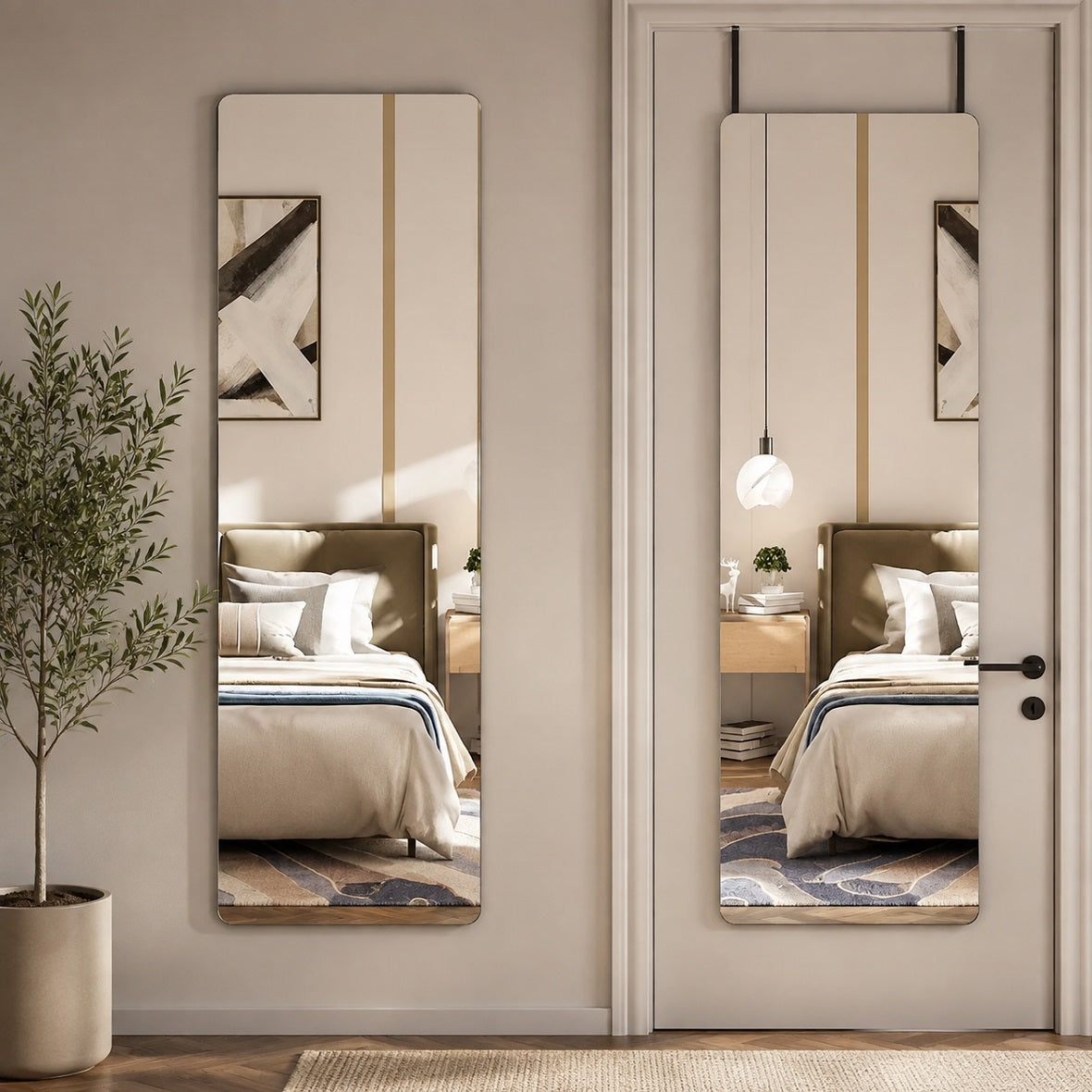
Beveled mirrors appear in bathrooms, bedrooms, entryways, dining rooms, and dressing areas. Some are completely frameless, while others combine beveled glass with a decorative frame. This guide explains how they are made, how they compare with regular mirrors, and what to consider before bringing one home.
What Is a Beveled Mirror?
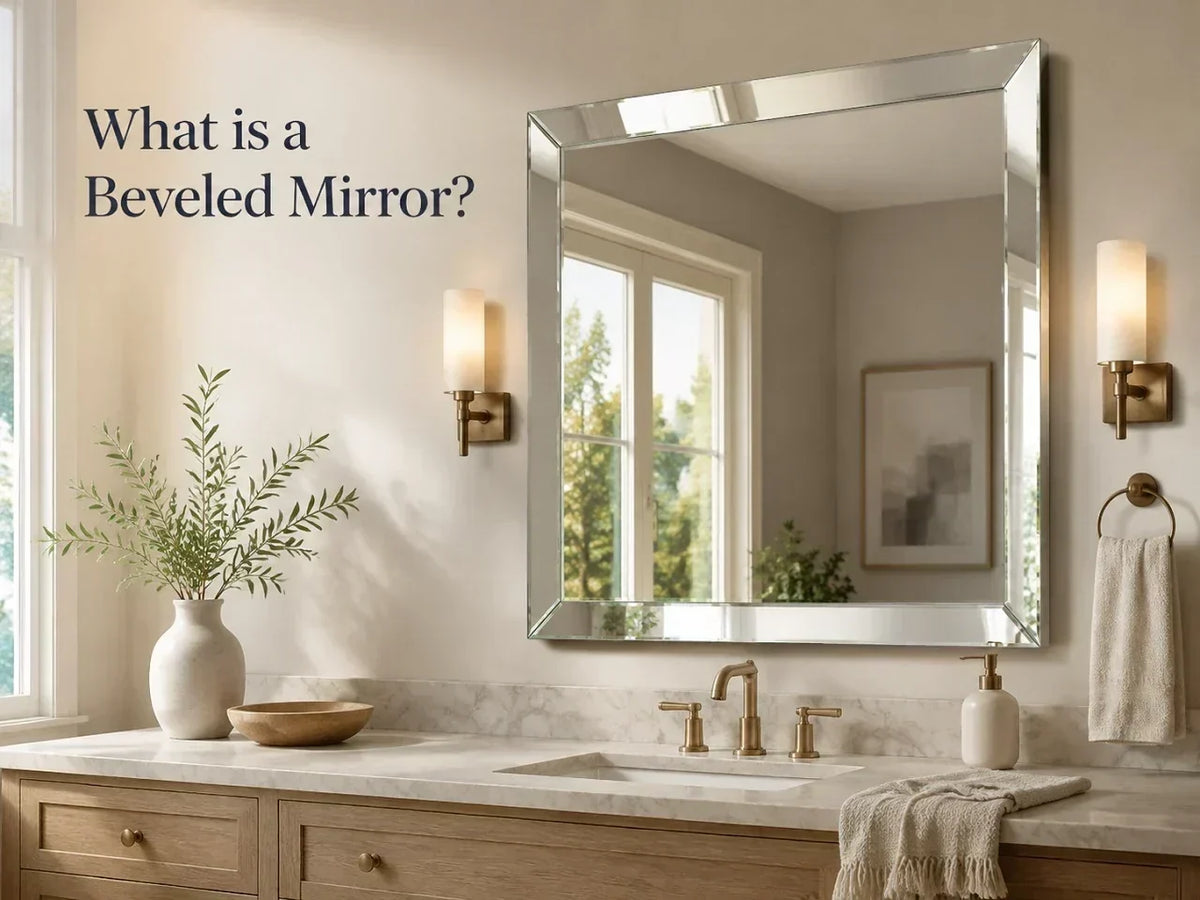
A beveled mirror is a mirror with an angled, polished border around its outer edge. The center remains flat and provides the main reflection, while the perimeter slopes toward a thinner edge.
This beveled border is cut directly into the mirror glass. It is not a separate piece of trim. Because the sloped surface catches and redirects light, it creates a subtle outline that can resemble a built-in frame.
The width of the bevel varies by design. Many residential mirrors have a bevel between approximately 1/2 inch and 2 inches wide, although narrower and wider cuts are also available. A narrow bevel looks restrained, while a wide bevel becomes a more noticeable decorative feature.
The angled border may produce brighter highlights or faint rainbow-like reflections when sunlight or artificial light strikes it. Beveled glass can act like a small prism, producing visual effects that do not appear on an ordinary flat edge. New Angle Beveling explains that this light refraction is a defining visual quality of beveled glass.
You may also see this mirror called a bevel mirror. In British English, it is usually written as a bevelled mirror or a mirror with a bevelled edge. The spelling is different, but the construction is the same.

Beveled Mirror vs. Regular Mirror: What’s the Difference?
The main difference is the way the outer edge of the glass is finished.
A regular frameless mirror usually has flat, polished edges. The reflective surface stays level almost all the way to the perimeter. The result is simple and functional, with little decoration around the glass.
A beveled edge mirror has an angled strip around the perimeter. That strip adds depth and definition without covering the glass with a separate frame.
| Feature | Beveled mirror | Regular mirror |
|---|---|---|
| Edge treatment | Angled and polished | Flat and polished |
| Appearance | Dimensional and decorative | Simple and understated |
| Light reflection | Bevel catches and redirects light | Light reflects evenly across the surface |
| Flat viewing area | Slightly reduced by the bevel | Extends nearly to the edge |
| Frame requirement | Can look finished without a frame | May look plain when frameless |
| Cleaning | Edge may require extra attention | Flat surface is easier to wipe |
| Typical cost | Often higher due to additional processing | Usually less expensive |
A beveled edge does not automatically produce a clearer reflection. The quality of the glass, reflective coating, backing, thickness, and manufacturing process all affect image quality.
A well-made mirror should provide a clear reflection across its flat center. The bevel changes the appearance of the perimeter, not the performance of the main viewing area.
How Is a Beveled Mirror Made?
A manufacturer begins with mirror glass that is thick enough to support the angled cut. Specialized equipment grinds part of the perimeter into a slope. The cut surface is then polished until it becomes smooth and reflective.
This process removes glass from around the edge, making the outermost part thinner than the center. The finished appearance depends on several details:
- The original thickness of the mirror glass
- The width and angle of the bevel
- The shape of the mirror
- The accuracy of the grinding
- The quality of the final polishing
The bevel should be even on every side. On a rectangular mirror, each corner should meet cleanly. Rough areas, cloudy polishing, chips, or visibly uneven widths may indicate poor finishing.
A wider bevel tends to catch more light, but it also uses more of the mirror’s surface. On a small makeup or grooming mirror, a narrow edge may be more practical because it preserves a larger flat viewing area.
Advantages and Disadvantages of Beveled Mirrors
The bevel is mostly a design feature. It can make a simple mirror feel more complete, but it also affects cost, cleaning, and usable surface area.
Advantages of Beveled Mirrors
They create a frame-like finish.
The angled edge gives a frameless mirror a defined border. This can make the glass look finished without adding a wood, metal, or resin frame.
They reflect light around the perimeter.
The bevel catches light from windows, sconces, vanity lights, and ceiling fixtures. The effect changes slightly as you move around the room.
They work with several interior styles.
A rectangular frameless beveled mirror can look clean and contemporary. An oval or decorative beveled framed mirror can suit a traditional bedroom, formal entryway, or vintage-inspired bathroom.
They do not introduce another finish.
A frameless bevel does not need to match the color of faucets, cabinet hardware, door handles, or lighting fixtures. This makes it easier to update the room later.
They can make a basic shape more interesting.
Even a simple rectangle feels more decorative when the perimeter reflects light differently from the center.
Disadvantages of Beveled Mirrors
They may cost more.
Grinding and polishing the edge require additional manufacturing work. A custom size or unusually wide bevel may increase the price further.
The flat viewing area is slightly smaller.
The bevel occupies part of the mirror’s total dimensions. A 30-inch-wide mirror with a 1-inch bevel still measures 30 inches overall, but its completely flat viewing area will be narrower.
The border creates expected distortion.
A reflection in the angled strip may look stretched, broken, or redirected. This is normal and does not mean the mirror is defective.
The transition line may collect residue.
Dust, water spots, or cleaner can settle where the flat center meets the bevel. The mirror may require a little more attention around its perimeter.
A bevel is not a safety feature.
Beveling finishes the appearance of the edge, but it does not mean the mirror is tempered or safety-backed. Those features must be confirmed separately.

How Does a Beveled Mirror Affect Light and Reflection?
The angled border changes how light and images appear around the mirror’s perimeter. It can make a room feel brighter, though it also creates some expected distortion within the beveled section.
Can a Beveled Mirror Make a Room Look Bigger?
A beveled mirror cannot change the room’s physical size, but it can make the space feel brighter and more open by reflecting light and extending sightlines.
Frameless designs are especially useful in small bathrooms, hallways, and entryways. Without a heavy border, the reflective surface blends more easily into the wall.
Placement has more influence than the bevel itself. Position the mirror where it can reflect a window, an open section of the room, an attractive light fixture, or a well-styled wall. Avoid placing it where it mainly reflects clutter, an open bathroom door, or an unfinished area.
Does a Beveled Edge Distort the Reflection?
The flat center of a properly made beveled glass mirror should provide a normal reflection. Only the sloped border produces visible distortion.
Images inside the bevel may look stretched, narrow, fragmented, or redirected because the glass sits at an angle. This is an expected part of the design. A wider bevel makes the effect more noticeable and leaves slightly less flat glass for everyday use.
Distortion across the central surface is different. It may result from thin or uneven glass, a warped backing, excessive pressure from mounting clips, incorrect adhesive application, or an uneven wall. The bevel itself should not distort the mirror’s main viewing area.
Where Can You Use a Beveled Mirror?
A beveled mirror works in both practical and decorative spaces. Its angled border gives the glass a finished appearance without requiring a heavy frame. The right placement depends on the mirror’s size, shape, and the view it will reflect.
Above a Bathroom Vanity
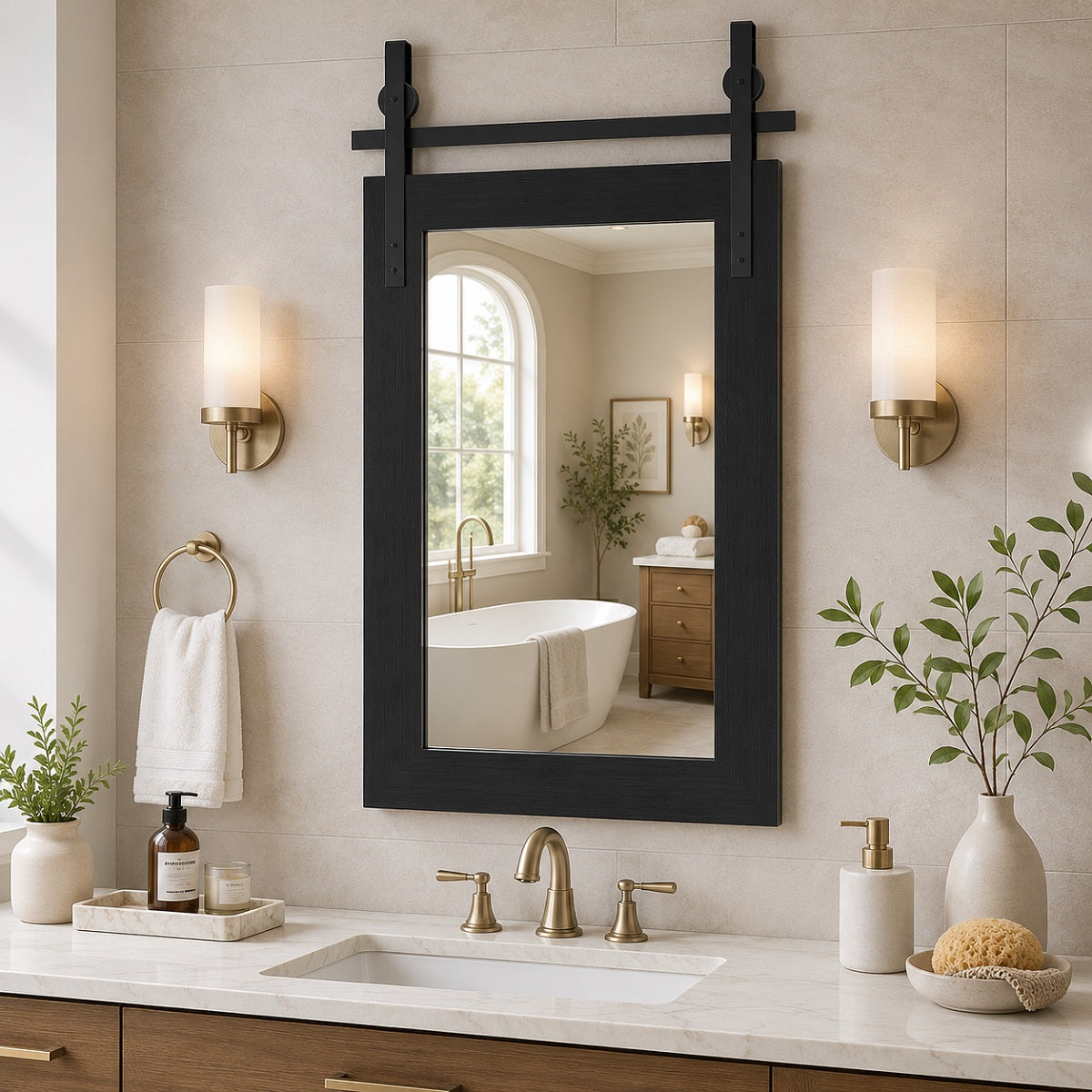
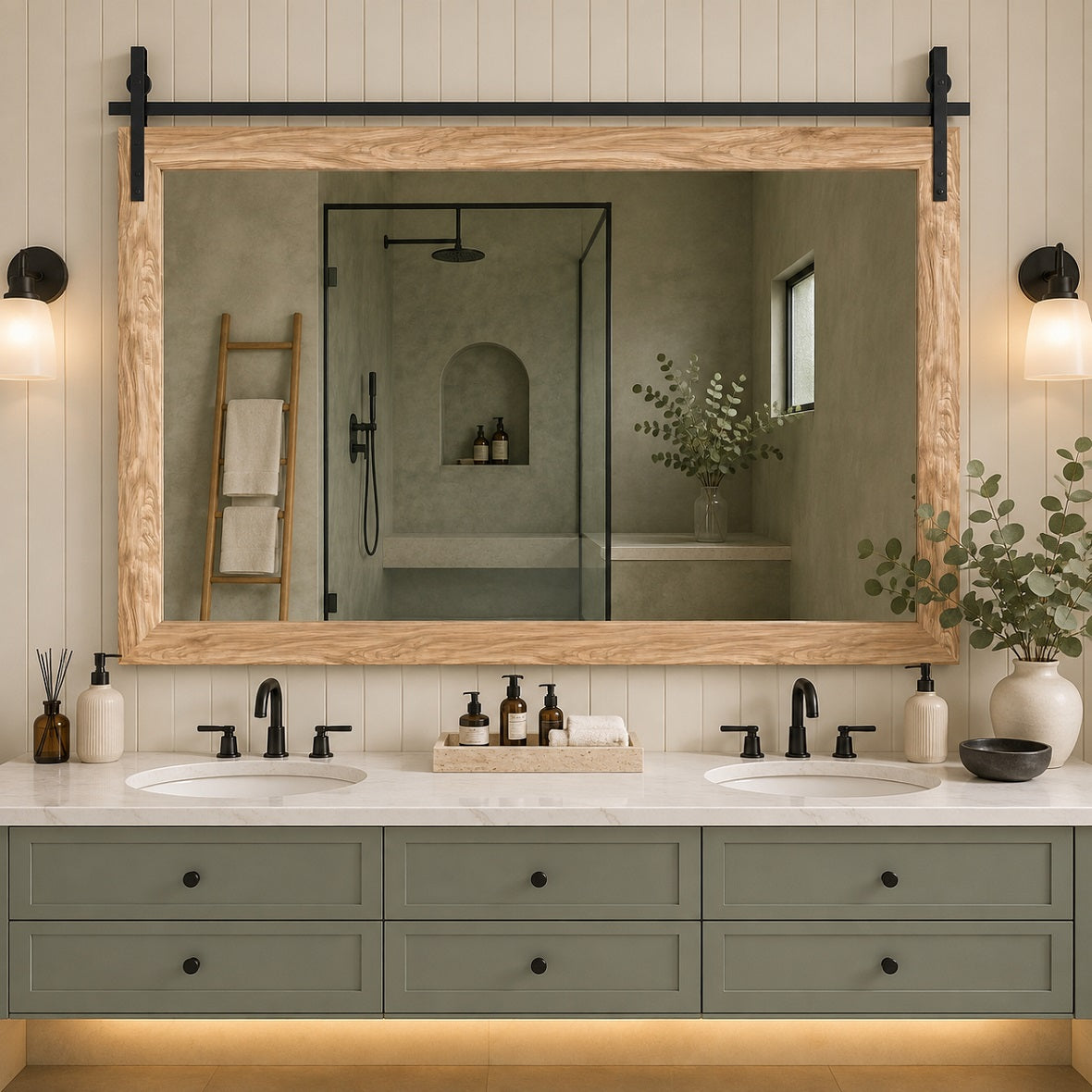
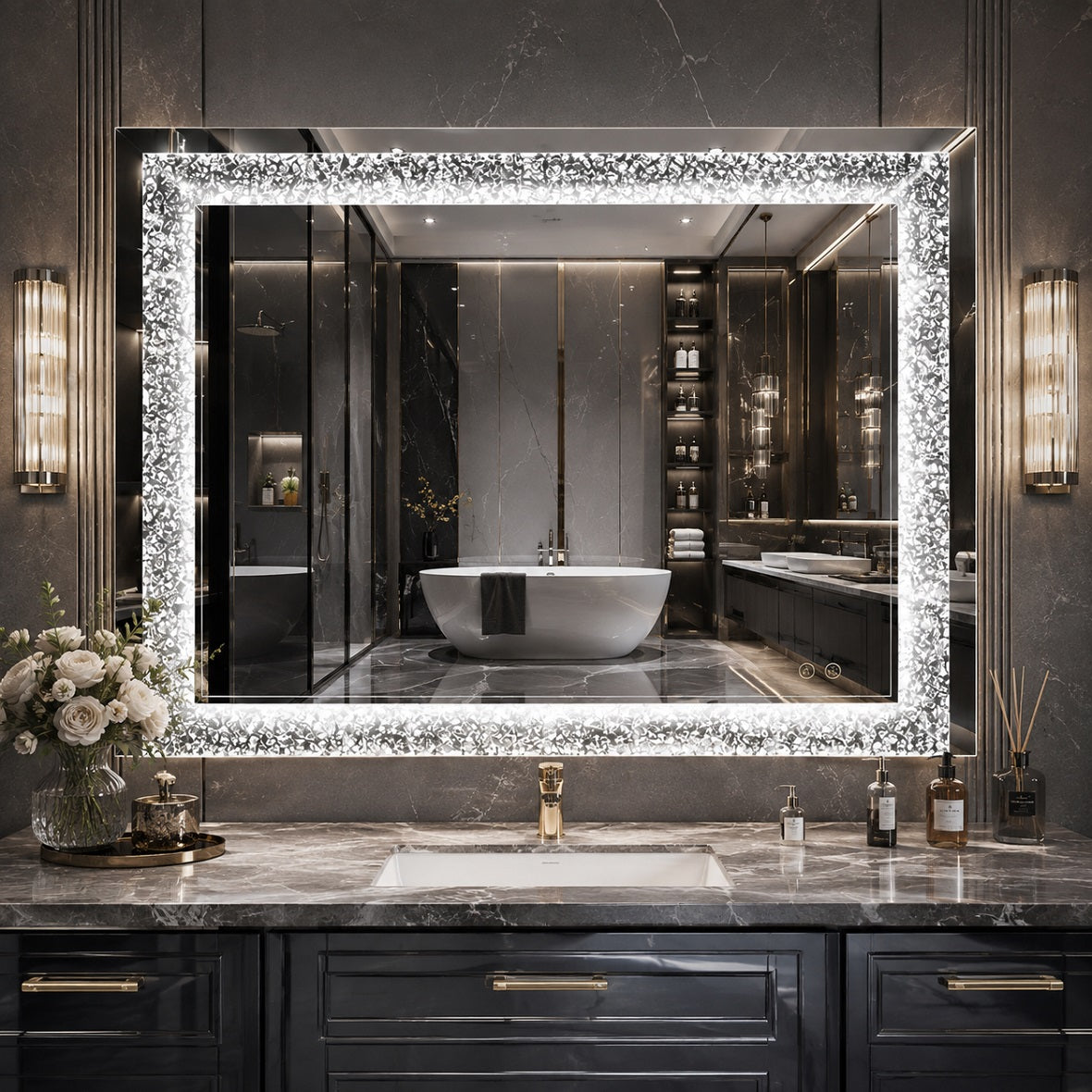
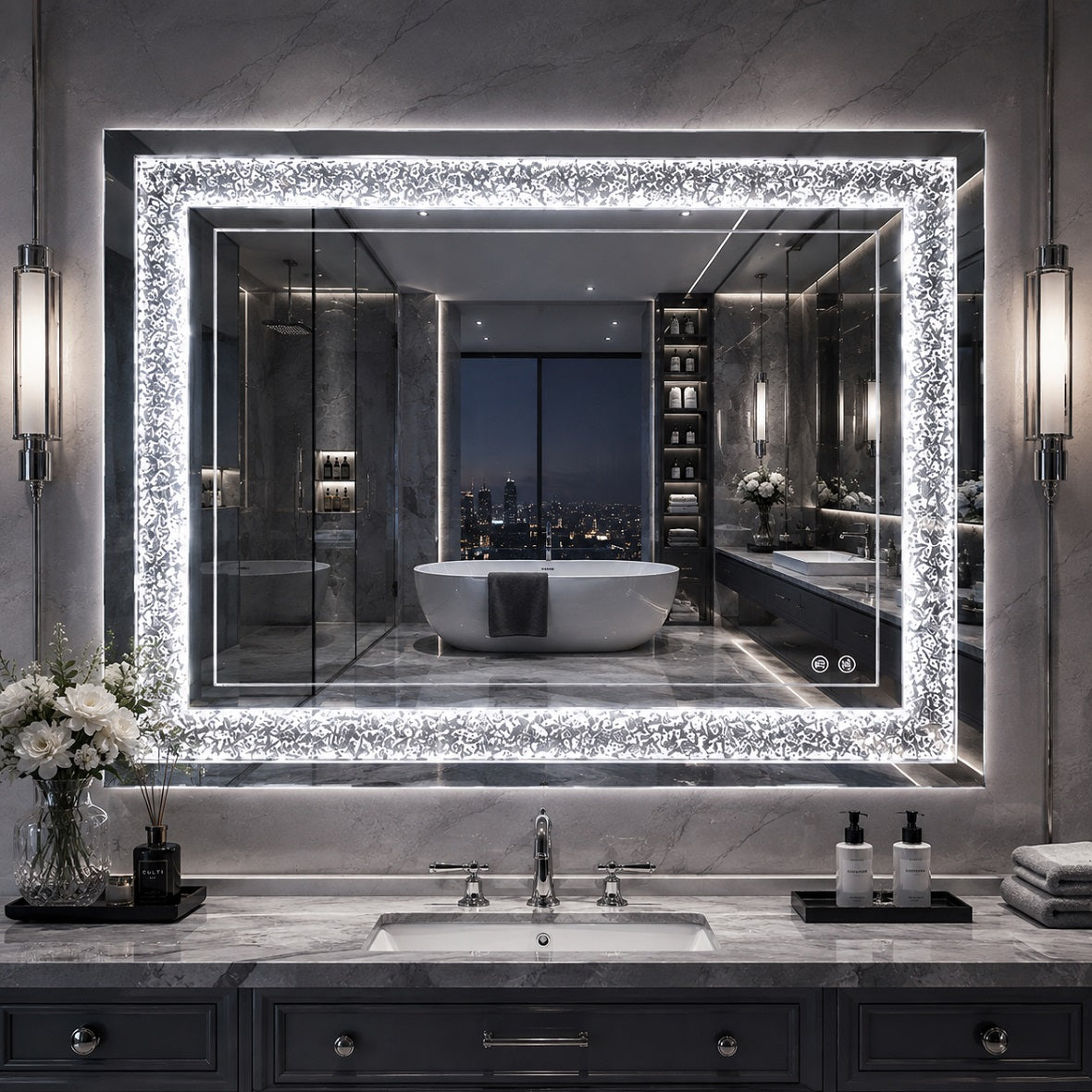
Beveled bathroom mirrors add a polished edge to the vanity area while keeping the wall open and uncluttered. A frameless design works especially well in small bathrooms because it does not compete with faucets, tile, cabinet hardware, or lighting finishes.
Choose a mirror that is slightly narrower than the vanity and provides enough flat viewing space for grooming. One beveled large mirror can span a double vanity, while two smaller mirrors create separate areas above each sink. Check the backing, mounting hardware, and bathroom suitability before installation.
In an Entryway
A beveled wall mirror above a console creates a clear focal point and provides a convenient place for a quick check before leaving home. The reflective edge adds interest without introducing another color or material.
Leave enough open wall space around the mirror so the arrangement does not feel crowded. Position it where it can reflect a light fixture, artwork, or an open part of the room rather than shoes, coats, or doorway clutter.
In a Bedroom or Dressing Area
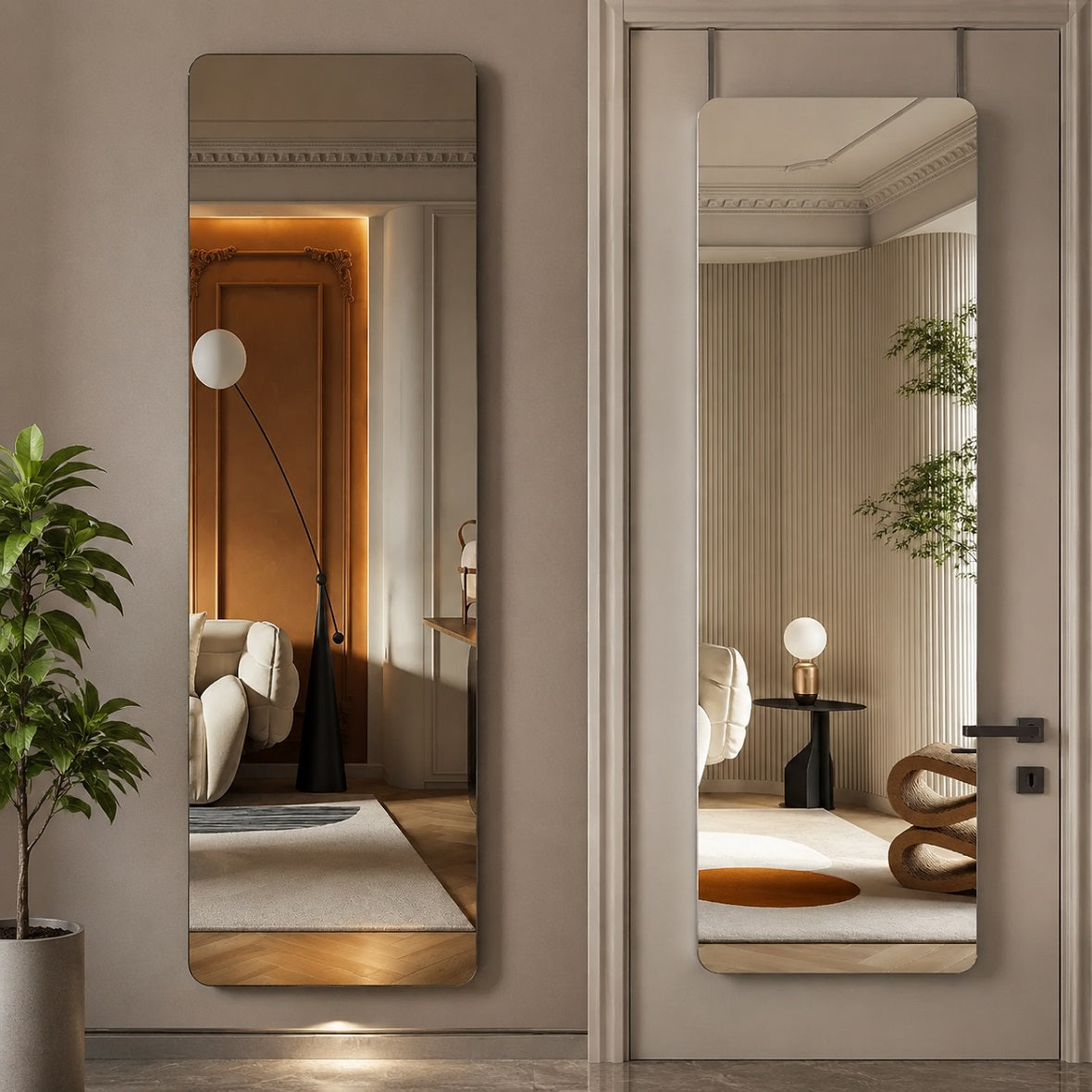
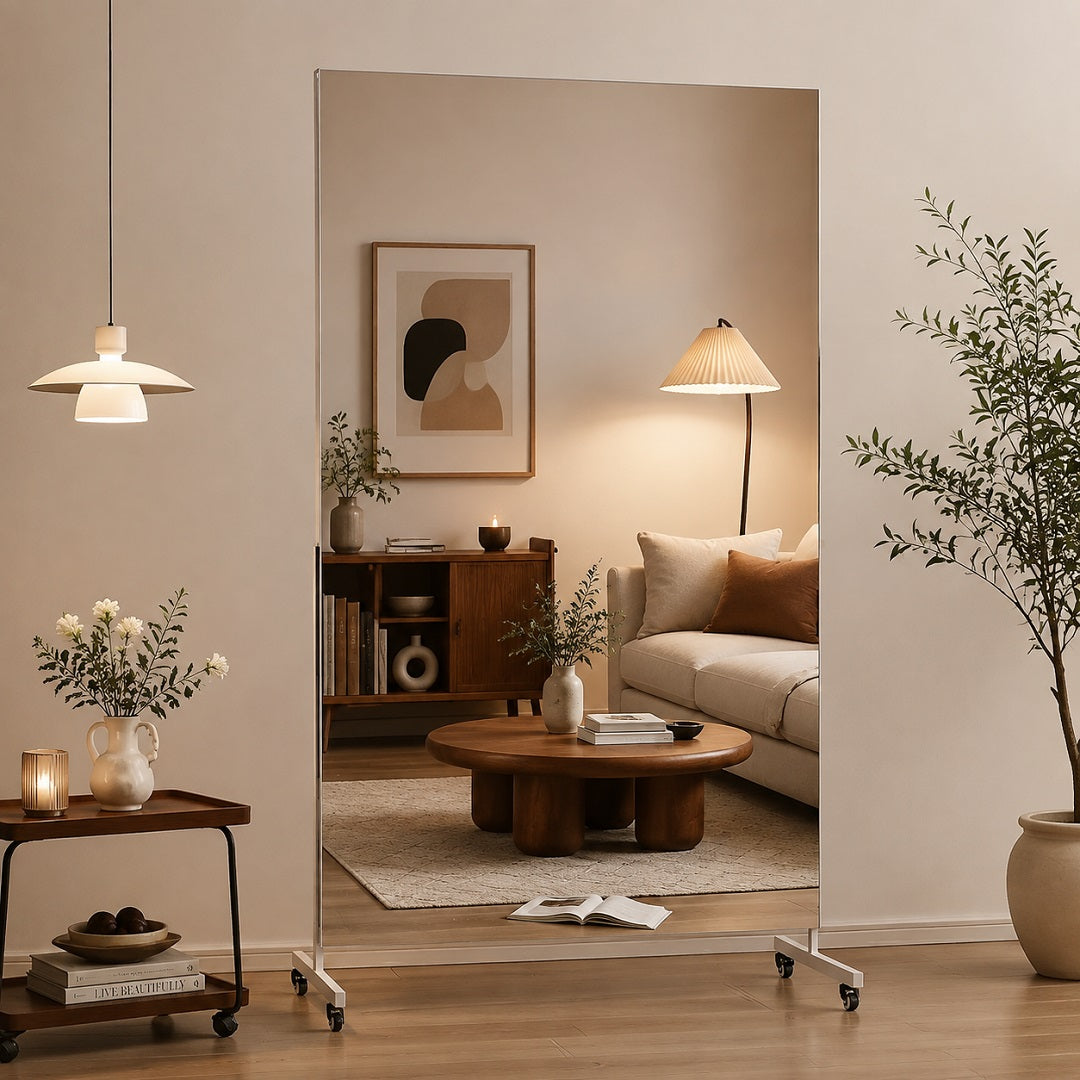
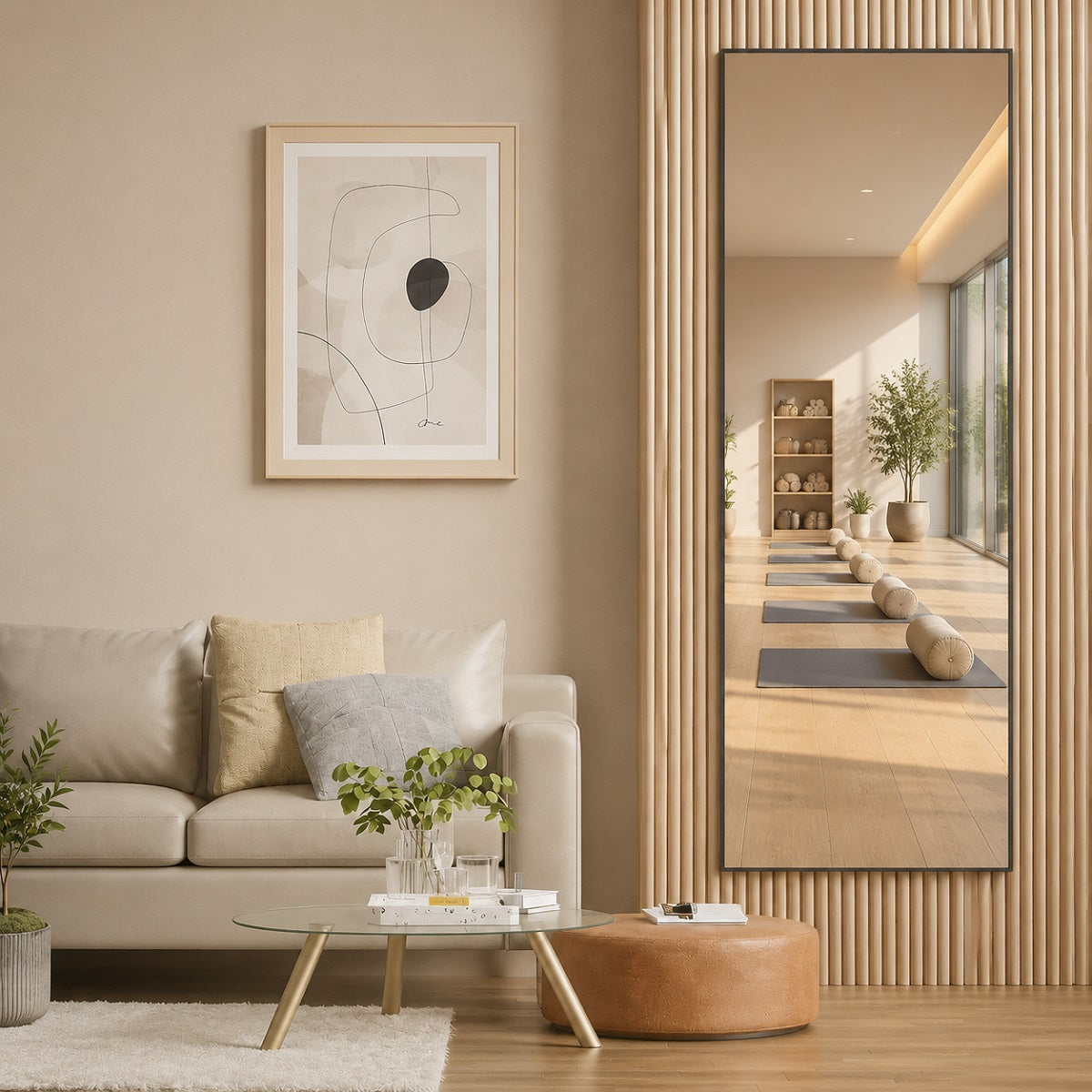
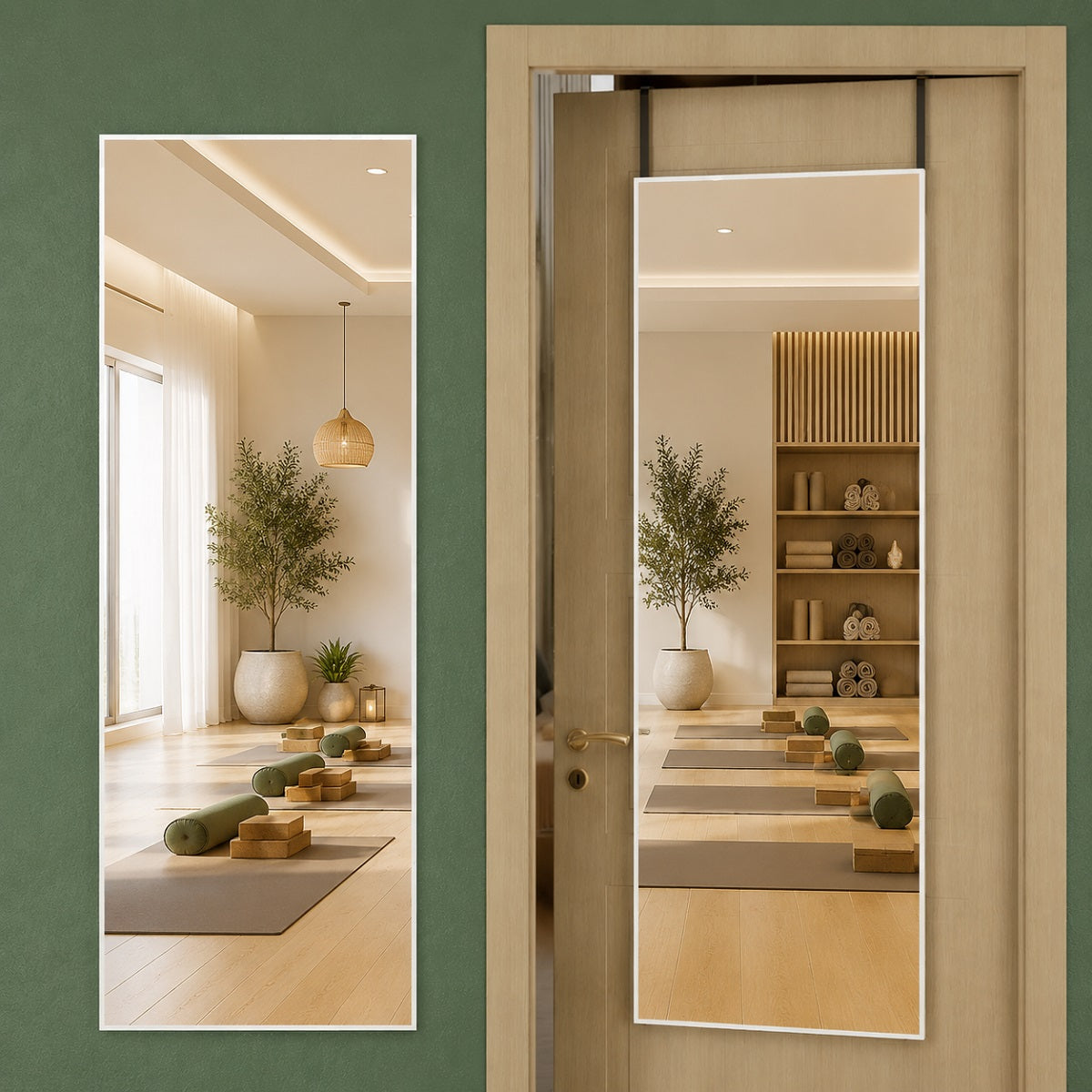
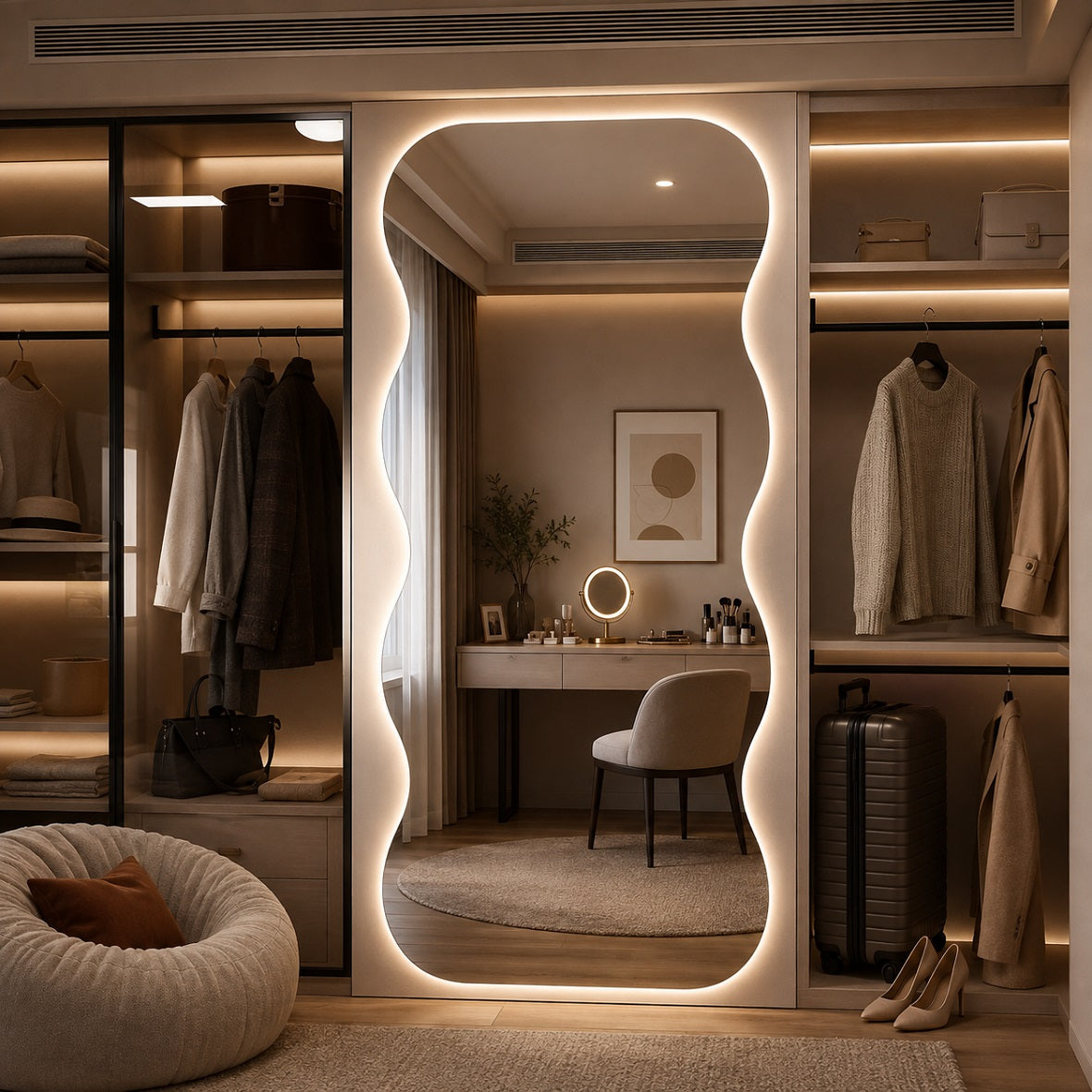
A full-length beveled mirror offers a generous reflection while looking more finished than a mirror with plain polished edges. It can be wall-mounted or leaned against the wall, depending on its design and supplied hardware.
Place it where you can step back far enough to see a complete outfit. Large and leaning mirrors should be secured according to the installation instructions, particularly in homes with children or pets.
Over a Fireplace
A beveled mirror can fill the area above a mantel without adding another strong finish to the room. Its angled border catches light and gives the display more depth while allowing the fireplace to remain the main feature.
Select a size that relates to the mantel’s width. A very narrow mirror may look lost, while an oversized one can overwhelm the fireplace. Before mounting it, check what will appear in the reflection from the main seating area.
In a Dining Room
The beveled edge can pick up light from a chandelier, wall sconces, or candles, giving the dining room a softer glow after dark. A rectangular, round, or oval design can work, depending on the wall and furniture below it.
Hang the mirror where it reflects an attractive part of the room. A sideboard, light fixture, or opposite window usually creates a more appealing view than a busy doorway or storage area.
In a Living Room
A large beveled mirror can brighten an empty wall by reflecting daylight, furniture, and artwork. It is especially useful where another framed print might add too much color or pattern.
Place it across from or beside a window to make better use of natural light. The mirror should relate to the scale of the sofa, console, or cabinet below it so the wall arrangement feels balanced.
What to Know Before Buying and Caring for a Beveled Mirror
Before buying a beveled mirror, consider its dimensions, edge quality, mounting requirements, and intended room. Product photos often emphasize the brightest part of the edge, so the bevel may appear stronger online than it does under normal household lighting.
What to Check Before Buying
Overall dimensions: Determine whether the listed size includes the bevel and any external frame. Since the bevel occupies part of the mirror’s surface, the flat viewing area will be slightly smaller than the total dimensions.
Bevel width: A narrow bevel looks subtle and preserves more flat glass. A wide bevel catches more light and creates a stronger decorative border.
Glass thickness: The mirror glass should be thick enough to support a clean, consistent bevel. Check for uneven polishing, rough areas, cloudy sections, or chipped corners.
Mounting direction: Some rectangular mirrors can hang vertically or horizontally, while others include hardware for only one orientation.
Mirror weight: A beveled large mirror needs mounting hardware and wall anchors rated for its weight. Confirm that the supplied hardware is suitable for your wall type.
Bathroom suitability: For bathroom installation, review the backing, moisture guidance, and mounting instructions.
Safety features: A beveled edge does not mean the glass is tempered or safety-backed. Look for these features separately in the product specifications.
Frame construction: On a beveled framed mirror, confirm whether the central glass, surrounding frame, or both have beveled edges.
How to Clean a Beveled Mirror
The angled border may collect slightly more dust and residue than a completely flat mirror, but routine cleaning is simple.
Apply a small amount of mirror-safe cleaner to a microfiber or lint-free cloth. Wipe the flat center in broad passes, then follow the beveled border with a clean section of the cloth.
Dry the lower edge so moisture does not remain against the backing or frame. Avoid spraying large amounts of cleaner directly onto the glass, since the liquid may run behind the mirror or collect along the bottom.
Do not use abrasive pads, gritty cleaners, or sharp blades. They may scratch the glass or damage the polished finish.
Are Beveled Mirrors Still a Good Choice?
Beveled mirrors can work in traditional, transitional, and modern rooms. Their appearance depends less on the bevel itself and more on the mirror’s shape, edge width, frame, and placement.

Are Beveled Mirrors Out of Style?
No. A simple rectangular frameless beveled mirror with a narrow edge can still look clean and current. The bevel adds a small amount of detail without making the mirror feel overly decorative.
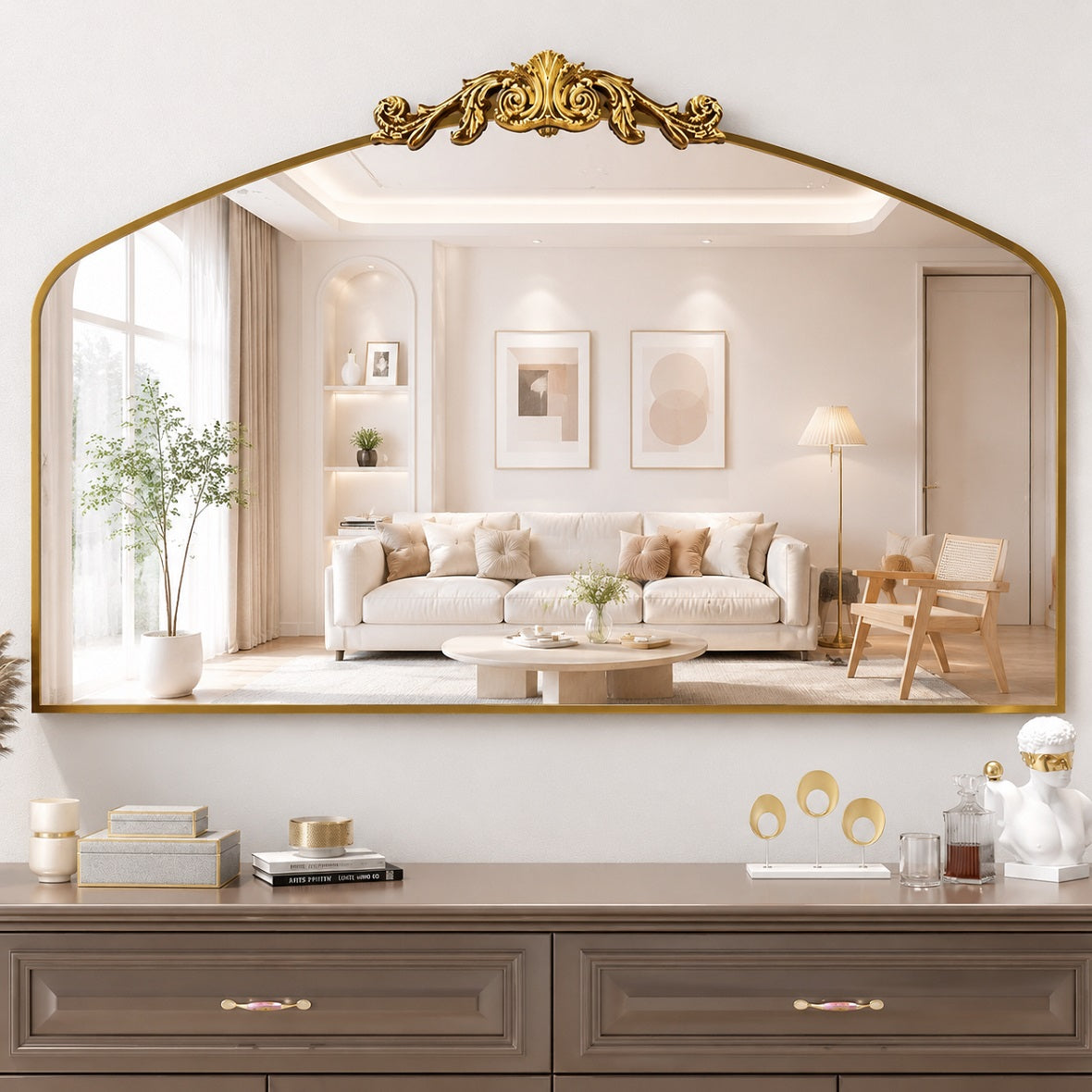
An ornate mirror with a wide mirrored frame, etched glass, and decorative corners may feel more traditional. In a modern bathroom, choose a straightforward shape and allow the bevel to serve as a quiet finishing detail. An oval shape or wider decorative frame may fit better in a classic interior.
At Hasipu, we see the bevel as a design detail rather than a short-lived trend. Good proportions and thoughtful placement have more influence on how current the mirror feels.
Is a Beveled Mirror Worth It?
A beveled mirror is worth considering when you want more detail than a plain polished edge but less visual weight than a conventional frame. It adds subtle depth, reflects light around the perimeter, and coordinates easily with different finishes.
A regular mirror may be more suitable when your budget is limited, you want the largest possible flat viewing area, or you prefer a completely minimal appearance.
A beveled mirror may be right for your home when:
- You want a decorative edge without a heavy frame
- The mirror will receive enough light to show the bevel
- You need a neutral design that works with mixed finishes
- You like the added depth around the glass
- The flat center remains large enough for its intended use
The effect may be subtle from across the room. Seen up close, a well-polished bevel can make a basic mirror look more carefully finished.
Final Thoughts
A beveled mirror does not need an elaborate shape or heavy frame to stand out. Its angled edge adds depth, catches nearby light, and gives the glass a clean, finished border. The center still works like a regular mirror, while the bevel adds just enough detail to make the design feel intentional.
For Hasipu, the best mirror is not simply the most decorative one. It should fit the wall, provide a comfortable viewing area, and work naturally with the room around it. When those details are right, a beveled edge can give a bathroom, bedroom, or entryway a polished look that lasts well beyond a passing trend.
Frequently Asked Questions
1. What is a beveled mirror?
A beveled mirror has an angled, polished border cut directly into the outer edge of the glass. The flat center provides the main reflection, while the sloped perimeter catches light and creates a subtle frame-like finish.
2. What is the difference between a beveled mirror and a regular mirror?
A regular mirror usually has flat, polished edges. A beveled edge mirror has a sloped border that adds depth and decoration. The bevel slightly reduces the flat viewing area but gives a frameless mirror a more finished appearance.
3. Is there a difference between beveled and bevelled mirrors?
No. Beveled mirror is the standard American spelling, while bevelled mirror is commonly used in British English. Both terms describe a mirror with an angled and polished outer edge.
4. Are beveled mirrors good for bathrooms?
Yes. Beveled bathroom mirrors add detail without requiring a heavy frame, making them suitable for small and large bathrooms. Check the backing, mounting hardware, safety features, and moisture guidance before installation.
5. Does a beveled edge distort the reflection?
The flat center of a properly made beveled glass mirror should provide a normal reflection. The angled border may produce a stretched or redirected image, but this expected effect should remain within the beveled section.
6. Are beveled mirrors worth buying?
A beveled mirror is worth buying when you want more detail opslag than a plain polished edge but less visual weight than a separate frame. A simple frameless beveled mirror can work in modern, transitional, and traditional rooms without looking dated.