Table of Contents
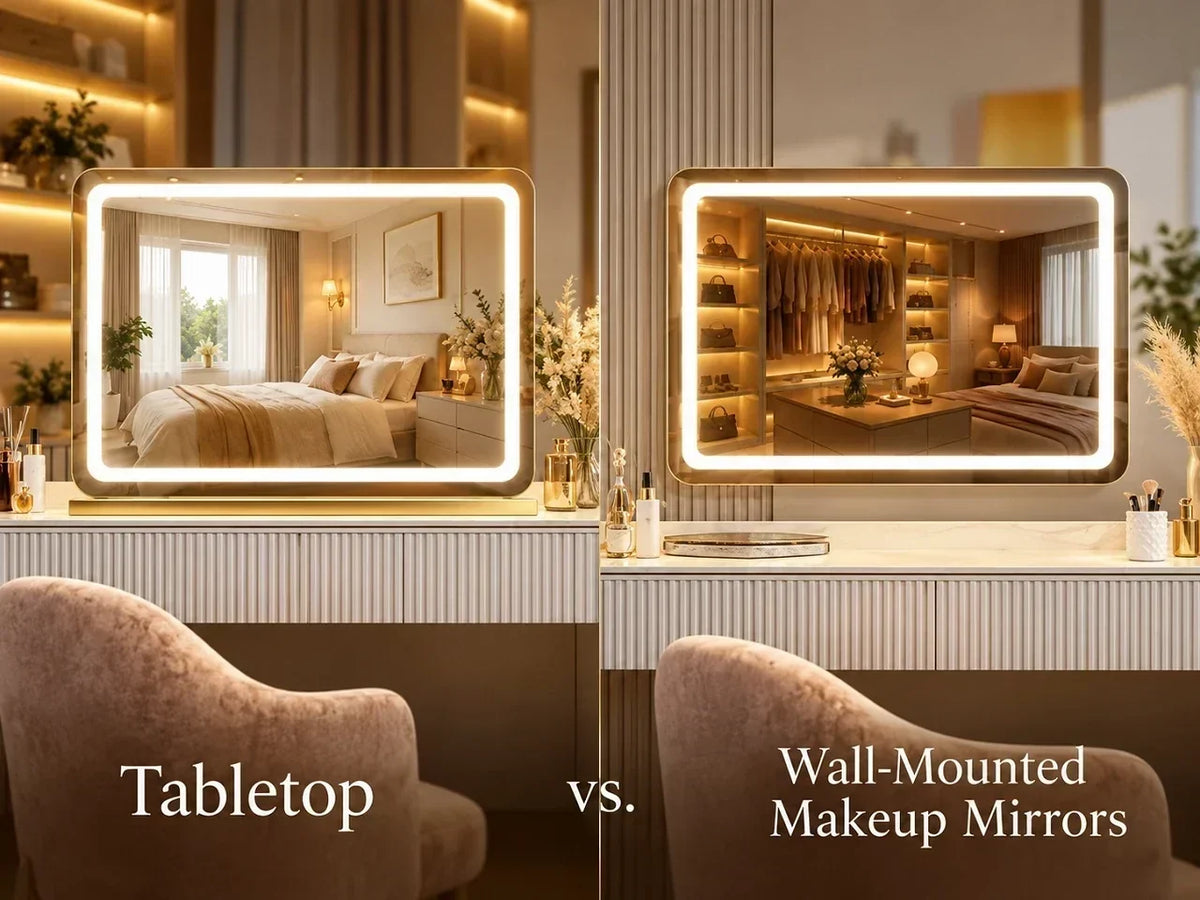
Counter space gets tight once you set out your makeup bag, brushes, and skincare. A wall-mounted makeup mirror leaves more room beside the sink. A tabletop makeup mirror lets you pull the glass closer or move your routine to a bedroom desk.
The choice comes down to how you get ready. Do you sit down for makeup? Share the bathroom? Need a closer view for eyeliner? Those details help you decide which style will be comfortable to use—and whether mounting a mirror is worth the work.
This Hasipu guide compares the prices, advantages, and drawbacks of both styles, with practical advice on lighting, magnification, and installation.
Tabletop vs. Wall-Mounted Makeup Mirrors: Key Differences
| What matters | Tabletop makeup mirror | Wall-mounted makeup mirror |
|---|---|---|
| Counter space | Needs room for its base | Keeps the countertop free of a mirror base |
| Moving it around | Can move between suitable surfaces; large models may be heavy | Stays in one location |
| Installation | Usually requires little setup, though some bases need assembly | Requires compatible mounting hardware and a suitable wall |
| Positioning | Can move closer or farther away; height and tilt vary | Position depends on mounting height, tilt, and arm reach |
| Seated makeup routine | Convenient when the stand matches your seated eye level | Works when installed to suit your seat and posture |
| Rental flexibility | Useful when drilling is restricted | Requires checking permission and installation requirements |
| Lighting | Available with or without built-in lights | Available with or without built-in lights |
| Main drawback | Takes up usable surface space | Placement mistakes take more work to fix |
Wall-mounted makeup mirrors come in different designs. A compact mirror on an extending arm pulls closer for detail work and folds back when you’re done. A larger mirror mounted flat against the wall stays in place, so check that you can comfortably see your face from your usual seat or standing position.

Tabletop vs. Wall-Mounted Makeup Mirrors: What Do They Cost?
A tabletop makeup mirror usually leaves you with fewer setup expenses. Attach the base as directed, place it on a suitable surface, and connect or charge it as needed. A wall-mounted makeup mirror may involve mounting hardware, paid installation, or electrical work before it’s ready to use.
The mirror itself isn’t always more expensive just because it mounts to the wall. A large lighted tabletop model can cost more than a small wall mirror. Size, lighting, construction, and adjustability all affect the price.
The selected retail examples below give you a starting budget rather than a fixed price range for either category.
| Cost to consider | Tabletop makeup mirror | Wall-mounted makeup mirror |
|---|---|---|
| Mirror purchase | Roughly $20–$85 for the compact and midpriced lighted examples reviewed | Roughly $50–$200 for the basic through premium examples reviewed |
| Initial setup | Usually no installation charge; some models need base assembly | May involve suitable anchors, mounting labor, or electrical work |
| Power and upkeep | Electricity or replacement batteries, depending on the design | Electricity or replacement batteries, depending on the design |
| Changing its location | Usually easy to move to another suitable surface | May require new mounting holes and repairs to the previous location |
| Features that can increase the price | Larger mirror surface, adjustable height, lighting, and frame construction | Arm construction, lighting, finish, and power configuration |
These U.S. dollar amounts reflect selected retail listings checked in September 2026, including sale prices. They are not Hasipu quotes or market-wide price limits. Tax, shipping, and installation are excluded.
Leave Room in the Budget for Installation
A rechargeable wall mirror still needs secure mounting, but it doesn’t require the same electrical connection as a hardwired model. For a hardwired mirror, get an installation quote before ordering. The work needed at your chosen location can change the total considerably.
A tabletop model keeps setup simpler, though the available surface matters. Check the base dimensions before buying; a mirror that crowds your brushes and makeup bag may be inconvenient even at a good price.
When shopping for Hasipu makeup mirrors, compare the listed price alongside the dimensions, power source, and mounting instructions. Spend extra on features you’ll use: a stand that reaches a comfortable height, lighting you can adjust, or an arm that brings the glass within easy viewing distance.
Tabletop Makeup Mirrors: Pros and Cons
A tabletop makeup mirror gives you control over where you get ready. Pull it closer for eyeliner, move it aside to open your laptop, or carry a smaller model into the bedroom when the bathroom is occupied. The trade-off is the space its base takes up.
| Advantages | Disadvantages |
|---|---|
| Easy to reposition. Move the mirror closer or adjust its placement as your routine changes. | Takes up surface space. A wide base can crowd a small vanity, especially with products spread out. |
| Little setup required. Most models need only basic assembly and a suitable place to stand. | Fixed stands may sit too low. Tilt helps with the angle, but it doesn’t raise the mirror to eye level. |
| No mounting holes. A freestanding design suits rentals and temporary makeup areas. | Some bases wobble. Poor balance can make adjusting the mirror or pressing its controls annoying. |
| Easy to share. Each person can position it where they feel comfortable. | Larger mirrors are harder to move. Check the weight before choosing a model you plan to carry between rooms. |
For a desk that doubles as a vanity, measure how much room remains after placing the mirror. You should still have somewhere to set an open makeup bag and rest your arms.
Check the viewing height from your usual chair, too. A mirror that looks tall enough in a product photo may leave you bending toward the glass. When comparing Hasipu tabletop mirrors, use the listed dimensions and adjustment range to judge how each model will fit your space.
The Benefits and Drawbacks of Wall-Mounted Makeup Mirrors
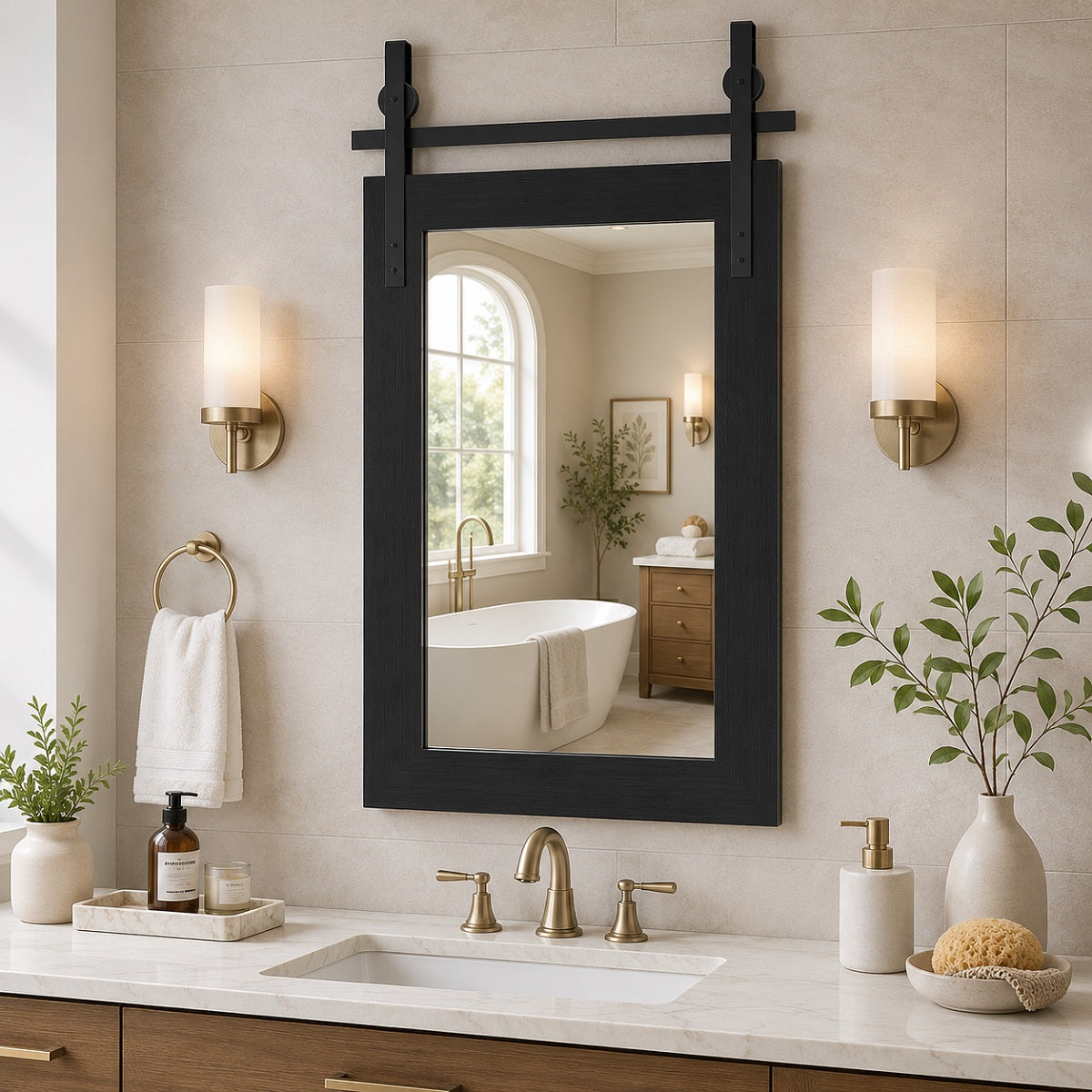
A wall-mounted makeup mirror leaves the counter open for the things you reach for every morning. An adjustable-arm design can bring the glass closer during makeup application, then fold back toward the wall.
Placement takes more thought. Once the mirror is installed, moving it a few inches is no longer a quick adjustment.
| Advantages | Disadvantages |
|---|---|
| More usable counter space. There’s no mirror base beside the sink or among your makeup products. | Needs secure mounting. The hardware and installation method must suit the wall and mirror weight. |
| Closer viewing with an extending arm. Bring the glass toward your face for detailed work. | Arm length limits reach. A short extension may not bring the mirror past a deep sink comfortably. |
| Some designs fold away. An articulated arm can tuck back when the mirror isn’t in use. | Movement needs room. Check that the mirror won’t hit a cabinet door, shelf, or towel ring. |
| Easier to wipe the counter. There’s no stand to lift or clean around. | The mounting height is fixed. Swiveling the glass may not provide enough adjustment for everyone sharing it. |
| Hardwired models can hide the power connection. Suitable installations keep cords out of sight. | Electrical work can add expense. Hardwired models require more setup than battery-powered or rechargeable designs. |
| Stays in its designated spot. There’s no need to bring it out before each use. | Relocation takes work. Moving it may leave mounting holes that need repair. |
Extending and folding features apply to compatible adjustable-arm models. A mirror secured flat against the wall stays at that viewing distance.
Before drilling, test the proposed location from where you normally sit or stand. Check the view, the reach, and the space around the mirror. In a shared bathroom, have the other person try the position as well.
A wall-mounted design makes sense when you’re happy with your getting-ready spot and want to keep the surface below clear. Getting the placement right matters more than matching the mirror perfectly to the faucet finish.
Which Offers Better Value?
Choose a tabletop mirror for flexibility and a simpler setup. It’s especially useful when you rent, share a getting-ready space, or haven’t settled on a permanent vanity arrangement.
Choose a wall-mounted mirror when keeping the counter clear will improve your daily routine. An adjustable arm can also be worth the expense when your existing mirror sits too far behind the sink.
Neither mounting style guarantees better glass, lighting, or magnification. Compare those features separately. A well-positioned mirror with the controls you actually use offers better value than extra features that don’t make getting ready any easier.

When a Tabletop Makeup Mirror Makes More Sense
A tabletop makeup mirror gives you room to change your mind. You can move it across a vanity, bring a smaller model to another room, or put it away when a desk needs to become a workspace again.
That flexibility is useful before you’ve settled on a permanent makeup area.
You prefer to sit down
A bedroom vanity or dressing table lets you keep brushes, makeup, and a mirror within reach. A tabletop model can fit naturally into that arrangement, provided the mirror sits high enough.
Check the height from the tabletop to the center of the reflective surface. Overall product height alone doesn’t tell you where your face will appear.
Try sitting in your usual chair before buying. Your reflection should be easy to see without rounding your shoulders or holding your chin at an awkward angle. An adjustable stand can help, but check its actual height range.
Your makeup spot changes
Perhaps the bathroom is occupied in the morning, or your desk doubles as a vanity. A freestanding mirror makes those changes easier.
Size still matters. A compact lighted makeup mirror may be easy to carry, while a large framed vanity mirror can be cumbersome. “Tabletop” describes how it stands, not how portable it is.
For a mirror you’ll move regularly, check the weight, base design, and power connection.
You want a simple setup
A tabletop design avoids choosing a drilling location and matching anchors to a wall. Some models need a base attached, but the setup is generally straightforward.
The trade-off is the space it occupies. Measure the base footprint, then leave enough room for the products you actually use. A mirror that fits between two organizers may still leave nowhere to set an open makeup bag.
A stable base also matters. The mirror should stay put when you adjust its angle or use its controls.
Why Choose a Wall-Mounted Makeup Mirror?
A wall-mounted makeup mirror makes sense when your routine already has a fixed location. It can free up counter space and keep the mirror ready without having to bring it out each morning.
The key is choosing a design that reaches a comfortable viewing position.
A small counter needs breathing room
On a narrow bathroom vanity, removing a mirror base can give you useful space for everyday essentials.
An adjustable-arm model can swing toward you during use and fold back afterward. Manufacturers offer telescoping swing-arm designs specifically for this kind of positioning, though movement and reach vary by model.
Check both the extended reach and the folded depth. A mirror can clear the countertop and still interfere with a medicine cabinet, towel ring, or nearby door.
You want the reflection closer
Leaning across a deep sink to apply mascara is inconvenient. An extending mirror may solve that problem, but only when the arm reaches far enough.
Measure from the proposed mounting point to where your face will normally be. Allow room for your hand, brush, or mascara wand between you and the glass.
A large mirror fixed flat against the wall offers a broader view, but it won’t bring a close-up reflection forward. Don’t assume every wall-mounted design provides the same convenience.
You’re creating a permanent vanity area
A wall-mounted mirror can give a dedicated makeup station a more settled appearance. It also removes the need to lift a base when wiping the counter.
Spend time testing the location before installation. Hold a paper template where the mirror will sit and check it from your normal position. In a shared space, have each person try it.
A swivel head changes the viewing angle; it doesn’t necessarily compensate for a mounting height that’s wrong for another user.
Choosing Lighting and Magnification for Your Makeup Routine
Lighting and magnification affect what you can see, whether your mirror stands on a desk or mounts to the wall. Start with a comfortable, evenly lit view of your face, then consider how much close-up detail you need.
Front-facing lights direct illumination toward you. Backlighting creates a glow behind the mirror, but may leave you needing another light source for makeup. Adjustable brightness lets you turn the light up or down as the room changes throughout the day. Several color modes can be useful for checking your makeup under different tones, though they don’t guarantee accurate color rendering.
Look beyond the “LED” label when comparing Hasipu makeup mirrors. Check the lighting position, available controls, and power connection on the individual model. A plug-in mirror needs a convenient outlet; a rechargeable design needs a charging port you can reach.
For magnification, keep a 1X reflection available to check your whole face. A magnifying surface can help you see individual brow hairs or the edge of your eyeliner more clearly.
Higher magnification generally requires a closer viewing distance and shows less of your face at once. That makes positioning especially relevant: a tabletop mirror needs room to move toward you, while a wall-mounted magnifying mirror needs enough reach to bring the glass comfortably close.
Use the magnified view for detail work, then return to 1X to check blending and balance. You want to see how your makeup looks across your face without getting caught up in every enlarged detail.
Which Makeup Mirror Fits Your Daily Routine?
Renting or using your desk for makeup?
A tabletop makeup mirror lets you change the setup without drilling into the wall. Move it aside when it’s time to work, or take it with you when your lease ends.
Check its weight and storage space before choosing a large model. A mirror that fills the desk may be more trouble to put away than you expected.
Give a small bathroom more counter space
An adjustable wall-mounted makeup mirror keeps the area beside the sink available for everyday essentials. An extending arm can bring the glass closer while you apply makeup, then fold back afterward.
Measure its reach and check the full swing of the arm. It should clear nearby cabinet doors and shelves while leaving room for your hands during use.

Getting comfortable at a seated vanity
Sit in your usual chair before deciding on a mirror. You should be able to see your face without hunching forward or lifting your chin.
A tabletop model with the right height and tilt can make that easier. A wall-mounted mirror can also suit a seated setup, provided its position matches your eye level and viewing distance. When comparing Hasipu makeup mirrors, check those measurements against the individual model’s specifications.
Sharing the mirror with someone else
Different heights and habits can make a fixed mirror position awkward. A freestanding model gives each person room to adjust its placement, though a fixed-height stand still has limits.
For a shared wall mirror, check how far it extends, tilts, and moves vertically. “Adjustable” may describe a swiveling head without any height adjustment.
Choose Around the Way You Get Ready
Picture tomorrow morning: where you’ll be sitting or standing, where your products will go, and how close you’ll want the glass.
Choose a tabletop makeup mirror when flexibility and easy positioning matter most. Choose a wall-mounted makeup mirror when you have a permanent spot and want more usable counter space.
When comparing Hasipu mirrors, check the individual model’s dimensions, mounting options, lighting controls, and magnification against that setup. The right mirror should let you settle into your routine without rearranging the room—or leaning across the sink.
Frequently Asked Questions
1. Is a wall-mounted makeup mirror better for a small bathroom?
It can be, especially when the countertop is narrow. You still need enough wall space and clearance to use it comfortably. Where drilling isn’t practical, a compact tabletop mirror that stores away may be a better fit.
2. Can you mount a tabletop makeup mirror on the wall?
Only when the manufacturer specifies that the model supports wall mounting. Some mirrors offer both installation options; others are designed solely for a base. Check the instructions and compatible hardware before removing any parts.
3. How high should a wall-mounted makeup mirror be?
Position it around your comfortable viewing height in the posture you’ll actually use. Test the location while seated or standing before drilling. The mirror’s adjustment range, magnification, and intended users all affect the final position.
4. Is a lighted mirror necessary for makeup?
Not always. Good existing lighting may be sufficient. Built-in lighting is useful when your face falls into shadow or the room’s lighting changes throughout the day.