

Table of Contents
A mirrored medicine cabinet gives you a bathroom mirror and a place to put the little things that tend to gather around the sink. Toothpaste, face wash, a razor, and a few skincare bottles can disappear behind the door while staying within reach.
Choosing one takes more than finding a frame you like. A recessed cabinet can sit close to the wall but requires space inside it. Sliding doors avoid an outward swing but limit how much storage you can access at once. Built-in lighting can help with grooming, though its performance depends on the actual fixture.
Start with what your bathroom needs: less countertop clutter, better access, additional light, or a cleaner-looking wall. Then compare the cabinet types that solve that problem.
What Is a Mirrored Medicine Cabinet?
A bathroom medicine cabinet with a mirror is a shallow storage cabinet with a mirrored front, usually installed above a sink. Inside, shelves hold small toiletries and grooming supplies. Some models also have interior mirrors, lights, outlets, or heated defogging areas.
The name describes a familiar fixture, not a guarantee that it is suitable for storing every medication. Many medicines need a cool, dry location away from bathroom moisture; check their storage instructions before putting them inside.

Types of Mirrored Medicine Cabinets
There are four useful ways to compare these cabinets: installation method, door structure, features, and appearance.
These categories overlap. A single cabinet might be recessed, have three doors, include lighting and a defogger, and feature a frameless front. Choose the installation method your wall supports, then work through the remaining options.
Types of Mirrored Medicine Cabinets
Mirrored medicine cabinets differ in how they mount, how their doors open, which features they include, and how they look. These categories overlap: one cabinet can be recessed, have three doors, include lighting and a defogger, and feature a frameless front.
Installation Options
| Type | Best For | Pros | Cons |
|---|---|---|---|
| Recessed medicine cabinet — the cabinet body sits mostly inside the wall. | New bathrooms, full remodels, and small spaces where a projecting cabinet would feel intrusive. | Sits close to the wall; keeps the cabinet body largely out of the sink area; provides concealed storage with the appearance of a regular mirror. | Requires a wall opening and secure support; pipes, wiring, ducts, or framing may limit placement; wall repairs can add cost; replacements must fit the opening or require alterations. |
| Surface-mount medicine cabinet — the cabinet attaches to the finished wall. | Updates where opening the wall is impractical or the wall cavity contains obstructions. | Avoids a full cabinet recess; usually involves less wall work; can be easier to replace; accommodates cabinet depth without needing that space inside the wall. | Projects over the sink; may feel bulky above a shallow vanity; exposed sides may require finishing panels; needs support suited to the loaded cabinet. |
| Semi-recessed medicine cabinet — part of the cabinet sits inside the wall. | Bathrooms that can accommodate a shallow recess but not the cabinet’s full depth. | Reduces projection compared with surface mounting the same cabinet; retains usable interior depth; offers a partly built-in appearance. | Still requires opening and checking the wall; exposed sections need finishing; the model must specifically support this installation method. |
Before buying: Check the manufacturer’s rough opening dimensions and required wall depth. Outside mirror measurements do not establish the opening size. Have the location checked for hidden services and framing before cutting. Surface-mounted cabinets still require secure fixing, and renters should confirm permission before drilling.

Door Styles
Compare usable interior dimensions rather than assuming more doors mean more storage. A wide single-door cabinet may hold more than a compact double-door model.
| Type | Best For | Pros | Cons |
|---|---|---|---|
| Single-door medicine cabinet — one mirrored door covers the front. | Powder rooms, narrow walls, and smaller single vanities. | Usually provides an uninterrupted reflection; has fewer hinges than a comparable multi-door design; offers straightforward access. | Opening the door moves the main reflection; a wide door needs more swing space; hinge direction can create conflicts with nearby fixtures. |
| Double-door medicine cabinet — two mirrored panels divide the front. | Shared bathrooms and wider single vanities where separate access is useful. | Lets one section remain closed while the other opens; supports separate storage zones; can use narrower doors than a single panel across the same width. | Adds a mirror seam; both doors may need alignment; side walls or lights can restrict access. |
| Three-door medicine cabinet — three panels provide separate access points. | Wide vanities, primary bathrooms, and households needing several storage zones. | Allows access to individual sections; some tri-view designs provide useful side views for grooming. | Adds mirror seams and moving parts; large models can be heavy; doors may interfere with each other or surrounding fixtures. |
| Sliding-door medicine cabinet — mirrored panels move sideways along tracks. | Tight sink areas with limited space for an outward door swing. | Avoids a swinging door in front of the user; reduces conflicts with nearby objects; can suit compact or vintage-inspired bathrooms. | Overlapping panels usually cover part of the interior; tracks need cleaning; the access opening may make larger items awkward to remove. |
Before buying: Check door travel, hinge direction, and the position of mirror seams relative to where you stand. Confirm reversibility in the instructions. For sliding doors, measure the uncovered access opening as well as the shelf space.

Functional Features
Features vary by model. Check the specification sheet rather than assuming every cabinet in a category includes the same controls or capabilities.
| Type | Best For | Pros | Cons |
|---|---|---|---|
| Lighted medicine cabinet — lighting is built into the mirror or cabinet. | Grooming areas needing additional facial illumination or with limited room for sconces. | Combines storage, a mirror, and lighting; may offer dimming or adjustable color temperature; suitable face lighting can improve daily grooming. | Electrical work can increase cost; decorative backlighting may provide little face illumination; integrated parts may be difficult to replace; additional bathroom lighting may still be needed. |
| Medicine cabinet with outlets — power connections are built into or onto the cabinet. | Households wanting to conceal compatible toothbrush or shaver chargers. | Keeps permitted charging equipment and cords off the counter; provides convenient access to daily devices. | Requires appropriate electrical installation; plugs and cables use shelf space; charging bases may not fit; enclosed charging or operation is not suitable for every device. |
| Defogging medicine cabinet — a heated area helps reduce mirror condensation. | Bathrooms where shower steam regularly obscures the reflection before grooming. | Helps clear the treated area; reduces hand wiping; can work alongside integrated lighting. | May clear only part of the mirror; performance varies with conditions; adds serviceable electrical components; does not reduce bathroom humidity. |
| Medicine cabinet with interior mirrors — mirrors are fitted inside the door, on the back panel, or both. | People wanting a reflection while accessing toiletries or checking grooming angles. | Can remain useful with the door open; provides additional views depending on placement; reflects available light inside. | Adds surfaces to clean and potentially more weight; bottles may obstruct a mirrored back panel. |
Before buying: For lighting, compare output, color temperature, published CRI, controls, and replacement-part support. For defogging, check the heated area and operating instructions. Look at open-cabinet photos to judge interior mirror placement.
For powered cabinets, have a qualified electrician confirm the applicable supply, grounding, GFCI protection, and location requirements. Follow both cabinet and device instructions for charging. Defogging does not replace bathroom ventilation.

Framed and Frameless Designs
| Type | Best For | Pros | Cons |
|---|---|---|---|
| Frameless medicine cabinet — the mirror has no prominent decorative border. | Modern, minimalist, and transitional bathrooms where the cabinet should blend into the room. | Creates a simple outline; avoids introducing another finish to match; can resemble a regular mirror when recessed. | Handling the edges can leave fingerprints; exposed edges need protection from impacts; uneven door alignment may be noticeable. |
| Framed medicine cabinet — a visible border surrounds the mirror. | Bathrooms where the mirror should coordinate with faucets, lights, the vanity, or architectural details. | Adds a defined decorative element; repeats existing finishes; accommodates a range of interior styles. | A wide frame can reduce reflective area within the same overall dimensions; joints collect residue; finishes may wear; similarly named colors may not match across brands. |
Before buying: Check how you grip and open a frameless door. For framed designs, compare finish undertones and frame width—not just the color name.
Which Cabinet Type Fits Your Bathroom?
| Your main need | Cabinet type to consider | Check before buying |
|---|---|---|
| A mirror that sits close to the wall | Recessed | Rough opening and wall obstructions |
| An update without a full cabinet recess | Surface-mounted | Projection, support, and finished sides |
| Less projection with limited wall depth | Semi-recessed | Explicit manufacturer approval |
| A compact, uninterrupted mirror | Single-door | Door swing and hinge direction |
| Separate access for shared toiletries | Double-door | Seam position and interior layout |
| Storage across a wide vanity | Three-door | Weight, width, and door interaction |
| No room for an outward door swing | Sliding-door | Clear access width and track cleaning |
| Additional grooming light | Lighted | Face illumination and electrical requirements |
| Concealed compatible chargers | With outlets | Plug clearance and permitted device use |
| A clearer reflection after showering | Defogging | Heated area and operating instructions |
| A reflection while the cabinet is open | Interior mirrors | Mirror location and useful viewing angles |
| A simple outline | Frameless | Edge finish and grip area |
| A decorative border | Framed | Finish, frame width, and care requirements |
Combine the rows that match your needs. A small bathroom might benefit from a recessed single-door cabinet with an interior mirror, while a shared vanity could call for a wider model with separate doors.

Measure the Cabinet in Three Different Ways
The outside size, storage size, and installation size answer different questions.
Outside dimensions tell you how the cabinet fits between walls, sconces, the backsplash, and overhead lighting. Taping its outline onto the wall helps you judge the proportions.
Usable interior dimensions tell you what fits inside. Measure a few everyday items, including their pumps, lids, charging bases, and plugs. Hinges and electrical compartments can reduce usable space.
Installation dimensions tell the installer what the wall needs. For recessed models, use the specified rough opening and depth. For surface-mounted models, check bracket positions and the required support.
Test the faucet handle in its fully raised position and allow room for the cabinet door to open. Stand at the sink as you normally would; a deep cabinet can feel intrusive even when it technically clears the faucet.
There is no single mounting height that suits every household. Check the reflection and shelf reach for the people using the bathroom.
Materials, Shelves, and Hinges Deserve a Closer Look
Read the construction details for the cabinet body, not just the decorative frame. Bathroom suitability depends on finishes, exposed edges, hardware, ventilation, and care as well as the base material.
Look for smooth hinges, firmly retained shelves, and accessible adjustment points. Adjustable shelves are useful when your daily products come in very different heights, but check their weight limits before loading them with bottles.
Soft-close hinges are convenient. Replacement hinges and shelf clips may matter more over the years. For electrical models, ask whether lighting, drivers, and defogging components can be serviced separately.
Budget for the Installed Cabinet
The price on the product page is only part of the project. Ask whether your estimate includes mounting or side kits, wall opening and framing, finish repairs, electrical work, and removal of the old cabinet.
A lower-priced recessed model may cost more to install than a surface-mounted cabinet when the wall needs significant changes. Get the installation requirements and an estimate before comparing the final totals.
Installation and Bathroom Suitability
Use the instructions for the exact model. Do not assume a surface-mounted cabinet can be recessed, that a hinge is reversible, or that a lighted unit accepts either plug-in or hardwired power.
Wall openings need checks for structural framing and hidden services. Electrical models require confirmation of their applicable product listing, permitted location, and local installation requirements. A bathroom product name does not establish suitability for direct shower spray.
Bring in qualified help for electrical work, framing changes, or uncertain wall conditions. The cabinet must remain secure when loaded and when its doors are open.
What Belongs Inside a Medicine Cabinet?
Use the shelves for the small things you reach for most: dental supplies, permitted skincare products, grooming tools, and spare toiletries. Keep backups elsewhere when they crowd the daily items.
Follow each product's storage directions. For medication, bathroom heat and moisture can be a problem. Keep medicines in their original containers, follow their specific storage instructions, and store them out of children's sight and reach, using a secure location as appropriate.
An ordinary mirrored door is not a child-resistant lock.
Cleaning and Everyday Care
Follow the cabinet's care instructions for both the glass and its finish. When a cleaner is approved, apply it to a soft cloth rather than flooding the mirror edges, controls, or hinges. Dry spills promptly and avoid abrasive tools.
Remove shelf residue before replacing toiletries. Sliding-door tracks need particular attention because buildup can make the panels harder to move.
Address loose hinges, rubbing doors, or movement at the wall promptly. A defogger does not replace ventilation or protect every cabinet surface from lingering moisture.

Choose What Your Bathroom Actually Needs
The right mirrored medicine cabinet gives your everyday essentials a convenient home without making the sink area awkward to use. Start with the installation your wall supports, then choose a door layout and features that fit your routine.
A regular mirror may make more sense when your vanity already has enough storage. In a guest bathroom with roomy drawers, an uninterrupted reflection or a distinctive shape can add more value than another cabinet. A busy bathroom with a pedestal sink may benefit much more from concealed shelves.
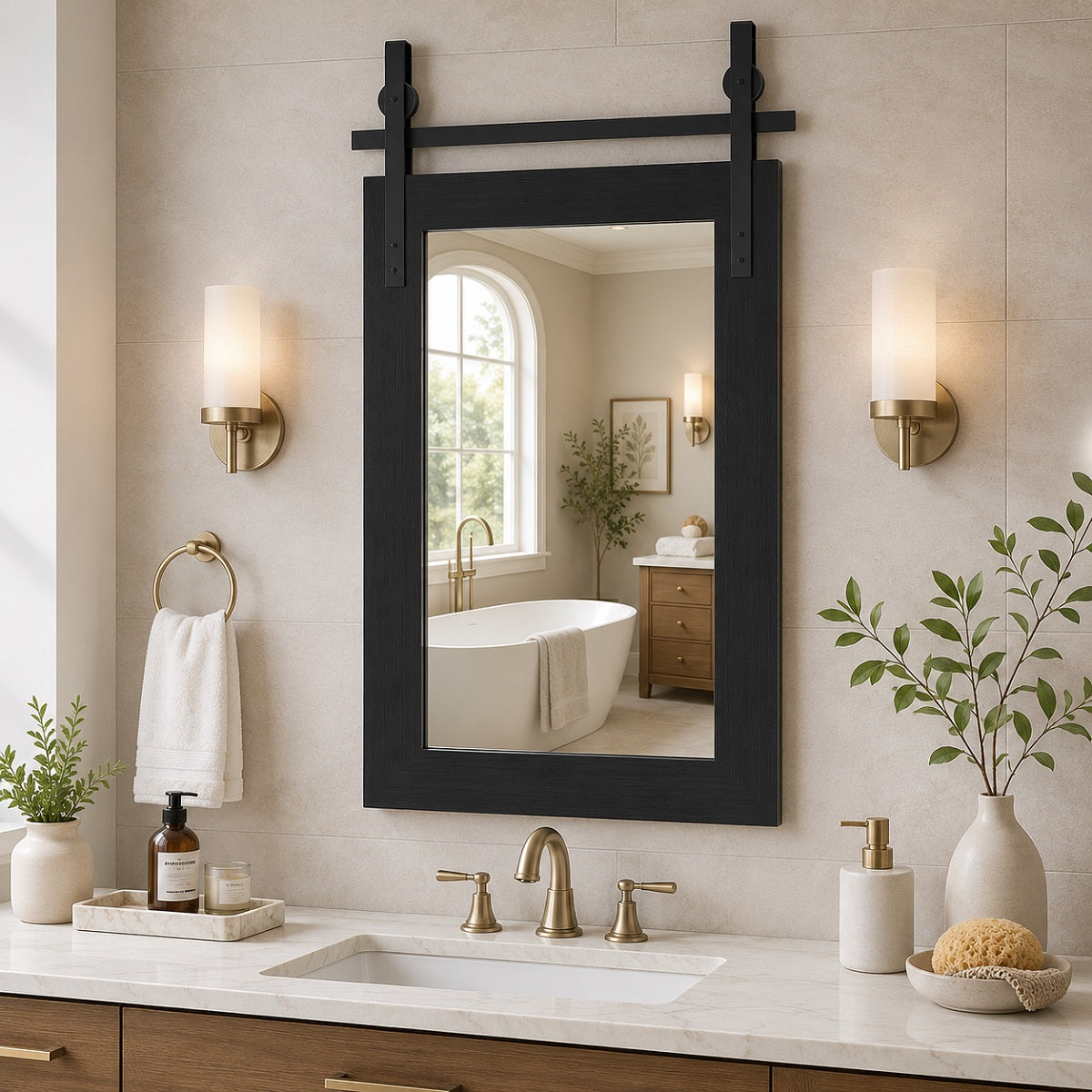
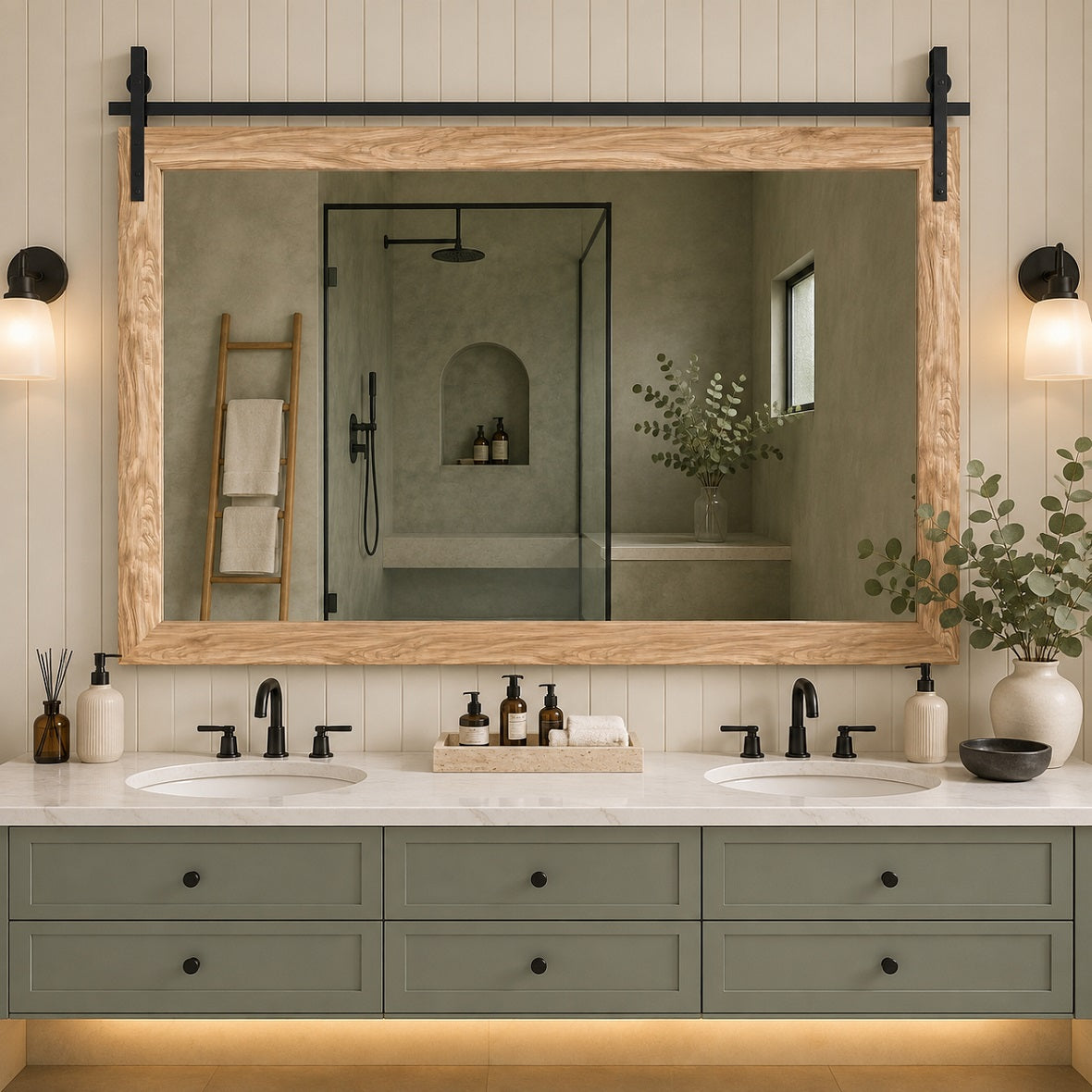
Take a look at the Hasipu bathroom mirror collection to explore standalone shapes and sizes. Check the dimensions and model-specific installation requirements, and choose the option that makes your bathroom easier to use every day.
Frequently Asked Questions
1. Are mirrored medicine cabinets outdated?
They do not have to look dated. A recessed frameless cabinet can appear understated, while a framed design can coordinate with traditional or contemporary finishes. Choose proportions and hardware that fit the room.
2. Can a medicine cabinet be installed above a double vanity?
Yes, when its dimensions and installation requirements suit the wall. Compare one wide cabinet with two individual units, considering each person's reflection, storage access, and the positions of the sinks and lights.
3. Does a three-door cabinet hold more than a single-door cabinet?
Not necessarily. Interior dimensions and shelf layout determine capacity. Door count mainly describes access and the number of seams across the front.
4. Can I replace an existing recessed cabinet with a surface-mounted model?
Possibly, but the existing opening needs an appropriate repair or backing arrangement and secure mounting support. The replacement must be properly supported, not simply cover the hole.
5. Will an anti-fog cabinet keep the entire mirror clear?
Only if its actual design and operating conditions support that result. Many defoggers heat a limited area. Check coverage, warm-up behavior, and controls rather than relying on the phrase anti-fog.
6. What should I check first when buying a mirrored medicine cabinet?
Check which installation methods your wall can support. Then compare usable storage, door clearance, reflection, and any electrical requirements. Those details determine whether the cabinet will work comfortably every morning.