
Table of Contents
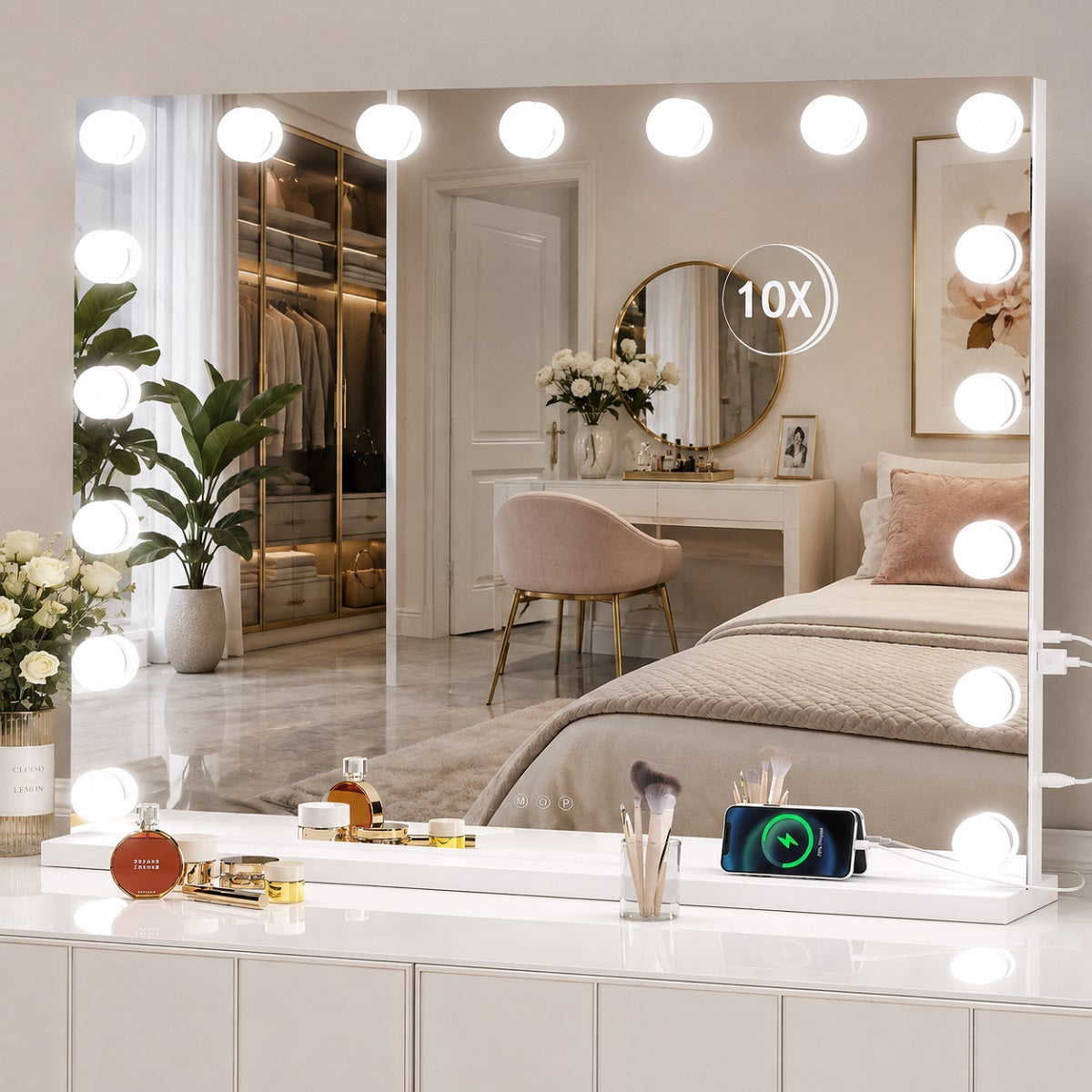
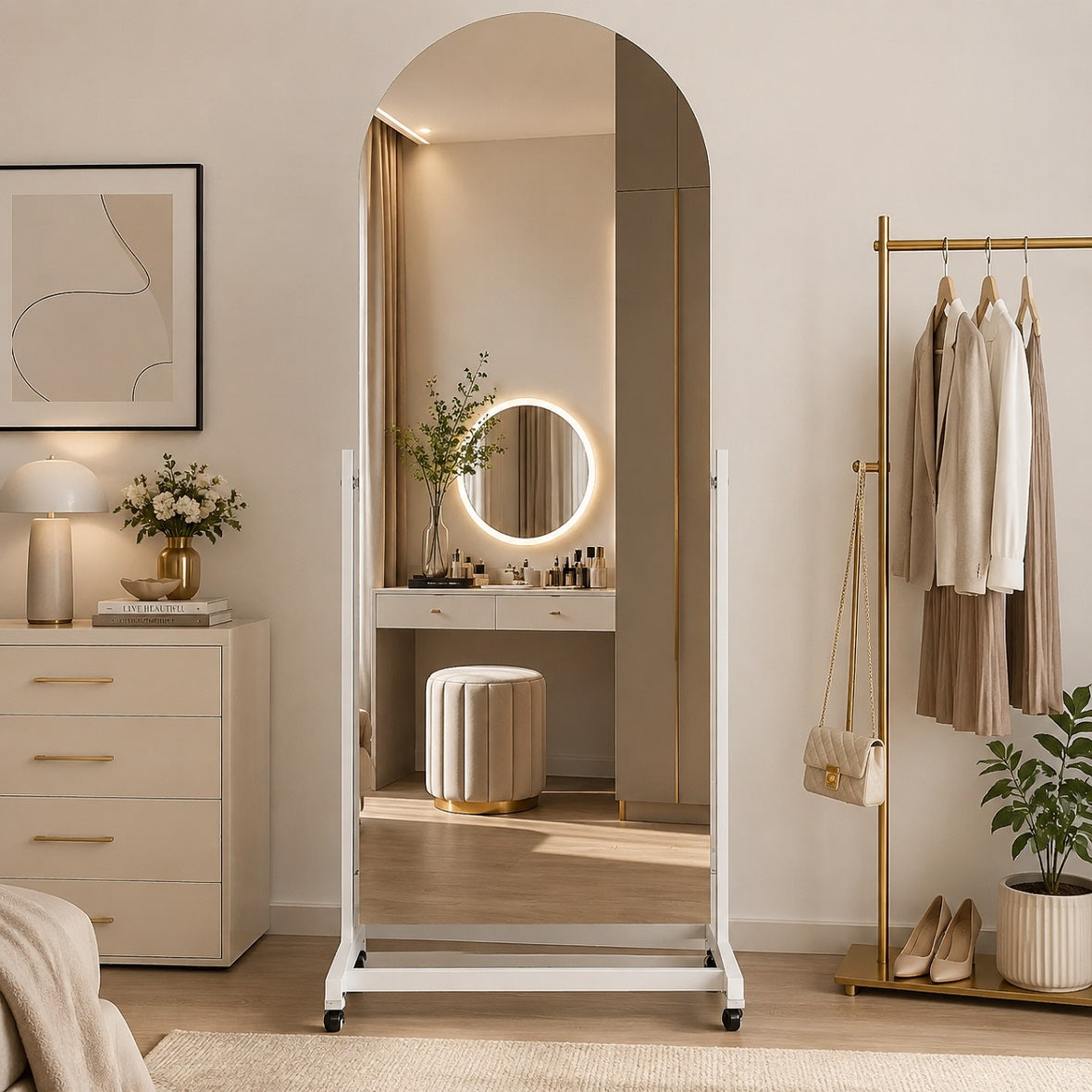
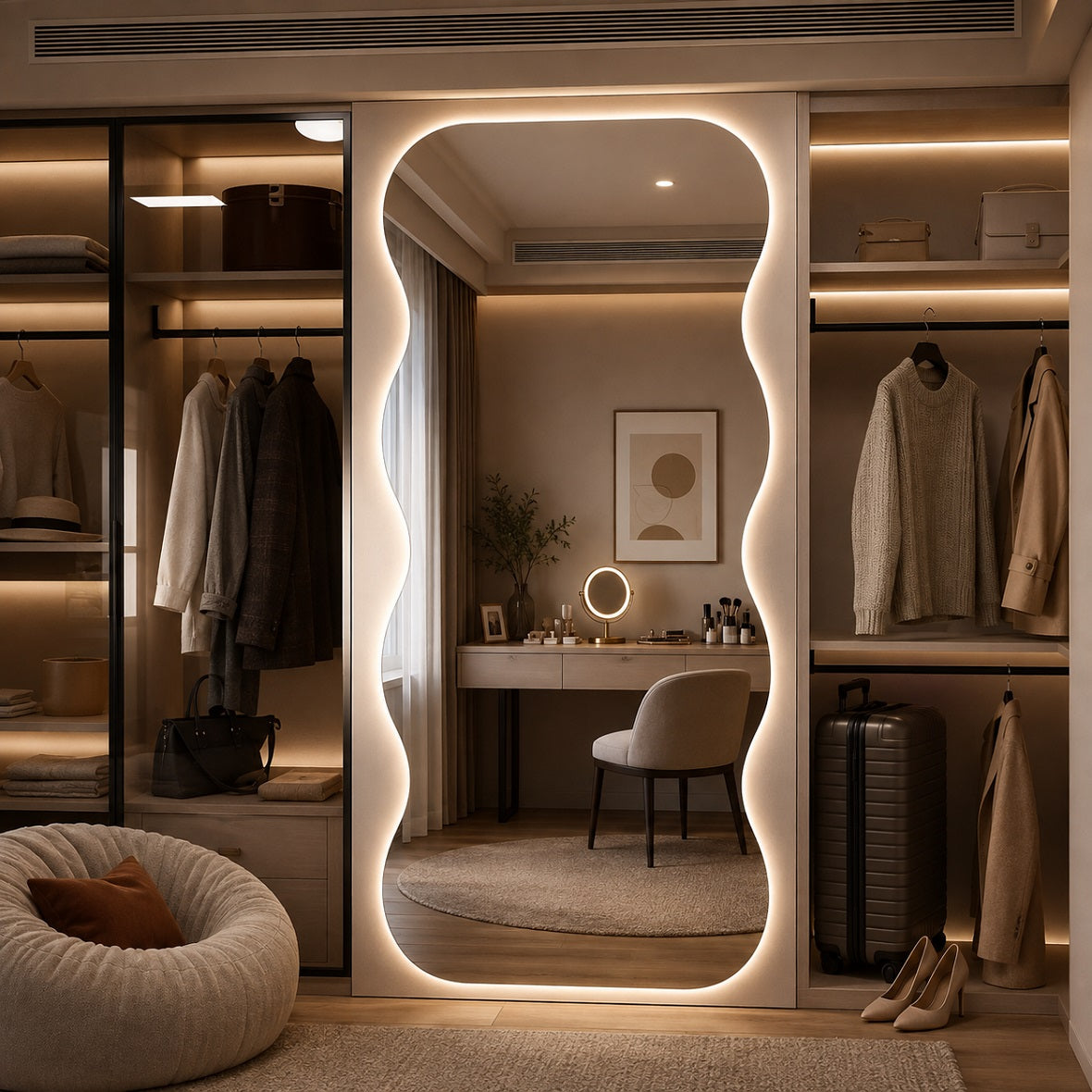
A glowing mirror can make a dressing corner feel more inviting. A simple framed mirror can look just as good beside a dresser—and may be all you need when the room already has good lighting.
The choice between lighted vs. non-lighted full-length mirrors comes down to how you use the space, which trade-offs you can live with, and what you want to spend. Popular styles can offer inspiration, but a mirror that photographs well won’t necessarily work well in your bedroom.
Choose a lighted full-length mirror when you need useful extra illumination where you get dressed. Choose a non-lighted mirror when your existing lighting works well and you want a simpler setup without a power connection. Compare the actual models, though: lights alone don’t guarantee clearer glass, better color accuracy, or better value.
Where Each Mirror Works Best
Start with the room and your routine. The same mirror can be helpful in a dim dressing corner and unnecessary beside a bright window.
| Application | Lighted full-length mirror | Non-lighted full-length mirror |
|---|---|---|
| Bedroom outfit checks | Useful before sunrise or after dark, when the LEDs illuminate the person adequately | A practical choice with good daylight and effective evening lighting |
| Walk-in closet or dressing room | Can add light at the dressing position, beyond lighting aimed at shelves | Works well when existing fixtures already light the person evenly |
| Entryway | Adds a decorative glow, but needs a suitable power connection | Suits quick outfit checks without introducing a cord near the doorway |
| Living room decor | Can become an illuminated focal point | Lets the frame, shape, and reflected view carry the design |
| Rental or small apartment | Combines a mirror and local light, subject to outlet and mounting constraints | Offers placement freedom without an electrical connection; mounting rules still apply |
| Outfit photos and video | Can add useful light or a glowing border; camera results need checking | Works with window light or separately positioned photo lighting |
Bedrooms and dressing rooms: look at the person, not just the room
A room can appear bright while the front of your outfit stays in shadow. A window behind you or a ceiling fixture directly overhead may leave you struggling to see clothing details.
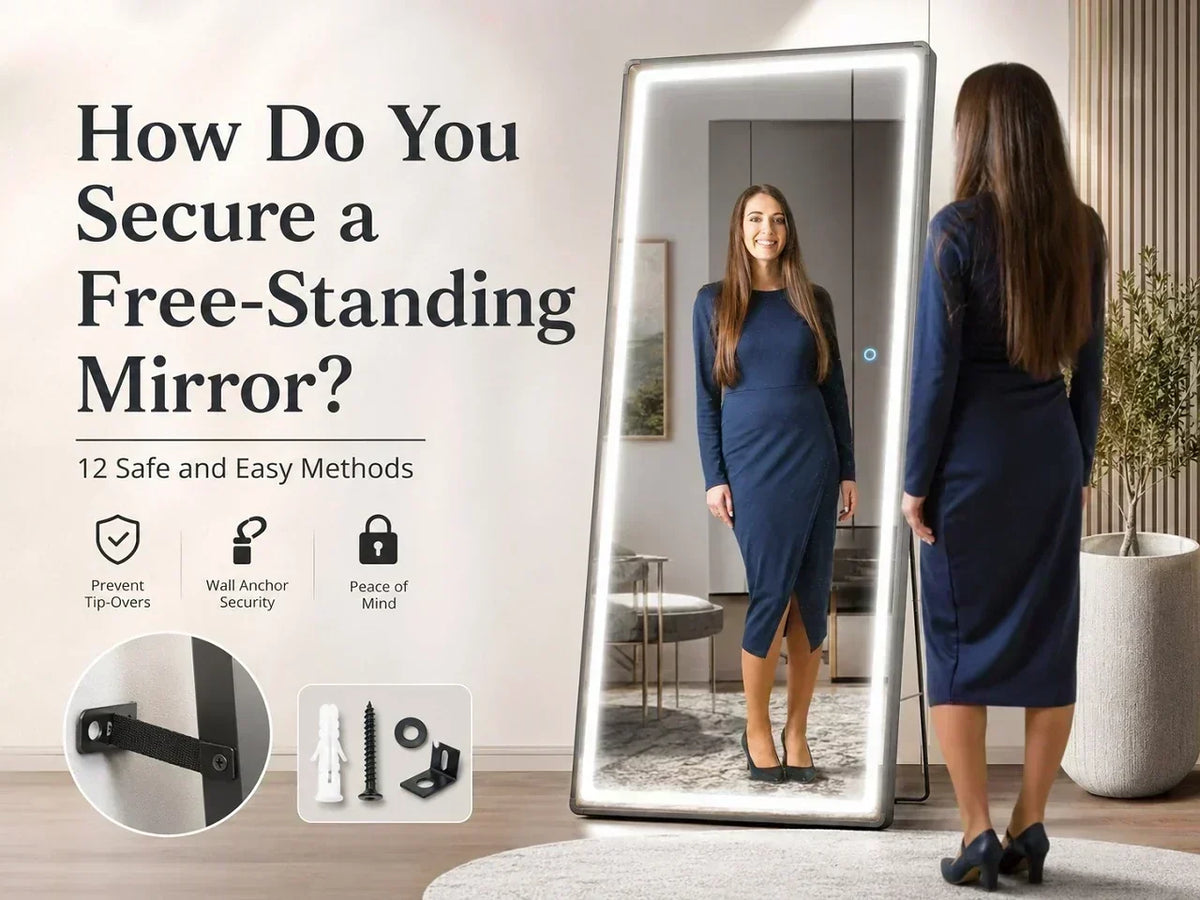
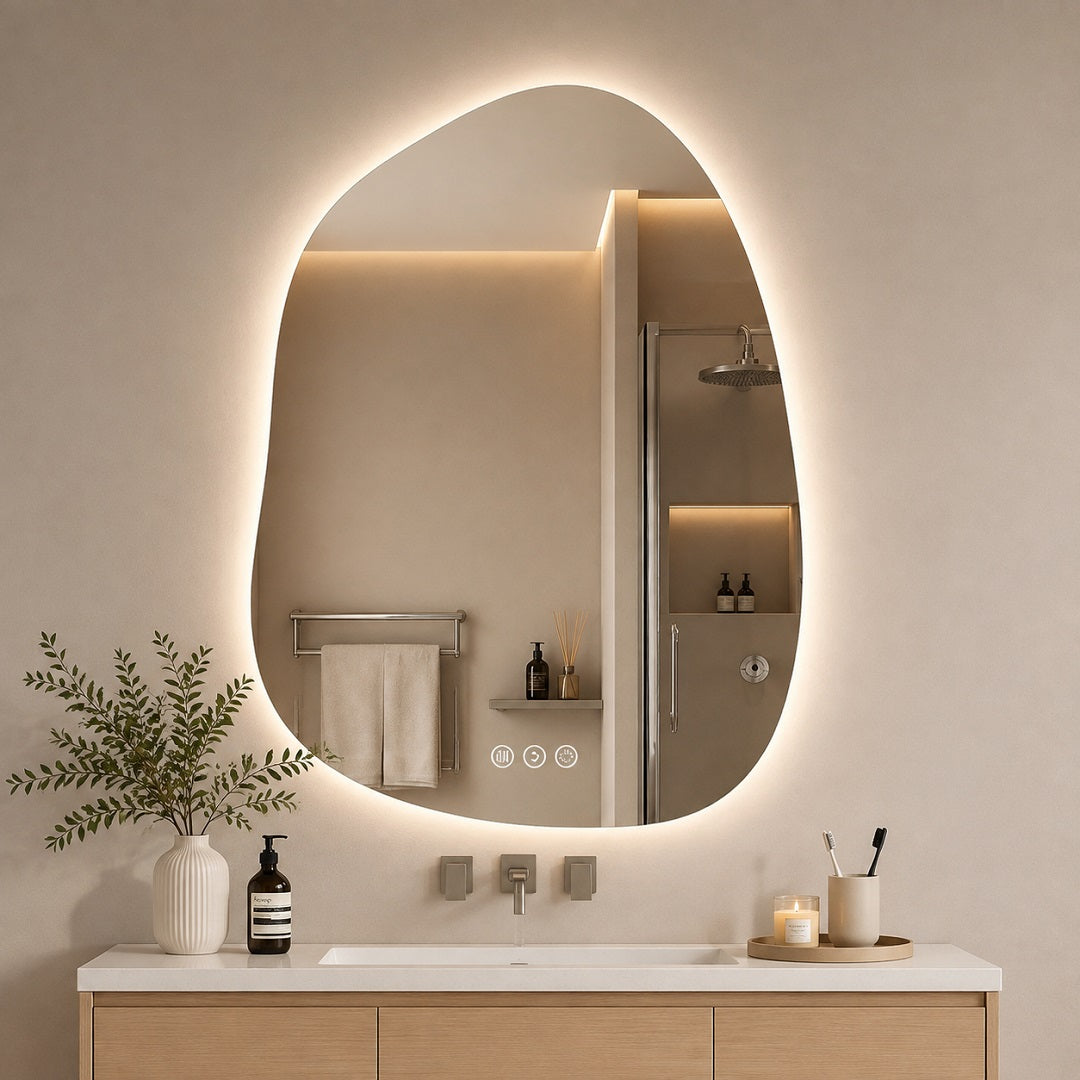
A full-length mirror with lights can help here, but lighting direction matters. Front-facing illumination sends light toward you. Backlighting mainly creates a glow on the wall, so a bright halo doesn’t prove the mirror will light your outfit well.
Stand where you plan to get dressed and check the light at your usual time of day. Can you see your shoes and the details of a dark jacket? Try the existing lamps before deciding that you need built-in lighting.
When comparing Hasipu full-length mirrors, check each model’s lighting design, usable mirror area, and installation options. Features vary by product.

Entryways and living rooms: the frame may matter more
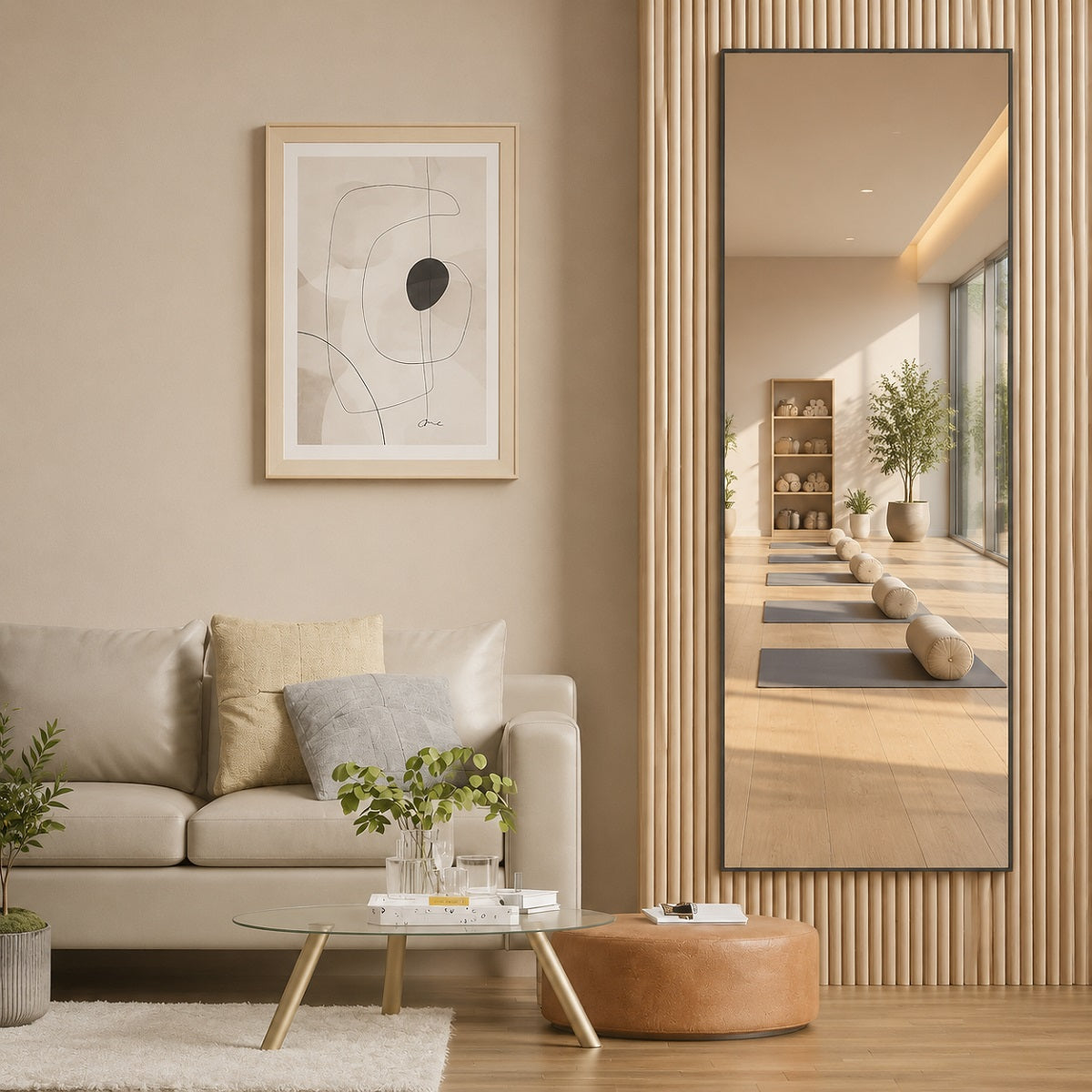
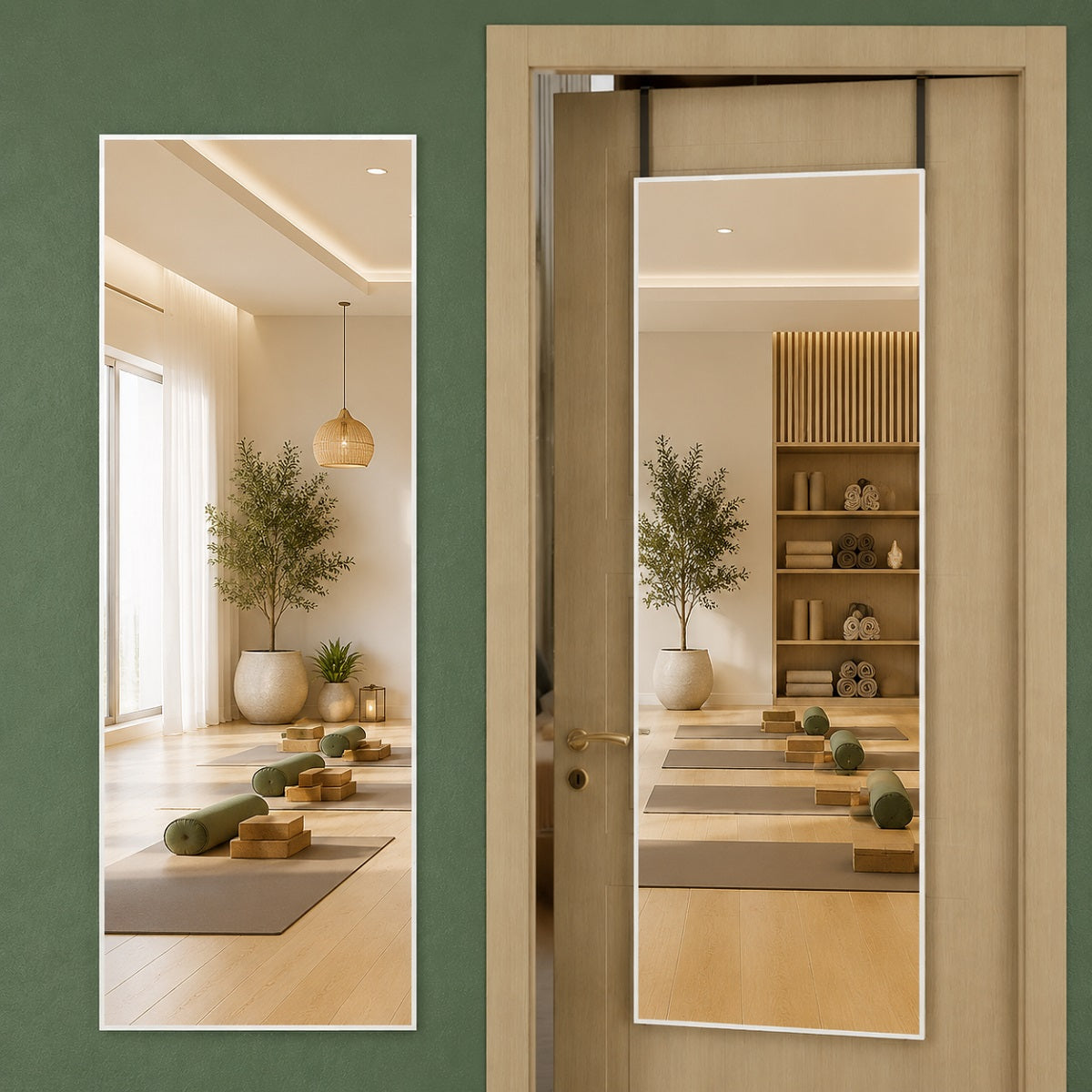
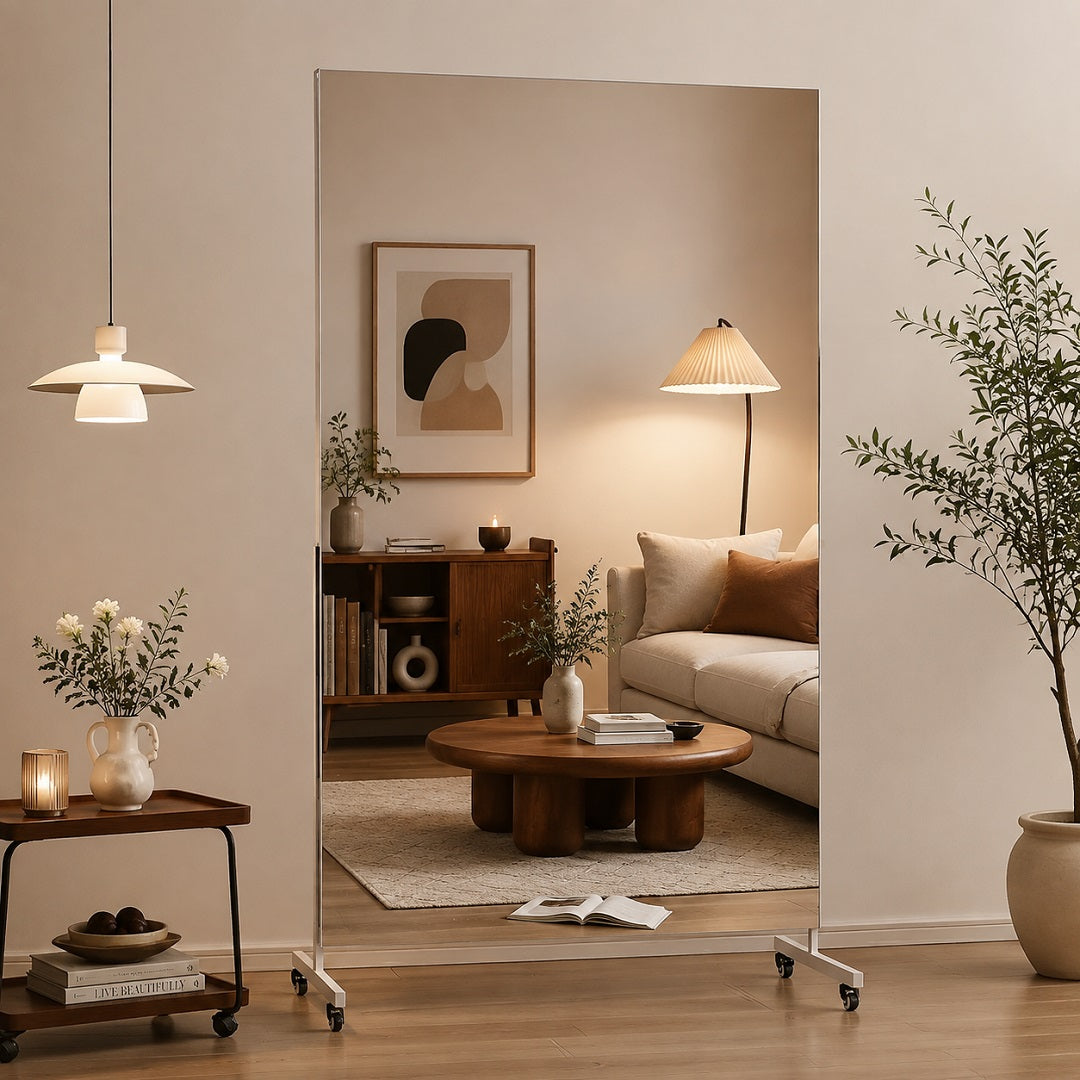
In a well-lit entryway, a non-lighted full-length mirror can handle a quick coat-and-shoes check without an outlet nearby. In a living room, its shape and finish may matter more than its ability to add light.
An illuminated model makes sense when you actively want that glow as part of the room. Consider what else is visible at night, including lamps, a television, and other decorative lighting. Too many bright focal points can make a quiet seating area feel busy.
To compare silhouettes, look at how arched mirror designs sit alongside straight-edged furniture. An arch is a shape choice, not a reason to choose or reject LEDs.
Photos and video: built-in light is only part of the setup
A lighted mirror may suit someone who enjoys an illuminated border in outfit photos. Still, the phone camera may expose for that bright edge and leave the outfit looking darker than expected. Some light-and-camera combinations can also produce banding in video.
A non-lighted mirror paired with a window or a separately positioned light gives you another approach. Judge the result with your own phone during the applicable return period rather than assuming either type will produce better pictures.
Pros and Cons: Convenience Versus Simplicity
Both types can provide a useful head-to-toe reflection. Their differences become clearer once you separate mirror quality from lighting features.
| Mirror type | Main advantages | Main drawbacks |
|---|---|---|
| Lighted | Adds local illumination; may offer dimming or adjustable white light; creates an illuminated focal point | Needs the specified power supply; adds electrical components; may produce glare; backlighting alone may not light clothing adequately |
| Non-lighted | No mirror power connection; fewer components to maintain; flexible placement within mounting limits | Depends on external lighting; may need a separate lamp or fixture; cannot provide its own decorative glow |
What you gain with a lighted mirror
The biggest advantage is having a light source at the mirror. That can be convenient when the rest of the room’s lighting was planned around a bed, seating area, or closet shelving.
On models with dimming, you can adjust the brightness instead of accepting one fixed level. Adjustable white-light settings may also help the mirror feel more comfortable alongside your other lights.
Those controls don’t guarantee accurate clothing colors. Color temperature describes how warm or cool the light looks; color rendering concerns how it makes objects look. A setting called “daylight” is not proof that a navy blazer or cream sweater will appear exactly as it does outdoors. Published color-rendering information is useful when available.
What you give up—and what stays the same
A lighted mirror requires more planning around power and more components that could eventually need service. Check the cord route, control placement, and repair support before buying.
A non-lighted model avoids those electrical considerations, but it cannot rescue an unlit corner by itself. Buying a separate lamp may solve that problem, though it also adds cost and takes up space.
Neither category has an automatic advantage in reflection quality. Glass flatness, backing, and proper installation still matter. A good non-lighted mirror can provide a better reflection than a poorly made LED model, and vice versa.
Size also deserves its own comparison. When browsing standing floor mirrors, measure the usable reflective area and allow room for the stand. Follow the model’s securing instructions; “standing” or “leaning” does not mean anchoring can be ignored.
Cost Comparison: Purchase, Setup, Electricity, and Repairs
The meaningful comparison is the cost of a complete, usable setup. A mirror with a lower price tag may need extra lighting. A lighted mirror may need an outlet in a better position.
| Cost category | Lighted mirror | Non-lighted mirror |
|---|---|---|
| Purchase | Price reflects mirror construction plus lighting features | Price reflects size, frame, glass, and construction; decorative models can still be expensive |
| Installation | Mounting costs, plus electrical work if required by the installation | Mounting costs; separate lighting work if the room needs it |
| Electricity | LEDs consume power when used; some controls may use standby power | The mirror consumes none; separately added lighting does |
| Maintenance | Glass and frame care, plus potential lighting or control repairs | Glass, frame, backing, and hardware care |
| Long-term value | Stronger when the integrated lighting gets regular use | Stronger when existing room lighting already meets your needs |
Compare similar products before pricing the lighting upgrade
There is no single price gap between the two categories. Comparing a narrow door mirror with an oversized LED floor mirror won’t tell you what the LEDs alone cost.
For a concrete shopping snapshot, Hasipu’s full-length collection listed the GM007R over-the-door mirror at $69.99, the LD002 LED mirror at $99.99, and the KM-LED rectangular lighted mirror starting at $129.99 when checked on September 24, 2026. These are different models, not matched-size comparisons or estimates of an LED surcharge. Prices and available variants can change.
Compare dimensions, frame construction, installation method, and warranty alongside price. Then ask whether the lighting solves a problem you actually have.
How much electricity does an LED full-length mirror use?
Use the model’s stated wattage and your electricity rate:
Monthly electricity cost = watts ÷ 1,000 × hours used per day × days used × price per kilowatt-hour.
For example, a mirror drawing 30 watts for two hours daily over 30 days uses 1.8 kilowatt-hours. At an assumed rate of $0.20 per kilowatt-hour, the cost is $0.36 per month.
That is an illustrative calculation, not a Hasipu specification or a national average. Actual draw can vary with the product and brightness setting; standby consumption is excluded. A non-lighted mirror uses no electricity itself, but count any extra lamp you buy for it.
Before ordering an LED model, ask about replacement drivers, controls, and light assemblies. A long advertised LED lifespan doesn’t answer whether the whole lighting system can be repaired affordably.

Which Type Is More Popular?
There isn’t enough verified, comparable U.S. sales or search-demand data in the sources reviewed for this guide to name an overall winner. A glowing mirror appearing in decorating photos does not establish that lighted mirrors outsell non-lighted ones.
A more useful comparison is what makes each type appealing to different shoppers. The distinctions below describe likely fit based on product characteristics, not measured customer demographics or market share.
Why Choose a Lighted Full-Length Mirror?
An LED full-length mirror is a natural option to consider for an illuminated dressing station, a modern bedroom corner, or outfit content that uses a glowing border as part of the composition. Its visible lighting feature gives someone a specific reason to choose it beyond reflection alone.
That appeal depends on execution. Glare, awkward cords, or weak front illumination can undermine the convenience that attracted the buyer.
Why Choose a Non-Lighted Full-Length Mirror?
A shopper who wants a decorative frame, a quick entryway check, or a mirror away from outlets has clear reasons to consider a non-lighted model. Its appearance can range from a plain rectangle to an ornate statement piece.
Non-lighted doesn’t mean old-fashioned, just as lighted doesn’t always mean minimalist. Shape, frame material, and scale determine much of the style in both categories.
For your own purchase, use popularity to discover designs. Use the room, features, and total cost to decide which design belongs in your home.
Final Thoughts
A lighted full-length mirror earns its place when useful illumination or a glowing focal point is something you want every day. A non-lighted mirror is a strong choice when your room already has good light and you prefer fewer electrical considerations.
As you compare Hasipu mirrors, begin with the room where the mirror will live. Weigh the advantages and drawbacks, price the complete setup, and choose a style you enjoy. The right mirror should suit the way you get ready long after the product photo has left your screen.