Table of Contents
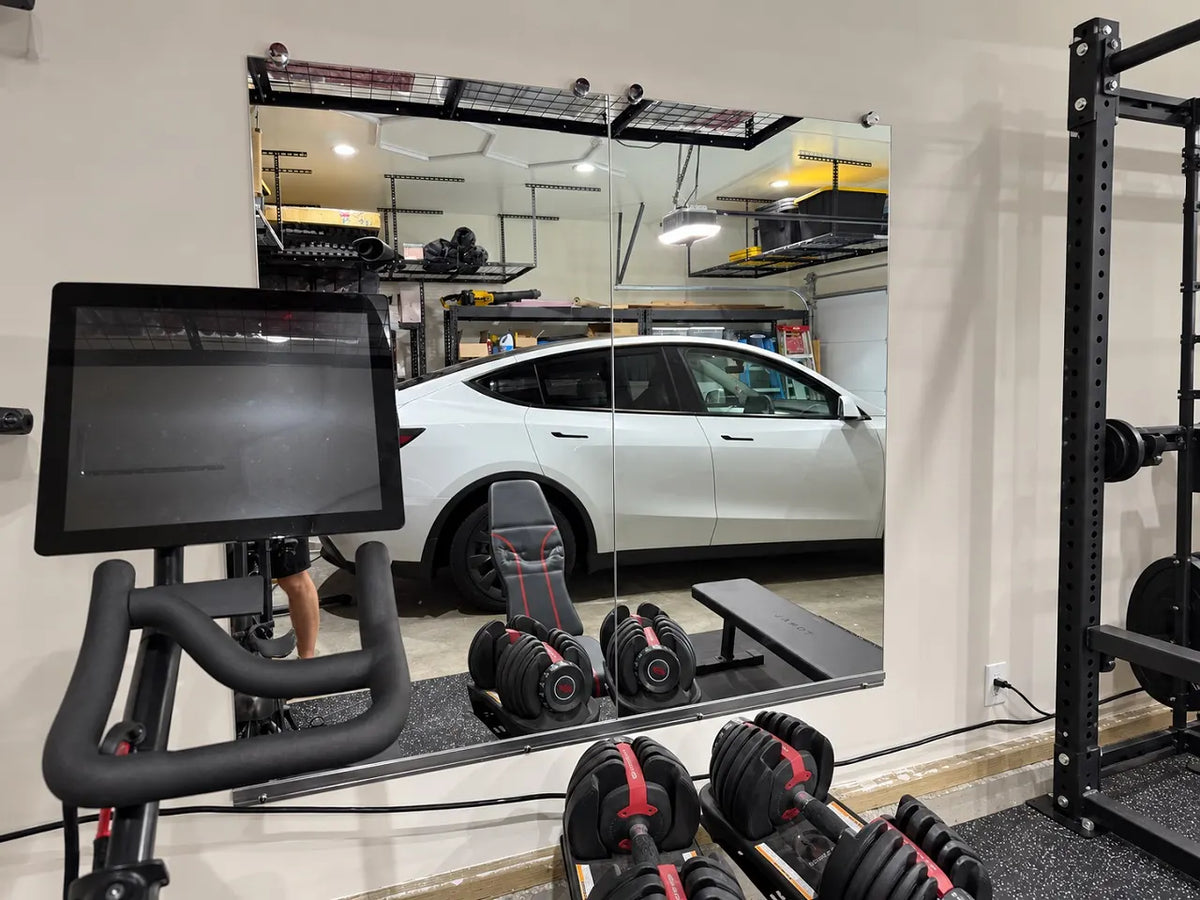
In a garage gym, a mirror might share a wall with a squat rack, a ladder, and the door of a parked car. The space can look roomy with everything put away, then feel surprisingly tight once the bench is out and the bar is loaded.
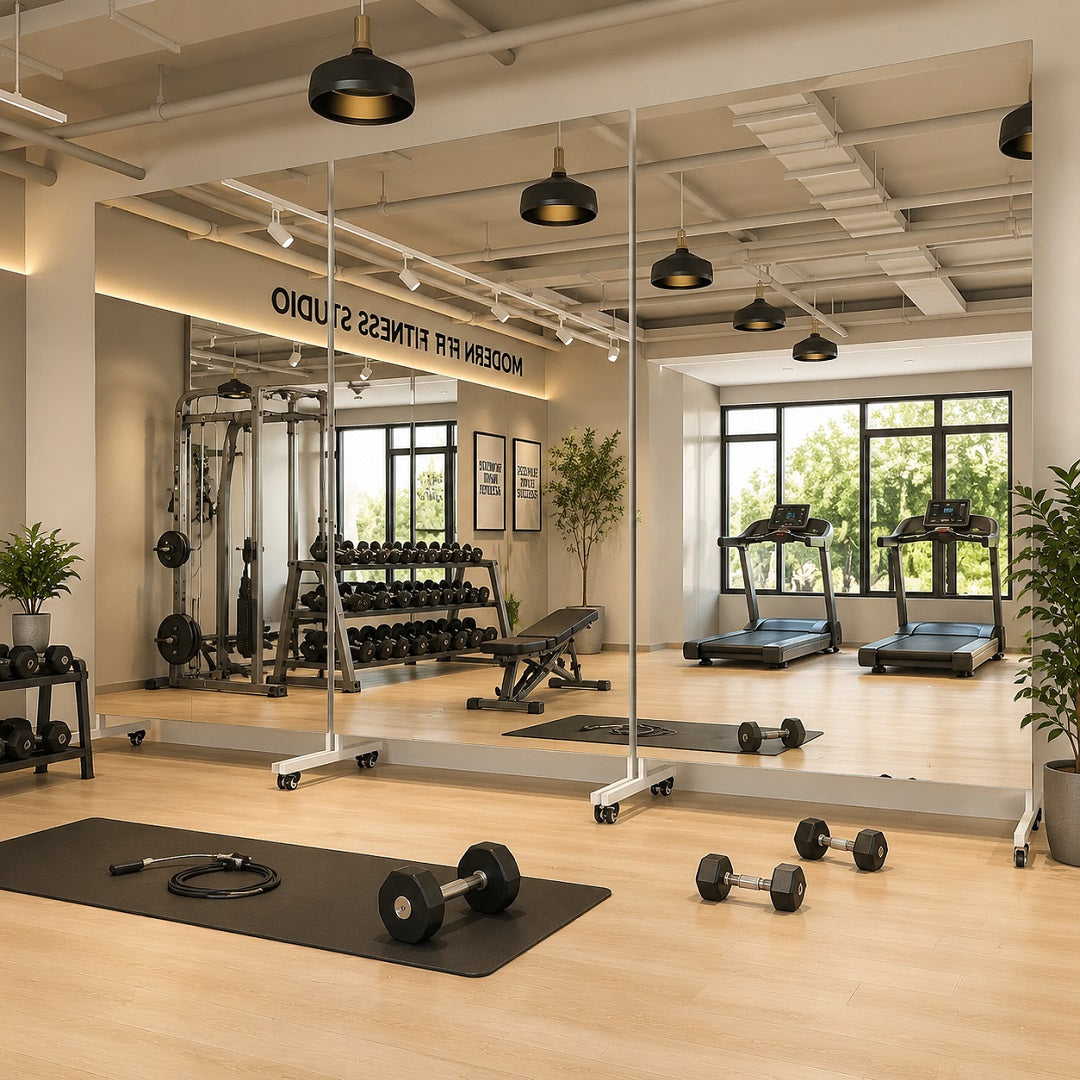
To plan a garage gym mirror wall, settle the parking, equipment, and storage layout first. Choose a fixed wall clear of moving doors and weights, work out the reflection you need from your exercise positions, and compare panel sizes with the usable wall area. Confirm the mounting method, wall condition, and garage environment before ordering.
Decide What the Garage Still Needs to Do
Start with a simple question: will a car still park here?
A dedicated workout garage gives you more freedom to arrange equipment around the mirror. A shared garage needs a plan for two different setups: parked and ready to train. Draw both on the same sketch, including anything that rolls, folds, or swings open.
These layouts offer different ways to use the available wall space:
| Garage setup | Mirror layout to consider | What to check |
|---|---|---|
| Shared with a parked car | A focused section beside the training area | Car-door swing, walking room, and equipment storage |
| Dedicated to strength training | A panel run facing the main workout station | Loaded bar length, rack position, and access for changing plates |
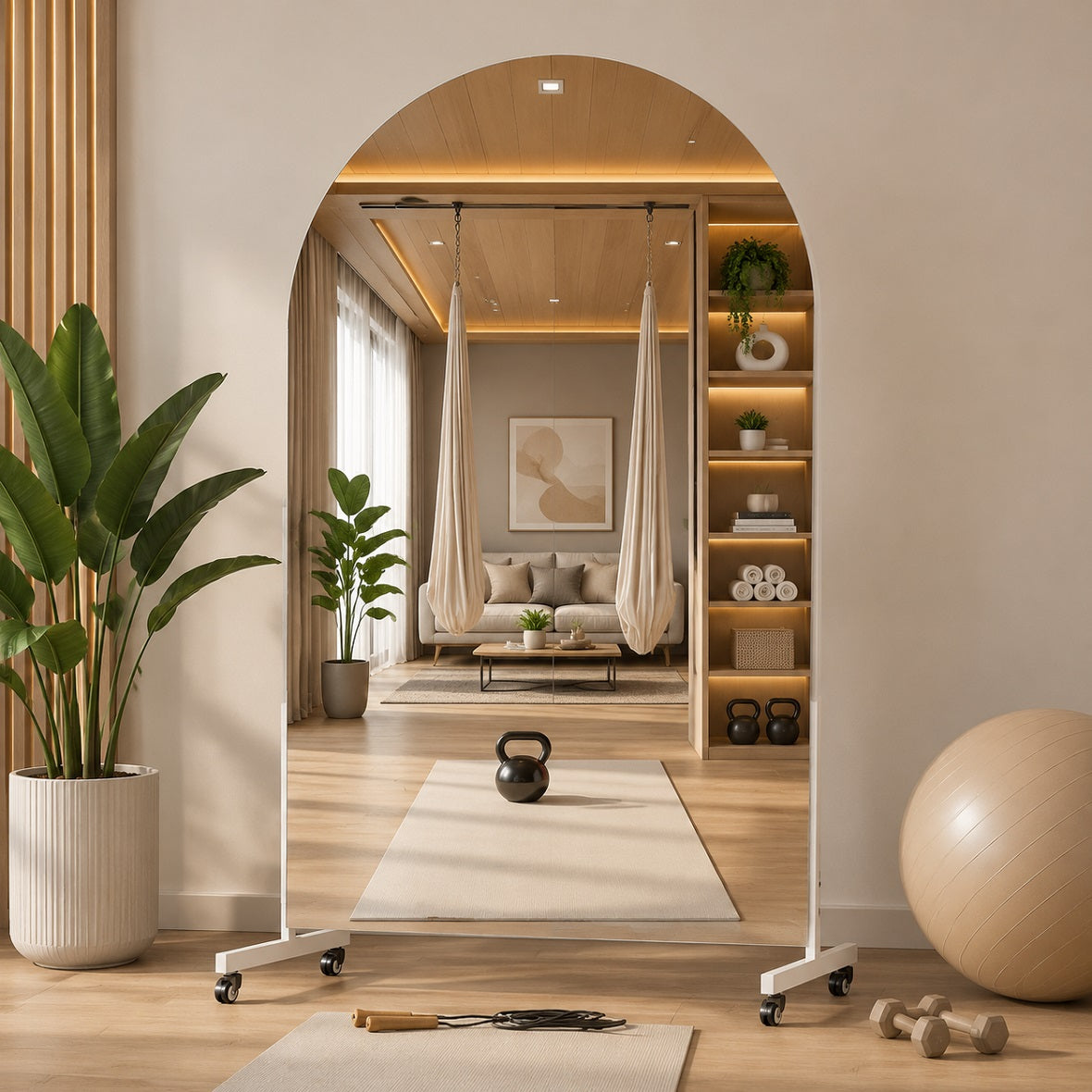
| Used for yoga or mixed workouts | A broader section facing the open floor | Views from standing and seated positions, plus room to move sideways |
| Narrow workout bay | One tall panel or a short panel run | Useful reflection from the exercise position and space for wall storage |
Leave a home for bikes, tools, and seasonal bins in the drawing. A mirror installed where the ladder normally hangs may create a storage problem that follows you into every workout.

Choose the Wall With the Door Open and Closed
For garage gym mirror placement, walk through the room in its working condition.
Open the overhead door fully and note where the tracks, door panels, and opener sit. Check the side entry door and nearby cabinet doors, too. Keep the mirror area clear of the door’s moving path, safety sensors, controls, and service access.
Park the car in its usual spot and open its doors. Roll out the bench, extend the folding rack, and bring equipment into the positions you actually use. A barbell’s ends and a cabinet’s swinging doors can reach beyond the footprint shown on a floor plan.
Look for a wall that gives you a useful reflection while preserving those movements. A narrow section near an open exercise area can work better than a larger section crowded by storage.
Keep outlets, vents, valves, and electrical equipment accessible. Splitting the mirror run around an obstruction may be the sensible layout.
How Much Mirror Coverage Do You Need?
The answer depends on what you want to see and where you stand.
A fixed workout station may need a relatively narrow view. A mat area used for stretching and side-to-side movement can need more width. Two people exercising together need their combined working area included in the plan.
Record your usual distance from the proposed wall, then identify the body positions you want visible: standing, seated, kneeling, or reaching overhead. The tallest regular user and the person doing floor exercises may need different coverage.
There is no single answer to how high to hang garage gym mirrors. The bottom edge has to work with the reflection, baseboard, mounting system, and objects that could strike the glass. The top edge needs to provide the view you want without interfering with garage hardware.
Floor-to-ceiling glass can look impressive, but it also uses wall space that may be needed elsewhere. Start with the coverage your routine calls for and expand from there.
For a detailed measuring worksheet, use Hasipu’s guide to measuring a wall for home gym mirrors.
Sketch the Panels and Their Seams
Several panels can make a home gym mirror wall easier to size around the garage. Before buying, draw each panel separately, including its frame or border, the specified spacing, and the room needed for installation.
Pay attention to the main viewing position. A joint running through the center of your reflection can be distracting. A layout with a center panel may give a single workout station a more comfortable view; a wider training area will cross seams as you move.
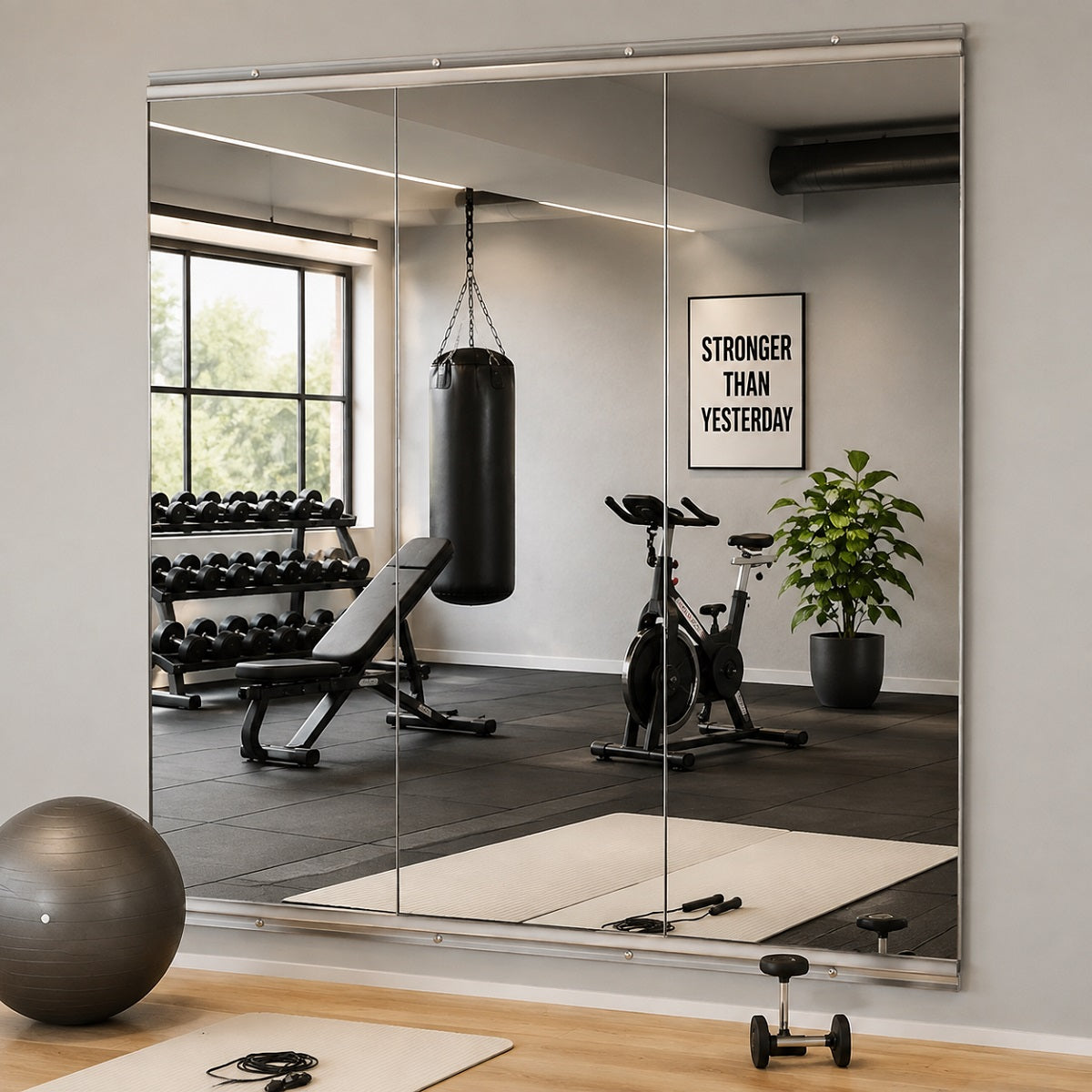
A Three-Panel Layout Example
Suppose you have a usable wall section 114 inches wide. You are considering panels that measure 78.7 by 35.4 inches, installed upright.
| Panel count | Combined panel width before gaps | Fit within 114 inches |
|---|---|---|
| Two | 70.8 inches | Leaves 43.2 inches for margins and spacing |
| Three | 106.2 inches | Leaves 7.8 inches for margins and spacing |
| Four | 141.6 inches | Exceeds the available width |
Three panels could be a workable starting layout. The three panels total 106.2 inches wide, before any gaps required by the installation instructions. The remaining room must also accommodate side clearance and the mounting system. Those details still need checking before the layout is confirmed.
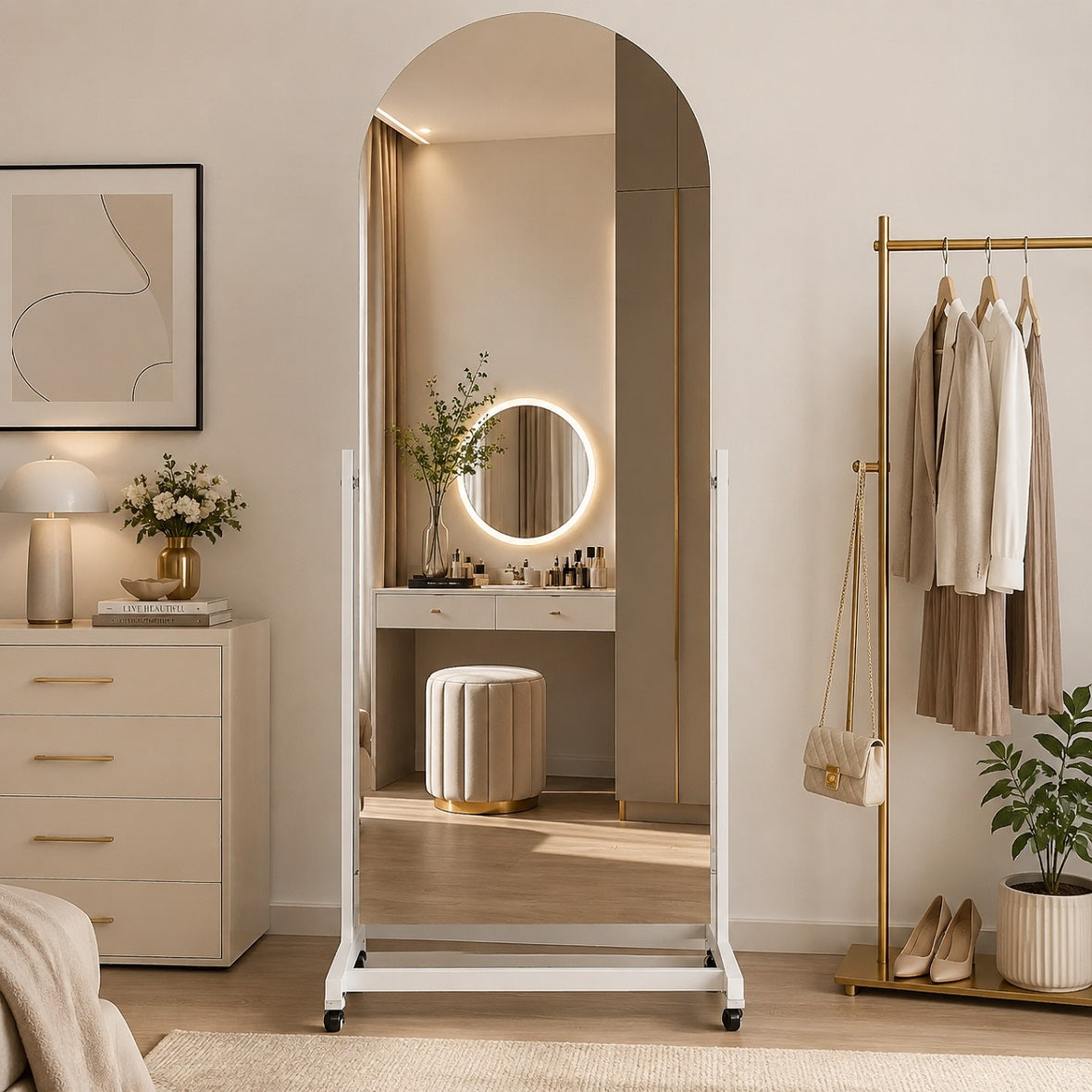
The example uses a size listed for the Hasipu KM-MIR-R frameless gym mirror, which supports vertical and horizontal installation. It is a width calculation, not a mounting recommendation. Check the chosen size’s reflective area, weight, and installation requirements as well.
Turning the same panel horizontally changes the plan substantially: it becomes 78.7 inches wide and 35.4 inches high. That may provide the view you need above equipment. Check whether you can still see yourself during seated or floor exercises.
A Sloping Floor Needs a Level Reference
Some garage floors slope toward the overhead door. Along a side wall, measuring the same distance upward from the floor at every panel can leave the mirror run following that slope.
Have the installer establish a level reference for the panels, then check the floor clearance across the whole run. A changing gap beneath a level mirror can be a normal result of the floor slope.
Wall flatness matters as well. Raised seams, bowed drywall, or uneven masonry need assessment before a large panel goes up. Forcing glass against an uneven surface can stress it and affect the reflection.
Complete wall repairs, painting, and any required support preparation before installation. Allow primers and finishes to fully cure according to their instructions before the mirror goes up.

Check the Glass and the Mounting Plan Together
Compare garage gym mirrors by their documented construction and installation requirements. Panel dimensions alone do not tell you how they will fit your wall.
Ask about the glass type, any safety backing, the panel weight, and the approved mounting orientation. Tempered glass has a different break pattern from ordinary annealed glass; a safety backing serves a separate purpose by helping retain fragments. Neither feature makes a mirror immune to damage from equipment.
Hasipu’s KM-MIR-R listing specifies 4 mm tempered glass. Confirm the details of the exact model and size you order, including the supplied hardware and instructions.
The wall and mounting system must suit the panel’s weight. Fasteners for a stud wall, solid concrete, and hollow masonry are different decisions. A qualified installer can identify the wall construction and specify appropriate support; the presence of hardware in the box does not establish suitability for every wall. See Hasipu’s installation and support FAQs.
Use adhesive only when the mirror’s instructions permit it, and confirm compatibility with both the mirror backing and the wall surface. General construction adhesive is not an automatic substitute for an approved mirror product. Do not assume adhesive alone is an approved way to support a large panel.
Order a size that clears outlets and other obstructions. Tempered glass cannot be safely cut after heat treatment, so trimming a finished panel to fit is not a fallback plan.
Plan for the Garage’s Temperature and Moisture
A finished, conditioned garage and an uninsulated garage can expose mirrors to very different conditions. Check the exact product’s suitability for the temperature and moisture your garage experiences.
Look for roof leaks, damp wall patches, or recurring condensation before covering the wall. Excess moisture can damage mirror coatings, sometimes showing up as dark areas near the edges. Address the moisture source and follow the specified rear clearance or ventilation requirements.
Adhesives can have their own application-temperature and curing requirements. Schedule installation around those instructions rather than treating a cold winter wall or a hot summer afternoon as an ordinary indoor setup.
A moisture-resistant surface description does not establish an unrestricted temperature range for the entire mirror and mounting system.
Light the Workout Area Without Filling the Mirror With Glare
Check garage gym mirror lighting at the times you usually exercise. An open door can admit bright daylight; a closed door at night leaves the room dependent on its fixtures.
From the workout position, look for a visible bare bulb, bright doorway, or harsh reflection behind your head. Lighting directed across the exercise area can be more comfortable than a bright source reflected straight back at you. Adjust fixture placement or direction as needed.
Consider the ceiling lights alongside the garage hardware. An open overhead door may change how light reaches the room.
A lighted mirror still needs its own power and placement plan. Check the model’s electrical requirements and keep cords clear of equipment, walking routes, and moving doors.
Give Weights and Storage Their Own Space
Plan the area in front of the mirror with the equipment in use.
Leave room to load and unload plates without bringing the bar or weights toward the glass. Keep kettlebells, dumbbells, and rolling storage out of the mirror’s impact path. Foldaway equipment also needs checking in its stored position.
There is no useful universal clearance for every garage gym. Base the separation on the equipment instructions and its full range of movement, including setup and storage.
Choosing mirrors for a small garage gym also means deciding where storage will go. Reserve a section beside the mirror for hooks or a cabinet, and put frequently used items where they can be reached without leaning across the glass.
Consider the reflected background, too. A tidy storage wall or simple paint finish makes the space feel calmer. Open shelves packed with bins will remain prominent in the reflection.

Budget for the Finished Wall
Build the estimate around the installed project. Include:
- The selected mirror panels and delivery.
- Wall repairs, painting, and any required support preparation.
- Model-appropriate mounting hardware and permitted adhesive.
- Professional handling and installation where needed.
- Lighting changes and the cost of future removal or panel replacement.
Measure the delivery route against the packaged dimensions. Garage shelving, the entry opening, and the space available to maneuver a large panel can all affect the plan.
A focused mirror section can keep the project manageable while leaving useful room for storage. More coverage is worthwhile when it improves the view from the places you train.
Frequently Asked Questions
1. Can I Put a Mirror Wall in an Unheated Garage?
Check the mirror and mounting system’s environmental requirements first. Repair damp areas or recurring condensation, and confirm any adhesive’s installation and curing conditions. A product’s general indoor-use description does not establish suitability for every unheated garage.
2. Should Garage Gym Mirrors Reach the Floor?
Mirror coverage can extend close to the floor when the model’s mounting instructions allow it. Leave any required floor clearance. Choose the lower edge according to the view you need, the mounting instructions, and nearby impact risks. Include seated and floor exercises when deciding on coverage.
3. Can I Mount Mirrors Behind a Squat Rack?
That arrangement needs enough room for the rack, loaded bar, plate changes, and any folding movement. Give the rack and mirror their own suitable mounting support. Choose another mirror position when the equipment or its operation can bring objects into contact with the glass.
4. Does a Mirror Wall Show Every Angle of My Exercise?
A front-facing mirror shows a front view. It cannot reveal every detail visible from the side or rear. A separately recorded view or guidance from a qualified trainer can help with questions that the reflection does not answer.
A workable garage gym mirror wall leaves the car, doors, storage, and equipment room to do their jobs. Once those spaces are accounted for, the panel layout becomes much easier to choose.