Table of Contents
A full-length mirror has a simple job: show a clear view from head to toe. Yet size, placement, glass quality, lighting, and mounting style all affect how well it works.
A mirror that looks perfect in a product photo may feel too narrow beside a dresser or take up too much space in a small bedroom. A beautiful frame can also hide poor glass, weak hardware, or an unstable stand. Measuring the room and thinking about daily use before buying can prevent these problems.
This guide explains how to choose a full-length mirror that fits your room, supports your routine, and feels natural with the rest of your décor.
What Should You Look for in a Full-Length Mirror?
| Feature | What to look for |
|---|---|
| Height | Common home sizes range from about 48 to 72 inches |
| Width | Around 18 to 24 inches works for many dressing areas; wider mirrors offer a more comfortable view |
| Placement | Enough distance to see the full reflection without furniture blocking the view |
| Mounting | Wall-mounted, freestanding, leaning, or over-the-door |
| Glass | Clear reflection with little or no visible waviness |
| Safety | Stable frame, secure mounting hardware, and protective backing when available |
| Lighting | Natural or even artificial light that falls toward the person |
| Frame | A finish and shape that suit the room without overwhelming it |
| Extra features | LED lighting, storage, adjustable stand, or multiple mounting options |

Think About How the Mirror Will Be Used
Some people need a mirror mainly for checking outfits. Others want a decorative piece that reflects light and makes the room feel more open. A mirror can handle both jobs, but the main purpose should guide the decision.
A dressing mirror needs a clear, wide reflection. It should sit near clothing storage and have enough open space in front of it. Good lighting matters more here than an elaborate frame.
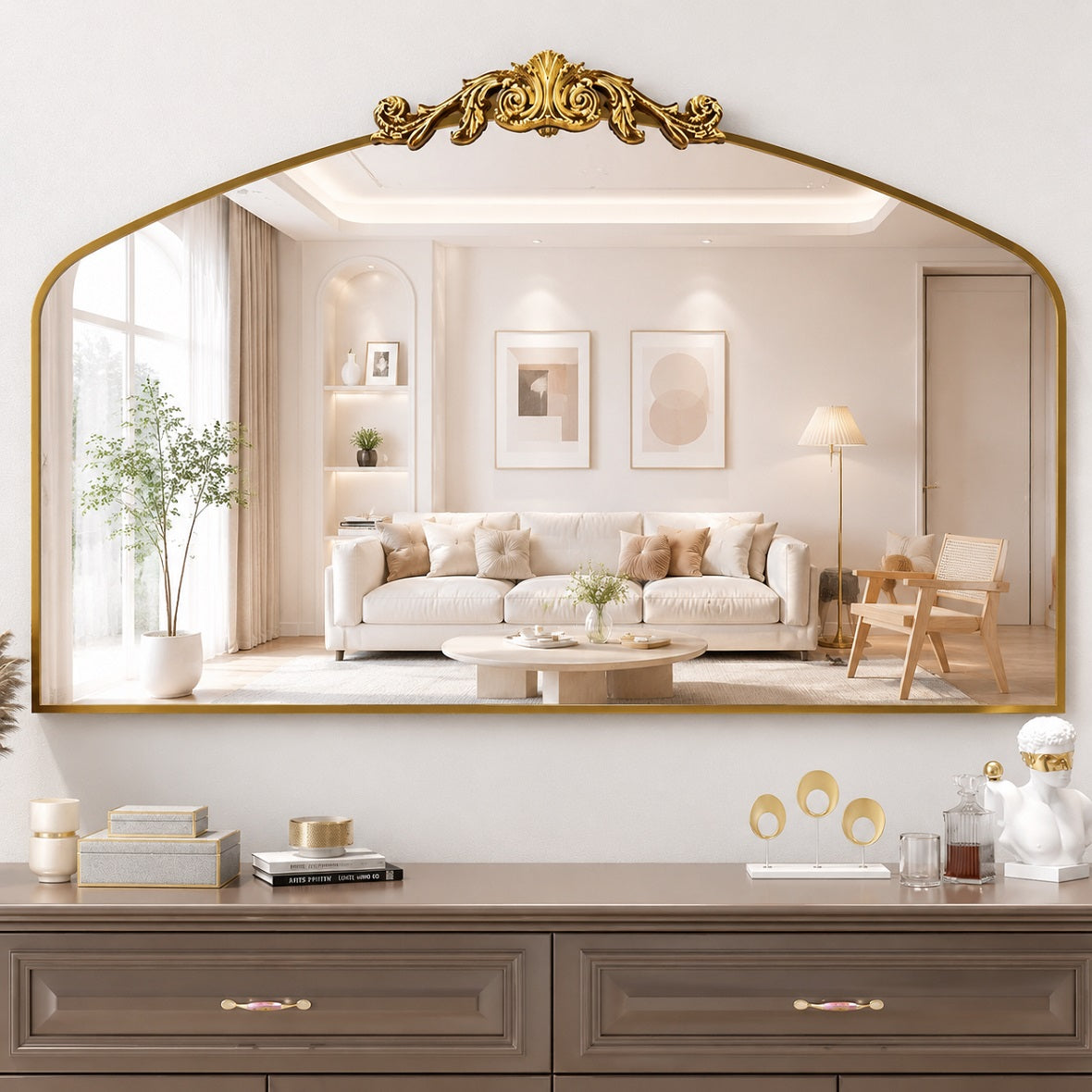
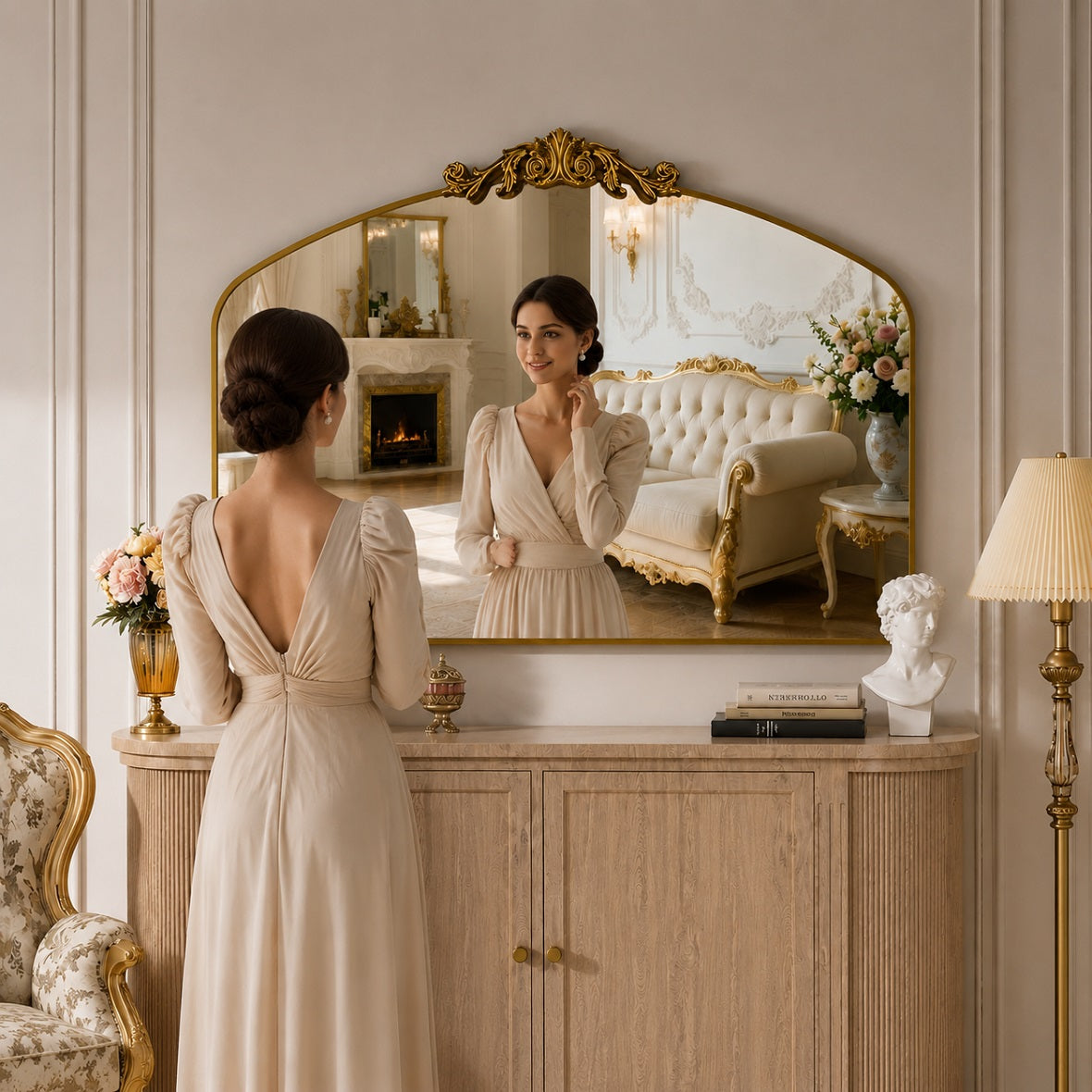
A decorative floor-length mirror may be wider, taller, or more visually detailed. An arched top, natural wood frame, antique finish, or unusual shape can turn an empty wall into a focal point.
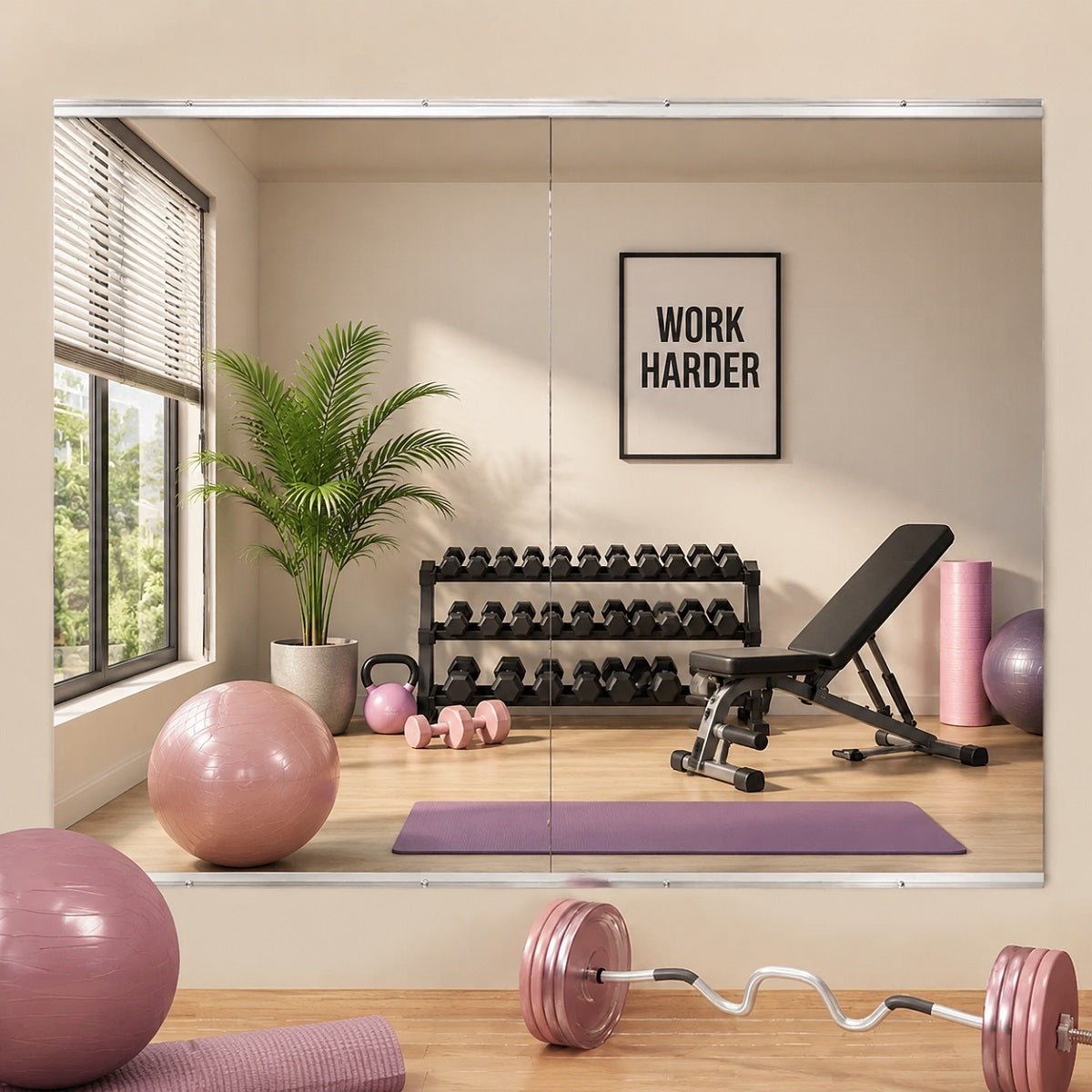
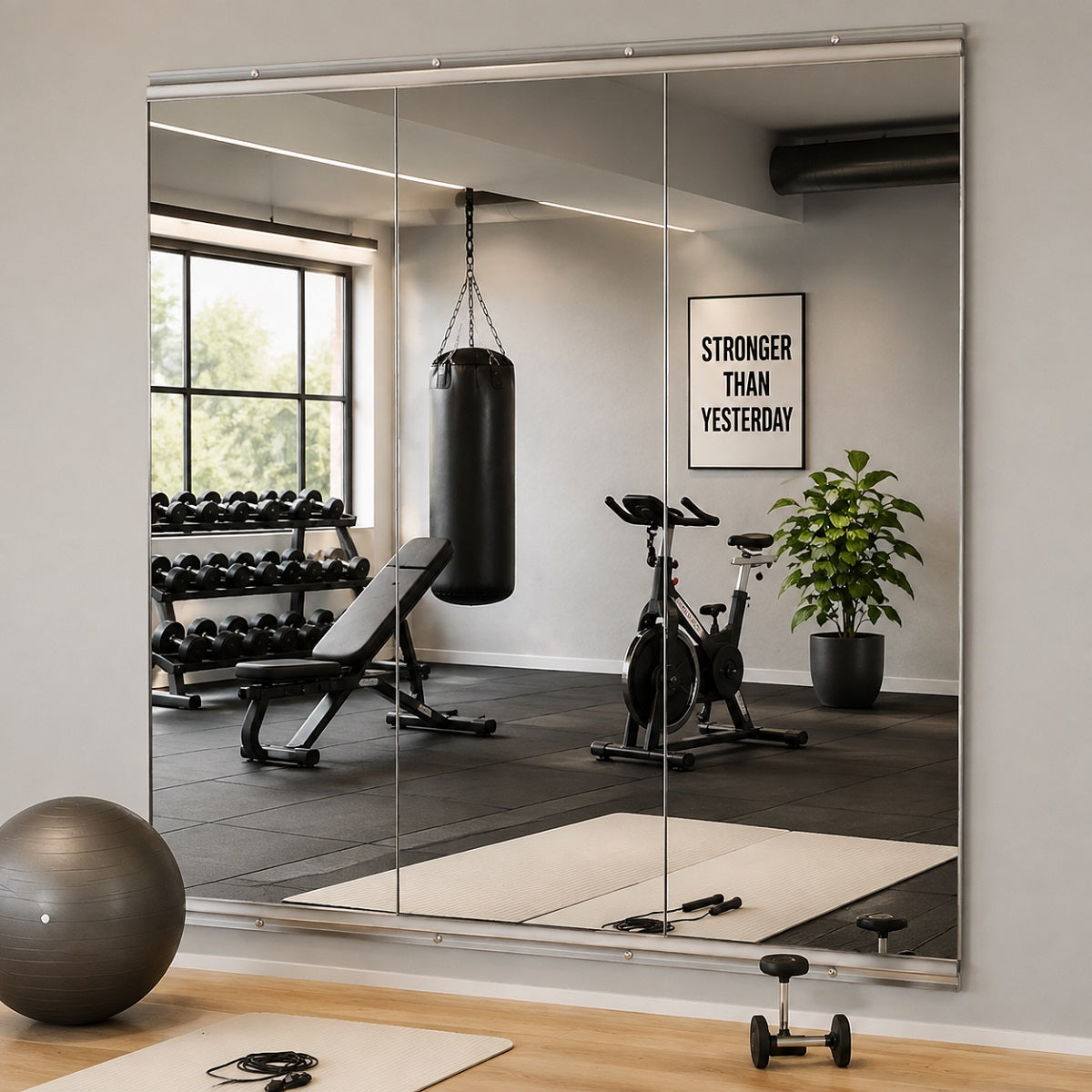
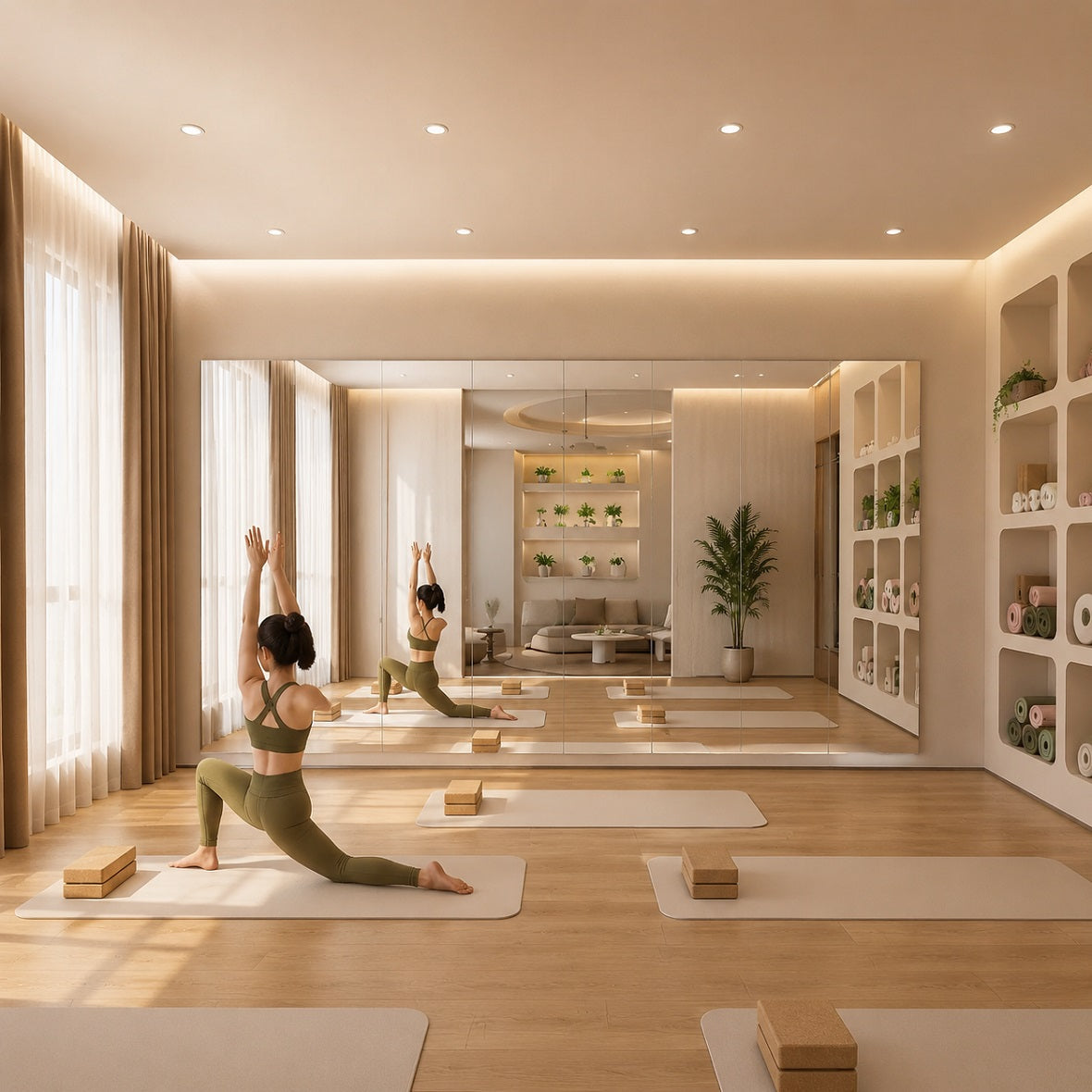
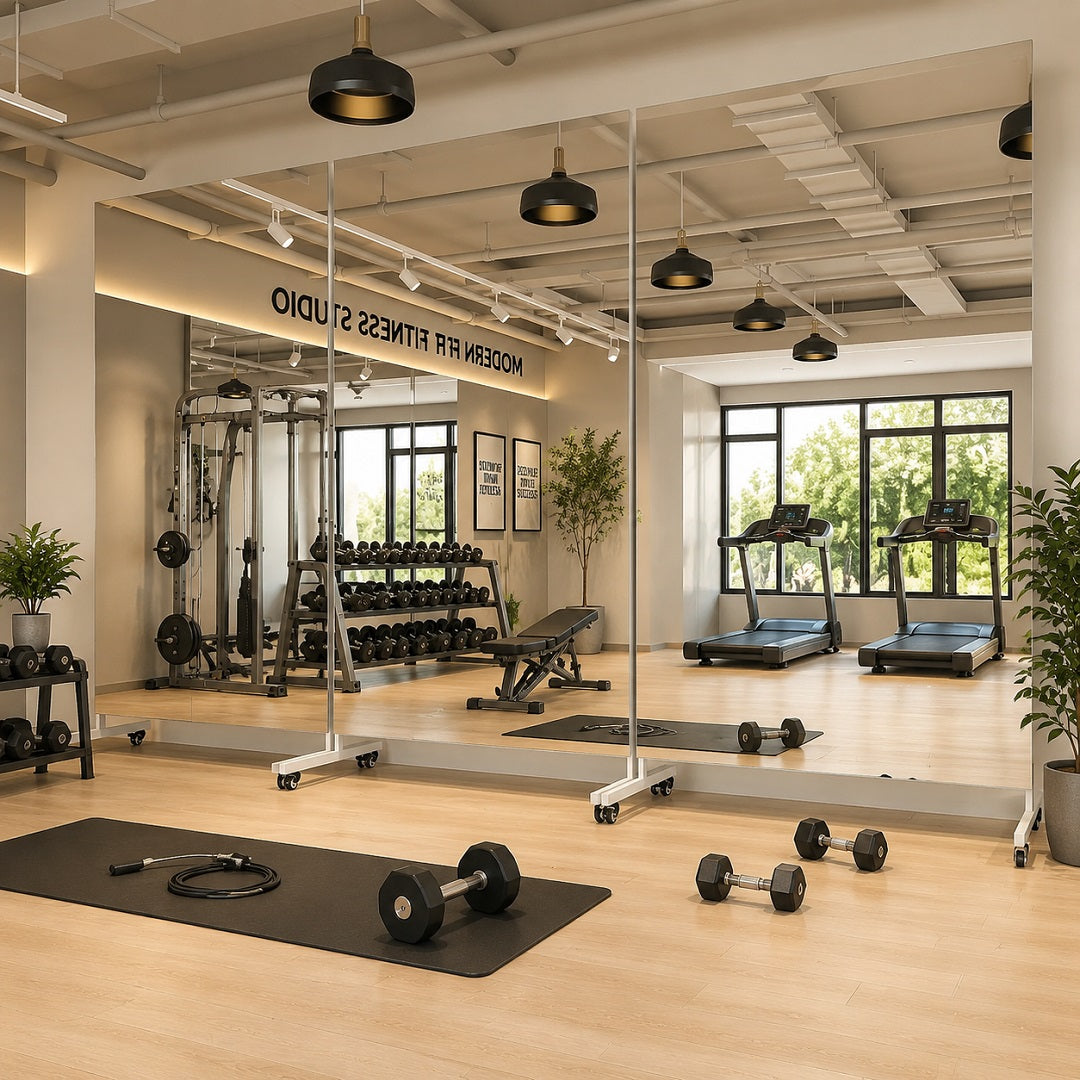
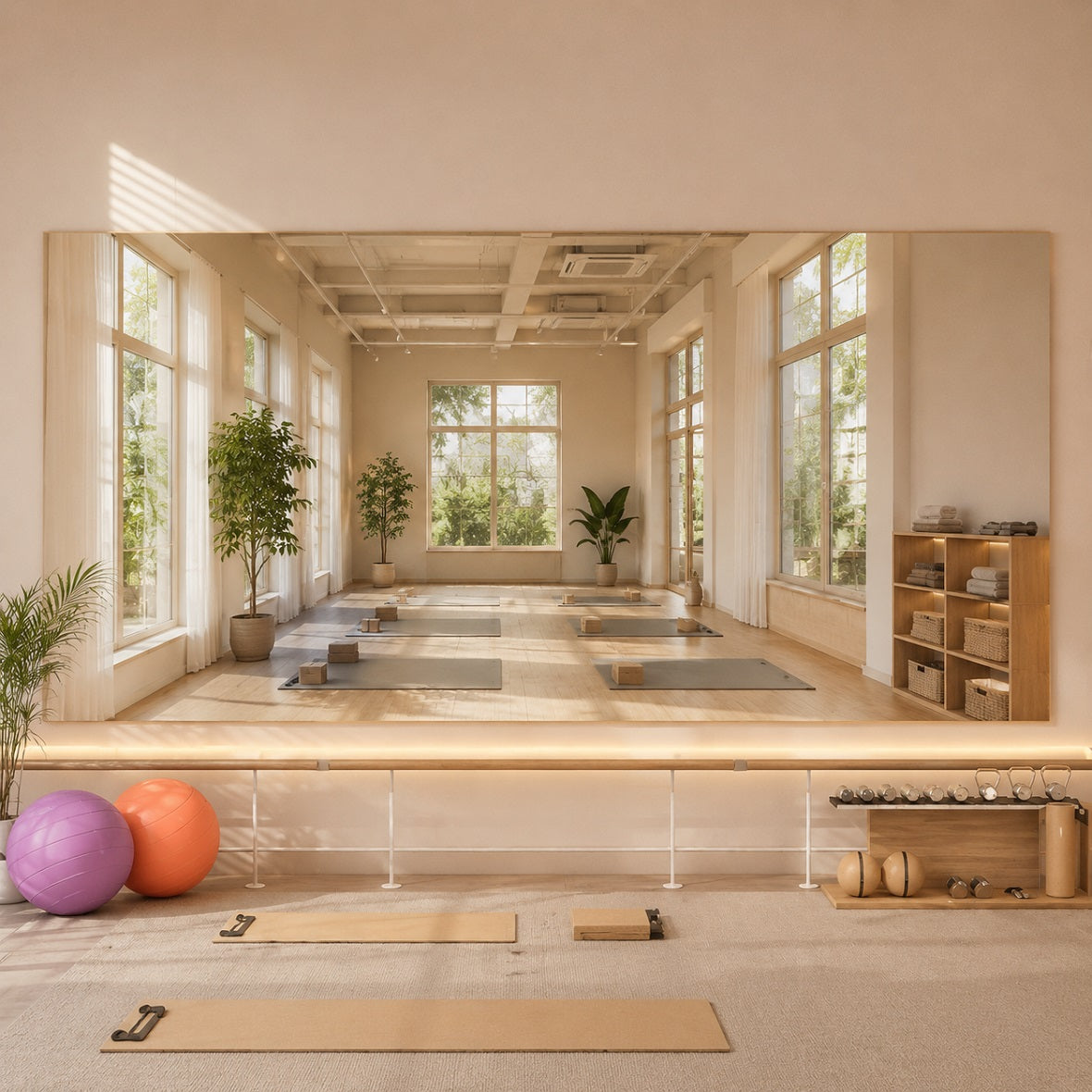
For workout, dance, or posture checks, a wider mirror is usually more useful than a narrow dressing mirror. It gives the body more room to move within the reflection.
Measure the Space Before Choosing a Size
Start with the wall or corner where the mirror will go. Measure the height and width, then check the surrounding area for doors, outlets, switches, vents, baseboards, shelves, and furniture.
The mirror should fit without making the room difficult to use. Bedroom drawers still need to open. Closet doors should not strike the frame. A mirror in an entryway should not narrow the main walking path.
Product dimensions usually show the full outside measurement, including the frame. The reflective area may be several inches smaller. Check both measurements when they are available.
Painter’s tape makes the decision easier. Mark the mirror’s outer shape on the wall and look at it from the doorway, the bed, and other normal viewing positions. This gives a much better sense of scale than a product photo.
For a freestanding model, mark the stand’s footprint on the floor too. The open stand can take up more space than expected.
What Size Full-Length Mirror Do You Need?
Full-length mirrors for the home commonly range from about 48 to 72 inches in height. Widths often range from 16 to 30 inches, with larger decorative models extending beyond those dimensions.
A taller mirror is not automatically better. The right size depends on who uses it, where it is installed, and how much viewing distance the room provides.
Mirror height
A 48- to 55-inch mirror can provide a full-body view when mounted at the right height. It may work well behind a door, inside a closet, or on a narrow bedroom wall.
Mirrors around 60 to 65 inches are easier to position. They suit many bedrooms, dressing areas, and entryways without looking excessively large.
A mirror measuring 66 to 72 inches or more offers a comfortable view for taller users. This height also works well for mirrors that rest directly on the floor.
A mirror does not need to be as tall as the person using it. Basic mirror geometry allows a shorter flat mirror to show the whole body when placed correctly. Larger mirrors are simply more forgiving. They accommodate different user heights, shoes, viewing angles, and distances without requiring a precise installation position.
Mirror width
Width affects how comfortable the reflection feels.
A narrow mirror may show the entire body but leave little space around the shoulders. That can make outfit checks feel cramped, particularly when the mirror is close to the viewer.
A width of approximately 18 to 24 inches works for many dressing areas. A mirror that is 30 inches wide or more provides a broader reflection and creates a stronger decorative presence.
Wider mirrors are also useful for checking posture, photographing outfits, or viewing clothing from different angles.

Leave Enough Viewing Distance
Mirror dimensions are only part of the sizing decision. You also need enough space to stand in front of the glass.
A narrow hallway may have enough wall space for a tall mirror but not enough distance for a relaxed full-body view. A bedroom wall opposite the foot of the bed can create the same problem.
Stand where the mirror will be used and check the available distance. Look for furniture, open doors, or other objects that could block the lower part of the reflection.
A slightly smaller mirror in an open dressing corner can be more useful than an oversized mirror squeezed between furniture.
Wall-Mounted, Freestanding, Leaning, or Over-the-Door?
The mounting style determines how much floor space the mirror uses, how easy it is to move, and how secure it feels.
Wall-mounted full-length mirrors
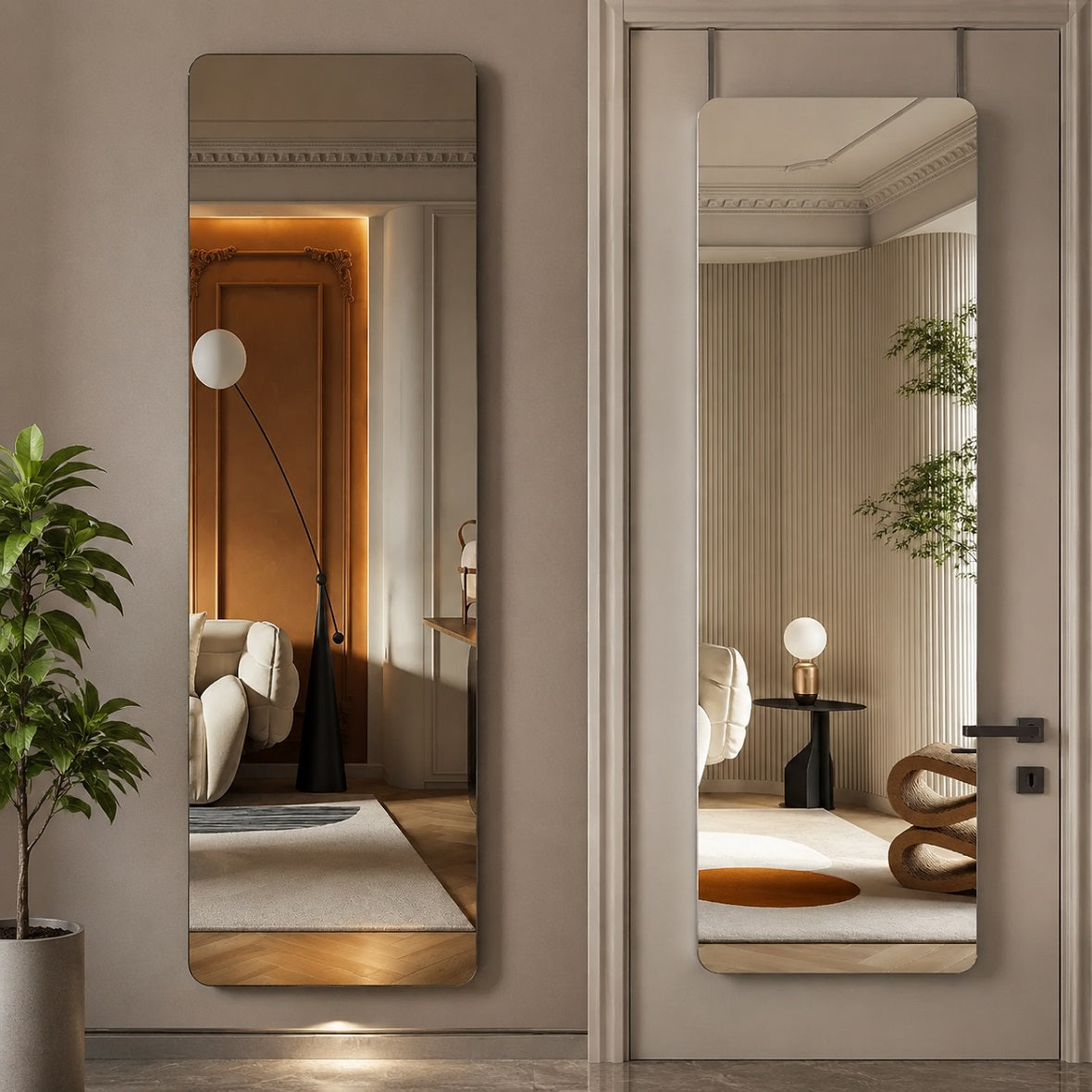
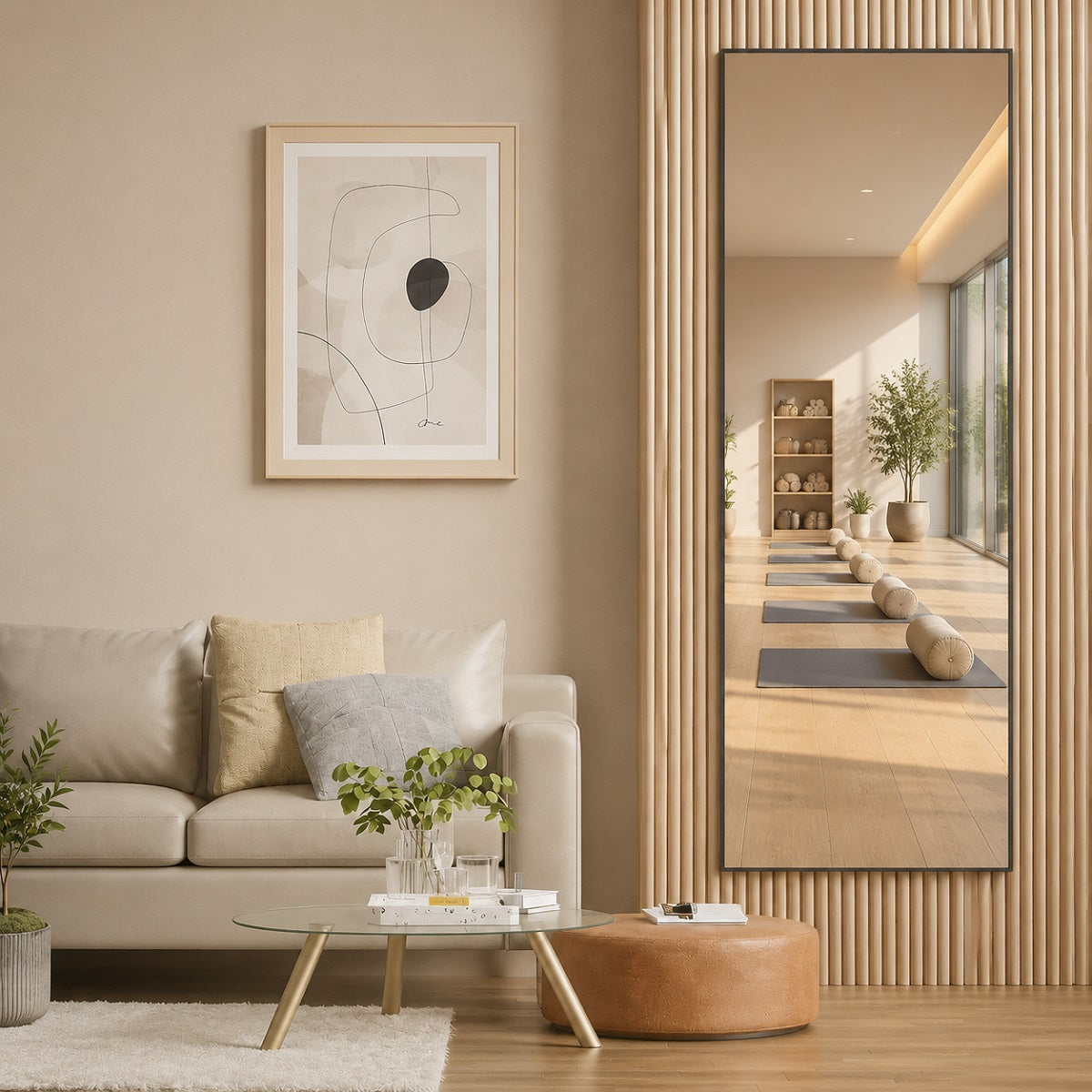
A wall-mounted full-length mirror keeps the floor clear and gives the room a clean appearance. It works well in small bedrooms, closets, narrow hallways, and busy entryways.
Secure installation matters because full-length mirrors can be heavy. Check the mirror’s weight, the wall material, and the hardware requirements. Use mounting hardware rated for both the mirror and the wall type.
Some mirrors can be mounted vertically or horizontally. Confirm the permitted installation direction before drilling.
Wall mounting is a practical choice for homes with pets or children because the mirror is less likely to move or tip when installed correctly.
Freestanding mirrors
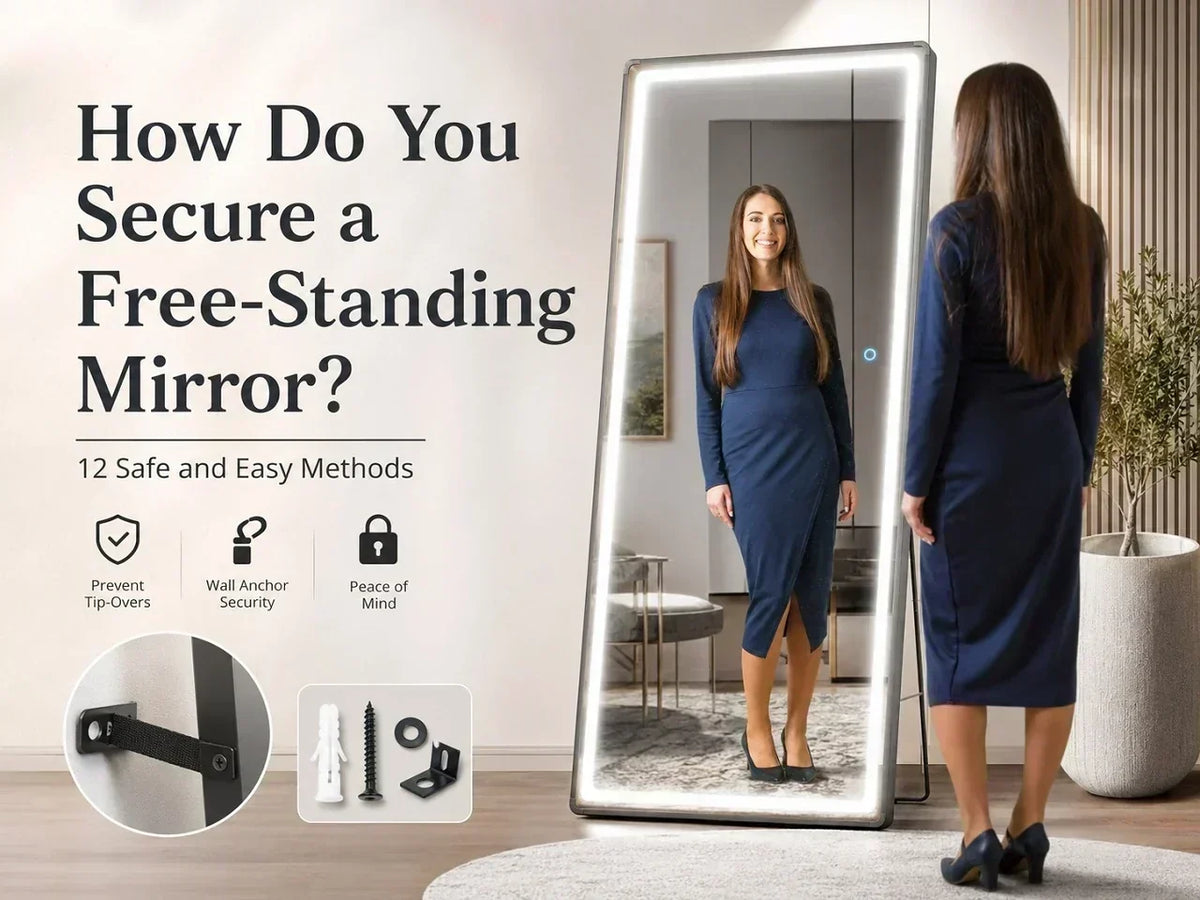
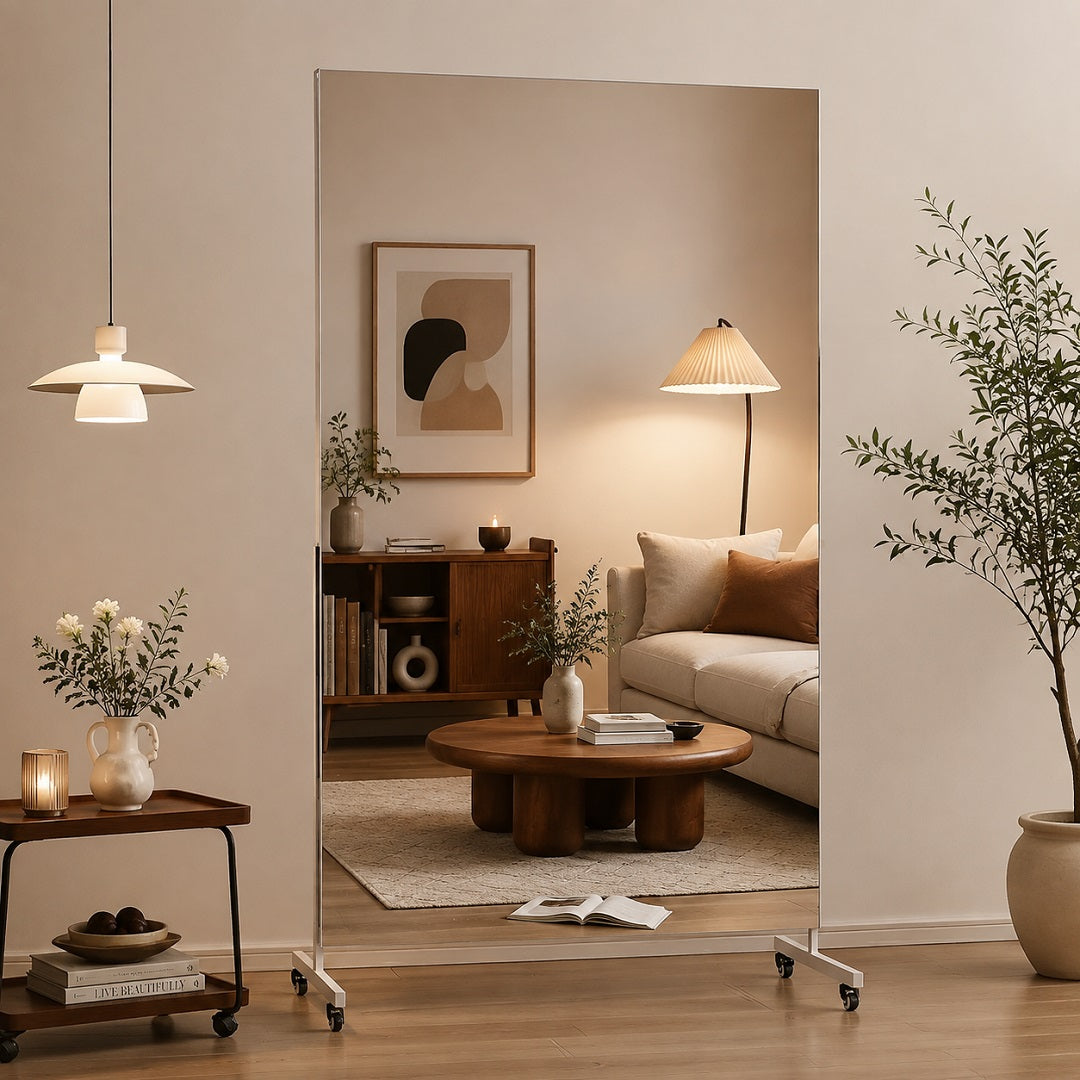
A freestanding full-length mirror comes with a support stand, so it can be moved without permanent wall installation. It suits rental homes, guest rooms, dressing areas, and spaces that change layout often.
Look at the stand construction closely. A wide base usually offers more stability than a shallow stand. Hinges should feel firm and hold the chosen angle without slipping.
The stand also needs enough floor space to open fully. Product photos do not always show its actual depth.
Leaning floor mirrors
A leaning floor mirror creates a relaxed, decorative look. Large arched mirrors and substantial framed designs are often displayed this way.
The angle of the mirror changes the reflection. Too much tilt can make body proportions appear unusual or direct the reflection toward the ceiling. Test the angle from a normal standing position.
Large leaning mirrors should be secured according to the manufacturer’s instructions. A heavy mirror resting loosely against a wall may slide or tip after being bumped.
Over-the-door mirrors
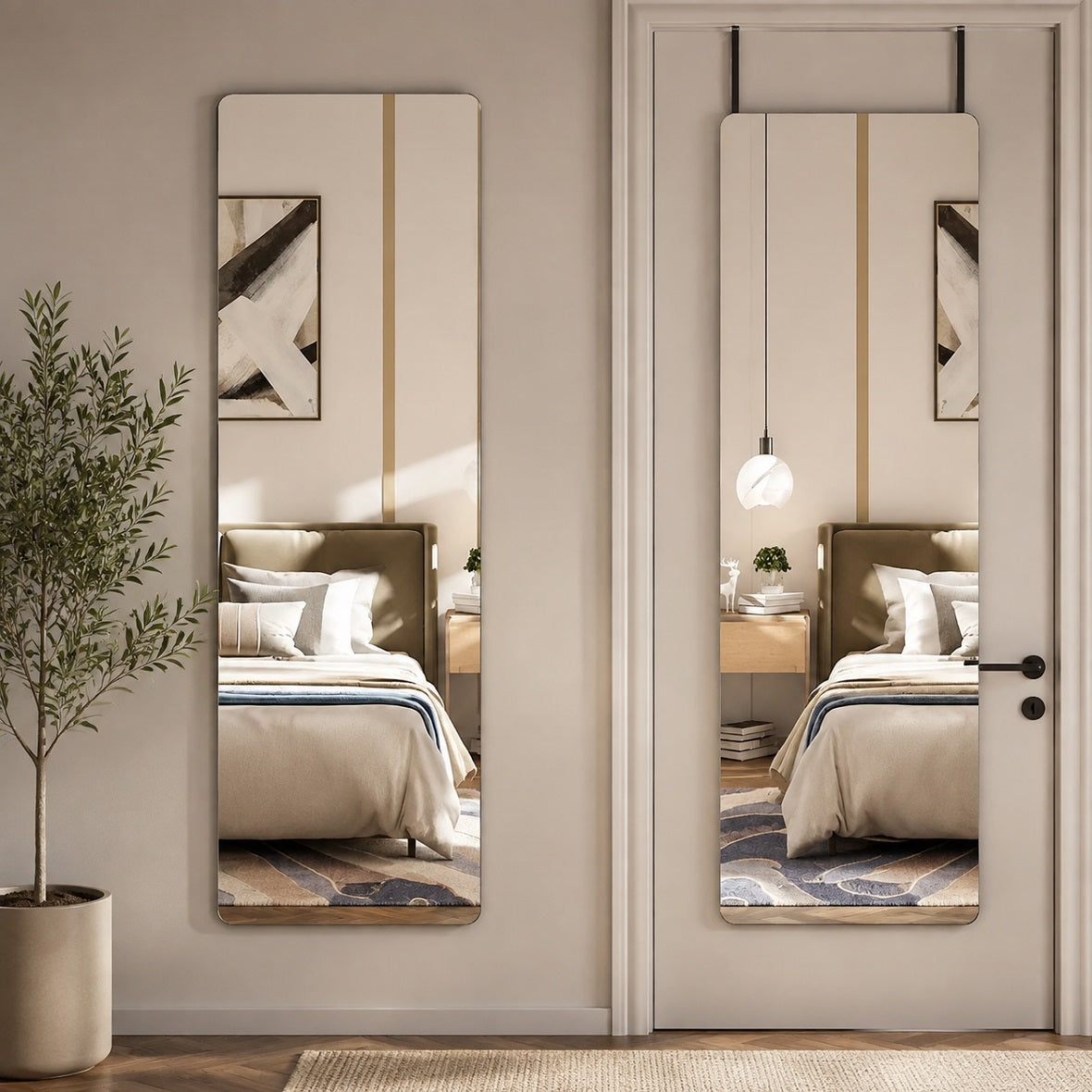
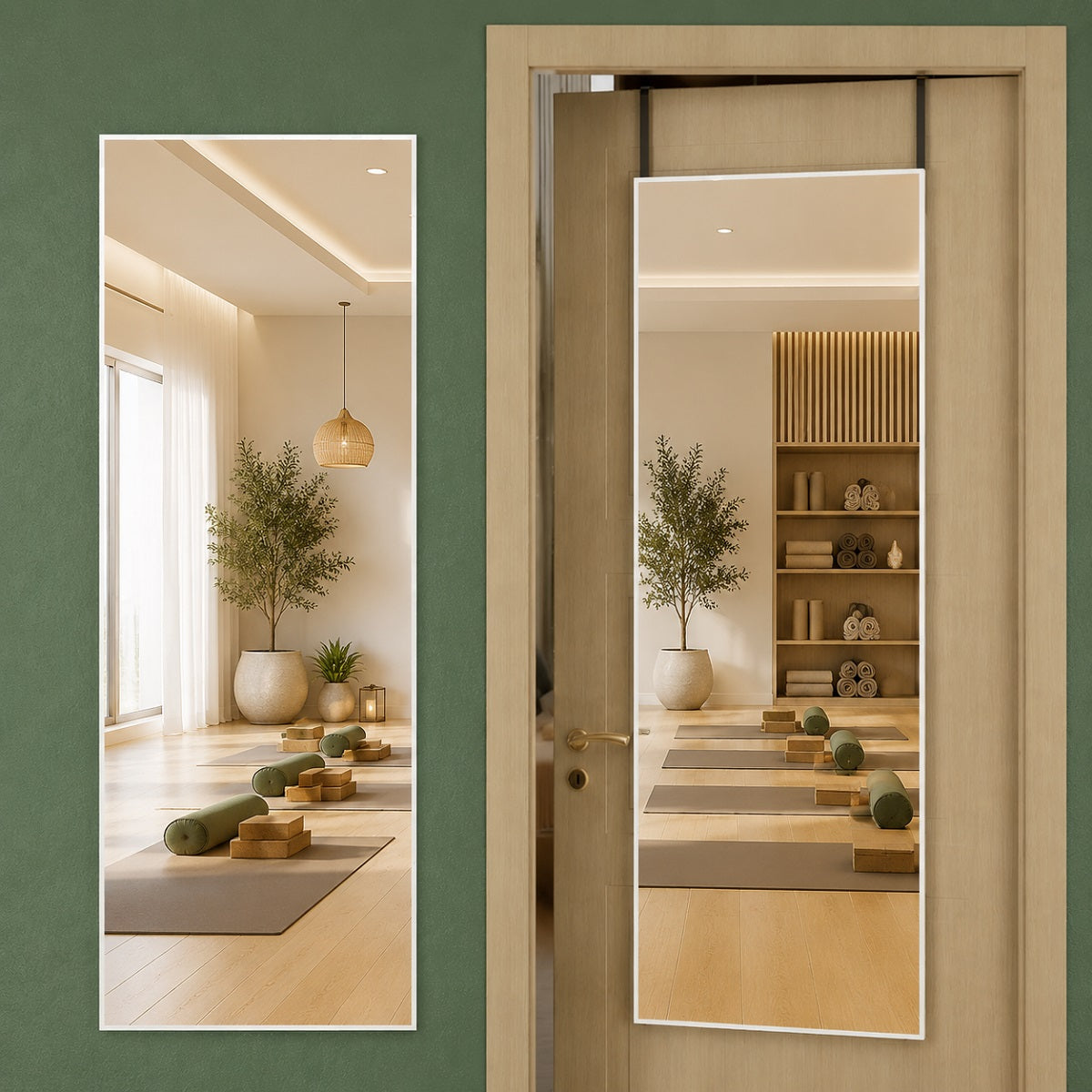
An over-the-door model saves both wall and floor space. It is useful in apartments, dorm rooms, small bedrooms, and closets.
Measure the door thickness and the clearance above it. Some brackets may prevent a tightly fitted door from closing properly. Protective pads behind the mirror can reduce movement and keep the frame from marking the door.
Check the Glass for a Clear Reflection
The frame usually gets the most attention while shopping, but the glass determines how the mirror feels during daily use.
Good mirror glass should produce a clear reflection without visible waves, stretching, or bending. Distortion may appear near the edges or become more noticeable when standing several feet away.
When viewing a mirror in person, look at straight lines reflected in the glass. Doorframes, shelves, and wall edges should remain straight as you move slightly from side to side. Curving or rippling lines may point to uneven glass or backing.
For online purchases, read recent customer reviews and look closely at customer photos. They may reveal edge distortion, loose frames, backing problems, or shipping damage that does not appear in studio photography.
Terms such as “HD mirror” and “crystal-clear reflection” are common in product descriptions. Construction details, customer photos, and consistent image quality provide more useful information than those labels alone.
Pay Attention to Safety and Construction
A full-length mirror is a large piece of glass, so stability matters as much as appearance.
Check how the glass sits inside the frame. It should not rattle or shift. Frame corners should meet cleanly, and the hanging brackets or stand should feel appropriate for the mirror’s weight.
Useful safety details include:
- Protective backing that helps hold glass fragments together
- Tempered glass when clearly stated by the manufacturer
- Rounded frame corners
- Reinforced mounting points
- A stable support stand
- Anti-tip hardware
- Corrosion-resistant frame finishes
The term “shatterproof” can be misleading. Glass may still break when struck or dropped. Look for a specific explanation, such as tempered glass or protective anti-scatter film.
Mirrors placed near doors, exercise areas, or busy walkways need extra care. A mounted or properly anchored design is usually more secure than a mirror that can shift when touched.

Consider the Lighting Around the Mirror
Good lighting makes a basic mirror more useful. Poor lighting can make even high-quality glass frustrating.
Natural light works well for checking clothing colors and getting ready during the day. Placing a mirror near a window can brighten the reflection, but direct sunlight may create glare. A nearby wall often receives softer daylight than the wall directly opposite the window.
Overhead lighting can cast shadows under the eyes and chin. Lamps or wall lights positioned closer to face level create a more balanced reflection.
The light should fall toward the person standing in front of the mirror. A bright lamp reflected directly in the glass may create glare without improving visibility.
Do You Need a Full-Length Mirror With Lights?
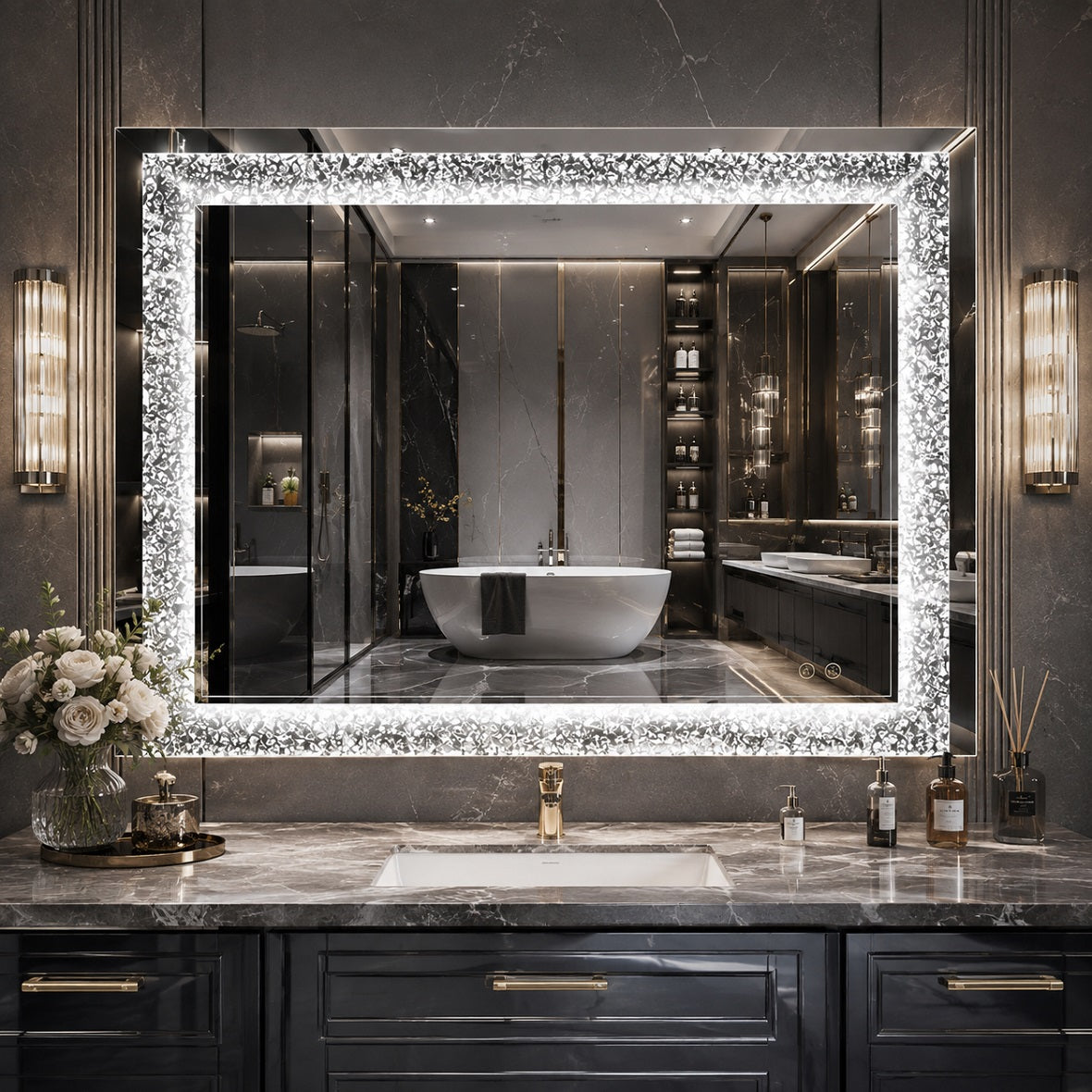
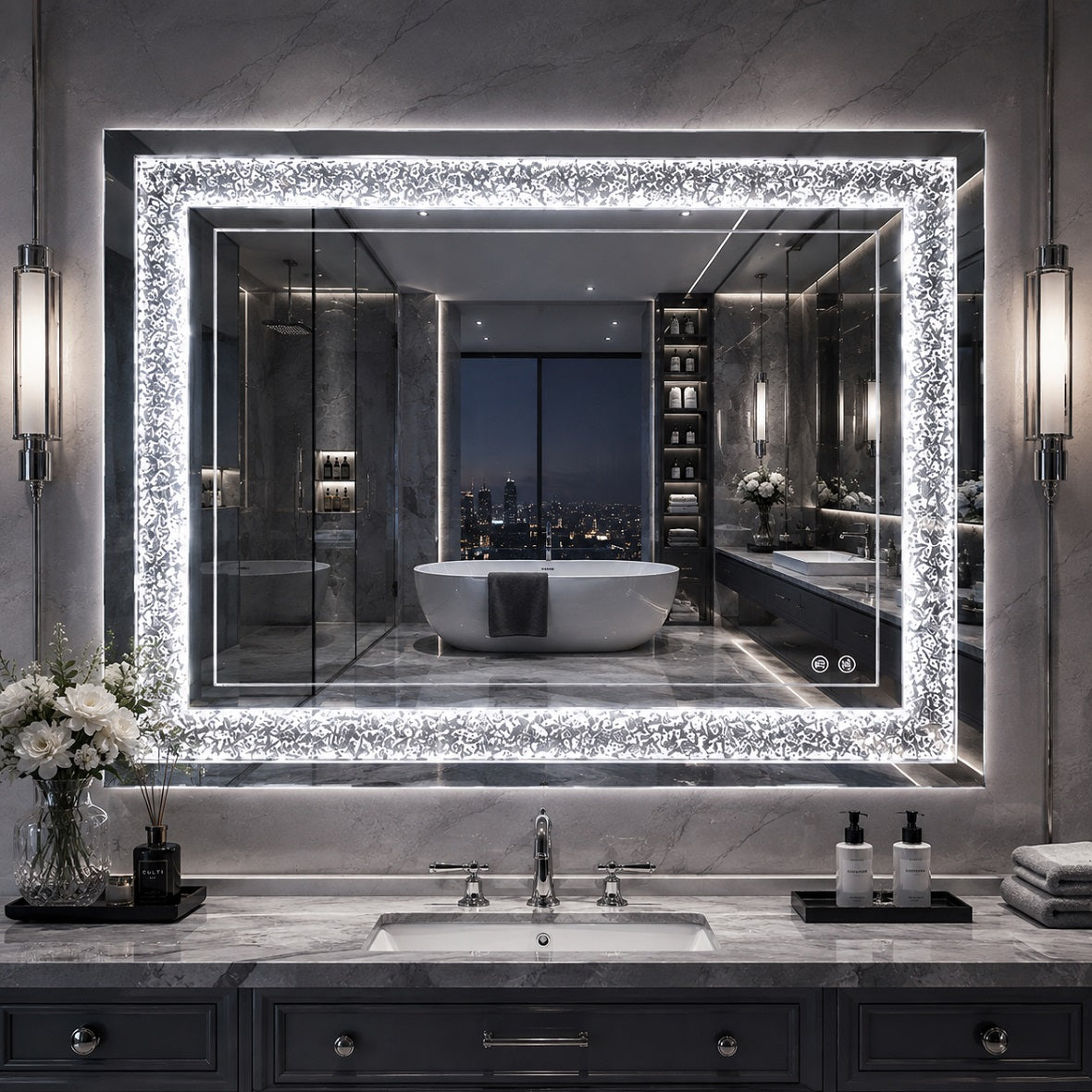
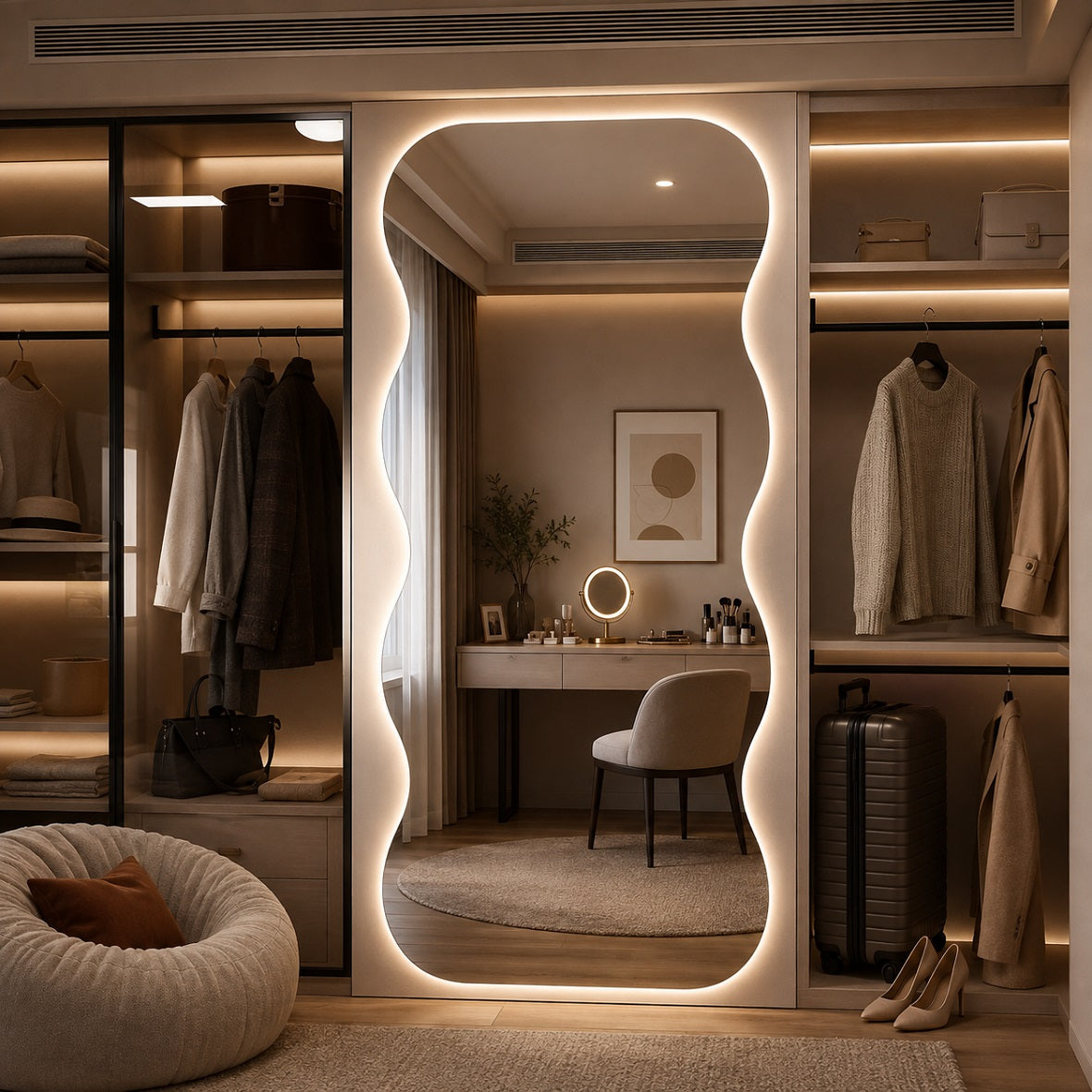
A full-length mirror with lights can be useful in a dark bedroom, walk-in closet, or dressing area. Built-in LED lighting provides more consistent illumination than a single ceiling fixture.
Features worth considering include adjustable brightness, several color temperatures, touch controls, and a memory function.
Warm light creates a softer atmosphere but can change the appearance of clothing colors. Cool light feels crisp and bright. Neutral light is often the most practical setting for everyday outfit checks.
Check the power source before ordering. A plug-in mirror needs an outlet within reach, and the cord should not cross a walkway. Battery-powered lighting may require frequent charging or battery replacement. Hardwired models can involve a more permanent installation.
Built-in lighting adds cost and electrical parts. Rooms that already have strong, even lighting may be better suited to a simple mirror with higher-quality glass.
Match the Frame to the Room
The mirror frame does not need to match every piece of furniture. A shared material, color, or general mood is usually enough to make it feel connected to the room.
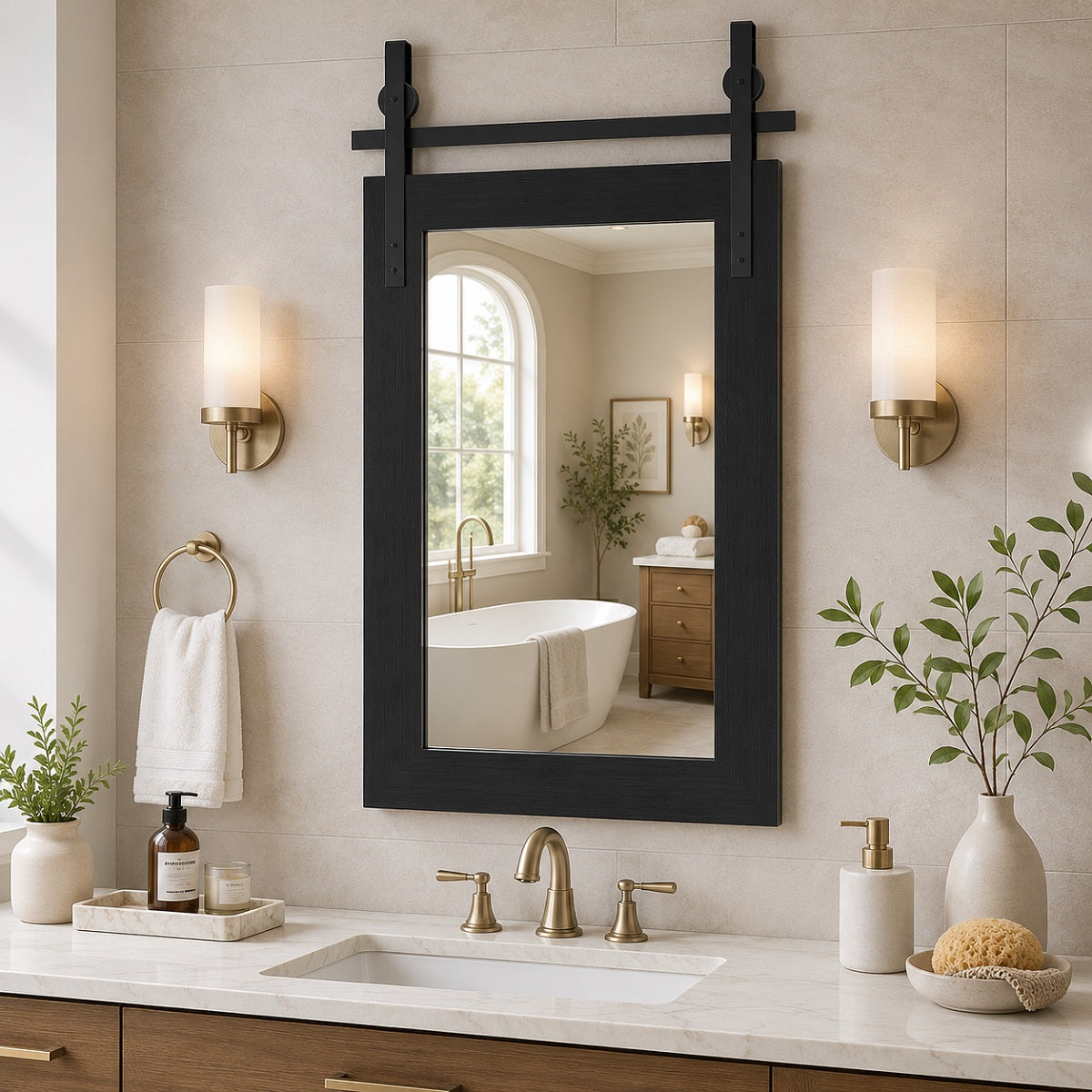
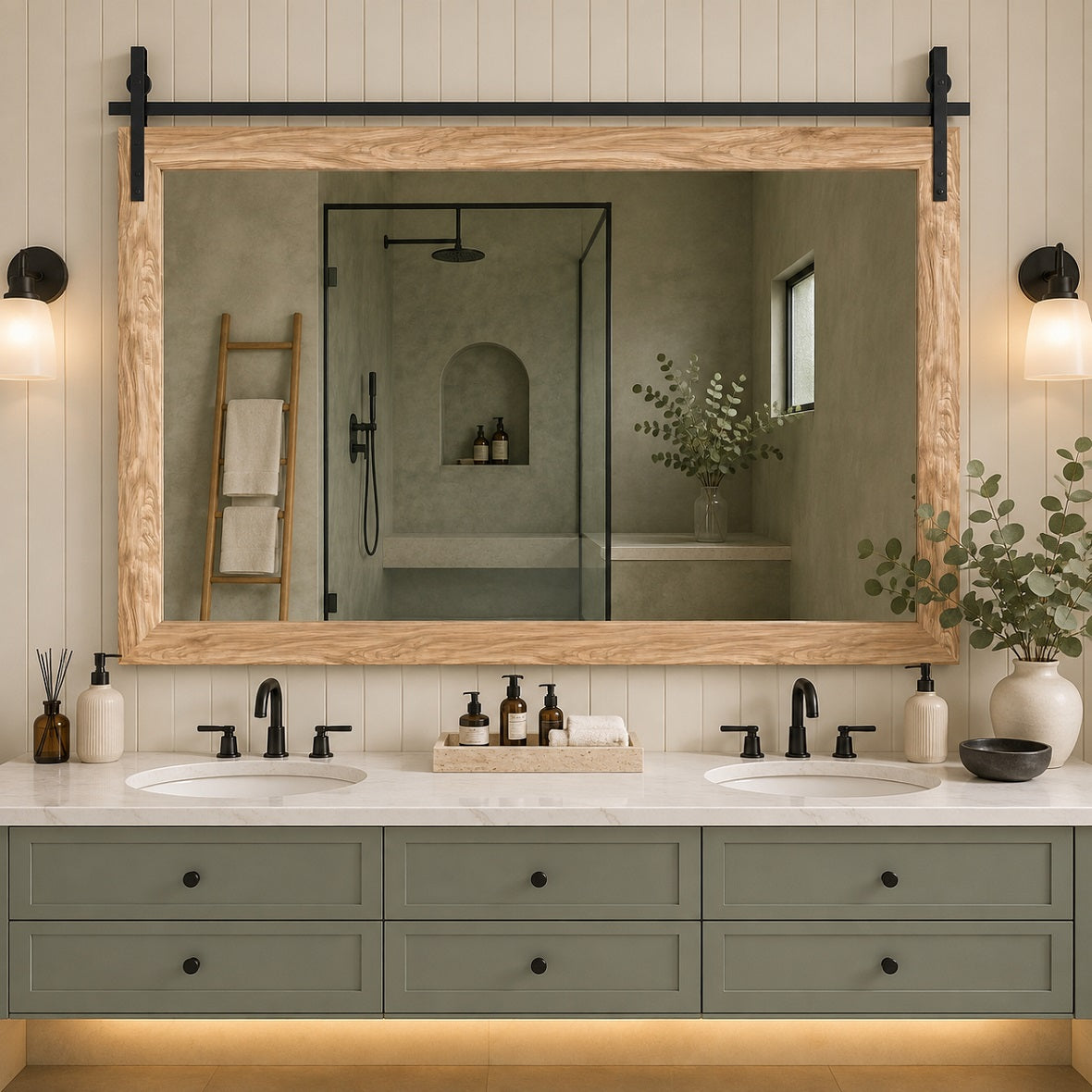
Thin black metal frames suit modern, industrial, and minimalist interiors. Gold or brass finishes add warmth and contrast. Natural wood works well in relaxed bedrooms, farmhouse spaces, and rooms with neutral colors. Frameless mirrors have a quieter appearance and take up less visual space.
Shape also changes how the mirror feels.
A rectangular mirror looks clean and familiar. An arched full-length mirror softens a room filled with straight furniture lines. Rounded corners give a modern frame a gentler appearance. Ornate frames draw more attention and work more like wall décor.
Highly decorative styles can dominate a small room. A simple frame often has a longer visual life and is easier to reuse after furniture or wall colors change.
Choose the Placement by Room
Bedroom
Place the mirror near the closet, dresser, or main dressing area. Leave enough open space to step back without hitting the bed.
A wall-mounted mirror saves floor space. A freestanding model offers more flexibility. Leaning mirrors bring a softer decorative feel to larger bedrooms.
Consider the reflection from the bed before deciding on the final position. Some people find a mirror directly facing the bed distracting, especially when it catches movement or artificial light at night.
Walk-in closet
Closets benefit from practical placement and even lighting. A narrow wall-mounted mirror can work better than a deep freestanding model when shelves and clothing rails already use most of the floor space.
The mirror should be visible without opening or closing several doors. Avoid placing it where hanging clothes block part of the glass.
Entryway
An entryway mirror provides a final outfit check before leaving home. It can also reflect light into a darker hall.
Keep it away from swinging doors and narrow traffic areas. A securely mounted design is generally more practical than a stand that extends into the walkway.
Living room
A living room mirror often serves as décor. Larger sizes can add depth to the space and fill an empty wall without requiring several smaller decorations.
Look at what the mirror reflects from the main seating area. A window, artwork, or tidy corner creates a more pleasant result than exposed storage, cables, or a television screen.
Apartment or dorm room
Limited space calls for a slim wall-mounted, over-the-door, or shallow freestanding mirror. A model with built-in storage may be useful, but the storage section should open without blocking the surrounding furniture.
Lightweight construction makes moving easier. Stability and clear glass still deserve more attention than portability alone.
Avoid Buying Features You Will Not Use
Some full-length mirrors include jewelry storage, shelves, wheels, Bluetooth speakers, dimmable lights, or adjustable stands. These additions can be convenient, but they also increase the price and introduce more parts that may wear out.
A jewelry cabinet makes sense in a bedroom with limited storage. Wheels are useful in studios and dressing rooms where the mirror moves regularly. Adjustable lighting helps in rooms with changing light conditions.
A plain, well-built mirror is often the stronger purchase when the room already has good lighting and enough storage. Glass quality, frame stability, and suitable dimensions should come before novelty features.
Common Full-Length Mirror Buying Mistakes
Buying based only on the product photo is a frequent problem. Styled images can make the mirror’s scale difficult to judge. Always compare the listed measurements with the actual room.
Other common mistakes include:
- Measuring the wall but not the stand depth
- Forgetting the space needed to step back
- Choosing a mirror that is too narrow for comfortable outfit checks
- Ignoring the weight and mounting requirements
- Placing the mirror where a door can hit it
- Assuming that hanging hardware is included
- Paying for built-in lighting without checking the outlet location
- Leaning a heavy mirror without securing it
- Focusing on the frame while overlooking glass distortion
- Ignoring delivery damage and return policies
Full-length mirrors are harder to return than smaller household items. Read the delivery, damage-reporting, return, and warranty terms before placing the order.
Full-Length Mirror Buying Checklist
Use this checklist before making a final decision:
- Measure the available wall height and width.
- Check the usable reflective area, not only the outside frame.
- Mark the dimensions on the wall with painter’s tape.
- Measure the floor depth required by a stand.
- Leave room for doors, drawers, and walkways.
- Confirm that the mirror provides a comfortable full-body view.
- Check the glass for visible distortion.
- Review the frame, backing, and support construction.
- Choose mounting hardware suited to the wall and mirror weight.
- Plan the mirror around natural and artificial light.
- Confirm access to an outlet for an LED model.
- Read the return and damage-reporting policies.
- Secure freestanding or leaning mirrors when required.

Final Thoughts
A full-length mirror earns its place through daily use. It should show the full outfit without awkward positioning, sit securely in the room, and provide a reflection that looks natural.
Begin with the available space rather than the frame style. Once the dimensions and mounting method are clear, compare glass quality, safety features, lighting, and design. This order makes it easier to find a mirror that works beyond the product photo.
Hasipu full-length mirrors are designed for everyday dressing, room styling, and flexible home use. The right design can bring more light into a room, make getting ready easier, and give an empty wall a clear purpose.
Frequently Asked Questions
1. What is the best size for a full-length mirror?
A height of about 60 to 72 inches works well in many homes. Widths around 18 to 24 inches provide a practical dressing view, while mirrors measuring 30 inches or wider feel more spacious. Room size, user height, placement, and viewing distance should guide the final dimensions.
2. Does a full-length mirror need to be as tall as the person using it?
No. A shorter flat mirror can show the full body when mounted at the correct height. Taller mirrors are easier to position and work better for several users, especially when placed on the floor.
3. How wide should a full-body mirror be?
A width of 18 to 24 inches is suitable for many bedrooms and dressing areas. Wider mirrors provide more space around the reflection and work better for outfit photos, posture checks, and larger rooms.
4. Where should a full-length mirror go in a bedroom?
Useful positions include beside the closet, near the dresser, on an open wall, or in a dressing corner. The location should provide enough room to step back without blocking drawers, doors, or walkways.
5. Is a leaning mirror safe?
A leaning mirror can be used safely when it is stable and secured according to the manufacturer’s directions. Large or heavy models should not rest loosely against the wall, especially in homes with children or pets.
6. Are LED full-length mirrors worth it?
LED mirrors are helpful in dark dressing areas or rooms with uneven lighting. Adjustable brightness and color temperature make the lighting more useful throughout the day. A standard mirror may be enough for a room with strong natural light and balanced artificial lighting.