


Table of Contents
A mirror above the bed can brighten the wall, reflect a pleasant part of the room, and make a small bedroom feel less closed in. Getting the position right takes more than finding the center of an empty wall.
A mirror hung too high can look disconnected from the bed. Too low, and it may crowd the headboard or sit where pillows and movement can reach it. Size, weight, ceiling height, and mounting hardware also affect the final position.
So, how high should a mirror go above a bed? For a lightweight decorative mirror, start with a gap of 4 to 8 inches between the top of the headboard and the bottom of the frame. Treat that measurement as a starting point, then adjust it to suit the mirror and the room. Large or heavy glass mirrors deserve a separate safety assessment before they are placed above a sleeping area.
1. How Far Above the Headboard Should a Mirror Hang?
For most lightweight decorative mirrors, leave approximately 4 to 8 inches above the headboard. Measure from the highest point of the headboard to the lowest point of the mirror’s outer frame.
This distance usually keeps the mirror visually connected to the bed. A much larger gap can make it appear to float on its own. A very small gap may make the wall feel cramped, especially with a thick frame or tall headboard.
- A 4- to 6-inch gap often works with smaller mirrors, lower headboards, and rooms that have plenty of open wall above the mirror.
- A 6- to 8-inch gap gives a larger frame more breathing room.
- Some bedrooms can support a gap closer to 10 inches, which may suit a tall, curved headboard or a mirror with a wide decorative frame.
Once the distance moves beyond 10 to 12 inches, the mirror often starts losing its visual connection to the bed. Measure from the headboard rather than relying on a standard distance from the floor. General eye-level hanging rules make sense for mirrors used while standing, but an above-bed mirror belongs to the furniture arrangement below it.
2. Is a Mirror Above the Bed a Good Idea?
A mirror can fill a bare wall without making the bedroom feel heavy. It may reflect natural daylight from a nearby window or add depth to a narrow room. Round, arched, and decorative mirrors can also soften the straight lines created by a bed and nightstands.
The reflection can work against the room when the placement has not been tested. A mirror may double the appearance of an open closet, catch glare from a lamp, or reflect activity near the bedroom door. These details are easy to miss while looking only at the wall.
Weight creates a more serious concern. FEMA earthquake safety materials advise against placing beds beneath heavy mirrors and other objects that could fall. A heavy glass mirror directly above a person’s head is not the right place to take chances with uncertain hardware or an unknown wall structure.
Consider hanging the mirror on another wall when:
- The mirror is unusually large or heavy
- The frame or hanging hardware shows wear
- The wall structure cannot be confirmed
- Reliable mechanical mounting is not allowed
- The home is in an earthquake-prone area
- Children regularly jump or play on the bed
- The headboard moves or strikes the wall
A lightweight decorative mirror is easier to manage, but it still needs hardware rated for its weight and the type of wall.

3. What Size Mirror Should Go Above a Bed?
The mirror should usually be narrower than the bed or headboard beneath it. A useful design reference is approximately two-thirds (2/3) of the headboard width. A slightly wider mirror may reach three-quarters (3/4) of the width and still look balanced.
These approximate ranges can help narrow your search:
- Twin bed: 20 to 30 inches wide
- Full bed: 28 to 40 inches wide
- Queen bed: 36 to 50 inches wide
- King bed: 44 to 60 inches wide
Use these as design references rather than strict product standards. The actual headboard width provides a better measurement than the mattress size alone.
A mirror that is too narrow can look lost above a wide bed. Large areas of empty wall on both sides make it appear like a separate object rather than part of the bedroom arrangement. An oversized mirror creates the opposite problem—it can overpower the headboard, compete with nearby windows or sconces, and add considerable weight above the sleeping area.
Pro Tip: Make a paper template in the mirror’s exact outside dimensions before ordering. Tape it above the bed with low-adhesion painter’s tape and view it from the doorway, the foot of the bed, and both sides of the room.
4. How High Should a Mirror Go Above a Bed Without a Headboard?
A bed without a headboard has no clear upper edge to use as a measuring point. The mattress, pillows, and seated head height become the main references.
Begin with the top of the mattress. Create an imaginary headboard area approximately 24 to 36 inches above the mattress, then test the mirror above that visual line. The exact height will change with the mattress, bed frame, pillow arrangement, and people using the room.
The bottom of the mirror should not appear to press down on the pillows. It also needs enough clearance for a person sitting upright in bed.
A painted color block, wall molding, wood panel, or lightweight textile can create a clearer visual anchor behind the bed. The mirror can then be positioned in relation to that feature instead of floating on an empty wall. There is no useful universal number for this arrangement; a full-size paper template gives a more reliable answer than measuring from the floor alone.
5. How Mirror Shape Changes the Placement
Shape affects where the frame begins and ends, so two mirrors with the same listed height may sit differently above the bed.
- Round mirrors: Measure from the lowest point of the circle. A round mirror above the bed works well with rectangular headboards because it breaks up straight lines. Small round mirrors tend to look disconnected when placed too high, while large round mirrors require enough space above them so the top does not crowd the ceiling.
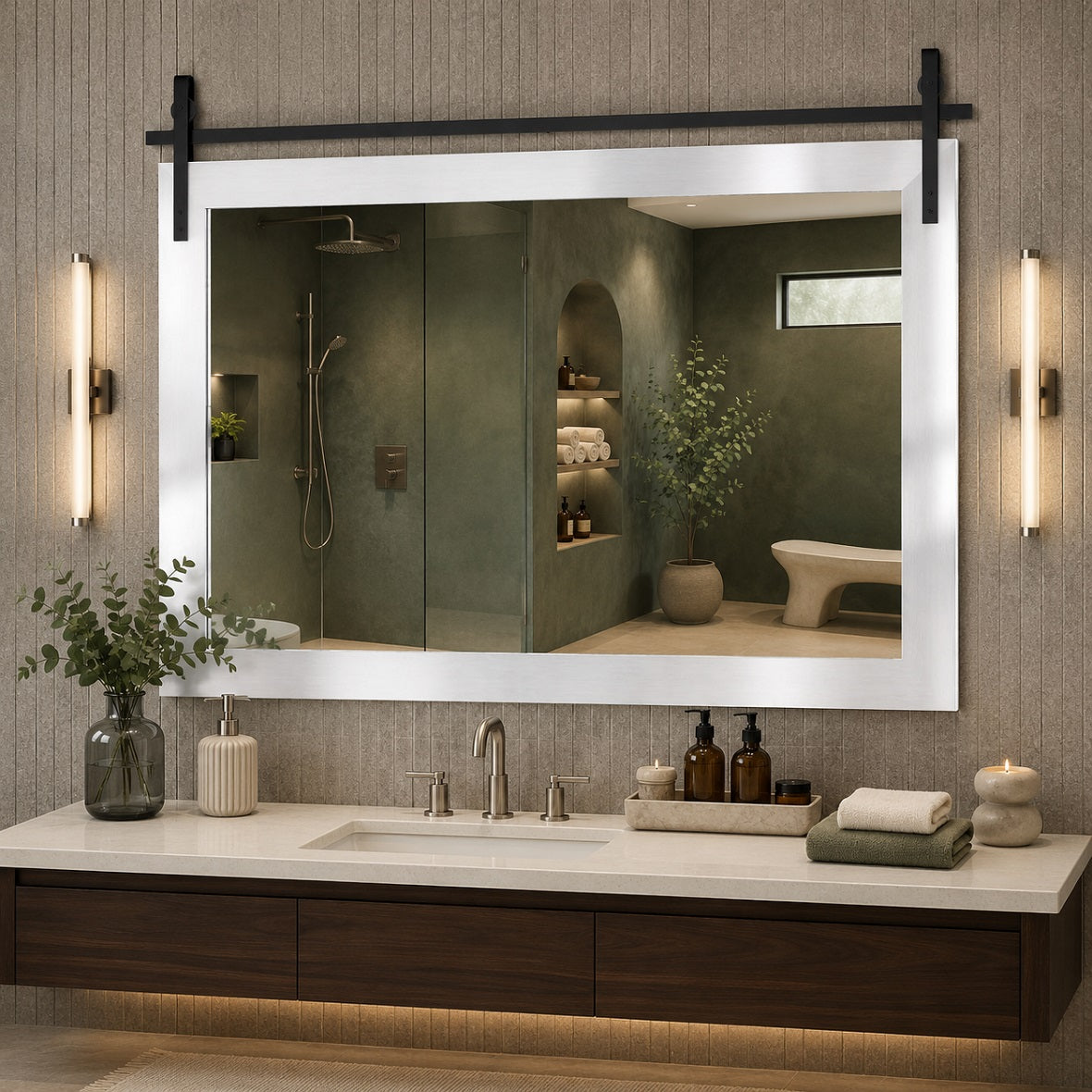
- Rectangular mirrors: A horizontal rectangular mirror follows the width of the bed and usually works with a smaller gap above the headboard. A vertical rectangle adds height but can look narrow above a queen or king bed. Long, heavy glass mirrors require careful mounting and may be better suited to another wall.
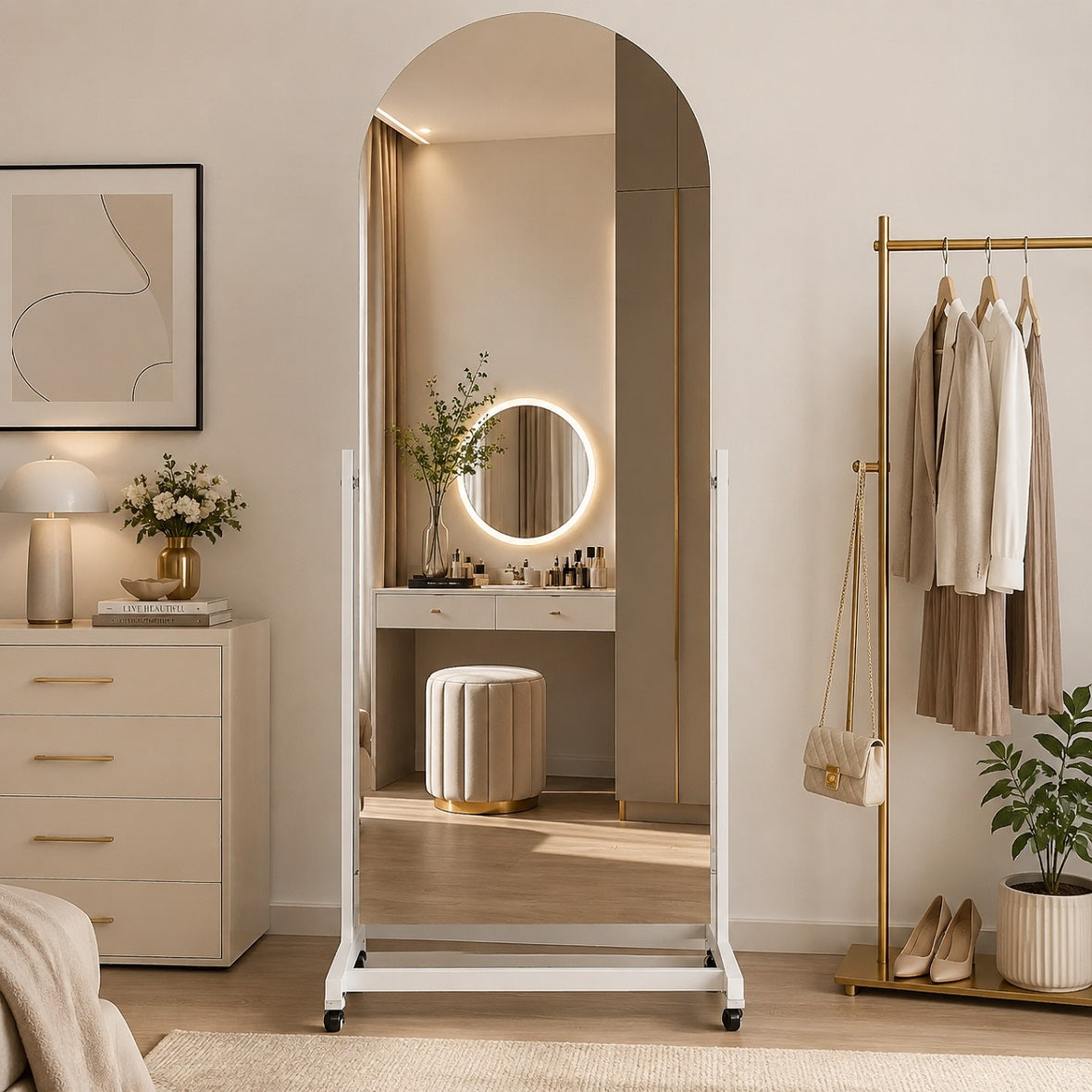
- Arched mirrors: An arched mirror brings vertical movement to the room without the hard upper corners of a rectangle. Keep its bottom parallel to the headboard and check the distance between the top of the arch and the ceiling.
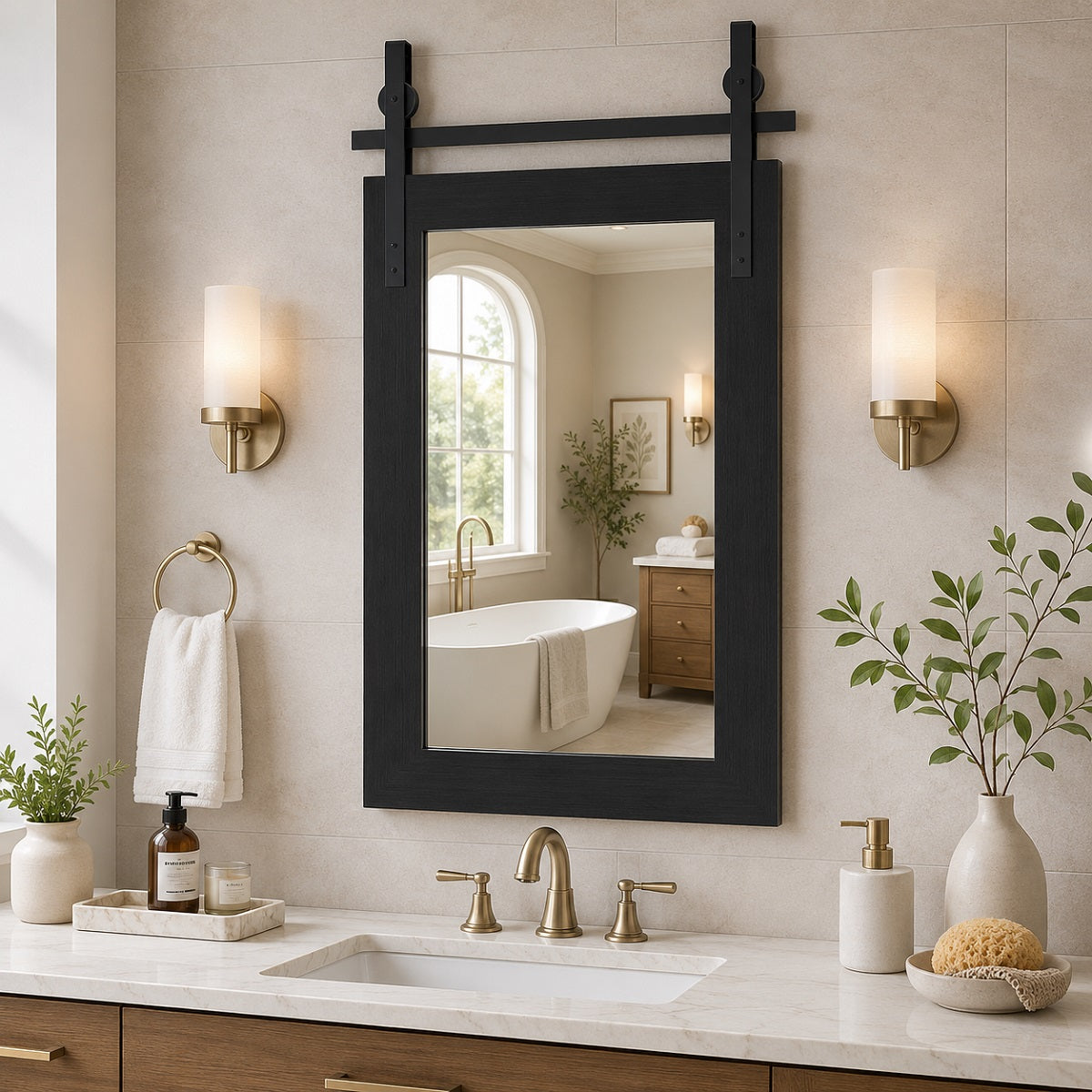
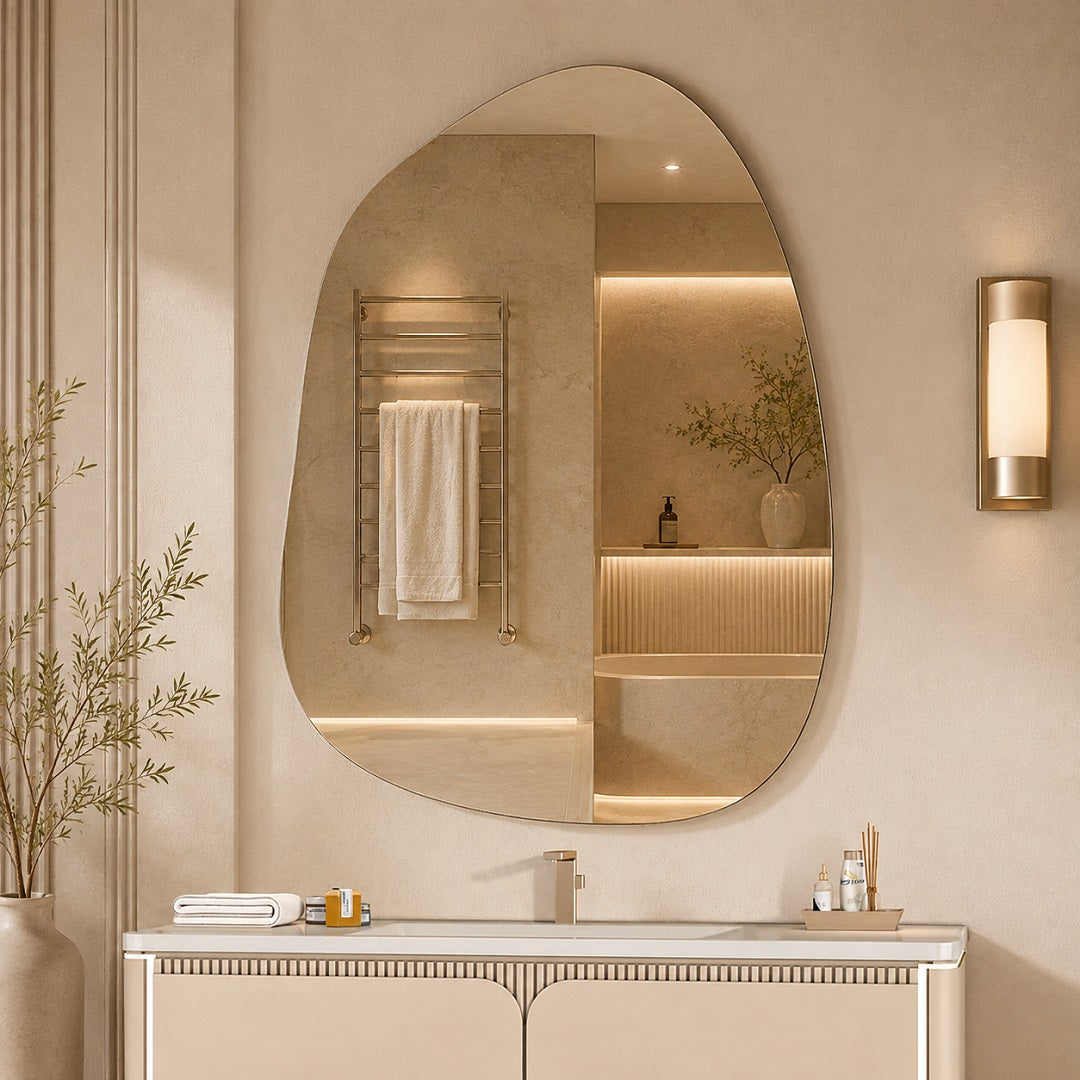
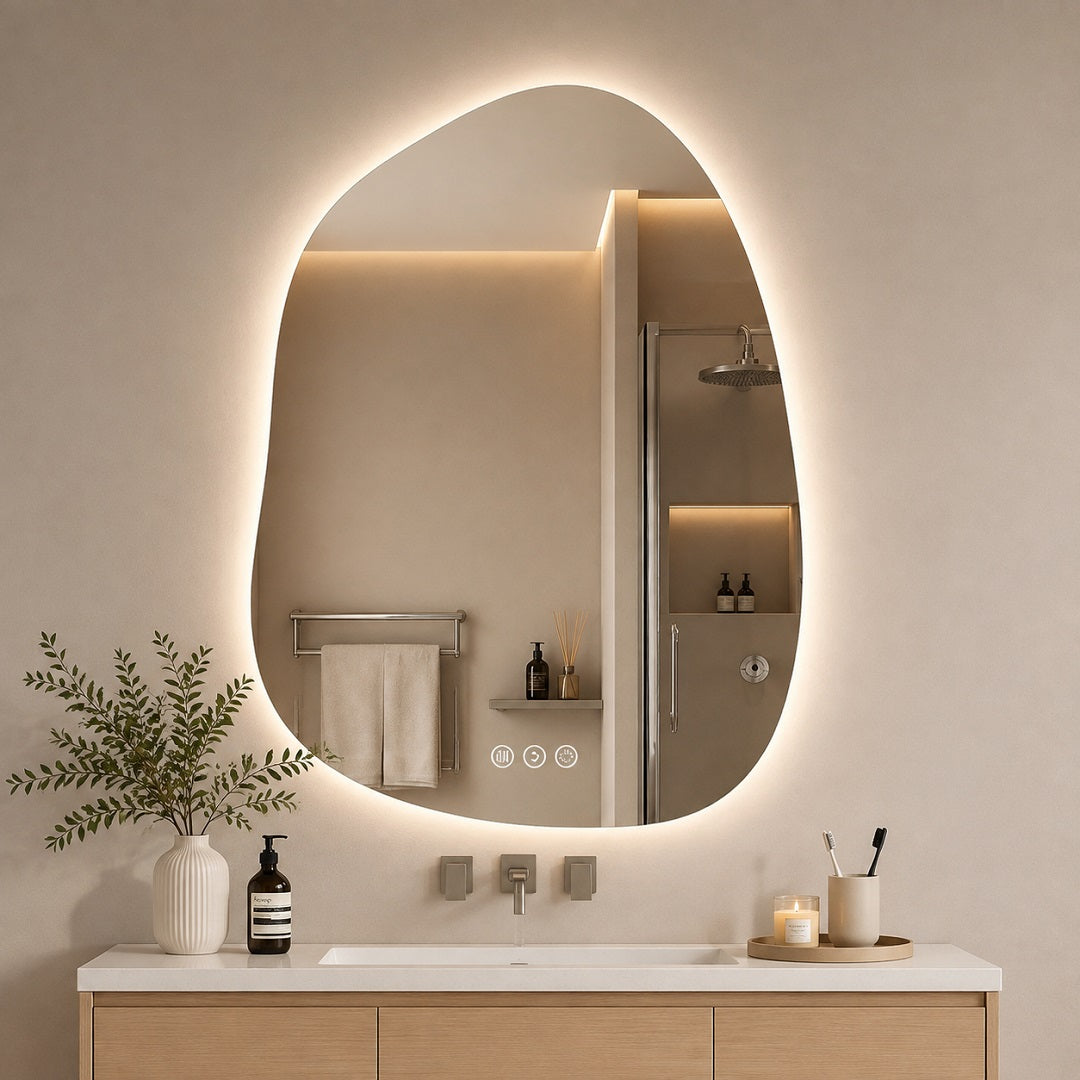
- Sunburst and irregular mirrors: Measure the entire outer frame, not only the reflective glass. Rays, uneven edges, and decorative metalwork contribute to the visual size. For an asymmetrical mirror, use its lowest point to set the gap above the headboard and mark the widest and highest points on the wall before drilling.
6. Let the Ceiling Guide the Final Adjustment
- Standard 8-foot ceiling: Usually has enough room for a medium decorative mirror above a standard headboard. Keep the mirror connected to the bed rather than moving it upward to divide the wall into equal sections.
- High or vaulted ceilings: Can tempt people to hang the mirror too high. The mirror still belongs to the bed arrangement, not the ceiling. A taller lightweight design may fill the space better than moving a small mirror several inches upward.
- Low ceilings: Often work better with a horizontal mirror. A smaller gap above the headboard preserves more open space between the mirror and ceiling.
The wall should always have some breathing room at the top. A frame placed too close to the ceiling can feel squeezed even when the gap above the headboard looks correct.

7. How to Measure the Placement Step-by-Step
- Measure the headboard width and locate its center. Mark that point on the wall with painter’s tape.
- Find the highest part of the headboard (important for curved, winged, or irregular designs).
- Measure 4 to 8 inches above that point and mark the proposed bottom edge of the mirror.
- Add the mirror’s full outside height using this formula:
- $$\text{Mirror top height} = \text{Headboard top height} + \text{Planned gap} + \text{Mirror height}$$
- Check the remaining space between the mirror and ceiling, taking wall sconces, windows, molding, vents, and artwork into account.
- Create a paper or cardboard template using the full frame dimensions. Place it on the wall and inspect it during the day and at night.
Important: The template should be centered over the bed, even when the bed itself is not centered on the entire wall. This preview also shows where the mirror will reflect light, doorways, furniture, and movement.
8. Pay Attention to the Reflection
A mirror does not only occupy wall space—it repeats whatever sits across from it.
- Good reflections: A window, soft bedside light, artwork, or tidy corner can make the room feel brighter.
- Distracting reflections: An open closet, television, bathroom entrance, or cluttered desk may make the bedroom look busier.
Check the reflection from three main vantage points: standing at the door, sitting on the bed, and lying down. Each position produces a different view. A lamp that looks soft from the doorway may create sharp glare from the pillow. Nighttime matters too—reflected movement near the door or a bright screen can become distracting in an otherwise dark room. Changing the mirror’s position by a few inches may improve the reflection without changing the wider design.
9. How to Hang a Mirror Above a Bed Safely
Always check the product weight before choosing mounting hardware (include frame, glass, backing, and decorative elements). Hardware must match both the mirror and wall material (drywall, plaster, concrete, masonry, or wood studs). A general-purpose nail or lightweight picture hook is not suitable for every mirror.
Use the manufacturer-specified mounting points. A heavy mirror should not depend on a loose hanging wire or a single ordinary hook. A secure installation system may use:
- Two rated mounting points
- An interlocking bracket
- A properly installed French cleat
Keep the frame stable against the wall; movement at the bottom can place repeated stress on upper hardware.
When to Hire a Professional:
- The mirror is large or heavy
- The wall structure is uncertain
- Installation requires drilling into brick or concrete
- Instructions cannot be followed exactly
- The frame lacks clear mounting points
- The mirror will sit directly above the sleeping area
Note on Adhesive Strips: Ordinary decorative adhesive strips should NOT be treated as a general mounting system for a heavy glass mirror. Weight ratings, wall finish, humidity, paint condition, and manufacturer instructions all affect performance.
10. Placement Mistakes That Make the Wall Look Off
- Hanging the mirror too high: The most common visual mistake. A large empty gap separates it from the bed and makes the arrangement feel unfinished.
- Placing it too low: Creates a crowded look and brings the frame within reach of pillows or headboard movement.
- Centering on the wall instead of the bed: Causes subtle visual imbalance. The bed and mirror should normally share the same centerline, even if the furniture is off-center in the room.
- Overlooking total frame dimensions: A 30-inch sunburst mirror may have a small reflective center but occupies the full 30 inches visually.
- Incorrect scale: A mirror can be too small for the bed even when it fits comfortably on the wall. Scale matters more than filling every available inch.
11. Safer Alternatives to a Heavy Mirror
A heavy mirror does not need to sit above the bed to improve the bedroom:
- Full-length bedroom mirror on a side wall: Provides a useful dressing view and reflects natural light.
- Mirror above a dresser: Creates a visual anchor with less direct exposure over the sleeping area.
- Symmetrical mirrors above nightstands: Two smaller mirrors above the nightstands create balance while leaving space over the headboard open.
- Lightweight wall art: Canvas, woven décor, fabric hangings, and upholstered panels fill the wall without placing heavy glass overhead.
- Acrylic mirrors: Weigh less than glass models, though they can scratch more easily and show distortion. Always check construction and mounting instructions before assuming acrylic is suitable above a bed.

12. What About Feng Shui?
Some feng shui traditions discourage mirrors that reflect the bed or sleeping person, focusing on the reflection itself rather than a specific distance above the headboard. This is a cultural and personal design preference, not a universal safety rule.
If you find bedroom reflections distracting, consider moving the mirror to a side wall, the inside of a closet door, or a dressing area away from the bed. A simple rule of thumb: if a mirror makes the room feel restless or catches unwanted movement, it belongs in another location.
Final Thoughts
The answer to how high to hang a mirror above a bed begins with the headboard. A 4- to 8-inch gap gives many lightweight decorative mirrors a natural connection to the bed without crowding the wall.
Size and shape refine that measurement: the mirror should usually be narrower than the headboard, centered over the bed, and positioned to reflect a calm part of the room.
Safety must always have the final say. Heavy glass, uncertain wall construction, or unsuitable hardware can turn an attractive placement into a risk. Moving the mirror to a side wall, dresser, or dressing area is often the smarter choice.
Hasipu offers versatile mirror styles for bedrooms and other areas of the home, making it easier to find a placement that balances safety, design, and daily life.
Frequently Asked Questions
1. How many inches above a headboard should a mirror hang?
For a lightweight decorative mirror, leave about 4 to 8 inches between the headboard and mirror. Measure from the highest point of the headboard to the lowest point of the frame. Mirror size, frame shape, and ceiling height may call for small adjustments.
2. Should a mirror be centered over the bed?
Yes, the mirror should usually be centered over the bed or headboard. Do not center it on the entire wall if the bed sits off-center. Sharing the same centerline helps the mirror and furniture read as a cohesive arrangement.
3. How wide should a mirror be above a queen bed?
A width of approximately 36 to 50 inches works well above many queen beds. The headboard width provides the most reliable reference—a mirror around two-thirds (2/3) of the headboard width often looks perfectly balanced.
4. Can a mirror be wider than the headboard?
A mirror narrower than the headboard is usually easier to balance. Wider designs can work as part of a planned feature wall, but they require ample surrounding space and careful attention to weight and safety.
5. Is it safe to hang a heavy mirror above a bed?
A heavy glass mirror is not the safest object to place directly over a sleeping area, especially in earthquake-prone regions. Placing it on another wall is the safer choice. A professional installer should evaluate the wall, mirror, and mounting hardware if an overhead placement is still desired.
6. How high should a mirror hang without a headboard?
Use the mattress, pillows, and seated head height as references. Create an imaginary headboard line about 24 to 36 inches above the mattress, then test the mirror with a full-size paper template to find the right height for your space.