Table of Contents
A mirror can make a home gym feel more open, brighter, and easier to use. More importantly, it helps you check form during strength training, follow workout videos, and see how your body moves through a squat, lunge, deadlift, or stretch.
The best home gym mirror size depends less on the square footage of the room and more on the wall you can use, the exercises you do, and how much of your body you want to see at once. A compact workout corner may only need one tall mirror. A garage gym with a squat rack often works better with several panels across one wall.
This guide from Hasipu breaks down practical mirror sizes, placement ideas, and simple ways to plan a mirror wall that fits your space.
What Size Mirror Is Best for a Home Gym?
For most home gyms, a mirror that is at least 60 inches tall gives enough vertical coverage to see your body during standing exercises. A 72-inch-tall gym mirror gives you a clearer view of full-body movement, especially with standard 8- to 10-foot ceilings.
For width, use these starting points:
- 24 to 36 inches wide: a small workout corner or one-person fitness area
- 40 to 48 inches wide: a practical range for most home gyms
- 60 to 72 inches wide: a larger open wall, garage gym, or shared exercise area
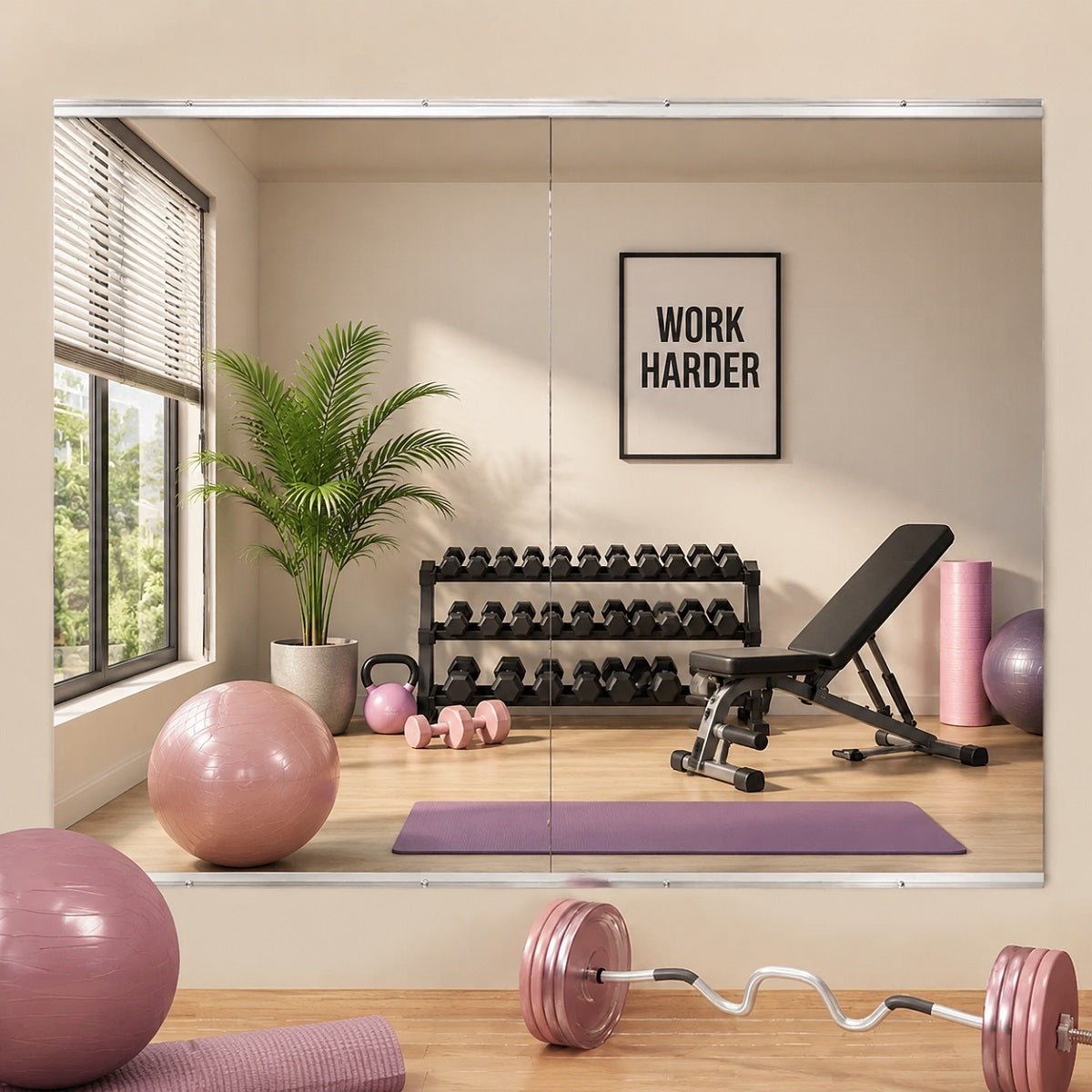
- Multiple mirror panels: a better fit for a full-length mirror wall
Start by measuring the usable wall, not the whole room. A mirror should cover the wall facing the area where you train—often in front of a bench, treadmill, yoga mat, free-weight area, or squat rack.
Measure the clear wall width from side to side, then account for doors, windows, outlets, storage shelves, wall-mounted TVs, switches, baseboards, and uneven trim. The mirror does not need to run from corner to corner. A balanced border at each end usually looks cleaner and gives the layout a more deliberate finish.
For example, a 10-foot wall is 120 inches wide. Two 48-inch-wide mirrors cover 96 inches, leaving 24 inches of open space. Centered on the wall, that creates a 12-inch border on each side.
Recommended Home Gym Mirror Sizes by Space
Small Home Gym: 6 x 8 Feet or Less
A small spare bedroom, apartment nook, basement corner, or converted office does not need a wall full of glass. One or two full-length mirrors can give you the visibility you need without making the space feel crowded.
Good sizes include:
- 24 x 60 inches
- 30 x 60 inches
- 36 x 60 inches
- 24 x 72 inches
- 36 x 72 inches
A single 36 x 72 full-length mirror works well for yoga, Pilates, bodyweight workouts, dumbbell exercises, and following a fitness app. Put it where you can step back several feet and see your entire stance.
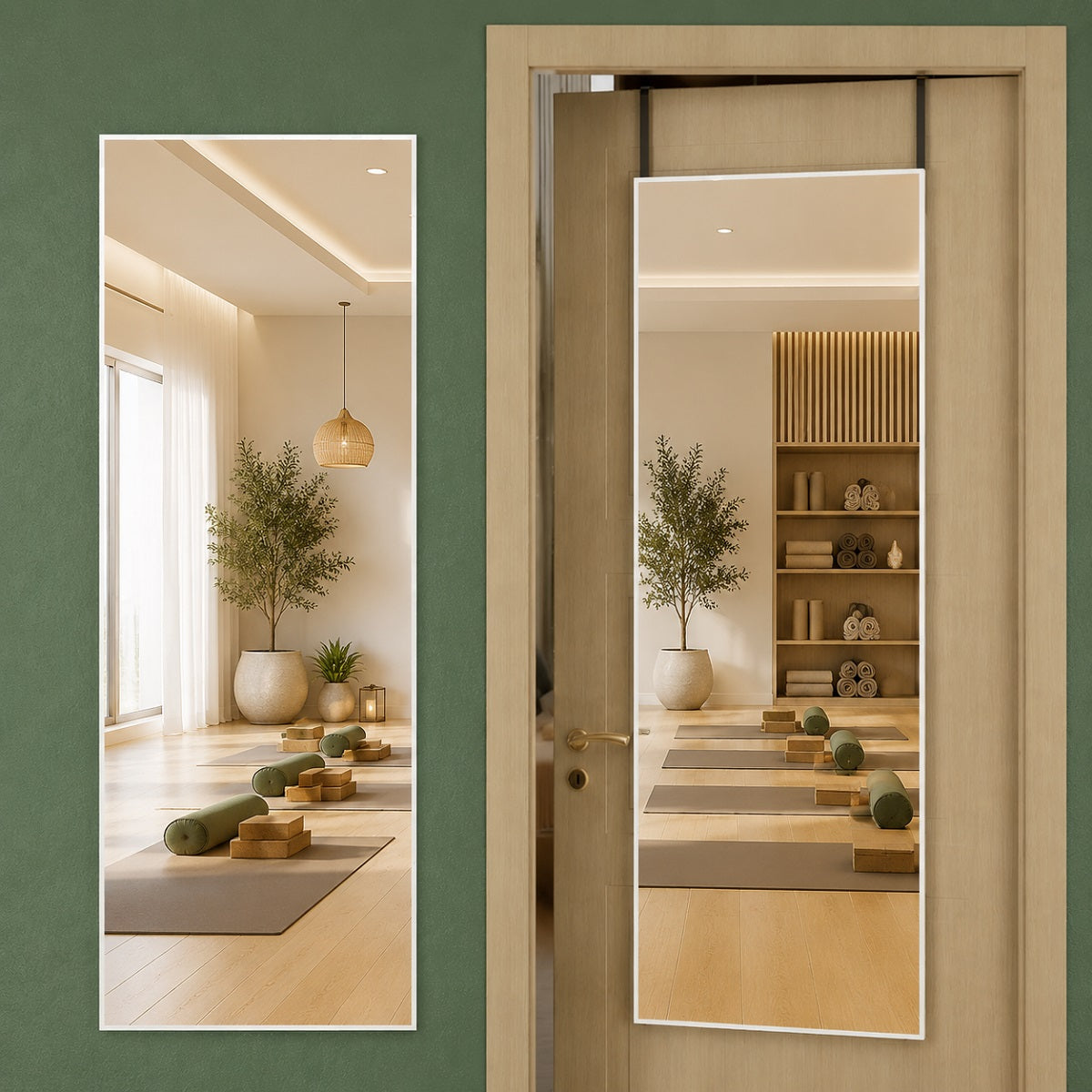
For a compact workout room, the Hasipu Large Frameless Yoga Mirror KM-MIR-R is a practical home gym mirror option. Its large frameless surface gives you a clear view for yoga, stretching, bodyweight training, and everyday form checks, while the tempered, shatter-resistant glass is better suited to active workout spaces.
For a narrow room, one tall vertical mirror may make more sense than a wide horizontal panel. It takes up less wall space while still helping you check posture from head to toe.
Medium Home Gym: 8 x 10 to 10 x 12 Feet
This is the range many dedicated home gyms fall into. You may have room for a bench, dumbbells, a compact cable machine, treadmill, rowing machine, or squat stand.
A wider mirror setup gives you more freedom to move without stepping out of view. Consider:
- Two 36 x 60-inch mirrors
- Two 36 x 72-inch mirrors
- One 48 x 72-inch mirror
- Two 48 x 60-inch mirrors
- A 72 x 72-inch wall mirror
Two mirrors placed side by side are often more useful than one oversized mirror in a medium room. You get a wider field of view, and the layout can be easier to carry, mount, and replace later.
A pair of 36 x 72-inch gym mirrors creates a six-foot-wide reflective area. That is plenty of coverage for most lifting, mobility work, and at-home cardio routines.
Large Home Gym or Garage Gym
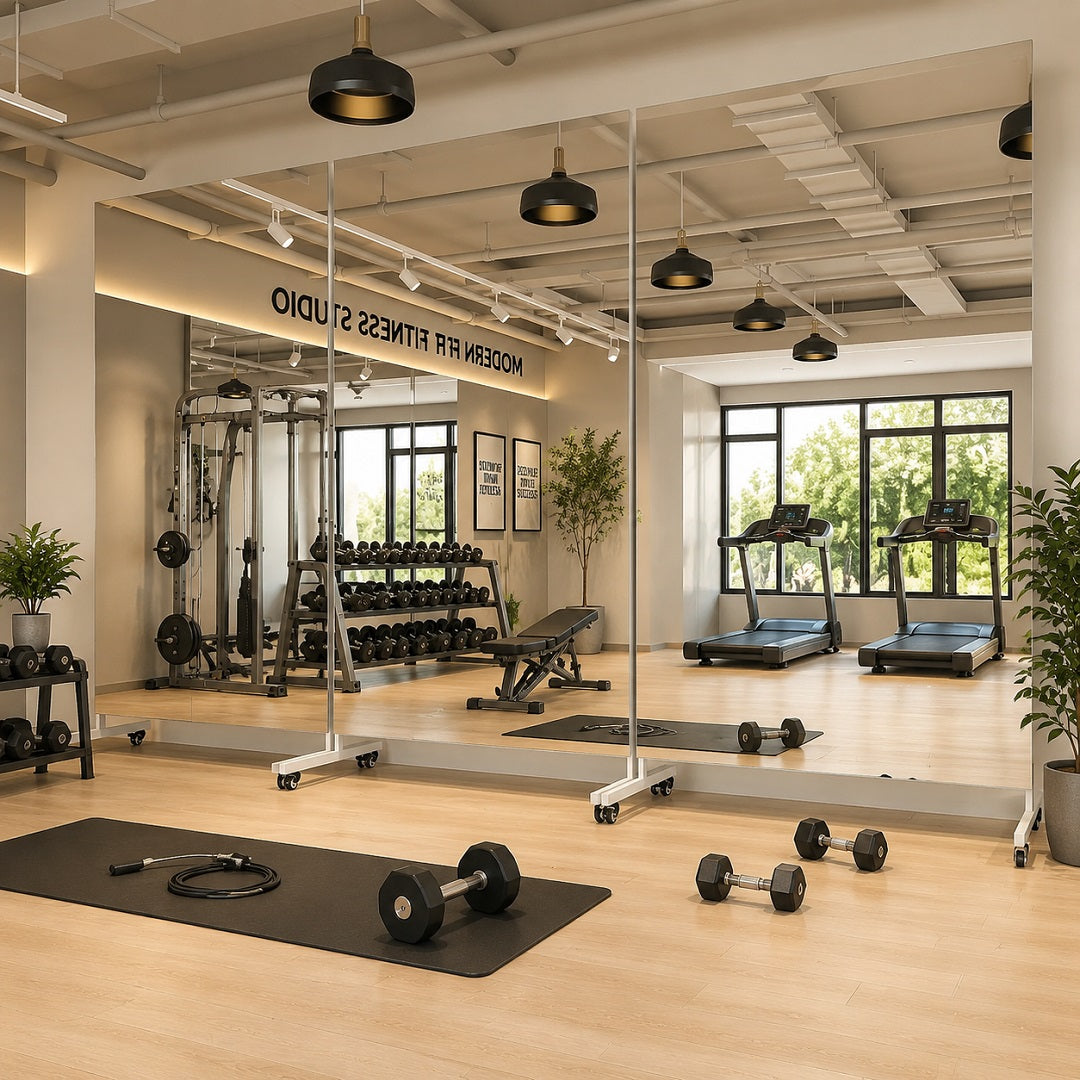
A large home gym gives you more choices, but it is still better to mirror the activity zones rather than every wall. A full wall may be worth it when the room is used by more than one person or supports classes, dance, martial arts, or serious strength training.
Popular layouts include:
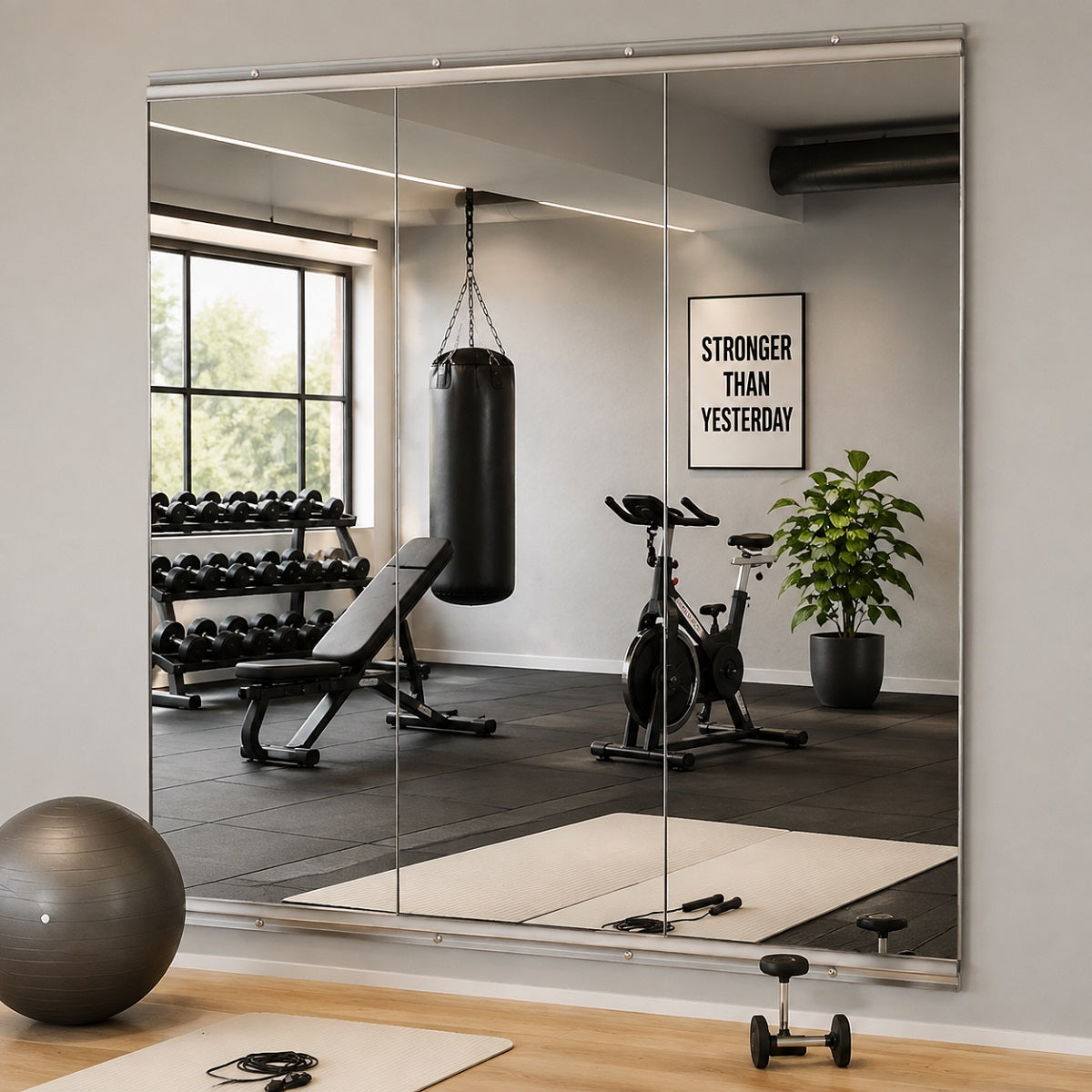
- Three 36 x 72-inch mirrors for a 9-foot-wide mirror wall
- Two or three 48 x 72-inch mirrors for a wider gym wall
- Multiple 48 x 60-inch mirrors mounted side by side
- A series of large wall mirrors across the main training zone
For a 12-foot wall, three 48-inch panels create full horizontal coverage. For an 18-foot wall, three 72-inch-wide panels or a combination of standard mirror sizes can create a broad training wall with fewer seams.
Larger panels give the room a polished studio look, though they are heavier and more difficult to install. Standard sizes are usually easier to plan than one custom piece.
How Tall Should a Gym Mirror Be?
For most people, 60 inches is the minimum useful height for a home gym mirror. It usually allows you to see most of your body during standing exercises when mounted low enough on the wall.
A 72-inch mirror height is the more flexible choice. It provides fuller visibility for tall users, overhead movements, lunges, kickboxing, dance workouts, and strength training with a wider stance.
Here is a simple guide:
| Mirror Height Best For | |
|---|---|
| 48 inches | Seated workouts, compact spaces, limited wall height |
| 60 inches | General fitness, lifting, yoga, smaller home gyms |
| 72 inches | Full-body form checks, taller users, garage gyms, studios |
| Over 72 inches | Large custom walls, dance, martial arts, professional-style spaces |
Think about your floor exercises, too. A mirror mounted too high can miss your lower-body alignment during yoga, stretching, or floor work. A mirror that starts close to the floor is more useful in a multipurpose workout space.
Should a Home Gym Mirror Reach the Floor?
Not always, but it should be low enough to show your feet and lower legs during the movements you care about.
For many setups, leaving a small gap above the floor protects the mirror edge from kicks, vacuuming, weights, and everyday bumps. A bottom edge around 4 to 12 inches above the floor is common for general home gym use.
A higher placement may be necessary when there are outlets, baseboards, or wall obstacles. In U.S. homes, outlets are often located low on the wall, so plan around them rather than covering them.
For yoga, Pilates, barre, and mobility work, lower mirror coverage is especially helpful. For a treadmill, spin bike, or seated weight station, the mirror can sit higher because your feet are not the main focus.
Vertical vs. Horizontal Gym Mirrors
Both orientations work. The right choice depends on the wall and how you move.
Vertical Mirrors
A tall vertical full-length mirror for a home gym is a good fit for:
- Small rooms
- Apartment gyms
- Narrow walls
- One-person workout spaces
- Stretching, yoga, and full-body form checks
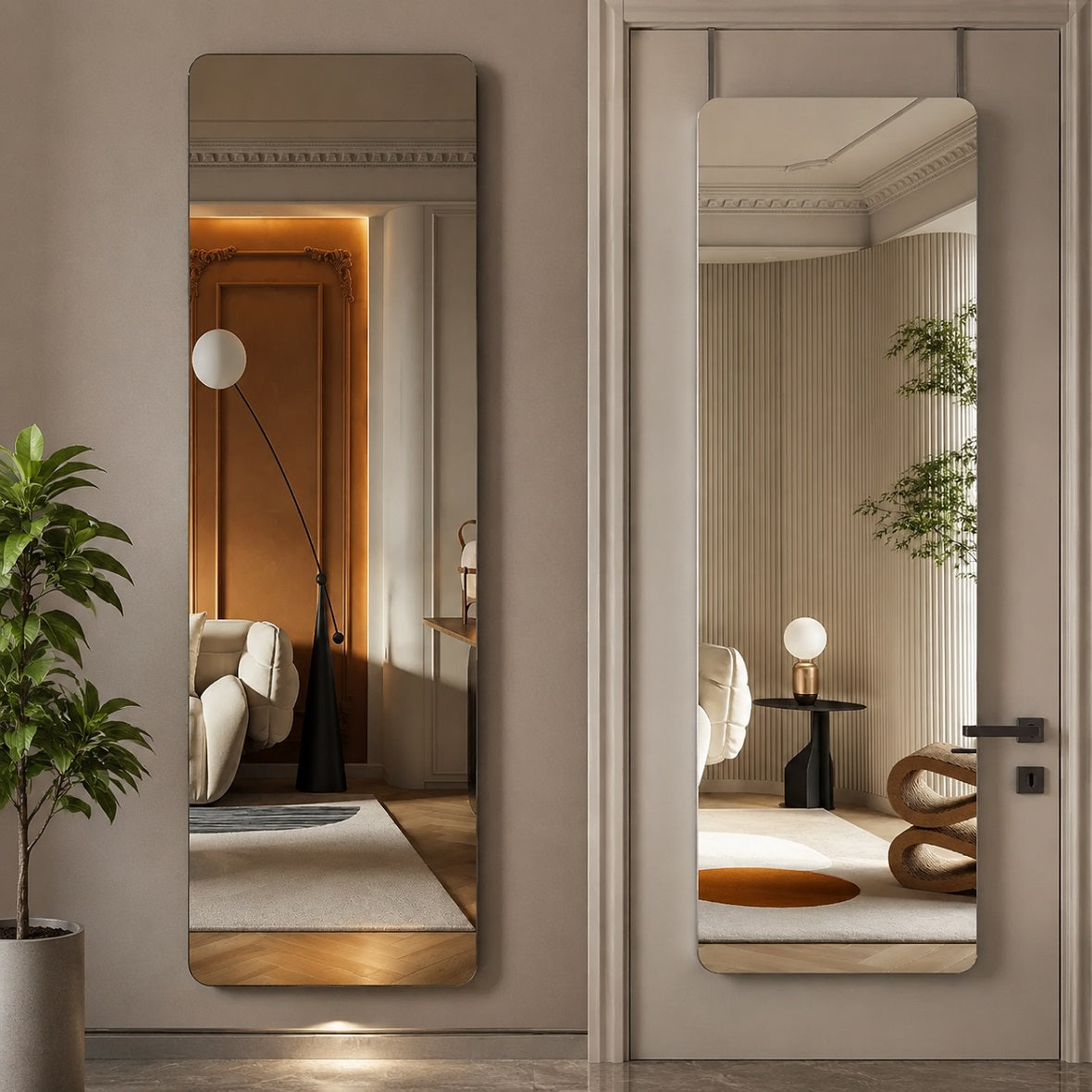
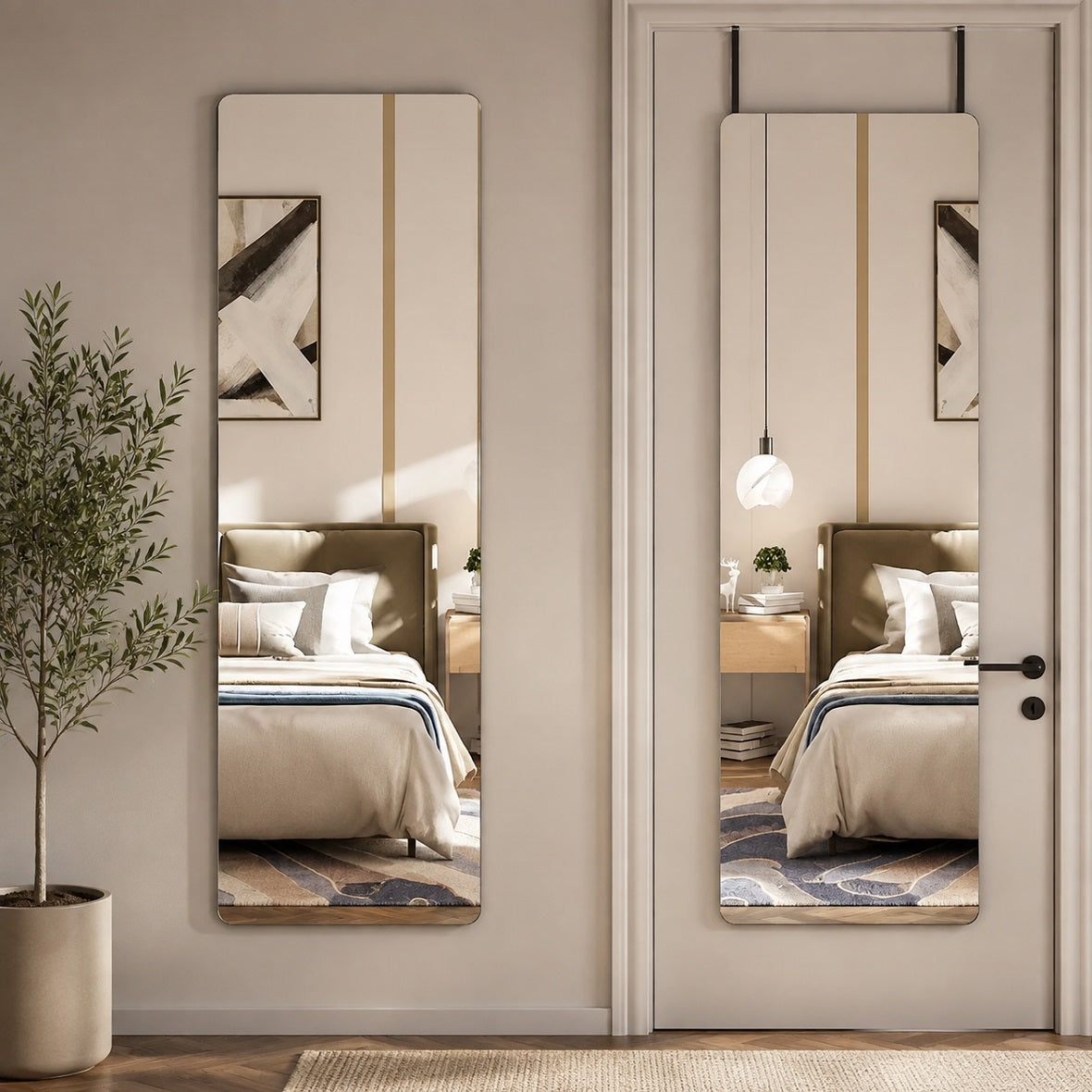
A vertical mirror uses less width and can visually raise the ceiling. It is also an easy way to add a workout mirror to a bedroom or multipurpose room without making the space look like a commercial gym.
Horizontal Mirrors
A wide horizontal wall mirror for a gym works best for:
- Dumbbell areas
- Squat and deadlift stations
- Garage gyms
- Dance workouts
- Shared fitness rooms
- Long, blank walls
Horizontal layouts allow you to move side to side while staying in view. They also reflect more of the room, which can make a basement or garage feel less closed in.
How Many Mirrors Do You Need?
Use this formula for a quick estimate:
Usable wall width ÷ width of one mirror panel = number of panels needed
For example:
| Usable Wall Width Mirror Size Approximate Layout | ||
|---|---|---|
| 72 inches | 36 inches wide | 2 mirrors |
| 96 inches | 48 inches wide | 2 mirrors |
| 120 inches | 36 inches wide | 3 mirrors, with side borders |
| 144 inches | 48 inches wide | 3 mirrors |
| 216 inches | 72 inches wide | 3 mirrors |
Do not expect the math to come out perfectly. You may have a leftover gap, and that is fine. Center the mirror layout or divide the extra width evenly at both ends.
Fewer, wider mirrors create fewer seams. More panels can give you more flexibility and may be easier to transport into a basement or upstairs room.
Full Mirror Wall vs. Partial Coverage
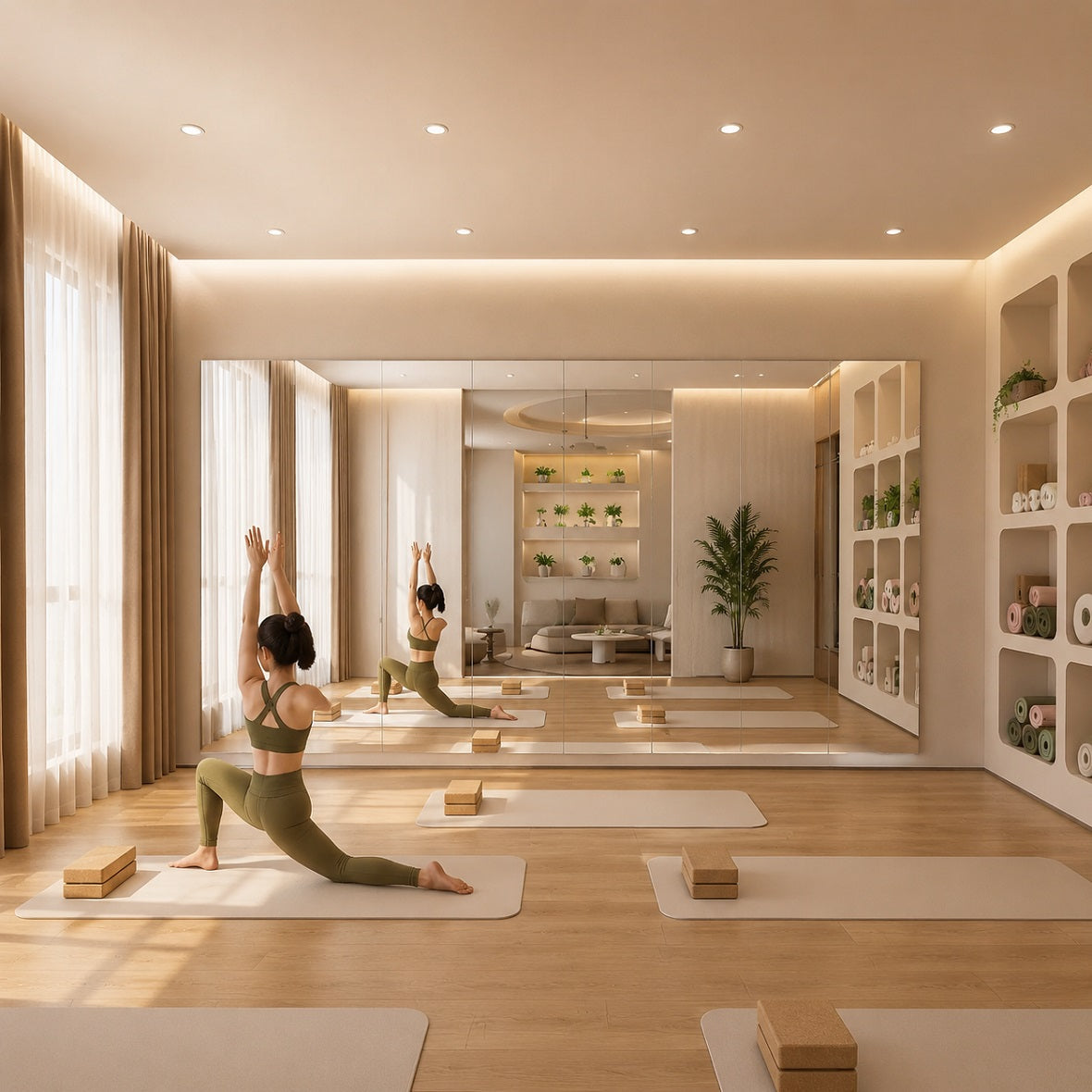
A full mirror wall looks dramatic and gives you the widest view. It makes the most sense in a large garage gym, dance room, martial arts space, or dedicated training studio.
Partial coverage is usually enough for a normal home gym. Mount mirrors directly in front of the equipment and open floor area where you spend the most time.
A partial setup can be the better choice when you have:
- A wall-mounted TV or workout screen
- Heavy storage racks
- Limited budget
- A mixed-use basement or guest room
- A single workout station
For many homeowners, a six- to eight-foot-wide mirror area is more useful than mirrors on every wall.
Mirror Placement for Common Home Gym Equipment
Squat Rack and Free Weights
Place the mirror on the wall facing the rack or just beyond the lifting zone. You should be able to check your stance, knee tracking, shoulder position, and bar path without turning your head during a lift.
Do not mount a fragile mirror where a dropped barbell, plate, or dumbbell could strike it. Keep adequate clearance and use proper mounting hardware.
Treadmill or Walking Pad
A mirror in front of a treadmill helps a small room feel more open, though many people prefer a TV or window in that position. A mirror to the side can still help with posture without becoming visually distracting.
Yoga and Stretching Area
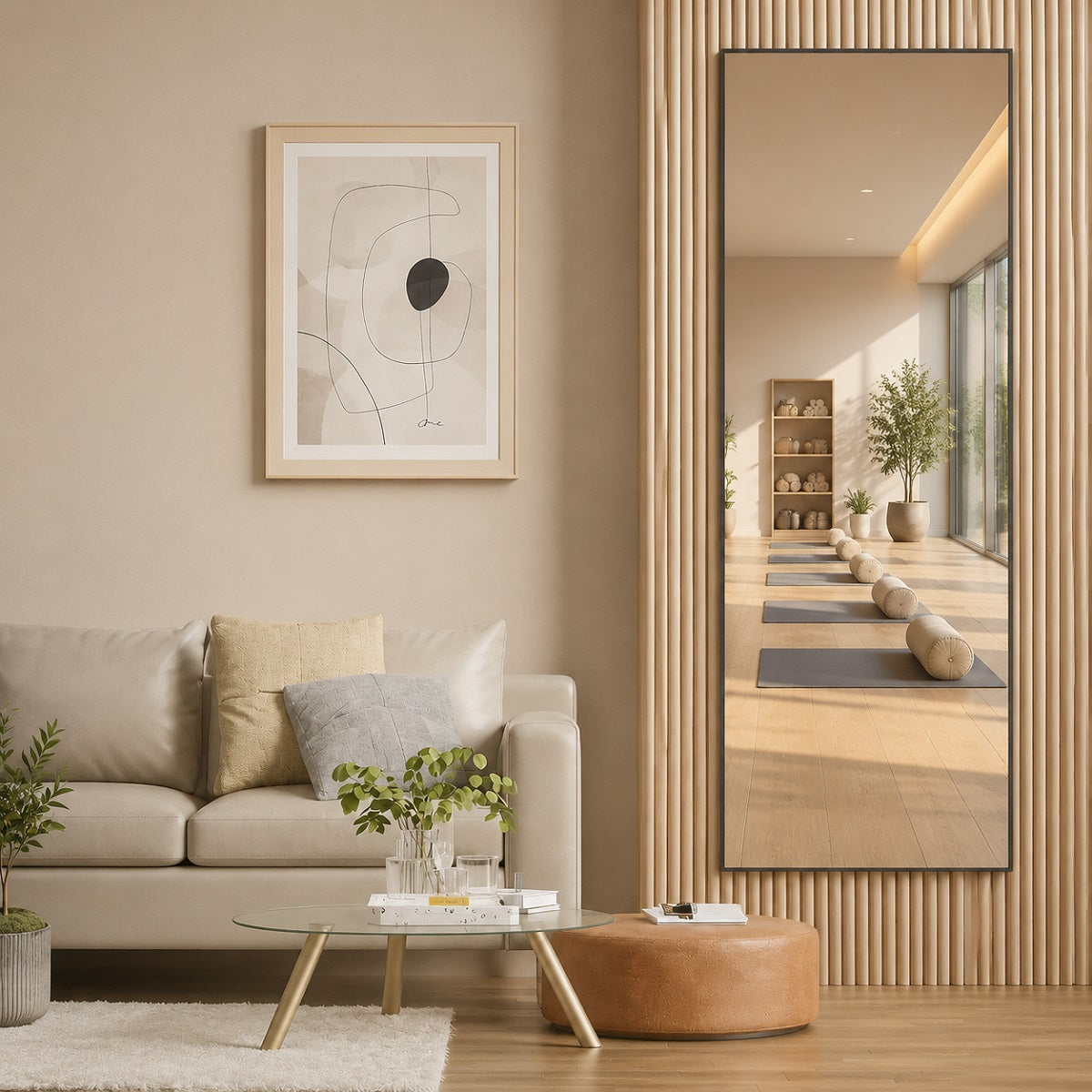
A large full-length mirror mounted low on the wall lets you see alignment during standing poses, lunges, balance work, and mobility drills. A width of 36 to 48 inches is enough for one mat; wider coverage works better for two people.
Dance, Barre, and Cardio Workouts
Choose a wide, low-mounted mirror wall. A 60- or 72-inch height gives better full-body visibility during larger movements. Avoid placing furniture between the mirror and the floor area where you move.
Home Gym Mirror Safety and Planning Checklist
A gym mirror must be secured for the wall type behind it. Drywall, studs, concrete, and masonry need different anchors and installation methods. Large mirrors are heavy, and a wall that looks flat can still have uneven spots that affect alignment.
For a large mirror wall, professional installation is often worth considering. The risks are not limited to breakage. Uneven seams, poor support, and panels that shift over time can cause problems as well.
Choose mirrors with a safety backing or shatter-resistant construction for workout areas, particularly around weights and active movement. Inspect the wall first, keep heavy equipment away from the glass, and follow the manufacturer’s mounting guidance. The U.S. Consumer Product Safety Commission also provides general consumer safety information for glass and home products.
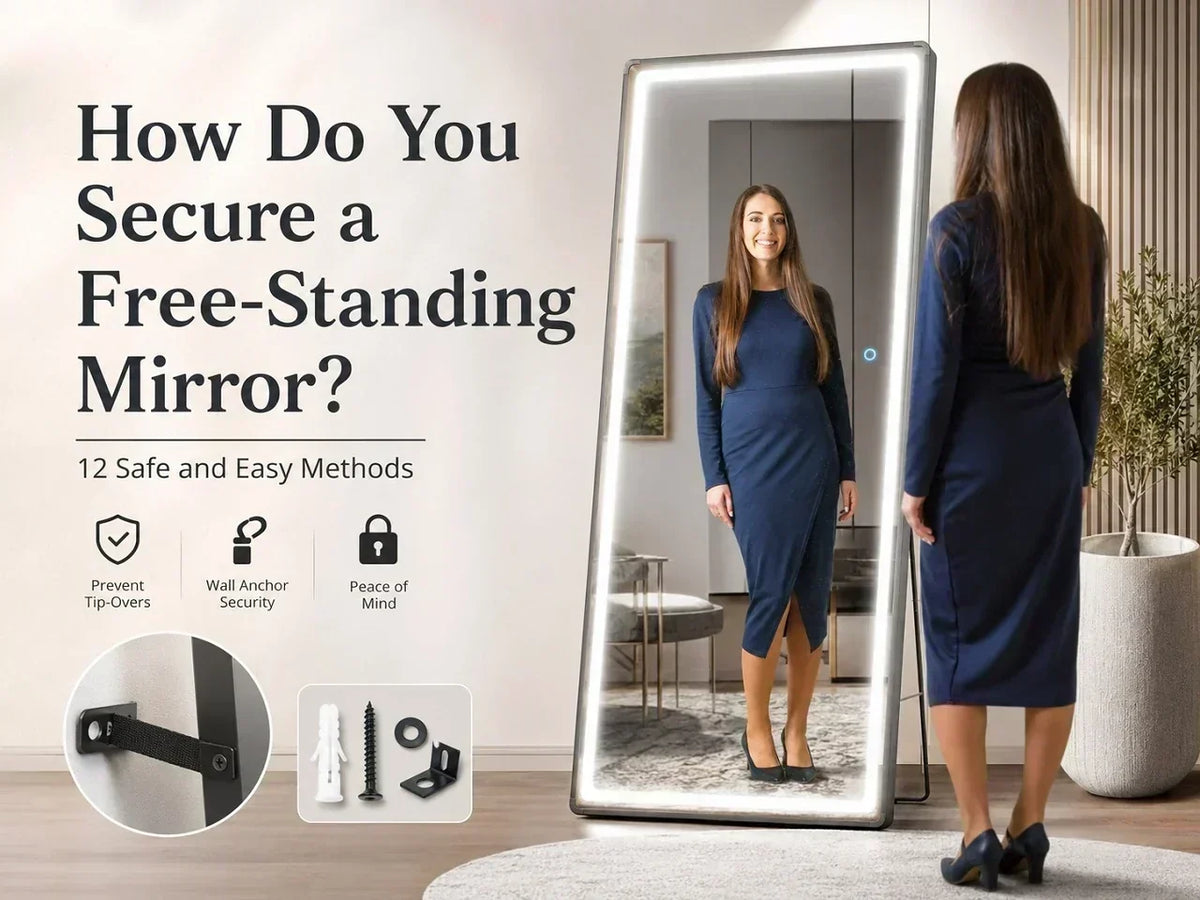
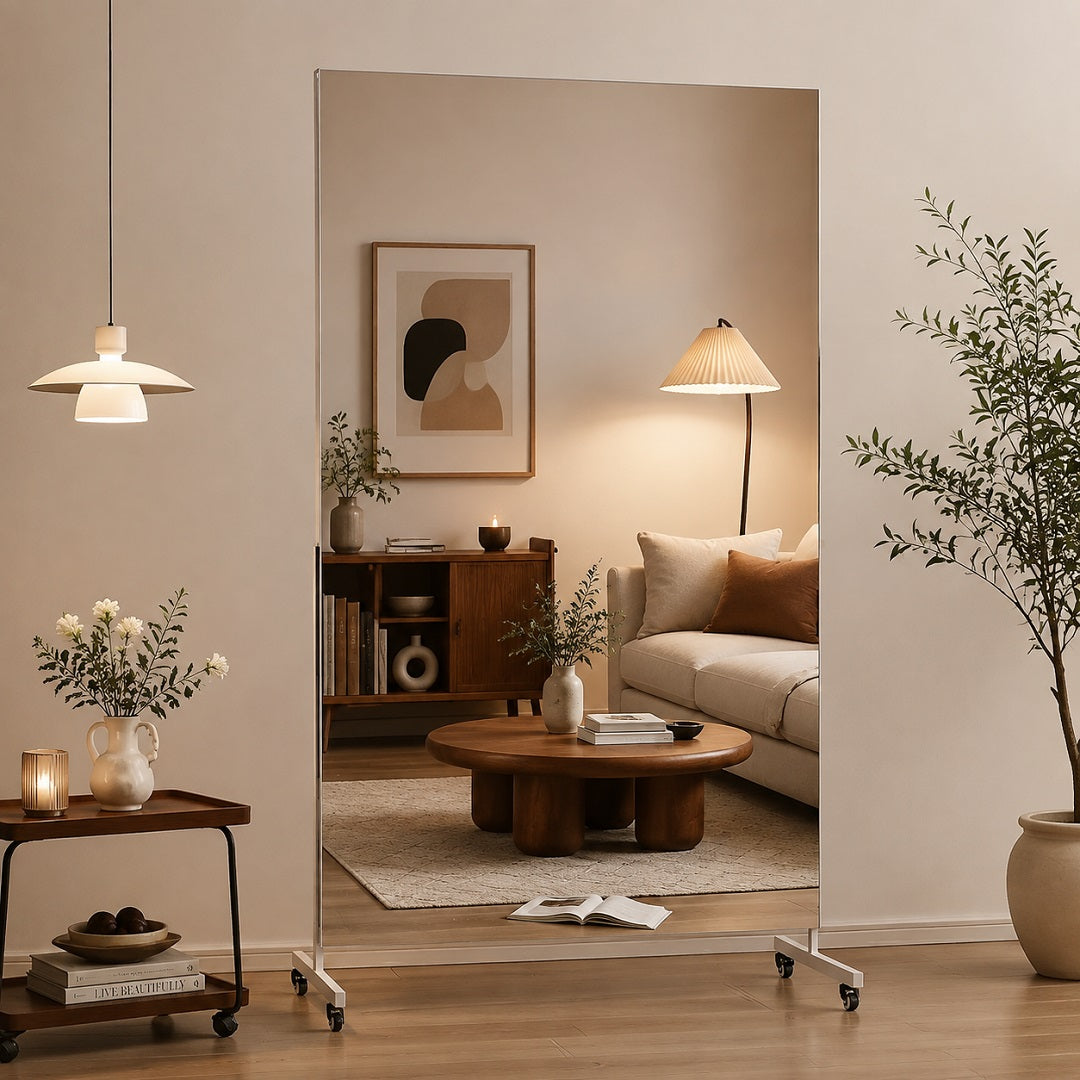
For a mirror that can be moved between workout areas, the Hasipu Arched Full-Length Gym Mirror on Wheels with LED Lights offers a flexible alternative to a fixed wall installation. It can work well in a garage gym, multipurpose room, or shared exercise space where the layout changes often.
Before ordering, write down:
- Your usable wall width and ceiling height
- Whether you need to see your feet during workouts
- The main exercises you do in that area
- The position of outlets, doors, windows, and baseboards
- The size and location of equipment
- Whether one person or several people will use the gym
- Your preferred mirror style: frameless, framed, or full-length
Then use painter’s tape to mark the proposed home gym mirror size on the wall. Stand where you normally work out and take a photo. You will quickly see whether the layout feels too narrow, too high, or too close to a rack or storage unit.
The Best Home Gym Mirror Size for Most Homes
For a typical home workout room, the most practical answer is a 36 x 72-inch mirror or two 36 x 60-inch mirrors mounted side by side. These sizes give you useful full-body coverage without requiring an entire wall of glass.
For a garage gym or larger dedicated space, plan a mirror wall that is at least six to eight feet wide and 60 to 72 inches tall. For yoga or a compact apartment gym, one tall mirror may be all you need.
The goal is not to recreate a commercial gym. It is to create a clear view of your movement in the space you already use. Hasipu mirrors can help turn an unused wall into a practical part of your workout routine.
Frequently Asked Questions
1. What is the best mirror size for a small home gym?
A 24 x 60-inch, 30 x 60-inch, or 36 x 72-inch mirror is usually enough for a small home gym. Choose a taller mirror when you want full-body visibility.
2. How high should a mirror be mounted in a home gym?
For general workouts, leave a small gap between the bottom of the mirror and the floor, often around 4 to 12 inches. Mount it lower for yoga and stretching so you can see your feet and lower-body alignment.
3. Are 60-inch mirrors tall enough for a home gym?
Yes. A 60-inch-tall mirror works for many home workouts. A 72-inch height offers more coverage for taller users, overhead exercises, and full-body training.
4. Do I need a full wall of mirrors in my home gym?
No. Most home gyms only need mirrors across the main workout area. A full mirror wall is more useful for large spaces, dance, group training, or a studio-style setup.
5. Can I use a regular full-length mirror for a home gym?
Yes, provided it is securely mounted or safely positioned and gives you enough viewing area for your exercises. A regular full-length mirror is a practical option for a small gym, bedroom workout corner, or yoga space.