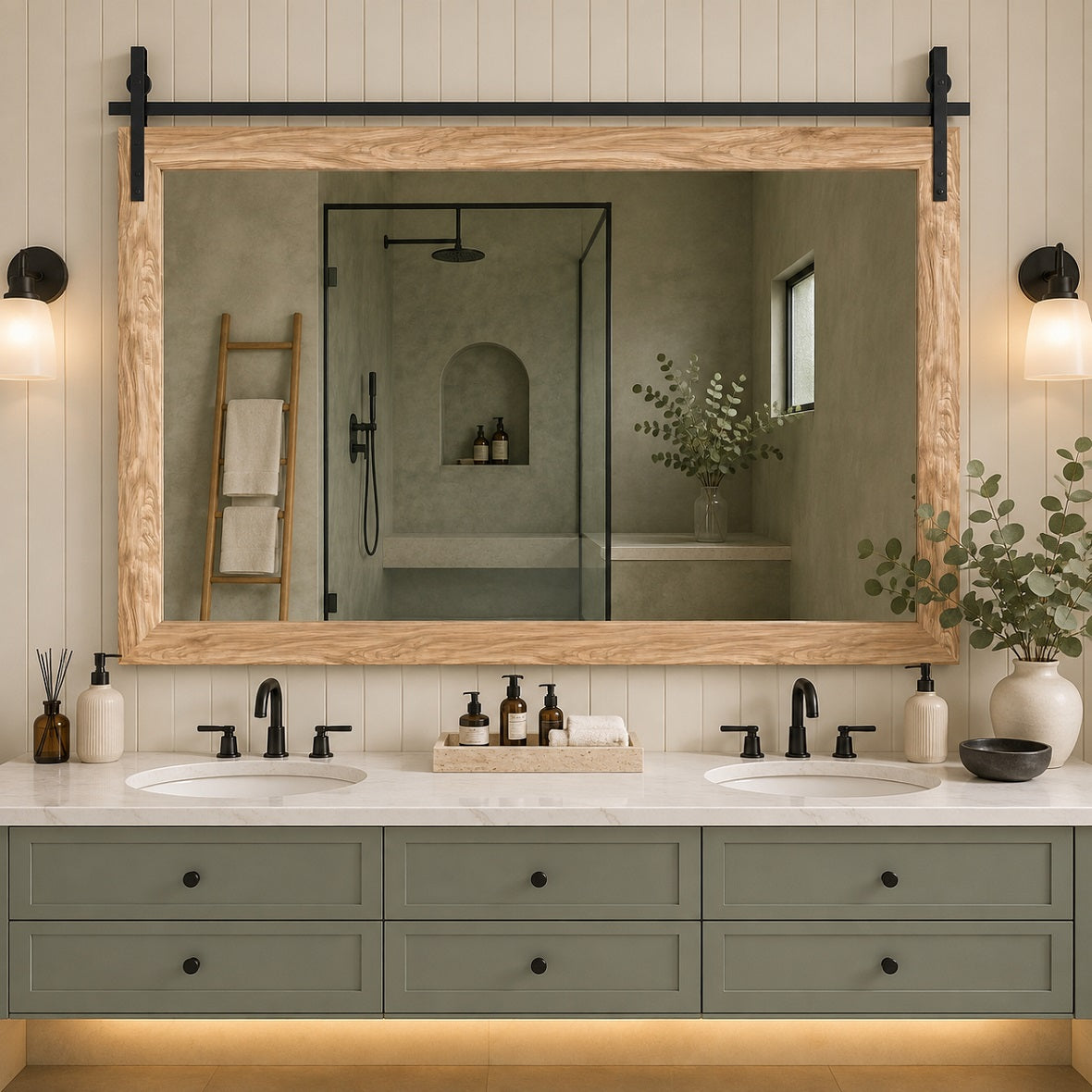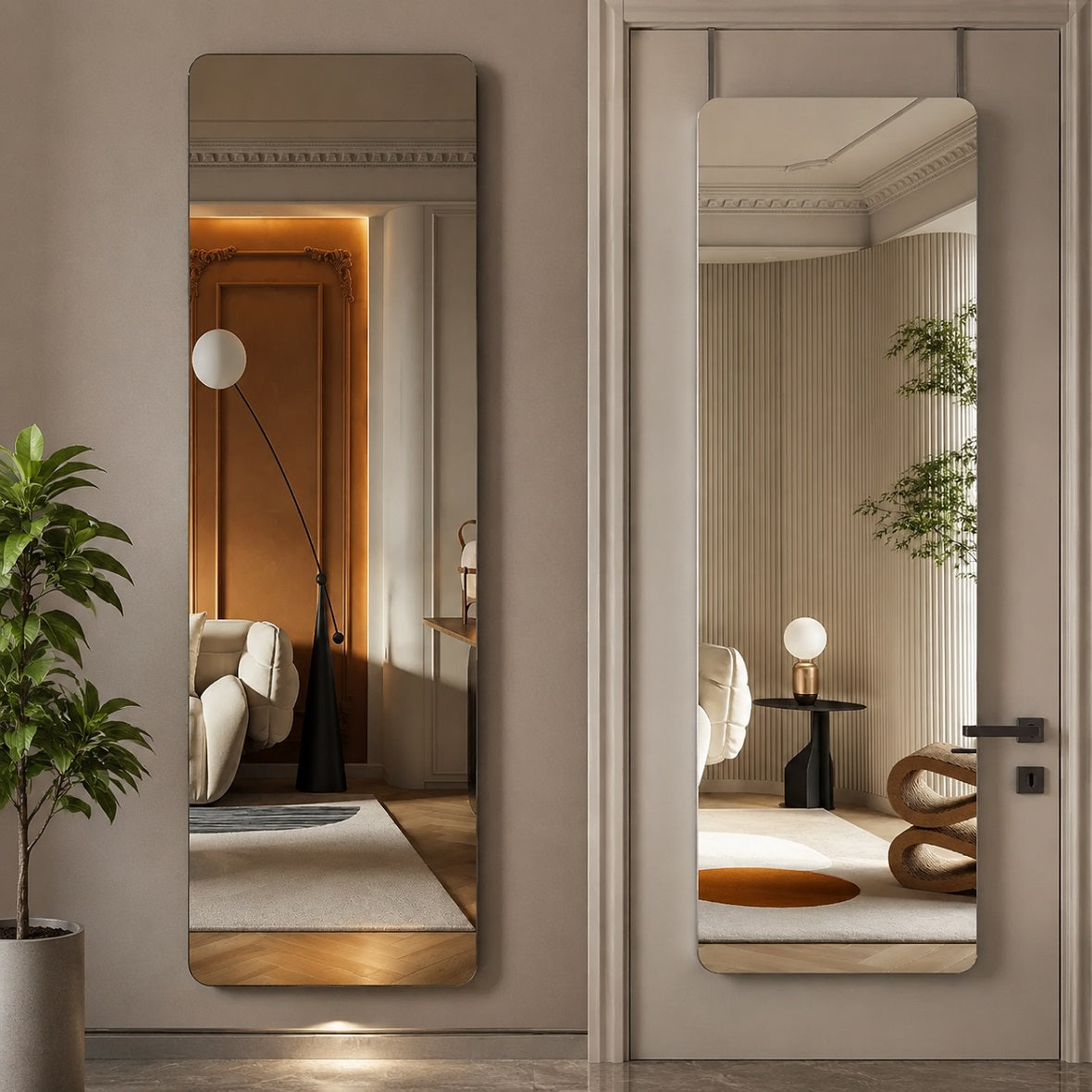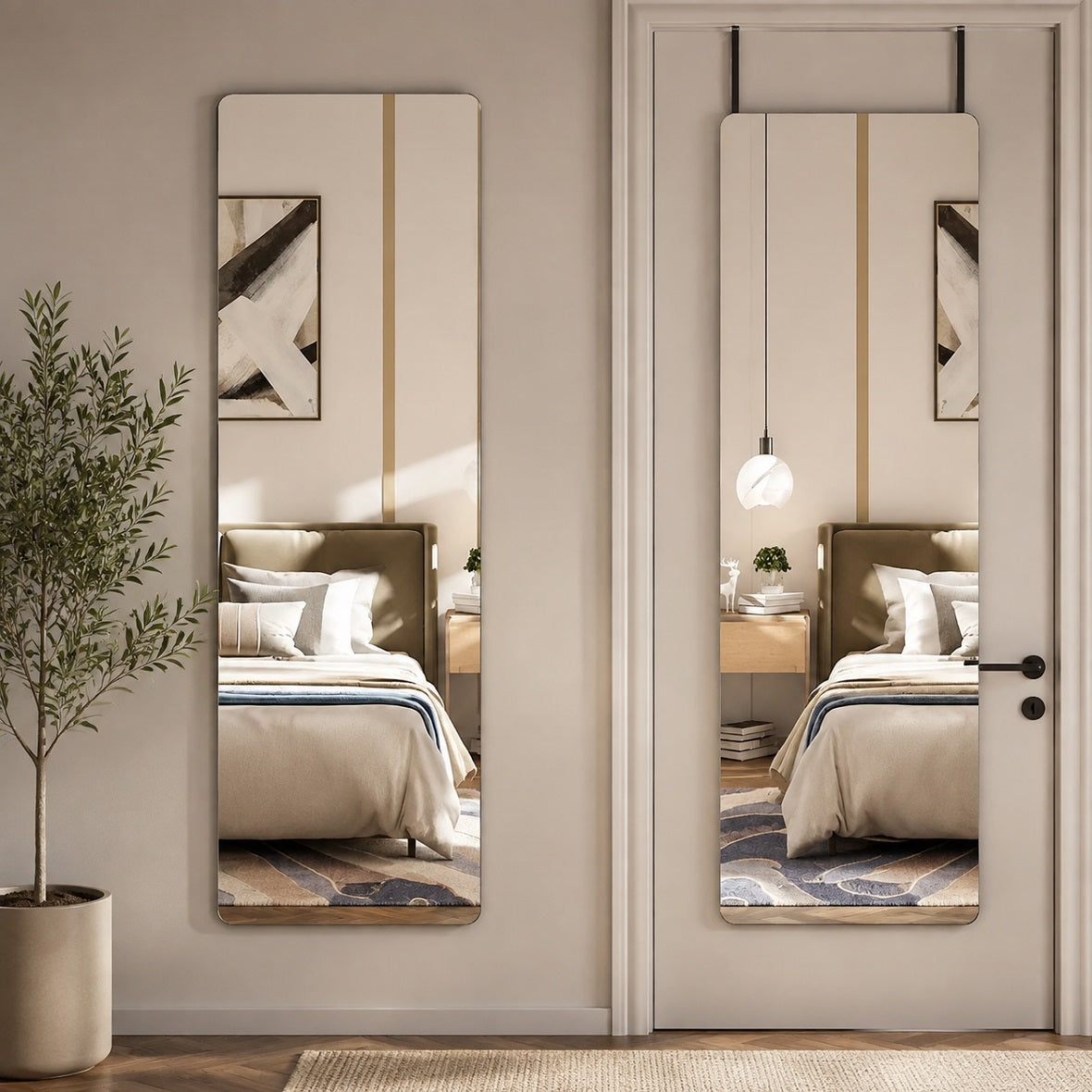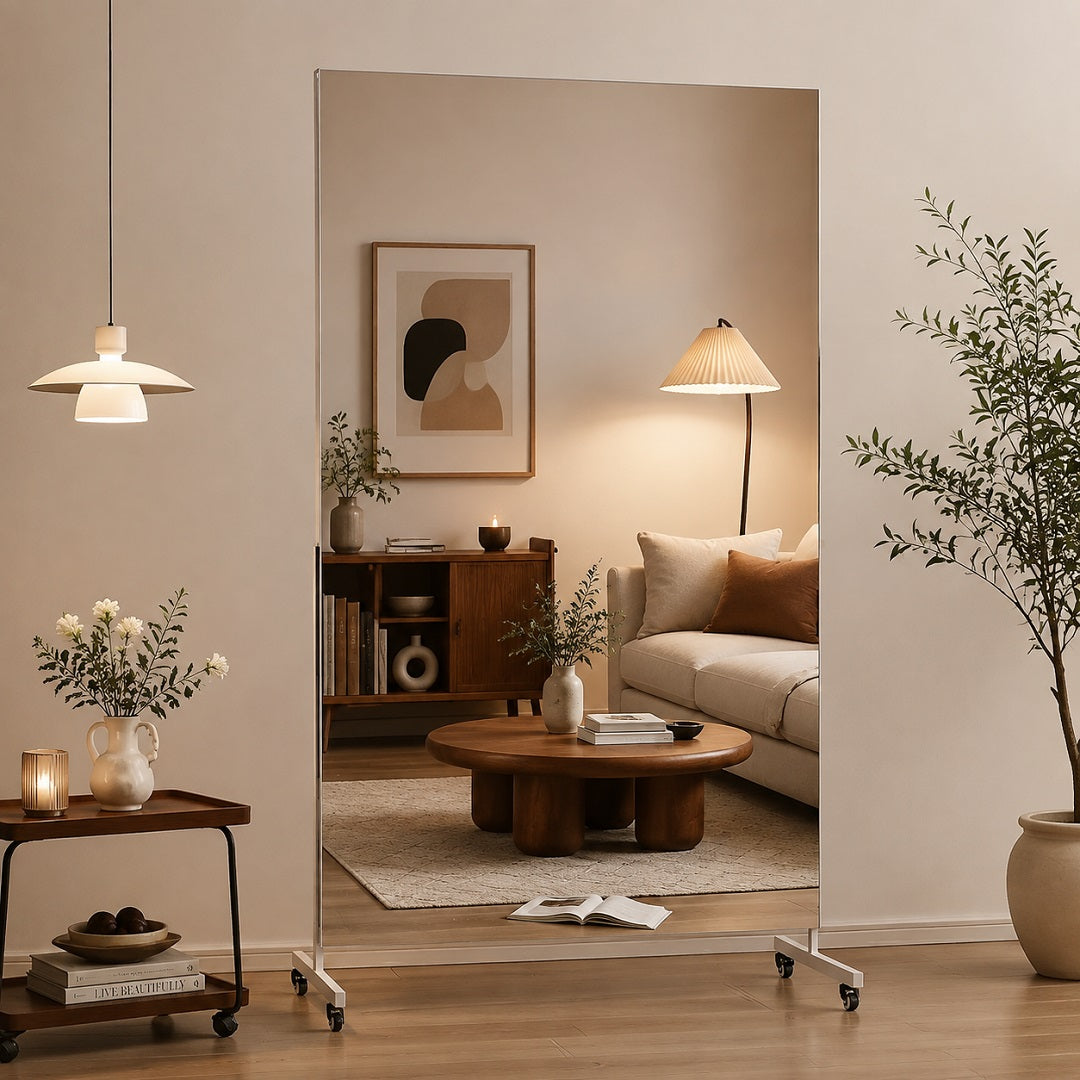
Table of Contents
Choosing a full-length mirror size by height takes more than comparing your height with the measurements in a product listing. The mirror’s position, frame width, and usable glass area all affect how comfortably you can see your outfit from head to toe.
A flat, vertical mirror only needs a reflective surface half your height to show your whole body, as long as it is positioned correctly. A larger mirror gives you more flexibility with placement and makes sharing it with someone taller or shorter easier.
This Hasipu guide breaks down mirror sizes by height, explains the difference between wall-mounted and floor-standing options, and helps you find a fit for your everyday dressing space.
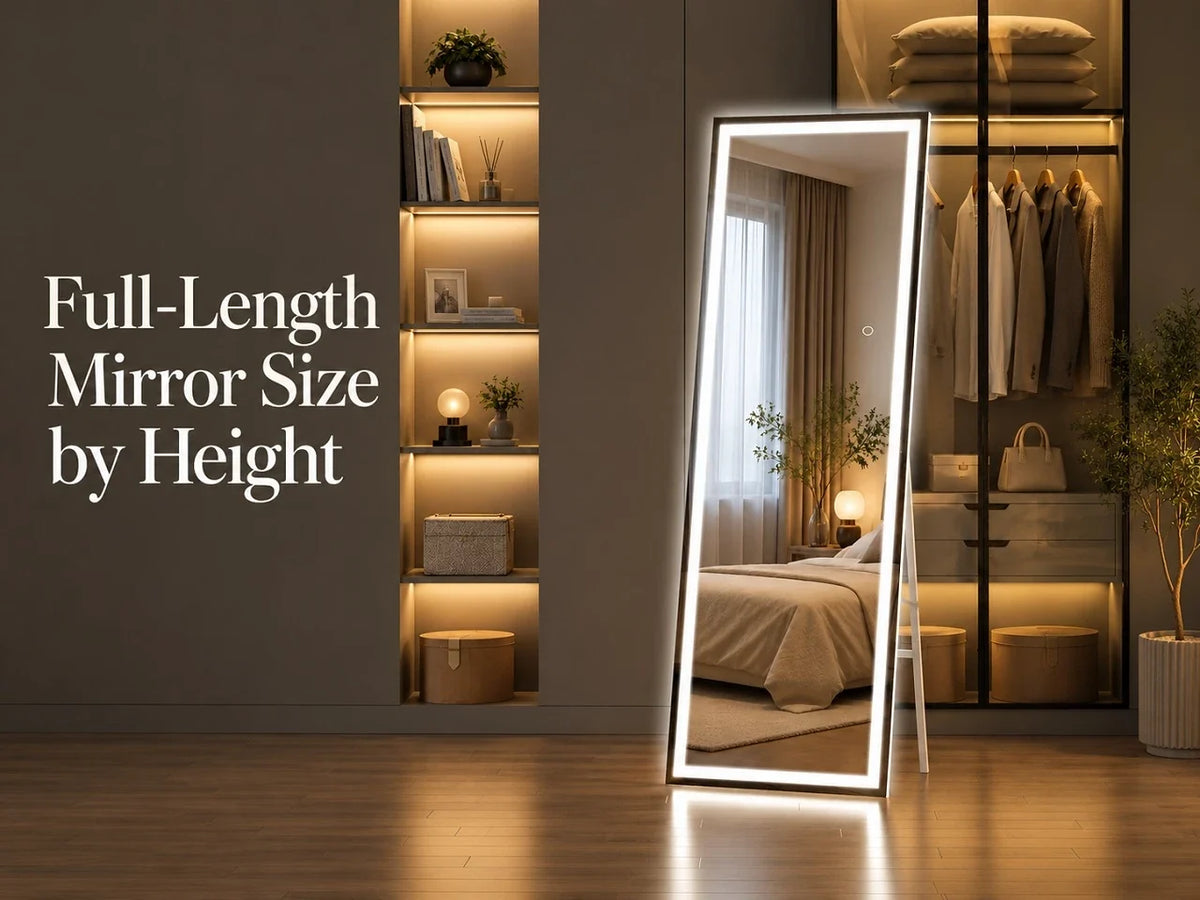
Full-Length Mirror Size by Height
The chart below separates the minimum reflective height from a more generous size to consider while shopping.
The shopping ranges are practical starting points for wall-mounted mirrors, not required minimums or guaranteed fits. Mounting height, frame thickness, and mirror shape still affect the result.
| Your height | Minimum reflective height* | Mirror height to consider for wall mounting |
|---|---|---|
| 5′0″ | 30 inches | 48–60 inches |
| 5′2″ | 31 inches | 48–60 inches |
| 5′4″ | 32 inches | 48–65 inches |
| 5′6″ | 33 inches | 55–65 inches |
| 5′8″ | 34 inches | 55–65 inches |
| 5′10″ | 35 inches | 60–70 inches |
| 6′0″ | 36 inches | 60–72 inches |
| 6′2″ | 37 inches | 65–76 inches |
| 6′4″ | 38 inches | 65–80 inches |
The minimum assumes a flat, vertical mirror with its reflective area positioned to show both the top of your head and your feet.
A 60-inch mirror can work for someone who is 6 feet tall when mounted at the right height. Put that same mirror directly on the floor, and its top edge may sit too low.
That distinction matters when comparing a wall-mounted full-length mirror with a floor-standing model.

How Wide Should a Full-Length Mirror Be?
Height helps you see your head and shoes. Width affects how comfortable the mirror feels when you turn sideways, check a jacket, or hold a bag.
These are useful shopping categories rather than strict visibility requirements:
| Overall mirror width | Practical use |
|---|---|
| 14–18 inches | Narrow walls, closet doors, and compact dressing spots |
| 20–24 inches | Everyday outfit checks in bedrooms and entryways |
| 28–36 inches | A roomier dressing view and a stronger decorative presence |
Your body width, frame, and position also matter. A narrow mirror can work well when you stand centered, but feel restrictive as you move.
For a bedroom with enough wall space, 20–24 inches wide is a sensible range to begin comparing. Choose a wider option when you want more room around your reflection or plan to use the mirror as a focal point.
How Tall Does Your Full-Length Mirror Need to Be?
You shouldn’t have to crouch to check your hair or lift a shoe into view. A mirror that cuts off part of your outfit may be too small, but it could simply be sitting at the wrong height.
A flat, vertical mirror can show your whole body with a reflective surface half your height, provided it is positioned correctly. The glass doesn’t need to reach the floor.
For someone who is 5′8″ tall with an eye level of 64 inches, the necessary reflective area extends from 32 to 66 inches above the floor. That’s 34 inches of glass. Its position is what makes the full-body view possible.
Hanging a mirror gives you room to adjust
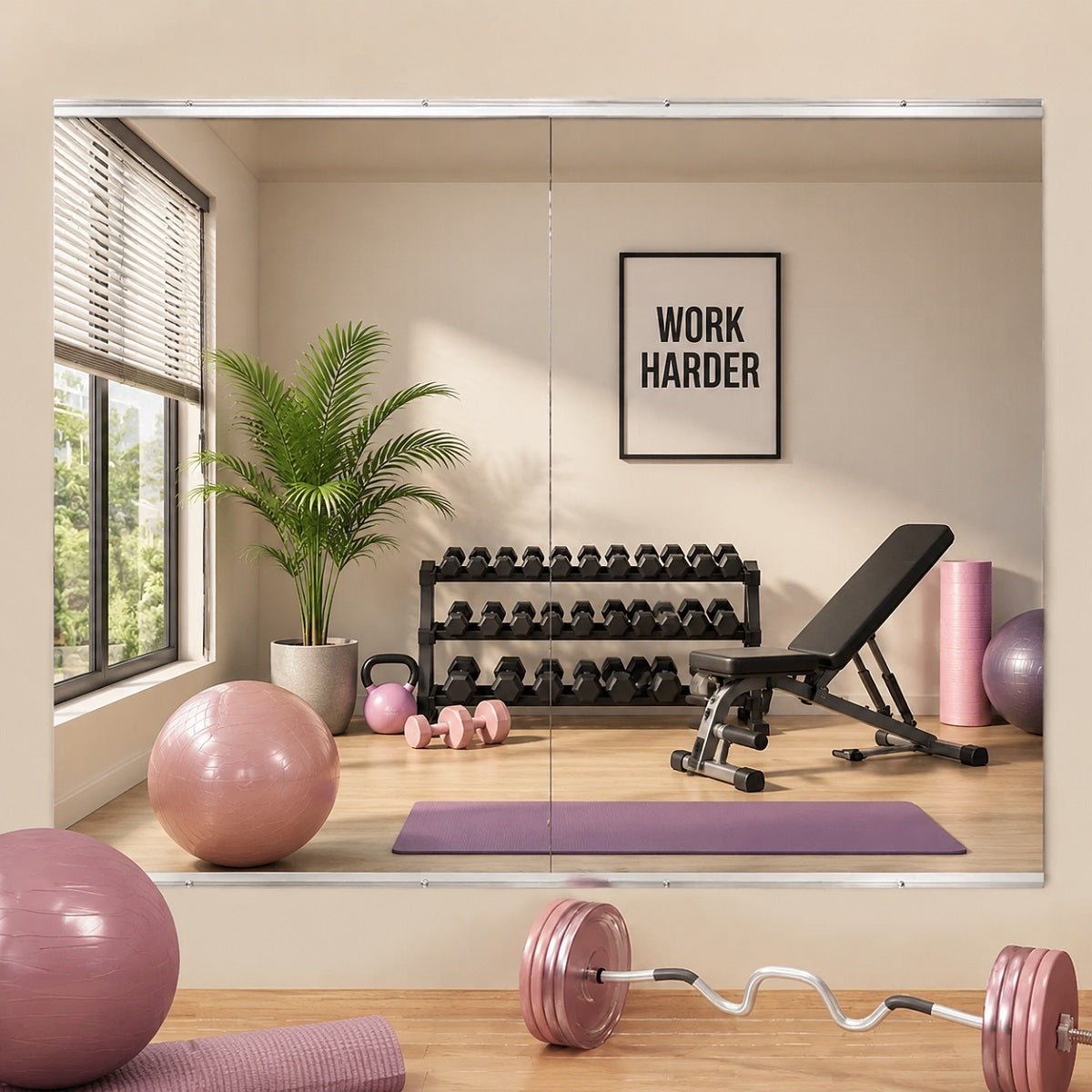
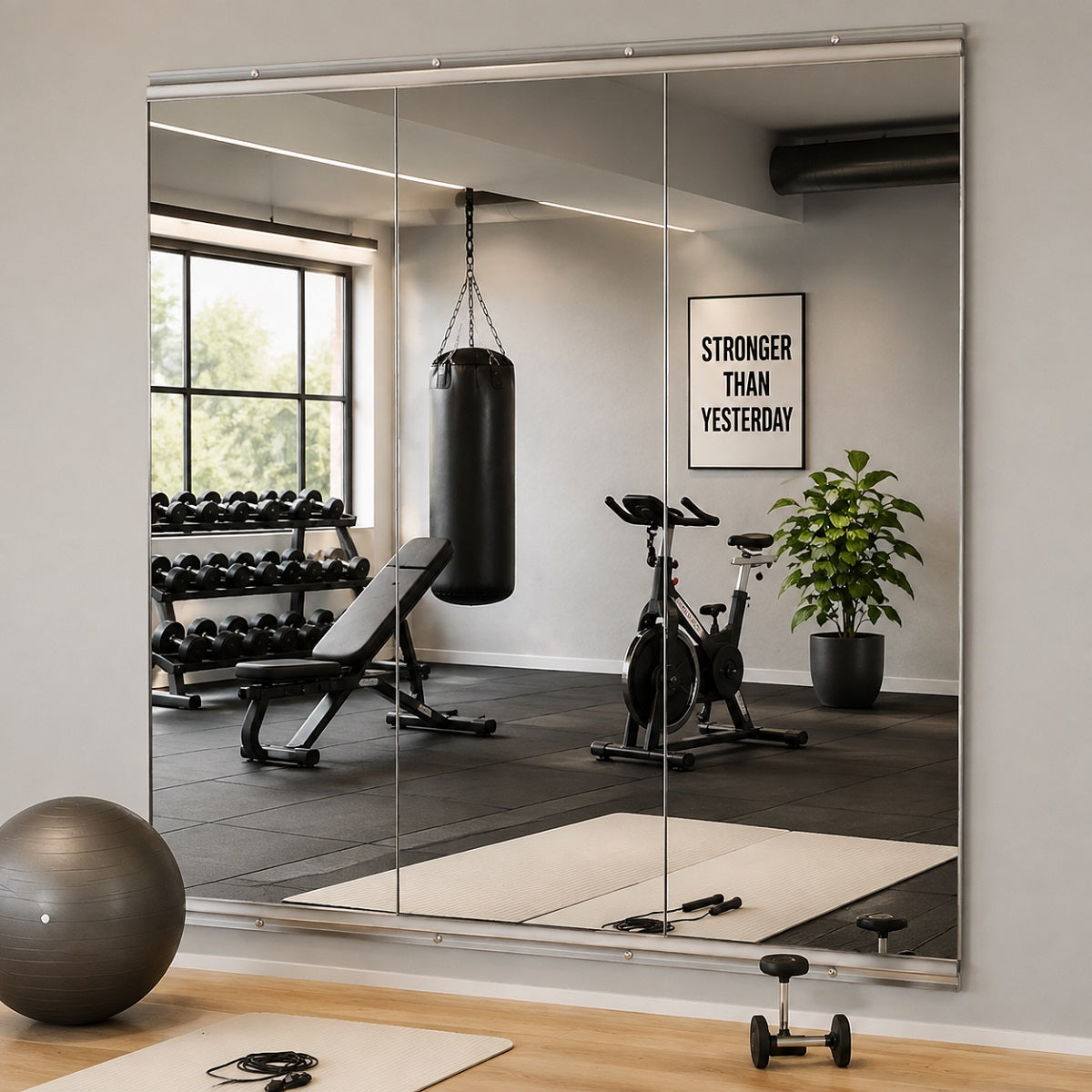
A wall-mounted full-length mirror can sit above the baseboard while still showing your shoes. A 48-inch-tall reflective surface can be enough for many adults when hung correctly. A larger mirror gives you more freedom to adjust its position.
Before drilling, mark the glass edges with painter’s tape.
- Lower Edge: The lower reflective edge should reach at least as low as the midpoint between your eyes and the floor.
- Upper Edge: The upper edge should reach at least as high as the midpoint between your eyes and the top of your head.
Always measure the glass separately from the frame. A wide border won’t add anything to your view.
A floor mirror needs to reach high enough
A mirror resting near the floor has less freedom in its placement.
Someone who is 6 feet tall with an eye level of 68 inches needs a vertical reflective surface reaching at least 70 inches above the floor. A mirror advertised as 72 inches tall may fit, though a thick frame can reduce the usable glass height.
For a full-length mirror for tall people, check where the top of the glass sits after installation. A base can raise it, and a backward lean changes the viewing angle.
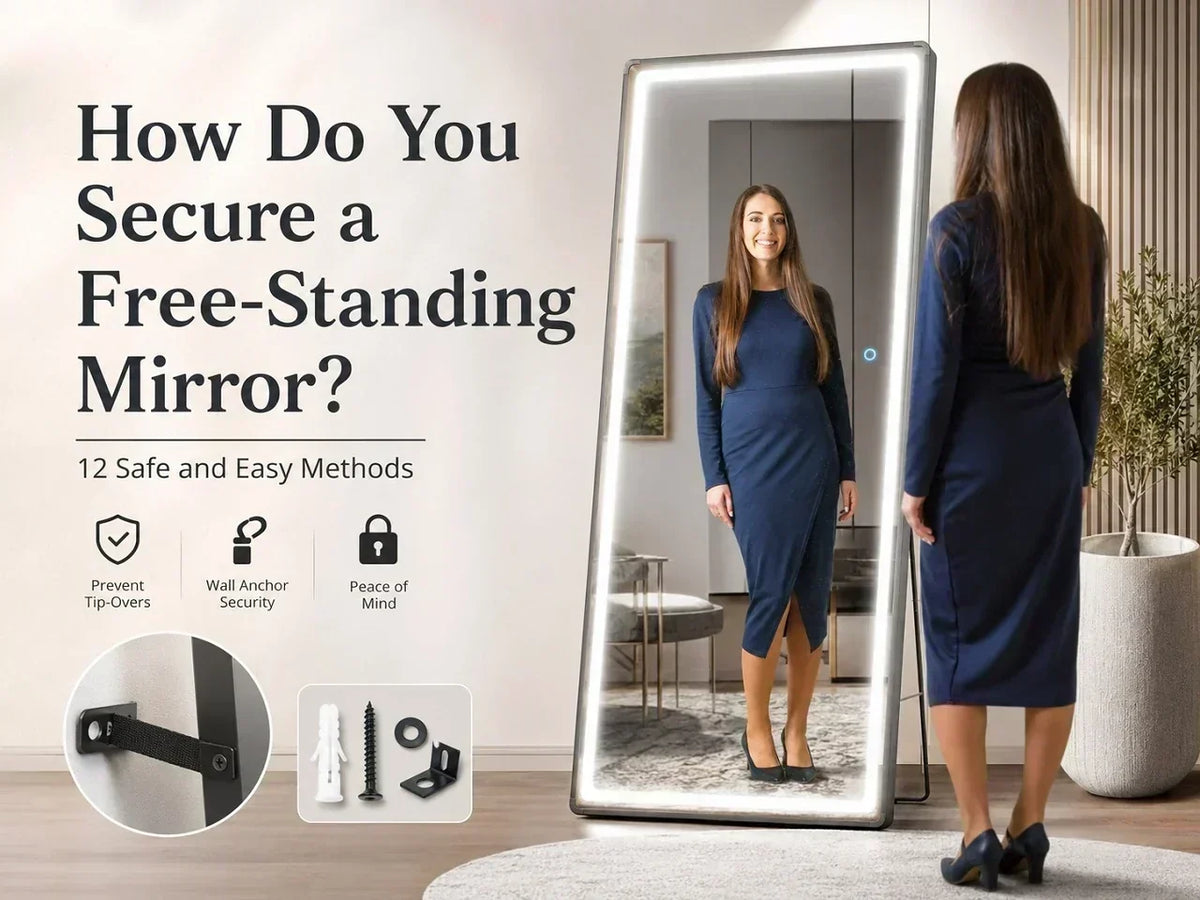
Use the stand and anchoring method specified for that model.
Will stepping back help?
Give yourself enough space to stand comfortably and turn without hitting the bed or dresser.
Moving farther away won’t fix a flat, vertical mirror that is too short or mounted at the wrong height. The minimum glass height needed for a full-body view stays the same regardless of distance.
A leaning mirror behaves differently. Test it at the precise angle its stand or installation instructions allow.
Check the Usable Glass Before You Buy
For outfit checks, wall-mounted mirrors around 60–65 inches tall and 20–24 inches wide give you a useful range to compare. These are starting dimensions, not a fit guarantee.
A floor-standing model needs a closer look at its installed height. The same mirror can show a different portion of your body when placed on the floor instead of mounted higher on a wall.
The frame takes up space
Two mirrors labeled 65 × 22 inches can have noticeably different viewing areas. A slim metal frame leaves more glass exposed than a broad wood border. Some listings include the base or decorative trim in the total measurements.
Check the dimension labels, too. A listing may show width before height.
Width affects how much room you have to move within the reflection. A narrow mirror can work for a quick check when you stand centered. More glass on either side makes it easier to check a coat, turn sideways, or see how a bag looks with your outfit.
Arched tops leave less room at the corners
An arched full-length mirror is tallest at its center. The curved sides remove some of the upper reflective area you would get with a rectangle.
Leave a little space above your head in the reflection. That way, moving slightly to the side won’t bring your head against the curved edge of the view.
Sharing the mirror?
Check it with both people standing naturally.
The tallest person needs enough glass at the top. The shortest person needs the bottom edge low enough to see their feet. A larger mirror makes accommodating both heights easier.
Try the view with the shoes you usually wear. Heels and chunky boots raise your eye level and the top of your head.
When comparing Hasipu full-length mirrors, check each model’s glass dimensions and installation options. Measure the stand’s footprint as well—a mirror may fit against the wall but leave too little room to open a nearby door.

Choose a Size You Can Use Comfortably
Measure the space where you get dressed and check how high the reflective glass will reach. For a wall-mounted mirror, you can adjust the hanging height. For a floor model, the base, frame, and intended angle help determine the view.
You should be able to see your hair, clothes, and shoes without changing your posture. Once the dimensions work, pick the Hasipu frame and shape you’d enjoy seeing in your room every day.
Frequently Asked Questions
1. Is a 64-inch mirror tall enough for a 6-foot person?
It can be when wall-mounted at the right height. A vertical 64-inch mirror resting at floor level will generally have its top edge too low. Check the actual reflective height and installed position.
2. Can a 48-inch mirror show your whole body?
Yes. A 48-inch-tall reflective surface exceeds the half-height minimum for most adults. It still needs to be mounted so both your head and feet fall within the visible area.
3. Does a full-length mirror need to touch the floor?
No. A wall-mounted mirror can provide a full-body view while hanging above the floor. Floor-level placement is a design and installation choice.