Table of Contents
A black arched mirror and a carved wood mirror can occupy the same amount of wall space and give a room two very different looks. The glass serves the same purpose. The frame changes how that mirror relates to the furniture, lighting, and finishes around it.
To choose framed mirrors, consider seven separate details: material, color, shape, room, size, installation method, and decorative style. You don’t have to settle on all seven at once. Start with where the mirror will go and what you need it to do, then narrow down its appearance.
These categories overlap. A single mirror might have an aluminum frame, a black finish, an arched top, and wall-mounting hardware. Understanding each detail makes product comparisons much more useful.
Framed Mirror Materials: What to Know Before You Choose
Frame material affects texture, construction, and care. Look beyond the front-facing photo: close-ups, specifications, and installation instructions can reveal details that the overall room image doesn’t show.
Wood Framed Mirrors
Wood framed mirrors bring visible grain and a furniture-like border to the wall. A smooth, narrow wood frame looks quite different from a wide frame with knots, grooves, or a distressed finish.
Compare the wood’s undertone with nearby furniture. A pale frame with a yellow undertone may feel disconnected from a gray-toned vanity, even when both are described as “light wood.” The pieces don’t have to match exactly, but viewing them together helps.
Check the construction description, too. Solid wood, wood veneer, and wood-look finishes are different products. For bathroom placement, confirm that the specific mirror is suitable for the intended environment rather than relying on its appearance.

Metal Framed Mirrors
Metal framed mirrors can create a fine outline or a substantial border. Pay attention to both frame width—the border visible from the front—and frame depth, which describes how far it projects.
A slim frame can relate to delicate cabinet pulls. A deeper, broader frame may feel more appropriate beside substantial furniture or prominent light fixtures.
Metal is a broad category. Aluminum and stainless steel are two subtypes worth comparing through their actual specifications.
Aluminum framed mirrors
Check the frame’s construction, surface coating, and the weight of the complete mirror. The word “aluminum” alone doesn’t tell you how heavy the glass and backing will be or whether the product suits a particular bathroom location.
Look closely at the corners and finish. On a simple frame, these details are especially visible.
Stainless steel framed mirrors
Brushed and polished finishes create different appearances. A brushed surface has a directional texture; a polished finish looks more reflective.
For moisture-related claims, check the manufacturer’s information. Stainless steel grade, surface treatment, care, and exposure conditions matter. Avoid treating the material name as a promise that every product will perform identically.
Resin Framed Mirrors
Resin framed mirrors can feature curved borders, floral motifs, and molded ornament. They’re useful to explore when you want decorative detail.
A wood-colored resin frame is still resin, even when its finish resembles carved timber. Read the material listing rather than identifying it from a photograph.
Consider cleaning access as well. Deep grooves and small decorative recesses require more attention than a smooth border.
Rattan Framed Mirrors
Rattan framed mirrors introduce woven texture. They can relate to basketry, linen upholstery, and natural wood furniture without requiring every accessory to share the same material.
Some designs have a broad decorative surround and a relatively small mirror opening. Check both measurements before choosing one for daily grooming.
Confirm whether the frame uses natural rattan or a synthetic material. Follow the specific care and placement guidance, particularly when considering a humid room.
Choosing a Frame Color That Works With Your Room
A mirror frame doesn’t need to match every fixture. It should have a clear relationship with the room, such as repeating a color, connecting with a wood tone, or providing a deliberate contrast.
Black Framed Mirrors
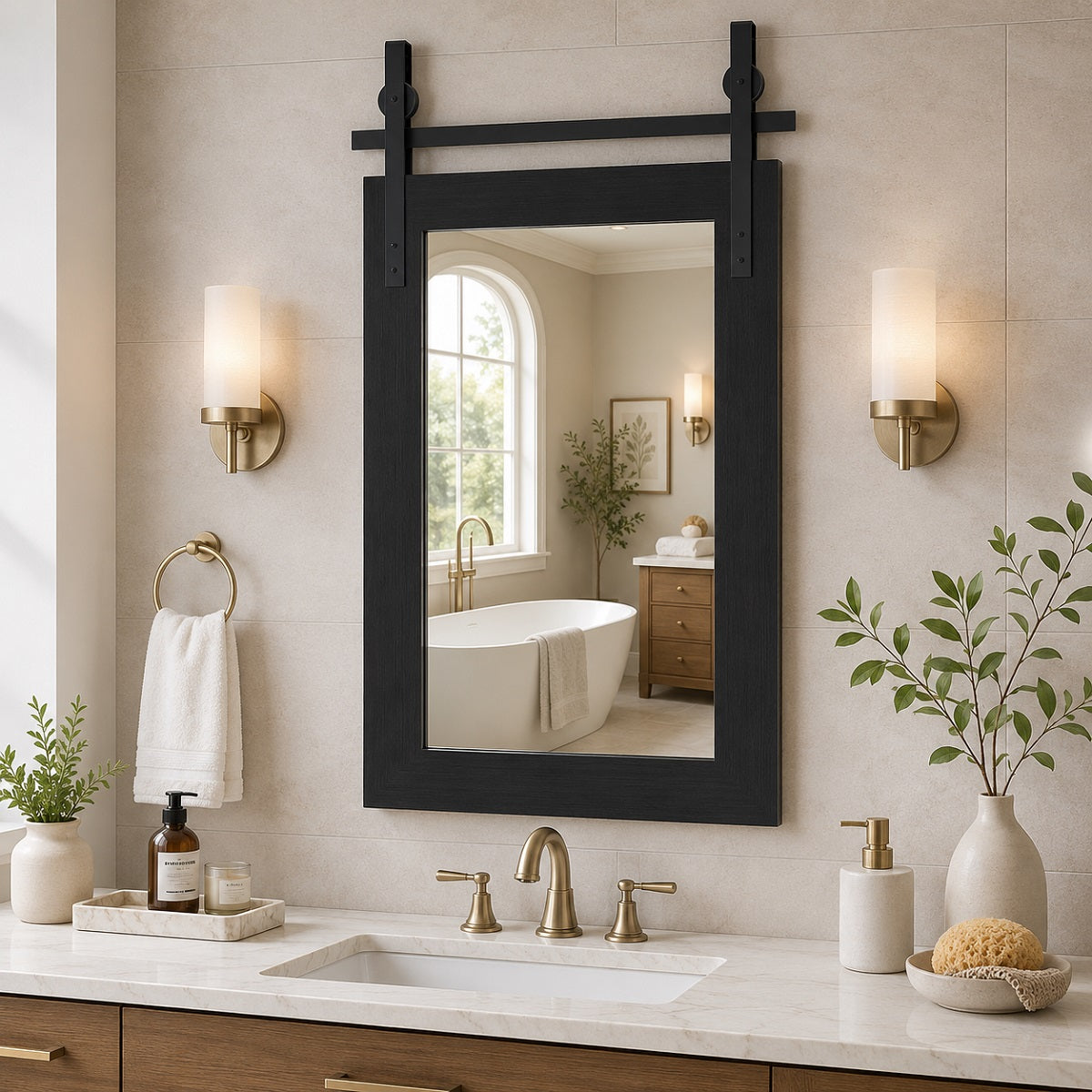
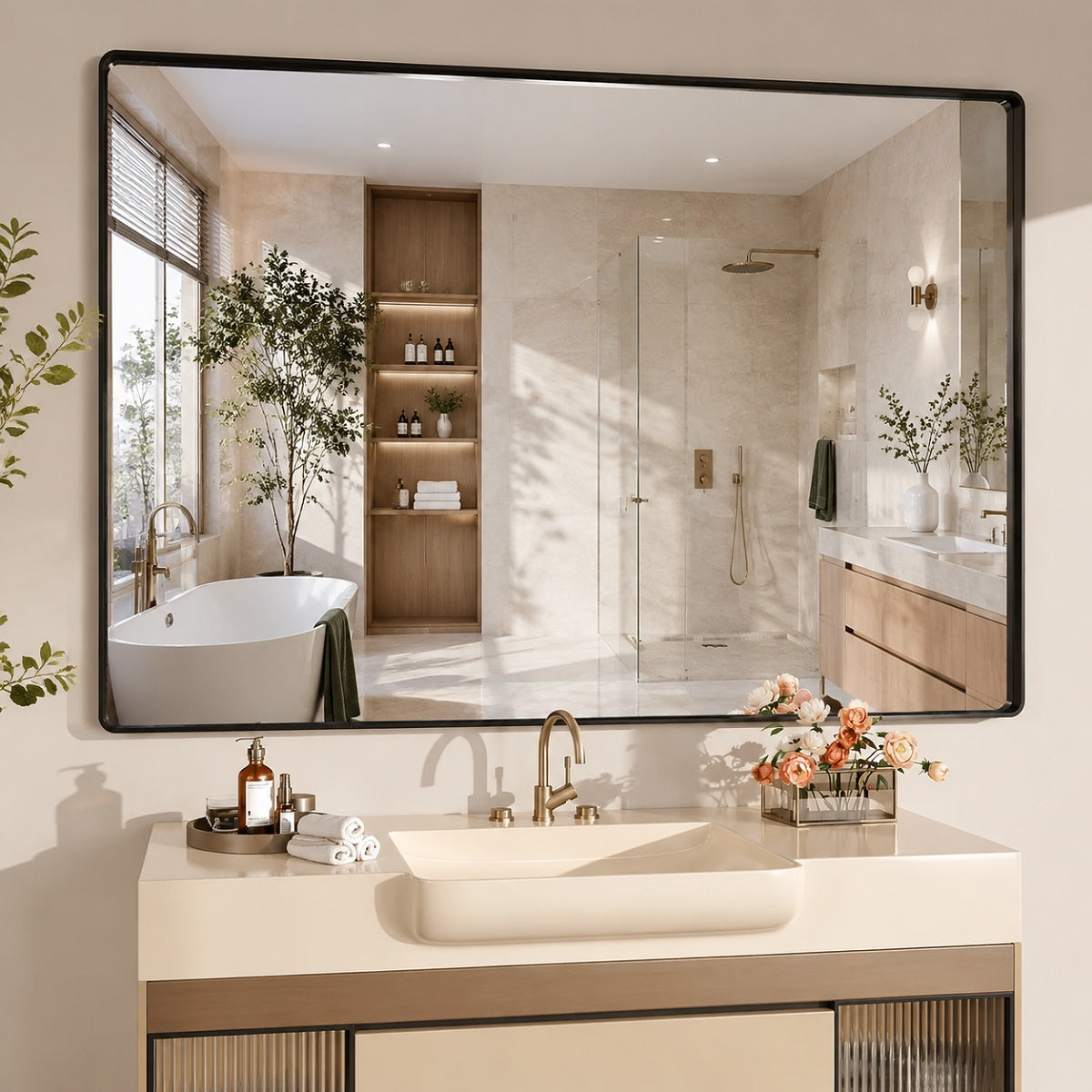
Black framed mirrors can repeat black faucets, door handles, light fixtures, or furniture legs.
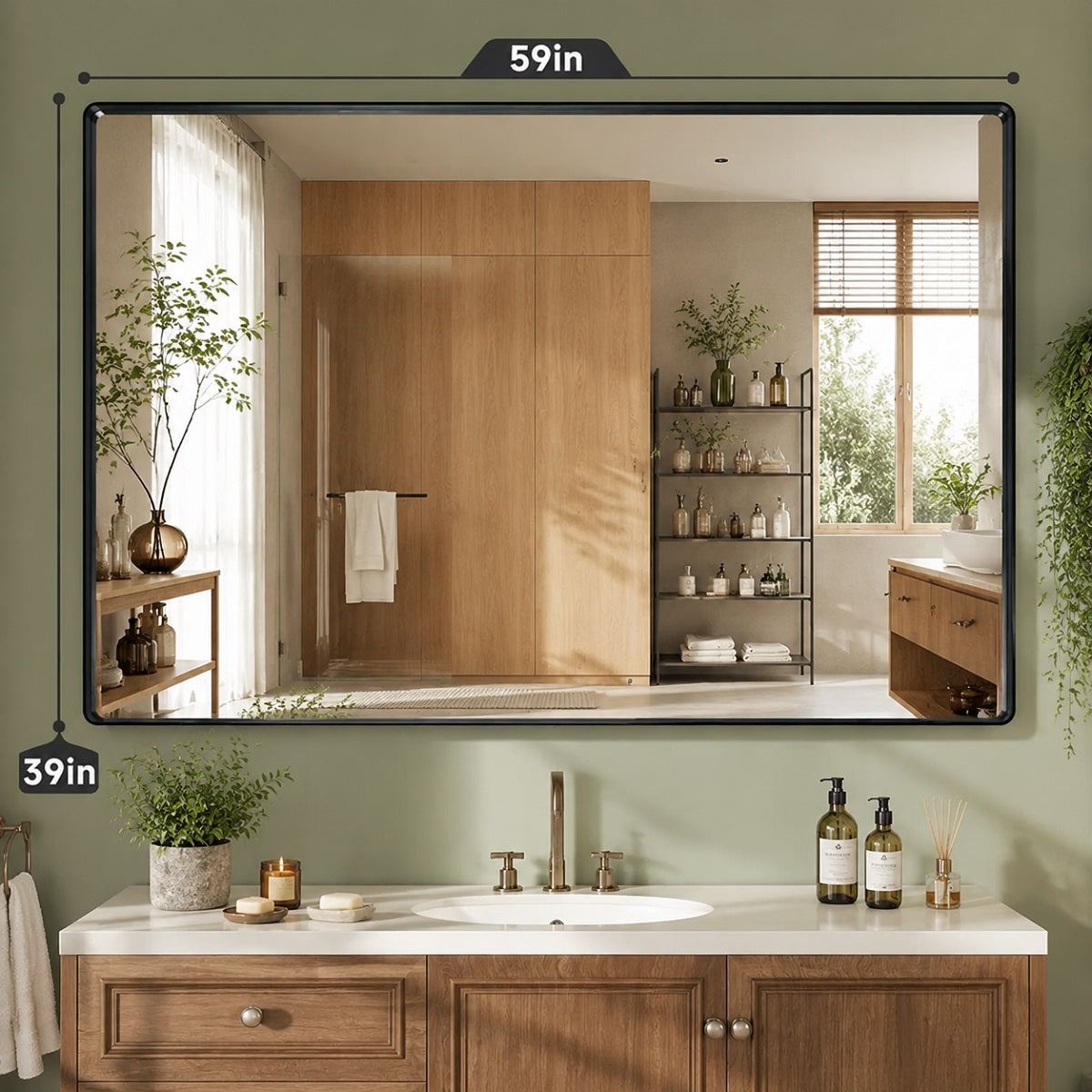
Consider the width of the border before committing. A thin black edge may give a pale wall a crisp outline, while a wide black frame becomes a more prominent feature. Neither is automatically better; decide how much attention you want the frame to receive.
Gold Framed Mirrors
Gold framed mirrors can sit comfortably alongside warm woods, cream paint, and warm-toned textiles.
“Gold” covers many finishes, from pale champagne to a deeper yellow tone. Compare close-up photographs with the fixtures already in the room. Two gold finishes can look noticeably different when placed next to each other.

White Framed Mirrors
White framed mirrors can blend with a light wall or stand out against a darker background.
On a white wall, the frame’s profile and texture help define its edge. Also compare undertones: a creamy frame beside a bright white vanity may create a more noticeable difference than expected.
Silver Framed Mirrors
Silver framed mirrors can connect with silver-colored hardware and cooler room palettes.
Look beyond the color name. A polished silver finish may draw attention through reflections, while a brushed finish presents a more textured surface. Compare it with nearby lighting and hardware rather than assuming all silver finishes match.
Natural Wood Framed Mirrors
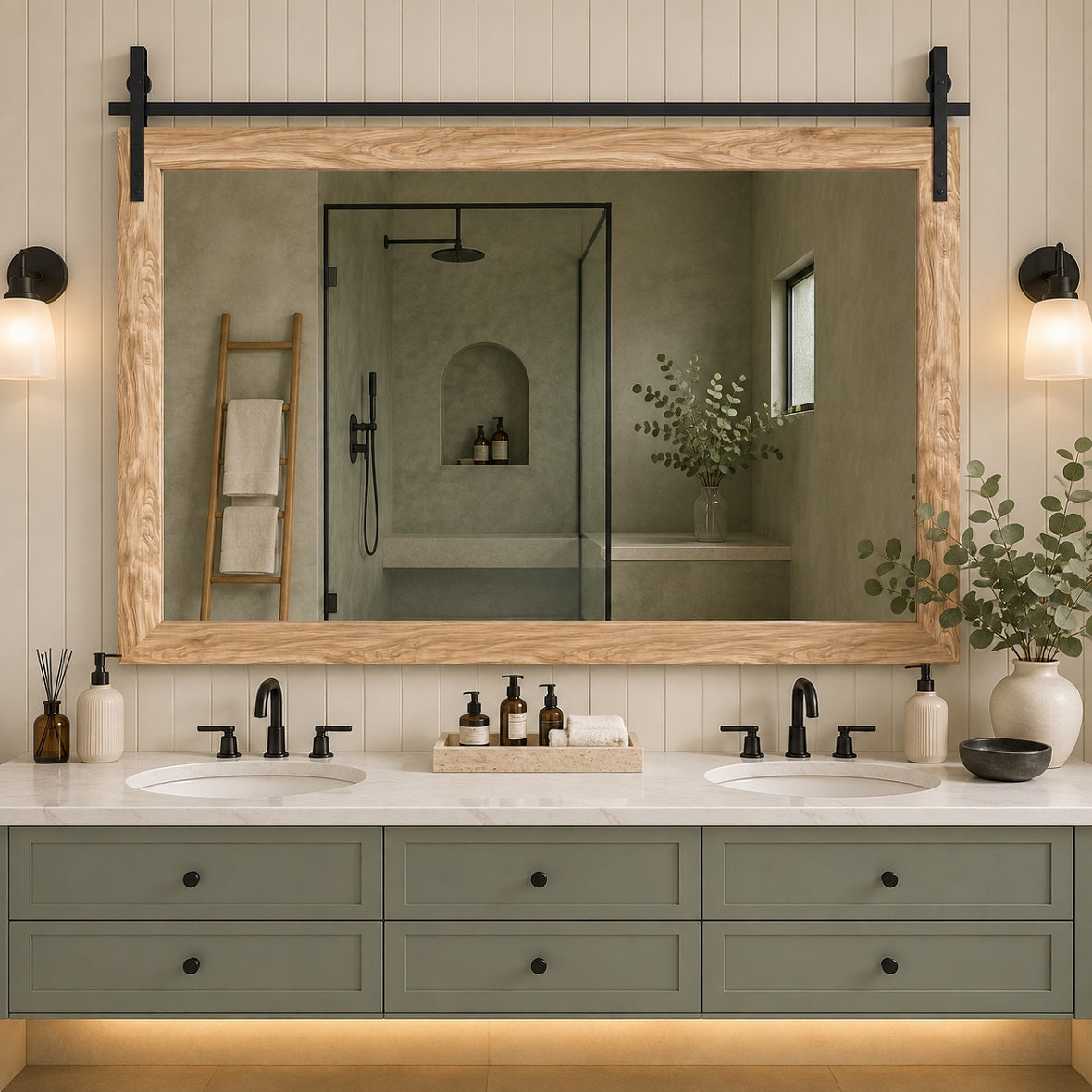
Natural wood framed mirrors bring the frame’s grain and tone into the color scheme.
Choose which existing wood surface matters most—perhaps the vanity, dresser, or dining table—and compare against that. Trying to match every wood item in a room can make the decision unnecessarily difficult.
Bronze Framed Mirrors
Bronze framed mirrors can work with deeper wood tones, warm paint colors, and vintage-inspired furnishings.
Check whether the finish is consistently dark or includes lighter edges and varied coloring. Those details affect how decorative the frame appears.
Color and material are separate specifications. A gold-finish frame isn’t necessarily brass, and a silver-finish frame isn’t necessarily stainless steel. Matte, brushed, polished, and distressed describe surface effects, so include those details in your comparison.
Round, Rectangular, Arched, or Irregular?
The shape determines the mirror’s outline and where its usable glass area falls. Test the silhouette on the wall before deciding from a product photo.
Rectangular Framed Mirrors
Rectangular framed mirrors are easy to compare with the straight edges of vanities, dressers, and console tables.
A horizontal rectangle may suit a wide furniture arrangement. A vertical rectangle may fit a narrower wall and provide a taller viewing area. Confirm the approved mounting orientation; not every model supports both.
Round Framed Mirrors
Round framed mirrors introduce a curve among rectangular cabinets, tiles, and doorways.
Remember that the usable width narrows toward the top and bottom. A round mirror and a rectangular mirror with the same maximum width won’t provide the same reflection area.
Oval Framed Mirrors
Oval framed mirrors offer a curved outline with a more elongated shape.
They’re worth testing on narrow walls or between sconces. Measure the actual width and height rather than assuming that an oval will fit simply because it looks slender.
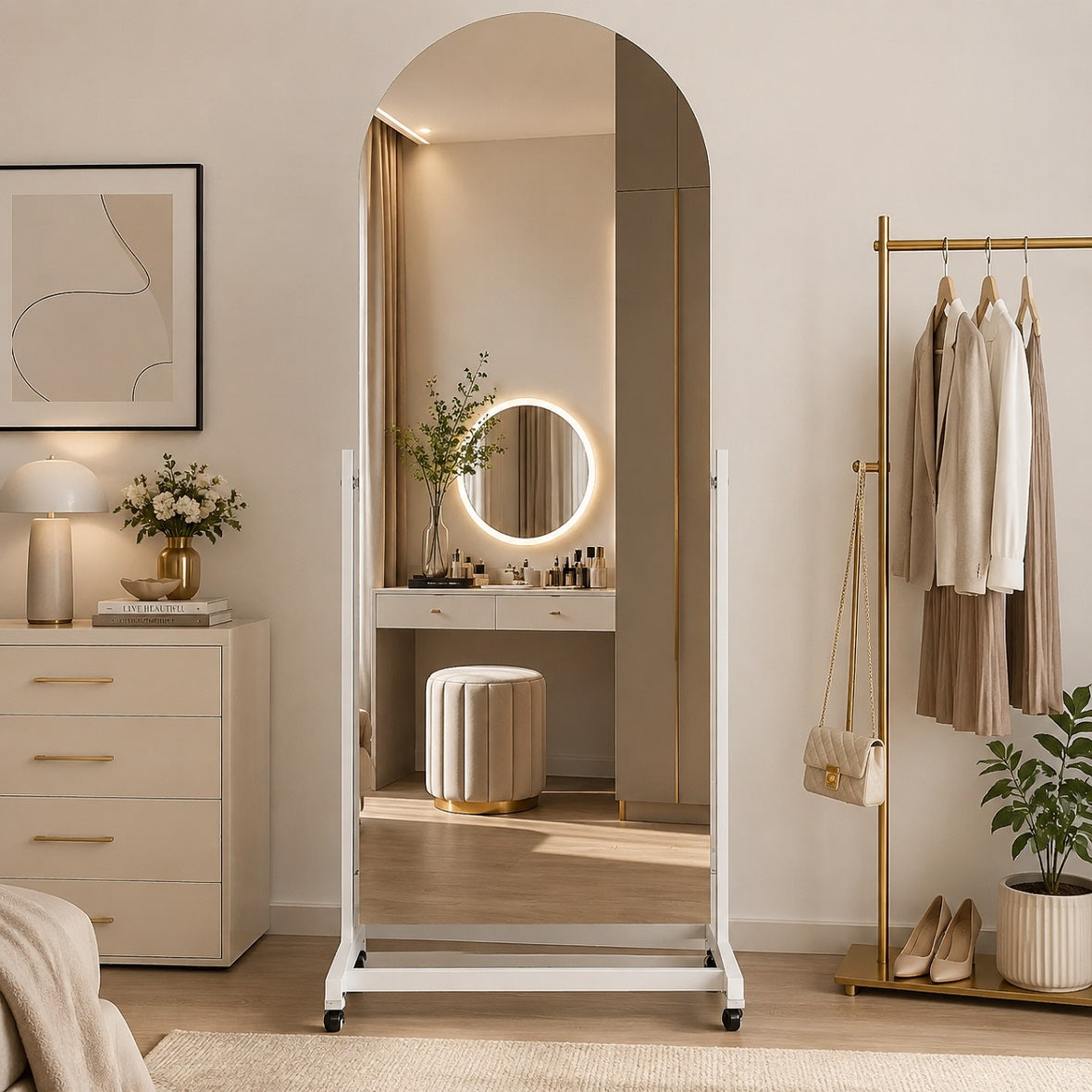
Arched Framed Mirrors
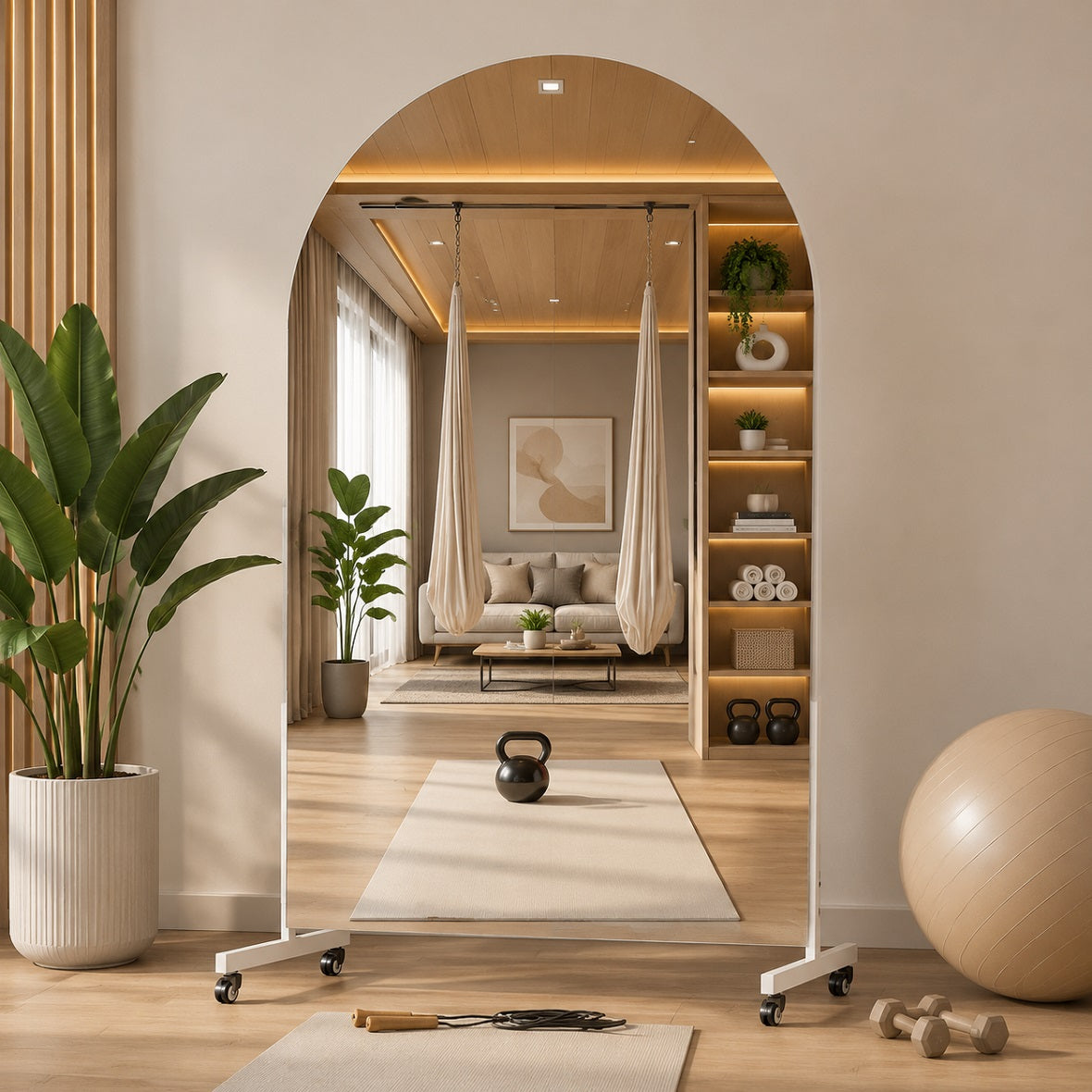
Arched framed mirrors combine straight sides with a curved top. They can repeat the shape of an arched doorway or introduce a curve above straight-edged furniture.
The height of the arch matters. A shallow curve and a tall, pronounced arch can occupy the wall very differently, even when the mirrors share a similar width.
Square Framed Mirrors
Square framed mirrors create an equal-sided outline that can suit symmetrical arrangements.
For a pair above a double vanity, plan the spacing around each mirror and between them. Include the faucets and lights in the layout so the arrangement works as a whole.
Irregularly Shaped Framed Mirrors
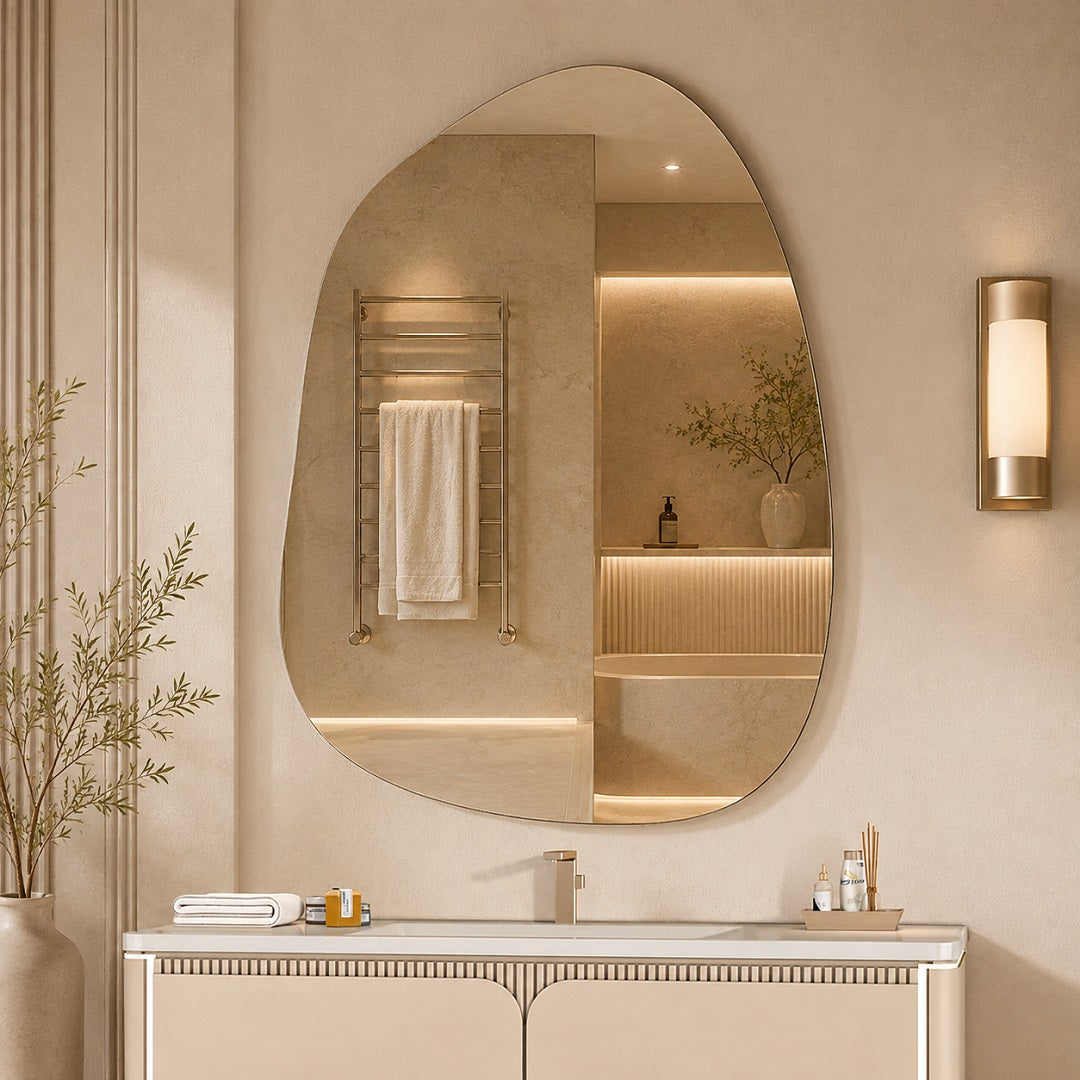
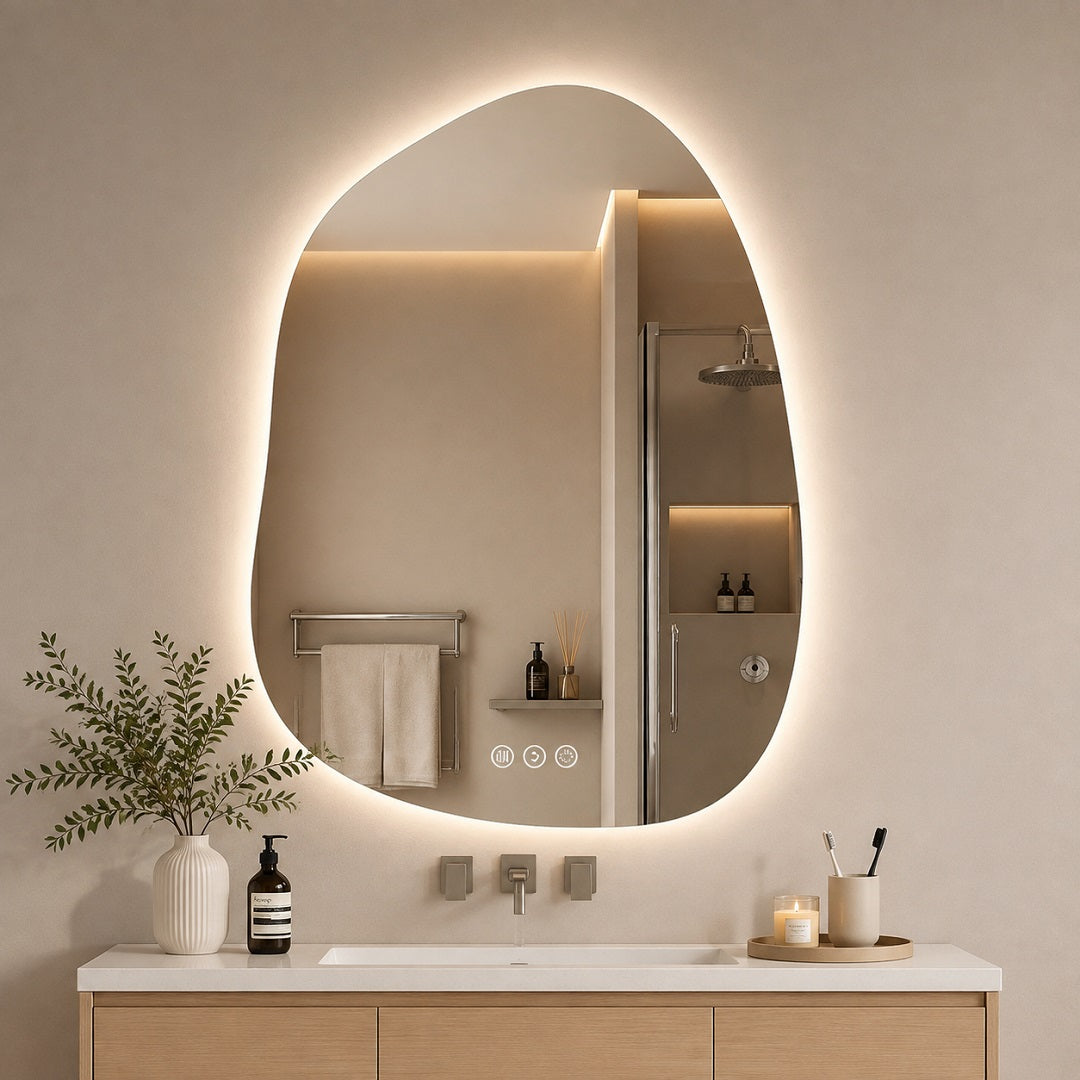
Irregularly shaped framed mirrors draw attention through an uneven or free-form outline.
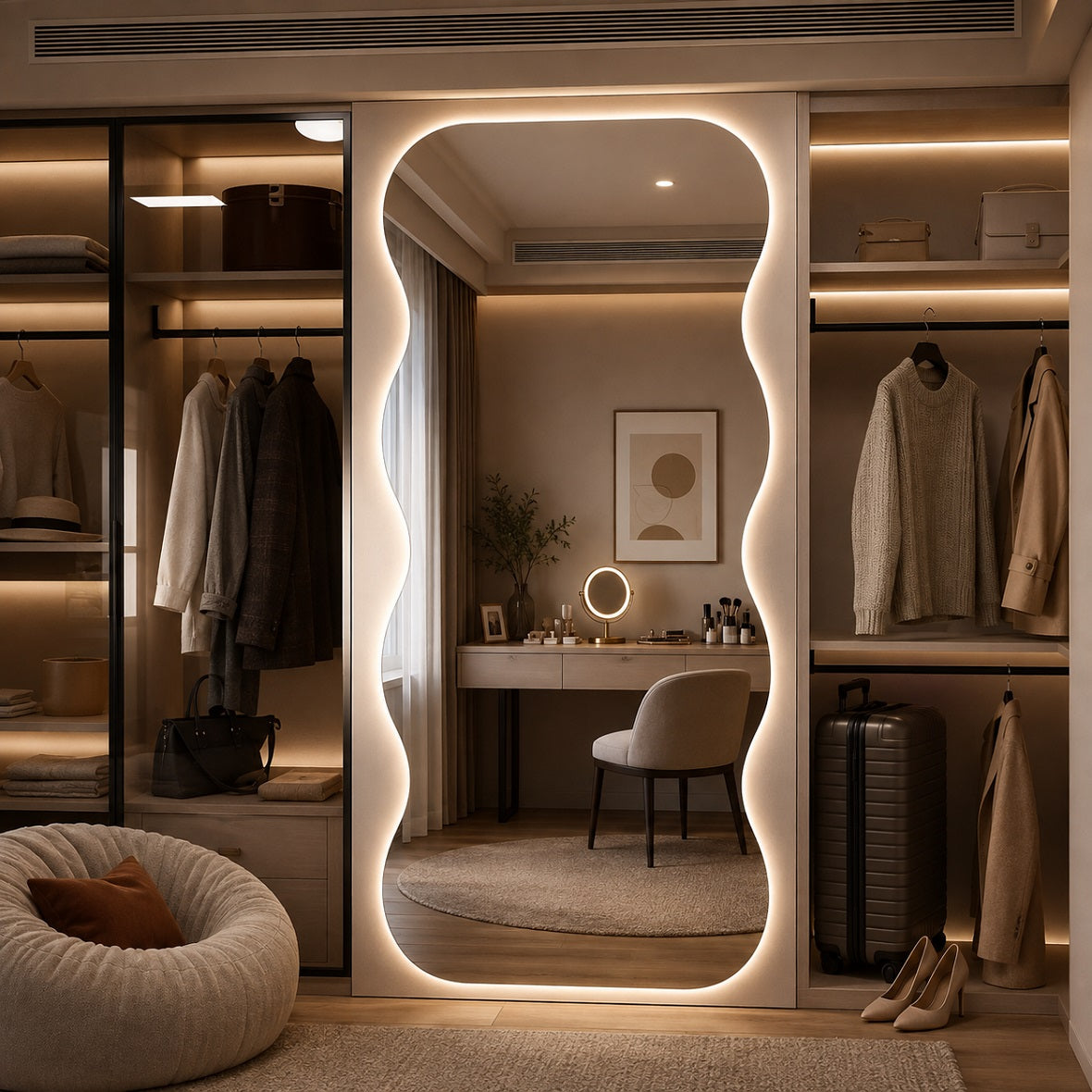
Give the shape room to be seen. Crowding it with shelves, patterned artwork, or other strong outlines may make the wall feel busy. For practical use, check that the widest viewing area falls where you need it.
No shape is universally better for a small room. Dimensions, frame width, surrounding furniture, and intended use all affect the result.

How to Choose Framed Mirrors for Different Rooms
The same mirror can look appealing in several rooms but serve a different purpose in each. Think through a normal moment of use before choosing its position.
Bathroom
Start with product suitability when comparing framed bathroom mirrors. Confirm that the complete mirror is intended for the proposed environment.
Then check the relationship between the mirror, vanity, faucet, and lights. A thick border might look attractive but leave less glass than expected. A deep frame could also affect the available clearance around nearby fixtures.
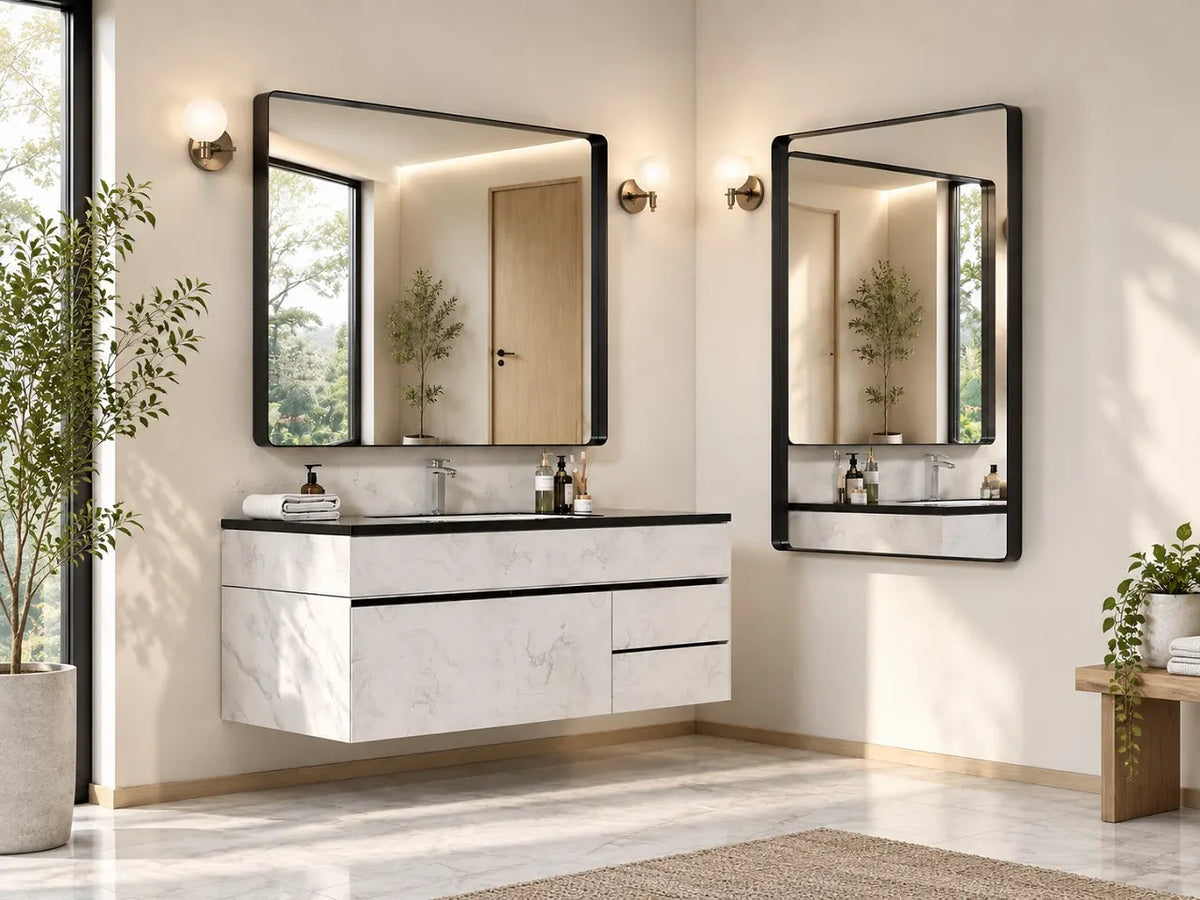
For a light wood vanity with black hardware, a narrow black frame could repeat the hardware. A wood frame could connect with the cabinetry. Compare both against the wall color and countertop before deciding.
Living Room
For framed mirrors for a living room, the reflected view deserves as much attention as the frame.
From the sofa, will you see a window, artwork, a doorway, or a television and cables? Move around the room to check more than one viewpoint.
Above a sideboard or near a fireplace, outline the proposed mirror with paper. Include nearby lamps and decorative objects so you can assess the complete arrangement.
Bedroom
Decide whether framed bedroom mirrors are primarily for dressing or decoration.
A mirror above a dresser may work well for checking your face and hair, but it may not replace a full-length mirror. A decorative mirror across the room might look balanced while being inconvenient to approach.
Place everyday function first, then choose a frame that relates to the bed, dresser, or other substantial furniture.
Entryway
Framed entryway mirrors should be easy to use without blocking the route through the room.
Above a console table, allow for lamps, trays, and other objects that may interrupt the reflection. Check the position from where you’ll naturally stand before leaving home.
Also look behind you. A mirror facing an overflowing coat rack will make that clutter more visible.
Dining Room
With framed dining room mirrors, check the reflection from a seated position.
A placement that looks attractive while standing may reflect a bright bulb directly toward someone at the table. Test the proposed location with the room’s usual evening lighting.
Consider how the frame relates to the table and chairs. A decorative frame can provide detail in a simple room; a quieter border may be easier to combine with patterned upholstery or prominent lighting.
Dressing Room
For framed dressing mirrors, check viewing height, available standing space, and lighting together.
Make sure drawers and wardrobe doors can open without interfering with the mirror’s position. Test whether the proposed glass area lets you see the parts of an outfit you need to inspect.
A larger mirror won’t solve a layout problem if furniture prevents you from using it comfortably.
Decorative Accent or Full-Length View?
Size descriptions can be vague. Use the listed measurements and distinguish the outside dimensions from the visible mirror opening.
Small Framed Mirrors
Small framed mirrors can fill a modest wall area or form part of a grouped display.
Decide whether the mirror needs to be useful for grooming or mainly decorative. A broad ornamental frame may leave only a small glass opening, which is fine for some arrangements but less useful for daily routines.
Large Framed Mirrors
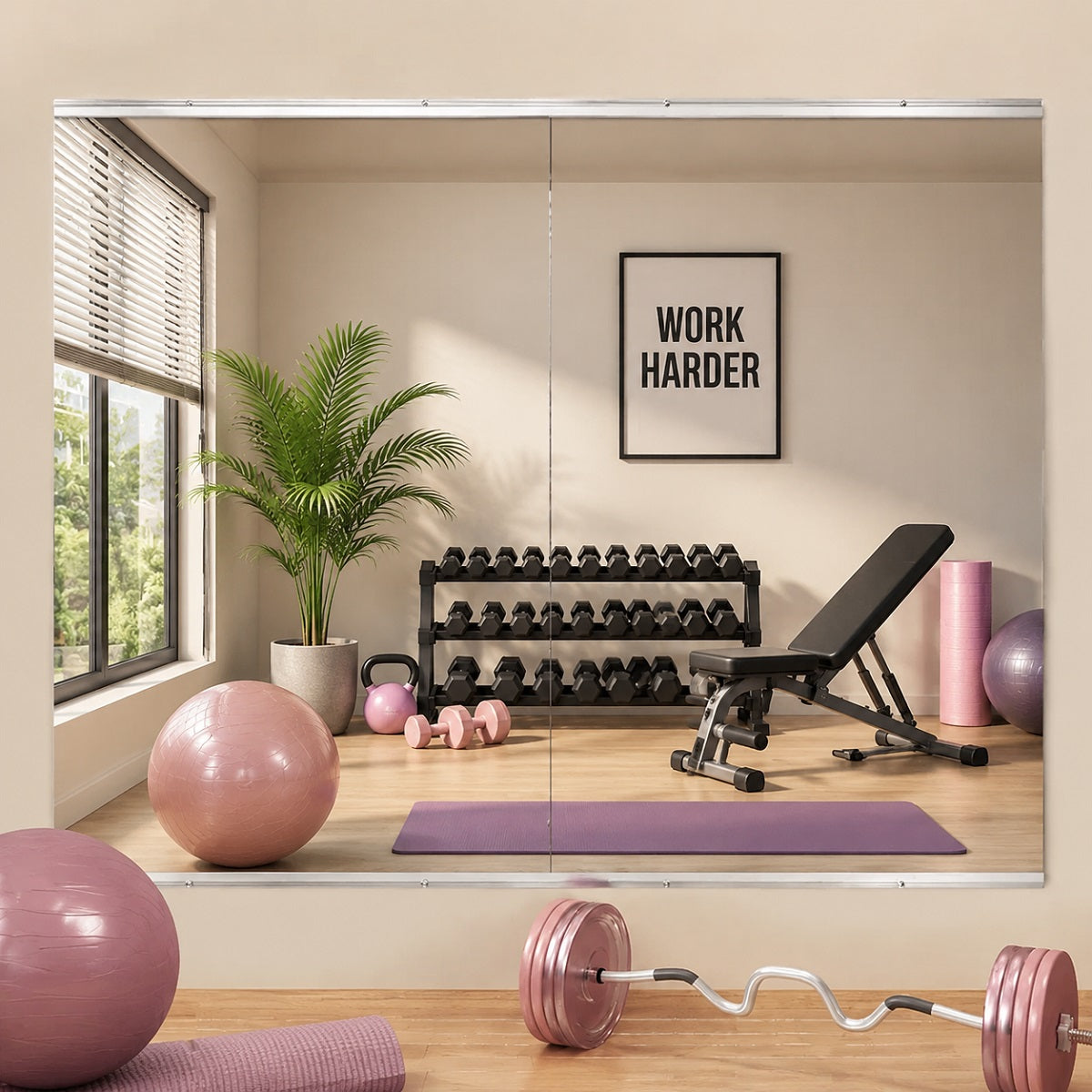
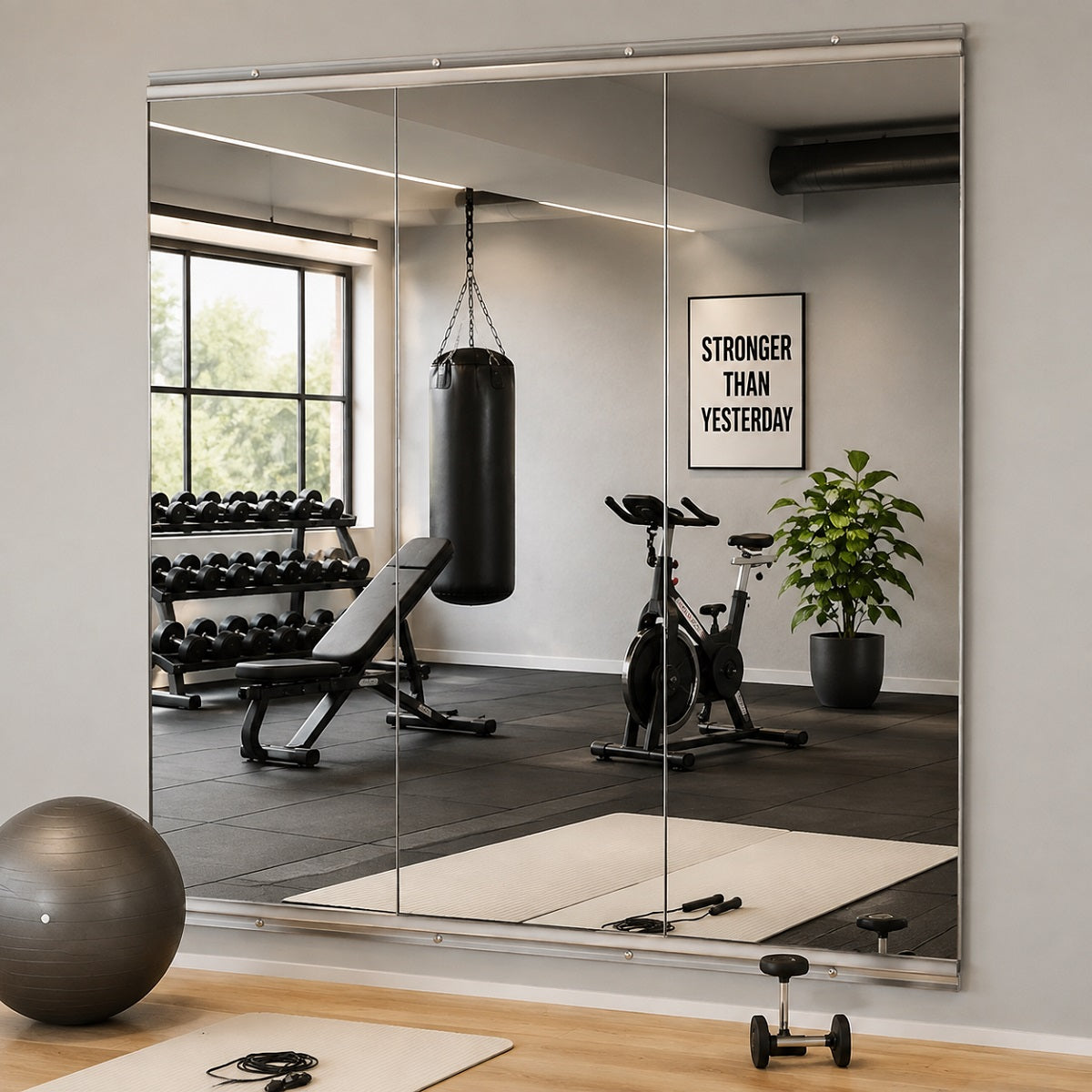
Large framed mirrors need enough wall space, suitable installation conditions, and a workable delivery route.
Check doorways, stairs, and tight corners before ordering. At the final location, compare the mirror with nearby furniture using a full-size paper outline.

Oversized Framed Mirrors
Oversized framed mirrors make the mirror and its reflection a major part of the room.
Consider whether that scale supports the layout or overwhelms the furniture below it. Confirm the complete product weight and installation requirements before choosing a location.
“Large” and “oversized” don’t have universal size definitions. Compare dimensions across products rather than relying on those labels.
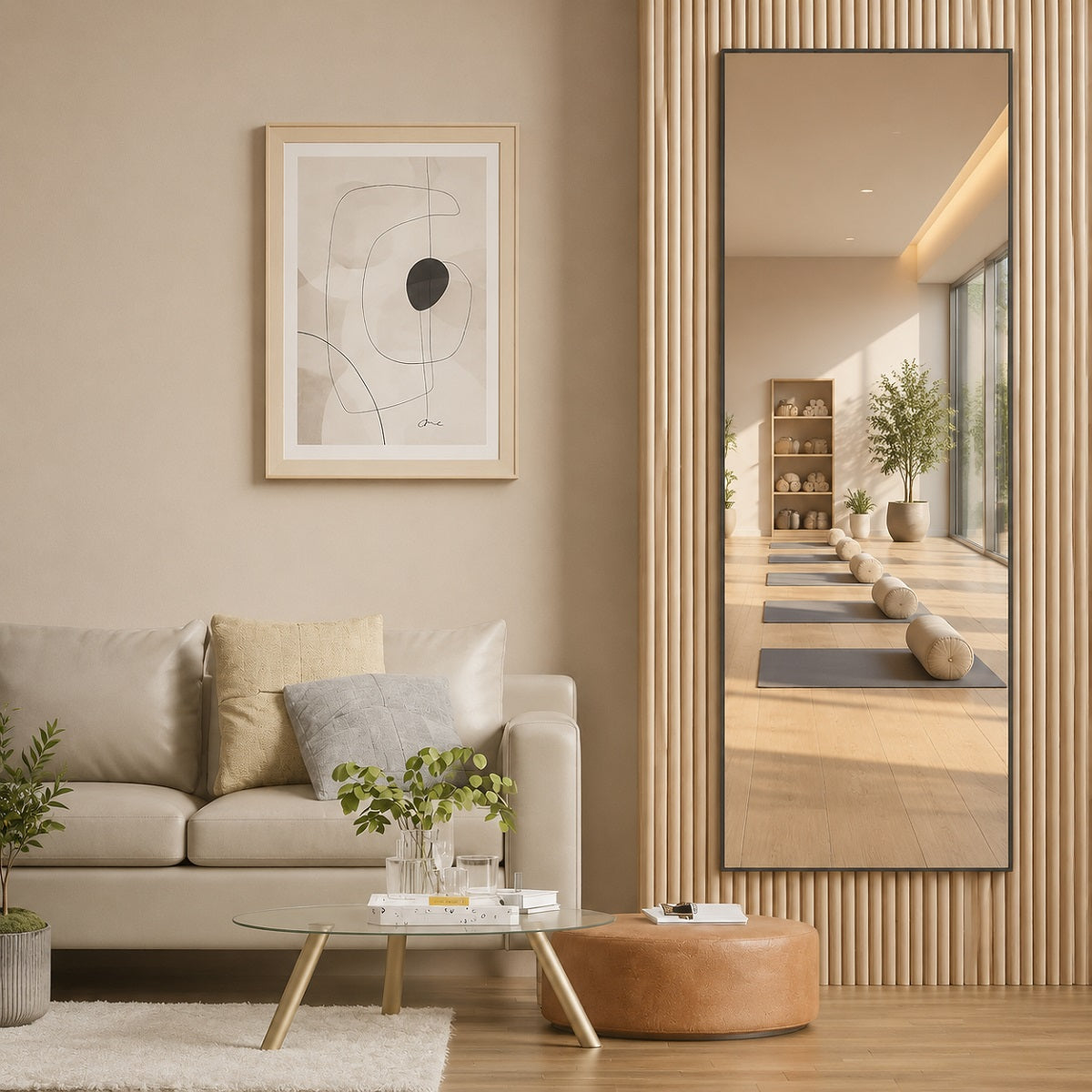
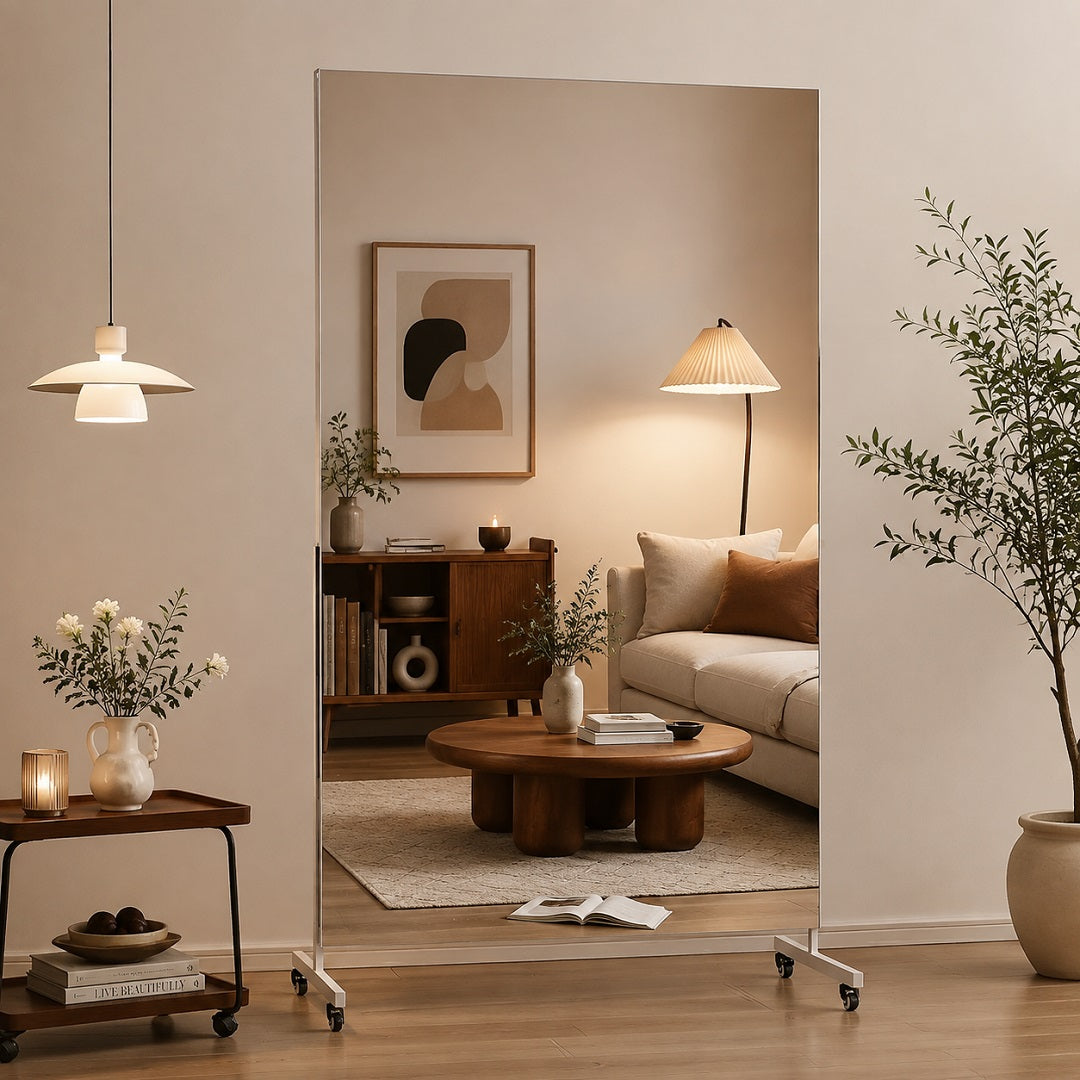
Framed Full-Length Mirrors
Framed full-length mirrors are intended for viewing more of your outfit, but usable coverage depends on the mirror’s dimensions and placement.
Check the view from your intended standing position and mounting height. Include the frame in your space measurements, but use the visible glass dimensions when assessing the reflection area.
Framed Vanity Mirrors
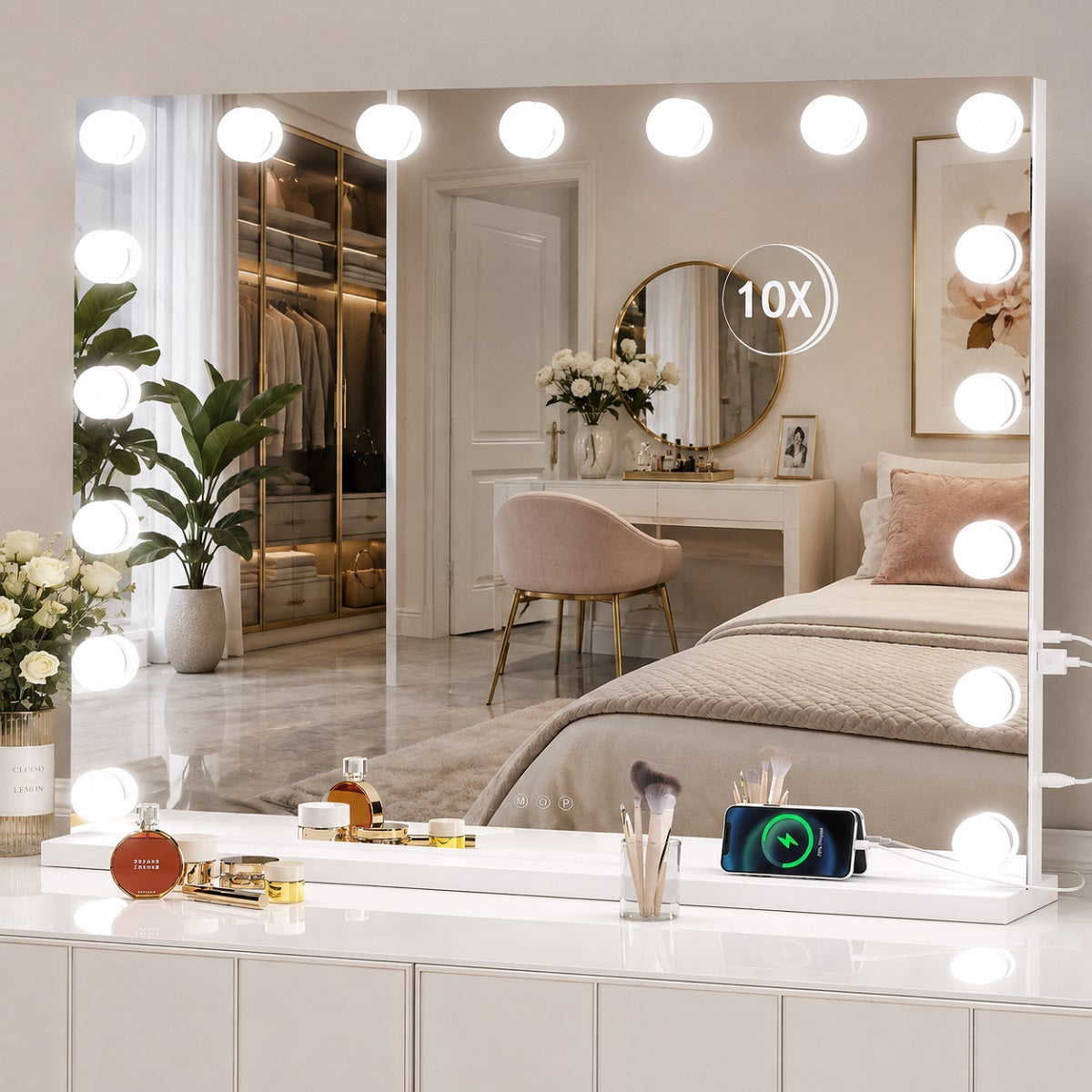
Framed vanity mirrors should provide a comfortable view for tasks such as skincare, shaving, or applying makeup.
Think about where your face will be in relation to the glass and lighting. For tabletop use, compare the base height and adjustment range. For wall mounting, account for the frame’s width before settling on the overall size.
As a simplified example, a 30-inch-wide mirror with a border occupying 2 inches on each side would leave about 26 inches of visible width. Actual construction varies, so check the product’s stated glass dimensions.
Wall-Mounted, Freestanding, or Leaning Mirrors
Installation format affects where a mirror can go and how much room it needs.
| Mirror type What to check before buying | |
|---|---|
| Framed wall mirrors | Complete weight, wall requirements, mounting hardware, and approved orientation |
| Freestanding framed mirrors | Stand or base footprint, required clearance, and stability instructions |
| Leaning framed mirrors | Whether leaning is permitted and whether restraints or other fixings are required |
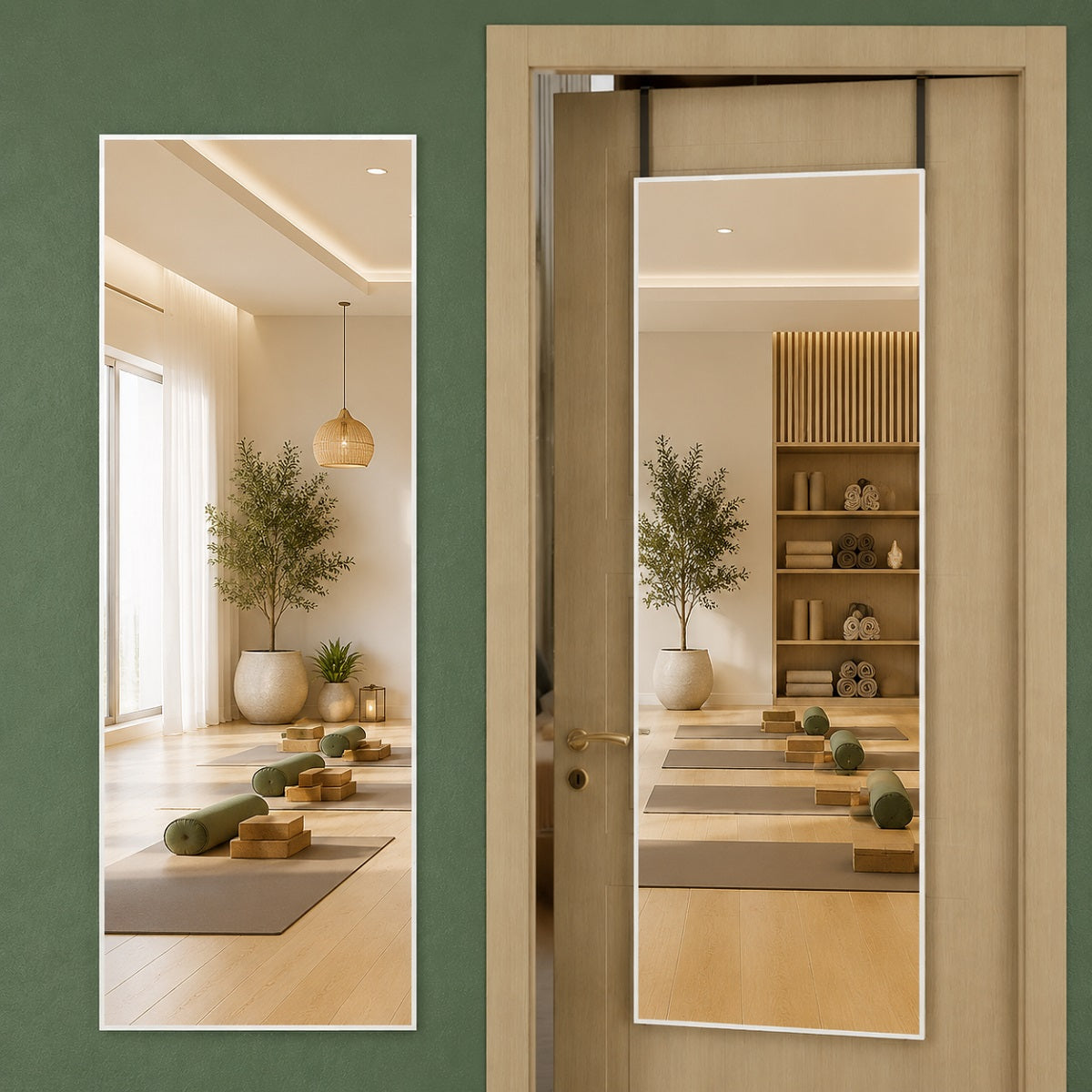
| Over-the-door framed mirrors | Compatible door thickness, bracket dimensions, and closing clearance |
| Tabletop framed mirrors | Base size, viewing height, and angle adjustment |
A wall-mounted mirror may save floor space, but its mounting method must suit the product and wall. Check whether the supplied hardware covers your wall type.
For a freestanding design, measure the stand when opened. Its depth can matter as much as the mirror’s width in a narrow bedroom.
Don’t interpret a photograph of a leaning mirror as permission to leave it unsecured. Follow the model’s installation and restraint instructions.
Over-the-door mirrors also need clearance around the door and frame. Tabletop models need a stable surface with enough room for the complete base.
Finding a Frame Style That Fits Your Home
Style names help narrow a search, but the visible details tell you more. Look at the frame’s profile, texture, finish, and ornament.
Modern Framed Mirrors
Modern framed mirrors often use straightforward outlines and limited decoration.
A narrow, smooth border can work alongside flat-front cabinetry and simple furniture. Modern doesn’t have to mean black metal; a clean wood frame can serve the same visual purpose.
Traditional Framed Mirrors
Traditional framed mirrors may feature stepped molding, layered edges, or more substantial borders.
Compare those details with existing trim and furniture. A frame that repeats the room’s established lines can feel connected without matching every piece.
Vintage-Style Framed Mirrors
Vintage-style framed mirrors may include scrollwork, decorative crests, aged-looking finishes, or shapes associated with earlier periods.
Use “vintage-style” for newly made products with that appearance. An antique or genuinely vintage mirror has a history that should be established separately.
A decorative frame can sit comfortably above a simple modern dresser when the surrounding wall gives it enough space.
Farmhouse Framed Mirrors
Farmhouse framed mirrors commonly emphasize wood grain and relatively simple construction details.
Compare the actual tone and texture with the room. A heavily distressed border and a smooth wood vanity may create a stronger contrast than the shared farmhouse label suggests.
Coastal Framed Mirrors
Coastal framed mirrors may use pale finishes, woven materials, or natural textures.
Relate those features to the room’s textiles and furniture. A woven frame beside linen curtains and light wood can establish the connection without adding nautical decorations.

Industrial Framed Mirrors
Industrial framed mirrors often emphasize metal, darker finishes, or visible structural details.
Consider their visual weight next to shelving, furniture legs, and lighting. A substantial dark frame may be enough to repeat those elements without carrying the same treatment through every accessory.
When comparing Hasipu mirrors, bring together the details you’ve chosen: the room, outside dimensions, visible glass area, preferred frame, and installation method. Check the specifications for the exact model and size. That makes it easier to choose a mirror that looks right on the wall and works comfortably in daily use.
Final Thoughts
The right framed mirror should fit both your room and your routine. Measure the space, decide how much visible glass you need, and confirm the installation method before choosing the finishing details. Then look for a frame that connects with something you already enjoy in the room—a wood vanity, a favorite light fixture, or the curve of a doorway.
As you explore Hasipu mirrors, compare the specifications for each model with those practical needs. A thoughtful choice gives you more than an attractive wall feature: it gives you a mirror that feels at home and works comfortably every day.
Frequently Asked Questions
1. What is the difference between framed and frameless mirrors?
Framed mirrors have a border around the glass that adds color, texture, and detail. Frameless mirrors leave the glass edge exposed or finished without a surrounding frame. Compare the overall appearance, visible mirror area, and installation requirements when choosing between them.
2. Which frame material is best for a bathroom mirror?
Choose a mirror that the manufacturer identifies as suitable for the intended bathroom environment. Metal, wood, and resin frames vary in construction and finish, so the material name alone doesn’t establish moisture resistance. Check the complete product’s specifications and care instructions.
3. Should a mirror frame match the bathroom faucet?
An exact match isn’t necessary. A black frame can repeat a black faucet, but a wood frame could connect with the vanity instead. Choose a finish that relates to an existing element in the room, and compare undertones when combining similar metallic colors.
4. How do I choose the right size framed mirror?
Measure the available space, including nearby lights, faucets, switches, and furniture. Use the mirror’s outside dimensions to check the fit and its visible glass dimensions to assess usability. A paper template can help you judge the size before buying.
5. Can a framed mirror work in a small room?
Yes. Consider the frame’s width and depth along with the overall dimensions. A narrow frame can leave more visible glass within a limited footprint, while a wider frame makes a stronger decorative statement. Check what the mirror will reflect so it doesn’t emphasize clutter.