
Table of Contents
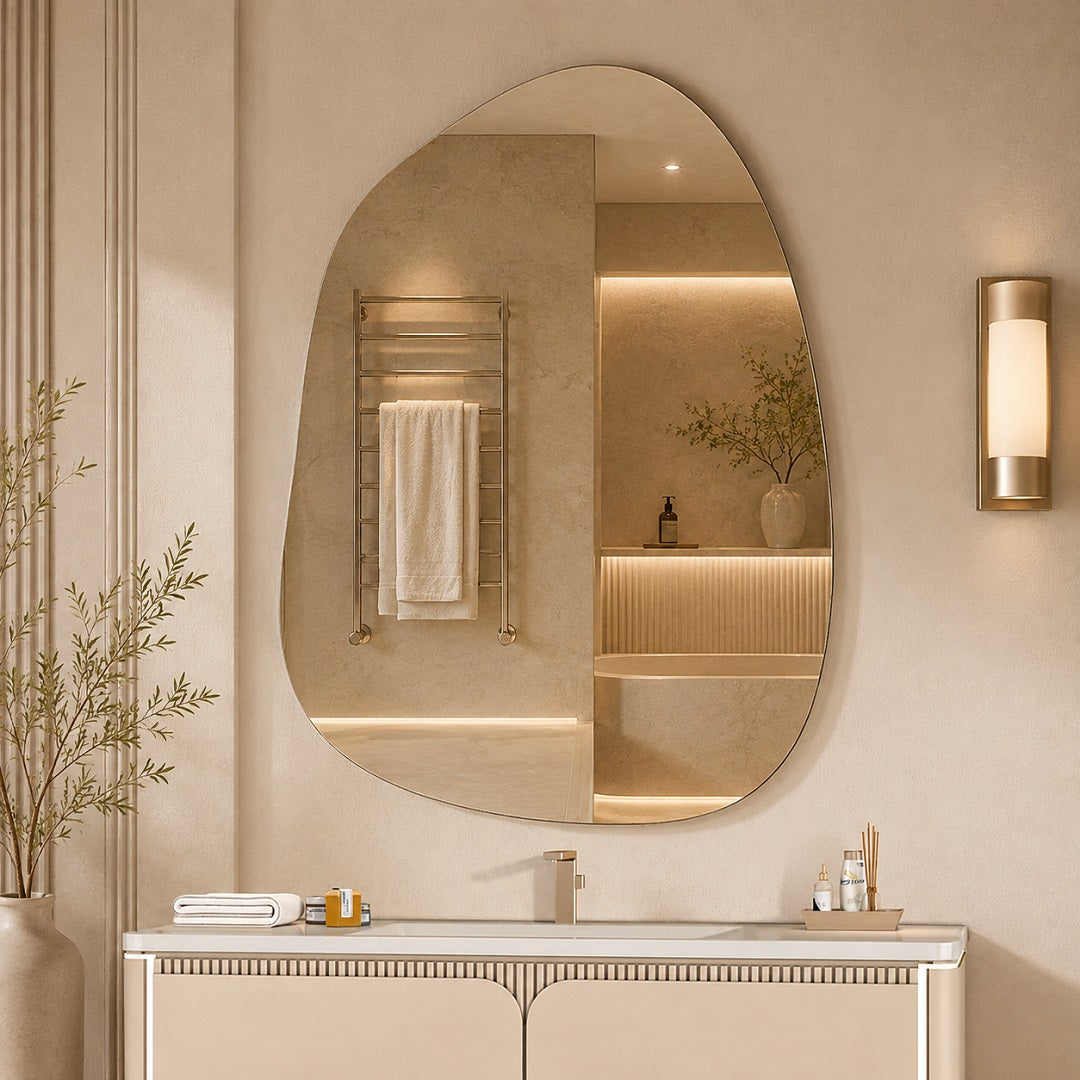
A big bathroom mirror is usually the better choice for a broad view and a more open-looking vanity area. A smaller mirror makes sense when you need room for side lights, want to show off the wall finish, or prefer separate mirrors over two sinks. Start with the vanity width and available wall space—not the room’s square footage alone.
A mirror can look just right in a product photo and oddly small once it’s above your sink. Or it can fill the wall so completely that there’s nowhere left for the vanity sconces you planned to install.
The tricky part isn’t deciding whether big or small looks better in general. It’s figuring out what fits your bathroom and makes getting ready easier. Here’s how to make that call before you order your bathroom wall mirror.
Big vs. Small Bathroom Mirrors: What Fits Your Space?
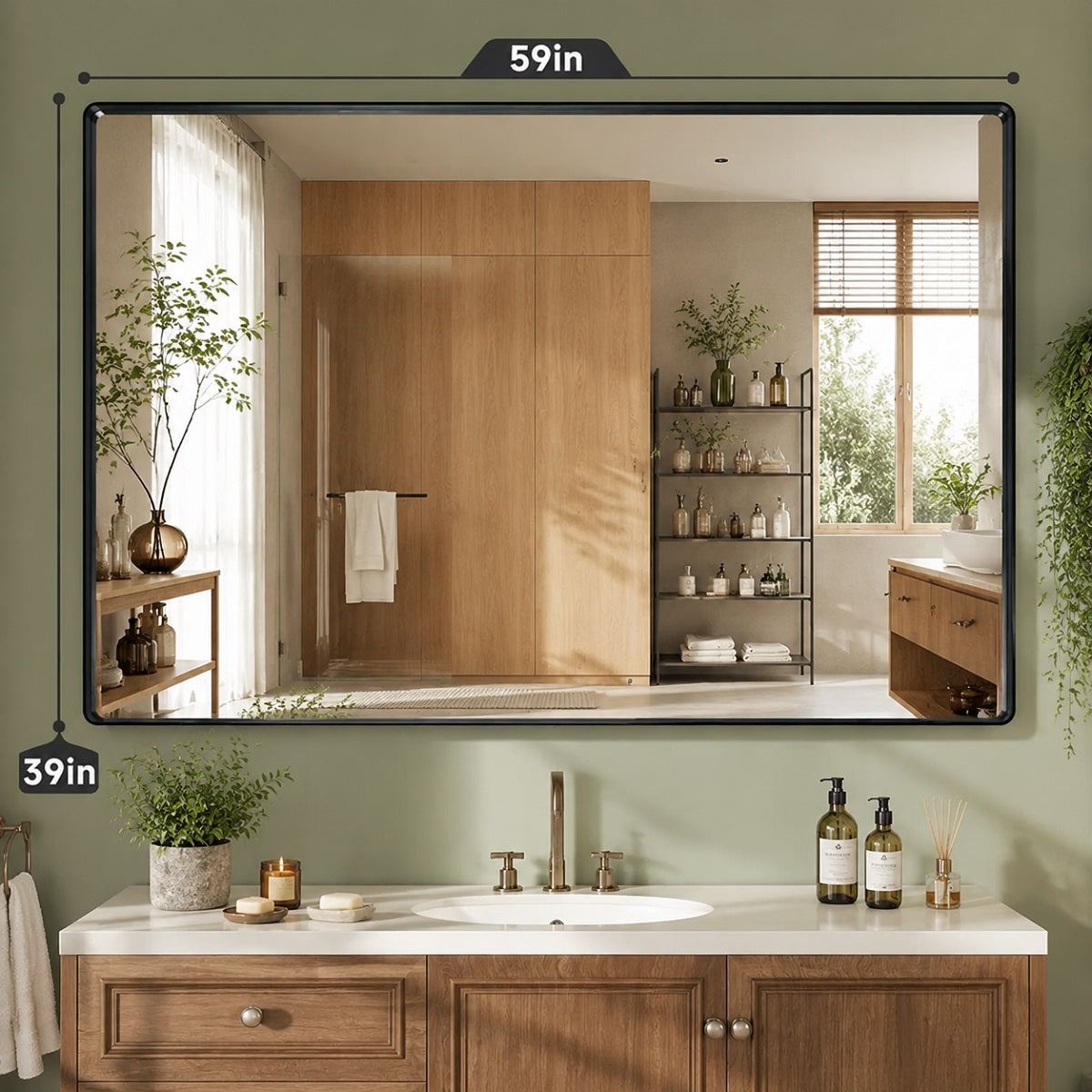
“Big” is relative. A 30-inch-wide mirror can look generous over a 36-inch vanity and feel undersized above a 60-inch cabinet.
Use these situations to narrow your choice:
| Your bathroom setup | A useful starting point | What to check |
|---|---|---|
| Small bathroom with a plain vanity wall | A larger mirror with a slim frame | What it reflects and how it fits around the lights |
| Narrow vanity between existing sconces | A narrower, taller mirror | Usable glass width and fixture clearance |
| Powder room with patterned wallpaper | A smaller or medium-size framed mirror | Enough reflection for comfortable everyday use |
| Double vanity used by two people | One wide mirror or two individual mirrors | Sink centers, lighting positions, and the gap between mirrors |
| Wide single-sink vanity | A generous mirror aligned with the intended vanity layout | Whether the sink is centered or offset |
These are planning suggestions, not fixed design rules. A taped outline on your own wall will tell you more than a room photo with completely different proportions.
When a Bigger Bathroom Mirror Works Better
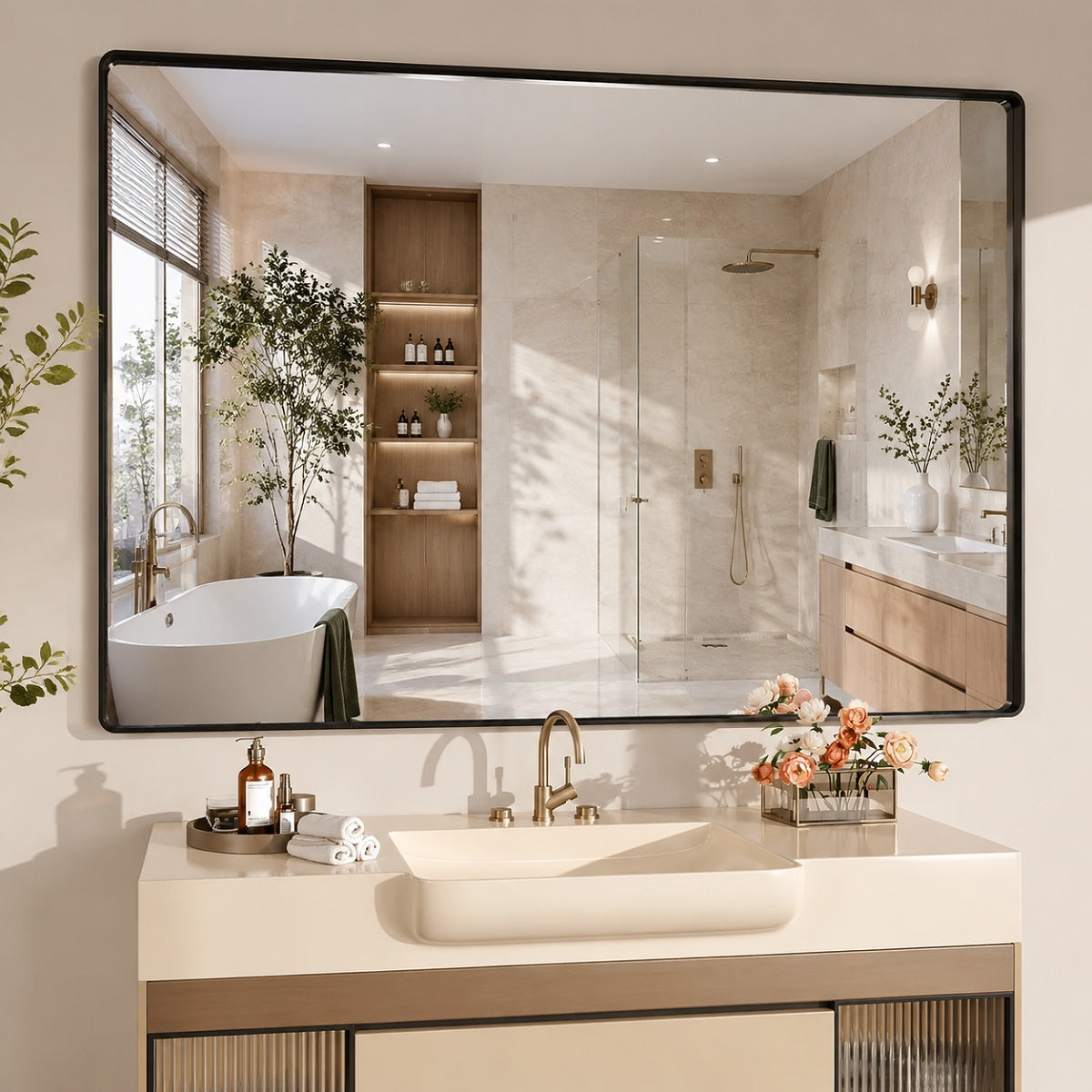
A large bathroom mirror is worth considering when the current mirror feels restrictive. You shouldn’t need to stand in one exact spot to check your hair or shift sideways just to see your shoulders.
It can also help a compact room feel less enclosed. The reflected view creates a sense of depth, particularly when it includes an uncluttered wall or a pleasant view. Placement matters: a larger mirror also shows more laundry, open shelving, or other visual clutter. That connection between mirror placement and the reflected scene is a useful point raised in The Spruce’s guide to mirror decorating mistakes.
Before sizing up, stand at the sink and look behind you. What would the extra glass bring into view?
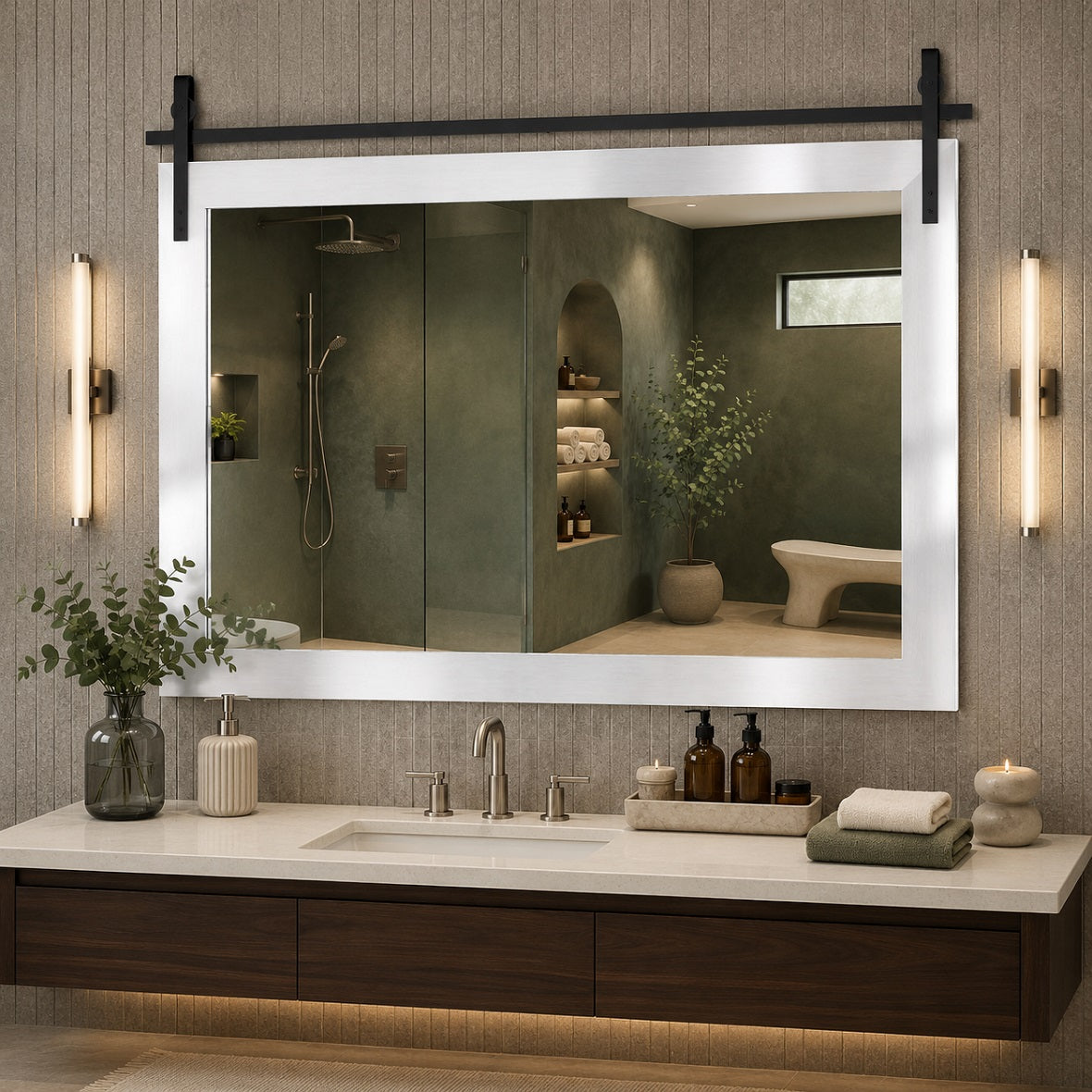
A broad mirror can be especially practical across a shared vanity. It gives both users a continuous reflective surface, without a frame or gap interrupting the middle. That may suit a busy family bathroom better than a pair of small decorative mirrors.
There are trade-offs. More glass means more surface to wipe, and the upper corners need to be reachable for cleaning. Check the actual product weight and mounting instructions, too; width alone doesn’t tell you what wall installation will involve.

Where a Smaller Mirror Makes More Sense
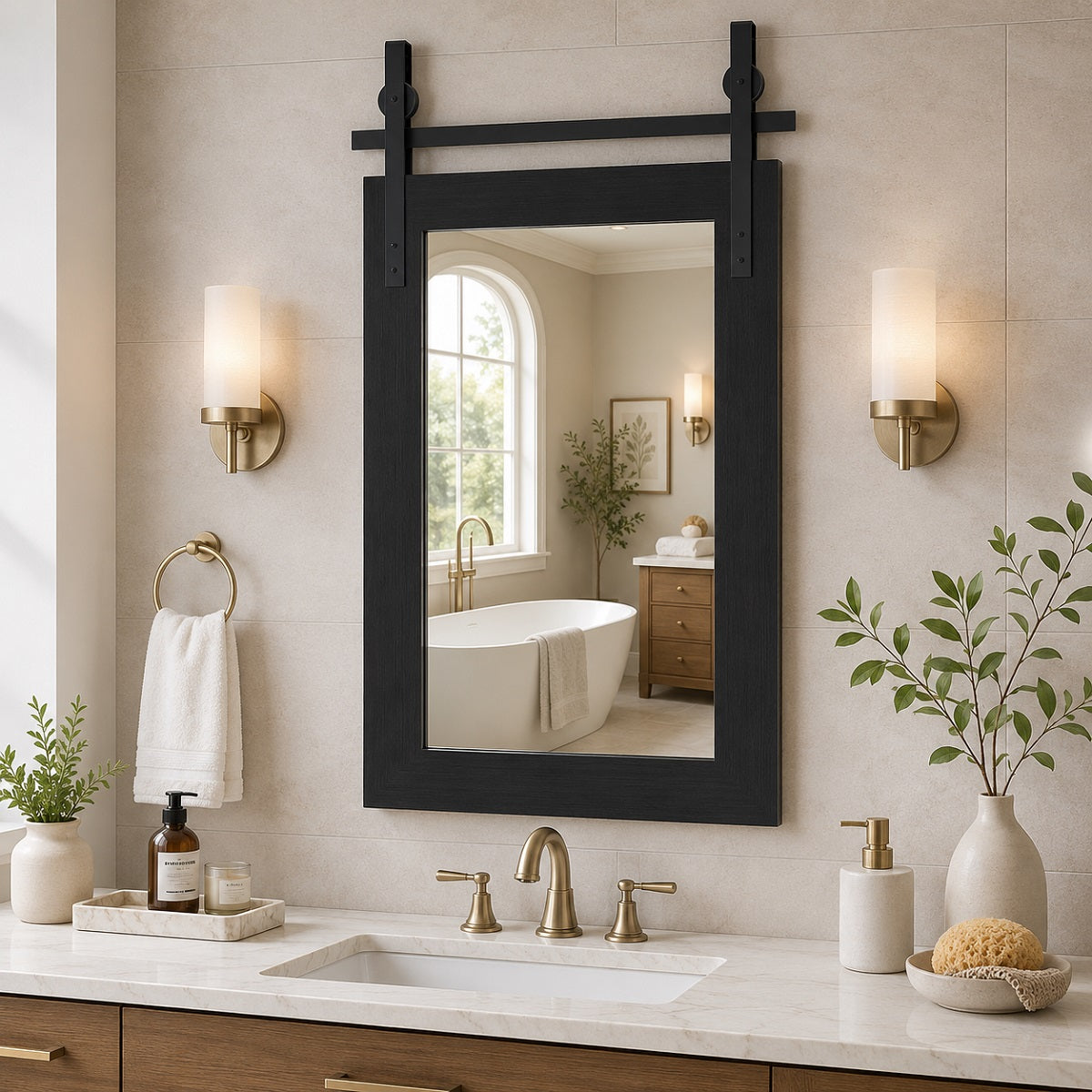
A small bathroom mirror can look deliberate when it belongs to a well-planned arrangement. Picture a compact powder room: a mirror above the sink, a light on each side, and wallpaper visible around all three. Filling the whole wall with glass would change the room’s character.
Smaller mirrors also leave room for floating shelves, wall details, and existing fixtures. In a bathroom where the electrical boxes are staying put, that can decide the mirror width before style enters the conversation.
The limit is usability. Stand where you normally brush your teeth and check that you can see your face and hair comfortably. Ask the other people who use the bathroom to check as well. A mirror that works for the tallest person may be frustrating for someone shorter.
For a narrow wall, consider a taller rectangle or oval mirror before choosing a tiny round mirror. You may have more room upward than sideways.
How Wide Should a Bathroom Mirror Be?
For a single framed mirror, a width around 70–90% of the vanity width is a useful starting range, not a requirement. Designers interviewed by Homes & Gardens about bathroom mirror sizing suggest this range while emphasizing the surrounding wall space.
Here is what that calculation looks like for common single vanities:
| Vanity width | Approximate mirror width at 70–90% |
|---|---|
| 24 inches | 17–22 inches |
| 30 inches | 21–27 inches |
| 36 inches | 25–32 inches |
| 42 inches | 29–38 inches |
| 48 inches | 34–43 inches |
Ranges are rounded to the nearest inch. Use the mirror’s outside dimensions, including its frame. These are calculated planning ranges, not Hasipu product sizes or installation requirements.
Take a 36-inch vanity as an example. A centered 30-inch mirror leaves 3 inches on either side relative to the vanity edges. A 24-inch mirror leaves 6 inches per side. Neither is automatically wrong: the smaller size may work with side lights, while the larger size gives the wall more reflective coverage.
A full-width frameless mirror is a different design approach. It can follow the vanity width or form part of a larger wall treatment. There’s no reason to force that look into a percentage intended for a separate framed mirror piece.
For an offset sink, sketch both options: centering a smaller mirror above the sink and aligning a wider mirror with the vanity. Check the reflected view from the actual standing position before deciding on your mirror placement.
Plan the Lights Before Using Every Inch of Wall
Mirror size and lighting belong in the same decision. Existing sconces can limit the available width, while a fixture above the mirror can limit its height. Homes & Gardens’ mirror and lighting guide likewise recommends planning the two together, particularly when wiring locations are fixed.
Measure between the actual fixtures, including projecting shades—not just between their mounting plates. Follow the specified clearances for the products you choose.
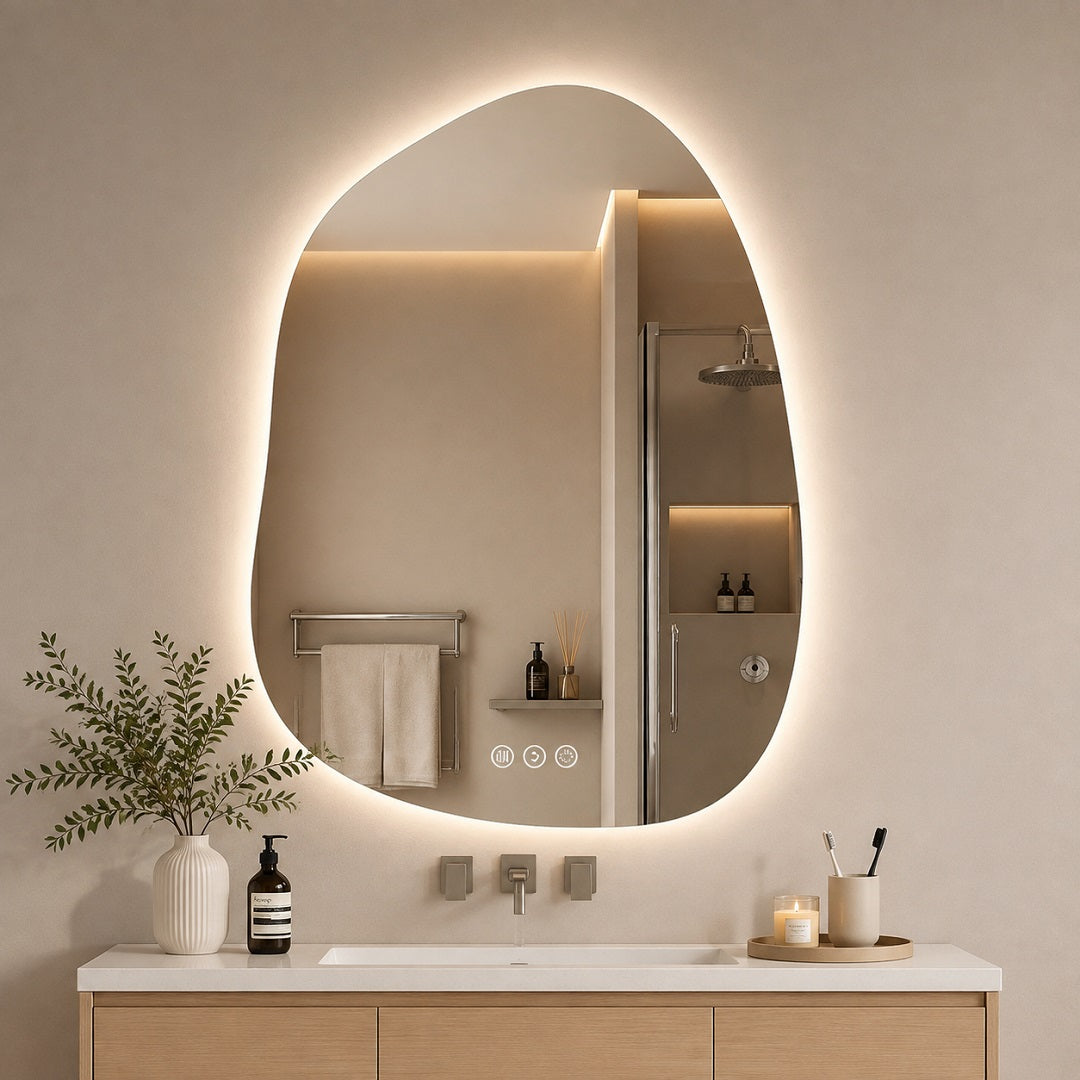
A larger mirror won’t fix an unflattering overhead light. It changes the reflected view, but it doesn’t create its own illumination. For an LED bathroom mirror, check whether the light is intended to illuminate your face, provide a glow behind the mirror, or do both. Don’t judge that from the mirror’s dimensions alone.
During a Hasipu comparison, keep the size, lighting details, and installation requirements side by side. A feature only helps when it suits the way the bathroom is used.
One Large Mirror or Two Over a Double Vanity?
Choose one wide mirror for a continuous look and flexibility across the counter. Choose two separate mirrors to give each sink a distinct getting-ready area and leave visible wall space between them.
For two mirrors, start with the sink centers. The width of the cabinet alone doesn’t tell you where each mirror should go.
Imagine a 60-inch vanity with sink centers 30 inches apart. Two 24-inch-wide mirrors centered above those sinks would leave a 6-inch gap between the mirrors. Two 28-inch-wide mirrors would reduce that gap to 2 inches. That small change in product width makes a noticeable difference—and may affect whether a light can fit between them.
This is a layout example, not a standard sink arrangement. Measure yours before copying it.
Check the Glass, Not Just the Outside Measurements
A thick frame takes up some of the advertised width. A mirror listed as 30 inches wide with a 2-inch frame on each side may have roughly 26 inches of visible glass, depending on its construction.
Shape changes usable space, too. A 30-inch round mirror narrows above and below its middle; a 30-inch-wide rectangular mirror maintains its width along its straight sides. Tape out the actual shape when comparing them.
That distinction matters when two people have different heights or when you want a wider view around your shoulders. The prettiest mirror outline on the wall still needs to work from the sink.

Try This Before You Buy
Use painter’s tape suitable for your wall finish to mark the mirror’s outside edges. Include the frame and leave the lights in the sketch.
Then check four things:
- The everyday view: Can everyone see their face and hair from a normal standing position?
- The surrounding space: Does the outline crowd the faucet, backsplash, sconces, or ceiling?
- The room behind you: Will the larger size reflect something you want to see?
- The practical fit: Can you reach it for cleaning, and does the documented mounting method suit the wall?
Leave the outline up through your morning routine. An extra few inches can feel very different when you’re using the sink instead of looking at a shopping page.
Final Thoughts
For an everyday bathroom, lean toward a generous mirror size that fits comfortably with the vanity and lights. Go smaller when that leaves useful space for fixtures or gives the wall a look you genuinely prefer.
When comparing Hasipu mirrors, bring your measurements with you: vanity width, usable wall space, and the outside dimensions of the taped outline. The right size should look balanced from the doorway and feel easy to use at the sink.