
Table of Contents
An arched mirror and a rectangular mirror can share similar dimensions but look completely different once mounted. An arch softens the wall and introduces a subtle architectural detail. A rectangle brings clean structure and uses more of its outer dimensions for reflection.
Appearance is only part of the decision. Wall proportions, furniture width, viewing needs, lighting, frame finish, and mounting direction all affect how the mirror works. An arched bathroom mirror can balance a room filled with square tile and straight cabinetry, while a wide rectangular mirror often provides better coverage above a double vanity.
This guide compares both shapes by style, reflection area, room placement, size, lighting, installation, and everyday use.
Arched Mirror vs. Rectangular Mirror at a Glance
| Comparison | Arched Mirror | Rectangular Mirror |
|---|---|---|
| Visual effect | Soft, tall, and architectural | Clean, structured, and balanced |
| Reflection area | Slightly reduced near the curved top | Uses nearly all available dimensions |
| Orientation | Usually mounted vertically | Can often mount vertically or horizontally |
| Bathroom use | Single vanities and powder rooms | Single or double vanities |
| Full-length use | Decorative head-to-toe reflection | Broad, practical head-to-toe view |
| Best pairing | Square tile and straight furniture | Curved furniture or busy décor |
| Style range | Modern, transitional, vintage, Art Deco | Modern, traditional, industrial, minimalist |
| Decorative impact | Creates a stronger focal point | Blends more easily with the room |
| Best reason to choose | Softness and visual height | Reflection area and flexibility |
What Is the Difference Between an Arched and Rectangular Mirror?
Most arched mirrors have straight sides, a flat bottom, and a rounded top. This preserves much of the usable area of a rectangle while replacing the upper corners with a curve.
That curve changes how the eye reads the wall. It draws attention upward and can make the mirror resemble a doorway or window. The effect feels softer and more decorative than a standard rectangle mirror.
A rectangular wall mirror follows the same lines already found in vanities, dressers, doors, windows, shelves, and tile. This makes it easy to position and coordinate with nearby furniture.
Rectangular mirrors are also more efficient. Nearly every inch inside the frame contributes to the reflection. Arched models lose a small amount of glass near the upper corners, though the difference is less noticeable in a tall mirror.
Choose an arch mirror for a softer focal point and a rectangle mirror for greater viewing area and placement flexibility.

How Each Shape Changes the Room
An arched mirror introduces contrast in a room dominated by straight lines. Bathroom cabinets, paneled doors, subway tile, and bedroom dressers can look rigid when every object follows the same geometry. A curved top breaks up that repetition without adding heavy decoration.
The arch can also give a wall more vertical presence. This works well above a narrow bathroom vanity, entryway table, fireplace, or bedroom dresser. Architectural Digest includes arched designs among its bathroom mirror ideas, showing how the shape can repeat or introduce curves within a room.
Rectangular mirrors create order. Their edges align naturally with countertops, cabinets, wall panels, and light fixtures. A vertical rectangle emphasizes height, while a horizontal model makes the wall appear wider.
The rectangle usually has a quieter visual role. It supports the furniture around it instead of becoming the main decorative feature.
Which Shape Provides More Reflection?
A rectangular mirror usually provides more reflective area than an arched model with the same overall width and height. The squared upper corners preserve glass that is removed to create an arch.
This difference matters most in shorter mirrors. A small arch may provide less viewing space around the head and hair. A tall arched full-length mirror has enough vertical glass that the curved section rarely affects daily dressing.
Rectangular mirrors are practical for shared bathrooms, hairstyling, wide vanities, dressing areas, home gyms, and salon stations. They provide more usable reflection near the corners and can cover a wider section of wall.
An arch still gives a comfortable view for makeup, skincare, grooming, and outfit checks when properly sized. Check the glass measurements rather than judging the mirror by the outer frame alone.
Which Mirror Is Better for a Bathroom?
Both shapes work in bathrooms. Vanity width, sink layout, lighting, and available wall height usually point toward the better option.
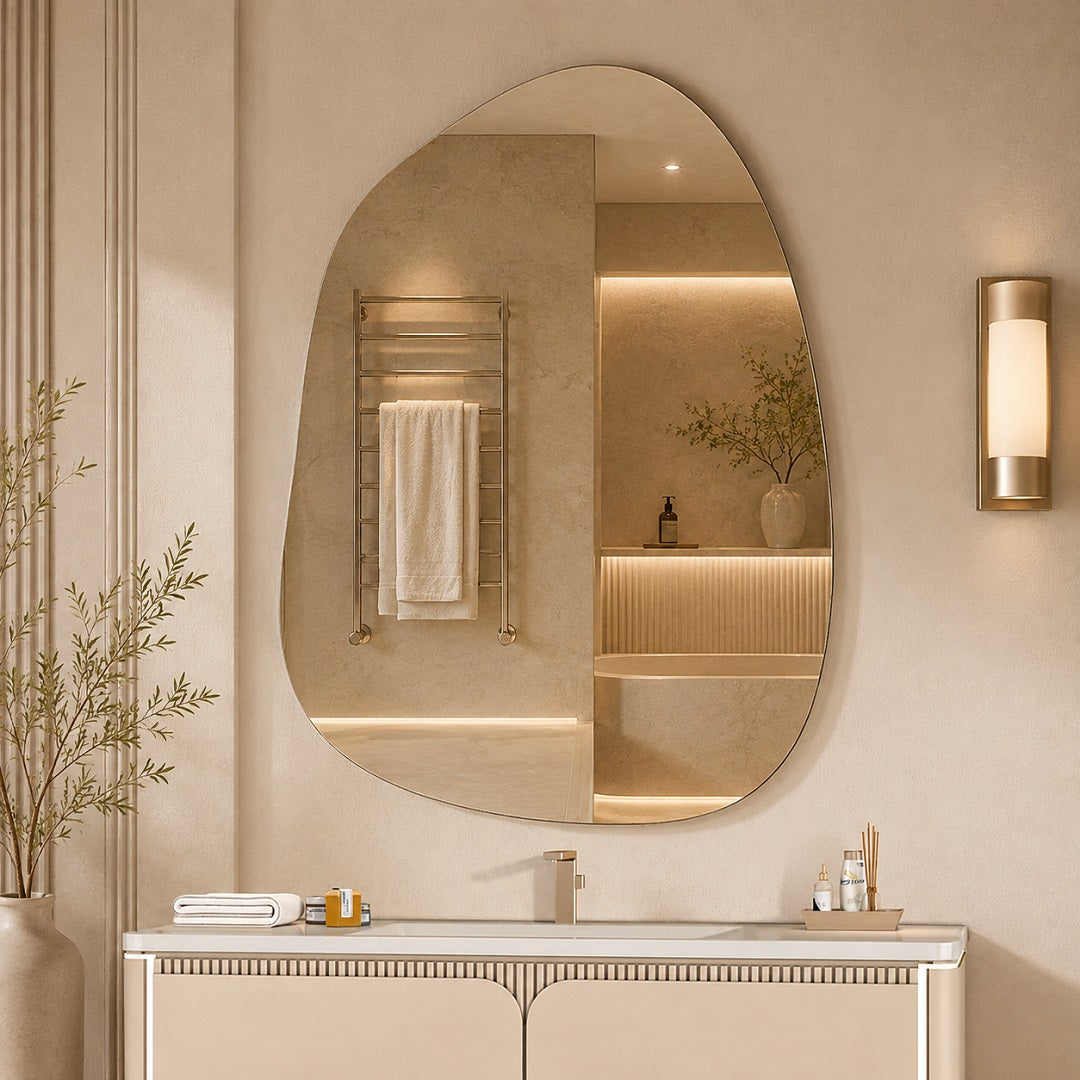
An arched vanity mirror works naturally above a single sink. Its vertical shape provides a clear face and upper-body view while leaving room for sconces on both sides. The curve also softens rectangular cabinetry, tile, and countertops.
Arches are especially useful in powder rooms. The mirror can act as wall décor without taking up shelf or counter space. Brass and gold frames create a more polished appearance, while black metal feels modern. Natural wood brings warmth to white or neutral bathrooms.
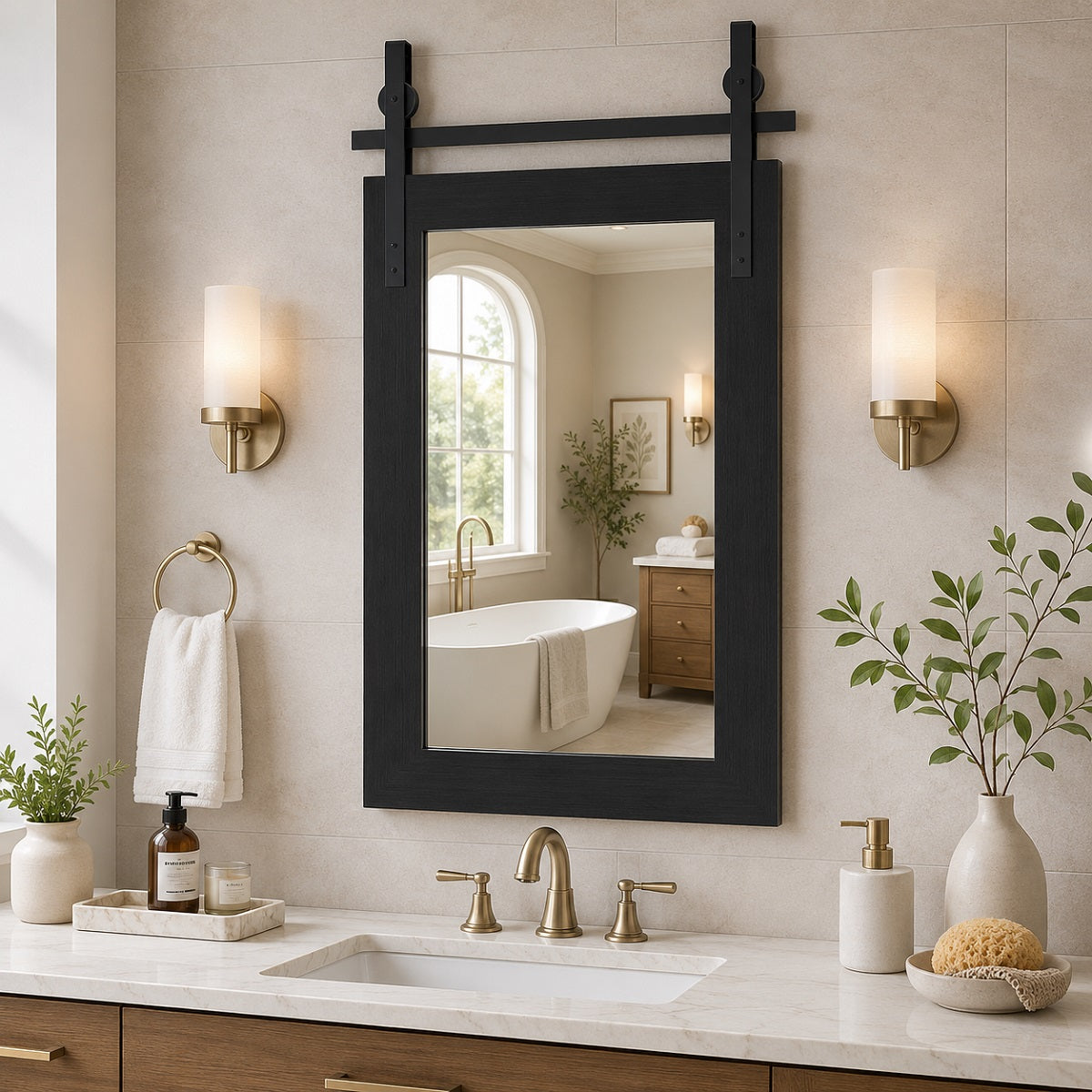
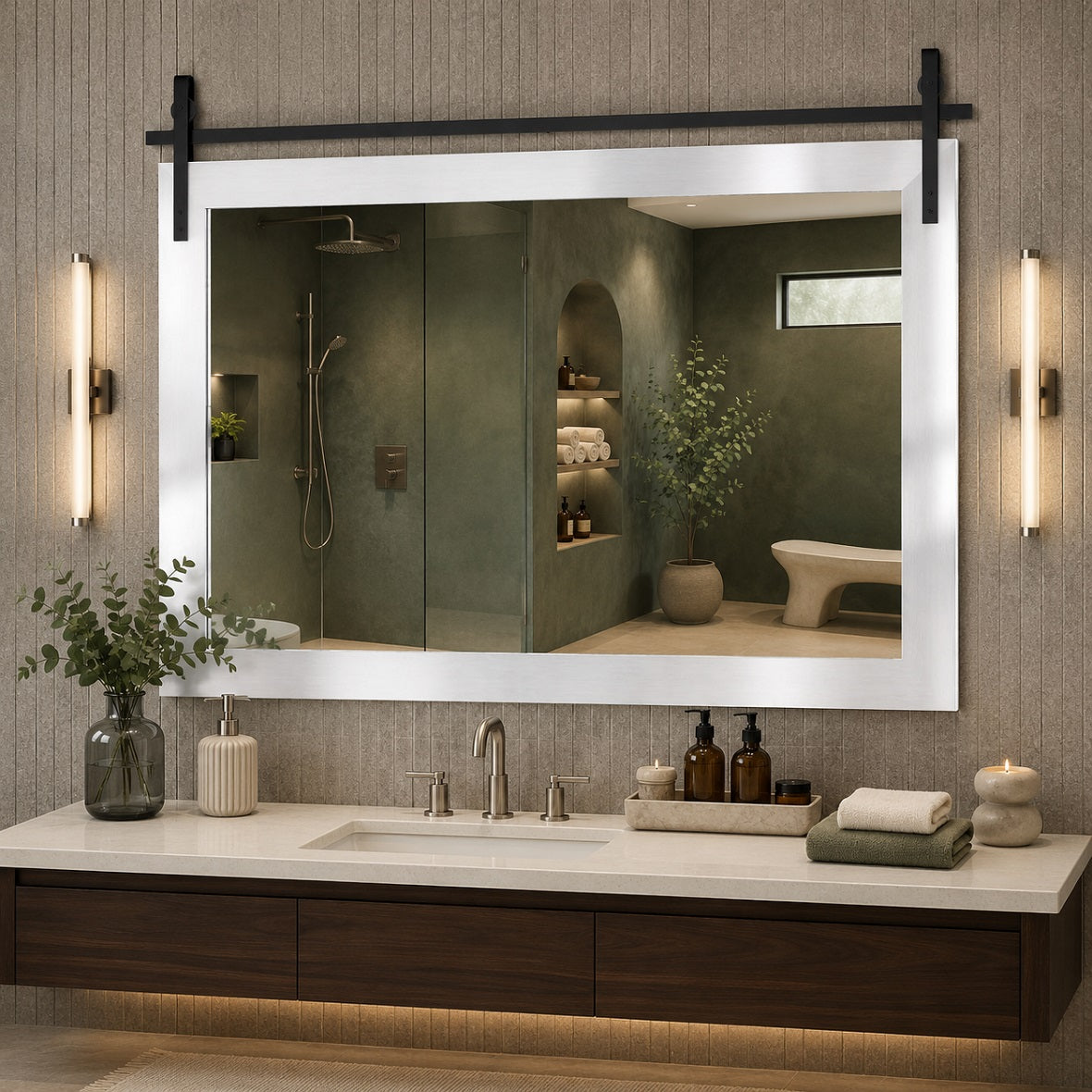
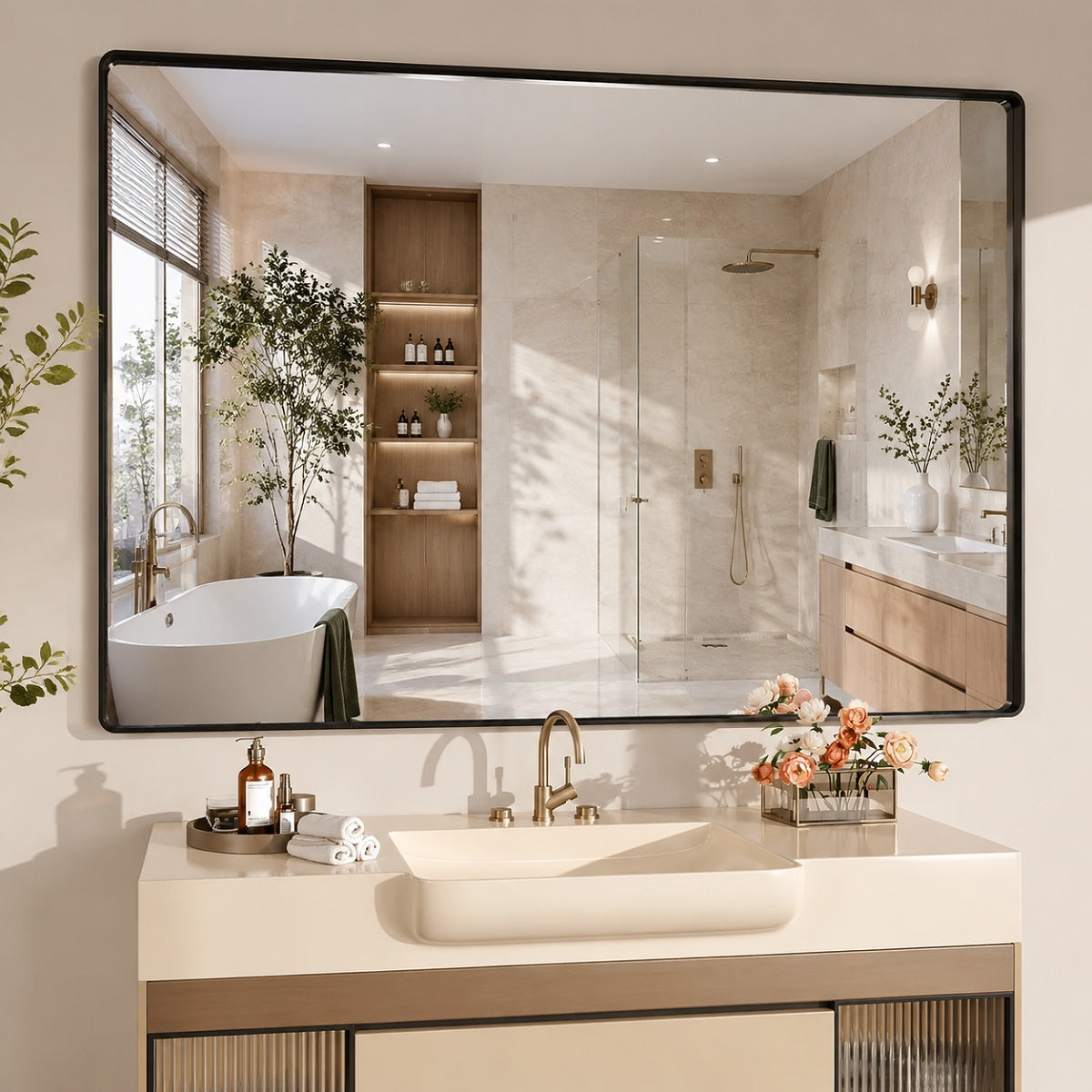
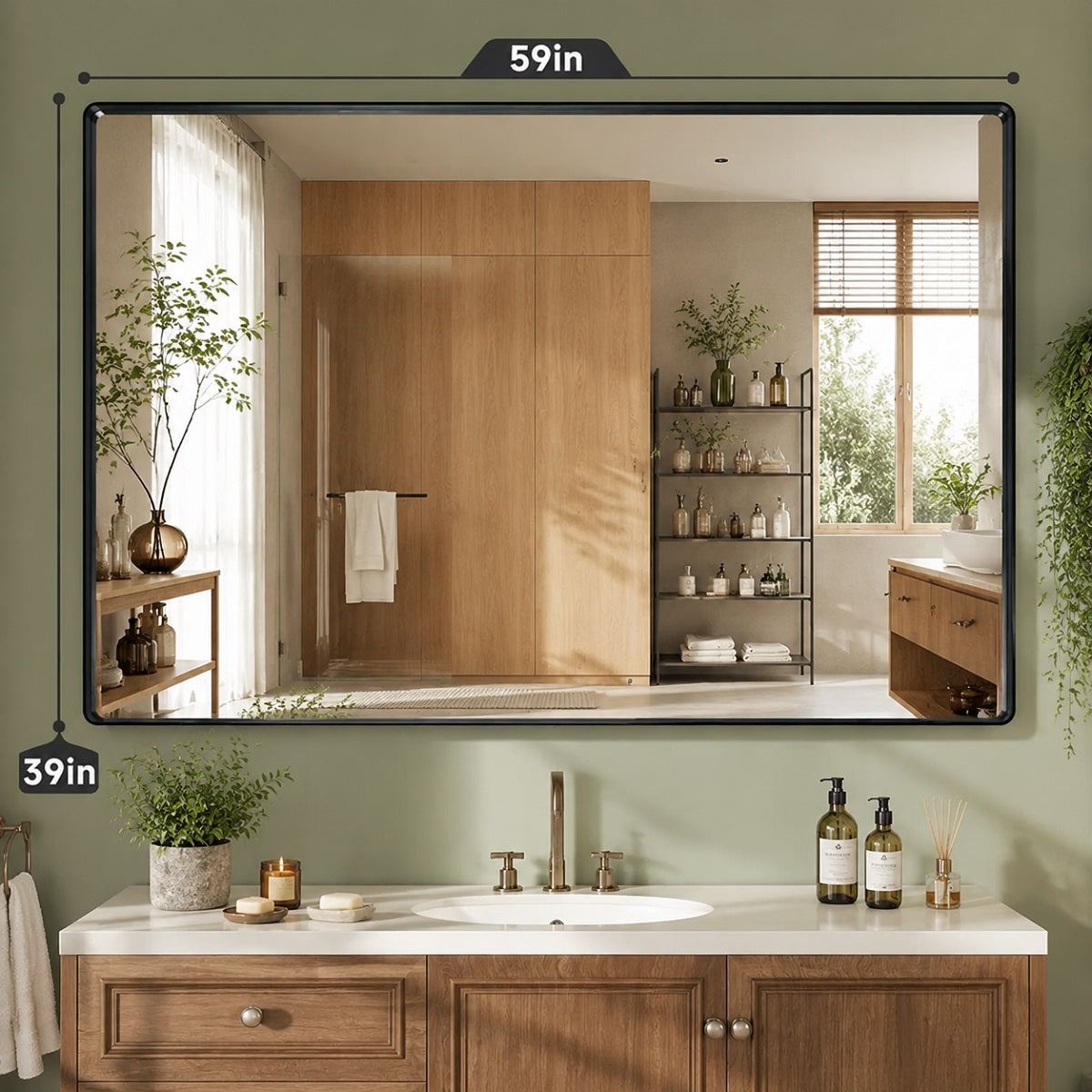
A rectangular bathroom mirror is easier to fit above a wide or double vanity. One horizontal mirror creates a continuous reflection across both sinks. Two vertical rectangles can define separate grooming areas while maintaining symmetry.
Rectangular mirrors also work well with medicine cabinets, horizontal light bars, and built-in storage. Many models support vertical or horizontal mounting, giving more freedom during renovation.
A mirror often looks balanced when it is equal to or slightly narrower than the vanity. Houzz suggests using a mirror around 70% to 80% of the vanity width when the two are not the same size. Its bathroom mirror guide also recommends accounting for the eye lines of everyone using the room.
For a double vanity, one wide rectangle provides the most continuous reflection. Two matching arches create a more decorative arrangement over separate sinks.
Which Shape Works Better as a Full-Length Mirror?
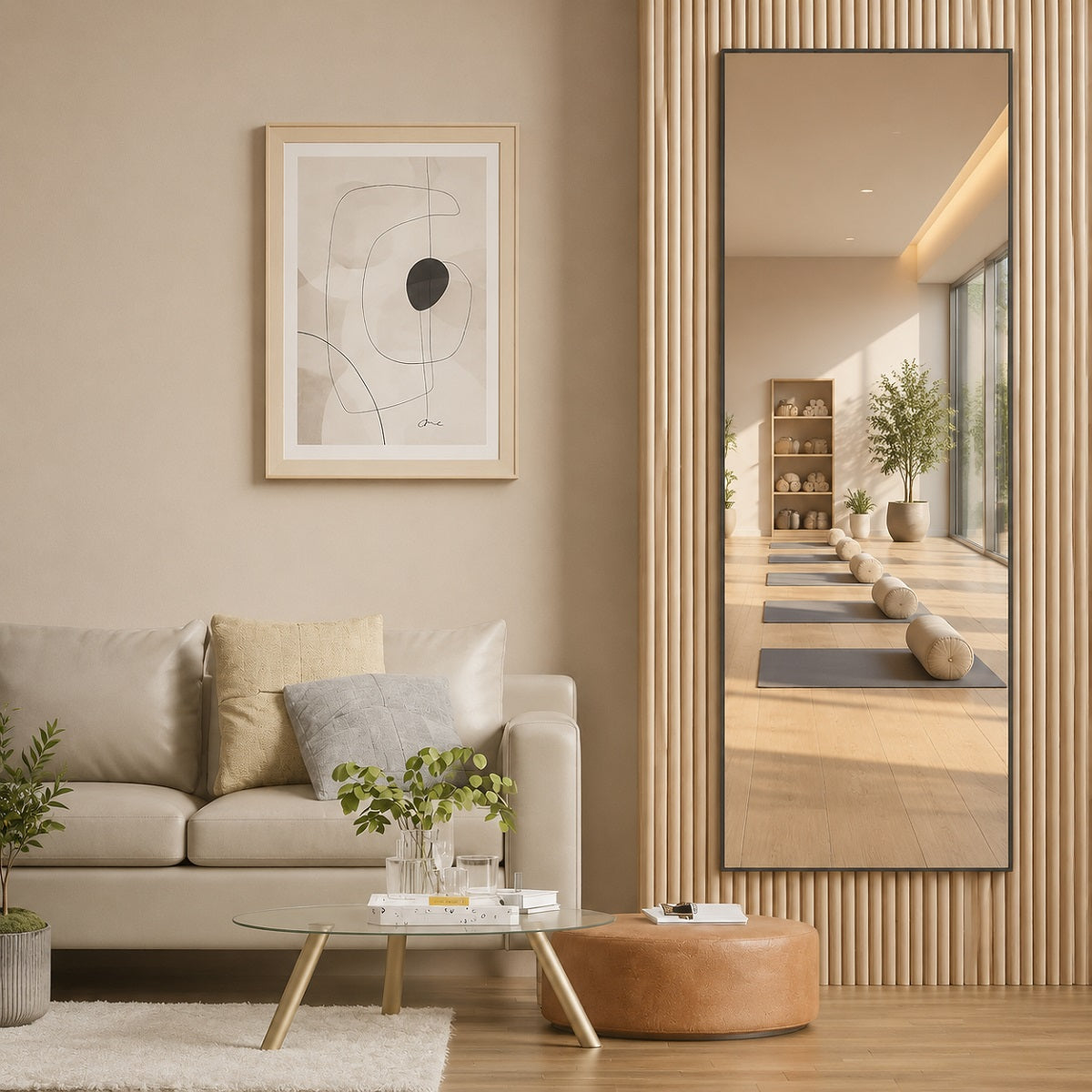
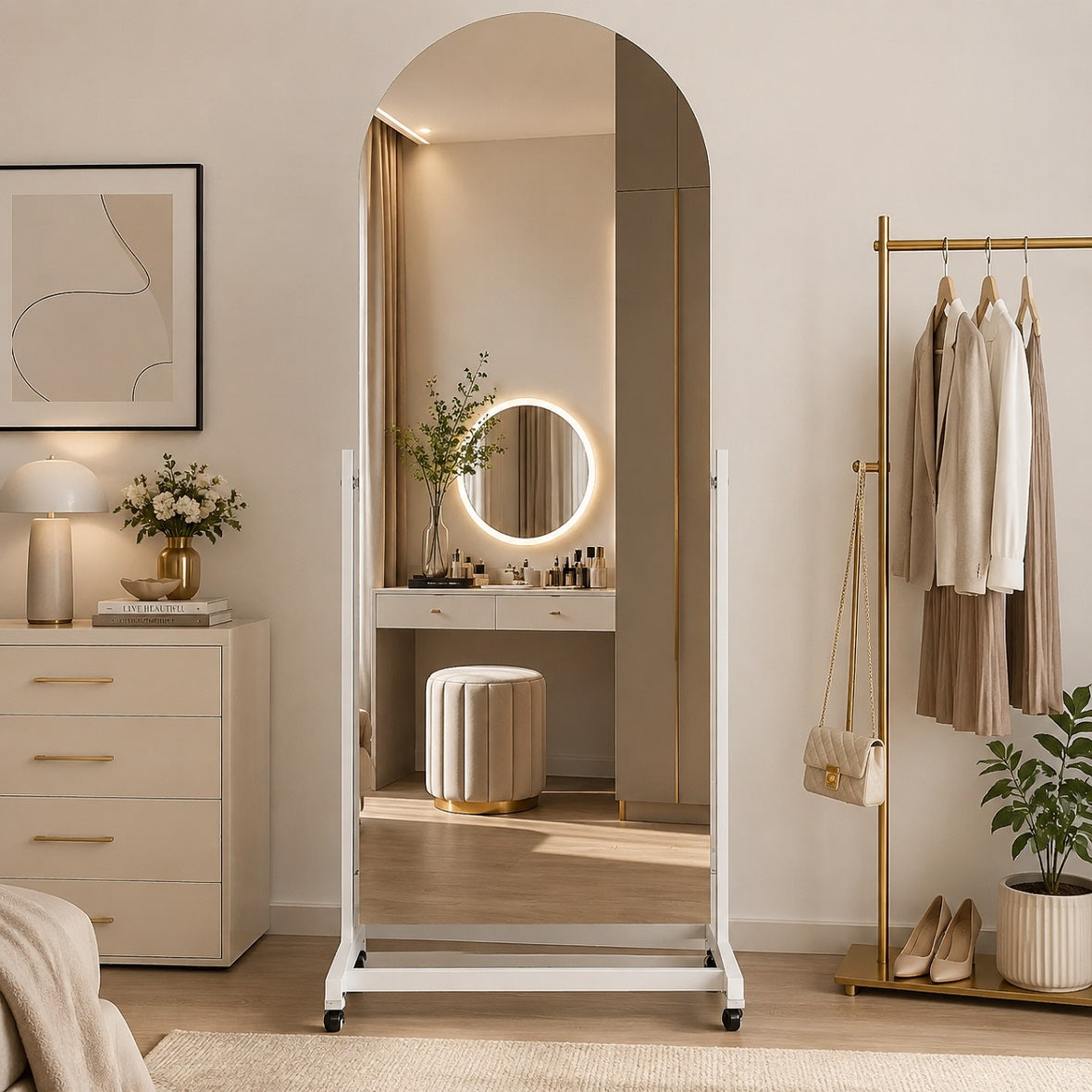
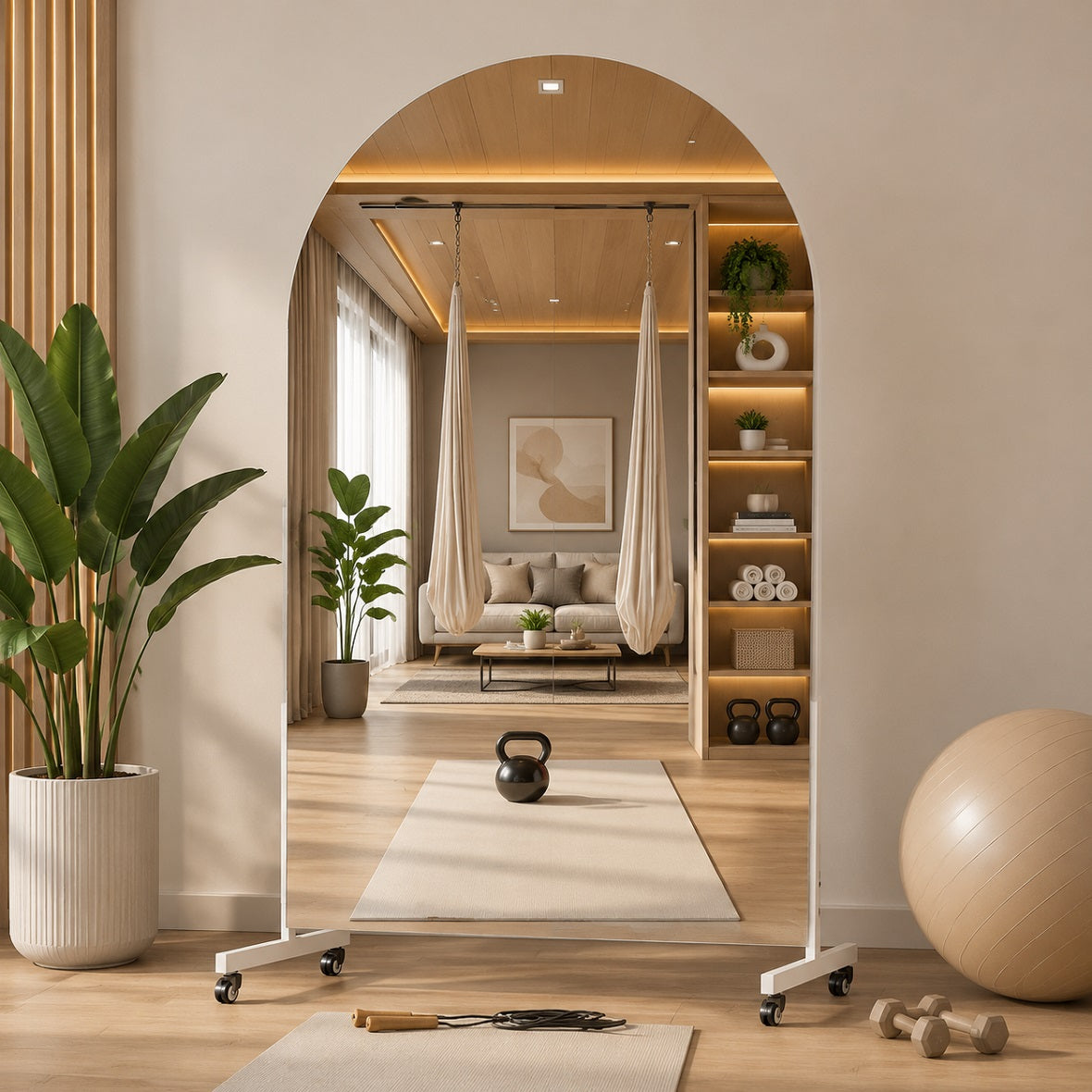
An arched full-length mirror gives a dressing area more character while preserving a useful head-to-toe view. The curved top makes a large mirror appear less heavy, especially in bedrooms, closets, entryways, and living-room corners.
Thin black, brass, gold, and aluminum frames keep the silhouette clean. Arched floor mirrors fit modern, transitional, minimalist, and Art Deco-inspired interiors.
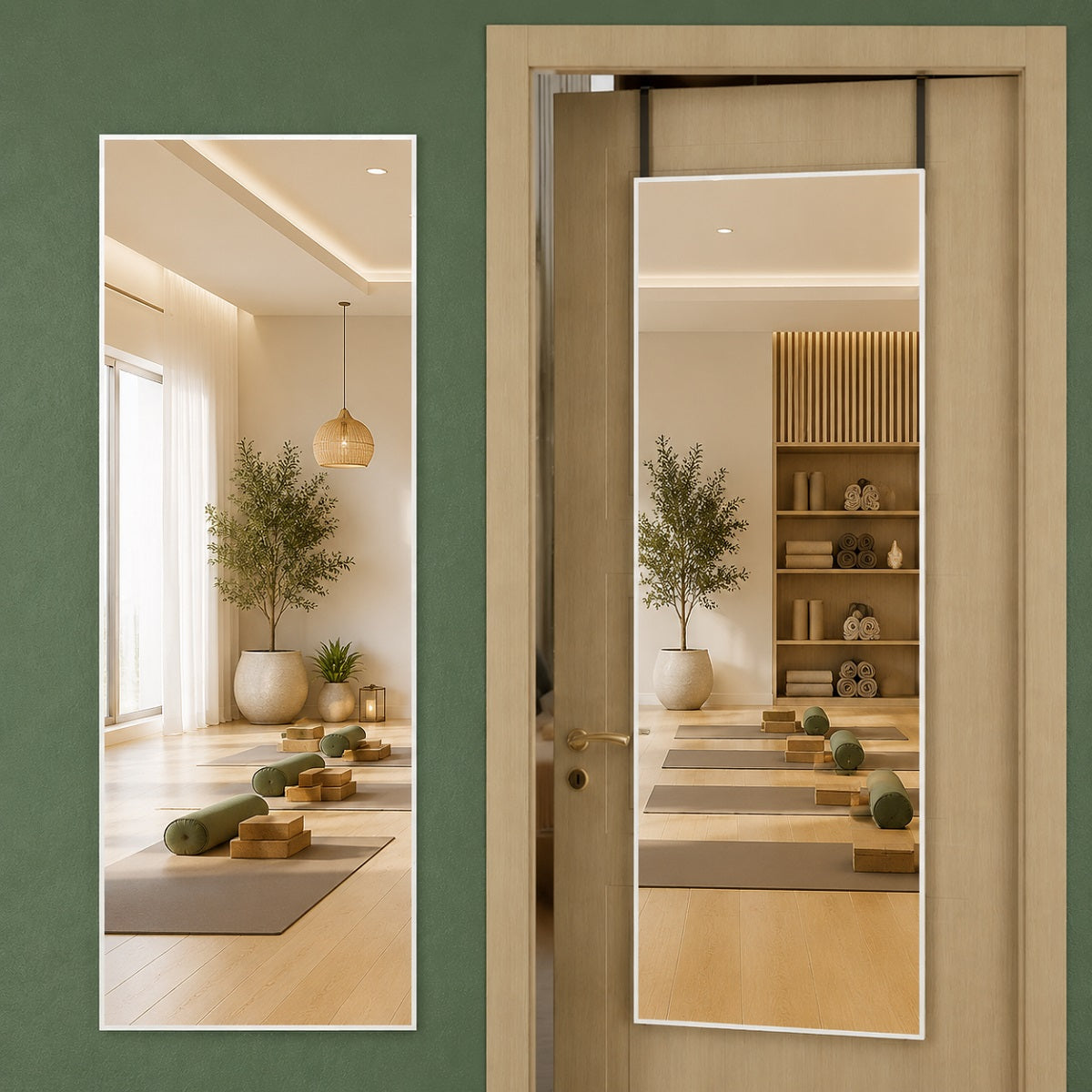
A rectangular full-length mirror provides broader coverage around the shoulders and sides of the body. It is a practical fit for daily dressing, hairstyling, home gyms, dance rooms, and fitness spaces.
Rectangular models may also offer more installation choices. Some can be mounted vertically, hung horizontally over furniture, leaned against a wall, attached to a door, or placed on a stand.
Both shapes can provide a complete reflection. Mirror height, width, viewing distance, and placement have more influence on a head-to-toe view than the design of the top edge.
Choosing the Shape by Room
Entryway
An arch mirror above a console creates a welcoming focal point and helps a narrow entryway feel taller. Its curve pairs well with table lamps, bowls, plants, and softer decorative objects.
A horizontal rectangular mirror works better above a long console. It reflects more of the hallway and strengthens the width of the furniture beneath it.
Bedroom
A tall arched mirror brings softer lines beside a dresser, closet, or upholstered bed. It can make a dressing corner feel more finished without filling the wall with extra décor.
A rectangular mirror is practical above a wide dresser or on a narrow wall near the closet. A vertical model supports dressing, while a horizontal mirror provides a broader face and upper-body view.
Living Room
An arched mirror can act like an architectural feature above a fireplace, sideboard, or console. It feels connected to rooms with curved furniture, rounded light fixtures, or arched doorways.
A large rectangle produces a calmer look and reflects more of the room. It fits naturally above long furniture and on walls with a strong horizontal layout.
Dining Room
Rectangular mirrors line up easily with sideboards and dining tables. A wider reflective surface can distribute light from windows and ceiling fixtures.
A large arch has a more decorative, furniture-like presence. One well-proportioned mirror can replace a group of smaller wall decorations.
Home Gym or Studio
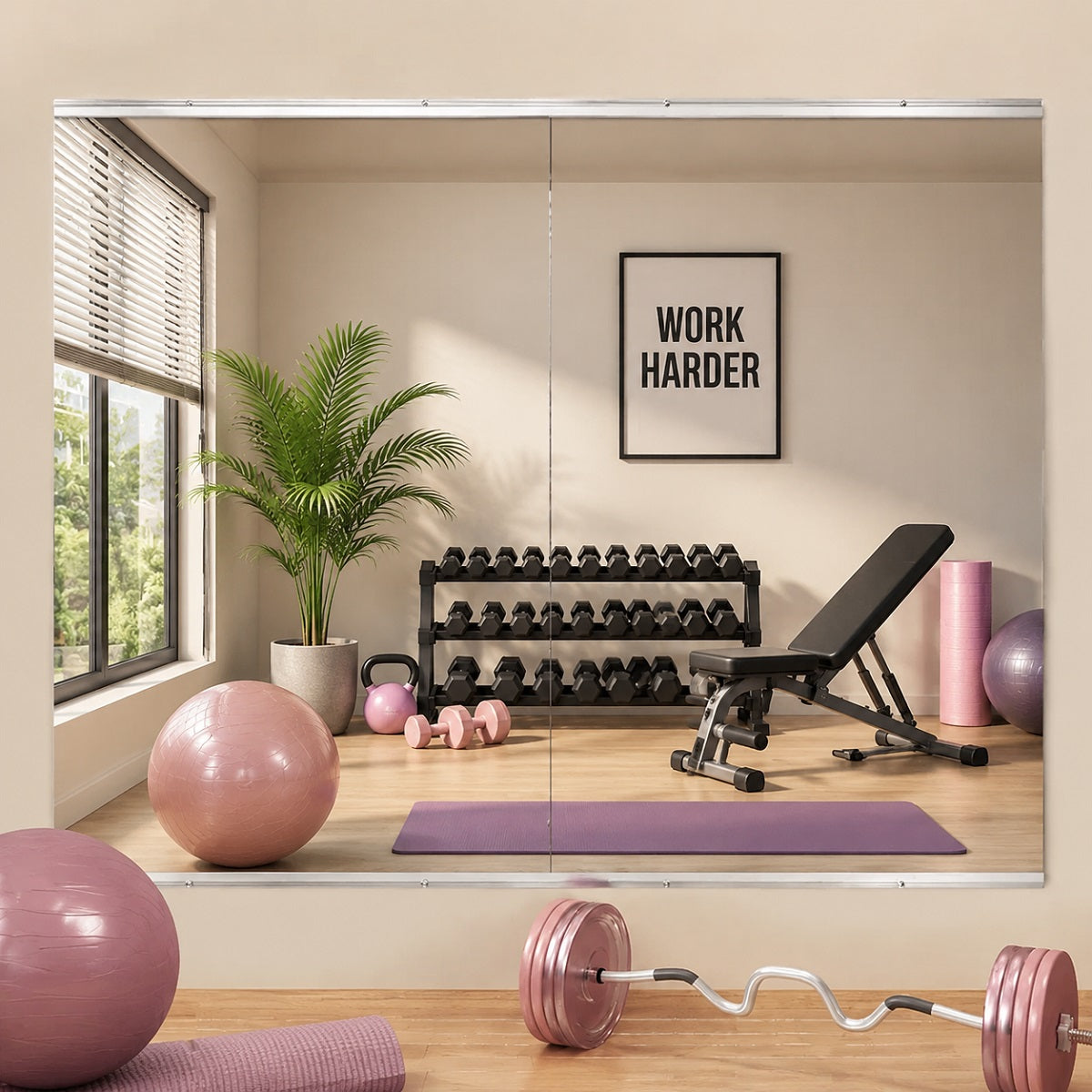
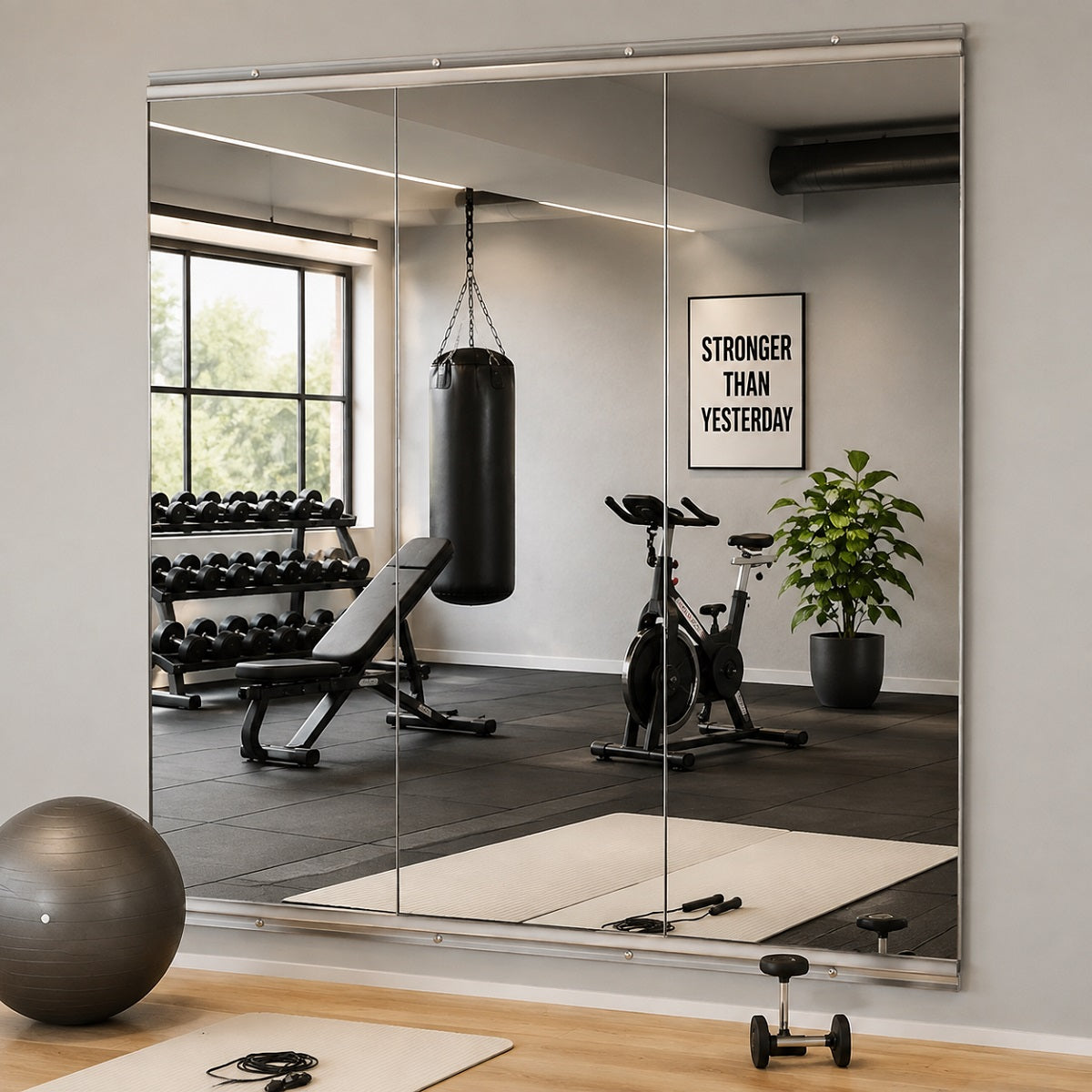
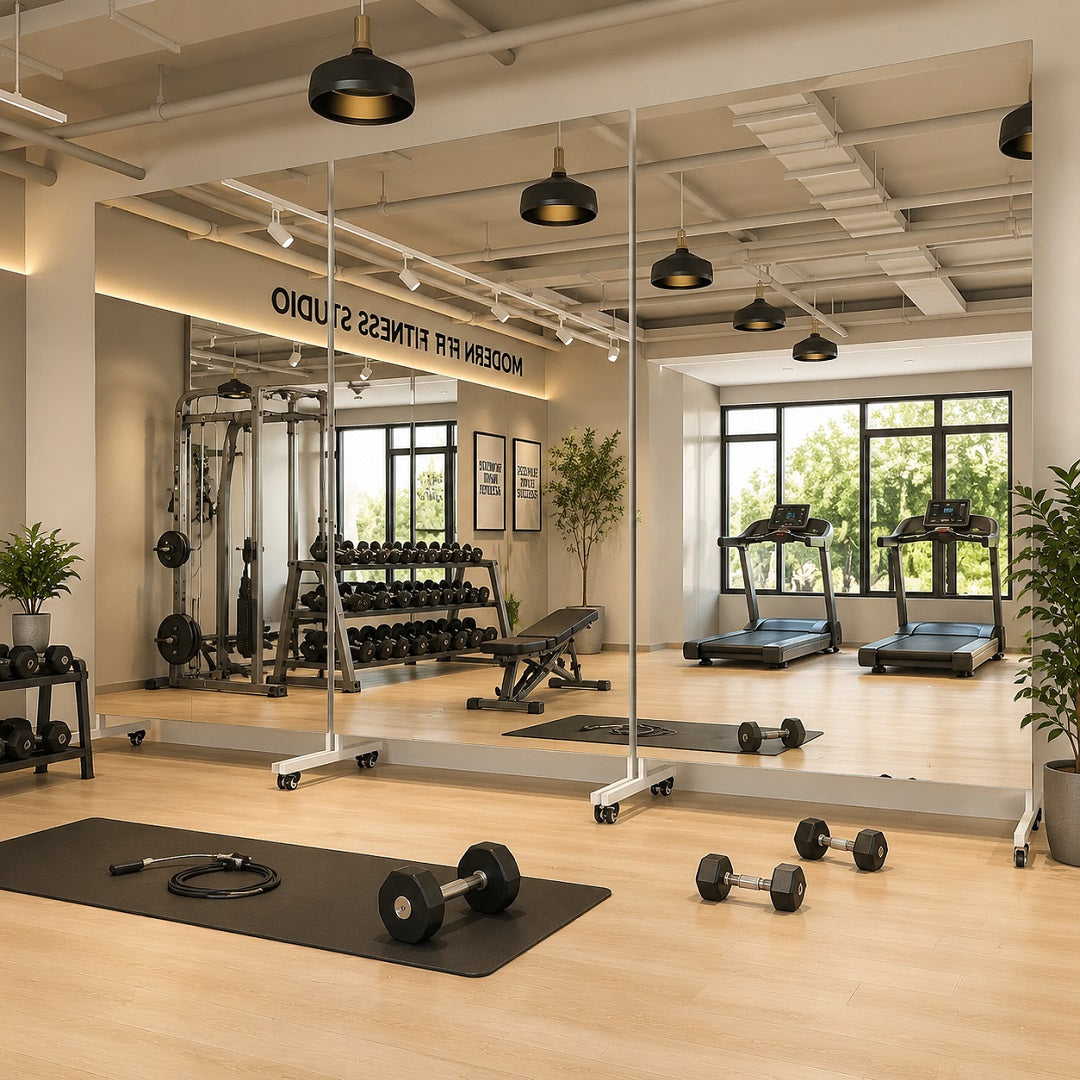
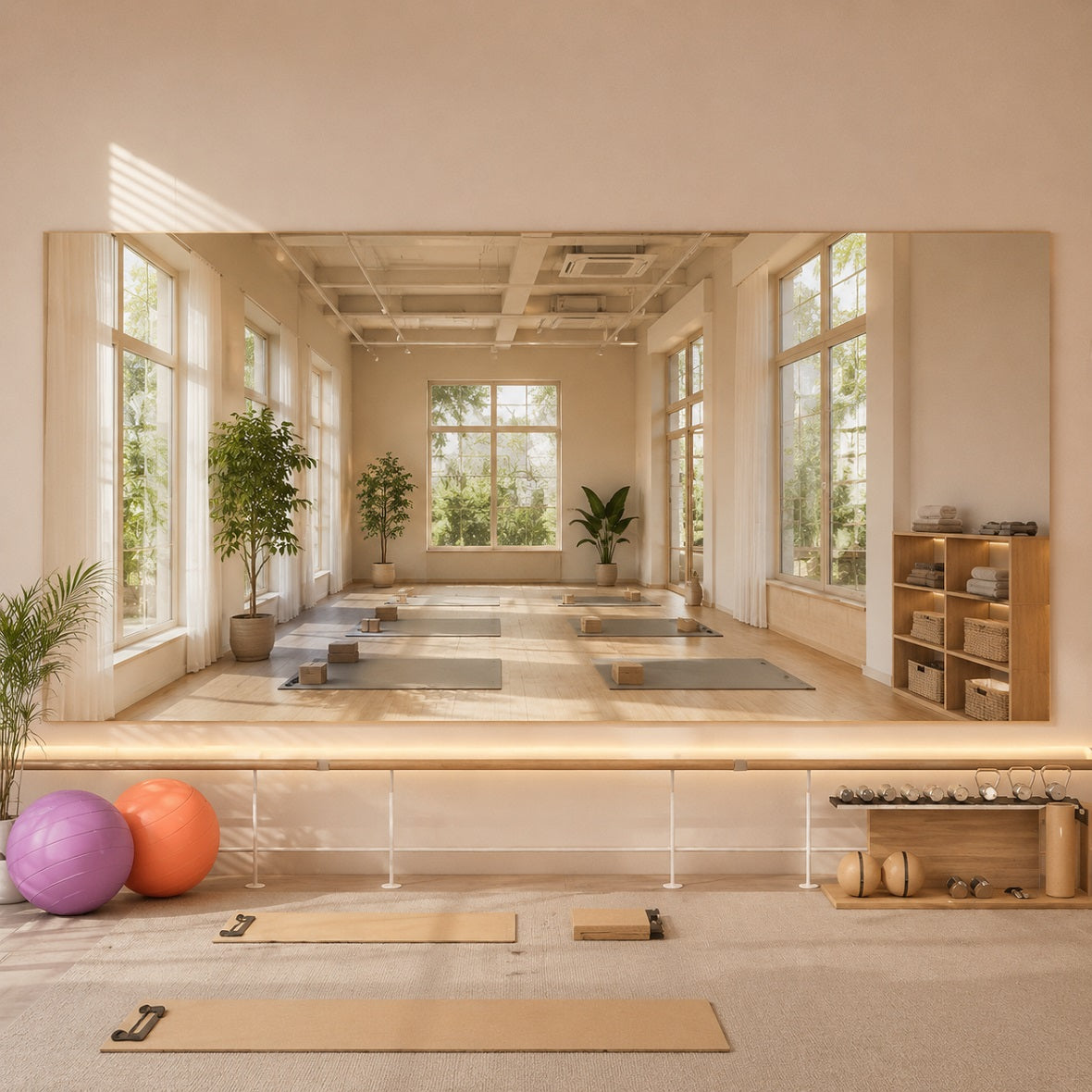
Rectangular mirrors are generally more practical for exercise rooms because they offer a broad, uninterrupted view and can be installed side by side.
An arch can work in a small yoga or stretching area where the mirror also contributes to the room’s style. For checking posture and movement, usable reflection should remain the priority.

How to Choose the Right Size
Begin with the wall or furniture beneath the mirror. Measure the width, height, and clearance around lighting, faucets, outlets, shelves, trim, and nearby doors.
A mirror above furniture should leave some visible wall around the frame. An arched design may need extra open space above its curved top, while a slim rectangular frame can sit closer to nearby fixtures.
Daily use also affects the size:
- Facial grooming requires less height than hairstyling.
- Upper-body viewing needs a wider reflective area.
- Dressing calls for enough height and distance to see the full body.
- Shared bathrooms benefit from additional width.
- Decorative placement can use a smaller mirror.
- Fitness and salon use require larger, less interrupted glass.
Mark the proposed size on the wall with painter’s tape. Round the upper corners of the outline when testing an arch mirror so the marked area reflects its actual shape.
View the outline from the position where the mirror will normally be used. This reveals proportion and sightline problems that are difficult to notice from product photos.
Frame Style and Finish
The frame can make the same mirror shape feel modern, traditional, industrial, or vintage-inspired.
A thin black arched frame looks clean and architectural. Brushed brass can introduce an Art Deco influence, while natural wood creates a softer and more relaxed appearance.
A wide or ornate arch makes a stronger statement. Frameless arches feel lighter and place more attention on the silhouette.
Rectangular frames offer an even wider style range:
- Black metal suits modern and industrial rooms.
- Warm wood works with Scandinavian, farmhouse, and casual interiors.
- Brass and gold complement classic or luxury spaces.
- Silver and chrome coordinate with cool-toned bathroom fixtures.
- Frameless glass creates a clean appearance.
- Beveled edges add detail without a separate frame.
- Rounded corners provide a middle ground between both shapes.
The frame finish does not need to match every object in the room. Repeating its color in a faucet, light fixture, cabinet pull, or furniture leg can make the placement feel connected.
Lighting Around the Mirror
Mirror shape affects the type and position of nearby lighting.
A vertical arch mirror often leaves room for a sconce on each side. This can provide more balanced facial light than one strong ceiling fixture.
An overhead light needs enough clearance from the curved top. A wide horizontal fixture may look disconnected when it extends far beyond the arch below it.
Rectangular mirrors pair easily with horizontal light bars, overhead sconces, and side lighting. A wide model above a double vanity may need more than one fixture to keep the brightness even across the glass.
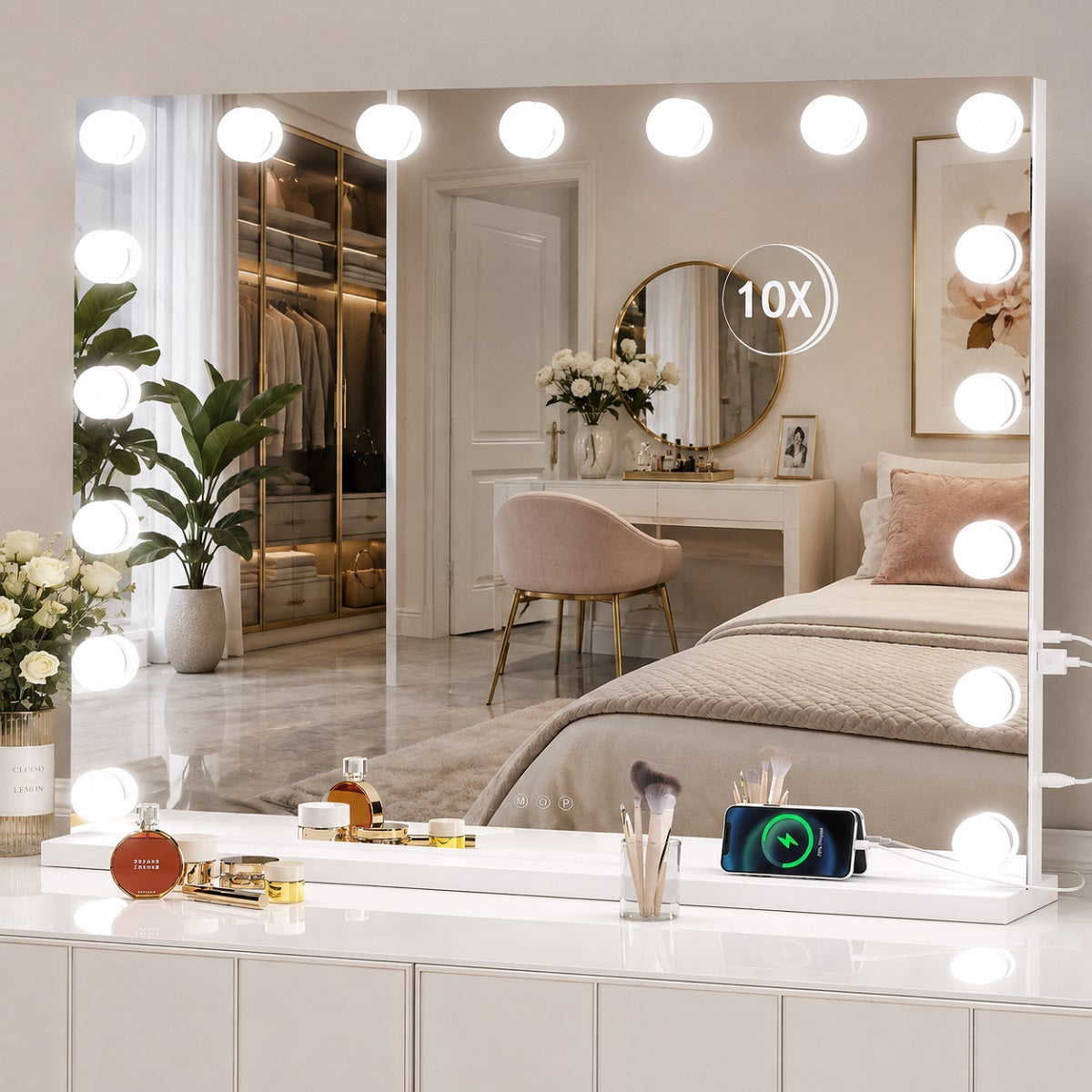
LED mirrors are available in both shapes. Compare the lighting design as carefully as the silhouette:
- Front lighting directs more illumination toward the face.
- Backlighting creates a softer wall glow.
- Dimming allows the light to adapt throughout the day.
- Adjustable color temperatures offer warm, natural, and cool settings.
- A continuous LED strip produces a cleaner outline.
- Memory controls can restore the previous setting.
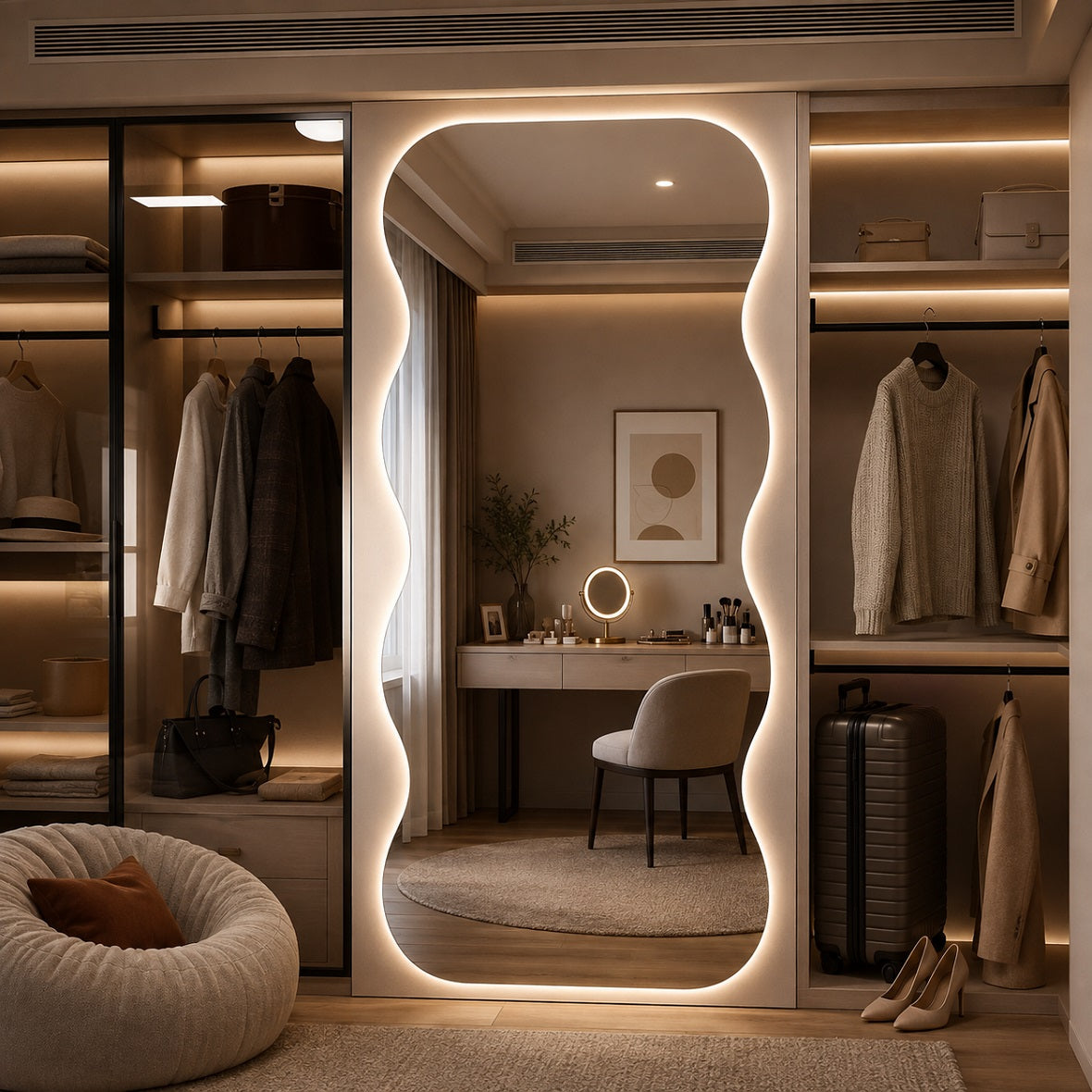
An arched LED mirror combines a decorative shape with integrated illumination. A rectangular LED mirror generally offers a wider lighted viewing area.
Installation and Safety
Arched mirrors are normally mounted upright. Rectangular mirrors may support vertical and horizontal installation, but the hanging hardware must be designed for both directions.
Check the product weight before selecting brackets, screws, anchors, or cleats. Mounting hardware should match the wall material. Drywall, wood studs, tile, concrete, and masonry require different installation methods.
Large leaning mirrors need proper support. Smooth floors may allow the bottom edge to slide, and accidental contact can cause an unsecured mirror to tip. Use manufacturer-approved restraints or anti-tip hardware where required, particularly in homes with children or pets.
Plan the electrical connection before installing an LED mirror. Mirror position, lighting, outlets, faucets, cabinets, and wiring should be considered as one layout.
Which Shape Should You Choose?
Choose an arched mirror when the space needs:
- Softer lines
- A vertical focal point
- Contrast against square furniture
- An architectural detail
- A decorative single-vanity mirror
- A lighter-looking full-length design
Choose a rectangular mirror when the space needs:
- Maximum reflective area
- Vertical or horizontal installation
- Coverage above a wide vanity
- Clean symmetry
- Broad dressing or workout visibility
- Easy alignment with cabinetry and lighting
- A shape that adapts easily to future décor
A rounded rectangular mirror offers a useful compromise. It preserves most of the reflection of a standard rectangle while softening its corners.

Final Thoughts
The arched mirror vs. rectangular mirror decision comes down to balance and use. An arch softens straight architecture, adds visual height, and gives the wall more decorative character. A rectangle provides more reflection, easier alignment, and greater flexibility across bathrooms, bedrooms, entryways, dressing areas, and studios.
Measure the available wall, review the usable glass dimensions, and check what the mirror will reflect before choosing. Lighting, frame material, mounting direction, and daily viewing needs deserve the same attention as shape.
Hasipu offers arched and rectangular mirrors in wall-mounted, full-length, decorative, and LED styles. A well-chosen mirror should feel natural in the room while providing the clear, comfortable reflection needed every day.
Frequently Asked Questions
1. Are arched mirrors still in style?
Yes. Arched mirrors remain popular in bathrooms, bedrooms, entryways, and dressing areas. Their simple curve works with modern, transitional, vintage-inspired, minimalist, and Art Deco interiors.
2. Does an arched mirror make a room look taller?
The curved vertical outline draws the eye upward and can give the wall a taller appearance. The effect is stronger with a narrow mirror and enough open space above it.
3. Which shape is better for a small bathroom?
An arch can soften a compact powder room and serve as decoration. A rectangle provides more reflective area within the same outer dimensions. Vanity width and daily viewing needs should guide the choice.
4. Can arched mirrors be used above a double vanity?
Two matching vertical arches can be placed above separate sinks. One large rectangular mirror provides a more continuous shared reflection.
5. Should a bathroom mirror be wider than the vanity?
Bathroom mirrors are commonly equal to or narrower than the vanity. A mirror extending beyond both sides may look top-heavy unless the design intentionally covers most of the wall.
6. Are rectangular mirrors outdated?
No. Rectangular mirrors remain widely used because they offer clean proportions, broad reflection, and flexible installation. Frame finish, edge design, and placement have more influence on how current the mirror feels.