
Table of Contents
The mirror you reach for before leaving the house has a different job from the one above your dining room sideboard. One helps you straighten a collar. The other becomes part of the room every time you sit down for dinner.
That is a useful place to start when deciding where to place mirrors in your home: think about what happens in each space.
In an entryway, put the mirror near your usual stopping point before heading out. In a bedroom or dressing room, keep it close to your clothes. Bathroom mirrors belong where they provide a comfortable view at the sink, while living and dining room mirrors need a reflection you enjoy from your seat.
Here is how to make those ideas work around your furniture, lighting, and everyday routines.
Mirror Placement at a Glance
| Space | A good location to consider | Mirror style to explore | Placement detail to check |
|---|---|---|---|
| Entryway | Above a console or beside the entrance | Round, oval, or vertical wall mirror | Door swing and an unobstructed face-level view |
| Living room | Above a console, behind the sofa, or near a window | Large wall mirror or anchored floor mirror | What it reflects from your favorite seat |
| Bedroom | Beside the closet or above a dresser | Full-length mirror or dresser mirror | Room to get dressed and open drawers |
| Bathroom | Above the sink or across the vanity | Bathroom-suitable wall or lighted mirror | User heights, faucet clearance, and lighting |
| Dining room | Above a sideboard or on a nearby wall | Horizontal, round, or decorative framed mirror | Reflections from seated eye level |
| Hallway | Along a side wall near an opening | Shallow-profile wall mirror | Walking space and nearby doors |
| Dressing room | At the end of a clear dressing area | Full-length wall mirror | A usable outfit view with storage doors open |
| Home office | On a side wall or near the entrance | Compact decorative mirror | Screen glare and video-call privacy |
Treat these as starting points. Your room’s layout matters more than a fixed decorating formula.
Entryway: Put the Mirror Where You Pause Before Leaving

An entryway mirror should be easy to reach without stepping around a bench, shoe rack, or pile of bags.
A wall beside the front door often works well. You can stop for a quick check, grab your keys, and head outside. Above a console is another practical choice when the tabletop stays shallow enough for you to see yourself comfortably.
For styling, try a round mirror above a rectangular console to introduce a curve among the straight edges. A tall oval can suit a narrow wall. Repeat a finish already nearby, such as the metal on a lamp or cabinet pull, to connect the arrangement.
Keep the useful part of the glass clear. A tall vase can sit toward one end of the console, with a low tray for keys closer to the center.
Avoid placing the mirror where an open door covers it or a handle could strike it. Open the door fully before choosing the final position. In a small entryway, wall mounting also keeps the floor available for shoes and people moving through.
Living Room Mirror Placement: Choose the View From Your Seat

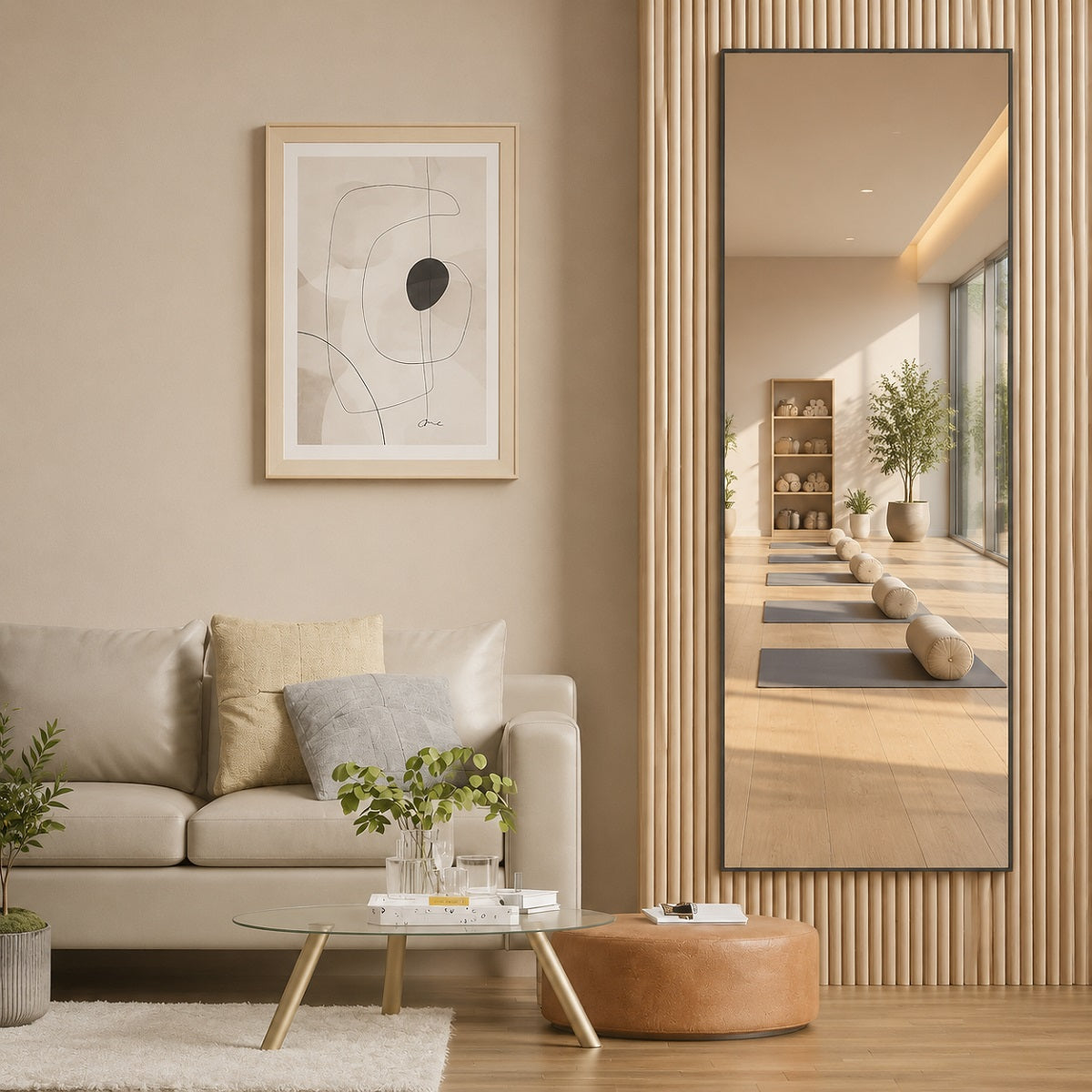
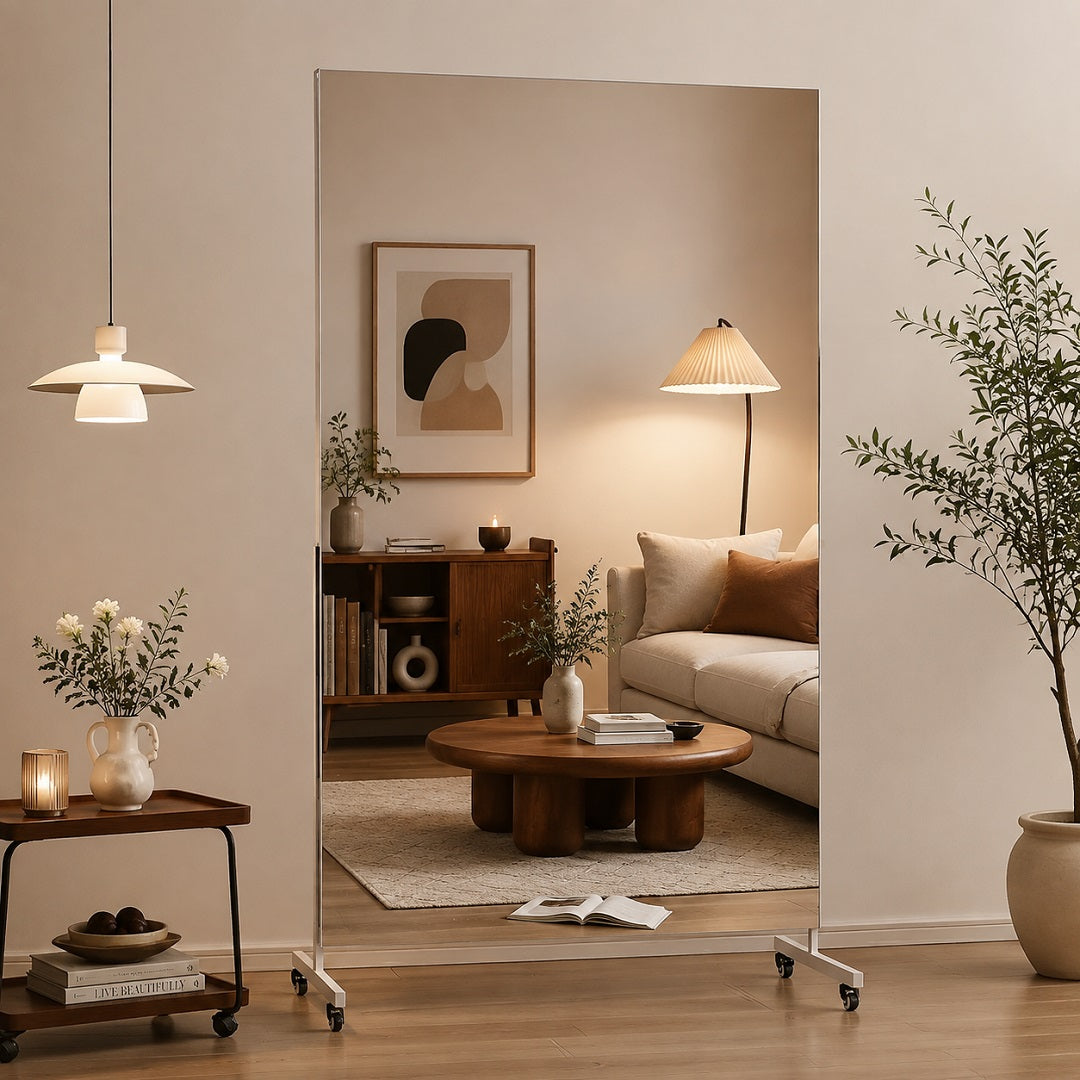
For living room mirror placement, begin with the sofa. Sit where you normally watch TV or read, then consider what each possible mirror location would show.
A mirror above a console can give a quiet wall a focal point. A mirror behind the sofa can help complete the seating arrangement, provided its scale suits the furniture and it is securely mounted with comfortable clearance above seated heads.
Try a paper template to judge size. Leave enough wall visible around the frame for the arrangement to feel intentional. A mirror does not need to fill the entire space above the furniture.
Near a window
Compare the wall opposite the window with an adjacent wall. The opposite wall may capture an outdoor view; the side wall may offer a more comfortable reflection from the sofa.
Look again when the sun moves across the room. A position that works in the morning may send an unpleasant bright reflection toward your seat later. Mirrors redirect available light, so a dim reading corner may still need its own lamp.
Above the fireplace
A mirror above a fireplace draws attention to an existing feature, but a high mantel may leave you looking at reflected ceiling rather than the room.
Check the view before installing. For a working fireplace, follow the fireplace manufacturer’s clearances and confirm that the mirror is suitable for the location.
An anchored floor mirror beside a console is another option when you have a clear stretch of wall and adequate floor space. Keep its stand or leaning base outside the walking route.
Avoid a location that repeatedly catches the TV or an exposed bulb in your peripheral vision. That reflection will be part of every evening in the room.
Bedroom: Keep the Mirror Close to Your Clothes

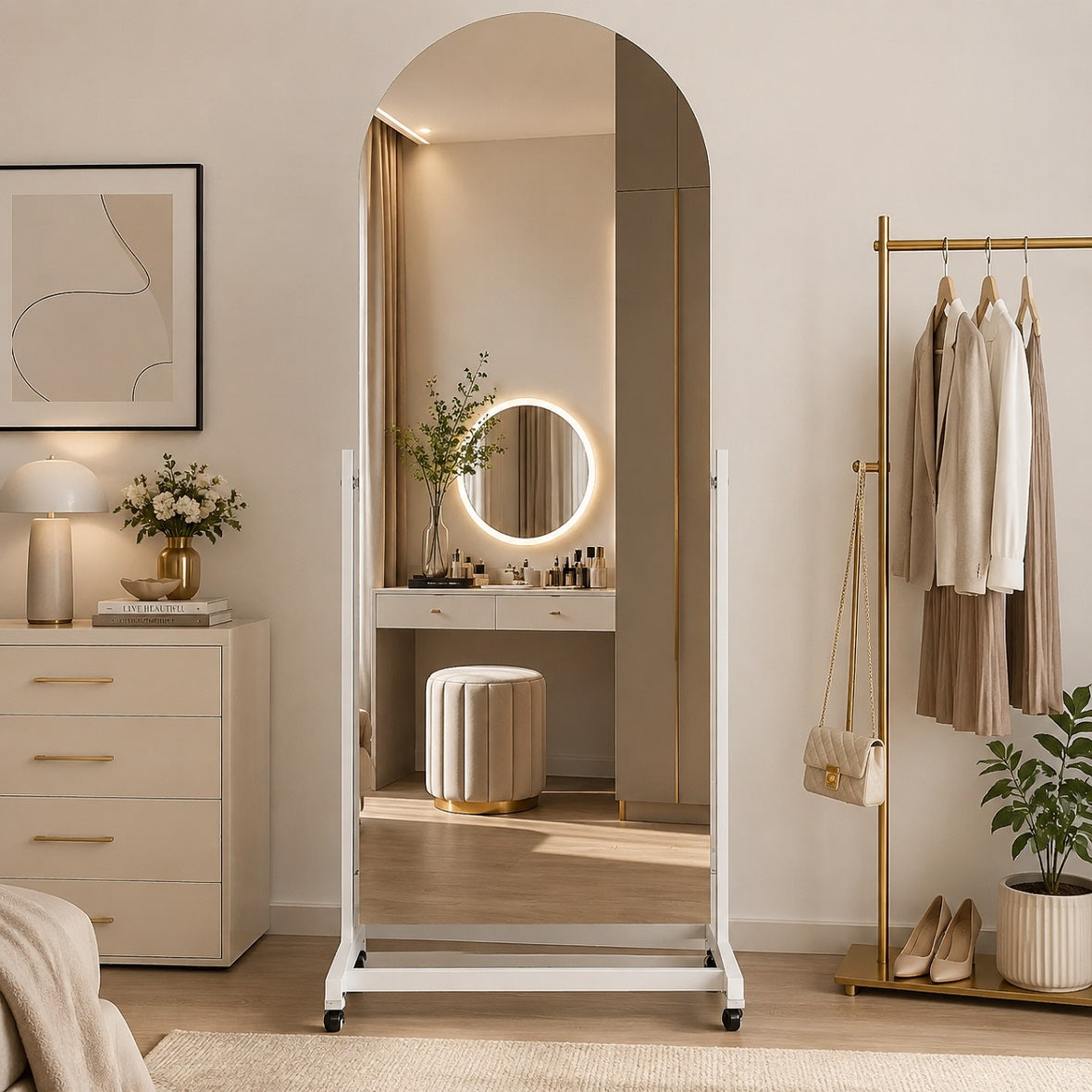
The most convenient spot for a full-length mirror in the bedroom is usually near the closet or dresser, with a clear place to stand.
Picture your morning routine. You take a shirt from the closet, open a drawer, put on your shoes, and check the outfit. Position the mirror so that this sequence does not involve moving a chair or closing several doors.
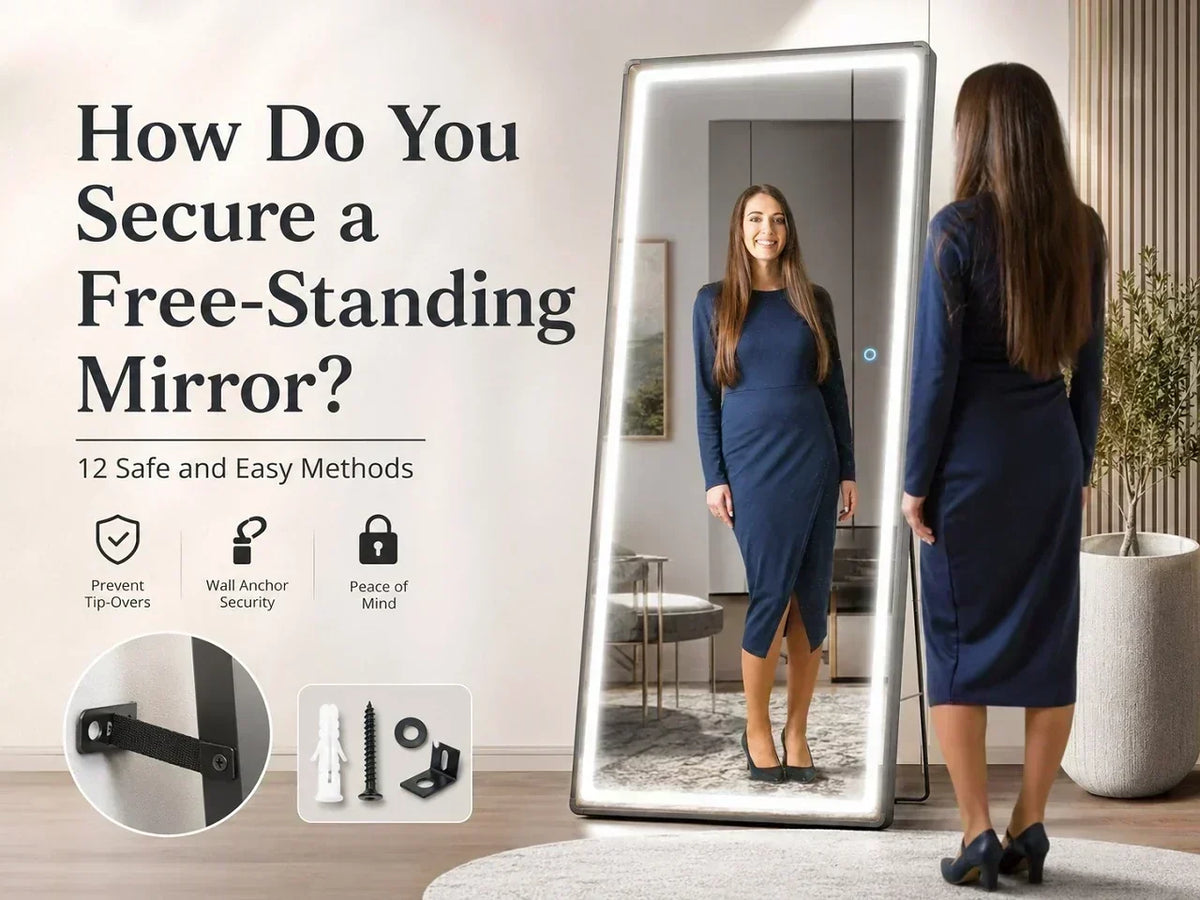
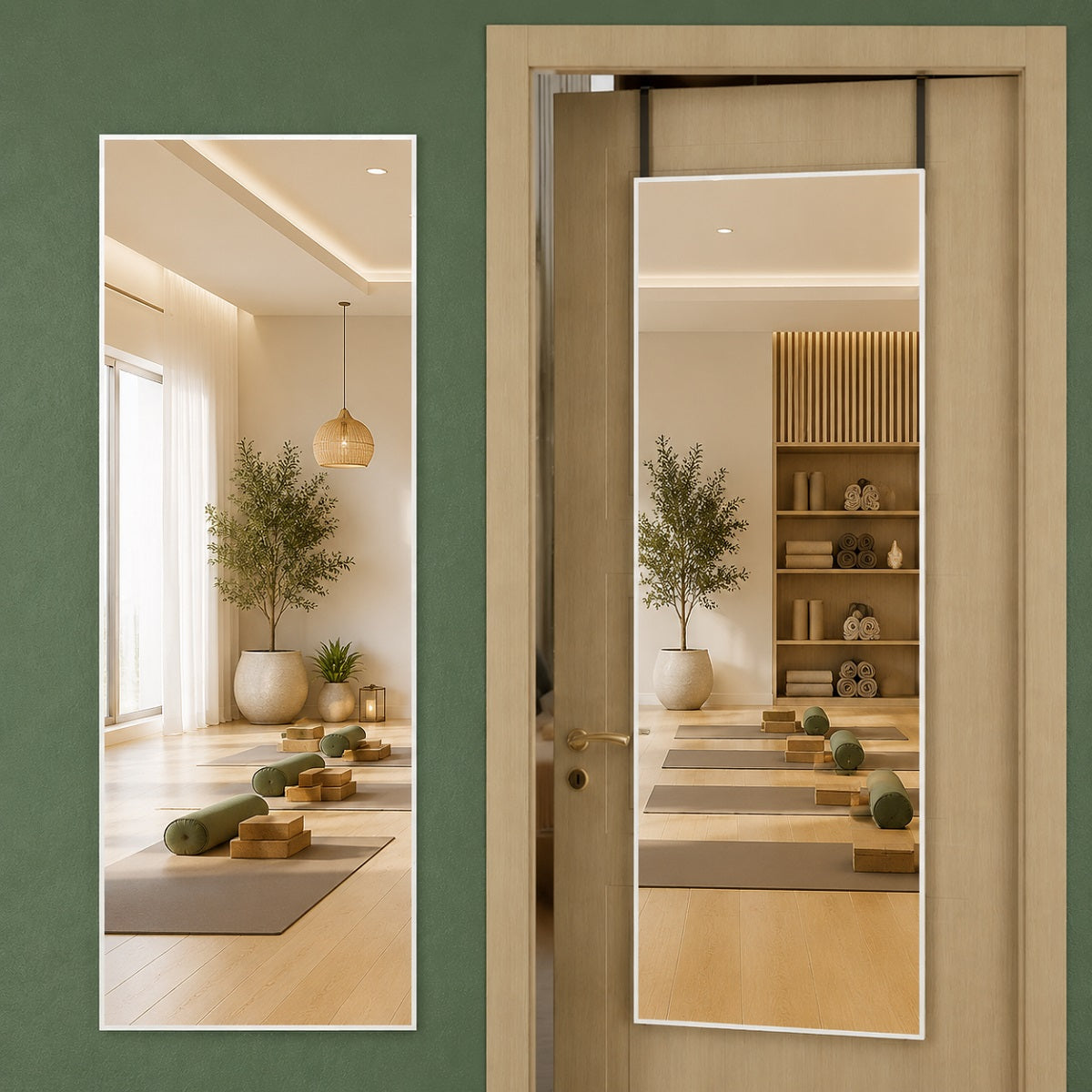
A wall-mounted full-length mirror is useful when floor space is tight. A freestanding design needs enough room for its support as well as the person using it. Follow the model’s mounting and anchoring instructions.
Above a dresser, a round or rectangular mirror can create a separate spot for jewelry and hair. Keep the frame visually connected to the dresser below it, and place taller accessories off to the side. Remember that the furniture will block a lower-body view.
Should a mirror face the bed?
Let your comfort guide the decision. Lie down with the bedside lights on and look toward the proposed location. Reflected movement or light may bother you; it may also be something you barely notice.
A side wall or the space beside your closet is worth trying when you prefer a quieter view from bed.
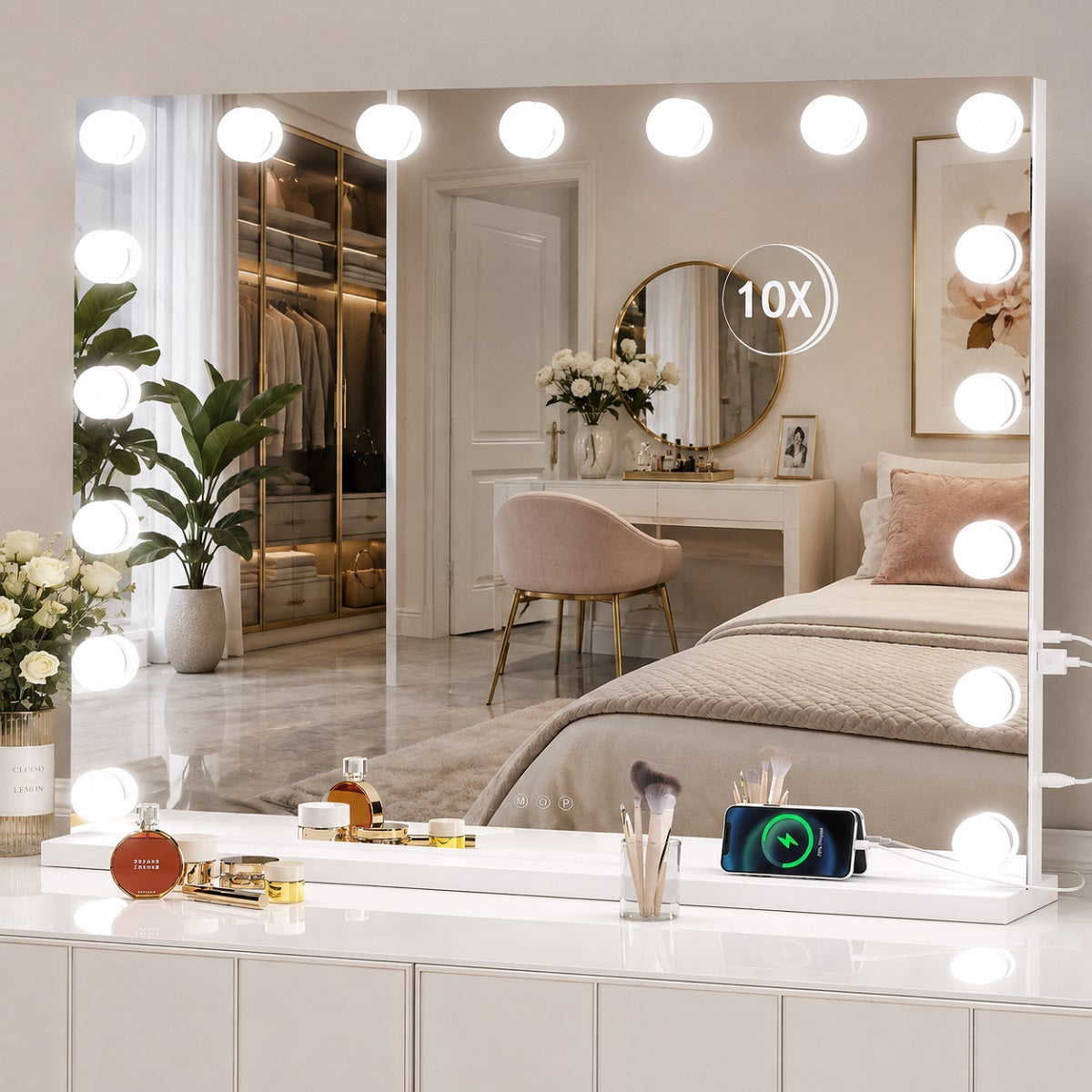
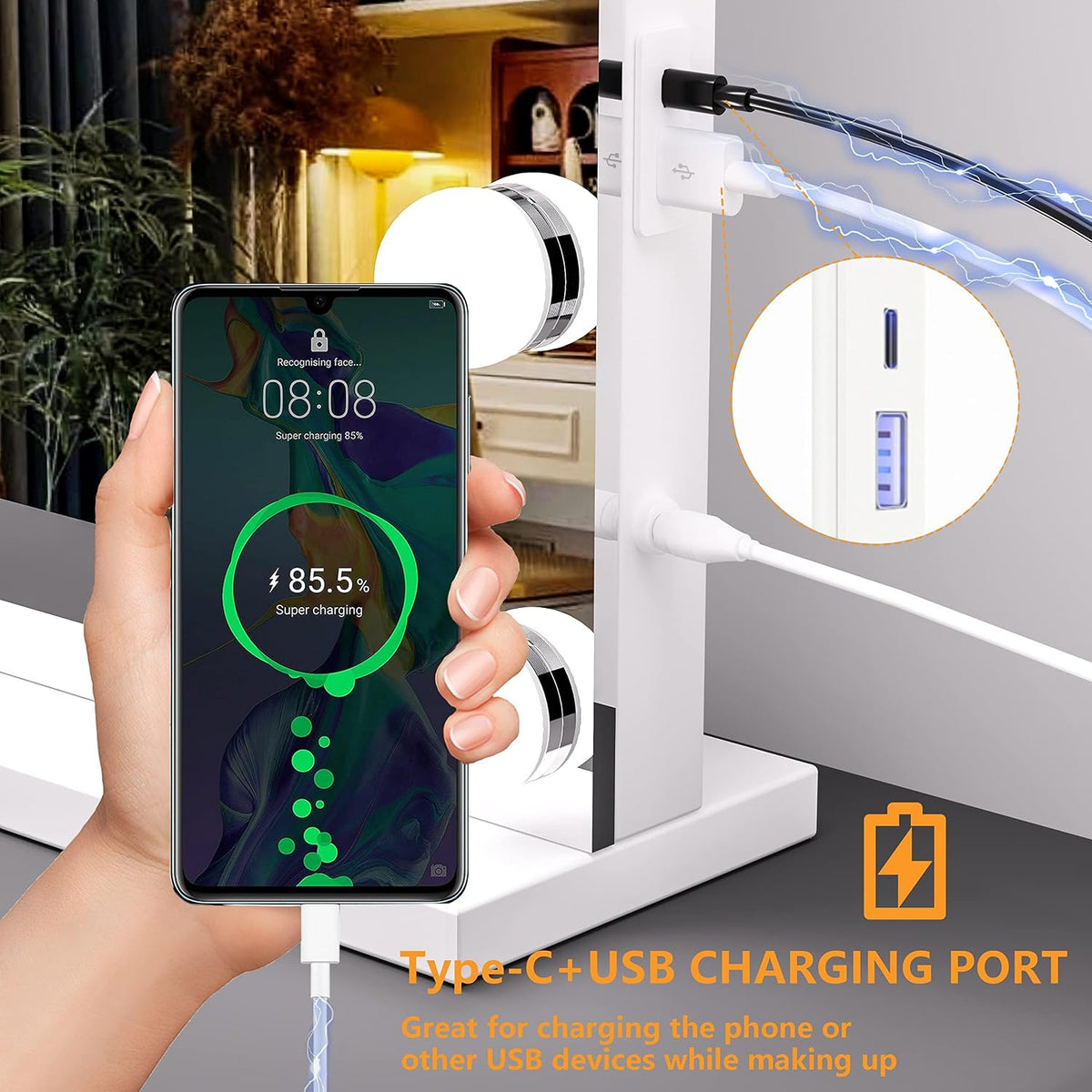
For a vanity mirror with lights, check the position from your actual chair. You should be able to see your face and reach the controls without stretching across the tabletop. When comparing Hasipu models, match the dimensions and power requirements to that specific setup.
Bathroom: Build the Arrangement Around the Sink

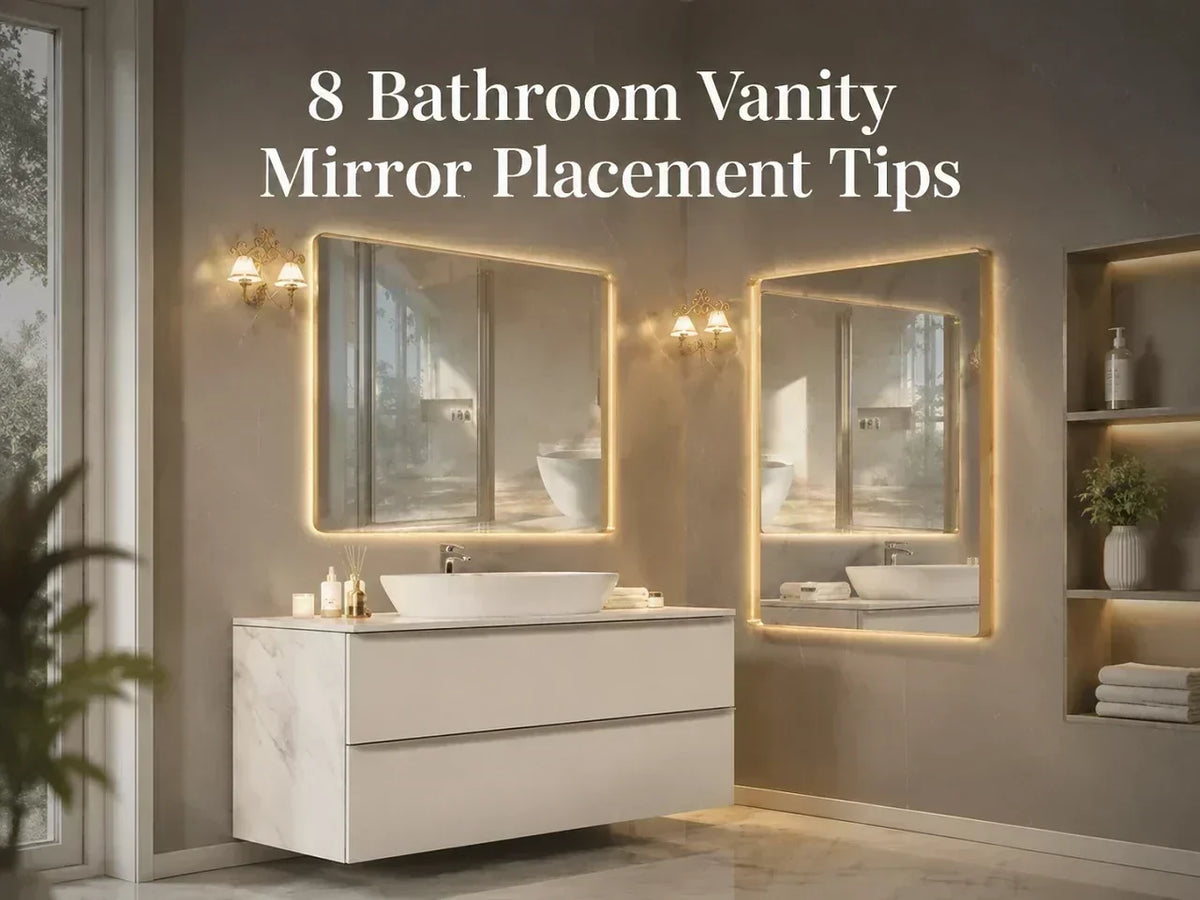
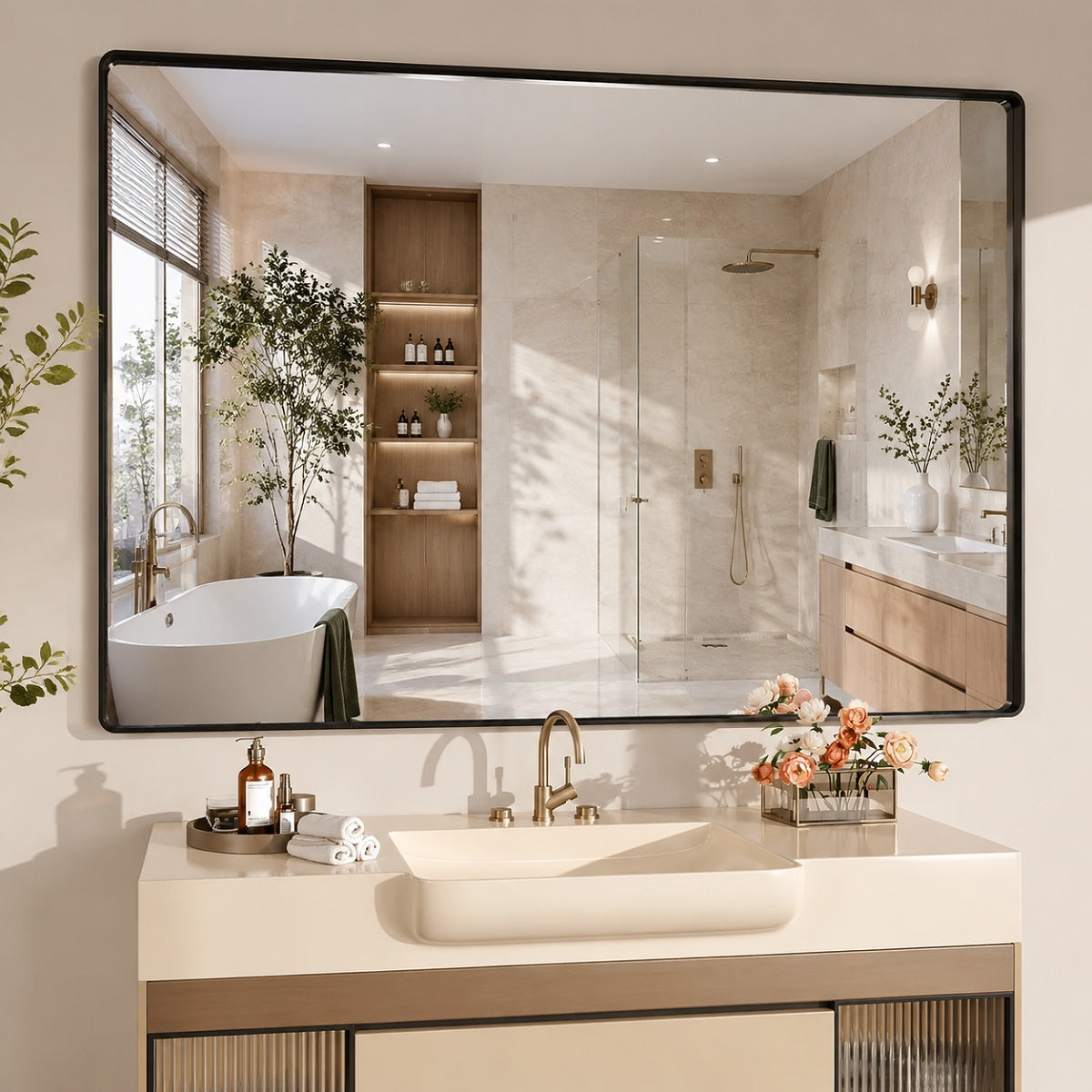
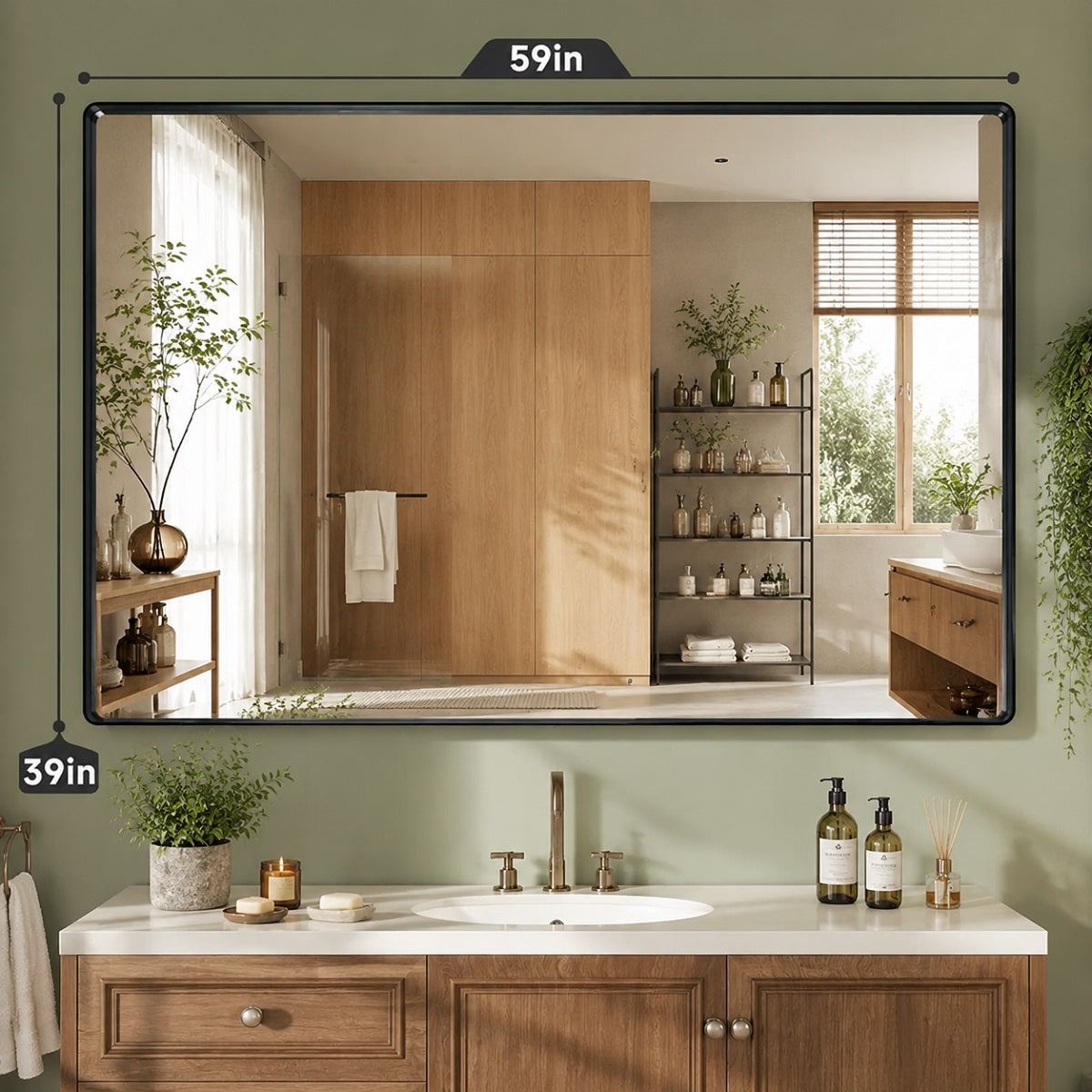
Bathroom mirror placement starts with the vanity and the people who use it.
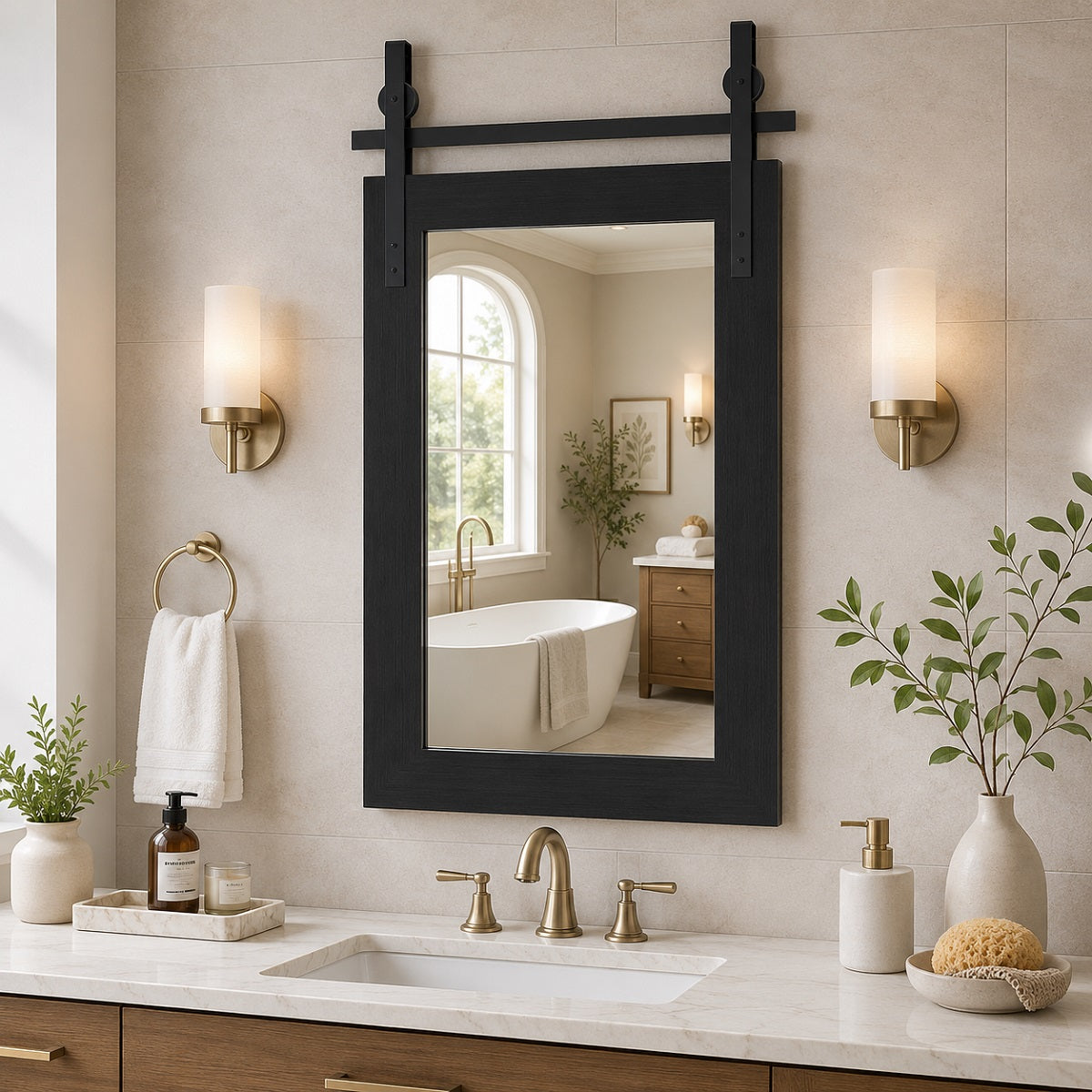
Centering a mirror over a single sink is a straightforward starting point. Before settling on its size, account for the faucet, backsplash, sconces, outlets, and nearby cabinetry.
Use a paper outline to test the top and bottom edges. Have household members check the proposed viewing area from their usual standing or seated positions. A mirror can look balanced on the wall and still be too high for someone who uses it daily.
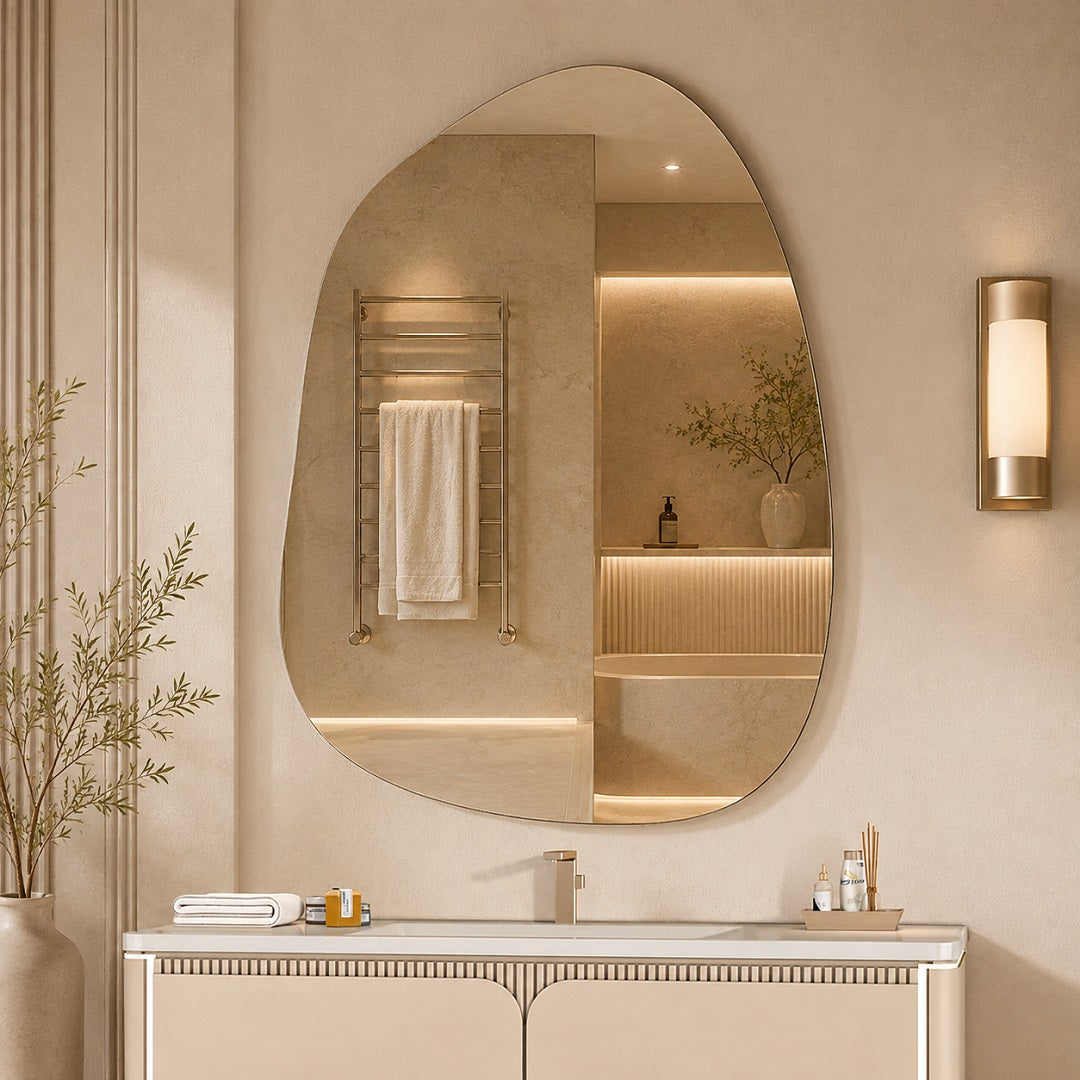
A round or oval mirror introduces curves above a boxy vanity. A rectangular mirror may make better use of a wide wall. Choose the shape after checking how much usable glass the room needs.
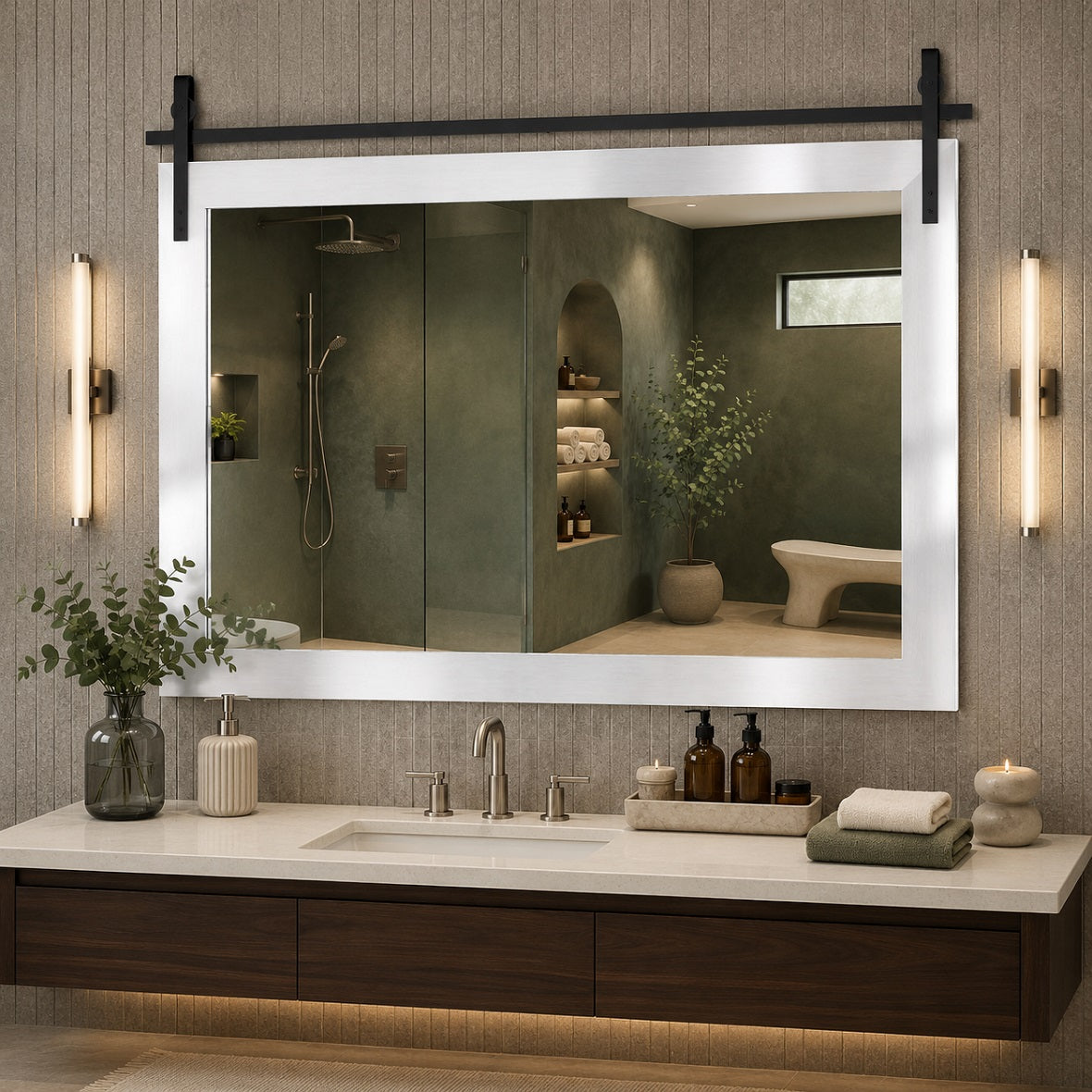
For a double vanity, two mirrors can define individual sink areas and leave space for lighting between them. One wide mirror offers a continuous reflection. Sink spacing and fixture positions will help determine which arrangement fits.
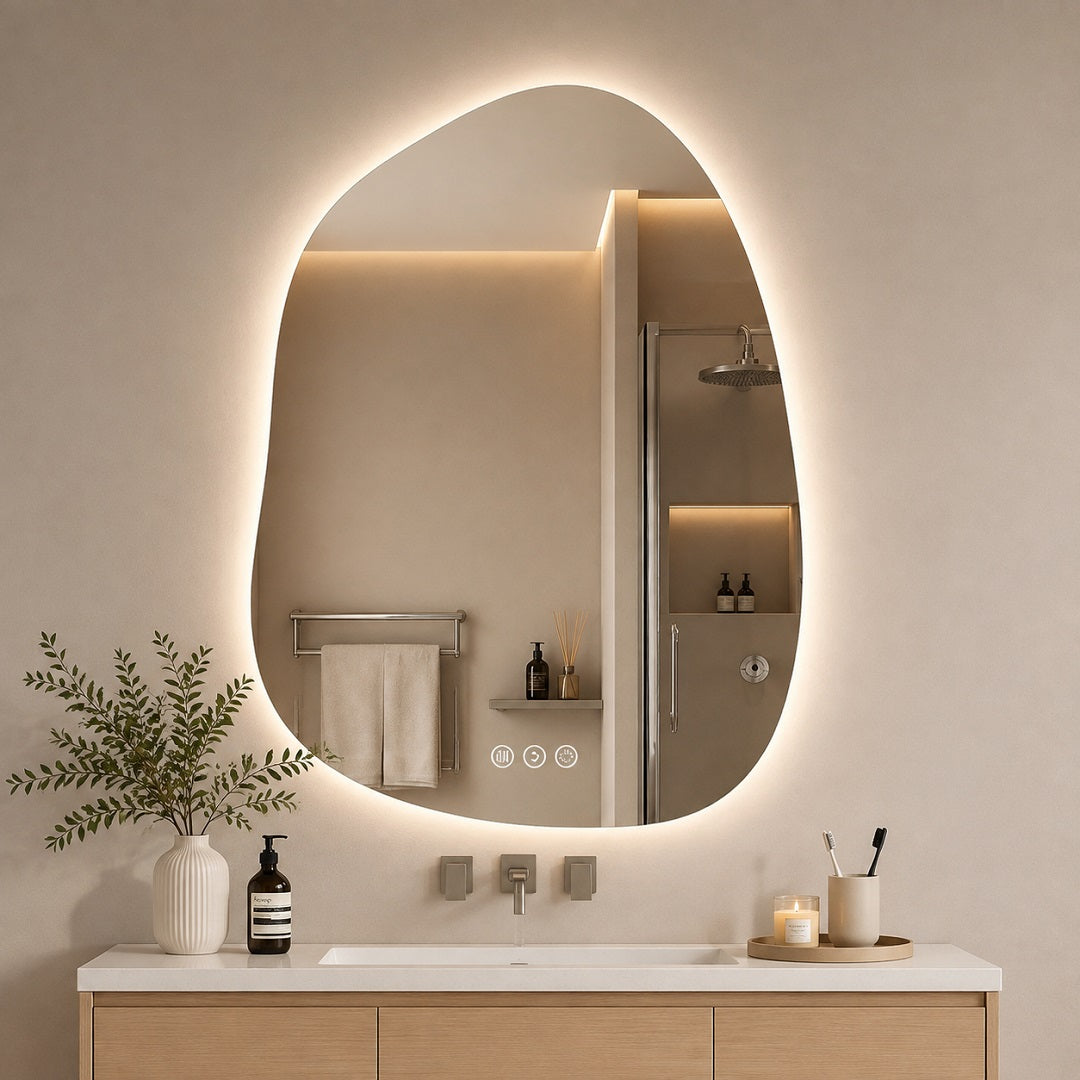
Plan the light at the same time. A backlit glow and light directed toward your face serve different purposes; confirm the model’s documented function before relying on it for grooming.
Use a mirror suitable for the intended bathroom location, follow its installation instructions, and have hardwired electrical work handled by a qualified electrician.
Dining Room: Style the Sideboard, Then Sit Down
A dining room mirror works naturally above a sideboard, where it can anchor the furniture arrangement and reflect another part of the room.
A horizontal shape can echo a long sideboard. A round mirror can work when you want a more compact focal point with wall space around it. Try the outline alongside your everyday lamp, serving pieces, or a favorite vase.
Then sit at the table.
Check every chair, especially the seats directly facing the mirror. A chandelier that looks lovely reflected from the doorway might put a bare bulb in someone’s line of sight during dinner.
Look beyond the lighting, too. Consider whether the mirror shows curtains, artwork, a doorway, or the kitchen counter. Choose a location that gives you a view you will enjoy through a whole meal.
Keep sideboard decorations low enough that they do not crowd the reflection. One larger arrangement at the side can be easier to live with than several tall objects across the glass.
Hallway: Add a Mirror Without Narrowing the Route
For mirror placement in a narrow hallway, a shallow-profile wall mirror is often easier to accommodate than a floor-standing design.
Try a side wall near a doorway, where you can catch a useful glimpse as you pass. Check the view from both ends of the hall; the reflection will change as you walk toward it.
A mirror at the far end can also work, but make sure it does not make the route look confusing or put a utility area on display.
Styling can stay simple here. Let the mirror be the main wall feature, or connect it to a nearby picture through a similar frame finish. A narrow passage rarely needs an extra console just to support the arrangement.
Check frame depth, door swings, and the space you use when carrying a laundry basket. In a dark hallway, add appropriate lighting rather than expecting the mirror to solve the lack of light.
Dressing Room: Make the Full Outfit Easy to See
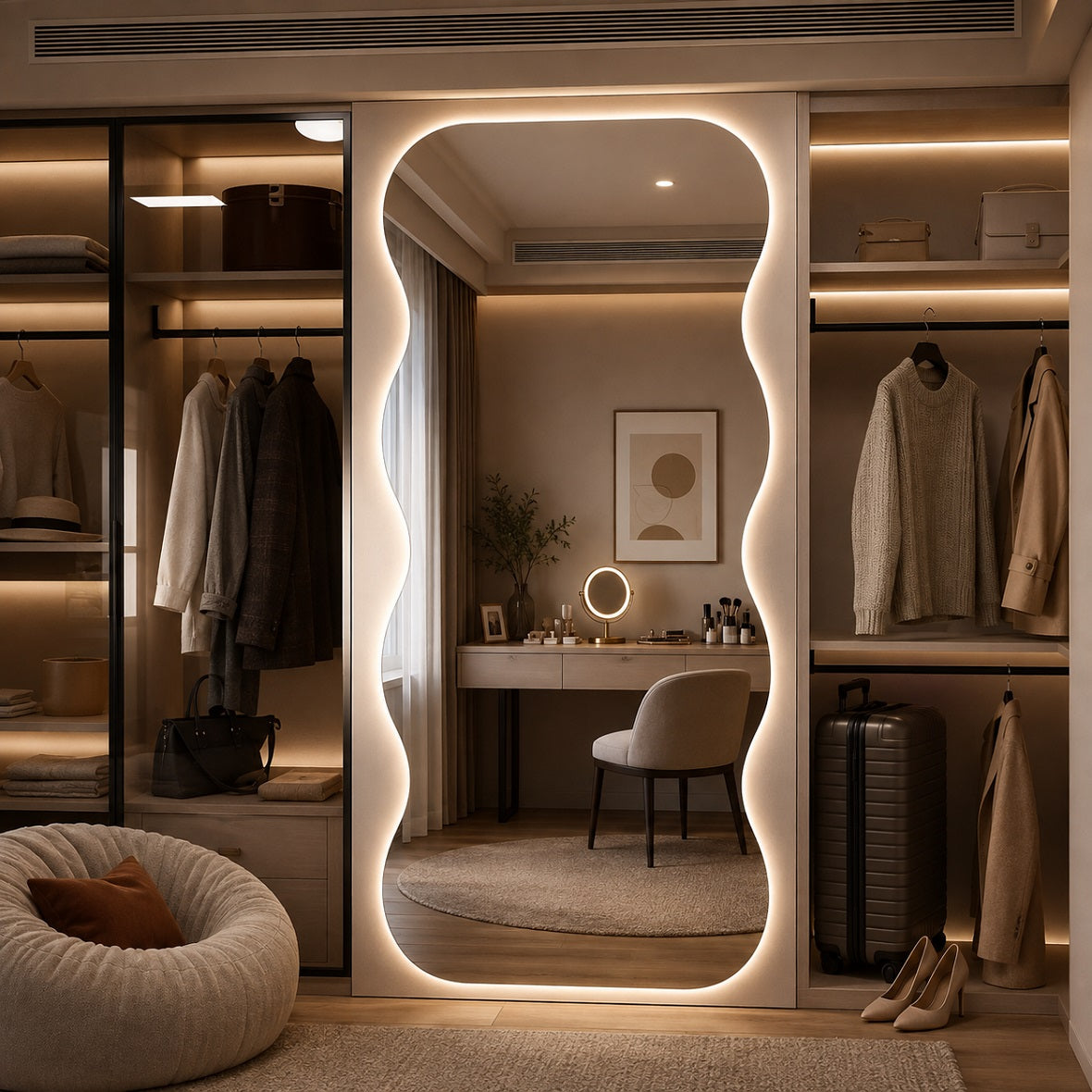
In a closet or dressing room, prioritize a full-length mirror and a clear viewing area.
An end wall can work well when the space in front stays open. A side wall may be more useful when drawers or closet doors occupy the end of the room.
Test the layout with those doors open. You should be able to choose clothes and use the mirror without repeatedly rearranging the space.
Check that you can see your head and shoes from your normal position. A thick frame or curved top reduces the usable glass compared with the product’s outer dimensions. Everyone using the dressing area should try the proposed viewing position.
Plan lighting around the person standing there. Check the outfit view under the lighting you actually use, rather than judging only from daylight spilling in through the doorway.
A door-mounted mirror may be an option for a compact closet, provided the product is designed for that installation and the door meets its requirements. Verify hanger fit and closing clearance.
Home Office: Keep Reflections Out of Your Working View
A home office mirror can fit on a side wall above a low cabinet or near the entrance for a quick check before a meeting.
Choose the location while seated at your desk, with the monitor and usual lamps turned on. Look for reflected screen movement or a bright window that catches your attention.
A small mirror grouped with artwork can make sense when you want decoration without adding a large reflective surface beside the screen. Repeat a frame color already used elsewhere in the office to keep the arrangement connected.
Preview a video call before placing a mirror behind your chair. It may reveal your screen, paperwork, or parts of the room outside the normal camera view.

A Note on Mirrors in Kitchens
In an open kitchen, consider a breakfast nook or a wall outside the main cooking area. A mirror there can belong to the dining arrangement while staying away from frequent splashes.
Check whether the reflection shows a pleasant seating area or simply brings the busiest countertop into view.
An ordinary decorative mirror should not be assumed suitable behind a cooktop. A mirrored backsplash needs materials and installation appropriate for that location.
Final Thoughts
The right mirror placement follows the way you use each room. An entryway mirror should be ready when you head out, a dressing mirror should make outfit checks easy, and a dining room mirror should offer a comfortable view from the table.
Start with one space. Choose the wall, check the reflection, and measure around the furniture before shopping. As you compare Hasipu mirrors, use those details to select a size, shape, and installation method that fit your home.